

The DOI matches its Crossref record; 104 of the 104 references it cites were found in a registry or an index.
Eliminating Explicit and Implicit Biases in Health Care: Evidence and Research Needs
Open accessAbstract
Health care providers hold negative explicit and implicit biases against marginalized groups of people such as racial and ethnic minoritized populations. These biases permeate the health care system and affect patients via patient–clinician communication, clinical decision making, and institutionalized practices. Addressing bias remains a fundamental professional responsibility of those accountable for the health and wellness of our populations. Current interventions include instruction on the existence and harmful role of bias in perpetuating health disparities, as well as skills training for the management of bias. These interventions can raise awareness of provider bias and engage health care providers in establishing egalitarian goals for care delivery, but these changes are not sustained, and the interventions have not demonstrated change in behavior in the clinical or learning environment. Unfortunately, the efficacy of these interventions may be hampered by health care providers’ work and learning environments, which are rife with discriminatory practices that sustain the very biases US health care professions are seeking to diminish. We offer a conceptual model demonstrating that provider-level implicit bias interventions should be accompanied by interventions that systemically change structures inside and outside the health care system if the country is to succeed in influencing biases and reducing health inequities.
Overview
The claims and statistics of this paper haven’t been checked yet.
Run the check — free, no account needed. It reads the open-access text and checks the sources it cites.
Integrity signals
Registry
Cites
Statistics
Figures
Verification
Claims the paper makes
The claims and statistics of this paper haven’t been checked yet.
Run the check — free, no account needed. It reads the open-access text and checks the sources it cites.
Claims other papers make about this one
Each is checked against this paper’s own text: does it say what the citing paper says it does?
The source backs part of the claim, not all of it — or backs it for a different population, condition or comparison.
In the citing paper
“By simulating scenarios that mirror real-life clinical decision-making processes, and through reading the multi-agent conversations, clinicians can be made aware of potential cognitive biases and how to correct them. This facilitates learning in a controlled, educational environment [25,26].”
From Mitigating cognitive biases in clinical decision-making through multi-agent conversations using large language models: simulation study (2024) · cites this paper as [26]
Experimental — accuracy not yet measured
Self-check
Percentages, sums and reported differences re-computed from the paper’s own numbers.
The self-check needs the paper’s full text.
Citations
Cites
Implicit social cognition: Attitudes, self-esteem, and stereotypes
Greenwald, A. G., & Banaji, M. R. (1995) · Psychological Review · doi:10.1037/0033-295x.102.1.4 · Cited by 6,682 · cited 1×
“Key terminology: What are implicit and explicit biases?—Implicit biases are unconscious mental processes that lead to associations and reactions that are automatic and without intention; actors have no awareness of the associations with a stimulus (41, 43) (Table 1).”
BackgroundPettigrew, T. F. (1998) · Annual Review of Psychology · doi:10.1146/annurev.psych.49.1.65 · Cited by 6,001
Understanding and using the Implicit Association Test: I. An improved scoring algorithm.
Greenwald, A. G., Nosek, B. A., & Banaji, M. R. (2003) · Journal of Personality and Social Psychology · doi:10.1037/0022-3514.85.2.197 · Cited by 5,815 · cited 1×
“Most researchers agree that the IAT has limitations (44).”
BackgroundEmotion regulation: affective, cognitive, and social consequences.
Gross, J. J. (2002) · Psychophysiology · doi:10.1017/s0048577201393198 · Cited by 4,890
Transformative learning: Theory to practice
Mezirow, J. (1997) · New Directions for Adult and Continuing Education · doi:10.1002/ace.7401 · Cited by 4,445 · cited 1×
“TLT transforms the individual’s existing paradigm by disrupting assumptions and then engaging in critical reflection and dialogue to interpret the disruptions (68).”
BackgroundUnderstanding and using the Implicit Association Test: III. Meta-analysis of predictive validity.
Greenwald, A. G., Poehlman, T. A., Uhlmann, E. L., & Banaji, M. R. (2009) · Journal of Personality and Social Psychology · doi:10.1037/a0015575 · Cited by 3,257 · cited 2×
“(45) described a word association test that identified implicit stereotype effects through indirect Vela et al.”
Levels of racism: a theoretic framework and a gardener's tale
(2000) · American Journal of Public Health · doi:10.2105/ajph.90.8.1212 · Cited by 2,626 · cited 2×
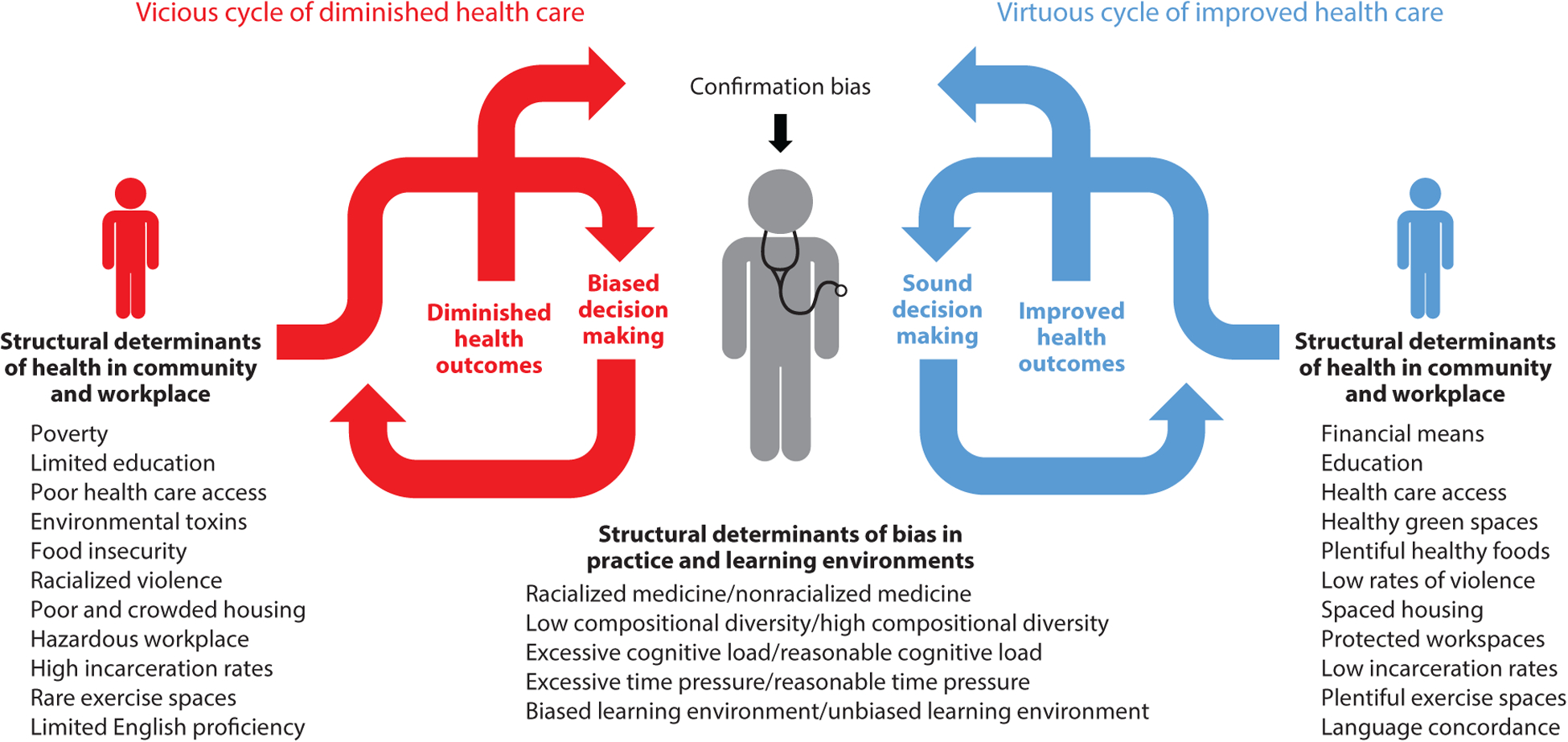
“Conceptual Model Based on Jones’s (54) allegory A Gardener’s Tale, we present a conceptual model of implicit biases of health care providers and the key structural factors affecting these biases (Figure 2).”
BackgroundImplicit bias in healthcare professionals: a systematic review
FitzGerald, C., & Hurst, S. (2017) · BMC Medical Ethics · doi:10.1186/s12910-017-0179-8 · Cited by 2,556 · cited 4×
“A similar reinforcing dynamic may exist for marginalized populations such as those who are overweight/obese, use wheelchairs, have limited English proficiency, have mental health illness, and belong to lower socioeconomic classes (29).”
BackgroundResultInfluentialHoffman, K. M., Trawalter, S., Axt, J. R., & Oliver, M. N. (2016) · Proceedings of the National Academy of Sciences · doi:10.1073/pnas.1516047113 · Cited by 2,486 · cited 1×
“(50) demonstrated in 2016 that White medical students and residents were more likely to believe that Black patients had thicker skin and smaller brains, and were more likely to rate Black patients as feeling less pain than and not needing the same levels of pain medications as White patients.”
BackgroundRacism and health: evidence and needed research
Williams, D. R., Lawrence, J. A., & Davis, B. A. (2019) · Annual Review of Public Health · doi:10.1146/annurev-publhealth-040218-043750 · Cited by 2,398
Research works printed but not linked: 8
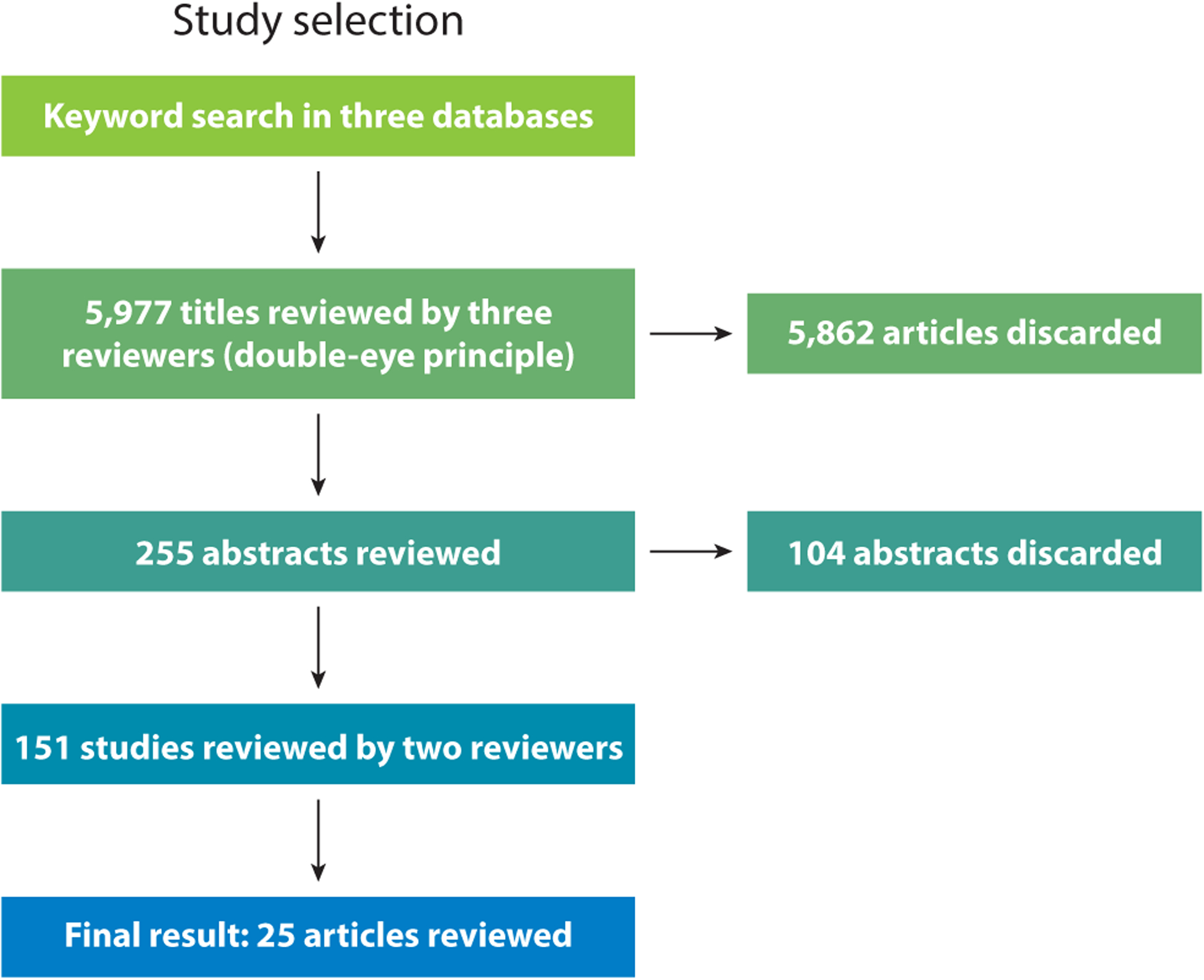
- Figure 2. Percentage of applicants to U.S. medical schools by race/ethnicity (alone), academic year 2018–2019
- Blanchard J, 2004, J. Fam. Pract., 53, 721
- Hinton PR., 1993, The Perception of People
- Lee M, 2021, Can. Med. Educ. J., 12, e7
- National Academy of Sciences (US) NtAoEU, and Institute of Medicine (US) Committee on Maximizing the Potential of Women in Academic Science and Engineering, 2007, Beyond Bias and Barriers: Fulfilling the Potential of Women in Academic Science and Engineering
- Osta K, Implicit bias and structural racialization
- Poustchi Y, 2013, Fam. Med., 45, 345
- Staats C, 2015, State of the science: implicit bias review 2015
Cited by
Sorted by citations
Items 401–426 of 426
Ojeahere, M. I., Szczegielniak, A. R., Niu, H., Khan, N., Vahdani, B., Heshmati, S., Karaliūnienė, R., kilic, O., Naskar, C., Nahidi, M., et al. (2026) · BMJ Mental Health · doi:10.1136/bmjment-2025-302360
“16 At the same time, individual characteristics such as assertiveness, agreeable-ness or introversion may influence both vulnerability to micro-aggressions and the strategies employed to manage them.”
Benau, E. M., & Zavodnick, J. H. (2026) · Substance Use & Addiction Journal · doi:10.1177/29767342261456153
Implicit Bias in Health Professionals: A Scoping Review
Chacón-Acevedo, K., Castillo, A. M. D., Castro-Muñoz, J. A., Rojas, Y. F., Bermudez-Rodriguez, A., & Rojas-Gómez, A. M. (2026) · International Journal of Environmental Research and Public Health · doi:10.3390/ijerph23070840
“…the Medical Student Cognitive Habits and Growth Evaluation Study (CHANGES) found that a substantial proportion of U.S. medical students exhibited both implicit and explicit weight bias, with levels of implicit weight bias comparable to those observed for racial bias in the same cohort [25,26].”
InfluentialMatif, S. A., Dera, H. S. A., Shammary, T. A., Mansour, A. A., Alotaibi, A., & Idris, M. (2026) · Frontiers in Medicine · doi:10.3389/fmed.2026.1868643
“Khuman et al. (41) stated that the therapist’s experience can reduce the bias (61).”
Martin, E., & Audétat, M. (2026) · Pédagogie médicale · doi:10.1051/pmed/2026006
Afolabi, A. O., Modanloo, S., & Uwizeye, G. (2026) · Nursing for Women s Health · doi:10.1016/j.nwh.2026.05.009
Cantle, F., Reid, C., Williams, S., Jina, R., Spooner, C., Corbett, C., Harrington, R., Hardwick, S., Oriolo, V., Tampsett, R., et al. (2026) · Emergency Medicine Journal · doi:10.1136/emermed-2025-215003
Rethfeldt, W. S., & Güttler, C. (2026) · International Journal of Speech-Language Pathology · doi:10.1080/17549507.2026.2708231
Implicit Bias and the Female Surgeon
Boakye, L. A. T., & Bergamasco, J. M. P. (2026) · Foot and Ankle Clinics · doi:10.1016/j.fcl.2026.06.005
Lubin, N. J., Passman, J. N., Mazzarella, A. J., Bellow, E., Chan, G., Singh, H., Zhang, J., Robertson, J., Ostrowski, G., Mikell, C. B., et al. (2026) · Neurotrauma Reports · doi:10.1177/2689288x261444635
From slave ships to contemporary clinics: The US neo-slavery medical complex
Feagin, J. R. (2026) · Elsevier eBooks · doi:10.1016/b978-0-443-44998-7.00013-2
Ventres, W., & Cerdeña, J. P. (2026) · Springer eBooks · doi:10.1007/978-1-4939-0779-3_195-1
Tran, C., Savaglio, M., Skouteris, H., van den Heuvel, J., & Hill, B. (2026) · Women s Health · doi:10.1177/17455057261481755
“This finding reflects explicit weight stigmatising attitudes and beliefs 40 as preconception weight loss is prioritised.”
Gilmore, S. N., Poole, S., Henderson, K., Sisodia, N., Wijangco, J., Guo, C., Amezcua, L., & Bove, R. M. (2026) · Multiple Sclerosis Journal · doi:10.1177/13524585261475041
Miles apart: Collective inequities in medical communication and decision-making
Hauschildt, K. E. (2026) · Social Science & Medicine · doi:10.1016/j.socscimed.2026.119738
Lapensée, A.-J., St-Germain, R., Panait, B. A., Blanc, É. L., Phong, A. N., Langevin, M., Letarte, N., & Adam, J. (2026) · Journal of the American Pharmacists Association · doi:10.1016/j.japh.2026.103529
Saragosa, A. C., Schenck, A., Saniatan, K. L., Taylor, N., Hernandez, H., Carlton, K., Carver, T., Gomez, N., & Buccini, G. (2026) · Frontiers in Public Health · doi:10.3389/fpubh.2026.1936761
“Implicit bias is when a provider unconsciously stereotypes and has attitudes towards specific populations, which influences their care, decisions, and actions towards patients (34, 35).”
Garg, R. K., Subhashini, S. P., Niwas, R., & Garg, P. (2026) · International Journal of Preventive Medicine · doi:10.4103/ijpvm.ijpvm_301_25
Challenges of Community Participation in Primary Healthcare: A Systematic Review of Reviews
AbuArrah, M., Khosravi, F., & Khosravi, M. (2026) · Journal of Primary Care & Community Health · doi:10.1177/21501319261494106
Baim‐Lance, A. M., Perez, S., Gorbenko, K. O., Nnemnbeng, J. F., Hart, J., Howard, B. N., DeCherrie, L. V., Levine, D. M., Leff, B. A., & Siu, A. L. (2026) · Journal of General Internal Medicine · doi:10.1007/s11606-026-10841-5
Raghavendra, A., Peters, C. J., & Zirikly, A. (2026) · doi:10.2196/preprints.113394
Lee, T.-H., Kyalwazi, B., Chai, W., Rich, N., Singal, A. G., Kanwal, F., Kramer, J., Campos, J., Liu, Y., Quirk, L., et al. (2026) · Gastroenterology · doi:10.1053/j.gastro.2026.09.004
Lee, T.-H., Kyalwazi, B., Chai, W., Rich, N., Singal, A. G., Kanwal, F., Kramer, J., Campos, J., Liu, Y., Quirk, L., et al. (2026) · Clinical Gastroenterology and Hepatology · doi:10.1016/j.cgh.2026.08.001
Psychological Safety, Sustainability, and the Mental Health of Black Women in K–12 Education
Hoskin, M. N. (2026) · IGI Global eBooks · doi:10.4018/979-8-3373-8899-1.ch009
Black, K. A., & Nelson, G. S. (2026) · International Journal of Gynecological Cancer · doi:10.1016/j.ijgc.2026.105675
Data from National PCP Survey on GRS
Kerman, B. J., Brunette, C. A., Harris, E. J., Antwi, A. A., Lemke, A. A., & Vassy, J. L. (2023) · Harvard Dataverse · doi:10.7910/dvn/qfitqf
Metadata
- Authors
- Vela, M. B., Erondu, A. I., Smith, N. A., Peek, M. E., Woodruff, J. N., & Chin, M. H.
- Affiliations
- University of Illinois Chicago (US)
- University of California, Los Angeles (US)
- Hospital of the University of Pennsylvania (US)
- University of Chicago (US)
- ORCID
- Woodruff, James N.
- Venue
- Annual Review of Public Health
- Publisher
- Annual Reviews
- Published
- 2022-04-05
- Volume
- 43
- Issue
- 1
- Pages
- 477-501
- ISSN
- 0163-7525 (ISSN-L)
- 1545-2093
- PMC
- PMC9172268
- OpenAlex
- W4206528627
- Cited by
- 426
- References
- 102
- Citations by year
- 2026: 89 · 2025: 176 · 2024: 97 · 2023: 55 · 2022: 9
- FWCI
- 14.19
- Type
- journal article
- Language
- en
- Open access
- hybrid
- doi.org
- Locations
- Annual Review of Public Health (publishedVersion, cc-by)
- PubMed (publishedVersion)
- PubMed Central (acceptedVersion, cc-by)
- Funders
- National Institute of Diabetes and Digestive and Kidney Diseases (P30DK092949)
- Topics
- Health Sciences › Medicine › Public Health, Environmental and Occupational Health › Cultural Competency in Health Care
- Social Sciences › Sociology and Political Science › Racial and Ethnic Identity Research
- Social Sciences › Sociology and Political Science › Social and Intergroup Psychology
- Keywords
- implicit bias, explicit bias, healthcare workers, racial and ethnic minorities, health disparities, bias interventions, patient-clinician communication, clinical decision-making, organizational discrimination, structural change, conceptual model
- MeSH terms
- Attitude of Health Personnel, Communication, Health Personnel, Humans, Bias, Healthcare Disparities
About these checks
Registry, retraction, Cites and statistics results are computed, not judged, with one exception: a printed reference that no index lists is read once by a model before it counts as a citation error. Claims are extracted by a model and kept only when their quote appears verbatim in the text; each cited source is then checked, with a model’s help, for whether it says what the claim relies on. Those verdicts can be wrong — read the claim’s quote and the cited source before relying on one.
Statistics and arithmetic are recomputed, not judged.
Confidence bands are shown only for fields calibrated on our annotated test set. None is calibrated yet, so no band is shown.
What counts as a claim ›How we measure confidence ›How we check this ›
Are you an author, or do you see a problem with this page? Request a review
