

The DOI matches its Crossref record; 104 of the 104 references it cites were found in a registry or an index.
Eliminating Explicit and Implicit Biases in Health Care: Evidence and Research Needs
Open accessAbstract
Health care providers hold negative explicit and implicit biases against marginalized groups of people such as racial and ethnic minoritized populations. These biases permeate the health care system and affect patients via patient–clinician communication, clinical decision making, and institutionalized practices. Addressing bias remains a fundamental professional responsibility of those accountable for the health and wellness of our populations. Current interventions include instruction on the existence and harmful role of bias in perpetuating health disparities, as well as skills training for the management of bias. These interventions can raise awareness of provider bias and engage health care providers in establishing egalitarian goals for care delivery, but these changes are not sustained, and the interventions have not demonstrated change in behavior in the clinical or learning environment. Unfortunately, the efficacy of these interventions may be hampered by health care providers’ work and learning environments, which are rife with discriminatory practices that sustain the very biases US health care professions are seeking to diminish. We offer a conceptual model demonstrating that provider-level implicit bias interventions should be accompanied by interventions that systemically change structures inside and outside the health care system if the country is to succeed in influencing biases and reducing health inequities.
Overview
The claims and statistics of this paper haven’t been checked yet.
Run the check — free, no account needed. It reads the open-access text and checks the sources it cites.
Integrity signals
Registry
Cites
Statistics
Figures
Verification
Claims the paper makes
The claims and statistics of this paper haven’t been checked yet.
Run the check — free, no account needed. It reads the open-access text and checks the sources it cites.
Claims other papers make about this one
Each is checked against this paper’s own text: does it say what the citing paper says it does?
The source backs part of the claim, not all of it — or backs it for a different population, condition or comparison.
In the citing paper
“By simulating scenarios that mirror real-life clinical decision-making processes, and through reading the multi-agent conversations, clinicians can be made aware of potential cognitive biases and how to correct them. This facilitates learning in a controlled, educational environment [25,26].”
From Mitigating cognitive biases in clinical decision-making through multi-agent conversations using large language models: simulation study (2024) · cites this paper as [26]
Experimental — accuracy not yet measured
Self-check
Percentages, sums and reported differences re-computed from the paper’s own numbers.
The self-check needs the paper’s full text.
Citations
Cites
Implicit social cognition: Attitudes, self-esteem, and stereotypes
Greenwald, A. G., & Banaji, M. R. (1995) · Psychological Review · doi:10.1037/0033-295x.102.1.4 · Cited by 6,682 · cited 1×
“Key terminology: What are implicit and explicit biases?—Implicit biases are unconscious mental processes that lead to associations and reactions that are automatic and without intention; actors have no awareness of the associations with a stimulus (41, 43) (Table 1).”
BackgroundPettigrew, T. F. (1998) · Annual Review of Psychology · doi:10.1146/annurev.psych.49.1.65 · Cited by 6,001
Understanding and using the Implicit Association Test: I. An improved scoring algorithm.
Greenwald, A. G., Nosek, B. A., & Banaji, M. R. (2003) · Journal of Personality and Social Psychology · doi:10.1037/0022-3514.85.2.197 · Cited by 5,815 · cited 1×
“Most researchers agree that the IAT has limitations (44).”
BackgroundEmotion regulation: affective, cognitive, and social consequences.
Gross, J. J. (2002) · Psychophysiology · doi:10.1017/s0048577201393198 · Cited by 4,890
Transformative learning: Theory to practice
Mezirow, J. (1997) · New Directions for Adult and Continuing Education · doi:10.1002/ace.7401 · Cited by 4,445 · cited 1×
“TLT transforms the individual’s existing paradigm by disrupting assumptions and then engaging in critical reflection and dialogue to interpret the disruptions (68).”
BackgroundUnderstanding and using the Implicit Association Test: III. Meta-analysis of predictive validity.
Greenwald, A. G., Poehlman, T. A., Uhlmann, E. L., & Banaji, M. R. (2009) · Journal of Personality and Social Psychology · doi:10.1037/a0015575 · Cited by 3,257 · cited 2×
“(45) described a word association test that identified implicit stereotype effects through indirect Vela et al.”
Levels of racism: a theoretic framework and a gardener's tale
(2000) · American Journal of Public Health · doi:10.2105/ajph.90.8.1212 · Cited by 2,626 · cited 2×
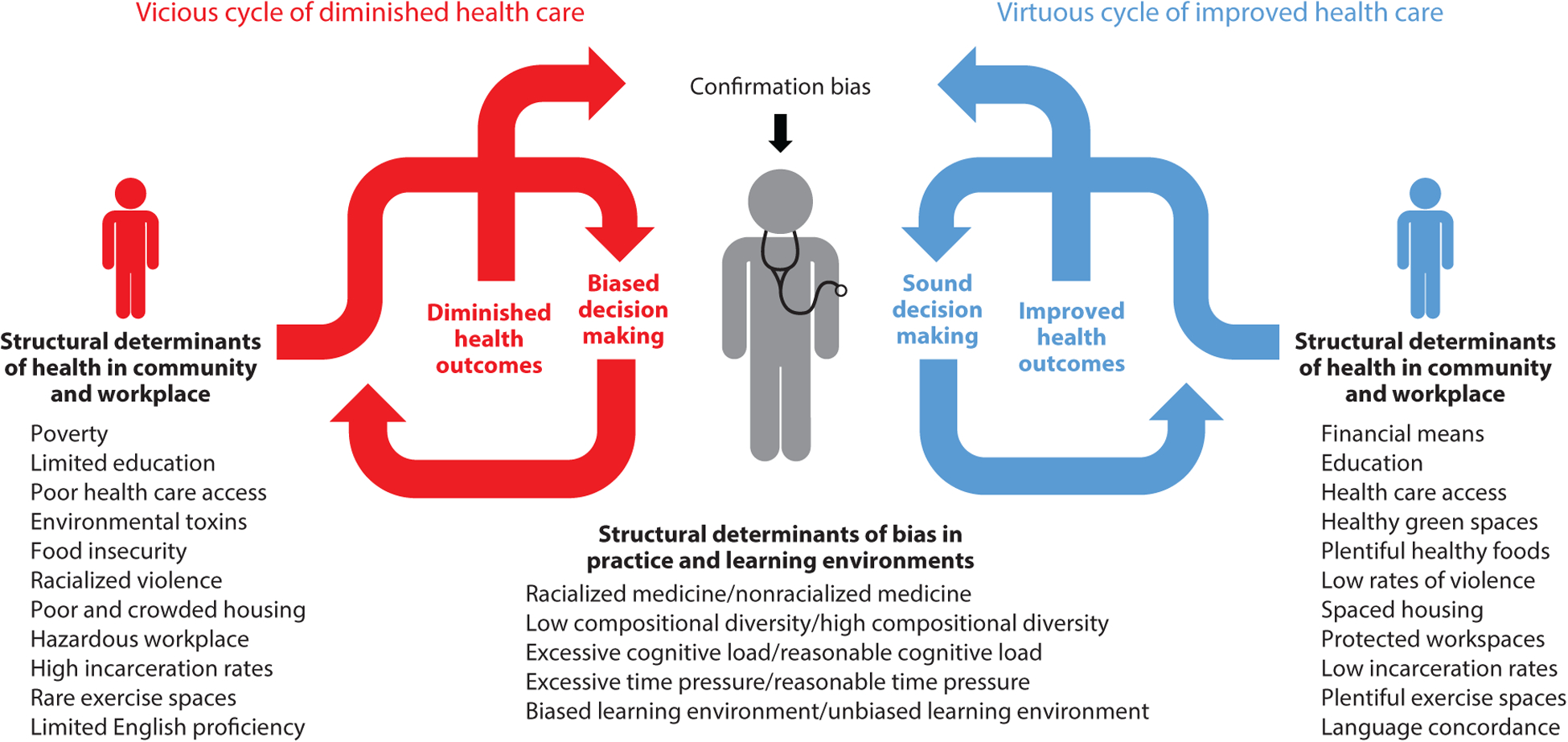
“Conceptual Model Based on Jones’s (54) allegory A Gardener’s Tale, we present a conceptual model of implicit biases of health care providers and the key structural factors affecting these biases (Figure 2).”
BackgroundImplicit bias in healthcare professionals: a systematic review
FitzGerald, C., & Hurst, S. (2017) · BMC Medical Ethics · doi:10.1186/s12910-017-0179-8 · Cited by 2,556 · cited 4×
“A similar reinforcing dynamic may exist for marginalized populations such as those who are overweight/obese, use wheelchairs, have limited English proficiency, have mental health illness, and belong to lower socioeconomic classes (29).”
BackgroundResultInfluentialHoffman, K. M., Trawalter, S., Axt, J. R., & Oliver, M. N. (2016) · Proceedings of the National Academy of Sciences · doi:10.1073/pnas.1516047113 · Cited by 2,486 · cited 1×
“(50) demonstrated in 2016 that White medical students and residents were more likely to believe that Black patients had thicker skin and smaller brains, and were more likely to rate Black patients as feeling less pain than and not needing the same levels of pain medications as White patients.”
BackgroundRacism and health: evidence and needed research
Williams, D. R., Lawrence, J. A., & Davis, B. A. (2019) · Annual Review of Public Health · doi:10.1146/annurev-publhealth-040218-043750 · Cited by 2,398
Pager, D., & Shepherd, H. R. (2008) · Annual Review of Sociology · doi:10.1146/annurev.soc.33.040406.131740 · Cited by 2,178 · cited 2×
“Discrimination, the result of either implicit or explicit biases, is the inequitable treatment and/or impact of general policies, practices, and norms on individuals and communities based on social group membership (65, 76).”
BackgroundHall, W. J., Chapman, M. V., Lee, K. M., Merino, Y. M., Thomas, T. W., Payne, B. K., Eng, E., Day, S. H., & Coyne-Beasley, T. (2015) · American Journal of Public Health · doi:10.2105/ajph.2015.302903 · Cited by 2,176 · cited 2×
“(47) published a systematic literature review of 15 studies designed to explore the evidence of provider implicit racial bias and health outcomes.”
BackgroundGreen, A. R., Carney, D. R., Pallin, D. J., Ngo, L. H., Raymond, K. L., Iezzoni, L. I., & Banaji, M. R. (2007) · Journal of General Internal Medicine · doi:10.1007/s11606-007-0258-5 · Cited by 1,460 · cited 1×
“Seven studies that examined the impact of implicit provider bias on real-world patient–provider interaction found that health care providers with stronger implicit bias demonstrated poorer patient–provider communication and that health care providers with high implicit biases (a) provided lower rates of postoperative…”
ResultLong-term reduction in implicit race bias: A prejudice habit-breaking intervention
Devine, P. G., Forscher, P. S., Austin, A. J., & Cox, W. T. L. (2012) · Journal of Experimental Social Psychology · doi:10.1016/j.jesp.2012.06.003 · Cited by 1,259 · cited 1×
“Strikingly, the only study demonstrating reduction of measured implicit bias was conducted on undergraduate students enrolled in a course using a prejudicehabit-breaking intervention involving instruction of all the aforementioned techniques with effects lasting 8 weeks (24).”
BackgroundDasgupta, N., & Greenwald, A. G. (2001) · Journal of Personality and Social Psychology · doi:10.1037//0022-3514.81.5.800 · Cited by 1,102 · cited 2×
“This phenomenon has been demonstrated in experiments looking specifically at race- and age-related attitudes (21).”
BackgroundImplicit Bias: Scientific Foundations
Greenwald, A. G., & Krieger, L. H. (2006) · California Law Review · doi:10.2307/20439056 · Cited by 954
Understanding how discrimination can affect health
Williams, D. R., Lawrence, J. A., Davis, B. A., & Vu, C. (2019) · Health Services Research · doi:10.1111/1475-6773.13222 · Cited by 853 · cited 1×
“Inequitable structural determinants have diminished housing, education, health care, and income and have increased exposure to environmental pollutants and chronic stressors for marginalized populations (76, 108).”
BackgroundRace and health: Basic questions, emerging directions
Williams, D. R. (1997) · Annals of Epidemiology · doi:10.1016/s1047-2797(97)00051-3 · Cited by 825
Maina, I. W., Belton, T. D., Ginzberg, S. P., Singh, A., & Johnson, T. J. (2017) · Social Science & Medicine · doi:10.1016/j.socscimed.2017.05.009 · Cited by 824 · cited 4×
“In a systematic literature review, six studies found that higher implicit bias among health care providers was associated with disparities in treatment recommendations, expectations of therapeutic bonds, pain management, and empathy (63).”
BackgroundResultInfluentialCooper, L. A., Roter, D. L., Carson, K. A., Beach, M. C., Sabin, J. A., Greenwald, A. G., & Inui, T. S. (2012) · American Journal of Public Health · doi:10.2105/ajph.2011.300558 · Cited by 815 · cited 1×
“The most consistent evidence is found in studies of patient–provider interactions in which the bias of health care providers has been repeatedly linked to discriminatory care (18)—patients rate physicians with higher levels of implicit bias as less patient-centered in the primary care setting.”
BackgroundDasgupta, N., & Greenwald, A. G. (2001) · Journal of Personality and Social Psychology · doi:10.1037/0022-3514.81.5.800 · Cited by 809
Harassment and Discrimination in Medical Training
Fnais, N., Soobiah, C., Chen, M. H., Lillie, E., Perrier, L., Tashkhandi, M., Straus, S. E., Mamdani, M., Al-Omran, M. A., & Tricco, A. C. (2014) · Academic Medicine · doi:10.1097/acm.0000000000000200 · Cited by 678 · cited 1×
“A 2014 systematic literature review revealed that rates of harassment and discrimination against trainees (24% reported racial discrimination, 33% reported sexual harassment, and 54% reported gender discrimination) have remained unchanged over time (31).”
BackgroundReducing implicit racial preferences: II. Intervention effectiveness across time
Lai, C. K., Skinner, A. L., Cooley, E., Murrar, S., Brauer, M., Devos, T., Calanchini, J., Xiao, Y. J., Pedram, C., Marshburn, C. K., et al. (2016) · Journal of Experimental Psychology: General · doi:10.1037/xge0000179 · Cited by 624 · cited 1×
“(57) tested nine interventions and although all immediately reduced implicit preferences, results were sustained for only several hours to days.”
BackgroundSabin, J. A., & Greenwald, A. G. (2012) · American Journal of Public Health · doi:10.2105/ajph.2011.300621 · Cited by 525 · cited 1×
“Seven studies that examined the impact of implicit provider bias on real-world patient–provider interaction found that health care providers with stronger implicit bias demonstrated poorer patient–provider communication and that health care providers with high implicit biases (a) provided lower rates of postoperative…”
ResultStatistically small effects of the Implicit Association Test can have societally large effects.
Greenwald, A. G., Banaji, M. R., & Nosek, B. A. (2014) · Journal of Personality and Social Psychology · doi:10.1037/pspa0000016 · Cited by 508 · cited 1×
“(42) maintain that statistically small effects of the IAT can have socially large effects.”
BackgroundFox, A. B., Earnshaw, V. A., Taverna, E. C., & Vogt, D. S. (2017) · Stigma and Health · doi:10.1037/sah0000104 · Cited by 504 · cited 1×
“The IAT and other measures (32) of implicit bias, stigma, and attitudes toward groups of persons were used among subjects to (a) demonstrate the existence of participant implicit biases, (b) act as a springboard to create cognitive dissonance for oral and/or written reflection and to practice bias management skills, a…”
MethodOsseo-Asare, A., Balasuriya, L., Huot, S. J., Keene, D. E., Berg, D. N., Nuñez-Smith, M., Genao, I., Latimore, D., & Boatright, D. B. (2018) · JAMA Network Open · doi:10.1001/jamanetworkopen.2018.2723 · Cited by 480 · cited 2×
“Minority trainees report facing daily bias and microaggressions and having feelings of isolation and substantial stress (74).”
BackgroundFitzGerald, C., Martin, A., Berner, D., & Hurst, S. (2019) · BMC Psychology · doi:10.1186/s40359-019-0299-7 · Cited by 477 · cited 2×
“(30) in their systematic review, that indexing in databases for these terms was inconsistent and that titles and abstracts were often imprecise.”
BackgroundFrom race-based to race-conscious medicine: how anti-racist uprisings call us to act
Cerdeña, J. P., Plaisime, M. V., & Tsai, J. W. (2020) · The Lancet · doi:10.1016/s0140-6736(20)32076-6 · Cited by 437 · cited 1×
“Such messaging only serves to undo any structured teaching on the social construct of race and gender (16).”
BackgroundClinicians' Implicit Ethnic/Racial Bias and Perceptions of Care Among Black and Latino Patients
Blair, I. V., Steiner, J. F., Fairclough, D. L., Hanratty, R., Price, D. W., Hirsh, H. K., Wright, L. A., Bronsert, M., Karimkhani, E., Magid, D. J., et al. (2013) · The Annals of Family Medicine · doi:10.1370/afm.1442 · Cited by 409 · cited 1×
“In a large study of adult primary care, higher implicit bias among health care providers was associated with patients’ lower ratings of interpersonal treatment, contextual knowledge, communication, and trust (5).”
BackgroundRace, Ethnicity, and Medical Student Well-being in the United States
Dyrbye, L. N., Thomas, M. R., Eacker, A. M., Harper, W. R., Massie, F. S., Power, D. V., Huschka, M. M., Novotny, P. J., Sloan, J. A., & Shanafelt, T. D. (2007) · Archives of Internal Medicine · doi:10.1001/archinte.167.19.2103 · Cited by 353 · cited 1×
“Minority medical students reported five-times-higher odds of racial discrimination and isolation than did nonminority peers (26).”
BackgroundReducing Implicit Gender Leadership Bias in Academic Medicine With an Educational Intervention
Girod, S. C., Fassiotto, M. A., Grewal, D., Ku, M. C., Sriram, N., Nosek, B. A., & Valantine, H. A. (2016) · Academic Medicine · doi:10.1097/acm.0000000000001099 · Cited by 331
Misrepresenting Race — The Role of Medical Schools in Propagating Physician Bias
Amutah, C., Greenidge, K., Mante, A., Munyikwa, M. R., Surya, S. L., Higginbotham, E. J., Jones, D. S., Lavizzo‐Mourey, R. J., Roberts, D. E., Tsai, J. W., et al. (2021) · New England Journal of Medicine · doi:10.1056/nejmms2025768 · Cited by 324 · cited 2×
“They learn to use race-based algorithms to calculate glomerular filtration rates, pulmonary function testing, hypertension guidelines, and even urinary tract infection diagnoses in pediatric populations (2).”
MethodButkus, R., Serchen, J., Moyer, D. V., Bornstein, S. S., & Hingle, S. T. (2018) · Annals of Internal Medicine · doi:10.7326/m17-3438 · Cited by 323 · cited 1×
“Gender inequalities in salaries have been well documented (12, 62, 71).”
BackgroundImplicit Racial Bias in Medical School Admissions
Capers, Q., Clinchot, D. M., McDougle, L., & Greenwald, A. G. (2016) · Academic Medicine · doi:10.1097/acm.0000000000001388 · Cited by 317 · cited 4×
“National Academy of Sciences (US) NtAoEU, and Institute of Medicine (US) Committee on Maximizing the Potential of Women in Academic Science and Engineering.”
MethodInfluentialDooling, K. L., McClung, N. M., Chamberland, M. E., Marin, M., Wallace, M. M., Bell, B. P., Lee, G. M., Talbot, H. K., Romero, J. R., & Oliver, S. E. (2020) · MMWR Morbidity and Mortality Weekly Report · doi:10.15585/mmwr.mm6949e1 · Cited by 307 · cited 1×
“9 years), the phase 1b vaccination strategy targeted individuals age 75 and older (25).”
BackgroundPhelan, S. M., Dovidio, J. F., Puhl, R. M., Burgess, D. J., Nelson, D. B., Yeazel, M. W., Hardeman, R. R., Perry, S., & van Ryn, M. (2013) · Obesity · doi:10.1002/oby.20687 · Cited by 296 · cited 1×
“The study also demonstrated that scores of implicit weight bias were similar to scores of implicit bias against racial minorities (74%) in the same group of students (86).”
ResultTeherani, A., Hauer, K. E., Fernandez, A., King, T. E., & Lucey, C. (2018) · Academic Medicine · doi:10.1097/acm.0000000000002323 · Cited by 291 · cited 2×
“, Alpha Omega Alpha Honor Medical Society (AOA)], ultimately affecting career trajectories of racial minority candidates (102).”
BackgroundR-E-S-P-E-C-T: patient reports of disrespect in the health care setting and its impact on care.
Blanchard, J., & Lurie, N. (2004) · PubMed · Cited by 274
Lett, E., Orji, W. U., & Sebro, R. (2018) · PLoS ONE · doi:10.1371/journal.pone.0207274 · Cited by 264 · cited 2×
“These biases hinder improvement in compositional diversity of health care providers, long recognized as an important mechanism in reducing health care disparities (60).”
BackgroundRoss, D. A., Boatright, D. B., Nuñez-Smith, M., Jordan, A., Chekroud, A. M., & Moore, E. Z. (2017) · PLoS ONE · doi:10.1371/journal.pone.0181659 · Cited by 247 · cited 1×
“For example, significant differences in negative descriptive words on medical students’ evaluations have been found across different racial and gender groups (91).”
BackgroundStereotype Threat and Health Disparities: What Medical Educators and Future Physicians Need to Know
Burgess, D. J., Warren, J. R., Phelan, S. M., Dovidio, J. F., & van Ryn, M. (2010) · Journal of General Internal Medicine · doi:10.1007/s11606-009-1221-4 · Cited by 239
Burgess, D. J. (2010) · Medical Decision Making · doi:10.1177/0272989x09341751 · Cited by 213 · cited 1×
“—Studies have consistently shown that decision makers burdened with higher cognitive load are more likely to make biased decisions (10).”
BackgroundThe Impact of Cognitive Stressors in the Emergency Department on Physician Implicit Racial Bias
Johnson, T. J., Hickey, R. W., Switzer, G. E., Miller, E. P., Winger, D. G., Nguyen, M. B., Saladino, R. A., & Hausmann, L. R. M. (2016) · Academic Emergency Medicine · doi:10.1111/acem.12901 · Cited by 210 · cited 1×
“stressors such as patient overcrowding and patient load were associated with increased implicit racial bias as measured by a race IAT preshift compared to postshift (53).”
Implicit Bias in Health Professions: From Recognition to Transformation
Sukhera, J. I., Watling, C., & González, C. M. (2020) · Academic Medicine · doi:10.1097/acm.0000000000003173 · Cited by 200
Promoting institutional change through bias literacy.
Carnes, M. L., Devine, P. G., Isaac, C., Manwell, L. B., Ford, C. E., Byars‐Winston, A. M., Fine, E., & Sheridan, J. (2012) · Journal of Diversity in Higher Education · doi:10.1037/a0028128 · Cited by 193
The Attributes of the Clinical Trainer as a Role Model
der Leeuw, H. G. A. R. J.-V., van Dijk, N., van Etten‐Jamaludin, F. S., & Waard, M. W. (2012) · Academic Medicine · doi:10.1097/acm.0b013e318276d070 · Cited by 181 · cited 2×
“In contrast to a formal curriculum, which can be measured by the number of hours students receive training related to racial disparities and bias, structured service-learning, minority health activities, cultural awareness programming, and the completion of an IAT, the hidden curriculum is unofficial and often more po…”
BackgroundThe Rules of Implicit Evaluation by Race, Religion, and Age
Axt, J. R., Ebersole, C. R., & Nosek, B. A. (2014) · Psychological Science · doi:10.1177/0956797614543801 · Cited by 169 · cited 1×
“(4) maintain that social status is relational and people unconsciously hold more negative attitudes or feelings about membership of an outgroup (people with whom they do not share identities) than about membership of an ingroup (people with whom they share identities).”
BackgroundDifferences in incomes of physicians in the United States by race and sex: observational study
Ly, D. P., Seabury, S. A., & Jena, A. B. (2016) · BMJ · doi:10.1136/bmj.i2923 · Cited by 163 · cited 1×
“Gender inequalities in salaries have been well documented (12, 62, 71).”
BackgroundPapish, A. L., Kassam, A., Modgill, G., Vaz, G., Zanussi, L., & Patten, S. B. (2013) · BMC Medical Education · doi:10.1186/1472-6920-13-141 · Cited by 158 · cited 1×
“Four studies explored the use of contact with groups with identities such as LGBTQI (58, 59) and persons with mental illness (27, 77) with positive and negative results, respectively.”
BackgroundBullock, J. L., Lockspeiser, T. M., del Pino‐Jones, A., Richards, R., Teherani, A., & Hauer, K. E. (2020) · Academic Medicine · doi:10.1097/acm.0000000000003628 · Cited by 156 · cited 1×
“Stereotype threat (defined in Table 1) is common, particularly among non-White students, interferes with learning, and adds to the cognitive load of minoritized students (9).”
BackgroundImplicit Attitudes and Beliefs Adapt to Situations
Dasgupta, N. (2013) · Advances in experimental social psychology · doi:10.1016/b978-0-12-407236-7.00005-x · Cited by 152 · cited 2×
“For example, individuals exposed to less favorable exemplars from a given identity demonstrate increased implicit bias and stereotypes with respect to that entire group (20).”
BackgroundKushner, R. F., Zeiss, D. M., Feinglass, J. M., & Yelen, M. E. (2014) · BMC Medical Education · doi:10.1186/1472-6920-14-53 · Cited by 145
Consequences of attributing discrimination to implicit vs. explicit bias
Daumeyer, N. M., Onyeador, I. N., Brown, X., & Richeson, J. A. (2019) · Journal of Experimental Social Psychology · doi:10.1016/j.jesp.2019.04.010 · Cited by 135 · cited 2×
“Explicit forms of bias include preferences, beliefs, and attitudes of which people are generally consciously aware, personally endorse, and can identify and communicate (22).”
BackgroundPhysician and Trainee Experiences With Patient Bias
Wheeler, M., de Bourmont, S., Paul-Emile, K., Pfeffinger, A., McMullen, A. M., Critchfield, J. M., & Fernández, A. (2019) · JAMA Internal Medicine · doi:10.1001/jamainternmed.2019.4122 · Cited by 130 · cited 1×
“Bias in admissions and promotions processes, in classroom and bedside instruction, and by health care providers contributes to the constant messaging that stereotypes and isolates marginalized groups (80, 102, 105).”
BackgroundAddressing Health Disparities Is a Place-Based Issue
Dankwa‐Mullan, I., & Pérez‐Stable, E. J. (2016) · American Journal of Public Health · doi:10.2105/ajph.2016.303077 · Cited by 123 · cited 1×
“Structural inequities outside the health care system include poor access to high-quality health care, racialized violence, the carceral state, crowded housing, healthy food scarcity, lack of access to green spaces, environmental toxins, and poorly protected workspaces, among other issues related to geography and place…”
BackgroundPerdomo, J. E., Tolliver, D. G., Hsu, H., He, Y., Nash, K. A., Donatelli, S., Mateo, C. M., Akagbosu, C., Alizadeh, F., Power‐Hays, A., et al. (2019) · MedEdPORTAL · doi:10.15766/mep_2374-8265.10858 · Cited by 121
Gonzalez, C. M., Kim, M. Y., & Marantz, P. (2014) · Teaching and learning in medicine · doi:10.1080/10401334.2013.857341 · Cited by 120
Peek, M. E., López, F. Y., Williams, H. S., Xu, L. J., McNulty, M., Acree, M. E., & Schneider, J. A. (2016) · Journal of General Internal Medicine · doi:10.1007/s11606-016-3616-3 · Cited by 119 · cited 1×
“Implicit bias permeates the health care system and affects patients via patient–clinician communication, clinical decision making, and institutionalized practices (78).”
BackgroundSelf-citationPhelan, S. M., Burke, S., Hardeman, R., White, R. O., Przedworski, J. M., Dovidio, J., Perry, S. P., Plankey, M., Cunningham, B. A., Finstad, D., et al. (2017) · Journal of general internal medicine · doi:10.1007/s11606-017-4127-6 · Cited by 108 · cited 1×
“Reduced bias was associated with more frequent interaction with LGBT students, faculty, and patients; the perceived quality of that contact; and increased training involving skills in caring for sexual minorities (85).”
BackgroundA Systematic Review of Service-Learning in Medical Education: 1998–2012
Stewart, T., & Wubbena, Z. C. (2015) · Teaching and Learning in Medicine · doi:10.1080/10401334.2015.1011647 · Cited by 107
Racial healthcare disparities: A social psychological analysis
Penner, L. A., Hagiwara, N., Eggly, S. S., Gaertner, S. L., Albrecht, T. L., & Dovidio, J. F. (2013) · European Review of Social Psychology · doi:10.1080/10463283.2013.840973 · Cited by 104 · cited 1×
“—Implicit biases influence the decisions of policy makers in government and health care that result in structural racism (70, 75, 81).”
BackgroundImplicit Bias Training in Residency Program: Aiming for Enduring Effects
Sherman, M. D., Ricco, J. A., Nelson, S. C., Nezhad, S. J., & Prasad, S. (2019) · Family Medicine · doi:10.22454/fammed.2019.947255 · Cited by 103 · cited 2×
“(96) engaged both residents and faculty in transformative learning to address issues of race, racism, and Whiteness and created an environment for critical dialogue incorporating practical recommendations for addressing implicit bias in clinical practice.”
BackgroundResponding to the COVID-19 Pandemic
Metzl, J. M., Maybank, A., & Maio, F. D. (2020) · JAMA · doi:10.1001/jama.2020.9289 · Cited by 102 · cited 1×
“(79) recommend a multifactorial approach that acknowledges the systemic racism of the health care system and other societal structures as well as the biases of providers (67).”
BackgroundThe Implicit Association Test in health professions education: A meta-narrative review
Sukhera, J. I., Wodzinski, M., Rehman, M., & González, C. M. (2019) · Perspectives on Medical Education · doi:10.1007/s40037-019-00533-8 · Cited by 91 · cited 1×
“The IAT has been used in health professions education as a metric to demonstrate the efficacy of educational interventions meant to reduce implicit bias and as a tool to raise awareness of existing implicit bias among health care trainees and providers (101).”
MethodGinther, D. K., Laurel, H., Schaffer, W. T., & Kington, R. S. (2012) · Academic Medicine · doi:10.1097/acm.0b013e31826d726b · Cited by 85
COVID-19 Among African Americans: An Action Plan for Mitigating Disparities
Peek, M. E., Simons, R. A., Parker, W. F., Ansell, D. A., Rogers, S. O., & Edmonds, B. T. (2020) · American Journal of Public Health · doi:10.2105/ajph.2020.305990 · Cited by 85 · cited 1×
“(79) recommend a multifactorial approach that acknowledges the systemic racism of the health care system and other societal structures as well as the biases of providers (67).”
BackgroundSelf-citationBrief intervention effective in reducing weight bias in medical students
Saks, N. S., Poustchi, Y., Hahn, K. A., Piasecki, A. K., & Ferrante, J. M. (2013) · PubMed · doi:10.7282/00000210 · Cited by 81
Achieving Gender and Social Equality: More Than Gender Parity Is Needed
Raj, A., Kumra, T., Darmstadt, G. L., & Freund, K. M. (2019) · Academic Medicine · doi:10.1097/acm.0000000000002877 · Cited by 73 · cited 2×
“However, women are underrepresented at the faculty instructor level, with substantially less representation at the professor level, and are also underrepresented in hospital leadership, with even starker inequities for female racial and ethnic minorities (33, 88).”
BackgroundMateo, C. M., & Williams, D. R. (2020) · Academic Medicine · doi:10.1097/acm.0000000000003684 · Cited by 73 · cited 2×
“Discrimination, the result of either implicit or explicit biases, is the inequitable treatment and/or impact of general policies, practices, and norms on individuals and communities based on social group membership (65, 76).”
BackgroundPeek, M. E., Vela, M. B., & Chin, M. H. (2020) · Academic Medicine · doi:10.1097/acm.0000000000003710 · Cited by 72 · cited 2×
“Taking Action To enable provider-level bias interventions to succeed in improving health outcomes, multiple other concurrent approaches should address structural factors inside and outside the health care system that influence these biases (80).”
BackgroundSelf-citationReducing obesity prejudice in medical education
Matharu, K., Shapiro, J. F., Hammer, R. R., Kravitz, R. L., Wilson, M., & Fitzgerald, F. (2014) · Education for Health · doi:10.4103/1357-6283.152176 · Cited by 63
Popularity as a Poor Proxy for Utility
Mitchell, G., & Tetlock, P. E. (2017) · Wiley eBooks · doi:10.1002/9781119095910.ch10 · Cited by 63 · cited 1×
“Some critics challenge whether the IAT measures implicit bias and predicts behavior, and question its utility in clinical and other real-world situations (3, 69).”
BackgroundRacial/Ethnic Diversity in Academic Public Health: 20-Year Update
Goodman, M. S., Plepys, C. M., Bather, J. R., Kelliher, R., & Healton, C. G. (2019) · Public Health Reports · doi:10.1177/0033354919887747 · Cited by 62 · cited 1×
“Black, Hispanic, and Native American representation among tenured public health faculty increased <3% during this same 20-year period (39).”
BackgroundPhelan, S. M., Burke, S. E., Cunningham, B. A., Perry, S., Hardeman, R. R., Dovidio, J. F., Herrin, J. S., Dyrbye, L. N., White, R. O., Yeazel, M. W., et al. (2019) · Academic Medicine · doi:10.1097/acm.0000000000002719 · Cited by 61 · cited 3×
“Higher education systems, including medical schools and academic hospitals, have been affected by the discrimination and bias that have long permeated the health care delivery system (84, 104).”
BackgroundMethodHernandez, R. A., Haidet, P., Gill, A. C., & Teal, C. R. (2012) · Medical Teacher · doi:10.3109/0142159x.2012.733453 · Cited by 60
Chapman, M. V., Hall, W. J., Lee, K., Colby, R., Coyne-Beasley, T. D., Day, S. H., Eng, E., Lightfoot, A. F., Merino, Y. M., Simán, F. M., et al. (2017) · Social Science & Medicine · doi:10.1016/j.socscimed.2017.05.013 · Cited by 60
Mateo, C. M., & Williams, D. R. (2020) · Academic Medicine · doi:10.1097/acm.0000000000003683 · Cited by 56 · cited 1×
“Addressing bias remains a fundamental professional responsibility of health care and public health professionals accountable for population health and wellness (64, 65).”
BackgroundPolicy Implications of Implicit Social Cognition
Nosek, B. A., & Riskind, R. G. (2012) · Social Issues and Policy Review · doi:10.1111/j.1751-2409.2011.01037.x · Cited by 55 · cited 1×
“It does not have high test-retest reliability in the same individual, and it is not useful as a tool to label individuals as implicitly sexist or racist or to predict behavior (73).”
Stone, J., Moskowitz, G. B., Zestcott, C. A., & Wolsiefer, K. J. (2019) · Stigma and Health · doi:10.1037/sah0000179 · Cited by 52
Spatial Context and Health Inequity: Reconfiguring Race, Place, and Poverty
Tung, E. L., Cagney, K. A., Peek, M. E., & Chin, M. H. (2017) · Journal of Urban Health · doi:10.1007/s11524-017-0210-x · Cited by 51 · cited 1×
“Structural inequities outside the health care system include poor access to high-quality health care, racialized violence, the carceral state, crowded housing, healthy food scarcity, lack of access to green spaces, environmental toxins, and poorly protected workspaces, among other issues related to geography and place…”
BackgroundSelf-citationTeaching Strategies to Increase Nursing Student Acceptance and Management of Unconscious Bias.
Schultz, P. L., & Baker, J. (2017) · The Journal of Nursery Education · doi:10.3928/01484834-20171020-11 · Cited by 50
Words Matter: An Antibias Workshop for Health Care Professionals to Reduce Stigmatizing Language
Raney, J. H., Pal, R., Lee, T., Saenz, S. R., Bhushan, D., Leahy, P., Johnson, C., Kapphahn, C., Gisondi, M., & Hoang, K. (2021) · MedEdPORTAL · doi:10.15766/mep_2374-8265.11115 · Cited by 50
Davis, D. L. F., Tran-Taylor, D., Imbert, E., Wong, J. O., & Chou, C. L. (2021) · Journal of Medical Education and Curricular Development · doi:10.1177/23821205211000352 · Cited by 48
González, C. M., Walker, S. A., Rodriguez, N., Karp, E., & Marantz, P. R. (2020) · Academic Medicine · doi:10.1097/acm.0000000000003697 · Cited by 45 · cited 1×
“(38) describe implicit bias recognition and management (IBRM), a process that promotes conscious awareness of biases and fosters behavioral changes.”
BackgroundMuramatsu, N., & Chin, M. H. (2021) · Journal of Public Health Management and Practice · doi:10.1097/phh.0000000000001411 · Cited by 45 · cited 1×
“—Implicit biases influence the decisions of policy makers in government and health care that result in structural racism (70, 75, 81).”
BackgroundSelf-citationThe Efficacy of an Antioppression Curriculum for Health Professionals
Wu, D., Saint-Hilaire, L., Pineda, A., Hessler, D., Saba, G. W., Salazar, R., & Olayiwola, J. N. (2018) · Family Medicine · doi:10.22454/fammed.2018.227415 · Cited by 42
Katz, A. D., & Hoyt, W. T. (2014) · Journal of Counseling Psychology · doi:10.1037/a0036134 · Cited by 40 · cited 1×
“Seven studies that examined the impact of implicit provider bias on real-world patient–provider interaction found that health care providers with stronger implicit bias demonstrated poorer patient–provider communication and that health care providers with high implicit biases (a) provided lower rates of postoperative…”
ResultEiroá‐Orosa, F. J., Lomascolo, M., & Tosas, A. (2021) · International Journal of Environmental Research and Public Health · doi:10.3390/ijerph18031214 · Cited by 40 · cited 1×
“Four studies explored the use of contact with groups with identities such as LGBTQI (58, 59) and persons with mental illness (27, 77) with positive and negative results, respectively.”
BackgroundThe Contemporary Hidden Curriculum in Medical Education
Rajput, V., Mookerjee, A. L., & Cagande, C. C. (2017) · MedEdPublish · doi:10.15694/mep.2017.000155 · Cited by 38
Andreychik, M., & Gill, M. (2012) · Journal of Experimental Social Psychology · doi:10.1016/j.jesp.2012.05.006 · Cited by 37 · cited 2×
“Public Health 18(3):1214 [PubMed: 33572955] 28.”
BackgroundKeeping Our Promise — Supporting Trainees from Groups That Are Underrepresented in Medicine
Vela, M. B., Chin, M. H., & Peek, M. E. (2021) · New England Journal of Medicine · doi:10.1056/nejmp2105270 · Cited by 37 · cited 2×
“Structural inequities inside the health care system that prime bias include the work and learning environments of students, trainees, and providers (104).”
BackgroundSelf-citationChanges in medical student implicit attitudes following a health equity curricular intervention
Leslie, K. F., Sawning, S., Shaw, M. A., Martin, L. J., Simpson, R. C., Stephens, J. E., & Jones, V. (2017) · Medical Teacher · doi:10.1080/0142159x.2017.1403014 · Cited by 34 · cited 1×
“Four studies explored the use of contact with groups with identities such as LGBTQI (58, 59) and persons with mental illness (27, 77) with positive and negative results, respectively.”
BackgroundBoatright, D. B., O’Connor, P. G., & Miller, J. E. (2020) · Journal of General Internal Medicine · doi:10.1007/s11606-020-06161-x · Cited by 32 · cited 1×
“has effectively barred diversity in many specialties and may represent a longstanding form of structural racism (7).”
BackgroundCahn, P. S. (2017) · MedEdPORTAL · doi:10.15766/mep_2374-8265.10544 · Cited by 31
Horst, A., Schwartz, B. D., Fisher, J. A., Michels, N., & Winkle, L. J. V. (2019) · International Journal of Environmental Research and Public Health · doi:10.3390/ijerph16203926 · Cited by 28
Outcomes and Intentionality of Action Planning in Photovoice: A Literature Review
Lofton, S., & Grant, A. K. (2020) · Health Promotion Practice · doi:10.1177/1524839920957427 · Cited by 27
Lee, M., Tasa-Vinyals, E., & Gahagan, J. (2020) · Canadian Medical Education Journal · doi:10.36834/cmej.67870 · Cited by 20 · cited 1×
“Four studies explored the use of contact with groups with identities such as LGBTQI (58, 59) and persons with mental illness (27, 77) with positive and negative results, respectively.”
BackgroundCritical Consciousness as a Framework for Health Equity–Focused Peer Learning
Ellison, J., Gunther, C., Campbell, M. B., English, R., & Lazarus, C. J. (2021) · MedEdPORTAL · doi:10.15766/mep_2374-8265.11145 · Cited by 19
Impact of a Discussion Series on Race on Medical Student Perceptions of Bias in Health Care.
Bright, H., & Nokes, K. (2019) · PRiMER · doi:10.22454/primer.2019.142917 · Cited by 14
Qualitative analysis of medical student reflections on the implicit association test
González, C. M., Noah, Y. S., Correa, N., Archer‐Dyer, H., Weingarten‐Arams, J., & Sukhera, J. I. (2021) · Medical Education · doi:10.1111/medu.14468 · Cited by 13 · cited 1×
“(37) found that using the IAT without priming on its results and without a follow-up debriefing led some subjects (22%) to question the validity of the measure and the existence of implicit biases, and therefore advised judicious use of the IAT and trained facilitators.”
Ryujin, D. T., Collett, D., & Mulitalo, K. E. (2016) · The Journal of Physician Assistant Education · doi:10.1097/jpa.0000000000000073 · Cited by 12
Strategies for Achieving Gender Equity and Work–Life Integration in Physician–Scientist Training
Ghosh-Choudhary, S. K., Carleton, N. M., Flynn, J. L., & Kliment, C. R. (2021) · Academic Medicine · doi:10.1097/acm.0000000000004246 · Cited by 12 · cited 1×
“However, women are underrepresented at the faculty instructor level, with substantially less representation at the professor level, and are also underrepresented in hospital leadership, with even starker inequities for female racial and ethnic minorities (33, 88).”
BackgroundSevo, R., & Chubin, D. E. (2010) · IGI Global eBooks · doi:10.4018/978-1-61520-657-5.ch002 · Cited by 11
Research works printed but not linked: 8
- Figure 2. Percentage of applicants to U.S. medical schools by race/ethnicity (alone), academic year 2018–2019
- Blanchard J, 2004, J. Fam. Pract., 53, 721
- Hinton PR., 1993, The Perception of People
- Lee M, 2021, Can. Med. Educ. J., 12, e7
- National Academy of Sciences (US) NtAoEU, and Institute of Medicine (US) Committee on Maximizing the Potential of Women in Academic Science and Engineering, 2007, Beyond Bias and Barriers: Fulfilling the Potential of Women in Academic Science and Engineering
- Osta K, Implicit bias and structural racialization
- Poustchi Y, 2013, Fam. Med., 45, 345
- Staats C, 2015, State of the science: implicit bias review 2015
Cited by
Sorted by citations
Connelly‐Smith, L. S., Alquist, C. R., Aqui, N. A., Hofmann, J. C., Klingel, R., Onwuemene, O. A., Patriquin, C. J., Pham, H. P., Sanchez, A. P., Schneiderman, J., et al. (2023) · Journal of Clinical Apheresis · doi:10.1002/jca.22043 · Cited by 751
Ethical and Bias Considerations in Artificial Intelligence/Machine Learning
Hanna, M. G., Pantanowitz, L., Jackson, B., Palmer, O., Visweswaran, S., Pantanowitz, J., Deebajah, M., & Rashidi, H. H. (2025) · Modern Pathology · doi:10.1016/j.modpat.2024.100686 · Cited by 535
Sociodemographic biases in medical decision making by large language models
Omar, M., Soffer, S., Agbareia, R., Bragazzi, N. L., Apakama, D. U., Horowitz, C. R., Charney, A. W., Freeman, R., Kummer, B., Glicksberg, B. S., et al. (2025) · Nature Medicine · doi:10.1038/s41591-025-03626-6 · Cited by 173
“Biases can be explicit in a model’s output when different treatment recommendations are clearly tied to a patient’s sociodemographic attributes or implicit when the model’s recommendations shift without including overt acknowledgement of the sociodemographic influence 10 .”
Digital health equity frameworks and key concepts: a scoping review
Kim, K. K., & Backonja, U. (2025) · Journal of the American Medical Informatics Association · doi:10.1093/jamia/ocaf017 · Cited by 84
Racism against racialized migrants in healthcare in Europe: a scoping review
Pattillo, M., Stieglitz, S., Angoumis, K., & Gottlieb, N. (2023) · International Journal for Equity in Health · doi:10.1186/s12939-023-02014-1 · Cited by 86
“The implicit and explicit biases of policymakers, healthcare providers and professionals in other health-relevant positions can affect members of racialized groups on multiple levels, including patient–clinician communication, clinical decision-making, institutionalized practices and policies [24].”
Metadata
- Authors
- Vela, M. B., Erondu, A. I., Smith, N. A., Peek, M. E., Woodruff, J. N., & Chin, M. H.
- Affiliations
- University of Illinois Chicago (US)
- University of California, Los Angeles (US)
- Hospital of the University of Pennsylvania (US)
- University of Chicago (US)
- ORCID
- Woodruff, James N.
- Venue
- Annual Review of Public Health
- Publisher
- Annual Reviews
- Published
- 2022-04-05
- Volume
- 43
- Issue
- 1
- Pages
- 477-501
- ISSN
- 0163-7525 (ISSN-L)
- 1545-2093
- PMC
- PMC9172268
- OpenAlex
- W4206528627
- Cited by
- 426
- References
- 102
- Citations by year
- 2026: 89 · 2025: 176 · 2024: 97 · 2023: 55 · 2022: 9
- FWCI
- 14.19
- Type
- journal article
- Language
- en
- Open access
- hybrid
- doi.org
- Locations
- Annual Review of Public Health (publishedVersion, cc-by)
- PubMed (publishedVersion)
- PubMed Central (acceptedVersion, cc-by)
- Funders
- National Institute of Diabetes and Digestive and Kidney Diseases (P30DK092949)
- Topics
- Health Sciences › Medicine › Public Health, Environmental and Occupational Health › Cultural Competency in Health Care
- Social Sciences › Sociology and Political Science › Racial and Ethnic Identity Research
- Social Sciences › Sociology and Political Science › Social and Intergroup Psychology
- Keywords
- implicit bias, explicit bias, healthcare workers, racial and ethnic minorities, health disparities, bias interventions, patient-clinician communication, clinical decision-making, organizational discrimination, structural change, conceptual model
- MeSH terms
- Attitude of Health Personnel, Communication, Health Personnel, Humans, Bias, Healthcare Disparities
About these checks
Registry, retraction, Cites and statistics results are computed, not judged, with one exception: a printed reference that no index lists is read once by a model before it counts as a citation error. Claims are extracted by a model and kept only when their quote appears verbatim in the text; each cited source is then checked, with a model’s help, for whether it says what the claim relies on. Those verdicts can be wrong — read the claim’s quote and the cited source before relying on one.
Statistics and arithmetic are recomputed, not judged.
Confidence bands are shown only for fields calibrated on our annotated test set. None is calibrated yet, so no band is shown.
What counts as a claim ›How we measure confidence ›How we check this ›
Are you an author, or do you see a problem with this page? Request a review
