

The DOI matches its Crossref record; 104 of the 104 references it cites were found in a registry or an index.
Eliminating Explicit and Implicit Biases in Health Care: Evidence and Research Needs
Open accessAbstract
Health care providers hold negative explicit and implicit biases against marginalized groups of people such as racial and ethnic minoritized populations. These biases permeate the health care system and affect patients via patient–clinician communication, clinical decision making, and institutionalized practices. Addressing bias remains a fundamental professional responsibility of those accountable for the health and wellness of our populations. Current interventions include instruction on the existence and harmful role of bias in perpetuating health disparities, as well as skills training for the management of bias. These interventions can raise awareness of provider bias and engage health care providers in establishing egalitarian goals for care delivery, but these changes are not sustained, and the interventions have not demonstrated change in behavior in the clinical or learning environment. Unfortunately, the efficacy of these interventions may be hampered by health care providers’ work and learning environments, which are rife with discriminatory practices that sustain the very biases US health care professions are seeking to diminish. We offer a conceptual model demonstrating that provider-level implicit bias interventions should be accompanied by interventions that systemically change structures inside and outside the health care system if the country is to succeed in influencing biases and reducing health inequities.
Overview
The claims and statistics of this paper haven’t been checked yet.
Run the check — free, no account needed. It reads the open-access text and checks the sources it cites.
Integrity signals
Registry
Cites
Statistics
Figures
Verification
Claims the paper makes
The claims and statistics of this paper haven’t been checked yet.
Run the check — free, no account needed. It reads the open-access text and checks the sources it cites.
Claims other papers make about this one
Each is checked against this paper’s own text: does it say what the citing paper says it does?
The source backs part of the claim, not all of it — or backs it for a different population, condition or comparison.
In the citing paper
“By simulating scenarios that mirror real-life clinical decision-making processes, and through reading the multi-agent conversations, clinicians can be made aware of potential cognitive biases and how to correct them. This facilitates learning in a controlled, educational environment [25,26].”
From Mitigating cognitive biases in clinical decision-making through multi-agent conversations using large language models: simulation study (2024) · cites this paper as [26]
Experimental — accuracy not yet measured
Self-check
Percentages, sums and reported differences re-computed from the paper’s own numbers.
The self-check needs the paper’s full text.
Citations
Cites
Implicit social cognition: Attitudes, self-esteem, and stereotypes
Greenwald, A. G., & Banaji, M. R. (1995) · Psychological Review · doi:10.1037/0033-295x.102.1.4 · Cited by 6,682 · cited 1×
“Key terminology: What are implicit and explicit biases?—Implicit biases are unconscious mental processes that lead to associations and reactions that are automatic and without intention; actors have no awareness of the associations with a stimulus (41, 43) (Table 1).”
BackgroundPettigrew, T. F. (1998) · Annual Review of Psychology · doi:10.1146/annurev.psych.49.1.65 · Cited by 6,001
Understanding and using the Implicit Association Test: I. An improved scoring algorithm.
Greenwald, A. G., Nosek, B. A., & Banaji, M. R. (2003) · Journal of Personality and Social Psychology · doi:10.1037/0022-3514.85.2.197 · Cited by 5,815 · cited 1×
“Most researchers agree that the IAT has limitations (44).”
BackgroundEmotion regulation: affective, cognitive, and social consequences.
Gross, J. J. (2002) · Psychophysiology · doi:10.1017/s0048577201393198 · Cited by 4,890
Transformative learning: Theory to practice
Mezirow, J. (1997) · New Directions for Adult and Continuing Education · doi:10.1002/ace.7401 · Cited by 4,445 · cited 1×
“TLT transforms the individual’s existing paradigm by disrupting assumptions and then engaging in critical reflection and dialogue to interpret the disruptions (68).”
BackgroundUnderstanding and using the Implicit Association Test: III. Meta-analysis of predictive validity.
Greenwald, A. G., Poehlman, T. A., Uhlmann, E. L., & Banaji, M. R. (2009) · Journal of Personality and Social Psychology · doi:10.1037/a0015575 · Cited by 3,257 · cited 2×
“(45) described a word association test that identified implicit stereotype effects through indirect Vela et al.”
Levels of racism: a theoretic framework and a gardener's tale
(2000) · American Journal of Public Health · doi:10.2105/ajph.90.8.1212 · Cited by 2,626 · cited 2×
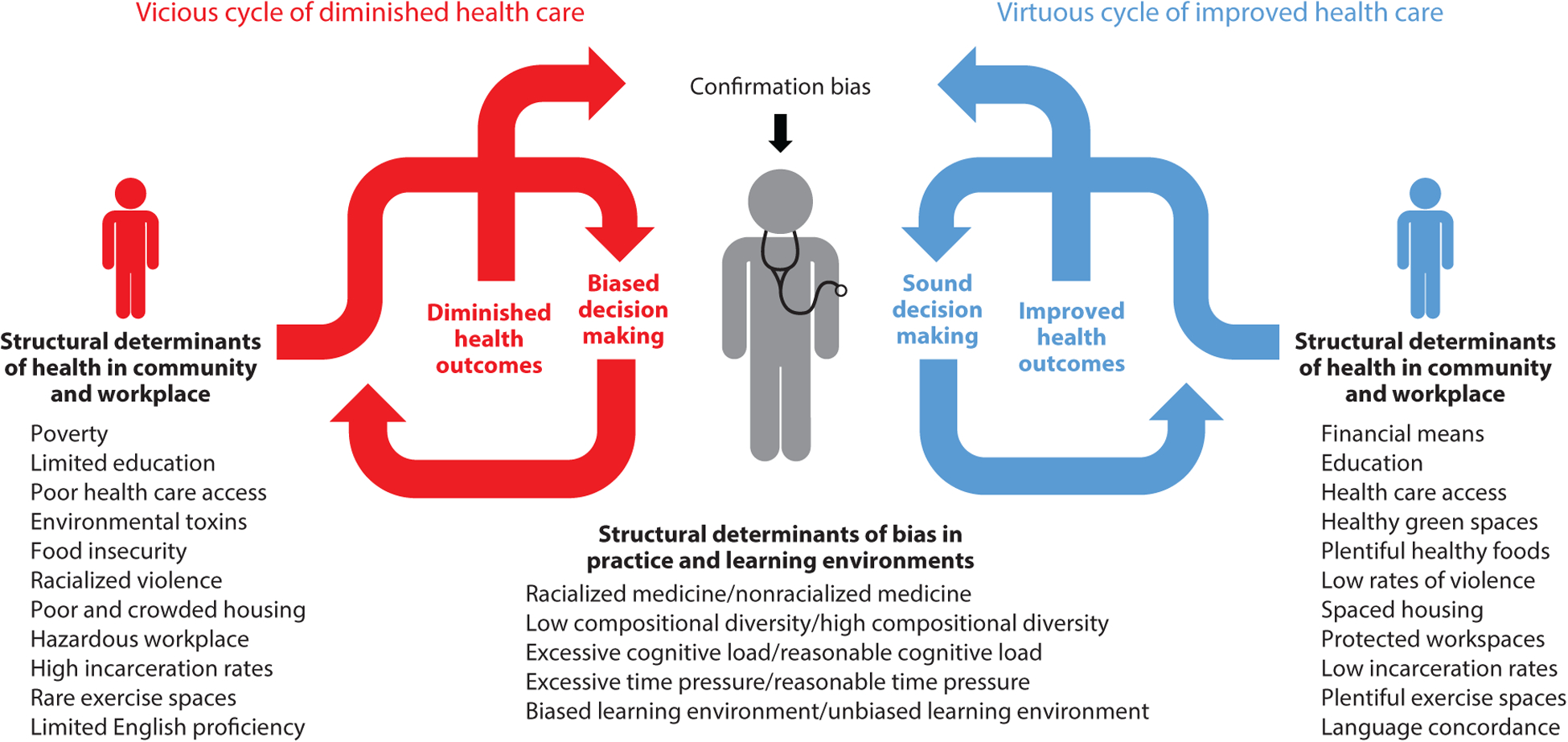
“Conceptual Model Based on Jones’s (54) allegory A Gardener’s Tale, we present a conceptual model of implicit biases of health care providers and the key structural factors affecting these biases (Figure 2).”
BackgroundImplicit bias in healthcare professionals: a systematic review
FitzGerald, C., & Hurst, S. (2017) · BMC Medical Ethics · doi:10.1186/s12910-017-0179-8 · Cited by 2,556 · cited 4×
“A similar reinforcing dynamic may exist for marginalized populations such as those who are overweight/obese, use wheelchairs, have limited English proficiency, have mental health illness, and belong to lower socioeconomic classes (29).”
BackgroundResultInfluentialHoffman, K. M., Trawalter, S., Axt, J. R., & Oliver, M. N. (2016) · Proceedings of the National Academy of Sciences · doi:10.1073/pnas.1516047113 · Cited by 2,486 · cited 1×
“(50) demonstrated in 2016 that White medical students and residents were more likely to believe that Black patients had thicker skin and smaller brains, and were more likely to rate Black patients as feeling less pain than and not needing the same levels of pain medications as White patients.”
BackgroundRacism and health: evidence and needed research
Williams, D. R., Lawrence, J. A., & Davis, B. A. (2019) · Annual Review of Public Health · doi:10.1146/annurev-publhealth-040218-043750 · Cited by 2,398
Research works printed but not linked: 8
- Figure 2. Percentage of applicants to U.S. medical schools by race/ethnicity (alone), academic year 2018–2019
- Blanchard J, 2004, J. Fam. Pract., 53, 721
- Hinton PR., 1993, The Perception of People
- Lee M, 2021, Can. Med. Educ. J., 12, e7
- National Academy of Sciences (US) NtAoEU, and Institute of Medicine (US) Committee on Maximizing the Potential of Women in Academic Science and Engineering, 2007, Beyond Bias and Barriers: Fulfilling the Potential of Women in Academic Science and Engineering
- Osta K, Implicit bias and structural racialization
- Poustchi Y, 2013, Fam. Med., 45, 345
- Staats C, 2015, State of the science: implicit bias review 2015
Cited by
Sorted by citations
Items 301–400 of 426
A Case for Centering Health Equity as a Research Priority in Majority White Academic Medical Centers
Bonney, E. A., Bajaj, G. D., Darko, O. O., Avila, M. M., & Williams, B. M. (2025) · Ethnicity & Disease · doi:10.18865/ethndis-2024-14
“Evidence suggests that gains in bias awareness are often not sustained, 12 and that even while health care providers are educated on bias and its role in perpetuating health disparities, individual providers can retain prejudices that negatively impact marginalized communities ’ care.”
The Role Of Cross-Sector Collaboration In Reducing Racial And Social Disparities In Healthcare
Lal, S. (2025) · American journal of student research. · doi:10.70251/hyjr2348.331724
EFL anxiety factor analysis and teaching performance evaluation using R statistical language
Li, M. (2025) · International Journal of Information and Communication Technology · doi:10.1504/ijict.2025.146166
Toward Solutions for Destructive Collective Irrationality
Moghaddam, F. M. (2025) · SpringerBriefs in psychology · doi:10.1007/978-3-031-91875-9_4
Dullius, W. R., O’Keefe-McCarthy, S., McCleary, L., Grace, D., & Scortegagna, S. A. (2025) · Journal of Homosexuality · doi:10.1080/00918369.2025.2507889
“Interventions aimed at systematically changing structures within and outside the healthcare system may contribute to reducing biases and healthcare inequities among healthcare professionals (Vela et al., 2022).”
Inclusive Communication and Continuous Bias Assessment are Crucial in Case Management
Rhodes, M. G. (2025) · Professional Case Management · doi:10.1097/ncm.0000000000000810
Decreasing Ageism Bias Through an Interprofessional Clinical Simulation Experience
Gilroy, M., Carp, S., Griech, S. F., Ehrhardt, K., Brown, M. C., Stein, R., & Spong, K. (2025) · The Journal of Physician Assistant Education · doi:10.1097/jpa.0000000000000677
Reddy, S. C., Li, A., Horowitz, M. A., Singh, A., Gendreau, J. L., Ahmed, A. K., & Mukherjee, D. R. (2025) · Clinical Neurology and Neurosurgery · doi:10.1016/j.clineuro.2025.109026
Roth, L. M., Lee, J. H., & Morris, T. (2025) · Women s Health Issues · doi:10.1016/j.whi.2025.05.003
Racial and Socioeconomic Disparities in Autism Providers’ ACEs Inquiries
Walker, K. L., Gates, J. A., Boateng, S., Gerber, A. S., Gurba, A. N., Moskowitz, L. J., & Lerner, M. D. (2025) · Journal of Autism and Developmental Disorders · doi:10.1007/s10803-025-06948-z
Bias and Disparities in the Electronic Health Record
Lawrence, K. S. (2025) · The International Library of Bioethics · doi:10.1007/978-3-031-94690-5_13
Abu, H. O., Saczynski, J. S., Nabi, M., Ferris, A., Tisminetzky, M. S., Gurwitz, J. H., Mazor, K. M., Goldberg, R. J., Dosa, D. M., Kapoor, A., et al. (2025) · Advances in Geriatric Medicine and Research · doi:10.20900/agmr20250016
“…pronounced in marginalized populations, including racial minority groups and individuals with lower levels of education, who face greater challenges navigating complex healthcare systems either due to poor access to care, lack of trust in physicians, and discrimination from clinicians [33,34].”
It\'s time: Let\'s Erase Racism
He, L., Harold, S. F. (., & Frydrysiak-Brzozowska, A. (2025) · Newborn · doi:10.5005/newborn-4-2-iv
Nguyễn, J. V., Edwards, D. M., Egbunike‐Chukwuma, I. G., Abdalla, M., Santibañez, M., Struewing, M., Brotherton, A. L., Connor, S. E., Krauss, Z., Polisetty, R. S., et al. (2025) · JACCP JOURNAL OF THE AMERICAN COLLEGE OF CLINICAL PHARMACY · doi:10.1002/jac5.70093
“All individuals are thought to have implicit biases, which, unlike explicit biases, exist outside of our conscious awareness and may unintendedly lead to discriminatory practices [4, 5].”
Ihenetu, F. C., Ozoude, M. M., Chikwendu, C. I., Nwabueze, R. N., Okoro, C. I., Okorondu, S. I., & Anekwe, I. I. (2025) · Research Square · doi:10.21203/rs.3.rs-7246097/v1
The lived experiences of Black, Indigenous, people of color in physical therapy
Stickley, L. A., & Tufano, V. C. (2025) · Physiotherapy Theory and Practice · doi:10.1080/09593985.2025.2544978
Saha, A., Churchill, V., Rodriguez, A., Kursuncu, U., & Idris, M. Y. (2025) · doi:10.2196/preprints.82971
Perspectives on Analgesia in Patients with Nerve Blocks: A Pilot Survey of Perioperative Nurses
Jones, J. H., & Grant, S. A. (2025) · Local and Regional Anesthesia · doi:10.2147/lra.s538162
Armas, A. J. C., Madrigal, M. D. C. R., Leyva, M. E. P., & Inastrilla, C. R. A. (2025) · South Health and Policy · doi:10.56294/shp2025409
Nkemjika, S., Hall, O. T., Tetrault, J. M., & Jordan, A. (2025) · Epidemiologia · doi:10.3390/epidemiologia6030054
“These gaps in care are frequently attributed to prejudiced attitudes among healthcare providers and a lack of culturally competent care in clinical environments [13,14].”
Dress the way you want to be addressed:” Factors Contributing to Differential Care during ChildbirthPreprint
Kuwolamo, I., Aborigo, R., Dorzie, J. B. K., Ansah, P. B., Moro, A., Nutor, J. J., & Afulani, P. A. (2025) · Research Square · doi:10.21203/rs.3.rs-7243708/v1
Dhoot, R., Rose, D., Unnithan, S., Paredes, D., Roy, M., Roark, C. H., Brayo, P., Al‐Khalidi, H. R., & Spector, A. R. (2025) · Cureus · doi:10.7759/cureus.92781
“Personal awareness of disparities in clinical decisions has the potential to inspire behavioral changes among clinicians striving for equitable care [20].”
Akinyemi, O. A., Fullum, T. M., Fasokun, M., Ugochukwu, N., Hughes, K., Yue, D., Fryer, C. S., Chen, J., & White, K. (2025) · medRxiv · doi:10.1101/2025.09.18.25336081
Sahu, S., Mallick, N., Sethi, R. C., & Panda, P. (2025) · Medical virology · doi:10.1007/978-981-96-8919-4_19
Trawiński, T., Zang, C., Palumbo, L., & Donnelly, N. (2025) · Scientific Reports · doi:10.1038/s41598-025-13272-0
A Qualitative Exploration of Primary Care Clinicians’ Perceptions of Hypertensive Black Patients
Okah, E. D., Logan, E. L., James, D., & Pratt, R. J. (2025) · Journal of Racial and Ethnic Health Disparities · doi:10.1007/s40615-025-02689-y
Burus, J. D., & Page, C. G. (2025) · European Journal of Physiotherapy · doi:10.1080/21679169.2025.2574679
“However, implementation of new concepts and behaviour patterns for clinicians can be difficult [16–18].”
The Impact of Unconscious Bias in Healthcare and Diagnostic Imaging
Busch, I. M., Rimondini, M., & Giraudo, C. (2025) · Springer eBooks · doi:10.1007/978-3-032-05705-1_13
Using Theater Gaming to Foster Perspective-Taking and Mitigate Bias Among Trauma Providers
Schombs, M., Khedr, S., Norful, A. A., Pareek, E., D’Angelo, D., Chao, S. Y., Sullivan, F., Smith, M. P., Chen, C.-C., & Sample, J. M. (2025) · Journal of Trauma Nursing · doi:10.1097/jtn.0000000000000889
Intersection of race and poverty for pancreatic adenocarcinoma: A public health crisis
Wu, C., Holland, M. M., Akinola, K. K., McLeod, C., Chen, H., Rose, J. B., Bhatia, R., & Gillis, A. (2025) · The American Journal of Surgery · doi:10.1016/j.amjsurg.2025.116707
Lewis, J. E., Desta, B. D., Kleto, G., Ghogomu, M., Beohon, B. M., Nguyen, P., & Hollis, R. J. (2025) · Journal of Burn Care & Research · doi:10.1093/jbcr/iraf204
Acquiring cultural competence in crisis: Barriers and best practices from international NGO workers
Remington, C. L. (2026) · Progress in Disaster Science · doi:10.1016/j.pdisas.2026.100612
Taylor, S. L., & Petrich, M. (2025) · International Perspectives on Health Equity · doi:10.1108/iphee-08-2024-0041
Boston‐Leary, K. (2025) · Critical Care Nursing Clinics of North America · doi:10.1016/j.cnc.2025.07.005
Disparities in identification and treatment of opioid use disorder in primary care: A scoping review
Grant, K., Febres‐Cordero, S., Josiah, N., & Johnson, K. B. (2025) · Archives of Psychiatric Nursing · doi:10.1016/j.apnu.2025.152003
Nursing Home–Based Care for Children Younger Than 18 Years: 2012–2019
Kim, S., Koney-Laryea, N., Pan, Z., Jung, H., Aysola, J., Jan, S., & Ryskina, K. L. (2025) · Pediatrics Open Science · doi:10.1542/pedsos.2025-000710
Novel artificial intelligence model predicts the need for reduction of distal radius fractures
Scioscia, J. P., Fiedler, B., Ghilzai, U. M., Birhiray, D. G., Hauck, J., Chilukuri, S. V., Vemu, R., Morrow, J., & Deveza, L. R. (2025) · European Journal of Orthopaedic Surgery & Traumatology · doi:10.1007/s00590-025-04592-y
Longitudinal trends in healthcare use among racial and ethnic minority older adults, 1996–2016
Dong, Y., Wang, K., & Rizzo, V. M. (2025) · The Gerontologist · doi:10.1093/geront/gnaf286
Saha, A., Churchill, V., Rodriguez, A., Kursuncu, U., & Idris, M. Y. (2025) · JMIR Cancer · doi:10.2196/82971 · Cited by 2
“…measures, we also conducted expert assessments focused on 2 dimensions: harm, referring to content that could be emotionally distressing or medically misleading, and trust and confidence, reflecting how well the tone and framing of the response foster user trust and decision-making support [31].”
Operationalizing Implementation Coaching in a Maternal Health Setting: Lessons From the Field
deRosset, L., Jones, B. W., Tucker, C., Bryant, K., Mullenix, A. J., & Cilenti, D. (2025) · Journal of Public Health Management and Practice · doi:10.1097/phh.0000000000002318
Thompson, J. P., Bujalka, H., McKeever, S., Lipscomb, A., Moore, S., Hill, N., Kinney, S., Cham, K. M., Martin, J., Bowers, P. J., et al. (2023) · Figshare · doi:10.6084/m9.figshare.23550374
Additional file 1 of Racism against racialized migrants in healthcare in Europe: a scoping review
Pattillo, M., Stieglitz, S., Angoumis, K., & Gottlieb, N. (2023) · Figshare · doi:10.6084/m9.figshare.24217353
Thompson, J. P., Bujalka, H., McKeever, S., Lipscomb, A., Moore, S., Hill, N., Kinney, S., Cham, K. M., Martin, J., Bowers, P. J., et al. (2023) · Figshare · doi:10.6084/m9.figshare.23550377
Speer, J. E., & Conley, Q. (2024) · Figshare · doi:10.6084/m9.figshare.26679335
Additional file 2 of Racism against racialized migrants in healthcare in Europe: a scoping review
Pattillo, M., Stieglitz, S., Angoumis, K., & Gottlieb, N. (2024) · Figshare · doi:10.6084/m9.figshare.24217656
Speer, J. E., & Conley, Q. (2024) · Figshare · doi:10.6084/m9.figshare.26679338
Establishing Trust in African American Patients
Hall, G. L. (2025) · Springer eBooks · doi:10.1007/978-3-031-95774-1_2
Patel, D. A., & Suben, E. (2025) · Springer eBooks · doi:10.1007/978-3-031-97784-8_5
Quon, S., Low, S., Zhou, S., & Zheng, K. (2025) · Journal of Medical Education and Family Medicine · doi:10.62425/jmefm.1675115
Sawyer, K., & Corr, P. G. (2025) · Occupational Therapy In Health Care · doi:10.1080/07380577.2025.2604698
Enhancing health literacy among immigrant women
Barton, A. J., Katz, J. R., Huerta, C. G., Meade, C. D., Moore, K. S., Nguyen-Truong, C. K. Y., Nies, M. A., & Lauver, D. (2025) · Nursing Outlook · doi:10.1016/j.outlook.2025.102658
Vora, S., Dahlen, B., Fields, K., & Jones, V. F. (2025) · Comprehensive healthcare simulation · doi:10.1007/978-3-032-03947-7_12
Daya, S., Ju, M., Illangasekare, T., & van Schaik, S. M. (2025) · Comprehensive healthcare simulation · doi:10.1007/978-3-032-03947-7_15
Gilbert, M., & Keyser, V. (2025) · Comprehensive healthcare simulation · doi:10.1007/978-3-032-03947-7_11
Guzmán-Tordecilla, D. N., Pinzón, D., & Lucumí, D. (2026) · Journal of Racial and Ethnic Health Disparities · doi:10.1007/s40615-025-02791-1
Safe to Deliver: Black Women’s Perceptions of Social Safety in Perinatal Care Settings
Murrell, K. S., & Robillard, A. (2026) · Journal of Racial and Ethnic Health Disparities · doi:10.1007/s40615-025-02811-0
Chen, C. (2026) · International Journal of Inclusive Education · doi:10.1080/13603116.2025.2598660
“Vela et al. (2022) concluded that bias causes inequality in healthcare delivery but noted the lack of understanding of, but the critical need for effective bias reduction measures.”
Haj, M. A., & Nezafati, M. (2025) · IEEE Frontiers in Education Conference (FIE) · doi:10.1109/fie63693.2025.11328719
Herrin, S., Bell, A., & Stickley, L. A. (2026) · Journal of Physical Therapy Education · doi:10.1097/jte.0000000000000468
Gu, C., Wei, D., Zhang, K., Ren, J., Qiao, Y., Zhang, F., Zhu, Y., Xu, Z., Cao, Y., Yao, S., et al. (2026) · JMIR Research Protocols · doi:10.2196/84082
“They will also refrain from disclosing information regarding the specific benefits or risks of the treatments to patients [38].”
Binkley, C. E., Dellavalle, N. S., & Chuang, E. J. (2026) · The American Journal of Bioethics · doi:10.1080/15265161.2025.2608644
“Mitigating human bias in healthcare settings has been notoriously difficult (Vela et al. 2022).”
Hart, L. M., Joiner, A., Starks, M. A., King, H. A., Vleet, L. V., Siddiqui, F. J., Patterson, C., Gonzalez, A., Altamirano, P. G., Østbye, T., et al. (2026) · Resuscitation Plus · doi:10.1016/j.resplu.2026.101277
“18 Implicit bias has not been explored well in the prehospital setting specific to OHCA to date.”
A Multidimensional Narrative Review of Disparities in Hospice Care Use
Murali, K. P., Wang, G., Torres, D., Moreines, L. T., Brody, A. A., Bullock, K., & Estrada, L. V. (2026) · American Journal of Hospice and Palliative Medicine® · doi:10.1177/10499091261428463
Véras, M. M. S., Shannon, H., Kalu, M. E., Hockman, L., McArhur, C., Young, L., MacDonald, M. L., Chowdhrury, R., Silva, P. G. B., & Dyer, J.-O. (2026) · Geriatric Nursing · doi:10.1016/j.gerinurse.2026.103953
Xue, G., Barnes, A., Messinger, J., & Shihabuddin, C. D. (2026) · Research Square · doi:10.21203/rs.3.rs-8896078/v1
Evaluation of Otolaryngology Provider Bias in Portal Messaging
Aladetan, A. A., Merlino, D. J., Vallecillo, T., Gu, B., Carducci, V., & Brufau, S. R. (2026) · Oral Oncology · doi:10.1016/j.oraloncology.2026.107921
Unconscious Bias Influence on the Identification of Child Abuse
Normandin, P. A. (2026) · Journal of Emergency Nursing · doi:10.1016/j.jen.2025.10.019
Does Disability Bias Exist in Pediatric Orthopaedic Surgery?
Adams, T. M., Canizares, M. F., Silva, S. D., & Shore, B. J. (2026) · Journal of the Pediatric Orthopaedic Society of North America · doi:10.1016/j.jposna.2026.100349
“In addition to provider-level interventions, structural changes such as policies that prioritize accessibility and inclusive care models are essential to creating health care environments that support equitable treatment for all patients [41].”
Strategies Frontline Managers Need to Mitigate Racial Bias and Advance Equity in Healthcare
Turner, T. P., Desper, D., Madison, R. D., & Royal, C. (2026) · The Pinnacle A Journal by Scholar-Practitioners · doi:10.61643/c91362
Implicit Bias and Recognition of Biases Among Vascular Surgeons
Howard, K. A., Witrick, B., Clark, A., Atkinson, K., Morse, A., Kapoor, P., McGinigle, K. L., Minc, S. D., Alabi, O., Hicks, C. W., et al. (2026) · Journal of Surgical Research · doi:10.1016/j.jss.2026.02.004
“45,48,51 Bias training programs have been developed with mixed effectiveness for mitigating the impact of implicit biases in clinical settings.”
Wang, Z., Chapman, M., Monaghan, C., Lu, V. N., O’Connor, J., Calvert, S., Happell, B., Mitchell, I., & Scholz, B. (2026) · BMC Palliative Care · doi:10.1186/s12904-026-02039-7
Referrals to a Novel Health Care Equity Consult Service
Guyah, S., Mmeje, O. O., Shakil-Brown, P., Ayubbi, K., Bergmans, R. S., Wright, C. L., Khang, E. M., Goold, S. D., Brown, D. J., & Newman, E. A. (2026) · JAMA Network Open · doi:10.1001/jamanetworkopen.2026.0679
Caring for Individual Patients to Catalyze Organizational Equity
Wynia, M. K., & Chin, M. H. (2026) · JAMA Network Open · doi:10.1001/jamanetworkopen.2026.0661
Self-citationOn the contextuality of gender biases in pain care: theory and evidence
Bernardes, S. F., & Samulowitz, A. (2026) · Health Psychology Review · doi:10.1080/17437199.2026.2643504
“Learning from the literature on racial biases in pain care, provider awareness training might, however, be insufficient, especially when it comes to sustainable long-term behavioural changes (FitzGerald et al., 2019; Lindsay et al., 2019; Vela et al., 2022).”
Meche, A., Boonyasai, R. T., Hsu, Y., Greer, R. C., Mehta, H., Alexander, G. C., Segal, J. B., Cooper, L. A., & Jackson, J. W. (2026) · Epidemiology · doi:10.1097/ede.0000000000001964
Advancing Equity for Asian American Medical Students in Honors Society Selection
Paul, S., Lee, W. W., & Chin, M. H. (2026) · JAMA Network Open · doi:10.1001/jamanetworkopen.2026.5174
Self-citationZidan, M. S., Elfahl, A. М., Elrefaey, B. H., Ibrahim, Z. M., & Elfeky, H. M. (2026) · Journal of Integrative and Complementary Medicine · doi:10.1177/27683605261427696
Negative Descriptors of Patients With Sickle Cell Disease in the Electronic Health Record
Wesevich, A., Vangelatos, A., Sun, M., Tung, E. L., & Peek, M. E. (2026) · JAMA Network Open · doi:10.1001/jamanetworkopen.2026.6458
Self-citationNimako, N. D., Íslind, A. S., & Sigurðardóttir, S. G. (2026) · IFIP advances in information and communication technology · doi:10.1007/978-3-032-16779-8_10
Campbell, A. G., Jackson, D., Knies, A., Naz, S., Scott, E. K., Gharbi, S., & Wiehe, S. E. (2026) · Journal of Racial and Ethnic Health Disparities · doi:10.1007/s40615-026-02948-6
Nursing Care for Family Violence Among LGBTQ+ People
Sherman, A. D. F., Klepper, M., Grant, S., Febres‐Cordero, S., Szczech, M., Thompson, E. R., & Balthazar, M. S. (2026) · Springer eBooks · doi:10.1007/978-3-032-06072-3_16
Is any research ever truly bias-free? The myth of objectivity in science
Giray, L. (2026) · Naunyn-Schmiedeberg s Archives of Pharmacology · doi:10.1007/s00210-026-05362-1
Cultural competence and conflict prevention
Johansen, M. L., Schaier, M., Cohen, M. L., & Eckhardt, E. R. (2026) · Nursing Management · doi:10.1097/nmg.0000000000000353
Adekunle, T. E., Adekunle, T. B., Ogueji, I. A., Ejike, U. M., & Maloba, M. (2026) · Ethnicity and Health · doi:10.1080/13557858.2026.2663556
Euthanasia, End-of-Life Ethics, and Disability Bias
Anilkumar, A. S., & Veerabathiran, R. (2026) · SpringerBriefs in modern perspectives on disability research. · doi:10.1007/978-981-95-8197-9_4
McCauley, E., & Johnson, E. R. (2026) · SSM - Qualitative Research in Health · doi:10.1016/j.ssmqr.2026.100784
Biparva, A. J., yousefali, Y. N., Hosseinzadeh, E., & Jafari‐Koshki, T. (2026) · Iranian Journal of Nursing and Midwifery Research · doi:10.4103/ijnmr.ijnmr_370_23
Sociodemographic Factors and Overactive Bladder Treatment and Follow-up Patterns
Shinnick, J. K., Aghagoli, G., Cersonsky, T. E. K., Bocage, A., Jarmale, S., Schlichting, L. E., & Sung, V. W. (2025) · Urogynecology · doi:10.1097/spv.0000000000001710
A Policy Analysis of Mandatory Implicit Bias Training for Perinatal Nurses.
Killam, B., Dyck, M. J., Gulley, T., Hammer, D., Houston, D., & Blakeman, J. R. (2026) · Nursing for Women s Health · doi:10.1016/j.nwh.2026.01.005
Nguyen, T. T. B., Chen, Y., Yap, K.-Y., Yang, Y., Liu, L., Lin, W.-H., Huang, C., Griffiths, M. D., & Lin, C.-W. (2026) · Journal of Applied Gerontology · doi:10.1177/07334648261452326
From Mendelson to modern labour wards: rethinking fasting in labour
Lucas, D. N., & Adansi, D. (2026) · British Journal of Anaesthesia · doi:10.1016/j.bja.2026.04.049
Advancing Birth Equity Through Quality Improvement Education: The SPEAK UP Champion Course
Byfield, R., & Bingham, D. (2026) · Health Equity · doi:10.1177/24731242261449035
“15 These biases shape treatment decisions and patient – caretaker interactions 10,14,16 and are associated with discriminatory care patterns and adverse outcomes, particularly when implicit bias is activated under stressful conditions.”
Seo-Lee, A., Sampson, M., Kim, S., & Moeller, D. (2026) · Frontiers in Public Health · doi:10.3389/fpubh.2026.1801820
“The healthcare setting is “laden with structural bias from racialized medicine, a biased learning environment, and poor compositional diversity” (5); bias also occurs as a result of our brains’ attempts to interpret the copious amount of information we take in each day.”
Ethical and regulatory considerations in nanomedicines
Ranga, V. (2026) · Elsevier eBooks · doi:10.1016/b978-0-443-36328-3.00011-5
Fairfax, F. G., & Wilder, J. M. (2026) · Social Science & Medicine · doi:10.1016/j.socscimed.2026.119505 · Cited by 1
Heboyan, A. G., Saini, R. S., Binduhayyim, R. I. H., Gurumurthy, V., Vaddamanu, S. K., Alarcón‐Sánchez, M. A., Fraile, J. F., & Fiorillo, L. (2026) · Journal of Prosthetic Dentistry · doi:10.1016/j.prosdent.2026.06.002
Li, B., Hsu, P., Khatab, Z., Zai, C. C. H., Zai, G. C., Das, S., & Mah, L. (2026) · Equality Diversity and Inclusion An International Journal · doi:10.1108/edi-10-2025-0737
Psychosis and personality disorders: an online survey of public views and behaviour
Riches, S., Williams, G., Moss, H., Fisher, H. L., & Rumball, F. (2026) · Journal of Mental Health · doi:10.1080/09638237.2026.2672344
Pan, T. L., Mateo-Kubach, P., Hsu, A. H.-C., Dávid, K. L., Obermair, H., Gill, S., Noll, F., Jugeli, B., Bhandoria, G. P., Schivardi, G., et al. (2026) · International Journal of Gynecological Cancer · doi:10.1016/j.ijgc.2026.104822
Barriers to Patients Receiving Care
Lewis, T. L., Wellings, F. S., Kieck, D. M., & Iskander, P. (2026) · Springer eBooks · doi:10.1007/978-3-032-21675-5_26
Metadata
- Authors
- Vela, M. B., Erondu, A. I., Smith, N. A., Peek, M. E., Woodruff, J. N., & Chin, M. H.
- Affiliations
- University of Illinois Chicago (US)
- University of California, Los Angeles (US)
- Hospital of the University of Pennsylvania (US)
- University of Chicago (US)
- ORCID
- Woodruff, James N.
- Venue
- Annual Review of Public Health
- Publisher
- Annual Reviews
- Published
- 2022-04-05
- Volume
- 43
- Issue
- 1
- Pages
- 477-501
- ISSN
- 0163-7525 (ISSN-L)
- 1545-2093
- PMC
- PMC9172268
- OpenAlex
- W4206528627
- Cited by
- 426
- References
- 102
- Citations by year
- 2026: 89 · 2025: 176 · 2024: 97 · 2023: 55 · 2022: 9
- FWCI
- 14.19
- Type
- journal article
- Language
- en
- Open access
- hybrid
- doi.org
- Locations
- Annual Review of Public Health (publishedVersion, cc-by)
- PubMed (publishedVersion)
- PubMed Central (acceptedVersion, cc-by)
- Funders
- National Institute of Diabetes and Digestive and Kidney Diseases (P30DK092949)
- Topics
- Health Sciences › Medicine › Public Health, Environmental and Occupational Health › Cultural Competency in Health Care
- Social Sciences › Sociology and Political Science › Racial and Ethnic Identity Research
- Social Sciences › Sociology and Political Science › Social and Intergroup Psychology
- Keywords
- implicit bias, explicit bias, healthcare workers, racial and ethnic minorities, health disparities, bias interventions, patient-clinician communication, clinical decision-making, organizational discrimination, structural change, conceptual model
- MeSH terms
- Attitude of Health Personnel, Communication, Health Personnel, Humans, Bias, Healthcare Disparities
About these checks
Registry, retraction, Cites and statistics results are computed, not judged, with one exception: a printed reference that no index lists is read once by a model before it counts as a citation error. Claims are extracted by a model and kept only when their quote appears verbatim in the text; each cited source is then checked, with a model’s help, for whether it says what the claim relies on. Those verdicts can be wrong — read the claim’s quote and the cited source before relying on one.
Statistics and arithmetic are recomputed, not judged.
Confidence bands are shown only for fields calibrated on our annotated test set. None is calibrated yet, so no band is shown.
What counts as a claim ›How we measure confidence ›How we check this ›
Are you an author, or do you see a problem with this page? Request a review
