

The DOI matches its Crossref record; 47 of the 47 references it cites were found in a registry or an index; 6 of the 77 sources its claims cite were checked for support.
Trimethylamine‐N‐Oxide Induces Vascular Inflammation by Activating the NLRP3 Inflammasome Through the SIRT3‐SOD2‐mtROS Signaling Pathway
Open accessAbstract
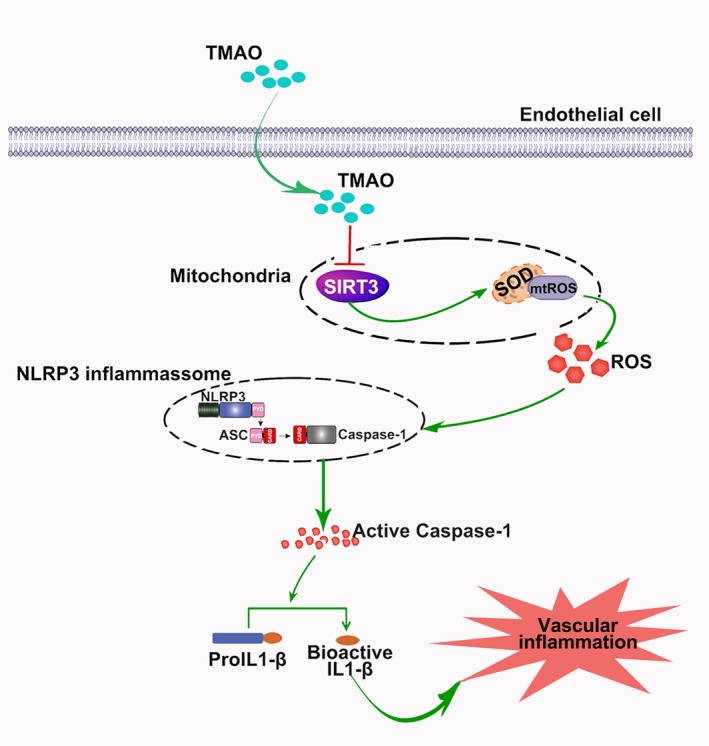
Background: Trimethylamine‐N‐oxide ( TMAO ) has recently been identified as a novel and independent risk factor for promoting atherosclerosis through inducing vascular inflammation. However, the exact mechanism is currently unclear. Studies have established a central role of nucleotide‐binding oligomerization domain–like receptor family pyrin domain–containing 3 ( NLRP 3) inflammasome in the pathogenesis of vascular inflammation. Here, we examined the potential role of the NLRP 3 inflammasome in TMAO ‐induced vascular inflammation in vitro and in vivo and the underlying mechanisms. Methods and Results: Experiments using liquid chromatography‐tandem mass spectrometry, Western blot, and fluorescent probes showed that TMAO ‐induced inflammation in human umbilical vein endothelial cells ( HUVEC s) and aortas from ApoE −/− mice. Moreover, TMAO promoted NLRP 3 and activated caspase‐1 p20 expression and caspase‐1 activity in vitro and in vivo. Notably, a caspase‐1 inhibitor ( YVAD ), an NLRP 3 inhibitor ( MCC 950), as well as NLRP 3 short interfering RNA attenuated TMAO ‐induced activation of the NLRP 3 inflammasome, subsequently leading to suppression of inflammation in HUVEC s. TMAO additionally stimulated reactive oxygen species ( ROS ) generation, in particular, mitochondrial ROS , while inhibiting manganese superoxide dismutase 2 (SOD2) activation and sirtuin 3 ( SIRT 3) expression in HUVEC s and aortas from ApoE −/− mice. TMAO ‐induced endothelial NLRP 3 inflammasome activation was ameliorated by the mitochondrial ROS scavenger Mito‐ TEMPO , or SIRT 3 overexpression in HUVEC s. Conversely, TMAO failed to further inhibit SOD2 and activate the NLRP 3 inflammasome or induce inflammation in SIRT 3 short interfering RNA –treated HUVEC s and aortas from SIRT 3 −/− mice. Conclusions: TMAO promoted vascular inflammation by activating the NLRP 3 inflammasome, and the NLRP 3 inflammasome activation in part was mediated through inhibition of the SIRT 3‐ SOD 2–mitochondrial ROS signaling pathway.
Overview
AI snapshot
Written from the paper’s full text.
TL;DR
TMAO promotes vascular inflammation by activating the NLRP3 inflammasome, mediated in part through inhibition of the SIRT3-SOD2-mtROS signaling pathway. In HUVECs and mouse aortas, TMAO increased NLRP3/caspase-1 p20 and inflammatory markers, while SIRT3 overexpression or mtROS scavenging attenuated these effects.
Key findings
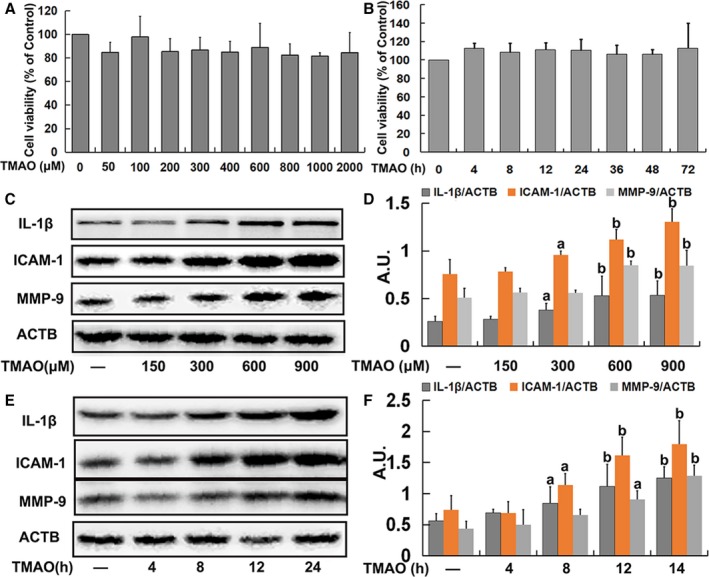
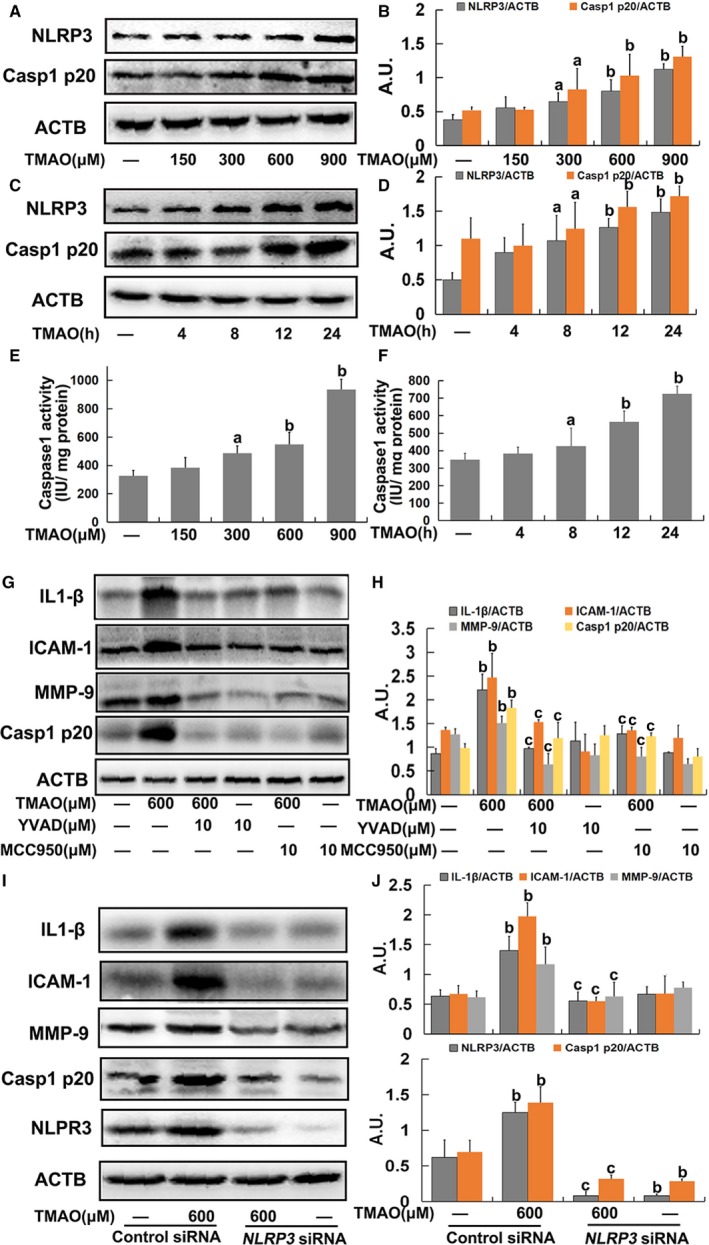
- TMAO (600 μmol/L for 24 hours) increased IL-1β, ICAM-1, and MMP-9 expression and monocyte adhesion in HUVECs without significantly affecting cell viability; TMAO also promoted NLRP3 and caspase-1 p20 expression and caspase-1 activity in concentration- and time-dependent manners.
- NLRP3 inhibition with MCC950 (10 μmol/L), caspase-1 inhibition with YVAD (10 μmol/L), or NLRP3 siRNA attenuated TMAO-induced NLRP3/caspase-1 p20 and inflammatory protein expression, as well as monocyte adhesion.
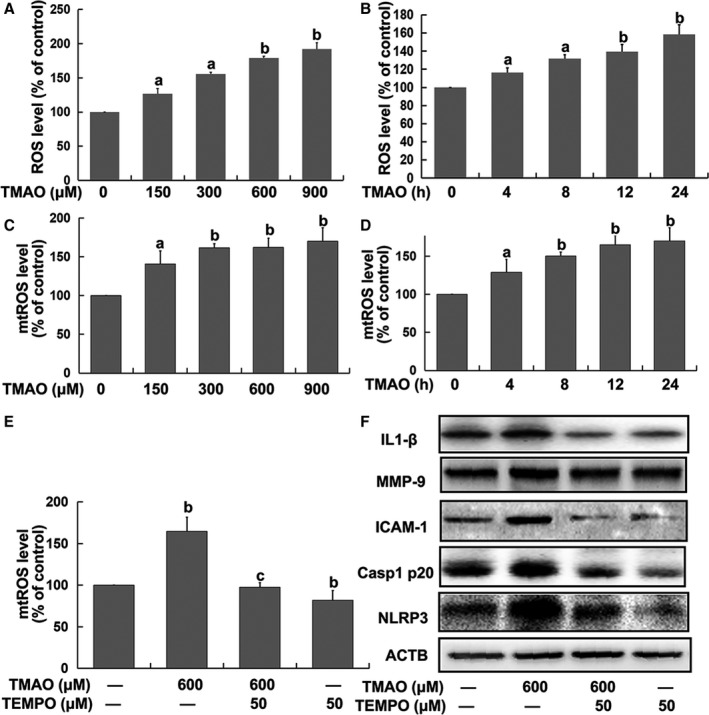
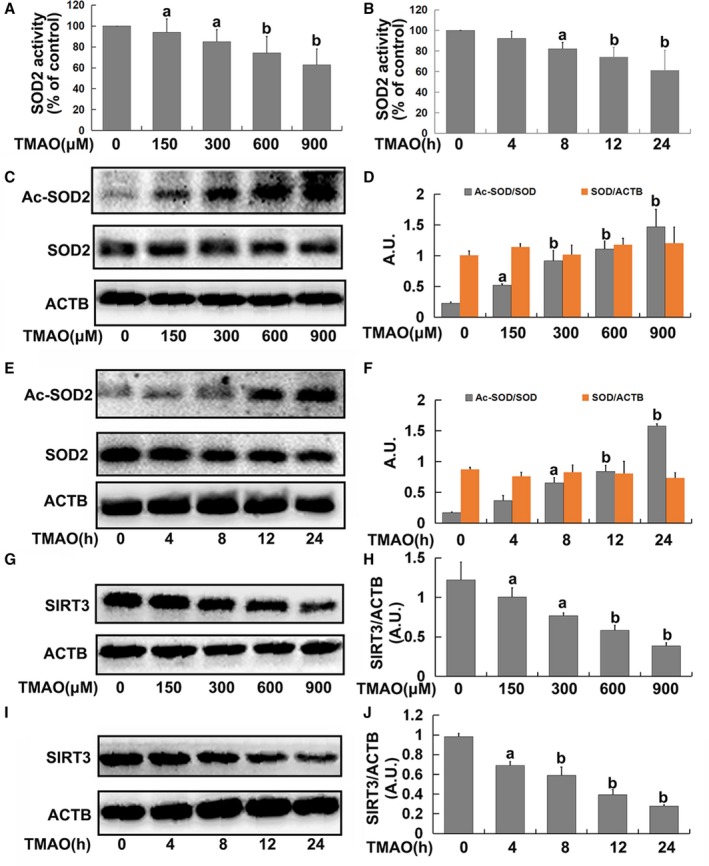
- TMAO increased total ROS and mitochondrial ROS (mtROS); the mtROS scavenger Mito-TEMPO (TEMPO, 50 μmol/L) inhibited TMAO-induced NLRP3 inflammasome activation and inflammation. TMAO suppressed SOD2 activity and SIRT3 expression and increased SOD2 acetylation; SIRT3 siRNA mimicked TMAO effects, whereas SIRT3 overexpression diminished them.
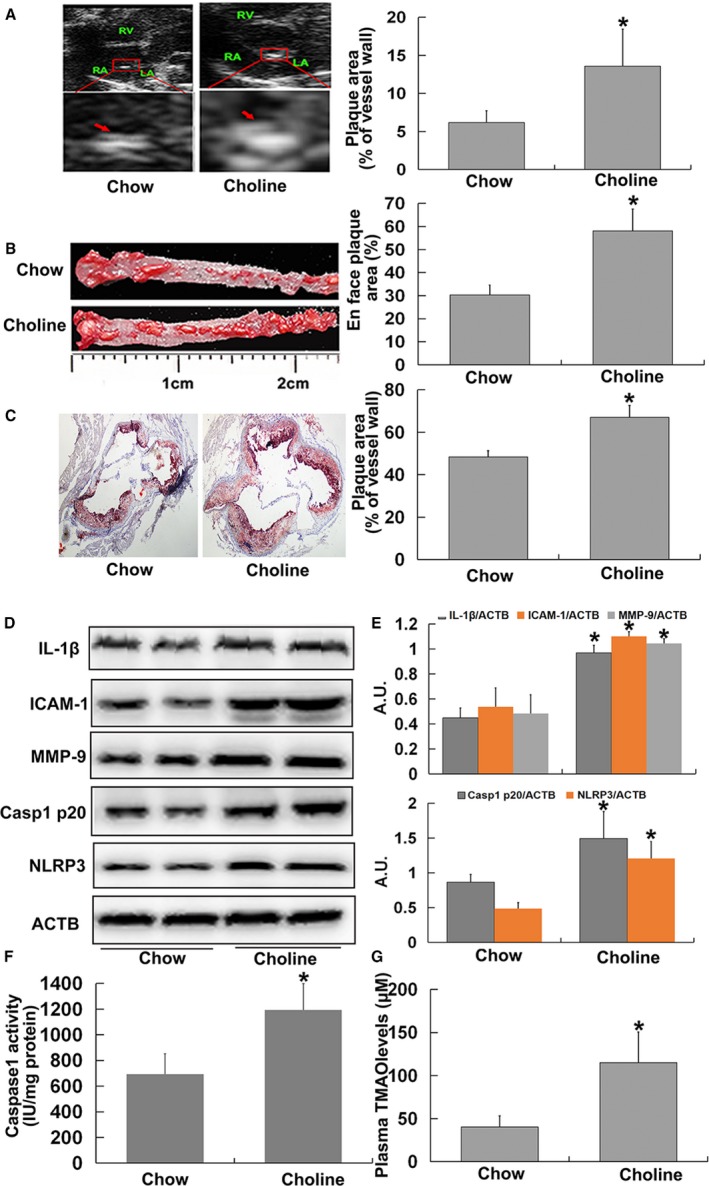
- In vivo, 1% choline for 4 months in ApoE−/− mice increased plasma TMAO, atherosclerotic lesion areas in whole aorta and aortic root, and aortic NLRP3, caspase-1 p20, caspase-1 activity, IL-1β, ICAM-1, and MMP-9; SIRT3−/− mice showed similar inflammasome activation even on chow diet.
Methods
- In vitro: HUVECs were treated with TMAO (0, 150, 300, 600, 900 μmol/L) for 24 hours or 600 μmol/L for 0, 4, 12, and 24 hours; interventions included YVAD (10 μmol/L), MCC950 (10 μmol/L), TEMPO (50 μmol/L), NLRP3 siRNA, SIRT3 siRNA, and SIRT3 overexpression plasmid. Assays included Western blot, caspase-1 activity, SOD2 activity, DCFH-DA/MitoSOX ROS detection, and monocyte adhesion.
- In vivo: 8-week-old female 129/SvJ wild-type, ApoE−/−, and SIRT3−/− mice were fed standard chow or 1% choline-supplemented chow for 4 months; n=10 per group. Analyses included plasma TMAO by liquid chromatography-tandem mass spectrometry, aortic Western blot, caspase-1 and SOD2 activity, ultrasound of aortic sinus, and Oil-red O lesion quantification.
- Statistics: data presented as means±SE of 3 experiments; t test and 1-way ANOVA with Tukey-Kramer post hoc test, significance at P<0.05.
Limitations
- Stated by the paper: the 600 μmol/L TMAO concentration used for in vitro time-course and mechanism studies was higher than that in humans; the exact role of NF-κB in TMAO-induced NLRP3 inflammasome activation needs further studies.
- Evident from the text: in vivo experiments used dietary choline as a TMAO precursor rather than direct TMAO administration, and only female mice were studied; no human intervention data are presented.
Model-written summary. Check it against the paper before relying on it.
Integrity signals
Registry
Cites
Statistics
Figures
Verification
Claims the paper makes
69 Own result · 48 Not checked yet · 20 Own interpretation · 4 Own method · 3 Partly supported · 1 Supported · accuracy not yet measured
A result the paper reports from its own data — it cites no other source for it, so there is none to check. The quote shows it is in the paper.
In the paper
“TMAO was tolerated by endothelial cells and exerted no significant effects on cell viability”
- Also stated in: § TMAO Induced Inflammation in Endothelial Cells · hedged
“These results indicated that TMAO triggered inflammation with no significant effects on cell viability in endothelial cells.”
§ Trimethylamine‐N‐Oxide Induces Vascular Inflammation by Activating the NLRP3 Inflammasome Through the SIRT3‐SOD2‐mtROS Signaling Pathway > Results > TMAO Induced Inflammation in Endothelial Cells
plain- Asserted: passes — The authors put it forward as true.
- Checkable: passes — It can be checked against evidence.
- Load-bearing: passes — The paper’s conclusions depend on it.
- Based: passes — The paper gives a reason why it holds.
- Also stated in: § TMAO Induced Inflammation in Endothelial Cells · hedged
A result the paper reports from its own data — it cites no other source for it, so there is none to check. The quote shows it is in the paper.
In the paper
“Additionally, SIRT3 siRNA had similar effects on IL‐1β, ICAM‐1, and MMP‐9 expression as TMAO.”
§ Trimethylamine‐N‐Oxide Induces Vascular Inflammation by Activating the NLRP3 Inflammasome Through the SIRT3‐SOD2‐mtROS Signaling Pathway > Results > TMAO Induced mtROS Accumulation via the SIRT3‐SOD2 Pathway in Endothelial Cells
plaincorrelational- Asserted: passes — The authors put it forward as true.
- Checkable: passes — It can be checked against evidence.
- Load-bearing: passes — The paper’s conclusions depend on it.
- Based: passes — The paper gives a reason why it holds.
A result the paper reports from its own data — it cites no other source for it, so there is none to check. The quote shows it is in the paper.
In the paper
“acetylation levels of SOD2 were markedly increased by TMAO in a dose‐ and time‐dependent manner.”
§ Trimethylamine‐N‐Oxide Induces Vascular Inflammation by Activating the NLRP3 Inflammasome Through the SIRT3‐SOD2‐mtROS Signaling Pathway > Results > TMAO Induced mtROS Accumulation via the SIRT3‐SOD2 Pathway in Endothelial Cells
plaindirect- Asserted: passes — The authors put it forward as true.
- Checkable: passes — It can be checked against evidence.
- Load-bearing: passes — The paper’s conclusions depend on it.
- Based: passes — The paper gives a reason why it holds.
A result the paper reports from its own data — it cites no other source for it, so there is none to check. The quote shows it is in the paper.
In the paper
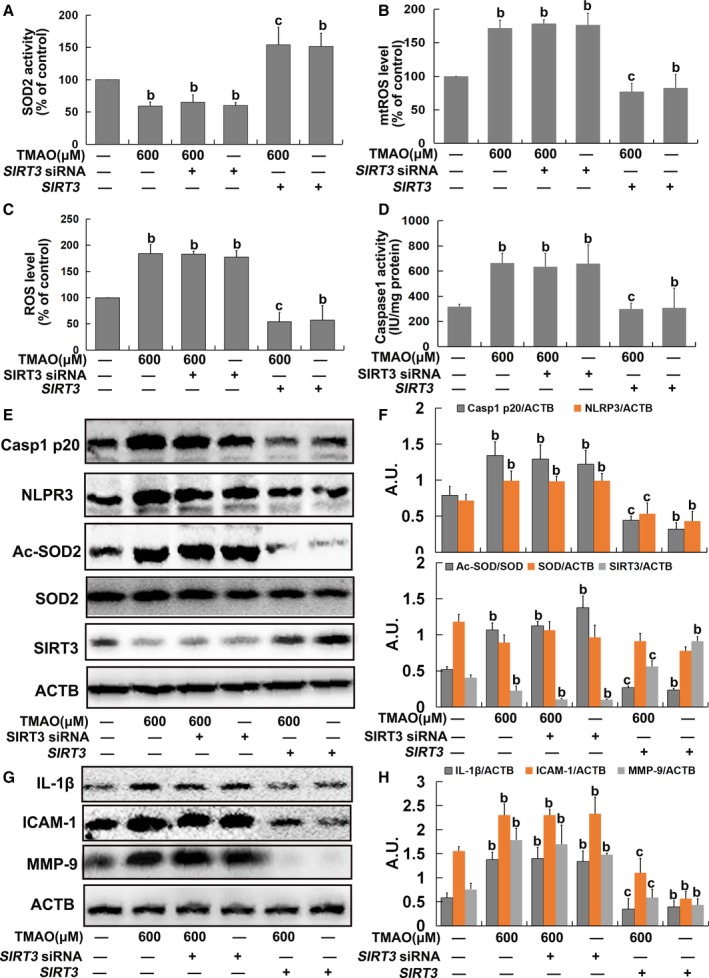
“However, the TMAO‐induced increase in IL‐1β, ICAM‐1, and MMP‐9 was markedly attenuated on transfection with SIRT3 overexpression plasmid (Figure 5G and 5H).”
§ Trimethylamine‐N‐Oxide Induces Vascular Inflammation by Activating the NLRP3 Inflammasome Through the SIRT3‐SOD2‐mtROS Signaling Pathway > Results > TMAO Induced mtROS Accumulation via the SIRT3‐SOD2 Pathway in Endothelial Cells
plaindirect- Asserted: passes — The authors put it forward as true.
- Checkable: passes — It can be checked against evidence.
- Load-bearing: passes — The paper’s conclusions depend on it.
- Based: passes — The paper gives a reason why it holds.
A result the paper reports from its own data — it cites no other source for it, so there is none to check. The quote shows it is in the paper.
In the paper
“Transfection with SIRT3 siRNA alone led to decreased SOD2 activity and increased total ROS and mtROS levels followed by an increase in caspase‐1 activity and NLRP3 and caspase‐1 p20 expression, similar to the results obtained with TMAO and SIRT3 siRNA cotreatment (Figure 5A through 5F).”
§ Trimethylamine‐N‐Oxide Induces Vascular Inflammation by Activating the NLRP3 Inflammasome Through the SIRT3‐SOD2‐mtROS Signaling Pathway > Results > TMAO Induced mtROS Accumulation via the SIRT3‐SOD2 Pathway in Endothelial Cells
plaindirect- Asserted: passes — The authors put it forward as true.
- Checkable: passes — It can be checked against evidence.
- Load-bearing: passes — The paper’s conclusions depend on it.
- Based: passes — The paper gives a reason why it holds.
A result the paper reports from its own data — it cites no other source for it, so there is none to check. The quote shows it is in the paper.
In the paper
“Conversely, transfection with the SIRT3 overexpression plasmid significantly diminished the effects of TMAO on SOD2 activity, mtROS/ROS generation, and NLRP3 inflammasome activation (Figure 5A through 5F).”
§ Trimethylamine‐N‐Oxide Induces Vascular Inflammation by Activating the NLRP3 Inflammasome Through the SIRT3‐SOD2‐mtROS Signaling Pathway > Results > TMAO Induced mtROS Accumulation via the SIRT3‐SOD2 Pathway in Endothelial Cells
plaindirect- Asserted: passes — The authors put it forward as true.
- Checkable: passes — It can be checked against evidence.
- Load-bearing: passes — The paper’s conclusions depend on it.
- Based: passes — The paper gives a reason why it holds.
A result the paper reports from its own data — it cites no other source for it, so there is none to check. The quote shows it is in the paper.
In the paper
“Compared with chow‐fed ApoE−/− mice, the atherosclerotic lesion areas in whole aorta and aortic root, as indices of AS severity, were significantly higher in mice fed choline (Figure 6A through 6C).”
§ Trimethylamine‐N‐Oxide Induces Vascular Inflammation by Activating the NLRP3 Inflammasome Through the SIRT3‐SOD2‐mtROS Signaling Pathway > Results > TMAO Induced Vascular Inflammation via NLRP3 Inflammasome Activation In Vivo
plaincorrelational- Asserted: passes — The authors put it forward as true.
- Checkable: passes — It can be checked against evidence.
- Load-bearing: passes — The paper’s conclusions depend on it.
- Based: passes — The paper gives a reason why it holds.
A result the paper reports from its own data — it cites no other source for it, so there is none to check. The quote shows it is in the paper.
In the paper
“Transfection with SIRT3 siRNA alone led to decreased SOD2 activity and increased total ROS and mtROS levels followed by an increase in caspase‐1 activity and NLRP3 and caspase‐1 p20 expression, similar to the results obtained with TMAO and SIRT3 siRNA cotreatment (Figure 5A through 5F).”
§ Trimethylamine‐N‐Oxide Induces Vascular Inflammation by Activating the NLRP3 Inflammasome Through the SIRT3‐SOD2‐mtROS Signaling Pathway > Results > TMAO Induced mtROS Accumulation via the SIRT3‐SOD2 Pathway in Endothelial Cells
plaindirect- Asserted: passes — The authors put it forward as true.
- Checkable: passes — It can be checked against evidence.
- Load-bearing: passes — The paper’s conclusions depend on it.
- Based: passes — The paper gives a reason why it holds.
A result the paper reports from its own data — it cites no other source for it, so there is none to check. The quote shows it is in the paper.
In the paper
“TMAO additionally stimulated reactive oxygen species (ROS) generation, in particular, mitochondrial ROS, while inhibiting manganese superoxide dismutase 2 (SOD2) activation and sirtuin 3 (SIRT3) expression in HUVECs and aortas from ApoE−/− mice.”
§ Trimethylamine‐N‐Oxide Induces Vascular Inflammation by Activating the NLRP3 Inflammasome Through the SIRT3‐SOD2‐mtROS Signaling Pathway > Abstract > Methods and Results
plaindirect- Asserted: passes — The authors put it forward as true.
- Checkable: passes — It can be checked against evidence.
- Load-bearing: passes — The paper’s conclusions depend on it.
- Based: passes — The paper gives a reason why it holds.
A result the paper reports from its own data — it cites no other source for it, so there is none to check. The quote shows it is in the paper.
In the paper
“Compared with chow‐fed ApoE−/− mice, the atherosclerotic lesion areas in whole aorta and aortic root, as indices of AS severity, were significantly higher in mice fed choline (Figure 6A through 6C).”
§ Trimethylamine‐N‐Oxide Induces Vascular Inflammation by Activating the NLRP3 Inflammasome Through the SIRT3‐SOD2‐mtROS Signaling Pathway > Results > TMAO Induced Vascular Inflammation via NLRP3 Inflammasome Activation In Vivo
plaincorrelational- Asserted: passes — The authors put it forward as true.
- Checkable: passes — It can be checked against evidence.
- Load-bearing: passes — The paper’s conclusions depend on it.
- Based: passes — The paper gives a reason why it holds.
- Probably not a substantial claim. 34
- It may state two separate claims as one. 27
The cited sources support only part of this claim — read each source’s verdict below.
In the paper
“Following decades of research, the most well‐characterized mechanism underlying activation of the NLRP3 inflammasome is reactive oxygen species (ROS), particularly mitochondrial ROS (mtROS), generation.”
§ Trimethylamine‐N‐Oxide Induces Vascular Inflammation by Activating the NLRP3 Inflammasome Through the SIRT3‐SOD2‐mtROS Signaling Pathway > Introduction
What the sources say
- Not checked yetcites [14] Zhou RB, Yazdi AS, Menu P, Tschopp J. A role for mitochondria in NLRP3 inflammasome activation. Nature. 2011; 469: 221– 225. 21124315 source
- Partly supportedcites [15] Alfonso‐Loeches S, Urena‐Peralta JR, Morillo‐Bargues MJ, Oliver‐De La Cruz J, Guerri C. Role of mitochondria ROS generation in ethanol‐induced NLRP3 inflammasome activation and cell death in astroglial cells. Front Cell Neurosci. 2014; 8: 216– 234. 25136295 PMC4118026 sourceExperimental — accuracy not yet measured
The Results section calls ROS generation one mechanism of NLRP3 activation and says mitochondrial ROS seems particularly critical. But the Introduction says the mechanisms remain unclear and lists several possibilities; the paper does not establish ROS generation as the most well-characterized mechanism. (LLM, conf=0.84)
boosteddirect- Asserted: passes — The authors put it forward as true.
- Checkable: passes — It can be checked against evidence.
- Load-bearing: passes — The paper’s conclusions depend on it.
- Based: passes — The paper gives a reason why it holds.
Probably not a substantial claim.
The cited sources support only part of this claim — read each source’s verdict below.
In the paper
“Oxidized low‐density lipoprotein and cholesterol crystals activate the inflammasome, thereby leading to the processing and secretion of the proinflammatory cytokines IL‐1β and IL‐18 and ultimately triggering vascular inflammation via upregulation of adhesion molecules.9, 10”
§ Trimethylamine‐N‐Oxide Induces Vascular Inflammation by Activating the NLRP3 Inflammasome Through the SIRT3‐SOD2‐mtROS Signaling Pathway > Introduction
What the sources say
- Supportedcites [9] Yin Y, Pastrana JL, Li XY, Huang X, Mallilankaraman K, Choi ET, Madesh M, Wang H, Yang XF. Inflammasomes: sensors of metabolic stresses for vascular inflammation. Front Biosci (Landmark Ed). 2013; 18: 638– 649. 23276949 PMC3590813 source
Section 4.2 states that oxidized LDL and cholesterol crystals induce NLRP3 inflammasome activation, resulting in IL-1β and IL-18 production, and links both cytokines to atherogenesis. Section 3.3 describes their processing by caspase-1 and says IL-1β upregulates adhesion molecules that promote leukocyte movement to injury sites. Together, these passages support the attributed pathway to vascular inflammation. (LLM, conf=0.90)
- Partly supportedcites [10] Duewell P, Kono H, Rayner KJ, Sirois CM, Vladimer G, Bauernfeind FG, Abela GS, Franchi L, Nunez G, Schnurr M, Espevik T, Lien E, Fitzgerald KA, Rock KL, Moore KJ, Wright SD, Hornung V, Latz E. NLRP3 inflammasomes are required for atherogenesis and activated by cholesterol crystals. Nature. 2010; 464: 1357– 1361. 20428172 PMC2946640 sourceExperimental — accuracy not yet measured
The main-text passages report that cholesterol crystals activate NLRP3, cause caspase-1-dependent IL-1β release, and produce cleaved IL-18 in macrophages. They also report that oxidized LDL can generate crystals and that minimally modified LDL primes cells for NLRP3 activation, but do not establish the claim's unqualified direct activation by oxidized LDL. The passages on inflammation do not describe vascular inflammation occurring via upregulation of adhesion molecules. Page numbers are not available in our copy. (LLM, conf=0.88)
plaindirect- Asserted: passes — The authors put it forward as true.
- Checkable: passes — It can be checked against evidence.
- Load-bearing: fails — The paper’s conclusions may not depend on it.
- Based: passes — The paper gives a reason why it holds.
Probably not a substantial claim. The paper’s conclusions may not depend on it. It may state two separate claims as one.
- Supported
Every source the paper cites for this claim was checked and supports it.
In the paper
“Moreover, recent studies have demonstrated that sterol regulatory element binding protein 2 activation of NLRP3 inflammasome in endothelium mediates hemodynamic‐induced AS susceptibility,11”
§ Trimethylamine‐N‐Oxide Induces Vascular Inflammation by Activating the NLRP3 Inflammasome Through the SIRT3‐SOD2‐mtROS Signaling Pathway > Discussion
What the sources say
- Supportedcites [11] Xiao H, Lu M, Lin TY, Chen Z, Chen G, Wang WC, Marin T, Shentu TP, Wen L, Gongol B, Sun W, Liang X, Chen J, Huang HD, Pedra JHF, Johnson DA, Shyy JYJ. Sterol regulatory element binding protein 2 activation of NLRP3 inflammasome in endothelium mediates hemodynamic‐induced atherosclerosis susceptibility. Circulation. 2013; 128: 632– 642. 23838163 PMC3798034 source
The Discussion states that atheroprone flow induces the endothelial NLRP3 inflammasome through SREBP2 activation, increasing susceptibility to focal atherosclerosis in conjunction with hyperlipidemia. The Methods and Results section also reports that endothelial SREBP2 activation increased atherosclerosis in mice with hyperlipidemia. (LLM, conf=0.94)
boosteddirect- Asserted: passes — The authors put it forward as true.
- Checkable: passes — It can be checked against evidence.
- Load-bearing: fails — The paper’s conclusions may not depend on it.
- Based: passes — The paper gives a reason why it holds.
Probably not a substantial claim. The paper’s conclusions may not depend on it.
- Supported
The cited sources support only part of this claim — read each source’s verdict below.
In the paper
“Researchers have confirmed that TMAO contributes to the development of AS, in part, by affecting cholesterol metabolism through regulating the major pathway for cholesterol elimination from the body and the bile acid synthetic pathway at multiple levels.4, 6”
§ Trimethylamine‐N‐Oxide Induces Vascular Inflammation by Activating the NLRP3 Inflammasome Through the SIRT3‐SOD2‐mtROS Signaling Pathway > Discussion
What the sources say
- Partly supportedcites [4] Wang Z, Klipfell E, Bennett BJ, Koeth R, Levison BS, Dugar B, Feldstein AE, Britt EB, Fu X, Chung YM, Wu Y, Schauer P, Smith JD, Allayee H, Tang WH, DiDonato JA, Lusis AJ, Hazen SL. Gut flora metabolism of phosphatidylcholine promotes cardiovascular disease. Nature. 2011; 472: 57– 63. 21475195 PMC3086762 sourceExperimental — accuracy not yet measured
The Results report that TMAO supplementation increased atherosclerotic plaque in mice, and the Discussion describes effects on atherogenic macrophages. The paper does not establish the claimed mechanism of regulating cholesterol elimination or bile acid synthesis; the passages instead discuss macrophage scavenger receptors and cholesterol accumulation. (LLM, conf=0.88)
- Partly supportedcites [6] Koeth RA, Wang Z, Levison BS, Buffa JA, Org E, Sheehy BT, Britt EB, Fu X, Wu Y, Li L, Smith JD, DiDonato JA, Chen J, Li H, Wu GD, Lewis JD, Warrier M, Brown JM, Krauss RM, Tang WH, Bushman FD, Lusis AJ, Hazen SL. Intestinal microbiota metabolism of l‐carnitine, a nutrient in red meat, promotes atherosclerosis. Nat Med. 2013; 19: 576– 585. 23563705 PMC3650111 sourceExperimental — accuracy not yet measured
The Results section (‘TMAO alters sterol metabolism in in vivo compartments’; page unavailable) reports that TMAO alters bile acid synthesis, a major pathway for cholesterol elimination. The Discussion identifies reduced reverse cholesterol transport as a pro-atherosclerotic effect of TMAO, but says it is unclear whether the bile acid changes contribute to that reduction. The claim presents that specific link to atherosclerosis more firmly than the paper does. (LLM, conf=0.84)
boosteddirect- Asserted: passes — The authors put it forward as true.
- Checkable: passes — It can be checked against evidence.
- Load-bearing: fails — The paper’s conclusions may not depend on it.
- Based: passes — The paper gives a reason why it holds.
Probably not a substantial claim. The paper’s conclusions may not depend on it.
- Partly supported
A result the paper reports from its own data — it cites no other source for it, so there is none to check. The quote shows it is in the paper.
In the paper
“Experiments using liquid chromatography‐tandem mass spectrometry, Western blot, and fluorescent probes showed that TMAO‐induced inflammation in human umbilical vein endothelial cells (HUVECs) and aortas from ApoE−/− mice.”
- Also stated in: § TMAO Induced Inflammation in Endothelial Cells · hedged
“These results indicated that TMAO triggered inflammation with no significant effects on cell viability in endothelial cells.”
§ Trimethylamine‐N‐Oxide Induces Vascular Inflammation by Activating the NLRP3 Inflammasome Through the SIRT3‐SOD2‐mtROS Signaling Pathway > Abstract > Methods and Results
plaindirect- Asserted: passes — The authors put it forward as true.
- Checkable: passes — It can be checked against evidence.
- Load-bearing: passes — The paper’s conclusions depend on it.
- Based: passes — The paper gives a reason why it holds.
It may state two separate claims as one.
- Also stated in: § TMAO Induced Inflammation in Endothelial Cells · hedged
A result the paper reports from its own data — it cites no other source for it, so there is none to check. The quote shows it is in the paper.
In the paper
“Pretreatment with MCC950 (10 μmol/L) or YVAD (10 μmol/L) markedly inhibited TMAO‐induced NLRP3 and caspase‐1 p20 expression, followed by decreased expression of IL‐1β, ICAM‐1, and MMP9 in endothelial cells (Figure 2G and 2H).”
§ Trimethylamine‐N‐Oxide Induces Vascular Inflammation by Activating the NLRP3 Inflammasome Through the SIRT3‐SOD2‐mtROS Signaling Pathway > Results > TMAO Induced Inflammation via NLRP3 Inflammasome Activation in Endothelial Cells
plaindirect- Asserted: passes — The authors put it forward as true.
- Checkable: passes — It can be checked against evidence.
- Load-bearing: passes — The paper’s conclusions depend on it.
- Based: passes — The paper gives a reason why it holds.
It may state two separate claims as one.
A result the paper reports from its own data — it cites no other source for it, so there is none to check. The quote shows it is in the paper.
In the paper
“pretreatment with TEMPO (50 μmol/L) markedly inhibited TMAO‐induced activation of the NLRP3 inflammasome followed by decreased expression of IL‐1β, ICAM‐1, and MMP‐9 (Figure 3E and 3F)”
§ Trimethylamine‐N‐Oxide Induces Vascular Inflammation by Activating the NLRP3 Inflammasome Through the SIRT3‐SOD2‐mtROS Signaling Pathway > Results > mtROS Played a Key Role in TMAO‐Induced Activation of the NLRP3 Inflammasome in Endothelial Cells
plaindirect- Asserted: passes — The authors put it forward as true.
- Checkable: passes — It can be checked against evidence.
- Load-bearing: passes — The paper’s conclusions depend on it.
- Based: passes — The paper gives a reason why it holds.
It may state two separate claims as one.
A result the paper reports from its own data — it cites no other source for it, so there is none to check. The quote shows it is in the paper.
In the paper
“TMAO‐induced endothelial NLRP3 inflammasome activation was ameliorated by the mitochondrial ROS scavenger Mito‐TEMPO, or SIRT3 overexpression in HUVECs.”
§ Trimethylamine‐N‐Oxide Induces Vascular Inflammation by Activating the NLRP3 Inflammasome Through the SIRT3‐SOD2‐mtROS Signaling Pathway > Abstract > Methods and Results
plaindirect- Asserted: passes — The authors put it forward as true.
- Checkable: passes — It can be checked against evidence.
- Load-bearing: passes — The paper’s conclusions depend on it.
- Based: passes — The paper gives a reason why it holds.
It may state two separate claims as one.
A result the paper reports from its own data — it cites no other source for it, so there is none to check. The quote shows it is in the paper.
In the paper
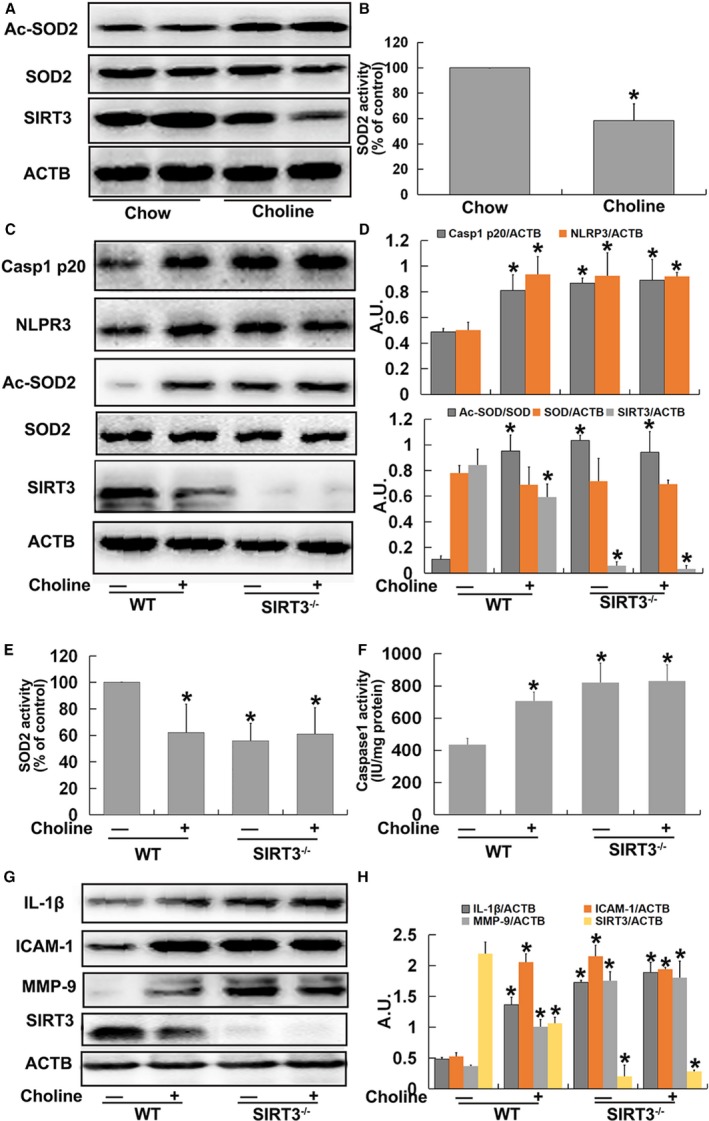
“Conversely, TMAO failed to further inhibit magnesium SOD2 and activate the NLRP3 inflammasome or induce inflammation in SIRT3 short interfering RNA–treated HUVECs and aortas from SIRT3−/− mice.”
§ Trimethylamine‐N‐Oxide Induces Vascular Inflammation by Activating the NLRP3 Inflammasome Through the SIRT3‐SOD2‐mtROS Signaling Pathway > Abstract > Methods and Results
plain- Asserted: passes — The authors put it forward as true.
- Checkable: passes — It can be checked against evidence.
- Load-bearing: passes — The paper’s conclusions depend on it.
- Based: passes — The paper gives a reason why it holds.
It may state two separate claims as one.
A result the paper reports from its own data — it cites no other source for it, so there is none to check. The quote shows it is in the paper.
In the paper
“Moreover, TMAO promoted NLRP3 and activated caspase‐1 p20 expression and caspase‐1 activity in vitro and in vivo.”
§ Trimethylamine‐N‐Oxide Induces Vascular Inflammation by Activating the NLRP3 Inflammasome Through the SIRT3‐SOD2‐mtROS Signaling Pathway > Abstract > Methods and Results
plaindirect- Asserted: passes — The authors put it forward as true.
- Checkable: passes — It can be checked against evidence.
- Load-bearing: passes — The paper’s conclusions depend on it.
- Based: passes — The paper gives a reason why it holds.
It may state two separate claims as one.
None of the sources cited for this claim have been checked yet.
In the paper
“Accumulating evidence indicates that AS is the result of a prolonged and excessive inflammatory processes in the vascular wall, which often begins with inflammatory changes in the endothelium and is characterized by the expression of adhesion molecules.2, 3”
§ Trimethylamine‐N‐Oxide Induces Vascular Inflammation by Activating the NLRP3 Inflammasome Through the SIRT3‐SOD2‐mtROS Signaling Pathway > Introduction
What the sources say
- Not checked yetcites [2] Maskrey BH, Megson IL, Whitfield PD, Rossi AG. Mechanisms of resolution of inflammation: a focus on cardiovascular disease. Arterioscler Thromb Vasc Biol. 2011; 31: 1001– 1006. 21508346 source
- Not checked yetcites [3] Wong BW, Meredith A, Lin D, McManus BM. The biological role of inflammation in atherosclerosis. Can J Cardiol. 2012; 28: 631– 641. 22985787 source
hedgeddirect- Asserted: passes — The authors put it forward as true.
- Checkable: passes — It can be checked against evidence.
- Load-bearing: passes — The paper’s conclusions depend on it.
- Based: passes — The paper gives a reason why it holds.
Probably not a substantial claim.
None of the sources cited for this claim have been checked yet.
In the paper
“Several studies have suggested that ablation of NLRP3 protects endothelial cells from inflammatory damage, leading to attenuation of AS.12, 13”
§ Trimethylamine‐N‐Oxide Induces Vascular Inflammation by Activating the NLRP3 Inflammasome Through the SIRT3‐SOD2‐mtROS Signaling Pathway > Introduction
What the sources say
- Not checked yetcites [12] Wu JJ, Xu XS, Li Y, Kou JP, Huang F, Liu BL, Liu K. Quercetin, luteolin and epigallocatechin gallate alleviate TXNIP and NLRP3‐mediated inflammation and apoptosis with regulation of AMPK in endothelial cells. Eur J Pharmacol. 2014; 745: 59– 68. 25446924 source
- Not checked yetcites [13] Chen Y, Wang L, Pitzer AL, Li X, Li PL, Zhang Y. Contribution of redox‐dependent activation of endothelial NLRP3 inflammasomes to hyperglycemia‐induced endothelial dysfunction. J Mol Med. 2016; 94: 1335– 1347. 27783111 PMC5512566 source
hedgeddirect- Asserted: passes — The authors put it forward as true.
- Checkable: passes — It can be checked against evidence.
- Load-bearing: passes — The paper’s conclusions depend on it.
- Based: passes — The paper gives a reason why it holds.
Probably not a substantial claim. It may state two separate claims as one.
In the paper
“In view of the finding that SOD2, the primary mitochondrial oxidative scavenger, plays a crucial role in regulation of mtROS,29”
§ Trimethylamine‐N‐Oxide Induces Vascular Inflammation by Activating the NLRP3 Inflammasome Through the SIRT3‐SOD2‐mtROS Signaling Pathway > Results > TMAO Induced mtROS Accumulation via the SIRT3‐SOD2 Pathway in Endothelial Cells
What the sources say
- Not checked yetcites [29] Tao R, Vassilopoulos A, Parisiadou L, Yan Y, Gius D. Regulation of MnSOD enzymatic activity by SIRT3 connects the mitochondrial acetylome signaling networks to aging and carcinogenesis. Antioxid Redox Signal. 2014; 20: 1646– 1654. 23886445 PMC3942696 source
plaindirect- Asserted: passes — The authors put it forward as true.
- Checkable: passes — It can be checked against evidence.
- Load-bearing: passes — The paper’s conclusions depend on it.
- Based: passes — The paper gives a reason why it holds.
Probably not a substantial claim. It may state two separate claims as one.
In the paper
“More recently, TMAO has been shown to promote vascular inflammation, leading to AS.7”
§ Trimethylamine‐N‐Oxide Induces Vascular Inflammation by Activating the NLRP3 Inflammasome Through the SIRT3‐SOD2‐mtROS Signaling Pathway > Introduction
What the sources say
- Not checked yetcites [7] Seldin MM, Meng YH, Qi HX, Zhu WF, Wang ZE, Hazen SL, Lusis AJ, Shih DM. Trimethylamine N‐oxide promotes vascular inflammation through signaling of mitogen‐activated protein kinase and nuclear factor‐κB. J Am Heart Assoc. 2016; 5: e002767. DOI: 10.1161/JAHA.115.002767. PMC4802459 26903003 source
plaindirect- Asserted: passes — The authors put it forward as true.
- Checkable: passes — It can be checked against evidence.
- Load-bearing: passes — The paper’s conclusions depend on it.
- Based: passes — The paper gives a reason why it holds.
It may state two separate claims as one.
In the paper
“The NLRP3 inflammasome plays a key role in the pathogenesis of diverse inflammatory diseases, including AS, type 2 diabetes mellitus, and gout.9”
§ Trimethylamine‐N‐Oxide Induces Vascular Inflammation by Activating the NLRP3 Inflammasome Through the SIRT3‐SOD2‐mtROS Signaling Pathway > Introduction
What the sources say
- Not checked yetcites [9] Yin Y, Pastrana JL, Li XY, Huang X, Mallilankaraman K, Choi ET, Madesh M, Wang H, Yang XF. Inflammasomes: sensors of metabolic stresses for vascular inflammation. Front Biosci (Landmark Ed). 2013; 18: 638– 649. 23276949 PMC3590813 source
plaindirect- Asserted: passes — The authors put it forward as true.
- Checkable: passes — It can be checked against evidence.
- Load-bearing: passes — The paper’s conclusions depend on it.
- Based: passes — The paper gives a reason why it holds.
Probably not a substantial claim.
In the paper
“In 2016, Seldin and co‐workers7 showed that TMAO promotes vascular inflammation through signaling of mitogen‐activated protein kinase and nuclear factor‐κB (NF‐κB).”
§ Trimethylamine‐N‐Oxide Induces Vascular Inflammation by Activating the NLRP3 Inflammasome Through the SIRT3‐SOD2‐mtROS Signaling Pathway > Introduction
What the sources say
- Not checked yetcites [7] Seldin MM, Meng YH, Qi HX, Zhu WF, Wang ZE, Hazen SL, Lusis AJ, Shih DM. Trimethylamine N‐oxide promotes vascular inflammation through signaling of mitogen‐activated protein kinase and nuclear factor‐κB. J Am Heart Assoc. 2016; 5: e002767. DOI: 10.1161/JAHA.115.002767. PMC4802459 26903003 source
plaindirect- Asserted: passes — The authors put it forward as true.
- Checkable: passes — It can be checked against evidence.
- Load-bearing: fails — The paper’s conclusions may not depend on it.
- Based: passes — The paper gives a reason why it holds.
Probably not a substantial claim. The paper’s conclusions may not depend on it.
In the paper
“Xiao et al11 additionally reported that atheroprone flow induces the NLRP3 inflammasome in endothelium through serol regulatory element binding protein 2 activation.”
§ Trimethylamine‐N‐Oxide Induces Vascular Inflammation by Activating the NLRP3 Inflammasome Through the SIRT3‐SOD2‐mtROS Signaling Pathway > Introduction
What the sources say
- Not checked yetcites [11] Xiao H, Lu M, Lin TY, Chen Z, Chen G, Wang WC, Marin T, Shentu TP, Wen L, Gongol B, Sun W, Liang X, Chen J, Huang HD, Pedra JHF, Johnson DA, Shyy JYJ. Sterol regulatory element binding protein 2 activation of NLRP3 inflammasome in endothelium mediates hemodynamic‐induced atherosclerosis susceptibility. Circulation. 2013; 128: 632– 642. 23838163 PMC3798034 source
plaindirect- Asserted: passes — The authors put it forward as true.
- Checkable: passes — It can be checked against evidence.
- Load-bearing: fails — The paper’s conclusions may not depend on it.
- Based: passes — The paper gives a reason why it holds.
Probably not a substantial claim. The paper’s conclusions may not depend on it.
None of the sources cited for this claim have been checked yet.
In the paper
“Previous studies suggest that TMAO partially contributes to the development of AS by regulating the major pathway of cholesterol metabolism and the bile acid synthetic pathway.4, 5, 6”
§ Trimethylamine‐N‐Oxide Induces Vascular Inflammation by Activating the NLRP3 Inflammasome Through the SIRT3‐SOD2‐mtROS Signaling Pathway > Introduction
What the sources say
- Not checked yetcites [4] Wang Z, Klipfell E, Bennett BJ, Koeth R, Levison BS, Dugar B, Feldstein AE, Britt EB, Fu X, Chung YM, Wu Y, Schauer P, Smith JD, Allayee H, Tang WH, DiDonato JA, Lusis AJ, Hazen SL. Gut flora metabolism of phosphatidylcholine promotes cardiovascular disease. Nature. 2011; 472: 57– 63. 21475195 PMC3086762 source
- Not checked yetcites [5] Tang WH, Wang Z, Levison BS, Koeth RA, Britt EB, Fu X, Wu Y, Hazen SL. Intestinal microbial metabolism of phosphatidylcholine and cardiovascular risk. N Engl J Med. 2013; 368: 1575– 1584. 23614584 PMC3701945 source
- Not checked yetcites [6] Koeth RA, Wang Z, Levison BS, Buffa JA, Org E, Sheehy BT, Britt EB, Fu X, Wu Y, Li L, Smith JD, DiDonato JA, Chen J, Li H, Wu GD, Lewis JD, Warrier M, Brown JM, Krauss RM, Tang WH, Bushman FD, Lusis AJ, Hazen SL. Intestinal microbiota metabolism of l‐carnitine, a nutrient in red meat, promotes atherosclerosis. Nat Med. 2013; 19: 576– 585. 23563705 PMC3650111 source
hedgedconditional- Asserted: passes — The authors put it forward as true.
- Checkable: passes — It can be checked against evidence.
- Load-bearing: fails — The paper’s conclusions may not depend on it.
- Based: passes — The paper gives a reason why it holds.
Probably not a substantial claim. The paper’s conclusions may not depend on it.
In the paper
“SOD2 activity is known to be tightly regulated via acetylation at its lysine residues.20”
§ Trimethylamine‐N‐Oxide Induces Vascular Inflammation by Activating the NLRP3 Inflammasome Through the SIRT3‐SOD2‐mtROS Signaling Pathway > Results > TMAO Induced mtROS Accumulation via the SIRT3‐SOD2 Pathway in Endothelial Cells
What the sources say
- Not checked yetcites [20] Tao R, Coleman MC, Pennington JD, Ozden O, Park SH, Jiang H, Kim HS, Flynn CR, Hill S, Hayes McDonald W, Olivier AK, Spitz DR, Gius D. Sirt3‐mediated deacetylation of evolutionarily conserved lysine 122 regulates MnSOD activity in response to stress. Mol Cell. 2010; 40: 893– 904. 21172655 PMC3266626 source
boosteddirect- Asserted: passes — The authors put it forward as true.
- Checkable: passes — It can be checked against evidence.
- Load-bearing: passes — The paper’s conclusions depend on it.
- Based: passes — The paper gives a reason why it holds.
Probably not a substantial claim.
In the paper
“This increased innate immunity in endothelium synergizes with hyperlipidemia to cause topographical distribution of atherosclerotic lesions.11”
§ Trimethylamine‐N‐Oxide Induces Vascular Inflammation by Activating the NLRP3 Inflammasome Through the SIRT3‐SOD2‐mtROS Signaling Pathway > Introduction
What the sources say
- Not checked yetcites [11] Xiao H, Lu M, Lin TY, Chen Z, Chen G, Wang WC, Marin T, Shentu TP, Wen L, Gongol B, Sun W, Liang X, Chen J, Huang HD, Pedra JHF, Johnson DA, Shyy JYJ. Sterol regulatory element binding protein 2 activation of NLRP3 inflammasome in endothelium mediates hemodynamic‐induced atherosclerosis susceptibility. Circulation. 2013; 128: 632– 642. 23838163 PMC3798034 source
plaindirect- Asserted: passes — The authors put it forward as true.
- Checkable: passes — It can be checked against evidence.
- Load-bearing: fails — The paper’s conclusions may not depend on it.
- Based: passes — The paper gives a reason why it holds.
Probably not a substantial claim. The paper’s conclusions may not depend on it.
In the paper
“mtROS levels were evaluated using MitoSOX™ Red, a highly selective fluorescent probe for detection of O2∙− generated within mitochondria.28”
§ Trimethylamine‐N‐Oxide Induces Vascular Inflammation by Activating the NLRP3 Inflammasome Through the SIRT3‐SOD2‐mtROS Signaling Pathway > Results > mtROS Played a Key Role in TMAO‐Induced Activation of the NLRP3 Inflammasome in Endothelial Cells
What the sources say
- Not checked yetcites [28] Chowdhury SK, Dobrowsky RT, Fernyhough P. Nutrient excess and altered mitochondrial proteome and function contribute to neurodegeneration in diabetes. Mitochondrion. 2011; 11: 845– 854. 21742060 PMC3375692 source
plain- Asserted: passes — The authors put it forward as true.
- Checkable: passes — It can be checked against evidence.
- Load-bearing: passes — The paper’s conclusions depend on it.
- Based: passes — The paper gives a reason why it holds.
Probably not a substantial claim.
None of the sources cited for this claim have been checked yet.
In the paper
“The majority of NLRP3 activators increase mtROS levels, and chemical scavengers of mtROS effectively inhibit NLRP3 activation.14, 15”
§ Trimethylamine‐N‐Oxide Induces Vascular Inflammation by Activating the NLRP3 Inflammasome Through the SIRT3‐SOD2‐mtROS Signaling Pathway > Introduction
What the sources say
- Not checked yetcites [14] Zhou RB, Yazdi AS, Menu P, Tschopp J. A role for mitochondria in NLRP3 inflammasome activation. Nature. 2011; 469: 221– 225. 21124315 source
- Not checked yetcites [15] Alfonso‐Loeches S, Urena‐Peralta JR, Morillo‐Bargues MJ, Oliver‐De La Cruz J, Guerri C. Role of mitochondria ROS generation in ethanol‐induced NLRP3 inflammasome activation and cell death in astroglial cells. Front Cell Neurosci. 2014; 8: 216– 234. 25136295 PMC4118026 source
plaindirect- Asserted: passes — The authors put it forward as true.
- Checkable: passes — It can be checked against evidence.
- Load-bearing: passes — The paper’s conclusions depend on it.
- Based: passes — The paper gives a reason why it holds.
It may state two separate claims as one.
None of the sources cited for this claim have been checked yet.
In the paper
“More importantly, SIRT3 can directly bind and deacetylate SOD2, leading to increased SOD2 activity and subsequently exerting significant effects on mtROS homeostasis and NLRP3 inflammasome activation.18, 19, 20”
§ Trimethylamine‐N‐Oxide Induces Vascular Inflammation by Activating the NLRP3 Inflammasome Through the SIRT3‐SOD2‐mtROS Signaling Pathway > Introduction
What the sources say
- Not checked yetcites [18] Zhao WY, Zhang L, Sui MX, Zhu YH, Zeng L. Protective effects of sirtuin 3 in a murine model of sepsis‐induced acute kidney injury. Sci Rep. 2016; 6: 33201. 27620507 PMC5020492 source
- Not checked yetcites [19] Traba J, Kwarteng‐Siaw M, Okoli TC, Li J, Huffstutler RD, Bray A, Waclawiw MA, Han K, Pelletier M, Sauve AA, Siegel RM, Sack MN. Fasting and refeeding differentially regulate NLRP3 inflammasome activation in human subjects. J Clin Invest. 2015; 125: 4592– 4600. 26529255 PMC4665779 source
- Not checked yetcites [20] Tao R, Coleman MC, Pennington JD, Ozden O, Park SH, Jiang H, Kim HS, Flynn CR, Hill S, Hayes McDonald W, Olivier AK, Spitz DR, Gius D. Sirt3‐mediated deacetylation of evolutionarily conserved lysine 122 regulates MnSOD activity in response to stress. Mol Cell. 2010; 40: 893– 904. 21172655 PMC3266626 source
plaindirect- Asserted: passes — The authors put it forward as true.
- Checkable: passes — It can be checked against evidence.
- Load-bearing: passes — The paper’s conclusions depend on it.
- Based: passes — The paper gives a reason why it holds.
It may state two separate claims as one.
What the paper did — it cites no source for this, so there is none to check. The quote shows it is in the paper.
In the paper
“To reduce variability, image parameters remained constant throughout the experiment.”
§ Trimethylamine‐N‐Oxide Induces Vascular Inflammation by Activating the NLRP3 Inflammasome Through the SIRT3‐SOD2‐mtROS Signaling Pathway > Materials and Methods > Ultrasound Detection of Aortic Root Lesions
plaindirect- Asserted: passes — The authors put it forward as true.
- Checkable: passes — It can be checked against evidence.
- Load-bearing: fails — The paper’s conclusions may not depend on it.
- Based: passes — The paper gives a reason why it holds.
Probably not a substantial claim. The paper’s conclusions may not depend on it.
What the paper did — it cites no source for this, so there is none to check. The quote shows it is in the paper.
In the paper
“The ethics review board at the Third Military Medical University approved this study, and informed consent was obtained from all patients before participation.”
§ Trimethylamine‐N‐Oxide Induces Vascular Inflammation by Activating the NLRP3 Inflammasome Through the SIRT3‐SOD2‐mtROS Signaling Pathway > Materials and Methods > Cell Culture and Treatment
plain- Asserted: passes — The authors put it forward as true.
- Checkable: passes — It can be checked against evidence.
- Load-bearing: fails — The paper’s conclusions may not depend on it.
- Based: passes — The paper gives a reason why it holds.
Probably not a substantial claim. The paper’s conclusions may not depend on it. It may state two separate claims as one.
What the paper did — it cites no source for this, so there is none to check. The quote shows it is in the paper.
In the paper
“All examinations were performed by an experienced operator, and all measurements were repeated 3 times at the same site.”
§ Trimethylamine‐N‐Oxide Induces Vascular Inflammation by Activating the NLRP3 Inflammasome Through the SIRT3‐SOD2‐mtROS Signaling Pathway > Materials and Methods > Ultrasound Detection of Aortic Root Lesions
plain- Asserted: passes — The authors put it forward as true.
- Checkable: passes — It can be checked against evidence.
- Load-bearing: fails — The paper’s conclusions may not depend on it.
- Based: passes — The paper gives a reason why it holds.
Probably not a substantial claim. The paper’s conclusions may not depend on it. It may state two separate claims as one.
What the paper did — it cites no source for this, so there is none to check. The quote shows it is in the paper.
In the paper
“Animal experiments were carried out in strict accordance with the recommendations in the Guide for the Care and Use of Laboratory Animals by the National Institutes of Health and approved by the Animal Care and Use Committee of the Third Military Medical University (Chongqing, China; Approval SYXC‐2014‐00112).”
§ Trimethylamine‐N‐Oxide Induces Vascular Inflammation by Activating the NLRP3 Inflammasome Through the SIRT3‐SOD2‐mtROS Signaling Pathway > Materials and Methods > Animals and Treatment
plain- Asserted: passes — The authors put it forward as true.
- Checkable: passes — It can be checked against evidence.
- Load-bearing: fails — The paper’s conclusions may not depend on it.
- Based: passes — The paper gives a reason why it holds.
Probably not a substantial claim. The paper’s conclusions may not depend on it.
In the paper
“These results support a role for TMAO in the activation of inflammatory pathways in cells of the vasculature, leading to endothelial cell leukocyte recruitment and AS.”
§ Trimethylamine‐N‐Oxide Induces Vascular Inflammation by Activating the NLRP3 Inflammasome Through the SIRT3‐SOD2‐mtROS Signaling Pathway > Discussion
What the sources say
- Not checked yetcites [7] Seldin MM, Meng YH, Qi HX, Zhu WF, Wang ZE, Hazen SL, Lusis AJ, Shih DM. Trimethylamine N‐oxide promotes vascular inflammation through signaling of mitogen‐activated protein kinase and nuclear factor‐κB. J Am Heart Assoc. 2016; 5: e002767. DOI: 10.1161/JAHA.115.002767. PMC4802459 26903003 source
hedgeddirect- Asserted: passes — The authors put it forward as true.
- Checkable: passes — It can be checked against evidence.
- Load-bearing: passes — The paper’s conclusions depend on it.
- Based: passes — The paper gives a reason why it holds.
It may state two separate claims as one.
None of the sources cited for this claim have been checked yet.
In the paper
“IL‐1β is a major atheroprone factor that plays a significant role in promoting the development of lipid plaques and destabilizing plaques by upregulating adhesion molecules, including vascular cell adhesion molecule‐1 and ICAM‐1.31, 32, 33”
§ Trimethylamine‐N‐Oxide Induces Vascular Inflammation by Activating the NLRP3 Inflammasome Through the SIRT3‐SOD2‐mtROS Signaling Pathway > Discussion
What the sources say
- Not checked yetcites [31] De Nardo D, Latz E. NLRP3 inflammasomes link inflammation and metabolic disease. Trends Immunol. 2011; 32: 373– 379. 21733753 PMC3151541 source
- Not checked yetcites [32] Connat JL. [ Inflammasome and cardiovascular diseases]. Ann Cardiol Angeiol (Paris). 2011; 60: 48– 54. 20800829 source
- Not checked yetcites [33] Alcocer‐Gomez E, Cordero MD. NLRP3 inflammasome: common nexus between depression and cardiovascular diseases. Nat Rev Cardiol. 2017; 14: 124. 28054580 source
plaindirect- Asserted: passes — The authors put it forward as true.
- Checkable: passes — It can be checked against evidence.
- Load-bearing: fails — The paper’s conclusions may not depend on it.
- Based: passes — The paper gives a reason why it holds.
Probably not a substantial claim. The paper’s conclusions may not depend on it. It may state two separate claims as one.
In the paper
“AS is decreased in several rodent models lacking NLRP3 or IL‐1 molecules, whereas in contrast, mice deficient in the IL‐1 receptor antagonist show increased AS.10”
§ Trimethylamine‐N‐Oxide Induces Vascular Inflammation by Activating the NLRP3 Inflammasome Through the SIRT3‐SOD2‐mtROS Signaling Pathway > Discussion
What the sources say
- Not checked yetcites [10] Duewell P, Kono H, Rayner KJ, Sirois CM, Vladimer G, Bauernfeind FG, Abela GS, Franchi L, Nunez G, Schnurr M, Espevik T, Lien E, Fitzgerald KA, Rock KL, Moore KJ, Wright SD, Hornung V, Latz E. NLRP3 inflammasomes are required for atherogenesis and activated by cholesterol crystals. Nature. 2010; 464: 1357– 1361. 20428172 PMC2946640 source
plaindirect- Asserted: passes — The authors put it forward as true.
- Checkable: passes — It can be checked against evidence.
- Load-bearing: unclear — It is unclear whether the paper’s conclusions depend on it.
- Based: passes — The paper gives a reason why it holds.
It may state two separate claims as one.
In the paper
“Recent studies have shown that physiological levels of TMAO can induce expression of cytokines and adhesion molecules, at least in part via the NF‐κB signaling pathway in vascular endothelial and smooth muscle cells, both in vivo and in vitro.7”
§ Trimethylamine‐N‐Oxide Induces Vascular Inflammation by Activating the NLRP3 Inflammasome Through the SIRT3‐SOD2‐mtROS Signaling Pathway > Discussion
What the sources say
- Not checked yetcites [7] Seldin MM, Meng YH, Qi HX, Zhu WF, Wang ZE, Hazen SL, Lusis AJ, Shih DM. Trimethylamine N‐oxide promotes vascular inflammation through signaling of mitogen‐activated protein kinase and nuclear factor‐κB. J Am Heart Assoc. 2016; 5: e002767. DOI: 10.1161/JAHA.115.002767. PMC4802459 26903003 source
plainconditional- Asserted: passes — The authors put it forward as true.
- Checkable: passes — It can be checked against evidence.
- Load-bearing: fails — The paper’s conclusions may not depend on it.
- Based: passes — The paper gives a reason why it holds.
Probably not a substantial claim. The paper’s conclusions may not depend on it.
None of the sources cited for this claim have been checked yet.
In the paper
“whereas ablation of NLRP3 protects endothelial cells from inflammatory damage, subsequently attenuating AS.12, 13”
§ Trimethylamine‐N‐Oxide Induces Vascular Inflammation by Activating the NLRP3 Inflammasome Through the SIRT3‐SOD2‐mtROS Signaling Pathway > Discussion
What the sources say
- Not checked yetcites [12] Wu JJ, Xu XS, Li Y, Kou JP, Huang F, Liu BL, Liu K. Quercetin, luteolin and epigallocatechin gallate alleviate TXNIP and NLRP3‐mediated inflammation and apoptosis with regulation of AMPK in endothelial cells. Eur J Pharmacol. 2014; 745: 59– 68. 25446924 source
- Not checked yetcites [13] Chen Y, Wang L, Pitzer AL, Li X, Li PL, Zhang Y. Contribution of redox‐dependent activation of endothelial NLRP3 inflammasomes to hyperglycemia‐induced endothelial dysfunction. J Mol Med. 2016; 94: 1335– 1347. 27783111 PMC5512566 source
plaindirect- Asserted: passes — The authors put it forward as true.
- Checkable: passes — It can be checked against evidence.
- Load-bearing: unclear — It is unclear whether the paper’s conclusions depend on it.
- Based: passes — The paper gives a reason why it holds.
It may state two separate claims as one.
In the paper
“The NLRP3 inflammasome is an IL‐1β family cytokine‐activating protein complex consisting of the pattern recognition receptor NLRP3, adaptor protein apoptotic speck‐like protein, and inactive pro‐caspase‐1, and involved in the regulation of innate immunity and inflammatory response.30”
§ Trimethylamine‐N‐Oxide Induces Vascular Inflammation by Activating the NLRP3 Inflammasome Through the SIRT3‐SOD2‐mtROS Signaling Pathway > Discussion
What the sources say
- Not checked yetcites [30] Gross O, Thomas CJ, Guarda G, Tschopp J. The inflammasome: an integrated view. Immunol Rev. 2011; 243: 136– 151. 21884173 source
plain- Asserted: passes — The authors put it forward as true.
- Checkable: passes — It can be checked against evidence.
- Load-bearing: fails — The paper’s conclusions may not depend on it.
- Based: passes — The paper gives a reason why it holds.
Probably not a substantial claim. The paper’s conclusions may not depend on it. It may state two separate claims as one.
None of the sources cited for this claim have been checked yet.
In the paper
“Primed macrophages secrete large amounts of IL‐1β in response to cholesterol crystals in an NLRP3 inflammasome‐dependent manner in mouse and human cells.34, 35”
§ Trimethylamine‐N‐Oxide Induces Vascular Inflammation by Activating the NLRP3 Inflammasome Through the SIRT3‐SOD2‐mtROS Signaling Pathway > Discussion
What the sources say
- Not checked yetcites [34] Rajamaki K, Lappalainen J, Oorni K, Valimaki E, Matikainen S, Kovanen PT, Eklund KK. Cholesterol crystals activate the NLRP3 inflammasome in human macrophages: a novel link between cholesterol metabolism and inflammation. PLoS One. 2010; 5: e11765. 20668705 PMC2909263 source
- Not checked yetcites [35] Abdul‐Muneer PM, Alikunju S, Mishra V, Schuetz H, Szlachetka AM, Burnham EL, Haorah J. Activation of NLRP3 inflammasome by cholesterol crystals in alcohol consumption induces atherosclerotic lesions. Brain Behav Immun. 2017; 62: 291– 305. 28232172 PMC6378699 source
plaindirect- Asserted: passes — The authors put it forward as true.
- Checkable: passes — It can be checked against evidence.
- Load-bearing: fails — The paper’s conclusions may not depend on it.
- Based: passes — The paper gives a reason why it holds.
Probably not a substantial claim. The paper’s conclusions may not depend on it.
In the paper
“Several endogenous metabolic stress molecules, such as oligomers of islet amyloid polypeptide, glucose, ceramid, oxidized LDL, and cholesterol crystals, are sensed by NLRP3, stimulating NLRP3 inflammasome complex assembly and, in turn, leading to activation of caspase‐1 and ultimately to the processing and secretion of the proinflammatory cytokines IL‐1β and IL‐18.9”
§ Trimethylamine‐N‐Oxide Induces Vascular Inflammation by Activating the NLRP3 Inflammasome Through the SIRT3‐SOD2‐mtROS Signaling Pathway > Discussion
What the sources say
- Not checked yetcites [9] Yin Y, Pastrana JL, Li XY, Huang X, Mallilankaraman K, Choi ET, Madesh M, Wang H, Yang XF. Inflammasomes: sensors of metabolic stresses for vascular inflammation. Front Biosci (Landmark Ed). 2013; 18: 638– 649. 23276949 PMC3590813 source
plaindirect- Asserted: passes — The authors put it forward as true.
- Checkable: passes — It can be checked against evidence.
- Load-bearing: fails — The paper’s conclusions may not depend on it.
- Based: passes — The paper gives a reason why it holds.
Probably not a substantial claim. The paper’s conclusions may not depend on it. It may state two separate claims as one.
None of the sources cited for this claim have been checked yet.
In the paper
“Inflammation participates centrally in all stages of AS from the initial lesion to end‐stage thrombotic complications.”
§ Trimethylamine‐N‐Oxide Induces Vascular Inflammation by Activating the NLRP3 Inflammasome Through the SIRT3‐SOD2‐mtROS Signaling Pathway > Discussion
What the sources say
- Not checked yetcites [2] Maskrey BH, Megson IL, Whitfield PD, Rossi AG. Mechanisms of resolution of inflammation: a focus on cardiovascular disease. Arterioscler Thromb Vasc Biol. 2011; 31: 1001– 1006. 21508346 source
- Not checked yetcites [3] Wong BW, Meredith A, Lin D, McManus BM. The biological role of inflammation in atherosclerosis. Can J Cardiol. 2012; 28: 631– 641. 22985787 source
plaindirect- Asserted: passes — The authors put it forward as true.
- Checkable: passes — It can be checked against evidence.
- Load-bearing: fails — The paper’s conclusions may not depend on it.
- Based: passes — The paper gives a reason why it holds.
Probably not a substantial claim. The paper’s conclusions may not depend on it.
In the paper
“It has also been found that the mtROS‐dependent activation of the endothelial NLRP3 inflammasome by hyperglycemia may be an important initiating mechanism for endothelial dysfunction,13”
§ Trimethylamine‐N‐Oxide Induces Vascular Inflammation by Activating the NLRP3 Inflammasome Through the SIRT3‐SOD2‐mtROS Signaling Pathway > Discussion
What the sources say
- Not checked yetcites [13] Chen Y, Wang L, Pitzer AL, Li X, Li PL, Zhang Y. Contribution of redox‐dependent activation of endothelial NLRP3 inflammasomes to hyperglycemia‐induced endothelial dysfunction. J Mol Med. 2016; 94: 1335– 1347. 27783111 PMC5512566 source
hedgedconditional- Asserted: passes — The authors put it forward as true.
- Checkable: passes — It can be checked against evidence.
- Load-bearing: fails — The paper’s conclusions may not depend on it.
- Based: passes — The paper gives a reason why it holds.
Probably not a substantial claim. The paper’s conclusions may not depend on it.
In the paper
“Recently, Zhao and colleagues18 demonstrated a protective role of SIRT3 against mitochondrial damage in the kidney through activating SOD2 and decreasing ROS production, subsequently inhibiting the NRLP3 inflammasome and downregulating IL‐1β and IL‐18.”
§ Trimethylamine‐N‐Oxide Induces Vascular Inflammation by Activating the NLRP3 Inflammasome Through the SIRT3‐SOD2‐mtROS Signaling Pathway > Discussion
What the sources say
- Not checked yetcites [18] Zhao WY, Zhang L, Sui MX, Zhu YH, Zeng L. Protective effects of sirtuin 3 in a murine model of sepsis‐induced acute kidney injury. Sci Rep. 2016; 6: 33201. 27620507 PMC5020492 source
boosteddirect- Asserted: passes — The authors put it forward as true.
- Checkable: passes — It can be checked against evidence.
- Load-bearing: fails — The paper’s conclusions may not depend on it.
- Based: passes — The paper gives a reason why it holds.
Probably not a substantial claim. The paper’s conclusions may not depend on it. It may state two separate claims as one.
In the paper
“Sirtuins are NAD+‐dependent enzymes implicated in a range of physiological and pathophysiological conditions, including AS, diabetes mellitus, cancer, longevity, and neurodegeneration, through deacetylation of numerous substrates.42”
§ Trimethylamine‐N‐Oxide Induces Vascular Inflammation by Activating the NLRP3 Inflammasome Through the SIRT3‐SOD2‐mtROS Signaling Pathway > Discussion
What the sources say
- Not checked yetcites [42] Haigis MC, Sinclair DA. Mammalian sirtuins: biological insights and disease relevance. Annu Rev Pathol. 2010; 5: 253– 295. 20078221 PMC2866163 source
plaincorrelational- Asserted: passes — The authors put it forward as true.
- Checkable: passes — It can be checked against evidence.
- Load-bearing: fails — The paper’s conclusions may not depend on it.
- Based: passes — The paper gives a reason why it holds.
Probably not a substantial claim. The paper’s conclusions may not depend on it.
In the paper
“Traba et al19 additionally confirmed that a 24‐hour fast in human subjects activates SIRT3 biology, thereby increasing SOD2 activity, in turn conferring resistance to NLRP3 inflammasome activation via blunting of the mtROS level.19”
§ Trimethylamine‐N‐Oxide Induces Vascular Inflammation by Activating the NLRP3 Inflammasome Through the SIRT3‐SOD2‐mtROS Signaling Pathway > Discussion
What the sources say
- Not checked yetcites [19] Traba J, Kwarteng‐Siaw M, Okoli TC, Li J, Huffstutler RD, Bray A, Waclawiw MA, Han K, Pelletier M, Sauve AA, Siegel RM, Sack MN. Fasting and refeeding differentially regulate NLRP3 inflammasome activation in human subjects. J Clin Invest. 2015; 125: 4592– 4600. 26529255 PMC4665779 source
boosteddirect- Asserted: passes — The authors put it forward as true.
- Checkable: passes — It can be checked against evidence.
- Load-bearing: unclear — It is unclear whether the paper’s conclusions depend on it.
- Based: passes — The paper gives a reason why it holds.
It may state two separate claims as one.
None of the sources cited for this claim have been checked yet.
In the paper
“Conversely, treatment with ROS inhibitors has been shown to suppress cadmium‐, silica‐, and asbestos‐induced NLRP3 inflammasome activation.37, 38”
§ Trimethylamine‐N‐Oxide Induces Vascular Inflammation by Activating the NLRP3 Inflammasome Through the SIRT3‐SOD2‐mtROS Signaling Pathway > Discussion
What the sources say
- Not checked yetcites [37] Dostert C, Petrilli V, Van Bruggen R, Steele C, Mossman BT, Tschopp J. Innate immune activation through Nalp3 inflammasome sensing of asbestos and silica. Science. 2008; 320: 674– 677. 18403674 PMC2396588 source
- Not checked yetcites [38] Chen H, Lu Y, Cao Z, Ma Q, Pi H, Fang Y, Yu Z, Hu H, Zhou Z. Cadmium induces NLRP3 inflammasome‐dependent pyroptosis in vascular endothelial cells. Toxicol Lett. 2016; 246: 7– 16. 26809137 source
plaindirect- Asserted: passes — The authors put it forward as true.
- Checkable: passes — It can be checked against evidence.
- Load-bearing: fails — The paper’s conclusions may not depend on it.
- Based: passes — The paper gives a reason why it holds.
Probably not a substantial claim. The paper’s conclusions may not depend on it.
None of the sources cited for this claim have been checked yet.
In the paper
“Specifically, SIRT3 directly binds and deacetylates SOD2, thereby increasing SOD2 activity and subsequently leading to a significant effect on mtROS homeostasis, which plays a key protective role in high glucose–,43 angiotensin II–,44 and hypoxia45‐induced endothelial dysfunction.”
§ Trimethylamine‐N‐Oxide Induces Vascular Inflammation by Activating the NLRP3 Inflammasome Through the SIRT3‐SOD2‐mtROS Signaling Pathway > Discussion
What the sources say
- Not checked yetcites [43] Liu G, Cao M, Xu Y, Li Y. SIRT3 protects endothelial cells from high glucose‐induced cytotoxicity. Int J Clin Exp Pathol. 2015; 8: 353– 360. 25755722 PMC4348913
- Not checked yetcites [44] Liu H, Chen T, Li N, Wang S, Bu P. Role of SIRT3 in angiotensin II‐induced human umbilical vein endothelial cells dysfunction. BMC Cardiovasc Disord. 2015; 15: 81– 88. 26223796 PMC4520206 source
- Not checked yetcites [45] Tseng AH, Wu LH, Shieh SS, Wang DL. SIRT3 interactions with FOXO3 acetylation, phosphorylation and ubiquitinylation mediate endothelial cell responses to hypoxia. Biochem J. 2014; 464: 157– 168. 25162939 source
plaindirect- Asserted: passes — The authors put it forward as true.
- Checkable: passes — It can be checked against evidence.
- Load-bearing: passes — The paper’s conclusions depend on it.
- Based: passes — The paper gives a reason why it holds.
It may state two separate claims as one.
A conclusion the paper draws from its own results — it cites no other source for it, so there is none to check. The quote shows it is in the paper.
In the paper
“Data from the present study showed that TMAO activated the NLRP3 inflammasome and IL‐1β release, subsequently causing inflammation, both in vitro in cultured HUVECs and in vivo in aortas from ApoE−/− mice, and ultimately promoting AS.”
§ Trimethylamine‐N‐Oxide Induces Vascular Inflammation by Activating the NLRP3 Inflammasome Through the SIRT3‐SOD2‐mtROS Signaling Pathway > Discussion
boosteddirect- Asserted: passes — The authors put it forward as true.
- Checkable: passes — It can be checked against evidence.
- Load-bearing: passes — The paper’s conclusions depend on it.
- Based: passes — The paper gives a reason why it holds.
It may state two separate claims as one.
In the paper
“SIRT3, a mitochondrial sirtuin, serves as a primary regulator of mitochondrial protein acetylation, which is involved in the regulation of energy production and mtROS homeostasis.16”
§ Trimethylamine‐N‐Oxide Induces Vascular Inflammation by Activating the NLRP3 Inflammasome Through the SIRT3‐SOD2‐mtROS Signaling Pathway > Discussion
What the sources say
- Not checked yetcites [16] Bause AS, Haigis MC. SIRT3 regulation of mitochondrial oxidative stress. Exp Gerontol. 2013; 48: 634– 639. 22964489 source
plaindirect- Asserted: passes — The authors put it forward as true.
- Checkable: passes — It can be checked against evidence.
- Load-bearing: passes — The paper’s conclusions depend on it.
- Based: passes — The paper gives a reason why it holds.
Probably not a substantial claim. It may state two separate claims as one.
In the paper
“and endothelial senescence could be mediated through mtROS and NLRP3 inflammasome signaling pathways.41”
§ Trimethylamine‐N‐Oxide Induces Vascular Inflammation by Activating the NLRP3 Inflammasome Through the SIRT3‐SOD2‐mtROS Signaling Pathway > Discussion
What the sources say
- Not checked yetcites [41] Sun C, Fan S, Wang X, Lu J, Zhang Z, Wu D, Shan Q, Zheng Y. Purple sweet potato color inhibits endothelial premature senescence by blocking the NLRP3 inflammasome. J Nutr Biochem. 2015; 26: 1029– 1040. 26164602 source
hedgedconditional- Asserted: passes — The authors put it forward as true.
- Checkable: passes — It can be checked against evidence.
- Load-bearing: fails — The paper’s conclusions may not depend on it.
- Based: passes — The paper gives a reason why it holds.
Probably not a substantial claim. The paper’s conclusions may not depend on it.
In the paper
“Inflammasome activators, such as uric acid crystals, enhance ROS production, thereby promoting association of thioredoxin‐interacting protein with NLRP3 and activation of the inflammasome.36”
§ Trimethylamine‐N‐Oxide Induces Vascular Inflammation by Activating the NLRP3 Inflammasome Through the SIRT3‐SOD2‐mtROS Signaling Pathway > Discussion
What the sources say
- Not checked yetcites [36] Zhou R, Tardivel A, Thorens B, Choi I, Tschopp J. Thioredoxin‐interacting protein links oxidative stress to inflammasome activation. Nat Immunol. 2010; 11: 136– 140. 20023662 source
plaindirect- Asserted: passes — The authors put it forward as true.
- Checkable: passes — It can be checked against evidence.
- Load-bearing: fails — The paper’s conclusions may not depend on it.
- Based: passes — The paper gives a reason why it holds.
Probably not a substantial claim. The paper’s conclusions may not depend on it. It may state two separate claims as one.
In the paper
“Previous studies have ascertained that ROS generation is the most common pathway in inflammasome assembly.”
§ Trimethylamine‐N‐Oxide Induces Vascular Inflammation by Activating the NLRP3 Inflammasome Through the SIRT3‐SOD2‐mtROS Signaling Pathway > Discussion
What the sources say
- Not checked yetcites [36] Zhou R, Tardivel A, Thorens B, Choi I, Tschopp J. Thioredoxin‐interacting protein links oxidative stress to inflammasome activation. Nat Immunol. 2010; 11: 136– 140. 20023662 source
boosteddirect- Asserted: passes — The authors put it forward as true.
- Checkable: passes — It can be checked against evidence.
- Load-bearing: fails — The paper’s conclusions may not depend on it.
- Based: passes — The paper gives a reason why it holds.
Probably not a substantial claim. The paper’s conclusions may not depend on it.
None of the sources cited for this claim have been checked yet.
In the paper
“The process often begins with inflammatory changes in the endothelium, characterized by expression of adhesion molecules.2, 3”
§ Trimethylamine‐N‐Oxide Induces Vascular Inflammation by Activating the NLRP3 Inflammasome Through the SIRT3‐SOD2‐mtROS Signaling Pathway > Discussion
What the sources say
- Not checked yetcites [2] Maskrey BH, Megson IL, Whitfield PD, Rossi AG. Mechanisms of resolution of inflammation: a focus on cardiovascular disease. Arterioscler Thromb Vasc Biol. 2011; 31: 1001– 1006. 21508346 source
- Not checked yetcites [3] Wong BW, Meredith A, Lin D, McManus BM. The biological role of inflammation in atherosclerosis. Can J Cardiol. 2012; 28: 631– 641. 22985787 source
plaindirect- Asserted: passes — The authors put it forward as true.
- Checkable: passes — It can be checked against evidence.
- Load-bearing: fails — The paper’s conclusions may not depend on it.
- Based: passes — The paper gives a reason why it holds.
Probably not a substantial claim. The paper’s conclusions may not depend on it.
None of the sources cited for this claim have been checked yet.
In the paper
“These results clearly indicate that the NLRP3 inflammasome plays a key role in the pathogenesis of vascular inflammation, thereby contributing to AS development.”
§ Trimethylamine‐N‐Oxide Induces Vascular Inflammation by Activating the NLRP3 Inflammasome Through the SIRT3‐SOD2‐mtROS Signaling Pathway > Discussion
What the sources say
- Not checked yetcites [10] Duewell P, Kono H, Rayner KJ, Sirois CM, Vladimer G, Bauernfeind FG, Abela GS, Franchi L, Nunez G, Schnurr M, Espevik T, Lien E, Fitzgerald KA, Rock KL, Moore KJ, Wright SD, Hornung V, Latz E. NLRP3 inflammasomes are required for atherogenesis and activated by cholesterol crystals. Nature. 2010; 464: 1357– 1361. 20428172 PMC2946640 source
- Not checked yetcites [11] Xiao H, Lu M, Lin TY, Chen Z, Chen G, Wang WC, Marin T, Shentu TP, Wen L, Gongol B, Sun W, Liang X, Chen J, Huang HD, Pedra JHF, Johnson DA, Shyy JYJ. Sterol regulatory element binding protein 2 activation of NLRP3 inflammasome in endothelium mediates hemodynamic‐induced atherosclerosis susceptibility. Circulation. 2013; 128: 632– 642. 23838163 PMC3798034 source
- Not checked yetcites [12] Wu JJ, Xu XS, Li Y, Kou JP, Huang F, Liu BL, Liu K. Quercetin, luteolin and epigallocatechin gallate alleviate TXNIP and NLRP3‐mediated inflammation and apoptosis with regulation of AMPK in endothelial cells. Eur J Pharmacol. 2014; 745: 59– 68. 25446924 source
boosteddirect- Asserted: passes — The authors put it forward as true.
- Checkable: passes — It can be checked against evidence.
- Load-bearing: passes — The paper’s conclusions depend on it.
- Based: passes — The paper gives a reason why it holds.
It may state two separate claims as one.
In the paper
“Additionally, it has been demonstrated that NF‐κB–mediated signaling is also involved in the NLRP3 inflammasome activation by regulating the transcription of inflammasome‐related components, including inactive NLRP3, pro‐IL‐1β, and pro‐IL‐18.46”
§ Trimethylamine‐N‐Oxide Induces Vascular Inflammation by Activating the NLRP3 Inflammasome Through the SIRT3‐SOD2‐mtROS Signaling Pathway > Discussion
What the sources say
- Not checked yetcites [46] Shao BZ, Xu ZQ, Han BZ, Su DF, Liu C. NLRP3 inflammasome and its inhibitors: a review. Front Pharmacol. 2015; 6: 262– 271. 26594174 PMC4633676 source
boosteddirect- Asserted: passes — The authors put it forward as true.
- Checkable: passes — It can be checked against evidence.
- Load-bearing: fails — The paper’s conclusions may not depend on it.
- Based: passes — The paper gives a reason why it holds.
Probably not a substantial claim. The paper’s conclusions may not depend on it.
The authors state this as an assumption.
Lower concentrations of TMAO would have some impact, although it may be hard to detect experimentally.
“AS is a chronic disease that develops over many years, and one can assume that lower concentrations of TMAO would have some impact, although it may be hard to detect experimentally.”
The paper relies on this without support.
Mitochondria are the major source of cellular ROS.
“Importantly, mitochondria are the major source of cellular ROS.”
The paper relies on this without support.
Blood levels of TMAO are causatively linked to AS risk.
“Given that blood levels of TMAO are causatively linked to AS risk, the next obvious question is the mechanism by which circulating TMAO promotes AS, which is under active investigation.”
Claims other papers make about this one
Each is checked against this paper’s own text: does it say what the citing paper says it does?
The cited source says what the claim attributes to it.
In the citing paper
“It has also been shown to promote platelet reactivity and thrombosis potential14, 83–85, vascular inflammation and inflammasome activation86–88, heightened heart failure89–91 and CKD92–95 related phenotypes in animal models (Figure 2).”
From Gut microbiota and cardiovascular disease. (2020) · cites this paper as [87]
In the citing paper
“nowadays there is convincing evidence suggesting an association between TMAO and inflammation [8,9,10,11,12]”
From Implication of Trimethylamine N-Oxide (TMAO) in Disease: Potential Biomarker or New Therapeutic Target (2018) · cites this paper as [9]
In the citing paper
“Other experiments performed in HUVEC and mice also revealed a link between TMAO administration and inflammation by activation of NLRP3 inflammasome. One of these studies suggests that this activation occurs through the inhibition of SIRT3-SOD2-mitochondrial ROS signalling pathway.”
From Implication of Trimethylamine N-Oxide (TMAO) in Disease: Potential Biomarker or New Therapeutic Target (2018) · cites this paper as [9]
In the citing paper
“Recent investigations have suggested TMAO can impact inflammation via priming and activation of the NLRP3 inflammasome in endothelial cells, as well as the arterial vascular wall in mice, involving mitochondrial reactive oxygen species (ROS) production, thioredoxin interacting protein (TXNIP) and lysosomal destabilization87, 130, 131.”
From Gut microbiota and cardiovascular disease. (2020) · cites this paper as [87]
Self-check
Percentages, sums and reported differences re-computed from the paper’s own numbers.
Each contradiction between two passages listed here was confirmed by an independent check.
Rated minor: it would not touch a result — a value no result rests on, a p-value that stays on the same side of the significance level, or a conflict that is clerical, resolved elsewhere in the paper, or outside its own findings.
In the paper
§ Trimethylamine‐N‐Oxide Induces Vascular Inflammation by Activating the NLRP3 Inflammasome Through the SIRT3‐SOD2‐mtROS Signaling Pathway > Results > TMAO Induced Vascular NLRP3 Inflammasome Activation in a SIRT3‐Dependent Manner In Vivo
“choline promoted SIRT3 expression and SOD2 acetylation as well as inhibition of SOD2 activity in ApoE−/− mice.”
§ Trimethylamine‐N‐Oxide Induces Vascular Inflammation by Activating the NLRP3 Inflammasome Through the SIRT3‐SOD2‐mtROS Signaling Pathway > Discussion
“Data from the present study showed that TMAO markedly suppressed SIRT3 expression and SOD2 activity in vitro and in vivo.”
Rated minor: it would not touch a result — a value no result rests on, a p-value that stays on the same side of the significance level, or a conflict that is clerical, resolved elsewhere in the paper, or outside its own findings.
In the paper
§ Trimethylamine‐N‐Oxide Induces Vascular Inflammation by Activating the NLRP3 Inflammasome Through the SIRT3‐SOD2‐mtROS Signaling Pathway > Results > TMAO Induced Inflammation in Endothelial Cells
“a fixed dose of TMAO (600 μmol/L) at different time points (4, 8, 12, 24, 36, 48, and 72 hours), following which cell viability was determined.”
§ Trimethylamine‐N‐Oxide Induces Vascular Inflammation by Activating the NLRP3 Inflammasome Through the SIRT3‐SOD2‐mtROS Signaling Pathway > Materials and Methods > Cell Viability Measurements
“a fixed concentration (600 μmol/L) for the indicated time periods (0, 4, 8, 12, 24, 36, and 72 hours).”
Citations
Cites
A role for mitochondria in nlrp3 inflammasome activation
Zhou, R., Yazdi, A. S., Menu, P., & Tschopp, J. (2011) · Nature · doi:10.1038/nature09663 · Cited by 5,602
Gut flora metabolism of phosphatidylcholine promotes cardiovascular disease
Wang, Z., Klipfell, E., Bennett, B. J., Koeth, R., Levison, B. S., DuGar, B., Feldstein, A. E., Britt, E. B., Fu, X., Chung, Y.-M., et al. (2011) · Nature · doi:10.1038/nature09922 · Cited by 5,597
Global mortality, disability, and the contribution of risk factors: Global Burden of Disease Study
Murray, C. J., & Lopez, A. D. (1997) · The Lancet · doi:10.1016/s0140-6736(96)07495-8 · Cited by 4,492 · cited 1×
“T he incidence of cardiovascular diseases such as atherosclerosis (AS) is increasing globally, creating a serious and expensive public health issue.(1) Accumulating evidence indicates that AS is the result of a prolonged and”
BackgroundIntestinal microbiota metabolism of l-carnitine, a nutrient in red meat, promotes atherosclerosis
Koeth, R. A., Wang, Z., Levison, B. S., Buffa, J. A., Org, E., Sheehy, B. T., Britt, E. B., Fu, X., Wu, Y., Li, L., et al. (2013) · Nature Medicine · doi:10.1038/nm.3145 · Cited by 4,386
NLRP3 inflammasomes are required for atherogenesis and activated by cholesterol crystals
Duewell, P., Kono, H., Rayner, K. J., Sirois, C. M., Vladimer, G., Bauernfeind, F. G., Abela, G. S., Franchi, L., Nuñez, G., Schnurr, M., et al. (2010) · Nature · doi:10.1038/nature08938 · Cited by 4,026
Intestinal microbial metabolism of phosphatidylcholine and cardiovascular risk
Tang, W. H. W., Wang, Z., Levison, B. S., Koeth, R. A., Britt, E. B., Fu, X., Wu, Y., & Hazen, S. L. (2013) · New England Journal of Medicine · doi:10.1056/nejmoa1109400 · Cited by 3,400 · cited 9×
“001).(5) Within the cohort examined, the hazard ratio for TMAO was significantly higher than that for traditional risk factors such as LDL cholesterol.”
BackgroundInfluentialThioredoxin-interacting protein links oxidative stress to inflammasome activation
Zhou, R., Tardivel, A., Thorens, B., Choi, I., & Tschopp, J. (2010) · Nature Immunology · doi:10.1038/ni.1831 · Cited by 2,708
Innate Immune Activation Through Nalp3 Inflammasome Sensing of Asbestos and Silica
Dostert, C., Pétrilli, V., Van Bruggen, R., Steele, C., Mossman, B. T., & Tschopp, J. (2008) · Science · doi:10.1126/science.1156995 · Cited by 2,658
Mammalian Sirtuins: Biological Insights and Disease Relevance
Haigis, M. C., & Sinclair, D. A. (2010) · Annual Review of Pathology: Mechanisms of Disease · doi:10.1146/annurev.pathol.4.110807.092250 · Cited by 2,085
Calorie restriction reduces oxidative stress by SIRT3-mediated SOD2 activation
Qiu, X., Brown, K., Hirschey, M. D., Verdin, E., & Chen, D. (2010) · Cell Metabolism · doi:10.1016/j.cmet.2010.11.015 · Cited by 1,310
Cited by
Sorted by citations
Items 401–500 of 594
Wei, X., Peng, M., Liu, D., Zhao, L., Gu, X., Wang, L., Zhou, Y., Zhao, H., Si, N., Wang, H., et al. (2021) · Biomedicine & Pharmacotherapy · doi:10.1016/j.biopha.2021.112160 · Cited by 9
Diet-mediated metaorganismal relay biotransformation: health effects and pathways
Li, Y., Cao, H., Wang, X., Guo, L., Ding, X., Zhao, W., & Zhang, F. (2021) · Critical Reviews in Food Science and Nutrition · doi:10.1080/10408398.2021.2004993 · Cited by 9
Inflammasome elements in epilepsy and seizures
Saleki, K., Mohamadi, M., Alijanizadeh, P., & Rezaei, N. (2023) · Elsevier eBooks · doi:10.1016/b978-0-323-85841-0.00005-5 · Cited by 10
Wu, F., Du, T., Jiang, X., Liu, S., Cheng, Y., Zhang, Z., Miao, W., & Wang, T. (2024) · World Journal of Microbiology and Biotechnology · doi:10.1007/s11274-024-03947-7 · Cited by 10
“The protein changes of TLR2, NLRP3, ASC, Cas-pase1, IL-18, IL-1β, and GSDMD were analyzed Western Blot, based on the subgroups (Chen et al. 2017).”
B(a)P induces ovarian granulosa cell apoptosis via TRAF2-NFκB-Caspase1 axis during early pregnancy.
Xu, H., Chen, F.-Y., Liu, Z., Gao, R.-F., He, J.-L., Li, F.-F., Li, N., Mu, X.-Y., Liu, T.-H., Wang, Y.-X., et al. (2024) · Environmental Research · doi:10.1016/j.envres.2024.118865 · Cited by 8
Sun, L., Liu, J., Cheng, Y., Wu, Y., He, T., Zhang, Y., Bai, X., Zhou, Z., Xu, X., Yao, Y., et al. (2024) · Chemico-Biological Interactions · doi:10.1016/j.cbi.2024.111360 · Cited by 8
Chen, Q., Zhang, H., Chen, Y., Peng, Y., Yao, Y., Xue, H., Guo, Q., Tian, D., Xiao, L., Teng, X., et al. (2025) · Life Sciences · doi:10.1016/j.lfs.2025.123554 · Cited by 8
Cheng, J. Y., Cheng, M., Sinha, S. K., Cely, I., Charugundla, S., Han, M., Zhang, G., Zhou, Z., Gladkikh, S., Ahn, I. S., et al. (2025) · Arteriosclerosis Thrombosis and Vascular Biology · doi:10.1161/atvbaha.125.323047 · Cited by 13
Xie, X., Ge, W., Luo, Y., Xing, X., & Sun, X. (2025) · European Journal of Pharmacology · doi:10.1016/j.ejphar.2025.178091 · Cited by 8
From Gut to Heart: Targeting Trimethylamine N-Oxide as a Novel Strategy in Heart Failure Management
Ding, Z., Yu, Y., Wei, J., Wang, Z., Lin, R., Li, Y., & Guo, Z. (2025) · Biomolecules · doi:10.3390/biom15101447 · Cited by 9
“This process promoted mitochondrial reactive oxygen species (mtROS) generation, leading to elevated overall reactive oxygen species (ROS) levels [56,57].”
Otto, M. C. D. O., Li, X. S., Wang, Z., Siscovick, D. S., Newman, A. B., Lai, H. T. M., Nemet, I., Lee, Y., Wang, M., Fretts, A. M., et al. (2022) · Journal of Alzheimer s Disease · doi:10.3233/jad-220477 · Cited by 11
Yan, W., Wen, S., & Zhou, L. (2023) · Diabetes Metabolic Syndrome and Obesity · doi:10.2147/dmso.s429068 · Cited by 9
Zhou, J., Yu, S., Tan, Y. T., Zhou, P., Liu, C., Sheng, Z., Li, J., Chen, R., Zhao, S., & Yan, H. (2020) · Frontiers in Cardiovascular Medicine · doi:10.3389/fcvm.2020.613684 · Cited by 7
Collins, H. L., Adelman, S. J., Butteiger, D. N., & Bortz, J. (2022) · Nutrients · doi:10.3390/nu14081651 · Cited by 7
Khodabakhshi, A., Monfared, V., Arabpour, Z., Vahid, F., & Hasani, M. (2022) · Nutrition and Cancer · doi:10.1080/01635581.2022.2129080 · Cited by 8
Li, J., Sheng, Z., Tan, Y. T., Zhou, P., Liu, C., Zhao, H., Song, L., Zhou, J., Chen, R., Chen, Y., et al. (2020) · Nutrition Metabolism and Cardiovascular Diseases · doi:10.1016/j.numecd.2020.06.016 · Cited by 8
Pratelli, G., Tamburini, B., Carlisi, D., et al. (2023) · Preprints.org · doi:10.20944/preprints202308.1750.v1 · Cited by 8
Baptista, L. C. P., Wilson, L. S., Barnes, S., Anton, S. D., & Buford, T. W. (2024) · Experimental Gerontology · doi:10.1016/j.exger.2024.112479 · Cited by 9
“Physiologically, these metabolic alterations increase the risk for CVD, inducing endothelial and vascular injury (Chen et al., 2017; Seldin et al., 2016), cholesterol deposition in macrophages and the generation of foam cells on arterial walls (Wang et al., 2011).”
Niu, J., Liu, Y., Peng, H., Chen, J., & Chen, L. (2025) · Graefe s Archive for Clinical and Experimental Ophthalmology · doi:10.1007/s00417-025-06906-6 · Cited by 7
Mohammad, O. H., Yang, S., Ji, W., Ma, H., & Tao, R. (2025) · Scientific Reports · doi:10.1038/s41598-025-15165-8 · Cited by 7
Gupta, P., Dutta, S., Dutta, K., Bhattacharjee, P., Hazra, A., & Jash, R. (2025) · Molecular and Cellular Biochemistry · doi:10.1007/s11010-025-05397-7 · Cited by 15
Microbiota-Immune System Interactions in Human Neurological Disorders
Huang, Q., Fang, Y., Liao, D., & Xia, J. (2020) · CNS & Neurological Disorders - Drug Targets · doi:10.2174/1871527319666200726222138 · Cited by 7
Breaking bugs: gut microbes metabolize dietary components and modulate vascular health
Babu, A. K. S., Srinivasan, H., & Babu, P. V. A. (2023) · Critical Reviews in Food Science and Nutrition · doi:10.1080/10408398.2023.2251616 · Cited by 9
TMAO Impairs Mouse Aortic Vasodilation by Inhibiting TRPV4 Channels in Endothelial Cells
Zhang, N., Liu, L., Lv, X., Wang, Y., Zhang, W., Wen, X., Fan, Y., & Zhou, T. (2024) · Journal of Cardiovascular Translational Research · doi:10.1007/s12265-024-10543-5 · Cited by 7
Ying, A. F., Talaei, M., Hausenloy, D. J., & Koh, W. (2024) · Nutrition Journal · doi:10.1186/s12937-024-00991-9 · Cited by 8
Aminian-Dehkordi, J., Valiei, A., & Mofrad, M. R. K. (2022) · Frontiers in Cardiovascular Medicine · doi:10.3389/fcvm.2022.987104 · Cited by 6
Tang, L., Zhang, L., Zeng, Y., Li, S., & Li, Y. (2023) · Neurology Asia · doi:10.54029/2023jth · Cited by 5
Xu, Y., Su, T., Mishra, H., Ando, R., Furutani, Y., Lu, J., Cai, M., Suzuki, H., Yu, W., & Qin, X. (2024) · Journal of Agricultural and Food Chemistry · doi:10.1021/acs.jafc.3c09058 · Cited by 8
Liu, W., Ren, C., Zhang, W., Liu, G., & Lu, P. (2021) · Current Eye Research · doi:10.1080/02713683.2021.1962361 · Cited by 8
Yin, Y., Wei, M., Jiang, X., Liu, M., Shi, X., Zhang, X., Wang, L., Liu, G., Zheng, M., & Ma, F. (2025) · Journal of Cell Communication and Signaling · doi:10.1002/ccs3.70021 · Cited by 6
Angiotensin-(1–7) modulates gut-bone marrow axis in diabetes
Chittimalli, K., Manandhar, I., Adkins, S., Rahman, M., Toelle, A., Tummala, R., Joe, B., & Jarajapu, Y. P. R. (2025) · Biochemical Pharmacology · doi:10.1016/j.bcp.2025.117168 · Cited by 5
Li, J., Chen, X., Min, H., Du, Z., Zhang, L., Hua, W., & Tian, L. (2025) · Diabetes/Metabolism Research and Reviews · doi:10.1002/dmrr.70076 · Cited by 6
Abadi, M. S. S., Khodashahi, R., Aliakbarian, M., Beiraghdar, F., & Arjmand, M. (2024) · Archives of Clinical Infectious Diseases · doi:10.5812/archcid-140346 · Cited by 6
Gut Microbiota Metabolite TMAO and Adolescent Cardiometabolic Health: A Cross-sectional Analysis
Iorra, F. D. Q., Rodrigues, P. G., Bock, P. M., Guahnon, M. P., Eller, S. C. W. D. S., de Oliveira, T. F., Birk, L., Schwarz, P. D. S., Drehmer, M., Bloch, K. V., et al. (2025) · Journal of the Endocrine Society · doi:10.1210/jendso/bvaf055 · Cited by 10
Wang, L., Liu, Y., & Xu, T. (2023) · Life · doi:10.3390/life13081711 · Cited by 8
“This is consistent with previous research findings [38].”
Resultde Souza, F. G., da Silva, M. B., de Araújo, G. S., Silva, C. S., Pinheiro, A. H. G., Cáceres-Durán, M. Á., Santana-da-Silva, M. N., Pinto, P., Gobbo, A. R., da Costa, P. F., et al. (2023) · Human Genomics · doi:10.1186/s40246-023-00555-8 · Cited by 5
Agarwal, M., Roth, K., Yang, Z., Sharma, R., Maddipati, K. R., Westrick, J. A., & Petriello, M. C. (2024) · Environmental Research · doi:10.1016/j.envres.2024.118492 · Cited by 5
The silent invaders: Biofilms in neurological, cardiovascular, and metabolic diseases
Kumar, V., & Tyagi, A. (2025) · Life Sciences · doi:10.1016/j.lfs.2025.123886 · Cited by 5
Avram, A. C., Craciun, M.-L., Pah, A.-M., Buleu, F. N., Cotet, I.-G., Mateescu, D.-M., Iurciuc, S., Crișan, S., Belei, O., Militaru, A. G., et al. (2025) · Microbiology Research · doi:10.3390/microbiolres16110244 · Cited by 7
“…metabolism of dietary precursors like choline and carnitine—occurs in dysbiotic states; TMA is then oxidized in the liver by flavin-containing monooxygenase 3 (FMO3) to form TMAO, which drives vascular remodeling through endothelial dysfunction, oxidative stress, and platelet activation [35].”
Calvillo, L., Vanoli, E., Ferrara, F., & Caradonna, E. (2025) · International Journal of Molecular Sciences · doi:10.3390/ijms27010203 · Cited by 7
“Additionally, TMAO induces oxidative stress and mitochondrial dysfunction through the inhibition of SIRT3 and activation of the NLRP3 inflammasome [86].”
Liu, Y., Guo, L., Zhang, G., Sun, W., Yang, X., & Liu, Y. (2024) · Biomolecules and Biomedicine · doi:10.17305/bb.2024.10822 · Cited by 5
Unveiling novel molecules and therapeutic targets in hypertension – A narrative review
Jefry Winner, G., Jain, S., & Gupta, D. (2024) · European Journal of Pharmacology · doi:10.1016/j.ejphar.2024.177053 · Cited by 5
State of omics-based microbial diagnostics of CRC
Prusa, J., Gorelik, M. G., Blake, K. S., & Dantas, G. A. (2025) · Gut Microbes · doi:10.1080/19490976.2025.2526132 · Cited by 6
Are an Aging Gut and a Decrease in Butyrate Production the Reasons for Atherosclerosis?
Dicks, L. M. T. (2025) · International Journal of Molecular Sciences · doi:10.3390/ijms26178276 · Cited by 6
“At the same time, TMAO inhibits the ROS-thioredoxin interactive protein axis [74].”
The Role of Histone Deacetylases in NLRP3 Inflammasomesmediated Epilepsy
Kuang, X., Chen, S., & Ye, Q. (2023) · Current Molecular Medicine · doi:10.2174/1566524023666230731095431 · Cited by 6
The Role of the Intestinal Microbiome in Multiple Sclerosis—Lessons to Be Learned from Hippocrates
El-Sayed, M. M., Mohak, S., Gala, D., Fabian, R., Péterfi, Z., & Fábián, Z. (2023) · Biology · doi:10.3390/biology12121463 · Cited by 5
Role of gut microbiota in the immunopathology of atherosclerosis: Focus on immune cells
Wang, C., Deng, H., Liu, F., Yin, Q., & Xia, L. (2022) · Scandinavian Journal of Immunology · doi:10.1111/sji.13174 · Cited by 6
Douzi, W., Bon, D., Suikkanen, S. A., Soukkio, P. K., Boildieu, N., Nenonen, A., Hupli, M. T., Kukkonen-Harjula, K. T., & Dugué, B. (2022) · Metabolites · doi:10.3390/metabo12080744 · Cited by 5
Hu, H., Chen, J., Wang, X., et al. (2025) · Comparative Biochemistry and Physiology Part C Toxicology & Pharmacology · doi:10.1016/j.cbpc.2025.110373 · Cited by 4
Dicks, L. M. T. (2025) · International Journal of Molecular Sciences · doi:10.3390/ijms26189052 · Cited by 5
“AS is promoted due to the interaction of TMAO on the sirtuin 3-superoxide dismutase 2-mitochondrial ROS pathway, the ROS-thioredoxin interactive protein axis [151], and the protein kinase C/NF-κ B (canonical NF-κ B)/vascular cell adhesion molecule-1 pathway [129].”
Amedei, A., Lamminpää, I., & Parolini, C. (2025) · Biomedicines · doi:10.3390/biomedicines13102428 · Cited by 6
Zuo, Z., Shi, J., Wang, Y. X., Yin, Z., Wang, Z., Yang, Z., Jia, B., & Sun, Y. (2023) · Biochemical and Biophysical Research Communications · doi:10.1016/j.bbrc.2023.149409 · Cited by 4
Jia, J., Zhou, L., Wang, N., & Zheng, Q. (2024) · Medicine · doi:10.1097/md.0000000000038275 · Cited by 4
Plasma and Urine Metabolites Associated With Nondiabetic Chronic Kidney Disease: The HELIUS Study
Mosterd, C. M., Verhaar, B. J. H., van den Born, B. H., Nieuwdorp, M., & van Raalte, D. H. (2025) · Kidney Medicine · doi:10.1016/j.xkme.2025.101009 · Cited by 4
Importance of fiber in human diet: Contribution of microbiota in human health
Farooqui, A. A. (2021) · Elsevier eBooks · doi:10.1016/b978-0-12-821039-0.00010-1 · Cited by 4
An updated view on the role of the female reproductive tract microbiome in IVF outcomes
Tursunova, N. B., Op, L., Altukhova, O. B., & Nagorny, A. V. (2023) · Obstetrics Gynecology and Reproduction · doi:10.17749/2313-7347/ob.gyn.rep.2023.433 · Cited by 5
Gut microbiota: Implications on human health and diseases
Farooqui, T. (2021) · Elsevier eBooks · doi:10.1016/b978-0-12-821039-0.00009-5 · Cited by 4
Hamad, A., Özkan, M. H., & Uma, S. (2021) · Biological and Pharmaceutical Bulletin · doi:10.1248/bpb.b20-00767 · Cited by 5
Chang, Y., Jiang, X., Ji, Z., Gong, Y., Fan, X., Hao, B., Liang, Y., Ishfaq, M., Li, R., Li, C., et al. (2024) · Journal of Animal Physiology and Animal Nutrition · doi:10.1111/jpn.14077 · Cited by 3
Pan, Q., Huang, X., Liu, C., Pan, Q., & Huang, S. (2025) · Frontiers in Immunology · doi:10.3389/fimmu.2025.1492726 · Cited by 3
Bile Acids: The Contribution of the Gut Microbiota to Atherosclerosis
Xu, L., Yang, H., He, C., Zhang, H., Jiang, Z., Zhang, Y., Luan, K., & Hu, H. (2026) · Reviews in Cardiovascular Medicine · doi:10.31083/rcm44050 · Cited by 4
Fang, J., He, X., & Zhou, J. (2026) · Frontiers in Microbiology · doi:10.3389/fmicb.2026.1702700 · Cited by 3
Chronic Inflammation as an Overlooked Link between Cardiovascular and Kidney Disease
Pérgola, P. E., Johnson, R. J., Levin, A., & Stenvinkel, P. (2026) · Clinical Journal of the American Society of Nephrology · doi:10.2215/cjn.0000001054 · Cited by 8
Trimethylamine-N-oxide: the microbial cue in immune-mediated disorders
Mirji, G., Bhat, S. A., & Shinde, R. S. (2026) · Trends in Endocrinology and Metabolism · doi:10.1016/j.tem.2026.02.008 · Cited by 5
Yu, L., Peng, S., Chen, X., Wu, T., Dong, L., Luo, J., Xu, S., Zhou, J., Zhao, X., Zheng, L., et al. (2026) · Immunity · doi:10.1016/j.immuni.2026.03.019 · Cited by 4
Fawzy, M. N., Abdelaziz, A. M., Shokr, M. M., & Fathy, M. K. (2026) · Neuropharmacology · doi:10.1016/j.neuropharm.2026.111042 · Cited by 4
Kodi, T., Nandakumar, K., & Kishore, A. (2026) · Molecular Neurobiology · doi:10.1007/s12035-026-05932-7 · Cited by 6
Mofrad, M. D., Ahn, S., & Chun, O. K. (2025) · Current Medicinal Chemistry · doi:10.2174/0109298673342364241119114722 · Cited by 3
Lee, S. Y., Han, K., Kwon, H., Koh, E. S., & Chung, S. (2025) · Biomolecules · doi:10.3390/biom15040557 · Cited by 4
“Elevated levels of TMAO and indole derivatives have been associated with endothelial dysfunction, vascular calcification, and increased cardiovascular risk, which remains the leading cause of mortality in CKD [27,35,36].”
Drugging the microbiome: targeting small microbiome molecules
Sharma, S., Hegde, P. V., Panda, S., Orimoloye, M. O., & Aldrich, C. C. (2022) · Current Opinion in Microbiology · doi:10.1016/j.mib.2022.102234 · Cited by 2
Drug-gut Microbiome Interaction in Atherosclerosis Therapeutics
Zhang, H.-J., Wang, Y., & Jiang, J. (2023) · Current Drug Metabolism · doi:10.2174/1389200224666230410094806 · Cited by 3
Investigation of serum trimethylamine‐N‐oxide levels in missed abortion: A prospective study
Sarıkaya, S., Körez, M. K., Ovalı, F., Turgut, E., Vatansev, H., & Günenç, O. (2023) · International Journal of Gynecology & Obstetrics · doi:10.1002/ijgo.15288 · Cited by 3
Fu, Y., Hou, X., Feng, Z., Feng, H., & Li, L. (2024) · PubMed Central · doi:10.11817/j.issn.1672-7347.2024.230427 · Cited by 4
Intestinal microbiota in the pathogenesis of chronic heart failure
Ivashkin, V. T., Fadeeva, M. V., Схиртладзе, М. Р., & Zolnikova, O. Y. (2020) · Italian Journal of Medicine · doi:10.4081/itjm.2020.1185 · Cited by 3
Meng, N., Yang, H., Chen, J., Qin, Y., Lei, Y., Huang, Z., & Tang, G. (2023) · PubMed Central · doi:10.12122/j.issn.1673-4254.2023.03.10 · Cited by 3
Blachier, F. (2023) · Springer eBooks · doi:10.1007/978-3-031-26322-4_5 · Cited by 2
Moradzad, M., Moloudi, M. R., Abdolahi, A., Fakhari, S., & Vahabzadeh, Z. (2025) · Journal of Diabetes & Metabolic Disorders · doi:10.1007/s40200-025-01605-9 · Cited by 2
Streb, W., Olma, A., Pajor, M., Suchodolski, A., Staśkiewicz‐Bartecka, W., Stanjek-Cichoracka, A., Mitręga, K. A., Kowalczyk, J. P., & Kalarus, Z. F. (2025) · Nutrients · doi:10.3390/nu17142263 · Cited by 2
Lifelong TMAO exposure exerts hypotensive effects in aged spontaneously hypertensive rats
Kopacz, W., Jaworska, K., Koper, M., & Ufnal, M. (2025) · Frontiers in Cardiovascular Medicine · doi:10.3389/fcvm.2025.1645530 · Cited by 2
Shokravi, A., Luo, Y., & Rabkin, S. W. (2025) · Biochimica et Biophysica Acta (BBA) - Molecular Basis of Disease · doi:10.1016/j.bbadis.2025.168103 · Cited by 2
Lyu, Z., Zhu, J., & Chen, D. (2025) · International Journal of General Medicine · doi:10.2147/ijgm.s554833 · Cited by 4
Qiu, Y., Lyu, X., Zhang, D., Xu, H. L., He, X., Chen, J., Liu, H., Liu, Y., & Xie, L. (2026) · Comprehensive physiology · doi:10.1002/cph4.70094 · Cited by 3
“Furthermore, TMAO interfered with mitochondrial electron transport, increased superoxide generation, and disrupted redox homeostasis (Chen et al. 2017; Ryan et al. 2015).”
Dietary Polyphenols in Metabolic Diseases: Roles of Gut Microbiota‐Derived Metabolites
Tang, P., Feng, H., Zhang, D., Wu, J., Zhou, Y., Feng, W., & Peng, C. Y. (2026) · Phytotherapy Research · doi:10.1002/ptr.70180 · Cited by 3
Akhdar, J. A., Yangin, M. N., & Baysal, K. (2026) · Cells · doi:10.3390/cells15050466 · Cited by 2
“The observation that TMAO induces SNAIL1 to levels comparable to those of TGF-β and TNF-α indicates convergence on shared transcriptional regulators of mesenchymal transition [22,44,49].”
InfluentialAzevedo, C. A. B., Miniskiskosky, G., del Amo, M. V. G., Theisen, V. P., Franco, C. R. C., da Cunha, R. S., & Stinghen, A. E. M. (2026) · Archives of Toxicology · doi:10.1007/s00204-026-04368-1 · Cited by 2
Chu, Y., Huang, K.-H., & Tseng, C. (2026) · International Journal of Molecular Sciences · doi:10.3390/ijms27094101 · Cited by 2
“[46,47,54,55,59]”
Samanthapudi, V. S. K., Mendoza, K. C. O., Puvvala, S. P., Kamma, S., & Kotla, S. (2026) · Drug Discovery Today · doi:10.1016/j.drudis.2026.104703 · Cited by 2
Caradonna, E., Ferrara, F., Costantino, L., Iannuzzo, F., Testa, N., Giordano, L., Faversani, A., Setacci, C., Novellino, E., & Vanoli, E. (2026) · Antioxidants · doi:10.3390/antiox15060781 · Cited by 2
“The SIRT3 → SOD2 → TXNIP–NLRP3 axis contributes independently [6].”
InfluentialZhu, G., & Man, J. (2026) · Frontiers in Cardiovascular Medicine · doi:10.3389/fcvm.2026.1884283 · Cited by 2
“In addition, TMAO can further enhance mitochondrial ROS production by inhibiting the SIRT3-SOD2 mitochondrial antioxidant pathway, thereby aggravating endothelial injury (18).”
InfluentialMasiá, M., & Gutiérrez, F. (2026) · Gut Microbes · doi:10.1080/19490976.2026.2718621 · Cited by 3
Ahmadi, A., Vahabzadeh, Z., Moloudi, M. R., Farhadi, L., & Shirahmadi, S. (2021) · PubMed Central · doi:10.22122/arya.v17i0.2096 · Cited by 2
Aksoyalp, Z. Ş., Erdoğan, B. R., Aksun, S., Sözmen, M. K., Aksun, M., Buharalioglu, C. K., Karahan, N., Turgut, N. H., & Temiz, T. K. (2025) · Advances in Medical Sciences · doi:10.1016/j.advms.2025.02.002 · Cited by 2
Liu, J., Zhao, Y., Leng, F., et al. (2025) · Antioxidants · doi:10.3390/antiox14060689 · Cited by 2
“Ginger extracts [9], saponins [10], and soybean protein [11], rich in polyphenols and bioactive proteins, demonstrate antioxidative properties capable of mitigating oxidative stress and extending lifespan across multiple experimental models [12].”
Role of the Microbiome in Cardiovascular Disease
Chaikijurajai, T., Wilcox, J. D., & Tang, W. H. W. (2021) · Contemporary cardiology · doi:10.1007/978-3-030-78177-4_15 · Cited by 2
Cruz, B. O. D., Coutinho‐Wolino, K. S., Cardozo, L., Pereira, A. D., Mesquita, C. T., Stenvinkel, P., Bergman, P., Mafra, D., & Stockler‐Pinto, M. B. (2024) · International Journal of Cardiovascular Sciences · doi:10.36660/ijcs.20230113 · Cited by 3
Sirtuins, healthspan, and longevity in mammals
Kumar, S., Giblin, W., & Lombard, D. B. (2021) · Elsevier eBooks · doi:10.1016/b978-0-12-815962-0.00005-6 · Cited by 2
High-choline diets ameliorate acute graft-versus-host disease
Hu, B., Wu, D., & Xu, Y. (2020) · Blood Science · doi:10.1097/bs9.0000000000000061 · Cited by 1
Sirtuins and mitochondrial dysfunction
He, J., Wang, T.-S., & Wang, Y.-P. (2021) · Elsevier eBooks · doi:10.1016/b978-0-12-822467-0.00007-3 · Cited by 2
Metadata
- Authors
- Chen, M., Zhu, X., Ran, L., Lang, H., Yi, L., & Mi, M.
- Affiliations
- Research Center for Nutrition and Food Safety, Institute of Military Preventive Medicine, Third Military Medical University, Chongqing, China
- Army Medical University (CN)
- Venue
- Journal of the American Heart Association
- Published
- 2017-09-22
- Volume
- 6
- Issue
- 9
- ISSN
- 2047-9980 (ISSN-L)
- PMC
- PMC5634285
- OpenAlex
- W2751157908
- Cited by
- 600
- References
- 47
- Citations by year
- 2026: 80 · 2025: 86 · 2024: 70 · 2023: 82 · 2022: 88 · 2021: 82 · 2020: 54 · 2019: 32 · 2018: 25
- FWCI
- 12.40
- Type
- journal article
- Language
- en
- Update notices
- correction (2017-11-08)
- Open access
- gold
- doi.org
- Licence
- cc-by-nc
- Locations
- Journal of the American Heart Association (publishedVersion, cc-by-nc)
- PubMed Central (publishedVersion, cc-by-nc)
- PubMed (publishedVersion)
- DOAJ (DOAJ: Directory of Open Access Journals) (submittedVersion, cc-by-sa)
- Topics
- Life Sciences › Biochemistry, Genetics and Molecular Biology › Molecular Biology › Inflammasome and immune disorders
- Life Sciences › Immunology and Microbiology › Immunology › Atherosclerosis and Cardiovascular Diseases
- Health Sciences › Medicine › Physiology (medical) › Nitric Oxide and Endothelin Effects
- Keywords
- trimethylamine N-oxide, vascular inflammation, NLRP3 inflammasome, SIRT3, manganese superoxide dismutase, mitochondrial reactive oxygen species, caspase-1, endothelial cells, atherosclerosis, ApoE-deficient mice, MitoTEMPO, gut microbiota metabolites
- MeSH terms
- NLR Family, Pyrin Domain-Containing 3 Protein, Mice, Knockout, ApoE, Superoxide Dismutase 2, Animals, Antioxidants, Cells, Cultured, Disease Models, Animal, Dose-Response Relationship, Drug, Female, Humans, Methylamines, Mitochondria, Phenotype, Superoxide Dismutase, Time Factors, Transfection, Vasculitis, Signal Transduction, Reactive Oxygen Species, Inflammation Mediators, Genetic Predisposition to Disease, RNA Interference, Atherosclerosis, Apoptosis Regulatory Proteins, Sirtuin 3, Mice, 129 Strain, Inflammasomes, Human Umbilical Vein Endothelial Cells
About these checks
Registry, retraction, Cites and statistics results are computed, not judged, with one exception: a printed reference that no index lists is read once by a model before it counts as a citation error. Claims are extracted by a model and kept only when their quote appears verbatim in the text; each cited source is then checked, with a model’s help, for whether it says what the claim relies on. Those verdicts can be wrong — read the claim’s quote and the cited source before relying on one.
A language model drew the claims from the paper on 2026-10-07, under version 3 of the claim definition (model deepseek-v4.1-flash, prompt extract-v3).
A second model labelled each claim on 2026-10-07 (model jev-1.13-20260917, definition revision gold-guideline-v0.2).
Cited sources are checked with a language model’s help (gpt-6-sol).
Statistics and arithmetic are recomputed, not judged.
Confidence bands are shown only for fields calibrated on our annotated test set. None is calibrated yet, so no band is shown.
What counts as a claim ›How we measure confidence ›How we check this ›
Are you an author, or do you see a problem with this page? Request a review
