

Excess glucocorticoids inhibit murine bone turnover via modulating the immunometabolism of the skeletal microenvironment
Open accessThe DOI matches its Crossref record; 64 of the 64 references it cites were found in a registry or an index.
Abstract
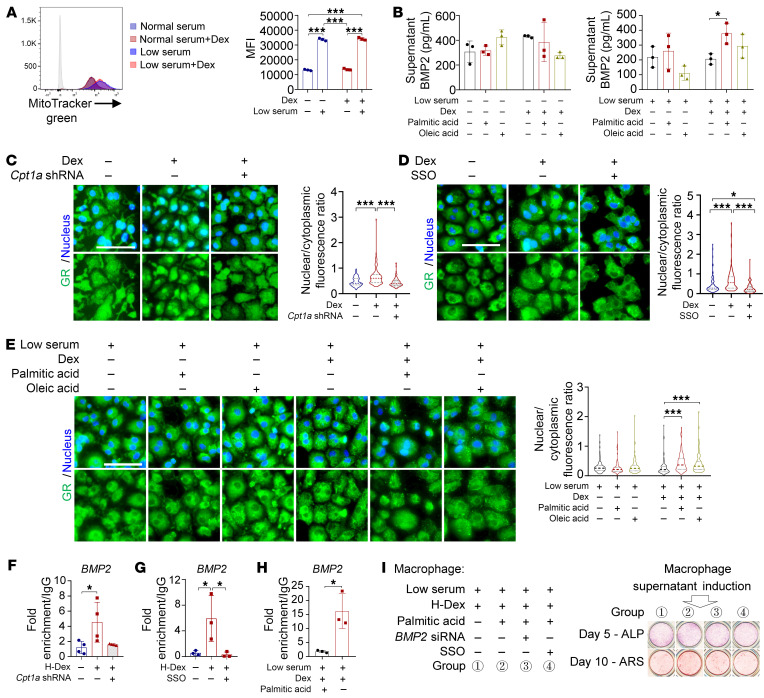
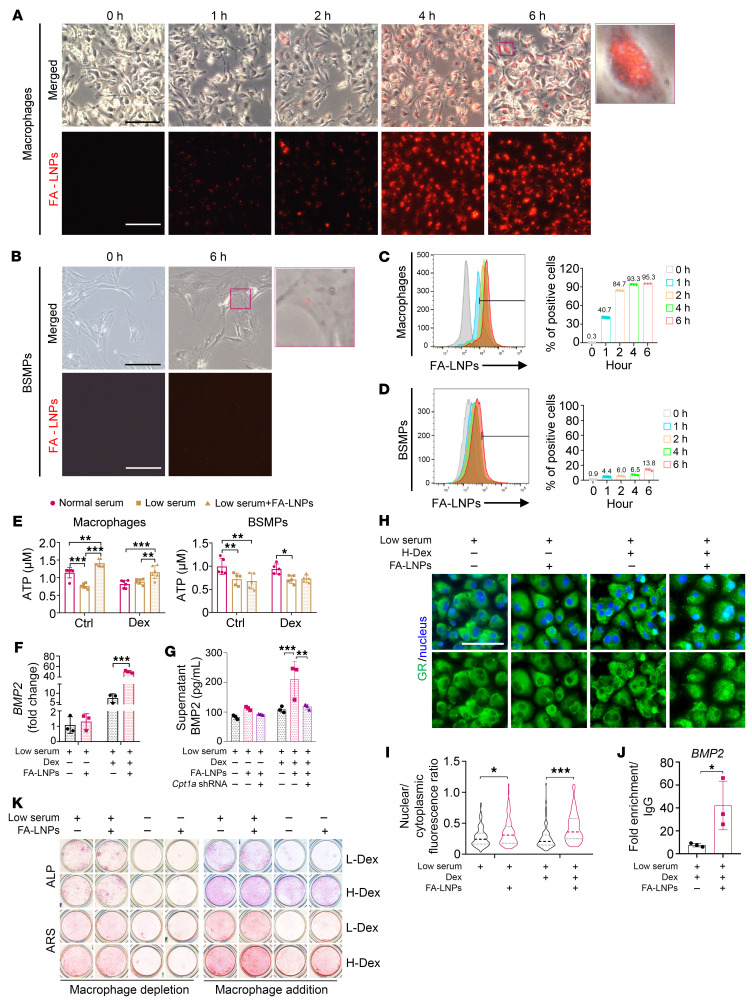
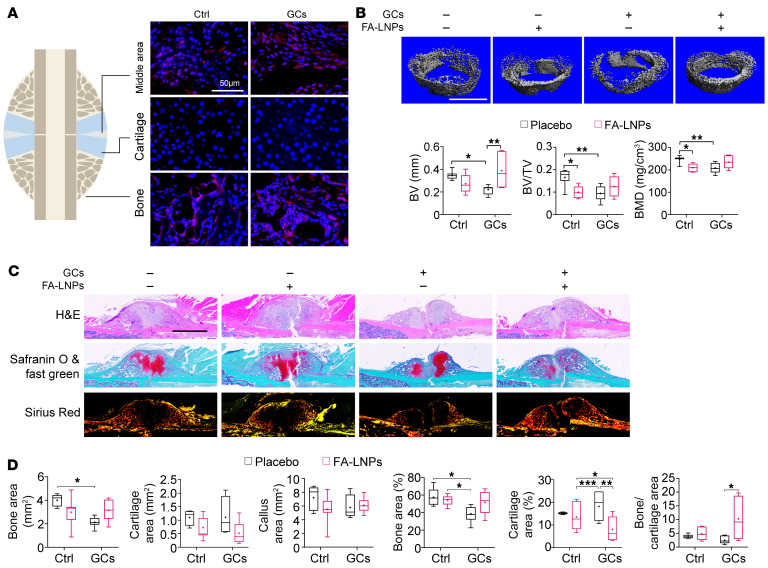
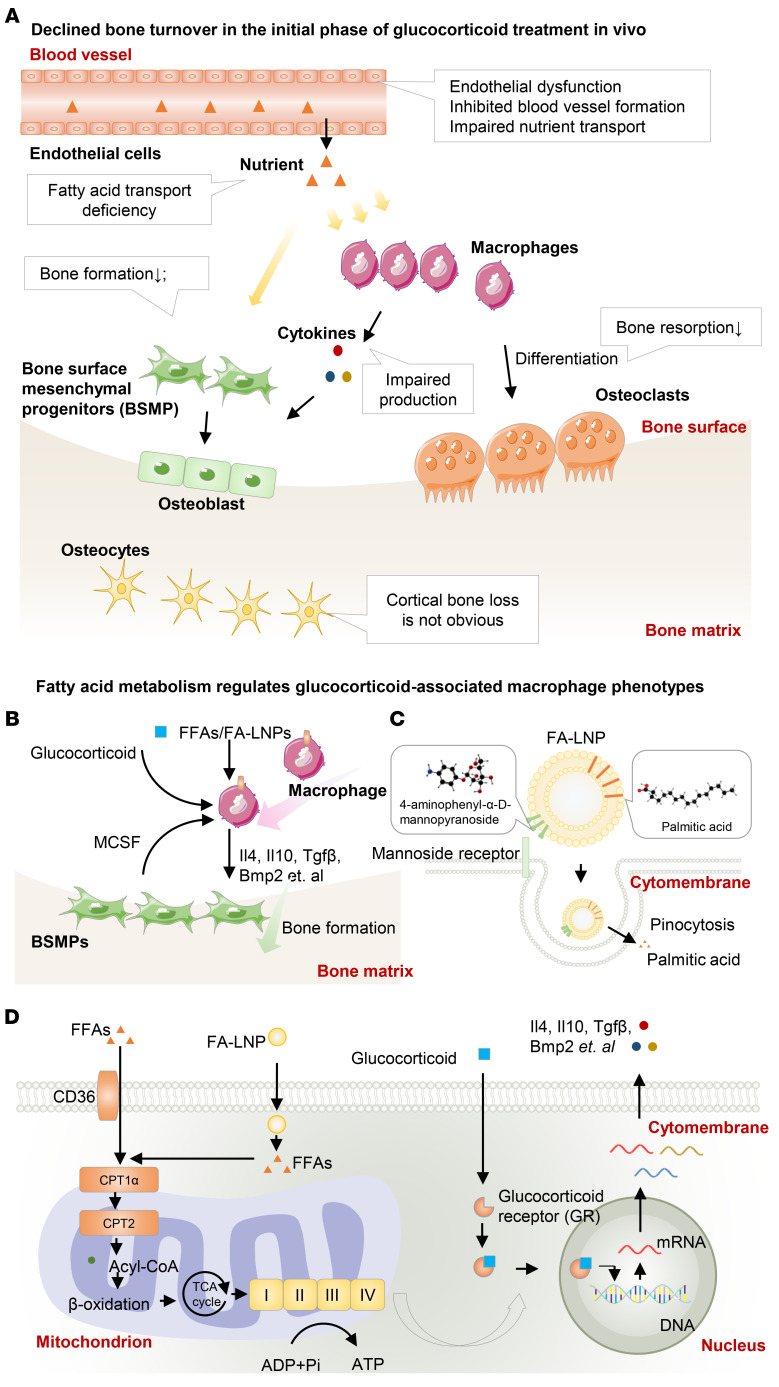
Elevated bone resorption and diminished bone formation have been recognized as the primary features of glucocorticoid-associated skeletal disorders. However, the direct effects of excess glucocorticoids on bone turnover remain unclear. Here, we explored the outcomes of exogenous glucocorticoid treatment on bone loss and delayed fracture healing in mice and found that reduced bone turnover was a dominant feature, resulting in a net loss of bone mass. The primary effect of glucocorticoids on osteogenic differentiation was not inhibitory; instead, they cooperated with macrophages to facilitate osteogenesis. Impaired local nutrient status - notably, obstructed fatty acid transportation - was a key factor contributing to glucocorticoid-induced impairment of bone turnover in vivo. Furthermore, fatty acid oxidation in macrophages fueled the ability of glucocorticoid-liganded receptors to enter the nucleus and then promoted the expression of BMP2, a key cytokine that facilitates osteogenesis. Metabolic reprogramming by localized fatty acid delivery partly rescued glucocorticoid-induced pathology by restoring a healthier immune-metabolic milieu. These data provide insights into the multifactorial metabolic mechanisms by which glucocorticoids generate skeletal disorders, thus suggesting possible therapeutic avenues.
Overview
The claims and statistics of this paper haven’t been checked yet.
Free: it reads the open-access text and checks the first 5 claims that cite a source we can check. Create a free account to check every claim.
Integrity signals
Registry
Cites
Statistics
Figures
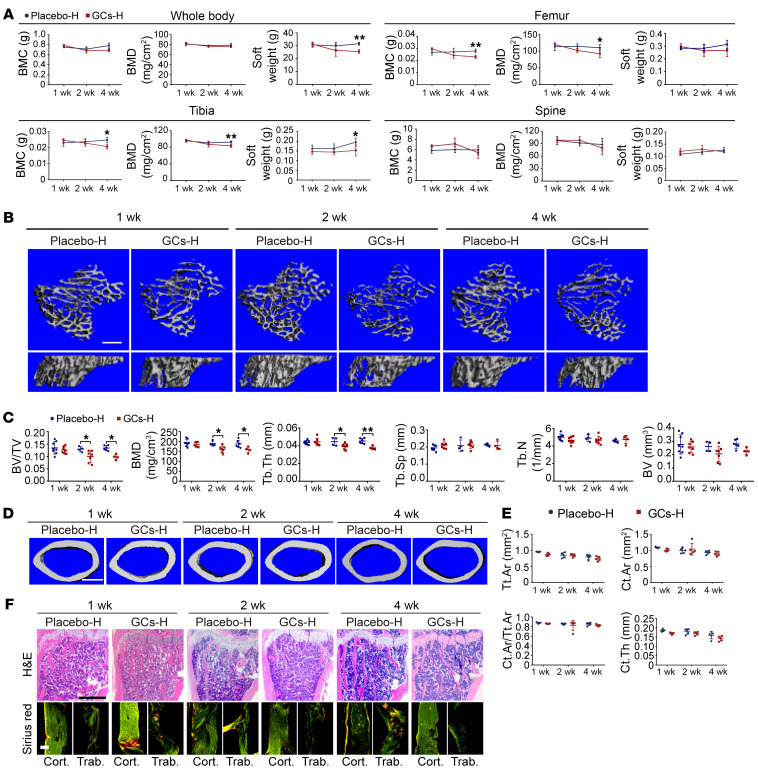
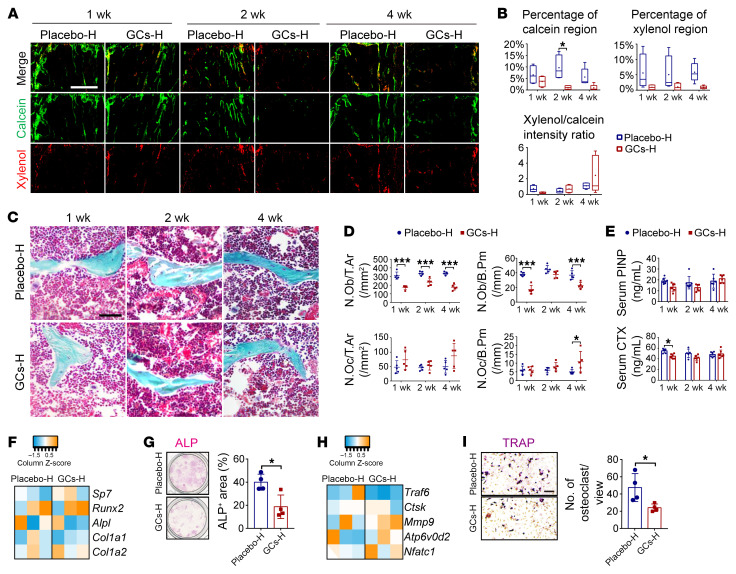
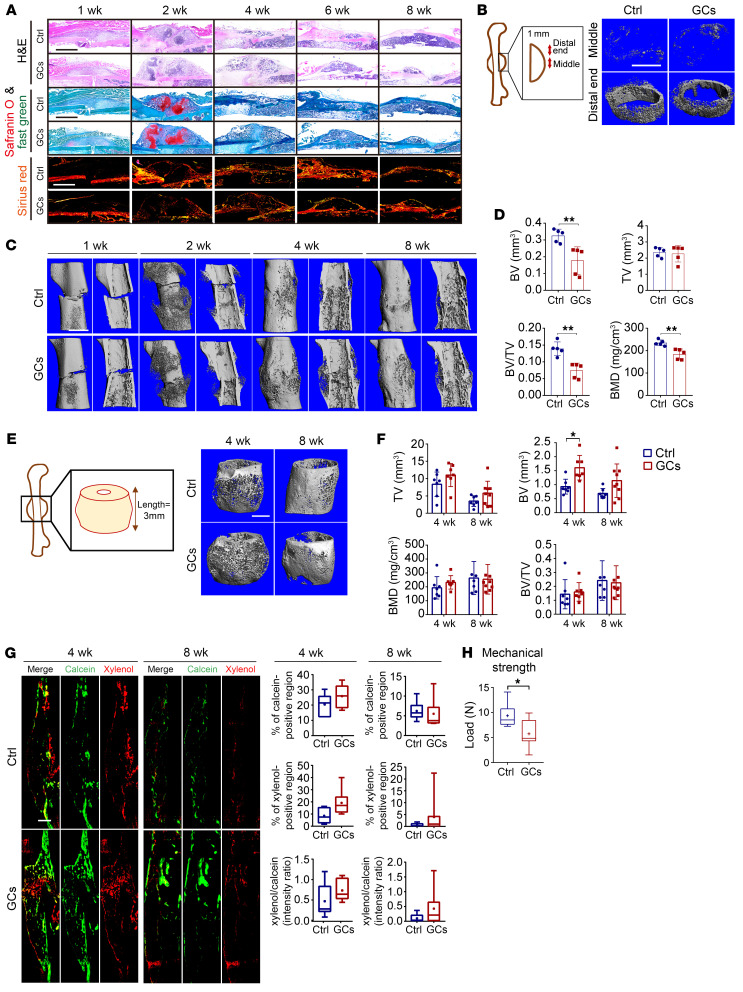
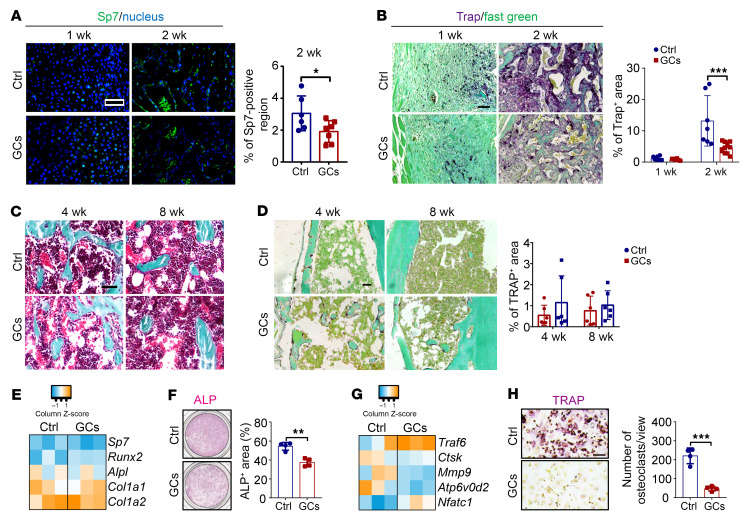
Verification
Claims the paper makes
The claims and statistics of this paper haven’t been checked yet.
Free: it reads the open-access text and checks the first 5 claims that cite a source we can check. Create a free account to check every claim.
Self-check
Percentages, sums and reported differences re-computed from the paper’s own numbers.
The self-check needs the paper’s full text.
Citations
Cites
Dexamethasone in Hospitalized Patients with Covid-19
The RECOVERY Collaborative Group (2021) · New England Journal of Medicine · doi:10.1056/nejmoa2021436 · Cited by 11,477
A Simple Practice Guide for Dose Conversion between Animals and Human
Nair, A., & Jacob, S. (2016) · Journal of Basic and Clinical Pharmacy · doi:10.4103/0976-0105.177703 · Cited by 6,174 · cited 1×
“According to a dose conversion guide (45), the mouse doses of 2.1 mg/kg/d and 6.25 mg/kg/d of prednisolone are approximately equivalent to human doses of 10 mg/d and 30 mg/d, respectively (based on a 60 kg body weight).”
InfluentialMechanisms of fatty acid-induced inhibition of glucose uptake.
Boden, G., Chen, X., Ruiz, J., White, J. V., & Rossetti, L. (1994) · Journal of Clinical Investigation · doi:10.1172/jci117252 · Cited by 3,705
Antiinflammatory Action of Glucocorticoids — New Mechanisms for Old Drugs
Rhen, T., & Cidlowski, J. A. (2005) · New England Journal of Medicine · doi:10.1056/nejmra050541 · Cited by 3,149 · cited 1×
“Upon binding of GCs to the GR in the cytoplasm, GR translocates to the nucleus, where it regulates gene expression by binding to GC response elements within the promoters of various genes (44).”
Immune regulation by glucocorticoids
Cain, D. W., & Cidlowski, J. A. (2017) · Nature Reviews Immunology · doi:10.1038/nri.2017.1 · Cited by 1,846
Weinstein, R. S., Jilka, R. L., Parfitt, A. M., & Manolagas, S. C. (1998) · Journal of Clinical Investigation · doi:10.1172/jci2799 · Cited by 1,753 · cited 1×
“A formidable number of studies have concluded that activated bone resorption and inhibition of bone formation are the primary features of GC-induced bone loss (7–10).”
Cell-intrinsic lysosomal lipolysis is essential for alternative activation of macrophages
Huang, S. C.-C., Everts, B., Ivanova, Y., O'Sullivan, D., Nascimento, M., Smith, A. M., Beatty, W., Love-Gregory, L., Lam, W. Y., O'Neill, C. M., et al. (2014) · Nature Immunology · doi:10.1038/ni.2956 · Cited by 1,214
Free Fatty Acid Receptors in Health and Disease
Kimura, I., Ichimura, A., Ohue-Kitano, R., & Igarashi, M. (2020) · Physiological Reviews · doi:10.1152/physrev.00041.2018 · Cited by 1,018 · cited 2×
“As fatty acids also function as signaling molecules that activate free fatty acid receptors (FFARs) (40), to test the involvement of FFAR signaling, we activated FFAR1 by using GW9508.”
Langenbach, F., & Handschel, J. (2013) · Stem Cell Research & Therapy · doi:10.1186/scrt328 · Cited by 662
Buttgereit, F., Da Silva, J. A. P., Boers, M., Burmester, G.-R., Cutolo, M., Jacobs, J., Kirwan, J., Köhler, L., van Riel, P., Vischer, T., et al. (2002) · Annals of the Rheumatic Diseases · doi:10.1136/ard.61.8.718 · Cited by 544
Pathogenesis of glucocorticoid-induced osteoporosis and options for treatment
Chotiyarnwong, P., & McCloskey, E. V. (2020) · Nature Reviews Endocrinology · doi:10.1038/s41574-020-0341-0 · Cited by 489 · cited 4×
“A formidable number of studies have concluded that activated bone resorption and inhibition of bone formation are the primary features of GC-induced bone loss (7–10).”
InfluentialZhang, S., Weinberg, S., DeBerge, M., Gainullina, A., Schipma, M., Kinchen, J. M., Ben-Sahra, I., Gius, D. R., Yvan-Charvet, L., Chandel, N. S., et al. (2019) · Cell Metabolism · doi:10.1016/j.cmet.2018.12.004 · Cited by 485 · cited 1×
“For example, fatty acid oxidation fuels the production of BMP7, IL-4, and IL-10 (41, 59, 60), but whether fatty acid oxidation facilitates the binding of GR to the promoters of these genes and their exact roles in osteogenesis are still elusive.”
Zhao, D., Zhang, F., Wang, B., Liu, B., Li, L., Kim, S.-Y., Goodman, S. B., Hernigou, P., Cui, Q., Lineaweaver, W. C., et al. (2020) · Journal of Orthopaedic Translation · doi:10.1016/j.jot.2019.12.004 · Cited by 441 · cited 1×
“Less well studied is the underlying regulation of the GC-associated nutritional milieu during bone turnover, although local blood flow deficiency in osteonecrosis has been postulated as a pathogenic mechanism (21–23).”
Self-citationCD36 facilitates fatty acid uptake by dynamic palmitoylation-regulated endocytosis
Hao, J.-W., Wang, J., Guo, H., Zhao, Y.-Y., Sun, H.-H., Li, Y.-F., Lai, X.-Y., Zhao, N., Wang, X., Xie, C., et al. (2020) · Nature Communications · doi:10.1038/s41467-020-18565-8 · Cited by 423 · cited 1×
“Endocytosis mediated by Cd36 (a fatty acid translocase) is a vital process supporting the intracellular transport of fatty acids (42).”
Self-citationBone loss in response to long-term glucocorticoid therapy
LoCascio, V., Bonucci, E., Imbimbo, B., Ballanti, P., Adami, S., Milani, S., Tartarotti, D., & DellaRocca, C. (1990) · Bone and Mineral · doi:10.1016/0169-6009(91)90139-q · Cited by 384
Iuchi, T., Akaike, M., Mitsui, T., Ohshima, Y., Shintani, Y., Azuma, H., & Matsumoto, T. (2003) · Circulation Research · doi:10.1161/01.res.0000050588.35034.3c · Cited by 357 · cited 1×
“In contrast to GC-induced promotion of osteogenesis, GC exposure for 24 hours disturbed the angiogenesis of endothelial cells in vitro (33–35), as suggested by diminished tube formation, an altered transcriptional pattern, suppression of nitric oxide production through a suppressive GC response…”
The Relevance of Mouse Models for Investigating Age-Related Bone Loss in Humans
Jilka, R. L. (2013) · The Journals of Gerontology Series A: Biological Sciences and Medical Sciences · doi:10.1093/gerona/glt046 · Cited by 329 · cited 1×
“Given that the bone biology of mice has a striking similarity with that of humans (61, 62), we expect similar changes on bone turnover alterations in the vasculature, leading to nutrient deficiency and thus altered immunometabolic activity.”
Glucocorticoids and Vascular Reactivity
Yang, S., & Zhang, L. (2004) · Current Vascular Pharmacology · doi:10.2174/1570161043476483 · Cited by 308
Dykman, T. R., Gluck, O. S., Murphy, W. A., Hahn, T. J., & Hahn, B. H. (1985) · Arthritis & Rheumatism · doi:10.1002/art.1780280402 · Cited by 281
Glucocorticoids and bone: consequences of endogenous and exogenous excess and replacement therapy
Hardy, R. S., Zhou, H., Seibel, M. J., & Cooper, M. S. (2018) · Endocrine Reviews · doi:10.1210/er.2018-00097 · Cited by 258
Glutamine Metabolism Regulates Proliferation and Lineage Allocation in Skeletal Stem Cells
Yu, Y., Newman, H., Shen, L., Sharma, D., Hu, G., Mirando, A. J., Zhang, H., Knudsen, E., Zhang, G.-F., Hilton, M. J., et al. (2019) · Cell Metabolism · doi:10.1016/j.cmet.2019.01.016 · Cited by 253
Dexamethasone modulates immature neutrophils and interferon programming in severe COVID-19
Sinha, S., Rosin, N. L., Arora, R., Labit, E., Jaffer, A., Cao, L., Farias, R., Nguyen, A. P., de Almeida, L. G. N., Dufour, A., et al. (2022) · Nature Medicine · doi:10.1038/s41591-021-01576-3 · Cited by 252
Lipid availability determines fate of skeletal progenitor cells via SOX9
van Gastel, N., Stegen, S., Eelen, G., Schoors, S., Carlier, A., Daniëls, V. W., Baryawno, N., Przybylski, D., Depypere, M., Stiers, P.-J., et al. (2020) · Nature · doi:10.1038/s41586-020-2050-1 · Cited by 233
Effects of Low-Dose Prednisone on Bone Metabolism
Ton, F. N., Gunawardene, S. C., Lee, H., & Neer, R. M. (2005) · Journal of Bone and Mineral Research · doi:10.1359/jbmr.041125 · Cited by 223 · cited 2×
“We identified reduced bone turnover as the primary feature of the rapid bone loss, consistent with clinical studies that showed a virtual lack of osteoblastic activity with reduced or unchanged bone resorption occurring during the rapid bone loss phase (11, 12).”
Effects of a growth hormone pulse on total and forearm substrate fluxes in humans
Moller, N., Jorgensen, J. O., Schmitz, O., Moller, J., Christiansen, J., Alberti, K. G., & Orskov, H. (1990) · American Journal of Physiology-Endocrinology and Metabolism · doi:10.1152/ajpendo.1990.258.1.e86 · Cited by 194 · cited 1×
“For instance, prior studies suggest that short-term GC exposure can promote lipolysis (55, 56), while chronic use does not result in further lipolysis (57, 58).”
Walsh, S., Jordan, G. R., Jefferiss, C., Stewart, K., & Beresford, J. N. (2001) · Rheumatology · doi:10.1093/rheumatology/40.1.74 · Cited by 192
Hamidouche, Z., Haÿ, E., Vaudin, P., Charbord, P., Schüle, R., Marie, P. J., & Fromigué, O. (2008) · The FASEB Journal · doi:10.1096/fj.08-106302 · Cited by 191
Avascular Necrosis of the Femoral Head: Vascular Hypotheses
Kerachian, M. A., Harvey, E. J., Cournoyer, D., Chow, T. Y. K., & Séguin, C. (2006) · Endothelium · doi:10.1080/10623320600904211 · Cited by 183 · cited 1×
“Less well studied is the underlying regulation of the GC-associated nutritional milieu during bone turnover, although local blood flow deficiency in osteonecrosis has been postulated as a pathogenic mechanism (21–23).”
Glucocorticoids inhibit bone resorption by isolated rat osteoclasts by enhancing apoptosis
Dempster, D., Moonga, B., Stein, L., Horbert, W., & Antakly, T. (1997) · Journal of Endocrinology · doi:10.1677/joe.0.1540397 · Cited by 180
Systemic glucocorticoid therapy and adrenal insufficiency in adults: a systematic review
Joseph, R. M., Hunter, A. L., Ray, D. W., & Dixon, W. G. (2016) · Seminars in Arthritis and Rheumatism · doi:10.1016/j.semarthrit.2016.03.001 · Cited by 179 · cited 1×
“Excessive exogenous GCs may lead to adrenal atrophy and suppression of the hypothalamic-pituitary-adrenal axis, resulting in reduced endogenous GC levels (63).”
Glüer, C.-C., Marin, F., Ringe, J. D., Hawkins, F., Möricke, R., Papaioannu, N., Farahmand, P., Minisola, S., Martínez, G., Nolla, J. M., et al. (2013) · Journal of Bone and Mineral Research · doi:10.1002/jbmr.1870 · Cited by 171 · cited 1×
“Notably, a randomized and open-label clinical trial showed that the bone-forming agent teriparatide significantly increases spinal bone mineral density, microstructure, and finite element–derived strength compared with the antiresorptive agent risedronate in men with GC-induced bone loss (13).”
Glucocorticoids and bone: Local effects and systemic implications
Henneicke, H., Gasparini, S. J., Brennan-Speranza, T. C., Zhou, H., & Seibel, M. J. (2014) · Trends in Endocrinology & Metabolism · doi:10.1016/j.tem.2013.12.006 · Cited by 168
Macrophages and CSF-1: Implications for development and beyond
Jones, C. V., & Ricardo, S. D. (2013) · Organogenesis · doi:10.4161/org.25676 · Cited by 151
Immunomodulatory Functions of Mesenchymal Stem Cells in Tissue Engineering
Li, H., Shen, S., Fu, H., Wang, Z., Li, X., Sui, X., Yuan, M., Liu, S., Wang, G., & Guo, Q. (2019) · Stem Cells International · doi:10.1155/2019/9671206 · Cited by 151 · cited 7×
“It is noteworthy that both FCCP and oligomycin inhibit the function of complex V, but the regulation of BMP and IL-6 expression may not be solely attributed to the loss of mitochondrial ATP production.”
InfluentialSelf-citationMetabolic regulation of skeletal cell fate and function in physiology and disease
van Gastel, N., & Carmeliet, G. (2021) · Nature Metabolism · doi:10.1038/s42255-020-00321-3 · Cited by 145 · cited 2×
“It is known that reciprocal metabolism of fatty acids, glucose, and amino acids supports skeletal energy homeostasis (24, 36–38).”
Malic Enzyme Couples Mitochondria with Aerobic Glycolysis in Osteoblasts
Lee, W.-C., Ji, X., Nissim, I., & Long, F. (2020) · Cell Reports · doi:10.1016/j.celrep.2020.108108 · Cited by 143 · cited 1×
“It is known that reciprocal metabolism of fatty acids, glucose, and amino acids supports skeletal energy homeostasis (24, 36–38).”
Kim, S. P., Li, Z., Zoch, M. L., Frey, J. L., Bowman, C. E., Kushwaha, P., Ryan, K. A., Goh, B. C., Scafidi, S., Pickett, J. E., et al. (2017) · JCI Insight · doi:10.1172/jci.insight.92704 · Cited by 141 · cited 1×
“Consistent with previous studies showing that the skeleton is the second organ exerting high demand on circulating fatty acids (36, 54), our study proved that fatty acid oxidation is a dominant fuel source for cellular homeostasis of osteogenic precursors.”
Glucocorticoid-induced osteogenesis is negatively regulated by Runx2/Cbfa1 serine phosphorylation
Phillips, J. E., Gersbach, C. A., Wojtowicz, A. M., & García, A. J. (2006) · Journal of Cell Science · doi:10.1242/jcs.02758 · Cited by 140 · cited 1×
“The exogenous actions of GCs on osteogenesis have been suggested to be stimulatory (29, 49–51).”
Hormonal control of substrate cycling in humans.
Miyoshi, H., Shulman, G. I., Peters, E. J., Wolfe, M. H., Elahi, D., & Wolfe, R. R. (1988) · Journal of Clinical Investigation · doi:10.1172/jci113487 · Cited by 139 · cited 1×
“For instance, prior studies suggest that short-term GC exposure can promote lipolysis (55, 56), while chronic use does not result in further lipolysis (57, 58).”
Influence of Glucocorticoids on Human Osteoclast Generation and Activity
Sivagurunathan, S., Muir, M. M., Brennan, T. C., Seale, J. P., & Mason, R. S. (2005) · Journal of Bone and Mineral Research · doi:10.1359/jbmr.041233 · Cited by 126 · cited 1×
“Further, while it has been reported that GCs directly enhance osteoclastogenesis in vitro (14, 15), others have proposed that they impair bone resorption in vivo (16–18).”
The malonyl-CoA‒long-chain acyl-CoA axis in the maintenance of mammalian cell function
Zammit, V. A. (1999) · Biochemical Journal · doi:10.1042/0264-6021:3430505 · Cited by 117 · cited 1×
“For instance, prior studies suggest that short-term GC exposure can promote lipolysis (55, 56), while chronic use does not result in further lipolysis (57, 58).”
Siclari, V. A., Zhu, J., Akiyama, K., Liu, F., Zhang, X., Chandra, A., Nah, H.-D., Shi, S., & Qin, L. (2013) · Bone · doi:10.1016/j.bone.2012.12.013 · Cited by 105 · cited 1×
“…surface mesenchymal progenitors [BSMPs]) play a vital role in physiological bone formation, and central bone marrow mesenchymal progenitors (CMPs) (27) were cultured under three GC dosing conditions: GC deprivation (0 M dexamethasone [Dex]), standard dosing (10 –8 M Dex, which is regarded as a…”
Self-citationThe highly unnatural fatty acid profile of cells in culture
Else, P. L. (2019) · Progress in Lipid Research · doi:10.1016/j.plipres.2019.101017 · Cited by 101 · cited 1×
“Serum (i.e., FBS) is the source of fatty acids in culture that provides 2%–3% of the fatty acid (39).”
In vitro dexamethasone pretreatment enhances bone formation of human mesenchymal stem cells in vivo
Song, I., Caplan, A. I., & Dennis, J. E. (2009) · Journal of Orthopaedic Research® · doi:10.1002/jor.20838 · Cited by 100
Glucocorticoids maintain human osteoclasts in the active mode of their resorption cycle
Søe, K., & Delaissé, J.-M. (2010) · Journal of Bone and Mineral Research · doi:10.1002/jbmr.113 · Cited by 97 · cited 1×
“Further, while it has been reported that GCs directly enhance osteoclastogenesis in vitro (14, 15), others have proposed that they impair bone resorption in vivo (16–18).”
Isojima, T., & Sims, N. A. (2021) · Cellular and Molecular Life Sciences · doi:10.1007/s00018-021-03884-w · Cited by 96 · cited 1×
“Given that the bone biology of mice has a striking similarity with that of humans (61, 62), we expect similar changes on bone turnover alterations in the vasculature, leading to nutrient deficiency and thus altered immunometabolic activity.”
Liu, Y., Mladinov, D., Pietrusz, J. L., Usa, K., & Liang, M. (2009) · Cardiovascular Research · doi:10.1093/cvr/cvn231 · Cited by 91 · cited 1×
“In contrast to GC-induced promotion of osteogenesis, GC exposure for 24 hours disturbed the angiogenesis of endothelial cells in vitro (33–35), as suggested by diminished tube formation, an altered transcriptional pattern, suppression of nitric oxide production through a suppressive GC response…”
TOBIAS, J., & CHAMBERS, T. J. (1989) · Endocrinology · doi:10.1210/endo-125-3-1290 · Cited by 90
Date, T., Doiguchi, Y., 信田, 益., & Shindo, H. (2004) · Journal of Orthopaedic Science · doi:10.1007/s00776-004-0815-2 · Cited by 79
Modulating macrophage polarization for the enhancement of fracture healing, a systematic review
Chow, S. K., Wong, C. H.-W., Cui, C., Li, M. C. M., Wong, R. M. Y., & Cheung, W. (2022) · Journal of Orthopaedic Translation · doi:10.1016/j.jot.2022.05.004 · Cited by 70
Short-term effects of corticosteroids on trabecular bone remodeling in old ewes
Chavassieux, P., Buffet, A., Vergnaud, P., Garnero, P., & Meunier, P. J. (1997) · Bone · doi:10.1016/s8756-3282(97)00016-1 · Cited by 67 · cited 1×
“Further, while it has been reported that GCs directly enhance osteoclastogenesis in vitro (14, 15), others have proposed that they impair bone resorption in vivo (16–18).”
Witchel, S. F., & DeFranco, D. B. (2006) · Nature Clinical Practice Endocrinology & Metabolism · doi:10.1038/ncpendmet0323 · Cited by 58 · cited 1×
“GCs act primarily as ligands for the GC receptor (GR), a member of the nuclear receptor superfamily of transcription factors, to execute various functions, including influencing cell metabolism (19, 20).”
Animal Model for Glucocorticoid Induced Osteoporosis: A Systematic Review from 2011 to 2021
Xavier, A., Toumi, H., & Lespessailles, É. (2021) · International Journal of Molecular Sciences · doi:10.3390/ijms23010377 · Cited by 58
Meta-analysis reveals glucocorticoid levels reflect variation in metabolic rate, not ‘stress’
Jimeno, B., & Verhulst, S. (2023) · eLife · doi:10.7554/elife.88205 · Cited by 56 · cited 1×
“GCs act primarily as ligands for the GC receptor (GR), a member of the nuclear receptor superfamily of transcription factors, to execute various functions, including influencing cell metabolism (19, 20).”
Animal models to explore the effects of glucocorticoids on skeletal growth and structure
Wood, C. L., Soucek, O., Wong, S. C., Zaman, F., Farquharson, C., Savendahl, L., & Ahmed, S. F. (2018) · Journal of Endocrinology · doi:10.1530/joe-17-0361 · Cited by 54 · cited 1×
“Different formulations have varying potencies (e.g., Dex > methylprednisolone > prednisolone/prednisone > hydrocortisone/ cortisone) (25, 47), but their mechanisms of action are consistent.”
Li, W., Huang, Z., Tan, B., Chen, G., Li, X., Xiong, K., Zhu, R., Li, R., Li, S., Ye, H., et al. (2021) · Journal of Orthopaedic Translation · doi:10.1016/j.jot.2021.09.005 · Cited by 54
Self-citationDeng, J., Chalhoub, N. E., Sherwin, C. M. T., Li, C., & Brunner, H. I. (2019) · Seminars in Arthritis and Rheumatism · doi:10.1016/j.semarthrit.2019.03.010 · Cited by 48 · cited 1×
“Different formulations have varying potencies (e.g., Dex > methylprednisolone > prednisolone/prednisone > hydrocortisone/ cortisone) (25, 47), but their mechanisms of action are consistent.”
Glucocorticoid activation of anti-inflammatory macrophages protects against insulin resistance
Caratti, G., Stifel, U., Caratti, B., Jamil, A. J. M., Chung, K.-J., Kiehntopf, M., Gräler, M. H., Blüher, M., Rauch, A., & Tuckermann, J. P. (2023) · Nature Communications · doi:10.1038/s41467-023-37831-z · Cited by 48 · cited 1×
“Consistent with previous findings that GCs induce polarization of macrophages into an M2-like phenotype (1, 31), we also identified increased expression of Cd163 , Cd204 , Arg1 , IL10 , Tgfb , IL4 , and BMP2 , and decreased expression of IL6 , IL1 , and Tnfa (Supplemental Figure 10C).”
Zhang, G., Sheng, H., He, Y., Xie, X., Wáng, Y. X. J., Lee, K., Yeung, K.-W., Li, Z., He, W., Griffith, J. F., et al. (2009) · Arthritis & Rheumatism · doi:10.1002/art.24847 · Cited by 43
Self-citationPreferential Stimulation of Abdominal Subcutaneous Lipolysis after Prednisolone Exposure in Humans
Gravholt, C. H., Dall, R., Christiansen, J. S., Møller, N., & Schmitz, O. (2002) · Obesity Research · doi:10.1038/oby.2002.105 · Cited by 38 · cited 1×
“For instance, prior studies suggest that short-term GC exposure can promote lipolysis (55, 56), while chronic use does not result in further lipolysis (57, 58).”
Salamone, I. M., Quattrocelli, M., Barefield, D. Y., Page, P., Tahtah, I., Hadhazy, M., Tomar, G., & McNally, E. M. (2022) · Journal of Clinical Investigation · doi:10.1172/jci149828 · Cited by 36 · cited 1×
“GCs are also prescribed to patients after organ transplantation and to those hospitalized with severe coronavirus diseases like COVID-19 (1–5).”
Glucocorticoid-induced expansion of classical monocytes contributes to bone loss
Liu, P., Gao, Y., Luo, P., Yu, H., Guo, S., Liu, F., Gao, J., Xu, J., Wang, S., & Zhang, C. (2022) · Experimental & Molecular Medicine · doi:10.1038/s12276-022-00764-6 · Cited by 35 · cited 1×
“In the present study, we addressed the regulation between macrophages and osteogenic progenitor cells, as inspired by previous studies (52, 53).”
Self-citationInstructions for producing a mouse model of glucocorticoid-induced osteoporosis
Thiele, S., Baschant, U., Rauch, A., & Rauner, M. (2014) · BoneKEy Reports · doi:10.1038/bonekey.2014.47 · Cited by 31 · cited 1×
“Furthermore, the literature suggests that FVB/N mice are more sensitive to GC-induced bone loss than Swiss Webster and C57BL/6 mice (48).”
Zheng, Z., Jiang, T., Huang, Z., Chu, B., Gu, J., Zhao, X., Liu, H., Fan, J., Yu, L., Jiang, S., et al. (2022) · Redox Biology · doi:10.1016/j.redox.2022.102326 · Cited by 30 · cited 1×
“For example, fatty acid oxidation fuels the production of BMP7, IL-4, and IL-10 (41, 59, 60), but whether fatty acid oxidation facilitates the binding of GR to the promoters of these genes and their exact roles in osteogenesis are still elusive.”
Cited by
Conductive Hydrogel Inspires Neutrophil Extracellular Traps to Combat Bacterial Infections in Wounds
Ouyang, L., Lin, Z., He, X., Sun, J., Liao, J., Liao, Y., Xie, X., Hu, W., Zeng, R., Tao, R., et al. (2025) · ACS Nano · doi:10.1021/acsnano.4c14487 · Cited by 39
Self-citationTao, D., Wang, H., Chang, S., Cheng, J., Da, N., Zhang, L., Yang, J., Wang, W., Xu, F., & Li, B. (2025) · Advanced Healthcare Materials · doi:10.1002/adhm.202405097 · Cited by 42
Wang, C.-Y., Wu, Q., Zhuang, L., Chen, Y., Zhang, Q., Wu, Y., Jin, M., Miao, J., Wang, X., Xu, J., et al. (2025) · Journal of Advanced Research · doi:10.1016/j.jare.2025.07.046 · Cited by 60
“Consequently, the enhanced fatty acid uptake mediated by CD36 and subsequent oxidation support macroph age polarization toward the M2 phenotype, thereby facilitating bone healing and regeneration [73].”
InfluentialSelf-citationWang, J., Xin, Y., Dong, Z., Li, S., & Yang, G. (2025) · Experimental Gerontology · doi:10.1016/j.exger.2025.112974 · Cited by 22
Advances in the mechanism for steroid-induced osteonecrosis of the femoral head
Zhou, R., Bian, Y., Cai, X., Sun, H., Lv, Z., Xu, Y., Wang, Y., Wang, H., Zhu, W., Feng, B., et al. (2026) · Bone Research · doi:10.1038/s41413-025-00477-2 · Cited by 21
“162,163 Nevertheless, GCs have also been revealed to disrupt the Smad proteins to inhibit the TGF-β /Smad pathway.”
Metadata
- Authors
- Li, X., Liang, T., Dai, B., Chang, L., Zhang, Y., Hu, S., Guo, J., Xu, S., Zheng, L., Yao, H., Lian, H., Nie, Y., Li, Y., He, X., Yao, Z., Tong, W., Wang, X., Chow, D. H. K., Xu, J., & Qin, L.
- Affiliations
- Chinese University of Hong Kong (HK)
- Chinese Academy of Medical Sciences & Peking Union Medical College (CN)
- Chinese Academy of Sciences (CN)
- Corresponding author
- Qin, Ling
- ORCID
- Venue
- Journal of Clinical Investigation
- Published
- 2024-03-21
- Volume
- 134
- Issue
- 10
- ISSN
- 0021-9738 (ISSN-L)
- 1558-8238
- PMC
- PMC11093612
- OpenAlex
- W4393055919
- Cited by
- 41
- References
- 64
- Citations by year
- 2026: 22 · 2025: 16 · 2024: 3
- FWCI
- 5.58
- Type
- journal article
- Language
- en
- Open access
- gold
- doi.org
- Licence
- Locations
- Journal of Clinical Investigation (publishedVersion, cc-by)
- PubMed Central (publishedVersion, cc-by)
- PubMed (publishedVersion)
- DOAJ (DOAJ: Directory of Open Access Journals) (submittedVersion, cc-by-sa)
- Funders
- Areas of Excellence from the Research Grants Council of Hong Kong (AoE/M-402/20)
- Mainland-Hong Kong Joint Funding Scheme (MHP/030/20)
- Direct grants from the Chinese University of Hong Kong (2020.058,2020.060,2021.040)
- Research Impact Fund from the Research Grants Council of Hong Kong (R4034-23)
- Topics
- Life Sciences › Biochemistry, Genetics and Molecular Biology › Molecular Biology › Bone Metabolism and Diseases
- Health Sciences › Medicine › Orthopedics and Sports Medicine › Bone health and osteoporosis research
- Life Sciences › Biochemistry, Genetics and Molecular Biology › Endocrinology › Estrogen and related hormone effects
- Keywords
- glucocorticoids, bone turnover, glucocorticoid-induced osteoporosis, immunometabolism, macrophages, bone formation, BMP-2, fatty acid oxidation, fatty acid uptake, metabolic reprogramming, fracture healing, glucocorticoid receptor, bone resorption
- MeSH terms
- Animals, Bone and Bones, Fatty Acids, Glucocorticoids, Macrophages, Osteogenesis, Bone Remodeling, Mice, Bone Morphogenetic Protein 2, Cellular Microenvironment
About these checks
Registry, retraction, Cites and statistics results are computed, not judged, with one exception: a printed reference that no index lists is read once by a model before it counts as a citation error. Claims are extracted by a model and kept only when their quote appears verbatim in the text; each cited source is then checked, with a model’s help, for whether it says what the claim relies on. Those verdicts can be wrong — read the claim’s quote and the cited source before relying on one.
Statistics and arithmetic are recomputed, not judged.
Confidence bands are shown only for fields calibrated on our annotated test set. None is calibrated yet, so no band is shown.
What counts as a claim ›How we measure confidence ›How we check this ›
Are you an author, or do you see a problem with this page? Request a review
Data sources
Bibliographic data: Semantic Scholar, OpenAlex, Crossref.
Contains information from the Semantic Scholar Academic Graph Datasets, made available under the ODC Attribution License (ODC-BY 1.0).
Semantic Scholar’s data is described in: Kinney, R., et al. (2023). The Semantic Scholar Open Data Platform. arXiv:2301.10140.
