

Web-Based Acceptance and Commitment Therapy for Depressive Symptoms With Minimal Support: A Randomized Controlled Trial
Open accessThe DOI matches its Crossref record; 95 of the 95 references it cites were found in a registry or an index.
Abstract
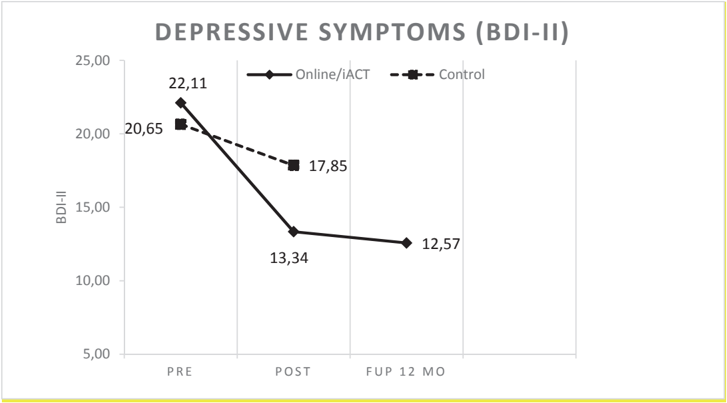
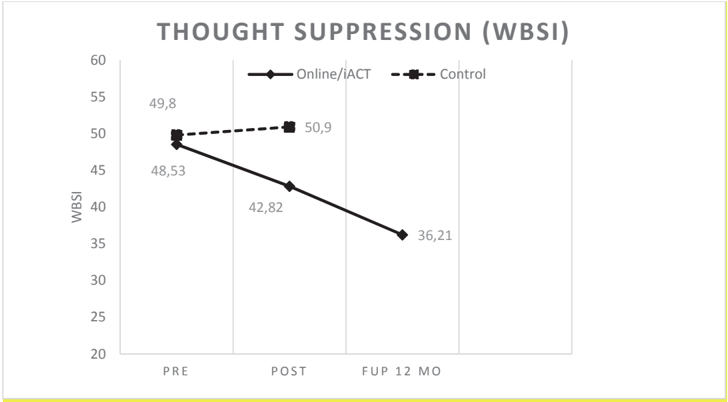
Low-intensity interventions for people suffering from depressive symptoms are highly desirable. The aim of the present study was to investigate the outcomes of a web-based acceptance and commitment therapy (ACT)–based intervention without face-to-face contact for people suffering from depressive symptoms. Participants ( N = 39) with depressive symptoms were randomly assigned to an Internet-delivered acceptance and commitment therapy (iACT) intervention or a waiting list control condition (WLC). Participants were evaluated with standardized self-reporting measures (Beck Depression Inventory [BDI-II], Symptom Checklist–90 [SCL-90], Acceptance and Action Questionnaire [AAQ-2], Five Facet Mindfulness Questionnaire [FFMQ], Automatic Thoughts Questionnaire [ATQ], and White Bear Suppression Inventory [WBSI]) at pre- and post-measurement. Long-term effects in the iACT group were examined using a 12-month follow-up. The iACT program comprised home assignments, online feedback given by master’s-level students of psychology over a 7-week intervention period, and automated email-based reminders. Significant effects were observed in favor of the iACT group on depression symptomatology (between effect sizes [ESs] at post-treatment, iACT/WLC, g = .83), psychological and physiological symptoms (g = .60), psychological flexibility (g = .67), mindfulness skills (g = .53), and frequency of automatic thoughts (g = .57) as well as thought suppression (g = .53). The treatment effects in the iACT group were maintained over the 12-month follow-up period (within-iACT ES: BDI-II, g = 1.33; SCL-90, g = 1.04; ATQF/B [Frequency/Believability], FFMQ, WBSI, AAQ-II, g = .74-1.08). The iACT participants stated that they would be happy to recommend the same intervention to others with depressive symptoms. We conclude that an ACT-based guided Internet-delivered treatment with minimal contact can be effective for people with depressive symptoms.
Overview
The claims and statistics of this paper haven’t been checked yet.
Free: it reads the open-access text and checks the first 5 claims that cite a source we can check. Create a free account to check every claim.
Integrity signals
Registry
Cites
Statistics
Figures



Verification
Claims the paper makes
The claims and statistics of this paper haven’t been checked yet.
Free: it reads the open-access text and checks the first 5 claims that cite a source we can check. Create a free account to check every claim.
Claims other papers make about this one
Each is checked against this paper’s own text: does it say what the citing paper says it does?
The cited source doesn’t support the claim as written.
In the citing paper
“One intervention [46] allowed participant’s free navigation of the system, meaning participants could access and complete modules in any order they decided.”
From Effectiveness of Web-Delivered Acceptance and Commitment Therapy in Relation to Mental Health and Well-Being: A Systematic Review and Meta-Analysis. (2016) · cites this paper as [46]
Checked by a reasoning model — may be wrong.
Experimental — accuracy not yet measuredThe source backs part of the claim, not all of it — or backs it for a different population, condition or comparison.
In the citing paper
“Relevant studies have shown that acceptance and commitment therapy can improve the negative emotions of college students, such as anxiety and depression, promote their mental health, and enhance their self-identity [6, 7].”
From Effect of Acceptance and Commitment Therapy Combined with Music Relaxation Therapy on the Self-Identity of College Students (2022) · cites this paper as [7]
Experimental — accuracy not yet measuredThe source backs part of the claim, not all of it — or backs it for a different population, condition or comparison.
In the citing paper
“Web-based ACT has also been found to be effective in addressing health challenges such as distress related to trauma, anxiety, depression, and chronic pain [20-22].”
From Implementation of an internet-based acceptance and commitment therapy for promoting mental health among migrant live-in caregivers in canada: Protocol (2021) · cites this paper as [22]
Experimental — accuracy not yet measuredThe source backs part of the claim, not all of it — or backs it for a different population, condition or comparison.
In the citing paper
“Previous research consistently shows the effectiveness of ACT in managing the core components of HB, including anger, depression, somatic symptoms, and emotional distress [6, 23-27].”
From User Experience and Clinical Utility of a Smartphone-Based Application for Hwa-Byung Treatment: a protocol for a single-arm prospective pilot study. (2026) · cites this paper as [26]
Experimental — accuracy not yet measuredThe source backs part of the claim, not all of it — or backs it for a different population, condition or comparison.
In the citing paper
“Of the 10 studies included, 4 (40%) were judged to be of low risk of bias [29,46,49,52], one (10%) of high risk [36], and an unclear risk of bias was assigned to 5 (50%) [45,47,48,50,51] of the included studies.”
From Effectiveness of Web-Delivered Acceptance and Commitment Therapy in Relation to Mental Health and Well-Being: A Systematic Review and Meta-Analysis. (2016) · cites this paper as [46]
Experimental — accuracy not yet measured
10 more claims about this paper
Create a free account to see every claim other papers make about this one.
Self-check
Percentages, sums and reported differences re-computed from the paper’s own numbers.
The self-check needs the paper’s full text.
Citations
Cites
Diagnostic and Statistical Manual of Mental Disorders.
Widiger, T. A. (2000) · Encyclopedia of Psychology, Vol. 3. · doi:10.1037/10518-009 · Cited by 19,744
Kessler, R. C. (1994) · Archives of General Psychiatry · doi:10.1001/archpsyc.1994.03950010008002 · Cited by 12,370 · cited 1×
“It is not only highly prevalent but is also associated with poor life quality, higher mortality rate, increased need for health services, and high economic costs (Alonso et al., 2004; Kessler et al., 1994).”
BackgroundProjections of Global Mortality and Burden of Disease from 2002 to 2030
Mathers, C. D., & Loncar, D. (2006) · PLoS Medicine · doi:10.1371/journal.pmed.0030442 · Cited by 11,386 · cited 1×
“Depressive disorders are projected to be one of the three leading causes of disease burden by the year 2030 (Mathers & Loncar, 2006).”
BackgroundStatistical Methods for Meta-Analysis
Wasserman, S., Hedges, L. V., & Olkin, I. (1988) · Journal of Educational Statistics · doi:10.2307/1164953 · Cited by 10,326
Jacobson, N. S., & Truax, P. (1991) · Journal of Consulting and Clinical Psychology · doi:10.1037/0022-006x.59.1.12 · Cited by 7,770 · cited 1×
“Clinical significance (Jacobson & Truax, 1991) of depressive mood based on the BDI-II (Beck et al., 2004) was examined at post-intervention and follow-up using the following four categories: (a) Recovered, (b) Improved, (c) Unchanged, (d) Deteriorated.”
MethodUsing Self-Report Assessment Methods to Explore Facets of Mindfulness
Baer, R. A., Smith, G. T., Hopkins, J., Krietemeyer, J., & Toney, L. (2006) · Assessment · doi:10.1177/1073191105283504 · Cited by 7,511
Acceptance and commitment therapy: model, processes and outcomes
Hayes, S. C., Luoma, J. B., Bond, F. W., Masuda, A., & Lillis, J. (2006) · Behaviour Research and Therapy · doi:10.1016/j.brat.2005.06.006 · Cited by 6,587 · cited 1×
“The online intervention consisted of six modules, based on the core processes of ACT, which promote psychological flexibility (see, for example, Hayes et al., 2006).”
MethodComparison of Beck Depression Inventories -IA and -II in psychiatric outpatients
Beck, A. T., Steer, R. A., Ball, R., & Ranieri, W. F. (1996) · Journal of Personality Assessment · doi:10.1207/s15327752jpa6703_13 · Cited by 5,965
Distribution Theory for Glass's Estimator of Effect Size and Related Estimators
Hedges, L. V. (1981) · Journal of Educational Statistics · doi:10.2307/1164588 · Cited by 5,695 · cited 1×
“Because of the small sample size, the possible bias of d was corrected by an unbiased estimate of Hedges’s g (Hedges, 1981; Hedges & Olkin, 1985).”
MethodBond, F. W., Hayes, S. C., Baer, R. A., Carpenter, K. M., Guenole, N., Orcutt, H. K., Waltz, T., & Zettle, R. D. (2011) · Behavior Therapy · doi:10.1016/j.beth.2011.03.007 · Cited by 3,950 · cited 9×
“We hypothesized that the ACT-based intervention would show positive effects on the symptoms of depression (Beck Depression Inventory [BDI-II], Symptom Checklist–90 [SCL-90]) and in the ACT-related process measures of psychological flexibility (Acceptance and Action Questionnaire [AAQ-II]), mindfulness (Five Facet Mind…”
MethodInfluentialMorris, S. B., & DeShon, R. P. (2002) · Psychological Methods · doi:10.1037/1082-989x.7.1.105 · Cited by 2,502 · cited 1×
“…and follow-up measurements by dividing the mean change from the pre- to the post-measurements by the combined (pooled) standard deviation (SD) and by dividing the mean change from the pre- to the follow-up measurements with the combined SD (Feske & Chambless, 1995; Morris & DeShon, 2002).”
MethodEysenbach, G., & CONSORT-EHEALTH Group (2011) · Journal of Medical Internet Research · doi:10.2196/jmir.1923 · Cited by 1,863
Persuasive Systems Design: Key Issues, Process Model, and System Features
Oinas-Kukkonen, H., & Harjumaa, M. (2009) · Communications of the Association for Information Systems · doi:10.17705/1cais.02428 · Cited by 1,663 · cited 1×
“Periodic prompts can take the form of text messages, email-based reminders, or concise feedback delivered to the participants several times during the intervention (Fry & Neff, 2009; Oinas-Kukkonen & Harjumaa, 2009).”
BackgroundInternet-based cognitive behaviour therapy for symptoms of depression and anxiety: A meta-analysis
SPEK, V., CUIJPERS, P., NYKLÍČEK, I., RIPER, H., KEYZER, J., & POP, V. (2007) · Psychological Medicine · doi:10.1017/s0033291706008944 · Cited by 1,586
Cognitive self-statements in depression: Development of an automatic thoughts questionnaire
Hollon, S. D., & Kendall, P. C. (1980) · Cognitive Therapy and Research · doi:10.1007/bf01178214 · Cited by 1,480 · cited 15×
“The ATQ-F measures the frequency of automatic depressive thoughts, and the ATQ-B measures the believability of (or fusion with) these thoughts.”
BackgroundInfluentialHow to Select, Calculate, and Interpret Effect Sizes
Durlak, J. A. (2009) · Journal of Pediatric Psychology · doi:10.1093/jpepsy/jsp004 · Cited by 1,446 · cited 1×
“Between-group effects sizes at the post-measurement were adjusted by subtracting the pre-ES from the post-ES, after calculating the pre-ES in the same manner as the post-ES (e.g., Durlak, 2009; Wilson & Lipsey, 2007).”
MethodComputer-based psychological treatments for depression: A systematic review and meta-analysis
Richards, D., & Richardson, T. (2012) · Clinical Psychology Review · doi:10.1016/j.cpr.2012.02.004 · Cited by 1,442 · cited 3×
“The majority of studies indicate that the effects of Internet-delivered treatment are larger when therapists provide some form of support (Andersson, Carlbring, Ljótsson, & Hedman, 2013; Richards & Richardson, 2012).”
BackgroundResultInternet-Based and Other Computerized Psychological Treatments for Adult Depression: A Meta-Analysis
Andersson, G., & Cuijpers, P. (2009) · Cognitive Behaviour Therapy · doi:10.1080/16506070903318960 · Cited by 1,368 · cited 1×
“…ESs of d = .78 for therapist-supported, d = .58 for administrative-supported, and d = .36 for unsupported studies, and with those of an earlier meta-analysis by Andersson and Cuijpers (2009), who found between-group effect sizes of d = .61 for supported and d = .25 for unsupported treatments.”
ResultAndrews, G., Cuijpers, P., Craske, M. G., McEvoy, P., & Titov, N. (2010) · PLoS ONE · doi:10.1371/journal.pone.0013196 · Cited by 1,311
Wegner, D. M., & Zanakos, S. (1994) · Journal of Personality · doi:10.1111/j.1467-6494.1994.tb00311.x · Cited by 1,245 · cited 11×
“However, a significant decrease was detected in thought suppression (WBSI) from post-intervention to follow-up (p .05).”
MethodInfluentialPsychotherapy for depression in adults: A meta-analysis of comparative outcome studies.
Cuijpers, P., van Straten, A., Andersson, G., & van Oppen, P. (2008) · Journal of Consulting and Clinical Psychology · doi:10.1037/a0013075 · Cited by 1,050
Depression: A Global Public Health Concern: (517532013-004)
Marcus, M., Yasamy, M. T., van Ommeren, M. V., Chisholm, D., & Saxena, S. (2012) · PsycEXTRA Dataset · doi:10.1037/e517532013-004 · Cited by 985
Estimation of a Single Effect Size: Parametric and Nonparametric Methods
Hedges, L. V., & Olkin, I. (1985) · Statistical Methods for Meta-Analysis · doi:10.1016/b978-0-08-057065-5.50010-5 · Cited by 983 · cited 1×
“Because of the small sample size, the possible bias of d was corrected by an unbiased estimate of Hedges’s g (Hedges, 1981; Hedges & Olkin, 1985).”
MethodPerkowski, R., & Perkowski, A. (2000) · Cited by 891
School-Based Interventions for Aggressive and Disruptive Behavior
Wilson, S. J., & Lipsey, M. W. (2007) · American Journal of Preventive Medicine · doi:10.1016/j.amepre.2007.04.011 · Cited by 783 · cited 1×
“Between-group effects sizes at the post-measurement were adjusted by subtracting the pre-ES from the post-ES, after calculating the pre-ES in the same manner as the post-ES (e.g., Durlak, 2009; Wilson & Lipsey, 2007).”
MethodEfficacy of the third wave of behavioral therapies: A systematic review and meta- analysis
Öst, L.-G. (2008) · Behaviour Research and Therapy · doi:10.1016/j.brat.2007.12.005 · Cited by 727 · cited 1×
“However, although the number of studies investigating the effects of ACT has increased over the last few years, ACT studies have some methodological limitations (Öst, 2008, 2014) that need to be recognized when discussing the effectiveness of ACT.”
BackgroundThe Role of Acceptance and Job Control in Mental Health, Job Satisfaction, and Work Performance
Bond, F. W., & Bunce, D. (2003) · Journal of Applied Psychology · doi:10.1037/0021-9010.88.6.1057 · Cited by 711 · cited 1×
“Psychological flexibility was measured with the Finnish version of the AAQ-II (Bond et al., 2011; Bond & Bunce, 2003; Hayes, Strosahl, Bunting, Twohig, & Wilson, 2004).”
MethodGregg, J. A., Callaghan, G. M., Hayes, S. C., & Glenn-Lawson, J. L. (2007) · Journal of Consulting and Clinical Psychology · doi:10.1037/0022-006x.75.2.336 · Cited by 695
Forman, E. M., Herbert, J. D., Moitra, E., Yeomans, P. D., & Geller, P. A. (2007) · Behavior Modification · doi:10.1177/0145445507302202 · Cited by 687
Is cognitive–behavioral therapy more effective than other therapies?
Tolin, D. F. (2010) · Clinical Psychology Review · doi:10.1016/j.cpr.2010.05.003 · Cited by 645
Acceptance and commitment therapy: A meta-analytic review
Powers, M. B., Zum Vörde Sive Vörding, M. B., & Emmelkamp, P. M. G. (2009) · Psychotherapy and Psychosomatics · doi:10.1159/000190790 · Cited by 619
The ESEMeD/MHEDEA 2000 investigators, Alonso, J., Angermeyer, M. C., Bernert, S., Bruffaerts, R., Brugha, T. S., Bryson, H., de Girolamo, G., de Graaf, R., Demyttenaere, K., et al. (2004) · Acta Psychiatrica Scandinavica · doi:10.1111/j.1600-0047.2004.00329.x · Cited by 580 · cited 1×
“It is not only highly prevalent but is also associated with poor life quality, higher mortality rate, increased need for health services, and high economic costs (Alonso et al., 2004; Kessler et al., 1994).”
BackgroundUsing the Internet to provide cognitive behaviour therapy
Andersson, G. (2009) · Behaviour Research and Therapy · doi:10.1016/j.brat.2009.01.010 · Cited by 560
Help-seeking behaviour in men and women with common mental health problems: cross-sectional study
Oliver, M. I., Pearson, N., Coe, N., & Gunnell, D. (2005) · British Journal of Psychiatry · doi:10.1192/bjp.186.4.297 · Cited by 558
Franklin, V. L., Waller, A., Pagliari, C., & Greene, S. A. (2006) · Diabetic Medicine · doi:10.1111/j.1464-5491.2006.01989.x · Cited by 543
(2010) · Redalyc (Universidad Autónoma del Estado de México) · Cited by 542
What Works for Whom? A Critical Review of Psychotherapy Research
Geller, J. L., & Clemens, N. A. (1997) · Psychiatric Services · doi:10.1176/ps.48.12.1596 · Cited by 517
Cognitive therapy: Past, present, and future
Beck, A. T. (1993) · Journal of Consulting and Clinical Psychology · doi:10.1037/0022-006x.61.2.194 · Cited by 513
Internet-based psychological treatments for depression
Johansson, R., & Andersson, G. (2012) · Expert Review of Neurotherapeutics · doi:10.1586/ern.12.63 · Cited by 509 · cited 2×
“The between-group effect sizes (ESs) have varied from d = 0.21 to 0.76, depending on the amount of support, indicating that more support leads to greater effects (Johansson & Andersson, 2012).”
BackgroundInfluentialNewman, M. G., Szkodny, L. E., Llera, S. J., & Przeworski, A. (2011) · Clinical Psychology Review · doi:10.1016/j.cpr.2010.09.008 · Cited by 480
The efficacy of Acceptance and Commitment Therapy: An updated systematic review and meta-analysis
Öst, L.-G. (2014) · Behaviour Research and Therapy · doi:10.1016/j.brat.2014.07.018 · Cited by 476 · cited 1×
“However, although the number of studies investigating the effects of ACT has increased over the last few years, ACT studies have some methodological limitations (Öst, 2008, 2014) that need to be recognized when discussing the effectiveness of ACT.”
BackgroundBrouwer, W., Kroeze, W., Crutzen, R., de Nooijer, J., de Vries, N. K., Brug, J., & Oenema, A. (2011) · Journal of Medical Internet Research · doi:10.2196/jmir.1639 · Cited by 455
Cognitive behavioral versus exposure only treatment for social phobia: A meta-analysis
Feske, U., & Chambless, D. L. (1995) · Behavior Therapy · doi:10.1016/s0005-7894(05)80040-1 · Cited by 447 · cited 1×
“…and follow-up measurements by dividing the mean change from the pre- to the post-measurements by the combined (pooled) standard deviation (SD) and by dividing the mean change from the pre- to the follow-up measurements with the combined SD (Feske & Chambless, 1995; Morris & DeShon, 2002).”
MethodFry, J. P., & Neff, R. A. (2009) · Journal of Medical Internet Research · doi:10.2196/jmir.1138 · Cited by 447 · cited 2×
“According to a review, the use of periodic prompts can be effective in interventions targeting behavior change (Fry & Neff, 2009).”
BackgroundA foundation for the study of behavior change support systems
Oinas-Kukkonen, H. (2013) · Personal and Ubiquitous Computing · doi:10.1007/s00779-012-0591-5 · Cited by 433 · cited 2×
“Internet-delivered interventions, in some cases also known as behavior change support systems (Oinas-Kukkonen, 2013), can vary significantly in terms of usage and the extent of the support required (de Graaf et al.”
BackgroundWork strain, health, and absenteeism: A meta-analysis.
Darr, W., & Johns, G. (2008) · Journal of Occupational Health Psychology · doi:10.1037/a0012639 · Cited by 376
Segal, D. L., Coolidge, F. L., Cahill, B. S., & O'Riley, A. A. (2008) · Behavior Modification · doi:10.1177/0145445507303833 · Cited by 335
What Is Acceptance and Commitment Therapy?
Hayes, S. C., Strosahl, K. D., Bunting, K., Twohig, M., & Wilson, K. G. (2004) · A Practical Guide to Acceptance and Commitment Therapy · doi:10.1007/978-0-387-23369-7_1 · Cited by 301
Buhrman, M., Skoglund, A., Husell, J., Bergström, K., Gordh, T., Hursti, T., Bendelin, N., Furmark, T., & Andersson, G. (2013) · Behaviour Research and Therapy · doi:10.1016/j.brat.2013.02.010 · Cited by 285 · cited 1×
“Studies investigating Internet-delivered acceptance and commitment therapy (iACT) treatments are relatively scarce (Bricker, Wyszynski, Comstock, & Heffner, 2013; Buhrman et al., 2013; Heffner, Wyszynski, Comstock, Mercer, & Bricker, 2013; Hesser et al., 2012).”
BackgroundMcCracken, L. M., & Gutiérrez-Martínez, O. (2011) · Behaviour Research and Therapy · doi:10.1016/j.brat.2011.02.004 · Cited by 283 · cited 1×
“This is consistent with previous studies across different conditions (cf. Flaxman & Bond, 2010; Gregg, Callaghan, Hayes, & GlennLawson, 2007; R. Lappalainen et al., 2007; McCracken, 2013; McCracken & Gutiérrez-Martínez, 2011).”
ResultPrinciples and Practice of Behavioral Assessment
Haynes, S. N., & O’Brien, W. H. (2000) · Applied Clinical Psychology · doi:10.1007/978-0-306-47469-9 · Cited by 272
Kaltenthaler, E., Sutcliffe, P., Parry, G., Beverley, C., Rees, A., & Ferriter, M. (2008) · Psychological Medicine · doi:10.1017/s0033291707002607 · Cited by 267
(2012) · Re-Unir (International University of La Rioja) · Cited by 262
A Finnish validation study of the SCL‐90
Holi, M. M., Sammallahti, P. R., & Aalberg, V. A. (1998) · Acta Psychiatrica Scandinavica · doi:10.1111/j.1600-0447.1998.tb09961.x · Cited by 258 · cited 3×
“In a Finnish community sample (n = 337; Holi et al., 1998), the mean general severity index (GSI) was 0.60 (SD = 0.44).”
BackgroundInfluentialHesser, H., Gustafsson, T., Lundén, C., Henrikson, O., Fattahi, K., Johnsson, E., Westin, V. Z., Carlbring, P., Mäki-Torkko, E., Kaldo, V., et al. (2012) · Journal of Consulting and Clinical Psychology · doi:10.1037/a0027021 · Cited by 257 · cited 1×
“Studies investigating Internet-delivered acceptance and commitment therapy (iACT) treatments are relatively scarce (Bricker, Wyszynski, Comstock, & Heffner, 2013; Buhrman et al., 2013; Heffner, Wyszynski, Comstock, Mercer, & Bricker, 2013; Hesser et al., 2012).”
BackgroundBond, F. W., Flaxman, P. E., & Bunce, D. (2008) · Journal of Applied Psychology · doi:10.1037/0021-9010.93.3.645 · Cited by 235
Bohlmeijer, E. T., Fledderus, M., Rokx, T. A. J. J., & Pieterse, M. E. (2011) · Behaviour Research and Therapy · doi:10.1016/j.brat.2010.10.003 · Cited by 232 · cited 2×
“There is growing evidence that ACT is effective in reducing depressive symptoms, although further studies are called for (Bohlmeijer et al., 2011; Forman, Herbert, Moitra, Yeomans, & Geller, 2007; Kohtala, Lappalainen, Savonen, & Timo, Tolvanen, 2013; R. Lappalainen et al., 2007; Powers, Zum Vörde Sive Vörding, & Emme…”
BackgroundPsychological treatments of subthreshold depression: a meta‐analytic review
Cuijpers, P., Smit, F., & Van Straten, A. (2007) · Acta Psychiatrica Scandinavica · doi:10.1111/j.1600-0447.2007.00998.x · Cited by 231
Fledderus, M., Bohlmeijer, E. T., Pieterse, M. E., & Schreurs, K. M. G. (2012) · Psychological Medicine · doi:10.1017/s0033291711001206 · Cited by 209
Computerised cognitive-behavioural therapy for depression: systematic review
Kaltenthaler, E., Parry, G., Beverley, C., & Ferriter, M. (2008) · British Journal of Psychiatry · doi:10.1192/bjp.bp.106.025981 · Cited by 206
Flaxman, P. E., & Bond, F. W. (2010) · Behaviour Research and Therapy · doi:10.1016/j.brat.2010.05.004 · Cited by 197 · cited 1×
“This is consistent with previous studies across different conditions (cf. Flaxman & Bond, 2010; Gregg, Callaghan, Hayes, & GlennLawson, 2007; R. Lappalainen et al., 2007; McCracken, 2013; McCracken & Gutiérrez-Martínez, 2011).”
ResultReasons for depression and the process and outcome of cognitive-behavioral psychotherapies.
Addis, M. E., & Jacobson, N. S. (1996) · Journal of Consulting and Clinical Psychology · doi:10.1037//0022-006x.64.6.1417 · Cited by 194 · cited 1×
“The ATQ (Hollon & Kendall, 1980) measures depressogenic thought frequency and believability (Addis & Jacobson, 1996).”
Backgroundde Graaf, L. E., Gerhards, S. A. H., Arntz, A., Riper, H., Metsemakers, J. F. M., Evers, S. M. A. A., Severens, J. L., Widdershoven, G., & Huibers, M. J. H. (2009) · British Journal of Psychiatry · doi:10.1192/bjp.bp.108.054429 · Cited by 190 · cited 1×
“Internet-delivered interventions, in some cases also known as behavior change support systems (Oinas-Kukkonen, 2013), can vary significantly in terms of usage and the extent of the support required (de Graaf et al., 2009).”
BackgroundHarrell, T. H., & Ryon, N. B. (1983) · Journal of Consulting and Clinical Psychology · doi:10.1037//0022-006x.51.5.721 · Cited by 177 · cited 1×
“The internal consistency of the ATQ-F and ATQ-B has been reported to be high (Cronbach’s α = .94 for depressed population, .89 ≤ α ≤ .91 for nondepressed population), and the measure correlates with the depression estimations given by therapists (Harrel & Ryon, 1983).”
ResultZettle, R. D., Rains, J. C., & Hayes, S. C. (2011) · Behavior Modification · doi:10.1177/0145445511398344 · Cited by 177
Bendelin, N., Hesser, H., Dahl, J., Carlbring, P., Nelson, K. Z., & Andersson, G. (2011) · BMC Psychiatry · doi:10.1186/1471-244x-11-107 · Cited by 173 · cited 1×
“This is in line with earlier findings (cf. Bendelin et al., 2011; Lillevoll et al., 2013), indicating that web-based treatments have the ability to motivate, engage, and enable people to work on their own.”
ResultMcCracken, L. M. (2013) · The Journal of Pain · doi:10.1016/j.jpain.2013.02.009 · Cited by 172 · cited 1×
“This is consistent with previous studies across different conditions (cf. Flaxman & Bond, 2010; Gregg, Callaghan, Hayes, & GlennLawson, 2007; R. Lappalainen et al., 2007; McCracken, 2013; McCracken & Gutiérrez-Martínez, 2011).”
ResultBricker, J., Wyszynski, C., Comstock, B., & Heffner, J. L. (2013) · Nicotine & Tobacco Research · doi:10.1093/ntr/ntt056 · Cited by 170
Lappalainen, R., Lehtonen, T., Skarp, E., Taubert, E., Ojanen, M., & Hayes, S. C. (2007) · Behavior Modification · doi:10.1177/0145445506298436 · Cited by 162 · cited 2×
“…depressive symptoms, although further studies are called for (Bohlmeijer et al., 2011; Forman, Herbert, Moitra, Yeomans, & Geller, 2007; Kohtala, Lappalainen, Savonen, & Timo, Tolvanen, 2013; R. Lappalainen et al., 2007; Powers, Zum Vörde Sive Vörding, & Emmelkamp, 2009; Zettle & Rains, 1989).”
ResultSelf-citationAssessing clinical significance: Does it matter which method we use?
Atkins, D. C., Bedics, J. D., Mcglinchey, J. B., & Beauchaine, T. P. (2005) · Journal of Consulting and Clinical Psychology · doi:10.1037/0022-006x.73.5.982 · Cited by 161
Randomized Controlled Trial of Internet-Based Stress Management
Zetterqvist, K., Maanmies, J., Ström, L., & Andersson, G. (2003) · Cognitive Behaviour Therapy · doi:10.1080/16506070302316 · Cited by 160
Lambert, M. J., & Ogles, B. M. (2009) · Psychotherapy Research · doi:10.1080/10503300902849483 · Cited by 159 · cited 1×
“The clinical significance of change was evaluated using the Jacobson– Truax method of evaluating change in recovering individuals (Lambert & Ogles, 2009).”
MethodInternet-delivered psychotherapy for depression in adults
Titov, N. (2011) · Current Opinion in Psychiatry · doi:10.1097/yco.0b013e32833ed18f · Cited by 158
Bond, F. W., & Donaldso-feilder, E. J. (2004) · British Journal of Guidance & Counselling · doi:10.1080/08069880410001692210 · Cited by 152
Internet and psychological treatment. How well can they be combined?
Carlbring, P., & Andersson, G. (2006) · Computers in Human Behavior · doi:10.1016/j.chb.2004.10.009 · Cited by 151
Low intensity CBT interventions: a revolution in mental health care
Bennett-Levy, J., Richards, D. A., & Farrand, P. (2010) · Oxford Guide to Low Intensity CBT Interventions · doi:10.1093/med:psych/9780199590117.003.0001 · Cited by 147 · cited 1×
“The primary purpose of LI interventions is to increase access to evidence-based psychological treatments to enhance mental health and well-being (Bennet-Levy et al., 2010).”
BackgroundLappalainen, P., Granlund, A., Siltanen, S., Ahonen, S., Vitikainen, M., Tolvanen, A., & Lappalainen, R. (2014) · Behaviour Research and Therapy · doi:10.1016/j.brat.2014.07.006 · Cited by 138 · cited 4×
“In our previous study, which included iACT treatment along with two face-to-face sessions, we observed that the intervention was effective in reducing depressive symptoms (P. Lappalainen et al., 2014).”
BackgroundMethodResultInfluentialSelf-citationKeogh, E., Bond, F. W., & Flaxman, P. E. (2006) · Behaviour Research and Therapy · doi:10.1016/j.brat.2005.03.002 · Cited by 134
Guided internet-based CBT for common mental disorders
Andersson, G., Carlbring, P., Ljótsson, B., & Hedman, E. (2013) · Journal of Contemporary Psychotherapy · doi:10.1007/s10879-013-9237-9 · Cited by 119 · cited 1×
“In future interventions, periodic prompts could lead to more frequent use and increased effectiveness by imitating the characteristics of guided treatments (Andersson et al., 2013).”
BackgroundThe societal cost of depression: Evidence from 10,000 Swedish patients in psychiatric care
Ekman, M., Granström, O., Omérov, S., Jacob, J., & Landén, M. (2013) · Journal of Affective Disorders · doi:10.1016/j.jad.2013.03.003 · Cited by 101
Ruwaard, J., Lange, A., Bouwman, M., Broeksteeg, J., & Schrieken, B. (2007) · Cognitive Behaviour Therapy · doi:10.1080/16506070701381863 · Cited by 99
Hasson, D., Anderberg, U. M., Theorell, T., & Arnetz, B. B. (2005) · BMC Public Health · doi:10.1186/1471-2458-5-78 · Cited by 98
The cost of depression – A cost analysis from a large database
Kleine‐Budde, K., Müller, R., Kawohl, W., Bramesfeld, A., Moock, J., & Wulf Rössler, A. (2012) · Journal of Affective Disorders · doi:10.1016/j.jad.2012.10.024 · Cited by 86 · cited 1×
“Therefore, effective treatments are important to prevent progression of the disorder and decrease the suffering of patients (Ekman, Granström, Omérov, Jacob, & Landén, 2013; Kleine-Budde et al., 2013).”
BackgroundEisen, K. P., Allen, G. J., Bollash, M., & Pescatello, L. S. (2008) · Computers in Human Behavior · doi:10.1016/j.chb.2007.02.003 · Cited by 81
Behavioral Assessment and Case Formulation
Haynes, S. N., O’Brien, W. H., & Kaholokula, J. K. (2011) · Medical Entomology and Zoology · Cited by 80
Hedman, E., El Alaoui, S., Lindefors, N., Andersson, E., Rück, C., Ghaderi, A., Kaldo, V., Lekander, M., Andersson, G., & Ljótsson, B. (2014) · Behaviour Research and Therapy · doi:10.1016/j.brat.2014.05.010 · Cited by 79
Clarke, D., Abbott, M., DeSouza, R., & Bellringer, M. (2007) · International Journal of Mental Health and Addiction · doi:10.1007/s11469-007-9063-y · Cited by 68
Heffner, J. L., Wyszynski, C. M., Comstock, B., Mercer, L. D., & Bricker, J. (2013) · Addictive Behaviors · doi:10.1016/j.addbeh.2013.05.004 · Cited by 65
Lillevoll, K. R., Wilhelmsen, M., Kolstrup, N., Høifødt, R. S., Waterloo, K., Eisemann, M., & Risør, M. B. (2013) · Journal of Medical Internet Research · doi:10.2196/jmir.2531 · Cited by 62 · cited 1×
“This is in line with earlier findings (cf. Bendelin et al., 2011; Lillevoll et al., 2013), indicating that web-based treatments have the ability to motivate, engage, and enable people to work on their own.”
ResultSchneider, F., de Vries, H., Candel, M., van de Kar, A., & van Osch, L. (2013) · Journal of Medical Internet Research · doi:10.2196/jmir.2151 · Cited by 58
Cost of depression: effect of adherence and treatment response
von Knorring, L., Åkerblad, A.-C., Bengtsson, F., Carlsson, Å., & Ekselius, L. (2006) · European Psychiatry · doi:10.1016/j.eurpsy.2006.04.005 · Cited by 58
Kerr, J., Patrick, K., Norman, G., Stein, M. B., Calfas, K., Zabinski, M., & Robinson, A. (2008) · Depression and Anxiety · doi:10.1002/da.20320 · Cited by 36
Kerr, J., Calfas, K. J., Caparosa, S. L., Stein, M. B., Sieber, W. J., Abascal, L. B., Norman, G. J., & Patrick, K. (2008) · Mental health and physical activity · doi:10.1016/j.mhpa.2008.06.002 · Cited by 26
Special Issue on Computerized Treatments of Depression
Cuijpers, P., & Andersson, G. (2009) · Cognitive Behaviour Therapy · doi:10.1080/16506070903302063 · Cited by 5
Group cognitive and contextual therapies in treatment of depression
Zettle, R. D., & Rains, J. C. (1989) · Journal of Clinical Psychology · doi:10.1002/1097-4679(198905)45:3<436::aid-jclp2270450314>3.0.co;2-l · cited 1×
“…depressive symptoms, although further studies are called for (Bohlmeijer et al., 2011; Forman, Herbert, Moitra, Yeomans, & Geller, 2007; Kohtala, Lappalainen, Savonen, & Timo, Tolvanen, 2013; R. Lappalainen et al., 2007; Powers, Zum Vörde Sive Vörding, & Emmelkamp, 2009; Zettle & Rains, 1989).”
Research works printed but not linked: 122
- 1. Ahtinen, A., Mattila, E., Välkkynen, P., Kaipainen, K., Vanhala, T., Ermes, M., Sairanen, E., Myllymäki, T., Lappalainen, R. (2013). Mobile mental wellness training for stress management: Feasibility and design implications based on a one-month field study. Journal of Medical Internet Research, 1, e11.
- 10.1037/0022-006X.64.6.1417 · DOI · Paper page
- Alonso J., 2004, Acta Psychiatrica Scandinavica. Supplementum, 420, 38
- 4. Andersson, G. (2006). Internet-based cognitive-behavioral self-help for depression. Expert Review of Neurotherapeutics, 6, 1637-1642.
- 232. Andersson G, Cuijpers P, Carlbring P, Lindefors N. Effects of Internet-delivered cognitive behaviour therapy for anxiety and mood disorders. Helix Review Series. Psychiatry 2007;2:9-14.
- 236. Griffiths KM, Farrer L, Christensen H. The efficacy of internet interventions for depression and anxiety disorders: a review of randomised controlled trials. Med J Aust 2010 Jun 7;192(11 Suppl):S4-11. [Medline: 20528707]
- 240. Marks IM, Cavanagh K, Gega L. Hands-on help: computer-aided psychotherapy. Hove [England]: Psychology Press; 2007.
- 243. Seymour L, Grove B. Workplace interventions for people with common mental health problems: evidence review and recommendations. London (UK): British Occupational Health Research Foundation (BOHRF); 2005. URL: http://www. bohrf.org.uk/downloads/cmh_rev.pdf [accessed 2012-08-14] [WebCite Cache ID 69uMaSk0M]
- 244. Happonen AP, Mattila E, Kinnunen ML, Ikonen V, Myllymäki T, Kaipainen K, et al. P4Well concept to empower self-management of psychophysiological wellbeing and load recovery. 2009 Presented at: Proceedings of the 3rd International Conference on Pervasive Computing Technologies for Healthcare; April 2009; London, UK p. 1-3.
- 245. Happonen A, Kaipainen K, Väätänen A, Kinnunen ML, Myllymäki T, Lappalainen P, et al. A concept to empower self-management of psychophysiological wellbeing: preliminary user study experiences. 2009 Presented at: Proceedings of the 31st Annual International Conference of the IEEE EMBS; September 2009; Minneapolis, Minnesota p. 2-6.
- 248. Beck AT, Ward CH, Mendelson M, Mock J, Erbaugh J. An inventory for measuring depression. Arch Gen Psychiatry 1961 Jun;4:561-571. [Medline: 13688369]
- 22. Banbury, A., Roots, A., & Nancarrow, S. (2014). Rapid review of applications of e-health and remote monitoring for rural residents. Australian Journal for Rural Health, 22, 211-222.
- 24. Barak, A., Hen, L., Boniel-Nissim, M., & Shapira, N. (2008). A comprehensive review and a meta-analysis of the effectiveness of internet-based psychotherapeutic interventions. Journal of Technology in Human Services, 26, 109-160.
- 25. Barak, A., Klein, B., & Proudfoot, J. G. (2009). Defining internet-supported therapeutic interventions. Annals of Behavior Medicine, 38, 4-17.
- 26. Baumeister, H., Reichler, L., Munzinger, M. & Lin, J. (2014). The impact of guidance on Internet-based mental health interventions -A systematic review. Internet Interventions, 1, 205-215.
- Beck A. T., 2004, BDI II—Beckin depressioasteikko
- 29. Blackledge, J. T. & Barnes-Holmes, D. (2009). Core processes in acceptance and commitment therapy. In J. T. Blackledge, J. Chiarrochi & F. P. Deane (Eds.), Acceptance and commitment Therapy. Contemporary theory research and practice (pp. 41-58). Bowen Hills, Australia: Australian Academic Press.
- 31. Bond, F. & Bunce, D. (2000). Mediators of change in emotion-focused and problem focused worksite stress management interventions. Journal of Occupational Health Psychology, 5, 156-63.
- 32. Bond, F. & Bunce, D. (2003). The role of acceptance and job control in mental health, job satisfaction and work performance. Journal of Applied Psychology, 88, 1057-1067.
- 33. Bond, F. & Hayes, S. C. (2002). ACT at work. In F. W. Bond & W. Dryden (Eds.) Handbook of Brief Cognitive Behaviour Therapy (pp. 117-139). Chichester: Wiley.
- 225. Bond FW, Flaxman P. The ability of psychological flexibility and job control to predict learning, job performance, and mental health. In: Hayes SC, Bond FW, Barnes-Holmes D. Austin J (eds.) Acceptance and mindfulness at work: applying acceptance and commitment therapy and relational frame theory to organizational behavior management. United States of America: The Haworth Press; 2006:113-130.
- 37. Bruffaerts, R., Vilagut, G., Demyttenaere, K., Alonso, J., AlHamzavi, A., An- drade, L. H., Benjet, C., Bromet, E., Bunting, B., de Girolamo, G., Florescu, S., Gureje, O., Haro, J. M., He, Y., Hinkov, H., Hu, C., Karam, E. G., Lepine, J.- P., Levinson, D., Matschinger, H., Nakane, Y., Ormel, J., Posada-Villa, J., Scott, K. M., Varghese, M., Williams, D., Xavier, M., & Kessler, R. C. (2012). Role of common mental and physical disorders in partial disability around the world. British Journal of Psychiatry, 200, 454-461.
- 41. Carlbring, P., Hägglund, M., Luthström, A., Dahlin, M., Kadowaki, Å, Vernmark, K., & Andersson, G. (2013). Internet-based behavioral activation and acceptance-based treatment for depression: A randomized controlled trial. Journal of Affective Disorders, 148, 331-337.
- 44. Chase, J. A., Houmanfar, R., Hayes, S. C., Ward, T. A., Plumb Vilardaga, J., & Follette, V. (2013). Values are just not goals: Online ACT-based values training adds to goal setting in improving undergraduate college student performance. Journal of Contextual Behavioral Science, 2, 79-84.
- 45. Christensen, H. (2010). Increasing access and effectiveness: using the Internet to deliver low intensity CBT. In J. Bennett-Levy, D. A. Richards, P. Farrand, H. Christensen, K. M. Griffiths, D. J. Kavanagh, B. Klein, M. A. Lau, J. Proudfool, L. Ritterband, J. White, & C. Williams (Eds.), Oxford guide to low-intensity CBT interventions (pp. 53-67). Oxford: Oxford University Press.
- 46. Christensen, H., Griffiths, K., Groves, C., & Korten, A. (2006). Free range users of an Internet-based cognitive behavior therapy program. The Australian and New Zealand Journal of Psychiatry, 40, 59-62.
- 49. Clarke, G., Eubanks, D., Reid, E., Kelleter, C., O'Connor, E., DeBar, L. L., Lynch, F., Nunley, S., & Guillon, C. (2005). Overcoming depression on the Internet (ODIN) (2): A randomized trial of a self-help depression skills program with reminders. Journal of Medical Internet Research, 7, e16.
- 50. Clays, E., De Bacquer, D., Leynen, F., Kornitzer, M., Kittel, F., & De Backer, G. (2007). Job stress and depression symptoms in middle-aged workers - prospective results from the Belstress study. Scandinavian Journal of Work, Environment and Health, 33, 252-259.
- 51. Cohen, J. (1988). Statistical power analysis for the behavioral sciences (2nd ed.). Hillsdale, NJ: Erlbaum.
- 53. Cuijpers, P., Andersson, G., Donker, T., & van Straten, A. (2011). Psychological treatment of depression: Results of a series of meta-analyses. Nordic Journal of Psychiatry, 65, 354-364.
- 54. Cuijpers, P., Berking, M., Andersson, G., Quigley, L., Kleiboer, A., & Dobson, K. S. (2014). A Meta-Analysis of Cognitive-Behavioural Therapy for Adult Depression, Alone and in Comparison with Other Treatments. Canadian Journal of Psychiatry , 58, 376-385.
- 56. Cuijpers, P., Donker, T., van Straten, A., Li, J., & Andersson, G. (2010). Is guided self-help as effective as face-to-face psychotherapy for depression and anxiety disorders? A systematic review and meta-analysis of comparative outcome studies. Psychological Medicine, 21, 1-15.
- 60. Cuijpers, P., van Straten, A., Andersson, G., & van Oppen, P. (2008). Psychotherapy for depression in adults: A meta-analysis of comparative outcome studies. Journal of Consulting and Clinical Psychology, 76, 909-922.
- 61. Cuijpers, P., van Straten, A., Smit, F., Mihalopoulos, C., & Beekman, A. (2008). Preventing the onset of depressive disorders: A meta-analytic review of psychological interventions. American Journal of Psychiatry, 165, 1272-1280.
- 63. Dimidjian, S., Hollon, S. D., Dobson, K. S., Schmaling, K. B., Kohlenberg, R. J., Addis, M. E., Gallop, R., McGlinchey, J. B., Markley, D. K., Gollan, J. K., Atkins, D. C., Dunner, D. L., & Jacobson, N. S. (2006). Randomized trial of behavioral activation, cognitive therapy, and antidepressant medication in the acute treatment of adults with major depression. Journal of Consulting and Clinical Psychology, 74, 658-670.
- 12. Andersson, G., Cuijpers, P., Carlbring, P., & Lindefors, N. (2007). Effects of Internet delivered cognitive behaviour therapy for anxiety and mood disorders. Review Series: Psychiatry, 9, 9-14.
- 13. Andersson, G., Cuijpers, P., Carlbring, P., Riper, H., & Hedman, E. (2014). Guided Internet-based vs. face-to-face cognitive behavior therapy for psychiatric and somatic disorders: A systematic review and meta-analysis. World Psychiatry, 13, 288-295.
- 14. Andersson, G., Hesser, H., Hummerdal, D., Bergman-Nordgren, L., & Carlbring, P. (2013). A 3.5-year follow-up of Internet-delivered cognitive behaviour therapy for major depression. Journal of Mental Health, 22, 155-164.
- 18. Andrews, G., Issakidis, C., Sanderson, K., Corry, J., & Lapsley, H. (2004). Utilising survey data to inform public policy: Comparison of the cost- effectiveness of treatment of ten mental disorders. British Journal of Psychiatry, 184, 526-533.
- 19. Arnberg, F.K., Linton, S.J., Hultcrantz, M., Heinz, T., & Jonsson, U. (2014). Internet-delivered psychological treatments for mood and anxiety disorders: A systematic review of their efficacy, safety, and cost- effectiveness. PLoS ONE, 9, e98118.
- 65. Elkin, I., Gibbons, R. D., Shea, M. T., Sotsky, S. M., Watkins, J. T., Pilkonis, P. A., & Hedeker, D. (1995). Initial severity and differential treatment outcome in the National Institute of Mental Health Treatment of Depression Collaborative Research Program. Journal of Consulting and Clinical Psychology, 63, 841-847.
- 67. Eysenbach, G. (2001). What is e-health? Journal of Medical Internet Research, 3, 2, e20.
- 70. Flaxman, P. E., Blackledge, J. T., & Bond, F. W. (2011). Acceptance and Commitment Therapy. The CBT Distinctive Features Series. London: Routledge.
- 261. Morris SB, DeShon RP. Combining effect size estimates in meta-analysis with repeated measures and independent-groups designs. Psychol Methods 2002 Mar;7(1):105-125. [Medline: 11928886]
- 229. Korhonen I, Mattila E, van Gils M. Personal Health Systems -Opportunities and Barriers for Adoption. In: Proceedings of the 32nd Annual International Conference of the IEEE EMBS, Buenos Aires, 31 Aug.-4 Sept. 2010 Presented at: the 32nd Annual International Conference of the IEEE EMBS; 31 Aug.-4 Sept., 2010; Buenos Aires.
- 74. Foroushani, P. S., Schneider, J., & Assareh, N. (2011). Meta-review of the effectiveness of computerised CBT in treating depression. BMS Psychiatry, 11, 131.
- 77. Free, C., Phillips, G., Galli, L., Watson, L., Felix, L., Edwards, P., Patel, V., & Haines, A. (2013). The effectiveness of mobile-health technology-based health behaviour change or disease management interventionsfor health care consumers: A systematic review. PLoS Medicine, 10, e1001362.
- 79. Galdas, P. M., Cheater, F., & Marshall, P. (2005). Men and health help-seeking behaviour: Literature review. Journal of Advanced Nursing, 49, 616-623.
- 81. Gaynes, B., DeVeaugh-Geiss, J., Weir, S., Gu, H., MacPherson, C., Schulberg, H. C., Culpepper, L., & Rubinow, D. (2010). Feasibility and diagnostic validity of the M-3 checklist: A brief, self-rated screen for depressive, bipolar, anxiety, and posttraumatic stress disorders in primary care. The Annals of Family Medicine, 8, 160-169.
- 82. Griffiths, K. M., Farrer, L., & Christensen, H. (2010). The efficacy of internet interventions for depression and anxiety disorders: A review of randomized controlled trials. The Medical Journal of Australia, 192, 4-11.
- 83. Hammen, C. (2005). Stress and depression. Annual Review of Clinical Psychology, 1, 293-319.
- 10.1037/0022-006X.51.5.721 · DOI · Paper page
- 259. Siegrist J. Adverse health effects of high-effort/low-reward conditions. J Occup Health Psychol 1996 Jan;1(1):27-41. [Medline: 9547031]
- Hayes S. C., 2008, Vapaudu mielesi vallasta ja ala elää: Hyväksymis- ja omistautumisterapian avulla
- 86. Hayes, S. C, Strosahl, K. D., & Wilson, K. G. (2012). Acceptance and Commitment Therapy: The process and practice of mindful change (2nd edition). New York: Guilford.
- 87. Hayes, S. C., Wilson, K. G., Gifford, E. V., Follette, V. M., & Strohsal, K. D. (1996). Experiential avoidance and behavioral disorders: A functional dimensional approach to diagnosis and treatment. Journal of Consulting and Clinical Psychology, 64, 1152-1168.
- 249. Hayes SC, Strosahl KD, Wilson KG. Acceptance and commitment therapy: An experiential approach to behavior change. New York, London: The Guilford Press; 1999.
- 251. Kaipainen K, Mattila E, Väätänen A, Happonen AP, Korhonen I, Kinnunen ML, et al. Web, mobile and monitoring technologies in self-management of psychophysiological wellbeing: usage and user experiences. 2010 Presented at: Proceedings of the IADIS International Conference e-Health; 2010; Freiburg, Germany p. 167-177.
- 91. Hedman, E., Andersson, G., Andersson, E., Ljótsson, B., Rück, C., Asmundson, G.J., & Lindefors, N. (2011). Internet-based cognitive-behavioural therapy for severe health anxiety: Randomised controlled trial. British Journal of Psychiatry, 198, 230-236.
- 97. Hedman, E., Ljótsson, B., Kaldo, V., Hesser, H., El Alaoui, S., Kraepelien, M., Andersson, E., Rück. C., Svanborg, C., Andersson, G., Lindefors, N. (2014). Effectiveness of Internet-based cognitive behavior therapy for depression in routine psychiatric care. Journal of Affective Disorders, 155, 49-58.
- 98. Hedman, E., Ljótsson, B., & Lindefors, N. (2012). Cognitive behavior therapy via the Internet: a systematic review of applications, clinical efficacy and cost-effectiveness. Expert Review of Pharmacoeconomics and Outcomes Research, 12, 745-764.
- 101. Hollon, S. D. & Cuijpers, P. (2013). Reviewing psychological treatments for adult depression. The Canadian Journal of Psychiatry, 58, 373-375.
- 256. Ojanen M. Effects of illness and adversity on quality of life. In: Jobin J, Maltais F, LeBlanc P, Simard C (eds.) Advances in cardiopulmonary rehabilitation. Champaign, IL: Human Kinetics; 2000.
- 257. Ojanen M. Graafiset analogia-asteikot elämänlaadun ja hyvinvoinnin mittauksessa. In: Talo S (eds.) Toimintakyky-viitekehyksestä arviointiin ja mittaamiseen. Turku, Finland: KELAn Sosiaali-ja terveysturvan katsauksia; 2001:207-225.
- 108. Kaltenthaler, E., Parry, G., Beverley, C., & Ferriter, M. (2008). Computerised cognitive behavioural therapy for depression: A systematic review. British Journal of Psychiatry, 193, 181-184.
- 110. Kendler, K. S., Thornton, L. M., & Gardner, C. O. (2001). Genetic risk, number of previous depressive episodes, and stressful life events in predicting onset of major depression. American Journal of Psychiatry, 158, 582-586,
- 111. Kim, H. S., Kim, N. C., & Ahn, S. H. (2006). Impact of a nurse short message service intervention for patients with diabetes. Journal of Nursing Care Quality. 21, 266-271.
- 112. Klein, B. & Proudfoot, J. (2010). Introduction to Section 2D: Guided CBT interventions using the internet. In J. Bennett-Levy, D. Richards, P. Farrand, H. Christensen., K. Griffiths., D. J. Kavanagh, B. Klein, M. Lau, J. Proudfoot, L. Ritterband, J. White, & C. Williams (Eds.), Oxford guide to low-intensity CBT interventions (pp. 225-226). Oxford: Oxford University Press.
- 115. Knaevelsrud, C. & Maercker, A. (2006). Does the quality of the working alliance predict treatment oOutcome in online psychotherapy for traumatized patients? Journal of Medical Internet Research, 2006, 8, e31.
- Kohtala A., 2013, Behavioral and Cognitive Psychotherapies, 11, 1
- 121. Levin, M. E., Pistorello, J., Seeley, J., & Hayes, S. C. (2014). Feasibility of a prototype webbased acceptance and commitment therapy prevention program for college students. Journal of American College Health, 62, 20-30.
- 125. Lundgren, T., Dahl, J., & Hayes, S. C. (2008). Evaluation of mediators of change in the treatment of epilepsy with acceptance and commitment therapy. Journal of Behavioral Medicine, 31, 225-232.
- 126. Luppa, M., Heinrich, S., Angermeyer, M. C., König, H. H., & Riedel-Heller, S. G. (2007). Cost-of-illness studies of depression: A systematic review. Journal of Affective Disorders, 98, 29-43.
- 128. Mao, Y., Zhang, Y., & Zhai, S. (2008). Mobile phone text messaging for pharmaceutical care in a hospital in China. Journal of Telemedicine and Telecare, 14, 410-414.
- 129. Marks, I. M., Cavanagh, K., & Gega, L. (2007). Hands-on help. Computer-aided psychotherapy. New York: Psychology Press.
- 132. Mathers, C. D., Vos, E. T., Stevenson, C. E., & Begg, S. J. (2000). The Australian Burden of Disease Study: Measuring the loss of health from diseases, injuries and risk factors. Medical Journal of Australia, 172, 592-596.
- 133. Matthews, M., Doherty, G., Sharry, J., & Fitzpatrick, C. (2008). Mobile phone mood charting for adolescents. British Journal of Guidance and Counselling, 36, 113-129.
- 138. Mimeault, V., & Morin, C. M. (1999). Selfhelp treatment for insomnia: Bibliotherapy with and without professional guidance. Journal Consulting and Clinical Psychology, 67, 511-519.
- Lappalainen R., 2004, Hyväksymis- ja omistautumisterapia käytännön terapiatyössä
- Muthén L. K., 1998, Mplus user’s guide
- 145. Oh, H., Rizo, C., Enkin, M., & Jadad, A. (2005). What is eHealth (3): A systematic review of published definitions. Journal of Medical Internet Research, 7, 1, e1.
- 146. Palmqvist, B., Carlbring, P., & Andersson, G. (2007). Internet-delivered treatments with or without therapist input: Does the therapist factor have implications for efficacy and cost? Expert Review of Pharmacoeconomics and Outcomes Research, 7, 291-297.
- 148. Park, S., Lee, S.W., Kwak, J., Cha, M., & Jeong, B. (2013). Activities on Facebook reveal the depressive state of users. Journal of Medical Internet Research, 15, e217.
- 149. Parry, G., Roth, A., & Fonagy, P. (2005). Psychotherapy research, health policy, and service provision. In Anthony Roth and Peter Fonagy (Eds), What Works for Whom? A Critical Review of Psychotherapy Research (pp. 43-65). New York: Guilford.
- 150. Patrick , K., Raab, F., Adams, M. A., Dillon, L., Zabinski, M., Rock, C. L., Griswold, W. G., & Norman, G. J. (2009). A text message-based intervention for weight loss: A randomized controlled trial. Journal of Medical Internet Research, 11, e1.
- 152. Pereira, J. M. (2014). Facebook enhances antidepressant pharmacotherapy effects. The Scientific World Journal, 1, 892048.
- 153. Perle, J. G., Langsam, L. C., & Nierenberg, B. (2011). Controversy clarified: An updated review of clinical psychology and tele-health. Clinical Psychology Review, 31, 1247-1258.
- 216. Öst LG. Det empiriska stödet för KBT vid psykiska störningar. In: Öst LG, editor. Öst LG (ed.) Kognitiv beteendeterapi inom psykiatrin. Stockholm: Natur & Kultur; 2006:263-279.
- 219. van der Klink JJ, Blonk RW, Schene AH, van Dijk FJ. The benefits of interventions for work-related stress. Am J Public Health 2001 Feb;91(2):270-276. [Medline: 11211637]
- 221. Bond FW, Bunce D. Mediators of change in emotion-focused and problem-focused worksite stress management interventions. J Occup Health Psychol 2000 Jan;5(1):156-163. [Medline: 10658893]
- 222. Bond FW, Hayes SC. Acceptance and commitment therapy at work. In: Bond FW, Dryden W. (eds.) Handbook of brief cognitive behaviour therapy. New York, NY: Wiley; 2002:117-139.
- 156. Proudfoot, J., Ryden, C., Everitt, B., Shapiro D. A., Goldberg, D., Mann, A., Tylee, A., Marks, I., & Gray, J. A. (2004). Clinical efficacy of computerized cognitive behavioral therapy for anxiety and depression in primary care. British Journal of Psychiatry, 185, 46-54.
- 159. Richards, D. A. & Bower, P. (2011). Equity of access to psychological therapies. British Journal of Psychiatry, 198, 91-92.
- 162. Ritterband L. M., Thorndike, F. P., Cox, D. J., Kovatchev, B. P., & Gonder- Frederick, L. A. (2009). A behavior change model for internet interventions. Annals of Behavioral Medicine, 38, 18-27.
- 163. Riva, G. (2005). Virtual reality in psychotherapy: A review. CyperPsychology & Behavior, 8, 220-230.
- 166. Roth, A., & Fonagy, P. (2005). What Works for Whom? A Critical Review of Psychotherapy Research. New York: Guilford.
- 263. Gloaguen V, Cottraux J, Cucherat M, Blackburn IM. A meta-analysis of the effects of cognitive therapy in depressed patients. J Affect Disord 1998 Apr;49(1):59-72. [Medline: 9574861]
- 264. Korhonen I, Mattila E, Ahtinen A, Salminen J, Hopsu L, Lappalainen R, et al. Personal Health Promotion through Personalized HealthTechnologies -Nuadu Experience. 2009 Presented at: Proceedings of the 31st Annual International Conference of the IEEE EMBS; September , 2009; Minneapolis, Minnesota, USA p. 2-6.
- 267. Cooper CL, Dewe PJ, O'Driscoll MP. Organizational stress: a review and critique of theory, research, and applications. Thousand Oaks, Calif: Sage; 2001.
- 270. Mattila E, Koskelo J, Lappalainen R, Salminen J, Nyman P, Lähteenmäki J. A concept for ICT Assisted Health Promotion in the Occupational Healthcare. 2007 Presented at: Proceedings of the 29th Annual International Conference of the IEEE EMBS; 2007; Lyon, France.
- 271. Mattila E, Pärkkä J, Hermersdorf M, Kaasinen J, Vainio J, Samposalo K. Mobile diary for wellness management -results on usage and usability in two user studies. IEEE Transactions on information technology in biomedicine 2008;12.
- 171. Schneidermann, N., Ironson, G., & Siegel, S. D. (2005). Stress and health: Psychological, behavioral and biological determinants. Annual Review of Clinical Psychology, 1, 607-628.
- 172. Scogin, F., Jamison, C., & Gochneaur, K. (1989). Comparative efficacy of cognitive and behavioral bibliotherapy for mildly and moderately depressed older adults. Journal of Consulting and Clinical Psychology, 57, 403-407.
- 174. Shapiro, J.R., Bauer, S., Andrews, E., Pisetsky, E., Bulik-Sullivan, B., Hamer, R.M., & Bulik, C.M. (2010). Mobile Therapy: Use of text messaging in the treatment of bulimia nervosa. International Journal of Eating Disorders, 43, 513-519.
- 175. Sinokki, M., Hinkka, K., Ahola, K., Koskinen, S., Kivimäki, M., Honkonen, T., Puukka, P., Klaukka, T., Lönnqvist, J., & Virtanen, M. (2008). The association of social support at work and in private life with mental health and antidepressant use: The Health 2000 Study. Journal of Affective Disorders, 115, 36-45.
- 176. Sobocki, P., Jönsson, B., Angst, J., & Rehnberg, C. (2006). Cost of depression in Europe. The Journal of Mental Health Policy and Economics, 2, 87-98.
- 178. Spijker, J., van Straten, A., Bockting, C. L. H., Meeuwissen, J. A. C., & van Balkom, A. J. L. M. (2013). Psychotherapy, antidepressants, and their combination for chronic major depressive disorder: a systematic review. Canadian Journal of Psychiatry, 58, 386-392.
- 181. Sucala, M., Schnur, J. B., Constantino, M. J., Miller, S. J., Brackman, E. H., & Montgomery, G. H. (2012). The therapeutic relationship in E-therapy for mental health: A systematic review. Journal of Medical Internet Research, 14, e110.
- 182. Tate, D. F., Finkelstein, E. A., Khavjou, O., & Gustafson, A. (2009). Cost effectiveness of internet interventions: Review and recommendations. Annals of Behavioral Medicine, 38, 40-45.
- 188. Twohig, M. P. & Hayes, S. C. (2008). ACT verbatim for depression & anxiety. Oakland: New Harbinger.
- 190. Van Straten, A., Cuijpers, P., & Smits, N. (2008). Effectiveness of a web-based self-help intervention for symptoms of depression, anxiety and stress: Randomized controlled trial. Journal of Medical Internet Research, 10, 1-12.
- 193. Virtanen, M., Honkonen, T., Kivimäki, M., Ahola, K., Vahtera, J., Aromaa, A., & Lönnqvist, J. (2007). Work stress, mental health and antidepressant medication. Findings from the Health 2000 Study. Journal of Affective Disorders, 98, 189-197.
- 194. Vos, T., Corry, J., Haby, M.M., Carter, R., & Andrews, G. (2005). Cost- effectiveness of cognitive-behavioural therapy and drug interventions for major depression. Australian and New Zealand Journal of Psychiatry, 39, 683- 692.
- 195. Wagner, B., Horn, A. B., & Maercker, A. (2014). Internet-based versus face-to- face cognitive-behavioral intervention for depression: A randomized controlled non-inferiority trial. Journal of Affective Disorders, 152-154, 113- 121.
- 197. Wampold, B. E., & Brown, G. S. (2005). Estimating therapist variability: A naturalistic study of outcomes in managed care. Journal of Consulting and Clinical Psychology, 73, 914-923.
- 198. Watkins, P. L. (2008). Self-help therapies: Past and present. In P. L. Watkins & G.A.Clum (Eds.), Handbook of self-help therapies (pp. 1-24). New York, NJ: Routledge.
- 199. Whitehead, L. & Proudfoot, J. (2010). Standards and operating guidelines for internet interventions. In J. Bennett-Levy, D. A. Richards, P. Farrand, H. Christensen, K. M. Griffiths, D. J. Kavanagh, B. Klein, M. A. Lau, J. Proudfool, L. Ritterband, J. White and C. Williams (Eds.), Oxford guide to low-intensity CBT interventions (pp. 247-252). Oxford: Oxford University Press.
- 201. Whittaker, R., Merry, S., Stasiak, K., McDowell, H., Doherty, I., Shepherd, M., Dorey, E., Parag, V., Ameratunga, S., & Rodgers, A. (2012). MEMO-A mobile phone depression prevention intervention for adolescents: development process and postprogram findings on acceptability from a randomized controlled trial. Journal of Medical Internet Research, 14, e13.
- 210. WHO. Report from the WHO European Ministerial Conference; 2005. Mental health: facing the challenges, building solutions. Report from the WHO European Ministerial Conference; 2005. Mental health: facing the challenges, building solutions URL: http://www.euro.who.int/document/E87301.pdf [accessed 2012-08-14] [WebCite Cache ID 69uHCnyRw]
- 211. Michie S, Williams S. Reducing work related psychological ill health and sickness absence: a systematic literature review. Occup Environ Med 2003 Jan;60(1):3-9 [FREE Full text] [Medline: 12499449]
- 214. Ayers S, Baum A, McManus C, Newman SP, Wallston KA, Weinman J, et al. Cognitive Behaviour Therapy. In: Cambridge handbook of psychology, health and medicine. Cambridge: Cambridge University Press; 2007.
- 215. Bond FW, Dryden W. Brief cognitive behavioral therapy: definitionscientific foundations. In: Handbook of brief cognitive behaviour therapy. New York, NY: Wiley, 2004; 2002.
Cited by
Digital interventions for the treatment of depression: a meta-analytic review
Moshe, I., Terhorst, Y., Philippi, P., Domhardt, M., Cuijpers, P., Cristea, I., Pulkki-Råback, L., Baumeister, H., & Sander, L. B. (2021) · Psychological Bulletin · doi:10.1037/bul0000334 · Cited by 390
Acceptance and Commitment Therapy as a Treatment for Anxiety and Depression
Twohig, M. P., & Levin, M. E. (2017) · Psychiatric Clinics of North America · doi:10.1016/j.psc.2017.08.009 · Cited by 268
“One additional RCT, excluded from the table due to not including a non-ACT condition, compared ACT delivered through an online program (with minimal therapist contact) versus face-to-face therapy among 38 depressed adults from Finland.(76) Participants receiving an online”
MethodPersuasive technology in mobile applications promoting physical activity: a systematic review
Matthews, J., Win, K. T., Oinas-Kukkonen, H., & Freeman, M. (2016) · Journal of Medical Systems · doi:10.1007/s10916-015-0425-x · Cited by 239
“For instance, previous research has identified reminders as an important category for users to continue adherence to targeted behavior [46,47], however, not all reviewed research included the reminders as a persuasive feature.”
Räsänen, P., Lappalainen, P., Muotka, J., Tolvanen, A., & Lappalainen, R. (2016) · Behaviour Research and Therapy · doi:10.1016/j.brat.2016.01.001 · Cited by 221
“The Student Life Compass was created based on our earlier experiences of both brief face-to-face (Kohtala et al., 2015; Lappalainen et al., 2007), and online ACT interventions (Lappalainen et al., 2014, 2015).”
MethodSelf-citationBrown, M., Glendenning, A., Hoon, A. E., & John, A. (2016) · Journal of Medical Internet Research · doi:10.2196/jmir.6200 · Cited by 198
“Medical examination and telephone screening [49], computerized screening interview combined with a structured telephone interview [50-52], computerized screening followed by telephone interview and face-to-face meeting plus a medical confirmation of tinnitus [29], self-assessment questionnaires [36], structured clinic…”
BackgroundMethodInfluential
Metadata
- Authors
- Lappalainen, P., Langrial, S., Oinas-Kukkonen, H., Tolvanen, A., & Lappalainen, R.
- Affiliations
- University of Jyväskylä (FI)
- University of Oulu (FI)
- University of Oulu, Finland
- Corresponding author
- Lappalainen, Päivi
- Venue
- Behavior Modification
- Publisher
- SAGE Publications
- Published
- 2015-08-06
- Volume
- 39
- Issue
- 6
- Pages
- 805-834
- ISSN
- 0145-4455 (ISSN-L)
- 1552-4167
- OpenAlex
- W2222088826
- Semantic Scholar
- 25c774220ecaca3bf1b42e37ffbe460937433f01
- Cited by
- 115
- References
- 69
- Citations by year
- 2026: 2 · 2025: 8 · 2024: 16 · 2023: 10 · 2022: 11 · 2021: 15 · 2020: 13 · 2019: 11 · 2018: 8 · 2017: 10 · 2016: 9 · 2015: 2
- FWCI
- 15.73
- Type
- journal article
- Language
- en
- Open access
- green
- urn.fi
- Licence
- cc-by
- journals.sagepub.com/page/policies/text-and-data-mining-license (tdm)
- Locations
- Behavior Modification (publishedVersion)
- PubMed (publishedVersion)
- Jyväskylä University Digital Archive (University of Jyväskylä) (submittedVersion, cc-by)
- Funders
- Tekes
- Topics
- Social Sciences › Psychology › Applied Psychology › Digital Mental Health Interventions
- Social Sciences › Psychology › Clinical Psychology › Mindfulness and Compassion Interventions
- Social Sciences › Psychology › Experimental and Cognitive Psychology › Anxiety, Depression, Psychometrics, Treatment, Cognitive Processes
- Keywords
- acceptance and commitment therapy, online intervention, depressive symptoms, psychological flexibility, mindfulness, automatic thoughts, thought suppression, medication adherence, long-term treatment outcomes
- MeSH terms
- Adult, Depression, Depressive Disorder, Female, Humans, Male, Middle Aged, Psychiatric Status Rating Scales, Surveys and Questionnaires, Cognitive Behavioral Therapy, Treatment Outcome, Internet, Self Report, Mindfulness, Acceptance and Commitment Therapy
About these checks
Registry, retraction, Cites and statistics results are computed, not judged, with one exception: a printed reference that no index lists is read once by a model before it counts as a citation error. Claims are extracted by a model and kept only when their quote appears verbatim in the text; each cited source is then checked, with a model’s help, for whether it says what the claim relies on. Those verdicts can be wrong — read the claim’s quote and the cited source before relying on one.
Statistics and arithmetic are recomputed, not judged.
Confidence bands are shown only for fields calibrated on our annotated test set. None is calibrated yet, so no band is shown.
What counts as a claim ›How we measure confidence ›How we check this ›
Are you an author, or do you see a problem with this page? Request a review
Data sources
Bibliographic data: Semantic Scholar, OpenAlex, Crossref.
Contains information from the Semantic Scholar Academic Graph Datasets, made available under the ODC Attribution License (ODC-BY 1.0).
Semantic Scholar’s data is described in: Kinney, R., et al. (2023). The Semantic Scholar Open Data Platform. arXiv:2301.10140.
