

Web-Based Acceptance and Commitment Therapy for Depressive Symptoms With Minimal Support: A Randomized Controlled Trial
Open accessThe DOI matches its Crossref record; 99 of the 99 references it cites were found in a registry or an index.
Abstract
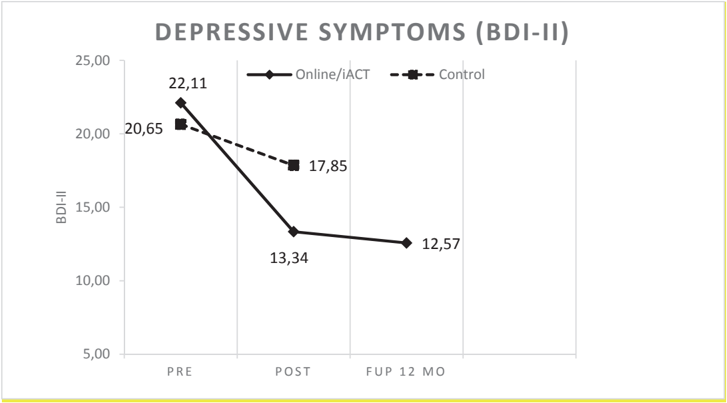
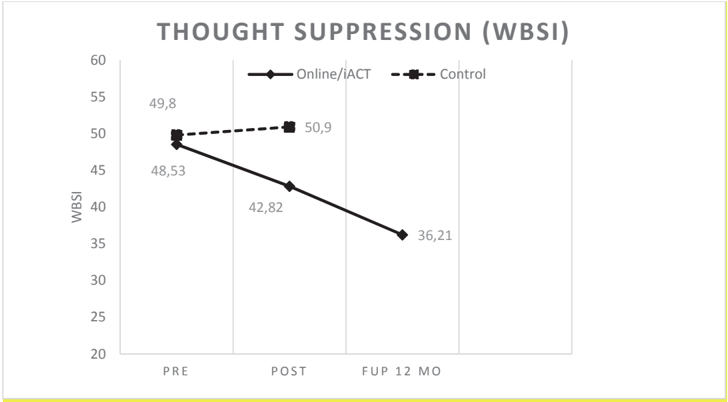
Low-intensity interventions for people suffering from depressive symptoms are highly desirable. The aim of the present study was to investigate the outcomes of a web-based acceptance and commitment therapy (ACT)–based intervention without face-to-face contact for people suffering from depressive symptoms. Participants ( N = 39) with depressive symptoms were randomly assigned to an Internet-delivered acceptance and commitment therapy (iACT) intervention or a waiting list control condition (WLC). Participants were evaluated with standardized self-reporting measures (Beck Depression Inventory [BDI-II], Symptom Checklist–90 [SCL-90], Acceptance and Action Questionnaire [AAQ-2], Five Facet Mindfulness Questionnaire [FFMQ], Automatic Thoughts Questionnaire [ATQ], and White Bear Suppression Inventory [WBSI]) at pre- and post-measurement. Long-term effects in the iACT group were examined using a 12-month follow-up. The iACT program comprised home assignments, online feedback given by master’s-level students of psychology over a 7-week intervention period, and automated email-based reminders. Significant effects were observed in favor of the iACT group on depression symptomatology (between effect sizes [ESs] at post-treatment, iACT/WLC, g = .83), psychological and physiological symptoms (g = .60), psychological flexibility (g = .67), mindfulness skills (g = .53), and frequency of automatic thoughts (g = .57) as well as thought suppression (g = .53). The treatment effects in the iACT group were maintained over the 12-month follow-up period (within-iACT ES: BDI-II, g = 1.33; SCL-90, g = 1.04; ATQF/B [Frequency/Believability], FFMQ, WBSI, AAQ-II, g = .74-1.08). The iACT participants stated that they would be happy to recommend the same intervention to others with depressive symptoms. We conclude that an ACT-based guided Internet-delivered treatment with minimal contact can be effective for people with depressive symptoms.
Overview
The claims and statistics of this paper haven’t been checked yet.
Free: it reads the open-access text and checks the first 5 claims that cite a source we can check. Create a free account to check every claim.
Integrity signals
Registry
Cites
Statistics
Figures


Verification
Claims the paper makes
The claims and statistics of this paper haven’t been checked yet.
Free: it reads the open-access text and checks the first 5 claims that cite a source we can check. Create a free account to check every claim.
Claims other papers make about this one
Each is checked against this paper’s own text: does it say what the citing paper says it does?
The cited source doesn’t support the claim as written.
In the citing paper
“One intervention [46] allowed participant’s free navigation of the system, meaning participants could access and complete modules in any order they decided.”
From Effectiveness of Web-Delivered Acceptance and Commitment Therapy in Relation to Mental Health and Well-Being: A Systematic Review and Meta-Analysis. (2016) · cites this paper as [46]
Checked by a reasoning model — may be wrong.
Experimental — accuracy not yet measuredThe source backs part of the claim, not all of it — or backs it for a different population, condition or comparison.
In the citing paper
“Relevant studies have shown that acceptance and commitment therapy can improve the negative emotions of college students, such as anxiety and depression, promote their mental health, and enhance their self-identity [6, 7].”
From Effect of Acceptance and Commitment Therapy Combined with Music Relaxation Therapy on the Self-Identity of College Students (2022) · cites this paper as [7]
Experimental — accuracy not yet measuredThe source backs part of the claim, not all of it — or backs it for a different population, condition or comparison.
In the citing paper
“Web-based ACT has also been found to be effective in addressing health challenges such as distress related to trauma, anxiety, depression, and chronic pain [20-22].”
From Implementation of an internet-based acceptance and commitment therapy for promoting mental health among migrant live-in caregivers in canada: Protocol (2021) · cites this paper as [22]
Experimental — accuracy not yet measuredThe source backs part of the claim, not all of it — or backs it for a different population, condition or comparison.
In the citing paper
“Previous research consistently shows the effectiveness of ACT in managing the core components of HB, including anger, depression, somatic symptoms, and emotional distress [6, 23-27].”
From User Experience and Clinical Utility of a Smartphone-Based Application for Hwa-Byung Treatment: a protocol for a single-arm prospective pilot study. (2026) · cites this paper as [26]
Experimental — accuracy not yet measuredThe source backs part of the claim, not all of it — or backs it for a different population, condition or comparison.
In the citing paper
“Of the 10 studies included, 4 (40%) were judged to be of low risk of bias [29,46,49,52], one (10%) of high risk [36], and an unclear risk of bias was assigned to 5 (50%) [45,47,48,50,51] of the included studies.”
From Effectiveness of Web-Delivered Acceptance and Commitment Therapy in Relation to Mental Health and Well-Being: A Systematic Review and Meta-Analysis. (2016) · cites this paper as [46]
Experimental — accuracy not yet measured
10 more claims about this paper
Create a free account to see every claim other papers make about this one.
Self-check
Percentages, sums and reported differences re-computed from the paper’s own numbers.
The self-check needs the paper’s full text.
Citations
Cites
Diagnostic and Statistical Manual of Mental Disorders.
Widiger, T. A. (2000) · Encyclopedia of Psychology, Vol. 3. · doi:10.1037/10518-009 · Cited by 19,744
Kessler, R. C. (1994) · Archives of General Psychiatry · doi:10.1001/archpsyc.1994.03950010008002 · Cited by 12,370 · cited 1×
“It is not only highly prevalent but is also associated with poor life quality, higher mortality rate, increased need for health services, and high economic costs (Alonso et al., 2004; Kessler et al., 1994).”
BackgroundProjections of Global Mortality and Burden of Disease from 2002 to 2030
Mathers, C. D., & Loncar, D. (2006) · PLoS Medicine · doi:10.1371/journal.pmed.0030442 · Cited by 11,386 · cited 1×
“Depressive disorders are projected to be one of the three leading causes of disease burden by the year 2030 (Mathers & Loncar, 2006).”
BackgroundStatistical Methods for Meta-Analysis
Wasserman, S., Hedges, L. V., & Olkin, I. (1988) · Journal of Educational Statistics · doi:10.2307/1164953 · Cited by 10,326
Jacobson, N. S., & Truax, P. (1991) · Journal of Consulting and Clinical Psychology · doi:10.1037/0022-006x.59.1.12 · Cited by 7,770 · cited 1×
“Clinical significance (Jacobson & Truax, 1991) of depressive mood based on the BDI-II (Beck et al., 2004) was examined at post-intervention and follow-up using the following four categories: (a) Recovered, (b) Improved, (c) Unchanged, (d) Deteriorated.”
MethodUsing Self-Report Assessment Methods to Explore Facets of Mindfulness
Baer, R. A., Smith, G. T., Hopkins, J., Krietemeyer, J., & Toney, L. (2006) · Assessment · doi:10.1177/1073191105283504 · Cited by 7,511
Acceptance and commitment therapy: model, processes and outcomes
Hayes, S. C., Luoma, J. B., Bond, F. W., Masuda, A., & Lillis, J. (2006) · Behaviour Research and Therapy · doi:10.1016/j.brat.2005.06.006 · Cited by 6,587 · cited 1×
“The online intervention consisted of six modules, based on the core processes of ACT, which promote psychological flexibility (see, for example, Hayes et al., 2006).”
MethodComparison of Beck Depression Inventories -IA and -II in psychiatric outpatients
Beck, A. T., Steer, R. A., Ball, R., & Ranieri, W. F. (1996) · Journal of Personality Assessment · doi:10.1207/s15327752jpa6703_13 · Cited by 5,965
Distribution Theory for Glass's Estimator of Effect Size and Related Estimators
Hedges, L. V. (1981) · Journal of Educational Statistics · doi:10.2307/1164588 · Cited by 5,695 · cited 1×
“Because of the small sample size, the possible bias of d was corrected by an unbiased estimate of Hedges’s g (Hedges, 1981; Hedges & Olkin, 1985).”
MethodBond, F. W., Hayes, S. C., Baer, R. A., Carpenter, K. M., Guenole, N., Orcutt, H. K., Waltz, T., & Zettle, R. D. (2011) · Behavior Therapy · doi:10.1016/j.beth.2011.03.007 · Cited by 3,950 · cited 9×
“We hypothesized that the ACT-based intervention would show positive effects on the symptoms of depression (Beck Depression Inventory [BDI-II], Symptom Checklist–90 [SCL-90]) and in the ACT-related process measures of psychological flexibility (Acceptance and Action Questionnaire [AAQ-II]), mindfulness (Five Facet Mind…”
MethodInfluential
Research works printed but not linked: 121
- 1. Ahtinen, A., Mattila, E., Välkkynen, P., Kaipainen, K., Vanhala, T., Ermes, M., Sairanen, E., Myllymäki, T., Lappalainen, R. (2013). Mobile mental wellness training for stress management: Feasibility and design implications based on a one-month field study. Journal of Medical Internet Research, 1, e11.
- 10.1037/0022-006X.64.6.1417 · DOI · Paper page
- Alonso J., 2004, Acta Psychiatrica Scandinavica. Supplementum, 420, 38
- 4. Andersson, G. (2006). Internet-based cognitive-behavioral self-help for depression. Expert Review of Neurotherapeutics, 6, 1637-1642.
- 232. Andersson G, Cuijpers P, Carlbring P, Lindefors N. Effects of Internet-delivered cognitive behaviour therapy for anxiety and mood disorders. Helix Review Series. Psychiatry 2007;2:9-14.
- 236. Griffiths KM, Farrer L, Christensen H. The efficacy of internet interventions for depression and anxiety disorders: a review of randomised controlled trials. Med J Aust 2010 Jun 7;192(11 Suppl):S4-11. [Medline: 20528707]
- 240. Marks IM, Cavanagh K, Gega L. Hands-on help: computer-aided psychotherapy. Hove [England]: Psychology Press; 2007.
- 243. Seymour L, Grove B. Workplace interventions for people with common mental health problems: evidence review and recommendations. London (UK): British Occupational Health Research Foundation (BOHRF); 2005. URL: http://www. bohrf.org.uk/downloads/cmh_rev.pdf [accessed 2012-08-14] [WebCite Cache ID 69uMaSk0M]
- 244. Happonen AP, Mattila E, Kinnunen ML, Ikonen V, Myllymäki T, Kaipainen K, et al. P4Well concept to empower self-management of psychophysiological wellbeing and load recovery. 2009 Presented at: Proceedings of the 3rd International Conference on Pervasive Computing Technologies for Healthcare; April 2009; London, UK p. 1-3.
- 245. Happonen A, Kaipainen K, Väätänen A, Kinnunen ML, Myllymäki T, Lappalainen P, et al. A concept to empower self-management of psychophysiological wellbeing: preliminary user study experiences. 2009 Presented at: Proceedings of the 31st Annual International Conference of the IEEE EMBS; September 2009; Minneapolis, Minnesota p. 2-6.
- 248. Beck AT, Ward CH, Mendelson M, Mock J, Erbaugh J. An inventory for measuring depression. Arch Gen Psychiatry 1961 Jun;4:561-571. [Medline: 13688369]
- 22. Banbury, A., Roots, A., & Nancarrow, S. (2014). Rapid review of applications of e-health and remote monitoring for rural residents. Australian Journal for Rural Health, 22, 211-222.
- 24. Barak, A., Hen, L., Boniel-Nissim, M., & Shapira, N. (2008). A comprehensive review and a meta-analysis of the effectiveness of internet-based psychotherapeutic interventions. Journal of Technology in Human Services, 26, 109-160.
- 25. Barak, A., Klein, B., & Proudfoot, J. G. (2009). Defining internet-supported therapeutic interventions. Annals of Behavior Medicine, 38, 4-17.
- 26. Baumeister, H., Reichler, L., Munzinger, M. & Lin, J. (2014). The impact of guidance on Internet-based mental health interventions -A systematic review. Internet Interventions, 1, 205-215.
- Beck A. T., 2004, BDI II—Beckin depressioasteikko
- 29. Blackledge, J. T. & Barnes-Holmes, D. (2009). Core processes in acceptance and commitment therapy. In J. T. Blackledge, J. Chiarrochi & F. P. Deane (Eds.), Acceptance and commitment Therapy. Contemporary theory research and practice (pp. 41-58). Bowen Hills, Australia: Australian Academic Press.
- 31. Bond, F. & Bunce, D. (2000). Mediators of change in emotion-focused and problem focused worksite stress management interventions. Journal of Occupational Health Psychology, 5, 156-63.
- 32. Bond, F. & Bunce, D. (2003). The role of acceptance and job control in mental health, job satisfaction and work performance. Journal of Applied Psychology, 88, 1057-1067.
- 33. Bond, F. & Hayes, S. C. (2002). ACT at work. In F. W. Bond & W. Dryden (Eds.) Handbook of Brief Cognitive Behaviour Therapy (pp. 117-139). Chichester: Wiley.
- 225. Bond FW, Flaxman P. The ability of psychological flexibility and job control to predict learning, job performance, and mental health. In: Hayes SC, Bond FW, Barnes-Holmes D. Austin J (eds.) Acceptance and mindfulness at work: applying acceptance and commitment therapy and relational frame theory to organizational behavior management. United States of America: The Haworth Press; 2006:113-130.
- 37. Bruffaerts, R., Vilagut, G., Demyttenaere, K., Alonso, J., AlHamzavi, A., An- drade, L. H., Benjet, C., Bromet, E., Bunting, B., de Girolamo, G., Florescu, S., Gureje, O., Haro, J. M., He, Y., Hinkov, H., Hu, C., Karam, E. G., Lepine, J.- P., Levinson, D., Matschinger, H., Nakane, Y., Ormel, J., Posada-Villa, J., Scott, K. M., Varghese, M., Williams, D., Xavier, M., & Kessler, R. C. (2012). Role of common mental and physical disorders in partial disability around the world. British Journal of Psychiatry, 200, 454-461.
- 41. Carlbring, P., Hägglund, M., Luthström, A., Dahlin, M., Kadowaki, Å, Vernmark, K., & Andersson, G. (2013). Internet-based behavioral activation and acceptance-based treatment for depression: A randomized controlled trial. Journal of Affective Disorders, 148, 331-337.
- 44. Chase, J. A., Houmanfar, R., Hayes, S. C., Ward, T. A., Plumb Vilardaga, J., & Follette, V. (2013). Values are just not goals: Online ACT-based values training adds to goal setting in improving undergraduate college student performance. Journal of Contextual Behavioral Science, 2, 79-84.
- 45. Christensen, H. (2010). Increasing access and effectiveness: using the Internet to deliver low intensity CBT. In J. Bennett-Levy, D. A. Richards, P. Farrand, H. Christensen, K. M. Griffiths, D. J. Kavanagh, B. Klein, M. A. Lau, J. Proudfool, L. Ritterband, J. White, & C. Williams (Eds.), Oxford guide to low-intensity CBT interventions (pp. 53-67). Oxford: Oxford University Press.
- 46. Christensen, H., Griffiths, K., Groves, C., & Korten, A. (2006). Free range users of an Internet-based cognitive behavior therapy program. The Australian and New Zealand Journal of Psychiatry, 40, 59-62.
- 49. Clarke, G., Eubanks, D., Reid, E., Kelleter, C., O'Connor, E., DeBar, L. L., Lynch, F., Nunley, S., & Guillon, C. (2005). Overcoming depression on the Internet (ODIN) (2): A randomized trial of a self-help depression skills program with reminders. Journal of Medical Internet Research, 7, e16.
- 50. Clays, E., De Bacquer, D., Leynen, F., Kornitzer, M., Kittel, F., & De Backer, G. (2007). Job stress and depression symptoms in middle-aged workers - prospective results from the Belstress study. Scandinavian Journal of Work, Environment and Health, 33, 252-259.
- 51. Cohen, J. (1988). Statistical power analysis for the behavioral sciences (2nd ed.). Hillsdale, NJ: Erlbaum.
- 53. Cuijpers, P., Andersson, G., Donker, T., & van Straten, A. (2011). Psychological treatment of depression: Results of a series of meta-analyses. Nordic Journal of Psychiatry, 65, 354-364.
- 54. Cuijpers, P., Berking, M., Andersson, G., Quigley, L., Kleiboer, A., & Dobson, K. S. (2014). A Meta-Analysis of Cognitive-Behavioural Therapy for Adult Depression, Alone and in Comparison with Other Treatments. Canadian Journal of Psychiatry , 58, 376-385.
- 56. Cuijpers, P., Donker, T., van Straten, A., Li, J., & Andersson, G. (2010). Is guided self-help as effective as face-to-face psychotherapy for depression and anxiety disorders? A systematic review and meta-analysis of comparative outcome studies. Psychological Medicine, 21, 1-15.
- 60. Cuijpers, P., van Straten, A., Andersson, G., & van Oppen, P. (2008). Psychotherapy for depression in adults: A meta-analysis of comparative outcome studies. Journal of Consulting and Clinical Psychology, 76, 909-922.
- 61. Cuijpers, P., van Straten, A., Smit, F., Mihalopoulos, C., & Beekman, A. (2008). Preventing the onset of depressive disorders: A meta-analytic review of psychological interventions. American Journal of Psychiatry, 165, 1272-1280.
- 63. Dimidjian, S., Hollon, S. D., Dobson, K. S., Schmaling, K. B., Kohlenberg, R. J., Addis, M. E., Gallop, R., McGlinchey, J. B., Markley, D. K., Gollan, J. K., Atkins, D. C., Dunner, D. L., & Jacobson, N. S. (2006). Randomized trial of behavioral activation, cognitive therapy, and antidepressant medication in the acute treatment of adults with major depression. Journal of Consulting and Clinical Psychology, 74, 658-670.
- 12. Andersson, G., Cuijpers, P., Carlbring, P., & Lindefors, N. (2007). Effects of Internet delivered cognitive behaviour therapy for anxiety and mood disorders. Review Series: Psychiatry, 9, 9-14.
- 13. Andersson, G., Cuijpers, P., Carlbring, P., Riper, H., & Hedman, E. (2014). Guided Internet-based vs. face-to-face cognitive behavior therapy for psychiatric and somatic disorders: A systematic review and meta-analysis. World Psychiatry, 13, 288-295.
- 14. Andersson, G., Hesser, H., Hummerdal, D., Bergman-Nordgren, L., & Carlbring, P. (2013). A 3.5-year follow-up of Internet-delivered cognitive behaviour therapy for major depression. Journal of Mental Health, 22, 155-164.
- 18. Andrews, G., Issakidis, C., Sanderson, K., Corry, J., & Lapsley, H. (2004). Utilising survey data to inform public policy: Comparison of the cost- effectiveness of treatment of ten mental disorders. British Journal of Psychiatry, 184, 526-533.
- 19. Arnberg, F.K., Linton, S.J., Hultcrantz, M., Heinz, T., & Jonsson, U. (2014). Internet-delivered psychological treatments for mood and anxiety disorders: A systematic review of their efficacy, safety, and cost- effectiveness. PLoS ONE, 9, e98118.
- 65. Elkin, I., Gibbons, R. D., Shea, M. T., Sotsky, S. M., Watkins, J. T., Pilkonis, P. A., & Hedeker, D. (1995). Initial severity and differential treatment outcome in the National Institute of Mental Health Treatment of Depression Collaborative Research Program. Journal of Consulting and Clinical Psychology, 63, 841-847.
- 67. Eysenbach, G. (2001). What is e-health? Journal of Medical Internet Research, 3, 2, e20.
- 70. Flaxman, P. E., Blackledge, J. T., & Bond, F. W. (2011). Acceptance and Commitment Therapy. The CBT Distinctive Features Series. London: Routledge.
- 261. Morris SB, DeShon RP. Combining effect size estimates in meta-analysis with repeated measures and independent-groups designs. Psychol Methods 2002 Mar;7(1):105-125. [Medline: 11928886]
- 229. Korhonen I, Mattila E, van Gils M. Personal Health Systems -Opportunities and Barriers for Adoption. In: Proceedings of the 32nd Annual International Conference of the IEEE EMBS, Buenos Aires, 31 Aug.-4 Sept. 2010 Presented at: the 32nd Annual International Conference of the IEEE EMBS; 31 Aug.-4 Sept., 2010; Buenos Aires.
- 74. Foroushani, P. S., Schneider, J., & Assareh, N. (2011). Meta-review of the effectiveness of computerised CBT in treating depression. BMS Psychiatry, 11, 131.
- 77. Free, C., Phillips, G., Galli, L., Watson, L., Felix, L., Edwards, P., Patel, V., & Haines, A. (2013). The effectiveness of mobile-health technology-based health behaviour change or disease management interventionsfor health care consumers: A systematic review. PLoS Medicine, 10, e1001362.
- 79. Galdas, P. M., Cheater, F., & Marshall, P. (2005). Men and health help-seeking behaviour: Literature review. Journal of Advanced Nursing, 49, 616-623.
- 81. Gaynes, B., DeVeaugh-Geiss, J., Weir, S., Gu, H., MacPherson, C., Schulberg, H. C., Culpepper, L., & Rubinow, D. (2010). Feasibility and diagnostic validity of the M-3 checklist: A brief, self-rated screen for depressive, bipolar, anxiety, and posttraumatic stress disorders in primary care. The Annals of Family Medicine, 8, 160-169.
- 82. Griffiths, K. M., Farrer, L., & Christensen, H. (2010). The efficacy of internet interventions for depression and anxiety disorders: A review of randomized controlled trials. The Medical Journal of Australia, 192, 4-11.
- 83. Hammen, C. (2005). Stress and depression. Annual Review of Clinical Psychology, 1, 293-319.
- 10.1037/0022-006X.51.5.721 · DOI · Paper page
- 259. Siegrist J. Adverse health effects of high-effort/low-reward conditions. J Occup Health Psychol 1996 Jan;1(1):27-41. [Medline: 9547031]
- Hayes S. C., 2008, Vapaudu mielesi vallasta ja ala elää: Hyväksymis- ja omistautumisterapian avulla
- 86. Hayes, S. C, Strosahl, K. D., & Wilson, K. G. (2012). Acceptance and Commitment Therapy: The process and practice of mindful change (2nd edition). New York: Guilford.
- 87. Hayes, S. C., Wilson, K. G., Gifford, E. V., Follette, V. M., & Strohsal, K. D. (1996). Experiential avoidance and behavioral disorders: A functional dimensional approach to diagnosis and treatment. Journal of Consulting and Clinical Psychology, 64, 1152-1168.
- 249. Hayes SC, Strosahl KD, Wilson KG. Acceptance and commitment therapy: An experiential approach to behavior change. New York, London: The Guilford Press; 1999.
- 251. Kaipainen K, Mattila E, Väätänen A, Happonen AP, Korhonen I, Kinnunen ML, et al. Web, mobile and monitoring technologies in self-management of psychophysiological wellbeing: usage and user experiences. 2010 Presented at: Proceedings of the IADIS International Conference e-Health; 2010; Freiburg, Germany p. 167-177.
- 91. Hedman, E., Andersson, G., Andersson, E., Ljótsson, B., Rück, C., Asmundson, G.J., & Lindefors, N. (2011). Internet-based cognitive-behavioural therapy for severe health anxiety: Randomised controlled trial. British Journal of Psychiatry, 198, 230-236.
- 97. Hedman, E., Ljótsson, B., Kaldo, V., Hesser, H., El Alaoui, S., Kraepelien, M., Andersson, E., Rück. C., Svanborg, C., Andersson, G., Lindefors, N. (2014). Effectiveness of Internet-based cognitive behavior therapy for depression in routine psychiatric care. Journal of Affective Disorders, 155, 49-58.
- 98. Hedman, E., Ljótsson, B., & Lindefors, N. (2012). Cognitive behavior therapy via the Internet: a systematic review of applications, clinical efficacy and cost-effectiveness. Expert Review of Pharmacoeconomics and Outcomes Research, 12, 745-764.
- 101. Hollon, S. D. & Cuijpers, P. (2013). Reviewing psychological treatments for adult depression. The Canadian Journal of Psychiatry, 58, 373-375.
- 256. Ojanen M. Effects of illness and adversity on quality of life. In: Jobin J, Maltais F, LeBlanc P, Simard C (eds.) Advances in cardiopulmonary rehabilitation. Champaign, IL: Human Kinetics; 2000.
- 257. Ojanen M. Graafiset analogia-asteikot elämänlaadun ja hyvinvoinnin mittauksessa. In: Talo S (eds.) Toimintakyky-viitekehyksestä arviointiin ja mittaamiseen. Turku, Finland: KELAn Sosiaali-ja terveysturvan katsauksia; 2001:207-225.
- 108. Kaltenthaler, E., Parry, G., Beverley, C., & Ferriter, M. (2008). Computerised cognitive behavioural therapy for depression: A systematic review. British Journal of Psychiatry, 193, 181-184.
- 110. Kendler, K. S., Thornton, L. M., & Gardner, C. O. (2001). Genetic risk, number of previous depressive episodes, and stressful life events in predicting onset of major depression. American Journal of Psychiatry, 158, 582-586,
- 111. Kim, H. S., Kim, N. C., & Ahn, S. H. (2006). Impact of a nurse short message service intervention for patients with diabetes. Journal of Nursing Care Quality. 21, 266-271.
- 112. Klein, B. & Proudfoot, J. (2010). Introduction to Section 2D: Guided CBT interventions using the internet. In J. Bennett-Levy, D. Richards, P. Farrand, H. Christensen., K. Griffiths., D. J. Kavanagh, B. Klein, M. Lau, J. Proudfoot, L. Ritterband, J. White, & C. Williams (Eds.), Oxford guide to low-intensity CBT interventions (pp. 225-226). Oxford: Oxford University Press.
- Kohtala A., 2013, Behavioral and Cognitive Psychotherapies, 11, 1
- 121. Levin, M. E., Pistorello, J., Seeley, J., & Hayes, S. C. (2014). Feasibility of a prototype webbased acceptance and commitment therapy prevention program for college students. Journal of American College Health, 62, 20-30.
- 125. Lundgren, T., Dahl, J., & Hayes, S. C. (2008). Evaluation of mediators of change in the treatment of epilepsy with acceptance and commitment therapy. Journal of Behavioral Medicine, 31, 225-232.
- 126. Luppa, M., Heinrich, S., Angermeyer, M. C., König, H. H., & Riedel-Heller, S. G. (2007). Cost-of-illness studies of depression: A systematic review. Journal of Affective Disorders, 98, 29-43.
- 128. Mao, Y., Zhang, Y., & Zhai, S. (2008). Mobile phone text messaging for pharmaceutical care in a hospital in China. Journal of Telemedicine and Telecare, 14, 410-414.
- 129. Marks, I. M., Cavanagh, K., & Gega, L. (2007). Hands-on help. Computer-aided psychotherapy. New York: Psychology Press.
- 132. Mathers, C. D., Vos, E. T., Stevenson, C. E., & Begg, S. J. (2000). The Australian Burden of Disease Study: Measuring the loss of health from diseases, injuries and risk factors. Medical Journal of Australia, 172, 592-596.
- 133. Matthews, M., Doherty, G., Sharry, J., & Fitzpatrick, C. (2008). Mobile phone mood charting for adolescents. British Journal of Guidance and Counselling, 36, 113-129.
- 138. Mimeault, V., & Morin, C. M. (1999). Selfhelp treatment for insomnia: Bibliotherapy with and without professional guidance. Journal Consulting and Clinical Psychology, 67, 511-519.
- Lappalainen R., 2004, Hyväksymis- ja omistautumisterapia käytännön terapiatyössä
- Muthén L. K., 1998, Mplus user’s guide
- 145. Oh, H., Rizo, C., Enkin, M., & Jadad, A. (2005). What is eHealth (3): A systematic review of published definitions. Journal of Medical Internet Research, 7, 1, e1.
- 146. Palmqvist, B., Carlbring, P., & Andersson, G. (2007). Internet-delivered treatments with or without therapist input: Does the therapist factor have implications for efficacy and cost? Expert Review of Pharmacoeconomics and Outcomes Research, 7, 291-297.
- 148. Park, S., Lee, S.W., Kwak, J., Cha, M., & Jeong, B. (2013). Activities on Facebook reveal the depressive state of users. Journal of Medical Internet Research, 15, e217.
- 149. Parry, G., Roth, A., & Fonagy, P. (2005). Psychotherapy research, health policy, and service provision. In Anthony Roth and Peter Fonagy (Eds), What Works for Whom? A Critical Review of Psychotherapy Research (pp. 43-65). New York: Guilford.
- 150. Patrick , K., Raab, F., Adams, M. A., Dillon, L., Zabinski, M., Rock, C. L., Griswold, W. G., & Norman, G. J. (2009). A text message-based intervention for weight loss: A randomized controlled trial. Journal of Medical Internet Research, 11, e1.
- 152. Pereira, J. M. (2014). Facebook enhances antidepressant pharmacotherapy effects. The Scientific World Journal, 1, 892048.
- 153. Perle, J. G., Langsam, L. C., & Nierenberg, B. (2011). Controversy clarified: An updated review of clinical psychology and tele-health. Clinical Psychology Review, 31, 1247-1258.
- 216. Öst LG. Det empiriska stödet för KBT vid psykiska störningar. In: Öst LG, editor. Öst LG (ed.) Kognitiv beteendeterapi inom psykiatrin. Stockholm: Natur & Kultur; 2006:263-279.
- 219. van der Klink JJ, Blonk RW, Schene AH, van Dijk FJ. The benefits of interventions for work-related stress. Am J Public Health 2001 Feb;91(2):270-276. [Medline: 11211637]
- 221. Bond FW, Bunce D. Mediators of change in emotion-focused and problem-focused worksite stress management interventions. J Occup Health Psychol 2000 Jan;5(1):156-163. [Medline: 10658893]
- 222. Bond FW, Hayes SC. Acceptance and commitment therapy at work. In: Bond FW, Dryden W. (eds.) Handbook of brief cognitive behaviour therapy. New York, NY: Wiley; 2002:117-139.
- 156. Proudfoot, J., Ryden, C., Everitt, B., Shapiro D. A., Goldberg, D., Mann, A., Tylee, A., Marks, I., & Gray, J. A. (2004). Clinical efficacy of computerized cognitive behavioral therapy for anxiety and depression in primary care. British Journal of Psychiatry, 185, 46-54.
- 159. Richards, D. A. & Bower, P. (2011). Equity of access to psychological therapies. British Journal of Psychiatry, 198, 91-92.
- 162. Ritterband L. M., Thorndike, F. P., Cox, D. J., Kovatchev, B. P., & Gonder- Frederick, L. A. (2009). A behavior change model for internet interventions. Annals of Behavioral Medicine, 38, 18-27.
- 163. Riva, G. (2005). Virtual reality in psychotherapy: A review. CyperPsychology & Behavior, 8, 220-230.
- 166. Roth, A., & Fonagy, P. (2005). What Works for Whom? A Critical Review of Psychotherapy Research. New York: Guilford.
- 263. Gloaguen V, Cottraux J, Cucherat M, Blackburn IM. A meta-analysis of the effects of cognitive therapy in depressed patients. J Affect Disord 1998 Apr;49(1):59-72. [Medline: 9574861]
- 264. Korhonen I, Mattila E, Ahtinen A, Salminen J, Hopsu L, Lappalainen R, et al. Personal Health Promotion through Personalized HealthTechnologies -Nuadu Experience. 2009 Presented at: Proceedings of the 31st Annual International Conference of the IEEE EMBS; September , 2009; Minneapolis, Minnesota, USA p. 2-6.
- 267. Cooper CL, Dewe PJ, O'Driscoll MP. Organizational stress: a review and critique of theory, research, and applications. Thousand Oaks, Calif: Sage; 2001.
- 270. Mattila E, Koskelo J, Lappalainen R, Salminen J, Nyman P, Lähteenmäki J. A concept for ICT Assisted Health Promotion in the Occupational Healthcare. 2007 Presented at: Proceedings of the 29th Annual International Conference of the IEEE EMBS; 2007; Lyon, France.
- 271. Mattila E, Pärkkä J, Hermersdorf M, Kaasinen J, Vainio J, Samposalo K. Mobile diary for wellness management -results on usage and usability in two user studies. IEEE Transactions on information technology in biomedicine 2008;12.
- 171. Schneidermann, N., Ironson, G., & Siegel, S. D. (2005). Stress and health: Psychological, behavioral and biological determinants. Annual Review of Clinical Psychology, 1, 607-628.
- 172. Scogin, F., Jamison, C., & Gochneaur, K. (1989). Comparative efficacy of cognitive and behavioral bibliotherapy for mildly and moderately depressed older adults. Journal of Consulting and Clinical Psychology, 57, 403-407.
- 174. Shapiro, J.R., Bauer, S., Andrews, E., Pisetsky, E., Bulik-Sullivan, B., Hamer, R.M., & Bulik, C.M. (2010). Mobile Therapy: Use of text messaging in the treatment of bulimia nervosa. International Journal of Eating Disorders, 43, 513-519.
- 175. Sinokki, M., Hinkka, K., Ahola, K., Koskinen, S., Kivimäki, M., Honkonen, T., Puukka, P., Klaukka, T., Lönnqvist, J., & Virtanen, M. (2008). The association of social support at work and in private life with mental health and antidepressant use: The Health 2000 Study. Journal of Affective Disorders, 115, 36-45.
- 176. Sobocki, P., Jönsson, B., Angst, J., & Rehnberg, C. (2006). Cost of depression in Europe. The Journal of Mental Health Policy and Economics, 2, 87-98.
- 178. Spijker, J., van Straten, A., Bockting, C. L. H., Meeuwissen, J. A. C., & van Balkom, A. J. L. M. (2013). Psychotherapy, antidepressants, and their combination for chronic major depressive disorder: a systematic review. Canadian Journal of Psychiatry, 58, 386-392.
- 181. Sucala, M., Schnur, J. B., Constantino, M. J., Miller, S. J., Brackman, E. H., & Montgomery, G. H. (2012). The therapeutic relationship in E-therapy for mental health: A systematic review. Journal of Medical Internet Research, 14, e110.
- 182. Tate, D. F., Finkelstein, E. A., Khavjou, O., & Gustafson, A. (2009). Cost effectiveness of internet interventions: Review and recommendations. Annals of Behavioral Medicine, 38, 40-45.
- 188. Twohig, M. P. & Hayes, S. C. (2008). ACT verbatim for depression & anxiety. Oakland: New Harbinger.
- 190. Van Straten, A., Cuijpers, P., & Smits, N. (2008). Effectiveness of a web-based self-help intervention for symptoms of depression, anxiety and stress: Randomized controlled trial. Journal of Medical Internet Research, 10, 1-12.
- 193. Virtanen, M., Honkonen, T., Kivimäki, M., Ahola, K., Vahtera, J., Aromaa, A., & Lönnqvist, J. (2007). Work stress, mental health and antidepressant medication. Findings from the Health 2000 Study. Journal of Affective Disorders, 98, 189-197.
- 194. Vos, T., Corry, J., Haby, M.M., Carter, R., & Andrews, G. (2005). Cost- effectiveness of cognitive-behavioural therapy and drug interventions for major depression. Australian and New Zealand Journal of Psychiatry, 39, 683- 692.
- 195. Wagner, B., Horn, A. B., & Maercker, A. (2014). Internet-based versus face-to- face cognitive-behavioral intervention for depression: A randomized controlled non-inferiority trial. Journal of Affective Disorders, 152-154, 113- 121.
- 197. Wampold, B. E., & Brown, G. S. (2005). Estimating therapist variability: A naturalistic study of outcomes in managed care. Journal of Consulting and Clinical Psychology, 73, 914-923.
- 198. Watkins, P. L. (2008). Self-help therapies: Past and present. In P. L. Watkins & G.A.Clum (Eds.), Handbook of self-help therapies (pp. 1-24). New York, NJ: Routledge.
- 199. Whitehead, L. & Proudfoot, J. (2010). Standards and operating guidelines for internet interventions. In J. Bennett-Levy, D. A. Richards, P. Farrand, H. Christensen, K. M. Griffiths, D. J. Kavanagh, B. Klein, M. A. Lau, J. Proudfool, L. Ritterband, J. White and C. Williams (Eds.), Oxford guide to low-intensity CBT interventions (pp. 247-252). Oxford: Oxford University Press.
- 201. Whittaker, R., Merry, S., Stasiak, K., McDowell, H., Doherty, I., Shepherd, M., Dorey, E., Parag, V., Ameratunga, S., & Rodgers, A. (2012). MEMO-A mobile phone depression prevention intervention for adolescents: development process and postprogram findings on acceptability from a randomized controlled trial. Journal of Medical Internet Research, 14, e13.
- 210. WHO. Report from the WHO European Ministerial Conference; 2005. Mental health: facing the challenges, building solutions. Report from the WHO European Ministerial Conference; 2005. Mental health: facing the challenges, building solutions URL: http://www.euro.who.int/document/E87301.pdf [accessed 2012-08-14] [WebCite Cache ID 69uHCnyRw]
- 211. Michie S, Williams S. Reducing work related psychological ill health and sickness absence: a systematic literature review. Occup Environ Med 2003 Jan;60(1):3-9 [FREE Full text] [Medline: 12499449]
- 214. Ayers S, Baum A, McManus C, Newman SP, Wallston KA, Weinman J, et al. Cognitive Behaviour Therapy. In: Cambridge handbook of psychology, health and medicine. Cambridge: Cambridge University Press; 2007.
- 215. Bond FW, Dryden W. Brief cognitive behavioral therapy: definitionscientific foundations. In: Handbook of brief cognitive behaviour therapy. New York, NY: Wiley, 2004; 2002.
Cited by
Digital interventions for the treatment of depression: a meta-analytic review
Moshe, I., Terhorst, Y., Philippi, P., Domhardt, M., Cuijpers, P., Cristea, I., Pulkki-Råback, L., Baumeister, H., & Sander, L. B. (2021) · Psychological Bulletin · doi:10.1037/bul0000334 · Cited by 390
Acceptance and Commitment Therapy as a Treatment for Anxiety and Depression
Twohig, M. P., & Levin, M. E. (2017) · Psychiatric Clinics of North America · doi:10.1016/j.psc.2017.08.009 · Cited by 268
“One additional RCT, excluded from the table due to not including a non-ACT condition, compared ACT delivered through an online program (with minimal therapist contact) versus face-to-face therapy among 38 depressed adults from Finland.(76) Participants receiving an online”
MethodPersuasive technology in mobile applications promoting physical activity: a systematic review
Matthews, J., Win, K. T., Oinas-Kukkonen, H., & Freeman, M. (2016) · Journal of Medical Systems · doi:10.1007/s10916-015-0425-x · Cited by 239
“For instance, previous research has identified reminders as an important category for users to continue adherence to targeted behavior [46,47], however, not all reviewed research included the reminders as a persuasive feature.”
Räsänen, P., Lappalainen, P., Muotka, J., Tolvanen, A., & Lappalainen, R. (2016) · Behaviour Research and Therapy · doi:10.1016/j.brat.2016.01.001 · Cited by 221
“The Student Life Compass was created based on our earlier experiences of both brief face-to-face (Kohtala et al., 2015; Lappalainen et al., 2007), and online ACT interventions (Lappalainen et al., 2014, 2015).”
MethodSelf-citationBrown, M., Glendenning, A., Hoon, A. E., & John, A. (2016) · Journal of Medical Internet Research · doi:10.2196/jmir.6200 · Cited by 198
“Medical examination and telephone screening [49], computerized screening interview combined with a structured telephone interview [50-52], computerized screening followed by telephone interview and face-to-face meeting plus a medical confirmation of tinnitus [29], self-assessment questionnaires [36], structured clinic…”
BackgroundMethodInfluentialSommers-Spijkerman, M., Austin, J., Bohlmeijer, E., & Pots, W. (2021) · JMIR Mental Health · doi:10.2196/28168 · Cited by 179
“Population, intervention, and methodological characteristics (Multimedia Appendix 1; Gao et al, unpublished data, 2021; [32-125]) as well as effect size data were extracted from the full-text papers by 3 raters (ie, MSS, JA, and WP) independently.”
BackgroundMethodThompson, E. M., Destree, L., Albertella, L., & Fontenelle, L. F. (2021) · Behavior Therapy · doi:10.1016/j.beth.2020.07.002 · Cited by 177
Ivanova, E., Lindner, P., Ly, K. H., Dahlin, M., Vernmark, K., Andersson, G., & Carlbring, P. (2016) · Journal of Anxiety Disorders · doi:10.1016/j.janxdis.2016.09.012 · Cited by 165
Akbari, M., Seydavi, M., Hosseini, Z. S., Krafft, J., & Levin, M. E. (2022) · Journal of Contextual Behavioral Science · doi:10.1016/j.jcbs.2022.03.007 · Cited by 155
Puolakanaho, A., Lappalainen, R., Lappalainen, P., Muotka, J. S., Hirvonen, R., Eklund, K. M., Ahonen, T. P. S., & Kiuru, N. (2019) · Journal of Youth and Adolescence · doi:10.1007/s10964-018-0973-8 · Cited by 122
“…accordance with previous study recommendations (Andersson and Titov 2014; Wozney et al. 2017) and experiences in web-delivered interventions (e.g., Lappalainen et al. 2015; Räsänen et al. 2016), the participants received coaching and support from 31 acceptance and commitment approach -trained…”
BackgroundMethodInfluentialSelf-citationNegative effects of psychotherapies for adult depression: A meta-analysis of deterioration rates
Cuijpers, P., Reijnders, M., Karyotaki, E., de Wit, L., & Ebert, D. D. (2018) · Journal of Affective Disorders · doi:10.1016/j.jad.2018.05.050 · Cited by 105
Ahmad, F., El Morr, C., Ritvo, P., Othman, N., Moineddin, R., & MVC Team (2020) · JMIR Mental Health · doi:10.2196/15520 · Cited by 100
“High attrition rate was a common problem in several student studies [44,45,48,50], although it was a significantly less prevalent problem in studies that used coaching, reminders, and feedback strategies [43,49].”
Effectiveness of ICT-based intimate partner violence interventions: a systematic review
El Morr, C., & Layal, M. (2020) · BMC Public Health · doi:10.1186/s12889-020-09408-8 · Cited by 90
Matis, J., Svetlak, M., Slezackova, A., Svoboda, M., & Šumec, R. (2020) · doi:10.2196/preprints.20709 · Cited by 81
A psychological flexibility -based intervention for Burnout:A randomized controlled trial
Puolakanaho, A., Tolvanen, A., Kinnunen, S. M., & Lappalainen, R. (2020) · Journal of Contextual Behavioral Science · doi:10.1016/j.jcbs.2019.11.007 · Cited by 82
Self-citationO’Connor, M., Munnelly, A., Whelan, R., & McHugh, L. (2018) · Behavior Therapy · doi:10.1016/j.beth.2017.07.007 · Cited by 62
van Aubel, E., Bakker, J. M., Batink, T., Michielse, S., Goossens, L., Lange, I., Schruers, K., Lieverse, R., Marcelis, M., van Amelsvoort, T., et al. (2020) · Behaviour Research and Therapy · doi:10.1016/j.brat.2020.103592 · Cited by 57
Mattila, E., Lappalainen, R., Välkkynen, P., Sairanen, E., Lappalainen, P., Karhunen, L., Peuhkuri, K., Korpela, R., Kolehmainen, M., & Ermes, M. (2016) · JMIR mhealth and uhealth · doi:10.2196/mhealth.5241 · Cited by 67
“Several Internet interventions, especially, have shown promising results [21-27].”
Self-citationLappalainen, P., Langrial, S., Oinas-Kukkonen, H., Muotka, J., & Lappalainen, R. (2019) · Journal of Contextual Behavioral Science · doi:10.1016/j.jcbs.2019.04.001 · Cited by 57
Self-citationSairanen, E., Lappalainen, R., Lappalainen, P., Kaipainen, K., Carlstedt, F., Anclair, M., & Hiltunen, A. (2019) · Journal of Contextual Behavioral Science · doi:10.1016/j.jcbs.2019.07.004 · Cited by 57
Self-citationAcceptability of Digital Mental Health Interventions for Depression and Anxiety: Systematic Review
Lau, C. K. Y., Saad, A., Camara, B., Rahman, D., & Bolea-Alamanac, B. (2024) · Journal of Medical Internet Research · doi:10.2196/52609 · Cited by 51
Han, A., & Kim, T. H. (2022) · Journal of Medical Internet Research · doi:10.2196/39727 · Cited by 50
Ritvo, P., Knyahnytska, Y., Pirbaglou, M., Wang, W., Tomlinson, G., Zhao, H., Linklater, R., Bai, S., Kirk, M., Katz, J., et al. (2021) · Journal of Medical Internet Research · doi:10.2196/24380 · Cited by 48
“Online CBT-M research with student and adult populations has yielded psychometric and neurophysiological [10-20] benefits in single-arm and randomized controlled trials (RCTs).”
Wahle, F., Bollhalder, L., Kowatsch, T., & Fleisch, E. (2017) · Journal of Medical Internet Research · doi:10.2196/jmir.7381 · Cited by 48
“…(≥16 years) Mild to moderate Depressions-hjälpen 92 Sweden Kivi [45] Adults (≥16 years) Mild to severe Good Life Compass 39 Finland Lappalainen [46] Adults (≥16 years) Mild to severe Good Life Compass 38 Finland Lappalainen [47] Adults (≥16 years) Mild to severe No name 93 Sweden Ly [48]…”
BackgroundSairanen, E., Tolvanen, A., Karhunen, L., Kolehmainen, M., Järvelä-Reijonen, E., Lindroos, S., Peuhkuri, K., Korpela, R., Ermes, M., Mattila, E., et al. (2017) · Public Health Nutrition · doi:10.1017/s1368980017000441 · Cited by 44
“Previous studies with these measurements have shown comparable results to studies using the original scales((43,44)).”
ResultSelf-citationAtkins, P. W. B., Ciarrochi, J., Gaudiano, B. A., Bricker, J. B., Donald, J., Rovner, G., Smout, M., Livheim, F., Lundgren, T., & Hayes, S. C. (2017) · Behaviour Research and Therapy · doi:10.1016/j.brat.2017.05.016 · Cited by 41
“All have been subjected to meta-analyses since Öst’s review (Chronic Pain: Veehof, Trompetter, Bohlmeijer, and Schreurs (2016); Substance use: Lee et al. (2015); Anxiety: Bluett, Homan, Morrison, Levin, and Twohig (2014); Hacker et al.”
MethodTokgöz, P., Hrynyschyn, R., Hafner, J., Schönfeld, S., & Dockweiler, C. (2021) · JMIR Mental Health · doi:10.2196/26268 · Cited by 36
“Most of the studies (39/52, 75%) used a web-based system in which an application was used online [21-23,28,33-46,48,49,52-55,57-67,69-72].”
InfluentialZippan, N., Stephenson, K. R., & Brotto, L. A. (2020) · The Journal of Sexual Medicine · doi:10.1016/j.jsxm.2020.07.086 · Cited by 38
Ganapathy, A., Clough, B. A., & Casey, L. M. (2021) · Telemedicine Journal and e-Health · doi:10.1089/tmj.2020.0455 · Cited by 43
“In a recent systematic review, focused on understanding consensus among international ethical guidelines, 11 specific guidelines were identified, which were endorsed as best practice when using video conferencing.”
Mechanisms of the acceptance and commitment therapy: A meta-analytic structural equation model
REN, Z., ZHAO, C., BIAN, C., ZHU, W., JIANG, G., & ZHU, Z. (2019) · Acta Psychologica Sinica · doi:10.3724/sp.j.1041.2019.00662 · Cited by 36
Atefi, G., Koh, W. Q., Kohl, G., Seydavi, M., Swift, J. K., Akbari, M., & de Vugt, M. E. (2024) · American Journal of Geriatric Psychiatry · doi:10.1016/j.jagp.2024.04.008 · Cited by 41
Christo, E. M., & Layal, M. (2019) · Studies in health technology and informatics · doi:10.3233/978-1-61499-951-5-103 · Cited by 38
Victorson, D. E., Sauer, C. M., Wolters, L., Maletich, C., Lukoff, K., & Sufrin, N. (2020) · Mindfulness · doi:10.1007/s12671-020-01373-y · Cited by 33
“…2014), self-reported stress (Vesa and Liedberg 2016), or distress (Rasanen et al. 2016) and meeting criteria for clinical diagnoses of generalized anxiety disorder (Dahlin et al. 2016) or a major depressive episode (Lappalainen et al. 2015) via telephone interview were used as inclusion criteria.”
MethodHealth Behavior Change Support Systems as a research discipline; A viewpoint
Kelders, S. M., Oinas-Kukkonen, H., Oörni, A., & van Gemert-Pijnen, J. E. W. C. (2016) · International Journal of Medical Informatics · doi:10.1016/j.ijmedinf.2016.06.022 · Cited by 32
Effect of acceptance and commitment therapy for depressive disorders: a meta-analysis
Zhao, B. T., Wang, Q., Wang, L., Chen, J., Yin, T., Zhang, J., Cheng, X., & Hou, R. H. (2023) · Annals of General Psychiatry · doi:10.1186/s12991-023-00462-1 · Cited by 54
“Eight studies [13, 14, 21–23, 26– 28 ] completed follow-up”
BackgroundMethodInfluentialLeong, Q. Y., Sridhar, S., Blasiak, A., Tadeo, X., Yeo, G., Remus, A., & Ho, D. (2022) · Journal of Medical Internet Research · doi:10.2196/27388 · Cited by 40
Design of a Mindfulness Virtual Community: A focus-group analysis
El Morr, C., Maule, C., Ashfaq, I., Ritvo, P., & Ahmad, F. (2020) · Health Informatics Journal · doi:10.1177/1460458219884840 · Cited by 31
Terhorst, Y., Kaiser, T., Brakemeier, E., Moshe, I., Philippi, P., Cuijpers, P. J., Baumeister, H., & Sander, L. (2024) · JAMA Network Open · doi:10.1001/jamanetworkopen.2024.23241 · Cited by 38
Petersen, J. M., Krafft, J., Twohig, M. P., & Levin, M. E. (2021) · Behavior Modification · doi:10.1177/0145445519878668 · Cited by 29
Applicability of acceptance and commitment therapy-based mobile app in depression nursing
Kaipainen, K., Välkkynen, P., & Kilkku, N. (2017) · Translational Behavioral Medicine · doi:10.1007/s13142-016-0451-3 · Cited by 26
“Similar methods and exercises had previously been studied in treatment of depression symptoms with web-based interventions [27, 28, 37, 38].”
MethodSvětlák, M., Linhartová, P., Knejzlíková, T., Knejzlík, J., Kóša, B., Horníčková, V., Jarolínová, K., Lučanská, K., Slezáčková, A., & Šumec, R. (2021) · Frontiers in Psychology · doi:10.3389/fpsyg.2020.581086 · Cited by 31
Catella, S., Gendreau, R. M., Kraus, A. C., Vega, N., Rosenbluth, M. J., Soefje, S., Malhotra, S., Luciano, J. V., McCracken, L. M., Williams, D. A., et al. (2024) · Journal of Behavioral Medicine · doi:10.1007/s10865-023-00429-3 · Cited by 23
“…to effectively decrease anxiety and depression, conditions commonly comorbid with FM (Dahlin et al., 2016 ; Han & Kim, 2022 ; Kelson et al., 2019 ; Lappalainen et al., 2014 ; Lappalainen et al., 2015 ; Pots et al., 2016 ; Rickardsson et al., 2021 ; Thompson et al., 2021 ; Tokgoz et al., 2021 ).”
BackgroundRosen, G. M., & Lilienfeld, S. O. (2015) · Journal of Contemporary Psychotherapy · doi:10.1007/s10879-015-9319-y · Cited by 26
“…These studies are: Buhrman et al. 2013, Carlbring et al. 2013, Fledderus et al. 2013, Hawkes et al. 2014, Hesser et al. 2012, Johnston et al. 2010, Lappalainen et al. 2013, 2014, 2015, Levin et al. 2015, Ljotsson et al. 2014, Ly et al. 2014, Pots et al. 2015, Trompetter et al. 2015. into…”
BackgroundEvidence on Technology-Based Psychological Interventions in Diagnosed Depression: Systematic Review
Köhnen, M., Dreier, M., Seeralan, T., Kriston, L., Härter, M., Baumeister, H., & Liebherz, S. (2021) · JMIR Mental Health · doi:10.2196/21700 · Cited by 23
Feasibility of mobile mental wellness training for older adults
Similä, H., Immonen, M., Toska-Tervola, J., Enwald, H., Keränen, N., Kangas, M., Jämsä, T., & Korpelainen, R. (2018) · Geriatric Nursing · doi:10.1016/j.gerinurse.2018.02.001 · Cited by 22
Jesús-Romero, R. D., Holder-Dixon, A. R., Buss, J., & Lorenzo‐Luaces, L. (2024) · Journal of Medical Internet Research · doi:10.2196/50780 · Cited by 37
Mindfulness-based psychotherapy approaches for first responders: from research to clinical practice
Chopko, B. A., Papazoglou, K., & Schwartz, R. C. (2018) · American Journal of Psychotherapy · doi:10.1176/appi.psychotherapy.20180015 · Cited by 21
Hämäläinen, T., Kaipainen, K., Lappalainen, P., Puolakanaho, A., Keinonen, K., Lappalainen, R. I., & Kiuru, N. H. (2021) · Internet Interventions · doi:10.1016/j.invent.2021.100421 · Cited by 31
Self-citationHan, A., & Kim, T. H. (2022) · Journal of Medical Internet Research · doi:10.2196/39182 · Cited by 20
Zou, Y., Wang, R., Xiong, X., Bian, C., Yan, S., & Zhang, Y. (2025) · BMC Psychiatry · doi:10.1186/s12888-025-07067-w · Cited by 31
Vahabi, M., Pui-Hing Wong, J., Moosapoor, M., Akbarian, A., & Fung, K. (2022) · JMIR Formative Research · doi:10.2196/32136 · Cited by 18
Kohtala, A., Muotka, J., & Lappalainen, R. (2017) · Journal of Contextual Behavioral Science · doi:10.1016/j.jcbs.2017.03.003 · Cited by 16
“…either face-to-face or via a web app produced significant changes in mood and psychological well-being that were maintained for up to at least 18 months (Kohtala et al., 2015; Lappalainen et al., 2007, 2014; Lappalainen et al., 2015; Räsänen, Lappalainen, Muotka, Tolvanen, & Lappalainen, 2016).”
BackgroundSelf-citationA Systematic Review and Meta-Analysis of Third-Wave Online Interventions for Depression
Sierra, M. A., Ruiz, F. J., & Flórez, C. L. (2018) · Revista Latinoamericana de Psicología · doi:10.14349/rlp.2018.v50.n2.6 · Cited by 15
Payne (2016) · doi:10.3978/j.issn.2306-9740.2016.02.02
“Another study echoed these findings by illustrating the effectiveness of an internet-delivered treatment with minimal feedback among people with depressive symptoms (11).”
BackgroundMechanisms of change in an Internet-Based ACT study for depression in China
Zhao, C., Ren, Z., Jiang, G., & Zhang, L. (2022) · Journal of Contextual Behavioral Science · doi:10.1016/j.jcbs.2022.03.004 · Cited by 14
Yang, D., Hur, J., Kwak, Y. B., & Choi, S. (2018) · Psychiatry Investigation · doi:10.30773/pi.2018.03.15 · Cited by 20
Meyers, M., Margraf, J., & Velten, J. (2022) · The Journal of Sex Research · doi:10.1080/00224499.2022.2056565 · Cited by 15
“…in this study are, however, more in line with other studies, showing self-guided treatments without or with limited contact to a mental health care professional to be effective in reducing distress and symptom severity (Andersson & Titov, 2014; Gershkovich et al., 2017; Lappalainen et al., 2015).”
ResultSairanen, E., Lappalainen, R. I., Lappalainen, P., & Hiltunen, A. J. (2019) · Journal of Contextual Behavioral Science · doi:10.1016/j.jcbs.2019.11.010 · Cited by 24
“…stress (Brinkborg, Michanek, Hesser, & Berglund, 2011), anxiety (Levin, Haeger, Pierce, & Twohig, 2017), chronic pain (Buhrman et al., 2013), and depression (Lappalainen et al., 2014; Lappalainen, Langrial, Oinas-Kukkonen, Tolvanen, & Lappalainen, 2015; Levin, Pistorello, Seeley, & Hayes, 2014).”
Self-citationOnline Mindfulness Interventions: A Systematic Review
Ahmad, F., Wang, J. J., & El Morr, C. (2018) · Advances in Healthcare Information Systems and Administration · doi:10.4018/978-1-5225-2958-3.ch001 · Cited by 12
Omylinska‐Thurston, J., Aithal, S., Liverpool, S., Clark, R. D., Moula, Z., Wood, J., Viliardos, L., Rodríguez-Dorans, E., Farish-Edwards, F., Parsons, A. S., et al. (2024) · JMIR Mental Health · doi:10.2196/55500 · Cited by 18
Brown, M., Hooper, N., James, P., Scott, D., Bodger, O. G., & John, A. M. (2020) · JMIR Formative Research · doi:10.2196/18586 · Cited by 15
Powell, L. D., Vasiliou, V. S., & Thompson, A. R. (2023) · Body Image · doi:10.1016/j.bodyim.2023.101637 · Cited by 11
“…problems which are highly prevalent among people with a visible difference, including depression (Lappalainen, Langrial, Oinas-Kukkonen, Tolvanen, Lappalainen, 2015), anxiety (Rit-zert et al., 2016), and long-term medical health conditions (Graham, Gouick, Krah ´ e, & Gillanders, 2016;…”
BackgroundInfluentialWang, D., Lin, B., Zhang, S., Xu, W., & Liu, X. (2024) · Journal of Medical Internet Research · doi:10.2196/50664 · Cited by 10
Kirk, M. A., Pirbaglou, M., Weerasekera, R., & Ritvo, P. (2022) · International Journal of Mental Health · doi:10.1080/00207411.2021.1959807 · Cited by 10
“In terms of intervention characteristics and treatment components, results showed considerable variation making comparison among different treatment modalities (i.e. mindfulness only, IACT, ICBT, and ICBT þ ACT) difficult.”
BackgroundMethodResultInfluentialThomas, E. B. K., Sagorac Gruichich, T., Maronge, J. M., Hoel, S., Victory, A., Stowe, Z. N., & Cochran, A. (2023) · JMIR Mental Health · doi:10.2196/43065 · Cited by 9
Apolinário-Hagen, J., Drüge, M., Hennemann, S., & Breil, B. (2021) · Advances in experimental medicine and biology · doi:10.1007/978-981-33-6044-0_17 · Cited by 10
Guided Internet-Delivered Treatment for Depression: Scoping Review
Børtveit, L., Dechsling, A., Sütterlin, S., Nordgreen, T., & Nordahl‐Hansen, A. (2022) · JMIR Mental Health · doi:10.2196/37342 · Cited by 14
“In Multimedia Appendix 5 [17,73-182], the data charted from and the characteristics of the different sources of evidence are presented.”
BackgroundMalandrone, F., Urru, S., Berchialla, P., Rossini, P. G., Oliva, F., Bianchi, S., Ottaviano, M., Gonzalez-Martinez, S., Carli, V., Valenza, G., et al. (2024) · JMIR Mental Health · doi:10.2196/57415 · Cited by 9
Zhang, L., Huang, S., Liu, S., Huang, Y., Chen, S., Hu, J., & Xu, M. (2024) · Journal of Medical Internet Research · doi:10.2196/59093 · Cited by 9
Kim, H., & Choi, Y. (2025) · Frontiers in Psychiatry · doi:10.3389/fpsyt.2025.1554394 · Cited by 11
Ritvo, P., Daskalakis, Z. J., TOMLINSON, G. A., Ravindran, A. V., Linklater, R., Kirk, M., Knyahnytska, Y., Lee, J. C., Alavi, N., Bai, S., et al. (2019) · JMIR Research Protocols · doi:10.2196/11591 · Cited by 10
Köhnen, M., Kriston, L., Härter, M. C., Baumeister, H., & Liebherz, S. (2020) · Journal of Medical Internet Research · doi:10.2196/24584 · Cited by 17
“TBI arms o f i n c l u d e d s t u d i e s a p p l i e d g u i d e d [25,29,31,38,46,47,55,65,70,73,84,85,88,89,91], unguided [25,45,62,65,77,95], or therapist-administered [50,91] interventions.”
BackgroundHassinen, L., & Lappalainen, R. I. (2018) · Journal of Contextual Behavioral Science · doi:10.1016/j.jcbs.2018.02.005 · Cited by 10
Self-citationLiptáková, S., Světlák, M., Matis, J., Slezáčková, A., & Rastislav, R. (2022) · Ceskoslovenska psychologie · doi:10.51561/cspsych.66.3.233 · Cited by 9
“…(Kubo et al., 2019; Zernicke et al., 2014), in healthy subjects (Cavanagh et al., 2018; Querstret et al., 2018), and in patients with depression (Lappalainen et al., 2015), anxiety (Krusche et al., 2013), tinnitus (Hesser et al., 2012), chronic pain (Dowd et al., 2015), and fibromyalgia (Davis…”
BackgroundPunna, M., Lappalainen, R. I., Kettunen, T., Lappalainen, P., Muotka, J. S., Kaipainen, K., Villberg, J. J., & Kasila, K. (2021) · Journal of Contextual Behavioral Science · doi:10.1016/j.jcbs.2021.04.007 · Cited by 11
Self-citationKong, Q., Yan, S., Huang, K., Han, B., Han, R., Jiao, Y., Yang, H., Pu, Y., Li, S., & Jia, Y. (2025) · Psychiatry Research · doi:10.1016/j.psychres.2025.116701 · Cited by 7
Fung, K. P.-L., Vahabi, M., Moosapoor, M., Akbarian, A., Jing-Wen Liu, J., & Wong, J. P.-H. (2021) · JMIR Research Protocols · doi:10.2196/31211 · Cited by 5
“Web-based ACT has also been found to be effective in addressing health challenges such as distress related to trauma, anxiety, depression, and chronic pain [20-22].”
Shao, S., Zhang, Y., Yang, M., Li, C., Zhao, R., Liu, Z., Wu, M., Liu, Y., Zhu, Z., & Cui, L. (2024) · Journal of School Psychology · doi:10.1016/j.jsp.2024.101357 · Cited by 6
Durepos, P., MacLean, R., Ricketts, N., Boamah, S. A., Witherspoon, R., Gould, O., Olthuis, J. V., Totton, K., Tucker, K., Boulay, I., et al. (2024) · Aging & Mental Health · doi:10.1080/13607863.2023.2288864 · Cited by 4
“Paraprofessionals have demonstrated effective delivery of ACT with positive outcomes in previous studies (Lappalainen et al., 2015; Richardson et al., 2018).”
ResultZhou, Y., Wen, X., Li, Y., Liu, L., & Li, Q. S. (2024) · Journal of Contextual Behavioral Science · doi:10.1016/j.jcbs.2024.100868 · Cited by 5
Dahlin, M. (2020) · Linköping studies in behavioural science · doi:10.3384/diss.diva-170049 · Cited by 8
Sard-Peck, T. E., Martín-Asuero, A., Oller, M. T., Calvo, A., & Santesteban‐Echarri, O. (2019) · Psiquiatría Biológica · doi:10.1016/j.psiq.2019.03.001 · Cited by 11
Yin, J. (2022) · Journal of Healthcare Engineering · doi:10.1155/2022/8422903 · Cited by 4
“Relevant studies have shown that acceptance and commitment therapy can improve the negative emotions of college students, such as anxiety and depression, promote their mental health, and enhance their self-identity [6, 7].”
BackgroundRetractedA Mixed-Methods Analysis of Mobile ACT Responses From Two Cohorts
Hoel, S., Victory, A., Sagorac Gruichich, T., Stowe, Z. N., McInnis, M. G., Cochran, A., & Thomas, E. B. K. (2022) · Frontiers in Digital Health · doi:10.3389/fdgth.2022.869143 · Cited by 4
Ahmad, F., Morr, C. E., Ritvo, P., MVC Team, Abbas, S., Bohr, Y. M., Ferrari, M., Fung, W. L. A., Hartley, L., Mawani, A., et al. (2023) · BMC Digital Health · doi:10.1186/s44247-023-00023-2 · Cited by 6
Azemmour, Y., Boutayeb, S., Elkhalloufi, F., Chamlal, H., Beddaa, H., Alaoui, I. B., Daikal, J., & Errihani, H. H. (2024) · BMC Digital Health · doi:10.1186/s44247-024-00093-w · Cited by 10
“This feature appears to be a factor ensuring user compliance with the desired behavior [53].”
BackgroundRightOnTime: The Role of Timing and Unobtrusiveness in Behavior Change Support Systems
Tikka, P., & B, H. O.-K. A. (2016) · Lecture notes in computer science · doi:10.1007/978-3-319-31510-2_28 · Cited by 7
Yue, P., & Zhang, J. (2025) · Frontiers in Psychology · doi:10.3389/fpsyg.2025.1407707 · Cited by 6
Köksal, B., & Topkaya, N. (2025) · Current Psychology · doi:10.1007/s12144-025-07905-w · Cited by 6
“Seventhly, reliance on self-report measures Lappalainen et al., 2015).”
Wu, J., Wang, M., & Yan, H. (2023) · Psychology Health & Medicine · doi:10.1080/13548506.2023.2253510 · Cited by 4
“…has been reported to be promising in managing trauma-related anxiety, depression, chronic pain, and distress, as well as promoting caregiver mental health and psychological flexibility (Brown et al., 2016; Lappalainen et al., 2015), consistent with Kaltenbaugh’s research (Kaltenbaugh et al., 2015).”
ResultLaitinen, J. H., Korkiakangas, E. E., Mäkiniemi, J. P., Tiitinen, S., Tikka, P., B, H. O.-K. A., Simunaniemi, A., Ahola, S., Jaako, J., Kekkonen, M., et al. (2020) · BMC Public Health · doi:10.1186/s12889-020-8449-7 · Cited by 7
Treating Sleep Disorders with an ACT-Based Behavior Change Support System
Langrial, S. U., B, H. O.-K. A., Lappalainen, P., & Lappalainen, R. I. (2017) · Advances in psychology, mental health, and behavioral studies (APMHBS) book series · doi:10.4018/978-1-5225-3241-5.ch003 · Cited by 2
“ACT is known to increase psychological flexibility because it is positively correlated with improved mental health (Lappalainen et al. 2015; Hayes et al. 2005).”
BackgroundSelf-citationGündoğdu, R. (2020) · Opus uluslararası toplum araştırmaları dergisi · doi:10.26466/opus.693205 · Cited by 3
Michielse, S., Bakker, J., Lange, I., Batink, T., Goossens, L., Wichers, M., Lieverse, R., Myin-Germeys, I., Schruers, K., van Amelsvoort, T., et al. (2023) · Neuroimage: Reports · doi:10.1016/j.ynirp.2023.100190 · Cited by 1
“…in student populations via both regular therapy programs (Bohlmeijer et al., 2011; Burckhardt et al., 2016; Danitz and Orsillo, 2014; Fledderus et al., 2012; Jeffcoat and Hayes, 2012; Levin et al., 2014) as well as online interventions (Lappalainen et al., 2015; Rasanen et al., 2016).”
Meditation and Compassion Therapy in Psychiatric Disorders: A Pilot Study
Babos, C. I., Zucchi, G., Filimberti, A. E., Leucuta, D., & Dumitrascu, D. L. (2024) · Cureus · doi:10.7759/cureus.65678 · Cited by 2
“Another randomized controlled trial by Lappalainen et al. [46] on a sample of subjects with depression symptoms found a significant reduction in SCL-90 scores in web-based acceptance and commitment therapy (that implies meditation approaches), adjuvant to pharmacotherapy, compared to waiting list…”
BackgroundNicoletti, A. E., Tonelli, M., Purin, B., & Rizzi, S. (2026) · Behavioral Sciences · doi:10.3390/bs16040585 · Cited by 1
Langrial, S. U., & Ham, J. R. C. (2020) · Lecture notes in computer science · doi:10.1007/978-3-030-45712-9_12 · Cited by 1
Self-citationBørtveit, L., Nordgreen, T., & Nordahl‐Hansen, A. (2024) · Acta Psychologica · doi:10.1016/j.actpsy.2024.104510 · Cited by 3
VR-Mediated Cognitive Defusion: A Comparative Study for Managing Negative Thoughts
Shigyo, K., Cao, Y., Takahira, K., Fan, M., & Qu, H. (2024) · ACM International Conference on Multimedia (ACM MM) · doi:10.1145/3664647.3681504 · Cited by 1
Granados, C., & Vargas-Nieto, J. C. (2015) · Enfoques · doi:10.24267/23898798.211 · Cited by 1
“7 lecciones en 12 semanas BA/ ACT/ Mindfulness 2 The Good Life Compass Lappalainen et al. (2014) Lappalainen et al. (2015) Las lecciones utilizan análisis funcionales y promueven la flexibilidad psicológica, la desesperanza creativa, los valores, las acciones valiosas, contacto con el momento…”
Background
Metadata
- Authors
- Lappalainen, P., Langrial, S., Oinas-Kukkonen, H., Tolvanen, A., & Lappalainen, R.
- Affiliations
- University of Jyväskylä (FI)
- University of Oulu (FI)
- University of Oulu, Finland
- Corresponding author
- Lappalainen, Päivi
- Venue
- Behavior Modification
- Publisher
- SAGE Publications
- Published
- 2015-08-06
- Volume
- 39
- Issue
- 6
- Pages
- 805-834
- ISSN
- 0145-4455 (ISSN-L)
- 1552-4167
- OpenAlex
- W2222088826
- Semantic Scholar
- 25c774220ecaca3bf1b42e37ffbe460937433f01
- Cited by
- 115
- References
- 69
- Citations by year
- 2026: 2 · 2025: 8 · 2024: 16 · 2023: 10 · 2022: 11 · 2021: 15 · 2020: 13 · 2019: 11 · 2018: 8 · 2017: 10 · 2016: 9 · 2015: 2
- FWCI
- 15.73
- Type
- journal article
- Language
- en
- Open access
- green
- urn.fi
- Licence
- cc-by
- journals.sagepub.com/page/policies/text-and-data-mining-license (tdm)
- Locations
- Behavior Modification (publishedVersion)
- PubMed (publishedVersion)
- Jyväskylä University Digital Archive (University of Jyväskylä) (submittedVersion, cc-by)
- Funders
- Tekes
- Topics
- Social Sciences › Psychology › Applied Psychology › Digital Mental Health Interventions
- Social Sciences › Psychology › Clinical Psychology › Mindfulness and Compassion Interventions
- Social Sciences › Psychology › Experimental and Cognitive Psychology › Anxiety, Depression, Psychometrics, Treatment, Cognitive Processes
- Keywords
- acceptance and commitment therapy, online intervention, depressive symptoms, psychological flexibility, mindfulness, automatic thoughts, thought suppression, medication adherence, long-term treatment outcomes
- MeSH terms
- Adult, Depression, Depressive Disorder, Female, Humans, Male, Middle Aged, Psychiatric Status Rating Scales, Surveys and Questionnaires, Cognitive Behavioral Therapy, Treatment Outcome, Internet, Self Report, Mindfulness, Acceptance and Commitment Therapy
About these checks
Registry, retraction, Cites and statistics results are computed, not judged, with one exception: a printed reference that no index lists is read once by a model before it counts as a citation error. Claims are extracted by a model and kept only when their quote appears verbatim in the text; each cited source is then checked, with a model’s help, for whether it says what the claim relies on. Those verdicts can be wrong — read the claim’s quote and the cited source before relying on one.
Statistics and arithmetic are recomputed, not judged.
Confidence bands are shown only for fields calibrated on our annotated test set. None is calibrated yet, so no band is shown.
What counts as a claim ›How we measure confidence ›How we check this ›
Are you an author, or do you see a problem with this page? Request a review
Data sources
Bibliographic data: Semantic Scholar, OpenAlex, Crossref.
Contains information from the Semantic Scholar Academic Graph Datasets, made available under the ODC Attribution License (ODC-BY 1.0).
Semantic Scholar’s data is described in: Kinney, R., et al. (2023). The Semantic Scholar Open Data Platform. arXiv:2301.10140.
