

Rapid and sustained symptom reduction following psilocybin treatment for anxiety and depression in patients with life-threatening cancer: a randomized controlled trial.
Open accessThe DOI matches its Crossref record; 90 of the 90 references it cites were found in a registry or an index.
Abstract
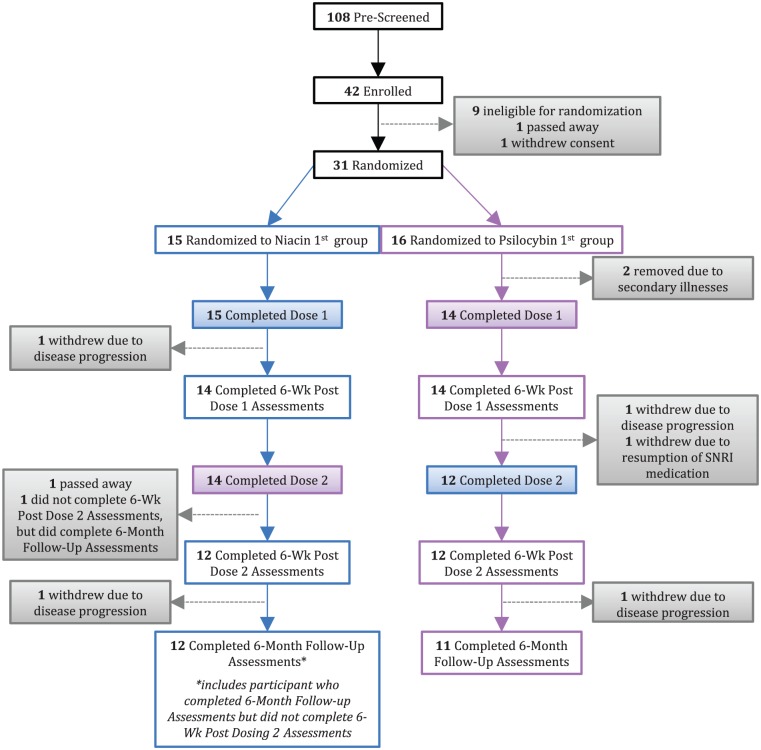
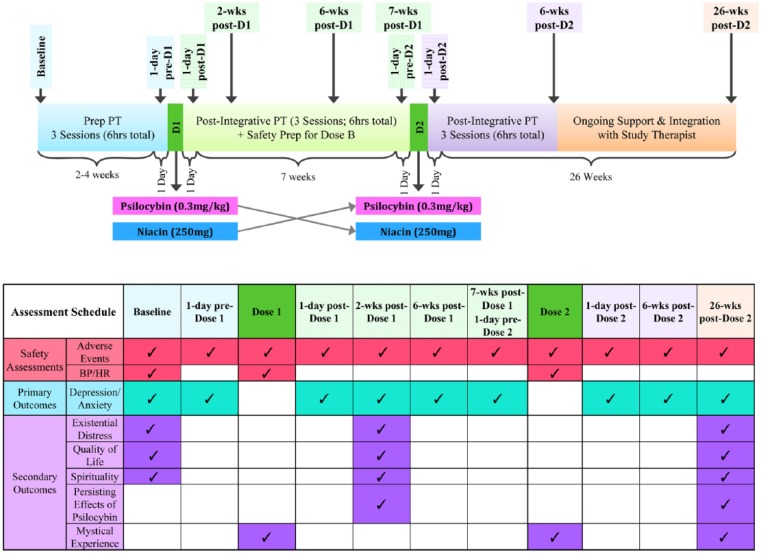
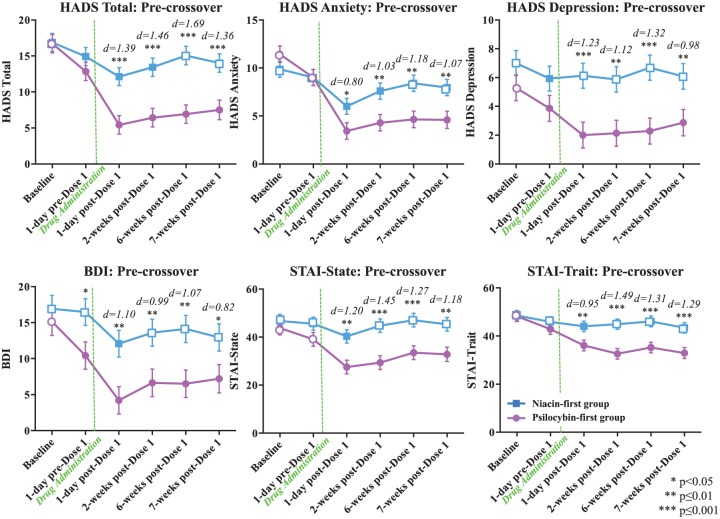
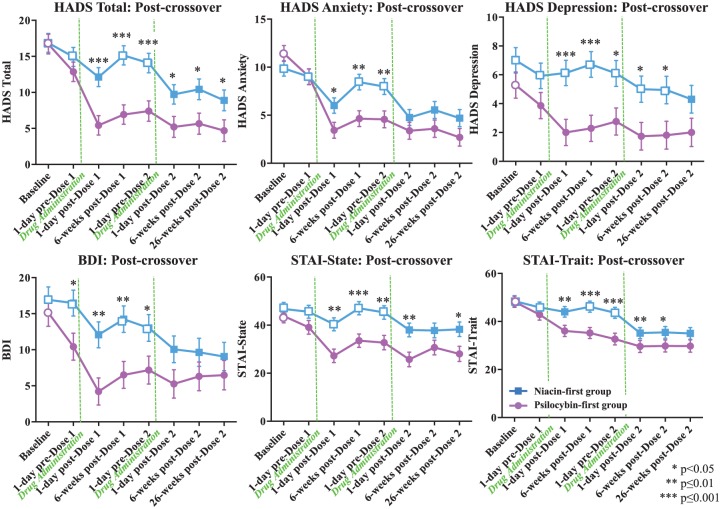
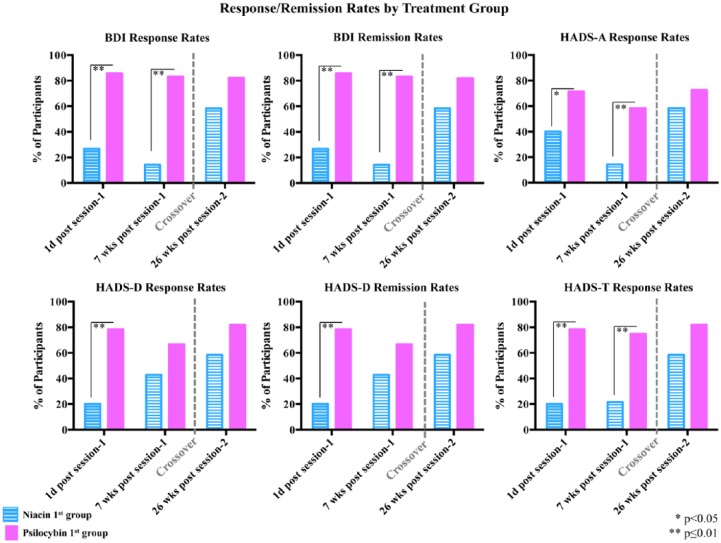
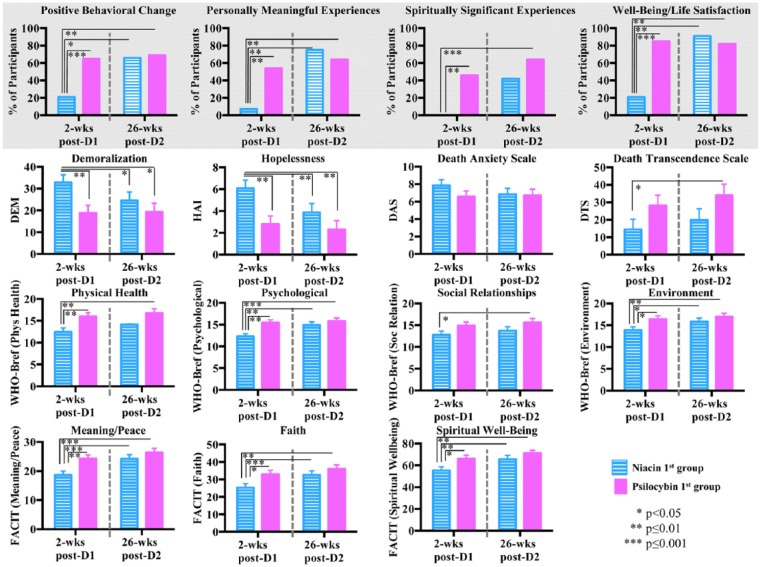
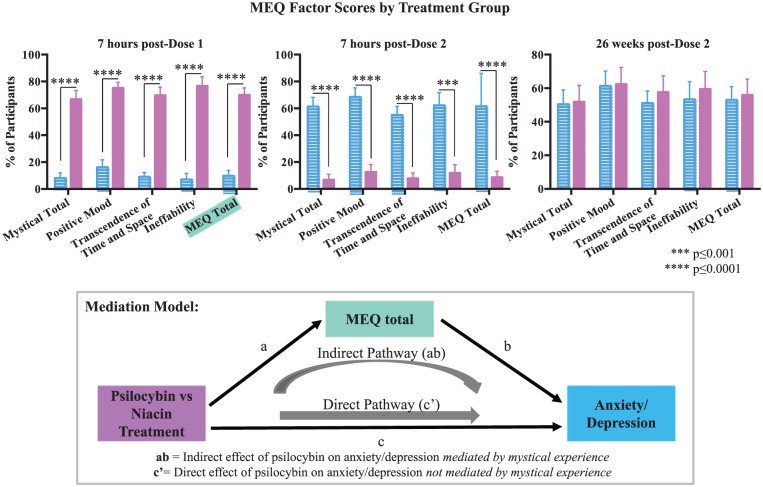
Background: Clinically significant anxiety and depression are common in patients with cancer, and are associated with poor psychiatric and medical outcomes. Historical and recent research suggests a role for psilocybin to treat cancer-related anxiety and depression. Methods: In this double-blind, placebo-controlled, crossover trial, 29 patients with cancer-related anxiety and depression were randomly assigned and received treatment with single-dose psilocybin (0.3 mg/kg) or niacin, both in conjunction with psychotherapy. The primary outcomes were anxiety and depression assessed between groups prior to the crossover at 7 weeks. Results: Prior to the crossover, psilocybin produced immediate, substantial, and sustained improvements in anxiety and depression and led to decreases in cancer-related demoralization and hopelessness, improved spiritual wellbeing, and increased quality of life. At the 6.5-month follow-up, psilocybin was associated with enduring anxiolytic and anti-depressant effects (approximately 60–80% of participants continued with clinically significant reductions in depression or anxiety), sustained benefits in existential distress and quality of life, as well as improved attitudes towards death. The psilocybin-induced mystical experience mediated the therapeutic effect of psilocybin on anxiety and depression. Conclusions: In conjunction with psychotherapy, single moderate-dose psilocybin produced rapid, robust and enduring anxiolytic and anti-depressant effects in patients with cancer-related psychological distress. Trial Registration: ClinicalTrials.gov Identifier: NCT00957359
Overview
The claims and statistics of this paper haven’t been checked yet.
Free: it reads the open-access text and checks the first 5 claims that cite a source we can check. Create a free account to check every claim.
Integrity signals
Registry
Cites
Statistics
Figures
Verification
Claims the paper makes
The claims and statistics of this paper haven’t been checked yet.
Free: it reads the open-access text and checks the first 5 claims that cite a source we can check. Create a free account to check every claim.
Claims other papers make about this one
Each is checked against this paper’s own text: does it say what the citing paper says it does?
The source backs part of the claim, not all of it — or backs it for a different population, condition or comparison.
In the citing paper
“Both participants and their friends and family reported positive effects on attitude towards life and the self, spiritual well-being, social contacts, quality of life, acceptance of death, and optimism (Ross et al., 2016).”
From Psychedelics for the treatment of depression, anxiety, and existential distress in patients with a terminal illness: a systematic review (2022) · cites this paper as Ross et al., 2016
Experimental — accuracy not yet measuredThe source backs part of the claim, not all of it — or backs it for a different population, condition or comparison.
In the citing paper
“Despite efforts to employ “active placebos” (e.g., niacin or a low-dose of a psychedelic) (40, 220), many patients and clinicians can still correctly distinguish between a high dose of a psychedelic drug and an active placebo.”
From Psychedelics and Other Psychoplastogens for Treating Mental Illness. (2021) · cites this paper as [220]
Experimental — accuracy not yet measuredThe source backs part of the claim, not all of it — or backs it for a different population, condition or comparison.
In the citing paper
“and with diminished anxiety and depression in terminal cancer patients (Griffiths et al., 2016;Ross et al., 2016;Barrett et al., 2020).”
From Psychedelics and Neural Plasticity: Therapeutic Implications (2022) · cites this paper as Ross et al., 2016
Experimental — accuracy not yet measuredThe source backs part of the claim, not all of it — or backs it for a different population, condition or comparison.
In the citing paper
“Psilocybin shows promise as a treatment for major depressive disorder (MDD).”
From Single-Dose Psilocybin Treatment for Major Depressive Disorder: A Randomized Clinical Trial (2023) · cites this paper as [8]
Experimental — accuracy not yet measuredThe source backs part of the claim, not all of it — or backs it for a different population, condition or comparison.
In the citing paper
“recent studies suggesting that psilocybin engenders a rapid antidepressant response that far outlasts the presence of the drug in the body.”
From Single-Dose Psilocybin Treatment for Major Depressive Disorder: A Randomized Clinical Trial (2023) · cites this paper as [8]
Experimental — accuracy not yet measured
25 more claims about this paper
Create a free account to see every claim other papers make about this one.
Self-check
Percentages, sums and reported differences re-computed from the paper’s own numbers.
The self-check needs the paper’s full text.
Citations
Cites
The Hospital Anxiety and Depression Scale
Zigmond, A. S., & Snaith, R. P. (1983) · Acta Psychiatrica Scandinavica · doi:10.1111/j.1600-0447.1983.tb09716.x · Cited by 47,139
(2013) · Cited by 44,563
Depression and quality of life in older persons: A review
Sivertsen, H., Bjørkløf, G. H., Engedal, K., Selbæk, G., & Helvik, A.-S. (2015) · Dementia and Geriatric Cognitive Disorders · doi:10.1159/000437299 · Cited by 14,152
Psychometric properties of the Beck Depression Inventory: Twenty-five years of evaluation
Beck, A. T., Steer, R. A., & Carbin, M. G. (1988) · Clinical Psychology Review · doi:10.1016/0272-7358(88)90050-5 · Cited by 11,696 · cited 2×
“cancer); Beck Depression Inventory (BDI) (Beck et al., 1988) self-report depression measure; Spielberger State-Trait Anxiety Inventory (STAI) (Spielberger, 1983) self-report measure of state (STAI state or STAI S) and trait (STAI trait or STAI T) anxiety.”
BackgroundMolecular Mechanisms of Depression: Perspectives on New Treatment Strategies
Lang, U. E., & Borgwardt, S. (2013) · Cellular Physiology and Biochemistry · doi:10.1159/000350094 · Cited by 8,475
Mitchell, A. J., Chan, M., Bhatti, H., Halton, M., Grassi, L., Johansen, C., & Meader, N. (2011) · The Lancet Oncology · doi:10.1016/s1470-2045(11)70002-x · Cited by 2,449 · cited 1×
“Enduring clinically significant anxiety and/or depressive symptoms are common in patients with cancer, present in 30–40% of patients in hospital settings (Mitchell et al., 2011).”
BackgroundManual for the state-trait anxiety inventory (form Y) : "self-evaluation questionnaire"
Spielberger, C. D., Gorsuch, R. L., & Lushene, R. E. (1970) · Consulting Psychologists Press eBooks · Cited by 2,352
Drevets, W. C., Price, J. L., & Furey, M. L. (2008) · Brain Structure and Function · doi:10.1007/s00429-008-0189-x · Cited by 2,241 · cited 7×
“The former is significant because depressive symptoms have been associated with increased activity in the medial PFC (Drevets et al., 2008; Farb et al., 2011) and normalization of medial PFC activity has been demonstrated with anti-depressant treatment (Deakin et al., 2008; Holtzheimer and Mayberg, 2011; Kennedy et al…”
BackgroundInfluentialGreicius, M. D., Flores, B. H., Menon, V., Glover, G. H., Solvason, H. B., Kenna, H., Reiss, A. L., & Schatzberg, A. F. (2007) · Biological Psychiatry · doi:10.1016/j.biopsych.2006.09.020 · Cited by 2,214 · cited 2×
“…pathological and can be understood as part of the therapeutic process (e.g. working through cancer-related psychological or existential distress through challenging encounters or emotionally charged confrontations with cancer-related fearful imagery or symbolism) (Carbonaro et al., 2016).”
BackgroundNichols, D. E. (2016) · Pharmacological Reviews · doi:10.1124/pr.115.011478 · Cited by 1,762 · cited 1×
“In two recently published open-label trials, one using a single dose of ayahuasca (Osorio et al., 2015) and the other using two doses of oral psilocybin (Carhart-Harris et al., 2016), acute and enduring anti-depressant effects were reported.”
Background
Research works printed but not linked: 3
- Doblin R (1991) Pahnke’s ‘Good Friday Experiment’: a long-term follow-up and methodological critique. J Transpersonal Psychol 23(1): 1– 28.
- Pahnke WN (1963) Drugs and mysticism: an analysis of the relationship between psychedelic drugs and the mystical consciousness, PhD dissertation. Cambridge, MA: Harvard University.
- VandeCreek L (1999) The death transcendence scale. In: Hill PC Hood RW (eds) Measures of religiosity. Birmingham, AL: Religious Education Press, pp. 442– 445.
Cited by
Items 901–1,000 of 1,005
Yngwe, H., Plavén‐Sigray, P., Ekman, C. J., Henje, E., Berglund, A., Tiger, M., Beckman, M., & Lundberg, J. O. (2026) · JAMA Network Open · doi:10.1001/jamanetworkopen.2026.12589 · Cited by 12
5-HT2A and 5-HT2C receptors as potential targets for the treatment of nicotine use and dependence
Higgins, G. A., & Sellers, E. M. (2021) · Progress in brain research · doi:10.1016/bs.pbr.2021.01.007 · Cited by 10
Sholevar, R., Peteet, J. R., Sanders, J. J., & Beaussant, Y. (2023) · Palliative & Supportive Care · doi:10.1017/s1478951523001475 · Cited by 10
Brockett, A. T., & Francis, N. A. (2024) · Journal of Neurophysiology · doi:10.1152/jn.00124.2024 · Cited by 12
Considering distinct positive emotions in psychedelic science
Goldy, S. P., Hendricks, P. S., Keltner, D. J., & Yaden, D. B. (2024) · International Review of Psychiatry · doi:10.1080/09540261.2024.2394221 · Cited by 13
“Similar work by Ross et al. (2016) yielded analogous findings, with an observed correlation between acutely assessed MEQ total scores and subsequent Beck Depression Inventory (BDI) scores of r = −0.49.”
InfluentialCCNP Innovations in Neuropsychopharmacology Award
Gobbi, G. (2024) · Journal of Psychiatry and Neuroscience · doi:10.1503/jpn.240037 · Cited by 11
“30 Notably, the profound spiritual encounters ensuing from the administration of psilocybin or LSD have manifested prominently within contemporary, expansive clinical trials of alcohol use disorder, depression, and anxiety.”
BackgroundInfluentialPsilocin fosters neuroplasticity in iPSC-derived human cortical neurons
Schmidt, M., Hoffrichter, A., Davoudi, M., Horschitz, S., Lau, T., Meinhardt, M. W., Spanagel, R., Ladewig, J., Köhr, G., & Koch, P. (2026) · eLife · doi:10.7554/elife.104006.3 · Cited by 10
Vigilance state dissociation induced by 5-MeO-DMT in mice
Bréant, B. J. B., Prius-Mengual, J., Andrews, A., Hoerder‐Suabedissen, A., Patel, J., Bannerman, D. M., Sharp, T., & Vyazovskiy, V. V. (2026) · Communications Biology · doi:10.1038/s42003-025-09412-x · Cited by 10
Grob, C. S., Bossis, A. P., & Griffiths, R. R. (2022) · Springer eBooks · doi:10.1007/978-3-030-85702-8_5 · Cited by 11
Self-citationPsychedelics and psychological strengths
Brasher, T. J., Rosen, D., & Spinella, M. (2023) · International Journal of Wellbeing · doi:10.5502/ijw.v13i1.2325 · Cited by 10
Fissler, P., Vandersmissen, A., Filippi, M., Mavioğlu, R. N., Scholkmann, F., Karabatsiakis, A., & Krähenmann, R. (2023) · Journal of Psychopharmacology · doi:10.1177/02698811231164707 · Cited by 11
“…Palhano-Fontes et al., 2019), anxiety in life-threatening diseases such as cancer (Gasser et al., 2015; Griffiths et al., 2016; Grob et al., 2011; Ross et al., 2016), substance use disorders (Bogenschutz et al., 2015; Garcia-Romeu et al., 2014; Johnson et al., 2014, 2017; Thomas et al., 2013),…”
BackgroundThal, S. B., Wieberneit, M., Sharbanee, J. M., Skeffington, P., Bruno, R., Wenge, T., & Bright, S. J. (2023) · Journal of Humanistic Psychology · doi:10.1177/00221678231168516 · Cited by 10
Bryson, N., Alexander, R., Asnis-Alibozek, A. G., & Ehlers, M. (2024) · ACS Chemical Neuroscience · doi:10.1021/acschemneuro.4c00058 · Cited by 9
Chen, M., Cheng, S.-L., Kao, Y., Tseng, P., Hsu, C., Yu, C., Yang, F., Thompson, T., Hsu, T., & Liang, C. (2024) · Frontiers in Psychiatry · doi:10.3389/fpsyt.2024.1439347 · Cited by 11
Irrmischer, M., Puxty, D. J., Yıldırım, B. O., Deijen, J. B., & Engelbregt, H. (2025) · Psychopharmacology · doi:10.1007/s00213-024-06733-3 · Cited by 9
“For psilocybin robust reductions in depressive and anxiety symptoms have been demonstrated following one or two doses (Carhart-Harris et al. 2016; Davis et al. 2021; Grif-fiths et al. 2016; Grob et al. 2011; Ross et al. 2016).”
InfluentialBelitzky, E., Carvalho, L. V. R., Taylor, M. V., Naranjo-Ortiz, C., Baum, L. V. M., Fiellin, D. A., & Lustberg, M. B. (2025) · Cancer Medicine · doi:10.1002/cam4.70586 · Cited by 9
“At 6.5 months of follow-up, psilocybin was associated with anxiolytic and anti-depressant effects and improved attitudes toward death [63].”
InfluentialDorval, M., Chang, S.-L., Farzin, H., Nguyen, O., Stephan, J.-F., Tapp, D., Deschamps, P., Joly, Y., Moureaux, F., Foxman, R., et al. (2025) · Palliative Medicine Reports · doi:10.1089/pmr.2024.0108 · Cited by 11
“23,24 In clinical studies, psilocybin-assisted therapy is generally well tolerated, with most adverse effects being mild to moderate and transient.”
Wong, S., Meckling, G., Fabiano, N., Lee, S., Jones, B. D. M., Shorr, R., Dargél, A., Davis, A. K., Fiedorowicz, J. G., Solmi, M., et al. (2025) · Therapeutic Advances in Psychopharmacology · doi:10.1177/20451253251372449 · Cited by 10
“Ross et al. 34 found that raters guessed correctly in 97% of participants, which suggested potential evidence of functional unblinding in psilocybin studies.”
InfluentialPsilocybin with psychotherapeutic support for treatment-resistant depression: a pilot clinical trial
Meikle, S. E., Carter, O. L., Liknaitzky, P., Johansen, L., Iyer, R., Strauss, N. H. M., Williams, M. L., Castle, D. J., & Rossell, S. L. (2025) · Therapeutic Advances in Psychopharmacology · doi:10.1177/20451253251377187 · Cited by 10
“Findings show acute experiences, such as mystical experiences, 12,29–31 psychological insight 30,32 and emotional breakthrough 30,33–35 may predict therapeutic benefit.”
Stocker, K., Hartmann, M., Schmid, Y., Vogt, S. B., Becker, A., Ley, L., Straumann, I., Arikci, D., Klaiber, A., Erne, L., et al. (2025) · Journal of Psychopharmacology · doi:10.1177/02698811251397328 · Cited by 11
“…on the MEQ (now embedded in the PES48) have mostly predicted positive treatment responses in depression, anxiety, and addiction (Bogenschutz et al., 2015; Carhart-Harris et al., 2018; Garcia-Romeu et al., 2015; Griffiths et al., 2016; Holze et al., 2023; Roseman et al., 2018; Ross et al., 2016).”
Kratina, S., Lo, C., Strıke, C., Schwartz, R. D., & Rush, B. R. (2023) · Healthcare policy · doi:10.12927/hcpol.2023.27048 · Cited by 11
Pagán, A. F., Lex, C., Soares, J. C., & Meyer, T. D. (2023) · Psychedelic Medicine · doi:10.1089/psymed.2023.0022 · Cited by 11
“11 12–16 However, along with positive media attention, there have also been media claims regarding the harmful effects of psilocybin leading to negative beliefs and stereotypes.”
Psychedelic Microdosing among Young Adults from Southern California
Harlow, A. F., Hendricks, P. S., Leventhal, A. M., & Barrington‐Trimis, J. L. (2024) · Journal of Psychoactive Drugs · doi:10.1080/02791072.2024.2313684 · Cited by 9
“…support) of MDMA (Mitchell et al. 2021; Varker et al. 2021), psilocybin (Carhart-Harris et al. 2016, 2021; Griffiths et al. 2016; Grob et al. 2011; Ross et al. 2016), and LSD (Fuentes et al. 2020) on treatment of substance use and mental health disorders; however, trials of microdosing have not…”
Hovmand, O. R., Madsen, M. K., Fisher, P. M., & Stenbæk, D. S. (2024) · Journal of Psychopharmacology · doi:10.1177/02698811241269669 · Cited by 10
“…obsessive-compulsive disorder (Moreno et al., 2006), anxiety, and depression (Carhart-Harris et al., 2016, 2021; Davis et al., 2021; Goodwin et al., 2022; Grob et al., 2011; Raison et al., 2023; Ross et al., 2016; von Rotz et al., 2023), albeit with considerable risk of bias (Hovmand et al., 2023).”
Lehto, R. H., Miller, S. E., Flanigan, M., & Wyatt, G. K. (2018) · Expert Review of Quality of Life in Cancer Care · doi:10.1080/23809000.2018.1483192 · Cited by 11
“As an example, recent investigation of the use of hallucinogens in the management of existential suffering at the end of life has been described [94,95].”
BackgroundPsychothérapie augmentée par la kétamine (KAP) dans les troubles de l’humeur : mode d’emploi
Bottemanne, H., Baldacci, A., Muller, C., Boyreau, A., & Claret, A. (2021) · L Encéphale · doi:10.1016/j.encep.2021.08.011 · Cited by 13
The Pharmacology and Clinical Applications of Psychedelic Medicines Within Midwifery Practice
Stein, C. A., Penn, A., Hope, S., Dorsen, C. G., & Mangini, M. (2022) · Journal of Midwifery & Women s Health · doi:10.1111/jmwh.13371 · Cited by 10
Brandt, J. (2023) · Drug Science Policy and Law · doi:10.1177/20503245231170340 · Cited by 9
“…anxiety, obsessive – compulsive disorder, alcohol dependence, tobacco dependence, and end-of-life “ existential ” palliative care (Bogenschutz et al., 2015; Carhart-Harris et al., 2016; Grif fi ths et al., 2016; Grob et al., 2011; Johnson et al., 2014; Moreno et al., 2006; Ross et al., 2016).”
BackgroundBack to the future: Research renewed on the clinical utility of psychedelic drugs
Lieberman, J. A., & Shalev, D. (2016) · Journal of Psychopharmacology · doi:10.1177/0269881116675755 · Cited by 11
“In a similar study, Ross et al. (2016) administered psilocybin or active placebo (niacin) to patients with life-threatening cancer, and assessed effects on anxiety and depression, as well as mystical experience and quality of life.”
BackgroundHeidari, A., Arefi, M., & Amiri, H. (2019) · Avicenna Journal of Neuro Psych Physiology · doi:10.32598/ajnpp.4.3.405 · Cited by 11
“These mechanisms reduce the impact of adverse events in life [35], create a positive attitude to the world, give meaning to one’s life [36], impact on lifestyle [22], resolve value conflicts, answer basic human questions about the purpose of life, the meaning of activities, and the status of the individual in the worl…”
BackgroundPsychedelic Medicines in Major Depression: Progress and Future Challenges
Bouso, J. C., Oña, G., SANTOS, R. G. D., & Hallak, J. E. C. (2021) · Advances in experimental medicine and biology · doi:10.1007/978-981-33-6044-0_26 · Cited by 11
Li, H., Zhong, Y., Yang, S., Wang, J., Li, X., Xu, J., Gao, H., & Chen, G. (2021) · Human Psychopharmacology Clinical and Experimental · doi:10.1002/hup.2825 · Cited by 9
“The acute effects of psilocybin, an LSD‐like psychedelic, in patients included in a previous study suggest potential therapeutic effects on depression and anxiety (Roseman et al., 2017; Ross et al., 2016).”
BackgroundPsychedelics and fNIRS neuroimaging: exploring new opportunities
Scholkmann, F., & Vollenweider, F. X. (2022) · Neurophotonics · doi:10.1117/1.nph.10.1.013506 · Cited by 9
d-Lysergic acid diethylamide has major potential as a cognitive enhancerPreprint
da Silva, F. A. C., Ornelas, I. M., Marcos, E., Goto‐Silva, L., Nascimento, J. M., Ruschi, S., Salerno, J. A., Karmirian, K., Costa, M., Sequerra, E. B., et al. (2019) · bioRxiv (Cold Spring Harbor Laboratory) · doi:10.1101/866814 · Cited by 10
“Agonists of serotonin receptors have been shown to have foremost utility for the treatment of depression (12, 13) and terminal anxiety (14-16).”
BackgroundThe psychedelic escape from depression
Eisenstein, M. (2022) · Nature · doi:10.1038/d41586-022-02872-9 · Cited by 8
Department of Nursing, S. O. N. A. M., Torbati, A. G., Abbaspour, S., Department of Nursing, S. O. N. A. M., Zandi, A., & Department of Anesthesiology, S. O. P. S. (2022) · Journal of Public Health and Development · doi:10.55131/jphd/2022/200317 · Cited by 8
Harris-Blum, L., Smith, Z., Ortiz, R. J., Athreya, D., Chang, A., Kulkarni, P. P., & Ferris, C. F. (2024) · Scientific Reports · doi:10.1038/s41598-024-69597-9 · Cited by 8
Seragnoli, F., Picard, F., Thorens, G., Buchard, A., Geyer, M., Abatista, A., Ponomarenko, P., Petignat, C., Riccardi, M., Bisson, M. D., et al. (2025) · Cognitive Therapy and Research · doi:10.1007/s10608-025-10588-z · Cited by 8
“…scores and the reduction of symptoms in a range of mental disorders, including cancer-related anxiety and mood disorders (Griffiths et al., 2016; Ross et al., 2016); treatment-resistant depression (Carhart-Harris et al., 2018; Roseman et al., 2018); and substance use disorders, notably alcohol…”
Thaoboonruang, N., Lohitnavy, O., Ya, K., & Lohitnavy, M. (2025) · Scientific Reports · doi:10.1038/s41598-025-98202-w · Cited by 8
Caraccio, M., Cheung, K., Mann, S. P., Bruce, L., Jacobs, E., Villiger, D., Sandbrink, J. D., Register, C., Hannikainen, I. R., Høeg, M. L., et al. (2025) · Philosophical Psychology · doi:10.1080/09515089.2025.2532761 · Cited by 11
“…treatments for a variety of mood and substance use disorders, including depression, anxiety, and alcohol use disorder (Goodwin et al., 2022; Johnson et al., 2014; Meling et al., 2024; Raison et al., 2023; Ross et al., 2016; Schimmers et al., 2022; Smith et al., 2022b; Sicignano et al., 2024).”
Singleton, S. P., Sevchik, B. L., Lahey, A., Cuijpers, P. J., Harrer, M., Jones, M. T., Nayak, S. M., Strain, E. C., Vandekar, S., Dworkin, R. H., et al. (2026) · Nature Mental Health · doi:10.1038/s44220-026-00630-8 · Cited by 9
“analysis that included only crossover design studies and studies with open-label extension periods (including Griffiths et al. 19 , Ross et al. 18 , Davis et al. 20 , Rosenblat et al. 24 and Ross et al. 28 ).”
InfluentialTherapeutic Use of Hallucinogens
Wiltenburg, V. D., Prado, D. D. R., & Mendes, F. R. (2021) · Springer eBooks · doi:10.1007/978-3-030-62855-0_35 · Cited by 8
Halberstadt, A. L., Luethi, D., Hoener, M. C., Trachsel, D., Brandt, S. D., & Liechti, M. E. (2022) · Psychopharmacology · doi:10.1007/s00213-022-06279-2 · Cited by 8
“2021), existential distress (Griffiths et al. 2016; Ross et al. 2016), nicotine dependence (Johnson et al.”
IsHak, W. W., García, P., Pearl, R., Dang, J., William, C., Totlani, J., & Danovitch, I. (2023) · PubMed Central · Cited by 14
Biscoe, N., Bonson, A., Slavin, M., Busuttil, W., MacManus, D., Cox, A., & Murphy, D. (2023) · European Journal of Trauma & Dissociation · doi:10.1016/j.ejtd.2023.100359 · Cited by 8
Gomonit, M. M., Skillman, B. N., & Swortwood, M. J. (2023) · Journal of Forensic Sciences · doi:10.1111/1556-4029.15454 · Cited by 9
EMBARK Psychedelic Therapy for Depression: A New Approach for the Whole Person
Brennan, B., & Belser, A. (2024) · doi:10.1093/9780197762622.001.0001 · Cited by 8
Self-citationWang, J. R., Araque, S. J. M., Micciche, G., McMillan, A., Coughlin, E. C., Mattiola, R., English, D. P.-G., & Kaliebe, K. (2024) · Frontiers in Psychiatry · doi:10.3389/fpsyt.2024.1301960 · Cited by 11
A psychedelic state arises from desynchronized brain activity
Petridis, P. D. (2024) · Nature · doi:10.1038/d41586-024-02154-6 · Cited by 8
Cyrano, E., & Popik, P. (2024) · Pharmacological Reports · doi:10.1007/s43440-024-00679-1 · Cited by 8
Psilocybin as a disease-modifying drug—a salutogenic approach in psychiatry
Spangemacher, M., Mertens, L. J., Färber, L. V., Jungaberle, A., Jungaberle, H., & Gründer, G. (2024) · Deutsches Ärzteblatt international · doi:10.3238/arztebl.m2024.0224 · Cited by 12
Informed Consent in Psychedelic-Assisted Therapy
Bradberry, M. M., Appelbaum, P. S., & Gukasyan, N. (2024) · Current topics in behavioral neurosciences · doi:10.1007/7854_2024_559 · Cited by 8
Educational moderation of gender disparities in psychedelic health outcomes
Viña, S. M. (2025) · Academia Mental Health and Well-Being · doi:10.20935/mhealthwellb7580 · Cited by 8
Lancelotta, R., DellaCrosse, M. A., Quinn, D., Saniyah, S., Saniyah, M., Gukasyan, N., Narayan, S. K., Nikolaidis, A., Sevelius, J. M., & Davis, A. K. (2025) · Journal of Psychoactive Drugs · doi:10.1080/02791072.2025.2520224 · Cited by 8
“These findings are consistent with studies showing the efficacy of psychedelic-assisted therapy for mental health conditions (Carhart-Harris et al. 2016; Davis et al. 2021; Hasler 2023; Ross et al. 2016), as well as survey data on naturalistic psychedelic use (Raison et al. 2022).”
Hallucinogen Use and Misuse in Older Adults
Redden, W. M., Paracha, S.-U.-R., & Sheheryar, Q. (2021) · Clinics in Geriatric Medicine · doi:10.1016/j.cger.2021.07.007 · Cited by 8
Current practices in managing end-of-life existential suffering
Risio, M. D., & Thompson, A. (2023) · Current Opinion in Supportive and Palliative Care · doi:10.1097/spc.0000000000000646 · Cited by 9
Predictors of Pharmacy Students' Attitudes About the Therapeutic Use of Psilocybin
Bhuiya, N. M. M. A., Jacobs, R. J., Wang, K., Sun, Y., Nava, B., Sampiere, L., Yerubandi, A., & Caballero, J. (2023) · Cureus · doi:10.7759/cureus.45169 · Cited by 8
“While some published reports that psilocybin might play an important role in the treatment of these disorders [6-10,12], pharmacy curricula that include a discussion of the uses, side effects, and legal and other limitations of psilocybin treatment may be useful.”
BackgroundGarcia, A. C. M., Maia, L. O., & Reed, P. G. (2024) · Journal of Holistic Nursing · doi:10.1177/08980101241257836 · Cited by 9
“This aligns with empirical fi ndings, for example, that psychedelic drug-related experiences that induce experiences of self-transcendence mediate therapeutic outcomes on depression and anxiety (Ross et al., 2016).”
Psychedelic intimacy: Altered states of consciousness in romantic relationships
Neubert, J. J., Anderson, K., & Mason, N. L. (2024) · Journal of Psychedelic Studies · doi:10.1556/2054.2024.00319 · Cited by 12
Hallucinogenic Drugs: A New Study Answers Old Questions about LSD
Halberstadt, A. L. (2017) · Current Biology · doi:10.1016/j.cub.2016.12.058 · Cited by 8
“According to two recent double blind, placebo-controlled crossover studies [17,18], a single dose of psilocybin can provoke long-lasting (R6 months) reductions of anxiety and depression in cancer patients.”
Psychological research of awe: Definition, functions, and application in psychotherapy
Luo, L., Mao, J., Chen, S., Gao, W., & Yuan, J. (2021) · Stress and Brain · doi:10.26599/sab.2020.9060003 · Cited by 8
Sind Psychedelika schnell wirksame Antidepressiva?
Gründer, G., Brand, M., Kärtner, L., Scharf, D., Schmitz, C. N., Spangemacher, M., & Mertens, L. J. (2022) · Der Nervenarzt · doi:10.1007/s00115-021-01255-1 · Cited by 8
“Die überzeugendsten Hinweise für eine Wirksamkeit von Psychedelika wurden seitdem für Psilocybin bei depressiven Syndromen vorgelegt [5,6,8,9,26].”
BackgroundInfluentialCan Psychedelics be the Treatment for the Crisis in Psychopharmacology?Preprint
Oña, G., & Bouso, J. C. (2019) · Preprints.org · doi:10.20944/preprints201901.0249.v1 · Cited by 8
“…and long-term decrease of anxiety after administration of high-dose psilocybin Measures not validated Low external validity Ross et al. 2016 Psilocybin for the treatment of anxiety associated with life-threatening disease 29 Immediate and sustained improvement of anxiety…”
BackgroundMeditative in-action: an endogenous epistemic venturePreprint
Pagnoni, G., & Guareschi, F. T. (2021) · PsyArXiv (OSF Preprints) · doi:10.31234/osf.io/mdbgq · Cited by 10
Ramos, L., & Vicente, S. (2024) · Journal of Clinical and Experimental Neuropsychology · doi:10.1080/13803395.2024.2363343 · Cited by 8
“…in depressive symptoms (Carhart-Harris et al., 2016, 2018; Davis et al., 2021; Goodwin et al., 2022; Griffiths et al., 2016; Gukasyan et al., 2022; Ross et al., 2016; von Rotz et al., 2022), psilocybin has been granted status by the Food and Drug Administration as a potential breakthrough therapy…”
Roméo, B., Kervadec, E., Fauvel, B., Strika-Bruneau, L., Amirouche, A., Verroust, V., Piolino, P., & Benyamina, A. (2025) · Progress in Neuro-Psychopharmacology and Biological Psychiatry · doi:10.1016/j.pnpbp.2025.111300 · Cited by 10
Joga, R., Yerram, S., Patnam, J. D., Choudhary, K. K., Varpe, P. C., Raghuvanshi, R. S., & Srivastava, S. (2025) · Health Policy · doi:10.1016/j.healthpol.2025.105392 · Cited by 7
Thuery, G., Sheridan, C., Iusan, P., Brar, G., Ledden, K., Freyne, A., Kelly, J. R., & Harkin, A. (2025) · Acta Neuropsychiatrica · doi:10.1017/neu.2025.10030 · Cited by 8
Psilocybin in late-life mental health: Addressing depression, loneliness, and existential anxiety
Konstantinou, G., Rosenblat, J. D., Hales, S., Husain, M. I., & Blumberger, D. M. (2025) · General Hospital Psychiatry · doi:10.1016/j.genhosppsych.2025.12.005 · Cited by 7
Breaking the chains of depression: A systematic review and meta-analysis of psilocybin therapy
Khan, F. A., Pandupuspitasari, N. S., Tencomnao, T., & Chuchawankul, S. (2025) · Journal of Affective Disorders · doi:10.1016/j.jad.2025.120882 · Cited by 8
Taylor, J. J., Szigeti, B., Silverberg, N. D., Ahmadzad-Asl, M., Kare, M. R., Webler, R. D., Orsini, D. K., Rosenblat, J. D., Bschor, T., Baethge, C., et al. (2026) · The Lancet Psychiatry · doi:10.1016/s2215-0366(26)00018-0 · Cited by 7
The History, Legalization and Potentials of Psilocybin-Assisted Psychotherapy
Heilman, J. (2023) · Journal of Scientific Exploration · doi:10.31275/20222633 · Cited by 7
How to tell the mushroom you are holding will kill you or heal you: A mini review
Sisodiya, A. S., Kadicheeni, A. S., Das, G., Kumari, T., Archana, T. S., & Kumar, D. (2023) · The Pharma Innovation · doi:10.22271/tpi.2023.v12.i2b.18725 · Cited by 8
“At the six-month follow-up, approximately 80% of participants still had clinically significant decreases in depression and anxiety (Griffiths et al., 2016) [86] and powerful beneficial outcomes have been reported in these other research (Grob et al., 2011; Ross et al., 2016) [87-88].”
Psychedelics, With a Focus on Psilocybin: Issues for the Clinician
Garakani, A., Alexander, J. L., Sumner, C. R., Pine, J. H., Gross, L. S., Raison, C. L., Aaronson, S. T., & Baron, D. A. (2023) · Journal of Psychiatric Practice · doi:10.1097/pra.0000000000000729 · Cited by 7
Armand, S., Larsen, K., Madsen, M. K., Ozenne, B., Preller, K. H., Knudsen, G. M., Stenbæk, D. S., & Fisher, P. M. (2023) · Neuroscience Applied · doi:10.1016/j.nsa.2023.103934 · Cited by 7
“…as a therapeutic to treat various psychiatric conditions when combined with psychological support (Moreno et al., 2006; Anderson et al., 2020; Ross et al., 2016; Bogenschutz et al., 2015, 2022; Garcia-Romeu et al., 2019; Grob et al., 2011; Vollenweider and Preller, 2020; Studerus et al.,…”
Muir, O. S., Shinozuka, K., Beutler, B. D., Arenas, A., Cherian, K. N., Evans, V. D., Fasano, C., & Tabaac, B. J. (2024) · American Journal of Therapeutics · doi:10.1097/mjt.0000000000001720 · Cited by 7
“9,10 End-of-life anxiety was reduced in a similarly large proportion of participants (78”
BackgroundMichael, P., Luke, D. P., & Robinson, O. C. (2025) · Frontiers in Psychology · doi:10.3389/fpsyg.2025.1532937 · Cited by 8
The Overview Effect and Well-Being
Nezami, A., Persaud, L. M., & White, F. L. (2021) · Astrophysics and space science proceedings · doi:10.1007/978-3-030-70482-7_10 · Cited by 7
Muslim Women and Psychedelics: a Look at the Past, Present, and Future
Zare, M., & Williams, M. T. (2023) · International Journal of Mental Health and Addiction · doi:10.1007/s11469-023-01108-9 · Cited by 7
“…a variety of psychological and psychiatric conditions, such as depression, end-of-life anxiety, chronic psychological trauma, and PTSD, at least when accompanied by sessions with a therapist in a controlled and tranquil environment (Brown & Alper, 2018; Ross et al., 2016; Ot’alora et al., 2018).”
Psychedelic-assisted Psychotherapy in 3-D: Acceptance, Connectedness, and Defensiveness
Fischman, L. G. (2023) · Neuropsychoanalysis · doi:10.1080/15294145.2023.2255991 · Cited by 9
“Studies have shown psychedelic-assisted psychotherapy to be extremely helpful in reducing existential anxiety (Gasser et al., 2015; Gri ffi ths et al., 2016; Grob et al., 2013; Pahnke et al., 1969; Richards et al., 1972; Ross et al.,2016 ; Schimmers et al., 2022).”
BackgroundNeumann, J., Dimov, K., Azatsian, K., Hofmann, B., & Gergs, U. (2024) · Toxicology Letters · doi:10.1016/j.toxlet.2024.06.006 · Cited by 7
Pasculli, G., Busan, P., Jackson, E. S., Alm, P. A., Gregorio, D. D., Maguire, G. A., Goodwin, G. M., Gobbi, G., Erritzøe, D., & Carhart-Harris, R. L. (2024) · Frontiers in Human Neuroscience · doi:10.3389/fnhum.2024.1402549 · Cited by 7
Poulin, J. M., Bigford, G. E., Lanctôt, K. L., Giacobbe, P., Schaffer, A., Sinyor, M., Rabin, J. S., Masellis, M., Singnurkar, A., Pople, C. B., et al. (2024) · Trials · doi:10.1186/s13063-024-08268-6 · Cited by 7
The Hallucinogen Rating Scale: Updated Factor Structure in a Large, Multistudy Sample
Calder, A. E., Qualls, C., Hasler, G., Elmiger, D., & Strassman, R. J. (2024) · Biological Psychiatry Global Open Science · doi:10.1016/j.bpsgos.2024.100436 · Cited by 10
Hardy, J., Kettner, H., Glowacki, D. R., Wall, J., Carhart-Harris, R. L., & Hardy, J. L. (2025) · Frontiers in Virtual Reality · doi:10.3389/frvir.2024.1466362 · Cited by 7
Kim, S., Yang, S., Jung, J., Choi, J., Kang, M., & Joo, J. (2025) · Advanced Science · doi:10.1002/advs.202413786 · Cited by 10
Forstmann, M., & Sagioglou, C. (2021) · European Psychologist · doi:10.1027/1016-9040/a000447 · Cited by 9
Sielaff, A., Horner, D. E., & Greenberg, J. (2021) · Personality and Individual Differences · doi:10.1016/j.paid.2021.111347 · Cited by 8
“The inspiration for this line of inquiry comes from recent research finding psychedelic-assisted therapy to be successful in treating psychiatric diagnoses including, but not limited to, end-of-life distress (Ross et al., 2016), tobacco addiction (Garcia-Romeu et al.”
BackgroundPsychedelics and Hallucinogens in Psychiatry: Finding New Pharmacological Targets
de Sousa, T. R., Rema, J., Machado, S. E. D. C., & Novais, F. (2021) · Current Topics in Medicinal Chemistry · doi:10.2174/1568026621666211201145800 · Cited by 8
Erhan, E., Külahlı, İ., Kandemir, O., Cemiloglu, R., Yigitbasi, O. G., & Cüreoğlu, S. (1996) · PubMed · Cited by 8
role of technology in innovating English teaching to improve learning outcomes in the digital world
Juliana, J. (2022) · International Journal of Linguistics Literature and Culture · doi:10.21744/ijllc.v8n4.2095 · Cited by 7
Psychedelics and Desistance From Crime: Lessons From the Concord Prison Experiment
Neitzke‐Spruill, L. (2022) · Journal of Humanistic Psychology · doi:10.1177/00221678221136233 · Cited by 8
Korman, B. A. (2023) · Journal of Psychedelic Studies · doi:10.1556/2054.2022.00240 · Cited by 7
“As it relates to long-term adverse effects, however, no long-term adverse effects have been reported for the approximately 2,000 participants taking part in psychedelic trials between the early 1990’s and 2016 (Ross et al., 2016).”
BackgroundNeural Network Modulation of Ayahuasca: A Systematic Review of Human Studies
Santos, G. H. D. M., Rodrigues, L. S., Rocha, J. M., Rossi, G. N., Oña, G., Bouso, J. C., Hallak, J. E. C., & SANTOS, R. G. D. (2023) · Psychoactives · doi:10.3390/psychoactives2010006 · Cited by 9
Elf, P., Isham, A., & Leoni, D. (2023) · History of Pharmacy and Pharmaceuticals · doi:10.3368/hopp.65.1.33 · Cited by 9
Malikowska‐Racia, N., Koniewski, M., Gołębiowska, J., & Popik, P. (2023) · Journal of Psychopharmacology · doi:10.1177/02698811231205692 · Cited by 7
“Ross et al. (2016) and Davis et al. (2021) in double-blind placebo-controlled trials demonstrated ~70– 80% symptom reduction in depressed patients within the first week after acute treatment with psilocybin.”
BackgroundMartin, J. M., & Sterzer, P. (2022) · Philosophy and the Mind Sciences · doi:10.33735/phimisci.2022.9326 · Cited by 8
Xiao, X., Bentzley, B. S., Cole, E. J., Tischler, C., Stimpson, K. H., Duvio, D., Bishop, J. H., DeSouza, D. D., Schatzberg, A. F., Keller, C. J., et al. (2019) · bioRxiv (Cold Spring Harbor Laboratory) · doi:10.1101/672154 · Cited by 7
van Mulukom, V., Patterson, R., & van Elk, M. (2020) · PsyArXiv (OSF Preprints) · doi:10.31234/osf.io/fp8e3 · Cited by 7
Metadata
- Authors
- Ross, S., Bossis, A., Guss, J., Agin-Liebes, G., Malone, T., Cohen, B., Mennenga, S. E., Belser, A., Kalliontzi, K., Babb, J., Su, Z., Corby, P., & Schmidt, B. L.
- Affiliations
- NYU Langone Health (US)
- Bellevue Hospital Center (US)
- Palo Alto University (US)
- New York University (US)
- Corresponding author
- Ross, Stephen
- Venue
- Journal of Psychopharmacology
- Publisher
- SAGE Publications
- Published
- 2016-11-30
- Volume
- 30
- Issue
- 12
- Pages
- 1165-1180
- ISSN
- 0269-8811 (ISSN-L)
- 1461-7285
- PMC
- PMC5367551
- OpenAlex
- W2559739670
- Semantic Scholar
- 1129a840891b76fb9022b6e91d1e1f4d2dafcb04
- Cited by
- 1,698
- References
- 90
- Citations by year
- 2026: 184 · 2025: 239 · 2024: 264 · 2023: 239 · 2022: 224 · 2021: 182 · 2020: 144 · 2019: 64 · 2018: 88 · 2017: 52 · 2016: 15
- FWCI
- 97.72
- Type
- journal article
- Language
- en
- Open access
- hybrid
- doi.org
- Licence
- cc-by
- journals.sagepub.com/page/policies/text-and-data-mining-license (tdm)
- Locations
- Journal of Psychopharmacology (publishedVersion, cc-by)
- PubMed Central (publishedVersion, cc-by)
- PubMed (publishedVersion)
- Funders
- National Institutes of Health (UL1TR000038)
- National Center for Advancing Translational Sciences
- Topics
- Social Sciences › Psychology › Clinical Psychology › Psychedelics and Drug Studies
- Health Sciences › Medicine › Oncology › Cancer survivorship and care
- Social Sciences › Health › Religion, Spirituality, and Psychology
- Keywords
- psilocybin, cancer-related anxiety, cancer-related depression, mystical experience, psychotherapy, existential suffering, spiritual well-being, quality of life, attitudes toward death, hopelessness, demoralization, psychedelic therapy
- MeSH terms
- Adult, Aged, Anxiety, Depression, Double-Blind Method, Female, Hallucinogens, Humans, Male, Middle Aged, Neoplasms, Psilocybin, Psychotherapy, Quality of Life, Surveys and Questionnaires, Cross-Over Studies, Young Adult
About these checks
Registry, retraction, Cites and statistics results are computed, not judged, with one exception: a printed reference that no index lists is read once by a model before it counts as a citation error. Claims are extracted by a model and kept only when their quote appears verbatim in the text; each cited source is then checked, with a model’s help, for whether it says what the claim relies on. Those verdicts can be wrong — read the claim’s quote and the cited source before relying on one.
Statistics and arithmetic are recomputed, not judged.
Confidence bands are shown only for fields calibrated on our annotated test set. None is calibrated yet, so no band is shown.
What counts as a claim ›How we measure confidence ›How we check this ›
Are you an author, or do you see a problem with this page? Request a review
Data sources
Bibliographic data: Semantic Scholar, OpenAlex, Crossref.
Contains information from the Semantic Scholar Academic Graph Datasets, made available under the ODC Attribution License (ODC-BY 1.0).
Semantic Scholar’s data is described in: Kinney, R., et al. (2023). The Semantic Scholar Open Data Platform. arXiv:2301.10140.
