

Rapid and sustained symptom reduction following psilocybin treatment for anxiety and depression in patients with life-threatening cancer: a randomized controlled trial.
Open accessThe DOI matches its Crossref record; 90 of the 90 references it cites were found in a registry or an index.
Abstract
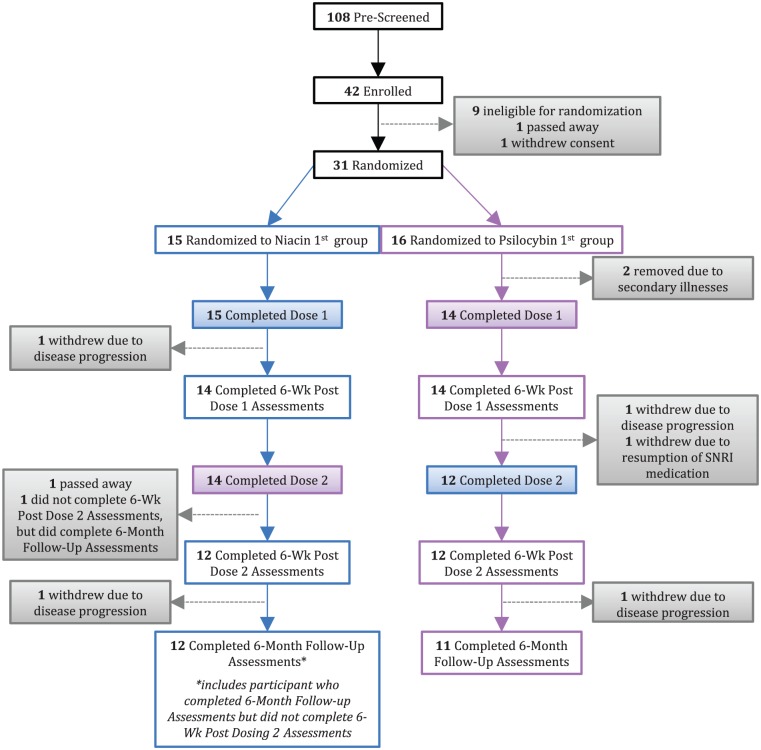
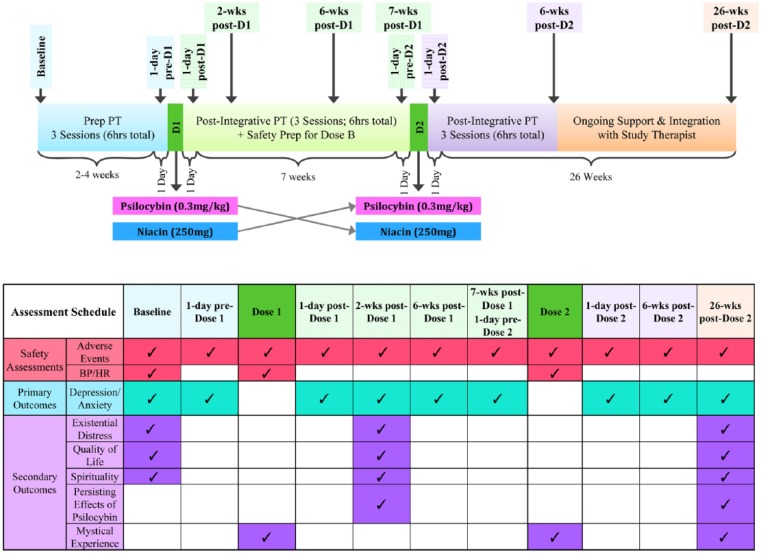
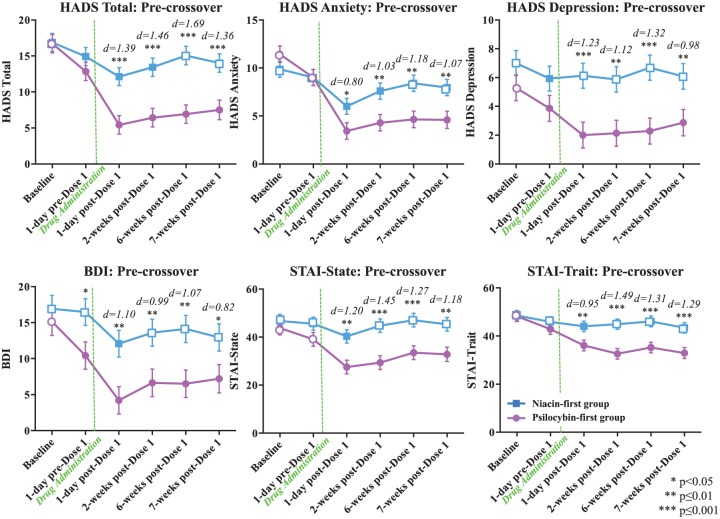
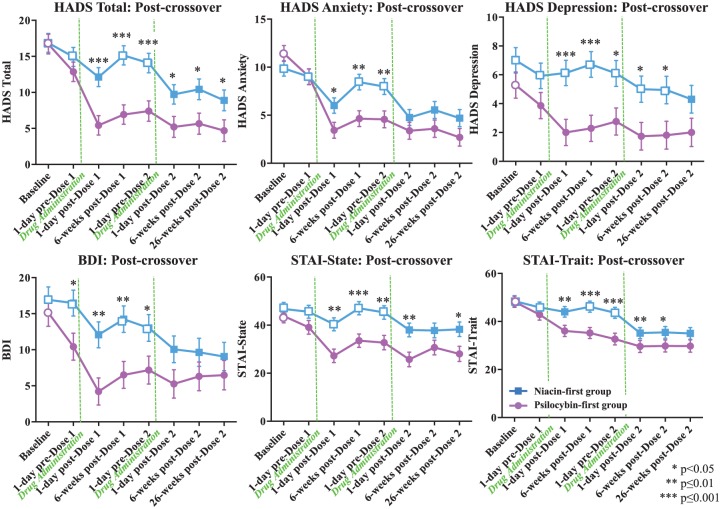
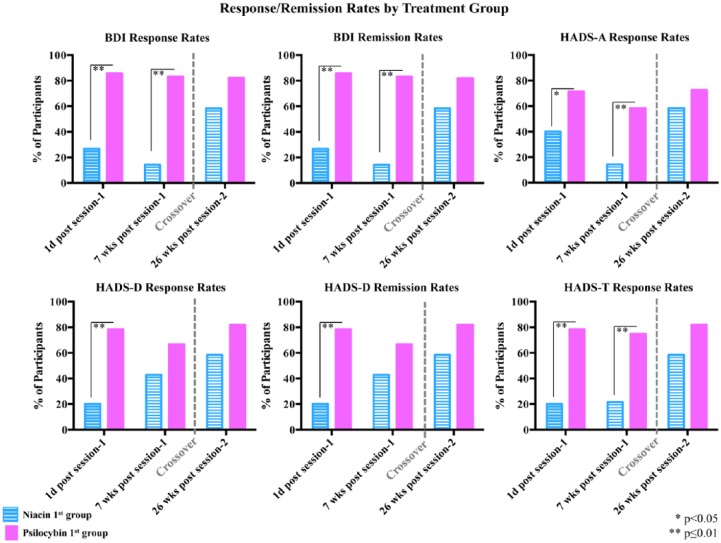
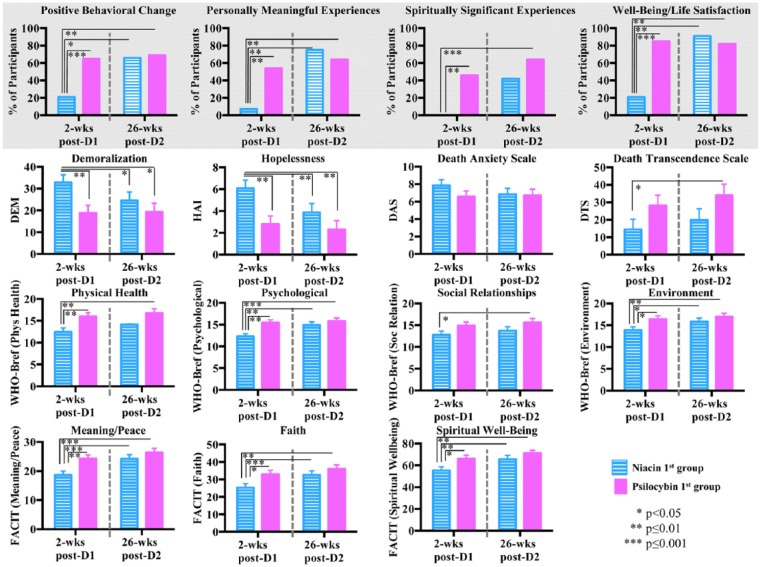
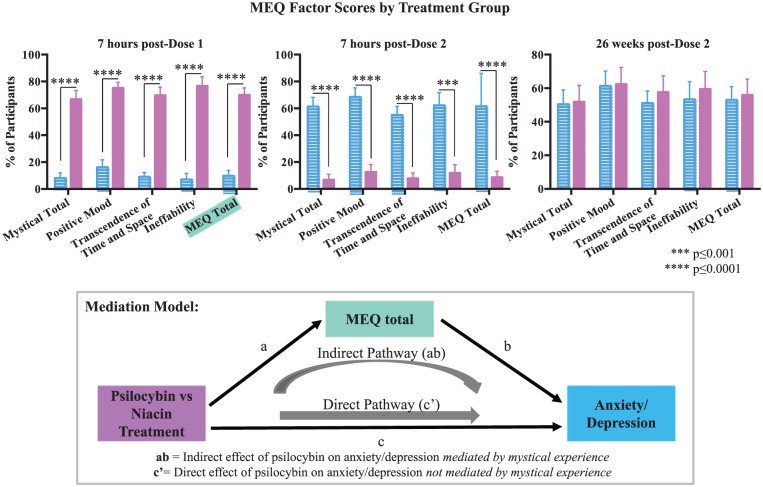
Background: Clinically significant anxiety and depression are common in patients with cancer, and are associated with poor psychiatric and medical outcomes. Historical and recent research suggests a role for psilocybin to treat cancer-related anxiety and depression. Methods: In this double-blind, placebo-controlled, crossover trial, 29 patients with cancer-related anxiety and depression were randomly assigned and received treatment with single-dose psilocybin (0.3 mg/kg) or niacin, both in conjunction with psychotherapy. The primary outcomes were anxiety and depression assessed between groups prior to the crossover at 7 weeks. Results: Prior to the crossover, psilocybin produced immediate, substantial, and sustained improvements in anxiety and depression and led to decreases in cancer-related demoralization and hopelessness, improved spiritual wellbeing, and increased quality of life. At the 6.5-month follow-up, psilocybin was associated with enduring anxiolytic and anti-depressant effects (approximately 60–80% of participants continued with clinically significant reductions in depression or anxiety), sustained benefits in existential distress and quality of life, as well as improved attitudes towards death. The psilocybin-induced mystical experience mediated the therapeutic effect of psilocybin on anxiety and depression. Conclusions: In conjunction with psychotherapy, single moderate-dose psilocybin produced rapid, robust and enduring anxiolytic and anti-depressant effects in patients with cancer-related psychological distress. Trial Registration: ClinicalTrials.gov Identifier: NCT00957359
Overview
The claims and statistics of this paper haven’t been checked yet.
Free: it reads the open-access text and checks the first 5 claims that cite a source we can check. Create a free account to check every claim.
Integrity signals
Registry
Cites
Statistics
Figures
Verification
Claims the paper makes
The claims and statistics of this paper haven’t been checked yet.
Free: it reads the open-access text and checks the first 5 claims that cite a source we can check. Create a free account to check every claim.
Claims other papers make about this one
Each is checked against this paper’s own text: does it say what the citing paper says it does?
The source backs part of the claim, not all of it — or backs it for a different population, condition or comparison.
In the citing paper
“Both participants and their friends and family reported positive effects on attitude towards life and the self, spiritual well-being, social contacts, quality of life, acceptance of death, and optimism (Ross et al., 2016).”
From Psychedelics for the treatment of depression, anxiety, and existential distress in patients with a terminal illness: a systematic review (2022) · cites this paper as Ross et al., 2016
Experimental — accuracy not yet measuredThe source backs part of the claim, not all of it — or backs it for a different population, condition or comparison.
In the citing paper
“Despite efforts to employ “active placebos” (e.g., niacin or a low-dose of a psychedelic) (40, 220), many patients and clinicians can still correctly distinguish between a high dose of a psychedelic drug and an active placebo.”
From Psychedelics and Other Psychoplastogens for Treating Mental Illness. (2021) · cites this paper as [220]
Experimental — accuracy not yet measuredThe source backs part of the claim, not all of it — or backs it for a different population, condition or comparison.
In the citing paper
“and with diminished anxiety and depression in terminal cancer patients (Griffiths et al., 2016;Ross et al., 2016;Barrett et al., 2020).”
From Psychedelics and Neural Plasticity: Therapeutic Implications (2022) · cites this paper as Ross et al., 2016
Experimental — accuracy not yet measuredThe source backs part of the claim, not all of it — or backs it for a different population, condition or comparison.
In the citing paper
“Psilocybin shows promise as a treatment for major depressive disorder (MDD).”
From Single-Dose Psilocybin Treatment for Major Depressive Disorder: A Randomized Clinical Trial (2023) · cites this paper as [8]
Experimental — accuracy not yet measuredThe source backs part of the claim, not all of it — or backs it for a different population, condition or comparison.
In the citing paper
“recent studies suggesting that psilocybin engenders a rapid antidepressant response that far outlasts the presence of the drug in the body.”
From Single-Dose Psilocybin Treatment for Major Depressive Disorder: A Randomized Clinical Trial (2023) · cites this paper as [8]
Experimental — accuracy not yet measured
25 more claims about this paper
Create a free account to see every claim other papers make about this one.
Self-check
Percentages, sums and reported differences re-computed from the paper’s own numbers.
The self-check needs the paper’s full text.
Citations
Cites
The Hospital Anxiety and Depression Scale
Zigmond, A. S., & Snaith, R. P. (1983) · Acta Psychiatrica Scandinavica · doi:10.1111/j.1600-0447.1983.tb09716.x · Cited by 47,139
(2013) · Cited by 44,563
Depression and quality of life in older persons: A review
Sivertsen, H., Bjørkløf, G. H., Engedal, K., Selbæk, G., & Helvik, A.-S. (2015) · Dementia and Geriatric Cognitive Disorders · doi:10.1159/000437299 · Cited by 14,152
Psychometric properties of the Beck Depression Inventory: Twenty-five years of evaluation
Beck, A. T., Steer, R. A., & Carbin, M. G. (1988) · Clinical Psychology Review · doi:10.1016/0272-7358(88)90050-5 · Cited by 11,696 · cited 2×
“cancer); Beck Depression Inventory (BDI) (Beck et al., 1988) self-report depression measure; Spielberger State-Trait Anxiety Inventory (STAI) (Spielberger, 1983) self-report measure of state (STAI state or STAI S) and trait (STAI trait or STAI T) anxiety.”
BackgroundMolecular Mechanisms of Depression: Perspectives on New Treatment Strategies
Lang, U. E., & Borgwardt, S. (2013) · Cellular Physiology and Biochemistry · doi:10.1159/000350094 · Cited by 8,475
Mitchell, A. J., Chan, M., Bhatti, H., Halton, M., Grassi, L., Johansen, C., & Meader, N. (2011) · The Lancet Oncology · doi:10.1016/s1470-2045(11)70002-x · Cited by 2,449 · cited 1×
“Enduring clinically significant anxiety and/or depressive symptoms are common in patients with cancer, present in 30–40% of patients in hospital settings (Mitchell et al., 2011).”
BackgroundManual for the state-trait anxiety inventory (form Y) : "self-evaluation questionnaire"
Spielberger, C. D., Gorsuch, R. L., & Lushene, R. E. (1970) · Consulting Psychologists Press eBooks · Cited by 2,352
Drevets, W. C., Price, J. L., & Furey, M. L. (2008) · Brain Structure and Function · doi:10.1007/s00429-008-0189-x · Cited by 2,241 · cited 7×
“The former is significant because depressive symptoms have been associated with increased activity in the medial PFC (Drevets et al., 2008; Farb et al., 2011) and normalization of medial PFC activity has been demonstrated with anti-depressant treatment (Deakin et al., 2008; Holtzheimer and Mayberg, 2011; Kennedy et al…”
BackgroundInfluentialGreicius, M. D., Flores, B. H., Menon, V., Glover, G. H., Solvason, H. B., Kenna, H., Reiss, A. L., & Schatzberg, A. F. (2007) · Biological Psychiatry · doi:10.1016/j.biopsych.2006.09.020 · Cited by 2,214 · cited 2×
“…pathological and can be understood as part of the therapeutic process (e.g. working through cancer-related psychological or existential distress through challenging encounters or emotionally charged confrontations with cancer-related fearful imagery or symbolism) (Carbonaro et al., 2016).”
BackgroundNichols, D. E. (2016) · Pharmacological Reviews · doi:10.1124/pr.115.011478 · Cited by 1,762 · cited 1×
“In two recently published open-label trials, one using a single dose of ayahuasca (Osorio et al., 2015) and the other using two doses of oral psilocybin (Carhart-Harris et al., 2016), acute and enduring anti-depressant effects were reported.”
Background
Research works printed but not linked: 3
- Doblin R (1991) Pahnke’s ‘Good Friday Experiment’: a long-term follow-up and methodological critique. J Transpersonal Psychol 23(1): 1– 28.
- Pahnke WN (1963) Drugs and mysticism: an analysis of the relationship between psychedelic drugs and the mystical consciousness, PhD dissertation. Cambridge, MA: Harvard University.
- VandeCreek L (1999) The death transcendence scale. In: Hill PC Hood RW (eds) Measures of religiosity. Birmingham, AL: Religious Education Press, pp. 442– 445.
Cited by
Items 501–600 of 1,005
How do serotonergic psychedelics treat depression: The potential role of neuroplasticity
Artin, H., Zisook, S., & Ramanathan, D. (2021) · World Journal of Psychiatry · doi:10.5498/wjp.v11.i6.201 · Cited by 33
Meir, P., Taylor, L., Soares, J. C., & Meyer, T. D. (2022) · Journal of Affective Disorders · doi:10.1016/j.jad.2022.12.050 · Cited by 35
A Comprehensive Review of the Current Status of the Cellular Neurobiology of Psychedelics
Banushi, B., & Polito, V. (2023) · Biology · doi:10.3390/biology12111380 · Cited by 37
“Randomized Phase II trials have so far demonstrated significant reductions in symptoms and long-lasting benefits following psilocybin-assisted psychotherapy for major depressive disorder, anxiety, and treatment-resistant depression [43–46].”
BackgroundInfluentialTiwari, P., Davoudian, P. A., Kapri, D., Vuruputuri, R. M., Karaba, L. A., Sharma, M., Zanni, G., Balakrishnan, A., Chaudhari, P. R., Pradhan, A., et al. (2024) · Neuron · doi:10.1016/j.neuron.2024.08.016 · Cited by 38
“Clinical studies suggest that serotonergic psychedelics like LSD and psilocybin may be effective in treating anxiety disorders, 65–72 but the mechanism via which these compounds exert their effect on anxiety remains to be explored.”
Müller, F., Zaczek, H., Becker, A., Ley, L., Borgwardt, S., de Jesus, J. S., Loh, N., Kohut, J., Auernig, M., Boehlke, C. S., et al. (2025) · Med · doi:10.1016/j.medj.2025.100725 · Cited by 37
Pâslaru, A. M., Pleșea-Condratovici, A., Moroianu, L.-A., Isailă, O.-M., Rebegea, L. F., Pavel, L. L., & Ciubară, A. (2025) · Medicina · doi:10.3390/medicina61061086 · Cited by 36
“In the ROBVIS tool, a red circle with an “X” denotes high risk of bias, a yellow circle with a minus sign (–, “U+2212”) denotes some concerns, and a green circle with a “+” denotes low risk of bias [38–52].”
Psychedelics as Novel Therapeutics in Alzheimer’s Disease: Rationale and Potential Mechanisms
Garcia‐Romeu, A., Darcy, S., Jackson, H., White, T., & Rosenberg, P. B. (2021) · Current topics in behavioral neurosciences · doi:10.1007/7854_2021_267 · Cited by 36
“To date, psychedelics’ psychological mechanisms of action appear related to acute subjective drug effects associated with positive therapeutic outcomes (Bogenschutz et al. 2015; Garcia-Romeu et al. 2014; Griffiths et al. 2016; Roseman et al. 2018; Ross et al. 2016).”
BackgroundRoscoe, J., & Lozy, O. (2022) · Drug Science Policy and Law · doi:10.1177/20503245221085222 · Cited by 34
“…9 0.2mg/kg 9 0.3mg/kg Preller et al. 2020 23 1 Oral 23 0.2mg/kg Quednow et al. 2012 16 1 Oral 16 0.26mg/kg Roseman et al. 2018 20 2 Oral 20 10mg 20 25mg Ross et al. 2016 29 1 Oral 29 0.3mg/kg Schindler et al. 2021 12 1 Oral 12 0.143mg/ kg Smigielski L et al. 2019a 20 1 Oral 20 0.315mg/ kg…”
BackgroundInfluentialPsychedelic-Assisted Therapy for People with Eating Disorders
Gukasyan, N., Schreyer, C. C., Griffiths, R. R., & Guarda, Á. S. (2022) · Current Psychiatry Reports · doi:10.1007/s11920-022-01394-5 · Cited by 35
Are psychedelic medicines the reset for chronic pain? Preliminary findings and research needs
Zia, F. Z., Baumann, M. H., Belouin, S. J., Dworkin, R. H., Ghauri, M. H., Hendricks, P. S., Henningfield, J. E., Lanier, R. K., Ross, S., & Berger, A. M. (2023) · Neuropharmacology · doi:10.1016/j.neuropharm.2023.109528 · Cited by 34
Self-citationTechniques for in vivo serotonin detection in the brain: State of the art
Zhao, S., & Piatkevich, K. D. (2023) · Journal of Neurochemistry · doi:10.1111/jnc.15865 · Cited by 36
Novel psychotherapeutics – a cautiously optimistic focus on Hallucinogens
Sherwood, A. M., & Prisinzano, T. E. (2017) · Expert Review of Clinical Pharmacology · doi:10.1080/17512433.2018.1415755 · Cited by 35
“Phase 2 trials at Johns Hopkins University and New York University have been conducted under rigorous double-blinded placebo-controlled conditions [8,11].”
The ritual use of ayahuasca during treatment of severe physical illnesses: a qualitative study
Maia, L. O., Daldegan-Bueno, D., & Tófoli, L. F. (2021) · Journal of Psychoactive Drugs · doi:10.1080/02791072.2020.1854399 · Cited by 32
“found reductions in death anxiety (Gasser, Kirchner and Passie 2015; Griffiths et al. 2016; Reiche et al. 2018; Ross et al. 2016).”
BackgroundGiving Consent to the Ineffable
Villiger, D. (2024) · Neuroethics · doi:10.1007/s12152-024-09545-6 · Cited by 32
“1 So far, the results are promising, suggesting effectiveness in treating cancer-related depression and anxiety [6–10], (treatment-resistant) depression [6, 11–17], and alcohol and smoking cessation [18–23].”
BackgroundWhitfield, H. J. (2021) · Frontiers in Psychiatry · doi:10.3389/fpsyt.2021.727572 · Cited by 33
“Randomised control trials have demonstrated effect sizes generally greater than those of current treatments, for depressive disorders (3, 4), addictions (5), distressed cancer patients (6, 7), and PTSD (8).”
BackgroundWhen the Trial Ends: The Case for Post-Trial Provisions in Clinical Psychedelic Research
Jacobs, E., Murphy-Beiner, A., Rouiller, I., Nutt, D. J., & Spriggs, M. J. (2023) · Neuroethics · doi:10.1007/s12152-023-09536-z · Cited by 35
“A now substantial number of studies have demonstrated safety and potential efficacy of psil-ocybin-assisted therapy across conditions [17] including various addictions [18, 19], obsessive–compulsive disorder [20], depression [21–23], and end-of-life anxiety [24–26].”
BackgroundBahji, A., Lunsky, I. O., Gutiérrez, G., & Vázquez, G. H. (2023) · Journal of Psychoactive Drugs · doi:10.1080/02791072.2023.2278586 · Cited by 35
“…et al. 2022 conducted this type of analysis), five studies presented a crossover design (Griffiths et al. 2016; Grob et al. 2011; Holze et al. 2023; Ross et al. 2016; Sloshower et al. 2023), variability and limited description of the psychological support or therapy provided, and variability of…”
Protocols and practices in psilocybin assisted psychotherapy for depression: A systematic review
Chisamore, N., Johnson, D. E., Chen, M. J. Q., Offman, H., Chen-Li, D. C. J., Kaczmarek, E. S., Doyle, Z., McIntyre, R. S., & Rosenblat, J. D. (2024) · Journal of Psychiatric Research · doi:10.1016/j.jpsychires.2024.05.051 · Cited by 34
Hsu, T., Tsai, C., Kao, Y., Thompson, T., Carvalho, A. F., Yang, F., Tseng, P., Hsu, C.-W., Yu, C., Tu, Y., et al. (2024) · BMJ · doi:10.1136/bmj-2023-078607 · Cited by 38
Psychedelics and hypnosis: Commonalities and therapeutic implications
Lemercier, C. E., & Terhune, D. (2018) · Journal of Psychopharmacology · doi:10.1177/0269881118780714 · Cited by 26
Dynamic Brain Connectivity in Resting State Functional MR Imaging
Jalilianhasanpour, R., Ryan, D. H., Agarwal, S., Beheshtian, E., Gujar, S. K., Pillai, J. J., & Sair, H. I. (2020) · Neuroimaging Clinics of North America · doi:10.1016/j.nic.2020.09.004 · Cited by 37
Więckiewicz, G., Stokłosa, I., Piegza, M. J., Gorczyca, P. W., & Pudło, R. (2021) · Pharmaceuticals · doi:10.3390/ph14080793 · Cited by 39
“In three studies the sample was composed of subjects with major depressive disorder [26,27,29], and in the other three studies the sample was composed of subjects with depression and anxiety in the course of life-threatening cancer [24,25,28].”
BackgroundResultOña, G., Berrada, A., & Bouso, J. C. (2021) · Transcultural Psychiatry · doi:10.1177/13634615211038416 · Cited by 36
“, 2018), anxiety (Griffiths et al., 2016; Ross et al., 2016), and addiction (Bogenschutz et al.”
BackgroundPredictors and potentiators of psychedelic-occasioned mystical experiences
Gandy, S. (2022) · Journal of Psychedelic Studies · doi:10.1556/2054.2022.00198 · Cited by 34
“, 2016; Schmid & Liechti, 2018), with intensity of the mystical experience positively influencing clinical outcomes (Griffiths et al., 2016; Roseman et al., 2018; Ross et al., 2016).”
BackgroundPsychedelics and Anti-inflammatory Activity in Animal Models
Flanagan, T. W., & Nichols, C. D. (2022) · Current topics in behavioral neurosciences · doi:10.1007/7854_2022_367 · Cited by 32
Psychedelic drugs for psychiatric disorders
da Costa, S. C., Oesterle, T., Rummans, T. A., Richelson, E., & Gold, M. S. (2022) · Journal of the Neurological Sciences · doi:10.1016/j.jns.2022.120332 · Cited by 38
Bernal, A. M. O., Raison, C. L., Lancelotta, R., & Davis, A. K. (2022) · Frontiers in Psychiatry · doi:10.3389/fpsyt.2022.1049643 · Cited by 35
Medical student attitudes and perceptions of psychedelic-assisted therapies
Li, I., Fong, R., Hagen, M. M., & Tabaac, B. J. (2023) · Frontiers in Psychiatry · doi:10.3389/fpsyt.2023.1190507 · Cited by 37
Mystical Experiences in Retrospective Reports of First Times Using a Psychedelic in Finland
Kangaslampi, S., Hausen, A., & Rauteenmaa, T. (2020) · Journal of Psychoactive Drugs · doi:10.1080/02791072.2020.1767321 · Cited by 31
Soliman, P., Curley, D. E., Capone, C., Eaton, E. M., & Haass‐Koffler, C. L. (2024) · Psychopharmacology · doi:10.1007/s00213-024-06598-6 · Cited by 31
“Of the nine trials that utilized an active placebo, five consisted of subthreshold or micro doses of the study psychedelic and the other four utilized: diphenhydramine (Bogenschutz et al. 2022), niacin (Ross et al. 2016; Grob et al. 2011), and ethanol (Holze et al. 2023).”
InfluentialWang, E. Y., Mathai, D. S., Gukasyan, N., Nayak, S. M., & Garcia‐Romeu, A. (2024) · Scientific Reports · doi:10.1038/s41598-024-78736-1 · Cited by 37
Classification schemes of altered states of consciousness
Fort, L. D., Costines, C., Wittmann, M., Demertzi, A., & Schmidt, T. T. (2025) · Neuroscience & Biobehavioral Reviews · doi:10.1016/j.neubiorev.2025.106178 · Cited by 36
“…Mortaheb and Fort et al., 2024; Rotz et al., 2023; Wolff et al., 2020), where specifically the intensity of positively experienced ASC features are current candidates for predicting therapeutic benefits (Holze, Gasser, et al., 2023; Holze et al., 2024; Roseman et al., 2017; Ross et al., 2016).”
Can psychedelics enhance group psychotherapy? A discussion on the therapeutic factors
Ponomarenko, P., Seragnoli, F., Calder, A. E., Oehen, P., & Hasler, G. (2023) · Journal of Psychopharmacology · doi:10.1177/02698811231155117 · Cited by 34
“Clinical research suggests that IPAP can help patients with lifethreatening diseases by reducing anxiety, depression, hopelessness and demoralization rapidly, substantially and lastingly (Agin-Liebes et al., 2020; Ross et al., 2016; Schimmel et al., 2022).”
BackgroundKaup, K., Vasser, M., Tulver, K., Munk, M., Pikamäe, J., & Aru, J. (2023) · Frontiers in Psychiatry · doi:10.3389/fpsyt.2023.1088896 · Cited by 33
A role for the serotonin 2A receptor in the expansion and functioning of human transmodal cortex
Luppi, A. I., Girn, M., Rosas, F. E., Timmermann, C., Roseman, L., Erritzøe, D., Nutt, D. J., Stamatakis, E. A., Spreng, R. N., Xing, L., et al. (2023) · Brain · doi:10.1093/brain/awad311 · Cited by 35
“19 Evidence is presently strongest for depression 20-24 but suggestive results have also been found for end-of-life distress in terminal patients, 25,26 tobacco addiction 27 and alcoholism.”
Amazonian Medicine and the Psychedelic Revival: Considering the “Dieta”
O’Shaughnessy, D. M., & Berlowitz, I. (2021) · Frontiers in Pharmacology · doi:10.3389/fphar.2021.639124 · Cited by 37
“To the contrary, in the last decade impressive clinical outcomes for a range of conditions (Grob et al., 2011; Murrough et al., 2013; Oehen et al., 2013; Bogenschutz et al., 2015; Carhart-Harris et al., 2016; Johnson et al., 2016; Ross et al., 2016; Roseman et al., 2018; Fuentes et al., 2020) have spurred growing medi…”
BackgroundSafety pharmacology of acute psilocybin administration in healthy participants
Straumann, I., Holze, F., Becker, A., Ley, L., Halter, N., & Liechti, M. E. (2024) · Neuroscience Applied · doi:10.1016/j.nsa.2024.104060 · Cited by 32
“…outcomes in patients with depression, anxiety, or tobacco dependence (Garcia-Romeu et al., 2014; Griffiths et al., 2016; Holze et al., 2023b; Roseman et al., 2017; Ross et al., 2016) and long-term positive mood effects in healthy participants (McCulloch et al., 2022; Schmid and Liechti, 2018).”
InfluentialPsychedelic experiences and long-term spiritual growth: a systematic review
Schutt, W. A., Exline, J. J., Pait, K. C., & Wilt, J. A. (2024) · Current Psychology · doi:10.1007/s12144-024-06272-2 · Cited by 32
“Among people with a life-threatening diagnosis, psilo-cybin produced significant, enduring decreases in anxiety and depression (Griffiths et al., 2016; Ross et al., 2016).”
Compassionate use of psychedelics
Greif, A., & Šurkala, M. (2020) · Medicine Health Care and Philosophy · doi:10.1007/s11019-020-09958-z · Cited by 34
“Some think that these treatments are either too risky to try or useless and therefore psychologically and financially detrimental (Rubin 2015).”
BackgroundTripping over the other: Could psychedelics increase empathy?
Blatchford, E., Bright, S. J., & Engel, L. B. (2020) · Journal of Evolutionary Psychology · doi:10.1556/2054.2020.00136 · Cited by 33
Popik, P., Hogendorf, A. S., Bugno, R., Khoo, S. Y., Zajdel, P., Malikowska‐Racia, N., Nikiforuk, A., & Gołębiowska, J. (2022) · Psychopharmacology · doi:10.1007/s00213-021-06020-5 · Cited by 30
“A substantial and sustained decrease in depression was demonstrated (Griffiths et al. 2016; Ross et al. 2016).”
BackgroundMeade, E., Hehir, S., Rowan, N. J., & Garvey, M. (2022) · Journal of Fungi · doi:10.3390/jof8030290 · Cited by 37
“Additionally, psilocybin positively impacted symptoms of MDD, treatment resistant depression, substance addiction and anxiety (anxiolytic) in afflicted persons and terminal cancer patients [96].”
Background5-HT2A SNPs Alter the Pharmacological Signaling of Potentially Therapeutic Psychedelics
Schmitz, G. P., Jain, M. K., Slocum, S. T., & Roth, B. L. (2022) · ACS Chemical Neuroscience · doi:10.1021/acschemneuro.1c00815 · Cited by 31
Music programming for psilocybin-assisted therapy: Guided Imagery and Music-informed perspectives
Messell, C., Summer, L., Bonde, L. O., Beck, B. D., & Stenbæk, D. S. (2022) · Frontiers in Psychology · doi:10.3389/fpsyg.2022.873455 · Cited by 35
“, 2018, 2022), end-of-life anxiety (Grob et al., 2011; Griffiths et al., 2016; Ross et al., 2016) and obsessive– compulsive disorder (Moreno et al.”
Psilocybin as a Treatment for Psychiatric Illness: A Meta-Analysis
Irizarry, R., Winczura, A., Dimassi, O., Dhillon, N., Minhas, A., & Larice, J. (2022) · Cureus · doi:10.7759/cureus.31796 · Cited by 37
“Post-extraction data are presented in Table 2 and Table 3, showing the sample sizes and events for each study used in the meta-analysis [4,6,11,12,17,23,26,32,33].”
BackgroundMethodBoehnke, K. F., Cox, K., Weston, C. L., Herberholz, M., Glynos, N. G., Kolbman, N., Fields, C. W., Barron, J., & Kruger, D. J. (2023) · Frontiers in Psychiatry · doi:10.3389/fpsyt.2023.1224551 · Cited by 32
Friedman, H. L. (2018) · Archives of Scientific Psychology · doi:10.1037/arc0000057 · Cited by 31
Psychedelics and dissociative substances
WINSTOCK, A. R., & Rucker, J. (2020) · doi:10.1093/med/9780198713005.003.0054 · Cited by 29
Nielson, E. M. (2021) · Journal of Humanistic Psychology · doi:10.1177/00221678211021204 · Cited by 30
“In the United States, psilocybin-assisted therapy has been investigated for existential distress related to a cancer diagnosis (Griffiths et al., 2016; Grob et al., 2013; Ross et al., 2016), for smoking cessation (Johnson et al., 2014), and for alcohol dependence (Bogenschutz et al., 2015).”
BackgroundPsychiatric Neuroethics: Studies in Research and Practice
Glannon, W. (2018) · doi:10.1093/med/9780198758853.001.0001 · Cited by 31
Urrutia, J., Anderson, B. T., Belouin, S. J., Berger, A. M., Griffiths, R. R., Grob, C. S., Henningfield, J. E., Labate, B. C., Maier, L. J., Maternowska, M. C., et al. (2023) · Journal of Psychoactive Drugs · doi:10.1080/02791072.2023.2258367 · Cited by 31
Psychedelic therapy in depression and substance use disorders
Korkmaz, N. D., Çıkrıkçılı, U., Akan, M., & Yücesan, E. (2024) · European Journal of Neuroscience · doi:10.1111/ejn.16421 · Cited by 32
“In other words, the balance of epistemic harm and the psychological benefit of a delusion remains an ethi-cally controversial area (Fink, 2022; Lyvers & Meester, 2012; Roseman et al., 2017; Ross et al., 2016; Vickers, 2017).”
A rapid narrative review of the clinical evolution of psychedelic treatment in clinical trials
Kishon, R., Modlin, N. L., Cycowicz, Y. M., Mourtada, H., Wilson, T., Williamson, V., Cleare, A. J., & Rucker, J. (2024) · npj Mental Health Research · doi:10.1038/s44184-024-00068-9 · Cited by 34
de la Salle, S., Kettner, H., Lévesque, J. T., Garel, N., Dames, S., Patchett-Marble, R., Rej, S., Gloeckler, S. G., Erritzøe, D., Carhart-Harris, R. L., et al. (2024) · Scientific Reports · doi:10.1038/s41598-024-66817-0 · Cited by 29
“Several of the first modern trials of PAP focused on distress (such as anxiodepressive symptoms and existential suffering) associated with life-threatening illness 6–8 , given that its current treatments are limited 9 .”
BackgroundThe safety of psilocybin-assisted psychotherapy: A systematic review
de Freitas, R. R., Gotsis, E. S., Gallo, A. T., Fitzgibbon, B. M., Bailey, N. W., & Fitzgerald, P. B. (2024) · Australian & New Zealand Journal of Psychiatry · doi:10.1177/00048674241289024 · Cited by 29
Psilocybin increases emotional empathy in patients with major depression
Jungwirth, J., von Rotz, R., Dziobek, I., Vollenweider, F. X., & Preller, K. H. (2024) · Molecular Psychiatry · doi:10.1038/s41380-024-02875-0 · Cited by 32
A multi-institutional investigation of psilocybin’s effects on mouse behavior
Lu, O., White, K., Raymond, K. B., Liu, C. J., Klein, A. S., Green, N., Vaillancourt, S., Gallagher, A. J., Shindy, L., Li, A., et al. (2026) · Nature Neuroscience · doi:10.1101/2025.04.08.647810 · Cited by 34
Schmitz, G. P., Chiu, Y.-T., Foglesong, M. L., Magee, S. N., MacKinnon, M., König, G. M., Kostenis, E., Hsu, L.-M., Shih, Y.-Y. I., Roth, B. L., et al. (2025) · Translational Psychiatry · doi:10.1038/s41398-025-03611-0 · Cited by 31
Rucker, J., Jafari, H., Mantingh, T., Bird, C., Modlin, N. L., Knight, G., Reinholdt, F., Day, C., Carter, B., & Young, A. H. (2021) · BMJ Open · doi:10.1136/bmjopen-2021-056091 · Cited by 30
VanderZwaag, J., Halvorson, T., Dolhan, K., Šimončičová, E., Ben‐Azu, B., & Tremblay, M. (2022) · Neurochemical Research · doi:10.1007/s11064-022-03772-0 · Cited by 30
Stocker, K., Hartmann, M., Ley, L., Becker, A., Holze, F., & Liechti, M. E. (2023) · Journal of Psychopharmacology · doi:10.1177/02698811231199112 · Cited by 33
“…2018) or recreational users (Haijen et al., 2018) and in relation to sustained symptom reduction in patients suffering from depression, anxiety, and addiction (Bogenschutz et al., 2015; Garcia-Romeu et al., 2015; Griffiths et al., 2016; Holze et al., 2023; Roseman et al., 2018; Ross et al., 2016).”
BackgroundPalliative Nursing and Sacred Medicine: A Holistic Stance on Entheogens, Healing, and Spiritual Care
Rosa, W. E., Hope, S., & Matzo, M. (2019) · Journal of Holistic Nursing · doi:10.1177/0898010118770302 · Cited by 28
DellaCrosse, M., Pleet, M., Morton, E., Ashtari, A., Sakai, K., Woolley, J., & Michalak, E. (2022) · PLOS ONE · doi:10.1371/journal.pone.0279073 · Cited by 28
Racial Disparities in Access to Psychedelic Treatments and Inclusion in Research Trials
Morales, J., Quan, E., Arshed, A., & Jordan, A. (2022) · Psychiatric Annals · doi:10.3928/00485713-20221123-01 · Cited by 28
The Mystical Experience Questionnaire 4-Item and Challenging Experience Questionnaire 7-Item
Strickland, J. C., Garcia‐Romeu, A., & Johnson, M. W. (2024) · Psychedelic Medicine · doi:10.1089/psymed.2023.0046 · Cited by 30
Villiger, D. (2024) · International Review of Psychiatry · doi:10.1080/09540261.2024.2357669 · Cited by 31
“…without a life-threatening illness (Gasser et al., 2014; Griffiths et al., 2016; Holze et al., 2023; Johnson & Griffiths, 2017; Reiff et al., 2020; Ross et al., 2016), and alcohol and smoking cessation (Bogenschutz et al., 2015; Garcia-Romeu et al., 2019; Johnson, Garcia-Romeu, & Griffiths, 2017;…”
Psilocybin for major depressive disorder: a systematic review of randomized controlled studies
Li, L., Mo, Y., Shi, Z.-M., Huang, X., Ning, Y.-P., Wu, H., Yang, X.-H., & Zheng, W. (2024) · Frontiers in Psychiatry · doi:10.3389/fpsyt.2024.1416420 · Cited by 30
Psychedelics for the Treatment of Obsessive–Compulsive Disorder: Efficacy and Proposed Mechanisms
Collins, H. M. (2024) · The International Journal of Neuropsychopharmacology · doi:10.1093/ijnp/pyae057 · Cited by 29
Psychedelics and Psychedelic-Assisted Psychotherapy
Reiff, C. M., Richman, E. E., Nemeroff, C. B., Carpenter, L. L., Widge, A. S., Rodríguez, C. I., Kalin, N. H., & McDonald, W. M. (2021) · FOCUS The Journal of Lifelong Learning in Psychiatry · doi:10.1176/appi.focus.19104 · Cited by 28
Vasiliu, O. (2022) · Frontiers in Pharmacology · doi:10.3389/fphar.2022.884143 · Cited by 35
Demoralization and spirituality in oncology: an integrative systematic review
Garcia, A. C. M., Schneiders, M., da Mota, K. S., da Conceição, V. M., & Kissane, D. W. (2023) · Supportive Care in Cancer · doi:10.1007/s00520-023-07722-6 · Cited by 30
“Although demoralization is among the most debilitating conditions in people with serious diseases, it is still a neglected topic in the context of palliative care due to several factors, among them, the scarcity of documented interventions for the treatment of this condition [12] and beyond meaning-centered and psiloc…”
BackgroundKolasa, M., Nikiforuk, A., Korlatowicz, A., Solich, J., Potasiewicz, A., Dziedzicka‐Wasylewska, M., Bugno, R., Hogendorf, A. S., Bojarski, A. J., & Faron‐Górecka, A. (2024) · Psychopharmacology · doi:10.1007/s00213-024-06644-3 · Cited by 29
O’Donnell, K. C., Alpert, M., Okano, L., Nicholas, C. R. N., Thomas, C., Poulter, B., Mithoefer, A. T., Mithoefer, M. C., & Marcela Ot’alora, G. (2024) · Frontiers in Psychology · doi:10.3389/fpsyg.2024.1427531 · Cited by 32
The science of psychedelic medicine
Siegel, J. S., Liston, C. M., Nicol, G. E., Carhart-Harris, R. L., & Bogenschutz, M. P. (2026) · Nature Medicine · doi:10.1038/s41591-025-04194-5 · Cited by 29
Williams, Z. J., Barnett, H., & Szigeti, B. (2026) · JAMA Psychiatry · doi:10.1001/jamapsychiatry.2025.4809 · Cited by 29
Ahmad, N., Sinaii, N., Panahi, S., Bagereka, P., Serna‐Tamayo, C., Shnayder, S., Ameli, R., & Berger, A. M. (2022) · Annals of Palliative Medicine · doi:10.21037/apm-22-692 · Cited by 31
Comparing Neural Correlates of Consciousness: From Psychedelics to Hypnosis and Meditation
Moujaes, F., Rieser, N. M., Phillips, C. L. M., de Matos, N. M. P., Brügger, M., Duerler, P., Smigielski, L., Stämpfli, P., Seifritz, E., Vollenweider, F. X., et al. (2023) · Biological Psychiatry Cognitive Neuroscience and Neuroimaging · doi:10.1016/j.bpsc.2023.07.003 · Cited by 33
Kaminski, D., & Reinert, J. P. (2023) · Annals of Pharmacotherapy · doi:10.1177/10600280231205645 · Cited by 31
“19,20 One study reported 3 accounts of visual distortion within 2 weeks after psilocybin dosing session, but no other studies disclosed any cases of prolonged perceptual distortion.”
Psilocybin-induced default mode network hypoconnectivity is blunted in alcohol-dependent rats
Reinwald, J., Schmitz, C. N., Skorodumov, I., Kuchař, M., Weber‐Fahr, W., Spanagel, R., & Meinhardt, M. W. (2023) · Translational Psychiatry · doi:10.1038/s41398-023-02690-1 · Cited by 28
The mechanistic divide in psychedelic neuroscience: An unbridgeable gap?
Barksdale, B. R., Doss, M. K., Fonzo, G. A., & Nemeroff, C. B. (2024) · Neurotherapeutics · doi:10.1016/j.neurot.2024.e00322 · Cited by 28
Psilocybin for the treatment of Alzheimer’s disease
Zheng, S., Ma, R., Yang, Y., & Li, G. (2024) · Frontiers in Neuroscience · doi:10.3389/fnins.2024.1420601 · Cited by 28
Wall, M. B., Demetriou, L., Giribaldi, B., Roseman, L., Ertl, N., Erritzøe, D., Nutt, D. J., & Carhart-Harris, R. L. (2025) · American Journal of Psychiatry · doi:10.1176/appi.ajp.20230751 · Cited by 27
Psychedelic Drugs as Therapeutics: No Illusions About the Challenges
Sellers, E. M., & Leiderman, D. B. (2017) · Clinical Pharmacology & Therapeutics · doi:10.1002/cpt.776 · Cited by 28
“The two recent trials of psilocybin do not provide information of this type.(2,3) The trial design of investigational drugs combined with structured psychotherapy is well accepted.”
BackgroundPsychedelic-assisted therapies: The past, and the need to move forward responsibly
Gardner, J., Carter, A., O’Brien, K., & Seear, K. (2019) · International Journal of Drug Policy · doi:10.1016/j.drugpo.2019.05.019 · Cited by 34
Social Work and Psychedelic-Assisted Therapies: Practice Considerations for Breakthrough Treatments
Hutchison, C. A., & Bressi, S. (2020) · Clinical Social Work Journal · doi:10.1007/s10615-019-00743-x · Cited by 28
“2016, 2018), anxiety related to terminal diagnoses (Griffiths et al. 2016; Ross et al. 2016; Grob et al. 2011), and nicotine use disorder (Johnson et al.”
BackgroundPsilocybin induces rapid and persistent growth of dendritic spines in frontal cortex in vivo
Shao, L.-X., Liao, C., Gregg, I., Davoudian, P. A., Savalia, N. K., Delagarza, K., & Kwan, A. C. (2021) · doi:10.1101/2021.02.17.431629 · Cited by 628
“Among serotonergic psychedelics, psilocybin is recently shown to relieve depression symptoms rapidly and with sustained benefits for several months (Carhart-Harris et al., 2016; Davis et al., 2021; Griffiths et al., 2016; Ross et al., 2016).”
Kiraga, M. K., Kuypers, K. P. C., Uthaug, M. V., Ramaekers, J. G., & Mason, N. L. (2022) · Frontiers in Psychiatry · doi:10.3389/fpsyt.2022.883869 · Cited by 26
“Similarly, recent clinical studies have found reductions of anxiety in patients with life-threatening illness and/or comorbid treatment-resistant depression after administration of psilocybin (16, 17, 19, 20), LSD (15), and ayahuasca (12).”
BackgroundAday, J. S., McAfee, J., Conroy, D. A., Hosanagar, A., Tarnal, V., Weston, C. L., Scott, K., Horowitz, D., Geller, J. A., Harte, S. E., et al. (2025) · Frontiers in Pain Research · doi:10.3389/fpain.2025.1527783 · Cited by 27
Self-citationAyahuasca for the Treatment of Depression
Palhano-Fontes, F., Soares, B. L., Coelho, N. L. G., Arcoverde, E., & de Araújo, D. B. (2021) · Current topics in behavioral neurosciences · doi:10.1007/7854_2021_277 · Cited by 35
Rossi, G. N., Hallak, J. E. C., Bouso, J. C., & SANTOS, R. G. D. (2022) · Expert Opinion on Drug Safety · doi:10.1080/14740338.2022.2066650 · Cited by 29
“In the last study in patients with lifethreatening cancer, psilocybin significantly reduced depressive (BDI and HADS) and anxiety (STAI) symptoms 1 day and 2, 6, 7, and 26 weeks after treatment, when compared with active niacin placebo [19].”
BackgroundIsham, A., Elf, P., & Jackson, T. P. (2022) · Frontiers in Psychology · doi:10.3389/fpsyg.2022.1051478 · Cited by 27
“, 2006) as well as mental health problems such as depression, anxiety, addiction, obsessive-compulsive disorder and anorexia (Bogenschutz et al., 2015; dos Santos et al., 2016; Patra, 2016; Ross et al., 2016; Sanches et al., 2016; Roseman et al., 2018), among others.”
BackgroundNikolaidis, A., Lancelotta, R., Gukasyan, N., Griffiths, R. R., Barrett, F. S., & Davis, A. K. (2022) · Journal of Affective Disorders · doi:10.1016/j.jad.2022.12.042 · Cited by 28
Lewis, B. R., Byrne, K., Hendrick, J., Garland, E. L., Thielking, P. D., & Beck, A. C. (2023) · Journal of Psychedelic Studies · doi:10.1556/2054.2022.00222 · Cited by 26
The psychedelic effects of cannabis: A review of the literature
Wolinsky, D., Barrett, F. S., & Vandrey, R. G. (2023) · Journal of Psychopharmacology · doi:10.1177/02698811231209194 · Cited by 28
“The mystical experience serves as arguably the most clinically pertinent feature of classic psychedelics, as its presence has been linked to its therapeutic effects (Garcia-Romeu et al., 2014; Griffiths et al, 2016; Ross et al., 2016).”
BackgroundComparison of the behavioral effects of mescaline analogs using the head twitch response in mice
Halberstadt, A. L., Chatha, M., Chapman, S. J., & Brandt, S. D. (2019) · Journal of Psychopharmacology · doi:10.1177/0269881119826610 · Cited by 27
“This interest has been driven, in part, by evidence hallucinogens may possess therapeutic efficacy in a variety of disorders including anxiety, depression, and substance abuse (Griffiths et al., 2016; Ross et al., 2016; Carhart-Harris et al., 2016; Johnson et al., 2014; Grob et al., 2011).”
Sepeda, N. D., Clifton, J. M., Doyle, L. Y., Lancelotta, R., Griffiths, R. R., & Davis, A. K. (2019) · Journal of Psychedelic Studies · doi:10.1556/2054.2019.033 · Cited by 31
New agents and perspectives in the pharmacological treatment of major depressive disorder
Sanches, M., Quevedo, J., & Soares, J. C. (2020) · Progress in Neuro-Psychopharmacology and Biological Psychiatry · doi:10.1016/j.pnpbp.2020.110157 · Cited by 31
“Moreover, two randomized, placebo-controlled crossover studies assessed the efficacy of psilocybin in the treatment of anxiety and depressive symptoms among cancer patients, reporting positive results and persistent antidepressant and antianxiety effects (Griffiths et al., 2016; Ross et al., 2016).”
BackgroundTargeting Mitochondrial Dysfunction for Bipolar Disorder
Kuperberg, M., Greenebaum, S. L. A., & Nierenberg, A. A. (2020) · Current topics in behavioral neurosciences · doi:10.1007/7854_2020_152 · Cited by 29
Beaussant, Y., Tarbi, E., Nigam, K., Miner, S., Sager, Z., Sanders, J. J., Ljuslin, M., Guérin, B., Thambi, P., Tulsky, J. A., et al. (2024) · Cancer · doi:10.1002/cncr.35024 · Cited by 25
“30 In addition, as connectedness, meaning and transcendence have been described as potential mediators of PAT effects, 13,31–34 it is promising to note that these experiences might be enhanced by group approaches and further research is warranted to investigate this hypothesis.”
Background(2024) · doi:10.1177/02698811231215420 · Cited by 25
“…LSD (Gasser et al., 2014; Kast, 1967; Pahnke et al., 1969), four used psilocybin (Anderson et al., 2020; Griffiths et al., 2016; Grob et al., 2011; Ross et al., 2016), one used DPT (Richards et al., 1977), one used MDMA (Wolfson et al., 2020) and one studied both LSD and DPT (Grof et al., 1972).”
BackgroundMethodInfluentialSelf-citation
Metadata
- Authors
- Ross, S., Bossis, A., Guss, J., Agin-Liebes, G., Malone, T., Cohen, B., Mennenga, S. E., Belser, A., Kalliontzi, K., Babb, J., Su, Z., Corby, P., & Schmidt, B. L.
- Affiliations
- NYU Langone Health (US)
- Bellevue Hospital Center (US)
- Palo Alto University (US)
- New York University (US)
- Corresponding author
- Ross, Stephen
- Venue
- Journal of Psychopharmacology
- Publisher
- SAGE Publications
- Published
- 2016-11-30
- Volume
- 30
- Issue
- 12
- Pages
- 1165-1180
- ISSN
- 0269-8811 (ISSN-L)
- 1461-7285
- PMC
- PMC5367551
- OpenAlex
- W2559739670
- Semantic Scholar
- 1129a840891b76fb9022b6e91d1e1f4d2dafcb04
- Cited by
- 1,698
- References
- 90
- Citations by year
- 2026: 184 · 2025: 239 · 2024: 264 · 2023: 239 · 2022: 224 · 2021: 182 · 2020: 144 · 2019: 64 · 2018: 88 · 2017: 52 · 2016: 15
- FWCI
- 97.72
- Type
- journal article
- Language
- en
- Open access
- hybrid
- doi.org
- Licence
- cc-by
- journals.sagepub.com/page/policies/text-and-data-mining-license (tdm)
- Locations
- Journal of Psychopharmacology (publishedVersion, cc-by)
- PubMed Central (publishedVersion, cc-by)
- PubMed (publishedVersion)
- Funders
- National Institutes of Health (UL1TR000038)
- National Center for Advancing Translational Sciences
- Topics
- Social Sciences › Psychology › Clinical Psychology › Psychedelics and Drug Studies
- Health Sciences › Medicine › Oncology › Cancer survivorship and care
- Social Sciences › Health › Religion, Spirituality, and Psychology
- Keywords
- psilocybin, cancer-related anxiety, cancer-related depression, mystical experience, psychotherapy, existential suffering, spiritual well-being, quality of life, attitudes toward death, hopelessness, demoralization, psychedelic therapy
- MeSH terms
- Adult, Aged, Anxiety, Depression, Double-Blind Method, Female, Hallucinogens, Humans, Male, Middle Aged, Neoplasms, Psilocybin, Psychotherapy, Quality of Life, Surveys and Questionnaires, Cross-Over Studies, Young Adult
About these checks
Registry, retraction, Cites and statistics results are computed, not judged, with one exception: a printed reference that no index lists is read once by a model before it counts as a citation error. Claims are extracted by a model and kept only when their quote appears verbatim in the text; each cited source is then checked, with a model’s help, for whether it says what the claim relies on. Those verdicts can be wrong — read the claim’s quote and the cited source before relying on one.
Statistics and arithmetic are recomputed, not judged.
Confidence bands are shown only for fields calibrated on our annotated test set. None is calibrated yet, so no band is shown.
What counts as a claim ›How we measure confidence ›How we check this ›
Are you an author, or do you see a problem with this page? Request a review
Data sources
Bibliographic data: Semantic Scholar, OpenAlex, Crossref.
Contains information from the Semantic Scholar Academic Graph Datasets, made available under the ODC Attribution License (ODC-BY 1.0).
Semantic Scholar’s data is described in: Kinney, R., et al. (2023). The Semantic Scholar Open Data Platform. arXiv:2301.10140.
