

Rapid and sustained symptom reduction following psilocybin treatment for anxiety and depression in patients with life-threatening cancer: a randomized controlled trial.
Open accessThe DOI matches its Crossref record; 90 of the 90 references it cites were found in a registry or an index.
Abstract
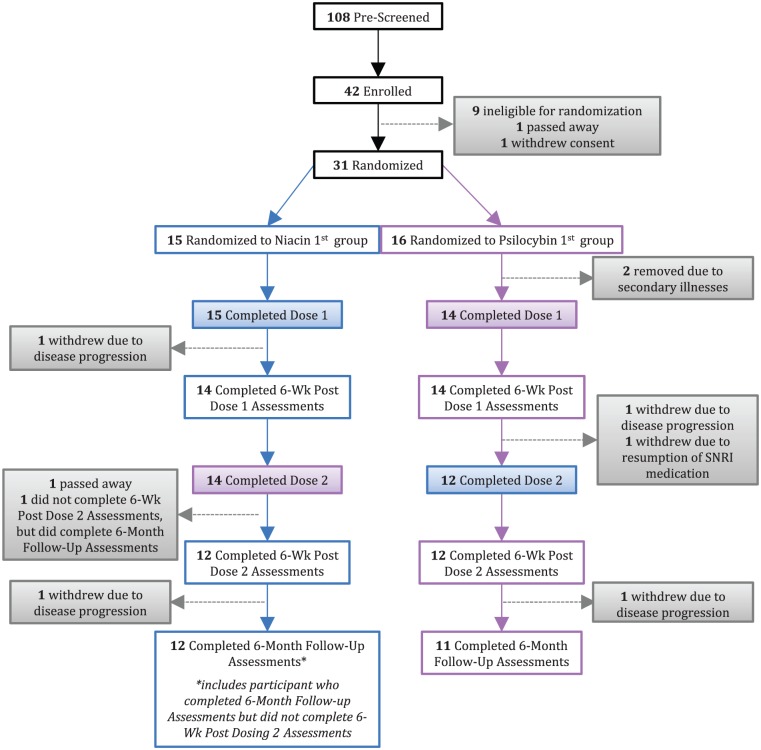
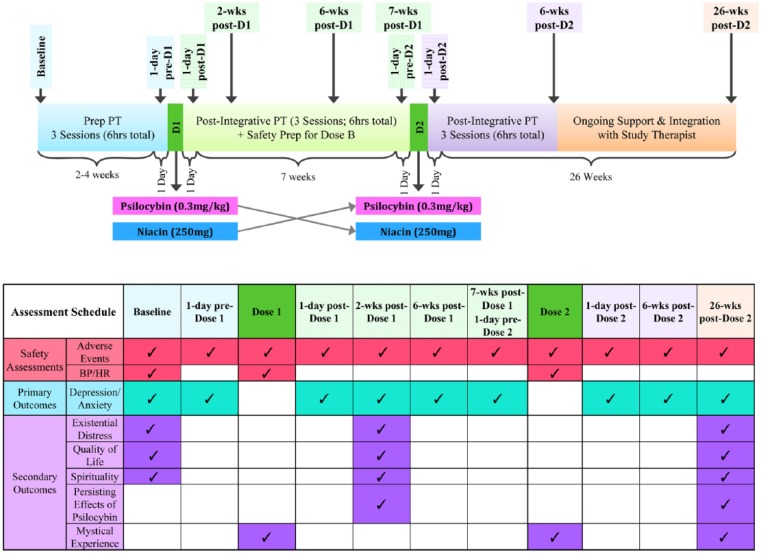
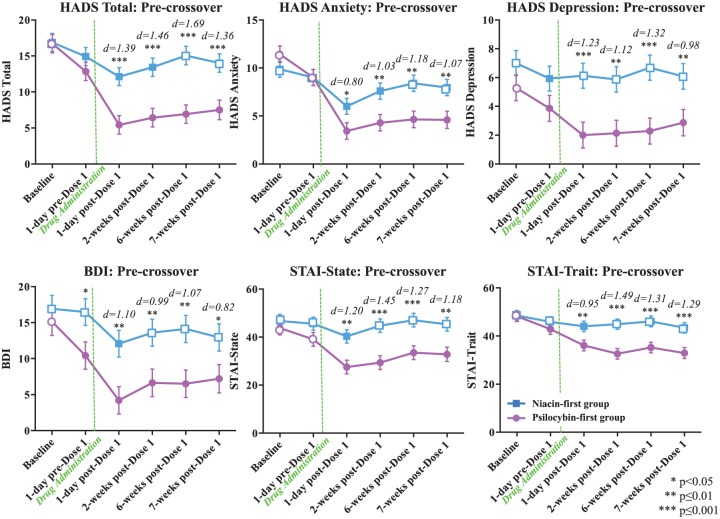
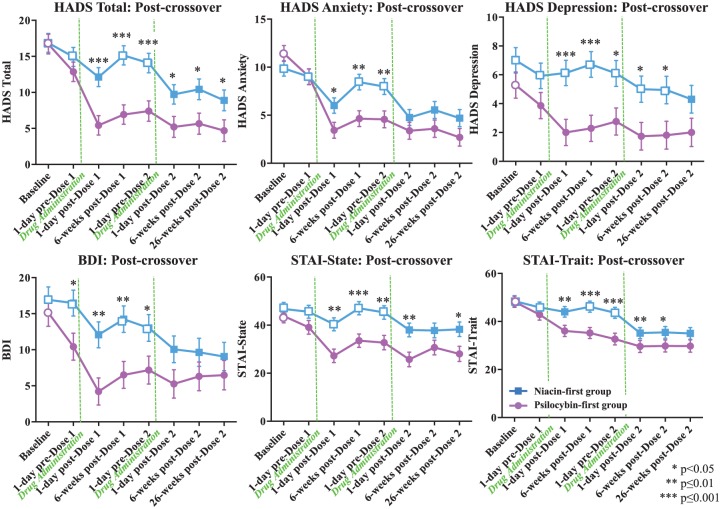
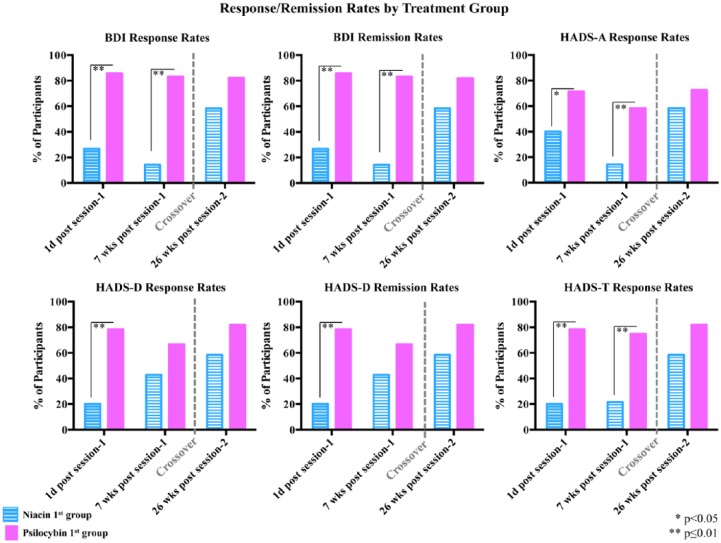
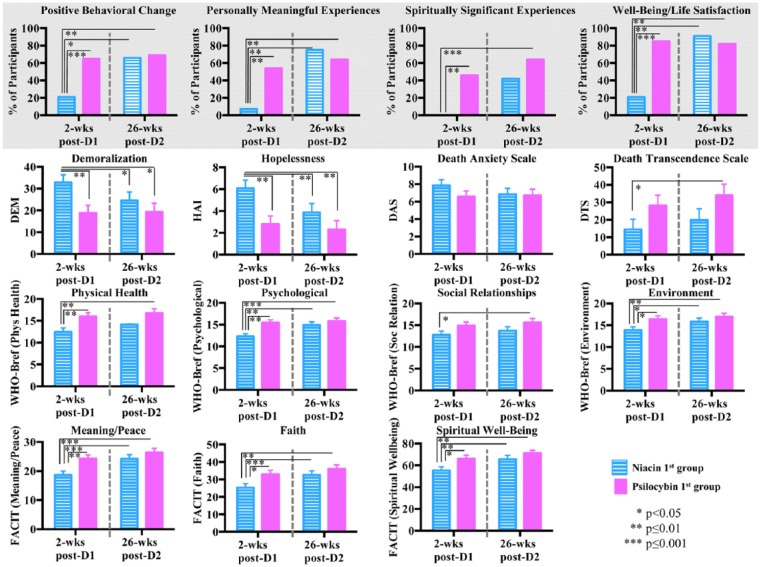
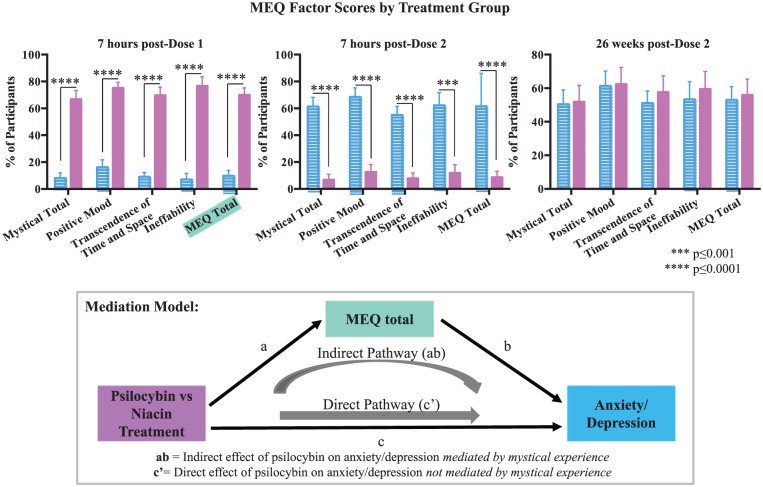
Background: Clinically significant anxiety and depression are common in patients with cancer, and are associated with poor psychiatric and medical outcomes. Historical and recent research suggests a role for psilocybin to treat cancer-related anxiety and depression. Methods: In this double-blind, placebo-controlled, crossover trial, 29 patients with cancer-related anxiety and depression were randomly assigned and received treatment with single-dose psilocybin (0.3 mg/kg) or niacin, both in conjunction with psychotherapy. The primary outcomes were anxiety and depression assessed between groups prior to the crossover at 7 weeks. Results: Prior to the crossover, psilocybin produced immediate, substantial, and sustained improvements in anxiety and depression and led to decreases in cancer-related demoralization and hopelessness, improved spiritual wellbeing, and increased quality of life. At the 6.5-month follow-up, psilocybin was associated with enduring anxiolytic and anti-depressant effects (approximately 60–80% of participants continued with clinically significant reductions in depression or anxiety), sustained benefits in existential distress and quality of life, as well as improved attitudes towards death. The psilocybin-induced mystical experience mediated the therapeutic effect of psilocybin on anxiety and depression. Conclusions: In conjunction with psychotherapy, single moderate-dose psilocybin produced rapid, robust and enduring anxiolytic and anti-depressant effects in patients with cancer-related psychological distress. Trial Registration: ClinicalTrials.gov Identifier: NCT00957359
Overview
The claims and statistics of this paper haven’t been checked yet.
Free: it reads the open-access text and checks the first 5 claims that cite a source we can check. Create a free account to check every claim.
Integrity signals
Registry
Cites
Statistics
Figures
Verification
Claims the paper makes
The claims and statistics of this paper haven’t been checked yet.
Free: it reads the open-access text and checks the first 5 claims that cite a source we can check. Create a free account to check every claim.
Claims other papers make about this one
Each is checked against this paper’s own text: does it say what the citing paper says it does?
The source backs part of the claim, not all of it — or backs it for a different population, condition or comparison.
In the citing paper
“Both participants and their friends and family reported positive effects on attitude towards life and the self, spiritual well-being, social contacts, quality of life, acceptance of death, and optimism (Ross et al., 2016).”
From Psychedelics for the treatment of depression, anxiety, and existential distress in patients with a terminal illness: a systematic review (2022) · cites this paper as Ross et al., 2016
Experimental — accuracy not yet measuredThe source backs part of the claim, not all of it — or backs it for a different population, condition or comparison.
In the citing paper
“Despite efforts to employ “active placebos” (e.g., niacin or a low-dose of a psychedelic) (40, 220), many patients and clinicians can still correctly distinguish between a high dose of a psychedelic drug and an active placebo.”
From Psychedelics and Other Psychoplastogens for Treating Mental Illness. (2021) · cites this paper as [220]
Experimental — accuracy not yet measuredThe source backs part of the claim, not all of it — or backs it for a different population, condition or comparison.
In the citing paper
“and with diminished anxiety and depression in terminal cancer patients (Griffiths et al., 2016;Ross et al., 2016;Barrett et al., 2020).”
From Psychedelics and Neural Plasticity: Therapeutic Implications (2022) · cites this paper as Ross et al., 2016
Experimental — accuracy not yet measuredThe source backs part of the claim, not all of it — or backs it for a different population, condition or comparison.
In the citing paper
“Psilocybin shows promise as a treatment for major depressive disorder (MDD).”
From Single-Dose Psilocybin Treatment for Major Depressive Disorder: A Randomized Clinical Trial (2023) · cites this paper as [8]
Experimental — accuracy not yet measuredThe source backs part of the claim, not all of it — or backs it for a different population, condition or comparison.
In the citing paper
“recent studies suggesting that psilocybin engenders a rapid antidepressant response that far outlasts the presence of the drug in the body.”
From Single-Dose Psilocybin Treatment for Major Depressive Disorder: A Randomized Clinical Trial (2023) · cites this paper as [8]
Experimental — accuracy not yet measured
25 more claims about this paper
Create a free account to see every claim other papers make about this one.
Self-check
Percentages, sums and reported differences re-computed from the paper’s own numbers.
The self-check needs the paper’s full text.
Citations
Cites
The Hospital Anxiety and Depression Scale
Zigmond, A. S., & Snaith, R. P. (1983) · Acta Psychiatrica Scandinavica · doi:10.1111/j.1600-0447.1983.tb09716.x · Cited by 47,139
(2013) · Cited by 44,563
Depression and quality of life in older persons: A review
Sivertsen, H., Bjørkløf, G. H., Engedal, K., Selbæk, G., & Helvik, A.-S. (2015) · Dementia and Geriatric Cognitive Disorders · doi:10.1159/000437299 · Cited by 14,152
Psychometric properties of the Beck Depression Inventory: Twenty-five years of evaluation
Beck, A. T., Steer, R. A., & Carbin, M. G. (1988) · Clinical Psychology Review · doi:10.1016/0272-7358(88)90050-5 · Cited by 11,696 · cited 2×
“cancer); Beck Depression Inventory (BDI) (Beck et al., 1988) self-report depression measure; Spielberger State-Trait Anxiety Inventory (STAI) (Spielberger, 1983) self-report measure of state (STAI state or STAI S) and trait (STAI trait or STAI T) anxiety.”
BackgroundMolecular Mechanisms of Depression: Perspectives on New Treatment Strategies
Lang, U. E., & Borgwardt, S. (2013) · Cellular Physiology and Biochemistry · doi:10.1159/000350094 · Cited by 8,475
Mitchell, A. J., Chan, M., Bhatti, H., Halton, M., Grassi, L., Johansen, C., & Meader, N. (2011) · The Lancet Oncology · doi:10.1016/s1470-2045(11)70002-x · Cited by 2,449 · cited 1×
“Enduring clinically significant anxiety and/or depressive symptoms are common in patients with cancer, present in 30–40% of patients in hospital settings (Mitchell et al., 2011).”
BackgroundManual for the state-trait anxiety inventory (form Y) : "self-evaluation questionnaire"
Spielberger, C. D., Gorsuch, R. L., & Lushene, R. E. (1970) · Consulting Psychologists Press eBooks · Cited by 2,352
Drevets, W. C., Price, J. L., & Furey, M. L. (2008) · Brain Structure and Function · doi:10.1007/s00429-008-0189-x · Cited by 2,241 · cited 7×
“The former is significant because depressive symptoms have been associated with increased activity in the medial PFC (Drevets et al., 2008; Farb et al., 2011) and normalization of medial PFC activity has been demonstrated with anti-depressant treatment (Deakin et al., 2008; Holtzheimer and Mayberg, 2011; Kennedy et al…”
BackgroundInfluentialGreicius, M. D., Flores, B. H., Menon, V., Glover, G. H., Solvason, H. B., Kenna, H., Reiss, A. L., & Schatzberg, A. F. (2007) · Biological Psychiatry · doi:10.1016/j.biopsych.2006.09.020 · Cited by 2,214 · cited 2×
“…pathological and can be understood as part of the therapeutic process (e.g. working through cancer-related psychological or existential distress through challenging encounters or emotionally charged confrontations with cancer-related fearful imagery or symbolism) (Carbonaro et al., 2016).”
BackgroundNichols, D. E. (2016) · Pharmacological Reviews · doi:10.1124/pr.115.011478 · Cited by 1,762 · cited 1×
“In two recently published open-label trials, one using a single dose of ayahuasca (Osorio et al., 2015) and the other using two doses of oral psilocybin (Carhart-Harris et al., 2016), acute and enduring anti-depressant effects were reported.”
Background
Research works printed but not linked: 3
- Doblin R (1991) Pahnke’s ‘Good Friday Experiment’: a long-term follow-up and methodological critique. J Transpersonal Psychol 23(1): 1– 28.
- Pahnke WN (1963) Drugs and mysticism: an analysis of the relationship between psychedelic drugs and the mystical consciousness, PhD dissertation. Cambridge, MA: Harvard University.
- VandeCreek L (1999) The death transcendence scale. In: Hill PC Hood RW (eds) Measures of religiosity. Birmingham, AL: Religious Education Press, pp. 442– 445.
Cited by
Items 101–200 of 1,005
Uthaug, M. V., Lancelotta, R., van Oorsouw, K., Kuypers, K. P. C., Mason, N., Rak, J., Šuláková, A., Jurok, R., Maryška, M., Kuchař, M., et al. (2019) · Psychopharmacology · doi:10.1007/s00213-019-05236-w · Cited by 197
Swift, T. C., Belser, A. B., Agin-Liebes, G., Devenot, N., Terrana, S., Friedman, H. L., Guss, J., Bossis, A. P., & Ross, S. (2017) · Journal of Humanistic Psychology · doi:10.1177/0022167817715966 · Cited by 195
“, anxiety and depression), in which both trials demonstrated that the psilocybin-induced mystical experience partially mediated the clinical benefit of sustained anxiolytic and antidepressant effects (Griffiths et al., 2016; Ross et al., 2016).”
BackgroundMethodResultInfluentialSelf-citationGoodwin, G. M., Aaronson, S. T., Alvarez, O., Atli, M., Bennett, J. C., Croal, M., DeBattista, C., Dunlop, B. W., Feifel, D., Hellerstein, D. J., et al. (2023) · Journal of Affective Disorders · doi:10.1016/j.jad.2023.01.108 · Cited by 173
Self-blinding citizen science to explore psychedelic microdosing
Szigeti, B., Kartner, L., Blemings, A., Rosas, F., Feilding, A., Nutt, D. J., Carhart-Harris, R. L., & Erritzoe, D. (2021) · eLife · doi:10.7554/elife.62878 · Cited by 192
Garcia-Romeu, A., & Richards, W. A. (2018) · International Review of Psychiatry · doi:10.1080/09540261.2018.1486289 · Cited by 189
“Other, less structured therapeutic models incorporating psychedelic administration have also been forthcoming, such as administration of psilocybin or ayahuasca with psychological support in treating depression or anxiety (Carhart-Harris et al., 2016a; Griffiths et al., 2016; Palhano-Fontes et al., 2018; Ross et al.,…”
BackgroundResultInfluentialAwe: a putative mechanism underlying the effects of classic psychedelic-assisted psychotherapy
Hendricks, P. S. (2018) · International Review of Psychiatry · doi:10.1080/09540261.2018.1474185 · Cited by 179
“…2015; Sanches et al., 2016), end-of-life distress (Gasser et al., 2014; Gasser, Kirchner, & Passie, 2015; Griffiths et al., 2016; Grob et al., 2011; Ross et al., 2016), and addiction (Bogenschutz et al., 2015; Johnson, Garcia-Romeu, Cosimano, & Griffiths, 2014; Johnson, Garcia-Romeu, & Griffiths,…”
BackgroundPharmacokinetics of Escalating Doses of Oral Psilocybin in Healthy Adults
Brown, R. T., Nicholas, C. R., Cozzi, N. V., Gassman, M. C., Cooper, K. M., Muller, D., Thomas, C. D., Hetzel, S. J., Henriquez, K. M., Ribaudo, A. S., et al. (2017) · Clinical Pharmacokinetics · doi:10.1007/s40262-017-0540-6 · Cited by 188
Becker, A. M., Holze, F., Grandinetti, T., Klaiber, A., Toedtli, V. E., Kolaczynska, K. E., Duthaler, U., Varghese, N., Eckert, A., Grünblatt, E., et al. (2022) · Clinical Pharmacology & Therapeutics · doi:10.1002/cpt.2487 · Cited by 184
Madsen, M. K., Fisher, P. M., Stenbæk, D. S., Kristiansen, S., Burmester, D., Lehel, S., Páleníček, T., Kuchař, M., Svarer, C., Ozenne, B., et al. (2020) · European Neuropsychopharmacology · doi:10.1016/j.euroneuro.2020.02.001 · Cited by 183
Psilocybin Induces Time-Dependent Changes in Global Functional Connectivity
Preller, K. H., Duerler, P., Burt, J. B., Ji, J. L., Adkinson, B., Stämpfli, P., Seifritz, E., Repovš, G., Krystal, J. H., Murray, J. D., et al. (2020) · Biological Psychiatry · doi:10.1016/j.biopsych.2019.12.027 · Cited by 183
Unifying Theories of Psychedelic Drug Effects
Swanson, L. R. (2018) · Frontiers in Pharmacology · doi:10.3389/fphar.2018.00172 · Cited by 181
“…dissolution in psychedelic-assisted therapy were more likely to evidence positive clinical outcomes (Griffiths et al., 2008, 2016; Majić et al., 2015; Ross et al., 2016; Roseman et al., 2017) as well as longterm changes in life outlook and the personality trait openness (MacLean et al., 2011;…”
BackgroundInfluentialBreeksema, J. J., Kuin, B. W., Kamphuis, J., van den Brink, W., Vermetten, E., & Schoevers, R. A. (2022) · Journal of Psychopharmacology · doi:10.1177/02698811221116926 · Cited by 178
“(2014) EOLA: End-of-life anxiety; LSD: lysergic acid diethylamide; PTSD: post-traumatic stress disorder; TRD: treatment-resistant depression. occurred more often in the MDMA than in the placebo groups, with some exceptions (e.g., one RCT found a slightly higher prevalence of anxiety and fatigue in the placebo group) (…”
BackgroundInfluentialLyons, T., & Carhart-Harris, R. L. (2018) · Journal of Psychopharmacology · doi:10.1177/0269881117748902 · Cited by 178
“, 2016b; Schmid and Liechti, 2017), psilocybin (Carhart-Harris et al., 2016a; Griffiths et al., 2016; Ross et al., 2016) and N,N-dimethyltryptamine (DMT) in ayahuasca (Osorio Fde et al.”
BackgroundInfluentialAlmeida, R. N. D., Galvão, A. C. D. M., da Silva, F. S., Silva, E. A. D. S., Palhano-Fontes, F., Maia-de-Oliveira, J. P., de Araújo, L.-S. B., Lobão-Soares, B., & Galvão-Coelho, N. L. (2019) · Frontiers in Psychology · doi:10.3389/fpsyg.2019.01234 · Cited by 177
Therapeutic Use of LSD in Psychiatry: A Systematic Review of Randomized-Controlled Clinical Trials
Fuentes, J. J., Fonseca, F., Elices, M., Farré, M., & Torrens, M. (2020) · Frontiers in Psychiatry · doi:10.3389/fpsyt.2019.00943 · Cited by 177
“org 11 during the acute effects of hallucinogens have been associated with the aforementioned subjective effects “ego dissolution” and “mystical-type”, and could be related to the wide therapeutic value of these substances (101, 102, 105, 110).”
BackgroundSmigielski, L., Kometer, M., Scheidegger, M., Krähenmann, R., Huber, T., & Vollenweider, F. X. (2019) · Scientific Reports · doi:10.1038/s41598-019-50612-3 · Cited by 176
Microdosing psychedelics: personality, mental health, and creativity differences in microdosers
Anderson, T., Petranker, R., Rosenbaum, D., Weissman, C. R., Dinh-Williams, L.-A., Hui, K., Hapke, E., & Farb, N. A. S. (2019) · Psychopharmacology · doi:10.1007/s00213-018-5106-2 · Cited by 174
Brouwer, A., & Carhart-Harris, R. L. (2021) · Journal of Psychopharmacology · doi:10.1177/0269881120959637 · Cited by 143
“…phenomenology of the psychedelic state, peak, mystical-type or spiritual experiences and associated feelings of oceanic boundlessness have been found to reliably predict positive outcomes in psychedelic therapy (Griffiths et al., 2016; Haijen et al., 2018; Roseman et al., 2018; Ross et al., 2016).”
BackgroundGarcia-Romeu, A., Davis, A. K., Erowid, E., Erowid, F., Griffiths, R. R., & Johnson, M. W. (2020) · Frontiers in Psychiatry · doi:10.3389/fpsyt.2019.00955 · Cited by 157
Psychedelic-Assisted Psychotherapy—A Systematic Review of Associated Psychological Interventions
Cavarra, M., Falzone, A., Ramaekers, J. G., Kuypers, K. P. C., & Mento, C. (2022) · Frontiers in Psychology · doi:10.3389/fpsyg.2022.887255 · Cited by 171
“Our search identified 2 papers investigating the efficacy of TIMBER on a single sample in the context of a RCT (Pradhan et al., 2017, 2018).”
BackgroundMethodResultInfluentialDavis, A. K., Barrett, F. S., So, S., Gukasyan, N., Swift, T. C., & Griffiths, R. R. (2021) · Journal of Psychopharmacology · doi:10.1177/0269881120967878 · Cited by 169
“Furthermore, the MEQ has been shown to predict long-term positive therapeutic outcomes in a variety of laboratory and naturalistic studies of people with alcohol use problems, depression, and anxiety (Davis et al., 2020; Garcia-Romeu et al., 2019; Griffiths et al., 2016; Ross et al., 2016), and across a variety of psy…”
BackgroundWolfson, P. E., Andries, J., Feduccia, A. A., Jerome, L., Wang, J. B., Williams, E., Carlin, S. C., Sola, E., Hamilton, S., Yazar-Klosinski, B., et al. (2020) · Scientific Reports · doi:10.1038/s41598-020-75706-1 · Cited by 169
LSD alters dynamic integration and segregation in the human brain
Luppi, A. I., Carhart-Harris, R. L., Roseman, L., Pappas, I., Menon, D. K., & Stamatakis, E. A. (2021) · NeuroImage · doi:10.1016/j.neuroimage.2020.117653 · Cited by 171
“The discovery that LSD-induced ego-dissolution exhibits temporally-specific effects merits special attention because the extent of ego-dissolution experienced during the psychedelic experience has been repeatedly found to predict positive clinical outcomes following psychedelic administration (Griffiths et al., 2016;…”
BackgroundYao, Y., Guo, D., Lu, T., Liu, F.-L., Huang, S., Diao, M.-Q., Li, S., Zhang, X.-J., Kosten, T. R., Shi, J., et al. (2024) · Psychiatry Research · doi:10.1016/j.psychres.2024.115886 · Cited by 175
Psychedelics and Other Psychoplastogens for Treating Mental Illness.
Vargas, M. V., Meyer, R., Avanes, A. A., Rus, M., & Olson, D. E. (2021) · Frontiers in Psychiatry · doi:10.3389/fpsyt.2021.727117 · Cited by 166
Sloshower, J., Skosnik, P. D., Safi-Aghdam, H., Pathania, S., Syed, S., Pittman, B., & D’Souza, D. C. (2023) · Journal of Psychopharmacology · doi:10.1177/02698811231154852 · Cited by 165
“…in cancer patients with depression and anxiety demonstrated clinically meaningful and statistically significant decreases in clinician- and self-rated measures of both depression and anxiety acutely and at long-term followup (Agin-Liebes et al., 2020; Griffiths et al., 2016; Ross et al., 2016).”
BackgroundResultSchimmers, N., Breeksema, J. J., Smith-Apeldoorn, S. Y., Veraart, J., van den Brink, W., & Schoevers, R. A. (2022) · Psychopharmacology · doi:10.1007/s00213-021-06027-y · Cited by 162
“(Ross et al., 2016) studied the effects of a moderately high dose (22–30 mg/70 kg and 0.”
BackgroundMushroom-Derived Indole Alkaloids
Homer, J. A., & Sperry, J. (2017) · Journal of Natural Products · doi:10.1021/acs.jnatprod.7b00390 · Cited by 159
DARK Classics in Chemical Neuroscience: Psilocybin
Geiger, H. A., Wurst, M. G., & Daniels, R. N. (2018) · ACS Chemical Neuroscience · doi:10.1021/acschemneuro.8b00186 · Cited by 141
American Trip: Set, Setting, and the Psychedelic Experience in the Twentieth Century
Hartogsohn, I. (2020) · The MIT Press eBooks · doi:10.7551/mitpress/11888.001.0001 · Cited by 185
Gukasyan, N., & Nayak, S. M. (2022) · Transcultural Psychiatry · doi:10.1177/1363461520983684 · Cited by 150
“Email: gukasyan@jhmi.edu In individuals with advanced cancer, psilocybinassisted treatment was associated with marked improvements in symptoms of both anxiety and depression (Griffiths et al., 2016; Grob et al., 2011; Ross et al., 2016).”
BackgroundA non-hallucinogenic LSD analog with therapeutic potential for mood disorders
Lewis, V., Bonniwell, E. M., Lanham, J. K., Ghaffari, A., Sheshbaradaran, H., Cao, A. B., Calkins, M. M., Bautista-Carro, M. A., Arsenault, E., Telfer, A., et al. (2023) · Cell Reports · doi:10.1016/j.celrep.2023.112203 · Cited by 168
Adverse Events in Studies of Classic Psychedelics: A Systematic Review and Meta-Analysis
Hinkle, J. T., Graziosi, M., Nayak, S. M., & Yaden, D. B. (2024) · JAMA psychiatry · doi:10.1001/jamapsychiatry.2024.2546 · Cited by 156
Powerful substances in tiny amounts: An interview study of psychedelic microdosing
Johnstad, P. G. (2018) · Nordic Studies on Alcohol and Drugs · doi:10.1177/1455072517753339 · Cited by 155
“These findings are congruent with reported effects from full doses of psychedelic drugs on conditions of depression and anxiety (Carhart-Harris & Nutt, 2010; Gasser et al., 2013; Griffiths et al., 2016; Grob et al., 2011; Johnstad, 2015; Ross et al., 2016).”
BackgroundResultPsychedelic Drugs in Biomedicine
Kyzar, E. J., Nichols, C. D., Gainetdinov, R. R., Nichols, D. E., & Kalueff, A. V. (2017) · Trends in Pharmacological Sciences · doi:10.1016/j.tips.2017.08.003 · Cited by 155
Madsen, M. K., Stenbæk, D. S., Arvidsson, A., Armand, S., Marstrand-Joergensen, M. R., Johansen, S. S., Linnet, K., Ozenne, B., Knudsen, G. M., & Fisher, P. M. (2021) · European Neuropsychopharmacology · doi:10.1016/j.euroneuro.2021.06.001 · Cited by 151
The History of Psychedelics in Psychiatry
Nichols, D. E., & Walter, H. (2021) · Pharmacopsychiatry · doi:10.1055/a-1310-3990 · Cited by 133
“An abbreviated list of that research includes a study of psilocybin administration to normal subjects at Johns Hopkins University (JHU) [78], studies of psilocybin-assisted psychotherapy in cancer patients at JHU [67] and at New York University [79], psilocybin-assisted therapy for the treatment of alcohol use disorde…”
MethodTimmermann, C., Bauer, P. R., Gosseries, O., Vanhaudenhuyse, A., Vollenweider, F., Laureys, S., Singer, T., Antonova, E., & Lutz, A. (2023) · Trends in Cognitive Sciences · doi:10.1016/j.tics.2022.11.006 · Cited by 150
Psychedelic therapy for depressive symptoms: A systematic review and meta-analysis
Ko, K., Kopra, E. I., Cleare, A. J., & Rucker, J. J. (2023) · Journal of Affective Disorders · doi:10.1016/j.jad.2022.09.168 · Cited by 150
Psychedelic drugs—a new era in psychiatry?
Nutt, D. J. (2019) · Dialogues in Clinical Neuroscience · doi:10.31887/dcns.2019.21.2/dnutt · Cited by 180
Family, N., Maillet, E. L., Williams, L. T. J., Krediet, E., Carhart-Harris, R. L., Williams, T. M., Nichols, C. D., Goble, D. J., & Raz, S. (2020) · Psychopharmacology · doi:10.1007/s00213-019-05417-7 · Cited by 140
Ethics and ego dissolution: the case of psilocybin
Smith, W. R., & Sisti, D. (2021) · Journal of Medical Ethics · doi:10.1136/medethics-2020-106070 · Cited by 146
Positive expectations predict improved mental-health outcomes linked to psychedelic microdosing
Kaertner, L. S., Steinborn, M. B., Kettner, H., Spriggs, M. J., Roseman, L., Buchborn, T., Balaet, M., Timmermann, C., Erritzoe, D., & Carhart-Harris, R. L. (2021) · Scientific Reports · doi:10.1038/s41598-021-81446-7 · Cited by 145
Death anxiety interventions in patients with advanced cancer: a systematic review
Grossman, C. H., Brooker, J., Michael, N., & Kissane, D. (2018) · Palliative Medicine · doi:10.1177/0269216317722123 · Cited by 144
Carhart-Harris, R. L. (2019) · Current Opinion in Psychiatry · doi:10.1097/yco.0000000000000467 · Cited by 133
Davis, A. K., So, S., Lancelotta, R., Barsuglia, J. P., & Griffiths, R. R. (2019) · The American Journal of Drug and Alcohol Abuse · doi:10.1080/00952990.2018.1545024 · Cited by 142
“5-MeO-DMT session had greater self-reported improvements in their depression and anxiety, which is also consistent with prior psilocybin studies (23,24,27).”
BackgroundResultInfluentialPeill, J. M., Trinci, K. E., Kettner, H., Mertens, L. J., Roseman, L., Timmermann, C., Rosas, F. E., Lyons, T., & Carhart-Harris, R. L. (2022) · Journal of Psychopharmacology · doi:10.1177/02698811211066709 · Cited by 141
“Previous research has demonstrated that this subacute period after a psychedelic experience, sometimes referred to as the ‘after glow’, is important for developing self-reflection and integration of one’s thoughts and feelings (Lepore and Helgeson, 1998; Roseman et al., 2019; Ross et al., 2016).”
BackgroundUpdating the dynamic framework of thought: Creativity and psychedelics
Girn, M., Mills, C., Roseman, L., Carhart-Harris, R. L., & Christoff, K. (2020) · NeuroImage · doi:10.1016/j.neuroimage.2020.116726 · Cited by 128
“These drugs have notably seen a resurgence of scientific interest in recent years, spearheaded by preliminar y clinical trials suggesting significant effectiveness in the treatment of multiple mental h ealth conditions (Carhart-Harris, Bolstridge, et al., 2016; Garcia-Romeu, Griffiths, & Johnson, 2013 ; Griffiths et a…”
BackgroundRoss, S., Agin-Liebes, G., Lo, S., Zeifman, R. J., Ghazal, L., Benville, J., Franco Corso, S., Bjerre Real, C., Guss, J., Bossis, A., et al. (2021) · ACS Pharmacology & Translational Science · doi:10.1021/acsptsci.1c00020 · Cited by 139
Self-citationGalvão-Coelho, N. L., Marx, W., Gonzalez, M., Sinclair, J., de Manincor, M., Perkins, D., & Sarris, J. (2021) · Psychopharmacology · doi:10.1007/s00213-020-05719-1 · Cited by 137
Demoralization in suicide: A systematic review
Costanza, A., Chytas, V., Ambrosetti, J., Shah, S., Amerio, A., Aguglia, A., Serafini, G., Piguet, V., Luthy, C., Cedraschi, C., et al. (2022) · Journal of Psychosomatic Research · doi:10.1016/j.jpsychores.2022.110788 · Cited by 143
Psychedelic microdosing benefits and challenges: an empirical codebook
Anderson, T., Petranker, R., Christopher, A., Rosenbaum, D., Weissman, C., Dinh-Williams, L.-A., Hui, K., & Hapke, E. (2019) · Harm Reduction Journal · doi:10.1186/s12954-019-0308-4 · Cited by 124
Psilocybin-assisted therapy for depression: A systematic review and meta-analysis
Haikazian, S., Chen-Li, D. C. J., Johnson, D. E., Fancy, F., Levinta, A., Husain, M. I., Mansur, R. B., McIntyre, R. S., & Rosenblat, J. D. (2023) · Psychiatry Research · doi:10.1016/j.psychres.2023.115531 · Cited by 134
Bogenschutz, M. P., Podrebarac, S. K., Duane, J. H., Amegadzie, S. S., Malone, T. C., Owens, L. T., Ross, S., & Mennenga, S. E. (2018) · Frontiers in Pharmacology · doi:10.3389/fphar.2018.00100 · Cited by 128
“…psychotherapy has also been shown to be effective in the treatment of depression and anxiety in cancer patients (Griffiths et al., 2016; Ross et al., 2016), and an open-label trial showed improvement in treatment resistant depression following psilocybin treatment (Carhart-Harris et…”
Self-citationChronic pain and psychedelics: a review and proposed mechanism of action
Castellanos, J. P., Woolley, C., Bruno, K. A., Zeidan, F., Halberstadt, A., & Furnish, T. (2020) · Regional Anesthesia & Pain Medicine · doi:10.1136/rapm-2020-101273 · Cited by 119
Individual experiences in four cancer patients following psilocybin-assisted psychotherapy
Malone, T. C., Mennenga, S. E., Guss, J., Podrebarac, S. K., Owens, L. T., Bossis, A. P., Belser, A. B., Agin-Liebes, G., Bogenschutz, M. P., & Ross, S. (2018) · Frontiers in Pharmacology · doi:10.3389/fphar.2018.00256 · Cited by 131
“Although mystical experience was found to mediate the clinical benefit reported by participants in this trial (see Supplementary Materials; Ross et al., 2016 for discussion), this does not preclude the existence of other additional mediators.”
BackgroundResultSelf-citationShalit, N., Rehm, J., & Lev-Ran, S. (2019) · Addictive Behaviors · doi:10.1016/j.addbeh.2018.09.020 · Cited by 129
Changes in inflammatory biomarkers are related to the antidepressant effects of Ayahuasca
Galvão-Coelho, N. L., de Menezes Galvão, A. C., de Almeida, R. N., Palhano-Fontes, F., Campos Braga, I., Lobão Soares, B., Maia-de-Oliveira, J. P., Perkins, D., Sarris, J., & de Araujo, D. B. (2020) · Journal of Psychopharmacology · doi:10.1177/0269881120936486 · Cited by 128
“, 2018), there is a renewal interest in the use of classic serotonergic psychedelics for treatment of MDD (ayahuasca: Almeida et al., 2019; Galvão et al., 2018; Osório et al., 2015; Palhano-Fontes et al., 2015, 2018; Sanches et al., 2016; psilocybin: Carhart-Harris et al., 2016; Griffiths et al., 2016; Ross et al., 20…”
BackgroundInfluentialJefsen, O. H., Elfving, B., Wegener, G., & Müller, H. K. (2021) · Journal of Psychopharmacology · doi:10.1177/0269881120959614 · Cited by 127
“In humans, these acute effects are followed by long-lasting positive effects on clinical symptoms (Bogenschutz et al., 2015; Carhart-Harris et al., 2016, 2018; Griffiths et al., 2016; Grob et al., 2011; Johnson et al., 2014, 2017; Moreno et al., 2006; Ross et al., 2016) and psychological features (Erritzoe et al.”
BackgroundMolecular Mechanisms of Psilocybin and Implications for the Treatment of Depression
Ling, S., Ceban, F., Lui, L. M. W., Lee, Y., Teopiz, K. M., Rodrigues, N. B., Lipsitz, O., Gill, H., Subramaniapillai, M., Mansur, R. B., et al. (2022) · CNS Drugs · doi:10.1007/s40263-021-00877-y · Cited by 127
Pharmacokinetics and Pharmacodynamics of Oral Psilocybin Administration in Healthy Participants
Holze, F., Becker, A. M., Kolaczynska, K. E., Duthaler, U., & Liechti, M. E. (2023) · Clinical Pharmacology & Therapeutics · doi:10.1002/cpt.2821 · Cited by 119
Reckweg, J. T., Uthaug, M. V., Szabo, A., Davis, A. K., Lancelotta, R., Mason, N. L., & Ramaekers, J. G. (2022) · Journal of Neurochemistry · doi:10.1111/jnc.15587 · Cited by 110
“…populations is relevant because strong associations between psychedelic peak experiences and therapeutic effects have been reported for other tryptamines (Garcia- Romeu et al., 2014; Johnson et al., 2014; Bogenschutz et al., 2015; Griffiths et al., 2016; Roseman et al., 2018; Ross et al., 2016).”
BackgroundAgin-Liebes, G., Haas, T. F., Lancelotta, R., Uthaug, M. V., Ramaekers, J. G., & Davis, A. K. (2021) · ACS Pharmacology & Translational Science · doi:10.1021/acsptsci.1c00018 · Cited by 124
Self-citationVargas, A. S., Luís, Â., Barroso, M., Gallardo, E., & Pereira, L. (2020) · Biomedicines · doi:10.3390/biomedicines8090331 · Cited by 113
“The data from Ross et al., 2016 [19] was divided in seven data groups and the data from Griffiths et al., 2016 [6] and from Grob et al., 2011 [20] were divided into two data groups each, considering different times of follow-up after psilocybin administration.”
BackgroundMethodInfluentialTherapeutic use of psilocybin: Practical considerations for dosing and administration
MacCallum, C. A., Lo, L. A., Pistawka, C. A., & Deol, J. K. (2022) · Frontiers in Psychiatry · doi:10.3389/fpsyt.2022.1040217 · Cited by 102
Reiche, S., Hermle, L., Gutwinski, S., Jungaberle, H., Gasser, P., & Majić, T. (2018) · Progress in Neuro-Psychopharmacology and Biological Psychiatry · doi:10.1016/j.pnpbp.2017.09.012 · Cited by 122
“In another recent trial with a similar setting (N = 29), a relatively high dose of psilocybin (0.3 mg/kg) was compared to the active placebo niacin (250 mg) in a cross-over design with two dosing sessions in conjunction with psychotherapy (Ross et al., 2016).”
BackgroundMethodInfluentialEfficacy of psychedelic treatments on depressive symptoms: A meta-analysis
Romeo, B., Karila, L., Martelli, C., & Benyamina, A. (2020) · Journal of Psychopharmacology · doi:10.1177/0269881120919957 · Cited by 113
“Four studies evaluated depressive symptoms in patients with life-threatening diseases (Gasser et al., 2014; Griffiths et al., 2016; Grob et al., 2011; Ross et al., 2016) and four others evaluated depressive symptoms in patients with major depressive disorder (of which three studies included only resistant depression)…”
BackgroundInfluentialNielson, E. M., May, D. G., Forcehimes, A. A., & Bogenschutz, M. P. (2018) · Frontiers in Pharmacology · doi:10.3389/fphar.2018.00132 · Cited by 113
“…volunteers (Griffiths et al., 2006) and shown to mediate positive change in clinical populations (Garcia-Romeu et al., 2014; Griffiths et al., 2016; Ross et al., 2016), and a transformative spiritual experience has long been regarded as crucial to change by the traditional Alcoholics Anonymous…”
BackgroundInfluentialSubacute effects of the psychedelic ayahuasca on the salience and default mode networks
Pasquini, L., Palhano-Fontes, F., & Araujo, D. B. (2020) · Journal of Psychopharmacology · doi:10.1177/0269881120909409 · Cited by 119
“, 2020) by interacting with the sympathetic and parasympathetic autonomic nervous system, and have been shown to impact emotional and affective functions by improving clinical symptoms in mood disorders (CarhartHarris et al., 2016a; Griffiths et al., 2016; Grob et al., 2011; Palhano-Fontes et al., 2019; Ross et al., 2…”
BackgroundMcCulloch, D. E.-W., Grzywacz, M. Z., Madsen, M. K., Jensen, P. S., Ozenne, B., Armand, S., Knudsen, G. M., Fisher, P. M., & Stenbæk, D. S. (2022) · Frontiers in Pharmacology · doi:10.3389/fphar.2022.841648 · Cited by 126
“Preliminary evidence from the last 15 years suggest that psilocybin has a rapid and potent positive treatment effect in affective and addictive disorders (Moreno et al., 2006; Grob et al., 2011; Bogenschutz et al., 2015; Griffiths et al., 2016; Ross et al., 2016; Johnson et al., 2017; Carhart-Harris et al., 2018; Garc…”
BackgroundInfluentialClassic Psychedelic Drugs: Update on Biological Mechanisms
Vollenweider, F. X., & Smallridge, J. W. (2022) · Pharmacopsychiatry · doi:10.1055/a-1721-2914 · Cited by 128
“A few recent studies have emphasized that the mystical-type experience (MEQ30, M-total or OB score) mediates the persisting positive changes in trait openness [67, 68], mood, wellbeing, attitudes, and psychosocial behaviors in healthy volunteers [48, 67, 69] as well as the enduring antidepressant effects in patients w…”
Nielson, E. M., & Guss, J. (2018) · Journal of Psychedelic Studies · doi:10.1556/2054.2018.009 · Cited by 111
Self-citationA Survey of American Psychiatrists' Attitudes Toward Classic Hallucinogens
Barnett, B. S., Siu, W. O., & Pope, H. G. (2018) · Journal of Nervous & Mental Disease · doi:10.1097/nmd.0000000000000828 · Cited by 116
Acute Adverse Effects of Therapeutic Doses of Psilocybin: A Systematic Review and Meta-Analysis
Yerubandi, A., Thomas, J. E., Bhuiya, N. M. M. A., Harrington, C. A., Zapata, L. V., & Caballero, J. (2024) · JAMA Network Open · doi:10.1001/jamanetworkopen.2024.5960 · Cited by 125
An affective neuroscience model of boosting resilience in adults
Tabibnia, G. (2020) · Neuroscience & Biobehavioral Reviews · doi:10.1016/j.neubiorev.2020.05.005 · Cited by 104
Galvão, A. C. D. M., de Almeida, R. N., Silva, E. A. D. S., Freire, F. A. M., Palhano-Fontes, F., Onias, H., Arcoverde, E., Maia-de-Oliveira, J. P., de Araújo, D. B., Lobão-Soares, B., et al. (2018) · Frontiers in Psychiatry · doi:10.3389/fpsyt.2018.00185 · Cited by 108
Becker, A., Klaiber, A., Holze, F., Istampoulouoglou, I., Duthaler, U., Varghese, N., Eckert, A., & Liechti, M. E. (2022) · The International Journal of Neuropsychopharmacology · doi:10.1093/ijnp/pyac075 · Cited by 120
“This is one reason why psilocybin has been used in most recent clinical trials that evaluated the efficacy of psychedelics to assist psychotherapy (Grob et al., 2011; Carhart-Harris et al., 2016; Griffiths et al., 2016; Ross et al., 2016; Carhart-Harris et al., 2018).”
Efficacy of psilocybin for treating symptoms of depression: systematic review and meta-analysis
Metaxa, A.-M., & Clarke, M. J. (2024) · BMJ · doi:10.1136/bmj-2023-078084 · Cited by 121
“…to deal with this problem (eg, Carhart-Harris et al, 63 Goodwin et al, 18 Griffiths et al 14 ) or used a niacin placebo that can induce effects similar to those of psilocybin (eg, Grob et al, 15 Ross et al 17 ), the extent to which these methods were effective in blinding participants is not known.”
BackgroundMethodResultInfluentialPsychedelics in Psychiatry—Keeping the Renaissance From Going Off the Rails
Yaden, D. B., Yaden, M. E., & Griffiths, R. R. (2020) · JAMA Psychiatry · doi:10.1001/jamapsychiatry.2020.3672 · Cited by 113
Rucker, J. J., Marwood, L., Ajantaival, R.-L. J., Bird, C., Eriksson, H., Harrison, J., Lennard-Jones, M., Mistry, S., Saldarini, F., Stansfield, S., et al. (2022) · Journal of Psychopharmacology · doi:10.1177/02698811211064720 · Cited by 104
“…et al., 2016, 2018), major depressive disorder (Davis et al., 2021), terminal-cancer–related anxiety (Griffiths et al., 2016; Grob et al., 2011; Ross et al., 2016), obsessive-compulsive disorder (OCD) (Moreno et al., 2006) and alcohol and nicotine dependence (Bogenschutz et al., 2015; Johnson…”
BackgroundResultInfluentialdos Santos, R. G., & Hallak, J. E. C. (2020) · Neuroscience & Biobehavioral Reviews · doi:10.1016/j.neubiorev.2019.12.001 · Cited by 111
Kangaslampi, S. (2023) · Journal of Psychedelic Studies · doi:10.1556/2054.2023.00243 · Cited by 124
Psychedelics and psychotherapy: Cognitive-behavioral approaches as default
Yaden, D. B., Earp, D., Graziosi, M., Friedman-Wheeler, D., Luoma, J. B., & Johnson, M. W. (2022) · Frontiers in Psychology · doi:10.3389/fpsyg.2022.873279 · Cited by 110
Psychedelics and health behaviour change
Teixeira, P. J., Johnson, M. W., Timmermann, C., Watts, R., Erritzoe, D., Douglass, H., Kettner, H., & Carhart-Harris, R. L. (2022) · Journal of Psychopharmacology · doi:10.1177/02698811211008554 · Cited by 87
“…for a range of psychiatric conditions including cancer-related distress (Gasser et al., 2014, 2015; Griffiths et al., 2016; Grob et al., 2011; Ross et al., 2016), depression (e.g., Carhart-Harris et al., 2021; National Library of Medicine [NLM], 2017a, 2019b), anxiety (NLM, 2017b), substance…”
BackgroundMcCulloch, D. E.-W., Knudsen, G. M., Barrett, F. S., Doss, M. K., Carhart-Harris, R. L., Rosas, F. E., Deco, G., Kringelbach, M. L., Preller, K. H., Ramaekers, J. G., et al. (2022) · Neuroscience & Biobehavioral Reviews · doi:10.1016/j.neubiorev.2022.104689 · Cited by 122
Barrett, F. S., Carbonaro, T. M., Hurwitz, E., Johnson, M. W., & Griffiths, R. R. (2018) · Psychopharmacology · doi:10.1007/s00213-018-4981-x · Cited by 109
Zeifman, R. J., Wagner, A. C., Watts, R., Kettner, H., Mertens, L. J., & Carhart-Harris, R. L. (2020) · Frontiers in Psychiatry · doi:10.3389/fpsyt.2020.00782 · Cited by 106
“Recent research has indicated that the intensity of “mystical-type” (4, 6, 7, 9, 22) or “peak” experiences engendered by psychedelics (23) is predictive of positive therapeutic outcomes; however, it remains unclear how (i.”
BackgroundBehavioral Neurobiology of Psychedelic Drugs
(2018) · Current topics in behavioral neurosciences · doi:10.1007/978-3-662-55880-5 · Cited by 118
Argento, E., Capler, R., Thomas, G., Lucas, P., & Tupper, K. W. (2019) · Drug and Alcohol Review · doi:10.1111/dar.12985 · Cited by 102
Therapeutic use of classic psychedelics to treat cancer-related psychiatric distress
Ross, S. (2018) · International Review of Psychiatry · doi:10.1080/09540261.2018.1482261 · Cited by 102
“Two of the trials demonstrated correlation and partial mediation between the psilocybin occasioned mystical experience and therapeutic outcomes (e.g. improvements in depression and anxiety) (Griffiths et al., 2016; Ross et al., 2016).”
InfluentialSelf-citationTwo dose investigation of the 5-HT-agonist psilocybin on relative and global cerebral blood flow
Lewis, C. R., Preller, K. H., Kraehenmann, R., Michels, L., Staempfli, P., & Vollenweider, F. X. (2017) · NeuroImage · doi:10.1016/j.neuroimage.2017.07.020 · Cited by 102
“Psilocybin (4-phosphoryloxy-N,N-dimethyltryptamine) and the structurally related DMT (N,N-dimethyltryptamine) and LSD (lysergic acid diethylamide) are indolamine psychedelics, all of which produce an Altered State of Consciousness (ASC) characterized by profound changes in sensory perception, emotion, thought, and sen…”
InfluentialThe acute effects of classic psychedelics on memory in humans
Healy, C. J. (2021) · Psychopharmacology · doi:10.1007/s00213-020-05756-w · Cited by 108
Williams, M. T., Davis, A. K., Xin, Y., Sepeda, N. D., Grigas, P. C., Sinnott, S., & Haeny, A. M. (2021) · Drugs: Education, Prevention and Policy · doi:10.1080/09687637.2020.1854688 · Cited by 101
“…administered as an adjunct to therapy showed that this treatment decreased depression and anxiety symptoms among chronically ill cancer patients and that positive outcomes lasted for up to six months following a single dose (Griffiths et al., 2016; Johnson & Griffiths, 2017; Ross et al., 2016).”
BackgroundHendricks, P. S., Crawford, M. S., Cropsey, K. L., Copes, H., Sweat, N. W., Walsh, Z., & Pavela, G. (2018) · Journal of Psychopharmacology · doi:10.1177/0269881117735685 · Cited by 93
Kadriu, B., Greenwald, M., Henter, I. D., Gilbert, J. R., Kraus, C., Park, L. T., & Zarate, C. A. (2021) · International Journal of Neuropsychopharmacology · doi:10.1093/ijnp/pyaa087 · Cited by 99
Systematized Review of Psychotherapeutic Components of Psilocybin-Assisted Psychotherapy
Horton, D. M., Morrison, B., & Schmidt, J. (2021) · American Journal of Psychotherapy · doi:10.1176/appi.psychotherapy.20200055 · Cited by 93
Expectancy Effects in Psychedelic Trials
Szigeti, B., & Heifets, B. D. (2024) · Biological Psychiatry Cognitive Neuroscience and Neuroimaging · doi:10.1016/j.bpsc.2024.02.004 · Cited by 120
Neuroticism is associated with challenging experiences with psilocybin mushrooms
Barrett, F. S., Johnson, M. W., & Griffiths, R. R. (2017) · Personality and Individual Differences · doi:10.1016/j.paid.2017.06.004 · Cited by 98
“…conditions, and with proper screening, preparation, and integration, psychedelic experiences may have therapeutic effects (Bogenschutz et al., 2015; Carhart-Harris et al., 2016; Griffiths et al., 2016; Grob et al., 2011; Johnson, Garcia-Romeu, Cosimano, & Griffiths, 2014; Ross et al., 2016).”
The 21st century psychedelic renaissance: heroic steps forward on the back of an elephant
Sessa, B. (2017) · Psychopharmacology · doi:10.1007/s00213-017-4713-7 · Cited by 106
Psychedelics and music: neuroscience and therapeutic implications
Barrett, F. S., Preller, K. H., & Kaelen, M. (2018) · International Review of Psychiatry · doi:10.1080/09540261.2018.1484342 · Cited by 86
“…2015, 2017) or double-blind randomized conditions (e.g. Barrett et al., 2017a; Carbonaro et al., 2018; Griffiths et al., 2016; Preller et al., 2017; Ross et al., 2016), some of the reports cited in this review involved multiple analyses of data from the same sample (e.g. Barrett et al., 2017a;…”
BackgroundInfluential
Metadata
- Authors
- Ross, S., Bossis, A., Guss, J., Agin-Liebes, G., Malone, T., Cohen, B., Mennenga, S. E., Belser, A., Kalliontzi, K., Babb, J., Su, Z., Corby, P., & Schmidt, B. L.
- Affiliations
- NYU Langone Health (US)
- Bellevue Hospital Center (US)
- Palo Alto University (US)
- New York University (US)
- Corresponding author
- Ross, Stephen
- Venue
- Journal of Psychopharmacology
- Publisher
- SAGE Publications
- Published
- 2016-11-30
- Volume
- 30
- Issue
- 12
- Pages
- 1165-1180
- ISSN
- 0269-8811 (ISSN-L)
- 1461-7285
- PMC
- PMC5367551
- OpenAlex
- W2559739670
- Semantic Scholar
- 1129a840891b76fb9022b6e91d1e1f4d2dafcb04
- Cited by
- 1,698
- References
- 90
- Citations by year
- 2026: 184 · 2025: 239 · 2024: 264 · 2023: 239 · 2022: 224 · 2021: 182 · 2020: 144 · 2019: 64 · 2018: 88 · 2017: 52 · 2016: 15
- FWCI
- 97.72
- Type
- journal article
- Language
- en
- Open access
- hybrid
- doi.org
- Licence
- cc-by
- journals.sagepub.com/page/policies/text-and-data-mining-license (tdm)
- Locations
- Journal of Psychopharmacology (publishedVersion, cc-by)
- PubMed Central (publishedVersion, cc-by)
- PubMed (publishedVersion)
- Funders
- National Institutes of Health (UL1TR000038)
- National Center for Advancing Translational Sciences
- Topics
- Social Sciences › Psychology › Clinical Psychology › Psychedelics and Drug Studies
- Health Sciences › Medicine › Oncology › Cancer survivorship and care
- Social Sciences › Health › Religion, Spirituality, and Psychology
- Keywords
- psilocybin, cancer-related anxiety, cancer-related depression, mystical experience, psychotherapy, existential suffering, spiritual well-being, quality of life, attitudes toward death, hopelessness, demoralization, psychedelic therapy
- MeSH terms
- Adult, Aged, Anxiety, Depression, Double-Blind Method, Female, Hallucinogens, Humans, Male, Middle Aged, Neoplasms, Psilocybin, Psychotherapy, Quality of Life, Surveys and Questionnaires, Cross-Over Studies, Young Adult
About these checks
Registry, retraction, Cites and statistics results are computed, not judged, with one exception: a printed reference that no index lists is read once by a model before it counts as a citation error. Claims are extracted by a model and kept only when their quote appears verbatim in the text; each cited source is then checked, with a model’s help, for whether it says what the claim relies on. Those verdicts can be wrong — read the claim’s quote and the cited source before relying on one.
Statistics and arithmetic are recomputed, not judged.
Confidence bands are shown only for fields calibrated on our annotated test set. None is calibrated yet, so no band is shown.
What counts as a claim ›How we measure confidence ›How we check this ›
Are you an author, or do you see a problem with this page? Request a review
Data sources
Bibliographic data: Semantic Scholar, OpenAlex, Crossref.
Contains information from the Semantic Scholar Academic Graph Datasets, made available under the ODC Attribution License (ODC-BY 1.0).
Semantic Scholar’s data is described in: Kinney, R., et al. (2023). The Semantic Scholar Open Data Platform. arXiv:2301.10140.
