

Rapid and sustained symptom reduction following psilocybin treatment for anxiety and depression in patients with life-threatening cancer: a randomized controlled trial.
Open accessThe DOI matches its Crossref record; 90 of the 90 references it cites were found in a registry or an index.
Abstract
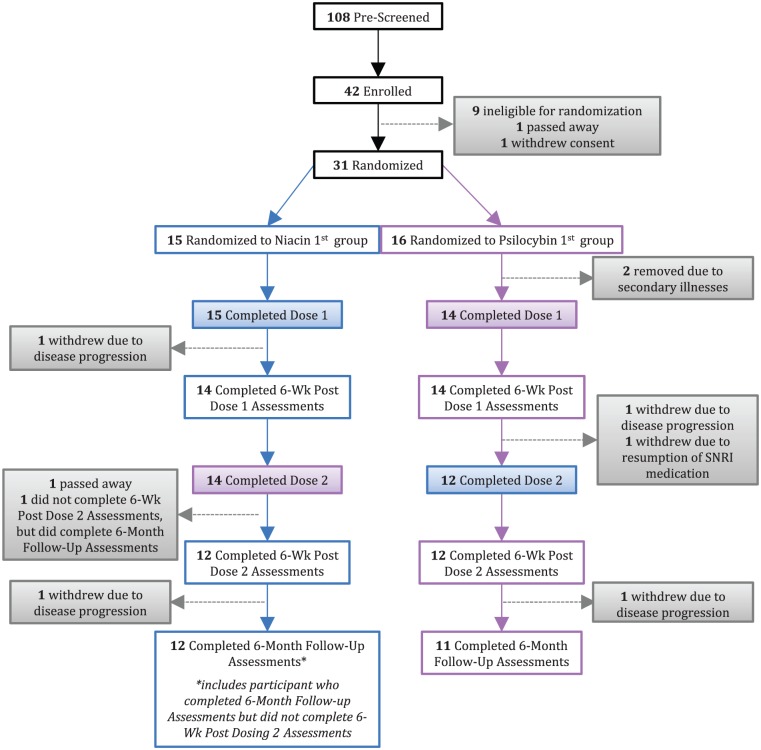
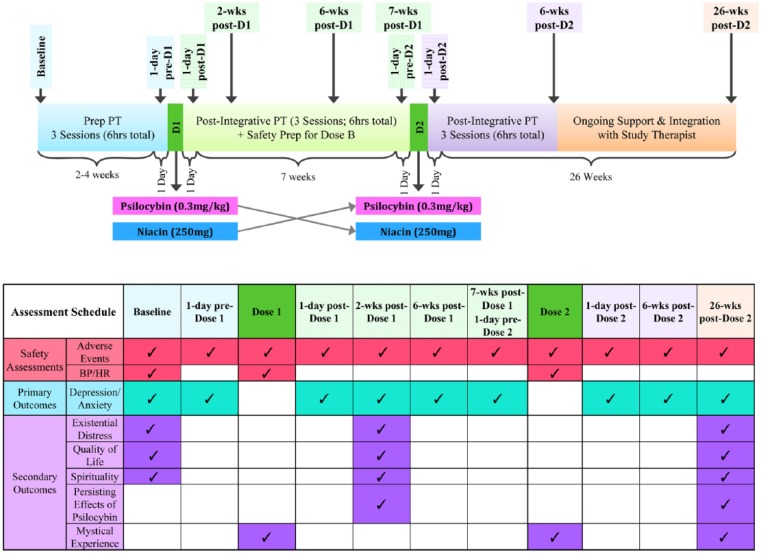
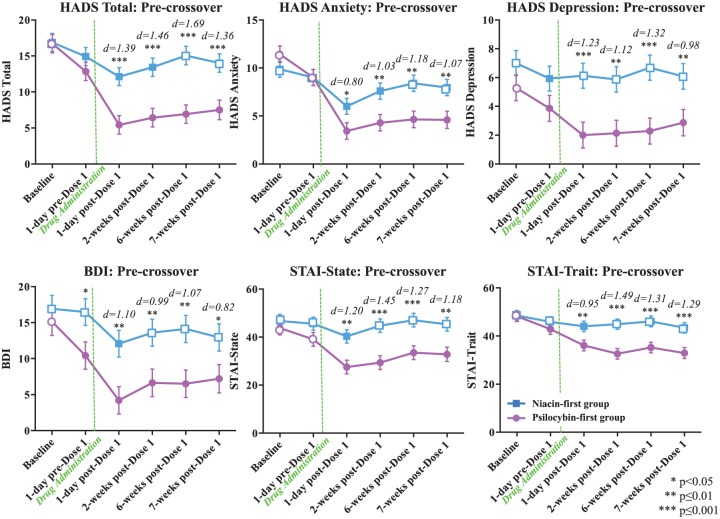
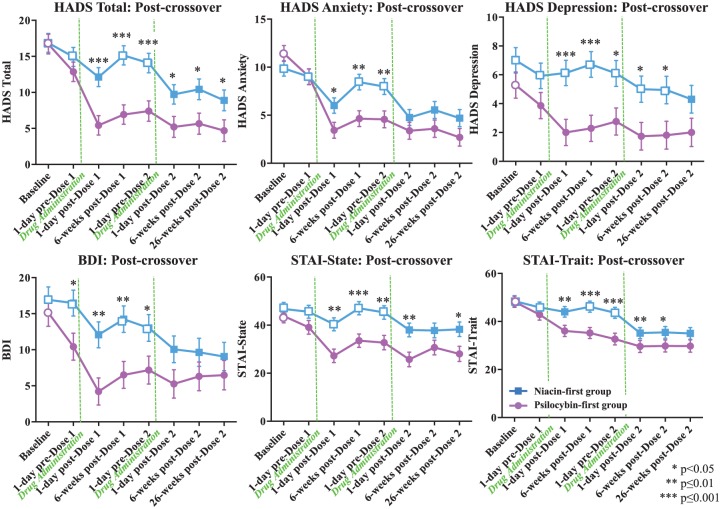
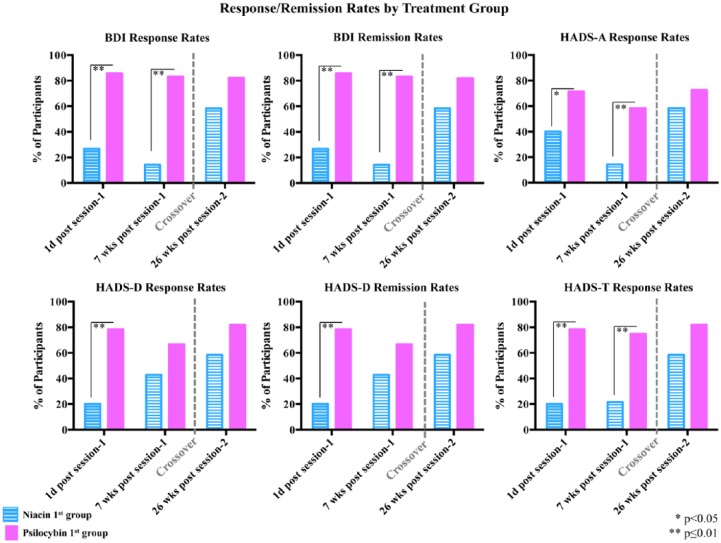
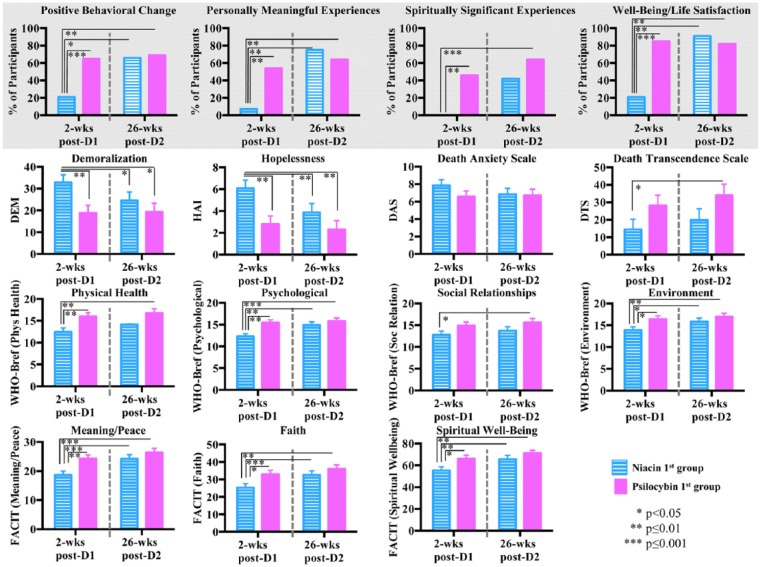
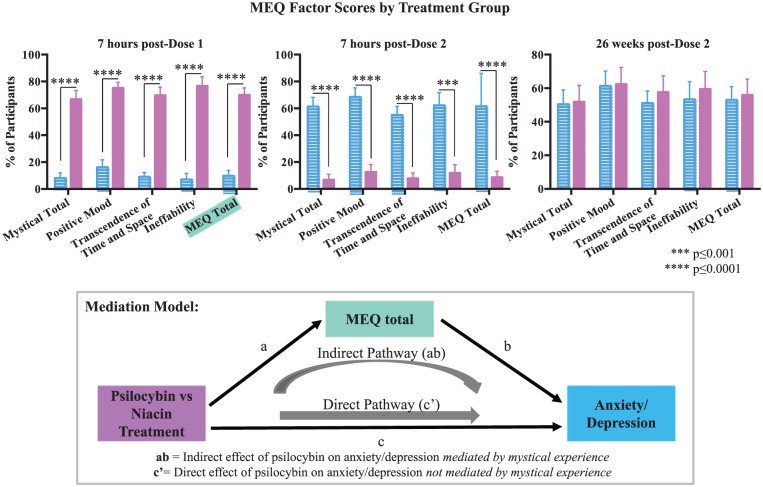
Background: Clinically significant anxiety and depression are common in patients with cancer, and are associated with poor psychiatric and medical outcomes. Historical and recent research suggests a role for psilocybin to treat cancer-related anxiety and depression. Methods: In this double-blind, placebo-controlled, crossover trial, 29 patients with cancer-related anxiety and depression were randomly assigned and received treatment with single-dose psilocybin (0.3 mg/kg) or niacin, both in conjunction with psychotherapy. The primary outcomes were anxiety and depression assessed between groups prior to the crossover at 7 weeks. Results: Prior to the crossover, psilocybin produced immediate, substantial, and sustained improvements in anxiety and depression and led to decreases in cancer-related demoralization and hopelessness, improved spiritual wellbeing, and increased quality of life. At the 6.5-month follow-up, psilocybin was associated with enduring anxiolytic and anti-depressant effects (approximately 60–80% of participants continued with clinically significant reductions in depression or anxiety), sustained benefits in existential distress and quality of life, as well as improved attitudes towards death. The psilocybin-induced mystical experience mediated the therapeutic effect of psilocybin on anxiety and depression. Conclusions: In conjunction with psychotherapy, single moderate-dose psilocybin produced rapid, robust and enduring anxiolytic and anti-depressant effects in patients with cancer-related psychological distress. Trial Registration: ClinicalTrials.gov Identifier: NCT00957359
Overview
The claims and statistics of this paper haven’t been checked yet.
Free: it reads the open-access text and checks the first 5 claims that cite a source we can check. Create a free account to check every claim.
Integrity signals
Registry
Cites
Statistics
Figures
Verification
Claims the paper makes
The claims and statistics of this paper haven’t been checked yet.
Free: it reads the open-access text and checks the first 5 claims that cite a source we can check. Create a free account to check every claim.
Claims other papers make about this one
Each is checked against this paper’s own text: does it say what the citing paper says it does?
The source backs part of the claim, not all of it — or backs it for a different population, condition or comparison.
In the citing paper
“Both participants and their friends and family reported positive effects on attitude towards life and the self, spiritual well-being, social contacts, quality of life, acceptance of death, and optimism (Ross et al., 2016).”
From Psychedelics for the treatment of depression, anxiety, and existential distress in patients with a terminal illness: a systematic review (2022) · cites this paper as Ross et al., 2016
Experimental — accuracy not yet measuredThe source backs part of the claim, not all of it — or backs it for a different population, condition or comparison.
In the citing paper
“Despite efforts to employ “active placebos” (e.g., niacin or a low-dose of a psychedelic) (40, 220), many patients and clinicians can still correctly distinguish between a high dose of a psychedelic drug and an active placebo.”
From Psychedelics and Other Psychoplastogens for Treating Mental Illness. (2021) · cites this paper as [220]
Experimental — accuracy not yet measuredThe source backs part of the claim, not all of it — or backs it for a different population, condition or comparison.
In the citing paper
“and with diminished anxiety and depression in terminal cancer patients (Griffiths et al., 2016;Ross et al., 2016;Barrett et al., 2020).”
From Psychedelics and Neural Plasticity: Therapeutic Implications (2022) · cites this paper as Ross et al., 2016
Experimental — accuracy not yet measuredThe source backs part of the claim, not all of it — or backs it for a different population, condition or comparison.
In the citing paper
“Psilocybin shows promise as a treatment for major depressive disorder (MDD).”
From Single-Dose Psilocybin Treatment for Major Depressive Disorder: A Randomized Clinical Trial (2023) · cites this paper as [8]
Experimental — accuracy not yet measuredThe source backs part of the claim, not all of it — or backs it for a different population, condition or comparison.
In the citing paper
“recent studies suggesting that psilocybin engenders a rapid antidepressant response that far outlasts the presence of the drug in the body.”
From Single-Dose Psilocybin Treatment for Major Depressive Disorder: A Randomized Clinical Trial (2023) · cites this paper as [8]
Experimental — accuracy not yet measured
25 more claims about this paper
Create a free account to see every claim other papers make about this one.
Self-check
Percentages, sums and reported differences re-computed from the paper’s own numbers.
The self-check needs the paper’s full text.
Citations
Cites
The Hospital Anxiety and Depression Scale
Zigmond, A. S., & Snaith, R. P. (1983) · Acta Psychiatrica Scandinavica · doi:10.1111/j.1600-0447.1983.tb09716.x · Cited by 47,139
(2013) · Cited by 44,563
Depression and quality of life in older persons: A review
Sivertsen, H., Bjørkløf, G. H., Engedal, K., Selbæk, G., & Helvik, A.-S. (2015) · Dementia and Geriatric Cognitive Disorders · doi:10.1159/000437299 · Cited by 14,152
Psychometric properties of the Beck Depression Inventory: Twenty-five years of evaluation
Beck, A. T., Steer, R. A., & Carbin, M. G. (1988) · Clinical Psychology Review · doi:10.1016/0272-7358(88)90050-5 · Cited by 11,696 · cited 2×
“cancer); Beck Depression Inventory (BDI) (Beck et al., 1988) self-report depression measure; Spielberger State-Trait Anxiety Inventory (STAI) (Spielberger, 1983) self-report measure of state (STAI state or STAI S) and trait (STAI trait or STAI T) anxiety.”
BackgroundMolecular Mechanisms of Depression: Perspectives on New Treatment Strategies
Lang, U. E., & Borgwardt, S. (2013) · Cellular Physiology and Biochemistry · doi:10.1159/000350094 · Cited by 8,475
Mitchell, A. J., Chan, M., Bhatti, H., Halton, M., Grassi, L., Johansen, C., & Meader, N. (2011) · The Lancet Oncology · doi:10.1016/s1470-2045(11)70002-x · Cited by 2,449 · cited 1×
“Enduring clinically significant anxiety and/or depressive symptoms are common in patients with cancer, present in 30–40% of patients in hospital settings (Mitchell et al., 2011).”
BackgroundManual for the state-trait anxiety inventory (form Y) : "self-evaluation questionnaire"
Spielberger, C. D., Gorsuch, R. L., & Lushene, R. E. (1970) · Consulting Psychologists Press eBooks · Cited by 2,352
Drevets, W. C., Price, J. L., & Furey, M. L. (2008) · Brain Structure and Function · doi:10.1007/s00429-008-0189-x · Cited by 2,241 · cited 7×
“The former is significant because depressive symptoms have been associated with increased activity in the medial PFC (Drevets et al., 2008; Farb et al., 2011) and normalization of medial PFC activity has been demonstrated with anti-depressant treatment (Deakin et al., 2008; Holtzheimer and Mayberg, 2011; Kennedy et al…”
BackgroundInfluentialGreicius, M. D., Flores, B. H., Menon, V., Glover, G. H., Solvason, H. B., Kenna, H., Reiss, A. L., & Schatzberg, A. F. (2007) · Biological Psychiatry · doi:10.1016/j.biopsych.2006.09.020 · Cited by 2,214 · cited 2×
“…pathological and can be understood as part of the therapeutic process (e.g. working through cancer-related psychological or existential distress through challenging encounters or emotionally charged confrontations with cancer-related fearful imagery or symbolism) (Carbonaro et al., 2016).”
BackgroundNichols, D. E. (2016) · Pharmacological Reviews · doi:10.1124/pr.115.011478 · Cited by 1,762 · cited 1×
“In two recently published open-label trials, one using a single dose of ayahuasca (Osorio et al., 2015) and the other using two doses of oral psilocybin (Carhart-Harris et al., 2016), acute and enduring anti-depressant effects were reported.”
Background
Research works printed but not linked: 3
- Doblin R (1991) Pahnke’s ‘Good Friday Experiment’: a long-term follow-up and methodological critique. J Transpersonal Psychol 23(1): 1– 28.
- Pahnke WN (1963) Drugs and mysticism: an analysis of the relationship between psychedelic drugs and the mystical consciousness, PhD dissertation. Cambridge, MA: Harvard University.
- VandeCreek L (1999) The death transcendence scale. In: Hill PC Hood RW (eds) Measures of religiosity. Birmingham, AL: Religious Education Press, pp. 442– 445.
Cited by
Items 201–300 of 1,005
dos Santos, R. G., Osório, F. D. L., Rocha, J. M., Rossi, G. N., Bouso, J. C., Rodrigues, L. S., de Oliveira Silveira, G., Yonamine, M., & Hallak, J. E. C. (2021) · Journal of Clinical Psychopharmacology · doi:10.1097/jcp.0000000000001428 · Cited by 90
Neural Mechanisms and Psychology of Psychedelic Ego Dissolution
Stoliker, D., Egan, G. F., Friston, K. J., & Razi, A. (2022) · Pharmacological Reviews · doi:10.1124/pharmrev.121.000508 · Cited by 81
Nayak, S. M., Jackson, H., Sepeda, N. D., Mathai, D. S., So, S., Yaffe, A., Zaki, H., Brasher, T. J., Lowe, M. X., Jolly, D. R. P., et al. (2023) · Frontiers in Psychiatry · doi:10.3389/fpsyt.2023.1199642 · Cited by 112
Dose–response relationships of psilocybin-induced subjective experiences in humans
Hirschfeld, T., & Schmidt, T. T. (2021) · Journal of Psychopharmacology · doi:10.1177/0269881121992676 · Cited by 93
“This search strategy identified one study reporting data on patients with cancer-related psychiatric distress (Ross et al., 2016), one study reporting data on patients with major depressive disorder (Davis et al., 2020) and two studies reporting data on patients with treatment-resistant major…”
BackgroundMethodInfluentialPalitsky, R., Kaplan, D. M., Peacock, C., Zarrabi, A. J., Maples‐Keller, J. L., Grant, G. H., Dunlop, B. W., & Raison, C. L. (2023) · JAMA Psychiatry · doi:10.1001/jamapsychiatry.2023.1554 · Cited by 104
Garcia-Romeu, A., Barrett, F. S., Carbonaro, T. M., Johnson, M. W., & Griffiths, R. R. (2021) · Journal of Psychopharmacology · doi:10.1177/0269881121991822 · Cited by 96
“…outcomes in clinical populations (Bogenschutz et al., 2015; Carhart-Harris et al., 2016; Davis et al., 2020; Griffiths et al., 2016; Johnson et al., 2014; Ross et al., 2016), and positive persisting effects in healthy volunteers (Barrett et al., 2020; Griffiths et al., 2006, 2008, 2011, 2018).”
BackgroundInfluentialDoes Psychedelic Therapy Have a Transdiagnostic Action and Prophylactic Potential?
Kočárová, R., Horáček, J., & Carhart-Harris, R. (2021) · Frontiers in Psychiatry · doi:10.3389/fpsyt.2021.661233 · Cited by 96
Therapeutic Applications of Classic Hallucinogens
Bogenschutz, M. P., & Ross, S. (2016) · Current topics in behavioral neurosciences · doi:10.1007/7854_2016_464 · Cited by 111
Self-citationChi, T., & Gold, J. A. (2020) · Journal of the Neurological Sciences · doi:10.1016/j.jns.2020.116715 · Cited by 95
A narrative synthesis of research with 5-MeO-DMT
Ermakova, A. O., Dunbar, F., Rucker, J., & Johnson, M. W. (2022) · Journal of Psychopharmacology · doi:10.1177/02698811211050543 · Cited by 86
“Over the past two decades, research has resumed and encouraging early phase clinical trials assessing psilocybin-assisted psychotherapy have been reported in unipolar mood disorders and anxiety (Carhart-Harris et al., 2016, 2018; Griffiths et al., 2016; Grob et al., 2011; Ross et al., 2016) and substance use disorders…”
BackgroundVan Court, R. C., Wiseman, M. S., Meyer, K. W., Ballhorn, D. J., Amses, K. R., Slot, J. C., Dentinger, B. T. M., Garibay-Orijel, R., & Uehling, J. K. (2022) · Fungal Biology · doi:10.1016/j.funbio.2022.01.003 · Cited by 94
Greenway, K. T., Garel, N., Jerome, L., & Feduccia, A. A. (2020) · Expert Review of Clinical Pharmacology · doi:10.1080/17512433.2020.1772054 · Cited by 94
“psychotherapy including CBT, psychodynamics [130], and existential meaning-making therapies [187], amongst others.”
BackgroundMethodInfluentialPsilocybin and MDMA for the treatment of trauma-related psychopathology
Bird, C. I. V., Modlin, N. L., & Rucker, J. J. H. (2021) · International Review of Psychiatry · doi:10.1080/09540261.2021.1919062 · Cited by 80
“…safety and efficacy data for psilocybin as a treatment for anxiety and depression in end-of-life care (Griffiths et al., 2016; Grob et al., 2011; Ross et al., 2016), OCD (Moreno et al., 2006), alcohol dependence (Bogenschutz et al., 2015), tobacco addiction (Johnson et al., 2014), major…”
BackgroundGregorio, D. D., Enns, J. P., Núñez, N. A., Posa, L., & Gobbi, G. (2018) · Progress in brain research · doi:10.1016/bs.pbr.2018.07.008 · Cited by 105
Dreams and Psychedelics: Neurophenomenological Comparison and Therapeutic Implications
Kraehenmann, R. (2017) · Current Neuropharmacology · doi:10.2174/1573413713666170619092629 · Cited by 92
Thrul, J., & Garcia‐Romeu, A. (2021) · Drugs Education Prevention and Policy · doi:10.1080/09687637.2021.1897331 · Cited by 92
“…benefits of psilocybin-assisted treatment in major depression (Carhart-Harris et al., 2016; Davis et al., 2020), alcohol and tobacco dependence (Bogenschutz et al., 2015; Johnson et al., 2014), and cancerrelated existential distress (Griffiths et al., 2016; Grob et al., 2011; Ross et al., 2016).”
BackgroundLeonard, J. B., Anderson, B., & Klein-Schwartz, W. (2018) · Journal of Psychopharmacology · doi:10.1177/0269881118793086 · Cited by 88
Tai, S. J., Nielson, E. M., Lennard-Jones, M., Johanna Ajantaival, R.-L., Winzer, R., Richards, W. A., Reinholdt, F., Richards, B. D., Gasser, P., & Malievskaia, E. (2021) · Frontiers in Psychiatry · doi:10.3389/fpsyt.2021.586682 · Cited by 90
Brennan, W., & Belser, A. B. (2022) · Frontiers in Psychology · doi:10.3389/fpsyg.2022.866018 · Cited by 90
Self-citationMeinhardt, M. W., Pfarr, S., Fouquet, G., Rohleder, C., Meinhardt, M. L., Barroso-Flores, J., Hoffmann, R., Jeanblanc, J., Paul, E., Wagner, K., et al. (2021) · Science Advances · doi:10.1126/sciadv.abh2399 · Cited by 89
Psilocybin‐assisted group therapy in patients with cancer diagnosed with a major depressive disorder
Agrawal, M., Richards, W., Beaussant, Y., Shnayder, S., Ameli, R., Roddy, K., Stevens, N., Richards, B., Schor, N., Honstein, H., et al. (2024) · Cancer · doi:10.1002/cncr.35010 · Cited by 88
“13 16 Moreover, findings of a randomized trial of psilocybin ‐ assisted therapy in 24 patients with major depressive disorder (MDD) demonstrated efficacy, with rapid and sustained antidepressant effects.”
BackgroundPerez, N., Langlest, F., Mallet, L., De Pieri, M., Sentissi, O., Thorens, G., Seragnoli, F., Zullino, D., Kirschner, M., Kaiser, S., et al. (2023) · European Neuropsychopharmacology · doi:10.1016/j.euroneuro.2023.07.011 · Cited by 88
“Overall, 7 studies were included in the final dataset ( Carhart-Harris et al., 2021 ; Davis et al., 2021 ; Goodwin et al., 2022 ; Griffiths et al., 2016 ; Grob et al., 2011 ; Ross et al., 2016 ; von Rotz et al., 2023 ).”
Bender, D., & Hellerstein, D. J. (2022) · Psychopharmacology · doi:10.1007/s00213-021-06049-6 · Cited by 88
High dose psilocybin is associated with positive subjective effects in healthy volunteers
Nicholas, C. R., Henriquez, K. M., Gassman, M. C., Cooper, K. M., Muller, D., Hetzel, S., Brown, R. T., Cozzi, N. V., Thomas, C., & Hutson, P. R. (2018) · Journal of Psychopharmacology · doi:10.1177/0269881118780713 · Cited by 83
“…positive effects have been observed in clinical studies showing a decrease in depressive and anxiety symptoms (Carhart-Harris, et al., 2016; Griffiths et al., 2016; Grob et al., 2011; Ross et al., 2016) and abstinence from addictive substances (Bogenschutz et al., 2015; Johnson et al., 2014).”
In vivo production of psilocybin in E. coli
Adams, A. M., Kaplan, N. A., Wei, Z., Brinton, J. D., Monnier, C. S., Enacopol, A. L., Ramelot, T. A., & Jones, J. A. (2019) · Metabolic Engineering · doi:10.1016/j.ymben.2019.09.009 · Cited by 90
The impact of Ayahuasca on suicidality: results from a randomized controlled trial
Zeifman, R. J., Palhano-Fontes, F., Hallak, J., Arcoverde, E., Maia-Oliveira, J. P., & Araujo, D. B. (2019) · Frontiers in Pharmacology · doi:10.3389/fphar.2019.01325 · Cited by 87
“…line with past research indicating that ayahuasca (e.g., Sampedro et al., 2017; Sanches et al., 2016; Palhano-Fontes et al., 2019); and psilocybin (e.g., Griffiths et al., 2016; Ross et al., 2016; Carhart-Harris et al., 2018) lead to mental health improvements that last beyond their acute effects.”
BackgroundResultThe Past and Future of Psychedelic Science: An Introduction to This Issue
Doblin, R. E., Christiansen, M., Jerome, L., & Burge, B. (2019) · Journal of Psychoactive Drugs · doi:10.1080/02791072.2019.1606472 · Cited by 87
“According to new research, intensified feelings of existential and spiritual wellbeing often reported by psilocybin users may be at the core of what could make it an effective medicine in the fields of palliative care, psycho-oncology, and psychotherapy (Ross et al. 2016).”
BackgroundLea, T., Amada, N. M., Jungaberle, H., Schecke, H., Scherbaum, N., & Klein, M. (2020) · Psychopharmacology · doi:10.1007/s00213-020-05477-0 · Cited by 93
“…the findings of recent clinical trials of psilocybin at standard doses for depression and anxiety (CarhartHarris et al. 2018; Griffiths et al. 2016; Ross et al. 2016), as well as possible perceived differences in the subjective effects of psilocybin and LSD, which would be worth investigating in…”
BackgroundZeifman, R. J., Singhal, N., SANTOS, R. G. D., Sanches, R. F., Osório, F. D. L., Hallak, J. E. C., & Weissman, C. R. (2020) · Psychopharmacology · doi:10.1007/s00213-020-05692-9 · Cited by 96
Heuschkel, K., & Kuypers, K. P. C. (2020) · Frontiers in Psychiatry · doi:10.3389/fpsyt.2020.00224 · Cited by 86
Kozłowska, U., Nichols, C. D., Wiatr, K., & Figiel, M. (2021) · Journal of Neurochemistry · doi:10.1111/jnc.15509 · Cited by 89
Tulver, K., Kaup, K., Laukkonen, R., & Aru, J. (2023) · Consciousness and Cognition · doi:10.1016/j.concog.2023.103494 · Cited by 100
Dark Classics in Chemical Neuroscience: Mescaline
Cassels, B. K., & Sáez-Briones, P. (2018) · ACS Chemical Neuroscience · doi:10.1021/acschemneuro.8b00215 · Cited by 85
Acute subjective effects in LSD- and MDMA-assisted psychotherapy
Schmid, Y., Gasser, P., Oehen, P., & Liechti, M. E. (2021) · Journal of Psychopharmacology · doi:10.1177/0269881120959604 · Cited by 85
“, 2015), improve anxiety and depressive symptoms associated with life-threatening somatic diseases (Gasser et al., 2014, 2015; Griffiths et al., 2016; Grob et al., 2011; Ross et al., 2016), may decrease symptoms of obsessivecompulsive disorder (OCD) (Moreno et al.”
BackgroundRaison, C. L., Jain, R., Penn, A., Cole, S. P., & Jain, S. (2022) · Frontiers in Psychiatry · doi:10.3389/fpsyt.2022.831092 · Cited by 100
Pharmacological Treatment of Generalised Anxiety Disorder: Current Practice and Future Directions
Fagan, H. A., & Baldwin, D. S. (2023) · Expert Review of Neurotherapeutics · doi:10.1080/14737175.2023.2211767 · Cited by 96
“In a small crossover RCT, patients with cancer and associated anxiety showed significant improvements in anxiety symptoms after a single dose of psilocybin (0.3 mg/kg) [93].”
InfluentialAncient Roots of Today’s Emerging Renaissance in Psychedelic Medicine
George, D. R., Hanson, R., Wilkinson, D., & Garcia‐Romeu, A. (2021) · Culture Medicine and Psychiatry · doi:10.1007/s11013-021-09749-y · Cited by 94
Duan, W., Cao, D., Wang, S., & Cheng, J. (2023) · Chemical Reviews · doi:10.1021/acs.chemrev.3c00375 · Cited by 85
Psychedelics and Neural Plasticity: Therapeutic Implications
Grieco, S. F., Castrén, E., Knudsen, G. M., Kwan, A. C., Olson, D. E., Zuo, Y., Holmes, T. C., & Xu, X. (2022) · The Journal of Neuroscience · doi:10.1523/jneurosci.1121-22.2022 · Cited by 82
“The strength of mystical experience also correlates with therapeutic effects in cigarette smoking cessation (Garcia-Romeu et al., 2014) and with diminished anxiety and depression in terminal cancer patients (Griffiths et al., 2016; Ross et al., 2016; Barrett et al., 2020).”
Oehen, P., & Gasser, P. (2022) · Frontiers in Psychiatry · doi:10.3389/fpsyt.2022.863552 · Cited by 73
Lower-dose psycholytic therapy – A neglected approach
Passie, T., Guss, J., & Krähenmann, R. (2022) · Frontiers in Psychiatry · doi:10.3389/fpsyt.2022.1020505 · Cited by 81
Self-citationWitkin, J. M., Martin, A. E., Golani, L. K., Xu, N. Z., & Smith, J. L. (2019) · Advances in Pharmacology · doi:10.1016/bs.apha.2019.03.002 · Cited by 72
Nayak, S. M., Gukasyan, N., Barrett, F. S., Erowid, E., Erowid, F., & Griffiths, R. R. (2021) · Pharmacopsychiatry · doi:10.1055/a-1524-2794 · Cited by 74
“After more than 6 decades of research into and popular use of classic psychedelics (defined here as a class of drugs that produce a unique profile of subjective effects and have a principal site of action at the 5HT2A receptor, such as LSD or psilocybin), recent promising trials investigating the effects of psilocybin…”
BackgroundAntidepressant effects of a psychedelic experience in a large prospective naturalistic sample
Nygart, V. A., Pommerencke, L. M., Haijen, E., Kettner, H., Kaelen, M., Mortensen, E. L., Nutt, D. J., Carhart-Harris, R. L., & Erritzoe, D. (2022) · Journal of Psychopharmacology · doi:10.1177/02698811221101061 · Cited by 73
“Since then, supportive evidence for psychedelicassisted therapy has begun to accrue promising results, particularly in the treatment of depressive and anxiety symptoms and disorders (Barbosa et al., 2016; Carhart-Harris et al., 2017, 2021a, 2021b; Davis et al., 2021a; Gasser et al., 2014; Griffiths et al., 2016; Grob…”
BackgroundInfluentialHOPE: A Pilot Study of Psilocybin Enhanced Group Psychotherapy in Patients With Cancer
Lewis, B. R., Garland, E. L., Byrne, K., Durns, T. A., Hendrick, J., Beck, A. C., & Thielking, P. D. (2023) · Journal of Pain and Symptom Management · doi:10.1016/j.jpainsymman.2023.06.006 · Cited by 80
Combining Psychedelic and Mindfulness Interventions: Synergies to Inform Clinical Practice
Payne, J. E., Chambers, R., & Liknaitzky, P. (2021) · ACS Pharmacology & Translational Science · doi:10.1021/acsptsci.1c00034 · Cited by 78
Morton, E., Sakai, K., Ashtari, A., Pleet, M., Michalak, E. E., & Woolley, J. (2023) · Journal of Psychopharmacology · doi:10.1177/02698811221131997 · Cited by 78
“…Davis et al., 2021a,b; Gukasyan et al., 2022), substance use disorders (Bogenschutz and Johnson, 2016; Johnson et al., 2014) and depression and anxiety secondary to a serious medical illness like cancer (Griffiths et al., 2016; Grob et al., 2011; Ross et al., 2016) and HIV (Anderson et al., 2020).”
BackgroundStenbæk, D. S., Madsen, M. K., Ozenne, B., Kristiansen, S., Burmester, D., Erritzoe, D., Knudsen, G. M., & Fisher, P. M. (2021) · Journal of Psychopharmacology · doi:10.1177/0269881120959609 · Cited by 78
“…for, for example, major depression (Carhart-Harris et al., 2016, 2018), obsessive compulsive disorder (Moreno et al., 2006), anxiety and depression associated with life-threatening cancer (Griffiths et al., 2016; Ross et al., 2016) and addiction (Bogenschutz et al., 2015; Johnson et al., 2014).”
BackgroundMurray, C. H., Tare, I., Perry, C., Malina, M., Lee, R., & de Wit, H. (2021) · Psychopharmacology · doi:10.1007/s00213-021-05991-9 · Cited by 90
Ross, S., Agrawal, M., Griffiths, R. R., Grob, C. S., Berger, A. M., & Henningfield, J. E. (2022) · Neuropharmacology · doi:10.1016/j.neuropharm.2022.109174 · Cited by 81
Self-citationMore Realistic Forecasting of Future Life Events After Psilocybin for Treatment-Resistant Depression
Lyons, T., & Carhart-Harris, R. L. (2018) · Frontiers in Psychology · doi:10.3389/fpsyg.2018.01721 · Cited by 77
“Randomized controlled trials (RCTs) have demonstrated that psilocybin can rapidly alleviate depression and anxiety in patients with life-threatening cancer, with sustained effects for 6 months (Griffiths et al., 2016; Ross et al., 2016).”
BackgroundResultHutten, N. R. P. W., Mason, N. L., Dolder, P. C., & Kuypers, K. P. C. (2019) · Frontiers in Psychiatry · doi:10.3389/fpsyt.2019.00672 · Cited by 77
“Specifically, clinical trials assessing the efficacy of full, regular doses of psychedelics on treatment resistant depression (28) and end of life depression and anxiety (13, 29, 30) have found an association between the acute quality of the experience (including occurrence of profound psychological ‘peak’ or ‘mystica…”
BackgroundPsilocybin-assisted therapy improves psycho-social-spiritual well-being in cancer patients
Shnayder, S., Ameli, R., Sinaii, N., Berger, A. M., & Agrawal, M. (2022) · Journal of Affective Disorders · doi:10.1016/j.jad.2022.11.046 · Cited by 78
Romeo, B., Hermand, M., Pétillion, A., Karila, L., & Benyamina, A. (2021) · Journal of Psychiatric Research · doi:10.1016/j.jpsychires.2021.03.002 · Cited by 76
Microdosing psychedelics: Demographics, practices, and psychiatric comorbidities
Rosenbaum, D., Weissman, C., Anderson, T., Petranker, R., Dinh-Williams, L.-A., Hui, K., & Hapke, E. (2020) · Journal of Psychopharmacology · doi:10.1177/0269881120908004 · Cited by 76
“This is a significant finding given that the presence of a personal or immediate family history of psychosis is a common exclusion criterion in contemporary studies of high-dose psychedelics (see for instance Carhart-Harris et al., 2016; Ross et al., 2016).”
BackgroundInfluentialBarrett, F. S., Robbins, H., Smooke, D., Brown, J. L., & Griffiths, R. R. (2017) · Frontiers in Psychology · doi:10.3389/fpsyg.2017.01238 · Cited by 82
“A unique effect of hallucinogens is that they may occasion mystical or non-dual experiences (Barrett and Griffiths, 2017), and these experiences may hold therapeutic value (Garcia-Romeu et al., 2015; Griffiths et al., 2016; Ross et al., 2016).”
BackgroundThe influence of ketamine on drug discovery in depression
Kraus, C., Wasserman, D., Henter, I. D., Acevedo-Diaz, E., Kadriu, B., & Zarate, C. A. (2019) · Drug Discovery Today · doi:10.1016/j.drudis.2019.07.007 · Cited by 75
Study Protocol for “Psilocybin as a Treatment for Anorexia Nervosa: A Pilot Study”
Spriggs, M. J., Douglass, H. M., Park, R. J., Read, T., Danby, J. L., de Magalhães, F. J. C., Alderton, K. L., Williams, T. M., Blemings, A., Lafrance, A., et al. (2021) · Frontiers in Psychiatry · doi:10.3389/fpsyt.2021.735523 · Cited by 75
Psilocybin-Assisted Therapy: A Review of a Novel Treatment for Psychiatric Disorders
Thomas, K., Malcolm, B., & Lastra, D. (2017) · Journal of Psychoactive Drugs · doi:10.1080/02791072.2017.1320734 · Cited by 75
Transformative experience and informed consent to psychedelic-assisted psychotherapy
Jacobs, E. (2023) · Frontiers in Psychology · doi:10.3389/fpsyg.2023.1108333 · Cited by 79
“Shifts in attitudes toward life and the self are also frequently reported (Studerus et al., 2011; Gasser et al., 2015; Ross et al., 2016; Belser et al., 2017; Johnson et al., 2017; Schmid and Liechti, 2018), although the magnitude of these effects is not consistently pronounced across research centers (Nicholas et al.”
BackgroundThe therapeutic potential of psilocybin: a systematic review
van Amsterdam, J., & van den Brink, W. (2022) · Expert Opinion on Drug Safety · doi:10.1080/14740338.2022.2047929 · Cited by 74
Raut, S. B., Marathe, P. A., van Eijk, L., Eri, R. D., Ravindran, M., Benedek, D. M., Ursano, R. J., Canales, J. J., & Johnson, L. R. (2022) · Pharmacology & Therapeutics · doi:10.1016/j.pharmthera.2022.108195 · Cited by 84
Antidepressants for the treatment of depression in people with cancer
Vita, G., Compri, B., Matcham, F., Barbui, C., & Ostuzzi, G. (2023) · Cochrane Database of Systematic Reviews · doi:10.1002/14651858.cd011006.pub4 · Cited by 73
Psilocybin in neuropsychiatry: a review of its pharmacology, safety, and efficacy
Dodd, S., Norman, T. R., Eyre, H. A., Stahl, S. M., Phillips, A., Carvalho, A. F., & Berk, M. (2023) · CNS Spectrums · doi:10.1017/s1092852922000888 · Cited by 73
“5 months post (after both groups received psilocybin), antidepressant or anxiolytic response rates were approximately 60 to 80% measured with the Hospital Anxiety and Depression Scale (HADS) and the BDI.(77) A larger RCT of people with cancer, randomized participants to low dose first (n = 27; 1 or 3 mg/70 kg) or high…”
Influentialdos Santos, R. G., Bouso, J. C., Rocha, J. M., Rossi, G. N., & Hallak, J. E. (2021) · Risk Management and Healthcare Policy · doi:10.2147/rmhp.s300656 · Cited by 60
“Depression and anxiety symptoms were also reduced in controlled trials in terminal cancer patients.(18,19) Psilocybin produced positive effects in open-label trials for the treatment of alcohol and tobacco dependence.”
BackgroundJohnston, J. N., Kadriu, B., Allen, J., Gilbert, J. R., Henter, I. D., & Zarate, C. A. (2023) · Neuropharmacology · doi:10.1016/j.neuropharm.2023.109422 · Cited by 76
Zeifman, R. J., Wagner, A. C., Monson, C. M., & Carhart-Harris, R. L. (2023) · Journal of Affective Disorders · doi:10.1016/j.jad.2023.04.105 · Cited by 60
Li, N.-X., Hu, Y.-R., Chen, W.-N., & Zhang, B. (2022) · Journal of Affective Disorders · doi:10.1016/j.jad.2021.09.041 · Cited by 72
Higgins, G. A., Carroll, N. K., Brown, M., MacMillan, C., Silenieks, L. B., Thevarkunnel, S., Izhakova, J., Magomedova, L., DeLannoy, I., & Sellers, E. M. (2021) · Frontiers in Pharmacology · doi:10.3389/fphar.2021.640241 · Cited by 69
“, 2016) and also in patients with life-threatening cancer (Griffiths et al., 2016; Ross et al., 2016).”
BackgroundMaia, L. O., Beaussant, Y., & Garcia, A. C. M. (2022) · Journal of Pain and Symptom Management · doi:10.1016/j.jpainsymman.2022.01.024 · Cited by 60
A unified model of ketamine’s dissociative and psychedelic properties
Marguilho, M., Figueiredo, I., & Castro-Rodrigues, P. (2022) · Journal of Psychopharmacology · doi:10.1177/02698811221140011 · Cited by 78
“…Murphy et al., 2022; Roseman et al., 2018; van Oorsouw et al., 2022), addiction (Bogenschutz et al., 2015; Johnson et al., 2014, 2017; O’Reilly and Funk, 1964) and existential anxiety (Griffiths et al., 2016; Kurland et al., 1972; Pahnke et al., 1969; Richards et al., 1977; Ross et al., 2016).”
BackgroundSafety and risk assessment of psychedelic psychotherapy: A meta-analysis and systematic review
Roméo, B., Kervadec, E., Fauvel, B., Strika-Bruneau, L., Amirouche, A., Verroust, V., Piolino, P., & Benyamina, A. (2024) · Psychiatry Research · doi:10.1016/j.psychres.2024.115880 · Cited by 74
Modulation of Social Cognition via Hallucinogens and “Entactogens”
Preller, K. H., & Vollenweider, F. X. (2019) · Frontiers in Psychiatry · doi:10.3389/fpsyt.2019.00881 · Cited by 71
Psychedelics and psychotherapy
Nayak, S., & Johnson, M. W. (2021) · Pharmacopsychiatry · doi:10.1055/a-1312-7297 · Cited by 71
“Mystical experiences are associated with therapeutic outcomes after psychedelic experiences, and much is made of this [4, 8, 9, 71, 72].”
BackgroundCorneille, J. S., & Luke, D. P. (2021) · Frontiers in Psychology · doi:10.3389/fpsyg.2021.720579 · Cited by 81
Positive psychology in the investigation of psychedelics and entactogens: a critical review
Jungaberle, H., Thal, S., Zeuch, A., Rougemont-Bücking, A., von Heyden, M., Aicher, H., & Scheidegger, M. (2018) · Neuropharmacology · doi:10.1016/j.neuropharm.2018.06.034 · Cited by 70
Gandy, S., Forstmann, M., Carhart-Harris, R. L., Timmermann, C., Luke, D., & Watts, R. (2020) · Health Psychology Open · doi:10.1177/2055102920978123 · Cited by 63
“…(Agin-Liebes et al., 2020; Barrett et al., 2020; Carhart-Harris et al., 2016a, 2018a; Gasser et al., 2014; Griffiths et al., 2016; Grob et al., 2011; Ross et al., 2016), addiction (Bogenschutz et al., 2015; Bogenschutz and Johnson, 2016; Johnson et al., 2014, 2016) and PTSD (Krediet et al., 2020).”
BackgroundOn the Relationship between Classic Psychedelics and Suicidality: A Systematic Review
Zeifman, R. J., Singhal, N., Breslow, L., & Weissman, C. R. (2021) · ACS Pharmacology & Translational Science · doi:10.1021/acsptsci.1c00024 · Cited by 73
Psychedelics and Consciousness: Distinctions, Demarcations, and Opportunities
Yaden, D. B., Johnson, M. W., Griffiths, R. R., Doss, M. K., Garcia‐Romeu, A., Nayak, S. M., Gukasyan, N., Mathur, B. N., & Barrett, F. S. (2021) · The International Journal of Neuropsychopharmacology · doi:10.1093/ijnp/pyab026 · Cited by 77
“, 2017), and these experiences have been associated with a number of persisting benefits in both healthy and clinical samples (Johnson et al., 2014; Bogenschutz et al., 2015; Ross et al., 2016; Griffiths et al., 2016, 2018; Roseman et al. 2018; Davis et al., 2020).”
BackgroundRosenblat, J. D., Husain, M. I., Lee, Y. L., McIntyre, R. S., Mansur, R. B., Castle, D. J., Offman, H., Parikh, S. V., Frey, B. N., Schaffer, A., et al. (2022) · The Canadian Journal of Psychiatry · doi:10.1177/07067437221111371 · Cited by 77
“The degree of psilocybin-induced mystical experience correlated with the therapeutic effect of psilocybin on anxiety and depression.(75,76) Griffiths et al.”
BackgroundMethodInfluentialSweeney, M. M., Nayak, S. M., Hurwitz, E. S., Mitchell, L. N., Swift, T. C., & Griffiths, R. R. (2022) · PLoS ONE · doi:10.1371/journal.pone.0271926 · Cited by 76
Lutkajtis, A., & Evans, J. (2023) · Journal of Psychedelic Studies · doi:10.1556/2054.2022.00232 · Cited by 70
“…of clinical issues, including treatment-resistant depression (Carhart-Harris et al., 2021), cancer-related distress (Grif fi ths et al., 2016; Ross et al., 2016), obsessive compulsive disorder (Moreno et al., 2006), substance use disorders (Bogenschutz et al., 2015, 2018; Johnson,…”
Therapeutic mechanisms of psychedelics and entactogens
Heifets, B. D., & Olson, D. E. (2023) · Neuropsychopharmacology · doi:10.1038/s41386-023-01666-5 · Cited by 80
Holze, F., Singh, N., Liechti, M. E., & D’Souza, D. C. (2024) · Biological Psychiatry Cognitive Neuroscience and Neuroimaging · doi:10.1016/j.bpsc.2024.01.007 · Cited by 78
Psychedelic therapy's transdiagnostic effects: A research domain criteria (RDoC) perspective
Kelly, J. R., Gillan, C. M., Prenderville, J., Kelly, C., Harkin, A., Clarke, G., & O'Keane, V. (2021) · Frontiers in Psychiatry · doi:10.3389/fpsyt.2021.800072 · Cited by 69
“Reductions in suicidal ideation and loss of meaning (82, 97, 98)”
BackgroundCulture and psychedelic psychotherapy: Ethnic and racial themes from three Black women therapists
Williams, M. T., Reed, S., & George, J. R. (2020) · Journal of Evolutionary Psychology · doi:10.1556/2054.2020.00137 · Cited by 70
“E-mail: monnica.williams@uottawa.ca Unauthenticated | Downloaded 07/15/21 10:06 AM UTC mental health disorders, such as posttraumatic stress disorder (PTSD), mood disorders, substance use, and end-of-life anxiety (Brown & Alper, 2018; Ross et al., 2016; Ot'alora G et al., 2018).”
BackgroundPsychedelics as a Treatment for Alzheimer’s Disease Dementia
Jones, S. V., & O’Kelly, A. (2020) · Frontiers in Synaptic Neuroscience · doi:10.3389/fnsyn.2020.00034 · Cited by 72
“Similar results have been observed following high dose psilocybin both in patients with anxiety related to life-threatening cancer, and cancer-related depression and anxiety (n = 51 and 29 respectively, both cross-over design; Griffiths et al., 2016; Ross et al., 2016).”
ResultGiluk (2009) · doi:10.1017/s003329172000389x · Cited by 68
Psilocybin for End-of-Life Anxiety Symptoms: A Systematic Review and Meta-Analysis
Yu, C., Yang, F., Yang, S., Tseng, P., Stubbs, B., Yeh, T., Hsu, C., Li, D., & Liang, C. (2021) · Psychiatry Investigation · doi:10.30773/pi.2021.0209 · Cited by 73
Sustained effects of single doses of classical psychedelics in humans
Knudsen, G. M. (2022) · Neuropsychopharmacology · doi:10.1038/s41386-022-01361-x · Cited by 79
The Emerging Field of Psychedelic Psychotherapy
Barber, G., & Aaronson, S. T. (2022) · Current Psychiatry Reports · doi:10.1007/s11920-022-01363-y · Cited by 74
In vitro and in vivo metabolism of psilocybin’s active metabolite psilocin
Thomann, J., Kolaczynska, K. E., Stoeckmann, O. V., Rudin, D., Vizeli, P., Hoener, M. C., Pryce, C. R., Vollenweider, F. X., Liechti, M. E., & Duthaler, U. (2024) · Frontiers in Pharmacology · doi:10.3389/fphar.2024.1391689 · Cited by 73
Zeifman, R. J., & Wagner, A. C. (2020) · Journal of Contextual Behavioral Science · doi:10.1016/j.jcbs.2019.11.001 · Cited by 67
Davis, A. K., Xin, Y., Sepeda, N. D., Garcia-Romeu, A., & Williams, M. T. (2021) · Chronic Stress · doi:10.1177/24705470211035607 · Cited by 67
Petranker, R., Anderson, T., Maier, L. J., Barratt, M. J., Ferris, J., & WINSTOCK, A. R. (2020) · Journal of Psychopharmacology · doi:10.1177/0269881120953994 · Cited by 71
“Evidence is mounting that large doses of substances such as lysergic acid diethylamide (LSD) and psilocybin-containing ‘magic’ mushrooms can help treat depression (Ross et al., 2016), anxiety (Grob et al.”
BackgroundClinically relevant acute subjective effects of psychedelics beyond mystical experience
Yaden, D. B., Goldy, S. P., Weiss, B., & Griffiths, R. R. (2024) · Nature Reviews Psychology · doi:10.1038/s44159-024-00345-6 · Cited by 72
“…Questionnaire (a measure comprising subscales related to feelings of unity, positive mood, transcendence of time and space, and ineffability) was positively correlated with persisting beneficial outcomes in individuals with a life-threatening cancer diagnosis in two independent samples 23,38 .”
InfluentialSabé, M., Sulstarova, A., Glangetas, A., Pieri, M. D., Mallet, L., Curtis, L., Richard-Lepouriel, H., Penzenstadler, L. E., Seragnoli, F., Thorens, G., et al. (2024) · Molecular Psychiatry · doi:10.1038/s41380-024-02800-5 · Cited by 72
Rieser, N. M., Bitar, R., Halm, S., Rossgoderer, C., Gubser, L. P., Thévenaz, M., Kreis, Y., von Rotz, R., Nordt, C., Visentini, M., et al. (2025) · EClinicalMedicine · doi:10.1016/j.eclinm.2025.103149 · Cited by 69
“Second, in line with previously reported increased quality of life in depression and anxiety patients following psilocybin-assisted therapy, 28,29 we found improved quality of life post psilocybin administration in AUD patients.”
Sloshower, J., Zeifman, R. J., Guss, J., Krause, R., Safi-Aghdam, H., Pathania, S., Pittman, B., & D’Souza, D. C. (2024) · Scientific Reports · doi:10.1038/s41598-024-58318-x · Cited by 65
Self-citationdos Santos, R. G., & Hallak, J. E. C. (2021) · Epilepsy & Behavior · doi:10.1016/j.yebeh.2019.04.053 · Cited by 56
Metadata
- Authors
- Ross, S., Bossis, A., Guss, J., Agin-Liebes, G., Malone, T., Cohen, B., Mennenga, S. E., Belser, A., Kalliontzi, K., Babb, J., Su, Z., Corby, P., & Schmidt, B. L.
- Affiliations
- NYU Langone Health (US)
- Bellevue Hospital Center (US)
- Palo Alto University (US)
- New York University (US)
- Corresponding author
- Ross, Stephen
- Venue
- Journal of Psychopharmacology
- Publisher
- SAGE Publications
- Published
- 2016-11-30
- Volume
- 30
- Issue
- 12
- Pages
- 1165-1180
- ISSN
- 0269-8811 (ISSN-L)
- 1461-7285
- PMC
- PMC5367551
- OpenAlex
- W2559739670
- Semantic Scholar
- 1129a840891b76fb9022b6e91d1e1f4d2dafcb04
- Cited by
- 1,698
- References
- 90
- Citations by year
- 2026: 184 · 2025: 239 · 2024: 264 · 2023: 239 · 2022: 224 · 2021: 182 · 2020: 144 · 2019: 64 · 2018: 88 · 2017: 52 · 2016: 15
- FWCI
- 97.72
- Type
- journal article
- Language
- en
- Open access
- hybrid
- doi.org
- Licence
- cc-by
- journals.sagepub.com/page/policies/text-and-data-mining-license (tdm)
- Locations
- Journal of Psychopharmacology (publishedVersion, cc-by)
- PubMed Central (publishedVersion, cc-by)
- PubMed (publishedVersion)
- Funders
- National Institutes of Health (UL1TR000038)
- National Center for Advancing Translational Sciences
- Topics
- Social Sciences › Psychology › Clinical Psychology › Psychedelics and Drug Studies
- Health Sciences › Medicine › Oncology › Cancer survivorship and care
- Social Sciences › Health › Religion, Spirituality, and Psychology
- Keywords
- psilocybin, cancer-related anxiety, cancer-related depression, mystical experience, psychotherapy, existential suffering, spiritual well-being, quality of life, attitudes toward death, hopelessness, demoralization, psychedelic therapy
- MeSH terms
- Adult, Aged, Anxiety, Depression, Double-Blind Method, Female, Hallucinogens, Humans, Male, Middle Aged, Neoplasms, Psilocybin, Psychotherapy, Quality of Life, Surveys and Questionnaires, Cross-Over Studies, Young Adult
About these checks
Registry, retraction, Cites and statistics results are computed, not judged, with one exception: a printed reference that no index lists is read once by a model before it counts as a citation error. Claims are extracted by a model and kept only when their quote appears verbatim in the text; each cited source is then checked, with a model’s help, for whether it says what the claim relies on. Those verdicts can be wrong — read the claim’s quote and the cited source before relying on one.
Statistics and arithmetic are recomputed, not judged.
Confidence bands are shown only for fields calibrated on our annotated test set. None is calibrated yet, so no band is shown.
What counts as a claim ›How we measure confidence ›How we check this ›
Are you an author, or do you see a problem with this page? Request a review
Data sources
Bibliographic data: Semantic Scholar, OpenAlex, Crossref.
Contains information from the Semantic Scholar Academic Graph Datasets, made available under the ODC Attribution License (ODC-BY 1.0).
Semantic Scholar’s data is described in: Kinney, R., et al. (2023). The Semantic Scholar Open Data Platform. arXiv:2301.10140.
