

Rapid and sustained symptom reduction following psilocybin treatment for anxiety and depression in patients with life-threatening cancer: a randomized controlled trial.
Open accessThe DOI matches its Crossref record; 90 of the 90 references it cites were found in a registry or an index.
Abstract
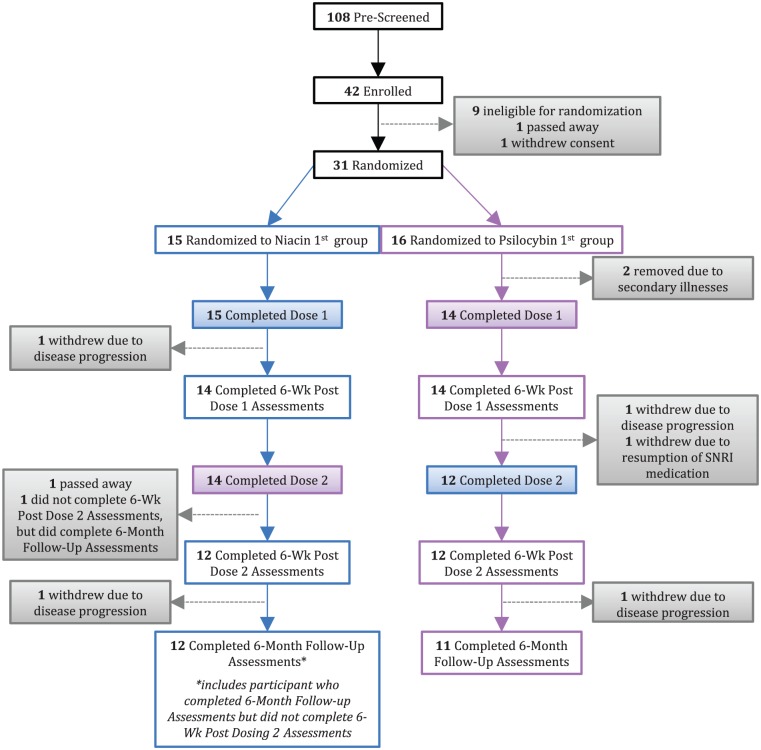
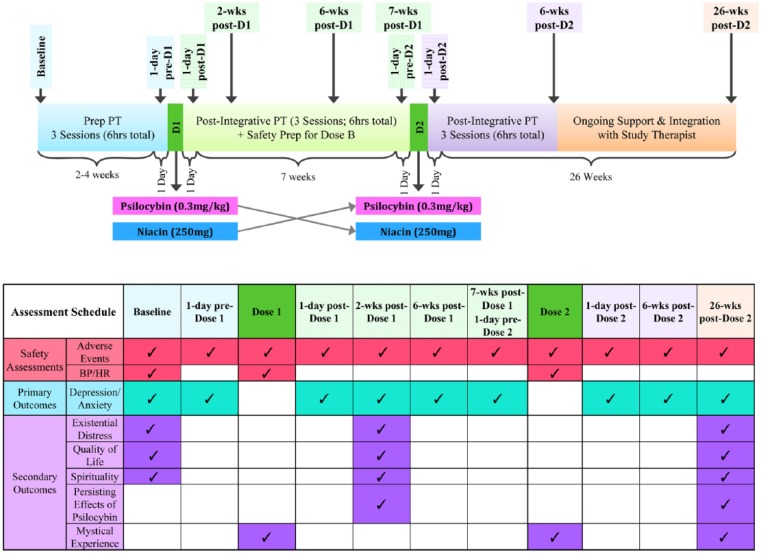
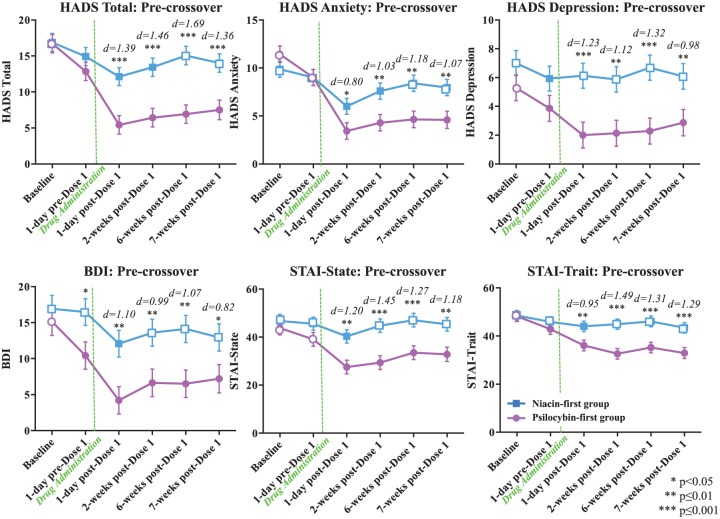
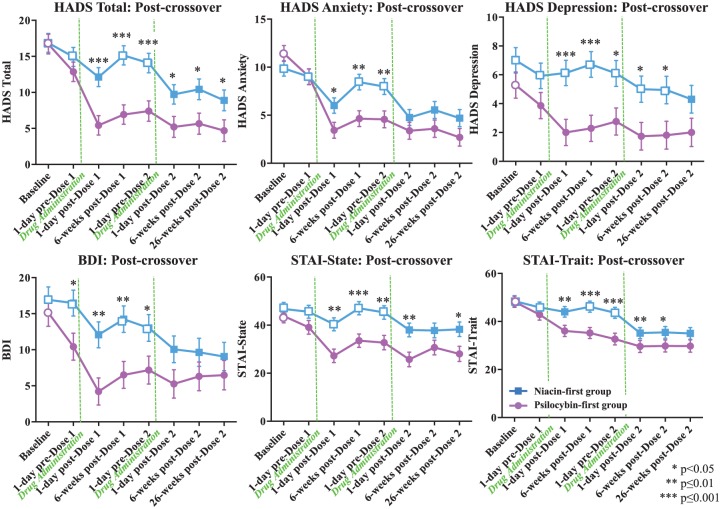
Background: Clinically significant anxiety and depression are common in patients with cancer, and are associated with poor psychiatric and medical outcomes. Historical and recent research suggests a role for psilocybin to treat cancer-related anxiety and depression. Methods: In this double-blind, placebo-controlled, crossover trial, 29 patients with cancer-related anxiety and depression were randomly assigned and received treatment with single-dose psilocybin (0.3 mg/kg) or niacin, both in conjunction with psychotherapy. The primary outcomes were anxiety and depression assessed between groups prior to the crossover at 7 weeks. Results: Prior to the crossover, psilocybin produced immediate, substantial, and sustained improvements in anxiety and depression and led to decreases in cancer-related demoralization and hopelessness, improved spiritual wellbeing, and increased quality of life. At the 6.5-month follow-up, psilocybin was associated with enduring anxiolytic and anti-depressant effects (approximately 60–80% of participants continued with clinically significant reductions in depression or anxiety), sustained benefits in existential distress and quality of life, as well as improved attitudes towards death. The psilocybin-induced mystical experience mediated the therapeutic effect of psilocybin on anxiety and depression. Conclusions: In conjunction with psychotherapy, single moderate-dose psilocybin produced rapid, robust and enduring anxiolytic and anti-depressant effects in patients with cancer-related psychological distress. Trial Registration: ClinicalTrials.gov Identifier: NCT00957359
Overview
The claims and statistics of this paper haven’t been checked yet.
Free: it reads the open-access text and checks the first 5 claims that cite a source we can check. Create a free account to check every claim.
Integrity signals
Registry
Cites
Statistics
Figures
Verification
Claims the paper makes
The claims and statistics of this paper haven’t been checked yet.
Free: it reads the open-access text and checks the first 5 claims that cite a source we can check. Create a free account to check every claim.
Claims other papers make about this one
Each is checked against this paper’s own text: does it say what the citing paper says it does?
The source backs part of the claim, not all of it — or backs it for a different population, condition or comparison.
In the citing paper
“Both participants and their friends and family reported positive effects on attitude towards life and the self, spiritual well-being, social contacts, quality of life, acceptance of death, and optimism (Ross et al., 2016).”
From Psychedelics for the treatment of depression, anxiety, and existential distress in patients with a terminal illness: a systematic review (2022) · cites this paper as Ross et al., 2016
Experimental — accuracy not yet measuredThe source backs part of the claim, not all of it — or backs it for a different population, condition or comparison.
In the citing paper
“Despite efforts to employ “active placebos” (e.g., niacin or a low-dose of a psychedelic) (40, 220), many patients and clinicians can still correctly distinguish between a high dose of a psychedelic drug and an active placebo.”
From Psychedelics and Other Psychoplastogens for Treating Mental Illness. (2021) · cites this paper as [220]
Experimental — accuracy not yet measuredThe source backs part of the claim, not all of it — or backs it for a different population, condition or comparison.
In the citing paper
“and with diminished anxiety and depression in terminal cancer patients (Griffiths et al., 2016;Ross et al., 2016;Barrett et al., 2020).”
From Psychedelics and Neural Plasticity: Therapeutic Implications (2022) · cites this paper as Ross et al., 2016
Experimental — accuracy not yet measuredThe source backs part of the claim, not all of it — or backs it for a different population, condition or comparison.
In the citing paper
“Psilocybin shows promise as a treatment for major depressive disorder (MDD).”
From Single-Dose Psilocybin Treatment for Major Depressive Disorder: A Randomized Clinical Trial (2023) · cites this paper as [8]
Experimental — accuracy not yet measuredThe source backs part of the claim, not all of it — or backs it for a different population, condition or comparison.
In the citing paper
“recent studies suggesting that psilocybin engenders a rapid antidepressant response that far outlasts the presence of the drug in the body.”
From Single-Dose Psilocybin Treatment for Major Depressive Disorder: A Randomized Clinical Trial (2023) · cites this paper as [8]
Experimental — accuracy not yet measured
25 more claims about this paper
Create a free account to see every claim other papers make about this one.
Self-check
Percentages, sums and reported differences re-computed from the paper’s own numbers.
The self-check needs the paper’s full text.
Citations
Cites
The Hospital Anxiety and Depression Scale
Zigmond, A. S., & Snaith, R. P. (1983) · Acta Psychiatrica Scandinavica · doi:10.1111/j.1600-0447.1983.tb09716.x · Cited by 47,139
(2013) · Cited by 44,563
Depression and quality of life in older persons: A review
Sivertsen, H., Bjørkløf, G. H., Engedal, K., Selbæk, G., & Helvik, A.-S. (2015) · Dementia and Geriatric Cognitive Disorders · doi:10.1159/000437299 · Cited by 14,152
Psychometric properties of the Beck Depression Inventory: Twenty-five years of evaluation
Beck, A. T., Steer, R. A., & Carbin, M. G. (1988) · Clinical Psychology Review · doi:10.1016/0272-7358(88)90050-5 · Cited by 11,696 · cited 2×
“cancer); Beck Depression Inventory (BDI) (Beck et al., 1988) self-report depression measure; Spielberger State-Trait Anxiety Inventory (STAI) (Spielberger, 1983) self-report measure of state (STAI state or STAI S) and trait (STAI trait or STAI T) anxiety.”
BackgroundMolecular Mechanisms of Depression: Perspectives on New Treatment Strategies
Lang, U. E., & Borgwardt, S. (2013) · Cellular Physiology and Biochemistry · doi:10.1159/000350094 · Cited by 8,475
Mitchell, A. J., Chan, M., Bhatti, H., Halton, M., Grassi, L., Johansen, C., & Meader, N. (2011) · The Lancet Oncology · doi:10.1016/s1470-2045(11)70002-x · Cited by 2,449 · cited 1×
“Enduring clinically significant anxiety and/or depressive symptoms are common in patients with cancer, present in 30–40% of patients in hospital settings (Mitchell et al., 2011).”
BackgroundManual for the state-trait anxiety inventory (form Y) : "self-evaluation questionnaire"
Spielberger, C. D., Gorsuch, R. L., & Lushene, R. E. (1970) · Consulting Psychologists Press eBooks · Cited by 2,352
Drevets, W. C., Price, J. L., & Furey, M. L. (2008) · Brain Structure and Function · doi:10.1007/s00429-008-0189-x · Cited by 2,241 · cited 7×
“The former is significant because depressive symptoms have been associated with increased activity in the medial PFC (Drevets et al., 2008; Farb et al., 2011) and normalization of medial PFC activity has been demonstrated with anti-depressant treatment (Deakin et al., 2008; Holtzheimer and Mayberg, 2011; Kennedy et al…”
BackgroundInfluentialGreicius, M. D., Flores, B. H., Menon, V., Glover, G. H., Solvason, H. B., Kenna, H., Reiss, A. L., & Schatzberg, A. F. (2007) · Biological Psychiatry · doi:10.1016/j.biopsych.2006.09.020 · Cited by 2,214 · cited 2×
“…pathological and can be understood as part of the therapeutic process (e.g. working through cancer-related psychological or existential distress through challenging encounters or emotionally charged confrontations with cancer-related fearful imagery or symbolism) (Carbonaro et al., 2016).”
BackgroundNichols, D. E. (2016) · Pharmacological Reviews · doi:10.1124/pr.115.011478 · Cited by 1,762 · cited 1×
“In two recently published open-label trials, one using a single dose of ayahuasca (Osorio et al., 2015) and the other using two doses of oral psilocybin (Carhart-Harris et al., 2016), acute and enduring anti-depressant effects were reported.”
Background
Research works printed but not linked: 3
- Doblin R (1991) Pahnke’s ‘Good Friday Experiment’: a long-term follow-up and methodological critique. J Transpersonal Psychol 23(1): 1– 28.
- Pahnke WN (1963) Drugs and mysticism: an analysis of the relationship between psychedelic drugs and the mystical consciousness, PhD dissertation. Cambridge, MA: Harvard University.
- VandeCreek L (1999) The death transcendence scale. In: Hill PC Hood RW (eds) Measures of religiosity. Birmingham, AL: Religious Education Press, pp. 442– 445.
Cited by
Items 301–400 of 1,005
Mertens, L. J., & Preller, K. H. (2021) · Pharmacopsychiatry · doi:10.1055/a-1341-1907 · Cited by 65
The economics of psychedelic-assisted therapies: A research agenda
Marseille, E. A., Bertozzi, S., & Kahn, J. G. (2022) · Frontiers in Psychiatry · doi:10.3389/fpsyt.2022.1025726 · Cited by 68
Risk of bias in randomized clinical trials on psychedelic medicine: A systematic review
Hovmand, O. R., Poulsen, E. D., Arnfred, S., & Storebø, O. J. (2023) · Journal of Psychopharmacology · doi:10.1177/02698811231180276 · Cited by 72
“Seven (Bogenschutz et al., 2022; Gasser et al., 2014; Grob et al., 2011; Holze et al., 2022; Griffiths et al., 2016; Palhano-Fontes et al., 2019; Ross et al., 2016) trials published on the success of”
BackgroundMethodInfluentialPsychedelic Commercialization: A Wide-Spanning Overview of the Emerging Psychedelic Industry
Aday, J. S., Barnett, B. S., Grossman, D., Murnane, K. S., Nichols, C. D., & Hendricks, P. S. (2023) · Psychedelic Medicine · doi:10.1089/psymed.2023.0013 · Cited by 68
“5,6 As such, psychedel-ic-assisted psychotherapy in its current form is best considered as a complex combination treatment that incorporates aspects of both psychopharmacology and psychotherapy.”
Zhao, X., Du, Y., Yao, Y., Dai, W., Yin, Y., Wang, G., Li, Y., & Zhang, L. (2024) · Journal of Psychopharmacology · doi:10.1177/02698811241249436 · Cited by 71
“Increasing evidence suggests that similar to ketamine, psilocybin produces rapid, robust antidepressant-like effects after 1 week that last for up to 12 months (Gukasyan et al., 2022; Ross et al., 2016; Sharma et al., 2023), without serious adverse effects (Carhart-Harris et al., 2016).”
BackgroundFrom relaxed beliefs under psychedelics (REBUS) to revised beliefs after psychedelics (REBAS)
Zeifman, R. J., Spriggs, M. J., Kettner, H., Lyons, T., Rosas, F. E., Mediano, P. A. M., Erritzøe, D., & Carhart-Harris, R. L. (2025) · Scientific Reports · doi:10.1038/s41598-023-28111-3 · Cited by 70
Varker, T., Watson, L., Gibson, K., Forbes, D., & O'Donnell, M. L. (2020) · Journal of Psychoactive Drugs · doi:10.1080/02791072.2020.1817639 · Cited by 74
“Research has found that it can reduce anxiety and depression in cancer patients (Ross et al. 2016).”
BackgroundTrips and neurotransmitters: Discovering principled patterns across 6850 hallucinogenic experiences
Ballentine, G., Friedman, S. F., & Bzdok, D. (2022) · Science Advances · doi:10.1126/sciadv.abl6989 · Cited by 64
Noorani, T. N., Bedi, G., & Muthukumaraswamy, S. D. (2023) · Psychological Medicine · doi:10.1017/s0033291723001289 · Cited by 69
“Between 2016 and 2020, seven RCTs were published, including 193 participants (Danforth et al., 2018; Griffiths et al., 2016; Mithoefer et al., 2018; Ot’alora et al., 2018; Palhano-Fontes et al., 2019; Ross et al., 2016; Wolfson et al., 2020).”
BackgroundAyahuasca: A review of historical, pharmacological, and therapeutic aspects
Ruffell, S., Crosland‐Wood, M., Palmer, R., Netzband, N., Tsang, W., Weiss, B., Gandy, S., Cowley‐Court, T., Halman, A., McHerron, D., et al. (2023) · Psychiatry and Clinical Neurosciences Reports · doi:10.1002/pcn5.146 · Cited by 76
Potential Differences in Psychedelic Actions Based on Biological Sex
Shadani, S., Conn, K., Andrews, Z. B., & Foldi, C. J. (2024) · Endocrinology · doi:10.1210/endocr/bqae083 · Cited by 66
Psilocybin lacks antidepressant-like effect in the Flinders Sensitive Line rat
Jefsen, O., Højgaard, K., Christiansen, S. L., Elfving, B., Nutt, D. J., Wegener, G., & Müller, H. K. (2019) · Acta Neuropsychiatrica · doi:10.1017/neu.2019.15 · Cited by 63
“…serotonin receptor agonist found in ‘magic mushrooms’, has shown a promising therapeutic potential for treatment-resistant depression (Carhart-Harris et al., 2016), end-oflife anxiety (Griffiths et al., 2016; Ross et al., 2016), and addiction (Johnson et al., 2014; Bogenschutz et al., 2015).”
BackgroundMethodInfluentialThe emerging role of psilocybin and MDMA in the treatment of mental illness
Gill, H., Gill, B., Chen-Li, D., El-Halabi, S., Rodrigues, N. B., Cha, D. S., Lipsitz, O., Lee, Y., Rosenblat, J. D., Majeed, A., et al. (2020) · Expert Review of Neurotherapeutics · doi:10.1080/14737175.2020.1826931 · Cited by 61
Psychedelic-induced mystical experiences: An interdisciplinary discussion and critique
Mosurinjohn, S. C., Roseman, L., & Girn, M. (2023) · Frontiers in Psychiatry · doi:10.3389/fpsyt.2023.1077311 · Cited by 75
van Mulukom, V., Patterson, R. E., & van Elk, M. (2020) · Psychopharmacology · doi:10.1007/s00213-020-05568-y · Cited by 62
Day trip to hell: A mixed methods study of challenging psychedelic experiences
Johnstad, P. G. (2021) · Journal of Psychedelic Studies · doi:10.1556/2054.2021.00155 · Cited by 69
“…results indicating therapeutic effect from psychedelics on conditions such as depression (Carhart-Harris et al., 2016, 2018; Grif fi ths et al., 2016; Ross et al., 2016), anxiety (Gasser et al., 2013; Grif fi ths et al., 2016; Grob et al., 2011; Ross et al., 2016), and substance dependence…”
BackgroundInfluentialPsychedelic pleasures: An affective understanding of the joys of tripping
Bøhling, F. (2017) · International Journal of Drug Policy · doi:10.1016/j.drugpo.2017.07.017 · Cited by 66
Safety pharmacology of acute LSD administration in healthy subjects
Holze, F., Caluori, T. V., Vizeli, P., & Liechti, M. E. (2022) · Psychopharmacology · doi:10.1007/s00213-021-05978-6 · Cited by 61
“The goal of LSD administration is to induce a mostly positive experience without anxiety, which is also predictive of a positive long-term therapeutic outcome in patients with depression, anxiety, or anxiety related to a terminal illness (Roseman et al. 2017; Ross et al. 2016; Griffiths et al. 2016) and long-term posi…”
BackgroundLeger, R. F., & Unterwald, E. M. (2021) · Journal of Psychopharmacology · doi:10.1177/02698811211044688 · Cited by 63
“Other trials introduced bias in the selection of the reported result domain via inclusion of multiple scales measuring the same outcome in most included trials (Carhart-Harris et al., 2018; Davis et al., 2021; Gasser et al., 2014; Griffiths et al., 2016; Grob et al., 2011; Palhano-Fontes et al., 2019; Ross et al., 201…”
BackgroundResultInfluentialPsychosis and psychedelics: Historical entanglements and contemporary contrasts
Friesen, P. (2022) · Transcultural Psychiatry · doi:10.1177/13634615221129116 · Cited by 62
“Recent research has focused largely on anxiety and depression at the end of life, treatment-resistant depression, post-traumatic stress disorder, obsessive compulsive disorder, and smoking cessation (Carhart-Harris et al., 2017; Johnson et al., 2017; Ross et al., 2016; Wheeler & Dyer, 2020).”
BackgroundPsychedelic use and intimate partner violence: The role of emotion regulation
Thiessen, M. S., Walsh, Z., Bird, B. M., & Lafrance, A. (2018) · Journal of Psychopharmacology · doi:10.1177/0269881118771782 · Cited by 60
Review of otential sychedelic reatments for PTSD
Henner, R. L., Keshavan, M. S., & Hill, K. P. (2022) · Journal of the Neurological Sciences · doi:10.1016/j.jns.2022.120302 · Cited by 67
Roméo, B., Kervadec, E., Fauvel, B., Strika-Bruneau, L., Amirouche, A., Bezo, A., Piolino, P., & Benyamina, A. (2025) · Neuroscience & Biobehavioral Reviews · doi:10.1016/j.neubiorev.2025.106086 · Cited by 68
Ona, G., & Bouso, J. C. (2020) · Neuroscience & Biobehavioral Reviews · doi:10.1016/j.neubiorev.2020.09.035 · Cited by 58
A Qualitative Exploration of Relational Ethical Challenges and Practices in Psychedelic Healing
Brennan, B., Jackson, M. A., MacLean, K. A., & Ponterotto, J. G. (2021) · Journal of Humanistic Psychology · doi:10.1177/00221678211045265 · Cited by 66
Transient Elevation of Plasma Glucocorticoids Supports Psilocybin-Induced Anxiolysis in Mice
Jones, N., Zahid, Z., Grady, S. M., Sultan, Z. W., Zheng, Z., Razidlo, J. A., Banks, M. I., & Wenthur, C. J. (2023) · ACS Pharmacology & Translational Science · doi:10.1021/acsptsci.3c00123 · Cited by 61
Wolff, M., Mertens, L. J., Walter, M., Enge, S., & Evens, R. (2022) · Journal of Psychopharmacology · doi:10.1177/02698811211073758 · Cited by 58
“…with chronic or terminal illness (Agin-Liebes et al., 2020; Anderson et al., 2020; Gasser et al., 2014; Griffiths et al., 2016; Grob et al., 2011; Ross et al., 2016), obsessive-compulsive disorder (Moreno et al., 2006), and substance use disorders (Bogenschutz et al., 2015; Johnson et al., 2014,…”
BackgroundReckweg, J., Mason, N. L., van Leeuwen, C., Toennes, S. W., Terwey, T. H., & Ramaekers, J. G. (2021) · Frontiers in Pharmacology · doi:10.3389/fphar.2021.760671 · Cited by 58
Kolaczynska, K. E., Liechti, M. E., & Duthaler, U. (2021) · Journal of Chromatography B · doi:10.1016/j.jchromb.2020.122486 · Cited by 56
Effective Connectivity of Functionally Anticorrelated Networks Under Lysergic Acid Diethylamide
Stoliker, D., Novelli, L., Vollenweider, F. X., Egan, G. F., Preller, K. H., & Razi, A. (2022) · Biological Psychiatry · doi:10.1016/j.biopsych.2022.07.013 · Cited by 60
“Altered self-boundaries may be important to these therapeutic outcomes (6,70,71).”
Depression and anxiety in glioma patients
van der Meer, P. B., Dirven, L., Hertler, C., Boele, F. W., Batalla, A., Walbert, T., Rooney, A. G., & Koekkoek, J. A. F. (2023) · Neuro-Oncology Practice · doi:10.1093/nop/npad019 · Cited by 64
Chen, Y., Xiao-fang, T., Ren, J., Chun-quan, Y., & Cui, Y. (2019) · Evidence-based Complementary and Alternative Medicine · doi:10.1155/2019/3961395 · Cited by 74
LSD use in the United States: Trends, correlates, and a typology of us
Killion, B., Hai, A. H., Alsolami, A., Vaughn, M. G., Oh, P. S., & Salas‐Wright, C. P. (2021) · Drug and Alcohol Dependence · doi:10.1016/j.drugalcdep.2021.108715 · Cited by 58
Elsey, J. W. B. (2017) · Drug Science Policy and Law · doi:10.1177/2050324517723232 · Cited by 57
“The capacity of the psychedelic experience to help resolve such existential concerns is a plausible contributor to the positive effects of psilocybin on mood and anxiety in patients with advanced cancer (Grob et al., 2011; Ross et al., 2016).”
BackgroundExperience of Music Used With Psychedelic Therapy: A Rapid Review and Implications
O’Callaghan, C. C., Hubik, D. J., Dwyer, J. L., Williams, M. L., & Ross, M. (2020) · Journal of Music Therapy · doi:10.1093/jmt/thaa006 · Cited by 58
Psychedelics as Transformative Therapeutics
Roth, B. L., & Gumpper, R. H. (2023) · American Journal of Psychiatry · doi:10.1176/appi.ajp.20230172 · Cited by 58
Política de drogas e Saúde Coletiva: diálogos necessários
Gomes-Medeiros, D., de Faria, P. H., Campos, G. W. D. S., & Tófoli, L. F. (2019) · Cadernos de Saúde Pública · doi:10.1590/0102-311x00242618 · Cited by 114
Psychosocial and Integrative Oncology: Interventions Across the Disease Trajectory.
Carlson, L. E. (2023) · Annual Review of Psychology · doi:10.1146/annurev-psych-032620-031757 · Cited by 56
Luoma, J. B., Sabucedo, P., Eriksson, J., Gates, N., & Pilecki, B. C. (2019) · Journal of Contextual Behavioral Science · doi:10.1016/j.jcbs.2019.10.003 · Cited by 56
Evens, R., Schmidt, M. E., Majić, T., & Schmidt, T. T. (2023) · Therapeutic Advances in Psychopharmacology · doi:10.1177/20451253231172254 · Cited by 56
“3,5, 34,49 c One study observed an increase in convergent and divergent thinking at different subacute assessment points and was therefore classified half as ‘increase’ and half as ‘decrease’.”
Backgrounddos Santos, R. G., Hallak, J. E., Baker, G., & Dursun, S. (2021) · Journal of Psychopharmacology · doi:10.1177/0269881120986422 · Cited by 55
“The controlled trials of psilocybin (Griffiths et al., 2016; Grob et al., 2011; Ross et al., 2016) and LSD (Gasser et al., 2014) for depression and anxiety in life-threatening diseases/cancer and the wait list-controlled trial of psilocybin for MDD (Davis et al., 2020) used elaborate…”
BackgroundYaden, D. B., Berghella, A. P., Regier, P. S., Garcia‐Romeu, A., Johnson, M. W., & Hendricks, P. S. (2021) · International Journal of Drug Policy · doi:10.1016/j.drugpo.2021.103380 · Cited by 59
Argyri, E. K., Evans, J., Luke, D. P., Michael, P., Michelle, K., Rohani-Shukla, C., Suseelan, S., Prideaux, E., McAlpine, R. G., Murphy-Beiner, A., et al. (2025) · PLoS ONE · doi:10.1371/journal.pone.0322501 · Cited by 59
Wießner, I., Falchi-Carvalho, M., Palhano-Fontes, F., Feilding, A., Ribeiro, S. T. G., & Tófoli, L. F. (2021) · Psychological Medicine · doi:10.1017/s0033291721002531 · Cited by 62
Psychedelic-assisted psychotherapy: Where is the psychotherapy research
Aday, J. S., Horton, D., Fernandes-Osterhold, G., O’Donovan, A., Bradley, E. R., Rosen, R. C., & Woolley, J. D. (2024) · Psychopharmacology · doi:10.1007/s00213-024-06620-x · Cited by 54
“Nonetheless, the psyche-delic peak therapy model has been ubiquitously applied to modern PAP research—across various psychedelic drugs, research groups, and clinical diagnoses (Davis et al. 2021b; Johnson et al. 2014; Ross et al. 2016).”
Agin-Liebes, G., Zeifman, R., Luoma, J. B., Garland, E. L., Campbell, W. K., & Weiss, B. (2022) · Journal of Psychopharmacology · doi:10.1177/02698811221080165 · Cited by 54
“These results are aligned with previous studies associating mystical experience with improved outcomes (Griffiths et al., 2016; Ross et al., 2016) and add support to the novel idea that cognitive reappraisal may have a role in therapeutic psychedelic-induced changes.”
ResultSelf-citationClose, J. B., Hajien, E. C., Watts, R., Roseman, L., & Carhart-Harris, R. L. (2020) · Journal of Contextual Behavioral Science · doi:10.1016/j.jcbs.2020.01.005 · Cited by 54
Isness: Using Multi-Person VR to Design Peak Mystical Type Experiences Comparable to Psychedelics
Glowacki, D. R., Wonnacott, M. D., Freire, R., Glowacki, B. R., Gale, E. M., Pike, J. E., de Haan, T., Chatziapostolou, M., & Metatla, O. (2020) · Proceedings of the 2020 CHI Conference on Human Factors in Computing Systems · doi:10.1145/3313831.3376649 · Cited by 54
“The intervening years have seen a number of additional studies, where psilocybin has been administered to healthy volunteers; [24, 26] patients with life-threatening cancer diagnoses; [25, 67] people dealing with addiction; [18, 38, 39] and those afflicted with treatment-resistant depression [13].”
BackgroundVizeli, P., Straumann, I., Holze, F., Schmid, Y., Dolder, P. C., & Liechti, M. E. (2021) · Scientific Reports · doi:10.1038/s41598-021-90343-y · Cited by 57
Belouin, S. J., Averill, L. A., Henningfield, J. E., Xenakis, S. N., Donato, I., Grob, C. S., Berger, A., Magar, V., Danforth, A. L., & Anderson, B. T. (2022) · Neuropharmacology · doi:10.1016/j.neuropharm.2022.109214 · Cited by 59
Schipper, S., Nigam, K. B., Schmid, Y., Piechotta, V., Ljuslin, M., Beaussant, Y., Schwarzer, G., & Boehlke, C. S. (2024) · Cochrane Database of Systematic Reviews · doi:10.1002/14651858.cd015383.pub2 · Cited by 66
Back, A. L., Freeman-Young, T. K., Morgan, L., Sethi, T., Baker, K. K., Myers, S., McGregor, B. A., Harvey, K., Tai, M., Kollefrath, A. W., et al. (2024) · JAMA Network Open · doi:10.1001/jamanetworkopen.2024.49026 · Cited by 58
Effinger, D. P., Quadir, S. G., Ramage, M. C., Cone, M. G., & Herman, M. A. (2023) · Translational Psychiatry · doi:10.1038/s41398-023-02414-5 · Cited by 55
“These findings lend to recent studies in both clinical [11, 13, 65] and preclinical [66] literature showing persistent reductions in depressive behavior after a single dose of psilocybin.”
ResultPsychedelics in the treatment of eating disorders: Rationale and potential mechanisms
Calder, A. E., Mock, S., Friedli, N., Pasi, P., & Hasler, G. (2023) · European Neuropsychopharmacology · doi:10.1016/j.euroneuro.2023.05.008 · Cited by 55
Naturalistic Psychedelic Use: A World Apart from Clinical Care
Glynos, N. G., Fields, C. W., Barron, J., Herberholz, M., Kruger, D. J., & Boehnke, K. F. (2022) · Journal of Psychoactive Drugs · doi:10.1080/02791072.2022.2108356 · Cited by 59
“2021) end of life anxiety (Ross et al. 2016), and substance use disorders including tobacco addiction (Johnson, Garcia-Romeu, and Griffiths 2016) and alcohol use disorder (Bogenschutz et al.”
BackgroundPędzich, B. D., Rubens, S., Sekssaoui, M., Pierre, A., Schuerbeek, A. V., Marin, P., Bockaert, J., Valjent, E., Bécamel, C., & Bundel, D. D. (2022) · Neuropsychopharmacology · doi:10.1038/s41386-022-01324-2 · Cited by 56
Group psychedelic therapy: empirical estimates of cost-savings and improved access
Marseille, E. A., Stauffer, C. S., Agrawal, M., Thambi, P. M., Roddy, K., Mithoefer, M. C., Bertozzi, S., & Kahn, J. G. (2023) · Frontiers in Psychiatry · doi:10.3389/fpsyt.2023.1293243 · Cited by 58
Seeing without self: Discovering new meaning with psychedelic-assisted psychotherapy
Fischman, L. G. (2019) · Neuropsychoanalysis · doi:10.1080/15294145.2019.1689528 · Cited by 44
“Treating existential anxiety related to approaching death (i.e. terminal illness) is an excellent example of a dimensional application (Fisher, 1970; Gasser et al., 2015; Griffiths et al., 2016; Grob et al., 2011; Pahnke, Kurland, Goodman, & Richards, 1969; Ross et al., 2016).”
BackgroundPsychedelics and potential benefits in “healthy normals”: A review of the literature
Gandy, S. (2019) · Journal of Psychedelic Studies · doi:10.1556/2054.2019.029 · Cited by 59
“, 2011; Griffiths, Richards, McCann, & Jesse, 2006; MacLean, Johnson, & Griffiths, 2011) and patient (Carhart-Harris et al., 2018; Garcia-Romeu, Griffiths, & Johnson, 2016; Griffiths et al., 2016; Ross et al., 2016) populations have found that the occurrence of a mystical-type experience during a psychedelic session i…”
BackgroundOptimism and social support as contributing factors to spirituality in Cancer patients
Ciria‐Suarez, L., Calderón, C., Montés, A. F., Antoñanzas, M., Hernández, R., Rogado, J., Pacheco-Barcía, V., Ansensio-Martínez, E., Palacín-Lois, M., & Jiménez‐Fonseca, P. (2021) · Supportive Care in Cancer · doi:10.1007/s00520-020-05954-4 · Cited by 57
“Likewise, psilocybin-assisted psychotherapy has the potential to reduce depression/anxiety symptoms in and increase life meaning and death acceptance in a safe and efficacious manner [49, 50].”
BackgroundSkosnik, P. D., Sloshower, J., Safi-Aghdam, H., Pathania, S., Syed, S., Pittman, B., & D’Souza, D. C. (2023) · Journal of Psychopharmacology · doi:10.1177/02698811231179800 · Cited by 51
“…of early phase trials have suggested that psilocybin-assisted psychotherapy may have rapid-acting and long-lasting therapeutic effects in depression, anxiety, substance use, smoking cessation, migraine, and other disorders (Carhart-Harris et al., 2016; Griffiths et al., 2016; Ross et al., 2016).”
BackgroundCarhart-Harris, R. L., Wagner, A. C., Agrawal, M., Kettner, H., Rosenbaum, J. F., Gazzaley, A., Nutt, D. J., & Erritzoe, D. (2022) · Journal of Psychopharmacology · doi:10.1177/02698811211008567 · Cited by 51
“, 2019) with psychedelic therapy, as well as the maintenance of psychological wellness (Ross et al., 2016), (2) recognition of the bidirectional relationship between psychological and physical health, and (3) awareness of the substantial costs required to implement any human drug study, let alone a clinical trial with…”
BackgroundFoldi, C. J., Liknaitzky, P., Williams, M., & Oldfield, B. J. (2020) · Frontiers in Neuroscience · doi:10.3389/fnins.2020.00043 · Cited by 51
Brennan, B., Kelman, A. R., & Belser, A. (2023) · Psychedelic Medicine · doi:10.1089/psymed.2023.0007 · Cited by 52
Self-citationStoliker, D., Novelli, L., Vollenweider, F. X., Egan, G. F., Preller, K. H., & Razi, A. (2024) · Biological Psychiatry · doi:10.1016/j.biopsych.2024.01.002 · Cited by 53
Serotonergic Psychedelics: Experimental Approaches for Assessing Mechanisms of Action
Canal, C. E. (2018) · Handbook of experimental pharmacology · doi:10.1007/164_2018_107 · Cited by 53
“These neural perturbations correlate with dissolution of ego boundaries (loss of the self), suggesting the possibility that this psychedelic phenomenon may, in certain individuals, help relieve psychiatric distress (c.f. Griffiths et al. 2016; Ross et al. 2016; Vollenweider 2001).”
BackgroundWhelan, A., & Johnson, M. I. (2018) · Pain Management · doi:10.2217/pmt-2017-0068 · Cited by 51
Magaraggia, I., Kuiperes, Z., & Schreiber, R. (2021) · Neurobiology of Learning and Memory · doi:10.1016/j.nlm.2021.107467 · Cited by 49
“In the last decade, with the start of a second wave, small randomized clinical trials with improved experimental designs were able to replicate these findings in a similar patient population (Griffiths et al., 2016; Grob et al., 2011; Ross et al., 2016).”
BackgroundNiles, H. F., Fogg, C., Kelmendi, B., & Lazenby, M. (2021) · BMC Palliative Care · doi:10.1186/s12904-021-00889-x · Cited by 54
“Randomizedcontrolled crossover trials using psilocybin have demonstrated reduced depression, anxiety and fear of death in patients with cancer- associated anxiety or depression [14–16], with benefits persisting in 60–80% of survivors at 6 month follow-up [14, 15].”
Rosa, W. E., Sager, Z. S., Miller, M. E., Bernstein, I., Rinaldi, A. D., Addicott, K., Ljuslin, M., Adrian, C., Back, A. L., Beachy, J., et al. (2022) · Journal of Palliative Medicine · doi:10.1089/jpm.2022.0036 · Cited by 54
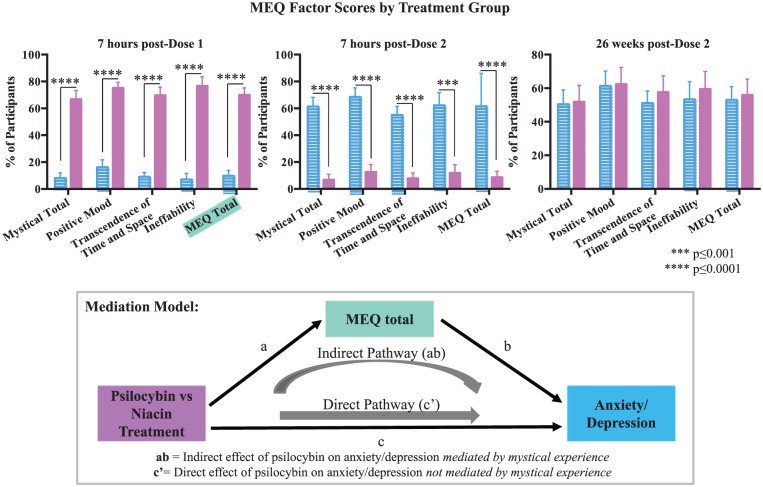
“12,39 This therapeutic effect was mediated by the intensity of mystical states patients may experience during dosing sessions.”
InfluentialSelf-citationAre psychedelics the answer to chronic pain: A review of current literature
Kooijman, N. I., Willegers, T., Reuser, A. M., Mulleners, W. M., Kramers, C., Vissers, K. C. P., & van der Wal, S. E. I. (2023) · Pain Practice · doi:10.1111/papr.13203 · Cited by 53
“However, recent studies on psychedelics and cancerrelated psychological disorders have not shown any significant adverse events.(10,58) Patients may also have several psychological complaints like depression and anxiety.”
BackgroundPsychotherapy with Psilocybin for Depression: Systematic Review
Dawood-Hristova, J. J., & Pérez‐Jover, V. (2023) · Behavioral Sciences · doi:10.3390/bs13040297 · Cited by 56
“The preparation period had a variable duration range, from just one session [11–14] to three or more sessions over several weeks [2,9,10,15].”
BackgroundInfluentialThe role of neurotrophic factors in novel, rapid psychiatric treatments
Kim, J., He, M. J., Widmann, A. K., & Lee, F. S. (2023) · Neuropsychopharmacology · doi:10.1038/s41386-023-01717-x · Cited by 51
“…randomized, double-blinded, placebo-controlled trial with 29 patients with life-threatening cancer also showed that psilocybin had immediate, substantial effects on their cancer-related anxiety and depression, which were sustained at 6.5 months post-psilocybin in 60 – 80% of the patients [193].”
BackgroundInfluentialEffects of DMT on mental health outcomes in healthy volunteers
Timmermann, C., Zeifman, R. J., Erritzøe, D., Nutt, D. J., & Carhart-Harris, R. L. (2024) · Scientific Reports · doi:10.1038/s41598-024-53363-y · Cited by 55
Yu, Z., Burback, L., Winkler, O., Xu, L., Dennett, L., Vermetten, E. H. G. J. M., Greenshaw, A. J., Li, X., Milne, M., Wang, F., et al. (2024) · Frontiers in Psychiatry · doi:10.3389/fpsyt.2024.1386321 · Cited by 53
Ethnoracial inclusion in clinical trials of psychedelics: a systematic review
Hughes, M. E., & Garcia‐Romeu, A. (2024) · EClinicalMedicine · doi:10.1016/j.eclinm.2024.102711 · Cited by 52
Tolerance and Tachyphylaxis to Head Twitches Induced by the 5-HT2A Agonist 25CN-NBOH in Mice
Buchborn, T., Lyons, T., & Knöpfel, T. (2018) · Frontiers in Pharmacology · doi:10.3389/fphar.2018.00017 · Cited by 51
“…with potential implications of both agonists and antagonists in the treatment of various psychiatric conditions, including depression and anxiety (Mascher, 1967; Quesseveur et al., 2012; Buchborn et al., 2014; Carhart-Harris et al., 2016; Ross et al., 2016; Carhart-Harris and Goodwin, 2017).”
BackgroundHayes, S. C., Law, S., Malady, M., Zhu, Z., & Bai, X. (2019) · Journal of Contextual Behavioral Science · doi:10.1016/j.jcbs.2019.11.005 · Cited by 57
Hodge, A. T., Sukpraprut‐Braaten, S., Narlesky, M. R., & Strayhan, R. C. (2022) · Journal of Psychoactive Drugs · doi:10.1080/02791072.2022.2044096 · Cited by 51
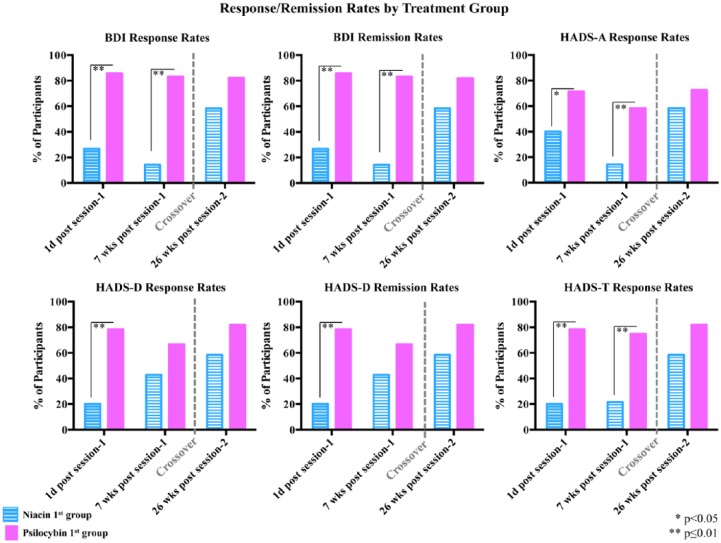
“Also, a statistically significant decrease in BDI score was detected in the psilocybin group compared to the niacin group pre-crossover (Ross et al. 2016).”
BackgroundResultInfluentialPersonality change in a trial of psilocybin therapy v. escitalopram treatment for depression
Weiss, B., Ginige, I., Shannon, L., Giribaldi, B., Murphy-Beiner, A., Murphy, R., Baker-Jones, M., Martell, J., Nutt, D. J., Carhart-Harris, R. L., et al. (2024) · Psychological Medicine · doi:10.1017/s0033291723001514 · Cited by 40
“In recent years, psychedelic therapy has been increasingly studied as a psychiatric intervention, with ten published clinical trials demonstrating promising efficacy for depressive symptoms (e.g. Carhart-Harris et al., 2016a; Davis et al., 2021; Goodwin et al., 2022; Ross et al., 2016; Sloshower et al., 2023).”
Toxicology and Analysis of Psychoactive Tryptamines
Malaca, S., Faro, A. F. L., Tamborra, A., Pichini, S., Busardò, F. P., & Huestis, M. A. (2020) · International Journal of Molecular Sciences · doi:10.3390/ijms21239279 · Cited by 52
The frontiers of new psychedelic therapies: A survey of sociological themes and issues
Andrews, T., & Wright, K. (2022) · Sociology Compass · doi:10.1111/soc4.12959 · Cited by 53
Potential benefits and harms: a review of poisonous mushrooms in the world
He, M.-Q., Wang, M.-Q., Chen, Z., Deng, W.-Q., Li, T., Vizzini, A., Jeewon, R., Hyde, K. D., & Zhao, R.-L. (2022) · Fungal Biology Reviews · doi:10.1016/j.fbr.2022.06.002 · Cited by 53
Psiuk, D., Nowak, E., Dycha, N., Łopuszańska, U., Kurzepa, J., & Samardakiewicz, M. (2022) · International Journal of Molecular Sciences · doi:10.3390/ijms231911450 · Cited by 55
“Psilocybin’s rapid onset was reported in only one study, conducted by Ross et al., 2016.”
BackgroundInfluentialBornemann, J., Close, J. B., Spriggs, M. J., Carhart-Harris, R. L., & Roseman, L. (2021) · Frontiers in Psychiatry · doi:10.3389/fpsyt.2021.735427 · Cited by 53
Effect of lysergic acid diethylamide (LSD) on reinforcement learning in humans
Kanen, J. W., Luo, Q., Kandroodi, M. R., Cardinal, R. N., Robbins, T. W., Nutt, D. J., Carhart-Harris, R. L., & den Ouden, H. E. M. (2022) · Psychological Medicine · doi:10.1017/s0033291722002963 · Cited by 51
“…psychedelics are under investigation trans-diagnostically for diverse clinical phenomena including depression (Carhart-Harris et al. 2016, 2018; Ross et al. 2016), anxiety (Griffiths et al. 2016; Grob et al. 2011), alcohol (Bogenschutz et al. 2015) and nicotine abuse (Johnson et al. 2014), OCD…”
BackgroundPsychedelics and virtual reality: parallels and applications
Aday, J. S., Davoli, C. C., & Bloesch, E. K. (2020) · Therapeutic Advances in Psychopharmacology · doi:10.1177/2045125320948356 · Cited by 47
LSD-assisted therapy in patients with anxiety: open-label prospective 12-month follow-up
Holze, F., Gasser, P., Müller, F., Strebel, M., & Liechti, M. E. (2024) · The British Journal of Psychiatry · doi:10.1192/bjp.2024.99 · Cited by 49
“6,7,34 Evidence of long-term prediction, however, is still unclear.”
BackgroundSakloth, F., Leggett, E., Moerke, M. J., Townsend, E. A., Banks, M. L., & Negus, S. S. (2019) · Experimental and Clinical Psychopharmacology · doi:10.1037/pha0000253 · Cited by 50
“…with hallucinogens might be effective to reduce sensitivity to abused drugs or potentially depressive stimuli (Bogenschutz & Johnson, 2016; Ross et al., 2016; Whelan & Johnson, 2018), the effects of the abused monoamine releaser methamphetamine and prodepressant kappa opioid receptor…”
BackgroundSouza, R. C. Z., Zandonadi, F. S., Freitas, D. P., Tófoli, L. F. F., & Sussulini, A. (2019) · Journal of Chromatography B · doi:10.1016/j.jchromb.2019.06.014 · Cited by 41
Depression in the medically ill
Rosenblat, J. D., Kurdyak, P. A., Cosci, F., Berk, M., Maes, M. H. J., Brunoni, A. R., Li, M., Rodin, G., McIntyre, R. S., & Carvalho, A. F. (2019) · Australian & New Zealand Journal of Psychiatry · doi:10.1177/0004867419888576 · Cited by 54
“…new and emerging medications are currently under investigation in the treatment of depression in the medically ill. Recent studies have demonstrated promising preliminary results for rapid antidepressant effects with psilocybin in patients receiving palliative care (Ross, 2018; Ross et al., 2016).”
ResultRodrigues, L. S., Rossi, G. N., Rocha, J. M., Osório, F. D. L., Bouso, J. C., Hallak, J. E. C., & SANTOS, R. G. D. (2021) · European Archives of Psychiatry and Clinical Neuroscience · doi:10.1007/s00406-021-01267-7 · Cited by 51
“Two randomized trials assessed the effects of psilocybin for anxiety and depression in patients with cancer [21, 22] and two open-label trials assessed the effects of psilocybin in patients with depression [23, 24].”
BackgroundEvaluating the Potential Use of Serotonergic Psychedelics in Autism Spectrum Disorder
Markopoulos, A., Inserra, A., De Gregorio, D., & Gobbi, G. (2022) · Frontiers in Pharmacology · doi:10.3389/fphar.2021.749068 · Cited by 46
Penn, A., Phelps, J., Rosa, W. E., & Watson, J. (2021) · Journal of Humanistic Psychology · doi:10.1177/00221678211011013 · Cited by 48
“…illness, patients treated with a single session of psilocy-bin-assisted therapy had significant reductions in measures of depression and anxiety (Ross et al., 2016) that persisted for at least 4.5 years following the treatment with no additional psychedelic treatments (Agin-Liebes et al., 2020).”
BackgroundMethodInfluentialKisely, S., Connor, M., Somogyi, A. A., & Siskind, D. (2023) · Australian & New Zealand Journal of Psychiatry · doi:10.1177/00048674221083868 · Cited by 38
“One study reported statistically significant differences between psilocybin and niacin (Ross et al., 2016), and another between high- and low-dose psilocybin for subjects with anxiety or depression due to LTD (Griffiths et al., 2016).”
BackgroundResultInfluentialA Brief Historical Overview of Psychedelic Research
Geyer, M. A. (2023) · Biological Psychiatry Cognitive Neuroscience and Neuroimaging · doi:10.1016/j.bpsc.2023.11.003 · Cited by 53
Richardson, E., Patterson, R., Meltzer-Brody, S. E., McClure, R. W., & Tow, A. C. (2024) · Annual Review of Medicine · doi:10.1146/annurev-med-050423-095712 · Cited by 52
Beaussant, Y., Sanders, J. J., Sager, Z. S., Tulsky, J. A., Braun, I. M., Blinderman, C. D., Bossis, A. P., & Byock, I. R. (2020) · Journal of Palliative Medicine · doi:10.1089/jpm.2019.0603 · Cited by 49
“…studied include the following: (1) the psilocybin mystical experience model that is used in patients with advanced cancer or alcohol use disorder 20,22,23 ; (2) methylenedioxymethamphetamine (MDMA)-assisted therapy for individuals with post-traumatic stress disorder (PTSD) or autism spectrum…”
Self-citationDonovan, L. L., Johansen, J. V., Ros, N. F., Jaberi, E., Línnet, K., Johansen, S. S., Ozenne, B., Issazadeh‐Navikas, S., Hansen, H. D., & Knudsen, G. M. (2020) · European Neuropsychopharmacology · doi:10.1016/j.euroneuro.2020.11.013 · Cited by 50
Straumann, I., Ley, L., Holze, F., Becker, A., Klaiber, A., Wey, K., Duthaler, U., Varghese, N., Eckert, A., & Liechti, M. E. (2023) · Neuropsychopharmacology · doi:10.1038/s41386-023-01609-0 · Cited by 52
Metadata
- Authors
- Ross, S., Bossis, A., Guss, J., Agin-Liebes, G., Malone, T., Cohen, B., Mennenga, S. E., Belser, A., Kalliontzi, K., Babb, J., Su, Z., Corby, P., & Schmidt, B. L.
- Affiliations
- NYU Langone Health (US)
- Bellevue Hospital Center (US)
- Palo Alto University (US)
- New York University (US)
- Corresponding author
- Ross, Stephen
- Venue
- Journal of Psychopharmacology
- Publisher
- SAGE Publications
- Published
- 2016-11-30
- Volume
- 30
- Issue
- 12
- Pages
- 1165-1180
- ISSN
- 0269-8811 (ISSN-L)
- 1461-7285
- PMC
- PMC5367551
- OpenAlex
- W2559739670
- Semantic Scholar
- 1129a840891b76fb9022b6e91d1e1f4d2dafcb04
- Cited by
- 1,698
- References
- 90
- Citations by year
- 2026: 184 · 2025: 239 · 2024: 264 · 2023: 239 · 2022: 224 · 2021: 182 · 2020: 144 · 2019: 64 · 2018: 88 · 2017: 52 · 2016: 15
- FWCI
- 97.72
- Type
- journal article
- Language
- en
- Open access
- hybrid
- doi.org
- Licence
- cc-by
- journals.sagepub.com/page/policies/text-and-data-mining-license (tdm)
- Locations
- Journal of Psychopharmacology (publishedVersion, cc-by)
- PubMed Central (publishedVersion, cc-by)
- PubMed (publishedVersion)
- Funders
- National Institutes of Health (UL1TR000038)
- National Center for Advancing Translational Sciences
- Topics
- Social Sciences › Psychology › Clinical Psychology › Psychedelics and Drug Studies
- Health Sciences › Medicine › Oncology › Cancer survivorship and care
- Social Sciences › Health › Religion, Spirituality, and Psychology
- Keywords
- psilocybin, cancer-related anxiety, cancer-related depression, mystical experience, psychotherapy, existential suffering, spiritual well-being, quality of life, attitudes toward death, hopelessness, demoralization, psychedelic therapy
- MeSH terms
- Adult, Aged, Anxiety, Depression, Double-Blind Method, Female, Hallucinogens, Humans, Male, Middle Aged, Neoplasms, Psilocybin, Psychotherapy, Quality of Life, Surveys and Questionnaires, Cross-Over Studies, Young Adult
About these checks
Registry, retraction, Cites and statistics results are computed, not judged, with one exception: a printed reference that no index lists is read once by a model before it counts as a citation error. Claims are extracted by a model and kept only when their quote appears verbatim in the text; each cited source is then checked, with a model’s help, for whether it says what the claim relies on. Those verdicts can be wrong — read the claim’s quote and the cited source before relying on one.
Statistics and arithmetic are recomputed, not judged.
Confidence bands are shown only for fields calibrated on our annotated test set. None is calibrated yet, so no band is shown.
What counts as a claim ›How we measure confidence ›How we check this ›
Are you an author, or do you see a problem with this page? Request a review
Data sources
Bibliographic data: Semantic Scholar, OpenAlex, Crossref.
Contains information from the Semantic Scholar Academic Graph Datasets, made available under the ODC Attribution License (ODC-BY 1.0).
Semantic Scholar’s data is described in: Kinney, R., et al. (2023). The Semantic Scholar Open Data Platform. arXiv:2301.10140.
