

Rapid and sustained symptom reduction following psilocybin treatment for anxiety and depression in patients with life-threatening cancer: a randomized controlled trial.
Open accessThe DOI matches its Crossref record; 90 of the 90 references it cites were found in a registry or an index.
Abstract
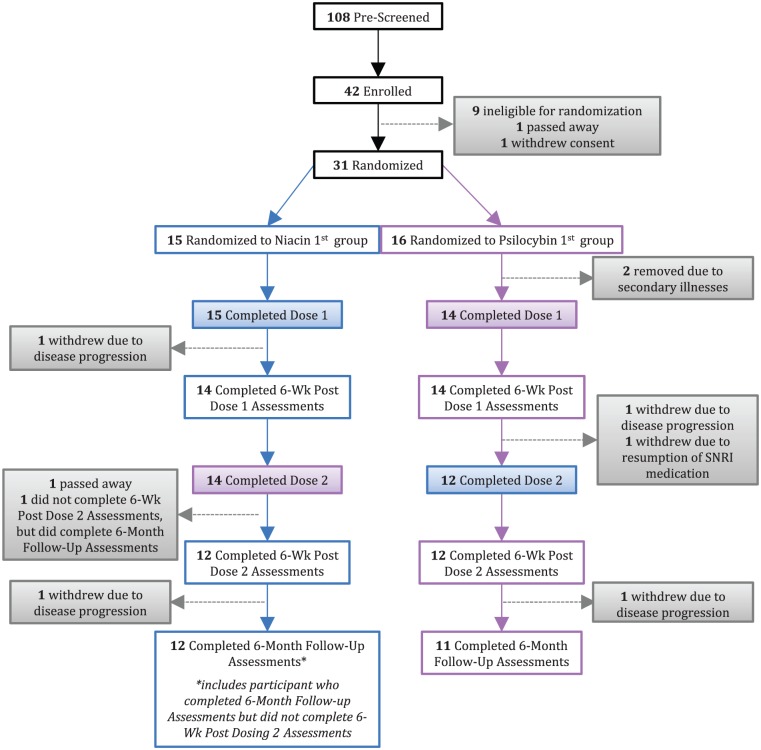
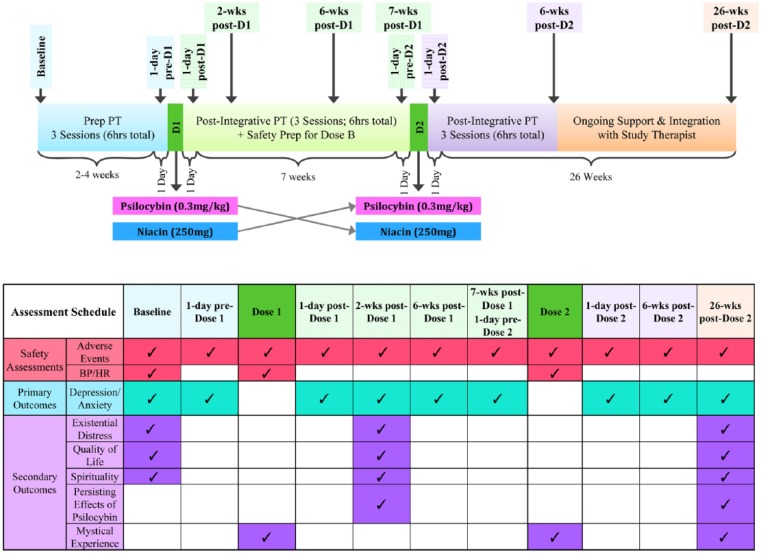
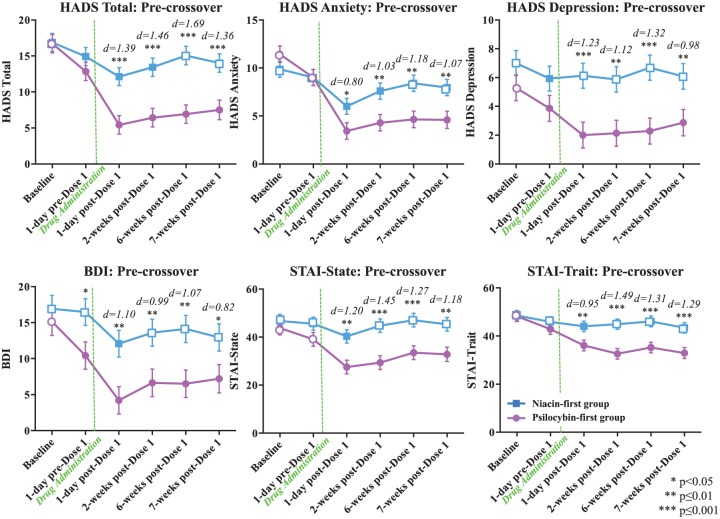
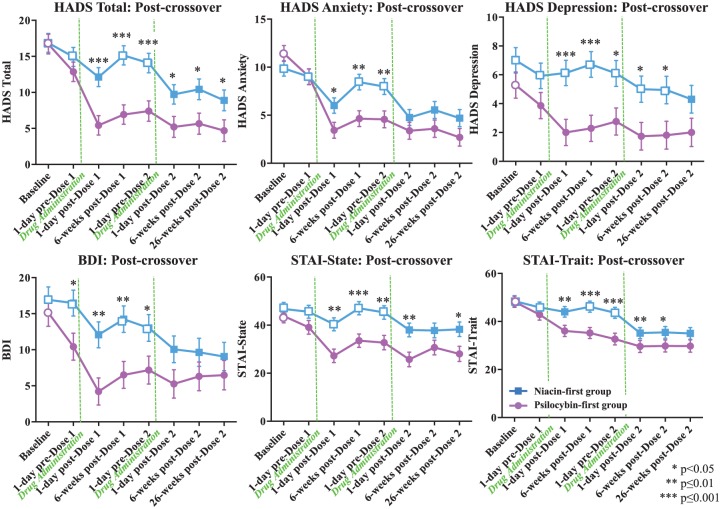
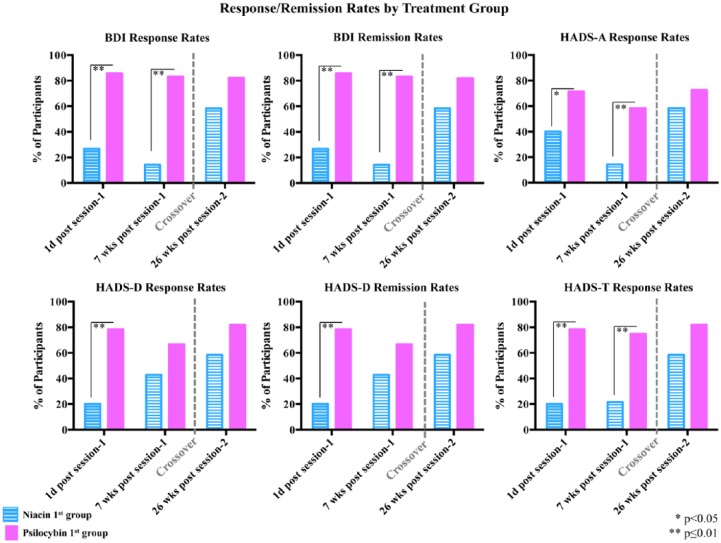
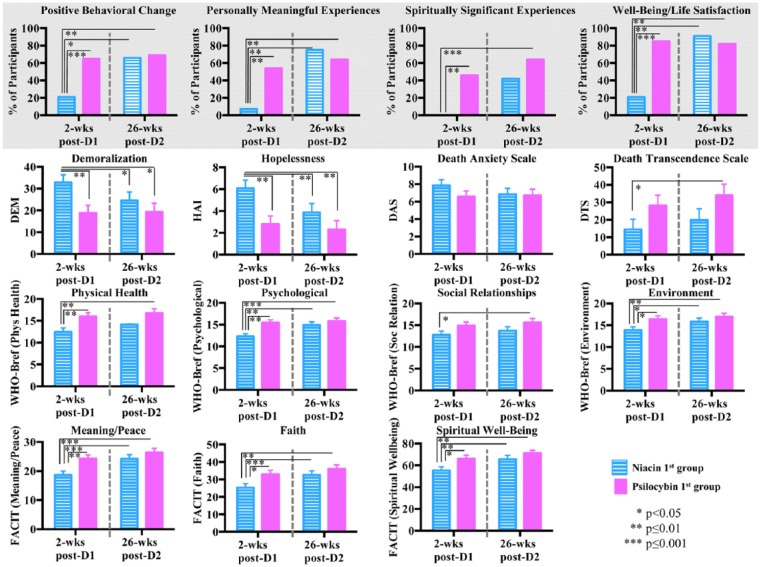
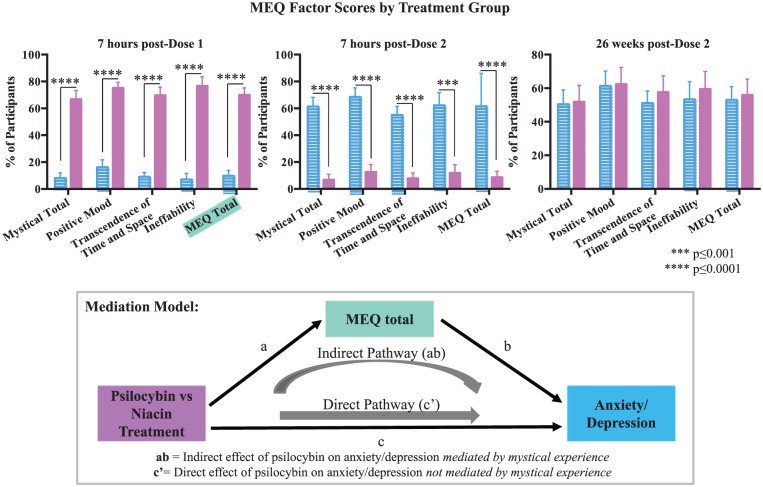
Background: Clinically significant anxiety and depression are common in patients with cancer, and are associated with poor psychiatric and medical outcomes. Historical and recent research suggests a role for psilocybin to treat cancer-related anxiety and depression. Methods: In this double-blind, placebo-controlled, crossover trial, 29 patients with cancer-related anxiety and depression were randomly assigned and received treatment with single-dose psilocybin (0.3 mg/kg) or niacin, both in conjunction with psychotherapy. The primary outcomes were anxiety and depression assessed between groups prior to the crossover at 7 weeks. Results: Prior to the crossover, psilocybin produced immediate, substantial, and sustained improvements in anxiety and depression and led to decreases in cancer-related demoralization and hopelessness, improved spiritual wellbeing, and increased quality of life. At the 6.5-month follow-up, psilocybin was associated with enduring anxiolytic and anti-depressant effects (approximately 60–80% of participants continued with clinically significant reductions in depression or anxiety), sustained benefits in existential distress and quality of life, as well as improved attitudes towards death. The psilocybin-induced mystical experience mediated the therapeutic effect of psilocybin on anxiety and depression. Conclusions: In conjunction with psychotherapy, single moderate-dose psilocybin produced rapid, robust and enduring anxiolytic and anti-depressant effects in patients with cancer-related psychological distress. Trial Registration: ClinicalTrials.gov Identifier: NCT00957359
Overview
The claims and statistics of this paper haven’t been checked yet.
Free: it reads the open-access text and checks the first 5 claims that cite a source we can check. Create a free account to check every claim.
Integrity signals
Registry
Cites
Statistics
Figures
Verification
Claims the paper makes
The claims and statistics of this paper haven’t been checked yet.
Free: it reads the open-access text and checks the first 5 claims that cite a source we can check. Create a free account to check every claim.
Claims other papers make about this one
Each is checked against this paper’s own text: does it say what the citing paper says it does?
The source backs part of the claim, not all of it — or backs it for a different population, condition or comparison.
In the citing paper
“Both participants and their friends and family reported positive effects on attitude towards life and the self, spiritual well-being, social contacts, quality of life, acceptance of death, and optimism (Ross et al., 2016).”
From Psychedelics for the treatment of depression, anxiety, and existential distress in patients with a terminal illness: a systematic review (2022) · cites this paper as Ross et al., 2016
Experimental — accuracy not yet measuredThe source backs part of the claim, not all of it — or backs it for a different population, condition or comparison.
In the citing paper
“Despite efforts to employ “active placebos” (e.g., niacin or a low-dose of a psychedelic) (40, 220), many patients and clinicians can still correctly distinguish between a high dose of a psychedelic drug and an active placebo.”
From Psychedelics and Other Psychoplastogens for Treating Mental Illness. (2021) · cites this paper as [220]
Experimental — accuracy not yet measuredThe source backs part of the claim, not all of it — or backs it for a different population, condition or comparison.
In the citing paper
“and with diminished anxiety and depression in terminal cancer patients (Griffiths et al., 2016;Ross et al., 2016;Barrett et al., 2020).”
From Psychedelics and Neural Plasticity: Therapeutic Implications (2022) · cites this paper as Ross et al., 2016
Experimental — accuracy not yet measuredThe source backs part of the claim, not all of it — or backs it for a different population, condition or comparison.
In the citing paper
“Psilocybin shows promise as a treatment for major depressive disorder (MDD).”
From Single-Dose Psilocybin Treatment for Major Depressive Disorder: A Randomized Clinical Trial (2023) · cites this paper as [8]
Experimental — accuracy not yet measuredThe source backs part of the claim, not all of it — or backs it for a different population, condition or comparison.
In the citing paper
“recent studies suggesting that psilocybin engenders a rapid antidepressant response that far outlasts the presence of the drug in the body.”
From Single-Dose Psilocybin Treatment for Major Depressive Disorder: A Randomized Clinical Trial (2023) · cites this paper as [8]
Experimental — accuracy not yet measured
25 more claims about this paper
Create a free account to see every claim other papers make about this one.
Self-check
Percentages, sums and reported differences re-computed from the paper’s own numbers.
The self-check needs the paper’s full text.
Citations
Cites
The Hospital Anxiety and Depression Scale
Zigmond, A. S., & Snaith, R. P. (1983) · Acta Psychiatrica Scandinavica · doi:10.1111/j.1600-0447.1983.tb09716.x · Cited by 47,139
(2013) · Cited by 44,563
Depression and quality of life in older persons: A review
Sivertsen, H., Bjørkløf, G. H., Engedal, K., Selbæk, G., & Helvik, A.-S. (2015) · Dementia and Geriatric Cognitive Disorders · doi:10.1159/000437299 · Cited by 14,152
Psychometric properties of the Beck Depression Inventory: Twenty-five years of evaluation
Beck, A. T., Steer, R. A., & Carbin, M. G. (1988) · Clinical Psychology Review · doi:10.1016/0272-7358(88)90050-5 · Cited by 11,696 · cited 2×
“cancer); Beck Depression Inventory (BDI) (Beck et al., 1988) self-report depression measure; Spielberger State-Trait Anxiety Inventory (STAI) (Spielberger, 1983) self-report measure of state (STAI state or STAI S) and trait (STAI trait or STAI T) anxiety.”
BackgroundMolecular Mechanisms of Depression: Perspectives on New Treatment Strategies
Lang, U. E., & Borgwardt, S. (2013) · Cellular Physiology and Biochemistry · doi:10.1159/000350094 · Cited by 8,475
Mitchell, A. J., Chan, M., Bhatti, H., Halton, M., Grassi, L., Johansen, C., & Meader, N. (2011) · The Lancet Oncology · doi:10.1016/s1470-2045(11)70002-x · Cited by 2,449 · cited 1×
“Enduring clinically significant anxiety and/or depressive symptoms are common in patients with cancer, present in 30–40% of patients in hospital settings (Mitchell et al., 2011).”
BackgroundManual for the state-trait anxiety inventory (form Y) : "self-evaluation questionnaire"
Spielberger, C. D., Gorsuch, R. L., & Lushene, R. E. (1970) · Consulting Psychologists Press eBooks · Cited by 2,352
Drevets, W. C., Price, J. L., & Furey, M. L. (2008) · Brain Structure and Function · doi:10.1007/s00429-008-0189-x · Cited by 2,241 · cited 7×
“The former is significant because depressive symptoms have been associated with increased activity in the medial PFC (Drevets et al., 2008; Farb et al., 2011) and normalization of medial PFC activity has been demonstrated with anti-depressant treatment (Deakin et al., 2008; Holtzheimer and Mayberg, 2011; Kennedy et al…”
BackgroundInfluentialGreicius, M. D., Flores, B. H., Menon, V., Glover, G. H., Solvason, H. B., Kenna, H., Reiss, A. L., & Schatzberg, A. F. (2007) · Biological Psychiatry · doi:10.1016/j.biopsych.2006.09.020 · Cited by 2,214 · cited 2×
“…pathological and can be understood as part of the therapeutic process (e.g. working through cancer-related psychological or existential distress through challenging encounters or emotionally charged confrontations with cancer-related fearful imagery or symbolism) (Carbonaro et al., 2016).”
BackgroundNichols, D. E. (2016) · Pharmacological Reviews · doi:10.1124/pr.115.011478 · Cited by 1,762 · cited 1×
“In two recently published open-label trials, one using a single dose of ayahuasca (Osorio et al., 2015) and the other using two doses of oral psilocybin (Carhart-Harris et al., 2016), acute and enduring anti-depressant effects were reported.”
Background
Research works printed but not linked: 3
- Doblin R (1991) Pahnke’s ‘Good Friday Experiment’: a long-term follow-up and methodological critique. J Transpersonal Psychol 23(1): 1– 28.
- Pahnke WN (1963) Drugs and mysticism: an analysis of the relationship between psychedelic drugs and the mystical consciousness, PhD dissertation. Cambridge, MA: Harvard University.
- VandeCreek L (1999) The death transcendence scale. In: Hill PC Hood RW (eds) Measures of religiosity. Birmingham, AL: Religious Education Press, pp. 442– 445.
Cited by
Items 701–800 of 1,005
Chemoenzymatic Synthesis of 5-Methylpsilocybin: A Tryptamine with Potential Psychedelic Activity
Fricke, J., Sherwood, A. M., Halberstadt, A. L., Kargbo, R. B., & Hoffmeister, D. (2021) · Journal of Natural Products · doi:10.1021/acs.jnatprod.1c00087 · Cited by 20
The mystical experience and its neural correlates.
Woollacott, M. H., & Shumway‐Cook, A. (2020) · The Journal of near-death studies · doi:10.17514/jnds-2020-38-1-p3-25 · Cited by 19
“For example, Stephen Ross and colleagues from NYU Medical center performed a randomized controlled trial with terminal cancer patients to determine if psilocybin would reduce the depression and anxiety that patients experienced as a result of their cancer diagnosis and the prospect that their lives would end soon (Ros…”
BackgroundMethodInfluentialPharmacologic Similarities and Differences Among Hallucinogens
Waters, K. (2021) · The Journal of Clinical Pharmacology · doi:10.1002/jcph.1917 · Cited by 21
Uthaug, M. V., Mason, N. L., Havenith, M. N., Vancura, M., & Ramaekers, J. G. (2021) · Journal of Psychedelic Studies · doi:10.1556/2054.2021.00193 · Cited by 21
“…et al., 2016; Johnson, Garcia-Romeu, & Griffiths, 2017; Klavetter & Mogar, 1967; Kurland, Grof, Pahnke, & Goodman, 1972; MacLean, Johnson, & Griffiths, 2011; O’Reilly & Funk, 1964; Pahnke, Kurland, Unger, Savage, & Grof, 1970; Richards, Rhead, DiLeo, Yensen, & Kurland, 1977; Ross et al., 2016).”
Eckernäs, E., Bendrioua, A., Cancellerini, C., Timmermann, C., Carhart-Harris, R. L., Hoffmann, K., & Ashton, M. (2022) · Journal of Pharmaceutical and Biomedical Analysis · doi:10.1016/j.jpba.2022.114642 · Cited by 19
Psychedelics for Patients With Cancer: A Comprehensive Literature Review
White, C. M., Weisman, N., & Dalo, J. D. (2023) · Annals of Pharmacotherapy · doi:10.1177/10600280221144055 · Cited by 20
Nutt, D. J. (2016) · Journal of Psychopharmacology · doi:10.1177/0269881116675754 · Cited by 22
“This special issue of the Journal of Psychopharmacology contains two landmark studies – the most rigorous controlled trials to date using the psychedelic drug psilocybin, the active ingredient of magic mushrooms (Griffiths et al., 2016; Ross et al., 2016).”
BackgroundEffects of LSD on music-evoked brain activityPreprint
Kaelen, M., Lorenz, R., Barrett, F. S., Roseman, L., Orbán, C., Ribeiro, A., Wall, M. B., Feilding, A., Nutt, D. J., Muthukumaraswamy, S. D., et al. (2017) · bioRxiv (Cold Spring Harbor Laboratory) · doi:10.1101/153031 · Cited by 23
“…effects within “psychedelic therapy” - a therapeutic approach that is characterised by lengthy periods of introspective music-listening during drug effects (Carhart-Harris et al., 2016b; Gasser et al., 2014; Griffiths et al., 2016; Grob CS et al., 2011; Johnson et al., 2014; Ross et al., 2016).”
BackgroundSome Comments on Psychedelic Research
Schatzberg, A. F. (2020) · American Journal of Psychiatry · doi:10.1176/appi.ajp.2020.20030272 · Cited by 21
Schmitz, G. P., Chiu, Y.-T., König, G. M., Kostenis, E., Roth, B. L., & Herman, M. A. (2022) · bioRxiv (Cold Spring Harbor Laboratory) · doi:10.1101/2022.11.15.516655 · Cited by 23
Naturalizing psychedelic spirituality
Letheby, C. (2017) · Zygon: Journal of Religion and Science · doi:10.1111/zygo.12353 · Cited by 18
“…(LSD) and psilocybin can, under conducive circumstances, occasion intense experiences leading to lasting psychological benefits—including the amelioration of existential distress resulting from terminal illness (Grob et al. 2011; Gasser et al. 2014; Griffiths et al. 2016; Ross et al. 2016).”
BackgroundResultSet and setting of psychedelics for therapeutic use in psychiatry: A systematic review
Estric, C., Duron, T., Kabani, S., & López‐Castromán, J. (2025) · Journal of Psychopharmacology · doi:10.1177/02698811251338214 · Cited by 19
“…was not presented in the main text, but in supplementary documents, for example, entire study protocols (Davis et al., 2021; Goodwin et al., 2022; Raison et al., 2023), supplementary methods (Holze et al., 2023; Reckweg et al., 2023; Ross et al., 2016), or extended data tables (Peck et al., 2023).”
InfluentialPsychoactive Drugs in the Management of Post Traumatic Stress Disorder: A Promising New Horizon
Elsouri, K. N., Kalhori, S., Colunge, D., Grabarczyk, G., Hanna, G., Carrasco, C., Espino, A. A., Francisco, A., Borosky, B., Bekheit, B., et al. (2022) · Cureus · doi:10.7759/cureus.25235 · Cited by 21
“both completed double-blinded studies with psilocybin to treat depression and anxiety in participants with life-threatening cancer diagnoses, with 29 and 51 participants respectively [60,61].”
BackgroundBody mass index (BMI) does not predict responses to psilocybin
Spriggs, M. J., Giribaldi, B., Lyons, T., Rosas, F. E., Kärtner, L., Buchborn, T., Douglass, H. M., Roseman, L., Timmermann, C., Erritzøe, D., et al. (2022) · Journal of Psychopharmacology · doi:10.1177/02698811221131994 · Cited by 22
“Body weight-adjusted dosing is a ‘gold standard’ in pharmacological research, and has been widely used in research on psilocybin (Bogenschutz et al., 2015; Brown et al., 2017; Carbonaro et al., 2016; Carter et al., 2005, 2007; Grob et al., 2011; Nicholas et al., 2018; Ross et al., 2016; Schmidt et al., 2012; Umbricht…”
BackgroundMethodInfluentialDemoralization: Where it stands-and where we can take it: A bibliometric analysis
Zheng, Q., Xiong, L., Li, H., Liu, M., Xu, J., & Luo, X. (2022) · Frontiers in Psychology · doi:10.3389/fpsyg.2022.1016601 · Cited by 18
Sicignano, D. J., Caroti, K. S., Hernández, A. V., & White, C. M. (2023) · American Journal of Clinical Oncology · doi:10.1097/coc.0000000000000998 · Cited by 21
Wang, K., Sun, Y., Nava, B., Sampiere, L., & Jacobs, R. J. (2023) · Cureus · doi:10.7759/cureus.37450 · Cited by 18
“Adverse effects While some studies report that recreational psilocybin demonstrates some negative consequences, such as physical aggression to the point of seeking medical attention, there have been no serious harmful events of psilocybin-assisted therapy reported [5,9].”
BackgroundPsychedelic medicines for end-of-life care: Pipeline clinical trial review 2022
Jing, X., Hoeh, N. R., & Menkes, D. B. (2023) · Palliative & Supportive Care · doi:10.1017/s147895152300069x · Cited by 19
“Niacin has been used in doses up to 250 mg as placebo in previous psilocybin studies but, unfortunately, without assessment of the integrity of the blind (Grob et al. 2011; Ross et al. 2016).”
MethodResultPsychedelics, epilepsy, and seizures: a review
Freidel, N., Kreuder, L., Rabinovitch, B. S., Chen, F. Y., Huang, R. S., & Lewis, E. C. (2024) · Frontiers in Pharmacology · doi:10.3389/fphar.2023.1326815 · Cited by 18
Schmid, Y., & Bershad, A. K. (2024) · Biological Psychiatry Cognitive Neuroscience and Neuroimaging · doi:10.1016/j.bpsc.2024.02.001 · Cited by 23
“…evidence suggesting efficacy of classical serotonergic psychedelics, including lysergic acid diethylamide (LSD) and psilocybin, in the treatment of depression (2–4), anxiety (due to life-threatening diseases) (5,10–12), alcohol use disorder (6), body dysmorphia (13), and anorexia nervosa (14).”
BackgroundPsychedelics and Evidence-based Psychotherapy
Leone, L., McSpadden, B., DeMarco, A., Enten, L., Kline, R., & Fonzo, G. A. (2024) · Psychiatric Clinics of North America · doi:10.1016/j.psc.2024.02.006 · Cited by 19
Psychedelic risks and benefits: A cross-sectional survey study
Goldy, S. P., Du, B. A., Rohde, J. S., Nayak, S. M., Strickland, J. C., Ehrenkranz, R. C., Levine, M., Barrett, F. S., & Yaden, D. B. (2024) · Journal of Psychopharmacology · doi:10.1177/02698811241292951 · Cited by 19
“…Davis et al., 2021; D’Souza et al., 2022; Goodwin et al., 2023; Raison et al., 2023), end-of-life anxiety and depression (Griffiths et al., 2016; Grob et al., 2011; Muttoni et al., 2019; Ross et al., 2016), and substance use disorder (Bogenschutz et al., 2015, 2022; Johnson et al., 2014, 2017).”
Mice lacking the serotonin transporter do not respond to the behavioural effects of psilocybin
Gattuso, J. J., Wilson, C., Li, S., Hannan, A. J., & Renoir, T. (2025) · European Journal of Pharmacology · doi:10.1016/j.ejphar.2025.177304 · Cited by 18
Psilocybin for depression: Considerations for clinical trial design
O’Donnell, K. C., Mennenga, S. E., & Bogenschutz, M. P. (2019) · Journal of Psychedelic Studies · doi:10.1556/2054.2019.026 · Cited by 18
Self-citationCortical influences of serotonin and glutamate on layer V pyramidal neurons
Marek, G. J., & Schoepp, D. D. (2021) · Progress in brain research · doi:10.1016/bs.pbr.2020.11.002 · Cited by 20
Harding, F., Seynaeve, M., Keeler, J. L., Himmerich, H., Treasure, J. L., & Kan, C. (2021) · Journal of Integrative Neuroscience · doi:10.31083/j.jin2003059 · Cited by 19
Pouyan, N., Khankahdani, Z. H., Sisi, F. Y., Lee, Y. L., Rosenblat, J. D., Teopiz, K. M., Lui, L. M. W., Subramaniapillai, M., Lin, K., Nasri, F., et al. (2022) · CNS Drugs · doi:10.1007/s40263-022-00944-y · Cited by 18
Ledwos, N., Rosenblat, J. D., Blumberger, D. M., Castle, D. J., McIntyre, R. S., Mulsant, B. H., & Husain, M. I. (2022) · Journal of Clinical Psychopharmacology · doi:10.1097/jcp.0000000000001608 · Cited by 20
Psilocybin for depression and anxiety associated with life-threatening illnesses
McCorvy, J. D., Olsen, R. H. J., & Roth, B. L. (2016) · Journal of Psychopharmacology · doi:10.1177/0269881116675771 · Cited by 21
Lehto, R. H., Miller, M., & Sender, J. (2022) · Journal of Holistic Nursing · doi:10.1177/08980101211039086 · Cited by 17
“…bi n th er ap y he lp ed fa ci lit at e a fe lt re co nn ec ti on to lif e, a re cl ai m in g of pr es en ce ,a nd gr ea te r co nfi de nc e in th e fa ce of ca nc er re cu rr en ce 274 double-blind trials with 51 (Griffiths et al., 2016) and 29 participants (Ross et al., 2016), respectively.”
BackgroundMethodInfluentialA systematic review of income and education reporting in psychedelic clinical trials
Grossman, D. H., Madden, K. R., Mehtani, N. J., Anderson, B. T., Davis, L. L., Mitchell, J., & Hendricks, P. S. (2025) · Nature Mental Health · doi:10.1038/s44220-025-00417-3 · Cited by 17
Hultgren, J., Hafsteinsson, M. H., & Brulin, J. G. (2025) · General Hospital Psychiatry · doi:10.1016/j.genhosppsych.2025.07.020 · Cited by 17
Effects of hallucinogenic drugs on the human heart
Neumann, J., Dhein, S., Kirchhefer, U., Hofmann, B., & Gergs, U. (2024) · Frontiers in Pharmacology · doi:10.3389/fphar.2024.1334218 · Cited by 19
Is music a drug? How music listening may trigger neurochemical responses in the brain
Reybrouck, M., & Dyck, E. V. (2024) · Musicae Scientiae · doi:10.1177/10298649241236770 · Cited by 17
“…demonstrating that music can facilitate peak experiences (Griffiths et al., 2006), sustained positive behavioral changes (Griffiths et al., 2011) and personality adaptations (MacLean et al., 2011), and constructive clinical outcomes (Griffiths et al., 2016; Johnson et al., 2014; Ross et al., 2016).”
Psychedelic Therapy: A Primer for Primary Care Clinicians—Psilocybin
Tabaac, B. J., Shinozuka, K., Arenas, A., Beutler, B. D., Cherian, K. N., Evans, V. D., Fasano, C., & Muir, O. S. (2024) · American Journal of Therapeutics · doi:10.1097/mjt.0000000000001724 · Cited by 17
“To date, there have been at least 4 completed studies, including 1 pilot study on 12 patients 84 ; 2 subsequent RCTs on 51 and 29 patients, respectively, 60,65 including a 4.5-year follow-up on the former study 85 ; and 1 open-label feasibility study on 18 AIDS survivors.”
BackgroundInfluentialDowney, A. E., Chaphekar, A. V., Woolley, J. D., & Raymond‐Flesch, M. (2024) · Journal of Eating Disorders · doi:10.1186/s40337-024-01005-z · Cited by 17
“In clinical trials of psilocybin therapy in medically vulnerable populations, significant cardiac compromise has not been reported [17, 26, 35].”
BackgroundMoreton, S. G., Barr, N. N. T., & Giese, K. J. (2024) · Death Studies · doi:10.1080/07481187.2024.2352726 · Cited by 18
“…in psychedelic research), a single moderate dose of psilocybin has been shown to lead to a reduction in negative attitudes toward mortality and a greater acceptance of limited life expectancy in patients with advanced stage cancer (Grob et al., 2011; Ross et al., 2016; Schimmel et al., 2022).”
Salvetti, G., Saccenti, D., Moro, A. S., Lamanna, J., & Ferro, M. (2024) · Brain Sciences · doi:10.3390/brainsci14080829 · Cited by 18
“…primary All studies were found; therefore, 20 trials were subjected to the final screening step by full text reading. diagnosis was not MDD [52–54], one A further 8 studies were excluded as they did not meet the eligibility criteria outlined above. clinical trial but a research protocol [40],…”
BackgroundIncremental efficacy systematic review and meta-analysis of psilocybin-for-depression RCTs
Borgogna, N. C., Owen, T., Petrovitch, D., Vaughn, J., Johnson, D. A., Pagano, L. A., Aita, S. L., & Hill, B. D. (2025) · Psychopharmacology · doi:10.1007/s00213-025-06788-w · Cited by 20
“Malone et al. (2018) published a follow-up to Ross et al. (2016); however, no formal MoA analyses were conducted.”
InfluentialGriffiths, R. R., Jesse, R., Richards, W. A., Johnson, M. W., Sepeda, N. D., Bossis, A. P., & Ross, S. (2025) · Psychedelic Medicine · doi:10.1089/psymed.2023.0044 · Cited by 18
“…tends to correlate with or mediate persisting therapeutic effects of psilocybin-assisted psychotherapy across study populations, such as those with advanced cancer-related psychiatric and existential distress, 27 – 29 alcohol and nicotine use disorders, 30,31 and major depressive disorder.”
Self-citationPsilocybin and Mental Health–Don't Lose Control
Barnby, J. M., & Mehta, M. A. (2018) · Frontiers in Psychiatry · doi:10.3389/fpsyt.2018.00293 · Cited by 18
A potential role for psilocybin in the treatment of obsessive-compulsive disorder
Jacobs, E. (2020) · Journal of Psychedelic Studies · doi:10.1556/2054.2020.00128 · Cited by 19
New medications for treatment-resistant depression: a brief review of recent developments
Thase, M. E. (2017) · CNS Spectrums · doi:10.1017/s1092852917000876 · Cited by 20
“This list includes small studies of another anesthetic, nitrous oxide (aka “laughing gas”),(33) and the hallucinogenic compound psilocybin (“magic mushrooms”).(34,35) Only time and continued careful study in tightly controlled experiments will help to determine whether these uncommon and less traveled therapeutic road…”
BackgroundPharmacotherapy of anxiety disorders in the 21st century: A call for novel approaches
Bui, É., King, F., & Melaragno, A. (2019) · General Psychiatry · doi:10.1136/gpsych-2019-100136 · Cited by 17
“63 65 A study using LSD-assisted psychotherapy in patients with life-threatening disease found significant reductions in state anxiety at 2-month follow-up, with a similarly enduring effect on anxiety reduction sustained at 12-month follow-up.”
MethodNatural Psychoplastogens As Antidepressant Agents
Benko, J., & Vranková, S. (2020) · Molecules · doi:10.3390/molecules25051172 · Cited by 19
“In general, authors conclude that psychedelics are generally safe [48,77,80,85,86].”
BackgroundInfluentialPsycho-existential distress in cancer patients: A return to “entheogens”
Blinderman, C. D. (2016) · Journal of Psychopharmacology · doi:10.1177/0269881116675761 · Cited by 17
“In the Ross et al. (2016) study, the use of a control (niacin) with limited blinding may have contributed to some bias of the results.”
BackgroundInfluentialExploring psilocybin-assisted psychotherapy in the treatment of methamphetamine use disorder
Brett, J., Knock, E., Korthuis, P. T., Liknaitzky, P., Murnane, K. S., Nicholas, C. R., Patterson, J. C., & Stauffer, C. S. (2023) · Frontiers in Psychiatry · doi:10.3389/fpsyt.2023.1123424 · Cited by 16
Gill, H., Puramat, P., Patel, P., Gill, B., Marks, C. A., Rodrigues, N. B., Castle, D., Cha, D. S., Mansur, R. B., Rosenblat, J. D., et al. (2022) · Psychiatry Research · doi:10.1016/j.psychres.2022.114577 · Cited by 16
“Since then, a number of clinical trials have demonstrated the therapeutic potential and safety of the classic psychedelics in the treatment of addiction, mood, and anxiety disorders (Bogenschutz et al., 2015; R. L. CarhartHarris et al., 2018; Robin L. Carhart-Harris et al., 2016; Robin L. Carhart-Harris & Goodwin, 201…”
BackgroundBerkovitch, L., Fauvel, B., Preller, K. H., & Gaillard, R. (2025) · Neuroscience & Biobehavioral Reviews · doi:10.1016/j.neubiorev.2025.106239 · Cited by 17
Hosein, M., Reid, M. J., Walser, S. A., Charney, S., Fonzo, G. A., Lewis, B. R., Yaden, D. B., Suppes, T. M., Cordner, Z. A., & Barrett, F. S. (2025) · EClinicalMedicine · doi:10.1016/j.eclinm.2025.103517 · Cited by 17
“28,29 The first cohort of 51 participants demonstrated a significant improvement in depressive symptoms (HAM-D: 89% response, 71% remission) and anxiety symptoms (HAM-A: 80% response, 50% remission) at 6 month follow up.”
Postpartum depression: A role for psychedelics?
Jairaj, C., & Rucker, J. (2022) · Journal of Psychopharmacology · doi:10.1177/02698811221093793 · Cited by 17
“Mystical-type experiences are associated with enduring improvements in depression and anxiety outcome measures in psilocybin trials and are thought to mediate these positive effects (Griffiths et al., 2016; Ross et al., 2016), although contrasting views also exist (Olson, 2020).”
BackgroundPromising new pharmacological targets for depression: The search for efficacy
Tsugiyama, L. E., de Moraes, R. C. M., Moraes, Y. A. C., & de Oliveira, J. F. (2023) · Drug Discovery Today · doi:10.1016/j.drudis.2023.103804 · Cited by 17
Atiq, M. A., Baker, M. R., Voort, J. L. V., Vargas, M. V., & Choi, D. (2024) · Psychopharmacology · doi:10.1007/s00213-024-06599-5 · Cited by 18
“Ross et al. further reinforced the therapeutic value of psilo-cybin in cancer-associated psychological distress by carrying out a randomized, double-blind, crossover trial using a single psilocybin dosing session (weight-adjusted dose, 0.3 mg/kg) (Ross et al. 2016).”
InfluentialSzafoni, S., Gręblowski, P., Grabowska, K., & Więckiewicz, G. (2024) · Frontiers in Psychiatry · doi:10.3389/fpsyt.2024.1406888 · Cited by 18
Effinger, D. P., Hoffman, J. L., Mott, S., Magee, S. N., Quadir, S. G., Rollison, C. S., Toedt, D., Sanchez, M. E., High, M. W., Hodge, C. W., et al. (2024) · Nature Communications · doi:10.1038/s41467-024-49741-9 · Cited by 17
Clinical Effects of Psychedelic Substances Reported to United States Poison Centers: 2012 to 2022
Simon, M. W., Olsen, H. A., Hoyte, C. O., Black, J. C., Reynolds, K. M., Dart, R. C., & Monte, A. A. (2024) · Annals of Emergency Medicine · doi:10.1016/j.annemergmed.2024.06.025 · Cited by 17
Becker, A., Humbert‐Droz, M., Mueller, L., Jelušić, A., Tolev, A., Straumann, I., Avedisian, I., Erne, L., Thomann, J., Luethi, D., et al. (2025) · Clinical Pharmacology & Therapeutics · doi:10.1002/cpt.3618 · Cited by 17
Integrating Psychedelic Medicines and Psychiatry: Theory and Methods of a Model Clinic
Sloshower, J. (2018) · Springer eBooks · doi:10.1007/978-3-319-76720-8_7 · Cited by 18
Kelly, D. F., Heinzerling, K. G., Sharma, A., Gowrinathan, S., Sergi, K., & Mallari, R. J. (2022) · Neurosurgery · doi:10.1227/neu.0000000000002275 · Cited by 17
“For example, a dying individual may find meaning and resolution leading to long-term reduction in demoralization, hopelessness, and death anxiety, resulting in improved quality of life and of death.(11,68) The neurobehavioral and structural underpinnings of the transformative process that may occur with PAT are postul…”
BackgroundEffect of a single psilocybin treatment on Fos protein expression in male rat brain
Funk, D. R., Araujo, J. A., Slassi, M., Lanthier, J., Atkinson, J., Feng, D., Lau, W., Lê, A., & Higgins, G. A. (2024) · Neuroscience · doi:10.1016/j.neuroscience.2024.01.001 · Cited by 16
Diminished psychedelic returns on distress: Marital status and household size
Viña, S. M. (2024) · PLoS ONE · doi:10.1371/journal.pone.0293675 · Cited by 18
Ayahuasca: what mental health professionals need to know
SANTOS, R. G. D., Bouso, J. C., & Hallak, J. E. C. (2017) · Archives of Clinical Psychiatry (São Paulo) · doi:10.1590/0101-60830000000130 · Cited by 25
Human behavioral pharmacology of psychedelics
Strickland, J. C., & Johnson, M. W. (2022) · Advances in pharmacology · doi:10.1016/bs.apha.2021.10.003 · Cited by 16
Weiss, B., Sleep, C., Miller, J. D., & Campbell, W. K. (2023) · Journal of Personality Disorders · doi:10.1521/pedi.2023.37.2.131 · Cited by 15
Blinding and expectancy confounds in psychedelic randomised controlled trials
Muthukumaraswamy, S., Forsyth, A., & Lumley, T. (2021) · doi:10.31234/osf.io/q2hzm · Cited by 15
What is Psychological Support in the Context of Psychedelic Clinical Trials?
Richard, J., & Levine, M. A. (2025) · Psychedelic Medicine · doi:10.1089/psymed.2024.0026 · Cited by 15
“9 Even studies that do not directly cite these guidelines are typically designed in much the same way.”
Florineth, G. A., Klima, I., Boeker, A. L., Catzeflis, P., Wopfner, A., Denier, N., Bracht, T., Adorjan, K., Pfammatter, M., Müller, F., et al. (2026) · JAMA Network Open · doi:10.1001/jamanetworkopen.2025.54843 · Cited by 15
Entheogenic Spirituality: Characteristics of Spiritually Motivated Psychedelics Use
Johnstad, P. G. (2022) · International Journal for the Psychology of Religion · doi:10.1080/10508619.2022.2148060 · Cited by 15
“…on medical conditions such as depression (Carhart-Harris et al., 2016, 2018; Davis et al., 2021; Griffiths et al., 2016; Roseman et al., 2018; Ross et al., 2016), anxiety (Gasser et al., 2013; Goldberg et al., 2020; Griffiths et al., 2016; Grob et al., 2011; Ross et al., 2016), and substance…”
BackgroundPilozzi, A. R., Foster, S. L., Mischoulon, D., Fava, M., & Huang, X. (2023) · International Journal of Molecular Sciences · doi:10.3390/ijms241512513 · Cited by 17
Breau, J. A., & Gillis‐Smith, P. (2023) · Interdisciplinary Science Reviews · doi:10.1080/03080188.2023.2266322 · Cited by 16
“…et al. 2021; Palhano-Fontes et al. 2019), tobacco addiction (Johnson et al. 2014), and other mental health conditions (Gri ffi ths et al. 2016; Ross et al. 2016), researchers have become invested in ‘ mystical experience ’ as a potential causal agent for treatment outcomes (Barsuglia et al.…”
BackgroundSpending Time in Nature: The Overlooked Health Behavior
Maddock, J. E., & Johnson, S. S. (2023) · American Journal of Health Promotion · doi:10.1177/08901171231210806 · Cited by 15
Glowacki, D. R. (2024) · Frontiers in Virtual Reality · doi:10.3389/frvir.2023.1286950 · Cited by 18
Study protocol for “Psilocybin in patients with fibromyalgia: brain biomarkers of action”
Bornemann, J., Close, J. B., Ahmad, K., Barba, T., Godfrey, K., Macdonald, L., Erritzøe, D., Nutt, D. J., & Carhart-Harris, R. L. (2024) · Frontiers in Psychiatry · doi:10.3389/fpsyt.2024.1320780 · Cited by 16
What should constitute a control condition in psychedelic drug trials?
Colloca, L., & Fava, M. (2024) · Nature Mental Health · doi:10.1038/s44220-024-00321-2 · Cited by 17
“Active placebos that induce psychoactive effects include niacin 62,63 , ethanol 64 , midazolam 65 and diphenhydramine 66 , among others.”
History, Hype, and Responsible Psychedelic Medicine: A Qualitative Study of Psychedelic Researchers
Barber, M., Gardner, J., & Carter, A. (2024) · Journal of Bioethical Inquiry · doi:10.1007/s11673-024-10386-4 · Cited by 16
“Global academic, medical, and commercial interest in psychedelics has been reignited by promising clinical research (e.g., Ross et al. 2016) and driven by fierce advocacy on behalf of powerful interests.”
Kinderlehrer, D. A. (2025) · Neuropsychiatric Disease and Treatment · doi:10.2147/ndt.s500337 · Cited by 18
A dangerous method? Psychedelic therapy at Modum Bad, Norway, 1961–76
Johnstad, P. G. (2020) · History of Psychiatry · doi:10.1177/0957154x19894537 · Cited by 16
Emerging Psychedelic-Assisted Therapies: Implications for Nursing Practice
Denis-Lalonde, D., & Estefan, A. (2020) · Journal of Mental Health and Addiction Nursing · doi:10.22374/jmhan.v4i1.40 · Cited by 15
“In a second double-blind, controlled trial (n=29), a single active dose of psilocybin in conjunction with psychotherapy produced immediate and sustained anxiolytic and antidepressant effects in patients with cancer-related psychological anguish, including a decrease in existential distress and an increase in reported…”
BackgroundCozzi, N. V., & Daley, P. F. (2020) · Drug Testing and Analysis · doi:10.1002/dta.2889 · Cited by 15
Four individuals' experiences during and following a psilocybin truffle retreat in the Netherlands
Lutkajtis, A. (2021) · Journal of Psychedelic Studies · doi:10.1556/2054.2021.00162 · Cited by 17
“…depression (Roseman, Nutt, & Carhart-Harris, 2018), anxiety and depression related to advanced stage cancer (Griffiths et al., 2016; Ross et al., 2016), obsessive compulsive disorder (Moreno, Wiegand, Taitano, & Delgado, 2006), tobacco use disorder (Garcia-Romeu et al., 2014;…”
BackgroundKetamine for Bipolar Depression: Biochemical, Psychotherapeutic, and Psychedelic Approaches
Bennett, R., Yavorsky, C., & BRAVO, G. L. (2022) · Frontiers in Psychiatry · doi:10.3389/fpsyt.2022.867484 · Cited by 16
Strauss, D., Ghosh, S. B., Murray, Z., & Gryzenhout, M. (2022) · 3 Biotech · doi:10.1007/s13205-022-03355-4 · Cited by 18
Psilocybin for Depression: From Credibility to Feasibility, What’s Missing?
Munafò, A., Arillotta, D., Mannaioni, G., Schifano, F., Bernardini, R., & Cantarella, G. (2022) · Pharmaceuticals · doi:10.3390/ph16010068 · Cited by 15
“To date, however, those approaches aimed at specifically addressing this methodological challenge have proven unsuccessful [35,88,89].”
BackgroundEckernäs, E., Timmermann, C., Carhart-Harris, R. L., Röshammar, D., & Ashton, M. (2023) · CPT Pharmacometrics & Systems Pharmacology · doi:10.1002/psp4.12933 · Cited by 17
A transdiagnostic meta-analysis of acute augmentations to psychological therapy
Nord, C. L., Longley, B. F., Dercon, Q., Phillips, V., Funk, J., Gormley, S., Knight, R., Smith, A., & Dalgleish, T. (2023) · Nature Mental Health · doi:10.1038/s44220-023-00048-6 · Cited by 16
Wong, S., Yu, A. Y., Fabiano, N., Finkelstein, O., Pasricha, A., Jones, B. D. M., Rosenblat, J. D., Blumberger, D. M., Mulsant, B. H., & Husain, M. I. (2023) · Journal of Psychoactive Drugs · doi:10.1080/02791072.2023.2251133 · Cited by 17
“…distress, and alcohol use disorder, with multiple clinical trials currently underway, there remain barriers to its clinical utility and scalability (Aday, Carhart-Harris, and Woolley 2023; Carhart-Harris et al. 2021; Johnson, Richards, and Griffiths 2008; Kiraga et al. 2022; Ross et al. 2016).”
Larsen, J. K. (2017) · Nordic Journal of Psychiatry · doi:10.1080/08039488.2017.1336251 · Cited by 16
Mason, N. L., Dolder, P. C., & Kuypers, K. P. C. (2020) · Drug Science Policy and Law · doi:10.1177/2050324519900068 · Cited by 17
“…of a classic psychedelic in patients with depression and anxiety (Carhart-Harris et al., 2016; Griffiths et al., 2016; Palhano-Fontes et al., 2018; Ross et al., 2016), clinical populations which are characterized by higher rates of neuroticism compared to the average population (Middeldorp et…”
BackgroundResultMoorhead, L. L., Krakow, M., & Maggio, L. A. (2021) · PLoS ONE · doi:10.1371/journal.pone.0247553 · Cited by 15
Considerations in assessing the abuse potential of psychedelics during drug development
Calderon, S. N., Bonson, K. R., Reissig, C. J., Lloyd, J. M., Galati, S., & Chiapperino, D. (2022) · Neuropharmacology · doi:10.1016/j.neuropharm.2022.109352 · Cited by 17
Psilocybin and palliative end-of-life care
Shelton, R. C., & Hendricks, P. S. (2016) · Journal of Psychopharmacology · doi:10.1177/0269881116675764 · Cited by 15
Lessons to be learned from early psychedelic therapy in Denmark
Erritzoe, D., & Richards, W. A. (2017) · Nordic Journal of Psychiatry · doi:10.1080/08039488.2017.1336252 · Cited by 14
Schedule 1 barriers to research in the UK: An in-depth qualitative analysis
Howard, A., Neill, J. C., Schlag, A. K., & Lennox, C. (2021) · Drug Science Policy and Law · doi:10.1177/20503245211049313 · Cited by 15
“…has shown beneficial effects on anxiety and depression in individuals with life-threatening diseases (Griffiths et al., 2016; Grob et al., 2011; Ross et al., 2016), and clinical trials are being conducted with MDMA for PTSD, alcoholism and other disorders (Mitchell et al., 2021;…”
BackgroundKnowledge gaps in psychedelic medicalisation: Clinical studies and regulatory aspects
McCulloch, D. E.-W., Liechti, M. E., Kuypers, K. P. C., Nutt, D. J., Lundberg, J., Stenbæk, D. S., Goodwin, G. M., Gründer, G., Butlen‐Ducuing, F., Haberkamp, M., et al. (2024) · Neuroscience Applied · doi:10.1016/j.nsa.2024.103938 · Cited by 18
“…certain sub-components of the subjective effects (mystical-type and “ oceanic boundlessness ” ) and symptom reductions (Roseman et al., 2018; Ross et al., 2016; Griffiths et al., 2016; Garcia-Romeu et al., 2015; Davis et al., 2020), whereas other subcomponents of the subjective experience…”
Magic of the Mushrooms: Effects of Psilocybin Decriminalization
Bhave, A. (2024) · Journal of Psychoactive Drugs · doi:10.1080/02791072.2024.2376755 · Cited by 15
“…psilocybin is effective in treating treatment-resistant depression (Roseman, Nutt, and Carhart-Harris 2018), relieving anxiety and depression in patients with advanced cancer (Ross et al. 2016) and enhancing the personality domain of openness among adults (MacLean, Johnson, and Griffiths 2011).”
Larsen, K., Lindberg, U., Ozenne, B., McCulloch, D. E.-W., Armand, S., Madsen, M. K., Johansen, A., Stenbæk, D. S., Knudsen, G. M., & Fisher, P. M. (2025) · Journal of Cerebral Blood Flow & Metabolism · doi:10.1177/0271678x251323364 · Cited by 15
King, F., & Hammond, R. (2021) · FOCUS The Journal of Lifelong Learning in Psychiatry · doi:10.1176/appi.focus.20200047 · Cited by 14
Nudelman, A. (2021) · Current Medicinal Chemistry · doi:10.2174/0929867328666210810124159 · Cited by 14
Christianity and Psychedelic Medicine: A Pastoral Approach
McCarthy, B. C. (2022) · Christian bioethics Non-Ecumenical Studies in Medical Morality · doi:10.1093/cb/cbac008 · Cited by 15
Bibliometric Analysis of Academic Journal Articles Reporting Results of Psychedelic Clinical Studies
Weleff, J., Akiki, T. J., & Barnett, B. S. (2022) · Journal of Psychoactive Drugs · doi:10.1080/02791072.2022.2133757 · Cited by 14
“The first of these is a transition from research focused on potential risks of psychedelics (MDMA in particular) towards research into their therapeutic potential, with nine of the papers focused on therapeutic applications of LSD, MDMA and psilocybin (Grob et al. 2011; Roland R Griffiths et al. 2016; R. L. Carhart-Ha…”
Background
Metadata
- Authors
- Ross, S., Bossis, A., Guss, J., Agin-Liebes, G., Malone, T., Cohen, B., Mennenga, S. E., Belser, A., Kalliontzi, K., Babb, J., Su, Z., Corby, P., & Schmidt, B. L.
- Affiliations
- NYU Langone Health (US)
- Bellevue Hospital Center (US)
- Palo Alto University (US)
- New York University (US)
- Corresponding author
- Ross, Stephen
- Venue
- Journal of Psychopharmacology
- Publisher
- SAGE Publications
- Published
- 2016-11-30
- Volume
- 30
- Issue
- 12
- Pages
- 1165-1180
- ISSN
- 0269-8811 (ISSN-L)
- 1461-7285
- PMC
- PMC5367551
- OpenAlex
- W2559739670
- Semantic Scholar
- 1129a840891b76fb9022b6e91d1e1f4d2dafcb04
- Cited by
- 1,698
- References
- 90
- Citations by year
- 2026: 184 · 2025: 239 · 2024: 264 · 2023: 239 · 2022: 224 · 2021: 182 · 2020: 144 · 2019: 64 · 2018: 88 · 2017: 52 · 2016: 15
- FWCI
- 97.72
- Type
- journal article
- Language
- en
- Open access
- hybrid
- doi.org
- Licence
- cc-by
- journals.sagepub.com/page/policies/text-and-data-mining-license (tdm)
- Locations
- Journal of Psychopharmacology (publishedVersion, cc-by)
- PubMed Central (publishedVersion, cc-by)
- PubMed (publishedVersion)
- Funders
- National Institutes of Health (UL1TR000038)
- National Center for Advancing Translational Sciences
- Topics
- Social Sciences › Psychology › Clinical Psychology › Psychedelics and Drug Studies
- Health Sciences › Medicine › Oncology › Cancer survivorship and care
- Social Sciences › Health › Religion, Spirituality, and Psychology
- Keywords
- psilocybin, cancer-related anxiety, cancer-related depression, mystical experience, psychotherapy, existential suffering, spiritual well-being, quality of life, attitudes toward death, hopelessness, demoralization, psychedelic therapy
- MeSH terms
- Adult, Aged, Anxiety, Depression, Double-Blind Method, Female, Hallucinogens, Humans, Male, Middle Aged, Neoplasms, Psilocybin, Psychotherapy, Quality of Life, Surveys and Questionnaires, Cross-Over Studies, Young Adult
About these checks
Registry, retraction, Cites and statistics results are computed, not judged, with one exception: a printed reference that no index lists is read once by a model before it counts as a citation error. Claims are extracted by a model and kept only when their quote appears verbatim in the text; each cited source is then checked, with a model’s help, for whether it says what the claim relies on. Those verdicts can be wrong — read the claim’s quote and the cited source before relying on one.
Statistics and arithmetic are recomputed, not judged.
Confidence bands are shown only for fields calibrated on our annotated test set. None is calibrated yet, so no band is shown.
What counts as a claim ›How we measure confidence ›How we check this ›
Are you an author, or do you see a problem with this page? Request a review
Data sources
Bibliographic data: Semantic Scholar, OpenAlex, Crossref.
Contains information from the Semantic Scholar Academic Graph Datasets, made available under the ODC Attribution License (ODC-BY 1.0).
Semantic Scholar’s data is described in: Kinney, R., et al. (2023). The Semantic Scholar Open Data Platform. arXiv:2301.10140.
