

Rapid and sustained symptom reduction following psilocybin treatment for anxiety and depression in patients with life-threatening cancer: a randomized controlled trial.
Open accessThe DOI matches its Crossref record; 90 of the 90 references it cites were found in a registry or an index.
Abstract
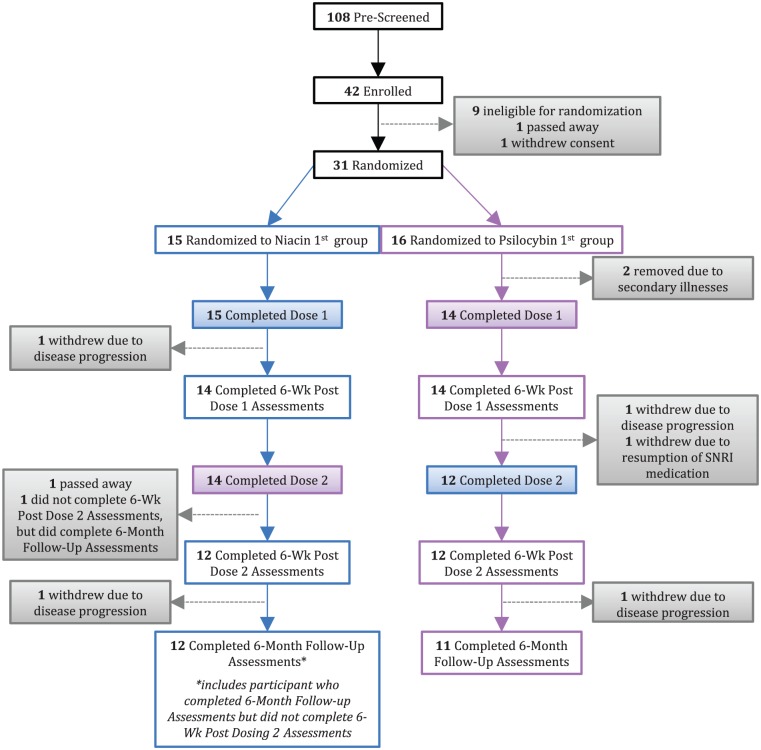
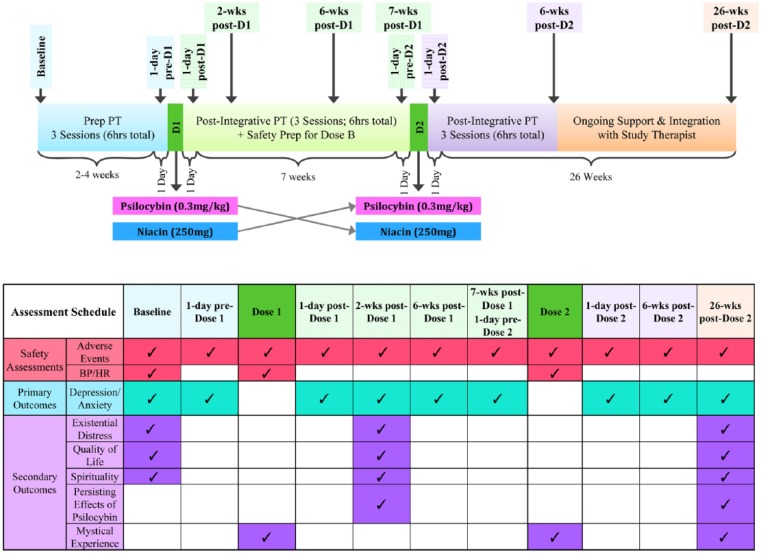
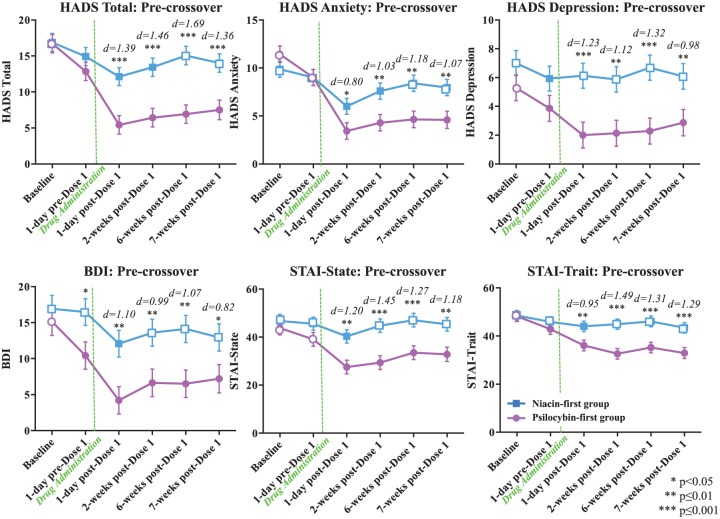
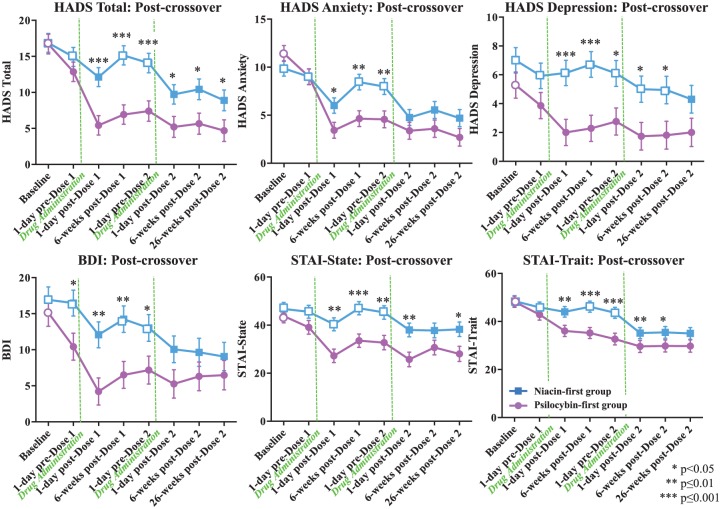
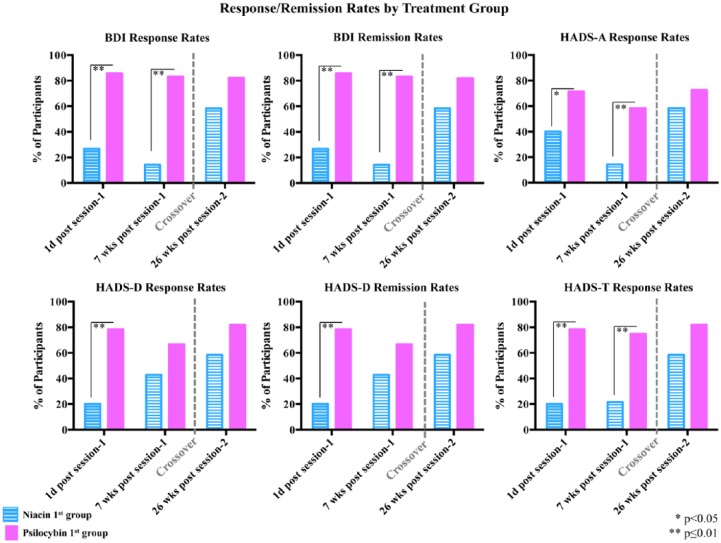
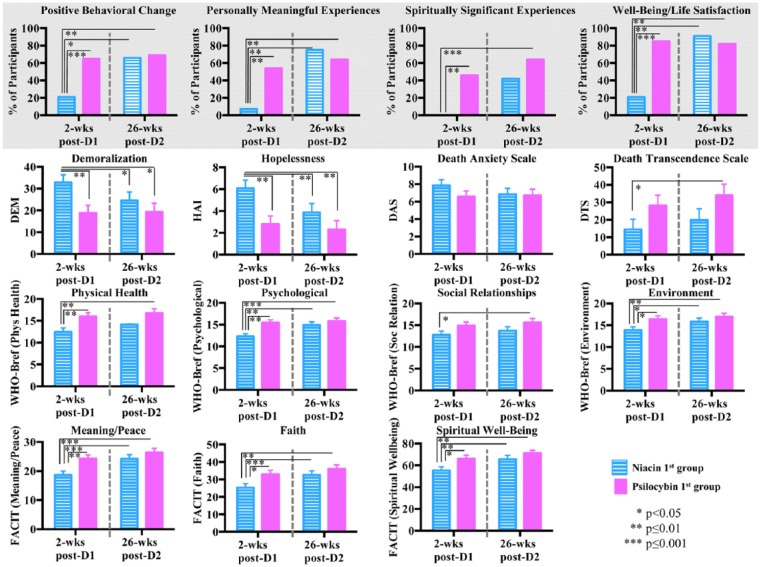
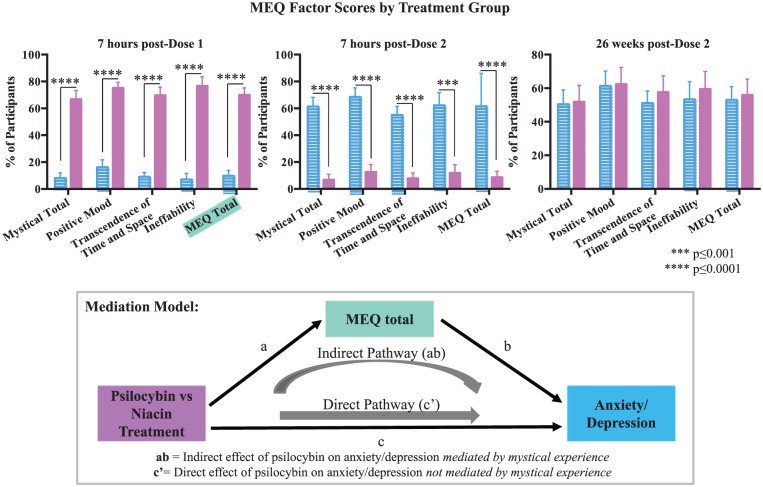
Background: Clinically significant anxiety and depression are common in patients with cancer, and are associated with poor psychiatric and medical outcomes. Historical and recent research suggests a role for psilocybin to treat cancer-related anxiety and depression. Methods: In this double-blind, placebo-controlled, crossover trial, 29 patients with cancer-related anxiety and depression were randomly assigned and received treatment with single-dose psilocybin (0.3 mg/kg) or niacin, both in conjunction with psychotherapy. The primary outcomes were anxiety and depression assessed between groups prior to the crossover at 7 weeks. Results: Prior to the crossover, psilocybin produced immediate, substantial, and sustained improvements in anxiety and depression and led to decreases in cancer-related demoralization and hopelessness, improved spiritual wellbeing, and increased quality of life. At the 6.5-month follow-up, psilocybin was associated with enduring anxiolytic and anti-depressant effects (approximately 60–80% of participants continued with clinically significant reductions in depression or anxiety), sustained benefits in existential distress and quality of life, as well as improved attitudes towards death. The psilocybin-induced mystical experience mediated the therapeutic effect of psilocybin on anxiety and depression. Conclusions: In conjunction with psychotherapy, single moderate-dose psilocybin produced rapid, robust and enduring anxiolytic and anti-depressant effects in patients with cancer-related psychological distress. Trial Registration: ClinicalTrials.gov Identifier: NCT00957359
Overview
The claims and statistics of this paper haven’t been checked yet.
Free: it reads the open-access text and checks the first 5 claims that cite a source we can check. Create a free account to check every claim.
Integrity signals
Registry
Cites
Statistics
Figures
Verification
Claims the paper makes
The claims and statistics of this paper haven’t been checked yet.
Free: it reads the open-access text and checks the first 5 claims that cite a source we can check. Create a free account to check every claim.
Claims other papers make about this one
Each is checked against this paper’s own text: does it say what the citing paper says it does?
The source backs part of the claim, not all of it — or backs it for a different population, condition or comparison.
In the citing paper
“Both participants and their friends and family reported positive effects on attitude towards life and the self, spiritual well-being, social contacts, quality of life, acceptance of death, and optimism (Ross et al., 2016).”
From Psychedelics for the treatment of depression, anxiety, and existential distress in patients with a terminal illness: a systematic review (2022) · cites this paper as Ross et al., 2016
Experimental — accuracy not yet measuredThe source backs part of the claim, not all of it — or backs it for a different population, condition or comparison.
In the citing paper
“Despite efforts to employ “active placebos” (e.g., niacin or a low-dose of a psychedelic) (40, 220), many patients and clinicians can still correctly distinguish between a high dose of a psychedelic drug and an active placebo.”
From Psychedelics and Other Psychoplastogens for Treating Mental Illness. (2021) · cites this paper as [220]
Experimental — accuracy not yet measuredThe source backs part of the claim, not all of it — or backs it for a different population, condition or comparison.
In the citing paper
“and with diminished anxiety and depression in terminal cancer patients (Griffiths et al., 2016;Ross et al., 2016;Barrett et al., 2020).”
From Psychedelics and Neural Plasticity: Therapeutic Implications (2022) · cites this paper as Ross et al., 2016
Experimental — accuracy not yet measuredThe source backs part of the claim, not all of it — or backs it for a different population, condition or comparison.
In the citing paper
“Psilocybin shows promise as a treatment for major depressive disorder (MDD).”
From Single-Dose Psilocybin Treatment for Major Depressive Disorder: A Randomized Clinical Trial (2023) · cites this paper as [8]
Experimental — accuracy not yet measuredThe source backs part of the claim, not all of it — or backs it for a different population, condition or comparison.
In the citing paper
“recent studies suggesting that psilocybin engenders a rapid antidepressant response that far outlasts the presence of the drug in the body.”
From Single-Dose Psilocybin Treatment for Major Depressive Disorder: A Randomized Clinical Trial (2023) · cites this paper as [8]
Experimental — accuracy not yet measured
25 more claims about this paper
Create a free account to see every claim other papers make about this one.
Self-check
Percentages, sums and reported differences re-computed from the paper’s own numbers.
The self-check needs the paper’s full text.
Citations
Cites
The Hospital Anxiety and Depression Scale
Zigmond, A. S., & Snaith, R. P. (1983) · Acta Psychiatrica Scandinavica · doi:10.1111/j.1600-0447.1983.tb09716.x · Cited by 47,139
(2013) · Cited by 44,563
Depression and quality of life in older persons: A review
Sivertsen, H., Bjørkløf, G. H., Engedal, K., Selbæk, G., & Helvik, A.-S. (2015) · Dementia and Geriatric Cognitive Disorders · doi:10.1159/000437299 · Cited by 14,152
Psychometric properties of the Beck Depression Inventory: Twenty-five years of evaluation
Beck, A. T., Steer, R. A., & Carbin, M. G. (1988) · Clinical Psychology Review · doi:10.1016/0272-7358(88)90050-5 · Cited by 11,696 · cited 2×
“cancer); Beck Depression Inventory (BDI) (Beck et al., 1988) self-report depression measure; Spielberger State-Trait Anxiety Inventory (STAI) (Spielberger, 1983) self-report measure of state (STAI state or STAI S) and trait (STAI trait or STAI T) anxiety.”
BackgroundMolecular Mechanisms of Depression: Perspectives on New Treatment Strategies
Lang, U. E., & Borgwardt, S. (2013) · Cellular Physiology and Biochemistry · doi:10.1159/000350094 · Cited by 8,475
Mitchell, A. J., Chan, M., Bhatti, H., Halton, M., Grassi, L., Johansen, C., & Meader, N. (2011) · The Lancet Oncology · doi:10.1016/s1470-2045(11)70002-x · Cited by 2,449 · cited 1×
“Enduring clinically significant anxiety and/or depressive symptoms are common in patients with cancer, present in 30–40% of patients in hospital settings (Mitchell et al., 2011).”
BackgroundManual for the state-trait anxiety inventory (form Y) : "self-evaluation questionnaire"
Spielberger, C. D., Gorsuch, R. L., & Lushene, R. E. (1970) · Consulting Psychologists Press eBooks · Cited by 2,352
Drevets, W. C., Price, J. L., & Furey, M. L. (2008) · Brain Structure and Function · doi:10.1007/s00429-008-0189-x · Cited by 2,241 · cited 7×
“The former is significant because depressive symptoms have been associated with increased activity in the medial PFC (Drevets et al., 2008; Farb et al., 2011) and normalization of medial PFC activity has been demonstrated with anti-depressant treatment (Deakin et al., 2008; Holtzheimer and Mayberg, 2011; Kennedy et al…”
BackgroundInfluentialGreicius, M. D., Flores, B. H., Menon, V., Glover, G. H., Solvason, H. B., Kenna, H., Reiss, A. L., & Schatzberg, A. F. (2007) · Biological Psychiatry · doi:10.1016/j.biopsych.2006.09.020 · Cited by 2,214 · cited 2×
“…pathological and can be understood as part of the therapeutic process (e.g. working through cancer-related psychological or existential distress through challenging encounters or emotionally charged confrontations with cancer-related fearful imagery or symbolism) (Carbonaro et al., 2016).”
BackgroundNichols, D. E. (2016) · Pharmacological Reviews · doi:10.1124/pr.115.011478 · Cited by 1,762 · cited 1×
“In two recently published open-label trials, one using a single dose of ayahuasca (Osorio et al., 2015) and the other using two doses of oral psilocybin (Carhart-Harris et al., 2016), acute and enduring anti-depressant effects were reported.”
Background
Research works printed but not linked: 3
- Doblin R (1991) Pahnke’s ‘Good Friday Experiment’: a long-term follow-up and methodological critique. J Transpersonal Psychol 23(1): 1– 28.
- Pahnke WN (1963) Drugs and mysticism: an analysis of the relationship between psychedelic drugs and the mystical consciousness, PhD dissertation. Cambridge, MA: Harvard University.
- VandeCreek L (1999) The death transcendence scale. In: Hill PC Hood RW (eds) Measures of religiosity. Birmingham, AL: Religious Education Press, pp. 442– 445.
Cited by
Items 801–900 of 1,005
The Resurgence of Hallucinogen Drugs in Clinical Research
Rivera-Garcia, M. T., & Cruz, S. L. (2023) · Revista de investigaci�n Cl�nica · doi:10.24875/ric.23000108 · Cited by 16
“In another study with a randomized crossover design, psilocybin significantly reduced the psychiatric distress of patients with advanced-stage cancer 39,40 .”
BackgroundPsychedelic group-based integration: ethical assessment and initial recommendations
Cheung, K., Propes, C., Jacobs, E., Earp, B. D., & Yaden, D. B. (2024) · International Review of Psychiatry · doi:10.1080/09540261.2024.2357678 · Cited by 14
“Notably, a majority of participants across a number of clinical studies rate the psyche-delic experience to be one of the most meaningful of their lives (Ross et al., 2016; Schmid & Liechti, 2018).”
Psychedelic drugs in the treatment of anxiety, depression and addiction
Kvam, T.-M., Stewart, L. H., & Andreassen, O. A. (2018) · Tidsskrift for Den norske legeforening · doi:10.4045/tidsskr.17.1110 · Cited by 20
Stewart, B., Dean, J. G., Koek, A. Y., Chua, J. P., Wabl, R., Martin, K., Davoodian, N., Becker, C. J., Himedan, M., Kim, A., et al. (2020) · Pharmacology Research & Perspectives · doi:10.1002/prp2.688 · Cited by 16
Psilocybin-assisted psychotherapy for dying cancer patients – aiding the final trip
Spiegel, D. (2016) · Journal of Psychopharmacology · doi:10.1177/0269881116675783 · Cited by 15
“…and Hamilton Anxiety and Depression Scale scores after session two favored those patients who had received psilocybin first rather than second (Ross et al., 2016; Figure 5), suggesting that there was a positive effect if the initial treatment met expectations of a pharmacologically…”
Depression in the Medically Ill: An Integrated Approach
Rodin, G., Craven, J., & Littlefield, C. H. (2017) · Routledge eBooks · doi:10.4324/9781315094991 · Cited by 15
Psychiatry might need some psychedelic therapy
Johnson, M. W. (2018) · International Review of Psychiatry · doi:10.1080/09540261.2018.1509544 · Cited by 17
“Therapeutic studies using psychedelics have been reported for depression and anxiety related to cancer and other life-threatening illness (Gasser et al., 2014; Griffiths et al., 2016; Grob et al., 2011; Ross et al., 2016), treatment-resistant depression (Carhart-Harris et al.”
BackgroundGlobal Drug SurveyPreprint
Petranker, R., Anderson, T., Maier, L. J., Barratt, M. J., Ferris, J., & WINSTOCK, A. R. (2020) · PsyArXiv (OSF Preprints) · doi:10.31234/osf.io/xb8ve · Cited by 14
Psilocybin for Depression. Reply.
Carhart-Harris, R. L., Blemings, A., & Nutt, D. J. (2021) · PubMed · doi:10.1056/nejmc2108082 · Cited by 9
Vanderijst, L., Hever, F., Buot, A., Dauré, C., Benoit, J., Hanak, C., Veeser, J., Morgiève, M., Campanella, S., Kornreich, C., et al. (2024) · BMC Psychiatry · doi:10.1186/s12888-024-05502-y · Cited by 13
Scala, M., Fabbri, C., Fusar-Poli, P., Di Lorenzo, G., Ferrara, M., Amerio, A., Fusar-Poli, L., Pichiecchio, A., Asteggiano, C., Menchetti, M., et al. (2024) · CNS Spectrums · doi:10.1017/s1092852924002268 · Cited by 13
Barnett (2024) · doi:10.1089/psymed.2023.0010 · Cited by 13
Psilocybin in the Treatment of Cocaine Use Disorder: A Randomized Clinical Trial
Hendricks, P. S., Lappan, S. N., Shelton, R. C., Lahti, A. C., Cropsey, K. L., Johnson, M. W., Bradley, M. K., Simonsson, O., Davis, L. L., Grossman, D. H., et al. (2026) · JAMA Network Open · doi:10.1001/jamanetworkopen.2026.11029 · Cited by 14
Psychedelic Therapy: A Primer for Primary Care Clinicians—Historical Perspective and Overview
Tabaac, B. J., Shinozuka, K., Arenas, A., Beutler, B. D., Cherian, K. N., Evans, V. D., Fasano, C., & Muir, O. S. (2024) · American Journal of Therapeutics · doi:10.1097/mjt.0000000000001727 · Cited by 15
“38,40 Furthermore, these effects were sustained up to 4.5 years later.”
BackgroundInfluentialKrupp, K. T., Yaeger, J. D. W., Ledesma, L. J., Withanage, M. H. H., Gale, J., Howe, C. B., Allen, T. J., Sathyanesan, M., Newton, S. S., & Summers, C. H. (2024) · Neuropharmacology · doi:10.1016/j.neuropharm.2024.109949 · Cited by 13
“…al., 2016; Grob et al., 2011; Kyzar et al., 2017; Nichols et al., 2017b; Os ´ orio et al., 2015; Palhano-Fontes et al., 2019; Roseman et al., 2018; Ross et al., 2016; Sanches et al., 2016; Vollenweider and Kometer, 2010), clinical anxiety and/or depression (Muttoni et al., 2019), and may provide…”
Bader, H., Farraj, H., Maghnam, J., & Omar, Y. A. (2024) · World Journal of Clinical Oncology · doi:10.5306/wjco.v15.i7.908 · Cited by 14
Nicholas, C. R. N., Banks, M. I., Lennertz, R. C., Wenthur, C. J., Krause, B. M., Riedner, B. A., Smith, R., Hutson, P. R., Sauder, C. J., Dunne, J. D., et al. (2024) · Translational Psychiatry · doi:10.1038/s41398-024-03059-8 · Cited by 19
“Of note, some participants appeared to fall asleep for short periods of time in between assessments but awoke spontaneously or maintained arousal for 2 – 5 min after waking.”
BackgroundEvaluating the potential for psilocybin as a treatment for post-traumatic stress disorder
Miller, C., & Zoladz, P. R. (2024) · Journal of Pharmacology and Experimental Therapeutics · doi:10.1124/jpet.124.002237 · Cited by 13
Jones, G. M., Lowe, M. X., Nayak, S. M., Sepeda, N. D., Kettner, H., Carhart-Harris, R. L., Jackson, H., & Garcia‐Romeu, A. (2024) · Journal of Affective Disorders · doi:10.1016/j.jad.2024.10.058 · Cited by 14
Aghajanian, S., Shafiee, A., Omran, S. P., Nejad, A. R., Jafarabady, K., Gargari, O. K., Firouzabadi, S. R., Mohammadi, I., Babaheidari, T. B., & Bakhtiyari, M. (2024) · Journal of Psychopharmacology · doi:10.1177/02698811241287542 · Cited by 15
“Despite its limited scope and inclusion of only three studies (Griffiths et al., 2016; Grob et al., 2011; Ross et al., 2016), Vargas et al. (2020) provided compelling evidence highlighting the potential of psilocybin as a treatment for depression.”
Beyond psychedelics: set and setting in general psychiatric practice
Kozak, Z., & Miller, C. W. T. (2024) · International Review of Psychiatry · doi:10.1080/09540261.2024.2419662 · Cited by 14
“…factors for treatment response including high levels of education, gainful employment, and enough financial stability to be able to participate in lengthy clinical trials (Carhart-Harris et al., 2016; Carhart-Harris et al., 2021; Davis et al., 2021; Ross et al., 2016; Thrul & Garcia-Romeu, 2021).”
The library is open: a scoping review on queer representation in psychedelic research
Bartlett, A., Christ, C., Martins, B. S., Saxberg, K., & Ching, T. H. W. (2024) · Frontiers in Public Health · doi:10.3389/fpubh.2024.1472559 · Cited by 13
Psilocybin and Hallucinogenic Mushrooms
Fradet, M., Kelly, C. M., Donnelly, A. J., & Suppes, T. M. (2024) · Cambridge University Press eBooks · doi:10.1017/9781009585330.004 · Cited by 13
Psilocybin biosynthesis enhancement through gene source optimization
Keller, M. R., McKinney, M. G., Sen, A. K., Guagliardo, F. G., Hellwarth, E. B., Islam, K. N., Kaplan, N. A., Gibbons, W. J., Kemmerly, G. E., Meers, C., et al. (2025) · Metabolic Engineering · doi:10.1016/j.ymben.2025.04.003 · Cited by 14
Schuman, H. D. M., Savard, C., Mina, R., Barkova, S., Conradi, H. S. W., Deleemans, J. M., & Carlson, L. E. (2025) · Current Oncology · doi:10.3390/curroncol32070380 · Cited by 14
“However, such comparators fail to replicate the profound psychoactive and often mystical experiences of moderate-to-high dose psilocybin, making effective blinding challenging [9,31].”
InfluentialGregory, N. S., Girard, T. E., Ram, A., Casey, A. B., Malenka, R. C., Tawfik, V. L., & Heifets, B. D. (2026) · Nature Communications · doi:10.1038/s41467-026-68763-z · Cited by 13
Liu, X., Chu, H., Zhao, J., Qiao, R., Liu, Y., Li, N., Zeng, L., Wang, X., Tao, L., Zhang, H., et al. (2021) · Annals of Translational Medicine · doi:10.21037/atm-20-7569 · Cited by 14
“Fifth is to strengthen the psychological patient counseling, as a patient’s psychological state directly affects therapeutic effects and the quality of life (48).”
Backgroundvan den Berg, M., Magaraggia, I., Schreiber, R., Hillhouse, T. M., & Porter, J. H. (2022) · Psychopharmacology · doi:10.1007/s00213-022-06106-8 · Cited by 13
Should Adolescents be Included in Emerging Psychedelic Research?
Rajwani, K. (2022) · Canadian Journal of Bioethics · doi:10.7202/1089784ar · Cited by 14
“” (30) Recent studies into the effects of psilocybin and LSD on death-related anxiety in patients with terminal diagnosis found no serious adverse effects (24-26).”
BackgroundMeccia, J., Lopez, J., & Bagot, R. C. (2022) · Psychopharmacology · doi:10.1007/s00213-022-06297-0 · Cited by 14
Rossi, G. N., Rocha, J. M., Osório, F. D. L., Bouso, J. C., Oña, G., Silveira, G. D. O., Yonamine, M., Bertozi, G., Crevelin, E. J., Queiroz, M. E. C., et al. (2023) · Journal of Clinical Psychopharmacology · doi:10.1097/jcp.0000000000001691 · Cited by 13
Rahbarnia, A., Li, Z., & Fletcher, P. J. (2023) · Psychopharmacology · doi:10.1007/s00213-023-06474-9 · Cited by 13
“In clinical work, psilocybin is often administered in a repeated fashion across several sessions (Bogenschutz et al. 2015; Ross et al. 2016; Carhart-Harris et al. 2021).”
David, J., Bouso, J. C., Kohek, M., Oña, G., Tadmor, N., Arnon, T., Dor‐Ziderman, Y., & Berkovich‐Ohana, A. (2023) · Frontiers in Psychiatry · doi:10.3389/fpsyt.2023.1287961 · Cited by 14
Psilocybin: Psychotherapy or drug?
Goodwin, G. M. (2016) · Journal of Psychopharmacology · doi:10.1177/0269881116675757 · Cited by 13
“In the New York University study (Ross et al., 2016), for example, about half the patients had used hallucinogens previously: that may be down to the demographics of baby boomers, but it seems high.”
BackgroundResultPsilocin fosters neuroplasticity in iPSC-derived human cortical neuronsPreprint
Schmidt, M., Hoffrichter, A., Davoudi, M., Horschitz, S., Lau, T., Meinhardt, M. W., Spanagel, R., Ladewig, J., Köhr, G., & Koch, P. (2026) · eLife · doi:10.7554/elife.104006 · Cited by 14
“…discussed as a fast-acting and long-lasting antidepressant in treatment-resistant depression (TRD), anxiety, obsessive-compulsive disorder and addiction ( Carhart-Harris et al., 2018 ; Grob et al., 2011 ; Ross et al., 2016 ; Moreno et al., 2006 ; Bogenschutz et al., 2022 ; Johnson et al., 2017 ).”
The potential of psilocybin use to enhance well-being in healthy individuals – A scoping review
Wiepking, L., de Bruin, E. J., & Ghiţă, A. (2023) · Journal of Psychedelic Studies · doi:10.1556/2054.2023.00244 · Cited by 14
“This finding is frequently reported in the scientific literature on psilocybin (e.g., Doblin, 1991; Haijen et al., 2018; Kangaslampi, Hausen, & Rauteenmaa, 2020; Ross et al., 2016; Russ et al., 2019).”
BackgroundResultNational and regional trends in seizures of shrooms (psilocybin) in the United States, 2017–2022
Palamar, J. J., Fitzgerald, N. D., Carr, T. H., Rutherford, C. G., Keyes, K. M., & Cottler, L. B. (2024) · Drug and Alcohol Dependence · doi:10.1016/j.drugalcdep.2024.111086 · Cited by 13
Thaoboonruang, N., Lohitnavy, M., & Lohitnavy, O. (2024) · Journal of Psychoactive Drugs · doi:10.1080/02791072.2024.2399128 · Cited by 12
“Recent clinical studies showed promising results for psilocybin in treating treatment-resistant depression (Carhart-Harris et al. 2016, 2018; Castro Santos and Gama Marques 2021; Griffiths et al. 2016; Ross et al. 2016).”
Preclinical models for evaluating psychedelics in the treatment of major depressive disorder
Alexander, L., Anderson, D., Baxter, L., Claydon, M. D. B., Rucker, J., & Robinson, E. S. J. (2024) · British Journal of Pharmacology · doi:10.1111/bph.17370 · Cited by 16
“Human studies show that there is a correlation between the subjective experience and antidepressant efficacy, suggesting interdependent underlying mechanisms (Griffiths et al., 2016; Ross et al., 2016).”
Clinical and preclinical evidence of psilocybin as antidepressant. A narrative review
Erkizia-Santamaría, I., Horrillo, I., Meana, J. J., & Ortega, J. E. (2025) · Progress in Neuro-Psychopharmacology and Biological Psychiatry · doi:10.1016/j.pnpbp.2025.111249 · Cited by 13
“In the subsequent weeks, treatment efficacy is assessed in selected clinical scales, and delayed adverse effects are monitored, starting one day post-psilocybin administration, and up to twelve months after (Carhart-Harris et al., 2018; Gukasyan et al., 2022; Ross et al., 2016).”
Yaden, D. B., Graziosi, M., Owen, A. M., Agin-Liebes, G., Aaronson, S. T., Allen, K. E., Barrett, F. S., Bogenschutz, M. P., Carhart-Harris, R. L., Ching, T. H. W., et al. (2025) · Psychedelic Medicine · doi:10.1089/psymed.2024.0019 · Cited by 13
Self-citationSholevar, R., Kromka, W., & Beaussant, Y. (2025) · Journal of Palliative Medicine · doi:10.1089/jpm.2024.0346 · Cited by 13
“67 Ketamine and classical psychedelics have different pharmacological pro fi les and induce ASC with similarities and key differences.”
Lapid, M. I., Pagali, S. R., Randall, A., Donovan, K. A., Bronars, C. A., Gauthier, T. A., Bock, J., Lim, S. D., Carey, E. C., Sokolowski, E. I., et al. (2025) · Palliative & Supportive Care · doi:10.1017/s147895152500032x · Cited by 13
“…dual challenges of managing a life-threateningillness andcoping with theassociated psychological burden, psilocybin has been shown to decrease symptoms of depression, anxiety, and existential distress, and increase over-all well-being and life satisfaction (Griffiths et al. 2016; Ross et al. 2016).”
InfluentialThe therapeutic potential of psilocybin beyond psychedelia through shared mechanisms with ketamine
Park, D., Lee, G., Lee, W.-G., Kim, B. S., Lee, Y., & Kim, J. (2025) · Molecular Psychiatry · doi:10.1038/s41380-025-03100-2 · Cited by 14
“In patients with MDD, stronger mystical-type experiences following psilocybin often correlate with greater antidepressant outcomes [74 – 77].”
Argento, E., Christie, D., Mackay, L., Callon, C., & Walsh, Z. (2021) · Frontiers in Psychiatry · doi:10.3389/fpsyt.2021.716593 · Cited by 13
Glannon, W. (2022) · Cambridge University Press eBooks · doi:10.1017/9781009086660 · Cited by 13
Kvam, T.-M., Goksøyr, I. W., Stewart, L. H., Repantis, D., Røssberg, J. I., & Andreassen, O. A. (2022) · Frontiers in Psychiatry · doi:10.3389/fpsyt.2022.954388 · Cited by 13
Effect of LSD and music on the time-varying brain dynamics
Adamska-Stolarczyk, I., & Finc, K. (2023) · Psychopharmacology · doi:10.1007/s00213-023-06394-8 · Cited by 12
“, 2021), cancer-related psychological distress (Gasser et al., 2015; Gri ths et al., 2016; Grob et al., 2011; Ross et al., 2016), addiction (Bogenschutz et al.”
BackgroundHolze, F., Erne, L., Duthaler, U., & Liechti, M. E. (2023) · British Journal of Clinical Pharmacology · doi:10.1111/bcp.15887 · Cited by 13
Review of Psilocybin Use for Depression among Cancer Patients after Approval in Oregon
Bellman, V. (2024) · Cancers · doi:10.3390/cancers16091702 · Cited by 12
“Clinical trials have demonstrated significant reductions in anxiety and depression in cancer patients following psilocybin treatment, with sustained symptom reduction observed [46,47,81,82].”
BackgroundStigma, psychedelics use, and the risk of reduced formal mental health care.
Viña, S. M. (2026) · Stigma and Health · doi:10.1037/sah0000546 · Cited by 14
Masking Influences: A Systematic Review of Placebo Control and Masking in Psychedelic Studies
Barstowe, A., & Kajonius, P. (2024) · Journal of Psychoactive Drugs · doi:10.1080/02791072.2024.2424272 · Cited by 12
“…on nine unique trials (Bogenschutz et al. 2022; Carhart-Harris et al. 2021; Gasser et al. 2014; Griffiths et al. 2016; Grob et al. 2011; Holze et al. 2023; Palhano-Fontes et al. 2019; Ross et al. 2016; von Rotz et al. 2023) (duplicates excluded) (see Figure 1 below for the PRISMA flow diagram).”
Making headlines: an analysis of US government-funded cancer research mentioned in online media
Maggio, L. A., Ratcliff, C. L., Krakow, M., Moorhead, L. L., Enkhbayar, A., & Alperín, J. P. (2019) · BMJ Open · doi:10.1136/bmjopen-2018-025783 · Cited by 12
Bottemanne, H., Claret, A., & Fossati, P. (2020) · L Encéphale · doi:10.1016/j.encep.2020.08.006 · Cited by 15
Recent Evidence on the Antidepressant Effects of Ayahuasca
Palhano-Fontes, F., Mota-Rolim, S. A., Soares, B. L., Coelho, N. L. G., Maia‐de‐Oliveira, J. P., & de Araújo, D. B. (2021) · Springer eBooks · doi:10.1007/978-3-030-55688-4_2 · Cited by 14
Psilocybin as a Novel Pharmacotherapy for Treatment-Refractory Anorexia Nervosa
Rodan, S.-C., Aouad, P., McGregor, I. S., & Maguire, S. (2021) · OBM Neurobiology · doi:10.21926/obm.neurobiol.2102102 · Cited by 13
“Ross et al. (2016) reported an immediate and lasting anxiolytic response in 29 individuals.”
BackgroundThe Potential Role of Serotonergic Hallucinogens in Depression Treatment
Psiuk, D., Nowak, E., Cholewa, K., Łopuszańska, U., & Samardakiewicz, M. (2021) · Life · doi:10.3390/life11080765 · Cited by 16
“with the Mystical Experience Questionnaire (MEQ 30), had an impact on the therapeutic effects of psilocybin on anxiety and depression [30].”
BackgroundInfluentialA whole genome atlas of 81 Psilocybe genomes as a resource for psilocybin production.
McKernan, K. J., Kane, L. T., Helbert, Y., Zhang, L., Houde, N., & McLaughlin, S. (2021) · F1000Research · doi:10.12688/f1000research.55301.1 · Cited by 13
“Psilocybin has also been shown to be a safe alternative to traditional selective serotonin re-uptake inhibitors (SSRIs) for the treatment of depression (Griffiths et al. 2016; Ross et al. 2016; Bogenschutz et al. 2018; Carhart-Harris et al. 2021; Davis et al. 2021).”
BackgroundEarleywine, M., Mian, M. N., Altman, B. R., & Leo, J. A. D. (2022) · Cannabis · doi:10.26828/cannabis/2022.02.02 · Cited by 12
“…for example (Bogenschutz et al., 2015; Carhart-Harris et al., 2016; Garcia-Romeu et al., 2014; Griffiths et al., 2016; Johnson et al., 2017; Klavetter & Mogar, 1967; Kurland et al., 1972; MacLean et al., 2011; O’Reilly & Funk, 1964; Pahnke et al., 1970; Richards et al., 1977; Ross et al., 2016).”
The possible place for psychedelics in pharmacotherapy of mental disorders
Wojtas, A. (2023) · Pharmacological Reports · doi:10.1007/s43440-023-00550-9 · Cited by 14
Bright, S. J., & Williams, M. L. (2018) · Australian Psychologist · doi:10.1111/ap.12345 · Cited by 12
Miller, M., Rosa, W. E., Rinaldi, A. D., Addicott, K., Spence, D., & Beaussant, Y. (2023) · Psychedelic Medicine · doi:10.1089/psymed.2022.0009 · Cited by 12
“7,8 Moreover, participants regularly rate psilocybin experiences as among the most meaningful and spiritually significant of their lives.”
Extended Difficulties Following the Use of Psychedelic Drugs: A Mixed Methods StudyPreprint
Evans, J., Robinson, O. C., Argyri, E. K., Suseelan, S., Murphy-Beiner, A., & McAlpine, R. G. (2023) · SSRN Electronic Journal · doi:10.2139/ssrn.4487243 · Cited by 12
Assessing potential of psilocybin for depressive disorders
Kozak, Z., Johnson, M. W., & Aaronson, S. T. (2023) · Expert Opinion on Investigational Drugs · doi:10.1080/13543784.2023.2273493 · Cited by 11
“Several studies demonstrated a rapid (i.e. within 1 or 2 days) reduction in depressive symptoms [12,37,42], even among patients who were concurrently taking SSRI medications [52].”
BackgroundPsychedelic Microdosing, Mindfulness, and Anxiety: A Cross-Sectional Mediation Study
Hartong, V., & van Emmerik, A. (2023) · Journal of Psychoactive Drugs · doi:10.1080/02791072.2022.2080616 · Cited by 11
“ment of anxiety in patients with life threatening diseases (Gasser et al. 2014; Griffiths et al. 2016; Grob et al. 2011; Ross et al. 2016) and treatment resistant depression (Carhart-Harris et al.”
BackgroundInfluentialJohansen, L., Liknaitzky, P., Nedeljkovic, M., Mastin-Purcell, L., & Murray, G. (2022) · Systematic Reviews · doi:10.1186/s13643-022-01930-7 · Cited by 11
“Undergoing a mystical experience has been associated with positive wellbeing in healthy volunteers (43, 44), and reductions in depression symptoms in participants with life-threatening cancer (18, 45).”
BackgroundStenbæk, D. S., Kristiansen, S., Burmester, D., Madsen, M. K., Frokjaer, V. G., Knudsen, G. M., & Fisher, P. M. (2019) · Human Brain Mapping · doi:10.1002/hbm.24511 · Cited by 11
Gonçalves, K. T. D. C., Tavares, V. D. D. O., Barros, M. L. D. M., de Brito, A. J. C., Cavalcanti-Ribeiro, P., Palhano-Fontes, F., Falchi-Carvalho, M., Arcoverde, E., SANTOS, R. G. D., Hallak, J. E. C., et al. (2024) · European Archives of Psychiatry and Clinical Neuroscience · doi:10.1007/s00406-024-01925-6 · Cited by 13
“In the last few years clinical trials have highlighted the significance of psyche-delic and mystical experiences induced by serotonergic psychedelics, such as ayahuasca [17] and psilocybin [19, 69, 70].”
Use of psychedelic treatments in psychiatric clinical practice: an EPA policy paper
Destoop, M., Mohr, P., Butlen‐Ducuing, F., Kéri, P., Samochowiec, J., Picker, L. D., Fiorillo, A., Kuypers, K. P. C., & Dom, G. (2025) · European Psychiatry · doi:10.1192/j.eurpsy.2024.1806 · Cited by 11
Yousefi, P., Lietz, M. P., O'Higgins, F., Rippe, R. C. A., Hasler, G., van Elk, M., & Enriquez‐Geppert, S. (2025) · Psychopharmacology · doi:10.1007/s00213-024-06742-2 · Cited by 11
“2021; Li et al. 2022; McCartney et al. 2022; Więckiewicz et al. 2021), anxiety (Griffiths et al. 2016; Ross et al. 2016) and substance use disorder (Bogenschutz et al. 2022; Johnson et al. 2017).”
Amaev, A., Song, J., Kambari, Y., Carmona-Torres, E., Abdolizadeh, A., Ueno, F., Koizumi, T., Strafella, A. P., Husain, M. I., Graff‐Guerrero, A., et al. (2025) · Journal of Psychiatric Research · doi:10.1016/j.jpsychires.2025.03.022 · Cited by 11
Non-hallucinogenic psychedelics for mood and anxiety disorders: A systematic review
Chen, M. J. Q., Chen-Li, D. C. J., Chisamore, N., Husain, M. I., Vincenzo, J. D. D., Mansur, R. B., Phan, L., Johnson, D. E., McIntyre, R. S., & Rosenblat, J. D. (2025) · Psychiatry Research · doi:10.1016/j.psychres.2025.116532 · Cited by 11
“Hallucinogenic effects and “ mystical experiences ” of psychedelics are conventionally believed to be crucial for reaching the maximal therapeutic effects of psychedelics (Griffith et al., 2016; Ross et al., 2016; Bogenshutz et al., 2015).”
Brudner, R. M., Kaczmarek, E. S., Blainey, M. G., Schulz-Quach, C., Meshkat, S., Doyle, Z., Lipsitz, O., Offman, H., Sethi, R., Weiglein, G., et al. (2025) · Journal of Psychopharmacology · doi:10.1177/02698811251346697 · Cited by 11
“…mystical-type experiences (Bogenschutz et al., 2015; Erritzoe et al., 2018; Griffiths et al., 2011, 2016, 2018; Pahnke, 1969; Roseman et al., 2018; Ross et al., 2016, Russ et al., 2019a) and challenging experiences (Barrett et al., 2016; Carbonaro et al., 2016; Haijen et al., 2018; Roseman et…”
InfluentialAre we hallucinating or can psychedelic drugs modulate the immune system to control inflammation?
Qureshi, O., Cowley, J., Pegg, A., Cooper, A. J., Gordon, J., Brady, C., Belli, A., Butterworth, S., Upthegrove, R., Andrews, N., et al. (2025) · British Journal of Pharmacology · doi:10.1111/bph.70138 · Cited by 13
“…were centred around depression and anxiety (Carhart-Harris et al., 2021; Griffiths et al., 2016; Holze et al., 2023; Reckweg et al., 2023; Ross et al., 2016), but this has now expanded to conditions such as post-traumatic stress disorder, substance abuse disorder and pain (Kooijman et…”
Harris, S. (2020) · Journal of Extreme Anthropology · doi:10.5617/jea.7365 · Cited by 15
Psilocybin Conspectus: Status, Production Methods, and Considerations
Plotnik, L., Gibbs, G., & Graham, T. (2021) · International journal of medicinal mushrooms · doi:10.1615/intjmedmushrooms.2021041921 · Cited by 11
Therapeutic potential of psychedelics: History, advancements, and unexplored frontiers
Maia, J. M., de Oliveira, B. S. A., Branco, L. G. S., & Soriano, R. N. (2024) · Progress in Neuro-Psychopharmacology and Biological Psychiatry · doi:10.1016/j.pnpbp.2024.110951 · Cited by 12
Wells, A., Muthukumaraswamy, A. P. S., Morunga, E., Evans, W., Cavadino, A., Bansal, M., Lawrence, N. J., Ashley, A., Hoeh, N. R., Sundram, F., et al. (2024) · Pilot and Feasibility Studies · doi:10.1186/s40814-024-01449-9 · Cited by 12
“…sufficient data to assess feasibility, acceptability, and safety metrics based on a recent study investigating psychedelic-assisted psychotherapy in cancer patients ( N = 29; Ross et al., 2016) and previous MCP studies where 66–71% of participants completed all 7 psycho-therapy sessions [21, 22].”
BackgroundBhagavan, C., Glue, P., Evans, W., Reynolds, L., Turner, T., King, C., Russell, B. R., Morunga, E., Mills, J. L., Layton, G., et al. (2024) · Trials · doi:10.1186/s13063-024-08174-x · Cited by 14
“It has been proposed that the improvements reported in previous studies in mental health outcomes due to psychedelics such as psilocybin may depend on the mystical or spiritual experiences of participants [21, 22, 47].”
BackgroundMethodResultInfluentialPetridis, P. D., Grinband, J., Agin-Liebes, G., Kinslow, C. J., Zeifman, R. J., Bogenschutz, M. P., Griffiths, R. R., & Ross, S. (2024) · Nature Mental Health · doi:10.1038/s44220-024-00331-0 · Cited by 11
“In a 4.5-year follow-up of one of the trials used in this Analysis 23 , surviving patients with cancer endorsed sustained improvements in anxiety, depression and existential distress 46 .”
InfluentialSelf-citationThe role of psychedelics in palliative care reconsidered: A case for psilocybin
Kelmendi, B., Corlett, P. R., Ranganathan, M., D’Souza, C., & Krystal, J. H. (2016) · Journal of Psychopharmacology · doi:10.1177/0269881116675781 · Cited by 11
“The group at NYU led by Ross et al. compared the effect of high-dose psilocybin (0.3 mg/ kg, ~21 mg/ 70 kg) with niacin (used as an “active” control) in 29 patients, and both groups received targeted psychotherapy (Ross et al., 2016).”
BackgroundMethodInfluentialAyahuasca: Between Cognition and Culture
Peláez, I. E. A. (2020) · Publicacions URV eBooks · doi:10.17345/9788484248347 · Cited by 11
Research into Psychedelic-Assisted Psychotherapy for Anorexia Nervosa Should be Funded
Otterman, L. S. (2022) · Journal of Bioethical Inquiry · doi:10.1007/s11673-022-10220-9 · Cited by 11
“For example, four separate studies conducted between 2011 and 2016 reported improvements in depressive symptoms after psilocybinassisted psychotherapy (Grob et al. 2011; Griffiths et al. 2016; Ross et al. 2016).”
BackgroundHerrmann, Z. M., Levin, A. W., Cole, S. P., Slabaugh, S., Barnett, B. S., Penn, A., Jain, R., Raison, C. L., Rajanna, B., & Jain, S. (2023) · Psychedelic Medicine · doi:10.1089/psymed.2023.0030 · Cited by 12
“37 In the past two decades, psychedelic-assisted psychotherapy (PAT) has demonstrated efficacy for a range of mental health conditions including depression, 38–42 anxiety, 43 existential distress, 44–46 addiction, 47–50 and post-traumatic stress disorder.”
Majić, T., Jungaberle, H., Schmidt, T. T., Zeuch, A., Hermle, L., & Gallinat, J. (2017) · Fortschritte der Neurologie · Psychiatrie · doi:10.1055/s-0043-103085 · Cited by 15
Self-Care Practices with Psychedelics–A Qualitative Study of Users’ Perspectives
Soares, C. M., Leite, Â., & Pinto, M. (2023) · Journal of Psychoactive Drugs · doi:10.1080/02791072.2022.2071134 · Cited by 10
“…(Bogenschutz et al. 2015; Johnson et al. 2014; Krupitsky et al. 2007); obsessivecompulsive disorder (Moreno et al. 2006); anxiety associated with life-threatening diseases (Gasser et al. 2014; Griffiths et al. 2016; Ross et al. 2016) and social anxiety in autistic adults (Danforth et al. 2018).”
BackgroundMartin, D. A., Delgado, A. M., & Calu, D. J. (2024) · Neuropsychopharmacology · doi:10.1038/s41386-024-01912-4 · Cited by 11
Existential feelings as a phenomenological framework for psychedelic therapy
Tijhuis, F. B., Coninx, S., & de Bruin, L. C. (2024) · Philosophical Psychology · doi:10.1080/09515089.2024.2412195 · Cited by 10
“…effects of psychedelic therapy at various time scales (Agin-Liebes et al., 2020; Carhart-Harris et al., 2016, 2021; Davis et al., 2021; Gasser et al., 2014, 2015; Goodwin et al., 2022; Griffiths et al., 2016; Grob et al., 2011; Palhano-Fontes et al., 2019; Ross et al., 2016; Sanches et al., 2016).”
Mapping the Scientific Research on Nutrition and Mental Health: A Bibliometric Analysis
Hiltensperger, R., Neher, J., Böhm, L., & Mueller‐Stierlin, A. S. (2025) · Nutrients · doi:10.3390/nu17030399 · Cited by 11
The ketamine chameleon: history, pharmacology, and the contested value of experience
Diep, D., de la Salle, S., Lévesque, J. T., Lifshitz, M., Garel, N., & Greenway, K. T. (2025) · Expert Review of Clinical Pharmacology · doi:10.1080/17512433.2025.2459377 · Cited by 12
“Others have proposed that psy-chedelics and ketamine are legitimately beneficial, but largely due to their neurobiological mechanisms and capacities to enhance neuroplasticity [100].”
Repple, J., Bayas, M., Möser, C., Kobayashi, N. F., & Reif, A. (2025) · Biological Psychiatry · doi:10.1016/j.biopsych.2025.02.903 · Cited by 10
“After decades of no progress in pharmacological innovations for depression treatment, there is now rejuvenated interest in the pharmaceutical industry in developing novel antidepressants, especially RAADs (see Table 1 for an overview of the studies discussed that included patients with BD).”
InfluentialLashgari, N., Khalaji, M., Rana, P., Badrabadi, F., Rahnama, M., Nasoori, H., Roudsari, N. M., Nia, M. M. K., & Shafaroodi, H. (2025) · Molecular Neurobiology · doi:10.1007/s12035-025-05097-9 · Cited by 10
“It was more effective than escitalopram in some cases and had mild transient side effects (nausea, anxiety) [34–39].”
Klučková, T., Nikolič, M., Tylš, F., Viktorin, V., Vejmola, Č., Viktorinová, M., Bravermanová, A., Androvičová, R., Andrashko, V., Korčák, J., et al. (2025) · Pharmacological Reports · doi:10.1007/s43440-025-00742-5 · Cited by 10
Five-year outcomes of psilocybin-assisted therapy for Major Depressive Disorder
Davis, A. K., DellaCrosse, M. A., Sepeda, N. D., Levin, A. W., Cosimano, M. P., Shaub, H., Washington, T., Gooch, P. M., Gilead, S., Gaughan, S. J., et al. (2025) · Journal of Psychedelic Studies · doi:10.1556/2054.2025.00461 · Cited by 11
Bukovsky, D., Amaev, A., Song, J., Kyte, S., Carmona-Torres, E., Ueno, F., Luca, V. D., Strafella, A. P., Husain, M. I., Graff‐Guerrero, A., et al. (2025) · Progress in Neuro-Psychopharmacology and Biological Psychiatry · doi:10.1016/j.pnpbp.2025.111541 · Cited by 10
Kramer, H. M., Hibicke, M., Middleton, J. W., Jaster, A. M., Kristensen, J. L., & Nichols, C. D. (2025) · Neuropsychopharmacology · doi:10.1038/s41386-025-02272-3 · Cited by 10
“Patients in clinical studies report relief from symptoms for periods ranging from months to years after receiving only one or two doses of psilocybin [1 – 4].”
Psychedelics: The pathway to implementation in the European healthcare systems
Gründer, G., Mertens, L. J., Spangemacher, M., Meyer‐Lindenberg, A., & Jungaberle, H. (2025) · European Neuropsychopharmacology · doi:10.1016/j.euroneuro.2025.11.007 · Cited by 11
Predictors of therapeutic response to psychedelic-assisted therapy: A systematic review
Viljoen, G., Walter, H., Bendau, A., Koslowski, M., & Betzler, F. (2025) · Journal of Psychopharmacology · doi:10.1177/02698811251389581 · Cited by 12
“In patients with life-threatening cancer, higher MEQ scores during psilocybin sessions were associated with reductions in depression and anxiety symptoms in the short-term (Griffiths et al., 2016; Ross et al., 2016), as summarized in Table 4.”
InfluentialVollebregt, R., Storm, A. E. M., Lucassen, P. J., & Somers, M. (2025) · Neuroscience & Biobehavioral Reviews · doi:10.1016/j.neubiorev.2025.106529 · Cited by 11
Psychedelic medicine: mechanisms, evidence, and translation to practice
Jacobs, E., Zahid, Z., Hinkle, J. T., Nayak, S. M., & Yaden, D. B. (2026) · BMJ · doi:10.1136/bmj-2024-081723 · Cited by 10
“66 67 Studies have reported associations between mystical-type experiences and transdiagnostic clinical improvement in cancer related distress, 68 69 treatment resistant depression, 70 and substance dependencies.”
Metadata
- Authors
- Ross, S., Bossis, A., Guss, J., Agin-Liebes, G., Malone, T., Cohen, B., Mennenga, S. E., Belser, A., Kalliontzi, K., Babb, J., Su, Z., Corby, P., & Schmidt, B. L.
- Affiliations
- NYU Langone Health (US)
- Bellevue Hospital Center (US)
- Palo Alto University (US)
- New York University (US)
- Corresponding author
- Ross, Stephen
- Venue
- Journal of Psychopharmacology
- Publisher
- SAGE Publications
- Published
- 2016-11-30
- Volume
- 30
- Issue
- 12
- Pages
- 1165-1180
- ISSN
- 0269-8811 (ISSN-L)
- 1461-7285
- PMC
- PMC5367551
- OpenAlex
- W2559739670
- Semantic Scholar
- 1129a840891b76fb9022b6e91d1e1f4d2dafcb04
- Cited by
- 1,698
- References
- 90
- Citations by year
- 2026: 184 · 2025: 239 · 2024: 264 · 2023: 239 · 2022: 224 · 2021: 182 · 2020: 144 · 2019: 64 · 2018: 88 · 2017: 52 · 2016: 15
- FWCI
- 97.72
- Type
- journal article
- Language
- en
- Open access
- hybrid
- doi.org
- Licence
- cc-by
- journals.sagepub.com/page/policies/text-and-data-mining-license (tdm)
- Locations
- Journal of Psychopharmacology (publishedVersion, cc-by)
- PubMed Central (publishedVersion, cc-by)
- PubMed (publishedVersion)
- Funders
- National Institutes of Health (UL1TR000038)
- National Center for Advancing Translational Sciences
- Topics
- Social Sciences › Psychology › Clinical Psychology › Psychedelics and Drug Studies
- Health Sciences › Medicine › Oncology › Cancer survivorship and care
- Social Sciences › Health › Religion, Spirituality, and Psychology
- Keywords
- psilocybin, cancer-related anxiety, cancer-related depression, mystical experience, psychotherapy, existential suffering, spiritual well-being, quality of life, attitudes toward death, hopelessness, demoralization, psychedelic therapy
- MeSH terms
- Adult, Aged, Anxiety, Depression, Double-Blind Method, Female, Hallucinogens, Humans, Male, Middle Aged, Neoplasms, Psilocybin, Psychotherapy, Quality of Life, Surveys and Questionnaires, Cross-Over Studies, Young Adult
About these checks
Registry, retraction, Cites and statistics results are computed, not judged, with one exception: a printed reference that no index lists is read once by a model before it counts as a citation error. Claims are extracted by a model and kept only when their quote appears verbatim in the text; each cited source is then checked, with a model’s help, for whether it says what the claim relies on. Those verdicts can be wrong — read the claim’s quote and the cited source before relying on one.
Statistics and arithmetic are recomputed, not judged.
Confidence bands are shown only for fields calibrated on our annotated test set. None is calibrated yet, so no band is shown.
What counts as a claim ›How we measure confidence ›How we check this ›
Are you an author, or do you see a problem with this page? Request a review
Data sources
Bibliographic data: Semantic Scholar, OpenAlex, Crossref.
Contains information from the Semantic Scholar Academic Graph Datasets, made available under the ODC Attribution License (ODC-BY 1.0).
Semantic Scholar’s data is described in: Kinney, R., et al. (2023). The Semantic Scholar Open Data Platform. arXiv:2301.10140.
