

Rapid and sustained symptom reduction following psilocybin treatment for anxiety and depression in patients with life-threatening cancer: a randomized controlled trial.
Open accessThe DOI matches its Crossref record; 90 of the 90 references it cites were found in a registry or an index.
Abstract
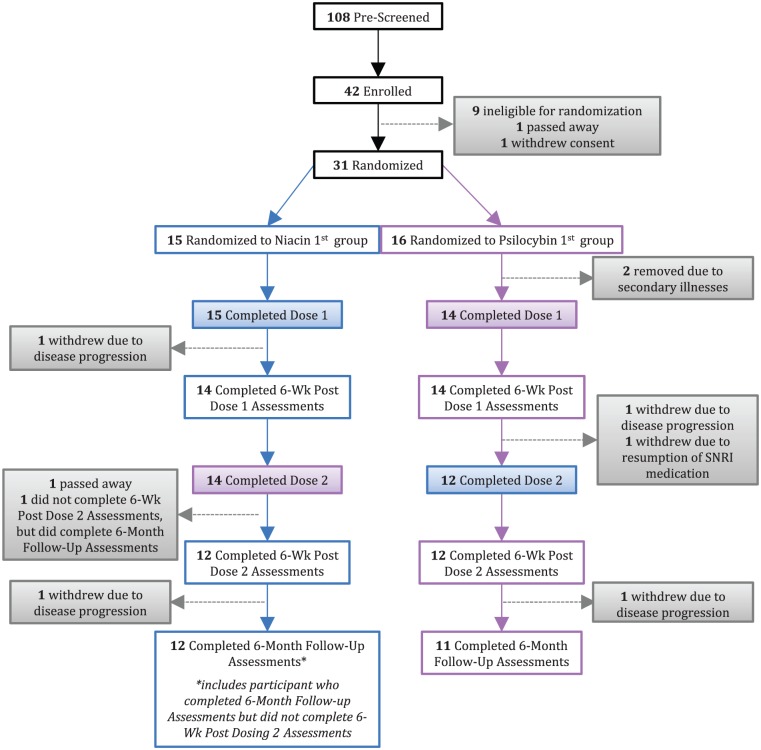
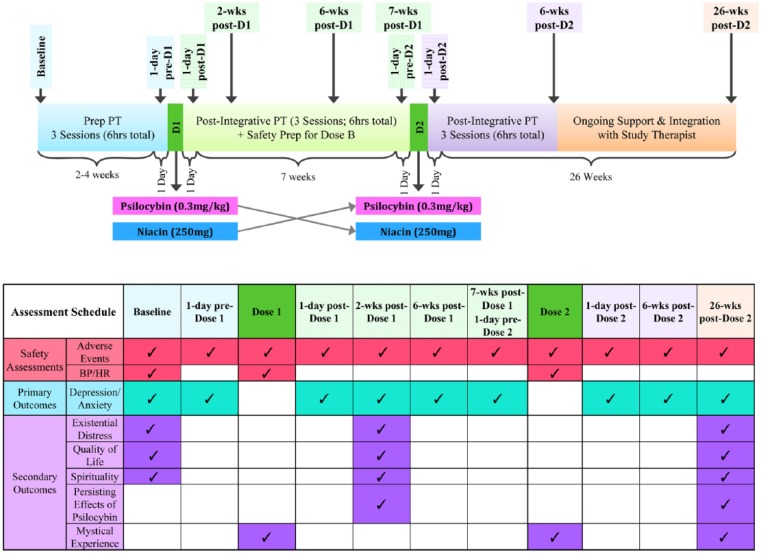
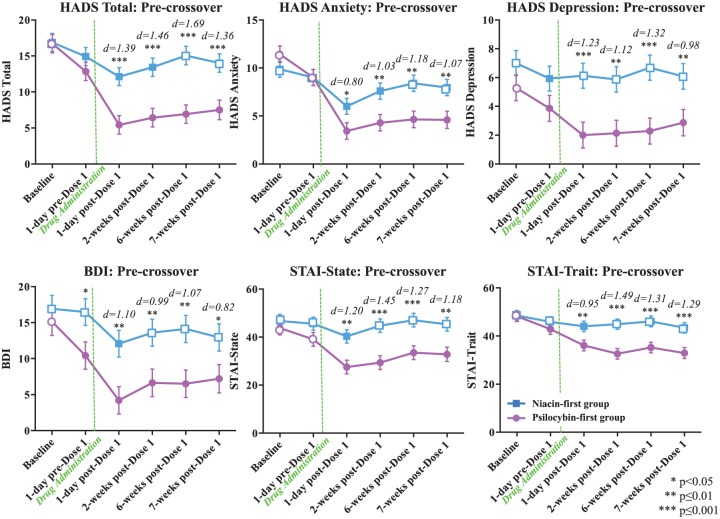
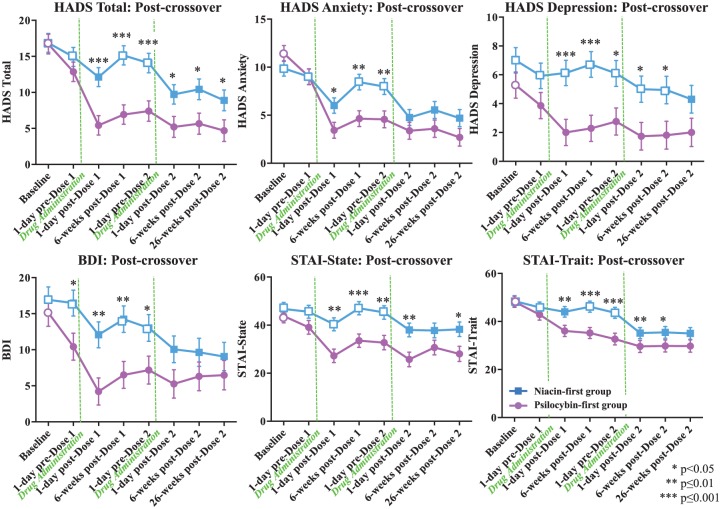
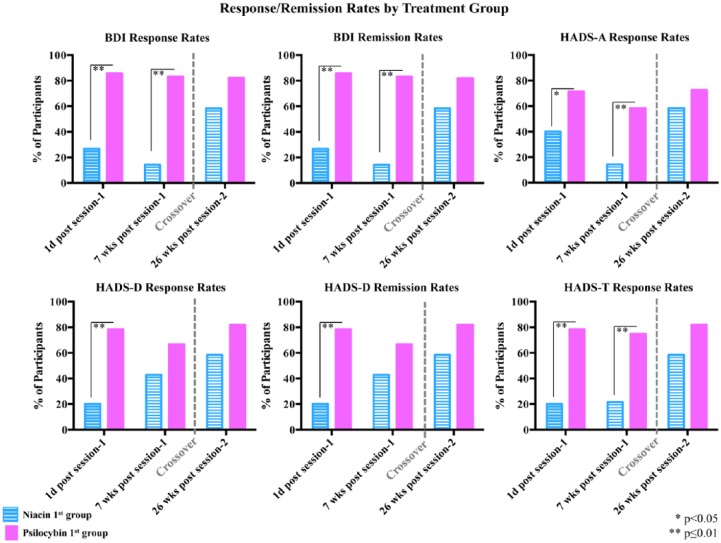
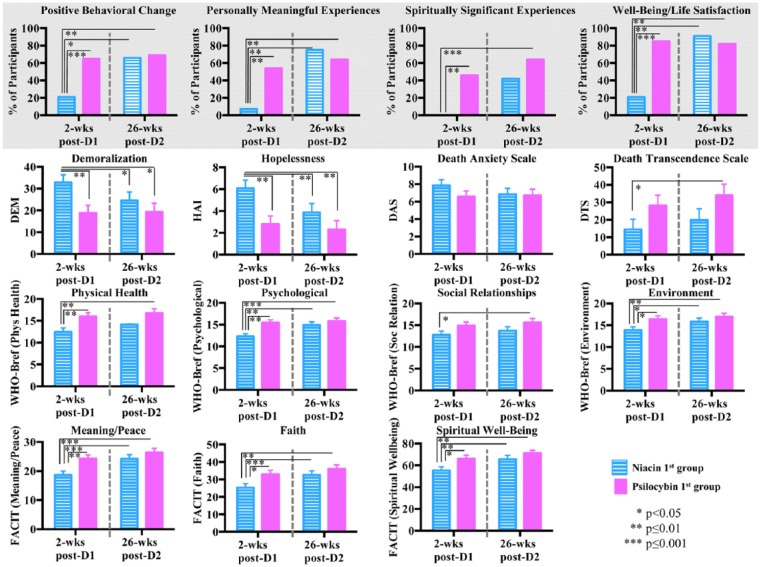
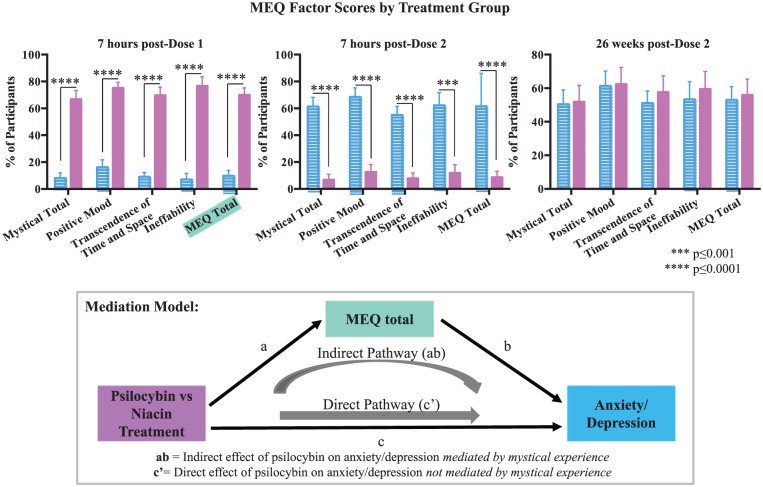
Background: Clinically significant anxiety and depression are common in patients with cancer, and are associated with poor psychiatric and medical outcomes. Historical and recent research suggests a role for psilocybin to treat cancer-related anxiety and depression. Methods: In this double-blind, placebo-controlled, crossover trial, 29 patients with cancer-related anxiety and depression were randomly assigned and received treatment with single-dose psilocybin (0.3 mg/kg) or niacin, both in conjunction with psychotherapy. The primary outcomes were anxiety and depression assessed between groups prior to the crossover at 7 weeks. Results: Prior to the crossover, psilocybin produced immediate, substantial, and sustained improvements in anxiety and depression and led to decreases in cancer-related demoralization and hopelessness, improved spiritual wellbeing, and increased quality of life. At the 6.5-month follow-up, psilocybin was associated with enduring anxiolytic and anti-depressant effects (approximately 60–80% of participants continued with clinically significant reductions in depression or anxiety), sustained benefits in existential distress and quality of life, as well as improved attitudes towards death. The psilocybin-induced mystical experience mediated the therapeutic effect of psilocybin on anxiety and depression. Conclusions: In conjunction with psychotherapy, single moderate-dose psilocybin produced rapid, robust and enduring anxiolytic and anti-depressant effects in patients with cancer-related psychological distress. Trial Registration: ClinicalTrials.gov Identifier: NCT00957359
Overview
The claims and statistics of this paper haven’t been checked yet.
Free: it reads the open-access text and checks the first 5 claims that cite a source we can check. Create a free account to check every claim.
Integrity signals
Registry
Cites
Statistics
Figures
Verification
Claims the paper makes
The claims and statistics of this paper haven’t been checked yet.
Free: it reads the open-access text and checks the first 5 claims that cite a source we can check. Create a free account to check every claim.
Claims other papers make about this one
Each is checked against this paper’s own text: does it say what the citing paper says it does?
The source backs part of the claim, not all of it — or backs it for a different population, condition or comparison.
In the citing paper
“Both participants and their friends and family reported positive effects on attitude towards life and the self, spiritual well-being, social contacts, quality of life, acceptance of death, and optimism (Ross et al., 2016).”
From Psychedelics for the treatment of depression, anxiety, and existential distress in patients with a terminal illness: a systematic review (2022) · cites this paper as Ross et al., 2016
Experimental — accuracy not yet measuredThe source backs part of the claim, not all of it — or backs it for a different population, condition or comparison.
In the citing paper
“Despite efforts to employ “active placebos” (e.g., niacin or a low-dose of a psychedelic) (40, 220), many patients and clinicians can still correctly distinguish between a high dose of a psychedelic drug and an active placebo.”
From Psychedelics and Other Psychoplastogens for Treating Mental Illness. (2021) · cites this paper as [220]
Experimental — accuracy not yet measuredThe source backs part of the claim, not all of it — or backs it for a different population, condition or comparison.
In the citing paper
“and with diminished anxiety and depression in terminal cancer patients (Griffiths et al., 2016;Ross et al., 2016;Barrett et al., 2020).”
From Psychedelics and Neural Plasticity: Therapeutic Implications (2022) · cites this paper as Ross et al., 2016
Experimental — accuracy not yet measuredThe source backs part of the claim, not all of it — or backs it for a different population, condition or comparison.
In the citing paper
“Psilocybin shows promise as a treatment for major depressive disorder (MDD).”
From Single-Dose Psilocybin Treatment for Major Depressive Disorder: A Randomized Clinical Trial (2023) · cites this paper as [8]
Experimental — accuracy not yet measuredThe source backs part of the claim, not all of it — or backs it for a different population, condition or comparison.
In the citing paper
“recent studies suggesting that psilocybin engenders a rapid antidepressant response that far outlasts the presence of the drug in the body.”
From Single-Dose Psilocybin Treatment for Major Depressive Disorder: A Randomized Clinical Trial (2023) · cites this paper as [8]
Experimental — accuracy not yet measured
25 more claims about this paper
Create a free account to see every claim other papers make about this one.
Self-check
Percentages, sums and reported differences re-computed from the paper’s own numbers.
The self-check needs the paper’s full text.
Citations
Cites
The Hospital Anxiety and Depression Scale
Zigmond, A. S., & Snaith, R. P. (1983) · Acta Psychiatrica Scandinavica · doi:10.1111/j.1600-0447.1983.tb09716.x · Cited by 47,139
(2013) · Cited by 44,563
Depression and quality of life in older persons: A review
Sivertsen, H., Bjørkløf, G. H., Engedal, K., Selbæk, G., & Helvik, A.-S. (2015) · Dementia and Geriatric Cognitive Disorders · doi:10.1159/000437299 · Cited by 14,152
Psychometric properties of the Beck Depression Inventory: Twenty-five years of evaluation
Beck, A. T., Steer, R. A., & Carbin, M. G. (1988) · Clinical Psychology Review · doi:10.1016/0272-7358(88)90050-5 · Cited by 11,696 · cited 2×
“cancer); Beck Depression Inventory (BDI) (Beck et al., 1988) self-report depression measure; Spielberger State-Trait Anxiety Inventory (STAI) (Spielberger, 1983) self-report measure of state (STAI state or STAI S) and trait (STAI trait or STAI T) anxiety.”
BackgroundMolecular Mechanisms of Depression: Perspectives on New Treatment Strategies
Lang, U. E., & Borgwardt, S. (2013) · Cellular Physiology and Biochemistry · doi:10.1159/000350094 · Cited by 8,475
Mitchell, A. J., Chan, M., Bhatti, H., Halton, M., Grassi, L., Johansen, C., & Meader, N. (2011) · The Lancet Oncology · doi:10.1016/s1470-2045(11)70002-x · Cited by 2,449 · cited 1×
“Enduring clinically significant anxiety and/or depressive symptoms are common in patients with cancer, present in 30–40% of patients in hospital settings (Mitchell et al., 2011).”
BackgroundManual for the state-trait anxiety inventory (form Y) : "self-evaluation questionnaire"
Spielberger, C. D., Gorsuch, R. L., & Lushene, R. E. (1970) · Consulting Psychologists Press eBooks · Cited by 2,352
Drevets, W. C., Price, J. L., & Furey, M. L. (2008) · Brain Structure and Function · doi:10.1007/s00429-008-0189-x · Cited by 2,241 · cited 7×
“The former is significant because depressive symptoms have been associated with increased activity in the medial PFC (Drevets et al., 2008; Farb et al., 2011) and normalization of medial PFC activity has been demonstrated with anti-depressant treatment (Deakin et al., 2008; Holtzheimer and Mayberg, 2011; Kennedy et al…”
BackgroundInfluentialGreicius, M. D., Flores, B. H., Menon, V., Glover, G. H., Solvason, H. B., Kenna, H., Reiss, A. L., & Schatzberg, A. F. (2007) · Biological Psychiatry · doi:10.1016/j.biopsych.2006.09.020 · Cited by 2,214 · cited 2×
“…pathological and can be understood as part of the therapeutic process (e.g. working through cancer-related psychological or existential distress through challenging encounters or emotionally charged confrontations with cancer-related fearful imagery or symbolism) (Carbonaro et al., 2016).”
BackgroundNichols, D. E. (2016) · Pharmacological Reviews · doi:10.1124/pr.115.011478 · Cited by 1,762 · cited 1×
“In two recently published open-label trials, one using a single dose of ayahuasca (Osorio et al., 2015) and the other using two doses of oral psilocybin (Carhart-Harris et al., 2016), acute and enduring anti-depressant effects were reported.”
Background
Research works printed but not linked: 3
- Doblin R (1991) Pahnke’s ‘Good Friday Experiment’: a long-term follow-up and methodological critique. J Transpersonal Psychol 23(1): 1– 28.
- Pahnke WN (1963) Drugs and mysticism: an analysis of the relationship between psychedelic drugs and the mystical consciousness, PhD dissertation. Cambridge, MA: Harvard University.
- VandeCreek L (1999) The death transcendence scale. In: Hill PC Hood RW (eds) Measures of religiosity. Birmingham, AL: Religious Education Press, pp. 442– 445.
Cited by
Trial of Psilocybin versus Escitalopram for Depression
Carhart-Harris, R., Giribaldi, B., Watts, R., Baker-Jones, M., Murphy-Beiner, A., Murphy, R., Martell, J., Blemings, A., Erritzoe, D., & Nutt, D. J. (2021) · New England Journal of Medicine · doi:10.1056/nejmoa2032994 · Cited by 1,391
Effects of Psilocybin-Assisted Therapy on Major Depressive Disorder: A Randomized Clinical Trial
Davis, A. K., Barrett, F. S., May, D. G., Cosimano, M. P., Sepeda, N. D., Johnson, M. W., Finan, P. H., & Griffiths, R. R. (2021) · JAMA Psychiatry · doi:10.1001/jamapsychiatry.2020.3285 · Cited by 1,301
REBUS and the anarchic brain: Toward a unified model of the brain action of psychedelics
Carhart-Harris, R. L., & Friston, K. J. (2019) · Pharmacological Reviews · doi:10.1124/pr.118.017160 · Cited by 1,180
“…et al., 2011; Gasser et al., 2014; Bogenschutz et al., 2015; Osório Fde et al., 2015; Carhart-Harris et al., 2016a, 2018a; Griffiths et al., 2016; Ross et al., 2016; Palhano-Fontes et al., 2019), in addition to population studies (Krebs and Johansen, 2013; Hendricks et al., 2015), controlled…”
ResultSingle-Dose Psilocybin for a Treatment-Resistant Episode of Major Depression
Goodwin, G. M., Aaronson, S. T., Alvarez, O., Arden, P. C., Baker, A., Bennett, J. C., Bird, C., Blom, R. E., Brennan, C., Brusch, D., et al. (2022) · New England Journal of Medicine · doi:10.1056/nejmoa2206443 · Cited by 1,167
Psilocybin with psychological support for treatment-resistant depression: six-month follow-up
Carhart-Harris, R. L., Bolstridge, M., Day, C. M. J., Rucker, J., Watts, R., Erritzoe, D. E., Kaelen, M., Giribaldi, B., Bloomfield, M., Pilling, S., et al. (2018) · Psychopharmacology · doi:10.1007/s00213-017-4771-x · Cited by 970
“Recent studies (Griffiths et al. 2016; Ross et al. 2016; Carhart-Harris et al. 2016), including the present one, help demonstrate the feasibility of treating patients with major depressive disorder with psilocybin plus psychological support.”
BackgroundResultInfluentialPalhano-Fontes, F., Barreto, D., Onias, H., Andrade, K. C., Novaes, M. M., Pessoa, J. A., Mota-Rolim, S. A., Osório, F. L., Sanches, R., dos Santos, R. G., et al. (2019) · Psychological Medicine · doi:10.1017/s0033291718001356 · Cited by 852
“Prior studies suggest that elements of the psychedelic experience, such as experiences of mystical-type, account for the therapeutic benefit (Bogenschutz et al., 2015; Garcia-Romeu et al., 2015; Majić et al., 2015; Griffiths et al., 2016; Ross et al., 2016).”
BackgroundInfluentialRoseman, L., Nutt, D. J., & Carhart-Harris, R. L. (2018) · Frontiers in Pharmacology · doi:10.3389/fphar.2017.00974 · Cited by 808
“Both the MEQ and M scale have been found to be predictive of long-term positive therapeutic outcomes in trials of psilocybin for cancerrelated distress (Griffiths et al., 2016; Ross et al., 2016), tobacco smoking (Garcia-Romeu et al.”
BackgroundResultInfluentialSerotonin and brain function: a tale of two receptors
Carhart-Harris, R., & Nutt, D. (2017) · Journal of Psychopharmacology · doi:10.1177/0269881117725915 · Cited by 739
“, 2013) and clinical trials (Bogenschutz et al., 2015; Carhart-Harris et al., 2016a; Gasser et al., 2014; Griffiths et al., 2016; Grob et al., 2011; Mithoefer et al., 2011; Ross et al., 2016; Sanches et al., 2016) – see Carhart-Harris and Goodwin (2017) for a review.”
BackgroundInfluentialBogenschutz, M. P., Ross, S., Bhatt, S., Baron, T., Forcehimes, A. A., Laska, E., Mennenga, S. E., O’Donnell, K., Owens, L. T., Podrebarac, S., et al. (2022) · JAMA Psychiatry · doi:10.1001/jamapsychiatry.2022.2096 · Cited by 711
Self-citationThe Therapeutic Potential of Psychedelic Drugs: Past, Present, and Future
Carhart-Harris, R. L., & Goodwin, G. M. (2017) · Neuropsychopharmacology · doi:10.1038/npp.2017.84 · Cited by 706
“Ross et al (2016) suggested that a domain of distress they call existential/spiritual well being is particularly relevant to depression in cancer while Griffith et al (2016) emphasize that evidence for efficacy of conventional medication or psychotherapy is poor or even negative.”
BackgroundInfluentialPsychedelics and the essential importance of context
Carhart-Harris, R. L., Roseman, L., Haijen, E., Erritzoe, D., Watts, R., Branchi, I., & Kaelen, M. (2018) · Journal of Psychopharmacology · doi:10.1177/0269881118754710 · Cited by 657
“Consistent with previous work (Griffiths et al., 2016; Roseman et al., 2017; Ross et al., 2016), we found that having a peak experience is predictive of improvements in psychological well-being 2 weeks after the experience (model 1), whereas having a challenging experience predicts a deflation of…”
BackgroundMethodInfluentialPsychedelics and Psychedelic-Assisted Psychotherapy
Reiff, C. M., Richman, E. E., Nemeroff, C. B., Carpenter, L. L., Widge, A. S., Rodriguez, C. I., Kalin, N. H., McDonald, W. M., & and the Work Group on Biomarkers and Novel Treatments, A. D. O. T. A. P. A. C. O. R. (2020) · American Journal of Psychiatry · doi:10.1176/appi.ajp.2019.19010035 · Cited by 649
“The mean change in HAM-D score 21 days after drug administration was 211.4. a AASE=Alcohol Abstinence Self-Efficacy Scale; BDI=Beck Depression Inventory; CAPS=Clinician-Administered PTSD Scale; LSD=lysergic acid diethylamide; DMT=N,N-dimethyltryptamine; HADS=Hospital Anxiety and Depression Scale; HAM-A=Hamilton Anxiet…”
BackgroundInfluentialPsilocybin induces rapid and persistent growth of dendritic spines in frontal cortex in vivo
Shao, L.-X., Liao, C., Gregg, I., Davoudian, P. A., Savalia, N. K., Delagarza, K., & Kwan, A. C. (2021) · Neuron · doi:10.1016/j.neuron.2021.06.008 · Cited by 626
Watts, R., Day, C., Krzanowski, J., Nutt, D., & Carhart-Harris, R. (2017) · Journal of Humanistic Psychology · doi:10.1177/0022167817709585 · Cited by 589
“The traditional psychological/psychotherapeutic approach used in this trial and similar previous trials (e.g., Griffiths et al., 2016; Ross et al., 2016) is often somewhat of a composite of approaches, tailored (it is assumed) to the idiosyncratic nature of the psychedelic experience (Grof, 1980;…”
InfluentialPsilocybin for treatment-resistant depression: fMRI-measured brain mechanisms
Carhart-Harris, R. L., Roseman, L., Bolstridge, M., Demetriou, L., Pannekoek, J. N., Wall, M. B., Tanner, M., Kaelen, M., McGonigle, J., Murphy, K., et al. (2017) · Scientific Reports · doi:10.1038/s41598-017-13282-7 · Cited by 587
Psychedelic drugs: neurobiology and potential for treatment of psychiatric disorders
Vollenweider, F. X., & Preller, K. H. (2020) · Nature Reviews Neuroscience · doi:10.1038/s41583-020-0367-2 · Cited by 570
Single-Dose Psilocybin Treatment for Major Depressive Disorder: A Randomized Clinical Trial
Raison, C. L., Sanacora, G., Woolley, J., Heinzerling, K., Dunlop, B. W., Brown, R. T., Kakar, R., Hassman, M., Trivedi, R. P., Robison, R., et al. (2023) · JAMA · doi:10.1001/jama.2023.14530 · Cited by 545
Self-citationThe subjective effects of psychedelics are necessary for their enduring therapeutic effects
Yaden, D. B., & Griffiths, R. R. (2021) · ACS Pharmacology & Translational Science · doi:10.1021/acsptsci.0c00194 · Cited by 541
Griffiths, R. R., Johnson, M. W., Richards, W. A., Richards, B. D., Jesse, R., MacLean, K. A., Barrett, F. S., Cosimano, M. P., & Klinedinst, M. A. (2018) · Journal of Psychopharmacology · doi:10.1177/0269881117731279 · Cited by 520
“Prior research suggests an important role of psilocybin-occasioned mystical experience in the observed enduring positive changes in psychological well-being, prosocial disposition, and spiritual worldview (Garcia-Romeu et al., 2014; Griffiths et al., 2008, 2016; Ross et al., 2016).”
BackgroundMadsen, M. K., Fisher, P. M., Burmester, D., Dyssegaard, A., Stenbæk, D. S., Kristiansen, S., Johansen, S. S., Lehel, S., Linnet, K., Svarer, C., et al. (2019) · Neuropsychopharmacology · doi:10.1038/s41386-019-0324-9 · Cited by 517
Johnson, M. W., Hendricks, P. S., Barrett, F. S., & Griffiths, R. R. (2019) · Pharmacology & Therapeutics · doi:10.1016/j.pharmthera.2018.11.010 · Cited by 506
Structure of a Hallucinogen-Activated Gq-Coupled 5-HT2A Serotonin Receptor
Kim, K., Che, T., Panova, O., DiBerto, J. F., Lyu, J., Krumm, B. E., Wacker, D., Robertson, M. J., Seven, A. B., Nichols, D. E., et al. (2020) · Cell · doi:10.1016/j.cell.2020.08.024 · Cited by 481
“Remarkably, psilocybin’s effects appear to be both rapid and enduring (Carhart-Harris et al., 2018; Ross et al., 2016; Griffiths et al., 2016).”
Gukasyan, N., Davis, A. K., Barrett, F. S., Cosimano, M. P., Sepeda, N. D., Johnson, M. W., & Griffiths, R. R. (2022) · Journal of Psychopharmacology · doi:10.1177/02698811211073759 · Cited by 425
“Notably, two previous studies in individuals with cancer-related depression and anxiety (Griffiths et al., 2016; Ross et al., 2016) showed positive associations of MEQ30 session experiences with improvements in depression symptoms at 5 or 6 weeks.”
BackgroundPredicting responses to psychedelics: a prospective study
Haijen, E. C. H. M., Kaelen, M., Roseman, L., Timmermann, C., Kettner, H., Russ, S., Nutt, D., Daws, R. E., Hampshire, A. D. G., Lorenz, R., et al. (2018) · Frontiers in Pharmacology · doi:10.3389/fphar.2018.00897 · Cited by 417
“Also, the current results are in line with previous findings showing that peak or mystical-type experiences are positively associated with positive longer-term changes after a psychedelic experience (Griffiths et al., 2008, 2011; Garcia-Romeu et al., 2014; Ross et al., 2016; Roseman et al., 2017).”
BackgroundResultEmotional breakthrough and psychedelics: Validation of the Emotional Breakthrough Inventory
Roseman, L., Haijen, E., Idialu-Ikato, K., Kaelen, M., Watts, R., & Carhart-Harris, R. (2019) · Journal of Psychopharmacology · doi:10.1177/0269881119855974 · Cited by 413
“…et al., 2016; Johnson et al., 2016; Klavetter and Mogar, 1967; Kurland et al., 1972; MacLean et al., 2011; O’Reilly and Funk, 1964; Pahnke et al., 1970; Richards et al., 1977; Roseman et al., 2017; Ross et al., 2016) and see Stace (1960) for some classical texts relevant to the mystical experience.”
BackgroundPsychedelics, meditation, and self-consciousness
Millière, R., Carhart-Harris, R. L., Roseman, L., Trautwein, F.-M., & Berkovich-Ohana, A. (2018) · Frontiers in Psychology · doi:10.3389/fpsyg.2018.01475 · Cited by 390
Davis, A. K., Barrett, F. S., & Griffiths, R. R. (2020) · Journal of Contextual Behavioral Science · doi:10.1016/j.jcbs.2019.11.004 · Cited by 375
“Consistent with prior studies (Griffiths et al., 2016; Ross et al., 2016; Davis et al, 2019), in the present study mystical experiences were associated with decreases in depression and anxiety.”
BackgroundResultInfluentialEmotions and brain function are altered up to one month after a single high dose of psilocybin.
Barrett, F. S., Doss, M. K., Sepeda, N. D., Pekar, J. J., & Griffiths, R. R. (2020) · Scientific Reports · doi:10.1038/s41598-020-59282-y · Cited by 375
Psychedelics as Medicines: An Emerging New Paradigm
Nichols, D., Johnson, M., & Nichols, C. (2017) · Clinical Pharmacology & Therapeutics · doi:10.1002/cpt.557 · Cited by 370
Barrett, F. S., Bradstreet, M. P., Leoutsakos, J.-M. S., Johnson, M. W., & Griffiths, R. R. (2016) · Journal of Psychopharmacology · doi:10.1177/0269881116678781 · Cited by 366
“, 2011) and anxiety secondary to a life-threatening cancer diagnosis (Griffiths et al., 2016; Ross et al., 2016), and recent large-sample surveys have demonstrated a lower risk for psychological distress and suicidality in those who have endorsed having consumed a classic hallucinogen in the past (Hendricks et al.”
Agin-Liebes, G. I., Malone, T., Yalch, M. M., Mennenga, S. E., Ponté, K. L., Guss, J., Bossis, A. P., Grigsby, J., Fischer, S., & Ross, S. (2020) · Journal of Psychopharmacology · doi:10.1177/0269881119897615 · Cited by 360
“3 mg/kg) with a single dose of niacin (250 mg) in conjunction with psychotherapy in patients (N=29) with cancerrelated psychiatric and existential distress (Ross et al., 2016).”
BackgroundResultInfluentialSelf-citationJohnson, M. W., Griffiths, R. R., Hendricks, P. S., & Henningfield, J. E. (2018) · Neuropharmacology · doi:10.1016/j.neuropharm.2018.05.012 · Cited by 354
“This study, like others discussed in Factor 6 (Griffiths et al., 2016; Ross et al., 2016) also documented reports of acute elevations in fear and anxiety in some patients that are predictive of low abuse potential as well as a subsequently emerging sense of contentment that is not associated with a strong motivation t…”
Influentialvon Rotz, R., Schindowski, E. M., Jungwirth, J., Schuldt, A., Rieser, N. M., Zahoranszky, K., Seifritz, E., Nowak, A., Nowak, P., Jäncke, L., et al. (2023) · eClinicalMedicine · doi:10.1016/j.eclinm.2022.101809 · Cited by 354
Andersen, K. A. A., Carhart‐Harris, R., Nutt, D. J., & Erritzoe, D. (2021) · Acta Psychiatrica Scandinavica · doi:10.1111/acps.13249 · Cited by 347
Psychiatry & the psychedelic drugs. Past, present & future
Rucker, J. J. H., Iliff, J., & Nutt, D. J. (2018) · Neuropharmacology · doi:10.1016/j.neuropharm.2017.12.040 · Cited by 343
The neural basis of psychedelic action
Kwan, A. C., Olson, D. E., Preller, K. H., & Roth, B. L. (2022) · Nature Neuroscience · doi:10.1038/s41593-022-01177-4 · Cited by 302
The subjective effects of psychedelics may not be necessary for their enduring therapeutic effects
Olson, D. E. (2021) · ACS Pharmacology & Translational Science · doi:10.1021/acsptsci.0c00192 · Cited by 329
Adverse effects of psychedelics: From anecdotes and misinformation to systematic science
Schlag, A. K., Aday, J., Salam, I., Neill, J. C., & Nutt, D. J. (2022) · Journal of Psychopharmacology · doi:10.1177/02698811211069100 · Cited by 325
“…a near statistical certainty that some participants in the current era of psychedelic research, which has collectively included thousands of participants in trials since 2000 (Carhart-Harris et al., 2021; Ross et al., 2016), would have experienced HPPD by now; however, this has not been the case.”
BackgroundBlinding and expectancy confounds in psychedelic randomized controlled trials
Muthukumaraswamy, S. D., Forsyth, A., & Lumley, T. (2021) · Expert Review of Clinical Pharmacology · doi:10.1080/17512433.2021.1933434 · Cited by 324
Holze, F., Gasser, P., Müller, F., Dolder, P. C., & Liechti, M. E. (2023) · Biological Psychiatry · doi:10.1016/j.biopsych.2022.08.025 · Cited by 318
“Two randomized, placebo-controlled trials in patients with life-threatening cancer reported significant reductions in anxiety and depression up to 5 and 6 weeks after a single dose of psilocybin (11,12).”
InfluentialTowards an understanding of psychedelic-induced neuroplasticity
Calder, A. E., & Hasler, G. (2023) · Neuropsychopharmacology · doi:10.1038/s41386-022-01389-z · Cited by 313
Structure-based discovery of nonhallucinogenic psychedelic analogs
Cao, D., Yu, J., Wang, H., Luo, Z., Liu, X., He, L., Qi, J., Fan, L., Tang, L., Chen, Z., et al. (2022) · Science · doi:10.1126/science.abl8615 · Cited by 312
Belser, A. B., Agin-Liebes, G., Swift, T. C., Terrana, S., Devenot, N., Friedman, H. L., Guss, J., Bossis, A., & Ross, S. (2017) · Journal of Humanistic Psychology · doi:10.1177/0022167817706884 · Cited by 311
“…profound and singular experiences reported in these quantitative studies (Griffiths et al., 2008; Griffiths et al., 2011; Griffiths et al., 2016; Ross et al., 2016), we found no qualitative studies of patient experiences of psilocybin-assisted psychotherapy in clinical trials in the published…”
InfluentialSelf-citationCarlson, L. E., Ismaila, N., Addington, E. L., Asher, G. N., Atreya, C., Balneaves, L. G., Bradt, J., Fuller-Shavel, N., Goodman, J., Hoffman, C. J., et al. (2023) · Journal of Clinical Oncology · doi:10.1200/jco.23.00857 · Cited by 309
Psychedelics, mystical experience, and therapeutic efficacy: a systematic review
Ko, K., Knight, G., Rucker, J. J., & Cleare, A. J. (2022) · Frontiers in Psychiatry · doi:10.3389/fpsyt.2022.917199 · Cited by 306
Potential Therapeutic Effects of Psilocybin
Johnson, M. W., & Griffiths, R. R. (2017) · Neurotherapeutics · doi:10.1007/s13311-017-0542-y · Cited by 296
“Another recent study using a similar double-blind crossover design examined 29 patients with cancer diagnosed with one of several DSM-IV anxiety-related disorders [40].”
BackgroundSelf unbound: ego dissolution in psychedelic experience
Letheby, C., & Gerrans, P. (2017) · Neuroscience of Consciousness · doi:10.1093/nc/nix016 · Cited by 293
“cacy of carefully controlled psychedelic administration (Griffiths et al. 2016; Ross et al. 2016; dos Santos et al. 2016a).”
BackgroundPsychedelic therapy for smoking cessation: qualitative analysis of participant accounts
Noorani, T., Garcia-Romeu, A., Swift, T. C., Griffiths, R. R., & Johnson, M. W. (2018) · Journal of Psychopharmacology · doi:10.1177/0269881118780612 · Cited by 285
Anderson, B. T., Danforth, A., Daroff, P. R., Stauffer, C., Ekman, E., Agin-Liebes, G., Trope, A., Boden, M. T., Dilley, P. J., Mitchell, J., et al. (2020) · EClinicalMedicine · doi:10.1016/j.eclinm.2020.100538 · Cited by 284
“A dose of 0¢3mg/kg had been shown to be safe in patients with cancer, [12,13] and a dose-response study in healthy volunteers suggested that optimum psilocybin dosing for eliciting a well-tolerated yet transcendent experience may be between 0¢29mg/kg and 0¢43mg/kg [32].”
BackgroundSelf-citationThe Therapeutic Potential of Psilocybin
Lowe, H., Toyang, N., Steele, B., Valentine, H., Grant, J., Ali, A., Ngwa, W., & Gordon, L. (2021) · Molecules · doi:10.3390/molecules26102948 · Cited by 242
Halberstadt, A. L., Chatha, M., Klein, A. K., Wallach, J., & Brandt, S. D. (2020) · Neuropharmacology · doi:10.1016/j.neuropharm.2019.107933 · Cited by 278
“…potential therapeutic effects of serotonergic hallucinogens, with trials focusing on anxiety and depression (Grob et al., 2011; Griffiths et al., 2016; Ross et al., 2016), substance abuse (Johnson et al. 2014, 2016; Bogenschutz et al., 2015), and obsessive-compulsive disorder (Moreno et al., 2006).”
Classic Hallucinogens and Mystical Experiences: Phenomenology and Neural Correlates
Barrett, F. S., & Griffiths, R. R. (2017) · Current Topics in Behavioral Neurosciences · doi:10.1007/7854_2017_474 · Cited by 273
“…(Carhart-Harris et al. 2016) along with findings from studies including more rigorous scientific controls (Grob et al. 2011; Griffiths et al. 2016; Ross et al. 2016) demonstrate the potential for therapeutic effects of psilocybin, and are suggestive of a link between mystical experience and…”
InfluentialPsychedelic-Assisted Psychotherapy: A Paradigm Shift in Psychiatric Research and Development
Schenberg, E. E. (2018) · Frontiers in Pharmacology · doi:10.3389/fphar.2018.00733 · Cited by 240
Psilocybin desynchronizes the human brain
Siegel, J. S., Subramanian, S., Perry, D., Kay, B. P., Gordon, E. M., Laumann, T. O., Reneau, T. R., Metcalf, N. V., Chacko, R. V., Gratton, C., et al. (2024) · Nature · doi:10.1038/s41586-024-07624-5 · Cited by 269
Psychedelics as anti-inflammatory agents
Flanagan, T. W., & Nichols, C. D. (2018) · International Review of Psychiatry · doi:10.1080/09540261.2018.1481827 · Cited by 267
“In two separate human clinical trials performed at Johns Hopkins University and New York University, the effects of psychedelic-assisted psychotherapy in patients suffering from cancer-related psychosocial distress (CRPD) was examined (Griffiths et al., 2016; Ross et al., 2016).”
BackgroundEffects of psilocybin therapy on personality structure
Erritzoe, D., Roseman, L., Nour, M. M., MacLean, K., Kaelen, M., Nutt, D. J., & Carhart‐Harris, R. L. (2018) · Acta Psychiatrica Scandinavica · doi:10.1111/acps.12904 · Cited by 267
“The observation that the long-lasting impact of psychedelic therapy – in this case on measures of Extraversion and Neuroticism – may depend on their ability to occasion profound insights and ‘peak’ (29) or mystical-type (70) experiences is supported by a number of modern clinical trials, where the magnitude of such pe…”
BackgroundThe hidden therapist: evidence for a central role of music in psychedelic therapy
Kaelen, M., Giribaldi, B., Raine, J., Evans, L., Timmerman, C., Rodriguez, N., Roseman, L., Feilding, A., Nutt, D., & Carhart-Harris, R. (2018) · Psychopharmacology · doi:10.1007/s00213-017-4820-5 · Cited by 267
“…Brighton BN1 9RH, UK 3 Computational, Cognitive and Clinical Neuroscience Laboratory (C3NL), Department of Medicine, Imperial College London, London W12 0NN, UK 4 The Beckley Foundation, Oxford OX3 9SY, UK Ross et al. 2016), and post-traumatic stress disorder (Mithoefer et al. 2011, 2013).”
BackgroundInfluentialGeorge, J. R., Michaels, T. I., Sevelius, J., & Williams, M. T. (2019) · Journal of Psychedelic Studies · doi:10.1556/2054.2019.015 · Cited by 230
“Psilocybin-assisted therapy has been demonstrated to decrease symptoms of depression (Carhart-Harris, 2015; Carhart-Harris et al., 2016; Ross et al., 2016) and anxiety (Grob et al., 2011; Moreno, Wiegand, Taitano, & Delgado, 2006) and assist in the treatment of addiction (Bogenschutz et al., 2015;…”
BackgroundInclusion of people of color in psychedelic-assisted psychotherapy: a review of the literature.
Michaels, T. I., Purdon, J., Collins, A., & Williams, M. T. (2018) · BMC Psychiatry · doi:10.1186/s12888-018-1824-6 · Cited by 265
“All but three studies [21, 65, 66] utilized more than one source of recruitment.”
BackgroundBarnes, N. M., Ahern, G. P., Becamel, C., Bockaert, J., Camilleri, M., Chaumont-Dubel, S., Claeysen, S., Cunningham, K. A., Fone, K. C., Gershon, M., et al. (2021) · Pharmacological Reviews · doi:10.1124/pr.118.015552 · Cited by 263
Reviewing the Potential of Psychedelics for the Treatment of PTSD
Krediet, E., Bostoen, T., Breeksema, J., van Schagen, A., Passie, T., & Vermetten, E. (2020) · International Journal of Neuropsychopharmacology · doi:10.1093/ijnp/pyaa018 · Cited by 260
“, 2014); reductions in anxiety, depression, and existential distress in patients with a life-threatening diagnosis (Griffiths et al., 2016; Ross et al., 2016); and improvements in depression (Roseman et al.”
BackgroundBespoke library docking for 5-HT2A receptor agonists with antidepressant activity
Kaplan, A. L., Confair, D. N., Kim, K., Barros-Álvarez, X., Rodriguiz, R. M., Yang, Y., Kweon, O. S., Che, T., McCorvy, J. D., Kamber, D. N., et al. (2022) · Nature · doi:10.1038/s41586-022-05258-z · Cited by 245
Long-term effects of psychedelic drugs: A systematic review
Aday, J. S., Mitzkovitz, C. M., Bloesch, E. K., Davoli, C. C., & Davis, A. K. (2020) · Neuroscience & Biobehavioral Reviews · doi:10.1016/j.neubiorev.2020.03.017 · Cited by 257
Classical psychedelics for the treatment of depression and anxiety: A systematic review
Muttoni, S., Ardissino, M., & John, C. (2019) · Journal of Affective Disorders · doi:10.1016/j.jad.2019.07.076 · Cited by 256
Therapeutic alliance and rapport modulate responses to psilocybin assisted therapy for depression
Murphy, R., Kettner, H., Zeifman, R., Giribaldi, B., Kartner, L., Martell, J., Read, T., Murphy-Beiner, A., Baker-Jones, M., Nutt, D., et al. (2022) · Frontiers in Pharmacology · doi:10.3389/fphar.2021.788155 · Cited by 250
“, 2021), including distress associated with a lifethreatening illness (Grob et al., 2011; Griffiths et al., 2016; Ross et al., 2016; Anderson et al., 2020), substance misuse (Krebs and Johansen, 2012; Johnson et al.”
BackgroundInfluentialDistinct acute effects of LSD, MDMA, and d-amphetamine in healthy subjects
Holze, F., Vizeli, P., Müller, F., Ley, L., Duerig, R., Varghese, N., Eckert, A., Borgwardt, S., & Liechti, M. E. (2020) · Neuropsychopharmacology · doi:10.1038/s41386-019-0569-3 · Cited by 247
Holze, F., Vizeli, P., Ley, L., Müller, F., Dolder, P., Stocker, M., Duthaler, U., Varghese, N., Eckert, A., Borgwardt, S., et al. (2021) · Neuropsychopharmacology · doi:10.1038/s41386-020-00883-6 · Cited by 245
DMT Models the Near-Death Experience
Timmermann, C., Roseman, L., Williams, L., Erritzoe, D., Martial, C., Cassol, H., Laureys, S., Nutt, D., & Carhart-Harris, R. (2018) · Frontiers in Psychology · doi:10.3389/fpsyg.2018.01424 · Cited by 220
“For example, reduced death anxiety (Grob et al., 2011; Gasser et al., 2015; Griffiths et al., 2016; Ross et al., 2016), pro-ecological behavior (Forstmann and Sagioglou, 2017; Nour et al.”
BackgroundAday, J. S., Heifets, B. D., Pratscher, S. D., Bradley, E., Rosen, R., & Woolley, J. D. (2022) · Psychopharmacology · doi:10.1007/s00213-022-06123-7 · Cited by 237
Sartori, S. B., & Singewald, N. (2019) · Pharmacology & Therapeutics · doi:10.1016/j.pharmthera.2019.107402 · Cited by 236
Modern clinical research on LSD
Liechti, M. E. (2017) · Neuropsychopharmacology · doi:10.1038/npp.2017.86 · Cited by 236
“Recent trials investigated psilocybin in patients with alcohol and nicotine use disorder Neuropsychopharmacology (Bogenschutz et al, 2015; Johnson et al, 2014), major depression, and anxiety (Carhart-Harris et al, 2016a; Griffiths et al, 2016; Grob et al, 2011; Ross et al, 2016).”
BackgroundInfluentialThe Current Status of Psychedelics in Psychiatry
Nutt, D., & Carhart-Harris, R. (2021) · JAMA Psychiatry · doi:10.1001/jamapsychiatry.2020.2171 · Cited by 223
Long-lasting subjective effects of LSD in normal subjects.
Schmid, Y., & Liechti, M. E. (2018) · Psychopharmacology · doi:10.1007/s00213-017-4733-3 · Cited by 232
“…using doses up to 0.43 mg/kg p.o., including reports of positive long-term effects in a total of 129 healthy subjects (Griffiths et al. 2006, 2008, 2011, 2017; MacLean et al. 2011) and a total of 105 patients (Bogenschutz et al. 2015; Griffiths et al. 2016; Johnson et al. 2016; Ross et al. 2016).”
InfluentialPsychedelics in Psychiatry: Neuroplastic, Immunomodulatory, and Neurotransmitter Mechanisms
Inserra, A., De Gregorio, D., & Gobbi, G. (2021) · Pharmacological Reviews · doi:10.1124/pharmrev.120.000056 · Cited by 232
Central 5-HT receptors and their function; present and future
Sharp, T., & Barnes, N. M. (2020) · Neuropharmacology · doi:10.1016/j.neuropharm.2020.108155 · Cited by 231
Increased amygdala responses to emotional faces after psilocybin for treatment-resistant depression
Roseman, L., Demetriou, L., Wall, M. B., Nutt, D. J., & Carhart-Harris, R. L. (2018) · Neuropharmacology · doi:10.1016/j.neuropharm.2017.12.041 · Cited by 230
“, 2015), end of life anxiety (Gasser et al., 2014a; Griffiths et al., 2016; Grob et al., 2011; Ross et al., 2016), obsessive compulsive disorder (Moreno et al.”
Hartogsohn, I. (2018) · Frontiers in Neuroscience · doi:10.3389/fnins.2018.00129 · Cited by 229
“…also suggested a numbers of other mediators including relational embeddness, embodiment, “the difficult struggle,” affect and catharsis, visions, and recovered sense of appropriate priorities (Griffiths et al., 2006; Lebedev et al., 2016; Ross et al., 2016; Belser et al., 2017; Johnson et al., 2017).”
BackgroundResultInfluentialThe experimental effects of psilocybin on symptoms of anxiety and depression: A meta-analysis
Goldberg, S. B., Pace, B. T., Nicholas, C. R., Raison, C. L., & Hutson, P. R. (2020) · Psychiatry Research · doi:10.1016/j.psychres.2020.112749 · Cited by 229
“, 2011), depression (Carhart-Harris et al., 2016, 2018; Ross et al., 2016), and substance use (Bogenschutz et al.”
Backgrounddos Santos, R. G., Bouso, J. C., Alcázar-Córcoles, M. Á., & Hallak, J. E. C. (2018) · Expert Review of Clinical Pharmacology · doi:10.1080/17512433.2018.1511424 · Cited by 227
Holze, F., Ley, L., Müller, F., Becker, A. M., Straumann, I., Vizeli, P., Kuehne, S. S., Roder, M. A., Duthaler, U., Kolaczynska, K. E., et al. (2022) · Neuropsychopharmacology · doi:10.1038/s41386-022-01297-2 · Cited by 226
Psychedelics, personality and political perspectives.
Nour, M. M., Evans, L., & Carhart-Harris, R. L. (2017) · Journal of Psychoactive Drugs · doi:10.1080/02791072.2017.1312643 · Cited by 226
Extended difficulties following the use of psychedelic drugs: A mixed methods study
Evans, J., Robinson, O. C., Argyri, E. K., Suseelan, S., Murphy-Beiner, A., McAlpine, R., Luke, D., Michelle, K., & Prideaux, E. (2023) · PLOS ONE · doi:10.1371/journal.pone.0293349 · Cited by 185
Developing Guidelines and Competencies for the Training of Psychedelic Therapists
Phelps, J. (2017) · Journal of Humanistic Psychology · doi:10.1177/0022167817711304 · Cited by 225
“In a related study Ross et al. (2016) measured the effects of psilocybinassisted therapy for 29 patients with cancer-related psychological distress on pain perception, depression, anxiety, existential/psychospiritual distress, quality of life, and spiritual/mystical states of consciousness.”
BackgroundCessation and reduction in alcohol consumption and misuse after psychedelic use
Garcia-Romeu, A., Davis, A. K., Erowid, F., Erowid, E., Griffiths, R. R., & Johnson, M. W. (2019) · Journal of Psychopharmacology · doi:10.1177/0269881119845793 · Cited by 225
“Although the spiritual and mystical-type effects attributed to psychedelics have garnered much of the attention surrounding behavioral and psychological changes observed following psychedelic administration in the laboratory (Bogenschutz et al., 2015; Garcia-Romeu et al., 2015; Griffiths et al., 2008; 2011; 2016; Liec…”
BackgroundInfluentialBreeksema, J. J., Niemeijer, A. R., Krediet, E., Vermetten, E., & Schoevers, R. A. (2020) · CNS Drugs · doi:10.1007/s40263-020-00748-y · Cited by 224
“Both early [108–110] and present-day psychedelic studies [13, 14, 51, 111, 112] have found significant relations between mystical experiences and therapeutic outcomes.”
BackgroundAday, J. S., Davis, A. K., Mitzkovitz, C. M., Bloesch, E. K., & Davoli, C. C. (2021) · ACS Pharmacology & Translational Science · doi:10.1021/acsptsci.1c00014 · Cited by 224
Psilocybin: from ancient magic to modern medicine
Nichols, D. E. (2020) · The Journal of Antibiotics · doi:10.1038/s41429-020-0311-8 · Cited by 184
Pharmacological, neural, and psychological mechanisms underlying psychedelics: A critical review
van Elk, M., & Yaden, D. B. (2022) · Neuroscience & Biobehavioral Reviews · doi:10.1016/j.neubiorev.2022.104793 · Cited by 221
“2006), anxiety related to a life-threatening medical diagnosis (Griffiths, Johnson, Carducci, Umbricht, Richards, Richards, & Klinedinst, 2016; Ross et al., 2016), post-traumatic stress”
Kettner, H., Rosas, F. E., Timmermann, C., Kärtner, L., Carhart-Harris, R. L., & Roseman, L. (2021) · Frontiers in Pharmacology · doi:10.3389/fphar.2021.623985 · Cited by 221
Psychedelics alter metaphysical beliefs
Timmermann, C., Kettner, H., Letheby, C., Roseman, L., Rosas, F. E., & Carhart-Harris, R. L. (2021) · Scientific Reports · doi:10.1038/s41598-021-01209-2 · Cited by 218
Kuypers, K. P., Ng, L., Erritzoe, D., Knudsen, G. M., Nichols, C. D., Nichols, D. E., Pani, L., Soula, A., & Nutt, D. (2019) · Journal of Psychopharmacology · doi:10.1177/0269881119857204 · Cited by 215
A Meta-Analysis of Placebo-Controlled Trials of Psychedelic-Assisted Therapy
Luoma, J. B., Chwyl, C., Bathje, G. J., Davis, A. K., & Lancelotta, R. (2020) · Journal of Psychoactive Drugs · doi:10.1080/02791072.2020.1769878 · Cited by 212
“Missing data was obtained by electronic mail (Ross et al. 2016).”
BackgroundMethodInfluentialMertens, L. J., Wall, M. B., Roseman, L., Demetriou, L., Nutt, D. J., & Carhart-Harris, R. L. (2020) · Journal of Psychopharmacology · doi:10.1177/0269881119895520 · Cited by 208
“, 2006), end-of-life psychological distress (Gasser et al., 2014; Griffiths et al., 2016; Grob et al., 2011; Ross et al., 2016), addiction (Bogenschutz et al.”
BackgroundHibicke, M., Landry, A. N., Kramer, H. M., Talman, Z. K., & Nichols, C. D. (2020) · ACS Chemical Neuroscience · doi:10.1021/acschemneuro.9b00493 · Cited by 205
Learning to Let Go: A Cognitive-Behavioral Model of How Psychedelic Therapy Promotes Acceptance
Wolff, M., Evens, R., Mertens, L. J., Koslowski, M., Betzler, F., Gründer, G., & Jungaberle, H. (2020) · Frontiers in Psychiatry · doi:10.3389/fpsyt.2020.00005 · Cited by 194
“Blissful ego-dissolution and related phenomena such as “oceanic boundlessness” and “mystical-type experiences” have been shown to predict not only long-term increases in well-being (80, 85) and trait openness in non-clinical samples (59, 60, 89) but also positive clinical outcomes (5, 7, 11, 46).”
BackgroundThe promises and perils of psychedelic pharmacology for psychiatry
McClure-Begley, T. D., & Roth, B. L. (2022) · Nature Reviews Drug Discovery · doi:10.1038/s41573-022-00421-7 · Cited by 194
Barrett, F. S., Krimmel, S. R., Griffiths, R. R., Seminowicz, D. A., & Mathur, B. N. (2020) · NeuroImage · doi:10.1016/j.neuroimage.2020.116980 · Cited by 188
“…doses (e.g. 25 mg/70 kg) evaluated for clinical efficacy in the context of mood disorders (Carhart-Harris et al., 2016a; Griffiths et al., 2016; Ross et al., 2016) and substance use disorders (Bogenschutz et al., 2015; Johnson et al., 2014), a 10 mg/70 kg dose has been shown to reliably induce…”
Raval, N. R., Johansen, A., Donovan, L. L., Ros, N. F., Ozenne, B., Hansen, H. D., & Knudsen, G. M. (2021) · International Journal of Molecular Sciences · doi:10.3390/ijms22020835 · Cited by 200
Raval, N. R., Johansen, A., Donovan, L. L., Ros, N. F., Ozenne, B., Hansen, H. D., & Knudsen, G. M. (2020) · doi:10.20944/preprints202011.0742.v1 · Cited by 200
Models of psychedelic drug action: modulation of cortical-subcortical circuits
Doss, M. K., Madden, M. B., Gaddis, A., Nebel, M. B., Griffiths, R. R., Mathur, B. N., & Barrett, F. S. (2022) · Brain · doi:10.1093/brain/awab406 · Cited by 199
Metadata
- Authors
- Ross, S., Bossis, A., Guss, J., Agin-Liebes, G., Malone, T., Cohen, B., Mennenga, S. E., Belser, A., Kalliontzi, K., Babb, J., Su, Z., Corby, P., & Schmidt, B. L.
- Affiliations
- NYU Langone Health (US)
- Bellevue Hospital Center (US)
- Palo Alto University (US)
- New York University (US)
- Corresponding author
- Ross, Stephen
- Venue
- Journal of Psychopharmacology
- Publisher
- SAGE Publications
- Published
- 2016-11-30
- Volume
- 30
- Issue
- 12
- Pages
- 1165-1180
- ISSN
- 0269-8811 (ISSN-L)
- 1461-7285
- PMC
- PMC5367551
- OpenAlex
- W2559739670
- Semantic Scholar
- 1129a840891b76fb9022b6e91d1e1f4d2dafcb04
- Cited by
- 1,698
- References
- 90
- Citations by year
- 2026: 184 · 2025: 239 · 2024: 264 · 2023: 239 · 2022: 224 · 2021: 182 · 2020: 144 · 2019: 64 · 2018: 88 · 2017: 52 · 2016: 15
- FWCI
- 97.72
- Type
- journal article
- Language
- en
- Open access
- hybrid
- doi.org
- Licence
- cc-by
- journals.sagepub.com/page/policies/text-and-data-mining-license (tdm)
- Locations
- Journal of Psychopharmacology (publishedVersion, cc-by)
- PubMed Central (publishedVersion, cc-by)
- PubMed (publishedVersion)
- Funders
- National Institutes of Health (UL1TR000038)
- National Center for Advancing Translational Sciences
- Topics
- Social Sciences › Psychology › Clinical Psychology › Psychedelics and Drug Studies
- Health Sciences › Medicine › Oncology › Cancer survivorship and care
- Social Sciences › Health › Religion, Spirituality, and Psychology
- Keywords
- psilocybin, cancer-related anxiety, cancer-related depression, mystical experience, psychotherapy, existential suffering, spiritual well-being, quality of life, attitudes toward death, hopelessness, demoralization, psychedelic therapy
- MeSH terms
- Adult, Aged, Anxiety, Depression, Double-Blind Method, Female, Hallucinogens, Humans, Male, Middle Aged, Neoplasms, Psilocybin, Psychotherapy, Quality of Life, Surveys and Questionnaires, Cross-Over Studies, Young Adult
About these checks
Registry, retraction, Cites and statistics results are computed, not judged, with one exception: a printed reference that no index lists is read once by a model before it counts as a citation error. Claims are extracted by a model and kept only when their quote appears verbatim in the text; each cited source is then checked, with a model’s help, for whether it says what the claim relies on. Those verdicts can be wrong — read the claim’s quote and the cited source before relying on one.
Statistics and arithmetic are recomputed, not judged.
Confidence bands are shown only for fields calibrated on our annotated test set. None is calibrated yet, so no band is shown.
What counts as a claim ›How we measure confidence ›How we check this ›
Are you an author, or do you see a problem with this page? Request a review
Data sources
Bibliographic data: Semantic Scholar, OpenAlex, Crossref.
Contains information from the Semantic Scholar Academic Graph Datasets, made available under the ODC Attribution License (ODC-BY 1.0).
Semantic Scholar’s data is described in: Kinney, R., et al. (2023). The Semantic Scholar Open Data Platform. arXiv:2301.10140.
