

Rapid and sustained symptom reduction following psilocybin treatment for anxiety and depression in patients with life-threatening cancer: a randomized controlled trial.
Open accessThe DOI matches its Crossref record; 90 of the 90 references it cites were found in a registry or an index.
Abstract
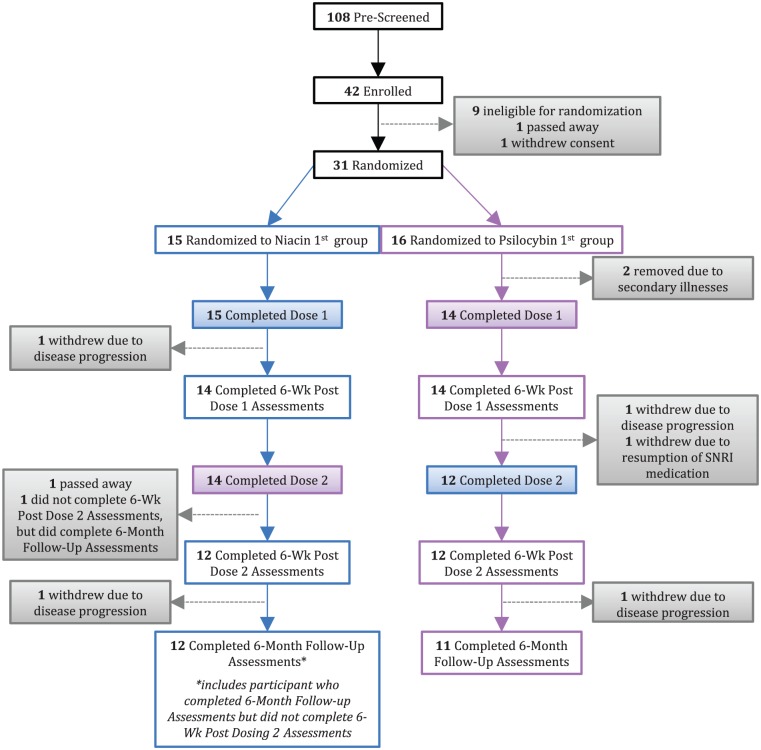
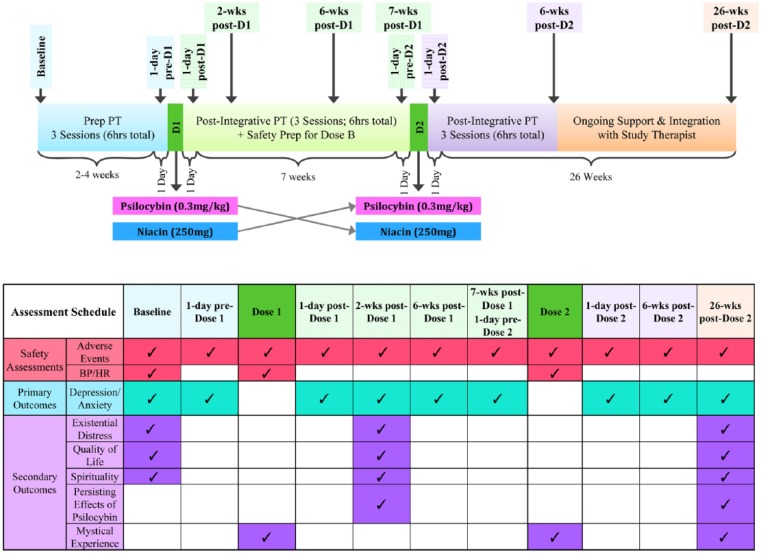
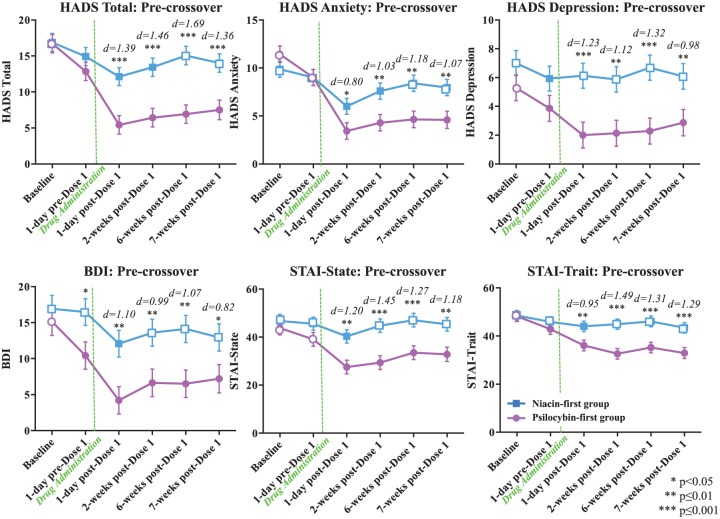
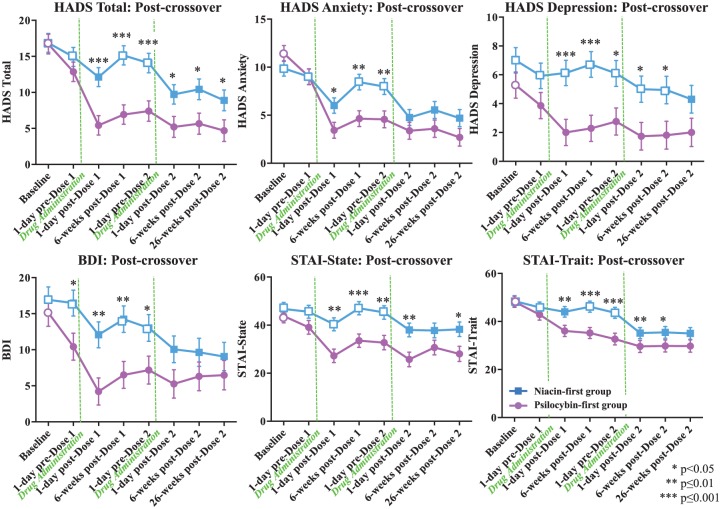
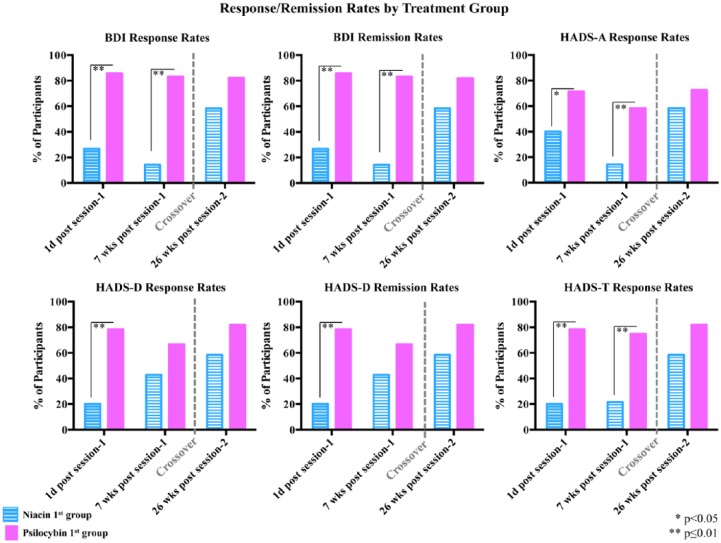
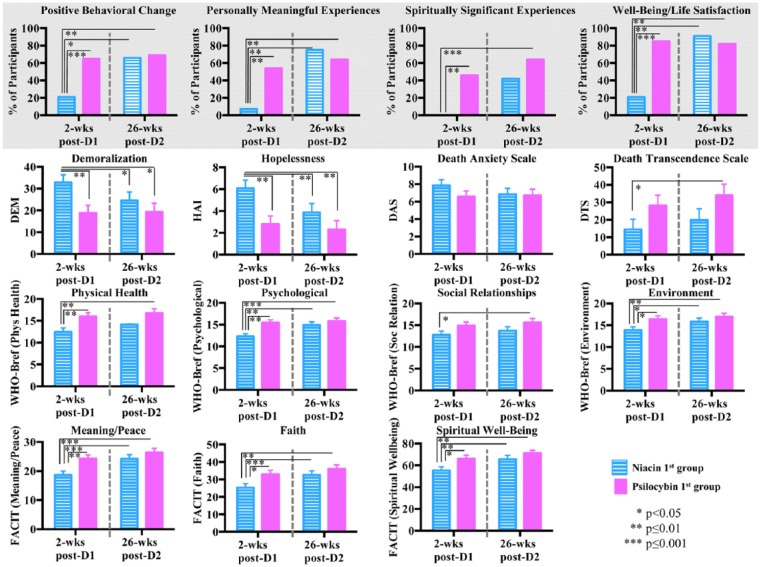
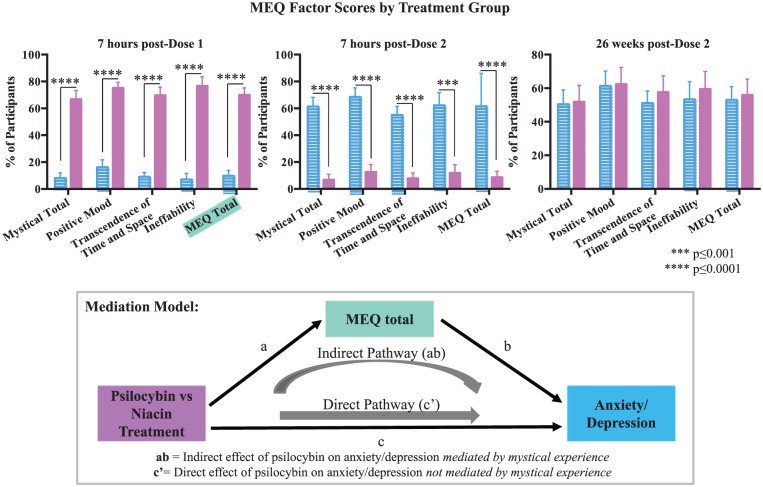
Background: Clinically significant anxiety and depression are common in patients with cancer, and are associated with poor psychiatric and medical outcomes. Historical and recent research suggests a role for psilocybin to treat cancer-related anxiety and depression. Methods: In this double-blind, placebo-controlled, crossover trial, 29 patients with cancer-related anxiety and depression were randomly assigned and received treatment with single-dose psilocybin (0.3 mg/kg) or niacin, both in conjunction with psychotherapy. The primary outcomes were anxiety and depression assessed between groups prior to the crossover at 7 weeks. Results: Prior to the crossover, psilocybin produced immediate, substantial, and sustained improvements in anxiety and depression and led to decreases in cancer-related demoralization and hopelessness, improved spiritual wellbeing, and increased quality of life. At the 6.5-month follow-up, psilocybin was associated with enduring anxiolytic and anti-depressant effects (approximately 60–80% of participants continued with clinically significant reductions in depression or anxiety), sustained benefits in existential distress and quality of life, as well as improved attitudes towards death. The psilocybin-induced mystical experience mediated the therapeutic effect of psilocybin on anxiety and depression. Conclusions: In conjunction with psychotherapy, single moderate-dose psilocybin produced rapid, robust and enduring anxiolytic and anti-depressant effects in patients with cancer-related psychological distress. Trial Registration: ClinicalTrials.gov Identifier: NCT00957359
Overview
The claims and statistics of this paper haven’t been checked yet.
Free: it reads the open-access text and checks the first 5 claims that cite a source we can check. Create a free account to check every claim.
Integrity signals
Registry
Cites
Statistics
Figures
Verification
Claims the paper makes
The claims and statistics of this paper haven’t been checked yet.
Free: it reads the open-access text and checks the first 5 claims that cite a source we can check. Create a free account to check every claim.
Claims other papers make about this one
Each is checked against this paper’s own text: does it say what the citing paper says it does?
The source backs part of the claim, not all of it — or backs it for a different population, condition or comparison.
In the citing paper
“Both participants and their friends and family reported positive effects on attitude towards life and the self, spiritual well-being, social contacts, quality of life, acceptance of death, and optimism (Ross et al., 2016).”
From Psychedelics for the treatment of depression, anxiety, and existential distress in patients with a terminal illness: a systematic review (2022) · cites this paper as Ross et al., 2016
Experimental — accuracy not yet measuredThe source backs part of the claim, not all of it — or backs it for a different population, condition or comparison.
In the citing paper
“Despite efforts to employ “active placebos” (e.g., niacin or a low-dose of a psychedelic) (40, 220), many patients and clinicians can still correctly distinguish between a high dose of a psychedelic drug and an active placebo.”
From Psychedelics and Other Psychoplastogens for Treating Mental Illness. (2021) · cites this paper as [220]
Experimental — accuracy not yet measuredThe source backs part of the claim, not all of it — or backs it for a different population, condition or comparison.
In the citing paper
“and with diminished anxiety and depression in terminal cancer patients (Griffiths et al., 2016;Ross et al., 2016;Barrett et al., 2020).”
From Psychedelics and Neural Plasticity: Therapeutic Implications (2022) · cites this paper as Ross et al., 2016
Experimental — accuracy not yet measuredThe source backs part of the claim, not all of it — or backs it for a different population, condition or comparison.
In the citing paper
“Psilocybin shows promise as a treatment for major depressive disorder (MDD).”
From Single-Dose Psilocybin Treatment for Major Depressive Disorder: A Randomized Clinical Trial (2023) · cites this paper as [8]
Experimental — accuracy not yet measuredThe source backs part of the claim, not all of it — or backs it for a different population, condition or comparison.
In the citing paper
“recent studies suggesting that psilocybin engenders a rapid antidepressant response that far outlasts the presence of the drug in the body.”
From Single-Dose Psilocybin Treatment for Major Depressive Disorder: A Randomized Clinical Trial (2023) · cites this paper as [8]
Experimental — accuracy not yet measured
25 more claims about this paper
Create a free account to see every claim other papers make about this one.
Self-check
Percentages, sums and reported differences re-computed from the paper’s own numbers.
The self-check needs the paper’s full text.
Citations
Cites
The Hospital Anxiety and Depression Scale
Zigmond, A. S., & Snaith, R. P. (1983) · Acta Psychiatrica Scandinavica · doi:10.1111/j.1600-0447.1983.tb09716.x · Cited by 47,139
(2013) · Cited by 44,563
Depression and quality of life in older persons: A review
Sivertsen, H., Bjørkløf, G. H., Engedal, K., Selbæk, G., & Helvik, A.-S. (2015) · Dementia and Geriatric Cognitive Disorders · doi:10.1159/000437299 · Cited by 14,152
Psychometric properties of the Beck Depression Inventory: Twenty-five years of evaluation
Beck, A. T., Steer, R. A., & Carbin, M. G. (1988) · Clinical Psychology Review · doi:10.1016/0272-7358(88)90050-5 · Cited by 11,696 · cited 2×
“cancer); Beck Depression Inventory (BDI) (Beck et al., 1988) self-report depression measure; Spielberger State-Trait Anxiety Inventory (STAI) (Spielberger, 1983) self-report measure of state (STAI state or STAI S) and trait (STAI trait or STAI T) anxiety.”
BackgroundMolecular Mechanisms of Depression: Perspectives on New Treatment Strategies
Lang, U. E., & Borgwardt, S. (2013) · Cellular Physiology and Biochemistry · doi:10.1159/000350094 · Cited by 8,475
Mitchell, A. J., Chan, M., Bhatti, H., Halton, M., Grassi, L., Johansen, C., & Meader, N. (2011) · The Lancet Oncology · doi:10.1016/s1470-2045(11)70002-x · Cited by 2,449 · cited 1×
“Enduring clinically significant anxiety and/or depressive symptoms are common in patients with cancer, present in 30–40% of patients in hospital settings (Mitchell et al., 2011).”
BackgroundManual for the state-trait anxiety inventory (form Y) : "self-evaluation questionnaire"
Spielberger, C. D., Gorsuch, R. L., & Lushene, R. E. (1970) · Consulting Psychologists Press eBooks · Cited by 2,352
Drevets, W. C., Price, J. L., & Furey, M. L. (2008) · Brain Structure and Function · doi:10.1007/s00429-008-0189-x · Cited by 2,241 · cited 7×
“The former is significant because depressive symptoms have been associated with increased activity in the medial PFC (Drevets et al., 2008; Farb et al., 2011) and normalization of medial PFC activity has been demonstrated with anti-depressant treatment (Deakin et al., 2008; Holtzheimer and Mayberg, 2011; Kennedy et al…”
BackgroundInfluentialGreicius, M. D., Flores, B. H., Menon, V., Glover, G. H., Solvason, H. B., Kenna, H., Reiss, A. L., & Schatzberg, A. F. (2007) · Biological Psychiatry · doi:10.1016/j.biopsych.2006.09.020 · Cited by 2,214 · cited 2×
“…pathological and can be understood as part of the therapeutic process (e.g. working through cancer-related psychological or existential distress through challenging encounters or emotionally charged confrontations with cancer-related fearful imagery or symbolism) (Carbonaro et al., 2016).”
BackgroundNichols, D. E. (2016) · Pharmacological Reviews · doi:10.1124/pr.115.011478 · Cited by 1,762 · cited 1×
“In two recently published open-label trials, one using a single dose of ayahuasca (Osorio et al., 2015) and the other using two doses of oral psilocybin (Carhart-Harris et al., 2016), acute and enduring anti-depressant effects were reported.”
Background
Research works printed but not linked: 3
- Doblin R (1991) Pahnke’s ‘Good Friday Experiment’: a long-term follow-up and methodological critique. J Transpersonal Psychol 23(1): 1– 28.
- Pahnke WN (1963) Drugs and mysticism: an analysis of the relationship between psychedelic drugs and the mystical consciousness, PhD dissertation. Cambridge, MA: Harvard University.
- VandeCreek L (1999) The death transcendence scale. In: Hill PC Hood RW (eds) Measures of religiosity. Birmingham, AL: Religious Education Press, pp. 442– 445.
Cited by
Items 601–700 of 1,005
Ippolito, A., Vasudevan, S. R., Hurley, S., Gilmour, G., Westhorpe, F. G., Churchill, G. C., & Sharp, T. (2025) · British Journal of Pharmacology · doi:10.1111/bph.70109 · Cited by 25
Ross, M., Iyer, R., Williams, M. L., Boughey, M., O’Callaghan, C. C., Hiscock, R. J., & Dwyer, J. L. (2025) · General Hospital Psychiatry · doi:10.1016/j.genhosppsych.2025.08.001 · Cited by 25
Højlund, M., Kafalı, H. Y., Kırmızı, B., Fusar‐Poli, P., Correll, C. U., Cortese, S., Sabé, M., Fiedorowicz, J. G., Saraf, G., Zein, J., et al. (2025) · European Neuropsychopharmacology · doi:10.1016/j.euroneuro.2025.09.011 · Cited by 25
Depression as a Disorder of Consciousness
Whiteley, C. M. K. (2021) · The British Journal for the Philosophy of Science · doi:10.1086/716838 · Cited by 29
“psychedelics (such as Ketamine, Mescaline and Psilocybin, the active ingredient in magic mushrooms) as a treatment for depression (Rucker et al. [2018]; Nutt [2019]; Nutt et al.”
BackgroundCo-design of Guidance for Patient and Public Involvement in Psychedelic Research
Close, J. B., Bornemann, J., Piggin, M., Jayacodi, S., Luan, L. X., Carhart-Harris, R. L., & Spriggs, M. J. (2021) · Frontiers in Psychiatry · doi:10.3389/fpsyt.2021.727496 · Cited by 27
Eckernäs, E., Timmermann, C., Carhart-Harris, R. L., Röshammar, D., & Ashton, M. (2022) · Clinical and Translational Science · doi:10.1111/cts.13410 · Cited by 25
The use of classic psychedelics among adults: a Danish online survey study
Juul, T. S., Jensen, M. E., & Fink‐Jensen, A. (2022) · Nordic Journal of Psychiatry · doi:10.1080/08039488.2022.2125069 · Cited by 30
Bobevski, I., Kissane, D. W., McKenzie, D. P., Murphy, G., Perera, C., Payne, I., Lennon, J., Michael, N. G., Grossman, C., & Franco, M. E. (2022) · General Hospital Psychiatry · doi:10.1016/j.genhosppsych.2022.10.002 · Cited by 28
Jensen, M. E., Stenbæk, D. S., Juul, T. S., Fisher, P. M., Ekstrøm, C. T., Knudsen, G. M., & Fink‐Jensen, A. (2022) · BMJ Open · doi:10.1136/bmjopen-2022-066019 · Cited by 30
Bedside to bench: the outlook for psychedelic research
Acero, V. P., Cribas, E. S., Browne, K. D., Rivellini, O. M., Burrell, J. C., O’Donnell, J. C., Das, S., & Cullen, D. K. (2023) · Frontiers in Pharmacology · doi:10.3389/fphar.2023.1240295 · Cited by 28
Preclinical models of treatment-resistant depression: challenges and perspectives
Kolasa, M., & Faron‐Górecka, A. (2023) · Pharmacological Reports · doi:10.1007/s43440-023-00542-9 · Cited by 27
Epidemiology of classic psychedelic substances: results from a Norwegian internet convenience sample
Kvam, T.-M., Uthaug, M. V., Andersen, K. A. A., Refsum, B. B., Tunstad, P. A., Stewart, L. H., Jacobsen, H. B., & Grønnerød, C. (2023) · Frontiers in Psychiatry · doi:10.3389/fpsyt.2023.1287196 · Cited by 25
Gattuso, J., Wilson, C., Hannan, A. J., & Renoir, T. (2023) · Journal of Neurochemistry · doi:10.1111/jnc.16017 · Cited by 20
“…studies (Carhart-Harris, Bolstridge, et al., 2018; Carhart-Harris, Roseman, et al., 2018; Griffiths et al., 2016; Grob et al., 2011; Ross et al., 2016)] and found that psilocybin pre and post follow-up effects were large (hedges g was between 1.16 and 1.47) and statistically…”
InfluentialMolecular and Medical Aspects of Psychedelics
Wojtas, A., & Gołembiowska, K. (2023) · International Journal of Molecular Sciences · doi:10.3390/ijms25010241 · Cited by 27
A Systematic Review of Interventions for Demoralization in Patients with Chronic Diseases
Li, D., Li, L., Wu, Y., Zhao, X., Zhong, H., Cheng, X., Liu, L., Cheng, C., Ouyang, M., & Tao, L. (2024) · International Journal of Behavioral Medicine · doi:10.1007/s12529-024-10262-w · Cited by 26
Šabanović, M., Lazari, A., Blanco-Pozo, M., Tisca, C., Tachrount, M., Martins-Bach, A. B., Lerch, J. P., Walton, M. E., & Bannerman, D. M. (2024) · Molecular Psychiatry · doi:10.1038/s41380-024-02439-2 · Cited by 28
Nogueira, M., Golbert, D. C. F., de Menezes, R. S. T., de Almeida, R. N., Coelho, N. L. G., Siroky, A. N., Lima, T. Z., Maia, H., Leão, K. E., & Leão, R. N. (2024) · Molecular Psychiatry · doi:10.1038/s41380-024-02655-w · Cited by 26
Pharmacological and non-pharmacological predictors of the LSD experience in healthy participants
Vizeli, P., Studerus, E., Holze, F., Schmid, Y., Dolder, P. C., Ley, L., Straumann, I., Becker, A., Müller, F., Arikci, D., et al. (2024) · Translational Psychiatry · doi:10.1038/s41398-024-03074-9 · Cited by 27
“…” scores and psychedelic-induced mystical-type experiences captured by the MEQ30 are correlated with favourable long-term clinical outcomes [3, 5, 27, 29, 55, 56], whereas negative effects, such as “ Anxious Ego Dissolution ” , had no effect [3] or were correlated negatively [27] with the…”
BackgroundMadsen, M. K., Fisher, P. M., Burmester, D., Dyssegaard, A., Stenbæk, D. S., Kristiansen, S., Johansen, S. S., Lehel, S., Línnet, K., Svarer, C., et al. (2019) · Neuropsychopharmacology · doi:10.1038/s41386-019-0360-5 · Cited by 25
Goldpaugh, D. D. (2021) · Sexual & Relationship Therapy · doi:10.1080/14681994.2021.1994138 · Cited by 24
“, 2021), end-of-life anxiety (Ross et al., 2016), substance use disorders (Bogenschutz et al.”
BackgroundSingh, N., Hazari, P. P., Mittal, P., Yadav, S. K., Kumar, N., Mishra, G., Dahiya, S., & Mishra, A. K. (2025) · European Journal of Pharmacology · doi:10.1016/j.ejphar.2025.177737 · Cited by 24
The illusion of knowledge in the emerging field of psychedelic research
Oña, G., Kohek, M., & Bouso, J. C. (2022) · New Ideas in Psychology · doi:10.1016/j.newideapsych.2022.100967 · Cited by 28
Thal, S. B., Wieberneit, M., Sharbanee, J. M., Skeffington, P., Baker, P., Bruno, R., Wenge, T., & Bright, S. J. (2022) · Journal of Psychopharmacology · doi:10.1177/02698811221127954 · Cited by 26
“…approaches tailored for substance use treatment (Bogenschutz et al., 2015), third wave cognitive-behavioral approaches like acceptance and commitment therapy tailored for the treatment of depression (Sloshower et al., 2020b), and humanistic approaches such as logotherapy (Ross et al., 2016).”
BackgroundInfluentialPsychedelics for Psychological and Existential Distress in Palliative and Cancer Care
Rosenbaum, D., Boyle, A. B., Rosenblum, A. M., Ziai, S., & Chasen, M. R. (2019) · Current Oncology · doi:10.3747/co.26.5009 · Cited by 23
O'Donnell, K. C., Mennenga, S. E., Owens, L. T., Podrebarac, S. K., Baron, T., Rotrosen, J., Ross, S., Forcehimes, A. A., & Bogenschutz, M. P. (2022) · Contemporary Clinical Trials · doi:10.1016/j.cct.2022.106976 · Cited by 23
Self-citationJensen, M. E., Stenbæk, D. S., Messell, C., Poulsen, E. D., Varga, T. V., Fisher, P. M., Nielsen, M. K. K., Johansen, S. S., Volkow, N. D., Knudsen, G. M., et al. (2025) · Journal of Psychopharmacology · doi:10.1177/02698811251319457 · Cited by 26
“However, several clinical studies on depression have reported positive outcomes with just one dosing session (Griffiths et al., 2016; Goodwin et al., 2022; Ross et al., 2016; Raison et al., 2023; von Rotz et al.,”
Zhou, K., de Wied, D., Carhart-Harris, R. L., & Kettner, H. (2025) · PNAS Nexus · doi:10.1093/pnasnexus/pgae560 · Cited by 24
“…multisite trial in treatment-resistant depression (51), only a small number of serious adverse events had been reported in modern clinical studies of serotonergic psychedelics for depression (2, 52), end of life anxiety (53, 54), or substance use disorders (55), including no cases of HPPD (56).”
Wolfgang, A. S., & Hoge, C. W. (2023) · Current Psychiatry Reports · doi:10.1007/s11920-023-01446-4 · Cited by 25
“…-dimethyltryptamine; DMT, dimeth-yltryptamine; Epi, epinephrine; LSD, lysergic acid diethylamide; MAOIs, monoamine oxidase inhibitors; MDMA, 3,4-methylenediox-ymethamphetamine; NE, norepinephrine; PCP, phencyclidine therapy may be efficacious for the treatment of depression [2 • , 57 •• , 58, 59].”
Tolle, H. M., Farah, J. C., Mallaroni, P., Mason, N. L., Ramaekers, J. G., & Amico, E. (2024) · Network Neuroscience · doi:10.1162/netn_a_00349 · Cited by 25
“Indeed, several lines of clinical evidence imply that the acute psychedelic experience and the long-term antidepressant effects of psilocybin-assisted psychotherapy for depression may be coupled (Griffiths et al., 2016; Roseman et al., 2018; Ross et al., 2016).”
BackgroundResultInfluentialPsychedelic renaissance: Revitalized potential therapies for psychiatric disorders
Rhee, T. G., Davoudian, P. A., Sanacora, G., & Wilkinson, S. T. (2023) · Drug Discovery Today · doi:10.1016/j.drudis.2023.103818 · Cited by 24
Raithatha, S. A., Hagel, J. M., Matinkhoo, K., Yu, L. X., Press, D., Cook, S. G., Sharma, G., Dhananjaya, D., Jensen, G., Lee, J. B., et al. (2023) · Journal of Medicinal Chemistry · doi:10.1021/acs.jmedchem.3c01225 · Cited by 24
Plourde, L., Chang, S.-L., Farzin, H., Gagnon, P. R., Hébert, J., Foxman, R., Deschamps, P., Provost, F., Masse-Grenier, M., Stephan, J.-F., et al. (2024) · Palliative Medicine · doi:10.1177/02692163231222430 · Cited by 23
Ceremonial ‘Plant Medicine’ use and its relationship to recreational drug use: an exploratory study
Dorsen, C. G., Palamar, J. J., & Shedlin, M. G. (2018) · Addiction Research & Theory · doi:10.1080/16066359.2018.1455187 · Cited by 25
“…results for depression, anxiety, PTSD, addiction, OCD, and headaches (Moreno et al. 2006; Griffiths and Grob 2010; Grob et al. 2011; Loizaga-Velder and Verres 2014; Bogenschutz et al. 2015; Carhart-Harris et al. 2016; Davenport 2016; Johnson et al. 2016; Ross et al. 2016; Morgan et al. 2017).”
BackgroundResultInfluentialGuo, Y., Yan, B., Cheng, Y. S., & Mu, L. (2018) · Journal of Coordination Chemistry · doi:10.1080/00958972.2018.1546850 · Cited by 23
Can Psychedelic Drugs Attenuate Age-Related Changes in Cognition and Affect?
Aday, J. S., Bloesch, E. K., & Davoli, C. C. (2019) · Journal of Cognitive Enhancement · doi:10.1007/s41465-019-00151-6 · Cited by 27
“…the degree to which one has a “mystical” experience while on the drugs predicts therapeutic outcomes (Garcia-Romeu et al. 2019, 2014; Griffiths et al. 2016; Roseman et al. 2018; Ross et al. 2016; Russ et al. 2019; Schmid and Liechti 2018) as well as changes in openness (MacLean et al. 2011).”
BackgroundResultInfluentialRostral Anterior Cingulate Thickness Predicts the Emotional Psilocybin Experience
Lewis, C. R., Preller, K. H., Braden, B. B., Riecken, C., & Vollenweider, F. X. (2020) · Biomedicines · doi:10.3390/biomedicines8020034 · Cited by 23
Sweet, P. L., & Giffort, D. M. (2020) · Social Studies of Science · doi:10.1177/0306312720970282 · Cited by 26
Dworkin, R. H., Anderson, B. T., Andrews, N., Edwards, R. R., Grob, C. S., Ross, S., Satterthwaite, T. D., & Strain, E. C. (2022) · Journal of Pain · doi:10.1016/j.jpain.2022.05.003 · Cited by 27
Self-citationThe philosophy of psychedelic transformation
Letheby, C. (2017) · Adelaide Research & Scholarship (AR&S) (University of Adelaide) · doi:10.4225/55/5900324d2ad60 · Cited by 18
“More recently, these results have been replicated in two larger, double-blind, placebo-controlled studies of psilocybin treatment for psychological distress in life-threatening cancer (Griffiths et al. 2016, Ross et al. 2016).”
BackgroundResultPharmacotherapy for Anxiety Disorders.
O’Leary, K. B., & Khan, J. S. (2024) · Psychiatric Clinics of North America · doi:10.1016/j.psc.2024.04.012 · Cited by 22
Psilocybin mitigates the cognitive deficits observed in a rat model of Fragile X syndrome
Buzzelli, V., Carbone, E., Manduca, A., Schiavi, S., Feo, A., Perederiy, J. V., Ambert, K. H., Hausman, M., & Trezza, V. (2023) · Psychopharmacology · doi:10.1007/s00213-022-06286-3 · Cited by 22
“In particular, several studies assessed its antidepressant potential in patients with major depressive disorder and its anxiolytic properties in patients with cancer-related anxiety and depression (Davis et al. 2021; Ross et al. 2016).”
BackgroundPsychedelics align brain activity with context
Stoliker, D., Novelli, L., Khajehnejad, M. A., Biabani, M., Greaves, M. D., Barta, T., Williams, M., Chopra, S., Bazin, O., Simonsson, O., et al. (2026) · Nature · doi:10.1038/s41586-026-10910-z · Cited by 27
“…existentially salient state that may help explain reported reductions in death-related anxiety and existential distress following psychedelic treatment (Griffiths et al., 2016; Ross et al., 2016, 2025), and, in our non-clinical cohort, is consistent with self-and boundary-dissolving experiences (Fig.”
Longitudinal associations of naturalistic psychedelic use with psychotic and manic symptoms
Simonsson, O., Goldberg, S. B., Osika, W., Stenfors, C. U. D., Chaturvedi, S., Swords, C. M., Narayanan, J., & Hendricks, P. S. (2025) · Psychological Medicine · doi:10.1017/s0033291725000716 · Cited by 22
“…is associated with reductions in depressive symptoms in patients with major depressive disorder or treatment-resistant depression (Goodwin et al., 2022; Raison et al., 2023) and reductions in anxiety symptoms in patients with life-threatening cancer (Griffiths et al., 2016; Ross et al., 2016).”
Systematic Review of Interventions for Demoralization in Patients With Cancer
Wang, Y., Sun, H., Ji, Q., Wei, J., & Zhu, P. (2023) · The Journal of Nervous and Mental Disease · doi:10.1097/nmd.0000000000001615 · Cited by 23
Not in the drug, not in the brain: Causality in psychedelic experiences from an enactive perspective
Meling, D., & Scheidegger, M. (2023) · Frontiers in Psychology · doi:10.3389/fpsyg.2023.1100058 · Cited by 24
“Notably, psychedelic studies, especially those with psilocybin, have repeatedly shown that participants frequently rate their psychedelic experiences as among the most meaningful in their lives (Griffiths et al., 2006, 2008, 2011, 2016, 2018; Ross et al., 2016).”
BackgroundKervadec, E., Fauvel, B., Strika-Bruneau, L., Amirouche, A., Verroust, V., Piolino, P., Roméo, B., & Benyamina, A. (2023) · Alcohol and Alcoholism · doi:10.1093/alcalc/agad078 · Cited by 23
Solaja, I., Haldane, K., Mason, N. L., Weiss, B., Xu, X., Xu, M., Nikolin, S., Jayasena, T., Millard, M., Brett, J., et al. (2024) · Neuroscience & Biobehavioral Reviews · doi:10.1016/j.neubiorev.2024.105570 · Cited by 23
Singer, B., Meling, D., Hirsch‐Hoffmann, M., Michels, L., Kometer, M., Smigielski, L., Dornbierer, D., Seifritz, E., Vollenweider, F. X., & Scheidegger, M. (2024) · Scientific Reports · doi:10.1038/s41598-024-55726-x · Cited by 23
Psilocybin: Good Trip or Bad Trip
Sellers, E. M. (2017) · Clinical Pharmacology & Therapeutics · doi:10.1002/cpt.697 · Cited by 25
Wankhar, W., Syiem, D., Pakyntein, C. L., Thabah, D., & Sunn, S. E. (2020) · Behavioural Brain Research · doi:10.1016/j.bbr.2020.112780 · Cited by 24
Hübner, S., Haijen, E., Kaelen, M., Carhart-Harris, R. L., & Kettner, H. (2021) · Journal of Medical Internet Research · doi:10.2196/25973 · Cited by 22
The psychedelic renaissance: the next trip for psychiatry?
Kelly, J. R., Baker, A., Babiker, M., Burke, L., Brennan, C., & O’Keane, V. (2022) · Irish Journal of Psychological Medicine · doi:10.1017/ipm.2019.39 · Cited by 21
Scheidegger, M. (2021) · Springer eBooks · doi:10.1007/978-3-030-55688-4_3 · Cited by 25
Glavonic, E., Mitić, M., & Adžić, M. (2022) · Journal of Neuroscience Research · doi:10.1002/jnr.25017 · Cited by 24
“This shows that a single, subhallucinogenic dose of psilocybin can successfully attenuate fear, which is in line with the reported effectiveness of acute, moderately dosed psilocybin for treating anxiety (Grob et al., 2011; Ross et al., 2016).”
BackgroundResultInfluentialBarone, W. P., Mitsunaga-Whitten, M., Blaustein, L. O., Perl, P., Swank, M., & Swift, T. C. (2022) · Frontiers in Psychiatry · doi:10.3389/fpsyt.2022.944849 · Cited by 22
Chen, Y., Liu, J., Yao, Y., Yan, H., & Su, R. (2023) · Frontiers in Pharmacology · doi:10.3389/fphar.2023.1021729 · Cited by 24
“phase II clinical trials showed that psilocybin is a viable alternative to current antidepressant medications (Ross et al., 2016; CarhartHarris et al., 2018).”
BackgroundPsychedelics and workplace harm
Viña, S. M., & Stephens, A. L. (2023) · Frontiers in Psychiatry · doi:10.3389/fpsyt.2023.1186541 · Cited by 22
“Employment status is a variable with eight categories: (1) parttime employment, (2) unemployment, (3) volunteering, (4) disability, (5) homemaking, (6) student, (7) retirement, and (8) full-time employment, which is the reference category.”
BackgroundWang, S., Kim, S., Choi, W.-S., Lim, H. K., Woo, Y. S., Pae, C., & Bahk, W. (2023) · Clinical Psychopharmacology and Neuroscience · doi:10.9758/cpn.23.1134 · Cited by 21
Nordin, M., Hlynsson, J. I., Eklund, J. H., & Carlbring, P. (2024) · Journal of Psychedelic Studies · doi:10.1556/2054.2024.00337 · Cited by 27
Sociological investigations of human enhancement drugs: The case of microdosing psychedelics
Liokaftos, D. (2021) · International Journal of Drug Policy · doi:10.1016/j.drugpo.2020.103099 · Cited by 23
Effectiveness of Psilocybin on Depression: A Qualitative Study
Alshaikhli, H., Al-Naggar, R. A., & Erlam, G. D. (2021) · Electronic Journal of General Medicine · doi:10.29333/ejgm/10862 · Cited by 23
“These positive changes were corroborated by participants’ colleagues, family, and friends [17].”
BackgroundResultInfluentialPsilocybin for the Treatment of Depression: A Promising New Pharmacotherapy Approach
Agin-Liebes, G., & Davis, A. K. (2021) · Current topics in behavioral neurosciences · doi:10.1007/7854_2021_282 · Cited by 23
Self-citationSchenberg, E. E., & Gerber, K. (2022) · Transcultural Psychiatry · doi:10.1177/13634615211062962 · Cited by 22
“This figure is close to previous research with compounds with similar subjective effects like psilocybin, which had unblinding rates, as measured by correct guesses of therapists only, reported at 97% (Ross et al., 2016).”
ResultScoping Review of Experiential Measures from Psychedelic Research and Clinical Trials
Herrmann, Z. M., Earleywine, M., Leo, J. A. D., Slabaugh, S., Kenny, T., & Rush, A. J. (2022) · Journal of Psychoactive Drugs · doi:10.1080/02791072.2022.2125467 · Cited by 21
Psychedelics: preclinical insights provide directions for future research
Gumpper, R. H., & Roth, B. L. (2023) · Neuropsychopharmacology · doi:10.1038/s41386-023-01567-7 · Cited by 21
Calder, A. E., Rausch, B., Liechti, M. E., Holze, F., & Hasler, G. (2024) · Journal of Psychopharmacology · doi:10.1177/02698811241278873 · Cited by 20
“…effect (Gasser et al., 2015; Schmid et al., 2021), although other studies do show correlations between MEQ30 scores and therapeutic effects in PAT for depression and anxiety disorders (Davis et al., 2021; Griffiths et al., 2016; Holze et al., 2023b; Ross et al., 2016; Roseman et al., 2017).”
BackgroundResultCorso, S. J. F., O’Malley, K. Y., Subaiya, S., Mayall, D., & Dakwar, E. (2023) · Journal of Affective Disorders · doi:10.1016/j.jad.2023.04.116 · Cited by 22
Psychedelics and schizophrenia: a double-edged sword
Sapienza, J., Martini, F., Comai, S., Cavallaro, R., Spangaro, M., Gregorio, D. D., & Bosia, M. (2024) · Molecular Psychiatry · doi:10.1038/s41380-024-02743-x · Cited by 20
Cardiovascular effects and safety of classic psychedelics
Nahlawi, A., Ptaszek, L. M., & Ruskin, J. N. (2025) · Nature Cardiovascular Research · doi:10.1038/s44161-025-00608-2 · Cited by 25
Looking beyond the opioid receptor: A desperate need for new treatments for opioid use disorder
Lee, Y. K., Gold, M. S., & Fuehrlein, B. (2021) · Journal of the Neurological Sciences · doi:10.1016/j.jns.2021.120094 · Cited by 21
Barrett, F. S., Zhou, Y., Carbonaro, T. M., Roberts, J., Smith, G. S., Griffiths, R. R., & Wong, D. F. (2022) · Frontiers in Neuroergonomics · doi:10.3389/fnrgo.2021.784576 · Cited by 21
“Psilocybin is a psychedelic drug that has shown preliminary efficacy as a treatment for depression and anxiety (Carhart-Harris et al., 2016a, 2021; Griffiths et al., 2016; Ross et al., 2016; Davis et al., 2021) as well as substance use disorders (Johnson et al.”
BackgroundPsychedelics and environmental virtues
Kirkham, N., & Letheby, C. (2022) · Philosophical Psychology · doi:10.1080/09515089.2022.2057290 · Cited by 22
“In the new wave of research, hundreds, if not thousands, of volunteers from various populations have been administered psilocybin, LSD, and DMT (sometimes as an ingredient of the South American beverage ayahuasca ) without serious, lasting adverse effects (Aday et al., 2020; Ross et al., 2016).”
BackgroundVorobyeva, N. S., & Kozlova, A. A. (2022) · Frontiers in Pharmacology · doi:10.3389/fphar.2022.927984 · Cited by 24
“Three double-blind randomized controlled trials examined the impact of a single dose of psilocybin on symptoms of anxiety and depression, which are common in cancer patients (Grob et al., 2011; Griffiths et al., 2016; Ross et al., 2016), and an open-label trial of psilocybin for TRD was accomplished (Carhart-Harris et…”
BackgroundPatchett-Marble, R., O’Sullivan, S., Tadwalkar, S., & Hapke, E. (2022) · Canadian Family Physician · doi:10.46747/cfp.6811823 · Cited by 21
Armstrong, S. B., Levin, A. W., Xin, Y., Horan, J., Luoma, J. B., Nagib, P. B., Pilecki, B. C., & Davis, A. K. (2023) · Journal of Psychedelic Studies · doi:10.1556/2054.2023.00245 · Cited by 20
Rieser, N. M., Gubser, L. P., Moujaes, F., Duerler, P., Lewis, C. R., Michels, L., Vollenweider, F. X., & Preller, K. H. (2023) · Scientific Reports · doi:10.1038/s41598-023-44153-z · Cited by 22
Deciphering psilocybin: Cytotoxicity, anti-inflammatory effects, and mechanistic insights
Laabi, S., LeMmon, C., Vogel, C., Chacon, M., & Jimenez, V. M. (2024) · International Immunopharmacology · doi:10.1016/j.intimp.2024.111753 · Cited by 20
Psychedelics, OCD and related disorders: A systematic review
Graziosi, M., Rohde, J. S., Tiwari, P., Siev, J., & Yaden, D. B. (2024) · Journal of Obsessive-Compulsive and Related Disorders · doi:10.1016/j.jocrd.2024.100873 · Cited by 23
How Do Psychedelics Reduce Fear of Death?
Letheby, C. (2024) · Neuroethics · doi:10.1007/s12152-024-09564-3 · Cited by 20
Dahan, J. D. C., Dadiomov, D., Bostoen, T., & Dahan, A. (2024) · npj Mental Health Research · doi:10.1038/s44184-024-00091-w · Cited by 25
“Oftheremaining23papers(daterange:2000to2024),15wereon thetreatmentofketaminefordepression( n = 13) 17 – 31 or SUD ( n = 2) 32,33 , and 8 on psilocybin for treatment of depression ( n = 6) 33 – 39 or SUD ( n = 2) 40,41 .”
Concurrent stress modulates the acute and post-acute effects of psilocybin in a sex-dependent manner
Farinha‐Ferreira, M., Miranda‐Lourenço, C., Galipeau, C., Lenkei, Z., & Sebastião, A. M. (2024) · Neuropharmacology · doi:10.1016/j.neuropharm.2024.110280 · Cited by 20
Psilocybin: From Psychiatric Pariah to Perceived Panacea
Fonzo, G. A., Wolfgang, A. S., Barksdale, B. R., Krystal, J. H., Carpenter, L. L., Kraguljac, N. V., Grzenda, A. L., McDonald, W. M., Widge, A. S., Rodríguez, C. I., et al. (2025) · American Journal of Psychiatry · doi:10.1176/appi.ajp.20230682 · Cited by 20
Schatzberg, A. F. (2019) · American Journal of Psychiatry · doi:10.1176/appi.ajp.2019.19030273 · Cited by 23
Germann, C. B. (2019) · Medical Hypotheses · doi:10.1016/j.mehy.2019.109406 · Cited by 22
SANTOS, R. G. D., Bouso, J. C., & Hallak, J. E. C. (2019) · BMC Psychiatry · doi:10.1186/s12888-019-2288-z · Cited by 23
Psilocybin-assisted therapy for depression: How do we advance the field?
Meikle, S. E., Liknaitzky, P., Rossell, S. L., Ross, M., Strauss, N. H. M., Thomas, N., Murray, G., Williams, M. L., & Castle, D. J. (2019) · Australian & New Zealand Journal of Psychiatry · doi:10.1177/0004867419888575 · Cited by 21
“Australian & New Zealand Journal of Psychiatry, 54(3) emerging symbolic content (Ross et al., 2016).”
BackgroundMethodInfluentialLa funcionalidad política de la “ciencia” prohibicionista: El caso del cannabis y los psicodélicos
Oró, D. P. M., Apud, I., Scuro, J., & Romaní, O. (2020) · Salud Colectiva · doi:10.18294/sc.2020.2493 · Cited by 20
Rediscovering Psilocybin as an Antidepressive Treatment Strategy
Zeiss, R., Gahr, M., & Graf, H. (2021) · Pharmaceuticals · doi:10.3390/ph14100985 · Cited by 32
“The psilocybin group showed significant improvements in depression scores compared to niacin [29].”
BackgroundMDMA-assisted psychotherapy for post-traumatic stress disorder: The devil is in the detail
Bedi, G., Cotton, S. M., Guerin, A. A., & Jackson, H. J. (2022) · Australian & New Zealand Journal of Psychiatry · doi:10.1177/00048674221127186 · Cited by 20
Psychedelic Experience: Revealing the Mind
Lyon, A. (2023) · doi:10.1093/oso/9780198843757.001.0001 · Cited by 29
Further education in psychedelic-assisted therapy – experiences from Switzerland
Aicher, H., Müller, F., & Gasser, P. (2025) · BMC Medical Education · doi:10.1186/s12909-025-06871-y · Cited by 20
“Recent clinical trials have demonstrated promising results for psychedelics and MDMA in the treatment of various psychiatric disorders, including treatment-resist-ant depression, post-traumatic stress disorder (PTSD), and anxiety disorders [10, 19, 21, 29, 30, 41, 49, 56, 63].”
Kittur, M. E., M, L. A. B., Jones, B. D. M., Blumberger, D. M., Mulsant, B. H., Rosenblat, J. D., & Husain, M. I. (2025) · Journal of Affective Disorders · doi:10.1016/j.jad.2025.119952 · Cited by 19
Blinding Integrity in Psychedelic Randomized Clinical Trials: A Systematic Review
Orsini, D. K., Wong, S., Luch, S. D. D., Chan, B., Vasudeva, S., Lovell, G. F. M., Le, G. H., Jones, B. D. M., Chisamore, N., Mollica, A., et al. (2026) · JAMA Psychiatry · doi:10.1001/jamapsychiatry.2026.0255 · Cited by 22
Moderators of ayahuasca’s biological antidepressant action
de Sousa, G. M., Tavares, V. D. D. O., Galvão, A. C. D. M., de Almeida, R. N., Palhano-Fontes, F., Soares, B. L., Freire, F. A. D. M., Nunes, E. A., Maia‐de‐Oliveira, J. P., Perkins, D., et al. (2022) · Frontiers in Psychiatry · doi:10.3389/fpsyt.2022.1033816 · Cited by 26
Heal, D. J., Gosden, J., Smith, S. L., & Atterwill, C. K. (2022) · Neuropharmacology · doi:10.1016/j.neuropharm.2022.109375 · Cited by 20
Low, F., & Earleywine, M. (2023) · Journal of Psychoactive Drugs · doi:10.1080/02791072.2023.2228303 · Cited by 22
“These findings are in line with investigations of psychedelic-assisted therapy for other mental health conditions, which point to rapid, robust, and enduring effects (e.g., Palhano-Fontes et al. 2019; Ross et al. 2016).”
ResultCampanale, A., Inserra, A., & Comai, S. (2024) · Progress in Neuro-Psychopharmacology and Biological Psychiatry · doi:10.1016/j.pnpbp.2024.111058 · Cited by 20
“…2023a; Griffiths et al., 2016; Gukasyan et al., 2022; Holze et al., 2023; Os ´ orio et al., 2015; Palhano-Fontes et al., 2019; Raison et al., 2023; Ross et al., 2016) and potentially for the negative symptoms of SCZ (Mahmood et al., 2022; Wolf et al., 2023) and BD (Bosch et al., 2022; DellaCrosse…”
BackgroundPsychedelics and disorders of consciousness: the current landscape and the path forward
Cardone, P., Alnagger, N., Annen, J., Bicego, A., Gosseries, O., & Martial, C. (2024) · Neuroscience of Consciousness · doi:10.1093/nc/niae025 · Cited by 20
“…utility of psychedelics to treat psychiatric disorders has mainly hinged upon this impact on subjective experience, as the antidepressive potency of the treatment that has been shown to be linked to the self-reported importance of the mystical experience (Griffiths et al. 2016, Ross et al. 2016).”
BackgroundRose, J. R. (2024) · Journal of Psychedelic Studies · doi:10.1556/2054.2024.00363 · Cited by 23
Marchi, M., Farina, R., Rachedi, K., Laonigro, F., Žuljević, M. F., Pingani, L., Ferrari, S., Somers, M., Boks, M. P., & Galeazzi, G. M. (2024) · Journal of Psychopharmacology · doi:10.1177/02698811241303594 · Cited by 23
“A transient increase in blood pressure has been reported for most psychedelics (Gasser et al., 2014; Griffiths et al., 2016; Grob et al., 2011; Holze et al., 2023; Ross et al., 2016).”
Metadata
- Authors
- Ross, S., Bossis, A., Guss, J., Agin-Liebes, G., Malone, T., Cohen, B., Mennenga, S. E., Belser, A., Kalliontzi, K., Babb, J., Su, Z., Corby, P., & Schmidt, B. L.
- Affiliations
- NYU Langone Health (US)
- Bellevue Hospital Center (US)
- Palo Alto University (US)
- New York University (US)
- Corresponding author
- Ross, Stephen
- Venue
- Journal of Psychopharmacology
- Publisher
- SAGE Publications
- Published
- 2016-11-30
- Volume
- 30
- Issue
- 12
- Pages
- 1165-1180
- ISSN
- 0269-8811 (ISSN-L)
- 1461-7285
- PMC
- PMC5367551
- OpenAlex
- W2559739670
- Semantic Scholar
- 1129a840891b76fb9022b6e91d1e1f4d2dafcb04
- Cited by
- 1,698
- References
- 90
- Citations by year
- 2026: 184 · 2025: 239 · 2024: 264 · 2023: 239 · 2022: 224 · 2021: 182 · 2020: 144 · 2019: 64 · 2018: 88 · 2017: 52 · 2016: 15
- FWCI
- 97.72
- Type
- journal article
- Language
- en
- Open access
- hybrid
- doi.org
- Licence
- cc-by
- journals.sagepub.com/page/policies/text-and-data-mining-license (tdm)
- Locations
- Journal of Psychopharmacology (publishedVersion, cc-by)
- PubMed Central (publishedVersion, cc-by)
- PubMed (publishedVersion)
- Funders
- National Institutes of Health (UL1TR000038)
- National Center for Advancing Translational Sciences
- Topics
- Social Sciences › Psychology › Clinical Psychology › Psychedelics and Drug Studies
- Health Sciences › Medicine › Oncology › Cancer survivorship and care
- Social Sciences › Health › Religion, Spirituality, and Psychology
- Keywords
- psilocybin, cancer-related anxiety, cancer-related depression, mystical experience, psychotherapy, existential suffering, spiritual well-being, quality of life, attitudes toward death, hopelessness, demoralization, psychedelic therapy
- MeSH terms
- Adult, Aged, Anxiety, Depression, Double-Blind Method, Female, Hallucinogens, Humans, Male, Middle Aged, Neoplasms, Psilocybin, Psychotherapy, Quality of Life, Surveys and Questionnaires, Cross-Over Studies, Young Adult
About these checks
Registry, retraction, Cites and statistics results are computed, not judged, with one exception: a printed reference that no index lists is read once by a model before it counts as a citation error. Claims are extracted by a model and kept only when their quote appears verbatim in the text; each cited source is then checked, with a model’s help, for whether it says what the claim relies on. Those verdicts can be wrong — read the claim’s quote and the cited source before relying on one.
Statistics and arithmetic are recomputed, not judged.
Confidence bands are shown only for fields calibrated on our annotated test set. None is calibrated yet, so no band is shown.
What counts as a claim ›How we measure confidence ›How we check this ›
Are you an author, or do you see a problem with this page? Request a review
Data sources
Bibliographic data: Semantic Scholar, OpenAlex, Crossref.
Contains information from the Semantic Scholar Academic Graph Datasets, made available under the ODC Attribution License (ODC-BY 1.0).
Semantic Scholar’s data is described in: Kinney, R., et al. (2023). The Semantic Scholar Open Data Platform. arXiv:2301.10140.
