

Rapid and sustained symptom reduction following psilocybin treatment for anxiety and depression in patients with life-threatening cancer: a randomized controlled trial.
Open accessThe DOI matches its Crossref record; 90 of the 90 references it cites were found in a registry or an index.
Abstract
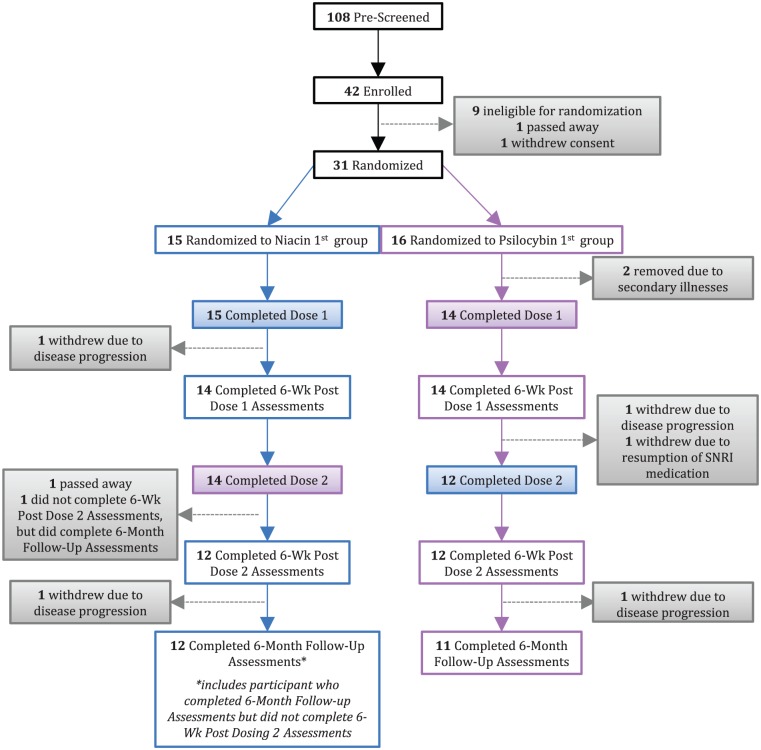
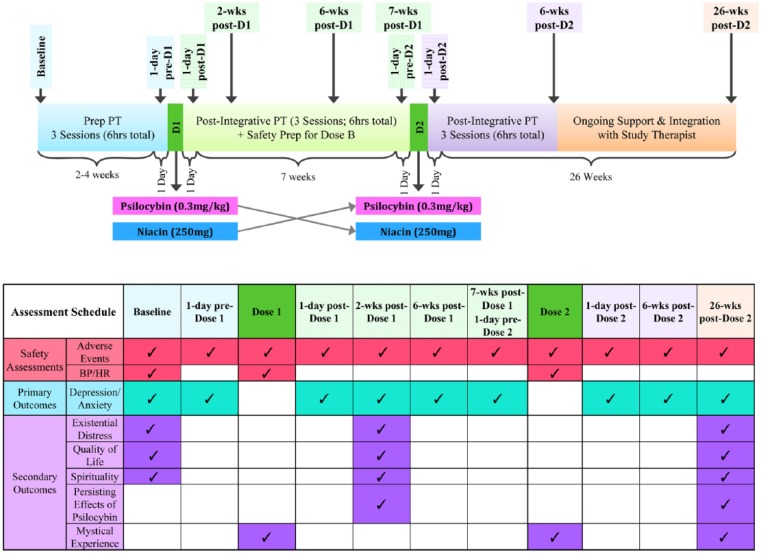
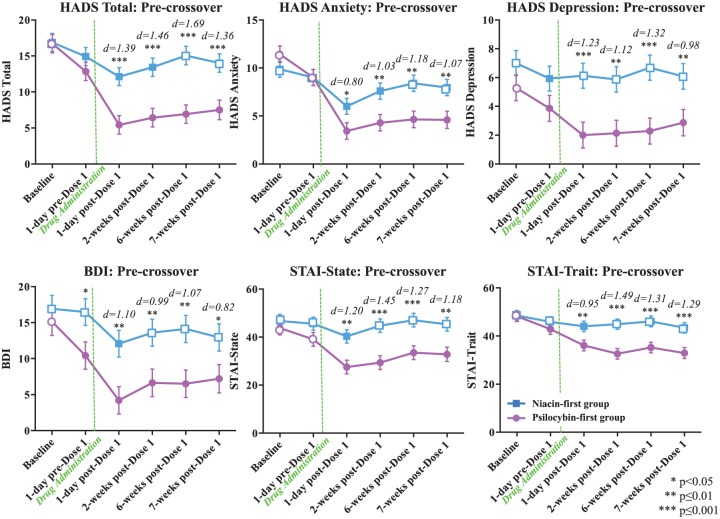
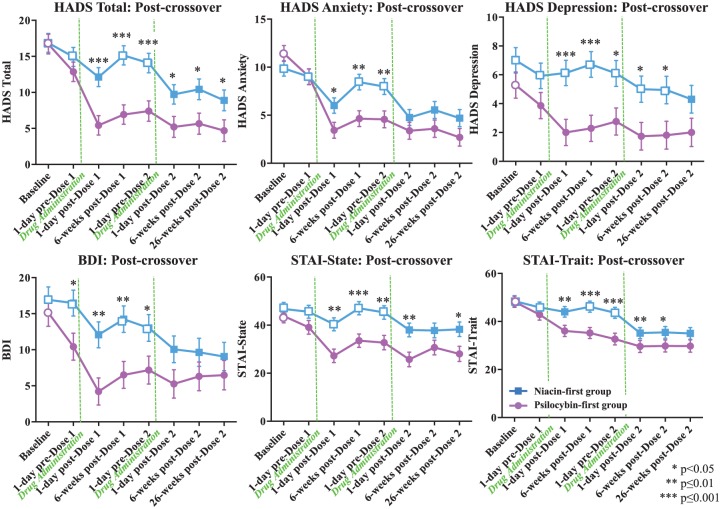
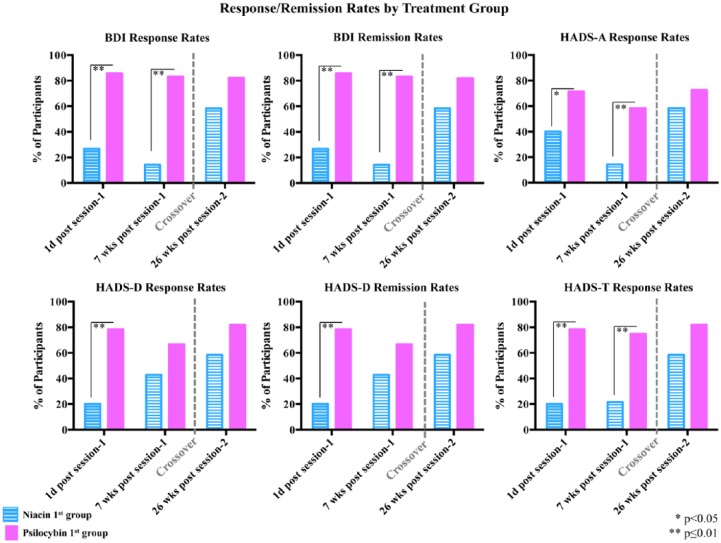
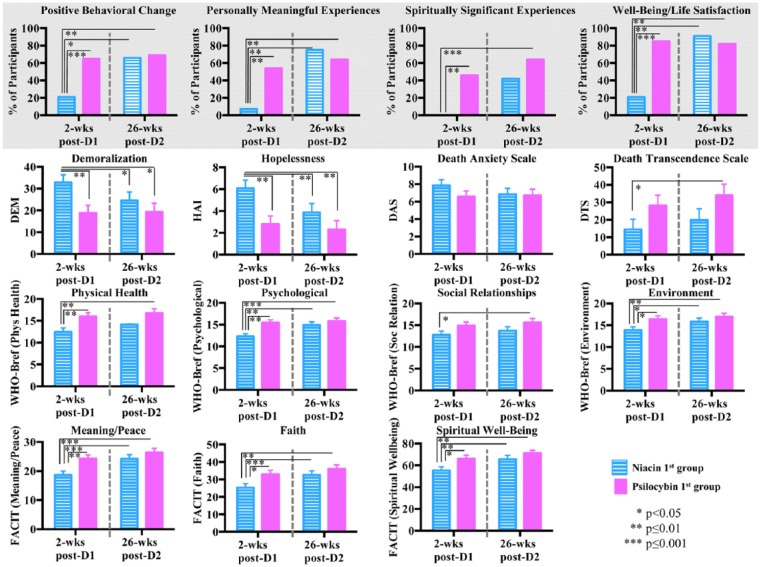
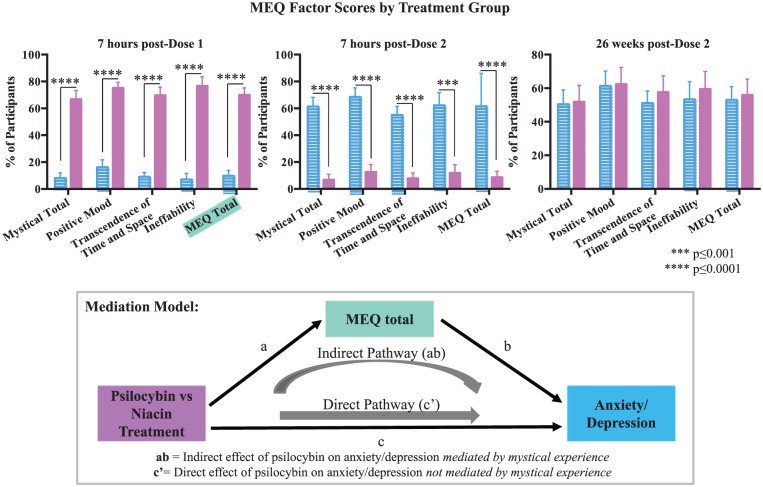
Background: Clinically significant anxiety and depression are common in patients with cancer, and are associated with poor psychiatric and medical outcomes. Historical and recent research suggests a role for psilocybin to treat cancer-related anxiety and depression. Methods: In this double-blind, placebo-controlled, crossover trial, 29 patients with cancer-related anxiety and depression were randomly assigned and received treatment with single-dose psilocybin (0.3 mg/kg) or niacin, both in conjunction with psychotherapy. The primary outcomes were anxiety and depression assessed between groups prior to the crossover at 7 weeks. Results: Prior to the crossover, psilocybin produced immediate, substantial, and sustained improvements in anxiety and depression and led to decreases in cancer-related demoralization and hopelessness, improved spiritual wellbeing, and increased quality of life. At the 6.5-month follow-up, psilocybin was associated with enduring anxiolytic and anti-depressant effects (approximately 60–80% of participants continued with clinically significant reductions in depression or anxiety), sustained benefits in existential distress and quality of life, as well as improved attitudes towards death. The psilocybin-induced mystical experience mediated the therapeutic effect of psilocybin on anxiety and depression. Conclusions: In conjunction with psychotherapy, single moderate-dose psilocybin produced rapid, robust and enduring anxiolytic and anti-depressant effects in patients with cancer-related psychological distress. Trial Registration: ClinicalTrials.gov Identifier: NCT00957359
Overview
The claims and statistics of this paper haven’t been checked yet.
Free: it reads the open-access text and checks the first 5 claims that cite a source we can check. Create a free account to check every claim.
Integrity signals
Registry
Cites
Statistics
Figures
Verification
Claims the paper makes
The claims and statistics of this paper haven’t been checked yet.
Free: it reads the open-access text and checks the first 5 claims that cite a source we can check. Create a free account to check every claim.
Claims other papers make about this one
Each is checked against this paper’s own text: does it say what the citing paper says it does?
The source backs part of the claim, not all of it — or backs it for a different population, condition or comparison.
In the citing paper
“Both participants and their friends and family reported positive effects on attitude towards life and the self, spiritual well-being, social contacts, quality of life, acceptance of death, and optimism (Ross et al., 2016).”
From Psychedelics for the treatment of depression, anxiety, and existential distress in patients with a terminal illness: a systematic review (2022) · cites this paper as Ross et al., 2016
Experimental — accuracy not yet measuredThe source backs part of the claim, not all of it — or backs it for a different population, condition or comparison.
In the citing paper
“Despite efforts to employ “active placebos” (e.g., niacin or a low-dose of a psychedelic) (40, 220), many patients and clinicians can still correctly distinguish between a high dose of a psychedelic drug and an active placebo.”
From Psychedelics and Other Psychoplastogens for Treating Mental Illness. (2021) · cites this paper as [220]
Experimental — accuracy not yet measuredThe source backs part of the claim, not all of it — or backs it for a different population, condition or comparison.
In the citing paper
“and with diminished anxiety and depression in terminal cancer patients (Griffiths et al., 2016;Ross et al., 2016;Barrett et al., 2020).”
From Psychedelics and Neural Plasticity: Therapeutic Implications (2022) · cites this paper as Ross et al., 2016
Experimental — accuracy not yet measuredThe source backs part of the claim, not all of it — or backs it for a different population, condition or comparison.
In the citing paper
“Psilocybin shows promise as a treatment for major depressive disorder (MDD).”
From Single-Dose Psilocybin Treatment for Major Depressive Disorder: A Randomized Clinical Trial (2023) · cites this paper as [8]
Experimental — accuracy not yet measuredThe source backs part of the claim, not all of it — or backs it for a different population, condition or comparison.
In the citing paper
“recent studies suggesting that psilocybin engenders a rapid antidepressant response that far outlasts the presence of the drug in the body.”
From Single-Dose Psilocybin Treatment for Major Depressive Disorder: A Randomized Clinical Trial (2023) · cites this paper as [8]
Experimental — accuracy not yet measured
25 more claims about this paper
Create a free account to see every claim other papers make about this one.
Self-check
Percentages, sums and reported differences re-computed from the paper’s own numbers.
The self-check needs the paper’s full text.
Citations
Cites
The Hospital Anxiety and Depression Scale
Zigmond, A. S., & Snaith, R. P. (1983) · Acta Psychiatrica Scandinavica · doi:10.1111/j.1600-0447.1983.tb09716.x · Cited by 47,139
(2013) · Cited by 44,563
Depression and quality of life in older persons: A review
Sivertsen, H., Bjørkløf, G. H., Engedal, K., Selbæk, G., & Helvik, A.-S. (2015) · Dementia and Geriatric Cognitive Disorders · doi:10.1159/000437299 · Cited by 14,152
Psychometric properties of the Beck Depression Inventory: Twenty-five years of evaluation
Beck, A. T., Steer, R. A., & Carbin, M. G. (1988) · Clinical Psychology Review · doi:10.1016/0272-7358(88)90050-5 · Cited by 11,696 · cited 2×
“cancer); Beck Depression Inventory (BDI) (Beck et al., 1988) self-report depression measure; Spielberger State-Trait Anxiety Inventory (STAI) (Spielberger, 1983) self-report measure of state (STAI state or STAI S) and trait (STAI trait or STAI T) anxiety.”
BackgroundMolecular Mechanisms of Depression: Perspectives on New Treatment Strategies
Lang, U. E., & Borgwardt, S. (2013) · Cellular Physiology and Biochemistry · doi:10.1159/000350094 · Cited by 8,475
Mitchell, A. J., Chan, M., Bhatti, H., Halton, M., Grassi, L., Johansen, C., & Meader, N. (2011) · The Lancet Oncology · doi:10.1016/s1470-2045(11)70002-x · Cited by 2,449 · cited 1×
“Enduring clinically significant anxiety and/or depressive symptoms are common in patients with cancer, present in 30–40% of patients in hospital settings (Mitchell et al., 2011).”
BackgroundManual for the state-trait anxiety inventory (form Y) : "self-evaluation questionnaire"
Spielberger, C. D., Gorsuch, R. L., & Lushene, R. E. (1970) · Consulting Psychologists Press eBooks · Cited by 2,352
Drevets, W. C., Price, J. L., & Furey, M. L. (2008) · Brain Structure and Function · doi:10.1007/s00429-008-0189-x · Cited by 2,241 · cited 7×
“The former is significant because depressive symptoms have been associated with increased activity in the medial PFC (Drevets et al., 2008; Farb et al., 2011) and normalization of medial PFC activity has been demonstrated with anti-depressant treatment (Deakin et al., 2008; Holtzheimer and Mayberg, 2011; Kennedy et al…”
BackgroundInfluentialGreicius, M. D., Flores, B. H., Menon, V., Glover, G. H., Solvason, H. B., Kenna, H., Reiss, A. L., & Schatzberg, A. F. (2007) · Biological Psychiatry · doi:10.1016/j.biopsych.2006.09.020 · Cited by 2,214 · cited 2×
“…pathological and can be understood as part of the therapeutic process (e.g. working through cancer-related psychological or existential distress through challenging encounters or emotionally charged confrontations with cancer-related fearful imagery or symbolism) (Carbonaro et al., 2016).”
BackgroundNichols, D. E. (2016) · Pharmacological Reviews · doi:10.1124/pr.115.011478 · Cited by 1,762 · cited 1×
“In two recently published open-label trials, one using a single dose of ayahuasca (Osorio et al., 2015) and the other using two doses of oral psilocybin (Carhart-Harris et al., 2016), acute and enduring anti-depressant effects were reported.”
Background
Research works printed but not linked: 3
- Doblin R (1991) Pahnke’s ‘Good Friday Experiment’: a long-term follow-up and methodological critique. J Transpersonal Psychol 23(1): 1– 28.
- Pahnke WN (1963) Drugs and mysticism: an analysis of the relationship between psychedelic drugs and the mystical consciousness, PhD dissertation. Cambridge, MA: Harvard University.
- VandeCreek L (1999) The death transcendence scale. In: Hill PC Hood RW (eds) Measures of religiosity. Birmingham, AL: Religious Education Press, pp. 442– 445.
Cited by
Items 401–500 of 1,005
The need for establishing best practices and gold standards in psychedelic medicine
Feduccia, A., Agin-Liebes, G., Price, C. M., Grinsell, N., Paradise, S., & Rabin, D. M. (2023) · Journal of Affective Disorders · doi:10.1016/j.jad.2023.03.083 · Cited by 43
Self-citationYaden, D. B., Eichstaedt, J. C., & Medaglia, J. D. (2018) · Frontiers in Psychology · doi:10.3389/fpsyg.2018.00962 · Cited by 53
Witkin, J. M., Knutson, D. E., Rodriguez, G. J., & Shi, S. (2018) · Current Pharmaceutical Design · doi:10.2174/1381612824666180730104707 · Cited by 44
Self-compassion in Relation to Alexithymia, Empathy, and Negative Mood in Young Adults
Lyvers, M., Randhawa, A. K., & Thorberg, F. A. (2020) · Mindfulness · doi:10.1007/s12671-020-01379-6 · Cited by 50
“…al., 2017; Gilbert & Proctor, 2006; MacBeth & Gumley, 2012), or more controversially via administration of psychedelic drugs such as psilocybin in a supportive context (Carhart-Harris et al., 2017; Moreno et al., 2005; Ross et al., 2016), may provide lasting mental health benefits for some people.”
BackgroundDirect Phosphorylation of Psilocin Enables Optimized cGMP Kilogram-Scale Manufacture of Psilocybin
Kargbo, R. B., Sherwood, A. M., Walker, A., Cozzi, N. V., Dagger, R. E., Sable, J., O’Hern, K., Kaylo, K. W., Patterson, T., Tarpley, G., et al. (2020) · ACS Omega · doi:10.1021/acsomega.0c02387 · Cited by 45
Catalysts for change: the cellular neurobiology of psychedelics
Banks, M. I., Zahid, Z., Jones, N. T., Sultan, Z. W., & Wenthur, C. J. (2021) · Molecular Biology of the Cell · doi:10.1091/mbc.e20-05-0340 · Cited by 37
“Remarkably, one or two administered doses of psilocybin result in rapid and prolonged changes in mood and outlook, with symptomatic relief lasting at least 3–12 months (Carhart-Harris et al., 2016a; Griffiths et al., 2016; Ross et al., 2016; Johnson et al., 2017).”
BackgroundClinical utility of demoralization: A systematic review of the literature
Woźniewicz, A., & Cosci, F. (2023) · Clinical Psychology Review · doi:10.1016/j.cpr.2022.102227 · Cited by 44
Johnstad, P. G. (2020) · Nordic Studies on Alcohol and Drugs · doi:10.1177/1455072520963787 · Cited by 47
“…20s, whereas the studies that found an absence of negative consequences or some positive consequences usually had more mature participants (Carhart-Harris et al., 2016; Griffiths et al., 2016; Griffiths et al., 2006; Grob et al., 2011; Hoshi et al., 2007; Ross et al., 2016; Schmid & Liechti, 2017).”
BackgroundMethodKnowledge, Perceptions, and Use of Psychedelics among Individuals with Fibromyalgia
Glynos, N. G., Pierce, J. M., Davis, A. K., McAfee, J., & Boehnke, K. F. (2022) · Journal of Psychoactive Drugs · doi:10.1080/02791072.2021.2022817 · Cited by 46
Single-dose psilocybin for treatment-resistant obsessive-compulsive disorder: A case report
Kelmendi, B., Kichuk, S. A., DePalmer, G., Maloney, G. K., Ching, T. H. W., Belser, A., & Pittenger, C. (2022) · Heliyon · doi:10.1016/j.heliyon.2022.e12135 · Cited by 45
“, 2021) and in depression and anxiety symptoms in individuals with late-stage cancer (Grob et al., 2011; Griffiths et al., 2016; Ross et al., 2016).”
BackgroundSelf-citationVilliger, D., & Trachsel, M. (2023) · Journal of Medical Ethics · doi:10.1136/jme-2022-108816 · Cited by 45
Psilocybin history, action and reaction: A narrative clinical review
Sharma, P., Nguyen, Q. A., Matthews, S. J., Carpenter, E., Matthews, D. B., Patten, C. A., & Hammond, C. J. (2023) · Journal of Psychopharmacology · doi:10.1177/02698811231190858 · Cited by 44
“Other clinical trials have also reported transient elevation of BP (Bogenschutz et al., 2015; Griffiths et al., 2016; Grob et al., 2011; Ross et al., 2016).”
BackgroundDistinguishing and treating demoralization syndrome in cancer: A review
Fava, M., Sorg, E. M., Jacobs, J. M., Leadbetter, R. A., & Guidi, J. (2023) · General Hospital Psychiatry · doi:10.1016/j.genhosppsych.2023.10.004 · Cited by 47
Greater subjective effects of a low dose of LSD in participants with depressed mood
Molla, H. M., Lee, R., Tare, I., & de Wit, H. (2023) · Neuropsychopharmacology · doi:10.1038/s41386-023-01772-4 · Cited by 48
Weiss, B., Roseman, L., Giribaldi, B., Nutt, D. J., Carhart-Harris, R. L., & Erritzøe, D. (2024) · International Journal of Mental Health and Addiction · doi:10.1007/s11469-024-01253-9 · Cited by 50
“Our results are consistent with two previous clinical trials (Griffiths et al., 2016; Ross et al., 2016) demonstrating an indirect effect of mystical experience on therapeutic outcomes, of which one study similarly tested and established the specificity of mystical experience (Griffiths et al.,…”
CE: Psychedelic-Assisted Therapy
Penn, A., Dorsen, C. G., Hope, S., & Rosa, W. E. (2021) · AJN American Journal of Nursing · doi:10.1097/01.naj.0000753464.35523.29 · Cited by 45
“Similarly, in a randomized, blinded, controlled crossover study investigating the efficacy of psilocybin compared with a control (niacin) in treating clinically significant anxiety or depression in 31 patients with life-threatening cancer, there were no serious adverse events, medical or psychiatric, attributed to psi…”
BackgroundCastelhano, J., Lima, G., Teixeira, M., Soares, C., Pais, M. L., & Castelo-Branco, M. S. (2021) · Frontiers in Pharmacology · doi:10.3389/fphar.2021.739053 · Cited by 48
“, 2006); anxiety associated with life-threatening diseases (Gasser et al., 2014; Griffiths et al., 2016; Ross et al., 2016) and social anxiety in autistic adults (Danforth et al.”
BackgroundA Systematic Review of Study Design and Placebo Controls in Psychedelic Research
Wen, A. Q., Singhal, N., Jones, B. D. M., Zeifman, R. J., Mehta, S. H., Shenasa, M. A., Blumberger, D. M., Daskalakis, Z. J., & Weissman, C. R. (2024) · Psychedelic Medicine · doi:10.1089/psymed.2023.0028 · Cited by 47
“16, 18, 28”
Halberstadt, A. L. (2020) · Scientific Reports · doi:10.1038/s41598-020-65264-x · Cited by 43
The effect of lysergic acid diethylamide (LSD) on whole-brain functional and effective connectivity
Bedford, P., Hauke, D. J., Wang, Z., Röth, V., Nagy-Huber, M., Holze, F., Ley, L., Vizeli, P., Liechti, M. E., Borgwardt, S., et al. (2023) · Neuropsychopharmacology · doi:10.1038/s41386-023-01574-8 · Cited by 47
“, 2022), as well as major depression and anxiety disorders (Griffiths et al., 2016; Ross et al., 2016; Gasser et al., 2015; Holze et al., 2022).”
BackgroundMcCrone, P., Fisher, H., Knight, C., Harding, R., Schlag, A. K., Nutt, D. J., & Neill, J. C. (2023) · Psychological Medicine · doi:10.1017/s0033291723001411 · Cited by 42
“Some of these studies have included patients with depression with other comorbid conditions, including cancer, AIDS, eating disorders and substance abuse, with promising results (Lea et al., 2020; Ross et al., 2016; Spriggs, Kettner, & Carhart-Harris, 2021).”
BackgroundStudies with psychedelic drugs in human volunteers
Sellers, E. M., Romach, M. K., & Leiderman, D. B. (2018) · Neuropharmacology · doi:10.1016/j.neuropharm.2017.11.029 · Cited by 42
“Phase II proof of concept studies Two randomized “blinded, controlled” clinical trials (the Johns Hopkins University trial (JHU) and New York University trial (NYU)) reported long-term reductions in anxious and depressed mood, existential distress and improved quality of life after single oral doses of psilocybin in p…”
Koslowski, M., Johnson, M. W., Gründer, G., & Betzler, F. (2021) · Current Addiction Reports · doi:10.1007/s40429-021-00401-8 · Cited by 45
Peterson, A. H., Largent, E. A., Lynch, H. F., Karlawish, J. H., & Sisti, D. A. (2022) · AJOB Neuroscience · doi:10.1080/21507740.2022.2148771 · Cited by 43
Psychedelic treatment of functional neurological disorder: a systematic review
Butler, M., Seynaeve, M., Nicholson, T. R., Pick, S., Kanaan, R. A., Lees, A., Young, A. H., & Rucker, J. (2020) · Therapeutic Advances in Psychopharmacology · doi:10.1177/2045125320912125 · Cited by 39
Losing the Self in Near-Death Experiences: The Experience of Ego-Dissolution
Martial, C., Fontaine, G. P., Gosseries, O., Carhart-Harris, R. L., Timmermann, C., Laureys, S., & Cassol, H. (2021) · Brain Sciences · doi:10.3390/brainsci11070929 · Cited by 51
Psilocybin sex-dependently reduces alcohol consumption in C57BL/6J mice
Alper, K., Cange, J., Sah, R., Schreiber-Gregory, D., Sershen, H. W., & Vinod, K. Y. (2023) · Frontiers in Pharmacology · doi:10.3389/fphar.2022.1074633 · Cited by 46
“, 2017), and mood and anxiety disorders (Ross et al., 2016; Carhart-Harris et al., 2021).”
BackgroundMertens, L. J., Koslowski, M., Betzler, F., Evens, R., Gilles, M., Jungaberle, A., Jungaberle, H., Majić, T., Ströhle, A., Wolff, M., et al. (2022) · Neuroscience Applied · doi:10.1016/j.nsa.2022.100104 · Cited by 41
“A compound that has been suggested as an active placebo is niacin (Burdick and Adinoff, 2013; Ross et al., 2016).”
Orłowski, P., Ruban, A., Szczypiński, J., Hobot, J., Bielecki, M., & Bola, M. (2022) · Journal of Psychopharmacology · doi:10.1177/02698811221089034 · Cited by 41
“…with depression (Davis et al., 2021; Roseman et al., 2017); it also mediated antidepressant and anxiolytic effects in patients with life-threatening diagnosis (Griffiths et al., 2016; Ross et al., 2016) and the effects of psychedelics-assisted tobacco addiction treatment (GarciaRomeu et al., 2014).”
BackgroundClinical specificity profile for novel rapid acting antidepressant drugs
Scala, M., Fanelli, G., De Ronchi, D., Serretti, A., & Fabbri, C. (2023) · International Clinical Psychopharmacology · doi:10.1097/yic.0000000000000488 · Cited by 41
“, 2021), and lacked adequate double blinding (Ross et al., 2016) or an independent control group (Anderson et al.”
BackgroundInfluentialMertens, L. J., Koslowski, M., Betzler, F., Brand, M., Evens, R., Kärtner, L., Jungaberle, A., Jungaberle, H., Majić, T., Schmitz, C. N., et al. (2026) · JAMA Psychiatry · doi:10.1001/jamapsychiatry.2026.0132 · Cited by 47
Addressing fear of death and dying: traditional and innovative interventions
Blomstrom, M., Burns, A., Larriviere, D. G., & Penberthy, J. K. (2020) · Mortality · doi:10.1080/13576275.2020.1810649 · Cited by 42
“Ross et al. (2016) performed a double-blind, placebo-controlled, crossover trial focusing upon psilocybin as a treatment for cancer-related anxiety and depression.”
BackgroundKuc, J., Kettner, H., Rosas, F. E., Erritzøe, D., Haijen, E. C. H. M., Kaelen, M., Nutt, D. J., & Carhart-Harris, R. L. (2021) · Psychopharmacology · doi:10.1007/s00213-021-05999-1 · Cited by 41
Current Perspective on the Therapeutic Preset for Substance-Assisted Psychotherapy
Thal, S. B., Bright, S. J., Sharbanee, J. M., Wenge, T., & Skeffington, P. (2021) · Frontiers in Psychology · doi:10.3389/fpsyg.2021.617224 · Cited by 41
“…in Psychology | www.frontiersin.org 11 July 2021 | Volume 12 | Article 617224 of the experience are commonalities across different models of SAPT (Bogenschutz and Ross, 2016) and thought to be key determinants of the therapeutic outcome (Bogenschutz and Forcehimes, 2017).”
BackgroundPsilocybin and Other Classic Psychedelics in Depression
Nutt, D. J., Peill, J. M., Weiss, B., Godfrey, K., Carhart-Harris, R. L., & Erritzøe, D. (2023) · Current topics in behavioral neurosciences · doi:10.1007/7854_2023_451 · Cited by 43
Human brain changes after first psilocybin use
Lyons, T., Spriggs, M. J., Kerkelä, L., Rosas, F. E., Roseman, L., Mediano, P. A. M., Timmermann, C., Oestreich, L., Pagni, B. A., Zeifman, R. J., et al. (2026) · Nature Communications · doi:10.1038/s41467-026-71962-3 · Cited by 42
Entheogens and psychedelics in Canada: Proposal for a new paradigm.
Rochester, J., Vallely, A., Grof, P., Williams, M. T., Chang, H., & Caldwell, K. (2022) · Canadian Psychology/Psychologie canadienne · doi:10.1037/cap0000285 · Cited by 42
Liechti, M. E., & Holze, F. (2021) · Current topics in behavioral neurosciences · doi:10.1007/7854_2021_270 · Cited by 44
Yu, C., Liang, C., Yang, F., Tu, Y., Hsu, C., Carvalho, A. F., Stubbs, B., Thompson, T., Tsai, C., Yeh, T., et al. (2022) · Journal of Clinical Medicine · doi:10.3390/jcm11040938 · Cited by 44
“Among the RCTs, two [31,32] were judged to have a high risk of bias (ROB) because of the domain of blinding of outcome assessment (Figure S2).”
BackgroundDo psychedelics change beliefs?
McGovern, H. T., Leptourgos, P., Hutchinson, B. T., & Corlett, P. R. (2022) · Psychopharmacology · doi:10.1007/s00213-022-06153-1 · Cited by 41
“They include decreased end-of-life depression and anxiety (Griffiths et al. 2016; Ross et al. 2016), and reductions in substance abuse (Bogenschutz et al.”
BackgroundInfluentialClassic Psychedelics in Addiction Treatment: The Case for Psilocybin in Tobacco Smoking Cessation
Johnson, M. W. (2022) · Current topics in behavioral neurosciences · doi:10.1007/7854_2022_327 · Cited by 49
Garel, N., Drury, J., Lévesque, J. T., Goyette, N., Lehmann, A., Looper, K. J., Erritzøe, D., Dames, S., Turecki, G., Rej, S., et al. (2023) · Frontiers in Psychiatry · doi:10.3389/fpsyt.2023.1268832 · Cited by 41
Braun, D., Rosenberg, A. M., Rabaniam, E., Haruvi, R., Malamud, D., Barbara, R., Aiznkot, T., Levavi‐Sivan, B., & Kawashima, T. (2024) · Molecular Psychiatry · doi:10.1038/s41380-023-02391-7 · Cited by 41
“Acute administration of psilocybin has anxiolytic effects in humans [58, 59].”
BackgroundErritzøe, D., Barba, T., Spriggs, M. J., Rosas, F. E., Nutt, D. J., & Carhart-Harris, R. L. (2024) · Journal of Psychopharmacology · doi:10.1177/02698811241237870 · Cited by 43
“There was at least a two-week (or 5 half-lives) drug-free washout period before study commencement, and participants were required to remain abstinent from the medication for the duration of the trial (Carhart-Harris et al., 2021; Carhart-Harris et al., 2016; Davis et al., 2021; Ross et al., 2016).”
BackgroundArgento, E., Braschel, M., Walsh, Z., Socias, M. E., & Shannon, K. (2018) · Journal of Psychopharmacology · doi:10.1177/0269881118798610 · Cited by 37
“In clinical settings, recent randomized controlled trials have reported significant reductions in depression and anxiety with psilocybin among cancer patients (Griffiths et al., 2016; Ross et al., 2016), increased psychological wellbeing with psilocybin and LSD (Carhart-Harris et al., 2016b; Kraehenmann et al., 2015),…”
InfluentialMapping an Agenda for Psychedelic-Assisted Therapy Research in Patients with Serious Illness
Beaussant, Y., Tulsky, J. A., Guérin, B., Schwarz-Plaschg, C. G., Sanders, J. J., Beaussant, Y., Sanders, J. J., Guérin, B., Schwarz-Plaschg, C. G., Agrawal, M., et al. (2021) · Journal of Palliative Medicine · doi:10.1089/jpm.2020.0764 · Cited by 41
“21,22 However, it remains to be determined in larger and more homogeneous studies whether, to what extent, for which populations, and with which therapeutic protocols psychedelic-assisted therapies can improve psychosocial and existential outcomes in seriously ill patients.”
Self-citationCoppola, M., Bevione, F., & Mondola, R. (2022) · Journal of Xenobiotics · doi:10.3390/jox12010004 · Cited by 41
“At the 6-month follow-up, improvement in mood, anxiety and quality of life were confirmed in about 80% of the patients [82].”
BackgroundToward Mapping Neurobehavioral Heterogeneity of Psychedelic Neurobiology in Humans
Moujaes, F., Preller, K. H., Ji, J. L., Murray, J. D., Berkovitch, L., Vollenweider, F. X., & Anticevic, A. (2022) · Biological Psychiatry · doi:10.1016/j.biopsych.2022.10.021 · Cited by 40
LSD Administered as a Single Dose Reduces Alcohol Consumption in C57BL/6J Mice
Alper, K., Dong, B., Shah, R., Sershen, H., & Vinod, K. Y. (2018) · Frontiers in Pharmacology · doi:10.3389/fphar.2018.00994 · Cited by 38
“…and it has been suggested that persistently reduced signaling in downstream pathways linked to the 5-HT2AR might explain sustained effects observed in clinical studies on substance use (Bogenschutz and Johnson, 2016) or mood and anxiety symptoms (Vollenweider and Kometer, 2010; Ross et al., 2016).”
BackgroundHaj Sadeghi, Z., Yazdi-Ravandi, S., & Pirnia, B. (2018) · International Journal of Cancer Management · doi:10.5812/ijcm.67019 · Cited by 38
Historic psychedelic drug trials and the treatment of anxiety disorders.
Weston, N. M., Gibbs, D., Bird, C. I. V., Daniel, A., Jelen, L. A., Knight, G., Goldsmith, D., Young, A. H., & Rucker, J. J. (2020) · Depression and Anxiety · doi:10.1002/da.23065 · Cited by 38
“…the safety of these substances suggest that psychedelics may impact on depressive symptoms as well as anxiety associated with life‐threatening diseases (Carhart‐Harris et al., 2016; Gasser et al., 2014; Griffiths et al., 2016; Grob et al., 2011; Palhano‐Fontes et al., 2019; Ross et al., 2016).”
BackgroundInfluentialThe Potential of Psychedelics for End of Life and Palliative Care
Yaden, D. B., Nayak, S. M., Gukasyan, N., Anderson, B. T., & Griffiths, R. R. (2021) · Current topics in behavioral neurosciences · doi:10.1007/7854_2021_278 · Cited by 39
Pagni, B. A., Petridis, P. D., Podrebarac, S. K., Grinband, J., Claus, E. D., & Bogenschutz, M. P. (2024) · Scientific Reports · doi:10.1038/s41598-024-52967-8 · Cited by 40
Davis, L. L., & Hamner, M. B. (2024) · Frontiers in Psychiatry · doi:10.3389/fpsyt.2024.1356563 · Cited by 47
Quality of reporting on psychological interventions in psychedelic treatments: a systematic review
Seybert, C., Schimmers, N., Silva, L., Breeksema, J. J., Veraart, J. K. E., Bessa, B. S., d’Orsi, D., Schoevers, R. A., & Oliveira-Maia, A. J. (2024) · The Lancet Psychiatry · doi:10.1016/s2215-0366(24)00333-x · Cited by 39
A Systematic Review of Participant Diversity in Psychedelic-Assisted Psychotherapy Trials
Haft, S. L., Downey, A. E., Raymond‐Flesch, M., Fernandes‐Osterhold, G., Bradley, E., O’Donovan, A., & Woolley, J. D. (2024) · Psychiatry Research · doi:10.1016/j.psychres.2025.116359 · Cited by 39
Martin, D. A., Gyawali, U., & Calu, D. J. (2020) · Addiction Biology · doi:10.1111/adb.12926 · Cited by 41
“However, clinical studies demonstrate the potential of one or a few acute treatments to lead to long-lasting therapeutic benefits.(10,11) Additional preclinical work will aid in elucidating mechanisms for these long-term changes.”
BackgroundSynthesis and Characterization of 5-MeO-DMT Succinate for Clinical Use
Sherwood, A. M., Claveau, R., Lancelotta, R., Kaylo, K. W., & Lenoch, K. (2020) · ACS Omega · doi:10.1021/acsomega.0c05099 · Cited by 40
Psilocybin: From Serendipity to Credibility?
Rucker, J. J., & Young, A. H. (2021) · Frontiers in Psychiatry · doi:10.3389/fpsyt.2021.659044 · Cited by 37
Gard, D. E., Pleet, M. M., Bradley, E. R., Penn, A. D., Gallenstein, M. L., Riley, L. S., DellaCrosse, M., Garfinkle, E. M., Michalak, E. E., & Woolley, J. D. (2021) · Journal of Affective Disorders Reports · doi:10.1016/j.jadr.2021.100240 · Cited by 36
“In fact, over the past fifteen years, research has indicated that a single dose of psilocybin in a treatment context may dramatically improve symptoms in major depressive disorder and treatment resistant depression (Carhart-Harris et al., 2016; Galvão-Coelho et al., 2021; Ross et al., 2016), obsessive-compulsive disor…”
BackgroundChing, T. H. W., Davis, A. K., Xin, Y., & Williams, M. T. (2022) · Journal of Psychoactive Drugs · doi:10.1080/02791072.2022.2025960 · Cited by 38
Psilocybin Efficacy and Mechanisms of Action in Major Depressive Disorder: a Review
Prouzeau, D., Conejero, I., Voyvodic, P. L., Bécamel, C., Abbar, M., & López‐Castromán, J. (2022) · Current Psychiatry Reports · doi:10.1007/s11920-022-01361-0 · Cited by 40
Capaldi, J. M., Shabanian, J., Finster, L. B., Asher, A., Wertheimer, J. C., Zebrack, B., & Shirazipour, C. H. (2023) · Health Psychology Review · doi:10.1080/17437199.2022.2162947 · Cited by 39
“All four of the psilocybin-assisted psychotherapy articles (n = 2 RCTs) reported reduced PTSS/PTSD outcomes among survivors of cancer (Malone et al., 2018; Swift et al., 2017; Ross et al., 2016; Agin-Liebes et al., 2020).”
BackgroundInfluentialRecent Progress in Mind–Body Therapies in Cancer Care
Deleemans, J. M., Mather, H., Spiropoulos, A., Toivonen, K., Baydoun, M., & Carlson, L. E. (2023) · Current Oncology Reports · doi:10.1007/s11912-023-01373-w · Cited by 43
Castro Santos, H., & Gama Marques, J. (2021) · Porto Biomedical Journal · doi:10.1097/j.pbj.0000000000000128 · Cited by 37
“Notably, results have shown BDI score reductions lasting as long as 6months(16) and reaching as high as 83% anti-depressant response and 85% remission rates (defined by BDI scores), 7weeks following a single dose of psilocybin.(21) Significant reductions were also reported on other depression measures suchasQIDS,GRID-…”
BackgroundPsychedelic-Assisted Therapy for Substance Use Disorders and Potential Mechanisms of Action
Rieser, N. M., Herdener, M., & Preller, K. H. (2021) · Current Topics in Behavioral Neurosciences · doi:10.1007/7854_2021_284 · Cited by 37
Mortaheb, S., Fort, L. D., Mason, N. L., Mallaroni, P., Ramaekers, J. G., & Demertzi, A. (2024) · Biological Psychiatry Cognitive Neuroscience and Neuroimaging · doi:10.1016/j.bpsc.2024.04.001 · Cited by 42
Psilocybin therapy for mood dysfunction in Parkinson’s disease: an open-label pilot trial
Bradley, E., Sakai, K., Fernandes‐Osterhold, G., Szigeti, B., Ludwig, C., Ostrem, J. L., Tanner, C. M., Bock, M., Llerena, K., Finley, P. R., et al. (2025) · Neuropsychopharmacology · doi:10.1038/s41386-025-02097-0 · Cited by 40
“We observed signi fi cant and sustained improvements in depression and anxiety, consistent with prior studies of psilocybin therapy for major depression and mood dysfunction associated with terminal cancer [10 – 13].”
Reynolds, L., Akroyd, A., Sundram, F., Stack, A., Muthukumaraswamy, S. D., & Evans, W. J. (2021) · International Journal of Environmental Research and Public Health · doi:10.3390/ijerph18158160 · Cited by 39
“Furthermore, the current work did not explicitly discuss the role of ‘spirituality’ or ‘mystical experiences’ which have been shown to be important components of the psychedelic-assisted therapy experience [9,29].”
BackgroundThe Safety and Efficacy of Psychedelic-Assisted Therapies for Older Adults: Knowns and Unknowns
Johnston, C. B., Mangini, M., Grob, C. S., & Anderson, B. T. (2022) · American Journal of Geriatric Psychiatry · doi:10.1016/j.jagp.2022.08.007 · Cited by 40
“43 mg/kg po) rated the experience as one of the most personally meaningful of their lives.(14,45) There were no treatment-related serious adverse events in any of these trials, and yet there were few patients over the age of 65 in these studies.”
BackgroundSøndergaard, A., Madsen, M. K., Ozenne, B., Armand, S., Knudsen, G. M., Fisher, P. M., & Stenbæk, D. S. (2022) · Frontiers in Psychology · doi:10.3389/fpsyg.2022.948729 · Cited by 38
“, 2011) in healthy volunteers, as well as improvements in symptoms in psychiatric patient populations (Bogenschutz et al., 2015; Carhart-Harris et al., 2016; Griffiths et al., 2016; Ross et al., 2016; Roseman et al., 2018; Garcia-Romeu et al., 2019).”
BackgroundPepe, M., Hesami, M., de la Cerda, K. A., Perreault, M. L., Hsiang, T., & Jones, A. M. P. (2023) · Biotechnology Advances · doi:10.1016/j.biotechadv.2023.108247 · Cited by 36
Argento, E., Socias, M. E., Hayashi, K., Choi, J., Mackay, L., Christie, D., Milloy, M., & DeBeck, K. (2021) · International Journal of Drug Policy · doi:10.1016/j.drugpo.2021.103518 · Cited by 37
Benefits and Challenges of Ultra-Fast, Short-Acting Psychedelics in the Treatment of Depression
Ramaekers, J. G., Reckweg, J. T., & Mason, N. L. (2025) · American Journal of Psychiatry · doi:10.1176/appi.ajp.20230890 · Cited by 39
Psilocybin occasioned mystical‐type experiences
James, E., Robertshaw, T. L., Hoskins, M. D., & Sessa, B. (2020) · Human Psychopharmacology Clinical and Experimental · doi:10.1002/hup.2742 · Cited by 44
“Since then, a number of psilocybin-assisted psychotherapy studies have been conducted which employ experimental features such as randomisation and double-blind crossover designs to mitigate the effects of expectation in both participants and clinicians (Griffiths et al., 2016; Ross et al., 2016).”
BackgroundInfluentialRoberts, C. A., Osborne-Miller, I., Cole, J. C., Gage, S. H., & Christiansen, P. (2020) · Journal of Psychopharmacology · doi:10.1177/0269881120936508 · Cited by 39
“The compound has recently shown efficacy in clinical trials for the treatment of anxiety and depression in patients with life-threatening cancer (Griffiths et al., 2016; Ross et al., 2016).”
BackgroundCannabis-induced oceanic boundlessness
Earleywine, M., Ueno, L. F., Mian, M. N., & Altman, B. R. (2021) · Journal of Psychopharmacology · doi:10.1177/0269881121997099 · Cited by 37
“This rating scale seemed appropriate, given its use in psilocybin research (e.g., Garcia-Romeu et al., 2014; MacLean et al., 2012; Roseman et al., 2018; Ross et al., 2016).”
MethodPsychedelics in the treatment of unipolar and bipolar depression
Bosch, O. G., Halm, S., & Seifritz, E. (2022) · International Journal of Bipolar Disorders · doi:10.1186/s40345-022-00265-5 · Cited by 41
“The authors identified the psilocybininduced mystical experience as a main mediator of the therapeutic effect (Ross et al., 2016).”
BackgroundEthical Issues Regarding Nonsubjective Psychedelics as Standard of Care
Yaden, D. B., Earp, B. D., & Griffiths, R. R. (2022) · Cambridge Quarterly of Healthcare Ethics · doi:10.1017/s096318012200007x · Cited by 42
“New England Journal of Medicine 2021; 384(15):1402–11.”
The Altered States Database: Psychometric data from a systematic literature review
Prugger, J., Derdiyok, E., Dinkelacker, J., Costines, C., & Schmidt, T. T. (2022) · Scientific Data · doi:10.1038/s41597-022-01822-4 · Cited by 36
Trends in the Top-Cited Articles on Classic Psychedelics
Lawrence, D. W., Sharma, B., Griffiths, R. R., & Carhart-Harris, R. (2021) · Journal of Psychoactive Drugs · doi:10.1080/02791072.2021.1874573 · Cited by 35
The Role of Psychedelics and Counseling in Mental Health Treatment
Curtis, R., Roberts, L. C., Graves, E. G., Rainey, H. T., Wynn, D. D., Krantz, D., & Wieloch, V. (2020) · Journal of Mental Health Counseling · doi:10.17744/mehc.42.4.03 · Cited by 37
Psilocybin-Assisted Compassion Focused Therapy for Depression
Pots, W. T. M., & Chakhssi, F. (2022) · Frontiers in Psychology · doi:10.3389/fpsyg.2022.812930 · Cited by 36
“Several studies have demonstrated the efficacy of psilocybin with moderate to large effect sizes in patients with life-threatening cancer and depressive symptoms (Griffiths et al., 2016; Ross et al., 2016), and in patients with major depressive disorder (Carhart-Harris et al.”
BackgroundKucsera, A., Suppes, T. M., & Haug, N. A. (2023) · Clinical Psychology & Psychotherapy · doi:10.1002/cpp.2880 · Cited by 37
Pogorelov, V. M., Rodriguiz, R. M., Roth, B. L., & Wetsel, W. C. (2023) · Frontiers in Molecular Biosciences · doi:10.3389/fmolb.2023.1233743 · Cited by 36
“Several small-scale clinical studies have indicated psilocybin and LSD can alleviate depression (Bonson and Murphy, 1996; Carhart-Harris et al., 2016; Grif fi ths et al., 2016; Ross et al., 2016; Reiff et al., 2020; McClure-Begley and Roth, 2022; Goodwin et al., 2023; Holze et al., 2023).”
Fang, S., Yang, X., & Zhang, W. (2024) · Frontiers in Psychiatry · doi:10.3389/fpsyt.2024.1359088 · Cited by 36
Mind the Psychedelic Hype: Characterizing the Risks and Benefits of Psychedelics for Depression
Meling, D., Ehrenkranz, R. C., Nayak, S. M., Aicher, H., Funk, X., van Elk, M., Graziosi, M., Bauer, P. R., Scheidegger, M., & Yaden, D. B. (2024) · Psychoactives · doi:10.3390/psychoactives3020014 · Cited by 35
“…a broad range of conditions [2,12–15], such as major depressive disorder [5,16–20], anxiety or depression due to a life-threatening diagnosis [21–23], and substance use disorders [24]. increased dramatically (Figure 1), including a growing number of clinical studies demonstrating the promising…”
BackgroundAn Improved, Practical, and Scalable Five-Step Synthesis of Psilocybin
Kargbo, R. B., Sherwood, A. M., Meisenheimer, P. L., & Tarpley, G. (2020) · Synthesis · doi:10.1055/s-0039-1691565 · Cited by 36
Efficacité des psychédéliques en psychiatrie, une revue systématique
Berkovitch, L., Roméo, B., Karila, L., Gaillard, R., & Benyamina, A. (2021) · L Encéphale · doi:10.1016/j.encep.2020.12.002 · Cited by 37
Henningfield, J. E., Coe, M. A., Griffiths, R. R., Belouin, S. J., Berger, A. M., Coker, A. R., Comer, S. D., Heal, D. J., Hendricks, P. S., Nichols, C. D., et al. (2022) · Neuropharmacology · doi:10.1016/j.neuropharm.2022.109220 · Cited by 39
Dourron, H. M., Strauss, C. K., & Hendricks, P. S. (2022) · Pharmacological Reviews · doi:10.1124/pharmrev.121.000514 · Cited by 42
Zeifman, R. J., Kettner, H., Pagni, B. A., Mallard, A. J., Roberts, D. E., Erritzøe, D., Ross, S., & Carhart-Harris, R. L. (2023) · Scientific Reports · doi:10.1038/s41598-023-40856-5 · Cited by 37
Self-citationDougherty, R. F., Clarke, P., Atli, M., Kuc, J., Schlosser, D. A., Dunlop, B. W., Hellerstein, D. J., Aaronson, S. T., Zisook, S., Young, A. H., et al. (2023) · Psychopharmacology · doi:10.1007/s00213-023-06432-5 · Cited by 35
Thal, S. B., Baker, P., Marinis, J., Wieberneit, M., Sharbanee, J. M., Bruno, R., Skeffington, P., & Bright, S. J. (2023) · Clinical Psychology & Psychotherapy · doi:10.1002/cpp.2945 · Cited by 38
McIntyre, R. S., Kwan, A. T. H., Mansur, R. B., Oliveira-Maia, A. J., Teopiz, K. M., Maletic, V., Suppes, T. M., Stahl, S. M., & Rosenblat, J. D. (2025) · American Journal of Psychiatry · doi:10.1176/appi.ajp.20230902 · Cited by 37
Pearson, C. S., Siegel, J. S., & Gold, J. A. (2021) · Journal of the Neurological Sciences · doi:10.1016/j.jns.2021.120096 · Cited by 36
Presence, Trust, and Empathy: Preferred Characteristics of Psychedelic Carers
Thal, S. B., Engel, L. B., & Bright, S. J. (2022) · Journal of Humanistic Psychology · doi:10.1177/00221678221081380 · Cited by 39
Psychedelics alter metaphysical beliefsPreprint
Timmermann, C., Kettner, H., Letheby, C., Roseman, L., Rosas, F. E., & Carhart-Harris, R. L. (2021) · PsyArXiv (OSF Preprints) · doi:10.31234/osf.io/f6sjk · Cited by 37
Hovmand, O. R., Poulsen, E. D., & Arnfred, S. (2024) · Journal of Psychopharmacology · doi:10.1177/02698811231200019 · Cited by 33
“…(Bogenschutz et al., 2015; Garcia-Romeu et al., 2019) and depression and anxiety (Davis et al., 2020; Griffiths et al., 2016; Roseman et al., 2018; Ross et al., 2016), as well as for success with smoking cessation (Garcia-Romeu et al., 2014), done with primarily psilocybin (Bogenschutz et al.,…”
BackgroundPrevalence and therapeutic impact of adverse life event reexperiencing under ceremonial ayahuasca
Weiss, B., Wingert, A., Erritzoe, D., & Campbell, W. K. (2023) · Scientific Reports · doi:10.1038/s41598-023-36184-3 · Cited by 33
Metadata
- Authors
- Ross, S., Bossis, A., Guss, J., Agin-Liebes, G., Malone, T., Cohen, B., Mennenga, S. E., Belser, A., Kalliontzi, K., Babb, J., Su, Z., Corby, P., & Schmidt, B. L.
- Affiliations
- NYU Langone Health (US)
- Bellevue Hospital Center (US)
- Palo Alto University (US)
- New York University (US)
- Corresponding author
- Ross, Stephen
- Venue
- Journal of Psychopharmacology
- Publisher
- SAGE Publications
- Published
- 2016-11-30
- Volume
- 30
- Issue
- 12
- Pages
- 1165-1180
- ISSN
- 0269-8811 (ISSN-L)
- 1461-7285
- PMC
- PMC5367551
- OpenAlex
- W2559739670
- Semantic Scholar
- 1129a840891b76fb9022b6e91d1e1f4d2dafcb04
- Cited by
- 1,698
- References
- 90
- Citations by year
- 2026: 184 · 2025: 239 · 2024: 264 · 2023: 239 · 2022: 224 · 2021: 182 · 2020: 144 · 2019: 64 · 2018: 88 · 2017: 52 · 2016: 15
- FWCI
- 97.72
- Type
- journal article
- Language
- en
- Open access
- hybrid
- doi.org
- Licence
- cc-by
- journals.sagepub.com/page/policies/text-and-data-mining-license (tdm)
- Locations
- Journal of Psychopharmacology (publishedVersion, cc-by)
- PubMed Central (publishedVersion, cc-by)
- PubMed (publishedVersion)
- Funders
- National Institutes of Health (UL1TR000038)
- National Center for Advancing Translational Sciences
- Topics
- Social Sciences › Psychology › Clinical Psychology › Psychedelics and Drug Studies
- Health Sciences › Medicine › Oncology › Cancer survivorship and care
- Social Sciences › Health › Religion, Spirituality, and Psychology
- Keywords
- psilocybin, cancer-related anxiety, cancer-related depression, mystical experience, psychotherapy, existential suffering, spiritual well-being, quality of life, attitudes toward death, hopelessness, demoralization, psychedelic therapy
- MeSH terms
- Adult, Aged, Anxiety, Depression, Double-Blind Method, Female, Hallucinogens, Humans, Male, Middle Aged, Neoplasms, Psilocybin, Psychotherapy, Quality of Life, Surveys and Questionnaires, Cross-Over Studies, Young Adult
About these checks
Registry, retraction, Cites and statistics results are computed, not judged, with one exception: a printed reference that no index lists is read once by a model before it counts as a citation error. Claims are extracted by a model and kept only when their quote appears verbatim in the text; each cited source is then checked, with a model’s help, for whether it says what the claim relies on. Those verdicts can be wrong — read the claim’s quote and the cited source before relying on one.
Statistics and arithmetic are recomputed, not judged.
Confidence bands are shown only for fields calibrated on our annotated test set. None is calibrated yet, so no band is shown.
What counts as a claim ›How we measure confidence ›How we check this ›
Are you an author, or do you see a problem with this page? Request a review
Data sources
Bibliographic data: Semantic Scholar, OpenAlex, Crossref.
Contains information from the Semantic Scholar Academic Graph Datasets, made available under the ODC Attribution License (ODC-BY 1.0).
Semantic Scholar’s data is described in: Kinney, R., et al. (2023). The Semantic Scholar Open Data Platform. arXiv:2301.10140.
