

Psilocybin produces substantial and sustained decreases in depression and anxiety in patients with life-threatening cancer: A randomized double-blind trial
Open accessThe DOI matches its Crossref record; 54 of the 54 references it cites were found in a registry or an index.
Abstract
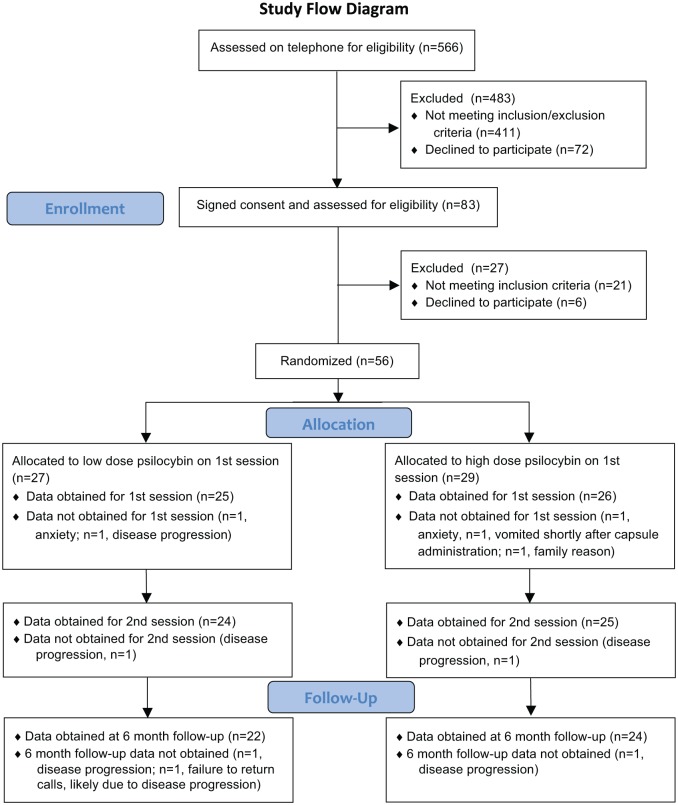
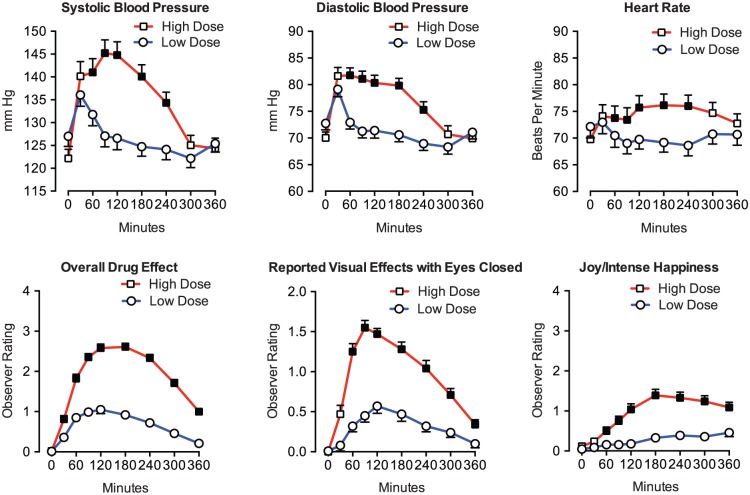
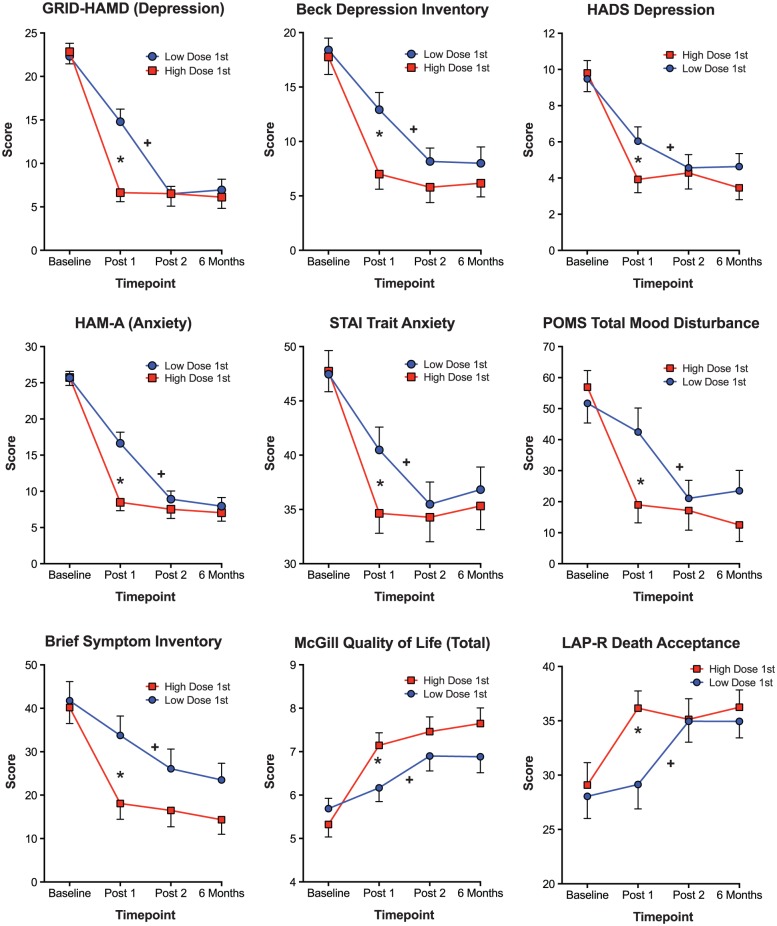
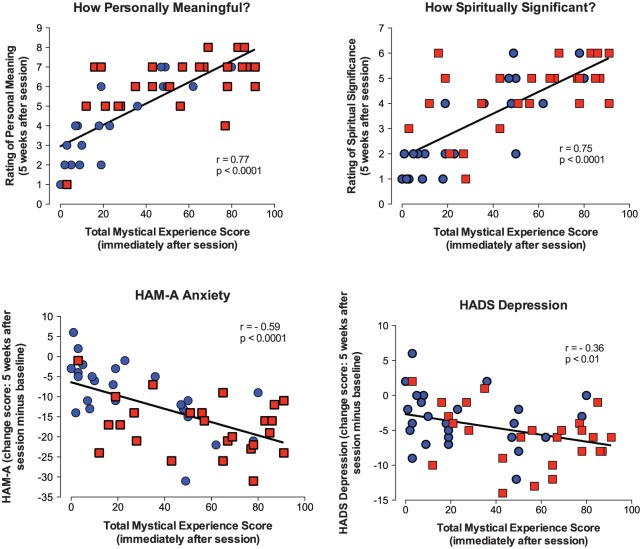
Cancer patients often develop chronic, clinically significant symptoms of depression and anxiety. Previous studies suggest that psilocybin may decrease depression and anxiety in cancer patients. The effects of psilocybin were studied in 51 cancer patients with life-threatening diagnoses and symptoms of depression and/or anxiety. This randomized, double-blind, cross-over trial investigated the effects of a very low (placebo-like) dose (1 or 3 mg/70 kg) vs. a high dose (22 or 30 mg/70 kg) of psilocybin administered in counterbalanced sequence with 5 weeks between sessions and a 6-month follow-up. Instructions to participants and staff minimized expectancy effects. Participants, staff, and community observers rated participant moods, attitudes, and behaviors throughout the study. High-dose psilocybin produced large decreases in clinician- and self-rated measures of depressed mood and anxiety, along with increases in quality of life, life meaning, and optimism, and decreases in death anxiety. At 6-month follow-up, these changes were sustained, with about 80% of participants continuing to show clinically significant decreases in depressed mood and anxiety. Participants attributed improvements in attitudes about life/self, mood, relationships, and spirituality to the high-dose experience, with >80% endorsing moderately or greater increased well-being/life satisfaction. Community observer ratings showed corresponding changes. Mystical-type psilocybin experience on session day mediated the effect of psilocybin dose on therapeutic outcomes. Trial Registration ClinicalTrials.gov identifier: NCT00465595
Overview
The claims and statistics of this paper haven’t been checked yet.
Free: it reads the open-access text and checks the first 5 claims that cite a source we can check. Create a free account to check every claim.
Integrity signals
Registry
Cites
Statistics
Figures
Verification
Claims the paper makes
The claims and statistics of this paper haven’t been checked yet.
Free: it reads the open-access text and checks the first 5 claims that cite a source we can check. Create a free account to check every claim.
Claims other papers make about this one
Each is checked against this paper’s own text: does it say what the citing paper says it does?
The cited source doesn’t support the claim as written.
In the citing paper
“In this study, groups of healthy participants were randomized into three groups, (1) low-dose psilocybin with standard support for spiritual practice (SS); (2) high-dose psilocybin with SS, and (3) high-dose psilocybin with High Support (HS) for spiritual practice.”
From Mindfulness meditation and psychedelics: potential synergies and commonalities (2023) · cites this paper as [6]
Checked by a reasoning model — may be wrong.
Experimental — accuracy not yet measuredThe source backs part of the claim, not all of it — or backs it for a different population, condition or comparison.
In the citing paper
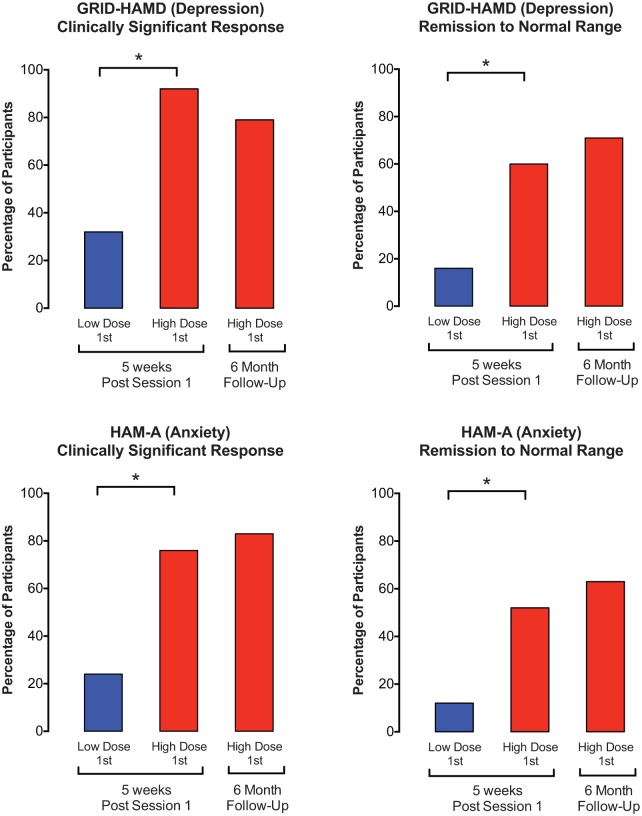
“Griffiths et al. (2016)(n = 51) reported significantly larger response (92% versus 32%) and remission (60% versus 1%) on depression and anxiety (76% vs. 24%; 52% vs. 12%, respectively) in the high-dose group compared to active placebo after 5 weeks.”
From Psychedelics for the treatment of depression, anxiety, and existential distress in patients with a terminal illness: a systematic review (2022) · cites this paper as Griffiths et al., 2016
Experimental — accuracy not yet measuredThe source backs part of the claim, not all of it — or backs it for a different population, condition or comparison.
In the citing paper
“Most of this research has been carried out with the Revised Mystical Experience Questionnaire 30 (MEQ30), where a high score correlates with and has been suggested as a predictor of long-term positive therapeutic outcomes in various clinical and naturalistic studies of psychedelics.”
From Assessment of the acute subjective psychedelic experience: A review of patient-reported outcome measures in clinical research on classical psychedelics (2024) · cites this paper as Griffiths et al., 2016
Experimental — accuracy not yet measuredThe source backs part of the claim, not all of it — or backs it for a different population, condition or comparison.
In the citing paper
“Not only do they produce sustained therapeutic effects following a single administration, they also appear to have broad therapeutic potential”
From Psychedelics and Other Psychoplastogens for Treating Mental Illness. (2021) · cites this paper as [40]
Experimental — accuracy not yet measured
52 more claims about this paper
Create a free account to see every claim other papers make about this one.
Self-check
Percentages, sums and reported differences re-computed from the paper’s own numbers.
The self-check needs the paper’s full text.
Citations
Cites
The Hospital Anxiety and Depression Scale
Zigmond, A. S., & Snaith, R. P. (1983) · Acta Psychiatrica Scandinavica · doi:10.1111/j.1600-0447.1983.tb09716.x · Cited by 47,139
(2013) · Cited by 44,563
(1970) · Cited by 24,983
Depression and quality of life in older persons: A review
Sivertsen, H., Bjørkløf, G. H., Engedal, K., Selbæk, G., & Helvik, A.-S. (2015) · Dementia and Geriatric Cognitive Disorders · doi:10.1159/000437299 · Cited by 14,152
Optimism, coping, and health: Assessment and implications of generalized outcome expectancies.
Scheier, M. F., & Carver, C. S. (1985) · Health Psychology · doi:10.1037/0278-6133.4.3.219 · Cited by 6,690 · cited 2×
“…existence (existential subscale) during life-threatening illness (Cohen et al., 1995); LOT-R, self-rated optimism measure associated with illness (Scheier and Carver, 1985); LAP-R Death Acceptance, selfrated scale assessing absence of anxiety about death (Reker, 1992); Death Transcendence Scale,…”
BackgroundMethodMcNair, D. M. (1992) · Medical Entomology and Zoology · Cited by 2,692
Mitchell, A. J., Chan, M., Bhatti, H., Halton, M., Grassi, L., Johansen, C., & Meader, N. (2011) · The Lancet Oncology · doi:10.1016/s1470-2045(11)70002-x · Cited by 2,449 · cited 1×
“Cancer patients often develop a chronic, clinically significant syndrome of psychosocial distress having depressed mood, anxiety, and reduced quality of life as core features, with up to 40% of cancer patients meeting criteria for a mood disorder (Holland et al., 2013; Mitchell et al., 2011).”
BackgroundNichols, D. E. (2016) · Pharmacological Reviews · doi:10.1124/pr.115.011478 · Cited by 1,762 · cited 2×
“The classic hallucinogens, which include psilocybin (psilocin) and (+)-lysergic acid diethylamide (LSD), are a structurally diverse group of compounds that are 5-HT2A receptor agonists and produce a unique profile of changes in thoughts, perceptions, and emotions (Halberstadt, 2015; Nichols, 2016).”
BackgroundPeterman, A. H., Fitchett, G., Brady, M. J., Hernandez, L., & Cella, D. (2002) · Annals of Behavioral Medicine · doi:10.1207/s15324796abm2401_06 · Cited by 1,751 · cited 2×
“Three measures of spirituality were assessed at three time-points: Baseline, 5 weeks after session 2, and at the 6-month follow-up: FACIT-Sp, a self-rated measure of the spiritual dimension of quality of life in chronic illness (Peterman et al., 2002) assessed on how the participant felt “on average”; Spiritual-Religi…”
MethodGriffiths, R. R., Richards, W. A., McCann, U., & Jesse, R. (2006) · Psychopharmacology · doi:10.1007/s00213-006-0457-5 · Cited by 1,684 · cited 18×
“The structured interview (Community Observer Questionnaire) consisted of asking the rater to rate the participant’s behavior and attitudes using a 10-point scale (from 1 = not at all, to 10 = extremely) on 13 items reflecting healthy psychosocial functioning: inner peace; patience; good-natured humor/playfulness; ment…”
BackgroundMethodResultInfluentialSelf-citation
Research works printed but not linked: 7
- Beck AT Steer RA (1987) BDI Beck Depression Inventory Manual. San Antonio, San Diego, Orlando, New York, Chicago, Toronto: The Psychological Corporation Harcourt Brace Jovanovich, Inc.
- Benson PL Donahue MJ Erickson JA (1993) The Faith Maturity Scale: Conceptualization, measurement, and empirical validation. Res Soc Sci Stud Religion 5: 1– 26.
- ISCDD (2003) GRID-HAMD-17 Structured Interview Guide. San Diego, CA: International Society for CNS Drug Development.
- McIntosh DN (1999) Purpose in Life Test (Crumbaugh & Maholick, 1964). In: Hill PC Hood RW (eds) Measures of Religiosity. Birmingham, AL: Religious Education Press, pp. 503– 508.
- Metzner R Litwin G Weil G (1965) The relation of expectation and mood to psilocybin reactions: A questionnaire study. Psychedelic Rev 5: 3– 39.
- Reker GT (1992) The Life Attitude Profile-Revised (LAP-R). Peterborough, ON: Student Psychologists Press.
- VandeCreek L (1999) The Death Transcendence Scale (Hood & Morris, 1983). In: Hill PC Hood RW (eds) Measures of Religiosity. Birmingham, AL: Religious Education Press, pp. 442– 445.
Cited by
Items 901–1,000 of 1,018
David, J., Bouso, J. C., Kohek, M., Oña, G., Tadmor, N., Arnon, T., Dor‐Ziderman, Y., & Berkovich‐Ohana, A. (2023) · Frontiers in Psychiatry · doi:10.3389/fpsyt.2023.1287961 · Cited by 14
Diminished psychedelic returns on distress: Marital status and household size
Viña, S. M. (2024) · PLoS ONE · doi:10.1371/journal.pone.0293675 · Cited by 18
Downey, A. E., Chaphekar, A. V., Woolley, J. D., & Raymond‐Flesch, M. (2024) · Journal of Eating Disorders · doi:10.1186/s40337-024-01005-z · Cited by 17
“…or a few administrations of high-dose psilo-cybin, combined with psychotherapy, i.e., “psilocybin therapy”, demonstrates preliminary clinical efficacy in a growing number of mental health conditions including anxiety, depression, obsessive compulsive disorder, and substance use disorders [16–20].”
BackgroundEffinger, D. P., Hoffman, J. L., Mott, S., Magee, S. N., Quadir, S. G., Rollison, C. S., Toedt, D., Sanchez, M. E., High, M. W., Hodge, C. W., et al. (2024) · Nature Communications · doi:10.1038/s41467-024-49741-9 · Cited by 17
Larsen, K., Lindberg, U., Ozenne, B., McCulloch, D. E.-W., Armand, S., Madsen, M. K., Johansen, A., Stenbæk, D. S., Knudsen, G. M., & Fisher, P. M. (2025) · Journal of Cerebral Blood Flow & Metabolism · doi:10.1177/0271678x251323364 · Cited by 15
Psilocybin for depression: Considerations for clinical trial design
O’Donnell, K. C., Mennenga, S. E., & Bogenschutz, M. P. (2019) · Journal of Psychedelic Studies · doi:10.1556/2054.2019.026 · Cited by 18
“, 2011) and was bolstered by two randomized controlled trials (RCTs) of psilocybin for depression and anxiety in patients with cancer (Griffiths et al., 2016; Ross et al., 2016), and an open-label pilot study in patients with treatment-resistant depression (TRD; Carhart-Harris et al.”
BackgroundGallagher, R. E., Passmore, M. J., & Baldwin, C. (2020) · Medical Hypotheses · doi:10.1016/j.mehy.2020.109727 · Cited by 17
Psychoactive Drugs in the Management of Post Traumatic Stress Disorder: A Promising New Horizon
Elsouri, K. N., Kalhori, S., Colunge, D., Grabarczyk, G., Hanna, G., Carrasco, C., Espino, A. A., Francisco, A., Borosky, B., Bekheit, B., et al. (2022) · Cureus · doi:10.7759/cureus.25235 · Cited by 21
“both completed double-blinded studies with psilocybin to treat depression and anxiety in participants with life-threatening cancer diagnoses, with 29 and 51 participants respectively [60,61].”
BackgroundConsiderations in assessing the abuse potential of psychedelics during drug development
Calderon, S. N., Bonson, K. R., Reissig, C. J., Lloyd, J. M., Galati, S., & Chiapperino, D. (2022) · Neuropharmacology · doi:10.1016/j.neuropharm.2022.109352 · Cited by 17
“, 25 mg or greater) are ingested, with the most common psychiatric reactions being transient anxiety, paranoid experiences, derealization, and depersonalization (Tyls et al., 2014; Ross et al., 2016; Griffiths et al., 2016).”
BackgroundPsilocybin and palliative end-of-life care
Shelton, R. C., & Hendricks, P. S. (2016) · Journal of Psychopharmacology · doi:10.1177/0269881116675764 · Cited by 15
Lessons to be learned from early psychedelic therapy in Denmark
Erritzoe, D., & Richards, W. A. (2017) · Nordic Journal of Psychiatry · doi:10.1080/08039488.2017.1336252 · Cited by 14
Self-citationPharmacotherapy of anxiety disorders in the 21st century: A call for novel approaches
Bui, É., King, F., & Melaragno, A. (2019) · General Psychiatry · doi:10.1136/gpsych-2019-100136 · Cited by 17
Stewart, B., Dean, J. G., Koek, A. Y., Chua, J. P., Wabl, R., Martin, K., Davoodian, N., Becker, C. J., Himedan, M., Kim, A., et al. (2020) · Pharmacology Research & Perspectives · doi:10.1002/prp2.688 · Cited by 16
McCulloch, D., Knudsen, G., Barrett, F., Doss, M. K., Carhart-Harris, R. L., Rosas, F., Deco, G., Kringelbach, M., Preller, K., Ramaekers, J., et al. (2021) · Neuroscience and Biobehavioral Reviews · doi:10.31234/osf.io/64kyg · Cited by 106
Borgland, S. L., & Neyens, D. M. (2022) · Journal of Psychiatry and Neuroscience · doi:10.1503/jpn.220090 · Cited by 16
Schmitz, G. P., Chiu, Y.-T., König, G. M., Kostenis, E., Roth, B. L., & Herman, M. A. (2022) · bioRxiv (Cold Spring Harbor Laboratory) · doi:10.1101/2022.11.15.516655 · Cited by 23
Vanderijst, L., Hever, F., Buot, A., Dauré, C., Benoit, J., Hanak, C., Veeser, J., Morgiève, M., Campanella, S., Kornreich, C., et al. (2024) · BMC Psychiatry · doi:10.1186/s12888-024-05502-y · Cited by 13
“Across psychiatric diagnoses, PAT clinical trials have suggested a relationship between the quality of the acute psychedelic experience and clinical ameliorations [36, 53, 54].”
BackgroundBarnett (2024) · doi:10.1089/psymed.2023.0010 · Cited by 13
“Several clinical trials have demonstrated some efficacy of psilocybin in reducing depression, 2–5”
Psychedelic Psychiatry and the Consult-Liaison Psychiatrist: A Primer
Barnett, B. S., & Greer, G. R. (2021) · Journal of the Academy of Consultation-Liaison Psychiatry · doi:10.1016/j.jaclp.2020.12.011 · Cited by 13
Psilocybin or Nicotine Patch for Smoking Cessation: A Pilot Randomized Clinical Trial
Johnson, M. W., Naudé, G. P., Hendricks, P. S., & Garcia‐Romeu, A. (2026) · JAMA Network Open · doi:10.1001/jamanetworkopen.2026.0972 · Cited by 26
Self-citationBerens, N., & Kim, S. Y. H. (2022) · American Journal of Geriatric Psychiatry · doi:10.1016/j.jagp.2022.07.003 · Cited by 13
“19 The Canadian government recently added psilocybin to their Special Access Program, which permits clinicians to use unapproved drugs that have shown promise in clinical trials or are approved else-where.”
BackgroundPredictors of attitudes toward psychedelics among psychologists in the USA
Luoma, J. B., Pilecki, B. C., Davis, A. K., & Smith, S. M. (2022) · Drugs Education Prevention and Policy · doi:10.1080/09687637.2022.2117022 · Cited by 17
“…use disorders (Agin-Liebes et al., 2020; Bogenschutz et al., 2015; Carhart-Harris et al., 2021; Davis, Barrett, et al., 2021; Garcia-Romeu et al., 2019; Griffiths et al., 2016; Luoma et al., 2020; Swift et al., 2017) and it appears likely to be the first classic psychedelic to be approved for…”
BackgroundEntheogenic Spirituality: Characteristics of Spiritually Motivated Psychedelics Use
Johnstad, P. G. (2022) · International Journal for the Psychology of Religion · doi:10.1080/10508619.2022.2148060 · Cited by 15
“…literature on the therapeutic effect of entheogens on medical conditions such as depression (Carhart-Harris et al., 2016, 2018; Davis et al., 2021; Griffiths et al., 2016; Roseman et al., 2018; Ross et al., 2016), anxiety (Gasser et al., 2013; Goldberg et al., 2020; Griffiths et al., 2016; Grob…”
BackgroundMethodUtility of preclinical models in the study of psilocybin – A comprehensive review
Pedicini, M., & Cordner, Z. A. (2023) · Neuroscience & Biobehavioral Reviews · doi:10.1016/j.neubiorev.2023.105046 · Cited by 15
G protein-coupled receptors as targets for transformative neuropsychiatric therapeutics
Schmitz, G. P., & Roth, B. L. (2023) · American Journal of Physiology-Cell Physiology · doi:10.1152/ajpcell.00397.2022 · Cited by 13
Rossi, G. N., Rocha, J. M., Osório, F. D. L., Bouso, J. C., Oña, G., Silveira, G. D. O., Yonamine, M., Bertozi, G., Crevelin, E. J., Queiroz, M. E. C., et al. (2023) · Journal of Clinical Psychopharmacology · doi:10.1097/jcp.0000000000001691 · Cited by 13
Gutiérrez-Rodelo, C., Tolibia, S. E. M., Morales-Figueroa, G.-E., Velázquez-Moyado, J. A., Olivares-Reyes, J. A., & Navarrete-Castro, A. (2023) · Molecular Biology Reports · doi:10.1007/s11033-023-08650-8 · Cited by 16
Armstrong, S. B., Levin, A. W., Xin, Y., Horan, J., Luoma, J. B., Nagib, P. B., Pilecki, B. C., & Davis, A. K. (2023) · Journal of Psychedelic Studies · doi:10.1556/2054.2023.00245 · Cited by 20
Manic episode following psilocybin use in a man with bipolar II disorder: a case report
Halim, H. J., Burk, B. G., Fargason, R. E., & Birur, B. (2023) · Frontiers in Psychiatry · doi:10.3389/fpsyt.2023.1221131 · Cited by 15
“Psilocybin has been found to be effective as a treatment modality for treatment-resistant depression (7), depression associated with terminal illnesses (8, 9), and obsessive-compulsive disorder (10), to name a few.”
Pouyan, N., Sisi, F. Y., Kargar, A., Scheidegger, M., McIntyre, R. S., & Morrow, J. D. (2023) · CNS Drugs · doi:10.1007/s40263-023-01044-1 · Cited by 13
“Unlike SSRIs, which require several weeks to produce therapeutic effects, psilocybin-facilitated therapies have shown an ability to lower depressive and anxiety symptoms within a day, and this effect can persist for weeks and even months after a single administration of psilocybin [14–16].”
BackgroundGlowacki, D. R. (2024) · Frontiers in Virtual Reality · doi:10.3389/frvir.2023.1286950 · Cited by 18
Atiq, M. A., Baker, M. R., Voort, J. L. V., Vargas, M. V., & Choi, D. (2024) · Psychopharmacology · doi:10.1007/s00213-024-06599-5 · Cited by 18
“…(GRID-HAMD17, Beck Depression Inventory, BDI, and Hospital Anxiety and Depression Scale, HADS Depression) and anxiety ( Hamilton Anxiety Rating Scale, HAM-A, State-Trait Anxiety Inventory, STAI-Trait Anxiety) symptoms in patients with a life-threatening cancer diagnosis (Griffiths et al. 2016).”
Study protocol for “Psilocybin in patients with fibromyalgia: brain biomarkers of action”
Bornemann, J., Close, J. B., Ahmad, K., Barba, T., Godfrey, K., Macdonald, L., Erritzøe, D., Nutt, D. J., & Carhart-Harris, R. L. (2024) · Frontiers in Psychiatry · doi:10.3389/fpsyt.2024.1320780 · Cited by 16
Endorsement of metaphysical idealism mediates a link between past use of psychedelics and wellbeing
Jylkkä, J., Krabbe, A., & Jern, P. (2024) · Scientific Reports · doi:10.1038/s41598-024-63687-4 · Cited by 21
Nicholas, C. R. N., Banks, M. I., Lennertz, R. C., Wenthur, C. J., Krause, B. M., Riedner, B. A., Smith, R., Hutson, P. R., Sauder, C. J., Dunne, J. D., et al. (2024) · Translational Psychiatry · doi:10.1038/s41398-024-03059-8 · Cited by 19
Rose, J. R. (2024) · Journal of Psychedelic Studies · doi:10.1556/2054.2024.00363 · Cited by 23
Psychedelics and the treatment of eating disorders: considerations for future research and practice
Lacroix, E., Fatur, K., Hay, P., Touyz, S. W., & Keshen, A. R. (2024) · Journal of Eating Disorders · doi:10.1186/s40337-024-01125-6 · Cited by 16
“The most common adverse effects, however, are transient psychologically challenging experiences (“bad trips”), occurring in 26–63% of administrations in modern trials; such experiences may include periods of intense anxiety or paranoia and can be unpleasant for the client [38, 39].”
BackgroundSilverstein, B. H., Kolbman, N., Nelson, A., Liu, T., Guzzo, P. R., Gilligan, J., Lee, U., Mashour, G. A., Vanini, G., & Pal, D. (2025) · Translational Psychiatry · doi:10.1038/s41398-025-03308-4 · Cited by 20
Adebo, M., Bonnet, M., Laouej, O., Defaix, C., McGowan, J. C., Butlen‐Ducuing, F., David, D. J. P., Poupon, E., Tritschler, L., & Gardier, A. M. (2025) · Fundamental and Clinical Pharmacology · doi:10.1111/fcp.70038 · Cited by 14
“Potential therapeutic effects of psi-locybin were then analyzed in patients with moderate- to-severe unipolar TRD receiving two oral doses of psilocybin (10 and 25 mg, 7 days apart) in a supportive setting [3, 26].”
5-Methoxy-N,N-dimethyltryptamine: An Ego-Dissolving Endogenous Neurochemical Catalyst of Creativity
Germann, C. B. (2019) · Activitas Nervosa Superior · doi:10.1007/s41470-019-00063-y · Cited by 17
A potential role for psilocybin in the treatment of obsessive-compulsive disorder
Jacobs, E. (2020) · Journal of Psychedelic Studies · doi:10.1556/2054.2020.00128 · Cited by 19
Four individuals' experiences during and following a psilocybin truffle retreat in the Netherlands
Lutkajtis, A. (2021) · Journal of Psychedelic Studies · doi:10.1556/2054.2021.00162 · Cited by 17
Earleywine, M., Mian, M. N., Altman, B. R., & Leo, J. A. D. (2022) · Cannabis · doi:10.26828/cannabis/2022.02.02 · Cited by 12
“The current sample described their likely response using the options of the Mystical Experiences Questionnaire (Griffiths et al., 2006), which covaries with Oceanic Boundlessness above R = .9 (Liechti et al., 2017).”
BackgroundMethodMohamed, A., Touheed, S., Ahmed, M., Hor, M., & Fatima, S. (2022) · Cureus · doi:10.7759/cureus.30919 · Cited by 20
“Classical psychedelics can occasionally cause brief episodes of nausea, vomiting, and discomfort in the body [36].”
BackgroundMeccia, J., Lopez, J., & Bagot, R. C. (2022) · Psychopharmacology · doi:10.1007/s00213-022-06297-0 · Cited by 14
Psychedelic Psychodynamics: Relational Knowing and the Unthought Known
Barrett, K. (2022) · Psychoanalytic Dialogues · doi:10.1080/10481885.2022.2106141 · Cited by 18
“These studies found that a single moderate to high dose of psilocybin combined with psychotherapy led to rapid, substantial, and enduring decreases in depression and anxiety, as well as improvements in cancer-related demoralization and hopelessness (R. R. Griffiths et al., 2016).”
BackgroundKoning, E., & Brietzke, E. M. (2024) · Trends in Psychiatry and Psychotherapy · doi:10.47626/2237-6089-2022-0597 · Cited by 22
Mason, N. L., Dolder, P. C., & Kuypers, K. P. C. (2020) · Drug Science Policy and Law · doi:10.1177/2050324519900068 · Cited by 17
“…which found positive mood change after administration of a classic psychedelic in patients with depression and anxiety (Carhart-Harris et al., 2016; Griffiths et al., 2016; Palhano-Fontes et al., 2018; Ross et al., 2016), clinical populations which are characterized by higher rates of neuroticism…”
BackgroundDiscriminative Stimulus Effects of Substituted Tryptamines in Rats
Gatch, M. B., Hoch, A. C., & Carbonaro, T. M. (2020) · ACS Pharmacology & Translational Science · doi:10.1021/acsptsci.0c00173 · Cited by 13
Contreras, A., Khumnark, M., Hines, R. M., & Hines, D. J. (2021) · Scientific Reports · doi:10.1038/s41598-021-81552-6 · Cited by 13
The Potential Role of Serotonergic Hallucinogens in Depression Treatment
Psiuk, D., Nowak, E., Cholewa, K., Łopuszańska, U., & Samardakiewicz, M. (2021) · Life · doi:10.3390/life11080765 · Cited by 16
“, 2016 [31] Psilocybin, 22 or 30 mg/70 kg Psilocybin, 1 or 3 mg/70 kg Advanced cancer 51 GRID-HAMD-17, BDI, HADS, STAI”
BackgroundInfluentialA potential effect of psilocybin on anxiety in neurotic personality structures in adolescents
Bogadi, M., & Kaštelan, S. (2021) · Croatian Medical Journal · doi:10.3325/cmj.2021.62.528 · Cited by 14
Human behavioral pharmacology of psychedelics
Strickland, J. C., & Johnson, M. W. (2022) · Advances in pharmacology · doi:10.1016/bs.apha.2021.10.003 · Cited by 16
Self-citationPsilocybin-assisted psychotherapy for dying cancer patients – aiding the final trip
Spiegel, D. (2016) · Journal of Psychopharmacology · doi:10.1177/0269881116675783 · Cited by 15
Psychedelic Microdosing, Mindfulness, and Anxiety: A Cross-Sectional Mediation Study
Hartong, V., & van Emmerik, A. (2023) · Journal of Psychoactive Drugs · doi:10.1080/02791072.2022.2080616 · Cited by 11
“In addition, as macrodose effects are often long-term (Carhart-Harris et al. 2018; Gasser et al. 2014; Griffiths et al. 2016; Grob et al. 2011; Ross et al. 2016) and may include changes in relatively stable traits such as openness and neuroticism (Dressler, Bright, and Polito 2021; MacLean,…”
BackgroundInfluentialGómez-Busto, F. J., & Ortiz, M. I. (2020) · PubMed Central · doi:10.36131/cnfioritieditore20200606 · Cited by 12
“…decrease the symptoms of treatmentresistant depression, with effects lasting as long as 3 months, and has also shown effectiveness for the treatment of addiction, cancer-related psychiatric disorders, anxiety and OCD (Carhart-Harris et al., 2017; Griffiths et al., 2016; Johnson & Griffiths, 2017).”
BackgroundSchuman, H. D. M., Savard, C., Mina, R., Barkova, S., Conradi, H. S. W., Deleemans, J. M., & Carlson, L. E. (2025) · Current Oncology · doi:10.3390/curroncol32070380 · Cited by 14
“While the pooled effect sizes were substantial, heterogeneity was high—particularly for psilocybin, where one outlying trial [8] substantially influenced the variance structure.”
InfluentialSchedule 1 barriers to research in the UK: An in-depth qualitative analysis
Howard, A., Neill, J. C., Schlag, A. K., & Lennox, C. (2021) · Drug Science Policy and Law · doi:10.1177/20503245211049313 · Cited by 15
“Furthermore, psilocybin assisted psychotherapy has shown beneficial effects on anxiety and depression in individuals with life-threatening diseases (Griffiths et al., 2016; Grob et al., 2011; Ross et al., 2016), and clinical trials are being conducted with MDMA for PTSD, alcoholism and other…”
BackgroundChristianity and Psychedelic Medicine: A Pastoral Approach
McCarthy, B. C. (2022) · Christian bioethics Non-Ecumenical Studies in Medical Morality · doi:10.1093/cb/cbac008 · Cited by 15
Holze, F., Erne, L., Duthaler, U., & Liechti, M. E. (2023) · British Journal of Clinical Pharmacology · doi:10.1111/bcp.15887 · Cited by 13
Breau, J. A., & Gillis‐Smith, P. (2023) · Interdisciplinary Science Reviews · doi:10.1080/03080188.2023.2266322 · Cited by 16
“…depression (Carhart-Harris et al. 2021; Palhano-Fontes et al. 2019), tobacco addiction (Johnson et al. 2014), and other mental health conditions (Gri ffi ths et al. 2016; Ross et al. 2016), researchers have become invested in ‘ mystical experience ’ as a potential causal agent for treatment…”
BackgroundSpending Time in Nature: The Overlooked Health Behavior
Maddock, J. E., & Johnson, S. S. (2023) · American Journal of Health Promotion · doi:10.1177/08901171231210806 · Cited by 15
Effect of a single psilocybin treatment on Fos protein expression in male rat brain
Funk, D. R., Araujo, J. A., Slassi, M., Lanthier, J., Atkinson, J., Feng, D., Lau, W., Lê, A., & Higgins, G. A. (2024) · Neuroscience · doi:10.1016/j.neuroscience.2024.01.001 · Cited by 16
Knowledge gaps in psychedelic medicalisation: Clinical studies and regulatory aspects
McCulloch, D. E.-W., Liechti, M. E., Kuypers, K. P. C., Nutt, D. J., Lundberg, J., Stenbæk, D. S., Goodwin, G. M., Gründer, G., Butlen‐Ducuing, F., Haberkamp, M., et al. (2024) · Neuroscience Applied · doi:10.1016/j.nsa.2024.103938 · Cited by 18
“Correlations have been reported between the peak intensity of self-reported subjective effects (using retrospective rating scales such as the MEQ and 5D-ASC) and clinical efficacy (Roseman et al., 2018; Griffiths et al., 2016).”
Schmid, Y., & Bershad, A. K. (2024) · Biological Psychiatry Cognitive Neuroscience and Neuroimaging · doi:10.1016/j.bpsc.2024.02.001 · Cited by 23
“…evidence suggesting efficacy of classical serotonergic psychedelics, including lysergic acid diethylamide (LSD) and psilocybin, in the treatment of depression (2–4), anxiety (due to life-threatening diseases) (5,10–12), alcohol use disorder (6), body dysmorphia (13), and anorexia nervosa (14).”
BackgroundPsychedelic Therapy: A Primer for Primary Care Clinicians—Historical Perspective and Overview
Tabaac, B. J., Shinozuka, K., Arenas, A., Beutler, B. D., Cherian, K. N., Evans, V. D., Fasano, C., & Muir, O. S. (2024) · American Journal of Therapeutics · doi:10.1097/mjt.0000000000001727 · Cited by 15
Krupp, K. T., Yaeger, J. D. W., Ledesma, L. J., Withanage, M. H. H., Gale, J., Howe, C. B., Allen, T. J., Sathyanesan, M., Newton, S. S., & Summers, C. H. (2024) · Neuropharmacology · doi:10.1016/j.neuropharm.2024.109949 · Cited by 13
“…compounds have been shown to produce rapid and long-lasting anti-depressive effects in clinical trials (Carhart-Harris et al., 2016, 2018; Griffiths et al., 2016; Palhano-Fontes et al., 2019; Uthaug et al., 2020), and in rodent models (Cameron et al., 2018, 2019; De Gregorio et al.,…”
InfluentialReligion, Psychedelics, Risky Behavior, and Violence
Viña, S. M. (2024) · Journal of Psychoactive Drugs · doi:10.1080/02791072.2024.2346132 · Cited by 14
“…on health (Brewerton et al. 2022; Davis, Agin-Liebes, et al. 2021; Davis, Barrett, et al. 2021; Davis, Xin et al. 2021; dos Santos et al. 2018; Griffiths et al. 2016; Hendricks et al. 2015; Ly et al. 2018; Mithoefer et al. 2019; Peck 2021; Penn et al. 2021; Roseman, Nutt, and Carhart-Harris…”
Sakai, K., Bradley, E., Zamaria, J. A., Agin-Liebes, G., Kelley, D. P., Fish, A., Martini, V., Ferris, M. C., Morton, E. E., Michalak, E. E., et al. (2024) · Psychopharmacology · doi:10.1007/s00213-024-06585-x · Cited by 17
“…of neuropsychiatric illnesses, including depressive and anxiety disorders (Anderson et al. 2020; Carhart-Harris et al. 2016; Davis et al. 2020; Griffiths et al. 2016; Moreno et al. 2006), headache disorders (Schindler 2022; Schindler et al. 2021), and substance use disorders (Bogenschutz et…”
Szafoni, S., Gręblowski, P., Grabowska, K., & Więckiewicz, G. (2024) · Frontiers in Psychiatry · doi:10.3389/fpsyt.2024.1406888 · Cited by 18
Acute Effects of Hallucinogens on Functional Connectivity: Psilocybin and Salvinorin-A
Bagdasarian, F. A., Hansen, H. D., Chen, J. E., Yoo, C., Placzek, M. S., Hooker, J. M., & Wey, H. (2024) · ACS Chemical Neuroscience · doi:10.1021/acschemneuro.4c00245 · Cited by 16
Bader, H., Farraj, H., Maghnam, J., & Omar, Y. A. (2024) · World Journal of Clinical Oncology · doi:10.5306/wjco.v15.i7.908 · Cited by 14
Psychedelic use and psychological flexibility: The role of meaningful intention and decentering
Campo, W. M., & Yali, A. M. (2024) · Journal of Psychedelic Studies · doi:10.1556/2054.2024.00350 · Cited by 16
Jones, G. M., Lowe, M. X., Nayak, S. M., Sepeda, N. D., Kettner, H., Carhart-Harris, R. L., Jackson, H., & Garcia‐Romeu, A. (2024) · Journal of Affective Disorders · doi:10.1016/j.jad.2024.10.058 · Cited by 14
Preclinical models for evaluating psychedelics in the treatment of major depressive disorder
Alexander, L., Anderson, D., Baxter, L., Claydon, M. D. B., Rucker, J., & Robinson, E. S. J. (2024) · British Journal of Pharmacology · doi:10.1111/bph.17370 · Cited by 16
“Human studies show that there is a correlation between the subjective experience and antidepressant efficacy, suggesting interdependent underlying mechanisms (Griffiths et al., 2016; Ross et al., 2016).”
Aghajanian, S., Shafiee, A., Omran, S. P., Nejad, A. R., Jafarabady, K., Gargari, O. K., Firouzabadi, S. R., Mohammadi, I., Babaheidari, T. B., & Bakhtiyari, M. (2024) · Journal of Psychopharmacology · doi:10.1177/02698811241287542 · Cited by 15
“Despite its limited scope and inclusion of only three studies (Griffiths et al., 2016; Grob et al., 2011; Ross et al., 2016), Vargas et al. (2020) provided compelling evidence highlighting the potential of psilocybin as a treatment for depression.”
Zhou, K., de Wied, D., Carhart-Harris, R. L., & Kettner, H. (2025) · PNAS Nexus · doi:10.1093/pnasnexus/pgae560 · Cited by 24
“…multisite trial in treatment-resistant depression (51), only a small number of serious adverse events had been reported in modern clinical studies of serotonergic psychedelics for depression (2, 52), end of life anxiety (53, 54), or substance use disorders (55), including no cases of HPPD (56).”
The serotonin 1B receptor is required for some of the behavioral effects of psilocybin in mice
Fleury, S., & Nautiyal, K. M. (2025) · Molecular Psychiatry · doi:10.1038/s41380-025-03387-1 · Cited by 16
Pekala, R. J., & Creegan, K. (2020) · OBM Integrative and Complementary Medicine · doi:10.21926/obm.icm.2002019 · Cited by 14
King, F., & Hammond, R. (2021) · FOCUS The Journal of Lifelong Learning in Psychiatry · doi:10.1176/appi.focus.20200047 · Cited by 14
Deep CANALs: a deep learning approach to refining the canalization theory of psychopathology
Juliani, A., Safron, A., & Kanai, R. (2024) · Neuroscience of Consciousness · doi:10.1093/nc/niae005 · Cited by 15
Psilocybin: Psychotherapy or drug?
Goodwin, G. M. (2016) · Journal of Psychopharmacology · doi:10.1177/0269881116675757 · Cited by 13
“The results were very comparable, and suggest a clinically important effect: a single high dose of psilocybin reduced symptoms of anxiety and depression both acutely and after approximately six months (Griffiths et al., 2016; Ross et al., 2016).”
ResultEntheogenic Spirituality: Exploring Spiritually Motivated Entheogen Use among Modern Westerners.
Johnstad, P. G. (2018) · Journal of ethnographic and qualitative research · Cited by 26
La funcionalidad política de la “ciencia” prohibicionista: El caso del cannabis y los psicodélicos
Oró, D. P. M., Apud, I., Scuro, J., & Romaní, O. (2020) · Salud Colectiva · doi:10.18294/sc.2020.2493 · Cited by 20
Psychiatry might need some psychedelic therapy
Johnson, M. W. (2018) · International Review of Psychiatry · doi:10.1080/09540261.2018.1509544 · Cited by 17
“Therapeutic studies using psychedelics have been reported for depression and anxiety related to cancer and other life-threatening illness (Gasser et al., 2014; Griffiths et al., 2016; Grob et al., 2011; Ross et al., 2016), treatment-resistant depression (Carhart-Harris et al.”
BackgroundSelf-citationA Systematic Study of Microdosing PsychedelicsPreprint
Polito, V., & Stevenson, R. J. (2018) · PsyArXiv (OSF Preprints) · doi:10.31234/osf.io/cw9qs · Cited by 13
Zeifman, R. J., Spriggs, M. J., Kettner, H., Lyons, T., Rosas, F. E., Mediano, P. A. M., Erritzøe, D., & Carhart-Harris, R. L. (2022) · doi:10.31234/osf.io/w8j6t · Cited by 12
de la Fuente Revenga, M., Zhu, B., Guevara, C. A., Naler, L. B., Saunders, J. M., Zhou, Z., Toneatti, R., Sierra, S., Wolstenholme, J. T., Beardsley, P. M., et al. (2021) · doi:10.1101/2021.02.24.432725 · Cited by 11
Assessing potential of psilocybin for depressive disorders
Kozak, Z., Johnson, M. W., & Aaronson, S. T. (2023) · Expert Opinion on Investigational Drugs · doi:10.1080/13543784.2023.2273493 · Cited by 11
“Numerous studies have investigated psilocybin as a novel therapeutic compound for the treatment of depression [10–14], and favorable findings from a recent phase IIb clinical trial have paved the way for the world’s first phase 3 clinical trial of psilocybin for TRD [15].”
BackgroundSelf-citationJohansen, L., Liknaitzky, P., Nedeljkovic, M., Mastin-Purcell, L., & Murray, G. (2022) · Systematic Reviews · doi:10.1186/s13643-022-01930-7 · Cited by 11
“Several trials have reported psilocybin to produce signi cant and long-lasting improvements for those with treatment resistant depression (15, 16) and depression associated with life threatening cancer (17, 18).”
BackgroundHosein, M., Reid, M. J., Walser, S. A., Charney, S., Fonzo, G. A., Lewis, B. R., Yaden, D. B., Suppes, T. M., Cordner, Z. A., & Barrett, F. S. (2025) · EClinicalMedicine · doi:10.1016/j.eclinm.2025.103517 · Cited by 17
“28,29 The first cohort of 51 participants demonstrated a significant improvement in depressive symptoms (HAM-D: 89% response, 71% remission) and anxiety symptoms (HAM-A: 80% response, 50% remission) at 6 month follow up.”
Kvam, T.-M., Goksøyr, I. W., Stewart, L. H., Repantis, D., Røssberg, J. I., & Andreassen, O. A. (2022) · Frontiers in Psychiatry · doi:10.3389/fpsyt.2022.954388 · Cited by 13
Psychedelic VR Experience: An Exploratory Study on Cosmic Flow
Jung, S., Buruk, O., & Hamari, J. (2022) · International Academic Mindtrek Conference (Mindtrek) · doi:10.1145/3569219.3569391 · Cited by 13
“Medical studies support the use of psilocybin and MDMA in treating post-traumatic stress disorder [25] and anxiety toward end-of-life [13].”
BackgroundBălăeţ, M., Trender, W. R., Hellyer, P. J., & Hampshire, A. (2023) · Frontiers in Psychiatry · doi:10.3389/fpsyt.2023.1184681 · Cited by 15
Gao, B., Qu, Y., Cai, M., Zhang, Y.-Y., Lu, H., Li, H.-X., Tang, Y., & Shen, H. (2023) · Journal of Chinese Integrative Medicine · doi:10.1016/j.joim.2023.06.006 · Cited by 12
Psychedelics, OCD and related disorders: A systematic review
Graziosi, M., Rohde, J. S., Tiwari, P., Siev, J., & Yaden, D. B. (2024) · Journal of Obsessive-Compulsive and Related Disorders · doi:10.1016/j.jocrd.2024.100873 · Cited by 23
Varty, G. B., Canal, C. E., Mueller, T. A., Hartsel, J. A., Tyagi, R., Avery, K., Morgan, M. E., Reichelt, A. C., Pathare, P., Stang, E. M., et al. (2024) · Journal of Medicinal Chemistry · doi:10.1021/acs.jmedchem.3c01961 · Cited by 12
Thaoboonruang, N., Lohitnavy, M., & Lohitnavy, O. (2024) · Journal of Psychoactive Drugs · doi:10.1080/02791072.2024.2399128 · Cited by 12
“Recent clinical studies showed promising results for psilocybin in treating treatment-resistant depression (Carhart-Harris et al. 2016, 2018; Castro Santos and Gama Marques 2021; Griffiths et al. 2016; Ross et al. 2016).”
Evaluating the potential for psilocybin as a treatment for post-traumatic stress disorder
Miller, C., & Zoladz, P. R. (2024) · Journal of Pharmacology and Experimental Therapeutics · doi:10.1124/jpet.124.002237 · Cited by 13
Beyond psychedelics: set and setting in general psychiatric practice
Kozak, Z., & Miller, C. W. T. (2024) · International Review of Psychiatry · doi:10.1080/09540261.2024.2419662 · Cited by 14
“…Carhart-Harris et al., 2016; Goodwin et al., 2022; Goodwin et al., 2023; Griffiths et al., 2016; Kozak et al., 2023; Ross et al., 2016), anxiety (Griffiths et al., 2016; Grob et al., 2011; Ross et al., 2016), post-traumatic stress disorder (PTSD) (Mitchell et al., 2021; Mithoefer et al., 2011),…”
Metadata
- Authors
- Griffiths, R. R., Johnson, M. W., Carducci, M. A., Umbricht, A., Richards, W. A., Richards, B. D., Cosimano, M. P., & Klinedinst, M. A.
- Affiliations
- Johns Hopkins University (US)
- Corresponding author
- Griffiths, Roland R
- Venue
- Journal of Psychopharmacology
- Publisher
- SAGE Publications
- Published
- 2016-11-30
- Volume
- 30
- Issue
- 12
- Pages
- 1181-1197
- ISSN
- 0269-8811 (ISSN-L)
- 1461-7285
- PMC
- PMC5367557
- OpenAlex
- W2558412547
- Cited by
- 2,201
- References
- 53
- Citations by year
- 2026: 278 · 2025: 325 · 2024: 335 · 2023: 315 · 2022: 310 · 2021: 229 · 2020: 187 · 2019: 73 · 2018: 77 · 2017: 54 · 2016: 14
- FWCI
- 97.18
- Type
- journal article
- Language
- en
- Open access
- hybrid
- doi.org
- Licence
- cc-by
- journals.sagepub.com/page/policies/text-and-data-mining-license (tdm)
- Locations
- Journal of Psychopharmacology (publishedVersion, cc-by)
- PubMed Central (publishedVersion, cc-by)
- PubMed (publishedVersion)
- Funders
- National Institutes of Health
- National Institute on Drug Abuse (R01DA003889)
- Topics
- Social Sciences › Psychology › Clinical Psychology › Psychedelics and Drug Studies
- Social Sciences › Health › Religion, Spirituality, and Psychology
- Health Sciences › Medicine › Oncology › Cancer survivorship and care
- Keywords
- psilocybin, depression, anxiety, cancer patients, psychedelic therapy, dose-response relationship, mystical experience, fear of death, quality of life, meaning of life, optimism, well-being, sustained treatment effects
- MeSH terms
- Anxiety, Attitude, Depression, Double-Blind Method, Female, Follow-Up Studies, Hallucinogens, Humans, Male, Middle Aged, Neoplasms, Psilocybin, Quality of Life, Surveys and Questionnaires, Cross-Over Studies
About these checks
Registry, retraction, Cites and statistics results are computed, not judged, with one exception: a printed reference that no index lists is read once by a model before it counts as a citation error. Claims are extracted by a model and kept only when their quote appears verbatim in the text; each cited source is then checked, with a model’s help, for whether it says what the claim relies on. Those verdicts can be wrong — read the claim’s quote and the cited source before relying on one.
Statistics and arithmetic are recomputed, not judged.
Confidence bands are shown only for fields calibrated on our annotated test set. None is calibrated yet, so no band is shown.
What counts as a claim ›How we measure confidence ›How we check this ›
Are you an author, or do you see a problem with this page? Request a review
Data sources
Bibliographic data: Semantic Scholar, OpenAlex, Crossref.
Contains information from the Semantic Scholar Academic Graph Datasets, made available under the ODC Attribution License (ODC-BY 1.0).
Semantic Scholar’s data is described in: Kinney, R., et al. (2023). The Semantic Scholar Open Data Platform. arXiv:2301.10140.
