

Psilocybin produces substantial and sustained decreases in depression and anxiety in patients with life-threatening cancer: A randomized double-blind trial
Open accessThe DOI matches its Crossref record; 54 of the 54 references it cites were found in a registry or an index.
Abstract
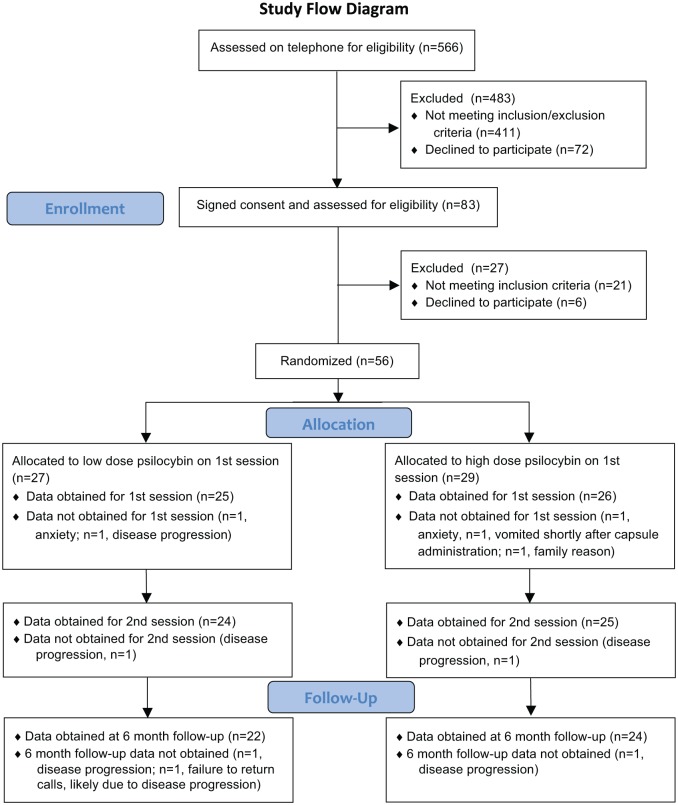
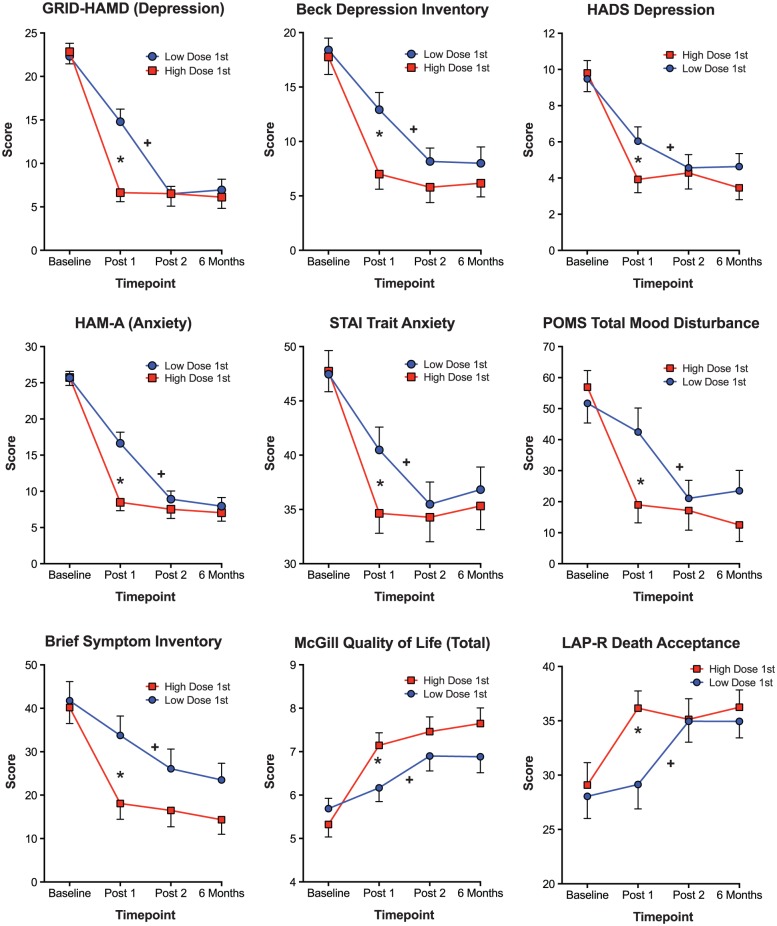
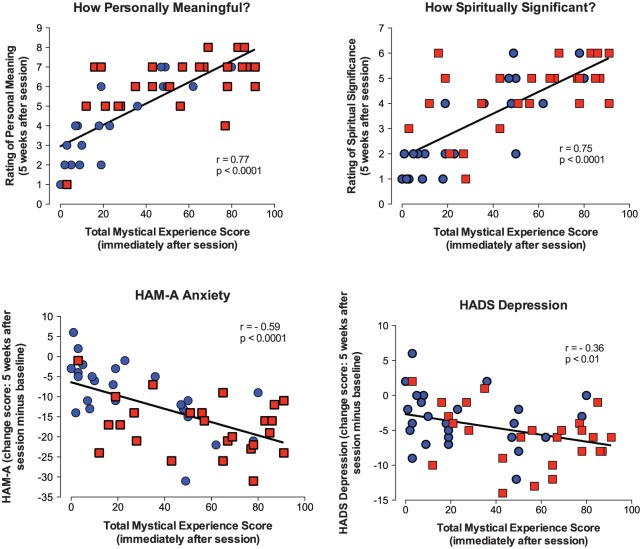
Cancer patients often develop chronic, clinically significant symptoms of depression and anxiety. Previous studies suggest that psilocybin may decrease depression and anxiety in cancer patients. The effects of psilocybin were studied in 51 cancer patients with life-threatening diagnoses and symptoms of depression and/or anxiety. This randomized, double-blind, cross-over trial investigated the effects of a very low (placebo-like) dose (1 or 3 mg/70 kg) vs. a high dose (22 or 30 mg/70 kg) of psilocybin administered in counterbalanced sequence with 5 weeks between sessions and a 6-month follow-up. Instructions to participants and staff minimized expectancy effects. Participants, staff, and community observers rated participant moods, attitudes, and behaviors throughout the study. High-dose psilocybin produced large decreases in clinician- and self-rated measures of depressed mood and anxiety, along with increases in quality of life, life meaning, and optimism, and decreases in death anxiety. At 6-month follow-up, these changes were sustained, with about 80% of participants continuing to show clinically significant decreases in depressed mood and anxiety. Participants attributed improvements in attitudes about life/self, mood, relationships, and spirituality to the high-dose experience, with >80% endorsing moderately or greater increased well-being/life satisfaction. Community observer ratings showed corresponding changes. Mystical-type psilocybin experience on session day mediated the effect of psilocybin dose on therapeutic outcomes. Trial Registration ClinicalTrials.gov identifier: NCT00465595
Overview
The claims and statistics of this paper haven’t been checked yet.
Free: it reads the open-access text and checks the first 5 claims that cite a source we can check. Create a free account to check every claim.
Integrity signals
Registry
Cites
Statistics
Figures
Verification
Claims the paper makes
The claims and statistics of this paper haven’t been checked yet.
Free: it reads the open-access text and checks the first 5 claims that cite a source we can check. Create a free account to check every claim.
Claims other papers make about this one
Each is checked against this paper’s own text: does it say what the citing paper says it does?
The cited source doesn’t support the claim as written.
In the citing paper
“In this study, groups of healthy participants were randomized into three groups, (1) low-dose psilocybin with standard support for spiritual practice (SS); (2) high-dose psilocybin with SS, and (3) high-dose psilocybin with High Support (HS) for spiritual practice.”
From Mindfulness meditation and psychedelics: potential synergies and commonalities (2023) · cites this paper as [6]
Checked by a reasoning model — may be wrong.
Experimental — accuracy not yet measuredThe source backs part of the claim, not all of it — or backs it for a different population, condition or comparison.
In the citing paper
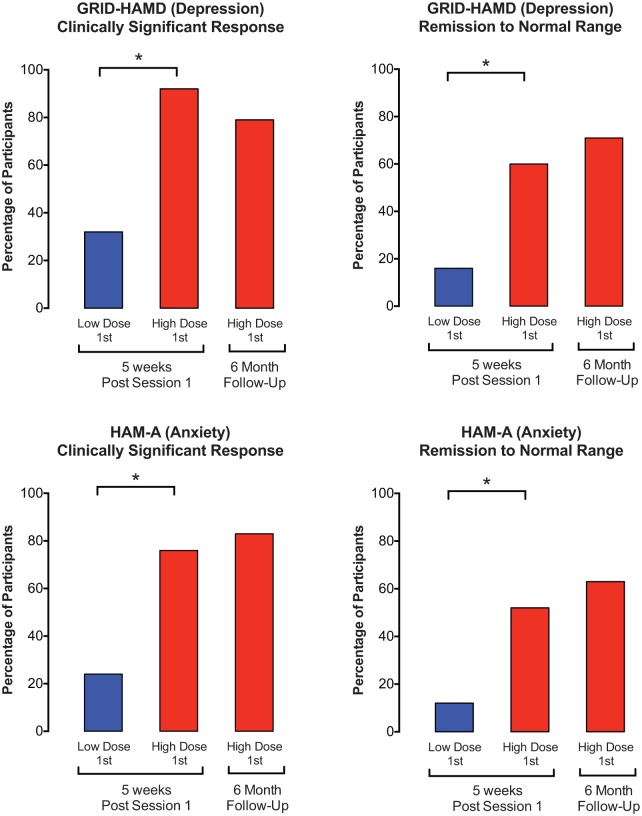
“Griffiths et al. (2016)(n = 51) reported significantly larger response (92% versus 32%) and remission (60% versus 1%) on depression and anxiety (76% vs. 24%; 52% vs. 12%, respectively) in the high-dose group compared to active placebo after 5 weeks.”
From Psychedelics for the treatment of depression, anxiety, and existential distress in patients with a terminal illness: a systematic review (2022) · cites this paper as Griffiths et al., 2016
Experimental — accuracy not yet measuredThe source backs part of the claim, not all of it — or backs it for a different population, condition or comparison.
In the citing paper
“Most of this research has been carried out with the Revised Mystical Experience Questionnaire 30 (MEQ30), where a high score correlates with and has been suggested as a predictor of long-term positive therapeutic outcomes in various clinical and naturalistic studies of psychedelics.”
From Assessment of the acute subjective psychedelic experience: A review of patient-reported outcome measures in clinical research on classical psychedelics (2024) · cites this paper as Griffiths et al., 2016
Experimental — accuracy not yet measuredThe source backs part of the claim, not all of it — or backs it for a different population, condition or comparison.
In the citing paper
“Not only do they produce sustained therapeutic effects following a single administration, they also appear to have broad therapeutic potential”
From Psychedelics and Other Psychoplastogens for Treating Mental Illness. (2021) · cites this paper as [40]
Experimental — accuracy not yet measured
52 more claims about this paper
Create a free account to see every claim other papers make about this one.
Self-check
Percentages, sums and reported differences re-computed from the paper’s own numbers.
The self-check needs the paper’s full text.
Citations
Cites
The Hospital Anxiety and Depression Scale
Zigmond, A. S., & Snaith, R. P. (1983) · Acta Psychiatrica Scandinavica · doi:10.1111/j.1600-0447.1983.tb09716.x · Cited by 47,139
(2013) · Cited by 44,563
(1970) · Cited by 24,983
Depression and quality of life in older persons: A review
Sivertsen, H., Bjørkløf, G. H., Engedal, K., Selbæk, G., & Helvik, A.-S. (2015) · Dementia and Geriatric Cognitive Disorders · doi:10.1159/000437299 · Cited by 14,152
Optimism, coping, and health: Assessment and implications of generalized outcome expectancies.
Scheier, M. F., & Carver, C. S. (1985) · Health Psychology · doi:10.1037/0278-6133.4.3.219 · Cited by 6,690 · cited 2×
“…existence (existential subscale) during life-threatening illness (Cohen et al., 1995); LOT-R, self-rated optimism measure associated with illness (Scheier and Carver, 1985); LAP-R Death Acceptance, selfrated scale assessing absence of anxiety about death (Reker, 1992); Death Transcendence Scale,…”
BackgroundMethodMcNair, D. M. (1992) · Medical Entomology and Zoology · Cited by 2,692
Mitchell, A. J., Chan, M., Bhatti, H., Halton, M., Grassi, L., Johansen, C., & Meader, N. (2011) · The Lancet Oncology · doi:10.1016/s1470-2045(11)70002-x · Cited by 2,449 · cited 1×
“Cancer patients often develop a chronic, clinically significant syndrome of psychosocial distress having depressed mood, anxiety, and reduced quality of life as core features, with up to 40% of cancer patients meeting criteria for a mood disorder (Holland et al., 2013; Mitchell et al., 2011).”
BackgroundNichols, D. E. (2016) · Pharmacological Reviews · doi:10.1124/pr.115.011478 · Cited by 1,762 · cited 2×
“The classic hallucinogens, which include psilocybin (psilocin) and (+)-lysergic acid diethylamide (LSD), are a structurally diverse group of compounds that are 5-HT2A receptor agonists and produce a unique profile of changes in thoughts, perceptions, and emotions (Halberstadt, 2015; Nichols, 2016).”
BackgroundPeterman, A. H., Fitchett, G., Brady, M. J., Hernandez, L., & Cella, D. (2002) · Annals of Behavioral Medicine · doi:10.1207/s15324796abm2401_06 · Cited by 1,751 · cited 2×
“Three measures of spirituality were assessed at three time-points: Baseline, 5 weeks after session 2, and at the 6-month follow-up: FACIT-Sp, a self-rated measure of the spiritual dimension of quality of life in chronic illness (Peterman et al., 2002) assessed on how the participant felt “on average”; Spiritual-Religi…”
MethodGriffiths, R. R., Richards, W. A., McCann, U., & Jesse, R. (2006) · Psychopharmacology · doi:10.1007/s00213-006-0457-5 · Cited by 1,684 · cited 18×
“The structured interview (Community Observer Questionnaire) consisted of asking the rater to rate the participant’s behavior and attitudes using a 10-point scale (from 1 = not at all, to 10 = extremely) on 13 items reflecting healthy psychosocial functioning: inner peace; patience; good-natured humor/playfulness; ment…”
BackgroundMethodResultInfluentialSelf-citation
Research works printed but not linked: 7
- Beck AT Steer RA (1987) BDI Beck Depression Inventory Manual. San Antonio, San Diego, Orlando, New York, Chicago, Toronto: The Psychological Corporation Harcourt Brace Jovanovich, Inc.
- Benson PL Donahue MJ Erickson JA (1993) The Faith Maturity Scale: Conceptualization, measurement, and empirical validation. Res Soc Sci Stud Religion 5: 1– 26.
- ISCDD (2003) GRID-HAMD-17 Structured Interview Guide. San Diego, CA: International Society for CNS Drug Development.
- McIntosh DN (1999) Purpose in Life Test (Crumbaugh & Maholick, 1964). In: Hill PC Hood RW (eds) Measures of Religiosity. Birmingham, AL: Religious Education Press, pp. 503– 508.
- Metzner R Litwin G Weil G (1965) The relation of expectation and mood to psilocybin reactions: A questionnaire study. Psychedelic Rev 5: 3– 39.
- Reker GT (1992) The Life Attitude Profile-Revised (LAP-R). Peterborough, ON: Student Psychologists Press.
- VandeCreek L (1999) The Death Transcendence Scale (Hood & Morris, 1983). In: Hill PC Hood RW (eds) Measures of Religiosity. Birmingham, AL: Religious Education Press, pp. 442– 445.
Cited by
Items 701–800 of 1,018
Rossi, G. N., Hallak, J. E. C., Bouso, J. C., & SANTOS, R. G. D. (2022) · Expert Opinion on Drug Safety · doi:10.1080/14740338.2022.2066650 · Cited by 29
“as the 5-Dimensional Altered States of Consciousness Rating Scale (5D-ASC) [16,18], the Brief Psychiatric Rating Scale (BPRS) [16], and the Monitor Rating Questionnaire (MRQ) [18] and others, if such items were in line with our prespecified definitions of AEs.”
ResultInfluentialPsychedelic drugs for psychiatric disorders
da Costa, S. C., Oesterle, T., Rummans, T. A., Richelson, E., & Gold, M. S. (2022) · Journal of the Neurological Sciences · doi:10.1016/j.jns.2022.120332 · Cited by 38
Lewis, B. R., Byrne, K., Hendrick, J., Garland, E. L., Thielking, P. D., & Beck, A. C. (2023) · Journal of Psychedelic Studies · doi:10.1556/2054.2022.00222 · Cited by 26
Psychedelia: The interplay of music and psychedelics
Jerotic, K., Vuust, P., & Kringelbach, M. L. (2023) · Annals of the New York Academy of Sciences · doi:10.1111/nyas.15082 · Cited by 29
“110 Therefore, the existing evidence stands in support of the role of music in encouraging the onset of mystical experiences; however, further and more systematic research needs to be conducted to examine the role of music specifically in causing such effects.”
BackgroundGattuso, J., Wilson, C., Hannan, A. J., & Renoir, T. (2023) · Journal of Neurochemistry · doi:10.1111/jnc.16017 · Cited by 20
“…[one uncontrolled and three randomised placebo-controlled studies (Carhart-Harris, Bolstridge, et al., 2018; Carhart-Harris, Roseman, et al., 2018; Griffiths et al., 2016; Grob et al., 2011; Ross et al., 2016)] and found that psilocybin pre and post follow-up effects were large (hedges g was…”
Soliman, P., Curley, D. E., Capone, C., Eaton, E. M., & Haass‐Koffler, C. L. (2024) · Psychopharmacology · doi:10.1007/s00213-024-06598-6 · Cited by 31
“This represents a departure from the methodology of other psychedelics-AT studies that reduced placebo dosing to preclude a super-threshold response (Griffiths et al. 2016).”
InfluentialSepeda, N. D., Clifton, J. M., Doyle, L. Y., Lancelotta, R., Griffiths, R. R., & Davis, A. K. (2019) · Journal of Psychedelic Studies · doi:10.1556/2054.2019.033 · Cited by 31
“Although psychedelic use has been associated with positive effects, challenging or difficult experiences sometimes occur (Barrett, Bradstreet, Leoutsakos, Johnson, & Griffiths, 2016; Carbonaro et al., 2016; Davis et al., 2018).”
BackgroundSelf-citationPsychedelics for Psychological and Existential Distress in Palliative and Cancer Care
Rosenbaum, D., Boyle, A. B., Rosenblum, A. M., Ziai, S., & Chasen, M. R. (2019) · Current Oncology · doi:10.3747/co.26.5009 · Cited by 23
Davis, A. K., Levin, A. W., Nagib, P. B., Armstrong, S. B., & Lancelotta, R. L. (2023) · BMJ Open · doi:10.1136/bmjopen-2022-068884 · Cited by 21
Toward a Broader Psychedelic Bioethics
Jacobs, E., Yaden, D. B., & Earp, B. D. (2023) · AJOB Neuroscience · doi:10.1080/21507740.2023.2188281 · Cited by 27
“Given that clinically administered psychedelic experiences have been reported as among the most significant events in a patient’s life (Griffiths et al. 2016), reflection of this kind is likely proportionate.”
BackgroundTolle, H. M., Farah, J. C., Mallaroni, P., Mason, N. L., Ramaekers, J. G., & Amico, E. (2024) · Network Neuroscience · doi:10.1162/netn_a_00349 · Cited by 25
“Indeed, several lines of clinical evidence imply that the acute psychedelic experience and the long-term antidepressant effects of psilocybin-assisted psychotherapy for depression may be coupled (Griffiths et al., 2016; Roseman et al., 2018; Ross et al., 2016).”
BackgroundResultHumphreys, K. N., Korthuis, P. T., Stjepanović, D., & Hall, W. (2024) · Annual Review of Psychology · doi:10.1146/annurev-psych-020124-023532 · Cited by 32
The safety of psilocybin-assisted psychotherapy: A systematic review
de Freitas, R. R., Gotsis, E. S., Gallo, A. T., Fitzgibbon, B. M., Bailey, N. W., & Fitzgerald, P. B. (2024) · Australian & New Zealand Journal of Psychiatry · doi:10.1177/00048674241289024 · Cited by 29
“Within the studies that systematically assessed adverse effects, Griffiths et al. (2016) and other authors from the same group (Davis et al., 2021; Gukasyan et al., 2022; Johnson et al., 2014, 2017) utilised the Monitor Rating Questionnaire (MRQ ) to measure the effects of psilocybin during a…”
Williams, Z. J., Barnett, H., & Szigeti, B. (2026) · JAMA Psychiatry · doi:10.1001/jamapsychiatry.2025.4809 · Cited by 29
Identification of the Antidepressant Function of the Edible Mushroom Pleurotus eryngii
Park, Y. S., Jang, S., Lee, H., Kang, S. H., Seo, H., Yeon, S., Lee, D., & Yun, C. (2021) · Journal of Fungi · doi:10.3390/jof7030190 · Cited by 24
“semilanceata produces “psylocybin”, which has hallucinogenic effects but is now undergoing clinical testing as a possible antidepressant drug [6,7].”
BackgroundMurphy, R. J., Sumner, R. L., Evans, W., Menkes, D. B., Lambrecht, I., Ponton, R., Sundram, F., Hoeh, N. R., Ram, S., Reynolds, L., et al. (2021) · Trials · doi:10.1186/s13063-021-05243-3 · Cited by 26
“changes to mood [3], personality [4], and general feelings of connectedness and acceptance [5].”
BackgroundPhilosophy and classic psychedelics: A review of some emerging themes
Letheby, C., & Mattu, J. (2022) · Journal of Psychedelic Studies · doi:10.1556/2054.2021.00191 · Cited by 31
Dworkin, R. H., Anderson, B. T., Andrews, N., Edwards, R. R., Grob, C. S., Ross, S., Satterthwaite, T. D., & Strain, E. C. (2022) · Journal of Pain · doi:10.1016/j.jpain.2022.05.003 · Cited by 27
The illusion of knowledge in the emerging field of psychedelic research
Oña, G., Kohek, M., & Bouso, J. C. (2022) · New Ideas in Psychology · doi:10.1016/j.newideapsych.2022.100967 · Cited by 28
The use of classic psychedelics among adults: a Danish online survey study
Juul, T. S., Jensen, M. E., & Fink‐Jensen, A. (2022) · Nordic Journal of Psychiatry · doi:10.1080/08039488.2022.2125069 · Cited by 30
Ahmad, N., Sinaii, N., Panahi, S., Bagereka, P., Serna‐Tamayo, C., Shnayder, S., Ameli, R., & Berger, A. M. (2022) · Annals of Palliative Medicine · doi:10.21037/apm-22-692 · Cited by 31
Therapeutic uses of psychedelics for eating disorders and body dysmorphic disorder
Ledwos, N., Rodas, J. D., Husain, M. I., Feusner, J. D., & Castle, D. J. (2022) · Journal of Psychopharmacology · doi:10.1177/02698811221140009 · Cited by 30
“These results are similar to psychedelic studies in depression (Watts et al., 2017) and life-threatening cancer (Griffiths et al., 2016) and are also described in the AN case report translated by Verroust et al. (2021), reviewed above.”
BackgroundResultRankaduwa, S., & Owen, A. M. (2023) · Neuroscience of Consciousness · doi:10.1093/nc/niad001 · Cited by 31
Bedside to bench: the outlook for psychedelic research
Acero, V. P., Cribas, E. S., Browne, K. D., Rivellini, O. M., Burrell, J. C., O’Donnell, J. C., Das, S., & Cullen, D. K. (2023) · Frontiers in Pharmacology · doi:10.3389/fphar.2023.1240295 · Cited by 28
Epidemiology of classic psychedelic substances: results from a Norwegian internet convenience sample
Kvam, T.-M., Uthaug, M. V., Andersen, K. A. A., Refsum, B. B., Tunstad, P. A., Stewart, L. H., Jacobsen, H. B., & Grønnerød, C. (2023) · Frontiers in Psychiatry · doi:10.3389/fpsyt.2023.1287196 · Cited by 25
Raithatha, S. A., Hagel, J. M., Matinkhoo, K., Yu, L. X., Press, D., Cook, S. G., Sharma, G., Dhananjaya, D., Jensen, G., Lee, J. B., et al. (2023) · Journal of Medicinal Chemistry · doi:10.1021/acs.jmedchem.3c01225 · Cited by 24
Plourde, L., Chang, S.-L., Farzin, H., Gagnon, P. R., Hébert, J., Foxman, R., Deschamps, P., Provost, F., Masse-Grenier, M., Stephan, J.-F., et al. (2024) · Palliative Medicine · doi:10.1177/02692163231222430 · Cited by 23
de la Salle, S., Kettner, H., Lévesque, J. T., Garel, N., Dames, S., Patchett-Marble, R., Rej, S., Gloeckler, S. G., Erritzøe, D., Carhart-Harris, R. L., et al. (2024) · Scientific Reports · doi:10.1038/s41598-024-66817-0 · Cited by 29
“Several of the first modern trials of PAP focused on distress (such as anxiodepressive symptoms and existential suffering) associated with life-threatening illness 6–8 , given that its current treatments are limited 9 .”
BackgroundResultInfluentialRostral Anterior Cingulate Thickness Predicts the Emotional Psilocybin Experience
Lewis, C. R., Preller, K. H., Braden, B. B., Riecken, C., & Vollenweider, F. X. (2020) · Biomedicines · doi:10.3390/biomedicines8020034 · Cited by 23
“A control region was chosen on lowest 5HT-2Ar expression in a cortical region (post central; Figure 1B) [38].”
BackgroundMethodHübner, S., Haijen, E., Kaelen, M., Carhart-Harris, R. L., & Kettner, H. (2021) · Journal of Medical Internet Research · doi:10.2196/25973 · Cited by 22
Tagliazucchi, E., Zamberlán, F., Cavanna, F., de la Fuente, L., Romero, C., Perl, Y. S., & Pallavicini, C. (2021) · Frontiers in Psychiatry · doi:10.3389/fpsyt.2021.720066 · Cited by 34
“, 2014), and existential anxiety (Grob et al., 2011; Griffiths et al., 2016), among other uses.”
BackgroundAday, J. S., McAfee, J., Conroy, D. A., Hosanagar, A., Tarnal, V., Weston, C. L., Scott, K., Horowitz, D., Geller, J. A., Harte, S. E., et al. (2025) · Frontiers in Pain Research · doi:10.3389/fpain.2025.1527783 · Cited by 27
The science of psychedelic medicine
Siegel, J. S., Liston, C. M., Nicol, G. E., Carhart-Harris, R. L., & Bogenschutz, M. P. (2026) · Nature Medicine · doi:10.1038/s41591-025-04194-5 · Cited by 29
“…have been or are currently being investigated for obsessive–compulsive disorder 136 , anorexia nervosa 137 , body dysmorphic disorder 138 , chronic pain disorders 129,139 Review article https://doi.org/10.1038/s41591-025-04194-5 and existential distress in individuals with terminal illnesses 8,12 .”
InfluentialThe psychedelic renaissance: the next trip for psychiatry?
Kelly, J. R., Baker, A., Babiker, M., Burke, L., Brennan, C., & O’Keane, V. (2022) · Irish Journal of Psychological Medicine · doi:10.1017/ipm.2019.39 · Cited by 21
“Moreover, these effects were sustained at 6-month follow-up in 80% of the participants (Grob et al. 2011; Griffiths et al. 2016).”
Investigation of the 2,5-Dimethoxy Motif in Phenethylamine Serotonin 2A Receptor Agonists
Märcher-Rørsted, E., Halberstadt, A. L., Klein, A. K., Chatha, M., Jademyr, S., Jensen, A. A., & Kristensen, J. L. (2020) · ACS Chemical Neuroscience · doi:10.1021/acschemneuro.0c00129 · Cited by 22
Psychedelics and Psychedelic-Assisted Psychotherapy
Reiff, C. M., Richman, E. E., Nemeroff, C. B., Carpenter, L. L., Widge, A. S., Rodríguez, C. I., Kalin, N. H., & McDonald, W. M. (2021) · FOCUS The Journal of Lifelong Learning in Psychiatry · doi:10.1176/appi.focus.19104 · Cited by 28
Glavonic, E., Mitić, M., & Adžić, M. (2022) · Journal of Neuroscience Research · doi:10.1002/jnr.25017 · Cited by 24
“…owing to its promising application in treating several psychiatric disorders, primarily end- of- life anxiety and depression (Agin- Liebes et al., 2020; Griffiths et al., 2016; Ross et al., 2016), psilocybin has recently received a Breakthrough Therapy Designation for the treatment of depression.”
BackgroundInfluentialLevin, A. W., Nagib, P. B., Deiparine, S., Gao, T. Z., Mitchell, J. J., & Davis, A. K. (2022) · International Journal of Drug Policy · doi:10.1016/j.drugpo.2022.103816 · Cited by 23
Scoping Review of Experiential Measures from Psychedelic Research and Clinical Trials
Herrmann, Z. M., Earleywine, M., Leo, J. A. D., Slabaugh, S., Kenny, T., & Rush, A. J. (2022) · Journal of Psychoactive Drugs · doi:10.1080/02791072.2022.2125467 · Cited by 21
Jensen, M. E., Stenbæk, D. S., Juul, T. S., Fisher, P. M., Ekstrøm, C. T., Knudsen, G. M., & Fink‐Jensen, A. (2022) · BMJ Open · doi:10.1136/bmjopen-2022-066019 · Cited by 30
Jones, G. M., Arias, D., & Nock, M. K. (2022) · Scientific Reports · doi:10.1038/s41598-022-25658-5 · Cited by 24
The Health and Clinical Benefits of Medicinal Fungi
Hobbs, C. (2023) · Advances in biochemical engineering, biotechnology · doi:10.1007/10_2023_230 · Cited by 30
Psychedelic renaissance: Revitalized potential therapies for psychiatric disorders
Rhee, T. G., Davoudian, P. A., Sanacora, G., & Wilkinson, S. T. (2023) · Drug Discovery Today · doi:10.1016/j.drudis.2023.103818 · Cited by 24
The psychedelic effects of cannabis: A review of the literature
Wolinsky, D., Barrett, F. S., & Vandrey, R. G. (2023) · Journal of Psychopharmacology · doi:10.1177/02698811231209194 · Cited by 28
“…potential utilization of psychedelics in managing a variety of pathologies, including depression and anxiety related to a terminal illness (Griffiths et al., 2016; Grob et al., 2011; Muttoni et al., 2019; Ross et al., 2016), major depressive disorder (Carhart-Harris et al., 2016a, 2021;…”
BackgroundA Systematic Review of Interventions for Demoralization in Patients with Chronic Diseases
Li, D., Li, L., Wu, Y., Zhao, X., Zhong, H., Cheng, X., Liu, L., Cheng, C., Ouyang, M., & Tao, L. (2024) · International Journal of Behavioral Medicine · doi:10.1007/s12529-024-10262-w · Cited by 26
Šabanović, M., Lazari, A., Blanco-Pozo, M., Tisca, C., Tachrount, M., Martins-Bach, A. B., Lerch, J. P., Walton, M. E., & Bannerman, D. M. (2024) · Molecular Psychiatry · doi:10.1038/s41380-024-02439-2 · Cited by 28
“Growing evidence supports the lasting therapeutic effects of psychedelic-assisted psychotherapy for various conditions, including depression, anxiety, addictions, and personality disorders [3 – 10].”
Viña, S. M. (2024) · Journal of Racial and Ethnic Health Disparities · doi:10.1007/s40615-024-02023-y · Cited by 27
“…health outcomes such as depression, anxiety, suicidality, post-traumatic stress disorder (PTSD), drug dependency, and behavioral addictions [19, 25, 31–33, 38, 50, 55, 64, 68, 70, 71, 73, 74, 91, 93], emerging evidence suggests that the protective effects of psychedelics vary among different…”
Pharmacological and non-pharmacological predictors of the LSD experience in healthy participants
Vizeli, P., Studerus, E., Holze, F., Schmid, Y., Dolder, P. C., Ley, L., Straumann, I., Becker, A., Müller, F., Arikci, D., et al. (2024) · Translational Psychiatry · doi:10.1038/s41398-024-03074-9 · Cited by 27
Schatzberg, A. F. (2019) · American Journal of Psychiatry · doi:10.1176/appi.ajp.2019.19030273 · Cited by 23
Can Psychedelic Drugs Attenuate Age-Related Changes in Cognition and Affect?
Aday, J. S., Bloesch, E. K., & Davoli, C. C. (2019) · Journal of Cognitive Enhancement · doi:10.1007/s41465-019-00151-6 · Cited by 27
Sweet, P. L., & Giffort, D. M. (2020) · Social Studies of Science · doi:10.1177/0306312720970282 · Cited by 26
“…used high and low doses of psilocybin across the two drug sessions, while NYU used the B-vitamin niacin as an active placebo – the findings were similar: a majority of participants reported a significant decrease in their anxiety and depression symptoms (Griffiths et al., 2016; Ross et al., 2016).”
ResultThe philosophy of psychedelic transformation
Letheby, C. (2017) · Adelaide Research & Scholarship (AR&S) (University of Adelaide) · doi:10.4225/55/5900324d2ad60 · Cited by 18
“More recently, these results have been replicated in two larger, double-blind, placebo-controlled studies of psilocybin treatment for psychological distress in life-threatening cancer (Griffiths et al. 2016, Ross et al. 2016).”
BackgroundResultCurrent status of psychedelic therapy in Australia and New Zealand: Are we falling behind?
Inserra, A. (2019) · Australian & New Zealand Journal of Psychiatry · doi:10.1177/0004867418824018 · Cited by 25
“Another RCT performed in the United States suggests that psychedelic therapy, when combined with psychotherapy, creates psychological improvements which are sustained over time (Griffiths et al., 2016).”
BackgroundMcCulloch, D. E.-W., Olsen, A. S., Ozenne, B., Stenbæk, D. S., Armand, S., Madsen, M. K., Knudsen, G. M., & Fisher, P. M. (2023) · medRxiv · doi:10.1101/2023.07.03.23292164 · Cited by 21
“…the treatment of affective and behavioural neuropsychiatric disorders that may be associated with their acute effects (Anderson et al., 2020; Bogenschutz et al., 2022; Carhart-Harris et al., 2021, 2018; Goodwin et al., 2022; Griffiths et al., 2016, 2016; Holze et al., 2022; Johnson et al., 2017).”
BackgroundCalder, A. E., Rausch, B., Liechti, M. E., Holze, F., & Hasler, G. (2024) · Journal of Psychopharmacology · doi:10.1177/02698811241278873 · Cited by 20
“…effect (Gasser et al., 2015; Schmid et al., 2021), although other studies do show correlations between MEQ30 scores and therapeutic effects in PAT for depression and anxiety disorders (Davis et al., 2021; Griffiths et al., 2016; Holze et al., 2023b; Ross et al., 2016; Roseman et al., 2017).”
BackgroundResultŚwieczkowski, D., Kwaśny, A., Pruc, M., Gaca, Z., Szarpak, L., & Cubała, W. J. (2024) · Psychiatry Research · doi:10.1016/j.psychres.2024.116337 · Cited by 27
Jensen, M. E., Stenbæk, D. S., Messell, C., Poulsen, E. D., Varga, T. V., Fisher, P. M., Nielsen, M. K. K., Johansen, S. S., Volkow, N. D., Knudsen, G. M., et al. (2025) · Journal of Psychopharmacology · doi:10.1177/02698811251319457 · Cited by 26
“However, several clinical studies on depression have reported positive outcomes with just one dosing session (Griffiths et al., 2016; Goodwin et al., 2022; Ross et al., 2016; Raison et al., 2023; von Rotz et al.,”
Ross, M., Iyer, R., Williams, M. L., Boughey, M., O’Callaghan, C. C., Hiscock, R. J., & Dwyer, J. L. (2025) · General Hospital Psychiatry · doi:10.1016/j.genhosppsych.2025.08.001 · Cited by 25
Højlund, M., Kafalı, H. Y., Kırmızı, B., Fusar‐Poli, P., Correll, C. U., Cortese, S., Sabé, M., Fiedorowicz, J. G., Saraf, G., Zein, J., et al. (2025) · European Neuropsychopharmacology · doi:10.1016/j.euroneuro.2025.09.011 · Cited by 25
Depression as a Disorder of Consciousness
Whiteley, C. M. K. (2021) · The British Journal for the Philosophy of Science · doi:10.1086/716838 · Cited by 29
Moreton, S. G., Burden-Hill, A., & Menzies, R. E. (2022) · Clinical Psychologist · doi:10.1080/13284207.2022.2086793 · Cited by 20
Psychedelics: preclinical insights provide directions for future research
Gumpper, R. H., & Roth, B. L. (2023) · Neuropsychopharmacology · doi:10.1038/s41386-023-01567-7 · Cited by 21
“As mentioned by others in this series, psychedelic drugs have had increasing interest over the past decade because small-scale clinical trials have shown that drugs like psilocybin and LSD have robust, rapid and enduring therapeutic actions for depression and anxiety [3 – 8].”
BackgroundNot in the drug, not in the brain: Causality in psychedelic experiences from an enactive perspective
Meling, D., & Scheidegger, M. (2023) · Frontiers in Psychology · doi:10.3389/fpsyg.2023.1100058 · Cited by 24
“Psychedelics are psychoactive substances that temporarily alter perception, emotions, cognition, and the sense of self (Griffiths et al., 2016; Carhart-Harris et al., 2016a,b; Muttoni et al., 2019).”
BackgroundInfluentialPsilocybin’s Potential Mechanisms in the Treatment of Depression: A Systematic Review
Lee, H. J., Tsang, V. W. L., Chai, B. S., Lin, M. C., Howard, A. K., Uy, C. E., & Elefante, J. (2023) · Journal of Psychoactive Drugs · doi:10.1080/02791072.2023.2223195 · Cited by 22
“Psilocybin is of particular interest, with initial studies demonstrating both rapid and sustained antidepressant activity (Carhart-Harris et al. 2018; Griffiths et al. 2016).”
BackgroundInfluentialPreclinical models of treatment-resistant depression: challenges and perspectives
Kolasa, M., & Faron‐Górecka, A. (2023) · Pharmacological Reports · doi:10.1007/s43440-023-00542-9 · Cited by 27
“Psilocybin, a tryptamine alkaloid present in various species of psilocybe mushrooms, has been indicated for its potential antidepressant effectiveness through initial investigations involving patients with life-threatening cancer [63–65].”
BackgroundBonnelle, V., Feilding, A., Rosas, F. E., Nutt, D. J., Carhart-Harris, R. L., & Timmermann, C. (2024) · Journal of Psychopharmacology · doi:10.1177/02698811241276788 · Cited by 25
“…mediating lasting symptom reductions in individuals suffering from treatment-resistant depression (Roseman et al., 2018), end-of-life existential distress (Bossis, 2021; Griffiths et al., 2016; Ross, 2018), or substance abuse disorders (Garcia-Romeu et al., 2015; Yaden and Griffiths, 2021).”
BackgroundFoffani, G. (2023) · PNAS Nexus · doi:10.1093/pnasnexus/pgad442 · Cited by 20
“The phenomenology of lucid dreaming is similar to the experiences elicited by psychedelics (143), whose therapeutic potential has sparked renewed interest in recent years (144 – 146).”
MethodModifying Informed Consent to Help Address Functional Unmasking in Psychedelic Clinical Trials
Matvey, M., Kelley, D. P., Bradley, E., Chiong, W., O’Donovan, A., & Woolley, J. D. (2025) · JAMA Psychiatry · doi:10.1001/jamapsychiatry.2024.4312 · Cited by 22
Cardiovascular effects and safety of classic psychedelics
Nahlawi, A., Ptaszek, L. M., & Ruskin, J. N. (2025) · Nature Cardiovascular Research · doi:10.1038/s44161-025-00608-2 · Cited by 25
Longitudinal associations of naturalistic psychedelic use with psychotic and manic symptoms
Simonsson, O., Goldberg, S. B., Osika, W., Stenfors, C. U. D., Chaturvedi, S., Swords, C. M., Narayanan, J., & Hendricks, P. S. (2025) · Psychological Medicine · doi:10.1017/s0033291725000716 · Cited by 22
“…is associated with reductions in depressive symptoms in patients with major depressive disorder or treatment-resistant depression (Goodwin et al., 2022; Raison et al., 2023) and reductions in anxiety symptoms in patients with life-threatening cancer (Griffiths et al., 2016; Ross et al., 2016).”
Classification schemes of altered states of consciousness
Fort, L. D., Costines, C., Wittmann, M., Demertzi, A., & Schmidt, T. T. (2025) · Neuroscience & Biobehavioral Reviews · doi:10.1016/j.neubiorev.2025.106178 · Cited by 36
Beyond LSD: A Broader Psychedelic Zeitgeist during the Early to Mid-20thCentury
Aday, J. S., Bloesch, E. K., & Davoli, C. C. (2019) · Journal of Psychoactive Drugs · doi:10.1080/02791072.2019.1581961 · Cited by 23
“In one example, Griffiths et al. (2016) found that 80% of depressed patients maintained a reduction in symptoms six months after a psilocybin-assisted session.”
BackgroundChemoenzymatic Synthesis of 5-Methylpsilocybin: A Tryptamine with Potential Psychedelic Activity
Fricke, J., Sherwood, A. M., Halberstadt, A. L., Kargbo, R. B., & Hoffmeister, D. (2021) · Journal of Natural Products · doi:10.1021/acs.jnatprod.1c00087 · Cited by 20
Psychedelic drug use and schizotypy in young adults
Lebedev, A. V., Acar, K., Garzón, B., Almeida, R., Raback, J., Åberg, A., Martinsson, S., Olsson, A., Louzolo, A., Pärnamets, P., et al. (2021) · Scientific Reports · doi:10.1038/s41598-021-94421-z · Cited by 21
Pharmacologic Similarities and Differences Among Hallucinogens
Waters, K. (2021) · The Journal of Clinical Pharmacology · doi:10.1002/jcph.1917 · Cited by 22
Lysergic acid diethylamide induces increased signalling entropy in rats’ prefrontal cortex
Savino, A., & Nichols, C. D. (2021) · Journal of Neurochemistry · doi:10.1111/jnc.15534 · Cited by 22
“However, psychedelics have also been recently shown to produce long-lasting beneficial effects in patients with mood and substance use disorders: several pilot clinical trials have shown that single acute administrations of psilocybin or LSD produce symptoms’ reduction for at least six months (R. L. Carhart-Harris et…”
Will psilocybin lose its magic in the clinical setting?
Hayes, C., Wahba, M., & Watson, S. (2022) · Therapeutic Advances in Psychopharmacology · doi:10.1177/20451253221090822 · Cited by 22
Reduced Precision Underwrites Ego Dissolution and Therapeutic Outcomes Under Psychedelics
Stoliker, D., Egan, G. F., & Razi, A. (2022) · Frontiers in Neuroscience · doi:10.3389/fnins.2022.827400 · Cited by 25
Macrodosing to microdosing with psychedelics: Clinical, social, and cultural perspectives
Kaypak, A. C., & Raz, A. (2022) · Transcultural Psychiatry · doi:10.1177/13634615221119386 · Cited by 24
“…Osório et al., 2015; Palhano-Fontes et al., 2019; Sanches et al., 2016), end-of-life distress with terminally-ill patients (Gasser et al., 2014; Griffiths et al., 2016; Grob et al., 2011), alcohol dependence (Bogenschutz et al., 2015), tobacco dependence (Johnson et al., 2014), and…”
BackgroundReynolds, L., Barnett, B. S., Weleff, J., Morunga, E., Wells, A., Stack, A., Akroyd, A., Hoeh, N. R., Sundram, F., Muthukumaraswamy, S. D., et al. (2022) · Palliative & Supportive Care · doi:10.1017/s1478951522001481 · Cited by 26
“…these recent developments, treating health practitioners may still be wary about referring patients to trials investigating psychedelic therapies, especially given that, at high doses, psychedelics have been associated with transient episodes of psychological distress (Griffiths et al. 2016).”
BackgroundPsychedelics and workplace harm
Viña, S. M., & Stephens, A. L. (2023) · Frontiers in Psychiatry · doi:10.3389/fpsyt.2023.1186541 · Cited by 22
“Employment status is a variable with eight categories: (1) parttime employment, (2) unemployment, (3) volunteering, (4) disability, (5) homemaking, (6) student, (7) retirement, and (8) full-time employment, which is the reference category.”
BackgroundPsychedelic medicines for end-of-life care: Pipeline clinical trial review 2022
Jing, X., Hoeh, N. R., & Menkes, D. B. (2023) · Palliative & Supportive Care · doi:10.1017/s147895152300069x · Cited by 19
“Although lowdose LSD and psilocybin had previously been used as short-term active placebos (Gasser et al. 2014; Griffiths et al. 2016), clinical trials are now set to evaluate the effects of repeated microdosing in patients with life-threatening illness (HRCNZ…”
BackgroundKervadec, E., Fauvel, B., Strika-Bruneau, L., Amirouche, A., Verroust, V., Piolino, P., Roméo, B., & Benyamina, A. (2023) · Alcohol and Alcoholism · doi:10.1093/alcalc/agad078 · Cited by 23
Molecular and Medical Aspects of Psychedelics
Wojtas, A., & Gołembiowska, K. (2023) · International Journal of Molecular Sciences · doi:10.3390/ijms25010241 · Cited by 27
“Administration of low (1 or 3 mg/70 kg), moderate (0.2 mg/kg), or high (22 or 30 mg/kg) doses of psilocybin produced immediate, substantial, and sustained improvements in anxiety and depression in patients with life-threatening cancer at 1 to 6 months after treatment [163–165].”
BackgroundInfluentialSolaja, I., Haldane, K., Mason, N. L., Weiss, B., Xu, X., Xu, M., Nikolin, S., Jayasena, T., Millard, M., Brett, J., et al. (2024) · Neuroscience & Biobehavioral Reviews · doi:10.1016/j.neubiorev.2024.105570 · Cited by 23
Psilocybin-assisted therapy for depression: How do we advance the field?
Meikle, S. E., Liknaitzky, P., Rossell, S. L., Ross, M., Strauss, N. H. M., Thomas, N., Murray, G., Williams, M. L., & Castle, D. J. (2019) · Australian & New Zealand Journal of Psychiatry · doi:10.1177/0004867419888575 · Cited by 21
“Over 80% of those randomised to the therapeutic dose of psilocybin (‘placebo’ in this trial was low-dose psilocybin) showed improvements in mood, anxiety and quality of life, and again these effects largely endured at 6-month follow-up (Griffiths et al., 2016).”
BackgroundKetamine beyond anesthesia: Antidepressant effects and abuse potential
Trujillo, K. A., & Iñiguez, S. D. (2020) · Behavioural Brain Research · doi:10.1016/j.bbr.2020.112841 · Cited by 24
Nutt, D. J. (2016) · Journal of Psychopharmacology · doi:10.1177/0269881116675754 · Cited by 22
“This special issue of the Journal of Psychopharmacology contains two landmark studies – the most rigorous controlled trials to date using the psychedelic drug psilocybin, the active ingredient of magic mushrooms (Griffiths et al., 2016; Ross et al., 2016).”
BackgroundSome Comments on Psychedelic Research
Schatzberg, A. F. (2020) · American Journal of Psychiatry · doi:10.1176/appi.ajp.2020.20030272 · Cited by 21
Pharmacotherapy for Anxiety Disorders.
O’Leary, K. B., & Khan, J. S. (2024) · Psychiatric Clinics of North America · doi:10.1016/j.psc.2024.04.012 · Cited by 22
Psychedelics and Evidence-based Psychotherapy
Leone, L., McSpadden, B., DeMarco, A., Enten, L., Kline, R., & Fonzo, G. A. (2024) · Psychiatric Clinics of North America · doi:10.1016/j.psc.2024.02.006 · Cited by 19
Psychedelic risks and benefits: A cross-sectional survey study
Goldy, S. P., Du, B. A., Rohde, J. S., Nayak, S. M., Strickland, J. C., Ehrenkranz, R. C., Levine, M., Barrett, F. S., & Yaden, D. B. (2024) · Journal of Psychopharmacology · doi:10.1177/02698811241292951 · Cited by 19
“The PEQ is a non-validated measure of enduring positive and negative effects attributed to psychedelic experiences that have been used in several studies of psychedelics’ effects (Griffiths et al., 2006, 2008, 2011, 2016).”
Mayer, C. E., LeBaron, V. T., & Acquaviva, K. (2021) · Journal of Psychoactive Drugs · doi:10.1080/02791072.2021.1916659 · Cited by 24
“Research suggests that from a single-dose of psilocybin, palliative care patients may experience immediate and sustained relief of existential distress and significant improvements in quality of life, meaning of life, and interpersonal relationships (Agin-Liebes et al. 2020; Griffiths et al. 2016).”
BackgroundLooking beyond the opioid receptor: A desperate need for new treatments for opioid use disorder
Lee, Y. K., Gold, M. S., & Fuehrlein, B. (2021) · Journal of the Neurological Sciences · doi:10.1016/j.jns.2021.120094 · Cited by 21
Barrett, F. S., Zhou, Y., Carbonaro, T. M., Roberts, J., Smith, G. S., Griffiths, R. R., & Wong, D. F. (2022) · Frontiers in Neuroergonomics · doi:10.3389/fnrgo.2021.784576 · Cited by 21
Self-citationPsychedelics in the Treatment of Headache and Chronic Pain Disorders
Schindler, E. A. D. (2022) · Current topics in behavioral neurosciences · doi:10.1007/7854_2022_365 · Cited by 20
Newton, K., & Moreton, S. G. (2022) · Ecopsychology · doi:10.1089/eco.2022.0044 · Cited by 21
“…research into the therapeutic benefits of psy-chedelics has reported changes in mood and positive affect more broadly (Carhart-Harris et al., 2018; Griffiths et al., 2016; Schmid & Liechti, 2018), with little research investigating the effects of psy-chedelics on discrete positive emotions…”
Role of interaction of mGlu2 and 5-HT2A receptors in antipsychotic effects
Ibi, D. (2022) · Pharmacology Biochemistry and Behavior · doi:10.1016/j.pbb.2022.173474 · Cited by 21
Heal, D. J., Gosden, J., Smith, S. L., & Atterwill, C. K. (2022) · Neuropharmacology · doi:10.1016/j.neuropharm.2022.109375 · Cited by 20
Psychedelics for Patients With Cancer: A Comprehensive Literature Review
White, C. M., Weisman, N., & Dalo, J. D. (2023) · Annals of Pharmacotherapy · doi:10.1177/10600280221144055 · Cited by 20
Metadata
- Authors
- Griffiths, R. R., Johnson, M. W., Carducci, M. A., Umbricht, A., Richards, W. A., Richards, B. D., Cosimano, M. P., & Klinedinst, M. A.
- Affiliations
- Johns Hopkins University (US)
- Corresponding author
- Griffiths, Roland R
- Venue
- Journal of Psychopharmacology
- Publisher
- SAGE Publications
- Published
- 2016-11-30
- Volume
- 30
- Issue
- 12
- Pages
- 1181-1197
- ISSN
- 0269-8811 (ISSN-L)
- 1461-7285
- PMC
- PMC5367557
- OpenAlex
- W2558412547
- Cited by
- 2,201
- References
- 53
- Citations by year
- 2026: 278 · 2025: 325 · 2024: 335 · 2023: 315 · 2022: 310 · 2021: 229 · 2020: 187 · 2019: 73 · 2018: 77 · 2017: 54 · 2016: 14
- FWCI
- 97.18
- Type
- journal article
- Language
- en
- Open access
- hybrid
- doi.org
- Licence
- cc-by
- journals.sagepub.com/page/policies/text-and-data-mining-license (tdm)
- Locations
- Journal of Psychopharmacology (publishedVersion, cc-by)
- PubMed Central (publishedVersion, cc-by)
- PubMed (publishedVersion)
- Funders
- National Institutes of Health
- National Institute on Drug Abuse (R01DA003889)
- Topics
- Social Sciences › Psychology › Clinical Psychology › Psychedelics and Drug Studies
- Social Sciences › Health › Religion, Spirituality, and Psychology
- Health Sciences › Medicine › Oncology › Cancer survivorship and care
- Keywords
- psilocybin, depression, anxiety, cancer patients, psychedelic therapy, dose-response relationship, mystical experience, fear of death, quality of life, meaning of life, optimism, well-being, sustained treatment effects
- MeSH terms
- Anxiety, Attitude, Depression, Double-Blind Method, Female, Follow-Up Studies, Hallucinogens, Humans, Male, Middle Aged, Neoplasms, Psilocybin, Quality of Life, Surveys and Questionnaires, Cross-Over Studies
About these checks
Registry, retraction, Cites and statistics results are computed, not judged, with one exception: a printed reference that no index lists is read once by a model before it counts as a citation error. Claims are extracted by a model and kept only when their quote appears verbatim in the text; each cited source is then checked, with a model’s help, for whether it says what the claim relies on. Those verdicts can be wrong — read the claim’s quote and the cited source before relying on one.
Statistics and arithmetic are recomputed, not judged.
Confidence bands are shown only for fields calibrated on our annotated test set. None is calibrated yet, so no band is shown.
What counts as a claim ›How we measure confidence ›How we check this ›
Are you an author, or do you see a problem with this page? Request a review
Data sources
Bibliographic data: Semantic Scholar, OpenAlex, Crossref.
Contains information from the Semantic Scholar Academic Graph Datasets, made available under the ODC Attribution License (ODC-BY 1.0).
Semantic Scholar’s data is described in: Kinney, R., et al. (2023). The Semantic Scholar Open Data Platform. arXiv:2301.10140.
