

Psilocybin produces substantial and sustained decreases in depression and anxiety in patients with life-threatening cancer: A randomized double-blind trial
Open accessThe DOI matches its Crossref record; 54 of the 54 references it cites were found in a registry or an index.
Abstract
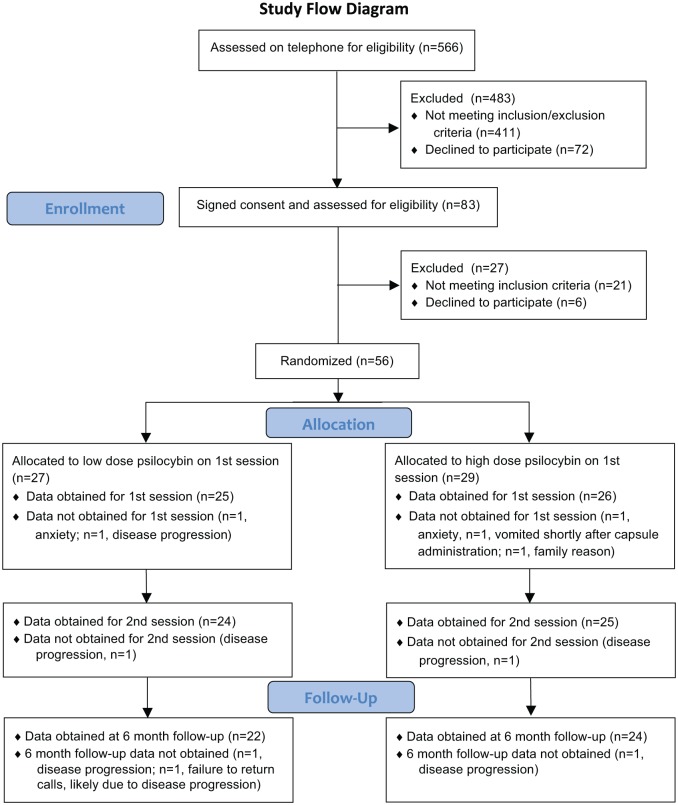
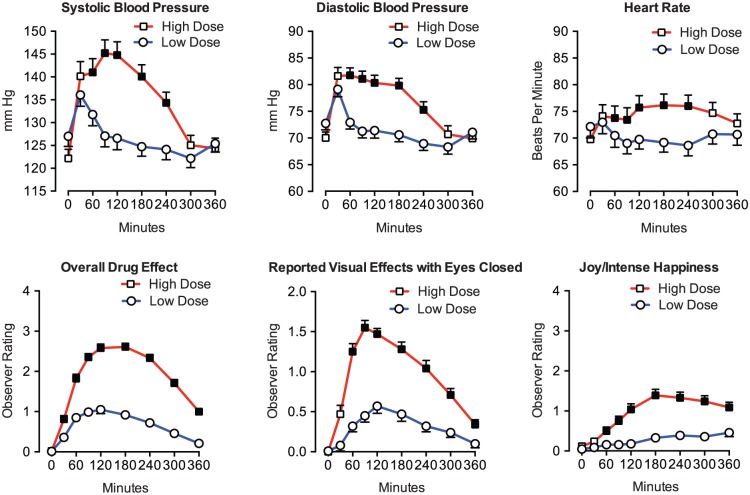
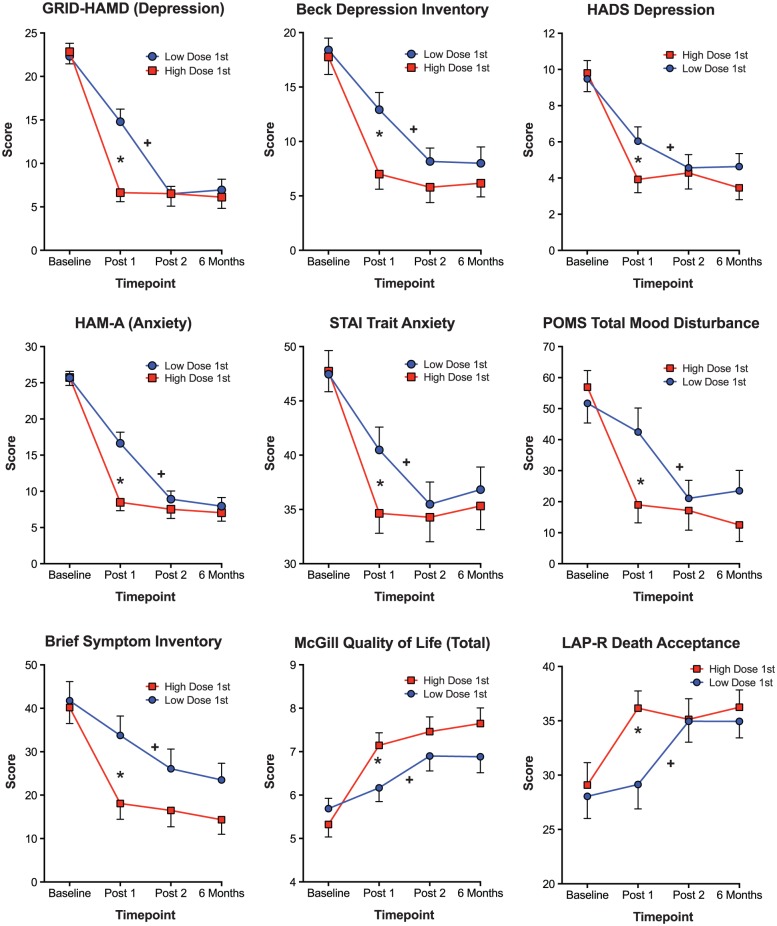
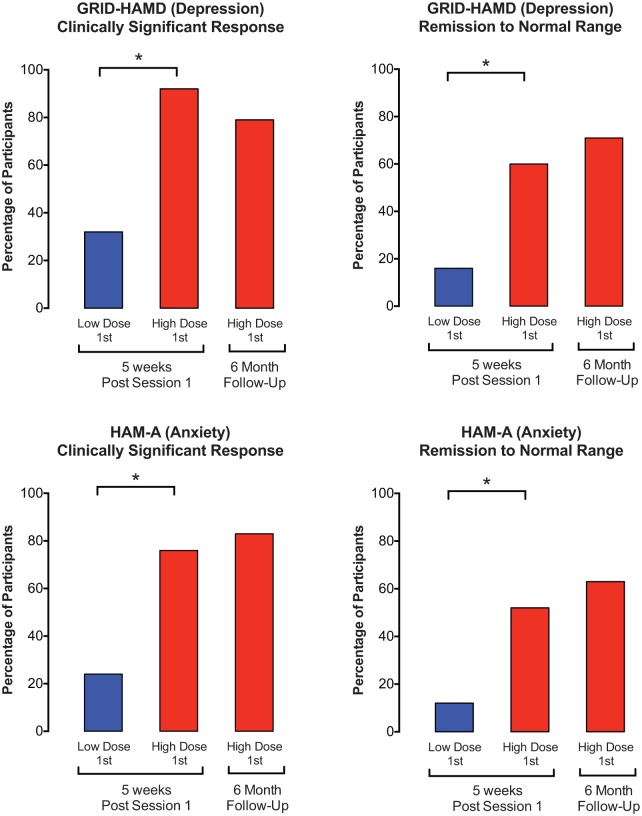
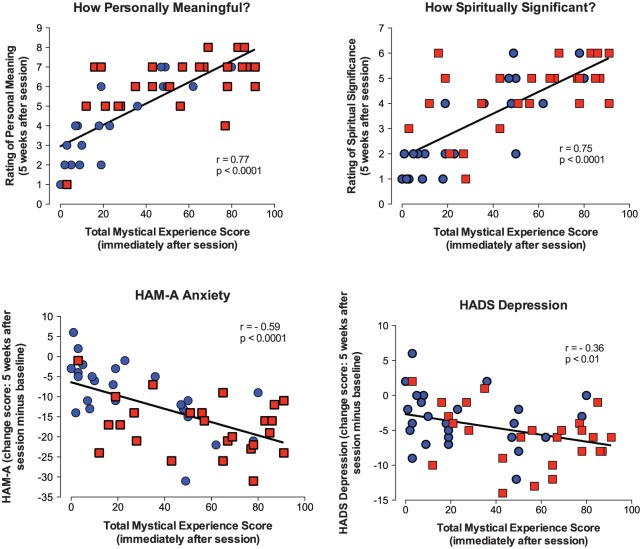
Cancer patients often develop chronic, clinically significant symptoms of depression and anxiety. Previous studies suggest that psilocybin may decrease depression and anxiety in cancer patients. The effects of psilocybin were studied in 51 cancer patients with life-threatening diagnoses and symptoms of depression and/or anxiety. This randomized, double-blind, cross-over trial investigated the effects of a very low (placebo-like) dose (1 or 3 mg/70 kg) vs. a high dose (22 or 30 mg/70 kg) of psilocybin administered in counterbalanced sequence with 5 weeks between sessions and a 6-month follow-up. Instructions to participants and staff minimized expectancy effects. Participants, staff, and community observers rated participant moods, attitudes, and behaviors throughout the study. High-dose psilocybin produced large decreases in clinician- and self-rated measures of depressed mood and anxiety, along with increases in quality of life, life meaning, and optimism, and decreases in death anxiety. At 6-month follow-up, these changes were sustained, with about 80% of participants continuing to show clinically significant decreases in depressed mood and anxiety. Participants attributed improvements in attitudes about life/self, mood, relationships, and spirituality to the high-dose experience, with >80% endorsing moderately or greater increased well-being/life satisfaction. Community observer ratings showed corresponding changes. Mystical-type psilocybin experience on session day mediated the effect of psilocybin dose on therapeutic outcomes. Trial Registration ClinicalTrials.gov identifier: NCT00465595
Overview
The claims and statistics of this paper haven’t been checked yet.
Free: it reads the open-access text and checks the first 5 claims that cite a source we can check. Create a free account to check every claim.
Integrity signals
Registry
Cites
Statistics
Figures
Verification
Claims the paper makes
The claims and statistics of this paper haven’t been checked yet.
Free: it reads the open-access text and checks the first 5 claims that cite a source we can check. Create a free account to check every claim.
Claims other papers make about this one
Each is checked against this paper’s own text: does it say what the citing paper says it does?
The cited source doesn’t support the claim as written.
In the citing paper
“In this study, groups of healthy participants were randomized into three groups, (1) low-dose psilocybin with standard support for spiritual practice (SS); (2) high-dose psilocybin with SS, and (3) high-dose psilocybin with High Support (HS) for spiritual practice.”
From Mindfulness meditation and psychedelics: potential synergies and commonalities (2023) · cites this paper as [6]
Checked by a reasoning model — may be wrong.
Experimental — accuracy not yet measuredThe source backs part of the claim, not all of it — or backs it for a different population, condition or comparison.
In the citing paper
“Griffiths et al. (2016)(n = 51) reported significantly larger response (92% versus 32%) and remission (60% versus 1%) on depression and anxiety (76% vs. 24%; 52% vs. 12%, respectively) in the high-dose group compared to active placebo after 5 weeks.”
From Psychedelics for the treatment of depression, anxiety, and existential distress in patients with a terminal illness: a systematic review (2022) · cites this paper as Griffiths et al., 2016
Experimental — accuracy not yet measuredThe source backs part of the claim, not all of it — or backs it for a different population, condition or comparison.
In the citing paper
“Most of this research has been carried out with the Revised Mystical Experience Questionnaire 30 (MEQ30), where a high score correlates with and has been suggested as a predictor of long-term positive therapeutic outcomes in various clinical and naturalistic studies of psychedelics.”
From Assessment of the acute subjective psychedelic experience: A review of patient-reported outcome measures in clinical research on classical psychedelics (2024) · cites this paper as Griffiths et al., 2016
Experimental — accuracy not yet measuredThe source backs part of the claim, not all of it — or backs it for a different population, condition or comparison.
In the citing paper
“Not only do they produce sustained therapeutic effects following a single administration, they also appear to have broad therapeutic potential”
From Psychedelics and Other Psychoplastogens for Treating Mental Illness. (2021) · cites this paper as [40]
Experimental — accuracy not yet measured
52 more claims about this paper
Create a free account to see every claim other papers make about this one.
Self-check
Percentages, sums and reported differences re-computed from the paper’s own numbers.
The self-check needs the paper’s full text.
Citations
Cites
The Hospital Anxiety and Depression Scale
Zigmond, A. S., & Snaith, R. P. (1983) · Acta Psychiatrica Scandinavica · doi:10.1111/j.1600-0447.1983.tb09716.x · Cited by 47,139
(2013) · Cited by 44,563
(1970) · Cited by 24,983
Depression and quality of life in older persons: A review
Sivertsen, H., Bjørkløf, G. H., Engedal, K., Selbæk, G., & Helvik, A.-S. (2015) · Dementia and Geriatric Cognitive Disorders · doi:10.1159/000437299 · Cited by 14,152
Optimism, coping, and health: Assessment and implications of generalized outcome expectancies.
Scheier, M. F., & Carver, C. S. (1985) · Health Psychology · doi:10.1037/0278-6133.4.3.219 · Cited by 6,690 · cited 2×
“…existence (existential subscale) during life-threatening illness (Cohen et al., 1995); LOT-R, self-rated optimism measure associated with illness (Scheier and Carver, 1985); LAP-R Death Acceptance, selfrated scale assessing absence of anxiety about death (Reker, 1992); Death Transcendence Scale,…”
BackgroundMethodMcNair, D. M. (1992) · Medical Entomology and Zoology · Cited by 2,692
Mitchell, A. J., Chan, M., Bhatti, H., Halton, M., Grassi, L., Johansen, C., & Meader, N. (2011) · The Lancet Oncology · doi:10.1016/s1470-2045(11)70002-x · Cited by 2,449 · cited 1×
“Cancer patients often develop a chronic, clinically significant syndrome of psychosocial distress having depressed mood, anxiety, and reduced quality of life as core features, with up to 40% of cancer patients meeting criteria for a mood disorder (Holland et al., 2013; Mitchell et al., 2011).”
BackgroundNichols, D. E. (2016) · Pharmacological Reviews · doi:10.1124/pr.115.011478 · Cited by 1,762 · cited 2×
“The classic hallucinogens, which include psilocybin (psilocin) and (+)-lysergic acid diethylamide (LSD), are a structurally diverse group of compounds that are 5-HT2A receptor agonists and produce a unique profile of changes in thoughts, perceptions, and emotions (Halberstadt, 2015; Nichols, 2016).”
BackgroundPeterman, A. H., Fitchett, G., Brady, M. J., Hernandez, L., & Cella, D. (2002) · Annals of Behavioral Medicine · doi:10.1207/s15324796abm2401_06 · Cited by 1,751 · cited 2×
“Three measures of spirituality were assessed at three time-points: Baseline, 5 weeks after session 2, and at the 6-month follow-up: FACIT-Sp, a self-rated measure of the spiritual dimension of quality of life in chronic illness (Peterman et al., 2002) assessed on how the participant felt “on average”; Spiritual-Religi…”
MethodGriffiths, R. R., Richards, W. A., McCann, U., & Jesse, R. (2006) · Psychopharmacology · doi:10.1007/s00213-006-0457-5 · Cited by 1,684 · cited 18×
“The structured interview (Community Observer Questionnaire) consisted of asking the rater to rate the participant’s behavior and attitudes using a 10-point scale (from 1 = not at all, to 10 = extremely) on 13 items reflecting healthy psychosocial functioning: inner peace; patience; good-natured humor/playfulness; ment…”
BackgroundMethodResultInfluentialSelf-citation
Research works printed but not linked: 7
- Beck AT Steer RA (1987) BDI Beck Depression Inventory Manual. San Antonio, San Diego, Orlando, New York, Chicago, Toronto: The Psychological Corporation Harcourt Brace Jovanovich, Inc.
- Benson PL Donahue MJ Erickson JA (1993) The Faith Maturity Scale: Conceptualization, measurement, and empirical validation. Res Soc Sci Stud Religion 5: 1– 26.
- ISCDD (2003) GRID-HAMD-17 Structured Interview Guide. San Diego, CA: International Society for CNS Drug Development.
- McIntosh DN (1999) Purpose in Life Test (Crumbaugh & Maholick, 1964). In: Hill PC Hood RW (eds) Measures of Religiosity. Birmingham, AL: Religious Education Press, pp. 503– 508.
- Metzner R Litwin G Weil G (1965) The relation of expectation and mood to psilocybin reactions: A questionnaire study. Psychedelic Rev 5: 3– 39.
- Reker GT (1992) The Life Attitude Profile-Revised (LAP-R). Peterborough, ON: Student Psychologists Press.
- VandeCreek L (1999) The Death Transcendence Scale (Hood & Morris, 1983). In: Hill PC Hood RW (eds) Measures of Religiosity. Birmingham, AL: Religious Education Press, pp. 442– 445.
Cited by
Items 201–300 of 1,018
Kangaslampi, S. (2023) · Journal of Psychedelic Studies · doi:10.1556/2054.2023.00243 · Cited by 124
Stroud, J. B., Freeman, T. P., Leech, R., Hindocha, C., Lawn, W., Nutt, D. J., Curran, H. V., & Carhart-Harris, R. L. (2018) · Psychopharmacology · doi:10.1007/s00213-017-4754-y · Cited by 101
Argento, E., Capler, R., Thomas, G., Lucas, P., & Tupper, K. W. (2019) · Drug and Alcohol Review · doi:10.1111/dar.12985 · Cited by 102
Therapeutic use of classic psychedelics to treat cancer-related psychiatric distress
Ross, S. (2018) · International Review of Psychiatry · doi:10.1080/09540261.2018.1482261 · Cited by 102
“Two of the trials demonstrated correlation and partial mediation between the psilocybin occasioned mystical experience and therapeutic outcomes (e.g. improvements in depression and anxiety) (Griffiths et al., 2016; Ross et al., 2016).”
InfluentialTherapeutic use of psilocybin: Practical considerations for dosing and administration
MacCallum, C. A., Lo, L. A., Pistawka, C. A., & Deol, J. K. (2022) · Frontiers in Psychiatry · doi:10.3389/fpsyt.2022.1040217 · Cited by 102
Martial, C., Cassol, H., Charland‐Verville, V., Pallavicini, C., Sanz, C., Zamberlán, F., Vivot, R. M., Erowid, F., Erowid, E., Laureys, S., et al. (2019) · Consciousness and Cognition · doi:10.1016/j.concog.2019.01.011 · Cited by 124
Williams, M. T., Davis, A. K., Xin, Y., Sepeda, N. D., Grigas, P. C., Sinnott, S., & Haeny, A. M. (2021) · Drugs: Education, Prevention and Policy · doi:10.1080/09687637.2020.1854688 · Cited by 101
“This scale has been used extensively in prior research and demonstrated excellent internal consistency reliability and predictive validity (Griffiths et al., 2011, 2016).”
BackgroundMethodMcCulloch, D. E.-W., Grzywacz, M. Z., Madsen, M. K., Jensen, P. S., Ozenne, B., Armand, S., Knudsen, G. M., Fisher, P. M., & Stenbæk, D. S. (2022) · Frontiers in Pharmacology · doi:10.3389/fphar.2022.841648 · Cited by 126
Kadriu, B., Greenwald, M., Henter, I. D., Gilbert, J. R., Kraus, C., Park, L. T., & Zarate, C. A. (2021) · International Journal of Neuropsychopharmacology · doi:10.1093/ijnp/pyaa087 · Cited by 99
Neuroticism is associated with challenging experiences with psilocybin mushrooms
Barrett, F. S., Johnson, M. W., & Griffiths, R. R. (2017) · Personality and Individual Differences · doi:10.1016/j.paid.2017.06.004 · Cited by 98
Self-citationHoefgen, S., Lin, J., Fricke, J., Stroe, M. C., Mattern, D. J., Kufs, J. E., Hortschansky, P., Brakhage, A. A., Hoffmeister, D., & Valiante, V. (2018) · Metabolic Engineering · doi:10.1016/j.ymben.2018.05.014 · Cited by 98
Acute Adverse Effects of Therapeutic Doses of Psilocybin: A Systematic Review and Meta-Analysis
Yerubandi, A., Thomas, J. E., Bhuiya, N. M. M. A., Harrington, C. A., Zapata, L. V., & Caballero, J. (2024) · JAMA Network Open · doi:10.1001/jamanetworkopen.2024.5960 · Cited by 125
Rothberg, R. L., Azhari, N., Haug, N. A., & Dakwar, E. (2021) · Journal of Psychopharmacology · doi:10.1177/0269881120970879 · Cited by 97
“…ketamine-occa-sioned mystical-type experience in cocaine-dependent research volunteers engaged in human laboratory studies, as well as on studies investigating psilocybin for end-of-life anxiety and tobacco dependence (Dakwar et al., 2014b, 2018; Garcia-Romeu et al., 2014; Griffiths et al., 2016).”
BackgroundSet and setting: a randomized study of different musical genres in supporting psychedelic therapy
Strickland, J. C., Garcia-Romeu, A., & Johnson, M. W. (2021) · ACS Pharmacology & Translational Science · doi:10.1021/acsptsci.0c00187 · Cited by 97
Garcia-Romeu, A., Barrett, F. S., Carbonaro, T. M., Johnson, M. W., & Griffiths, R. R. (2021) · Journal of Psychopharmacology · doi:10.1177/0269881121991822 · Cited by 96
“…seeking to quit smoking (Johnson et al., 2014, 2017), patients with a life-threatening cancer diagnosis and symptoms of anxiety or depression (Griffiths et al., 2016), novice meditators (Griffiths et al., 2018), meditation practitioners with a long-term daily practice (clinicaltrials.gov:…”
BackgroundMethodInfluentialSelf-citationDoes Psychedelic Therapy Have a Transdiagnostic Action and Prophylactic Potential?
Kočárová, R., Horáček, J., & Carhart-Harris, R. (2021) · Frontiers in Psychiatry · doi:10.3389/fpsyt.2021.661233 · Cited by 96
Chi, T., & Gold, J. A. (2020) · Journal of the Neurological Sciences · doi:10.1016/j.jns.2020.116715 · Cited by 95
The acute effects of classic psychedelics on memory in humans
Healy, C. J. (2021) · Psychopharmacology · doi:10.1007/s00213-020-05756-w · Cited by 108
Van Court, R. C., Wiseman, M. S., Meyer, K. W., Ballhorn, D. J., Amses, K. R., Slot, J. C., Dentinger, B. T. M., Garibay-Orijel, R., & Uehling, J. K. (2022) · Fungal Biology · doi:10.1016/j.funbio.2022.01.003 · Cited by 94
Greenway, K. T., Garel, N., Jerome, L., & Feduccia, A. A. (2020) · Expert Review of Clinical Pharmacology · doi:10.1080/17512433.2020.1772054 · Cited by 94
“psychotherapy in 2006 for OCD [208], promising results have been published for applications in end of life anxiety [148,187,209], smoking cessation [210], treatment-resistant depression [211], as well as to initiate meditation/spiritual”
BackgroundHadar, A. A., David, J., Shalit, N., Roseman, L., Gross, R., Sessa, B., & Lev‐Ran, S. (2022) · Journal of Psychoactive Drugs · doi:10.1080/02791072.2021.2022254 · Cited by 115
Hendricks, P. S., Crawford, M. S., Cropsey, K. L., Copes, H., Sweat, N. W., Walsh, Z., & Pavela, G. (2018) · Journal of Psychopharmacology · doi:10.1177/0269881117735685 · Cited by 93
Dose–response relationships of psilocybin-induced subjective experiences in humans
Hirschfeld, T., & Schmidt, T. T. (2021) · Journal of Psychopharmacology · doi:10.1177/0269881121992676 · Cited by 93
“…2015), the sensitivity analyses produced robust effect size estimates for different values of p. Additional meta-analysis including patient data In the additional analysis, we included the available patient data on the 5D-ASC (Bogenschutz et al., 2015; Griffiths et al., 2016; Grob et al., 2011;)”
BackgroundMethodResultInfluentialSystematized Review of Psychotherapeutic Components of Psilocybin-Assisted Psychotherapy
Horton, D. M., Morrison, B., & Schmidt, J. (2021) · American Journal of Psychotherapy · doi:10.1176/appi.psychotherapy.20200055 · Cited by 93
Nayak, S. M., Jackson, H., Sepeda, N. D., Mathai, D. S., So, S., Yaffe, A., Zaki, H., Brasher, T. J., Lowe, M. X., Jolly, D. R. P., et al. (2023) · Frontiers in Psychiatry · doi:10.3389/fpsyt.2023.1199642 · Cited by 112
“However, significant and persisting increases in spiritual wellbeing after psilocybin use were observed in the present study, consistent with clinical trials administering high-dose psilocybin to cancer patients with anxiety and depressed mood (9, 11).”
BackgroundResultInfluentialSelf-citationEfficacy of psilocybin for treating symptoms of depression: systematic review and meta-analysis
Metaxa, A.-M., & Clarke, M. J. (2024) · BMJ · doi:10.1136/bmj-2023-078084 · Cited by 121
“…interventions; many studies failed to clearly describe the type of psychological support participants received, and others used methods ranging from directive guidance throughout the treatment session to passive encouragement or reassurance (eg, Griffiths et al, 14 Carhart-Harris et al 63 ).”
BackgroundMethodResultInfluentialDreams and Psychedelics: Neurophenomenological Comparison and Therapeutic Implications
Kraehenmann, R. (2017) · Current Neuropharmacology · doi:10.2174/1573413713666170619092629 · Cited by 92
The 21st century psychedelic renaissance: heroic steps forward on the back of an elephant
Sessa, B. (2017) · Psychopharmacology · doi:10.1007/s00213-017-4713-7 · Cited by 106
Gregorio, D. D., Enns, J. P., Núñez, N. A., Posa, L., & Gobbi, G. (2018) · Progress in brain research · doi:10.1016/bs.pbr.2018.07.008 · Cited by 105
Livne, O., Shmulewitz, D., Walsh, C. A., & Hasin, D. S. (2022) · Addiction · doi:10.1111/add.15987 · Cited by 107
Brennan, W., & Belser, A. B. (2022) · Frontiers in Psychology · doi:10.3389/fpsyg.2022.866018 · Cited by 90
“, 2014), decreases in cancer-related depression and anxiety (Griffiths et al., 2016; Ross et al., 2016), greater success in nicotine cessation (Johnson et al.”
Backgrounddos Santos, R. G., Osório, F. D. L., Rocha, J. M., Rossi, G. N., Bouso, J. C., Rodrigues, L. S., de Oliveira Silveira, G., Yonamine, M., & Hallak, J. E. C. (2021) · Journal of Clinical Psychopharmacology · doi:10.1097/jcp.0000000000001428 · Cited by 90
Tai, S. J., Nielson, E. M., Lennard-Jones, M., Johanna Ajantaival, R.-L., Winzer, R., Richards, W. A., Reinholdt, F., Richards, B. D., Gasser, P., & Malievskaia, E. (2021) · Frontiers in Psychiatry · doi:10.3389/fpsyt.2021.586682 · Cited by 90
Self-citationBelief changes associated with psychedelic use
Nayak, S. M., Singh, M., Yaden, D. B., & Griffiths, R. R. (2022) · Journal of Psychopharmacology · doi:10.1177/02698811221131989 · Cited by 105
“…that psilocybin induces acute mystical-type experiences as well as enduring increases on a spirituality scale that assessed a broad sense of meaning and connectedness to humanity, life, and the God of their understanding/ultimate reality (Davis et al., 2021; Griffiths et al., 2011, 2016).”
BackgroundSelf-citationLeonard, J. B., Anderson, B., & Klein-Schwartz, W. (2018) · Journal of Psychopharmacology · doi:10.1177/0269881118793086 · Cited by 88
Psychedelics and health behaviour change
Teixeira, P. J., Johnson, M. W., Timmermann, C., Watts, R., Erritzoe, D., Douglass, H., Kettner, H., & Carhart-Harris, R. L. (2022) · Journal of Psychopharmacology · doi:10.1177/02698811211008554 · Cited by 87
“A similar pattern was observed in the study of psilocybin for depression in cancer patients, from the same research group (Griffiths et al., 2016).”
BackgroundResultSelf-citationPsilocybin‐assisted group therapy in patients with cancer diagnosed with a major depressive disorder
Agrawal, M., Richards, W., Beaussant, Y., Shnayder, S., Ameli, R., Roddy, K., Stevens, N., Richards, B., Schor, N., Honstein, H., et al. (2024) · Cancer · doi:10.1002/cncr.35010 · Cited by 88
Self-citationPerez, N., Langlest, F., Mallet, L., De Pieri, M., Sentissi, O., Thorens, G., Seragnoli, F., Zullino, D., Kirschner, M., Kaiser, S., et al. (2023) · European Neuropsychopharmacology · doi:10.1016/j.euroneuro.2023.07.011 · Cited by 88
Bender, D., & Hellerstein, D. J. (2022) · Psychopharmacology · doi:10.1007/s00213-021-06049-6 · Cited by 88
The role of Indigenous knowledges in psychedelic science
Fotiou, E. (2019) · Journal of Psychedelic Studies · doi:10.1556/2054.2019.031 · Cited by 104
“What complicates things further is that healing – as in alleviation of suffering – can happen without curing a disease, and at least one study on psilocybin with cancer patients demonstrates this (Griffiths et al., 2016).”
BackgroundGregorio, D. D., Inserra, A., Enns, J. P., Markopoulos, A., Pileggi, M., Rahimy, Y. E., López-Canul, M., Comai, S., & Gobbi, G. (2022) · Neuropsychopharmacology · doi:10.1038/s41386-022-01301-9 · Cited by 103
“Indeed, studies on patients experiencing anxiety and distress associated with a terminal disease reported rapid and sustained improvements in anxiety scores, for up to six months following one or two administrations of LSD [9] or other psychedelics such as psilocybin [40, 41].”
BackgroundAcute psilocybin enhances cognitive flexibility in rats
Torrado Pacheco, A., Olson, R. J., Garza, G., & Moghaddam, B. (2023) · Neuropsychopharmacology · doi:10.1038/s41386-023-01545-z · Cited by 87
The impact of Ayahuasca on suicidality: results from a randomized controlled trial
Zeifman, R. J., Palhano-Fontes, F., Hallak, J., Arcoverde, E., Maia-Oliveira, J. P., & Araujo, D. B. (2019) · Frontiers in Pharmacology · doi:10.3389/fphar.2019.01325 · Cited by 87
“…line with past research indicating that ayahuasca (e.g., Sampedro et al., 2017; Sanches et al., 2016; Palhano-Fontes et al., 2019); and psilocybin (e.g., Griffiths et al., 2016; Ross et al., 2016; Carhart-Harris et al., 2018) lead to mental health improvements that last beyond their acute effects.”
BackgroundResultPsychedelics and music: neuroscience and therapeutic implications
Barrett, F. S., Preller, K. H., & Kaelen, M. (2018) · International Review of Psychiatry · doi:10.1080/09540261.2018.1484342 · Cited by 86
“…as well as single-blind (e.g. Kaelen et al., 2015, 2017) or double-blind randomized conditions (e.g. Barrett et al., 2017a; Carbonaro et al., 2018; Griffiths et al., 2016; Preller et al., 2017; Ross et al., 2016), some of the reports cited in this review involved multiple analyses of data from…”
BackgroundInfluentialThe Past and Future of Psychedelic Science: An Introduction to This Issue
Doblin, R. E., Christiansen, M., Jerome, L., & Burge, B. (2019) · Journal of Psychoactive Drugs · doi:10.1080/02791072.2019.1606472 · Cited by 87
“Coupled with a supportive therapeutic environment, psilocybin has been shown to decrease symptoms of anxiety and depression that often accompany a lifethreatening diagnosis, with promising results (Griffiths et al. 2016).”
BackgroundHeuschkel, K., & Kuypers, K. P. C. (2020) · Frontiers in Psychiatry · doi:10.3389/fpsyt.2020.00224 · Cited by 86
Psychedelics and Neural Plasticity: Therapeutic Implications
Grieco, S. F., Castrén, E., Knudsen, G. M., Kwan, A. C., Olson, D. E., Zuo, Y., Holmes, T. C., & Xu, X. (2022) · The Journal of Neuroscience · doi:10.1523/jneurosci.1121-22.2022 · Cited by 82
“The strength of mystical experience also correlates with therapeutic effects in cigarette smoking cessation (Garcia-Romeu et al., 2014) and with diminished anxiety and depression in terminal cancer patients (Griffiths et al., 2016; Ross et al., 2016; Barrett et al., 2020).”
A narrative synthesis of research with 5-MeO-DMT
Ermakova, A. O., Dunbar, F., Rucker, J., & Johnson, M. W. (2022) · Journal of Psychopharmacology · doi:10.1177/02698811211050543 · Cited by 86
“…trials assessing psilocybin-assisted psychotherapy have been reported in unipolar mood disorders and anxiety (Carhart-Harris et al., 2016, 2018; Griffiths et al., 2016; Grob et al., 2011; Ross et al., 2016) and substance use disorders (Bogenschutz et al., 2015, 2018; Johnson et al., 2014;…”
BackgroundSelf-citationDark Classics in Chemical Neuroscience: Mescaline
Cassels, B. K., & Sáez-Briones, P. (2018) · ACS Chemical Neuroscience · doi:10.1021/acschemneuro.8b00215 · Cited by 85
Dakwar, E., Nunes, E. V., Hart, C. L., Hu, M. C., Foltin, R. W., & Levin, F. R. (2018) · Neuropharmacology · doi:10.1016/j.neuropharm.2018.01.005 · Cited by 85
Kiraga, M. K., Mason, N. L., Uthaug, M. V., van Oorsouw, K. I. M., Toennes, S. W., Ramaekers, J. G., & Kuypers, K. P. C. (2021) · Frontiers in Pharmacology · doi:10.3389/fphar.2021.721537 · Cited by 85
Acute subjective effects in LSD- and MDMA-assisted psychotherapy
Schmid, Y., Gasser, P., Oehen, P., & Liechti, M. E. (2021) · Journal of Psychopharmacology · doi:10.1177/0269881120959604 · Cited by 85
“…2017; Osorio et al., 2015), improve anxiety and depressive symptoms associated with life-threatening somatic diseases (Gasser et al., 2014, 2015; Griffiths et al., 2016; Grob et al., 2011; Ross et al., 2016), may decrease symptoms of obsessivecompulsive disorder (OCD) (Moreno et al., 2006), and…”
BackgroundNeural Mechanisms and Psychology of Psychedelic Ego Dissolution
Stoliker, D., Egan, G. F., Friston, K. J., & Razi, A. (2022) · Pharmacological Reviews · doi:10.1124/pharmrev.121.000508 · Cited by 81
Therapeutic Applications of Classic Hallucinogens
Bogenschutz, M. P., & Ross, S. (2016) · Current topics in behavioral neurosciences · doi:10.1007/7854_2016_464 · Cited by 112
An analog of psychedelics restores functional neural circuits disrupted by unpredictable stress
Lu, J., Tjia, M., Mullen, B., Cao, B., Lukasiewicz, K., Shah-Morales, S., Weiser, S., Cameron, L. P., Olson, D. E., Chen, L., et al. (2021) · Molecular Psychiatry · doi:10.1038/s41380-021-01159-1 · Cited by 84
“Such interest revived after a three-decade hiatus due to restrictive regulations, leading to a plethora of clinical studies testing psychedelics’ therapeutic values in diseases including obsessive compulsive disorder [27], anxiety [28, 29], depression [30–32], and substance abuse [33, 34], with encouraging efficacy ou…”
BackgroundHigh dose psilocybin is associated with positive subjective effects in healthy volunteers
Nicholas, C. R., Henriquez, K. M., Gassman, M. C., Cooper, K. M., Muller, D., Hetzel, S., Brown, R. T., Cozzi, N. V., Thomas, C., & Hutson, P. R. (2018) · Journal of Psychopharmacology · doi:10.1177/0269881118780713 · Cited by 83
“…positive effects have been observed in clinical studies showing a decrease in depressive and anxiety symptoms (Carhart-Harris, et al., 2016; Griffiths et al., 2016; Grob et al., 2011; Ross et al., 2016) and abstinence from addictive substances (Bogenschutz et al., 2015; Johnson et al.,…”
McCulloch, D. E.-W., Madsen, M. K., Stenbæk, D. S., Kristiansen, S., Ozenne, B., Jensen, P. S., Knudsen, G. M., & Fisher, P. M. (2022) · Journal of Psychopharmacology · doi:10.1177/02698811211026454 · Cited by 83
“…depression (Carhart-Harris et al., 2018), obsessive-compulsive disorder (Moreno et al., 2006), terminal cancer-associated anxiety (Griffiths et al., 2016), demoralisation (Anderson et al., 2020), as well as smoking (Johnson et al., 2017) and alcohol addiction (Garcia-Romeu et…”
Levin, A. W., Lancelotta, R., Sepeda, N. D., Gukasyan, N., Nayak, S., Wagener, T. L., Barrett, F. S., Griffiths, R. R., & Davis, A. K. (2024) · PLoS ONE · doi:10.1371/journal.pone.0300501 · Cited by 82
“Psychedelic-assisted therapy (PAT) is a therapeutic intervention which has shown promise in the treatment of a wide range of psychiatric disorders, including depression [1–4], post-traumatic stress disorder (PTSD) [5], addiction [6,7], and end-of-life anxiety and depression [8].”
BackgroundKozłowska, U., Nichols, C. D., Wiatr, K., & Figiel, M. (2021) · Journal of Neurochemistry · doi:10.1111/jnc.15509 · Cited by 89
“Two groundbreaking studies demonstrated psilocybin improves well- being of cancer patients when used together with psychotherapy (Griffiths et al., 2016; Ross et al. et al., 2016).”
BackgroundLower-dose psycholytic therapy – A neglected approach
Passie, T., Guss, J., & Krähenmann, R. (2022) · Frontiers in Psychiatry · doi:10.3389/fpsyt.2022.1020505 · Cited by 81
Hutten, N. R. P. W., Mason, N. L., Dolder, P. C., & Kuypers, K. P. C. (2019) · Frontiers in Psychiatry · doi:10.3389/fpsyt.2019.00672 · Cited by 77
“Specifically, clinical trials assessing the efficacy of full, regular doses of psychedelics on treatment resistant depression (28) and end of life depression and anxiety (13, 29, 30) have found an association between the acute quality of the experience (including occurrence of profound psychological ‘peak’ or ‘mystica…”
BackgroundBarsuglia, J., Davis, A. K., Palmer, R., Lancelotta, R., Windham-Herman, A.-M., Peterson, K., Polanco, M., Grant, R., & Griffiths, R. R. (2018) · Frontiers in Psychology · doi:10.3389/fpsyg.2018.02459 · Cited by 79
Self-citationPsilocybin and MDMA for the treatment of trauma-related psychopathology
Bird, C. I. V., Modlin, N. L., & Rucker, J. J. H. (2021) · International Review of Psychiatry · doi:10.1080/09540261.2021.1919062 · Cited by 80
“Some studies have employed the use of an active control (e.g. niacin, methylphenidate or low dose psychedelics (Griffiths et al., 2016; Ross et al., 2016)).”
BackgroundRaison, C. L., Jain, R., Penn, A., Cole, S. P., & Jain, S. (2022) · Frontiers in Psychiatry · doi:10.3389/fpsyt.2022.831092 · Cited by 100
Schindler, E. A. D., Sewell, R. A., Gottschalk, C. H., Luddy, C., Flynn, L. T., Zhu, Y., Lindsey, H. M., Pittman, B. P., Cozzi, N. V., & D’Souza, D. C. (2022) · Headache The Journal of Head and Face Pain · doi:10.1111/head.14420 · Cited by 94
5-HT2A receptors: Pharmacology and functional selectivity
Cummins, B. R., Billac, G. B., Nichols, D. E., & Nichols, C. D. (2025) · Pharmacological Reviews · doi:10.1016/j.pharmr.2025.100059 · Cited by 86
“Results from clinical trials have demonstrated rapid and sustained antidepressant effects in individuals with either major depressive disorder or treatment-resistant depression (Carhart-Harris et al, 2016; Grif fi ths et al, 2016; Palhano-Fontes et al, 2019).”
Combining Psychedelic and Mindfulness Interventions: Synergies to Inform Clinical Practice
Payne, J. E., Chambers, R., & Liknaitzky, P. (2021) · ACS Pharmacology & Translational Science · doi:10.1021/acsptsci.1c00034 · Cited by 78
Morton, E., Sakai, K., Ashtari, A., Pleet, M., Michalak, E. E., & Woolley, J. (2023) · Journal of Psychopharmacology · doi:10.1177/02698811221131997 · Cited by 78
“…Davis et al., 2021a,b; Gukasyan et al., 2022), substance use disorders (Bogenschutz and Johnson, 2016; Johnson et al., 2014) and depression and anxiety secondary to a serious medical illness like cancer (Griffiths et al., 2016; Grob et al., 2011; Ross et al., 2016) and HIV (Anderson et al., 2020).”
BackgroundStenbæk, D. S., Madsen, M. K., Ozenne, B., Kristiansen, S., Burmester, D., Erritzoe, D., Knudsen, G. M., & Fisher, P. M. (2021) · Journal of Psychopharmacology · doi:10.1177/0269881120959609 · Cited by 78
“…for, for example, major depression (Carhart-Harris et al., 2016, 2018), obsessive compulsive disorder (Moreno et al., 2006), anxiety and depression associated with life-threatening cancer (Griffiths et al., 2016; Ross et al., 2016) and addiction (Bogenschutz et al., 2015; Johnson et al., 2014).”
BackgroundLea, T., Amada, N. M., Jungaberle, H., Schecke, H., Scherbaum, N., & Klein, M. (2020) · Psychopharmacology · doi:10.1007/s00213-020-05477-0 · Cited by 93
Duan, W., Cao, D., Wang, S., & Cheng, J. (2023) · Chemical Reviews · doi:10.1021/acs.chemrev.3c00375 · Cited by 85
Thrul, J., & Garcia‐Romeu, A. (2021) · Drugs Education Prevention and Policy · doi:10.1080/09687637.2021.1897331 · Cited by 92
“…benefits of psilocybin-assisted treatment in major depression (Carhart-Harris et al., 2016; Davis et al., 2020), alcohol and tobacco dependence (Bogenschutz et al., 2015; Johnson et al., 2014), and cancerrelated existential distress (Griffiths et al., 2016; Grob et al., 2011; Ross et al., 2016).”
BackgroundMore Realistic Forecasting of Future Life Events After Psilocybin for Treatment-Resistant Depression
Lyons, T., & Carhart-Harris, R. L. (2018) · Frontiers in Psychology · doi:10.3389/fpsyg.2018.01721 · Cited by 77
“Randomized controlled trials (RCTs) have demonstrated that psilocybin can rapidly alleviate depression and anxiety in patients with life-threatening cancer, with sustained effects for 6 months (Griffiths et al., 2016; Ross et al., 2016).”
BackgroundResultInfluentialRomeo, B., Hermand, M., Pétillion, A., Karila, L., & Benyamina, A. (2021) · Journal of Psychiatric Research · doi:10.1016/j.jpsychires.2021.03.002 · Cited by 76
Microdosing psychedelics: Demographics, practices, and psychiatric comorbidities
Rosenbaum, D., Weissman, C., Anderson, T., Petranker, R., Dinh-Williams, L.-A., Hui, K., & Hapke, E. (2020) · Journal of Psychopharmacology · doi:10.1177/0269881120908004 · Cited by 76
“Furthermore, 24% of participants rated the low-dose session as one of the top five most meaningful experiences of their life, and 24% also rated the session as one of the top five most spiritually significant experiences of their life (Griffiths et al., 2016).”
BackgroundMethodInfluentialThe influence of ketamine on drug discovery in depression
Kraus, C., Wasserman, D., Henter, I. D., Acevedo-Diaz, E., Kadriu, B., & Zarate, C. A. (2019) · Drug Discovery Today · doi:10.1016/j.drudis.2019.07.007 · Cited by 75
Study Protocol for “Psilocybin as a Treatment for Anorexia Nervosa: A Pilot Study”
Spriggs, M. J., Douglass, H. M., Park, R. J., Read, T., Danby, J. L., de Magalhães, F. J. C., Alderton, K. L., Williams, T. M., Blemings, A., Lafrance, A., et al. (2021) · Frontiers in Psychiatry · doi:10.3389/fpsyt.2021.735523 · Cited by 75
Moreton, S. G., Szalla, L., Menzies, R. E., & Arena, A. F. A. (2019) · Psychopharmacology · doi:10.1007/s00213-019-05391-0 · Cited by 93
“As an existential-humanistic perspective would predict, effects of psychedelics on connectedness, meaning, and death transcendence have been found to coincide with improvements in psychological wellbeing (e.g. Griffiths et al. 2016; Griffiths et al. 2011).”
BackgroundResultWitkin, J. M., Martin, A. E., Golani, L. K., Xu, N. Z., & Smith, J. L. (2019) · Advances in Pharmacology · doi:10.1016/bs.apha.2019.03.002 · Cited by 72
Psilocybin-Assisted Therapy: A Review of a Novel Treatment for Psychiatric Disorders
Thomas, K., Malcolm, B., & Lastra, D. (2017) · Journal of Psychoactive Drugs · doi:10.1080/02791072.2017.1320734 · Cited by 75
“…studies, reductions on the HAD-A, HAM-A, Y-BOCS, and STAI-T have ranged from ~6–30 points, while response/remission rates (defined by the HAD-A and HAM-A scores) have been ~3–4- fold higher after psilocybin sessions (Griffiths et al. 2016; Grob et al. 2011; Moreno et al. 2006; Ross et al. 2016).”
BackgroundMethodInfluentialModulation of Social Cognition via Hallucinogens and “Entactogens”
Preller, K. H., & Vollenweider, F. X. (2019) · Frontiers in Psychiatry · doi:10.3389/fpsyt.2019.00881 · Cited by 71
The therapeutic potential of psilocybin: a systematic review
van Amsterdam, J., & van den Brink, W. (2022) · Expert Opinion on Drug Safety · doi:10.1080/14740338.2022.2047929 · Cited by 74
Neural and subjective effects of inhaled N,N-dimethyltryptamine in natural settings
Pallavicini, C., Cavanna, F., Zamberlán, F., de la Fuente, L. A., Ilksoy, Y. A., Perl, Y. S., Arias, M., Romero, C., Carhart-Harris, R. L., Timmermann, C., et al. (2021) · Journal of Psychopharmacology · doi:10.1177/0269881120981384 · Cited by 100
“…with positive outcomes in therapeutic applications of psilocybin, occur with dose-dependent frequency, and are usually placed by research participants among the most meaningful experiences of their lives, even decades after the event (GarciaRomeu et al., 2014; Griffiths et al., 2008, 2011, 2016).”
BackgroundNayak, S. M., Gukasyan, N., Barrett, F. S., Erowid, E., Erowid, F., & Griffiths, R. R. (2021) · Pharmacopsychiatry · doi:10.1055/a-1524-2794 · Cited by 74
“After more than 6 decades of research into and popular use of classic psychedelics (defined here as a class of drugs that produce a unique profile of subjective effects and have a principal site of action at the 5HT2A receptor, such as LSD or psilocybin), recent promising trials investigating the effects of psilocybin…”
BackgroundSelf-citationMurray, C. H., Tare, I., Perry, C., Malina, M., Lee, R., & de Wit, H. (2021) · Psychopharmacology · doi:10.1007/s00213-021-05991-9 · Cited by 90
Psilocybin in neuropsychiatry: a review of its pharmacology, safety, and efficacy
Dodd, S., Norman, T. R., Eyre, H. A., Stahl, S. M., Phillips, A., Carvalho, A. F., & Berk, M. (2023) · CNS Spectrums · doi:10.1017/s1092852922000888 · Cited by 73
“High dose first was superior to low dose first following the first treatment session and second dose was superior to first dose for low dose first following the second treatment session for measures of depression (Hamilton Rating Scale for Depression [HAMD], BDI, HADS) and anxiety (Hamilton Rating Scale for Anxiety [H…”
Psychedelics as an emerging novel intervention in the treatment of substance use disorder: a review
Divito, A. J., & Leger, R. F. (2020) · Molecular Biology Reports · doi:10.1007/s11033-020-06009-x · Cited by 87
Matisz, C. E., & Gruber, A. J. (2021) · Neuroscience & Biobehavioral Reviews · doi:10.1016/j.neubiorev.2021.12.020 · Cited by 74
Nayak, S. M., & Griffiths, R. R. (2022) · Frontiers in Psychology · doi:10.3389/fpsyg.2022.852248 · Cited by 73
“Previous research has shown that mystical experience scores on the day of psilocybin administration predicts subsequent therapeutic and other desirable outcomes (Griffiths et al., 2006, 2016, 2018).”
BackgroundSelf-citationOehen, P., & Gasser, P. (2022) · Frontiers in Psychiatry · doi:10.3389/fpsyt.2022.863552 · Cited by 73
“Trauma-related disorders: PTSD/c-PTSD/Dissociative Disorder - with comorbid depression - with comorbid borderline personality traits - with comorbid personality disorder 6 (23%) - (5) - (1) - (1) 15 (63%) - (7) - (3) - (0) 21 (46%) - (12) - (4) - (1)”
Antidepressant effects of a psychedelic experience in a large prospective naturalistic sample
Nygart, V. A., Pommerencke, L. M., Haijen, E., Kettner, H., Kaelen, M., Mortensen, E. L., Nutt, D. J., Carhart-Harris, R. L., & Erritzoe, D. (2022) · Journal of Psychopharmacology · doi:10.1177/02698811221101061 · Cited by 73
“Notably, improvements in symptom severity have been observed several months after just one or two isolated doses of the drug (Carhart-Harris et al., 2017, 2021a; Davis et al., 2021a; Gasser et al., 2014; Griffiths et al., 2016; Grob et al., 2011).”
BackgroundResultInfluentialAntidepressants for the treatment of depression in people with cancer
Vita, G., Compri, B., Matcham, F., Barbui, C., & Ostuzzi, G. (2023) · Cochrane Database of Systematic Reviews · doi:10.1002/14651858.cd011006.pub4 · Cited by 73
Li, N.-X., Hu, Y.-R., Chen, W.-N., & Zhang, B. (2022) · Journal of Affective Disorders · doi:10.1016/j.jad.2021.09.041 · Cited by 72
Sumner, R. L., Chacko, E., McMillan, R., Spriggs, M. J., Anderson, C., Chen, J., French, A., Jung, S., Rajan, A., Malpas, G., et al. (2021) · Journal of Psychopharmacology · doi:10.1177/0269881121998321 · Cited by 72
“…of the lasting changes in perspective or perception of oneself or one’s depression after taking just a single dose of these drugs, both in consideration of and beyond alleviation of the symptoms of depression (Griffiths et al., 2016; Majić et al., 2015; Roseman et al., 2018; Watts et al., 2017).”
BackgroundTulver, K., Kaup, K., Laukkonen, R., & Aru, J. (2023) · Consciousness and Cognition · doi:10.1016/j.concog.2023.103494 · Cited by 99
Psychedelics and psychotherapy
Nayak, S., & Johnson, M. W. (2021) · Pharmacopsychiatry · doi:10.1055/a-1312-7297 · Cited by 71
Therapeutic mechanisms of psychedelics and entactogens
Heifets, B. D., & Olson, D. E. (2023) · Neuropsychopharmacology · doi:10.1038/s41386-023-01666-5 · Cited by 80
Higgins, G. A., Carroll, N. K., Brown, M., MacMillan, C., Silenieks, L. B., Thevarkunnel, S., Izhakova, J., Magomedova, L., DeLannoy, I., & Sellers, E. M. (2021) · Frontiers in Pharmacology · doi:10.3389/fphar.2021.640241 · Cited by 69
“, 2016) and also in patients with life-threatening cancer (Griffiths et al., 2016; Ross et al., 2016).”
BackgroundHOPE: A Pilot Study of Psilocybin Enhanced Group Psychotherapy in Patients With Cancer
Lewis, B. R., Garland, E. L., Byrne, K., Durns, T. A., Hendrick, J., Beck, A. C., & Thielking, P. D. (2023) · Journal of Pain and Symptom Management · doi:10.1016/j.jpainsymman.2023.06.006 · Cited by 80
Psychedelic therapy's transdiagnostic effects: A research domain criteria (RDoC) perspective
Kelly, J. R., Gillan, C. M., Prenderville, J., Kelly, C., Harkin, A., Clarke, G., & O'Keane, V. (2021) · Frontiers in Psychiatry · doi:10.3389/fpsyt.2021.800072 · Cited by 69
“Mystical-type psilocybin experience on session day mediated therapeutic effect of psilocybin (81)”
Background
Metadata
- Authors
- Griffiths, R. R., Johnson, M. W., Carducci, M. A., Umbricht, A., Richards, W. A., Richards, B. D., Cosimano, M. P., & Klinedinst, M. A.
- Affiliations
- Johns Hopkins University (US)
- Corresponding author
- Griffiths, Roland R
- Venue
- Journal of Psychopharmacology
- Publisher
- SAGE Publications
- Published
- 2016-11-30
- Volume
- 30
- Issue
- 12
- Pages
- 1181-1197
- ISSN
- 0269-8811 (ISSN-L)
- 1461-7285
- PMC
- PMC5367557
- OpenAlex
- W2558412547
- Cited by
- 2,201
- References
- 53
- Citations by year
- 2026: 278 · 2025: 325 · 2024: 335 · 2023: 315 · 2022: 310 · 2021: 229 · 2020: 187 · 2019: 73 · 2018: 77 · 2017: 54 · 2016: 14
- FWCI
- 97.18
- Type
- journal article
- Language
- en
- Open access
- hybrid
- doi.org
- Licence
- cc-by
- journals.sagepub.com/page/policies/text-and-data-mining-license (tdm)
- Locations
- Journal of Psychopharmacology (publishedVersion, cc-by)
- PubMed Central (publishedVersion, cc-by)
- PubMed (publishedVersion)
- Funders
- National Institutes of Health
- National Institute on Drug Abuse (R01DA003889)
- Topics
- Social Sciences › Psychology › Clinical Psychology › Psychedelics and Drug Studies
- Social Sciences › Health › Religion, Spirituality, and Psychology
- Health Sciences › Medicine › Oncology › Cancer survivorship and care
- Keywords
- psilocybin, depression, anxiety, cancer patients, psychedelic therapy, dose-response relationship, mystical experience, fear of death, quality of life, meaning of life, optimism, well-being, sustained treatment effects
- MeSH terms
- Anxiety, Attitude, Depression, Double-Blind Method, Female, Follow-Up Studies, Hallucinogens, Humans, Male, Middle Aged, Neoplasms, Psilocybin, Quality of Life, Surveys and Questionnaires, Cross-Over Studies
About these checks
Registry, retraction, Cites and statistics results are computed, not judged, with one exception: a printed reference that no index lists is read once by a model before it counts as a citation error. Claims are extracted by a model and kept only when their quote appears verbatim in the text; each cited source is then checked, with a model’s help, for whether it says what the claim relies on. Those verdicts can be wrong — read the claim’s quote and the cited source before relying on one.
Statistics and arithmetic are recomputed, not judged.
Confidence bands are shown only for fields calibrated on our annotated test set. None is calibrated yet, so no band is shown.
What counts as a claim ›How we measure confidence ›How we check this ›
Are you an author, or do you see a problem with this page? Request a review
Data sources
Bibliographic data: Semantic Scholar, OpenAlex, Crossref.
Contains information from the Semantic Scholar Academic Graph Datasets, made available under the ODC Attribution License (ODC-BY 1.0).
Semantic Scholar’s data is described in: Kinney, R., et al. (2023). The Semantic Scholar Open Data Platform. arXiv:2301.10140.
