

Psilocybin produces substantial and sustained decreases in depression and anxiety in patients with life-threatening cancer: A randomized double-blind trial
Open accessThe DOI matches its Crossref record; 54 of the 54 references it cites were found in a registry or an index.
Abstract
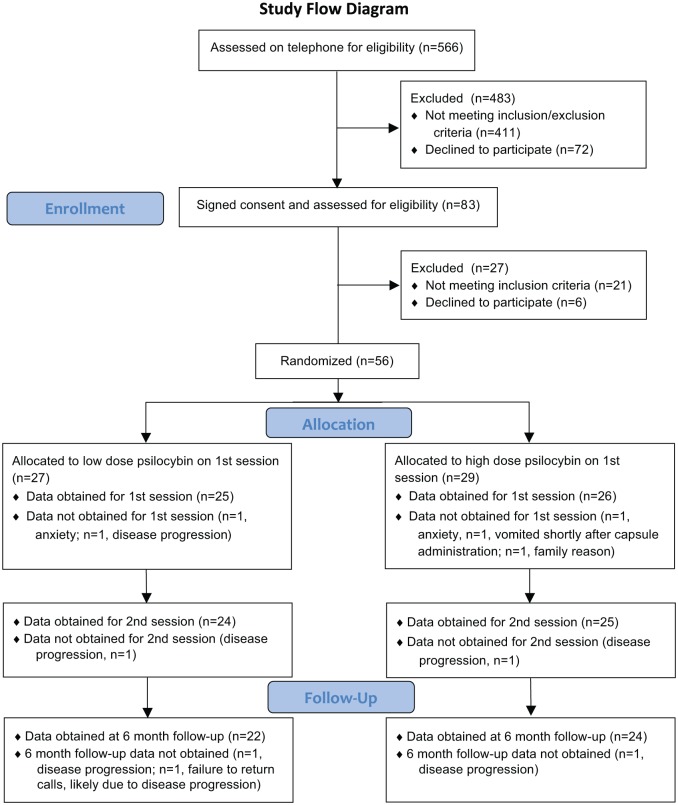
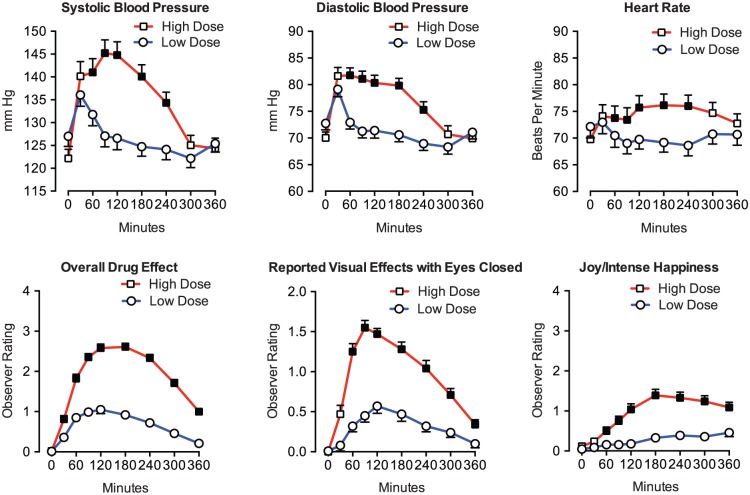
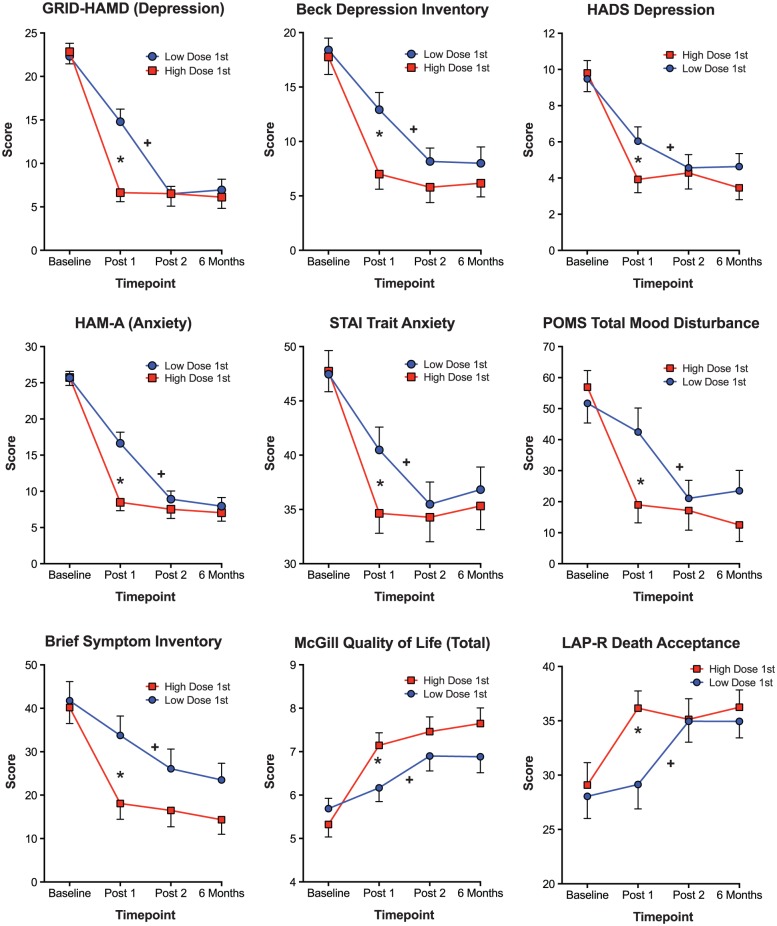
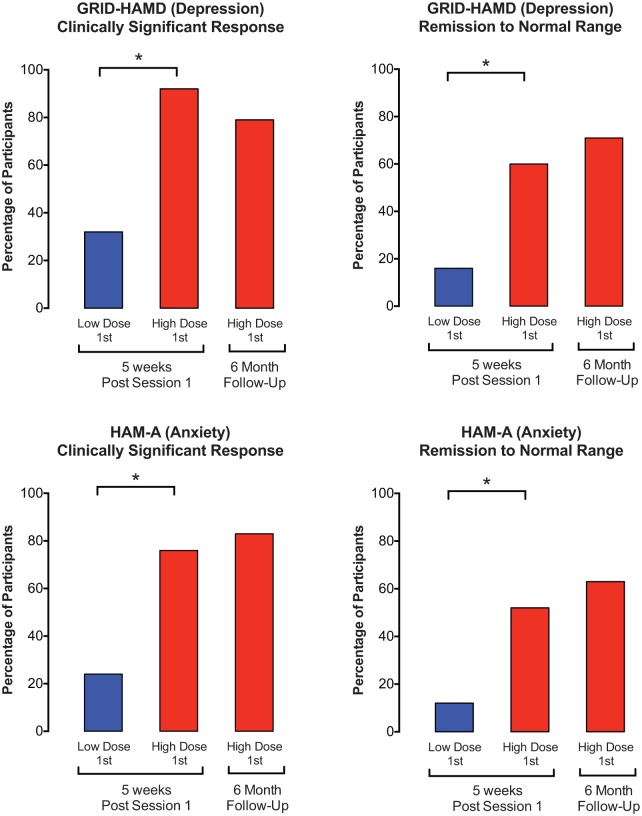
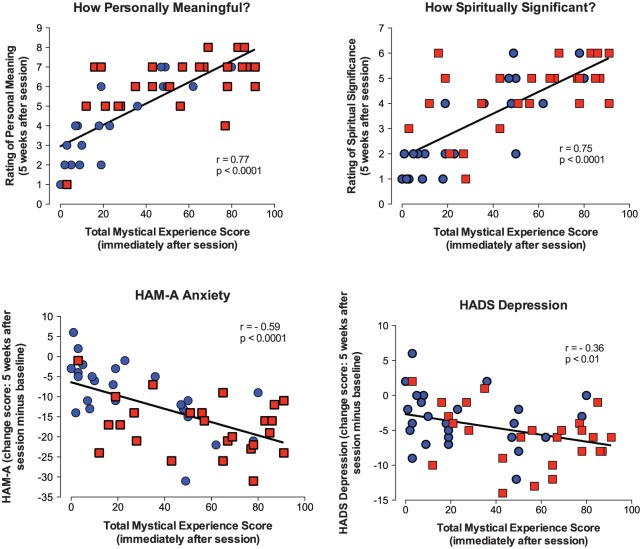
Cancer patients often develop chronic, clinically significant symptoms of depression and anxiety. Previous studies suggest that psilocybin may decrease depression and anxiety in cancer patients. The effects of psilocybin were studied in 51 cancer patients with life-threatening diagnoses and symptoms of depression and/or anxiety. This randomized, double-blind, cross-over trial investigated the effects of a very low (placebo-like) dose (1 or 3 mg/70 kg) vs. a high dose (22 or 30 mg/70 kg) of psilocybin administered in counterbalanced sequence with 5 weeks between sessions and a 6-month follow-up. Instructions to participants and staff minimized expectancy effects. Participants, staff, and community observers rated participant moods, attitudes, and behaviors throughout the study. High-dose psilocybin produced large decreases in clinician- and self-rated measures of depressed mood and anxiety, along with increases in quality of life, life meaning, and optimism, and decreases in death anxiety. At 6-month follow-up, these changes were sustained, with about 80% of participants continuing to show clinically significant decreases in depressed mood and anxiety. Participants attributed improvements in attitudes about life/self, mood, relationships, and spirituality to the high-dose experience, with >80% endorsing moderately or greater increased well-being/life satisfaction. Community observer ratings showed corresponding changes. Mystical-type psilocybin experience on session day mediated the effect of psilocybin dose on therapeutic outcomes. Trial Registration ClinicalTrials.gov identifier: NCT00465595
Overview
The claims and statistics of this paper haven’t been checked yet.
Free: it reads the open-access text and checks the first 5 claims that cite a source we can check. Create a free account to check every claim.
Integrity signals
Registry
Cites
Statistics
Figures
Verification
Claims the paper makes
The claims and statistics of this paper haven’t been checked yet.
Free: it reads the open-access text and checks the first 5 claims that cite a source we can check. Create a free account to check every claim.
Claims other papers make about this one
Each is checked against this paper’s own text: does it say what the citing paper says it does?
The cited source doesn’t support the claim as written.
In the citing paper
“In this study, groups of healthy participants were randomized into three groups, (1) low-dose psilocybin with standard support for spiritual practice (SS); (2) high-dose psilocybin with SS, and (3) high-dose psilocybin with High Support (HS) for spiritual practice.”
From Mindfulness meditation and psychedelics: potential synergies and commonalities (2023) · cites this paper as [6]
Checked by a reasoning model — may be wrong.
Experimental — accuracy not yet measuredThe source backs part of the claim, not all of it — or backs it for a different population, condition or comparison.
In the citing paper
“Griffiths et al. (2016)(n = 51) reported significantly larger response (92% versus 32%) and remission (60% versus 1%) on depression and anxiety (76% vs. 24%; 52% vs. 12%, respectively) in the high-dose group compared to active placebo after 5 weeks.”
From Psychedelics for the treatment of depression, anxiety, and existential distress in patients with a terminal illness: a systematic review (2022) · cites this paper as Griffiths et al., 2016
Experimental — accuracy not yet measuredThe source backs part of the claim, not all of it — or backs it for a different population, condition or comparison.
In the citing paper
“Most of this research has been carried out with the Revised Mystical Experience Questionnaire 30 (MEQ30), where a high score correlates with and has been suggested as a predictor of long-term positive therapeutic outcomes in various clinical and naturalistic studies of psychedelics.”
From Assessment of the acute subjective psychedelic experience: A review of patient-reported outcome measures in clinical research on classical psychedelics (2024) · cites this paper as Griffiths et al., 2016
Experimental — accuracy not yet measuredThe source backs part of the claim, not all of it — or backs it for a different population, condition or comparison.
In the citing paper
“Not only do they produce sustained therapeutic effects following a single administration, they also appear to have broad therapeutic potential”
From Psychedelics and Other Psychoplastogens for Treating Mental Illness. (2021) · cites this paper as [40]
Experimental — accuracy not yet measured
52 more claims about this paper
Create a free account to see every claim other papers make about this one.
Self-check
Percentages, sums and reported differences re-computed from the paper’s own numbers.
The self-check needs the paper’s full text.
Citations
Cites
The Hospital Anxiety and Depression Scale
Zigmond, A. S., & Snaith, R. P. (1983) · Acta Psychiatrica Scandinavica · doi:10.1111/j.1600-0447.1983.tb09716.x · Cited by 47,139
(2013) · Cited by 44,563
(1970) · Cited by 24,983
Depression and quality of life in older persons: A review
Sivertsen, H., Bjørkløf, G. H., Engedal, K., Selbæk, G., & Helvik, A.-S. (2015) · Dementia and Geriatric Cognitive Disorders · doi:10.1159/000437299 · Cited by 14,152
Optimism, coping, and health: Assessment and implications of generalized outcome expectancies.
Scheier, M. F., & Carver, C. S. (1985) · Health Psychology · doi:10.1037/0278-6133.4.3.219 · Cited by 6,690 · cited 2×
“…existence (existential subscale) during life-threatening illness (Cohen et al., 1995); LOT-R, self-rated optimism measure associated with illness (Scheier and Carver, 1985); LAP-R Death Acceptance, selfrated scale assessing absence of anxiety about death (Reker, 1992); Death Transcendence Scale,…”
BackgroundMethodMcNair, D. M. (1992) · Medical Entomology and Zoology · Cited by 2,692
Mitchell, A. J., Chan, M., Bhatti, H., Halton, M., Grassi, L., Johansen, C., & Meader, N. (2011) · The Lancet Oncology · doi:10.1016/s1470-2045(11)70002-x · Cited by 2,449 · cited 1×
“Cancer patients often develop a chronic, clinically significant syndrome of psychosocial distress having depressed mood, anxiety, and reduced quality of life as core features, with up to 40% of cancer patients meeting criteria for a mood disorder (Holland et al., 2013; Mitchell et al., 2011).”
BackgroundNichols, D. E. (2016) · Pharmacological Reviews · doi:10.1124/pr.115.011478 · Cited by 1,762 · cited 2×
“The classic hallucinogens, which include psilocybin (psilocin) and (+)-lysergic acid diethylamide (LSD), are a structurally diverse group of compounds that are 5-HT2A receptor agonists and produce a unique profile of changes in thoughts, perceptions, and emotions (Halberstadt, 2015; Nichols, 2016).”
BackgroundPeterman, A. H., Fitchett, G., Brady, M. J., Hernandez, L., & Cella, D. (2002) · Annals of Behavioral Medicine · doi:10.1207/s15324796abm2401_06 · Cited by 1,751 · cited 2×
“Three measures of spirituality were assessed at three time-points: Baseline, 5 weeks after session 2, and at the 6-month follow-up: FACIT-Sp, a self-rated measure of the spiritual dimension of quality of life in chronic illness (Peterman et al., 2002) assessed on how the participant felt “on average”; Spiritual-Religi…”
MethodGriffiths, R. R., Richards, W. A., McCann, U., & Jesse, R. (2006) · Psychopharmacology · doi:10.1007/s00213-006-0457-5 · Cited by 1,684 · cited 18×
“The structured interview (Community Observer Questionnaire) consisted of asking the rater to rate the participant’s behavior and attitudes using a 10-point scale (from 1 = not at all, to 10 = extremely) on 13 items reflecting healthy psychosocial functioning: inner peace; patience; good-natured humor/playfulness; ment…”
BackgroundMethodResultInfluentialSelf-citation
Research works printed but not linked: 7
- Beck AT Steer RA (1987) BDI Beck Depression Inventory Manual. San Antonio, San Diego, Orlando, New York, Chicago, Toronto: The Psychological Corporation Harcourt Brace Jovanovich, Inc.
- Benson PL Donahue MJ Erickson JA (1993) The Faith Maturity Scale: Conceptualization, measurement, and empirical validation. Res Soc Sci Stud Religion 5: 1– 26.
- ISCDD (2003) GRID-HAMD-17 Structured Interview Guide. San Diego, CA: International Society for CNS Drug Development.
- McIntosh DN (1999) Purpose in Life Test (Crumbaugh & Maholick, 1964). In: Hill PC Hood RW (eds) Measures of Religiosity. Birmingham, AL: Religious Education Press, pp. 503– 508.
- Metzner R Litwin G Weil G (1965) The relation of expectation and mood to psilocybin reactions: A questionnaire study. Psychedelic Rev 5: 3– 39.
- Reker GT (1992) The Life Attitude Profile-Revised (LAP-R). Peterborough, ON: Student Psychologists Press.
- VandeCreek L (1999) The Death Transcendence Scale (Hood & Morris, 1983). In: Hill PC Hood RW (eds) Measures of Religiosity. Birmingham, AL: Religious Education Press, pp. 442– 445.
Cited by
Items 301–400 of 1,018
Raut, S. B., Marathe, P. A., van Eijk, L., Eri, R. D., Ravindran, M., Benedek, D. M., Ursano, R. J., Canales, J. J., & Johnson, L. R. (2022) · Pharmacology & Therapeutics · doi:10.1016/j.pharmthera.2022.108195 · Cited by 84
Ross, S., Agrawal, M., Griffiths, R. R., Grob, C. S., Berger, A. M., & Henningfield, J. E. (2022) · Neuropharmacology · doi:10.1016/j.neuropharm.2022.109174 · Cited by 81
Self-citationPsilocybin-assisted therapy improves psycho-social-spiritual well-being in cancer patients
Shnayder, S., Ameli, R., Sinaii, N., Berger, A. M., & Agrawal, M. (2022) · Journal of Affective Disorders · doi:10.1016/j.jad.2022.11.046 · Cited by 78
Giluk (2009) · doi:10.1017/s003329172000389x · Cited by 68
Intersection of Racism and PTSD: Assessment and Treatment of Racial Stress and Trauma
Williams, M. T., Osman, M., Gran-Ruaz, S., & Lopez, J. (2021) · Current Treatment Options in Psychiatry · doi:10.1007/s40501-021-00250-2 · Cited by 91
Zeifman, R. J., & Wagner, A. C. (2020) · Journal of Contextual Behavioral Science · doi:10.1016/j.jcbs.2019.11.001 · Cited by 67
Davis, A. K., Xin, Y., Sepeda, N. D., Garcia-Romeu, A., & Williams, M. T. (2021) · Chronic Stress · doi:10.1177/24705470211035607 · Cited by 67
Sweeney, M. M., Nayak, S. M., Hurwitz, E. S., Mitchell, L. N., Swift, T. C., & Griffiths, R. R. (2022) · PLoS ONE · doi:10.1371/journal.pone.0271926 · Cited by 76
“For example, in a randomized trial among 51 cancer patients with clinically significant anxiety or depressive symptoms, high-dose psilocybin (22 or 30 mg/70 kg) delivered in structured therapeutic environment resulted in significant increases in ratings of death acceptance and death transcendence, as well as decreases…”
BackgroundSelf-citationJohnston, J. N., Kadriu, B., Allen, J., Gilbert, J. R., Henter, I. D., & Zarate, C. A. (2023) · Neuropharmacology · doi:10.1016/j.neuropharm.2023.109422 · Cited by 76
Pharmacological Treatment of Generalised Anxiety Disorder: Current Practice and Future Directions
Fagan, H. A., & Baldwin, D. S. (2023) · Expert Review of Neurotherapeutics · doi:10.1080/14737175.2023.2211767 · Cited by 96
“Two other crossover studies in patients with cancer found similar results with psilocybin [94,95].”
Transformative experience and informed consent to psychedelic-assisted psychotherapy
Jacobs, E. (2023) · Frontiers in Psychology · doi:10.3389/fpsyg.2023.1108333 · Cited by 79
“Clinically relevant doses of psychedelics frequently involve “peak” or “mystical” experiences, reported repeatedly in the context of clinical and experimental psychedelic use (Pahnke, 1967; Garcia-Romeu et al., 2014; Griffiths et al., 2016).”
BackgroundAncient Roots of Today’s Emerging Renaissance in Psychedelic Medicine
George, D. R., Hanson, R., Wilkinson, D., & Garcia‐Romeu, A. (2021) · Culture Medicine and Psychiatry · doi:10.1007/s11013-021-09749-y · Cited by 94
Sloshower, J., Zeifman, R. J., Guss, J., Krause, R., Safi-Aghdam, H., Pathania, S., Pittman, B., & D’Souza, D. C. (2024) · Scientific Reports · doi:10.1038/s41598-024-58318-x · Cited by 65
“…treatment studies have found that positive clinical outcomes were correlated with or partially-mediated by mystical-type subjective experiences 12–14, 17, Given that multiple potential mechanisms may contribute to the therapeutic effects of psilocybin-assisted therapy, it remains unclear…”
Mertens, L. J., & Preller, K. H. (2021) · Pharmacopsychiatry · doi:10.1055/a-1341-1907 · Cited by 65
Trips and neurotransmitters: Discovering principled patterns across 6850 hallucinogenic experiences
Ballentine, G., Friedman, S. F., & Bzdok, D. (2022) · Science Advances · doi:10.1126/sciadv.abl6989 · Cited by 64
A unified model of ketamine’s dissociative and psychedelic properties
Marguilho, M., Figueiredo, I., & Castro-Rodrigues, P. (2022) · Journal of Psychopharmacology · doi:10.1177/02698811221140011 · Cited by 78
“…Murphy et al., 2022; Roseman et al., 2018; van Oorsouw et al., 2022), addiction (Bogenschutz et al., 2015; Johnson et al., 2014, 2017; O’Reilly and Funk, 1964) and existential anxiety (Griffiths et al., 2016; Kurland et al., 1972; Pahnke et al., 1969; Richards et al., 1977; Ross et al., 2016).”
BackgroundThe varieties of psychedelic law
Marks, M. (2022) · Neuropharmacology · doi:10.1016/j.neuropharm.2022.109399 · Cited by 73
The polypharmacology of psychedelics reveals multiple targets for potential therapeutics
Jain, M. K., Gumpper, R. H., Slocum, S. T., Schmitz, G. P., Madsen, J. S., Tummino, T. A., Suomivuori, C., Huang, X.-P., Shub, L., DiBerto, J. F., et al. (2025) · Neuron · doi:10.1016/j.neuron.2025.06.012 · Cited by 89
Gandy, S., Forstmann, M., Carhart-Harris, R. L., Timmermann, C., Luke, D., & Watts, R. (2020) · Health Psychology Open · doi:10.1177/2055102920978123 · Cited by 63
“…secondary to a terminal cancer diagnosis (Agin-Liebes et al., 2020; Barrett et al., 2020; Carhart-Harris et al., 2016a, 2018a; Gasser et al., 2014; Griffiths et al., 2016; Grob et al., 2011; Ross et al., 2016), addiction (Bogenschutz et al., 2015; Bogenschutz and Johnson, 2016; Johnson et al.,…”
BackgroundOn the Relationship between Classic Psychedelics and Suicidality: A Systematic Review
Zeifman, R. J., Singhal, N., Breslow, L., & Weissman, C. R. (2021) · ACS Pharmacology & Translational Science · doi:10.1021/acsptsci.1c00024 · Cited by 73
Chopra, H., Mishra, A. K., Baig, A. A., Mohanta, T. K., Mohanta, Y. K., & Baek, K.-H. (2021) · Journal of Fungi · doi:10.3390/jof7090728 · Cited by 73
Clinically relevant acute subjective effects of psychedelics beyond mystical experience
Yaden, D. B., Goldy, S. P., Weiss, B., & Griffiths, R. R. (2024) · Nature Reviews Psychology · doi:10.1038/s44159-024-00345-6 · Cited by 72
“…Questionnaire (a measure comprising subscales related to feelings of unity, positive mood, transcendence of time and space, and ineffability) was positively correlated with persisting beneficial outcomes in individuals with a life-threatening cancer diagnosis in two independent samples 23,38 .”
InfluentialSelf-citationPsilocybin lacks antidepressant-like effect in the Flinders Sensitive Line rat
Jefsen, O., Højgaard, K., Christiansen, S. L., Elfving, B., Nutt, D. J., Wegener, G., & Müller, H. K. (2019) · Acta Neuropsychiatrica · doi:10.1017/neu.2019.15 · Cited by 63
“…serotonin receptor agonist found in ‘magic mushrooms’, has shown a promising therapeutic potential for treatment-resistant depression (Carhart-Harris et al., 2016), end-oflife anxiety (Griffiths et al., 2016; Ross et al., 2016), and addiction (Johnson et al., 2014; Bogenschutz et al., 2015).”
BackgroundMethodInfluentialRosenblat, J. D., Husain, M. I., Lee, Y. L., McIntyre, R. S., Mansur, R. B., Castle, D. J., Offman, H., Parikh, S. V., Frey, B. N., Schaffer, A., et al. (2022) · The Canadian Journal of Psychiatry · doi:10.1177/07067437221111371 · Cited by 77
“(2016) conducted a similar study in a larger sample using low-dose psilocybin as the control.(39) The study population was comprised of 51 people with life-threatening cancer diagnoses and symptoms of depression and anxiety.”
BackgroundResultInfluentialPsychedelic Commercialization: A Wide-Spanning Overview of the Emerging Psychedelic Industry
Aday, J. S., Barnett, B. S., Grossman, D., Murnane, K. S., Nichols, C. D., & Hendricks, P. S. (2023) · Psychedelic Medicine · doi:10.1089/psymed.2023.0013 · Cited by 68
“5,6 As such, psychedel-ic-assisted psychotherapy in its current form is best considered as a complex combination treatment that incorporates aspects of both psychopharmacology and psychotherapy.”
van Mulukom, V., Patterson, R. E., & van Elk, M. (2020) · Psychopharmacology · doi:10.1007/s00213-020-05568-y · Cited by 62
The emerging role of psilocybin and MDMA in the treatment of mental illness
Gill, H., Gill, B., Chen-Li, D., El-Halabi, S., Rodrigues, N. B., Cha, D. S., Lipsitz, O., Lee, Y., Rosenblat, J. D., Majeed, A., et al. (2020) · Expert Review of Neurotherapeutics · doi:10.1080/14737175.2020.1826931 · Cited by 61
Corneille, J. S., & Luke, D. P. (2021) · Frontiers in Psychology · doi:10.3389/fpsyg.2021.720579 · Cited by 81
Jones, G. M., & Nock, M. K. (2022) · Journal of Psychopharmacology · doi:10.1177/02698811211058923 · Cited by 68
“A 2016 trial replicated these findings (Griffiths et al., 2016).”
Lutkajtis, A., & Evans, J. (2023) · Journal of Psychedelic Studies · doi:10.1556/2054.2022.00232 · Cited by 70
“…treatment for a variety of clinical issues, including treatment-resistant depression (Carhart-Harris et al., 2021), cancer-related distress (Grif fi ths et al., 2016; Ross et al., 2016), obsessive compulsive disorder (Moreno et al., 2006), substance use disorders (Bogenschutz et al., 2015,…”
Zeifman, R. J., Wagner, A. C., Monson, C. M., & Carhart-Harris, R. L. (2023) · Journal of Affective Disorders · doi:10.1016/j.jad.2023.04.105 · Cited by 60
DARK Classics in Chemical Neuroscience: NBOMes
Poulie, C. B. M., Jensen, A. A., Halberstadt, A. L., & Kristensen, J. L. (2020) · ACS Chemical Neuroscience · doi:10.1021/acschemneuro.9b00528 · Cited by 61
Psychedelics as a Treatment for Alzheimer’s Disease Dementia
Jones, S. V., & O’Kelly, A. (2020) · Frontiers in Synaptic Neuroscience · doi:10.3389/fnsyn.2020.00034 · Cited by 72
Barrett, F. S., Robbins, H., Smooke, D., Brown, J. L., & Griffiths, R. R. (2017) · Frontiers in Psychology · doi:10.3389/fpsyg.2017.01238 · Cited by 82
“A unique effect of hallucinogens is that they may occasion mystical or non-dual experiences (Barrett and Griffiths, 2017), and these experiences may hold therapeutic value (Garcia-Romeu et al., 2015; Griffiths et al., 2016; Ross et al., 2016).”
BackgroundSelf-citationSafety pharmacology of acute LSD administration in healthy subjects
Holze, F., Caluori, T. V., Vizeli, P., & Liechti, M. E. (2022) · Psychopharmacology · doi:10.1007/s00213-021-05978-6 · Cited by 61
Maia, L. O., Beaussant, Y., & Garcia, A. C. M. (2022) · Journal of Pain and Symptom Management · doi:10.1016/j.jpainsymman.2022.01.024 · Cited by 60
Toward Synergies of Ketamine and Psychotherapy
Mathai, D. S., Mora, V., & Garcia‐Romeu, A. (2022) · Frontiers in Psychology · doi:10.3389/fpsyg.2022.868103 · Cited by 74
Rieser, N. M., Bitar, R., Halm, S., Rossgoderer, C., Gubser, L. P., Thévenaz, M., Kreis, Y., von Rotz, R., Nordt, C., Visentini, M., et al. (2025) · EClinicalMedicine · doi:10.1016/j.eclinm.2025.103149 · Cited by 69
Psychiatric risks for worsened mental health after psychedelic use
Marrocu, A., Kettner, H., Weiss, B., Zeifman, R. J., Erritzoe, D., & Carhart-Harris, R. L. (2024) · Journal of Psychopharmacology · doi:10.1177/02698811241232548 · Cited by 60
“…of psychedelic therapy as a treatment for a wide range of psychiatric disorders, from major depressive disorder (MDD) to addiction, obsessive-compulsive disorder (OCD), end-of-life anxiety, etc. (Bogenschutz et al., 2015; Carhart-Harris et al., 2021b; Griffiths et al., 2016; Moreno et al., 2006).”
BackgroundPsychedelic therapy: a roadmap for wider acceptance and utilization
Marks, M., & Cohen, I. G. (2021) · Nature Medicine · doi:10.1038/s41591-021-01530-3 · Cited by 59
Psychedelics and Consciousness: Distinctions, Demarcations, and Opportunities
Yaden, D. B., Johnson, M. W., Griffiths, R. R., Doss, M. K., Garcia‐Romeu, A., Nayak, S. M., Gukasyan, N., Mathur, B. N., & Barrett, F. S. (2021) · The International Journal of Neuropsychopharmacology · doi:10.1093/ijnp/pyab026 · Cited by 77
Self-citationSmausz, R., Neill, J. C., & Gigg, J. (2022) · Journal of Psychopharmacology · doi:10.1177/02698811221092508 · Cited by 70
“Indeed, several studies show that psilocybin can relieve end-of-life anxiety and depression-associated symptoms in patients with terminal cancer (Griffiths et al., 2016; Grob et al., 2011).”
BackgroundSustained effects of single doses of classical psychedelics in humans
Knudsen, G. M. (2022) · Neuropsychopharmacology · doi:10.1038/s41386-022-01361-x · Cited by 79
Noorani, T. N., Bedi, G., & Muthukumaraswamy, S. D. (2023) · Psychological Medicine · doi:10.1017/s0033291723001289 · Cited by 69
“Between 2016 and 2020, seven RCTs were published, including 193 participants (Danforth et al., 2018; Griffiths et al., 2016; Mithoefer et al., 2018; Ot’alora et al., 2018; Palhano-Fontes et al., 2019; Ross et al., 2016; Wolfson et al., 2020).”
BackgroundCardiovascular safety of psychedelic medicine: current status and future directions
Wsół, A. (2023) · Pharmacological Reports · doi:10.1007/s43440-023-00539-4 · Cited by 76
Psychedelic use and intimate partner violence: The role of emotion regulation
Thiessen, M. S., Walsh, Z., Bird, B. M., & Lafrance, A. (2018) · Journal of Psychopharmacology · doi:10.1177/0269881118771782 · Cited by 60
dos Santos, R. G., Bouso, J. C., Rocha, J. M., Rossi, G. N., & Hallak, J. E. (2021) · Risk Management and Healthcare Policy · doi:10.2147/rmhp.s300656 · Cited by 60
“Depression and anxiety symptoms were also reduced in controlled trials in terminal cancer patients.(18,19) Psilocybin produced positive effects in open-label trials for the treatment of alcohol and tobacco dependence.”
BackgroundWolff, M., Mertens, L. J., Walter, M., Enge, S., & Evens, R. (2022) · Journal of Psychopharmacology · doi:10.1177/02698811211073758 · Cited by 58
“Converging evidence from psychometric tests (Carhart-Harris et al., 2021; Griffiths et al., 2016), neuroimaging studies (Mertens et al., 2020; Roseman et al., 2018), and qualitative interviews with patients (Belser et al., 2017; Gasser et al., 2015; Watts et al., 2017) suggests that these drugs’…”
BackgroundThe Emerging Field of Psychedelic Psychotherapy
Barber, G., & Aaronson, S. T. (2022) · Current Psychiatry Reports · doi:10.1007/s11920-022-01363-y · Cited by 74
In vitro and in vivo metabolism of psilocybin’s active metabolite psilocin
Thomann, J., Kolaczynska, K. E., Stoeckmann, O. V., Rudin, D., Vizeli, P., Hoener, M. C., Pryce, C. R., Vollenweider, F. X., Liechti, M. E., & Duthaler, U. (2024) · Frontiers in Pharmacology · doi:10.3389/fphar.2024.1391689 · Cited by 73
Potential Differences in Psychedelic Actions Based on Biological Sex
Shadani, S., Conn, K., Andrews, Z. B., & Foldi, C. J. (2024) · Endocrinology · doi:10.1210/endocr/bqae083 · Cited by 66
Psychosocial and Integrative Oncology: Interventions Across the Disease Trajectory.
Carlson, L. E. (2023) · Annual Review of Psychology · doi:10.1146/annurev-psych-032620-031757 · Cited by 56
Day trip to hell: A mixed methods study of challenging psychedelic experiences
Johnstad, P. G. (2021) · Journal of Psychedelic Studies · doi:10.1556/2054.2021.00155 · Cited by 69
Psilocybin for End-of-Life Anxiety Symptoms: A Systematic Review and Meta-Analysis
Yu, C., Yang, F., Yang, S., Tseng, P., Stubbs, B., Yeh, T., Hsu, C., Li, D., & Liang, C. (2021) · Psychiatry Investigation · doi:10.30773/pi.2021.0209 · Cited by 73
Ona, G., & Bouso, J. C. (2020) · Neuroscience & Biobehavioral Reviews · doi:10.1016/j.neubiorev.2020.09.035 · Cited by 58
Reckweg, J., Mason, N. L., van Leeuwen, C., Toennes, S. W., Terwey, T. H., & Ramaekers, J. G. (2021) · Frontiers in Pharmacology · doi:10.3389/fphar.2021.760671 · Cited by 58
Update on GPCR-based targets for the development of novel antidepressants
Mantas, I., Saarinen, M., Xu, Q., & Svenningsson, P. (2021) · Molecular Psychiatry · doi:10.1038/s41380-021-01040-1 · Cited by 61
Aqil, M., & Roseman, L. (2022) · Neuropharmacology · doi:10.1016/j.neuropharm.2022.109300 · Cited by 69
“…supported by clinical studies in humans, have proposed “mystical-type” experiences as a key driver of the therapeutic benefits of psychedelics (Griffiths et al., 2016; Barrett and Griffiths, 2017; Roseman et al., 2018; Yaden and Griffiths, 2020).1 Interestingly, alterations in low-level…”
BackgroundResultInfluentialPsychedelic-induced mystical experiences: An interdisciplinary discussion and critique
Mosurinjohn, S. C., Roseman, L., & Girn, M. (2023) · Frontiers in Psychiatry · doi:10.3389/fpsyt.2023.1077311 · Cited by 75
Luoma, J. B., Sabucedo, P., Eriksson, J., Gates, N., & Pilecki, B. C. (2019) · Journal of Contextual Behavioral Science · doi:10.1016/j.jcbs.2019.10.003 · Cited by 56
“, 2015), trait openness (Maclean, Johnson, & Griffiths, 2011), smoking cessation outcomes (Garcia-Romeu, Griffiths, & Johnson, 2014), negative affect (Griffiths, Richards, Johnson, McCann, & Jesse, 2008), and end of life depression and anxiety (Griffiths et al., 2016).”
BackgroundInfluentialEvens, R., Schmidt, M. E., Majić, T., & Schmidt, T. T. (2023) · Therapeutic Advances in Psychopharmacology · doi:10.1177/20451253231172254 · Cited by 56
“Study selection The process for selecting studies included the following steps: (1) combination of search results from the two databases, (2) removal of duplicates, (3) screening of titles and abstracts, and (4) assessment of full-text articles to check for study eligibility.”
BackgroundMethodKolaczynska, K. E., Liechti, M. E., & Duthaler, U. (2021) · Journal of Chromatography B · doi:10.1016/j.jchromb.2020.122486 · Cited by 56
Microdosing psilocybin for chronic pain: a case series
Lyes, M., Yang, K. H., Castellanos, J. P., & Furnish, T. J. (2022) · Pain · doi:10.1097/j.pain.0000000000002778 · Cited by 71
Risk of bias in randomized clinical trials on psychedelic medicine: A systematic review
Hovmand, O. R., Poulsen, E. D., Arnfred, S., & Storebø, O. J. (2023) · Journal of Psychopharmacology · doi:10.1177/02698811231180276 · Cited by 72
“(d) Four trials (Gasser et al., 2014; Grob et al., 2011; Griffiths et al., 2016; Ross et al., 2016) utilized a randomized crossover or randomized within-subjects design.”
BackgroundMethodInfluentialMechanisms and molecular targets surrounding the potential therapeutic effects of psychedelics
Jaster, A. M., & González‐Maeso, J. (2023) · Molecular Psychiatry · doi:10.1038/s41380-023-02274-x · Cited by 61
“…as a treatment for several psychiatric conditions including major depression [199 – 201] and treatment-resistant depression [23, 202, 203], generalized [204] and end-of-life anxiety [22, 205], post-traumatic stress disorder [206], smoking cessation [207, 208], and alcohol use disorder [209, 210].”
Holze, F., Singh, N., Liechti, M. E., & D’Souza, D. C. (2024) · Biological Psychiatry Cognitive Neuroscience and Neuroimaging · doi:10.1016/j.bpsc.2024.01.007 · Cited by 78
dos Santos, R. G., & Hallak, J. E. C. (2021) · Epilepsy & Behavior · doi:10.1016/j.yebeh.2019.04.053 · Cited by 56
dos Santos, R. G., Hallak, J. E., Baker, G., & Dursun, S. (2021) · Journal of Psychopharmacology · doi:10.1177/0269881120986422 · Cited by 55
“…in which the psycholytic and psychedelic approaches were used together or in which psychedelics were combined with hypnosis (hypnodelic treatment technique) (Grinspoon and Bakalar, 1979; Lemercier and Terhune, 2018; McGlothlin and Arnold, 1971; Nichols, 2014, 2016; Riedlinger and Riedlinger, 1994).”
MethodGrabski, M., Borissova, A., Marsh, B., Morgan, C. J. A., & Curran, H. V. (2020) · Behavioural Brain Research · doi:10.1016/j.bbr.2020.112629 · Cited by 55
Vizeli, P., Straumann, I., Holze, F., Schmid, Y., Dolder, P. C., & Liechti, M. E. (2021) · Scientific Reports · doi:10.1038/s41598-021-90343-y · Cited by 57
A Qualitative Exploration of Relational Ethical Challenges and Practices in Psychedelic Healing
Brennan, B., Jackson, M. A., MacLean, K. A., & Ponterotto, J. G. (2021) · Journal of Humanistic Psychology · doi:10.1177/00221678211045265 · Cited by 66
Leger, R. F., & Unterwald, E. M. (2021) · Journal of Psychopharmacology · doi:10.1177/02698811211044688 · Cited by 63
“…recent attention for their potential applications in a different mental health conditions from anxiety and depression (Barrett et al., 2020; Griffiths et al., 2016; Grob et al., 2011; Luoma et al., 2020) to substance use (Bogenschutz et al., 2015; DiVito and Leger, 2020; Garcia-Romeu et…”
BackgroundResultInfluentialSolmi, M., Chen, C., Dauré, C., Buot, A., Ljuslin, M., Verroust, V., Mallet, L., Khazaal, Y., Rothen, S., Thorens, G., et al. (2022) · European Neuropsychopharmacology · doi:10.1016/j.euroneuro.2022.09.004 · Cited by 66
The economics of psychedelic-assisted therapies: A research agenda
Marseille, E. A., Bertozzi, S., & Kahn, J. G. (2022) · Frontiers in Psychiatry · doi:10.3389/fpsyt.2022.1025726 · Cited by 68
Psychedelic pleasures: An affective understanding of the joys of tripping
Bøhling, F. (2017) · International Journal of Drug Policy · doi:10.1016/j.drugpo.2017.07.017 · Cited by 66
LSD use in the United States: Trends, correlates, and a typology of us
Killion, B., Hai, A. H., Alsolami, A., Vaughn, M. G., Oh, P. S., & Salas‐Wright, C. P. (2021) · Drug and Alcohol Dependence · doi:10.1016/j.drugalcdep.2021.108715 · Cited by 58
Psychedelic-assisted psychotherapy: Where is the psychotherapy research
Aday, J. S., Horton, D., Fernandes-Osterhold, G., O’Donovan, A., Bradley, E. R., Rosen, R. C., & Woolley, J. D. (2024) · Psychopharmacology · doi:10.1007/s00213-024-06620-x · Cited by 54
“The psychedelic peak therapy model includes a semi-structured approach to adjunctive psychotherapy, historically described as a “non-directive supportive” framework, in which therapists minimize verbal interactions with participants during the dosing experience (Griffiths et al. 2016).”
Agin-Liebes, G., Zeifman, R., Luoma, J. B., Garland, E. L., Campbell, W. K., & Weiss, B. (2022) · Journal of Psychopharmacology · doi:10.1177/02698811221080165 · Cited by 54
“These results are aligned with previous studies associating mystical experience with improved outcomes (Griffiths et al., 2016; Ross et al., 2016) and add support to the novel idea that cognitive reappraisal may have a role in therapeutic psychedelic-induced changes.”
ResultClose, J. B., Hajien, E. C., Watts, R., Roseman, L., & Carhart-Harris, R. L. (2020) · Journal of Contextual Behavioral Science · doi:10.1016/j.jcbs.2020.01.005 · Cited by 54
Neuroinflammation and neuroprogression in depression: Effects of alternative drug treatments
Richardson, B., MacPherson, A., & Bambico, F. R. (2022) · Brain Behavior & Immunity - Health · doi:10.1016/j.bbih.2022.100554 · Cited by 66
Psychedelics as Transformative Therapeutics
Roth, B. L., & Gumpper, R. H. (2023) · American Journal of Psychiatry · doi:10.1176/appi.ajp.20230172 · Cited by 58
Safety and risk assessment of psychedelic psychotherapy: A meta-analysis and systematic review
Roméo, B., Kervadec, E., Fauvel, B., Strika-Bruneau, L., Amirouche, A., Verroust, V., Piolino, P., & Benyamina, A. (2024) · Psychiatry Research · doi:10.1016/j.psychres.2024.115880 · Cited by 74
On the varieties of conscious experiences: Altered Beliefs Under Psychedelics (ALBUS)
Safron, A., Juliani, A., Reggente, N., Klimaj, V., & Johnson, M. W. (2025) · Neuroscience of Consciousness · doi:10.1093/nc/niae038 · Cited by 66
Self-citationIsness: Using Multi-Person VR to Design Peak Mystical Type Experiences Comparable to Psychedelics
Glowacki, D. R., Wonnacott, M. D., Freire, R., Glowacki, B. R., Gale, E. M., Pike, J. E., de Haan, T., Chatziapostolou, M., & Metatla, O. (2020) · Proceedings of the 2020 CHI Conference on Human Factors in Computing Systems · doi:10.1145/3313831.3376649 · Cited by 54
“The intervening years have seen a number of additional studies, where psilocybin has been administered to healthy volunteers; [24, 26] patients with life-threatening cancer diagnoses; [25, 67] people dealing with addiction; [18, 38, 39] and those afflicted with treatment-resistant depression [13].”
BackgroundGrandjean, J., Buehlmann, D., Buerge, M., Sigrist, H., Seifritz, E., Vollenweider, F. X., Pryce, C. R., & Rudin, M. (2021) · NeuroImage · doi:10.1016/j.neuroimage.2020.117456 · Cited by 54
Effective Connectivity of Functionally Anticorrelated Networks Under Lysergic Acid Diethylamide
Stoliker, D., Novelli, L., Vollenweider, F. X., Egan, G. F., Preller, K. H., & Razi, A. (2022) · Biological Psychiatry · doi:10.1016/j.biopsych.2022.07.013 · Cited by 60
“Altered self-boundaries may be important to these therapeutic outcomes (6,70,71).”
Sabé, M., Sulstarova, A., Glangetas, A., Pieri, M. D., Mallet, L., Curtis, L., Richard-Lepouriel, H., Penzenstadler, L. E., Seragnoli, F., Thorens, G., et al. (2024) · Molecular Psychiatry · doi:10.1038/s41380-024-02800-5 · Cited by 72
Psychedelic drugs and perception: a narrative review of the first era of research
Aday, J. S., Wood, J. R., Bloesch, E. K., & Davoli, C. C. (2021) · Reviews in the Neurosciences · doi:10.1515/revneuro-2020-0094 · Cited by 57
“…to, alterations in sense of self (Lebedev et al. 2015), emotional breakthroughs (Roseman et al. 2019), psychologically challenging experiences (Barrett et al. 2016), and mystical states of consciousness that are described as being ineffable and meaningful (Griffiths et al. 2016; Grob et al. 2013).”
BackgroundBelouin, S. J., Averill, L. A., Henningfield, J. E., Xenakis, S. N., Donato, I., Grob, C. S., Berger, A., Magar, V., Danforth, A. L., & Anderson, B. T. (2022) · Neuropharmacology · doi:10.1016/j.neuropharm.2022.109214 · Cited by 59
Doss, M. K., May, D. G., Johnson, M. W., Clifton, J. M., Hedrick, S. L., Prisinzano, T. E., Griffiths, R. R., & Barrett, F. S. (2020) · Scientific Reports · doi:10.1038/s41598-020-73216-8 · Cited by 52
Self-citationSkosnik, P. D., Sloshower, J., Safi-Aghdam, H., Pathania, S., Syed, S., Pittman, B., & D’Souza, D. C. (2023) · Journal of Psychopharmacology · doi:10.1177/02698811231179800 · Cited by 51
“…of early phase trials have suggested that psilocybin-assisted psychotherapy may have rapid-acting and long-lasting therapeutic effects in depression, anxiety, substance use, smoking cessation, migraine, and other disorders (Carhart-Harris et al., 2016; Griffiths et al., 2016; Ross et al., 2016).”
BackgroundCarhart-Harris, R. L., Wagner, A. C., Agrawal, M., Kettner, H., Rosenbaum, J. F., Gazzaley, A., Nutt, D. J., & Erritzoe, D. (2022) · Journal of Psychopharmacology · doi:10.1177/02698811211008567 · Cited by 51
“…has shown promise for a range of different mental health conditions, including: (1) depression (CarhartHarris et al., 2016; Davis et al., 2020), (2) end-of-life anxiety (Griffiths et al., 2016), (3) addiction (Johnson et al., 2014) and (4) obsessive compulsive disorder (Moreno et al., 2006).”
BackgroundAssessment of Psilocybin Therapy for Patients With Cancer and Major Depression Disorder
Agrawal, M., Emanuel, E., Richards, B., Richards, W., Roddy, K., & Thambi, P. (2023) · JAMA Oncology · doi:10.1001/jamaoncol.2023.0351 · Cited by 51
Self-citationFoldi, C. J., Liknaitzky, P., Williams, M., & Oldfield, B. J. (2020) · Frontiers in Neuroscience · doi:10.3389/fnins.2020.00043 · Cited by 51
“Combined with specialized psychotherapy, psilocybin has been shown to decrease symptoms of anxiety and depression that accompany life-threatening cancer diagnoses (Griffiths et al., 2016; Ross et al., 2016), alleviate symptoms in patients with treatment-resistant depression (Carhart-Harris et al.”
BackgroundDepression and anxiety in glioma patients
van der Meer, P. B., Dirven, L., Hertler, C., Boele, F. W., Batalla, A., Walbert, T., Rooney, A. G., & Koekkoek, J. A. F. (2023) · Neuro-Oncology Practice · doi:10.1093/nop/npad019 · Cited by 64
“81–83 Overall survival time”
The Effects of Hallucinogens on Gene Expression
Martin, D. A., & Nichols, C. D. (2017) · Current topics in behavioral neurosciences · doi:10.1007/7854_2017_479 · Cited by 62
“…well-being that persisted for at least 14 months (Griffiths et al. 2006, 2011), and there have been several recent publications describing the efficacy of one or two treatments with psilocybin to long-lasting antidepressant effects and treat addiction (Griffiths et al. 2016; Johnson et al. 2017).”
BackgroundWhelan, A., & Johnson, M. I. (2018) · Pain Management · doi:10.2217/pmt-2017-0068 · Cited by 51
Self-citationWießner, I., Falchi-Carvalho, M., Palhano-Fontes, F., Feilding, A., Ribeiro, S. T. G., & Tófoli, L. F. (2021) · Psychological Medicine · doi:10.1017/s0033291721002531 · Cited by 62
“…& Jesse, 2006; MacLean, Johnson, & Griffiths, 2011), are related to increased alcohol and smoking abstinence (Bogenschutz et al., 2015; Johnson, Garcia-Romeu, & Griffiths, 2017) and reduced anxiety and depression in patients with life-threatening cancer (Griffiths et al., 2016; Ross et al., 2016).”
BackgroundHusain, M. I., Ledwos, N., Fellows, E., Baer, J., Rosenblat, J. D., Blumberger, D. M., Mulsant, B. H., & Castle, D. J. (2023) · Frontiers in Psychiatry · doi:10.3389/fpsyt.2022.1076459 · Cited by 50
Experience of Music Used With Psychedelic Therapy: A Rapid Review and Implications
O’Callaghan, C. C., Hubik, D. J., Dwyer, J. L., Williams, M. L., & Ross, M. (2020) · Journal of Music Therapy · doi:10.1093/jmt/thaa006 · Cited by 58
Metadata
- Authors
- Griffiths, R. R., Johnson, M. W., Carducci, M. A., Umbricht, A., Richards, W. A., Richards, B. D., Cosimano, M. P., & Klinedinst, M. A.
- Affiliations
- Johns Hopkins University (US)
- Corresponding author
- Griffiths, Roland R
- Venue
- Journal of Psychopharmacology
- Publisher
- SAGE Publications
- Published
- 2016-11-30
- Volume
- 30
- Issue
- 12
- Pages
- 1181-1197
- ISSN
- 0269-8811 (ISSN-L)
- 1461-7285
- PMC
- PMC5367557
- OpenAlex
- W2558412547
- Cited by
- 2,201
- References
- 53
- Citations by year
- 2026: 278 · 2025: 325 · 2024: 335 · 2023: 315 · 2022: 310 · 2021: 229 · 2020: 187 · 2019: 73 · 2018: 77 · 2017: 54 · 2016: 14
- FWCI
- 97.18
- Type
- journal article
- Language
- en
- Open access
- hybrid
- doi.org
- Licence
- cc-by
- journals.sagepub.com/page/policies/text-and-data-mining-license (tdm)
- Locations
- Journal of Psychopharmacology (publishedVersion, cc-by)
- PubMed Central (publishedVersion, cc-by)
- PubMed (publishedVersion)
- Funders
- National Institutes of Health
- National Institute on Drug Abuse (R01DA003889)
- Topics
- Social Sciences › Psychology › Clinical Psychology › Psychedelics and Drug Studies
- Social Sciences › Health › Religion, Spirituality, and Psychology
- Health Sciences › Medicine › Oncology › Cancer survivorship and care
- Keywords
- psilocybin, depression, anxiety, cancer patients, psychedelic therapy, dose-response relationship, mystical experience, fear of death, quality of life, meaning of life, optimism, well-being, sustained treatment effects
- MeSH terms
- Anxiety, Attitude, Depression, Double-Blind Method, Female, Follow-Up Studies, Hallucinogens, Humans, Male, Middle Aged, Neoplasms, Psilocybin, Quality of Life, Surveys and Questionnaires, Cross-Over Studies
About these checks
Registry, retraction, Cites and statistics results are computed, not judged, with one exception: a printed reference that no index lists is read once by a model before it counts as a citation error. Claims are extracted by a model and kept only when their quote appears verbatim in the text; each cited source is then checked, with a model’s help, for whether it says what the claim relies on. Those verdicts can be wrong — read the claim’s quote and the cited source before relying on one.
Statistics and arithmetic are recomputed, not judged.
Confidence bands are shown only for fields calibrated on our annotated test set. None is calibrated yet, so no band is shown.
What counts as a claim ›How we measure confidence ›How we check this ›
Are you an author, or do you see a problem with this page? Request a review
Data sources
Bibliographic data: Semantic Scholar, OpenAlex, Crossref.
Contains information from the Semantic Scholar Academic Graph Datasets, made available under the ODC Attribution License (ODC-BY 1.0).
Semantic Scholar’s data is described in: Kinney, R., et al. (2023). The Semantic Scholar Open Data Platform. arXiv:2301.10140.
