

Psilocybin produces substantial and sustained decreases in depression and anxiety in patients with life-threatening cancer: A randomized double-blind trial
Open accessThe DOI matches its Crossref record; 54 of the 54 references it cites were found in a registry or an index.
Abstract
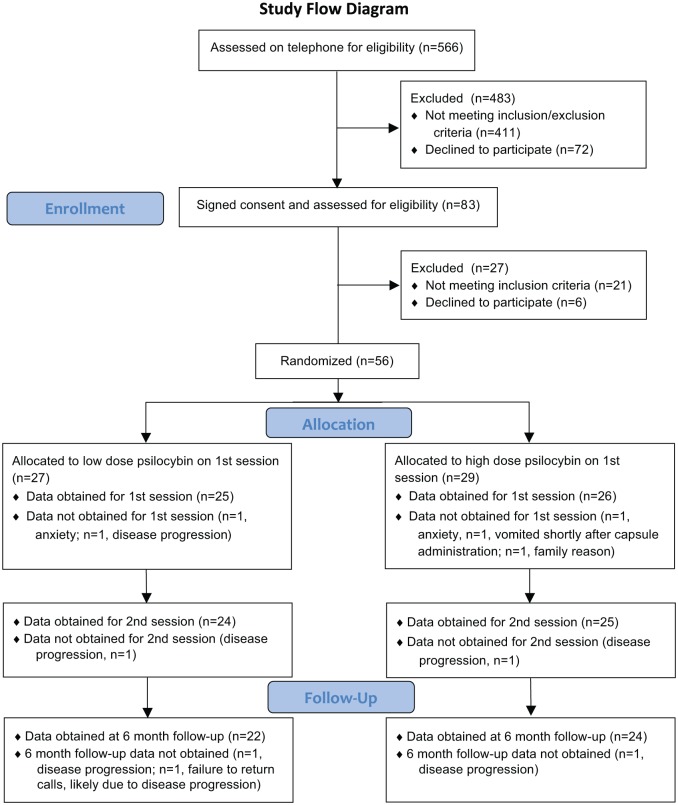
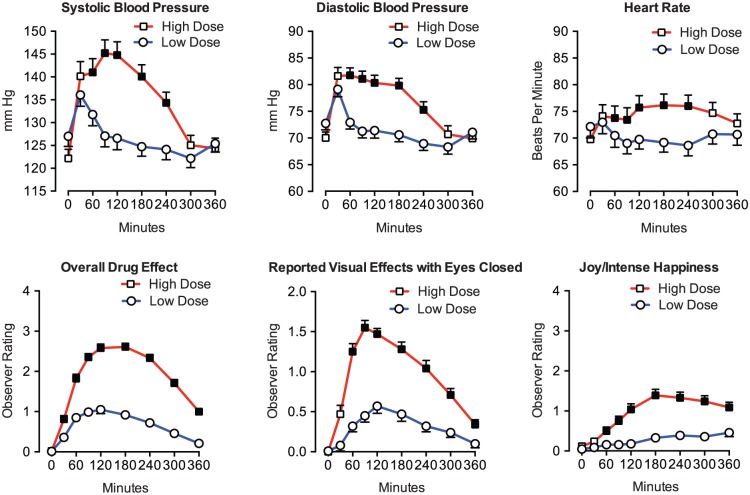
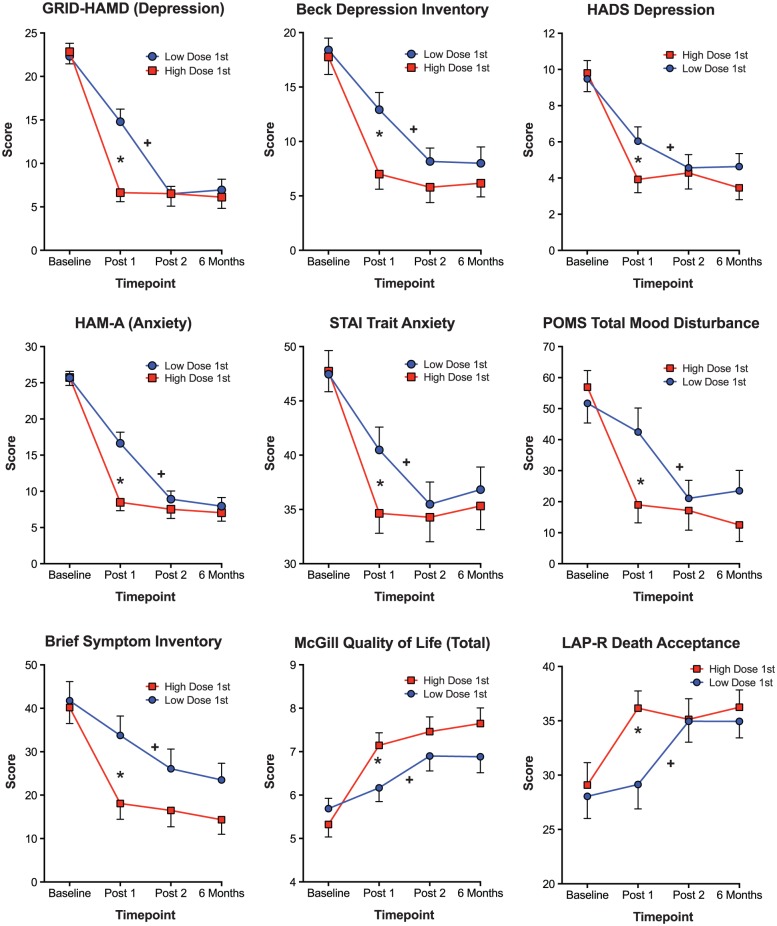
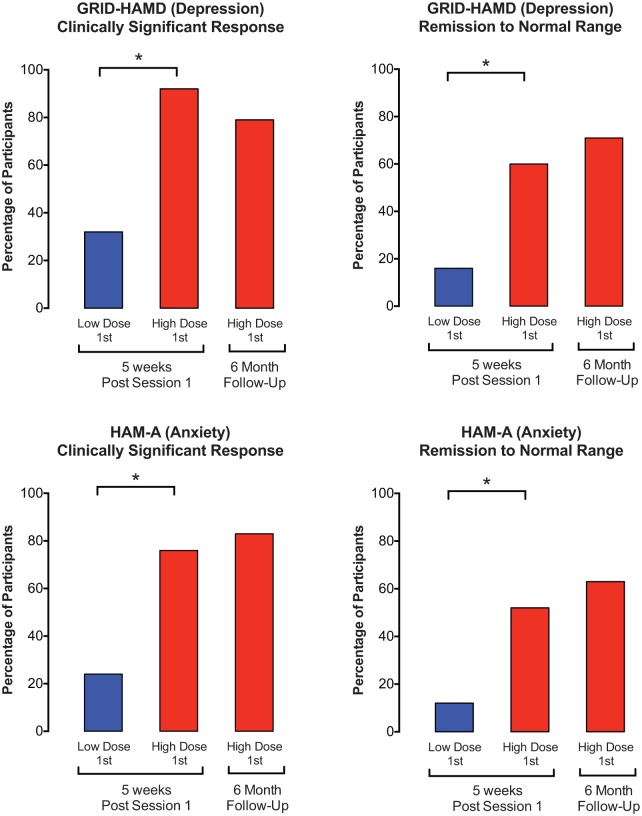
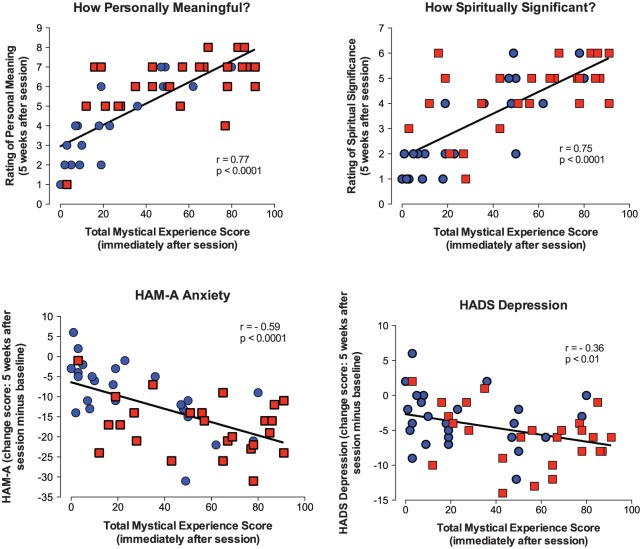
Cancer patients often develop chronic, clinically significant symptoms of depression and anxiety. Previous studies suggest that psilocybin may decrease depression and anxiety in cancer patients. The effects of psilocybin were studied in 51 cancer patients with life-threatening diagnoses and symptoms of depression and/or anxiety. This randomized, double-blind, cross-over trial investigated the effects of a very low (placebo-like) dose (1 or 3 mg/70 kg) vs. a high dose (22 or 30 mg/70 kg) of psilocybin administered in counterbalanced sequence with 5 weeks between sessions and a 6-month follow-up. Instructions to participants and staff minimized expectancy effects. Participants, staff, and community observers rated participant moods, attitudes, and behaviors throughout the study. High-dose psilocybin produced large decreases in clinician- and self-rated measures of depressed mood and anxiety, along with increases in quality of life, life meaning, and optimism, and decreases in death anxiety. At 6-month follow-up, these changes were sustained, with about 80% of participants continuing to show clinically significant decreases in depressed mood and anxiety. Participants attributed improvements in attitudes about life/self, mood, relationships, and spirituality to the high-dose experience, with >80% endorsing moderately or greater increased well-being/life satisfaction. Community observer ratings showed corresponding changes. Mystical-type psilocybin experience on session day mediated the effect of psilocybin dose on therapeutic outcomes. Trial Registration ClinicalTrials.gov identifier: NCT00465595
Overview
The claims and statistics of this paper haven’t been checked yet.
Free: it reads the open-access text and checks the first 5 claims that cite a source we can check. Create a free account to check every claim.
Integrity signals
Registry
Cites
Statistics
Figures
Verification
Claims the paper makes
The claims and statistics of this paper haven’t been checked yet.
Free: it reads the open-access text and checks the first 5 claims that cite a source we can check. Create a free account to check every claim.
Claims other papers make about this one
Each is checked against this paper’s own text: does it say what the citing paper says it does?
The cited source doesn’t support the claim as written.
In the citing paper
“In this study, groups of healthy participants were randomized into three groups, (1) low-dose psilocybin with standard support for spiritual practice (SS); (2) high-dose psilocybin with SS, and (3) high-dose psilocybin with High Support (HS) for spiritual practice.”
From Mindfulness meditation and psychedelics: potential synergies and commonalities (2023) · cites this paper as [6]
Checked by a reasoning model — may be wrong.
Experimental — accuracy not yet measuredThe source backs part of the claim, not all of it — or backs it for a different population, condition or comparison.
In the citing paper
“Griffiths et al. (2016)(n = 51) reported significantly larger response (92% versus 32%) and remission (60% versus 1%) on depression and anxiety (76% vs. 24%; 52% vs. 12%, respectively) in the high-dose group compared to active placebo after 5 weeks.”
From Psychedelics for the treatment of depression, anxiety, and existential distress in patients with a terminal illness: a systematic review (2022) · cites this paper as Griffiths et al., 2016
Experimental — accuracy not yet measuredThe source backs part of the claim, not all of it — or backs it for a different population, condition or comparison.
In the citing paper
“Most of this research has been carried out with the Revised Mystical Experience Questionnaire 30 (MEQ30), where a high score correlates with and has been suggested as a predictor of long-term positive therapeutic outcomes in various clinical and naturalistic studies of psychedelics.”
From Assessment of the acute subjective psychedelic experience: A review of patient-reported outcome measures in clinical research on classical psychedelics (2024) · cites this paper as Griffiths et al., 2016
Experimental — accuracy not yet measuredThe source backs part of the claim, not all of it — or backs it for a different population, condition or comparison.
In the citing paper
“Not only do they produce sustained therapeutic effects following a single administration, they also appear to have broad therapeutic potential”
From Psychedelics and Other Psychoplastogens for Treating Mental Illness. (2021) · cites this paper as [40]
Experimental — accuracy not yet measured
52 more claims about this paper
Create a free account to see every claim other papers make about this one.
Self-check
Percentages, sums and reported differences re-computed from the paper’s own numbers.
The self-check needs the paper’s full text.
Citations
Cites
The Hospital Anxiety and Depression Scale
Zigmond, A. S., & Snaith, R. P. (1983) · Acta Psychiatrica Scandinavica · doi:10.1111/j.1600-0447.1983.tb09716.x · Cited by 47,139
(2013) · Cited by 44,563
(1970) · Cited by 24,983
Depression and quality of life in older persons: A review
Sivertsen, H., Bjørkløf, G. H., Engedal, K., Selbæk, G., & Helvik, A.-S. (2015) · Dementia and Geriatric Cognitive Disorders · doi:10.1159/000437299 · Cited by 14,152
Optimism, coping, and health: Assessment and implications of generalized outcome expectancies.
Scheier, M. F., & Carver, C. S. (1985) · Health Psychology · doi:10.1037/0278-6133.4.3.219 · Cited by 6,690 · cited 2×
“…existence (existential subscale) during life-threatening illness (Cohen et al., 1995); LOT-R, self-rated optimism measure associated with illness (Scheier and Carver, 1985); LAP-R Death Acceptance, selfrated scale assessing absence of anxiety about death (Reker, 1992); Death Transcendence Scale,…”
BackgroundMethodMcNair, D. M. (1992) · Medical Entomology and Zoology · Cited by 2,692
Mitchell, A. J., Chan, M., Bhatti, H., Halton, M., Grassi, L., Johansen, C., & Meader, N. (2011) · The Lancet Oncology · doi:10.1016/s1470-2045(11)70002-x · Cited by 2,449 · cited 1×
“Cancer patients often develop a chronic, clinically significant syndrome of psychosocial distress having depressed mood, anxiety, and reduced quality of life as core features, with up to 40% of cancer patients meeting criteria for a mood disorder (Holland et al., 2013; Mitchell et al., 2011).”
BackgroundNichols, D. E. (2016) · Pharmacological Reviews · doi:10.1124/pr.115.011478 · Cited by 1,762 · cited 2×
“The classic hallucinogens, which include psilocybin (psilocin) and (+)-lysergic acid diethylamide (LSD), are a structurally diverse group of compounds that are 5-HT2A receptor agonists and produce a unique profile of changes in thoughts, perceptions, and emotions (Halberstadt, 2015; Nichols, 2016).”
BackgroundPeterman, A. H., Fitchett, G., Brady, M. J., Hernandez, L., & Cella, D. (2002) · Annals of Behavioral Medicine · doi:10.1207/s15324796abm2401_06 · Cited by 1,751 · cited 2×
“Three measures of spirituality were assessed at three time-points: Baseline, 5 weeks after session 2, and at the 6-month follow-up: FACIT-Sp, a self-rated measure of the spiritual dimension of quality of life in chronic illness (Peterman et al., 2002) assessed on how the participant felt “on average”; Spiritual-Religi…”
MethodGriffiths, R. R., Richards, W. A., McCann, U., & Jesse, R. (2006) · Psychopharmacology · doi:10.1007/s00213-006-0457-5 · Cited by 1,684 · cited 18×
“The structured interview (Community Observer Questionnaire) consisted of asking the rater to rate the participant’s behavior and attitudes using a 10-point scale (from 1 = not at all, to 10 = extremely) on 13 items reflecting healthy psychosocial functioning: inner peace; patience; good-natured humor/playfulness; ment…”
BackgroundMethodResultInfluentialSelf-citation
Research works printed but not linked: 7
- Beck AT Steer RA (1987) BDI Beck Depression Inventory Manual. San Antonio, San Diego, Orlando, New York, Chicago, Toronto: The Psychological Corporation Harcourt Brace Jovanovich, Inc.
- Benson PL Donahue MJ Erickson JA (1993) The Faith Maturity Scale: Conceptualization, measurement, and empirical validation. Res Soc Sci Stud Religion 5: 1– 26.
- ISCDD (2003) GRID-HAMD-17 Structured Interview Guide. San Diego, CA: International Society for CNS Drug Development.
- McIntosh DN (1999) Purpose in Life Test (Crumbaugh & Maholick, 1964). In: Hill PC Hood RW (eds) Measures of Religiosity. Birmingham, AL: Religious Education Press, pp. 503– 508.
- Metzner R Litwin G Weil G (1965) The relation of expectation and mood to psilocybin reactions: A questionnaire study. Psychedelic Rev 5: 3– 39.
- Reker GT (1992) The Life Attitude Profile-Revised (LAP-R). Peterborough, ON: Student Psychologists Press.
- VandeCreek L (1999) The Death Transcendence Scale (Hood & Morris, 1983). In: Hill PC Hood RW (eds) Measures of Religiosity. Birmingham, AL: Religious Education Press, pp. 442– 445.
Cited by
Items 601–700 of 1,018
Müller, F., Zaczek, H., Becker, A., Ley, L., Borgwardt, S., de Jesus, J. S., Loh, N., Kohut, J., Auernig, M., Boehlke, C. S., et al. (2025) · Med · doi:10.1016/j.medj.2025.100725 · Cited by 37
Psychedelics and hypnosis: Commonalities and therapeutic implications
Lemercier, C. E., & Terhune, D. (2018) · Journal of Psychopharmacology · doi:10.1177/0269881118780714 · Cited by 26
Psilocybin occasioned mystical‐type experiences
James, E., Robertshaw, T. L., Hoskins, M. D., & Sessa, B. (2020) · Human Psychopharmacology Clinical and Experimental · doi:10.1002/hup.2742 · Cited by 44
“Since then, a number of psilocybin-assisted psychotherapy studies have been conducted which employ experimental features such as randomisation and double-blind crossover designs to mitigate the effects of expectation in both participants and clinicians (Griffiths et al., 2016; Ross et al., 2016).”
BackgroundInfluentialEfficacité des psychédéliques en psychiatrie, une revue systématique
Berkovitch, L., Roméo, B., Karila, L., Gaillard, R., & Benyamina, A. (2021) · L Encéphale · doi:10.1016/j.encep.2020.12.002 · Cited by 37
Roscoe, J., & Lozy, O. (2022) · Drug Science Policy and Law · doi:10.1177/20503245221085222 · Cited by 34
“…Hasler et al., 2004; Johnson et al., 2014; Moreno et al., 2006; Ross et al., 2016), nausea (Bogenschutz et al., 2015; Carhart-Harris et al., 2016; Griffiths et al., 2016; Hasler et al., 2002; Ross et al., 2016), and anxiety (Carhart-Harris et al., 2016; Carhart-Harris et al., 2021,…”
BackgroundInfluentialLyubomirsky, S. (2022) · Perspectives on Psychological Science · doi:10.1177/17456916211055369 · Cited by 35
“…with LSD (Gasser et al., 2014; Krebs & Johansen, 2012); depression with ketamine (McIntyre et al., 2020), psilocybin (Carhart-Harris et al., 2016; Griffiths et al., 2016), and ayahuasca (Palhano-Fontes et al., 2019); and, as described below, posttraumatic stress disorder (PTSD) with MDMA (…”
BackgroundPsychedelics and Anti-inflammatory Activity in Animal Models
Flanagan, T. W., & Nichols, C. D. (2022) · Current topics in behavioral neurosciences · doi:10.1007/7854_2022_367 · Cited by 32
5-HT2A SNPs Alter the Pharmacological Signaling of Potentially Therapeutic Psychedelics
Schmitz, G. P., Jain, M. K., Slocum, S. T., & Roth, B. L. (2022) · ACS Chemical Neuroscience · doi:10.1021/acschemneuro.1c00815 · Cited by 31
Potential analgesic effects of psychedelics on select chronic pain conditions: A survey study
Cavarra, M., Mason, N. L., Kuypers, K. P. C., Bonnelle, V., Smith, W., Feilding, A., Kryskow, P., & Ramaekers, J. G. (2023) · European Journal of Pain · doi:10.1002/ejp.2171 · Cited by 37
“Earlier research found that mood (Griffiths et al., 2016) and expectation (Kirsch, 2018) may play a role in determining the perceived intensity of pain.”
BackgroundHistory repeating: A roadmap to address common problems in psychedelic science
van Elk, M., & Fried, E. I. (2023) · doi:10.31234/osf.io/ak6gx · Cited by 9
Palliative Nursing and Sacred Medicine: A Holistic Stance on Entheogens, Healing, and Spiritual Care
Rosa, W. E., Hope, S., & Matzo, M. (2019) · Journal of Holistic Nursing · doi:10.1177/0898010118770302 · Cited by 28
DellaCrosse, M., Pleet, M., Morton, E., Ashtari, A., Sakai, K., Woolley, J., & Michalak, E. (2022) · PLOS ONE · doi:10.1371/journal.pone.0279073 · Cited by 28
Buot, A., Pallares, C., Oganesyan, A., Dauré, C., Bonnelle, V., Burguière, E., Dos Santos, J. F. A., N’Diaye, K., Ljuslin, M., Smith, P., et al. (2023) · Scientific Reports · doi:10.1038/s41598-023-39812-0 · Cited by 28
“But this is coherent with studies in other pathologies such as depression showing effects persisting from multiple weeks to several months 41,45,46 .”
ResultCapaldi, J. M., Shabanian, J., Finster, L. B., Asher, A., Wertheimer, J. C., Zebrack, B., & Shirazipour, C. H. (2023) · Health Psychology Review · doi:10.1080/17437199.2022.2162947 · Cited by 39
Dougherty, R. F., Clarke, P., Atli, M., Kuc, J., Schlosser, D. A., Dunlop, B. W., Hellerstein, D. J., Aaronson, S. T., Zisook, S., Young, A. H., et al. (2023) · Psychopharmacology · doi:10.1007/s00213-023-06432-5 · Cited by 35
A role for the serotonin 2A receptor in the expansion and functioning of human transmodal cortex
Luppi, A. I., Girn, M., Rosas, F. E., Timmermann, C., Roseman, L., Erritzøe, D., Nutt, D. J., Stamatakis, E. A., Spreng, R. N., Xing, L., et al. (2023) · Brain · doi:10.1093/brain/awad311 · Cited by 35
“19 Evidence is presently strongest for depression 20-24 but suggestive results have also been found for end-of-life distress in terminal patients, 25,26 tobacco addiction 27 and alcoholism.”
A Comprehensive Review of the Current Status of the Cellular Neurobiology of Psychedelics
Banushi, B., & Polito, V. (2023) · Biology · doi:10.3390/biology12111380 · Cited by 37
The Mystical Experience Questionnaire 4-Item and Challenging Experience Questionnaire 7-Item
Strickland, J. C., Garcia‐Romeu, A., & Johnson, M. W. (2024) · Psychedelic Medicine · doi:10.1089/psymed.2023.0046 · Cited by 30
Self-citationSafety pharmacology of acute psilocybin administration in healthy participants
Straumann, I., Holze, F., Becker, A., Ley, L., Halter, N., & Liechti, M. E. (2024) · Neuroscience Applied · doi:10.1016/j.nsa.2024.104060 · Cited by 32
“…as a medication for patients with depression (Carhart-Harris et al., 2021; Carhart-Harris et al., 2016; Davis et al., 2021; Goodwin et al., 2022; Griffiths et al., 2016; Raison et al., 2023; Ross et al., 2016; von Rotz et al., 2023), anxiety (Griffiths et al., 2016; Ross et al., 2016),…”
InfluentialPsychedelic experiences and long-term spiritual growth: a systematic review
Schutt, W. A., Exline, J. J., Pait, K. C., & Wilt, J. A. (2024) · Current Psychology · doi:10.1007/s12144-024-06272-2 · Cited by 32
“…depression (Carhart-Harris et al., 2016 ; Griffiths et al., 2016), addiction (Bogenschutz & Johnson, 2016; Garcia-Romeu et al., 2014), obsessive–compulsive disorder (Moreno et al., 2006 ), death anxiety (Griffiths et al., 2016; Ross et al., 2016), and post-traumatic stress (Krediet et al., 2020).”
InfluentialStrategies for resolving challenging psychedelic experiences: insights from a mixed-methods study
Wood, M. J., McAlpine, R. G., & Kamboj, S. K. (2024) · Scientific Reports · doi:10.1038/s41598-024-79931-w · Cited by 34
Rush, B. R., Marcus, O., García, S., Loizaga-Velder, A. K., Loewinger, G. C., Spitalier, A., & Mendive, F. M. (2021) · Frontiers in Pharmacology · doi:10.3389/fphar.2021.659644 · Cited by 40
“Mystical experiences have been found to have and important therapeutic value also in research on the use of psychedelics for alleviating depression and anxiety in terminally ill cancer patients (Griffiths et al., 2016), and other therapeutic processes (Majic et al.”
BackgroundOña, G., Berrada, A., & Bouso, J. C. (2021) · Transcultural Psychiatry · doi:10.1177/13634615211038416 · Cited by 36
Animal Behavior in Psychedelic Research
Odland, A. U., Kristensen, J. L., & Andreasen, J. T. (2022) · Pharmacological Reviews · doi:10.1124/pharmrev.122.000590 · Cited by 32
Jones, G. M. (2022) · Journal of Psychopharmacology · doi:10.1177/02698811221127304 · Cited by 33
“In modern Western science, a number of trials have demonstrated that psilocybin can act as an effective treatment for severe depression when used in therapeutic contexts (Carhart-Harris et al., 2016, 2021; Davis et al., 2020; Goldberg et al., 2020; Griffiths et al., 2016).”
BackgroundBoehnke, K. F., Cox, K., Weston, C. L., Herberholz, M., Glynos, N. G., Kolbman, N., Fields, C. W., Barron, J., & Kruger, D. J. (2023) · Frontiers in Psychiatry · doi:10.3389/fpsyt.2023.1224551 · Cited by 32
Ko, K., Carter, B., Cleare, A. J., & Rucker, J. (2023) · Neuropsychiatric Disease and Treatment · doi:10.2147/ndt.s426193 · Cited by 32
Nielson, E. M. (2021) · Journal of Humanistic Psychology · doi:10.1177/00221678211021204 · Cited by 30
“In the United States, psilocybin-assisted therapy has been investigated for existential distress related to a cancer diagnosis (Griffiths et al., 2016; Grob et al., 2013; Ross et al., 2016), for smoking cessation (Johnson et al., 2014), and for alcohol dependence (Bogenschutz et al., 2015).”
BackgroundPsilocybin in Palliative Care: An Update
Whinkin, E., Opalka, M., Watters, C., Jaffe, A., & Aggarwal, S. K. (2023) · Current Geriatrics Reports · doi:10.1007/s13670-023-00383-7 · Cited by 39
Dose-response relationships of LSD-induced subjective experiences in humans
Hirschfeld, T., Prugger, J., Majić, T., & Schmidt, T. T. (2023) · Neuropsychopharmacology · doi:10.1038/s41386-023-01588-2 · Cited by 33
When the Trial Ends: The Case for Post-Trial Provisions in Clinical Psychedelic Research
Jacobs, E., Murphy-Beiner, A., Rouiller, I., Nutt, D. J., & Spriggs, M. J. (2023) · Neuroethics · doi:10.1007/s12152-023-09536-z · Cited by 35
“…are thought to form an integral part of psy-chedelic treatments, as the client is supported in consolidating the insights uncovered into their conscious awareness and everyday reality in such a way as to support meaningful and sustained change in their life [18, 25, 26, 31, 32] see also [33–35].”
BackgroundThal, S. B., Baker, P., Marinis, J., Wieberneit, M., Sharbanee, J. M., Bruno, R., Skeffington, P., & Bright, S. J. (2023) · Clinical Psychology & Psychotherapy · doi:10.1002/cpp.2945 · Cited by 38
Psilocybin for the treatment of Alzheimer’s disease
Zheng, S., Ma, R., Yang, Y., & Li, G. (2024) · Frontiers in Neuroscience · doi:10.3389/fnins.2024.1420601 · Cited by 28
Cox, D. J., Garcia‐Romeu, A., & Johnson, M. W. (2021) · The American Journal of Drug and Alcohol Abuse · doi:10.1080/00952990.2021.1910830 · Cited by 25
“score for a single combination of neighbors (1–30) and random states (1-1000).”
BackgroundSelf-citationAyahuasca for the Treatment of Depression
Palhano-Fontes, F., Soares, B. L., Coelho, N. L. G., Arcoverde, E., & de Araújo, D. B. (2021) · Current topics in behavioral neurosciences · doi:10.1007/7854_2021_277 · Cited by 35
Virtual Reality as a Moderator of Psychedelic-Assisted Psychotherapy
Sekula, A. D., Downey, L. A., & Puspanathan, P. (2022) · Frontiers in Psychology · doi:10.3389/fpsyg.2022.813746 · Cited by 36
“, 2008; Hartogsohn, 2017), there is often a lack of congruence between the dosing session, and the preparation and integration sessions (Griffiths et al., 2016).”
BackgroundEffects of classic psychedelic drugs on turbulent signatures in brain dynamics
Cruzat, J., Perl, Y. S., Escrichs, A., Vohryzek, J., Timmermann, C., Roseman, L., Luppi, A. I., Ibáñez, A. M., Nutt, D. J., Carhart-Harris, R. L., et al. (2022) · Network Neuroscience · doi:10.1162/netn_a_00250 · Cited by 33
“2016), unitive experiences (Griffiths et al., 2016; Roseman, Nutt, & Carhart-Harris, 2018), and a sense of the ineffable (Pollan, 2019), relate to the relaxation (or ‘breakdown’) of particularly core or high-level”
BackgroundHibicke, M., & Nichols, C. D. (2022) · Scientific Reports · doi:10.1038/s41598-022-14165-2 · Cited by 29
Can psychedelics enhance group psychotherapy? A discussion on the therapeutic factors
Ponomarenko, P., Seragnoli, F., Calder, A. E., Oehen, P., & Hasler, G. (2023) · Journal of Psychopharmacology · doi:10.1177/02698811231155117 · Cited by 34
“…(Romeo et al., 2020), anxiety disorders (Dos Santos et al., 2021; Holze et al., 2022b), illness-related psychological distress (Gasser et al., 2015; Griffiths et al., 2016), substance use disorders (Berlowitz et al., 2019; Bogenschutz et al., 2022; Johnson et al., 2014) and PTSD (Jerome et al.,…”
BackgroundKaup, K., Vasser, M., Tulver, K., Munk, M., Pikamäe, J., & Aru, J. (2023) · Frontiers in Psychiatry · doi:10.3389/fpsyt.2023.1088896 · Cited by 33
“According to the latter view, therapeutic success is caused by the subjective experiences elicited by these substances, such as mystical (8, 34, 35), ego-dissolution (32, 36– 38) or insight experiences (5, 32, 34, 39–41).”
BackgroundPsychedelic treatments for mental health conditions pose challenges for informed consent
Seybert, C., Cotovio, G., Madeira, L., Ricou, M., Pires, A. M., & Oliveira-Maia, A. J. (2023) · Nature Medicine · doi:10.1038/s41591-023-02378-5 · Cited by 31
Medical student attitudes and perceptions of psychedelic-assisted therapies
Li, I., Fong, R., Hagen, M. M., & Tabaac, B. J. (2023) · Frontiers in Psychiatry · doi:10.3389/fpsyt.2023.1190507 · Cited by 37
Pogorelov, V. M., Rodriguiz, R. M., Roth, B. L., & Wetsel, W. C. (2023) · Frontiers in Molecular Biosciences · doi:10.3389/fmolb.2023.1233743 · Cited by 36
“As there is emerging evidence that psychedelics and 5-HT2AR agonists have anti-depressant actions in humans (Carhart-Harris et al., 2016; Grif fi ths et al., 2016; McClure-Begley and Roth, 2022; Goodwin et al., 2023), we tested if lisuride had similar actions in the vesicular monoamine transporter 2 (VMAT2) heterozygou…”
InfluentialKiraga, M. K., Kuypers, K. P. C., Uthaug, M. V., Ramaekers, J. G., & Mason, N. L. (2022) · Frontiers in Psychiatry · doi:10.3389/fpsyt.2022.883869 · Cited by 26
Epigenetic Mechanisms of Rapid-Acting Antidepressants
Inserra, A., Campanale, A., Rezai, T., Romualdi, P., & Rubino, T. (2024) · Translational Psychiatry · doi:10.1038/s41398-024-03055-y · Cited by 27
“Considering that psychedelic-assisted psychotherapy is a promising treatment to attenuate psychological and existential distress in individuals facing a life-threatening conditions such as cancer, it is important to assess the neoplastic potential of RAADs [254 – 256].”
BackgroundUrrutia, J., Anderson, B. T., Belouin, S. J., Berger, A. M., Griffiths, R. R., Grob, C. S., Henningfield, J. E., Labate, B. C., Maier, L. J., Maternowska, M. C., et al. (2023) · Journal of Psychoactive Drugs · doi:10.1080/02791072.2023.2258367 · Cited by 31
Self-citationBahji, A., Lunsky, I. O., Gutiérrez, G., & Vázquez, G. H. (2023) · Journal of Psychoactive Drugs · doi:10.1080/02791072.2023.2278586 · Cited by 35
“…such as a lack of dose dependent-analysis (only Goodwin et al. 2022 conducted this type of analysis), five studies presented a crossover design (Griffiths et al. 2016; Grob et al. 2011; Holze et al. 2023; Ross et al. 2016; Sloshower et al. 2023), variability and limited description of the…”
Fang, S., Yang, X., & Zhang, W. (2024) · Frontiers in Psychiatry · doi:10.3389/fpsyt.2024.1359088 · Cited by 36
Hsu, T., Tsai, C., Kao, Y., Thompson, T., Carvalho, A. F., Yang, F., Tseng, P., Hsu, C.-W., Yu, C., Tu, Y., et al. (2024) · BMJ · doi:10.1136/bmj-2023-078607 · Cited by 38
Exploring the regulatory framework of psychedelics in the US & Europe
Behera, H. K., Joga, R., Yerram, S., Karnati, P., Mergu, T., Gandhi, K., Sowndharya, M., Nathiya, D., Singh, R. P., Srivastava, S., et al. (2024) · Asian Journal of Psychiatry · doi:10.1016/j.ajp.2024.104242 · Cited by 28
Wang, E. Y., Mathai, D. S., Gukasyan, N., Nayak, S. M., & Garcia‐Romeu, A. (2024) · Scientific Reports · doi:10.1038/s41598-024-78736-1 · Cited by 37
Psilocybin as a Treatment for Psychiatric Illness: A Meta-Analysis
Irizarry, R., Winczura, A., Dimassi, O., Dhillon, N., Minhas, A., & Larice, J. (2022) · Cureus · doi:10.7759/cureus.31796 · Cited by 37
“Post-extraction data are presented in Table 2 and Table 3, showing the sample sizes and events for each study used in the meta-analysis [4,6,11,12,17,23,26,32,33].”
BackgroundMethodBernal, A. M. O., Raison, C. L., Lancelotta, R., & Davis, A. K. (2022) · Frontiers in Psychiatry · doi:10.3389/fpsyt.2022.1049643 · Cited by 35
Nikolaidis, A., Lancelotta, R., Gukasyan, N., Griffiths, R. R., Barrett, F. S., & Davis, A. K. (2022) · Journal of Affective Disorders · doi:10.1016/j.jad.2022.12.042 · Cited by 28
Self-citationThe mechanistic divide in psychedelic neuroscience: An unbridgeable gap?
Barksdale, B. R., Doss, M. K., Fonzo, G. A., & Nemeroff, C. B. (2024) · Neurotherapeutics · doi:10.1016/j.neurot.2024.e00322 · Cited by 28
“In several trials, measures of the mystical experience correlate well with the therapeutic outcome, even after controlling for the intensity of the subjective psychedelic experience [16,17,73 – 77].”
BackgroundPsychedelic Drugs as Therapeutics: No Illusions About the Challenges
Sellers, E. M., & Leiderman, D. B. (2017) · Clinical Pharmacology & Therapeutics · doi:10.1002/cpt.776 · Cited by 28
“The two recent trials of psilocybin do not provide information of this type.(2,3) The trial design of investigational drugs combined with structured psychotherapy is well accepted.”
BackgroundComparison of the behavioral effects of mescaline analogs using the head twitch response in mice
Halberstadt, A. L., Chatha, M., Chapman, S. J., & Brandt, S. D. (2019) · Journal of Psychopharmacology · doi:10.1177/0269881119826610 · Cited by 27
A multi-institutional investigation of psilocybin’s effects on mouse behavior
Lu, O., White, K., Raymond, K. B., Liu, C. J., Klein, A. S., Green, N., Vaillancourt, S., Gallagher, A. J., Shindy, L., Li, A., et al. (2026) · Nature Neuroscience · doi:10.1101/2025.04.08.647810 · Cited by 34
Beaussant, Y., Tarbi, E., Nigam, K., Miner, S., Sager, Z., Sanders, J. J., Ljuslin, M., Guérin, B., Thambi, P., Tulsky, J. A., et al. (2024) · Cancer · doi:10.1002/cncr.35024 · Cited by 25
Psilocybin-induced default mode network hypoconnectivity is blunted in alcohol-dependent rats
Reinwald, J., Schmitz, C. N., Skorodumov, I., Kuchař, M., Weber‐Fahr, W., Spanagel, R., & Meinhardt, M. W. (2023) · Translational Psychiatry · doi:10.1038/s41398-023-02690-1 · Cited by 28
“The classic psychedelic substance psilocybin is a promising treatment option for various psychiatric disorders, such as depression [1, 2], anxiety related to terminal illness [3, 4], and addiction (reviewed in ref.”
(2024) · doi:10.1177/02698811231215420 · Cited by 25
“…used psilocybin (Anderson et al., 2020; Bogenschutz et al., 2015, 2022; Carhart-Harris et al., 2016, 2021; Davis et al., 2021; Goodwin et al., 2022; Griffiths et al., 2016; Grob et al., 2011; Johnson et al., 2014; Moreno et al., 2006; Ross et al., 2016; Schneier et al., 2023; Sloshower et al.,…”
MethodMortaheb, S., Fort, L. D., Mason, N. L., Mallaroni, P., Ramaekers, J. G., & Demertzi, A. (2024) · Biological Psychiatry Cognitive Neuroscience and Neuroimaging · doi:10.1016/j.bpsc.2024.04.001 · Cited by 42
Wall, M. B., Demetriou, L., Giribaldi, B., Roseman, L., Ertl, N., Erritzøe, D., Nutt, D. J., & Carhart-Harris, R. L. (2025) · American Journal of Psychiatry · doi:10.1176/appi.ajp.20230751 · Cited by 27
Beyond serotonin: newer antidepressants in the future
Rakesh, G., Pae, C., & Masand, P. S. (2017) · Expert Review of Neurotherapeutics · doi:10.1080/14737175.2017.1341310 · Cited by 29
“001) with high dose administration of psilocybin [154].”
BackgroundCompassionate use of psychedelics
Greif, A., & Šurkala, M. (2020) · Medicine Health Care and Philosophy · doi:10.1007/s11019-020-09958-z · Cited by 34
New agents and perspectives in the pharmacological treatment of major depressive disorder
Sanches, M., Quevedo, J., & Soares, J. C. (2020) · Progress in Neuro-Psychopharmacology and Biological Psychiatry · doi:10.1016/j.pnpbp.2020.110157 · Cited by 31
“Moreover, two randomized, placebo-controlled crossover studies assessed the efficacy of psilocybin in the treatment of anxiety and depressive symptoms among cancer patients, reporting positive results and persistent antidepressant and antianxiety effects (Griffiths et al., 2016; Ross et al., 2016).”
BackgroundGómez-Sousa, M. D. L., Jiménez-Garrido, D. F., Oña, G., SANTOS, R. G. D., Hallak, J. E. C., Alcázar‐Córcoles, M. Á., & Bouso, J. C. (2021) · Journal of Clinical Psychopharmacology · doi:10.1097/jcp.0000000000001343 · Cited by 31
25CN‐NBOH: A Selective Agonist for in vitro and in vivo Investigations of the Serotonin 2A Receptor
Märcher-Rørsted, E., Jensen, A. A., & Kristensen, J. L. (2021) · ChemMedChem · doi:10.1002/cmdc.202100395 · Cited by 26
Rucker, J., Jafari, H., Mantingh, T., Bird, C., Modlin, N. L., Knight, G., Reinholdt, F., Day, C., Carter, B., & Young, A. H. (2021) · BMJ Open · doi:10.1136/bmjopen-2021-056091 · Cited by 30
Sex differences in ketamine's therapeutic effects for mood disorders: A systematic review
Benitah, K. C., Siegel, A. N., Lipsitz, O., Rodrigues, N. B., Meshkat, S., Lee, Y. L., Mansur, R. B., Nasri, F., Lui, L. M. W., McIntyre, R. S., et al. (2022) · Psychiatry Research · doi:10.1016/j.psychres.2022.114579 · Cited by 25
Vasiliu, O. (2022) · Frontiers in Pharmacology · doi:10.3389/fphar.2022.884143 · Cited by 35
VanderZwaag, J., Halvorson, T., Dolhan, K., Šimončičová, E., Ben‐Azu, B., & Tremblay, M. (2022) · Neurochemical Research · doi:10.1007/s11064-022-03772-0 · Cited by 30
Psychedelic innovations and the crisis of psychopharmacology
Langlitz, N. (2022) · BioSocieties · doi:10.1057/s41292-022-00294-4 · Cited by 28
“…of indications, most importantly psilo-cybin and LSD for the treatment of anxiety associated with life-threatening disease (Gasser et al. 2014; Griffiths et al. 2016; Grob et al. 2011; Ross 2018), psilocybin and ayahuasca for the treatment of depression (Carhart-Harris et al. 2016;…”
Wang, J., Liang, M., Shang, Q., Qian, H., An, R., Liu, H., Shao, G., Li, T., & Liu, X. (2023) · CNS Neuroscience & Therapeutics · doi:10.1111/cns.14054 · Cited by 28
“We observed a significant interaction (F(3,20) = 8.”
BackgroundInfluentialHibicke, M., Kramer, H. M., & Nichols, C. D. (2023) · Psychedelic Medicine · doi:10.1089/psymed.2022.0012 · Cited by 29
Stocker, K., Hartmann, M., Ley, L., Becker, A., Holze, F., & Liechti, M. E. (2023) · Journal of Psychopharmacology · doi:10.1177/02698811231199112 · Cited by 33
Psychedelic therapy in depression and substance use disorders
Korkmaz, N. D., Çıkrıkçılı, U., Akan, M., & Yücesan, E. (2024) · European Journal of Neuroscience · doi:10.1111/ejn.16421 · Cited by 32
“In a double-blind randomized study conducted in 2016, it was shown that depressive symptoms decreased up to 6 months after psilocybin administration in a population with cancer-related depression and anxiety (Griffiths et al., 2016).”
InfluentialLanguage as a Window Into the Altered State of Consciousness Elicited by Psychedelic Drugs
Tagliazucchi, E. (2022) · Frontiers in Pharmacology · doi:10.3389/fphar.2022.812227 · Cited by 26
“In contrast to other treatments, the subjective effects induced by psychedelics appear to influence the outcome of the intervention - for instance, current evidence suggests that patients who undergo mystical-type experiences evolve comparatively better after drug intake (Griffiths et al., 2016).”
ResultDo the therapeutic effects of psilocybin involve actions in the gut?
Reed, F. M., & Foldi, C. J. (2024) · Trends in Pharmacological Sciences · doi:10.1016/j.tips.2023.12.007 · Cited by 28
Villiger, D. (2024) · International Review of Psychiatry · doi:10.1080/09540261.2024.2357669 · Cited by 31
“…al., 2023; Reiff et al., 2020; Rotz et al., 2023; Sanches et al., 2016), anxiety with and without a life-threatening illness (Gasser et al., 2014; Griffiths et al., 2016; Holze et al., 2023; Johnson & Griffiths, 2017; Reiff et al., 2020; Ross et al., 2016), and alcohol and smoking cessation…”
Psilocybin for major depressive disorder: a systematic review of randomized controlled studies
Li, L., Mo, Y., Shi, Z.-M., Huang, X., Ning, Y.-P., Wu, H., Yang, X.-H., & Zheng, W. (2024) · Frontiers in Psychiatry · doi:10.3389/fpsyt.2024.1416420 · Cited by 30
Psychedelics for the Treatment of Obsessive–Compulsive Disorder: Efficacy and Proposed Mechanisms
Collins, H. M. (2024) · The International Journal of Neuropsychopharmacology · doi:10.1093/ijnp/pyae057 · Cited by 29
Psilocybin increases emotional empathy in patients with major depression
Jungwirth, J., von Rotz, R., Dziobek, I., Vollenweider, F. X., & Preller, K. H. (2024) · Molecular Psychiatry · doi:10.1038/s41380-024-02875-0 · Cited by 32
Havenith, M. N., Leidenberger, M., Brasanac, J., Corvacho, M., Figueiredo, I., Schwarz, L., Uthaug, M. V., Rakusa, S., Bernardic, M., Vasquez-Mock, L., et al. (2025) · Communications Psychology · doi:10.1038/s44271-025-00247-0 · Cited by 33
Pellegrini, L., Fineberg, N. A., O'Connor, S., de Souza, A. M. F. L. P., Godfrey, K., Reed, S., Peill, J. M., Healy, M. P., Rohani-Shukla, C., Lee, H., et al. (2025) · Comprehensive Psychiatry · doi:10.1016/j.comppsych.2025.152619 · Cited by 33
“Existing literature suggests that a very low dose of around 1 mg of psilocybin may serve as a valid control [14,22], since it does not produce significant physiological, perceptual, or emotional effects [13,23].”
Zhao, X., Ozols, A. B., Meyers, K. T., Campbell, J. M., McBride, A., Marballi, K. K., Maple, A. M., Raskin, C., Mishra, A. P., Noss, S., et al. (2022) · Molecular Psychiatry · doi:10.1038/s41380-021-01390-w · Cited by 26
Meade, E., Hehir, S., Rowan, N. J., & Garvey, M. (2022) · Journal of Fungi · doi:10.3390/jof8030290 · Cited by 37
“30 mg/70 kg psilocybin was administered to terminally ill patients reduced symptoms of depression and anxiety and improved optimism in 51 cancer patients for up to 6 months post administration [97].”
Eckernäs, E., Timmermann, C., Carhart-Harris, R. L., Röshammar, D., & Ashton, M. (2022) · Clinical and Translational Science · doi:10.1111/cts.13410 · Cited by 25
Psychedelics and mindfulness: a systematic review and meta-analysis
Radakovic, C., Radakovic, R., Peryer, G., & Geere, J.-A. (2022) · Journal of Psychedelic Studies · doi:10.1556/2054.2022.00218 · Cited by 25
Thal, S. B., Wieberneit, M., Sharbanee, J. M., Skeffington, P., Baker, P., Bruno, R., Wenge, T., & Bright, S. J. (2022) · Journal of Psychopharmacology · doi:10.1177/02698811221127954 · Cited by 26
“…et al., 2019), alcohol dependence (Bogenschutz et al., 2015), anxiety and/or depression associated with life-threatening or end-stage cancer (Griffiths et al., 2016; Grob et al., 2011; Ross et al., 2016), obsessive-compulsive disorder (Moreno et al., 2006), treatment-resistant depression…”
BackgroundMusic programming for psilocybin-assisted therapy: Guided Imagery and Music-informed perspectives
Messell, C., Summer, L., Bonde, L. O., Beck, B. D., & Stenbæk, D. S. (2022) · Frontiers in Psychology · doi:10.3389/fpsyg.2022.873455 · Cited by 35
“, 2018, 2022), end-of-life anxiety (Grob et al., 2011; Griffiths et al., 2016; Ross et al., 2016) and obsessive– compulsive disorder (Moreno et al.”
Burmester, D., Madsen, M. K., Szabó, A., Aripaka, S. S., Stenbæk, D. S., Frøkjær, V. G., Elfving, B., Mikkelsen, J. D., Knudsen, G. M., & Fisher, P. M. (2022) · Comprehensive Psychoneuroendocrinology · doi:10.1016/j.cpnec.2022.100163 · Cited by 28
Kaminski, D., & Reinert, J. P. (2023) · Annals of Pharmacotherapy · doi:10.1177/10600280231205645 · Cited by 31
“14,20,21 Three other studies reported the mean results of the Challenging Experience Questionnaire (as percentage of maximum possible score), which ranged from 28 to 37%, indicating psilocybin induced some degree of psychologically challenging effects in participants.”
InfluentialBornemann, J. (2020) · Journal of Psychoactive Drugs · doi:10.1080/02791072.2020.1761573 · Cited by 31
O'Donnell, K. C., Mennenga, S. E., Owens, L. T., Podrebarac, S. K., Baron, T., Rotrosen, J., Ross, S., Forcehimes, A. A., & Bogenschutz, M. P. (2022) · Contemporary Clinical Trials · doi:10.1016/j.cct.2022.106976 · Cited by 23
Converging circuits between pain and depression: the ventral tegmental area as a therapeutic hub
Flores-García, M., Rizzo, A., Garçon-Poca, M. Z., Fernández‐Dueñas, V., & Bonaventura, J. (2023) · Frontiers in Pharmacology · doi:10.3389/fphar.2023.1278023 · Cited by 29
“More recently, psychedelic drugs, which may also act through the serotonergic system but targeting serotonin receptors instead of serotonin reuptake or degradation, have been proposed as novel treatments for depression (Carhart-Harris et al., 2016; Griffiths et al., 2016; Reiff et al., 2020; Carhart-Harris et al., 202…”
BackgroundPsychological effects of psychedelics in adolescents
Izmi, N., Carhart-Harris, R. L., & Kettner, H. (2024) · Frontiers in Child and Adolescent Psychiatry · doi:10.3389/frcha.2024.1364617 · Cited by 31
Co-design of Guidance for Patient and Public Involvement in Psychedelic Research
Close, J. B., Bornemann, J., Piggin, M., Jayacodi, S., Luan, L. X., Carhart-Harris, R. L., & Spriggs, M. J. (2021) · Frontiers in Psychiatry · doi:10.3389/fpsyt.2021.727496 · Cited by 27
Psychedelic Psychotherapy: Building Wholeness Through Connection
Vaid, G., & Walker, B. (2022) · Global Advances in Health and Medicine · doi:10.1177/2164957x221081113 · Cited by 26
Predictors and potentiators of psychedelic-occasioned mystical experiences
Gandy, S. (2022) · Journal of Psychedelic Studies · doi:10.1556/2054.2022.00198 · Cited by 34
“They have been found to act as important mediators of clinical outcomes, including existential anxiety (Grif fi ths et al., 2016; Kurland, Grof, Pahnke, & Goodman, 1972; Pahnke, Kur-land, Goodman, & Richards, 1969; Richards, Rhead, Dileo, Yensen, & Kurland, 1977; Ross et al., 2016), addiction…”
Metadata
- Authors
- Griffiths, R. R., Johnson, M. W., Carducci, M. A., Umbricht, A., Richards, W. A., Richards, B. D., Cosimano, M. P., & Klinedinst, M. A.
- Affiliations
- Johns Hopkins University (US)
- Corresponding author
- Griffiths, Roland R
- Venue
- Journal of Psychopharmacology
- Publisher
- SAGE Publications
- Published
- 2016-11-30
- Volume
- 30
- Issue
- 12
- Pages
- 1181-1197
- ISSN
- 0269-8811 (ISSN-L)
- 1461-7285
- PMC
- PMC5367557
- OpenAlex
- W2558412547
- Cited by
- 2,201
- References
- 53
- Citations by year
- 2026: 278 · 2025: 325 · 2024: 335 · 2023: 315 · 2022: 310 · 2021: 229 · 2020: 187 · 2019: 73 · 2018: 77 · 2017: 54 · 2016: 14
- FWCI
- 97.18
- Type
- journal article
- Language
- en
- Open access
- hybrid
- doi.org
- Licence
- cc-by
- journals.sagepub.com/page/policies/text-and-data-mining-license (tdm)
- Locations
- Journal of Psychopharmacology (publishedVersion, cc-by)
- PubMed Central (publishedVersion, cc-by)
- PubMed (publishedVersion)
- Funders
- National Institutes of Health
- National Institute on Drug Abuse (R01DA003889)
- Topics
- Social Sciences › Psychology › Clinical Psychology › Psychedelics and Drug Studies
- Social Sciences › Health › Religion, Spirituality, and Psychology
- Health Sciences › Medicine › Oncology › Cancer survivorship and care
- Keywords
- psilocybin, depression, anxiety, cancer patients, psychedelic therapy, dose-response relationship, mystical experience, fear of death, quality of life, meaning of life, optimism, well-being, sustained treatment effects
- MeSH terms
- Anxiety, Attitude, Depression, Double-Blind Method, Female, Follow-Up Studies, Hallucinogens, Humans, Male, Middle Aged, Neoplasms, Psilocybin, Quality of Life, Surveys and Questionnaires, Cross-Over Studies
About these checks
Registry, retraction, Cites and statistics results are computed, not judged, with one exception: a printed reference that no index lists is read once by a model before it counts as a citation error. Claims are extracted by a model and kept only when their quote appears verbatim in the text; each cited source is then checked, with a model’s help, for whether it says what the claim relies on. Those verdicts can be wrong — read the claim’s quote and the cited source before relying on one.
Statistics and arithmetic are recomputed, not judged.
Confidence bands are shown only for fields calibrated on our annotated test set. None is calibrated yet, so no band is shown.
What counts as a claim ›How we measure confidence ›How we check this ›
Are you an author, or do you see a problem with this page? Request a review
Data sources
Bibliographic data: Semantic Scholar, OpenAlex, Crossref.
Contains information from the Semantic Scholar Academic Graph Datasets, made available under the ODC Attribution License (ODC-BY 1.0).
Semantic Scholar’s data is described in: Kinney, R., et al. (2023). The Semantic Scholar Open Data Platform. arXiv:2301.10140.
