

Psilocybin produces substantial and sustained decreases in depression and anxiety in patients with life-threatening cancer: A randomized double-blind trial
Open accessThe DOI matches its Crossref record; 54 of the 54 references it cites were found in a registry or an index.
Abstract
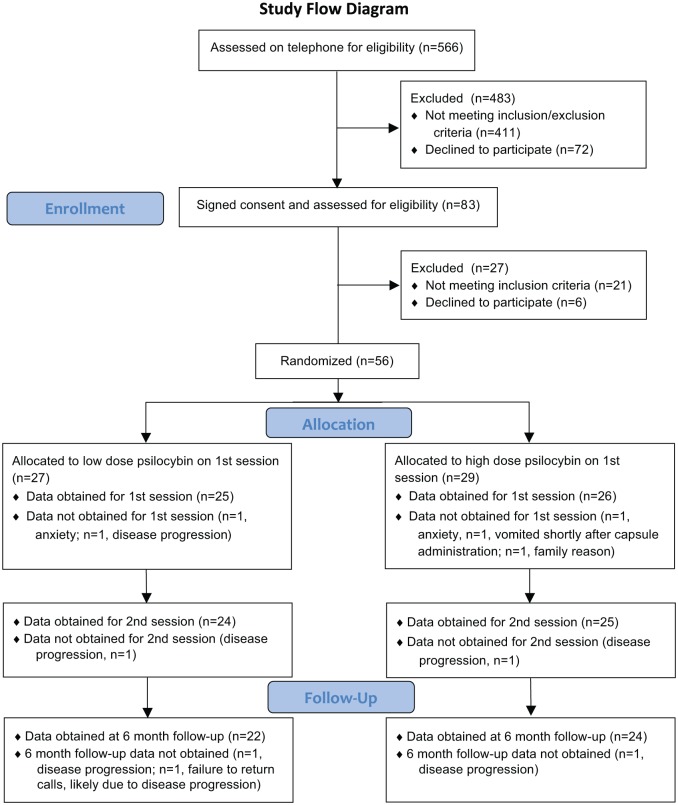
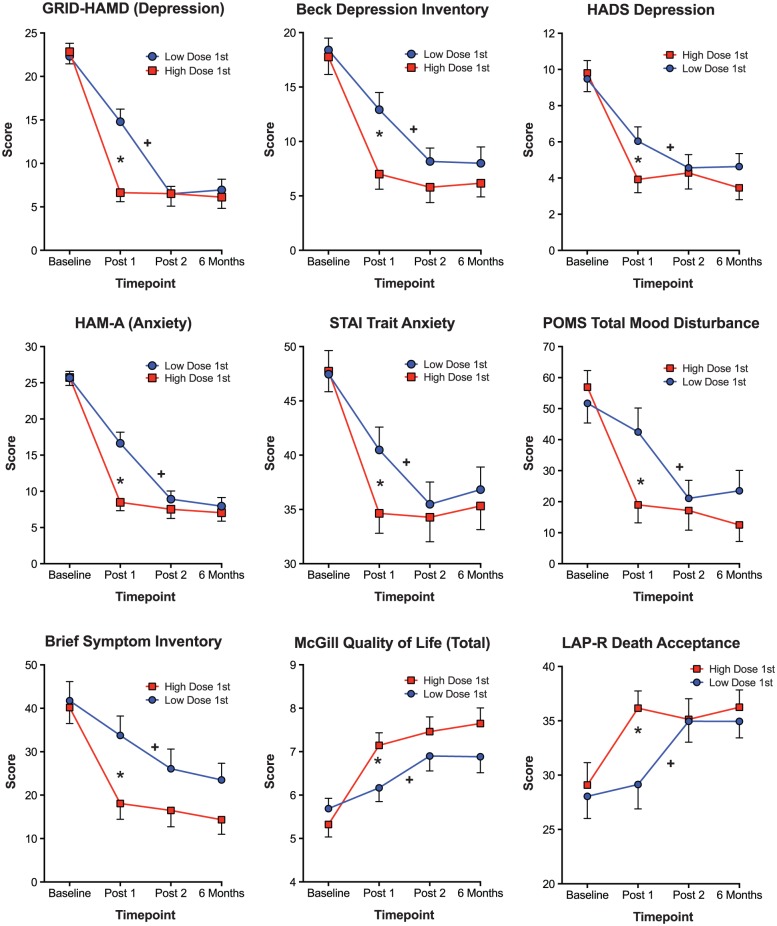
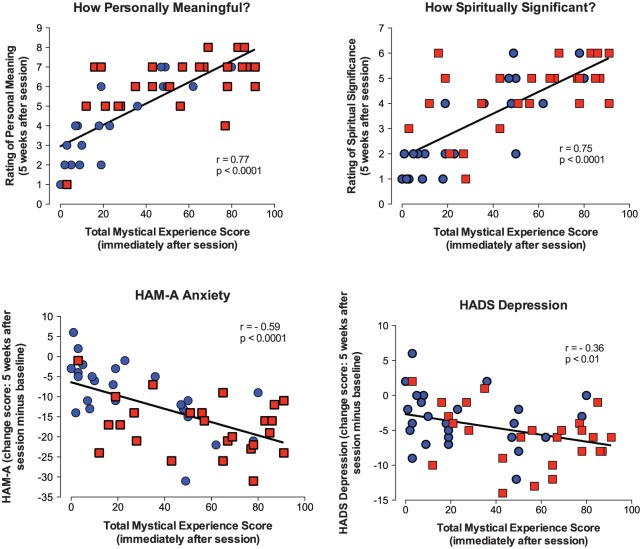
Cancer patients often develop chronic, clinically significant symptoms of depression and anxiety. Previous studies suggest that psilocybin may decrease depression and anxiety in cancer patients. The effects of psilocybin were studied in 51 cancer patients with life-threatening diagnoses and symptoms of depression and/or anxiety. This randomized, double-blind, cross-over trial investigated the effects of a very low (placebo-like) dose (1 or 3 mg/70 kg) vs. a high dose (22 or 30 mg/70 kg) of psilocybin administered in counterbalanced sequence with 5 weeks between sessions and a 6-month follow-up. Instructions to participants and staff minimized expectancy effects. Participants, staff, and community observers rated participant moods, attitudes, and behaviors throughout the study. High-dose psilocybin produced large decreases in clinician- and self-rated measures of depressed mood and anxiety, along with increases in quality of life, life meaning, and optimism, and decreases in death anxiety. At 6-month follow-up, these changes were sustained, with about 80% of participants continuing to show clinically significant decreases in depressed mood and anxiety. Participants attributed improvements in attitudes about life/self, mood, relationships, and spirituality to the high-dose experience, with >80% endorsing moderately or greater increased well-being/life satisfaction. Community observer ratings showed corresponding changes. Mystical-type psilocybin experience on session day mediated the effect of psilocybin dose on therapeutic outcomes. Trial Registration ClinicalTrials.gov identifier: NCT00465595
Overview
The claims and statistics of this paper haven’t been checked yet.
Free: it reads the open-access text and checks the first 5 claims that cite a source we can check. Create a free account to check every claim.
Integrity signals
Registry
Cites
Statistics
Figures
Verification
Claims the paper makes
The claims and statistics of this paper haven’t been checked yet.
Free: it reads the open-access text and checks the first 5 claims that cite a source we can check. Create a free account to check every claim.
Claims other papers make about this one
Each is checked against this paper’s own text: does it say what the citing paper says it does?
The cited source doesn’t support the claim as written.
In the citing paper
“In this study, groups of healthy participants were randomized into three groups, (1) low-dose psilocybin with standard support for spiritual practice (SS); (2) high-dose psilocybin with SS, and (3) high-dose psilocybin with High Support (HS) for spiritual practice.”
From Mindfulness meditation and psychedelics: potential synergies and commonalities (2023) · cites this paper as [6]
Checked by a reasoning model — may be wrong.
Experimental — accuracy not yet measuredThe source backs part of the claim, not all of it — or backs it for a different population, condition or comparison.
In the citing paper
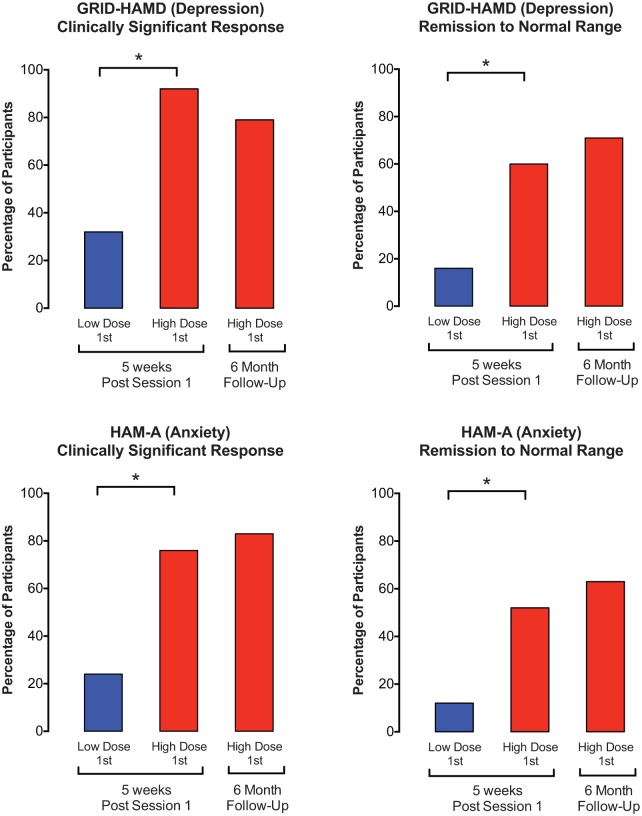
“Griffiths et al. (2016)(n = 51) reported significantly larger response (92% versus 32%) and remission (60% versus 1%) on depression and anxiety (76% vs. 24%; 52% vs. 12%, respectively) in the high-dose group compared to active placebo after 5 weeks.”
From Psychedelics for the treatment of depression, anxiety, and existential distress in patients with a terminal illness: a systematic review (2022) · cites this paper as Griffiths et al., 2016
Experimental — accuracy not yet measuredThe source backs part of the claim, not all of it — or backs it for a different population, condition or comparison.
In the citing paper
“Most of this research has been carried out with the Revised Mystical Experience Questionnaire 30 (MEQ30), where a high score correlates with and has been suggested as a predictor of long-term positive therapeutic outcomes in various clinical and naturalistic studies of psychedelics.”
From Assessment of the acute subjective psychedelic experience: A review of patient-reported outcome measures in clinical research on classical psychedelics (2024) · cites this paper as Griffiths et al., 2016
Experimental — accuracy not yet measuredThe source backs part of the claim, not all of it — or backs it for a different population, condition or comparison.
In the citing paper
“Not only do they produce sustained therapeutic effects following a single administration, they also appear to have broad therapeutic potential”
From Psychedelics and Other Psychoplastogens for Treating Mental Illness. (2021) · cites this paper as [40]
Experimental — accuracy not yet measured
52 more claims about this paper
Create a free account to see every claim other papers make about this one.
Self-check
Percentages, sums and reported differences re-computed from the paper’s own numbers.
The self-check needs the paper’s full text.
Citations
Cites
The Hospital Anxiety and Depression Scale
Zigmond, A. S., & Snaith, R. P. (1983) · Acta Psychiatrica Scandinavica · doi:10.1111/j.1600-0447.1983.tb09716.x · Cited by 47,139
(2013) · Cited by 44,563
(1970) · Cited by 24,983
Depression and quality of life in older persons: A review
Sivertsen, H., Bjørkløf, G. H., Engedal, K., Selbæk, G., & Helvik, A.-S. (2015) · Dementia and Geriatric Cognitive Disorders · doi:10.1159/000437299 · Cited by 14,152
Optimism, coping, and health: Assessment and implications of generalized outcome expectancies.
Scheier, M. F., & Carver, C. S. (1985) · Health Psychology · doi:10.1037/0278-6133.4.3.219 · Cited by 6,690 · cited 2×
“…existence (existential subscale) during life-threatening illness (Cohen et al., 1995); LOT-R, self-rated optimism measure associated with illness (Scheier and Carver, 1985); LAP-R Death Acceptance, selfrated scale assessing absence of anxiety about death (Reker, 1992); Death Transcendence Scale,…”
BackgroundMethodMcNair, D. M. (1992) · Medical Entomology and Zoology · Cited by 2,692
Mitchell, A. J., Chan, M., Bhatti, H., Halton, M., Grassi, L., Johansen, C., & Meader, N. (2011) · The Lancet Oncology · doi:10.1016/s1470-2045(11)70002-x · Cited by 2,449 · cited 1×
“Cancer patients often develop a chronic, clinically significant syndrome of psychosocial distress having depressed mood, anxiety, and reduced quality of life as core features, with up to 40% of cancer patients meeting criteria for a mood disorder (Holland et al., 2013; Mitchell et al., 2011).”
BackgroundNichols, D. E. (2016) · Pharmacological Reviews · doi:10.1124/pr.115.011478 · Cited by 1,762 · cited 2×
“The classic hallucinogens, which include psilocybin (psilocin) and (+)-lysergic acid diethylamide (LSD), are a structurally diverse group of compounds that are 5-HT2A receptor agonists and produce a unique profile of changes in thoughts, perceptions, and emotions (Halberstadt, 2015; Nichols, 2016).”
BackgroundPeterman, A. H., Fitchett, G., Brady, M. J., Hernandez, L., & Cella, D. (2002) · Annals of Behavioral Medicine · doi:10.1207/s15324796abm2401_06 · Cited by 1,751 · cited 2×
“Three measures of spirituality were assessed at three time-points: Baseline, 5 weeks after session 2, and at the 6-month follow-up: FACIT-Sp, a self-rated measure of the spiritual dimension of quality of life in chronic illness (Peterman et al., 2002) assessed on how the participant felt “on average”; Spiritual-Religi…”
MethodGriffiths, R. R., Richards, W. A., McCann, U., & Jesse, R. (2006) · Psychopharmacology · doi:10.1007/s00213-006-0457-5 · Cited by 1,684 · cited 18×
“The structured interview (Community Observer Questionnaire) consisted of asking the rater to rate the participant’s behavior and attitudes using a 10-point scale (from 1 = not at all, to 10 = extremely) on 13 items reflecting healthy psychosocial functioning: inner peace; patience; good-natured humor/playfulness; ment…”
BackgroundMethodResultInfluentialSelf-citation
Research works printed but not linked: 7
- Beck AT Steer RA (1987) BDI Beck Depression Inventory Manual. San Antonio, San Diego, Orlando, New York, Chicago, Toronto: The Psychological Corporation Harcourt Brace Jovanovich, Inc.
- Benson PL Donahue MJ Erickson JA (1993) The Faith Maturity Scale: Conceptualization, measurement, and empirical validation. Res Soc Sci Stud Religion 5: 1– 26.
- ISCDD (2003) GRID-HAMD-17 Structured Interview Guide. San Diego, CA: International Society for CNS Drug Development.
- McIntosh DN (1999) Purpose in Life Test (Crumbaugh & Maholick, 1964). In: Hill PC Hood RW (eds) Measures of Religiosity. Birmingham, AL: Religious Education Press, pp. 503– 508.
- Metzner R Litwin G Weil G (1965) The relation of expectation and mood to psilocybin reactions: A questionnaire study. Psychedelic Rev 5: 3– 39.
- Reker GT (1992) The Life Attitude Profile-Revised (LAP-R). Peterborough, ON: Student Psychologists Press.
- VandeCreek L (1999) The Death Transcendence Scale (Hood & Morris, 1983). In: Hill PC Hood RW (eds) Measures of Religiosity. Birmingham, AL: Religious Education Press, pp. 442– 445.
Cited by
Items 501–600 of 1,018
Psilocybin history, action and reaction: A narrative clinical review
Sharma, P., Nguyen, Q. A., Matthews, S. J., Carpenter, E., Matthews, D. B., Patten, C. A., & Hammond, C. J. (2023) · Journal of Psychopharmacology · doi:10.1177/02698811231190858 · Cited by 44
Psychedelics for acquired brain injury: a review of molecular mechanisms and therapeutic potential
Allen, J., Dames, S., Foldi, C. J., & Shultz, S. R. (2024) · Molecular Psychiatry · doi:10.1038/s41380-023-02360-0 · Cited by 47
Comparison of the Psychopharmacological Effects of Tiletamine and Ketamine in Rodents
Popik, P., Hołuj, M., Kos, T., Nowak, G., Librowski, T., & Sałat, K. (2017) · Neurotoxicity Research · doi:10.1007/s12640-017-9759-0 · Cited by 40
Argento, E., Braschel, M., Walsh, Z., Socias, M. E., & Shannon, K. (2018) · Journal of Psychopharmacology · doi:10.1177/0269881118798610 · Cited by 37
“…settings, recent randomized controlled trials have reported significant reductions in depression and anxiety with psilocybin among cancer patients (Griffiths et al., 2016; Ross et al., 2016), increased psychological wellbeing with psilocybin and LSD (Carhart-Harris et al., 2016b; Kraehenmann et…”
Cannabis-induced oceanic boundlessness
Earleywine, M., Ueno, L. F., Mian, M. N., & Altman, B. R. (2021) · Journal of Psychopharmacology · doi:10.1177/0269881121997099 · Cited by 37
“…health conditions such as anxiety, depression, and addictions (Bogenschutz et al., 2015, Carhart-Harris et al., 2016; Garcia-Romeu et al., 2014; Griffiths et al., 2016; Johnson et al., 2017; Klavetter and Mogar, 1967; Maclean et al., 2011; O’Reilly and Funk, 1964; Pahnke et al., 1970; Kurland…”
BackgroundInfluentialPsilocybin: From Serendipity to Credibility?
Rucker, J. J., & Young, A. H. (2021) · Frontiers in Psychiatry · doi:10.3389/fpsyt.2021.659044 · Cited by 37
Losing the Self in Near-Death Experiences: The Experience of Ego-Dissolution
Martial, C., Fontaine, G. P., Gosseries, O., Carhart-Harris, R. L., Timmermann, C., Laureys, S., & Cassol, H. (2021) · Brain Sciences · doi:10.3390/brainsci11070929 · Cited by 51
Strumila, R., Nobile, B., Korsakova, L., Lengvenytė, A., Olié, É., López‐Castromán, J., Guillaume, S., & Courtet, P. (2021) · Pharmaceuticals · doi:10.3390/ph14121213 · Cited by 49
“Psilocybin could be an interesting alternative because it (i) acts on mechanisms that are implicated in SB and SI physiopathology [5]; (ii) could produce results with just one administration [4]; (iii) acts rapidly [19]; (iv) may not require co-therapy with a classic antidepressant after intake [20]; (v) has demonstra…”
BackgroundReconsidering “dissociation” as a predictor of antidepressant efficacy for esketamine
Mathai, D. S., Nayak, S. M., Yaden, D. B., & Garcia‐Romeu, A. (2023) · Psychopharmacology · doi:10.1007/s00213-023-06324-8 · Cited by 46
Recent Progress in Mind–Body Therapies in Cancer Care
Deleemans, J. M., Mather, H., Spiropoulos, A., Toivonen, K., Baydoun, M., & Carlson, L. E. (2023) · Current Oncology Reports · doi:10.1007/s11912-023-01373-w · Cited by 43
Synthesis and Characterization of 5-MeO-DMT Succinate for Clinical Use
Sherwood, A. M., Claveau, R., Lancelotta, R., Kaylo, K. W., & Lenoch, K. (2020) · ACS Omega · doi:10.1021/acsomega.0c05099 · Cited by 40
Mapping an Agenda for Psychedelic-Assisted Therapy Research in Patients with Serious Illness
Beaussant, Y., Tulsky, J. A., Guérin, B., Schwarz-Plaschg, C. G., Sanders, J. J., Beaussant, Y., Sanders, J. J., Guérin, B., Schwarz-Plaschg, C. G., Agrawal, M., et al. (2021) · Journal of Palliative Medicine · doi:10.1089/jpm.2020.0764 · Cited by 41
“21,22 However, it remains to be determined in larger and more homogeneous studies whether, to what extent, for which populations, and with which therapeutic protocols psychedelic-assisted therapies can improve psychosocial and existential outcomes in seriously ill patients.”
Self-citationGard, D. E., Pleet, M. M., Bradley, E. R., Penn, A. D., Gallenstein, M. L., Riley, L. S., DellaCrosse, M., Garfinkle, E. M., Michalak, E. E., & Woolley, J. D. (2021) · Journal of Affective Disorders Reports · doi:10.1016/j.jadr.2021.100240 · Cited by 36
Use of plant-based hallucinogens and dissociative agents: U.S. Time Trends, 2002–2019
Walsh, C. A., Livne, O., Shmulewitz, D., Stohl, M., & Hasin, D. S. (2022) · Addictive Behaviors Reports · doi:10.1016/j.abrep.2022.100454 · Cited by 43
Dourron, H. M., Strauss, C. K., & Hendricks, P. S. (2022) · Pharmacological Reviews · doi:10.1124/pharmrev.121.000514 · Cited by 42
Psilocybin’s effects on cognition and creativity: A scoping review
Bonnieux, J. N., VanderZwaag, B., Premji, Z., Garcia‐Romeu, A., & García-Barrera, M. A. (2023) · Journal of Psychopharmacology · doi:10.1177/02698811231179801 · Cited by 39
“Recent findings have demonstrated psilocybin’s promise for treating depression and anxiety in patients with life-threatening cancer (Griffiths et al., 2016), treatment-resistant major depressive disorder (Davis et al., 2021; Goodwin et al., 2023), and substance addiction (Bogenschutz et al., 2015,…”
BackgroundPsilocybin and Other Classic Psychedelics in Depression
Nutt, D. J., Peill, J. M., Weiss, B., Godfrey, K., Carhart-Harris, R. L., & Erritzøe, D. (2023) · Current topics in behavioral neurosciences · doi:10.1007/7854_2023_451 · Cited by 43
Braun, D., Rosenberg, A. M., Rabaniam, E., Haruvi, R., Malamud, D., Barbara, R., Aiznkot, T., Levavi‐Sivan, B., & Kawashima, T. (2024) · Molecular Psychiatry · doi:10.1038/s41380-023-02391-7 · Cited by 41
Richardson, E., Patterson, R., Meltzer-Brody, S. E., McClure, R. W., & Tow, A. C. (2024) · Annual Review of Medicine · doi:10.1146/annurev-med-050423-095712 · Cited by 52
Odland, A. U., Jessen, L., Kristensen, J. L., Fitzpatrick, C. M., & Andreasen, J. T. (2019) · Neuropharmacology · doi:10.1016/j.neuropharm.2019.107838 · Cited by 37
Trends in the Top-Cited Articles on Classic Psychedelics
Lawrence, D. W., Sharma, B., Griffiths, R. R., & Carhart-Harris, R. (2021) · Journal of Psychoactive Drugs · doi:10.1080/02791072.2021.1874573 · Cited by 35
“…depressive disorder, anxiety, cancer-related existential crisis, and substance use disorders, particularly as an adjuvant to psychotherapy (Carhart-Harris et al. 2018, 2016a; Griffiths et al. 2016, 2006; Johnson et al. 2019; Muttoni, Ardissino, and John 2019; Ross et al. 2016; Uthaug et al. 2019).”
BackgroundSelf-citationJahn, Z. W., Lopez, J., de la Salle, S., Faber, S. C., & Williams, M. T. (2021) · Journal of Psychedelic Studies · doi:10.1556/2054.2021.00166 · Cited by 40
“…et al., 2019; Ot’alora et al., 2018), depression (Carhart-Harris et al., 2016; Davis et al., 2020), OCD (Moreno, Wiegand, Taitano, & Delgado, 2006), end-of-life anxiety (Griffiths et al., 2016), and substance use disorders (Johnson, Garcia-Romeu, Cosimano, & Griffiths, 2014; Sessa et al., 2021).”
BackgroundInfluentialCastelhano, J., Lima, G., Teixeira, M., Soares, C., Pais, M. L., & Castelo-Branco, M. S. (2021) · Frontiers in Pharmacology · doi:10.3389/fphar.2021.739053 · Cited by 48
Liechti, M. E., & Holze, F. (2021) · Current topics in behavioral neurosciences · doi:10.1007/7854_2021_270 · Cited by 44
Hovmand, O. R., Poulsen, E. D., & Arnfred, S. (2024) · Journal of Psychopharmacology · doi:10.1177/02698811231200019 · Cited by 33
“…treatment of people with alcohol use disorder (Bogenschutz et al., 2015; Garcia-Romeu et al., 2019) and depression and anxiety (Davis et al., 2020; Griffiths et al., 2016; Roseman et al., 2018; Ross et al., 2016), as well as for success with smoking cessation (Garcia-Romeu et al., 2014), done…”
BackgroundSøndergaard, A., Madsen, M. K., Ozenne, B., Armand, S., Knudsen, G. M., Fisher, P. M., & Stenbæk, D. S. (2022) · Frontiers in Psychology · doi:10.3389/fpsyg.2022.948729 · Cited by 38
“, 2011) in healthy volunteers, as well as improvements in symptoms in psychiatric patient populations (Bogenschutz et al., 2015; Carhart-Harris et al., 2016; Griffiths et al., 2016; Ross et al., 2016; Roseman et al., 2018; Garcia-Romeu et al., 2019).”
BackgroundPagni, B. A., Petridis, P. D., Podrebarac, S. K., Grinband, J., Claus, E. D., & Bogenschutz, M. P. (2024) · Scientific Reports · doi:10.1038/s41598-024-52967-8 · Cited by 40
Quality of reporting on psychological interventions in psychedelic treatments: a systematic review
Seybert, C., Schimmers, N., Silva, L., Breeksema, J. J., Veraart, J. K. E., Bessa, B. S., d’Orsi, D., Schoevers, R. A., & Oliveira-Maia, A. J. (2024) · The Lancet Psychiatry · doi:10.1016/s2215-0366(24)00333-x · Cited by 39
A Systematic Review of Participant Diversity in Psychedelic-Assisted Psychotherapy Trials
Haft, S. L., Downey, A. E., Raymond‐Flesch, M., Fernandes‐Osterhold, G., Bradley, E., O’Donovan, A., & Woolley, J. D. (2024) · Psychiatry Research · doi:10.1016/j.psychres.2025.116359 · Cited by 39
Ching, T. H. W., Davis, A. K., Xin, Y., & Williams, M. T. (2022) · Journal of Psychoactive Drugs · doi:10.1080/02791072.2022.2025960 · Cited by 38
Psychedelics in the treatment of unipolar and bipolar depression
Bosch, O. G., Halm, S., & Seifritz, E. (2022) · International Journal of Bipolar Disorders · doi:10.1186/s40345-022-00265-5 · Cited by 41
“…ill cancer patients, a high dose of psilocybin (22 or 30 mg p.o.) compared to a placebo-like low dose of psilocybin (1 or 3 mg p.o.) also led to a decrease of depressed mood and anxiety, with about 80% of patients continuing to show improvements at a 6-month follow-up (Griffiths et al., 2016).”
BackgroundHenningfield, J. E., Coe, M. A., Griffiths, R. R., Belouin, S. J., Berger, A. M., Coker, A. R., Comer, S. D., Heal, D. J., Hendricks, P. S., Nichols, C. D., et al. (2022) · Neuropharmacology · doi:10.1016/j.neuropharm.2022.109220 · Cited by 39
Self-citationDiscovery of β-Arrestin-Biased 25CN-NBOH-Derived 5-HT2AReceptor Agonists
Poulie, C. B. M., Pottie, E., Simon, Í. A., Harpsøe, K., D’Andrea, L., Komarov, I. V., Gloriam, D. E. I., Jensen, A. A., Stove, C. P., & Kristensen, J. L. (2022) · Journal of Medicinal Chemistry · doi:10.1021/acs.jmedchem.2c00702 · Cited by 34
Kurtz, J. S., Patel, N., Gendreau, J. L., Yang, C., Brown, N. J., Bui, N., Picton, B., Harris, M., Hatter, M. J., Beyer, R. S., et al. (2022) · Cureus · doi:10.7759/cureus.29167 · Cited by 48
“In the last two decades, there has been a resurgence of psychedelics research that has broadly encompassed the fields of neuroimaging [13-21], psychopharmacology [18,22-24], and psychology [25-31].”
BackgroundSingle-dose psilocybin for treatment-resistant obsessive-compulsive disorder: A case report
Kelmendi, B., Kichuk, S. A., DePalmer, G., Maloney, G. K., Ching, T. H. W., Belser, A., & Pittenger, C. (2022) · Heliyon · doi:10.1016/j.heliyon.2022.e12135 · Cited by 45
“, 2021) and in depression and anxiety symptoms in individuals with late-stage cancer (Grob et al., 2011; Griffiths et al., 2016; Ross et al., 2016).”
BackgroundThe ritual use of ayahuasca during treatment of severe physical illnesses: a qualitative study
Maia, L. O., Daldegan-Bueno, D., & Tófoli, L. F. (2021) · Journal of Psychoactive Drugs · doi:10.1080/02791072.2020.1854399 · Cited by 32
Lancelotta, R. L., & Davis, A. K. (2020) · Journal of Psychoactive Drugs · doi:10.1080/02791072.2020.1737763 · Cited by 33
“We included three items from the Persisting Effects Questionnaire (Griffiths et al. 2016, 2011, 2006) to examine respondents’ beliefs about the degree to which their first experience with 5-MeO-DMT was (1) personally meaningful (from 0 = “No more than routine, everyday experiences” to 7 = “The…”
BackgroundMethodPsilocybin-Assisted Compassion Focused Therapy for Depression
Pots, W. T. M., & Chakhssi, F. (2022) · Frontiers in Psychology · doi:10.3389/fpsyg.2022.812930 · Cited by 36
A Brief Historical Overview of Psychedelic Research
Geyer, M. A. (2023) · Biological Psychiatry Cognitive Neuroscience and Neuroimaging · doi:10.1016/j.bpsc.2023.11.003 · Cited by 53
Copa, D., Erritzøe, D., Giribaldi, B., Nutt, D. J., Carhart-Harris, R. L., & Tagliazucchi, E. (2024) · Journal of Affective Disorders · doi:10.1016/j.jad.2024.02.089 · Cited by 40
An Improved, Practical, and Scalable Five-Step Synthesis of Psilocybin
Kargbo, R. B., Sherwood, A. M., Meisenheimer, P. L., & Tarpley, G. (2020) · Synthesis · doi:10.1055/s-0039-1691565 · Cited by 36
Entheogens and psychedelics in Canada: Proposal for a new paradigm.
Rochester, J., Vallely, A., Grof, P., Williams, M. T., Chang, H., & Caldwell, K. (2022) · Canadian Psychology/Psychologie canadienne · doi:10.1037/cap0000285 · Cited by 42
The Potential of Psychedelics for End of Life and Palliative Care
Yaden, D. B., Nayak, S. M., Gukasyan, N., Anderson, B. T., & Griffiths, R. R. (2021) · Current topics in behavioral neurosciences · doi:10.1007/7854_2021_278 · Cited by 39
Self-citationAnalysis of Psilocybin-Assisted Therapy in Medicine: A Narrative Review
Ziff, S., Stern, B., Lewis, G., Majeed, M., & Gorantla, V. R. (2022) · Cureus · doi:10.7759/cureus.21944 · Cited by 63
“It is common for patients with a terminal diagnosis such as cancer to develop mood disorders such as depression and anxiety [29].”
BackgroundMethodInfluentialClassic Psychedelics in Addiction Treatment: The Case for Psilocybin in Tobacco Smoking Cessation
Johnson, M. W. (2022) · Current topics in behavioral neurosciences · doi:10.1007/7854_2022_327 · Cited by 49
Self-citationPsilocybin Efficacy and Mechanisms of Action in Major Depressive Disorder: a Review
Prouzeau, D., Conejero, I., Voyvodic, P. L., Bécamel, C., Abbar, M., & López‐Castromán, J. (2022) · Current Psychiatry Reports · doi:10.1007/s11920-022-01361-0 · Cited by 40
The Safety and Efficacy of Psychedelic-Assisted Therapies for Older Adults: Knowns and Unknowns
Johnston, C. B., Mangini, M., Grob, C. S., & Anderson, B. T. (2022) · American Journal of Geriatric Psychiatry · doi:10.1016/j.jagp.2022.08.007 · Cited by 40
Ethical Issues Regarding Nonsubjective Psychedelics as Standard of Care
Yaden, D. B., Earp, B. D., & Griffiths, R. R. (2022) · Cambridge Quarterly of Healthcare Ethics · doi:10.1017/s096318012200007x · Cited by 42
Self-citationRoberts, C. A., Osborne-Miller, I., Cole, J. C., Gage, S. H., & Christiansen, P. (2020) · Journal of Psychopharmacology · doi:10.1177/0269881120936508 · Cited by 39
“The compound has recently shown efficacy in clinical trials for the treatment of anxiety and depression in patients with life-threatening cancer (Griffiths et al., 2016; Ross et al., 2016).”
BackgroundArgento, E., Socias, M. E., Hayashi, K., Choi, J., Mackay, L., Christie, D., Milloy, M., & DeBeck, K. (2021) · International Journal of Drug Policy · doi:10.1016/j.drugpo.2021.103518 · Cited by 37
How Important Is a Guide Who Has Taken Psilocybin in Psilocybin-Assisted Therapy for Depression?
Earleywine, M., Low, F., Altman, B. R., & Leo, J. A. D. (2022) · Journal of Psychoactive Drugs · doi:10.1080/02791072.2022.2047842 · Cited by 34
The role of serotonin neurotransmission in rapid antidepressant actions
Pehrson, A. L., Roberts, D., Khawaja, A., & McNair, R. (2022) · Psychopharmacology · doi:10.1007/s00213-022-06098-5 · Cited by 37
The Effects of Psychedelics on Neuronal Physiology
Hatzipantelis, C. J., & Olson, D. E. (2023) · Annual Review of Physiology · doi:10.1146/annurev-physiol-042022-020923 · Cited by 44
Weiss, B., Roseman, L., Giribaldi, B., Nutt, D. J., Carhart-Harris, R. L., & Erritzøe, D. (2024) · International Journal of Mental Health and Addiction · doi:10.1007/s11469-024-01253-9 · Cited by 50
“…have previously demonstrated a significant indirect effect of acute psychedelic experience, namely, so-called “mystical experiences” (Barrett et al., 2015; Kangaslampi, 2023) on clinical outcomes (i.e., depression and anxiety related to terminal cancer) (Griffiths et al., 2016; Ross et al., 2016).”
InfluentialBenefits and Challenges of Ultra-Fast, Short-Acting Psychedelics in the Treatment of Depression
Ramaekers, J. G., Reckweg, J. T., & Mason, N. L. (2025) · American Journal of Psychiatry · doi:10.1176/appi.ajp.20230890 · Cited by 39
McIntyre, R. S., Kwan, A. T. H., Mansur, R. B., Oliveira-Maia, A. J., Teopiz, K. M., Maletic, V., Suppes, T. M., Stahl, S. M., & Rosenblat, J. D. (2025) · American Journal of Psychiatry · doi:10.1176/appi.ajp.20230902 · Cited by 37
Li, Y., Feng, Y., Chiang, H., Ma, S., & Wang, H. (2020) · Asian Nursing Research · doi:10.1016/j.anr.2020.04.003 · Cited by 37
Addressing fear of death and dying: traditional and innovative interventions
Blomstrom, M., Burns, A., Larriviere, D. G., & Penberthy, J. K. (2020) · Mortality · doi:10.1080/13576275.2020.1810649 · Cited by 42
“In another study by Griffiths et al. (2016), 51 individuals with life-threatening cancer and anxiety or mood disorder were randomised into either a low (1 or 3 mg/70 kg) or high (22 or 30 mg/70 kg) psilocybin dose group.”
BackgroundReynolds, L., Akroyd, A., Sundram, F., Stack, A., Muthukumaraswamy, S. D., & Evans, W. J. (2021) · International Journal of Environmental Research and Public Health · doi:10.3390/ijerph18158160 · Cited by 39
Psychedelics as Novel Therapeutics in Alzheimer’s Disease: Rationale and Potential Mechanisms
Garcia‐Romeu, A., Darcy, S., Jackson, H., White, T., & Rosenberg, P. B. (2021) · Current topics in behavioral neurosciences · doi:10.1007/7854_2021_267 · Cited by 36
“To date, psychedelics’ psychological mechanisms of action appear related to acute subjective drug effects associated with positive therapeutic outcomes (Bogenschutz et al. 2015; Garcia-Romeu et al. 2014; Griffiths et al. 2016; Roseman et al. 2018; Ross et al. 2016).”
BackgroundInfluentialBates, N. E., Bello, J. K., Osazuwa‐Peters, N., Sullivan, M. D., & Scherrer, J. F. (2022) · Current Treatment Options in Oncology · doi:10.1007/s11864-022-00954-4 · Cited by 37
LSD-induced increase of Ising temperature and algorithmic complexity of brain dynamics
Ruffini, G., Damiani, G., Lozano‐Soldevilla, D., Deco, N., Rosas, F. E., Kiani, N. A., Ponce‐Alvarez, A., Kringelbach, M. L., Carhart-Harris, R. L., & Deco, G. (2023) · PLoS Computational Biology · doi:10.1371/journal.pcbi.1010811 · Cited by 37
Wulff, A. B., Nichols, C. D., & Thompson, S. M. (2023) · Neuropharmacology · doi:10.1016/j.neuropharm.2023.109504 · Cited by 42
“…neuropsychiatric disorders, including depression, smoking cessation, end-of-life acceptance, substance abuse, obsessivecompulsive disorder, posttraumatic stress disorder, chronic pain, and anxiety (Griffiths et al., 2016; McClure-Begley and Roth, 2022; Vollenweider and Preller, 2020).”
Sinha, J. K., Trisal, A., Ghosh, S., Gupta, S., Singh, K. K., Han, S. S., Mahapatra, M., Abomughaid, M. M., Abomughayedh, A. M., Almutary, A. G., et al. (2024) · Ageing Research Reviews · doi:10.1016/j.arr.2024.102211 · Cited by 32
Giving Consent to the Ineffable
Villiger, D. (2024) · Neuroethics · doi:10.1007/s12152-024-09545-6 · Cited by 32
“In fact, many first-time users of psychedelics say that the experience was one of the most significant ones in their life [7, 68].”
BackgroundMüller, F., Mühlhauser, M., Holze, F., Lang, U. E., Walter, M., Liechti, M. E., & Borgwardt, S. (2020) · Frontiers in Psychiatry · doi:10.3389/fpsyt.2020.573953 · Cited by 31
Techniques for in vivo serotonin detection in the brain: State of the art
Zhao, S., & Piatkevich, K. D. (2023) · Journal of Neurochemistry · doi:10.1111/jnc.15865 · Cited by 36
“For example, psilocybin, a naturally occurring psychedelic prodrug, was granted FDA breakthrough therapy designation and is currently in phase II clinical trials for the treatment of anxiety and depression (Carhart- Harris et al., 2021; Griffiths et al., 2016; Ross et al., 2016).”
BackgroundZeifman, R. J., Kettner, H., Pagni, B. A., Mallard, A. J., Roberts, D. E., Erritzøe, D., Ross, S., & Carhart-Harris, R. L. (2023) · Scientific Reports · doi:10.1038/s41598-023-40856-5 · Cited by 37
Siva, J. B., Barba, T., Kettner, H., Kuc, J., Nutt, D. J., Carhart-Harris, R. L., & Erritzøe, D. (2024) · Journal of Psychopharmacology · doi:10.1177/02698811231224217 · Cited by 39
“…psychedelics administered in controlled settings can produce rapid and sustained symptom improvements in depression (Carhart-Harris et al., 2016, 2021; Davis et al., 2021), obsessive-compulsive disorder (OCD) (Moreno et al., 2006) and anxiety disorders (Griffiths et al., 2016; Holze et al., 2023).”
BackgroundPsychedelic Therapy as Form of Life
Langlitz, N., & Gearin, A. K. (2024) · Neuroethics · doi:10.1007/s12152-024-09550-9 · Cited by 38
“In the face of recent studies suggesting that mystical-type experiences predicted a better therapeutic outcome [36, 62, 80], this therapist maintained that mystical experiences were overrated and not necessary for therapeutic success but also acknowledged that mystical experiences could reconnect…”
BackgroundMind the Psychedelic Hype: Characterizing the Risks and Benefits of Psychedelics for Depression
Meling, D., Ehrenkranz, R. C., Nayak, S. M., Aicher, H., Funk, X., van Elk, M., Graziosi, M., Bauer, P. R., Scheidegger, M., & Yaden, D. B. (2024) · Psychoactives · doi:10.3390/psychoactives3020014 · Cited by 35
“Blinding, expectancy bias, a lack of long-term follow-up, and the placebo effect are discussed in greater detail below.”
BackgroundPsilocybin therapy for mood dysfunction in Parkinson’s disease: an open-label pilot trial
Bradley, E., Sakai, K., Fernandes‐Osterhold, G., Szigeti, B., Ludwig, C., Ostrem, J. L., Tanner, C. M., Bock, M., Llerena, K., Finley, P. R., et al. (2025) · Neuropsychopharmacology · doi:10.1038/s41386-025-02097-0 · Cited by 40
The renaissance in psychedelic research: What do preclinical models have to offer
Murnane, K. S. (2018) · Progress in brain research · doi:10.1016/bs.pbr.2018.08.003 · Cited by 39
Mystical Experiences in Retrospective Reports of First Times Using a Psychedelic in Finland
Kangaslampi, S., Hausen, A., & Rauteenmaa, T. (2020) · Journal of Psychoactive Drugs · doi:10.1080/02791072.2020.1767321 · Cited by 31
Entity encounters and the therapeutic effect of the psychedelic mystical experience
Lutkajtis, A. (2021) · Journal of Evolutionary Psychology · doi:10.1556/2054.2020.00143 · Cited by 45
“Similarly, in clinical studies psilocybin has been shown to decrease death anxiety, and this effect is mediated by the psilocybin occasioned mystical experience (Griffiths et al., 2016).”
BackgroundPearson, C. S., Siegel, J. S., & Gold, J. A. (2021) · Journal of the Neurological Sciences · doi:10.1016/j.jns.2021.120096 · Cited by 36
Jones, G. M., & Nock, M. K. (2022) · Journal of Psychopharmacology · doi:10.1177/02698811211058933 · Cited by 38
“…use disorders (Bogenschutz and Johnson, 2016; Johnson et al., 2014; Pisano et al., 2017), anxiety disorders (Danforth et al., 2018; Dos Santos et al., 2016; Gasser et al., 2014; Griffiths et al., 2016), and trauma-related disorders (Mithoefer et al., 2016, 2011, 2013, 2019; Ot’alora et al., 2018).”
BackgroundCoppola, M., Bevione, F., & Mondola, R. (2022) · Journal of Xenobiotics · doi:10.3390/jox12010004 · Cited by 41
“At 6-month follow-up, improvement in mood, anxiety and quality of life was confirmed in about 80% of patients [79].”
BackgroundAyahuasca and tobacco smoking cessation: results from an online survey in Brazil
Daldegan‐Bueno, D., Maia, L. O., Massarentti, C. M., & Tófoli, L. F. (2022) · Psychopharmacology · doi:10.1007/s00213-022-06063-2 · Cited by 39
Popik, P., Hogendorf, A. S., Bugno, R., Khoo, S. Y., Zajdel, P., Malikowska‐Racia, N., Nikiforuk, A., & Gołębiowska, J. (2022) · Psychopharmacology · doi:10.1007/s00213-021-06020-5 · Cited by 30
Averbeck, B. B. (2022) · Proceedings of the National Academy of Sciences · doi:10.1073/pnas.2121331119 · Cited by 42
Psychedelic-Assisted Therapy for People with Eating Disorders
Gukasyan, N., Schreyer, C. C., Griffiths, R. R., & Guarda, Á. S. (2022) · Current Psychiatry Reports · doi:10.1007/s11920-022-01394-5 · Cited by 35
Self-citationThe Altered States Database: Psychometric data from a systematic literature review
Prugger, J., Derdiyok, E., Dinkelacker, J., Costines, C., & Schmidt, T. T. (2022) · Scientific Data · doi:10.1038/s41597-022-01822-4 · Cited by 36
Are psychedelic medicines the reset for chronic pain? Preliminary findings and research needs
Zia, F. Z., Baumann, M. H., Belouin, S. J., Dworkin, R. H., Ghauri, M. H., Hendricks, P. S., Henningfield, J. E., Lanier, R. K., Ross, S., & Berger, A. M. (2023) · Neuropharmacology · doi:10.1016/j.neuropharm.2023.109528 · Cited by 34
Novel psychotherapeutics – a cautiously optimistic focus on Hallucinogens
Sherwood, A. M., & Prisinzano, T. E. (2017) · Expert Review of Clinical Pharmacology · doi:10.1080/17512433.2018.1415755 · Cited by 35
“Phase 2 trials at Johns Hopkins University and New York University have been conducted under rigorous double-blinded placebo-controlled conditions [8,11].”
BackgroundFrymann, T., Whitney, S., Yaden, D. B., & Lipson, J. (2022) · Frontiers in Psychology · doi:10.3389/fpsyg.2022.863247 · Cited by 30
Sharma, R., Batchelor, R., & Sin, J. (2023) · Journal of Psychoactive Drugs · doi:10.1080/02791072.2023.2190319 · Cited by 39
“In healthy volunteers, psilocybin has been shown to increase positive attitudes, mood, social effects, and behavior (Griffiths et al. 2016), with a majority of participants rating the psychedelic experience as one of the most meaningful experiences of their lives (Griffiths et al. 2008).”
BackgroundEllis, S., Bostian, C. M., Feng, W., Fischer, E. G., Schwartz, G., Eisen, K., Lean, M., Conlan, E., Ostacher, M. J., Aaronson, S. T., et al. (2024) · Journal of Affective Disorders · doi:10.1016/j.jad.2024.09.133 · Cited by 38
2018: A watershed year for psychedelic science
Aday, J. S., Davoli, C. C., & Bloesch, E. K. (2019) · Drug Science Policy and Law · doi:10.1177/2050324519872284 · Cited by 34
“…note of the results from preliminary clinical trials (e.g. 80% of depressed patients maintained a reduction in symptoms for at least six months; Griffiths et al., 2016) and designated psilocybin-assisted psychotherapy to ‘‘breakthrough therapy’’ status for treatment-resistant depression, which…”
Więckiewicz, G., Stokłosa, I., Piegza, M. J., Gorczyca, P. W., & Pudło, R. (2021) · Pharmaceuticals · doi:10.3390/ph14080793 · Cited by 39
“In three studies the sample was composed of subjects with major depressive disorder [26,27,29], and in the other three studies the sample was composed of subjects with depression and anxiety in the course of life-threatening cancer [24,25,28].”
BackgroundResultEnhancing equity-oriented care in psychedelic medicine: Utilizing the EQUIP framework
Rea, K., & Wallace, B. B. (2021) · International Journal of Drug Policy · doi:10.1016/j.drugpo.2021.103429 · Cited by 36
Molecular targets of psychedelic‐induced plasticity
Jaster, A. M., Revenga, M. D. L. F., & González‐Maeso, J. (2021) · Journal of Neurochemistry · doi:10.1111/jnc.15536 · Cited by 36
“…behave as fast- acting and long- lasting therapeutic agents against a number of psychiatric conditions that include depression (Carhart- Harris et al., 2016, 2021; Davis et al., 2020; Griffiths et al., 2016), and substance use disorders (Bogenschutz et al., 2015; Krebs & Johansen, 2012).”
BackgroundHernández-León, A., Escamilla-Orozco, R. I., Tabal-Robles, A. R., Martínez-Vargas, D., Romero-Bautista, L., Escamilla-Soto, G., Romero, O. S. G., Torres-Valencia, J. M., & González-Trujano, M. E. (2023) · Journal of Ethnopharmacology · doi:10.1016/j.jep.2023.117415 · Cited by 35
Dissolving the self:Active inference, psychedelics, and ego-dissolution
Deane, G. (2020) · Philosophy and the Mind Sciences · doi:10.33735/phimisci.2020.i · Cited by 37
Psychedelics and dissociative substances
WINSTOCK, A. R., & Rucker, J. (2020) · doi:10.1093/med/9780198713005.003.0054 · Cited by 29
The Role of Psychedelics and Counseling in Mental Health Treatment
Curtis, R., Roberts, L. C., Graves, E. G., Rainey, H. T., Wynn, D. D., Krantz, D., & Wieloch, V. (2020) · Journal of Mental Health Counseling · doi:10.17744/mehc.42.4.03 · Cited by 37
Tabernanthalog Reduces Motivation for Heroin and Alcohol in a Polydrug Use Model
Heinsbroek, J. A., Giannotti, G., Bonilla, J., Olson, D. E., & Peters, J. (2023) · Psychedelic Medicine · doi:10.1089/psymed.2023.0009 · Cited by 32
Neuropsychiatric Disorders: Bridging the Gap Between Neurology and Psychiatry
Taslim, S., Shadmani, S., Saleem, A. R., Kumar, A., Brahma, F., Blank, N., Bashir, M. A., Ansari, D., Kumari, K., Tanveer, M. U., et al. (2024) · Cureus · doi:10.7759/cureus.51655 · Cited by 45
“The emergence of neuropsychiatry as a separate discipline acquired impetus in the mid-20th century, driven by the efforts of innovative researchers and practitioners [10].”
BackgroundRetractedTiwari, P., Davoudian, P. A., Kapri, D., Vuruputuri, R. M., Karaba, L. A., Sharma, M., Zanni, G., Balakrishnan, A., Chaudhari, P. R., Pradhan, A., et al. (2024) · Neuron · doi:10.1016/j.neuron.2024.08.016 · Cited by 38
Human brain changes after first psilocybin use
Lyons, T., Spriggs, M. J., Kerkelä, L., Rosas, F. E., Roseman, L., Mediano, P. A. M., Timmermann, C., Oestreich, L., Pagni, B. A., Zeifman, R. J., et al. (2026) · Nature Communications · doi:10.1038/s41467-026-71962-3 · Cited by 42
“Justi fi ed by prior evidence of enduring psychological changes post-psychedelics 9,10 , this study used a fi xed-order cross-over design.”
Metadata
- Authors
- Griffiths, R. R., Johnson, M. W., Carducci, M. A., Umbricht, A., Richards, W. A., Richards, B. D., Cosimano, M. P., & Klinedinst, M. A.
- Affiliations
- Johns Hopkins University (US)
- Corresponding author
- Griffiths, Roland R
- Venue
- Journal of Psychopharmacology
- Publisher
- SAGE Publications
- Published
- 2016-11-30
- Volume
- 30
- Issue
- 12
- Pages
- 1181-1197
- ISSN
- 0269-8811 (ISSN-L)
- 1461-7285
- PMC
- PMC5367557
- OpenAlex
- W2558412547
- Cited by
- 2,201
- References
- 53
- Citations by year
- 2026: 278 · 2025: 325 · 2024: 335 · 2023: 315 · 2022: 310 · 2021: 229 · 2020: 187 · 2019: 73 · 2018: 77 · 2017: 54 · 2016: 14
- FWCI
- 97.18
- Type
- journal article
- Language
- en
- Open access
- hybrid
- doi.org
- Licence
- cc-by
- journals.sagepub.com/page/policies/text-and-data-mining-license (tdm)
- Locations
- Journal of Psychopharmacology (publishedVersion, cc-by)
- PubMed Central (publishedVersion, cc-by)
- PubMed (publishedVersion)
- Funders
- National Institutes of Health
- National Institute on Drug Abuse (R01DA003889)
- Topics
- Social Sciences › Psychology › Clinical Psychology › Psychedelics and Drug Studies
- Social Sciences › Health › Religion, Spirituality, and Psychology
- Health Sciences › Medicine › Oncology › Cancer survivorship and care
- Keywords
- psilocybin, depression, anxiety, cancer patients, psychedelic therapy, dose-response relationship, mystical experience, fear of death, quality of life, meaning of life, optimism, well-being, sustained treatment effects
- MeSH terms
- Anxiety, Attitude, Depression, Double-Blind Method, Female, Follow-Up Studies, Hallucinogens, Humans, Male, Middle Aged, Neoplasms, Psilocybin, Quality of Life, Surveys and Questionnaires, Cross-Over Studies
About these checks
Registry, retraction, Cites and statistics results are computed, not judged, with one exception: a printed reference that no index lists is read once by a model before it counts as a citation error. Claims are extracted by a model and kept only when their quote appears verbatim in the text; each cited source is then checked, with a model’s help, for whether it says what the claim relies on. Those verdicts can be wrong — read the claim’s quote and the cited source before relying on one.
Statistics and arithmetic are recomputed, not judged.
Confidence bands are shown only for fields calibrated on our annotated test set. None is calibrated yet, so no band is shown.
What counts as a claim ›How we measure confidence ›How we check this ›
Are you an author, or do you see a problem with this page? Request a review
Data sources
Bibliographic data: Semantic Scholar, OpenAlex, Crossref.
Contains information from the Semantic Scholar Academic Graph Datasets, made available under the ODC Attribution License (ODC-BY 1.0).
Semantic Scholar’s data is described in: Kinney, R., et al. (2023). The Semantic Scholar Open Data Platform. arXiv:2301.10140.
