

Estimating the sample size for a pilot randomised trial to minimise the overall trial sample size for the external pilot and main trial for a continuous outcome variable
Open accessThe DOI matches its Crossref record; 26 of the 26 references it cites were found in a registry or an index.
Abstract
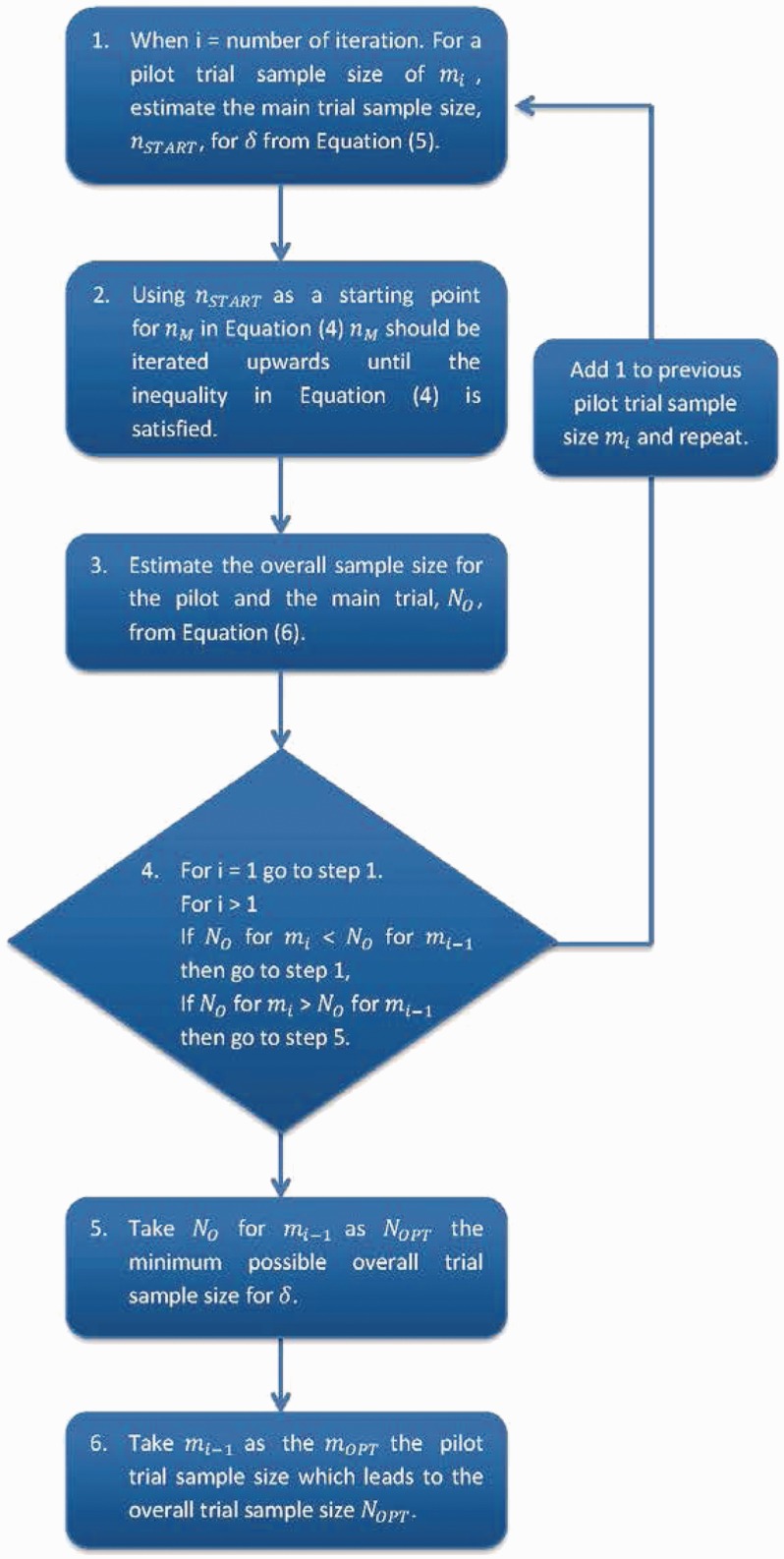
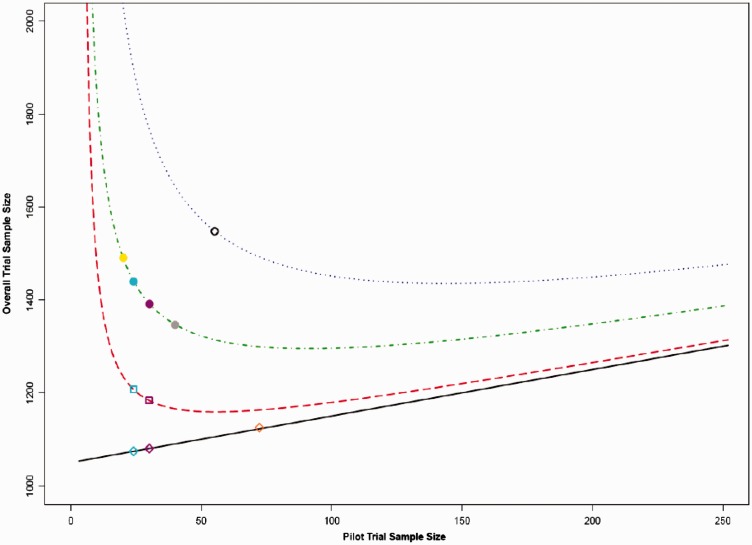
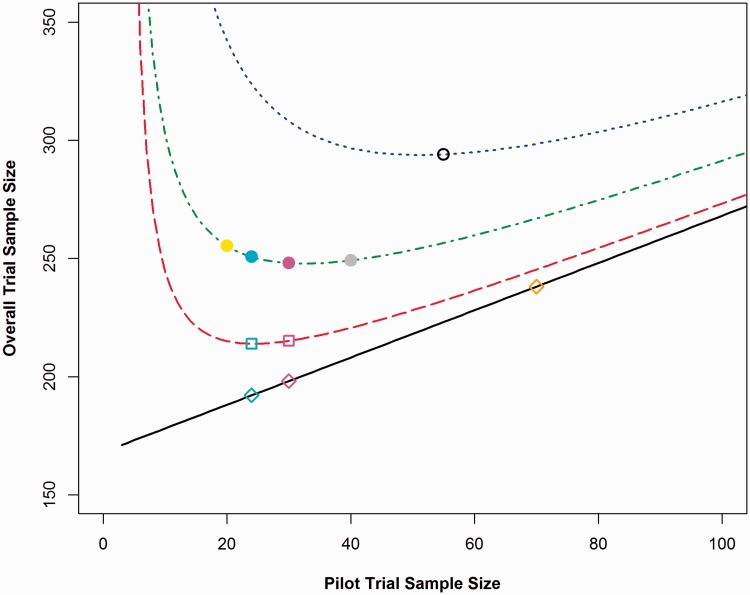
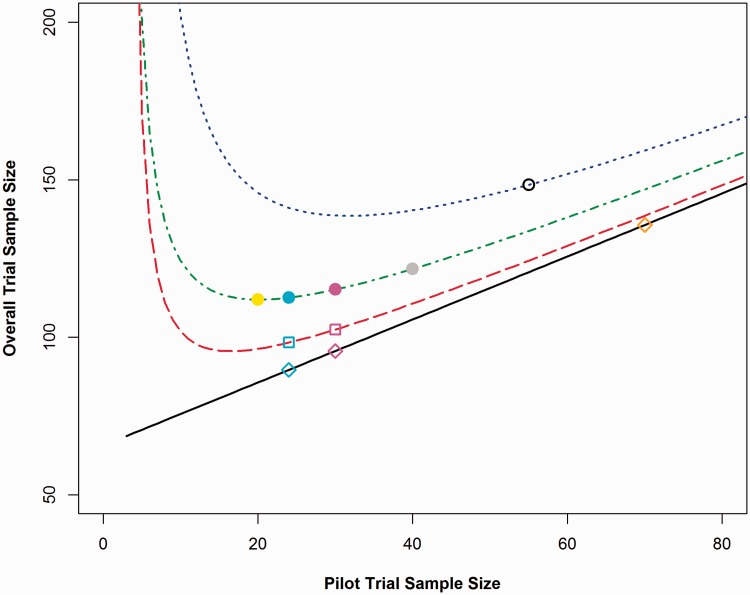
Sample size justification is an important consideration when planning a clinical trial, not only for the main trial but also for any preliminary pilot trial. When the outcome is a continuous variable, the sample size calculation requires an accurate estimate of the standard deviation of the outcome measure. A pilot trial can be used to get an estimate of the standard deviation, which could then be used to anticipate what may be observed in the main trial. However, an important consideration is that pilot trials often estimate the standard deviation parameter imprecisely. This paper looks at how we can choose an external pilot trial sample size in order to minimise the sample size of the overall clinical trial programme, that is, the pilot and the main trial together. We produce a method of calculating the optimal solution to the required pilot trial sample size when the standardised effect size for the main trial is known. However, as it may not be possible to know the standardised effect size to be used prior to the pilot trial, approximate rules are also presented. For a main trial designed with 90% power and two-sided 5% significance, we recommend pilot trial sample sizes per treatment arm of 75, 25, 15 and 10 for standardised effect sizes that are extra small (≤0.1), small (0.2), medium (0.5) or large (0.8), respectively.
Overview
The claims and statistics of this paper haven’t been checked yet.
Free: it reads the open-access text and checks the first 5 claims that cite a source we can check. Create a free account to check every claim.
Integrity signals
Registry
Cites
Statistics
Figures
Verification
Claims the paper makes
The claims and statistics of this paper haven’t been checked yet.
Free: it reads the open-access text and checks the first 5 claims that cite a source we can check. Create a free account to check every claim.
Claims other papers make about this one
Each is checked against this paper’s own text: does it say what the citing paper says it does?
The source backs part of the claim, not all of it — or backs it for a different population, condition or comparison.
In the citing paper
“Another limitation is that the sample size was relatively small, although this was consistent with previous recommendations of 24-35 participants for pilot and feasibility studies to provide sufficient data and precision of means and variances.117,134,135”
From Acceptance and commitment therapy for older people with treatment-resistant generalised anxiety disorder: The FACTOID feasibility study (2021) · cites this paper as [135]
Experimental — accuracy not yet measuredThe source backs part of the claim, not all of it — or backs it for a different population, condition or comparison.
In the citing paper
“pilot trial sample size estimation (n = 14) was based on medium standardized effect sizes (0.5) for a main trial designed with 90% power and two-sided 5% significance [41].”
From Senolytics in idiopathic pulmonary fibrosis: Results from a first-in-human, open-label, pilot study (2019) · cites this paper as [41]
Experimental — accuracy not yet measuredThe source backs part of the claim, not all of it — or backs it for a different population, condition or comparison.
In the citing paper
“For such a trial designed with 90% power and two sided 5% significance, they recommend pilot trial sample sizes for each treatment arm of 75, 25, 15, and 10 for standardised effect sizes that are extra small (0.1), small (0.2), medium (0.5), or large (0.8), respectively.”
From CONSORT 2010 statement: extension to randomised pilot and feasibility trials. (2016) · cites this paper as [58]
Experimental — accuracy not yet measuredThe source backs part of the claim, not all of it — or backs it for a different population, condition or comparison.
In the citing paper
“Sample sizes of 25 participants per arm are also recommended for pilot studies as they are capable of detecting small effect sizes (0.2) with 90% power and 2-sided significance at 5% [28].”
From Exploring the Feasibility of Digital Voice Assistants for Delivery of a Home-Based Exercise Intervention in Older Adults With Obesity and Type 2 Diabetes Mellitus: Randomized Controlled Trial (2024) · cites this paper as [28]
Experimental — accuracy not yet measuredThe source backs part of the claim, not all of it — or backs it for a different population, condition or comparison.
In the citing paper
“This sample size would also be sufficient to detect small effect sizes (0.20 with 90% power and α = 0.05 [21] for secondary outcomes including osteoporosis knowledge and attitudes towards osteoporosis medication.”
From Feasibility and effectiveness of a digital voice assistant for improving anti-osteoporosis medication adherence, and osteoporosis knowledge and attitudes, in postmenopausal women with osteoporosis: A 12-month randomised controlled trial (2025) · cites this paper as [21]
Experimental — accuracy not yet measured
20 more claims about this paper
Create a free account to see every claim other papers make about this one.
Self-check
Percentages, sums and reported differences re-computed from the paper’s own numbers.
The self-check needs the paper’s full text.
Citations
Cites
Cohen, J. (1992) · Psychological Bulletin · doi:10.1037//0033-2909.112.1.155 · Cited by 8,771
A tutorial on pilot studies: the what, why and how
Thabane, L., Ma, J., Chu, R., Cheng, J., Ismaila, A., Rios, L. P., Robson, R., Thabane, M., Giangregorio, L., & Goldsmith, C. H. (2010) · BMC Medical Research Methodology · doi:10.1186/1471-2288-10-1 · Cited by 3,384
Sample size of 12 per group rule of thumb for a pilot study
Julious, S. A. (2005) · Pharmaceutical Statistics · doi:10.1002/pst.185 · Cited by 3,068 · cited 2×
“Initially a flat rule of thumb was used, and the pilot sample size was chosen to be 24 evaluable patients in total as recommended by Julious.(16) However, suppose that a priori the standardised effect size for the main trial is 0.”
MethodInfluentialSelf-citationClinical Trials: A Practical Approach.
Hill, I. D., & Pocock, S. J. (1984) · Biometrics · doi:10.2307/2531186 · Cited by 2,930
Design and analysis of pilot studies: recommendations for good practice
Lancaster, G. A., Dodd, S., & Williamson, P. R. (2004) · Journal of Evaluation in Clinical Practice · doi:10.1111/j..2002.384.doc.x · Cited by 2,572 · cited 1×
“Therefore, since the purpose of the pilot is not to give a formal assessment of efficacy, then the sample size provided by the conventional calculations may be higher than necessary.(13)”
BackgroundWhat is a pilot or feasibility study? A review of current practice and editorial policy
Arain, M., Campbell, M. J., Cooper, C. L., & Lancaster, G. A. (2010) · BMC Medical Research Methodology · doi:10.1186/1471-2288-10-67 · Cited by 1,483
Self-citationSample Size Tables for Clinical Studies
Machin, D., Campbell, M. J., Tan, S. B., & Tan, S. H. (2008) · Wiley eBooks · doi:10.1002/9781444300710 · Cited by 1,336 · cited 1×
“Recruiting too few participants in a main trial means that the probability of finding a clinically relevant difference statistically significant is low and as a consequence, the chance of inconclusive results is high.(2,3) Conversely, if the sample size is too large, resources may be wasted, more patients than necessa…”
BackgroundSelf-citationSim, J., & Lewis, M. (2012) · Journal of Clinical Epidemiology · doi:10.1016/j.jclinepi.2011.07.011 · Cited by 1,036
On the use of a pilot sample for sample size determination
Browne, R. H. (1995) · Statistics in Medicine · doi:10.1002/sim.4780141709 · Cited by 1,007
Teare, M. D., Dimairo, M., Shephard, N., Hayman, A., Whitehead, A., & Walters, S. J. (2014) · Trials · doi:10.1186/1745-6215-15-264 · Cited by 773 · cited 3×
“Julious(16) 24 Kieser and Wassmer(12) 20–40 Browne(10) 30 Sim and Lewis(11) 55 Teare et al.(17) 70 Whitehead et al.”
BackgroundInfluentialSelf-citation
Research works printed but not linked: 1
- Grieve AP Sample sizes and confidence intervals. Am Stat 1990; 44: 190– 190.
Cited by
Items 401–500 of 1,005
Rochmawati, E., Utomo, E. K., & Makiyah, S. N. N. (2021) · Therapeutic Apheresis and Dialysis · doi:10.1111/1744-9987.13701 · Cited by 11
Grether‐Beck, S., Marini, A., Jaenicke, T., Brenden, H., Felsner, I., Aue, N., Brynjólfsdóttir, Á., & Krutmann, J. (2021) · Skin Pharmacology and Physiology · doi:10.1159/000518781 · Cited by 13
Mondal, H., Sahoo, M. R., Samantaray, R., & Mondal, S. (2021) · Journal of Education and Health Promotion · doi:10.4103/jehp.jehp_1198_20 · Cited by 11
Fischer, D., Sckell, A., Garkisch, A., Dresing, K., Eisenhauer, A., Valentini, L., & Mittlmeier, T. (2021) · Pilot and Feasibility Studies · doi:10.1186/s40814-021-00944-7 · Cited by 13
Lee, S. S., McGrattan, A., Soh, Y. C., Alawad, M., Su, T. T., Palanisamy, U. D., Hussin, A. M., Kassim, Z., Ghazali, A. N. B. M., Stephan, B. C. M., et al. (2022) · Nutrients · doi:10.3390/nu14030430 · Cited by 15
“(2016) [56], which indicate that a sample size of greater than 25 individuals per group would provide a 90% power to detect a small effect size ranging between 0.”
BackgroundInfluentialDevelopment of GERAS DANcing for Cognition and Exercise (DANCE): a feasibility study
Hewston, P. A., Kennedy, C., Ioannidis, G., Merom, D., Hladysh, G., Marr, S., Lee, J., Sztramko, R., Trainor, L. J., Grenier, A. M., et al. (2022) · Pilot and Feasibility Studies · doi:10.1186/s40814-021-00956-3 · Cited by 13
Aryan, H., Farahani, R. H., Chamanara, M., Elyasi, S., Jaafari, M. R., Haddad, M., Sani, A. T., Ardalan, M. A., & Mosaed, R. (2022) · Phytotherapy Research · doi:10.1002/ptr.7537 · Cited by 13
Corral‐Partearroyo, C., Sánchez‐Viñas, A., Gil‐Girbau, M., Peñarrubia‐María, M. T., Aznar‐Lou, I., Serrano‐Blanco, A., Carbonell-Duacastella, C., Gallardo‐Gonzalez, C., Olmos-Palenzuela, M. D. C., & Rubio-Valera, M. (2022) · Frontiers in Public Health · doi:10.3389/fpubh.2022.1038138 · Cited by 13
“The sample size of the trial exceeded the estimates determined in previous feasibility study research (39, 52, 53).”
Domal, S. V., Chandrasekaran, B., & Palaniswamy, H. P. (2023) · Journal of Diabetes & Metabolic Disorders · doi:10.1007/s40200-023-01182-9 · Cited by 10
Nakazeko, T., Shobako, N., Shioya, N., Iwama, Y., Hirano, Y., Fujii, S., Nakamura, F., & Honda, K. (2023) · Nutrients · doi:10.3390/nu15204317 · Cited by 13
“We screened and randomized 110 patients, while the allocation of 55 or more patients per group in pilot RCT was recommended by Sim and Lewis [35,36].”
BackgroundMethodLee, H.-Y., Yun, Y.-J., Choi, J., Hong, J.-W., Lee, I., Park, S.-H., & Kwon, J.-N. (2018) · Medicine · doi:10.1097/md.0000000000012016 · Cited by 13
A practical approach to sample size calculation for fixed populations
Kaptein, M. C. (2019) · Contemporary Clinical Trials Communications · doi:10.1016/j.conctc.2019.100339 · Cited by 21
“Furthermore, researchers have recently focussed on Bayesian methods for computing sample sizes [4], and have considered the embedding of the trial within its larger context [26].”
MethodChang, Y.-W., Lo, T., Chang, H.-N., Shiao, Y.-H., & Yeh, Y.-C. (2020) · Evidence-based Complementary and Alternative Medicine · doi:10.1155/2020/1705964 · Cited by 16
“[19] also recommended pilot trial sample size per treatment arm of 15 for standardized effect size.”
BackgroundLongo, E., de Campos, A. C., Barreto, A. S., Coutinho, D. L. D. L. N., Coelho, M. L. G., Corsi, C., Monteiro, K. S., & Logan, S. W. (2020) · International Journal of Environmental Research and Public Health · doi:10.3390/ijerph17186875 · Cited by 16
Seliniotaki, A. K., Lithoxopoulou, M., Talimtzi, P., Georgiou, E., Diamanti, E., Ziakas, N. G., Haidich, A., & Mataftsi, A. (2021) · Journal of Perinatology · doi:10.1038/s41372-021-01229-w · Cited by 11
Pouls, B. P. H., Kristensen, L. E., Petersson, M., van den Bemt, B. J. F., Ballerini, L., Bruggraber, R., Karlen, H., Mountian, I., van Bracht, E., Wiegratz, S., et al. (2020) · Expert Opinion on Drug Delivery · doi:10.1080/17425247.2020.1736552 · Cited by 11
Babateen, A. M., Rubele, S., Shannon, O. M., Okello, E. J., Smith, E., McMahon, N. F., O'Brien, G., Wightman, E. L., Kennedy, D. O., Mathers, J. C., et al. (2020) · Contemporary Clinical Trials Communications · doi:10.1016/j.conctc.2020.100571 · Cited by 11
Vujanovic, A. A., Lebeaut, A., Zegel, M., & Buser, S. (2022) · Contemporary Clinical Trials Communications · doi:10.1016/j.conctc.2022.100905 · Cited by 10
Maathz, P., McCracken, L. M., Eriksson, V., Säde, F., Aneblom, G., Rikner, Å., Skalkidou, A., & Buhrman, M. (2023) · Scandinavian Journal of Pain · doi:10.1515/sjpain-2022-0146 · Cited by 10
“This sample size is in line with recommendation for feasibility studies assuming in the main trial a small effect size and a power of 80 %, allowing an attrition rate of 20 % [32].”
Gould, R. L., Rawlinson, C., Thompson, B., Weeks, K., Gossage-Worrall, R., Cantrill, H., Serfaty, M. A., Graham, C. D., McCracken, L. M., White, D., et al. (2023) · Pilot and Feasibility Studies · doi:10.1186/s40814-023-01354-7 · Cited by 10
Self-citationZhu, X., Zhu, J., Wang, Y., Chu, Z., Wang, R. K., Xu, Y., Lu, L., & Zou, H. (2022) · BMC Ophthalmology · doi:10.1186/s12886-022-02638-x · Cited by 11
“2) standardized effect sizes was recommended [19].”
Zhang, Q., Ge, M., Chen, C., Fan, F., Jin, Y., Zhang, N., & Wang, L. (2023) · Chinese Journal of Integrative Medicine · doi:10.1007/s11655-023-3637-9 · Cited by 10
Tan, S. H. S., Ismail, M. A. B., Daud, T. I. M., Hod, R., & Ahmad, N. (2023) · Indian Journal of Psychiatry · doi:10.4103/indianjpsychiatry.indianjpsychiatry_240_23 · Cited by 11
“[21] Despite the availability and relatively lower cost, evidence of its usage has been limited, especially in lower-to-middle-income countries (LMICs) where the gap in mental health services is still large.”
Hezel, N., Sloot, L. H., Wanner, P., Becker, C., Bauer, J. M., Steib, S., & Werner, C. (2023) · BMJ Open · doi:10.1136/bmjopen-2023-073135 · Cited by 11
Ahmadi, S. J., Musavi, Z., Ahmadi, S., Masha, S., Muradi, N., Samim, N., Sarwary, S. A., Sarwary, S. A. A., Shahinzada, S., McAvoy, D., et al. (2023) · European Journal of Psychotraumatology · doi:10.1080/20008066.2023.2251780 · Cited by 9
“Based on current recommendations for medium to large effect sizes, estimated pilot trial sample size per treatment arm is 10–15 participants (Whitehead et al., 2016).”
BackgroundMethodCanfield, S. M., Canada, K. E., Rolbiecki, A. J., & Petroski, G. F. (2023) · BMC Pregnancy and Childbirth · doi:10.1186/s12884-023-06031-4 · Cited by 18
“We followed Whitehead et al. (2016) guidance on sample size to complete a pilot feasibility trial and determined a sample size of 30 dyads (i.e., 60 people) with 15 dyad per condition was necessary [43].”
MethodBischops, A., Sieper, L., Dukart, J., Schaal, N. K., Reinauer, C., Oommen, P. T., Tomoiagă, C. T., David, D., Mayatepek, E., & Meißner, T. (2024) · European Child & Adolescent Psychiatry · doi:10.1007/s00787-024-02395-w · Cited by 10
“Based on the approach of Whitehead et al., at least 25 participants per group were planned for a subsequent main trial designed with 90% power and an effect size of 0.1 ≤ δ < 0.3 (Cohen’s d) [35].”
InfluentialDyadic Yoga for Head and Neck Cancer Patients Undergoing Chemoradiation and their Family Caregivers
Milbury, K., Rosenthal, D. I., Li, Y., Ngo‐Huang, A., Mallaiah, S., Yousuf, S., Fuller, C. D., Lewis, C. M., Bruera, E. D., & Cohen, L. G. (2024) · Journal of Pain and Symptom Management · doi:10.1016/j.jpainsymman.2024.02.565 · Cited by 11
Takano, K., Oba, T., Katahira, K., & Kimura, K. (2024) · JMIR mhealth and uhealth · doi:10.2196/51216 · Cited by 12
“The sample size was determined after the recommendations of a pilot randomized controlled trial (eg, [31]).”
MethodBalci, S., Küchler, A., Ebert, D. D., & Baumeister, H. (2024) · BMC Digital Health · doi:10.1186/s44247-024-00074-z · Cited by 12
“In order to determine sample size, we used the recommendation by Whitehead et al. [66] for pilot trials: With a statistical power of .90 and a two-sided significance level of 95%, we used a sample size of 15, per arm, for a medium (0.5) effect size.”
MethodInfluentialBayat, M. K., Chan, W., Hay, K. E., McKenzie, S. C., Adhikari, P., Fincher, G., Jordan, F., & Ranasinghe, I. (2024) · European Heart Journal - Quality of Care and Clinical Outcomes · doi:10.1093/ehjqcco/qcae028 · Cited by 13
Singer, J., Tunbridge, M. J., Shi, B., Perkins, G. B., Chai, C. S., Salehi, T., Sim, B., Kireta, S., Johnston, J. K., Akerman, A., et al. (2024) · Vaccines · doi:10.3390/vaccines12060608 · Cited by 10
“…size: (1) the number of eligible KTRs across the two sites; (2) their current vaccination status; (3) the feasibility of conducting a trial within the contemporary resource setting; (4) the local prevalence of COVID-19; and (5) the recommended sample size requirements for a pilot study [34,35].”
BackgroundMoghtaderi, A., Magid, D. J., Yuan, A. Y., Black, B. S., Luo, Q., & Kini, V. (2024) · Journal of the American College of Cardiology · doi:10.1016/j.jacc.2024.10.109 · Cited by 11
Pallavicini, F., Orena, E. F., Arnoldi, L., Achille, F., Stefanini, S., Cassa, M. I., Pepe, A., Veronese, G., Bernardelli, L., Sforza, F., et al. (2025) · JMIR Serious Games · doi:10.2196/50326 · Cited by 16
“However, for pilot studies with an anticipated moderate standardized effect size, enrolling a minimum of 15 individuals per group is recommended to achieve a power of 90% for the subsequent main studies [47].”
Pisani, L., Vega, M. L., Ageno, E., Prediletto, I., Dongilli, R., Catalanotti, V., Giancotti, G., & Nava, S. (2024) · Pulmonology · doi:10.1080/25310429.2024.2411813 · Cited by 10
Dissanayaka, T. D., Zoghi, M., Hill, A. T., Farrell, M. J., Egan, G. F., & Jaberzadeh, S. (2020) · Brain Connectivity · doi:10.1089/brain.2020.0756 · Cited by 12
Logan, A., Freeman, J. A., Kent, B., Pooler, J., Creanor, S., Enki, D. G., Vickery, J., Barton, A., & Marsden, J. F. (2022) · Pilot and Feasibility Studies · doi:10.1186/s40814-022-01012-4 · Cited by 11
“The target sample size was 50 participants, based on recommendations for feasibility studies [24] and justification given in the published trial protocol [23].”
Kor, P. P. K., Yu, C. T. K., Liu, J. Y. W., Cheung, D. S. K., Kwan, R. Y. C., Leung, A. Y. M., Liu, D. P. M., & Hon, J. M. K. (2022) · International Journal of Older People Nursing · doi:10.1111/opn.12471 · Cited by 11
Tourists’ Intentions During COVID-19: Push and Pull Factors in Extended Theory of Planned Behaviour
Pratiwi, I. C., Novani, S., & Suryana, L. A. (2022) · Pertanika journal of social science & humanities · doi:10.47836/pjssh.30.2.15 · Cited by 14
Acevedo-Mascarúa, A. E., Rosas, R. T., Pérez-Cervera, Y., Pérez-Cruz, D., Ku-Valenzuela, L. Z., Gijón-Soriano, A. L., & Argueta‐Figueroa, L. (2022) · Medicina · doi:10.3390/medicina58101342 · Cited by 14
Hu, L., Islam, N. S., Zhang, Y., Shi, Y., Li, H., Wang, C., & Sevick, M. A. (2022) · JMIR Research Protocols · doi:10.2196/42554 · Cited by 11
“According to Whitehead et al [32], to detect a small, standardized effect size of 0.2 in the primary outcome of HbA 1c with 80% power at a 5% significance level, a sample size of 50 is needed for a pilot RCT.”
MethodInfluentialSinger, J., Tunbridge, M. J., Perkins, G. B., Salehi, T., Ying, T., Wu, H., Coates, P. T., & Chadban, S. J. (2022) · BMJ Open · doi:10.1136/bmjopen-2022-062747 · Cited by 11
Schwartz, H. R., McCusker, J., Costa, D. D., Singh, S., Baskaran, S., Belzile, É., & Roost, K. V. (2022) · Internet Interventions · doi:10.1016/j.invent.2022.100597 · Cited by 11
“We determined that a minimum sample size of 20 participants in each study arm would yield an accurate estimate of the standard deviation of the outcome measure to detect a small effect size (0.2) in a full study (Whitehead et al., 2016).”
BackgroundInfluentialKujovic, M., Benz, D., Riesbeck, M., Bahr, C., Kriegs, C., Reinermann, D., Jänner, M., Neufang, S., Margittai, Z., Kamp, D., et al. (2023) · European Archives of Psychiatry and Clinical Neuroscience · doi:10.1007/s00406-023-01692-w · Cited by 10
“In order to use a conservative estimate, Whitehead et al. [62] recommend a group size of N = 15 for pilot studies if mean effect sizes are to be expected in the outcome parameter.”
MethodLiem, T., Bohlen, L., Jung, A.-M., Hitsch, S., & Schmidt, T. (2024) · Healthcare · doi:10.3390/healthcare12020138 · Cited by 13
“The sample size was planned with 30 participants according to the rule of thumb for pilot studies [83].”
MethodDadvar, A., Jameie, M., Looha, M. A., Parsaei, M., Bujani, M. Z., Amanollahi, M., Babaei, M., Khosravi, A., & Amirifard, H. (2024) · PLoS ONE · doi:10.1371/journal.pone.0297235 · Cited by 10
Uma, E., Theng, K. S., Yi, L. L. H., Yun, L. H., Varghese, E., & Soe, H. H. K. (2018) · Malaysian Journal of Medical Sciences · doi:10.21315/mjms2018.25.4.10 · Cited by 12
Electrical Neuroimaging of Music Processing in Pianists With and Without True Absolute Pitch
Coll, S. Y., Vuichoud, N., Grandjean, D., & James, C. E. (2019) · Frontiers in Neuroscience · doi:10.3389/fnins.2019.00142 · Cited by 12
Lester, E. G., Gates, M. V., & Vranceanu, A. (2020) · Annals of Behavioral Medicine · doi:10.1093/abm/kaaa030 · Cited by 10
Bhandari, B., Narasimhan, P., Vaidya, A., & Jayasuriya, R. (2020) · BMJ Open · doi:10.1136/bmjopen-2020-040799 · Cited by 12
Hubbard, G., Beeken, R. J., Taylor, C., Oliphant, R., Watson, A. J. M., Munro, J., Russell, S., & Goodman, W. (2020) · Pilot and Feasibility Studies · doi:10.1186/s40814-020-00674-2 · Cited by 11
Ratcliffe, A., Zhai, B., Guan, Y., Jackson, D., & Sneyd, J. R. (2020) · Anaesthesia · doi:10.1111/anae.15267 · Cited by 12
Hühne-Landgraf, A., Hoch, E., & Landgraf, D. (2021) · Frontiers in Psychiatry · doi:10.3389/fpsyt.2020.569864 · Cited by 11
“As this study represents a pilot randomized trial, which does not primarily focus on proving treatment successes but more on ascertaining the best options for the future main trial, we will include each eligible patient within this year instead of using formal power calculations (64).”
MethodAlsheikho, H. O., Jomah, D. H., Younes, M. A., Tizini, M., Hassan, H., & Khalil, F. (2021) · CRANIO® · doi:10.1080/08869634.2021.1909455 · Cited by 10
“A method proposed by Whitehead et al. [23] was used for sample size calculation in this pilot trial because no similar study had been reported for reference.”
MethodJaffar, A., Sidik, S. M., Foo, C. N., Muhammad, N. A., Manaf, R. A., Ismail, S. I. F., & Suhaili, N. (2021) · International Journal of Environmental Research and Public Health · doi:10.3390/ijerph18094792 · Cited by 11
“A pilot randomised controlled trial for an expected small effect size should have 25 participants per arm [33].”
BackgroundLee, A., Chung, H., Cho, Y., Kim, J. L., Choi, J., Lee, E., Kim, B., Cho, S., & Kim, S. G. (2021) · Surgical Endoscopy · doi:10.1007/s00464-021-08546-3 · Cited by 11
“This was a pilot study, and the sample size was calculated by consulting the Medical Research Collaborating Center of Seoul National University Hospital [29].”
MethodInfluentialPearse, I., Marsh, N. M., Rickard, C. M., Ullman, A. J., Larsen, E. N., Pelecanos, A. M., McGuinness, N., Irvine, L., Rapchuk, I. L., Ziegenfuss, M. D., et al. (2021) · Australian Critical Care · doi:10.1016/j.aucc.2021.05.015 · Cited by 12
Elyasi, S., Rasta, S., Taghizadeh-Kermani, A., & Hosseini, S. (2022) · DARU Journal of Pharmaceutical Sciences · doi:10.1007/s40199-022-00438-8 · Cited by 12
“[25] recommendation, for a main trial designed with 90% power and two-sided 5% significance, pilot trial sample sizes per treatment arm of 75, 25, 15 and 10 is enough for standardised effect sizes that are extra small (≤ 0.”
BackgroundOutbreak of COVID-19-Related Myopia Progression in Adults: A Preliminary Study
Kohmarn, T., Srisurattanamethakul, N., Watcharapalakorn, A., Poyomtip, T., & Poolsanam, C. (2022) · Clinical Optometry · doi:10.2147/opto.s374155 · Cited by 10
“However, it was a suitable sample size for a preliminary study.(19,20)”
BackgroundOjo, S. O., Bailey, D. P., Chater, A., & Hewson, D. J. (2022) · Frontiers in Public Health · doi:10.3389/fpubh.2022.832374 · Cited by 13
Implementation of continuous temperature monitoring during perioperative care: a feasibility study
Munday, J., Sturgess, D. J., Oishi, S., Bendeich, J., Kearney, A., & Douglas, C. (2022) · Patient Safety in Surgery · doi:10.1186/s13037-022-00341-w · Cited by 10
“This sample size was sufficient to evaluate the feasibility of study methods [20].”
BackgroundBrady, B., Sidhu, B., Jennings, M. D., Boland, R. A., Hassett, G., Chipchase, L. S., Tang, C. Y., Yaacoub, S., Pavlovic, N., Sayad, S., et al. (2023) · BMC Musculoskeletal Disorders · doi:10.1186/s12891-022-06122-x · Cited by 10
“Sample size and data analysis While recommendations for sample size in pilot and feasibility studies are varied, a minimum of 20 participants per arm is considered important for informing further research [40].”
BackgroundYing, X., Robinson, K. A., & Ehrhardt, S. (2023) · BMJ Evidence-Based Medicine · doi:10.1136/bmjebm-2023-112358 · Cited by 9
Mok, C. W., Seet, Y. L. M., Lin, Z. C., Hing, J. X., Seah, C. M., & Tan, S.-M. (2024) · International Journal of Surgery · doi:10.1097/js9.0000000000001674 · Cited by 11
Milbury, K., Ann‐Yi, S., Whisenant, M., Jones, M., Li, Y., Necroto, V., Yousuf, S., Chávez‐MacGregor, M., Meyers, L., & Bruera, E. D. (2024) · The Oncologist · doi:10.1093/oncolo/oyae351 · Cited by 9
Leach, M., & Breakspear, I. (2025) · Complementary Therapies in Clinical Practice · doi:10.1016/j.ctcp.2025.101949 · Cited by 11
Chong, Y. Y., Chien, W. T., Mou, H., Leung, S. P., Wong, O. Y., & Lam, S. Y. (2025) · Clinical & Experimental Allergy · doi:10.1111/cea.70003 · Cited by 9
Dipalma, G., Marinelli, G., Inchingolo, F., Longo, M., Cesare, M. D. G., Serio, S. D., Palermo, A., FABBRO, M. D., Inchingolo, A. D., & Inchingolo, A. M. (2025) · Journal of Functional Biomaterials · doi:10.3390/jfb16090354 · Cited by 16
“Digital simulation software enhances treatment planning and patient communication by providing visual progress predictions, though these are idealized and must be adjusted based on biological response [109–117].”
IsHak, W. W., Hirsch, D., Renteria, S., Totlani, J., Murphy, N., Chang, T. Y., Abdelsalam, R., Salem, M., Meyer, A., Keerthana, S., et al. (2025) · BMC Psychiatry · doi:10.1186/s12888-025-07141-3 · Cited by 13
“Furthermore, trials with less than 50 participants in order to exclude pilot studies based on the statistical literature [4].”
Abong’o, B., Kwaro, D., Bange, T., Moshi, V., Simwero, J., Otima, J., Mendt, S., Ochomo, E., & Maggioni, M. A. (2026) · Nature Medicine · doi:10.1038/s41591-025-04104-9 · Cited by 12
“A sample of 10 structures per treatment arm was considered sufficient based on recommendations by Whitehead et al. 57 for an external pilot with a continuous outcome variable.”
Bertelsen, P., Ozer, S., Faber, P., Jacobsen, A. S., & Lund-Laursen, T. (2019) · Nordic Psychology · doi:10.1080/19012276.2019.1690557 · Cited by 9
Mundal, I. P., Gråwe, R. W., Hafstad, H., Cuevas, C. D. L., & Lara‐Cabrera, M. L. (2020) · BMJ Open · doi:10.1136/bmjopen-2020-039852 · Cited by 12
A pilot study to evaluate the impact of digital imaging on the delivery of oral hygiene instruction
Holloway, J. A., Seong, J., Claydon, N., Davies, M., Hellin, N., Khan, I., & West, N. X. (2022) · Journal of Dentistry · doi:10.1016/j.jdent.2022.104053 · Cited by 12
Pratiwi, I. C., & Novani, S. (2022) · Tourism and hospitality management · doi:10.20867/thm.28.2.7 · Cited by 11
“According to Whitehead et al. (2016), the minimum pilot study’s sample size is 24 with 90% average power prediction.”
BackgroundSabharwal, J., & Joshi, S. (2022) · Advances in Rehabilitation · doi:10.5114/areh.2022.121561 · Cited by 10
“Providing exercises and hot packs prior to in - tervention have a modest effect on the joints by reducing pain in patients with KOA; in addition, electrical stimulation can induce 10–30% more contraction in both healthy and weak muscles compared to exercises [29].”
Swarnakar, R., Yadav, S., Wadhwa, S., & Venkataraman, S. (2023) · Cureus · doi:10.7759/cureus.41513 · Cited by 9
Yuen, E. Y. N., Street, M., Abdelrazek, M., Blencowe, P., Etienne, G., Liskaser, R., Choudhary, N., & Considine, J. (2023) · Journal of Clinical Nursing · doi:10.1111/jocn.16782 · Cited by 9
Maranho, M. C. D. M. F., Guapo, V. G., de Rezende, M. G., Vieira, C. S., Brandão, M. L., Graeff, F. G., Lovick, T. A., & Del‐Ben, C. M. (2023) · Psychoneuroendocrinology · doi:10.1016/j.psyneuen.2023.106360 · Cited by 10
Munshi, R., Karande-Patil, S., Kumbhar, D. A., Deshmukh, A., & Hingorani, L. (2023) · Journal of Ayurveda and Integrative Medicine · doi:10.1016/j.jaim.2023.100806 · Cited by 21
“As this was a Proof-of-Concept Study, with no previous clinical results available with this formulation, a sample size of 60 participants (30 in each group) was considered adequate to address the study objectives [47 e 49].”
MethodGhose, S. S., Patel, N. A., Marshall, T., George, P., Taylor, J. A., Karakus, M. C., Crocker, L., Hoey, T., & Goldman, H. H. (2024) · Psychiatric Services · doi:10.1176/appi.ps.20230542 · Cited by 11
Oei, K., Choi, E., Bar-Dayan, A., Stinson, J., Palmert, M. R., Alfonsi, J., & Hamilton, J. K. (2024) · JMIR Formative Research · doi:10.2196/58682 · Cited by 15
Pilot Efficacy of a DriveFocus™ Intervention on the Driving Performance of Young Drivers
Alvarez, L., Classen, S., Medhizadah, S., Knott, M., & He, W. (2018) · Frontiers in Public Health · doi:10.3389/fpubh.2018.00125 · Cited by 10
“Current recommendations in the extant literature include a sample size of 10% the number required for a larger trial (24), while others recommend 15 participants per arm for medium effects (25).”
BackgroundStewart, E. M., Catroppa, C., & Lah, S. S. (2019) · Pilot and Feasibility Studies · doi:10.1186/s40814-019-0393-x · Cited by 11
Ho, A. H. Y., Dutta, O., Tan-Ho, G., Tan, T. H. B., Low, X. C., Ganapathy, S., Car, J., Ho, M. R., & Miao, C. Y. (2020) · JMIR Research Protocols · doi:10.2196/17561 · Cited by 9
“For a main trial designed with 90% power and two-sided significance level of at least .05, a pilot sample size of 25 per arm is needed to detect a small effect size of 0.2 in the primary outcome measure [55].”
InfluentialHüttner, F. J., Probst, P., Mihaljević, A. L., Contin, P., Dörr-Harim, C., Ulrich, A. B., Schneider, M. A., Büchler, M. W., Diener, M. K., & Knebel, P. (2020) · BMJ Open · doi:10.1136/bmjopen-2020-038930 · Cited by 11
Anderson, D. J., Sturt, J. A., McDonald, N., White, C., Porter‐Steele, J., Rogers, R. L., Temple, A., Seib, C. A., McGuire, A., Tjondronegoro, D., et al. (2020) · Diabetes Research and Clinical Practice · doi:10.1016/j.diabres.2020.108541 · Cited by 11
Komatsu, T., Ayaori, M., Uto‐Kondo, H., Hayashi, K., Tamura, K., Sato, H., Sasaki, M., Nishida, T., Takiguchi, S., Yakushiji, E., et al. (2021) · Journal of Atherosclerosis and Thrombosis · doi:10.5551/jat.61630 · Cited by 10
Shiao, Y.-H., Chen, Y., Yeh, Y.-C., & Huang, T. (2021) · Evidence-based Complementary and Alternative Medicine · doi:10.1155/2021/5514873 · Cited by 10
“A pilot trial sample size per treatment arm of 15 is considered medium in terms of standardized effect sizes [17].”
BackgroundBlashill, A. J., Gordon, J. R., Rojas, S. A., Ramers, C. B., Lin, C., Carrizosa, C. M., Nogg, K. A., Lamb, K. M., Lucido, N. C., Jones, I. J., et al. (2021) · BMJ Open · doi:10.1136/bmjopen-2020-040955 · Cited by 9
Adjusting for bias in the mean for primary and secondary outcomes when trials are in sequence
Rothwell, J. C., Julious, S. A., & Cooper, C. L. (2021) · Pharmaceutical Statistics · doi:10.1002/pst.2180 · Cited by 8
“The number of subjects has been derived from the results presented by Whitehead et al.17 The second assumption is that we are considering only the context of having a positive (d > 0) result in the pilot study resulting in a confirmatory study.”
Self-citationUllman, A. J., Edwards, R., Walker, R., Roy, J., Paton, A., Rickard, C. M., Cooke, M. L., Bradford, N., Gibson, V., Cattanach, P., et al. (2022) · Cancer Nursing · doi:10.1097/ncc.0000000000001053 · Cited by 11
“Sample size calculations were based on acquisition of feasibility outcomes, with 30 participants per treatment group determined to be adequate to identify feasibility of study procedures, and provide estimates of treatment effect for future investigations.(29,30)”
MethodHaas, P., Sudeck, G., Kelava, A., Cattarius, M., Meibohm, M., Schmid, J., Kistoglidou, E., & Gawrilow, C. (2022) · Pilot and Feasibility Studies · doi:10.1186/s40814-022-01125-w · Cited by 12
“According to Whitehead and colleagues [31], for an 80% powered main trial with an 0.”
MethodAnalyzing the science achievement test: Perspective of classical test theory and Rasch analysis
Law, H. H., Sharif, S., & Han, C. G. K. (2022) · International Journal of Evaluation and Research in Education (IJERE) · doi:10.11591/ijere.v11i4.22304 · Cited by 17
Feasibility and Acceptability of a Novel Online Program for Mental Health Carers
Fitzgeraldson, E., Triandafilidis, Z., Franklin, Y., Palazzi, K. L., KAY‐LAMBKIN, F. J., & Fitzpatrick, S. (2023) · International journal of psychological research · doi:10.21500/20112084.5733 · Cited by 9
“Therefore, determining the sample size through formal power considerations was not necessary (Whitehead et al., 2016).”
BackgroundCorbaz, F., Boussac, E., Lepigeon, K., Dias, D. G., Marcadent, S., Desseauve, D., & Horsch, A. (2023) · BMJ Open · doi:10.1136/bmjopen-2022-065830 · Cited by 8
Suzuka, T., Tanaka, N., Kadoya, Y., Ida, M., Iwata, M., Ozu, N., & Kawaguchi, M. (2024) · Journal of Clinical Medicine · doi:10.3390/jcm13030712 · Cited by 11
“The recommended sample size for a pilot trial of a full RCT designed with 90% power and a two-sided 5% significance threshold is 15 per group [24].”
BackgroundDorstyn, D., Roberts, R., Murphy, G., Craig, A. R., Kneebone, I., Stewart, P., Chur‐Hansen, A., Marshall, R., Clark, J., & Migliorini, C. (2018) · Spinal Cord · doi:10.1038/s41393-018-0200-1 · Cited by 14
Binmahfoz, A., Johnston, L., Dunning, E., Gray, C. M., & Gray, S. R. (2025) · Nutrition & Metabolism · doi:10.1186/s12986-025-00986-1 · Cited by 8
“We aimed to recruit 50 participants, which is within the recommended range of sample size for pilot studies [30] and would allow us to detect a 0.8 SD difference in outcomes (power 80%, alpha = 0.05).”
InfluentialPetersen, J. M., Donahue, M. L., Capel, L. K., Bowers, E. M., Woolley, M. G., Boghosian, S., & Twohig, M. P. (2024) · Journal of Contextual Behavioral Science · doi:10.1016/j.jcbs.2024.100764 · Cited by 8
Jin, C., Cho, K., Kwon, S., Lee, H., Kim, T., Jung, W., Moon, S., Cho, S., Kang, B.-K., Park, J., et al. (2022) · Frontiers in Neurology · doi:10.3389/fneur.2022.1025269 · Cited by 8
“As a result, each group required 25 participants (20).”
Background
Metadata
- Authors
- Whitehead, A. L., Julious, S. A., Cooper, C. L., & Campbell, M. J.
- Affiliations
- University of Sheffield (GB)
- Corresponding author
- Whitehead, Amy L
- Venue
- Statistical Methods in Medical Research
- Publisher
- SAGE Publications
- Published
- 2015-06-19
- Volume
- 25
- Issue
- 3
- Pages
- 1057-1073
- ISSN
- 0962-2802 (ISSN-L)
- 1477-0334
- PMC
- PMC4876429
- OpenAlex
- W2137904825
- Semantic Scholar
- acf7c691cd77fce40fa8d45f63c5d2971e6ec50d
- Cited by
- 1,936
- References
- 26
- Citations by year
- 2026: 314 · 2025: 333 · 2024: 287 · 2023: 239 · 2022: 245 · 2021: 204 · 2020: 148 · 2019: 87 · 2018: 51 · 2017: 17 · 2016: 8
- FWCI
- 22.54
- Type
- journal article
- Language
- en
- Open access
- hybrid
- doi.org
- Licence
- cc-by
- journals.sagepub.com/page/policies/text-and-data-mining-license (tdm)
- Locations
- Statistical Methods in Medical Research (publishedVersion, cc-by)
- Europe PMC (PubMed Central) (publishedVersion, cc-by)
- PubMed Central (publishedVersion, cc-by)
- PubMed (publishedVersion)
- White Rose Research Online (University of Leeds, The University of Sheffield, University of York) (acceptedVersion)
- ePrints Soton (University of Southampton) (acceptedVersion)
- Topics
- Physical Sciences › Mathematics › Statistics and Probability › Statistical Methods in Clinical Trials
- Physical Sciences › Mathematics › Statistics and Probability › Statistical Methods in Epidemiology
- Social Sciences › Decision Sciences › Statistics, Probability and Uncertainty › Meta-analysis and systematic reviews
- Keywords
- sample size determination, main trial, continuous outcomes, standard deviation estimation, clinical trial design
- MeSH terms
- Humans, Pilot Projects, Randomized Controlled Trials as Topic, Outcome Assessment, Health Care, Sample Size
About these checks
Registry, retraction, Cites and statistics results are computed, not judged, with one exception: a printed reference that no index lists is read once by a model before it counts as a citation error. Claims are extracted by a model and kept only when their quote appears verbatim in the text; each cited source is then checked, with a model’s help, for whether it says what the claim relies on. Those verdicts can be wrong — read the claim’s quote and the cited source before relying on one.
Statistics and arithmetic are recomputed, not judged.
Confidence bands are shown only for fields calibrated on our annotated test set. None is calibrated yet, so no band is shown.
What counts as a claim ›How we measure confidence ›How we check this ›
Are you an author, or do you see a problem with this page? Request a review
Data sources
Bibliographic data: Semantic Scholar, OpenAlex, Crossref.
Contains information from the Semantic Scholar Academic Graph Datasets, made available under the ODC Attribution License (ODC-BY 1.0).
Semantic Scholar’s data is described in: Kinney, R., et al. (2023). The Semantic Scholar Open Data Platform. arXiv:2301.10140.
