

Estimating the sample size for a pilot randomised trial to minimise the overall trial sample size for the external pilot and main trial for a continuous outcome variable
Open accessThe DOI matches its Crossref record; 26 of the 26 references it cites were found in a registry or an index.
Abstract
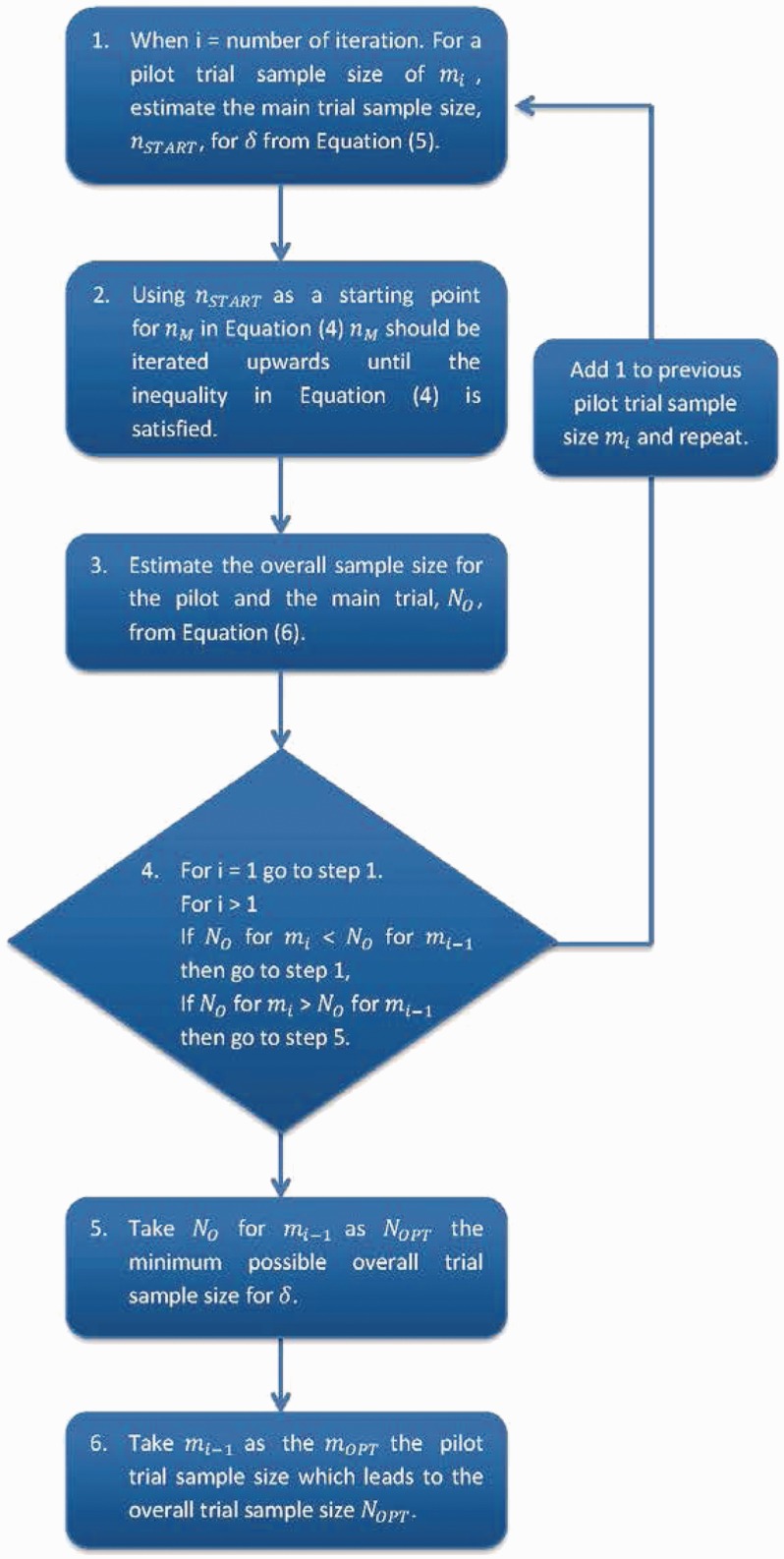
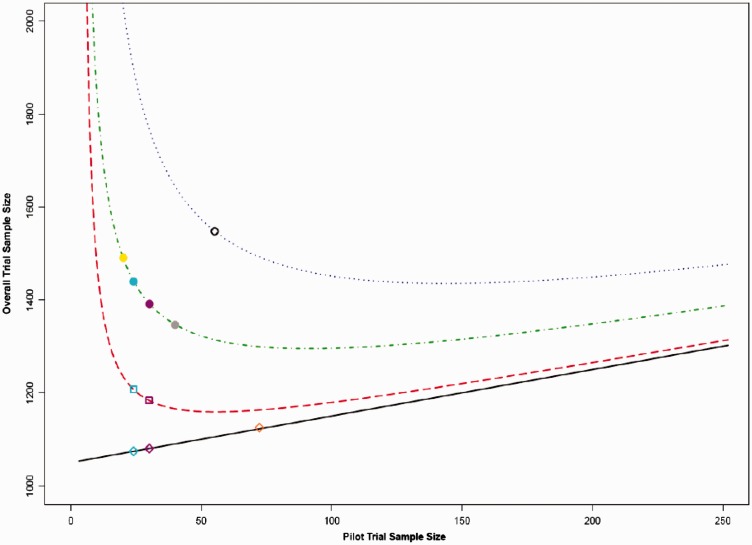
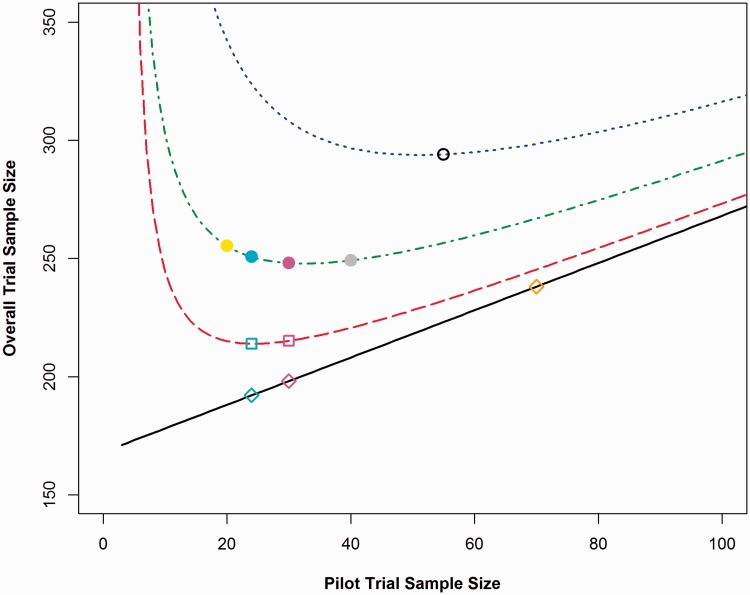
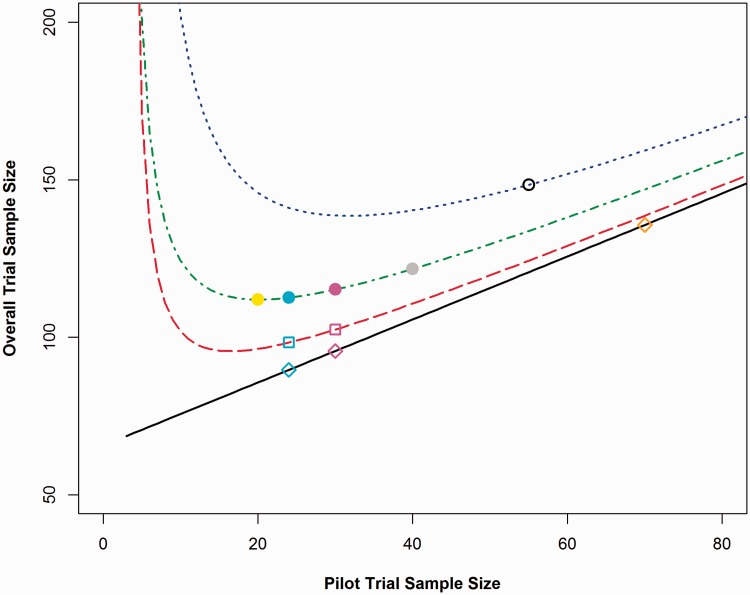
Sample size justification is an important consideration when planning a clinical trial, not only for the main trial but also for any preliminary pilot trial. When the outcome is a continuous variable, the sample size calculation requires an accurate estimate of the standard deviation of the outcome measure. A pilot trial can be used to get an estimate of the standard deviation, which could then be used to anticipate what may be observed in the main trial. However, an important consideration is that pilot trials often estimate the standard deviation parameter imprecisely. This paper looks at how we can choose an external pilot trial sample size in order to minimise the sample size of the overall clinical trial programme, that is, the pilot and the main trial together. We produce a method of calculating the optimal solution to the required pilot trial sample size when the standardised effect size for the main trial is known. However, as it may not be possible to know the standardised effect size to be used prior to the pilot trial, approximate rules are also presented. For a main trial designed with 90% power and two-sided 5% significance, we recommend pilot trial sample sizes per treatment arm of 75, 25, 15 and 10 for standardised effect sizes that are extra small (≤0.1), small (0.2), medium (0.5) or large (0.8), respectively.
Overview
The claims and statistics of this paper haven’t been checked yet.
Free: it reads the open-access text and checks the first 5 claims that cite a source we can check. Create a free account to check every claim.
Integrity signals
Registry
Cites
Statistics
Figures
Verification
Claims the paper makes
The claims and statistics of this paper haven’t been checked yet.
Free: it reads the open-access text and checks the first 5 claims that cite a source we can check. Create a free account to check every claim.
Claims other papers make about this one
Each is checked against this paper’s own text: does it say what the citing paper says it does?
The source backs part of the claim, not all of it — or backs it for a different population, condition or comparison.
In the citing paper
“Another limitation is that the sample size was relatively small, although this was consistent with previous recommendations of 24-35 participants for pilot and feasibility studies to provide sufficient data and precision of means and variances.117,134,135”
From Acceptance and commitment therapy for older people with treatment-resistant generalised anxiety disorder: The FACTOID feasibility study (2021) · cites this paper as [135]
Experimental — accuracy not yet measuredThe source backs part of the claim, not all of it — or backs it for a different population, condition or comparison.
In the citing paper
“pilot trial sample size estimation (n = 14) was based on medium standardized effect sizes (0.5) for a main trial designed with 90% power and two-sided 5% significance [41].”
From Senolytics in idiopathic pulmonary fibrosis: Results from a first-in-human, open-label, pilot study (2019) · cites this paper as [41]
Experimental — accuracy not yet measuredThe source backs part of the claim, not all of it — or backs it for a different population, condition or comparison.
In the citing paper
“For such a trial designed with 90% power and two sided 5% significance, they recommend pilot trial sample sizes for each treatment arm of 75, 25, 15, and 10 for standardised effect sizes that are extra small (0.1), small (0.2), medium (0.5), or large (0.8), respectively.”
From CONSORT 2010 statement: extension to randomised pilot and feasibility trials. (2016) · cites this paper as [58]
Experimental — accuracy not yet measuredThe source backs part of the claim, not all of it — or backs it for a different population, condition or comparison.
In the citing paper
“Sample sizes of 25 participants per arm are also recommended for pilot studies as they are capable of detecting small effect sizes (0.2) with 90% power and 2-sided significance at 5% [28].”
From Exploring the Feasibility of Digital Voice Assistants for Delivery of a Home-Based Exercise Intervention in Older Adults With Obesity and Type 2 Diabetes Mellitus: Randomized Controlled Trial (2024) · cites this paper as [28]
Experimental — accuracy not yet measuredThe source backs part of the claim, not all of it — or backs it for a different population, condition or comparison.
In the citing paper
“This sample size would also be sufficient to detect small effect sizes (0.20 with 90% power and α = 0.05 [21] for secondary outcomes including osteoporosis knowledge and attitudes towards osteoporosis medication.”
From Feasibility and effectiveness of a digital voice assistant for improving anti-osteoporosis medication adherence, and osteoporosis knowledge and attitudes, in postmenopausal women with osteoporosis: A 12-month randomised controlled trial (2025) · cites this paper as [21]
Experimental — accuracy not yet measured
20 more claims about this paper
Create a free account to see every claim other papers make about this one.
Self-check
Percentages, sums and reported differences re-computed from the paper’s own numbers.
The self-check needs the paper’s full text.
Citations
Cites
Cohen, J. (1992) · Psychological Bulletin · doi:10.1037//0033-2909.112.1.155 · Cited by 8,771
A tutorial on pilot studies: the what, why and how
Thabane, L., Ma, J., Chu, R., Cheng, J., Ismaila, A., Rios, L. P., Robson, R., Thabane, M., Giangregorio, L., & Goldsmith, C. H. (2010) · BMC Medical Research Methodology · doi:10.1186/1471-2288-10-1 · Cited by 3,384
Sample size of 12 per group rule of thumb for a pilot study
Julious, S. A. (2005) · Pharmaceutical Statistics · doi:10.1002/pst.185 · Cited by 3,068 · cited 2×
“Initially a flat rule of thumb was used, and the pilot sample size was chosen to be 24 evaluable patients in total as recommended by Julious.(16) However, suppose that a priori the standardised effect size for the main trial is 0.”
MethodInfluentialSelf-citationClinical Trials: A Practical Approach.
Hill, I. D., & Pocock, S. J. (1984) · Biometrics · doi:10.2307/2531186 · Cited by 2,930
Design and analysis of pilot studies: recommendations for good practice
Lancaster, G. A., Dodd, S., & Williamson, P. R. (2004) · Journal of Evaluation in Clinical Practice · doi:10.1111/j..2002.384.doc.x · Cited by 2,572 · cited 1×
“Therefore, since the purpose of the pilot is not to give a formal assessment of efficacy, then the sample size provided by the conventional calculations may be higher than necessary.(13)”
BackgroundWhat is a pilot or feasibility study? A review of current practice and editorial policy
Arain, M., Campbell, M. J., Cooper, C. L., & Lancaster, G. A. (2010) · BMC Medical Research Methodology · doi:10.1186/1471-2288-10-67 · Cited by 1,483
Self-citationSample Size Tables for Clinical Studies
Machin, D., Campbell, M. J., Tan, S. B., & Tan, S. H. (2008) · Wiley eBooks · doi:10.1002/9781444300710 · Cited by 1,336 · cited 1×
“Recruiting too few participants in a main trial means that the probability of finding a clinically relevant difference statistically significant is low and as a consequence, the chance of inconclusive results is high.(2,3) Conversely, if the sample size is too large, resources may be wasted, more patients than necessa…”
BackgroundSelf-citationSim, J., & Lewis, M. (2012) · Journal of Clinical Epidemiology · doi:10.1016/j.jclinepi.2011.07.011 · Cited by 1,036
On the use of a pilot sample for sample size determination
Browne, R. H. (1995) · Statistics in Medicine · doi:10.1002/sim.4780141709 · Cited by 1,007
Teare, M. D., Dimairo, M., Shephard, N., Hayman, A., Whitehead, A., & Walters, S. J. (2014) · Trials · doi:10.1186/1745-6215-15-264 · Cited by 773 · cited 3×
“Julious(16) 24 Kieser and Wassmer(12) 20–40 Browne(10) 30 Sim and Lewis(11) 55 Teare et al.(17) 70 Whitehead et al.”
BackgroundInfluentialSelf-citation
Research works printed but not linked: 1
- Grieve AP Sample sizes and confidence intervals. Am Stat 1990; 44: 190– 190.
Cited by
Items 701–800 of 1,005
Pang, B., Moullin, J. C., Thompson, C., Thøgersen‐Ntoumani, C., Stamatakis, E., Ahmadi, M. N., & McVeigh, J. A. (2025) · Age and Ageing · doi:10.1093/ageing/afaf244 · Cited by 10
“The study sample size followed established guidelines for pilot RCTs [14].”
Chang, J. R., Sun, E. R., Jin, M., Lin, L. G., Li, S. X., Lee, J. L., Huang, F. F., Kwan, R. L., Zheng, D. K. Y., Samartzis, D., et al. (2025) · Journal of Pain · doi:10.1016/j.jpain.2025.106180 · Cited by 7
Stanfield, B., Leroux, B., Kaeberlein, M. R., Jones, J., & Lucas, R. (2026) · Journal of Cachexia Sarcopenia and Muscle · doi:10.1002/jcsm.70274 · Cited by 12
“The sample size of 40 participants (20 per arm) was determined to provide reasonable precision for estimating effect sizes and variance components in an exploratory setting [34, 35].”
Yong, K., Zainal, N. T. A., & Chekima, B. (2021) · International Journal of Academic Research in Business and Social Sciences · doi:10.6007/ijarbss/v11-i6/10088 · Cited by 10
Hoffman, L., Burt, N. D., Piniella, N. R., Baker, M., Volino, N., Yasin, S., Jung, M., Leder, A. N., & Sousa, A. (2023) · Parkinson s Disease · doi:10.1155/2023/6645554 · Cited by 6
“Following the guidelines on sample size for pilot studies, it was determined that recruiting 12 participants per arm, with an anticipated 15% attrition rate, would be adequate to assess both feasibility and efcacy while achieving 80% statistical power [28].”
MethodMarsh, N. M., Larsen, E. N., O’Brien, C., Peach, H., Keogh, S. J., Davies, K. M., Mihala, G., Hewer, B., Booker, C., McCarthy, A. L., et al. (2023) · Journal of Clinical Nursing · doi:10.1111/jocn.16852 · Cited by 6
“The sample size is adequate in the literature for the purpose of feasibility assessment (Whitehead et al., 2016 ).”
BackgroundUltrasound evaluation of diaphragm kinetics after minimally invasive surfactant administration
Radicioni, M., Pennoni, S., Fantauzzi, A., Bini, V., & Camerini, P. (2023) · Journal of Ultrasound · doi:10.1007/s40477-023-00820-5 · Cited by 6
“A pilot trial sample size of 26 infants for each group at study allows a 90% powered future main trial at a small [26] (0.1 ≤ δ 0.3) standardized difference [27].”
InfluentialRoggeman, S., García, B., Leemans, L., Demol, J., Geers, J., Smedt, A. D., Putman, K. D., Schiltz, M., Beckwée, D., & Waele, E. D. (2023) · Pilot and Feasibility Studies · doi:10.1186/s40814-023-01392-1 · Cited by 6
“This is in line with Whitehead et al. who recommends a sample size of 25 per treatment arm of interest in a pilot study, accounting for a standardized mean difference of 0.2 in the future definitive RCT with a power of 90%, and two-sided 5% significance [47].”
ResultInfluentialEnrichi, C., Regazzetti, M. G., Cieślik, B., Zanetti, C., D’Imperio, D., Compagno, E., Cacciante, L., Federico, S., Pregnolato, G., Zitti, M., et al. (2023) · Medicina · doi:10.3390/medicina59111896 · Cited by 6
“Following the participant enrollment guidelines established by Julious (2005) and Whitehead et al. (2015) [17,18], we consecutively recruited 24 patients admitted to IRCCS San Camillo Hospital in Venice, Italy for rehabilitation between January 2018 and January 2020.”
MethodSabri, B., Perrin, N., & Hagos, M. (2025) · Cultural Diversity & Ethnic Minority Psychology · doi:10.1037/cdp0000635 · Cited by 6
Rognsvåg, T., Bergvad, I. B., Furnes, O. N., Indrekvam, K., Lerdal, A., Lindberg, M. F., Skou, S. T., Stubberud, J., & Badawy, M. (2024) · Pilot and Feasibility Studies · doi:10.1186/s40814-024-01470-y · Cited by 7
“The sample size for this feasibility study was based on practical considerations, budgetary constraints, and the number of participants needed to reasonably evaluate the feasibility goals, as recommended by the National Center for Complementary and Integrative Health (NCCIH) [28].”
MethodGates, P., Green, H. J., Gough, K., Dhillon, H. M., Vardy, J. L., Dickinson, M. J., Guarnera, J., Krishnasamy, M., Livingston, P. M., WHITE, V. M., et al. (2024) · BMJ Open · doi:10.1136/bmjopen-2023-081084 · Cited by 5
Vu, H. T. T., Nguyen, H. T. T., Nguyen, T. T. H., Nguyen, T. X., Nguyen, T. N., Nguyen, A. L., Nguyen, L. T. H., La, H. T., Vu, H. T. T., Quyen, B. T. T., et al. (2024) · Osteoarthritis and Cartilage Open · doi:10.1016/j.ocarto.2024.100483 · Cited by 5
“Sample size estimates: Assuming a standardized effect size (ES) of 0.2 [25] for a pilot randomized trial, with 90% power and two-sided 5% signi fi cance, and allowing for a 20% dropout rate, the fi nal sample size to be recruited is 72 (36 per study arm).”
BackgroundInfluentialSchröder, J., Yperzeele, L., Embrechts, E., Loureiro-Chaves, R. F., Hallemans, A., Lafosse, C., Truijen, S., Kwakkel, G., & Saeys, W. (2024) · Frontiers in Stroke · doi:10.3389/fstro.2024.1379083 · Cited by 5
Kim, K., & Woo, J. (2024) · Psychiatry Investigation · doi:10.30773/pi.2023.0357 · Cited by 7
“45 Therefore, we tried to compare the sample size of the study according to each psychotherapeutic method by indicating the number of participants.”
MethodShidhaye, R. R., Bangal, V. B., Bhargav, H., Thanage, C., Gore, S., Talole, S., Shinde, K., Palande, S., Thete, U., Shelke, S., et al. (2024) · Wellcome Open Research · doi:10.12688/wellcomeopenres.22493.2 · Cited by 7
“Informed consent procedure and baseline assessment will take place in the community setting (Anganwadi or a public health facility) or antenatal clinic of PIMS.”
Benhamou, J., Espejo, T., Riedel, H., Dreher‐Hummel, T., García‐Martínez, A., Gubler-Gut, B., Kirchberger, J., Overberg, J.-A., Perrot, G., Bingisser, R. M., et al. (2024) · European Geriatric Medicine · doi:10.1007/s41999-024-01091-x · Cited by 6
Abulibdeh, E. S. A., Alneyadi, S. S., Skaik, H. A., El-Saleh, M. S., Libdeh, F. I. A., & Naser, K. M. (2024) · Global Digital Health Knowledge Exchange & Empowerment Conference (gDigiHealth.KEE) · doi:10.1109/gdigihealth.kee62309.2024.10761759 · Cited by 5
“Based on the recommendations of [24; 25] for determining the sample size for a pilot study, a number between 12 and 50 should be adequate.”
Yan, C., Liu, H., Kong, Q., Gan, J., Liu, K., Yao, W.-G., & Yao, X. (2024) · Journal of Pain Research · doi:10.2147/jpr.s492158 · Cited by 7
“15,16 Taking into account the current financial constraints, an initial proposal outlines a sample size of 30 patients per group, totaling 90 participants for this study.”
The feasibility and effectiveness of telecare consultations in a nurse-led post-acute stroke clinic
Wong, A. K. C., Wang, R. M., Wong, F. K. Y., Yuen, B. M. K., Fong, C. S., Chan, S. T., & Kwok, V. W. Y. (2025) · BMJ Health & Care Informatics · doi:10.1136/bmjhci-2024-101082 · Cited by 5
Wright, K., Adams, I. K. R., Helsabeck, N. P., Rose, K. M., Moss, K. O., Nemati, D., Palmer, N., Kim, B., Bhattarai, S. P., Nguyen, C. M., et al. (2025) · JMIR Research Protocols · doi:10.2196/66975 · Cited by 6
“Further, a sample of 28 is considered a sufficient pilot sample to determine variance in a main trial powered to 80% to detect an effect of 0.4 [41].”
InfluentialKebbe, M., Farmer, A. P., Dyson, M. P., Scott, S. D., McHugh, T.-L., Lappa, S., Rajani, H., Ladha, T., Islam, B., Jacoby, L. B., et al. (2019) · Pilot and Feasibility Studies · doi:10.1186/s40814-019-0533-3 · Cited by 7
Pang, N. Q., Chua, H. W., Kim, G., Tan, M. Y., Abdul-Aziz, M. N. D. B., Xu, R. W., Chen, E., Teo, S. C., Khoo, N. X., Lomanto, D., et al. (2021) · Journal of Surgical Research · doi:10.1016/j.jss.2021.06.073 · Cited by 6
Terahara, M., Nakamura, Y., Tsuboi, M., Jinno, S., Tsukahara, T., Miyake, T., & Shimojo, N. (2021) · Bioscience of Microbiota Food and Health · doi:10.12938/bmfh.2021-018 · Cited by 5
Carmichael, J. P., Dennis, D. A., Jennings, J. M., Stevens‐Lapsley, J. E., & Bade, M. (2022) · The Knee · doi:10.1016/j.knee.2022.01.008 · Cited by 5
Ho, K. Y., Lam, K. K. W., Bressington, D. T., Lin, J., Mak, Y. W., Wu, C. S. T., & Li, W. H. C. (2022) · BMJ Open · doi:10.1136/bmjopen-2021-055506 · Cited by 6
Li, Z., Liu, L., Bai, Q., Huang, L., Li, B., Liu, Y., Liang, T., Sun, H., & Li, D. (2022) · CRANIO® · doi:10.1080/08869634.2022.2113272 · Cited by 5
Godziuk, K., Prado, C. M. M., & Forhan, M. A. (2022) · Osteoarthritis and Cartilage Open · doi:10.1016/j.ocarto.2022.100312 · Cited by 5
“The calculated total sample for this pilot study is n 1⁄4 50 (n 1⁄4 25 participants randomized in each arm) based on the primary outcome of feasibility [42].”
MethodReddy, A. V., Hill, C., Zheng, L., He, J. P., & Narang, A. K. (2022) · Radiation Oncology · doi:10.1186/s13014-022-02145-9 · Cited by 7
Chopra, S., Larson, A. N., Milbrandt, T. A., & Kaufman, K. R. (2022) · Journal of Pediatric Orthopaedics B · doi:10.1097/bpb.0000000000001016 · Cited by 5
Remote maintenance cardiac rehabilitation (MAINTAIN): A protocol for a randomised feasibility study
Denton, F., Waddell, A., Kite, C., Hesketh, K. L., Atkinson, L., Cocks, M. S., Jones, H., Randeva, H. S., Davenport, N., Powell, R., et al. (2023) · Digital Health · doi:10.1177/20552076231152176 · Cited by 10
“5) for a repeated measures ANOVA, between two groups over four timepoints with an alpha of 5% and a beta of 90%, a total of 30 participants would be required.(49,50) Due to the novelty of the proposed outcome measures, a medium effect size will be applied.”
Alli, B. Y., Madathil, S. A., Tran, S. D., & Nicolau, B. F. (2023) · BMJ Open · doi:10.1136/bmjopen-2023-074498 · Cited by 5
EDUCATING YOUTH ON PROJECT SUSTAINABILITY - PROJECT ENGAGEMENT AND RECOGNITION OF THE GREEN DEAL
GAJOVIĆ, A., Bjelica, D., Pavlović, D., & Vukmirović, D. (2023) · Applied Ecology and Environmental Research · doi:10.15666/aeer/2104_29692989 · Cited by 5
“According to Hertzog (2008), 10 to 40 is adequate for pilot studies; Whitehead et al. (2016) suggests a pilot study should have a sample size of 30 or more.”
Nedim, A., Naz, İ., Felekoğlu, E., Köprülüoğlu, M., & Kınık, M. (2023) · Perceptual and Motor Skills · doi:10.1177/00315125231201591 · Cited by 6
“We sought to achieve 80% statistical power and assumed an effect size of d = .63 to identify the intergroup differences in total PA score (t test) ; we based this effect size on our pilot study ( n = 10 for each group) which found medium standardized effect sizes (Whitehead et al., 2016).”
MethodFranken, K., ten Klooster, P. M., Bohlmeijer, E. T., Westerhof, G. J., & Kraiss, J. T. (2023) · Frontiers in Psychiatry · doi:10.3389/fpsyt.2023.1236551 · Cited by 7
Becker‐Haimes, E. M., Brady, M., Jamison, J., Jager‐Hyman, S., Reilly, M. E., Patel, E. M., Brown, G. K., Mandell, D. S., & Oquendo, M. A. (2023) · Implementation Science Communications · doi:10.1186/s43058-023-00530-3 · Cited by 5
Rupp, L. H., Keinert, M., Böhme, S., Schindler‐Gmelch, L., Eskofier, B. M., Schuller, B. W., & Berking, M. (2023) · JMIR Formative Research · doi:10.2196/50324 · Cited by 5
“As recommended by Whitehead et al [70], we chose a sample size of 10 for each treatment arm.”
MethodElectronic-PRO Measures for adverse events Of Treatment In ONcology (E-PROMOTION)
Pradhan, A., Dwivedi, P., Pareek, P., Kalra, S., Singh, S., Varthya, S. B., Goel, A. D., Shamim, M. A., Vishnoi, J. R., Sharma, P. P., et al. (2023) · International Journal of Medical Informatics · doi:10.1016/j.ijmedinf.2023.105305 · Cited by 5
Streit, H., Keinert, M., Schindler‐Gmelch, L., Eskofier, B. M., & Berking, M. (2024) · Stress and Health · doi:10.1002/smi.3384 · Cited by 5
Huang, L., Xia, Z., Wade, D. T., Liu, J., Zhou, G., Yu, C., Dawes, H., Esser, P., Wei, S., & Song, J. (2024) · Journal of Orthopaedic Translation · doi:10.1016/j.jot.2024.02.008 · Cited by 7
“This sample size is supported by other empirical work [29].”
MethodHaun, M. W., van Eickels, D., Tönnies, J., Graue, L., Ayoub-Schreifeldt, M., Wensing, M., Hartmann, M., Szécsényi, J., Wild, B., & Friederich, H. (2024) · Journal of Psychosomatic Research · doi:10.1016/j.jpsychores.2024.111801 · Cited by 5
Hanley, A. W., Zingg, R. W., Smith, B., Zappa, M., White, S., Davis, A., Worts, P. R., Culjat, C., & Martorella, G. (2024) · Journal of Integrative and Complementary Medicine · doi:10.1089/jicm.2024.0020 · Cited by 5
“Sample sizes in Studies 1 and 2 were informed by effect size estimates; 33 the sample size in Study 3 was informed by best practice recommendation.”
Conducting a diabetes mellitus prevention trial in women with GDM in Pakistan: a feasibility study
Iqbal, R., Naz, S., Sheikh, S. S., Qureshi, R. N., Bhutta, S. Z., Yasmeen, H., Azam, I., & Gill, P. S. (2024) · Pilot and Feasibility Studies · doi:10.1186/s40814-024-01514-3 · Cited by 8
“…we did not perform a formal sample size calculation; instead, based on Julious and Whitehead’s recommendations, we proposed to recruit at least 160 participants (80 in each arm) to generate variability estimates for our outcomes that would help calculate sample size for a definitive RCT [21, 22].”
BackgroundMethodGhisi, G. L. D. M., Carson, R. P., Hebert, A. A., Ross, M., Colella, T. J. F., Oh, P., & Grace, S. L. (2024) · Patient Education and Counseling · doi:10.1016/j.pec.2024.108463 · Cited by 8
“Power calculations are not required in pilot studies; 15 – 20 participants per group is recommended and common among studies of psychosocial interventions [19].”
Wang, C., Zhu, C., & Zuo, B. (2025) · The Journal of General Psychology · doi:10.1080/00221309.2025.2478002 · Cited by 9
“According to a previous study (Leon et al., 2011; Whitehead et al., 2016), power analyses in pre-study are used to determine the sample size that is needed to provide statistical power of 80%, and a valid sample size of more than 50 per group was appropriate.”
Academic success online: The mediating role of self-efficacy on personality and academic performance
Code, J., Zap, N., & Ralph, R. (2021) · International journal on e-learning · doi:10.70725/903808ejoont · Cited by 13
Suresh, A. (2016) · JOURNAL OF CLINICAL AND DIAGNOSTIC RESEARCH · doi:10.7860/jcdr/2016/21743.8881 · Cited by 5
Kisokanth, G., Indrakumar, J., Prathapan, S., Joseph, J., & Ilankoon, I. M. P. S. (2019) · Journal of Nursing Education and Practice · doi:10.5430/jnep.v9n9p98 · Cited by 8
“When estimating the sample size for the pilot study, the simplest method was applied as rules of thumb.[23] Browne (1995) cites a general flat rule to ‘use at least 30 subjects or greater to estimate a parameter for a pilot study,[24] whereas Kieser and Wassmer (1996) recommend a pilot trial sample size between 20 and…”
MethodMunajat, M., Nordin, N. A. M., Yahya, N. H. M., & Zulkifly, A. H. (2019) · Medicine · doi:10.1097/md.0000000000017045 · Cited by 5
Feasibility of a Tai Chi with Thera-Band Training Program: A Pilot Study
Qi, M., Moyle, W., Jones, C., & Weeks, B. K. (2020) · International Journal of Environmental Research and Public Health · doi:10.3390/ijerph17228462 · Cited by 5
“The sample size of 40 participants for this study was considered adequate for a pilot RCT study for standardized effect sizes that range from small to medium [18].”
MethodPrachanpanich, N., Morakul, S., & Kiatmongkolkul, N. (2021) · BMC Anesthesiology · doi:10.1186/s12871-021-01282-0 · Cited by 7
Turgunov, Y. M., Ogizbayeva, A. V., Akhmaltdinova, L., & Shakeyev, K. T. (2021) · Współczesna Onkologia · doi:10.5114/wo.2021.110051 · Cited by 6
Sensitivity of DECT in ACL tears. A prospective study with arthroscopy as reference method
Björkman, A.-S., Gauffin, H., Persson, A., & Koskinen, S. K. (2022) · Acta Radiologica Open · doi:10.1177/20584601221075799 · Cited by 7
Zeni, L., Norden, A. G. W., Prandi, E., Canepa, C., Burling, K., Simpson, K. H., Felappi, B., Plebani, A., Cancarini, G. C., Ferraro, P. M., et al. (2022) · Diabetology & Metabolic Syndrome · doi:10.1186/s13098-022-00839-4 · Cited by 7
“The present study represents a pilot study and as the expected small effect size, the aim of the study was to recruit at least 25 subjects each group [28].”
Computer-Animated Relational Agents in Human Papillomavirus Vaccination Education
Gogoi, R. P., Wallbillich, J. J., Winer, I. S., Morris, R., Ritchie, C., Larson, S. L., Walker, J. L., Bickmore, T., Spencer, E., Jang, H., et al. (2022) · Obstetrics and Gynecology · doi:10.1097/aog.0000000000004763 · Cited by 5
Jefferson, A., & Borges, C. (2022) · BMJ Nutrition Prevention & Health · doi:10.1136/bmjnph-2022-000471 · Cited by 7
Ku, Y. H., & Kang, J. H. (2022) · Medicine · doi:10.1097/md.0000000000030829 · Cited by 5
Hasim, M. A., Jabar, J. B., Sufian, A., & Ibrahim, N. F. (2022) · International Journal of Learning Teaching and Educational Research · doi:10.26803/ijlter.21.10.9 · Cited by 25
“Whitehead et al. (2016) indicate that the minimum sample size for a pilot test of a large-scale survey is 40.”
BackgroundKeogh, S. J., Dhanani, J., Levido, A., Gracie, C., Ilushin, V., Palmer, J., Doubrovsky, A., Parker, S. L., Pintara, A. P., Huygens, F., et al. (2022) · Intensive and Critical Care Nursing · doi:10.1016/j.iccn.2022.103364 · Cited by 6
Bai, R., Batra, K., Yap, C., & Izuora, K. E. (2023) · The American Journal of the Medical Sciences · doi:10.1016/j.amjms.2023.04.003 · Cited by 5
Wong, A. K. C., Bayuo, J., Wong, F. K. Y., Kwok, V. W. Y., Yuen, B. M. K., Fong, C. S., Chan, S. T., Pung, H. L., & Kwek, O. L. (2023) · Digital Health · doi:10.1177/20552076231180759 · Cited by 5
Mollard, R. C., Cachero, K., Luhovyy, B. L., Martin, H. A., Moisiuk, S., Mahboobi, S., Balshaw, R. F., Collister, D., Cahill, L. E., Tennankore, K., et al. (2023) · Canadian Journal of Kidney Health and Disease · doi:10.1177/20543581231190180 · Cited by 5
Solorzano, C. S., Cattane, N., Mega, A., Orini, S., Zanetti, O. O., Chattat, R., Marizzoni, M., Pievani, M., Cattaneo, A., & Festari, C. (2023) · Aging Clinical and Experimental Research · doi:10.1007/s40520-023-02610-9 · Cited by 8
“However, to ensure a suitably reliable estimate of the standard deviations to power a future trial with 90% power, at least 25 people were recommended if the expected effect size was between 0.1 and 0.3 [44].”
BackgroundInfluentialNg, F., Rennick‐Egglestone, S., Onwumere, J., Newby, C., Llewellyn‐Beardsley, J., Yeo, C. F., Ali, Y., Pollock, K., Kotera, Y., Pomberth, S., et al. (2024) · Frontiers in Psychiatry · doi:10.3389/fpsyt.2023.1272396 · Cited by 6
Kandhari, N., Prabhakar, M., Mmbaga, B. T., Rogathi, J. J., Temu, G. A., Gray, W. K., Paddick, S., Walker, R. W., & Siervo, M. (2019) · Contemporary Clinical Trials Communications · doi:10.1016/j.conctc.2019.100472 · Cited by 6
Moore, J. B., Dilley, J. R., Singletary, C. R., Skelton, J. A., MILLER, D. P., Heboyan, V., Leo, G. D., Turner‐McGrievy, G. M., McGrievy, M. J., & Ip, E. H. (2020) · JMIR Research Protocols · doi:10.2196/18098 · Cited by 5
Ida, T., Fujiwara, H., Taniguchi, Y., & Kohyama, A. (2021) · Contraception · doi:10.1016/j.contraception.2021.01.016 · Cited by 5
Academic success online: The mediating role of self-efficacy on personality and academic performancePreprint
Code, J., Zap, N., & Ralph, R. (2021) · Research Square · doi:10.21203/rs.3.rs-901632/v1 · Cited by 5
Hellrigel-Holderbaum, M., Romanczuk-Seiferth, N., Glos, M., & Fietze, I. (2023) · Sleep Medicine · doi:10.1016/j.sleep.2023.03.022 · Cited by 5
Gould, R. L., Wetherell, J. L., Serfaty, M. A., Kimona, K., Lawrence, V., Jones, R., Livingston, G., Wilkinson, P., Walters, K., Novere, M. L., et al. (2021) · Health Technology Assessment · doi:10.3310/hta25540 · Cited by 4
Wrzeciono, A., Cieślik, B., Kiper, P., Szczepańska-Gieracha, J., & Gajda, R. (2024) · Journal of Clinical Medicine · doi:10.3390/jcm13237178 · Cited by 4
Kaushal, N., Alamilla, R. A., & Keith, N. R. (2025) · Health Education & Behavior · doi:10.1177/10901981251316858 · Cited by 5
“This pilot study enrolled 45 participants, following recommended guidelines for behavior change trials (Whitehead et al., 2016), which found significant change would occur at a medium effect size.”
Boß, L., Hannibal, S., & Lehr, D. (2025) · Frontiers in Psychology · doi:10.3389/fpsyg.2025.1524285 · Cited by 5
“We were further guided by minimum sample sizes recommended for feasibility studies, which in the case of an anticipated small inter-group difference is n = 20 per study arm (Whitehead et al., 2016).”
Lim, J. Y., Oka, P., Ong, L., Pitchay, J. B. M., & Ng, W. L. (2025) · Proceedings of Singapore Healthcare · doi:10.1177/20101058251350732 · Cited by 5
Gazzani, F., Pavoni, C., Razza, F. C. D., Lugli, L., Cozza, P., & Lione, R. (2025) · European Journal of Orthodontics · doi:10.1093/ejo/cjaf052 · Cited by 4
Liu, Q., Ho, K. Y., Lam, K. K. W., Wong, F. K. Y., Lam, W., Cheng, F. W. T., Wei, H., Chan, K., Ting, M., Yang, F. N., et al. (2025) · BMC Medicine · doi:10.1186/s12916-025-04287-5 · Cited by 6
“To examine the preliminary effectiveness and feasibility of the intervention, at least 25 participants per group were required [37].”
Manser, P., Rosio, M., Schmidt, A., Michels, L., & de Bruin, E. D. (2025) · Alzheimer s Research & Therapy · doi:10.1186/s13195-025-01835-2 · Cited by 4
“Power calculations for such studies rely mainly on an accurate estimate of the effect size and its variation [46], for which this study has been powered following Whitehead et al.’s (2016) method [45] (see Sect.”
Goal-setting improves movement accuracy during unsupervised training in stroke patients
Sakakibara, C., Oyake, K., Abe, Y., Shigematsu, T., Kitade, T., Fujishima, I., & Tanaka, S. (2025) · Scientific Reports · doi:10.1038/s41598-025-17709-4 · Cited by 4
“The sample size was determined based on Whitehead et al.‘s recommendations for pilot studies 28 .”
InfluentialAlizadeh, S., Avandi, M., Fico, B. G., Mahdieh, N., Hedayati, M., Rambod, C., & Bakhshandeh, H. (2025) · Journal of Diabetes & Metabolic Disorders · doi:10.1007/s40200-025-01713-6 · Cited by 5
Im, Y. J., Choi, J., Choi, S.-A., Kwon, J., & Do, J. G. (2025) · JMIR mhealth and uhealth · doi:10.2196/71073 · Cited by 5
“Assuming an expected effect size of 0.5 [6] and aiming for 90% power at a 2-sided significance level of 0.05, a total of 28 to 30 participants (14 ‐ 15 per group) were necessary for the pilot trial [35,36].”
InfluentialLee, H. N., Lee, S. J., Lee, Y. H., & Cho, H. (2025) · The Journal of Perinatal & Neonatal Nursing · doi:10.1097/jpn.0000000000000979 · Cited by 5
Li, P. W. C., Yu, D., Chan, D. T., Ho, C. K.-L., Lam, S. C. C., Chiu, P. K. C., Wan, S. H. Y., Lam, L., & Hung, N. (2026) · European Journal of Cardiovascular Nursing · doi:10.1093/eurjcn/zvag084 · Cited by 7
Lunz, D., Philipp, A., Petermichl, W., Graf, B. M., Lubnow, M., Schmid, C., Foltan, M., Zimmermann, M., Ellmauer, P.-P., Ulm, B., et al. (2026) · Critical Care · doi:10.1186/s13054-026-05958-2 · Cited by 6
“Thus, no a priori sample size calculation could be performed [19, 20].”
Wilroy, J., Kim, Y., Lai, B. W., Young, H., Giannone, J., Powell, D. K., Thirumalai, M., Mehta, T. S., & Rimmer, J. H. (2023) · JMIR Research Protocols · doi:10.2196/47665 · Cited by 5
Zou, H., Chair, S. Y., Luo, D., Liu, Q., Wang, X. Q., & Yang, B. X. (2023) · Heart & Lung · doi:10.1016/j.hrtlng.2023.08.009 · Cited by 4
Mudri, Ž., Milutinović, D., Brkić–Jovanović, N., Barać, I., Apatić, R., Barišić, M., & Lovrić, R. (2024) · Journal of Holistic Nursing · doi:10.1177/08980101241233331 · Cited by 5
“Before administering the questionnaire, 30 students (Whitehead et al., 2016) were asked to review the questionnaire for clarity.”
Fogarty, S., Heazell, A. E. P., Munk, N., & Hay, P. (2024) · Pilot and Feasibility Studies · doi:10.1186/s40814-024-01499-z · Cited by 6
Chrobok, L., Espejo, T., Riedel, H., Kirchberger, J., Overberg, J.-A., Felber, F., Perrot, G., Nickel, C. H., & Bingisser, R. M. (2024) · Journal of Clinical Medicine · doi:10.3390/jcm13113149 · Cited by 4
“Despite the very small effect size, physiotherapeutic interventions should be investigated in larger cohorts and with an extended intervention including patient education, exercises, and other physiotherapeutic modalities.”
BackgroundLast, B. S., Jans, L. K., & Schleider, J. L. (2023) · Behavior Therapy · doi:10.1016/j.beth.2024.06.004 · Cited by 5
Borges, P. R. T., Sampaio, R. F., Dias, J. F., Mancini, M. C., Ocarino, J. M., & Resende, R. A. (2024) · Pilot and Feasibility Studies · doi:10.1186/s40814-024-01521-4 · Cited by 8
“Additionally, our study employed a predefined strategy for estimating sample size [49, 50], which may not accurately represent the necessary sample size for some of our feasibility variables [56].”
MethodYehualashet, F. A., Kessler, D., Bizuneh, S., & Donnelly, C. A. (2024) · International Journal of Environmental Research and Public Health · doi:10.3390/ijerph21081032 · Cited by 8
“There is no single guideline for calculating the sample size for pilot and feasibility studies [23,24].”
BackgroundA novel ultrasound approach in assessing IMAT in critically ill patients
Molinger, J., Whittle, J., Endeman, H., MacLeod, D. B., Gupta, R. T., Fudim, M., Haines, K., Barkauskas, C. E., Healy, Z. R., Wischmeyer, P., et al. (2024) · Frontiers in Anesthesiology · doi:10.3389/fanes.2024.1458633 · Cited by 7
Norberg, M. M., Matheson, A. C., Visvalingam, S., King, R. D., Olivier, J., David, J., & McLellan, L. F. (2024) · Current Psychology · doi:10.1007/s12144-024-06746-3 · Cited by 6
“Instead, this trial’s sample size was based on a stepped sample size rule of thumb that accounted for the small standardized effect size expected for the main trial, as well as the relation - ship between pilot and main trial sample sizes (Whitehead et al., 2016 ).”
das Nair, R., Mhizha-Murira, J. R., Topcu, G., Tindall, T., Bale, C., Moghaddam, N. G., Scheffler, G., Drummond, A. E., Fitzsimmons, D. F., & Evangelou, N. (2024) · Clinical Rehabilitation · doi:10.1177/02692155241284781 · Cited by 6
“15 Another issue is the timing of the delivery of the intervention.”
BackgroundMills, T. A., Danna, V. A., Ayebare, E. O., Bedwell, C., Byrne-Davis, L. M. T., Lovell, K., Mukwhana, R., Nabisere, A., Okello, M., Omoni, G. M., et al. (2024) · Global Health Research · doi:10.3310/jnwa6983 · Cited by 4
Mariotti, G. C., Felga, G. E. G., Garcia, R. G., Falsarella, P. M., Schmid, B., Malheiros, D. T., Baroni, R. H., & Neto, A. S. (2024) · Einstein (São Paulo) · doi:10.31744/einstein_journal/2024gs0683 · Cited by 4
Tamai, H., Komine, S., Kikuchi, S., & Waki, H. (2024) · Frontiers in Human Neuroscience · doi:10.3389/fnhum.2024.1433312 · Cited by 4
Yamasaki, K., & Miyata, H. (2024) · International Journal of Environmental Research and Public Health · doi:10.3390/ijerph22010022 · Cited by 7
Nakimuli‐Mpungu, E., Kwesiga, J. M., Bwanika, J. M., Musinguzi, D., Nakanyike, C., Iya, J., Kitaka, S. B., Akimana, B., Hawkins, C., Cavazos‐Rehg, P. A., et al. (2025) · Frontiers in Digital Health · doi:10.3389/fdgth.2025.1515193 · Cited by 5
Tseng, Y., Chang, N., Liu, S. H., Gau, B., Liu, T., & Lou, M. (2025) · International Journal of Nursing Studies · doi:10.1016/j.ijnurstu.2025.105050 · Cited by 6
Metadata
- Authors
- Whitehead, A. L., Julious, S. A., Cooper, C. L., & Campbell, M. J.
- Affiliations
- University of Sheffield (GB)
- Corresponding author
- Whitehead, Amy L
- Venue
- Statistical Methods in Medical Research
- Publisher
- SAGE Publications
- Published
- 2015-06-19
- Volume
- 25
- Issue
- 3
- Pages
- 1057-1073
- ISSN
- 0962-2802 (ISSN-L)
- 1477-0334
- PMC
- PMC4876429
- OpenAlex
- W2137904825
- Semantic Scholar
- acf7c691cd77fce40fa8d45f63c5d2971e6ec50d
- Cited by
- 1,936
- References
- 26
- Citations by year
- 2026: 314 · 2025: 333 · 2024: 287 · 2023: 239 · 2022: 245 · 2021: 204 · 2020: 148 · 2019: 87 · 2018: 51 · 2017: 17 · 2016: 8
- FWCI
- 22.54
- Type
- journal article
- Language
- en
- Open access
- hybrid
- doi.org
- Licence
- cc-by
- journals.sagepub.com/page/policies/text-and-data-mining-license (tdm)
- Locations
- Statistical Methods in Medical Research (publishedVersion, cc-by)
- Europe PMC (PubMed Central) (publishedVersion, cc-by)
- PubMed Central (publishedVersion, cc-by)
- PubMed (publishedVersion)
- White Rose Research Online (University of Leeds, The University of Sheffield, University of York) (acceptedVersion)
- ePrints Soton (University of Southampton) (acceptedVersion)
- Topics
- Physical Sciences › Mathematics › Statistics and Probability › Statistical Methods in Clinical Trials
- Physical Sciences › Mathematics › Statistics and Probability › Statistical Methods in Epidemiology
- Social Sciences › Decision Sciences › Statistics, Probability and Uncertainty › Meta-analysis and systematic reviews
- Keywords
- sample size determination, main trial, continuous outcomes, standard deviation estimation, clinical trial design
- MeSH terms
- Humans, Pilot Projects, Randomized Controlled Trials as Topic, Outcome Assessment, Health Care, Sample Size
About these checks
Registry, retraction, Cites and statistics results are computed, not judged, with one exception: a printed reference that no index lists is read once by a model before it counts as a citation error. Claims are extracted by a model and kept only when their quote appears verbatim in the text; each cited source is then checked, with a model’s help, for whether it says what the claim relies on. Those verdicts can be wrong — read the claim’s quote and the cited source before relying on one.
Statistics and arithmetic are recomputed, not judged.
Confidence bands are shown only for fields calibrated on our annotated test set. None is calibrated yet, so no band is shown.
What counts as a claim ›How we measure confidence ›How we check this ›
Are you an author, or do you see a problem with this page? Request a review
Data sources
Bibliographic data: Semantic Scholar, OpenAlex, Crossref.
Contains information from the Semantic Scholar Academic Graph Datasets, made available under the ODC Attribution License (ODC-BY 1.0).
Semantic Scholar’s data is described in: Kinney, R., et al. (2023). The Semantic Scholar Open Data Platform. arXiv:2301.10140.
