

Estimating the sample size for a pilot randomised trial to minimise the overall trial sample size for the external pilot and main trial for a continuous outcome variable
Open accessThe DOI matches its Crossref record; 26 of the 26 references it cites were found in a registry or an index.
Abstract
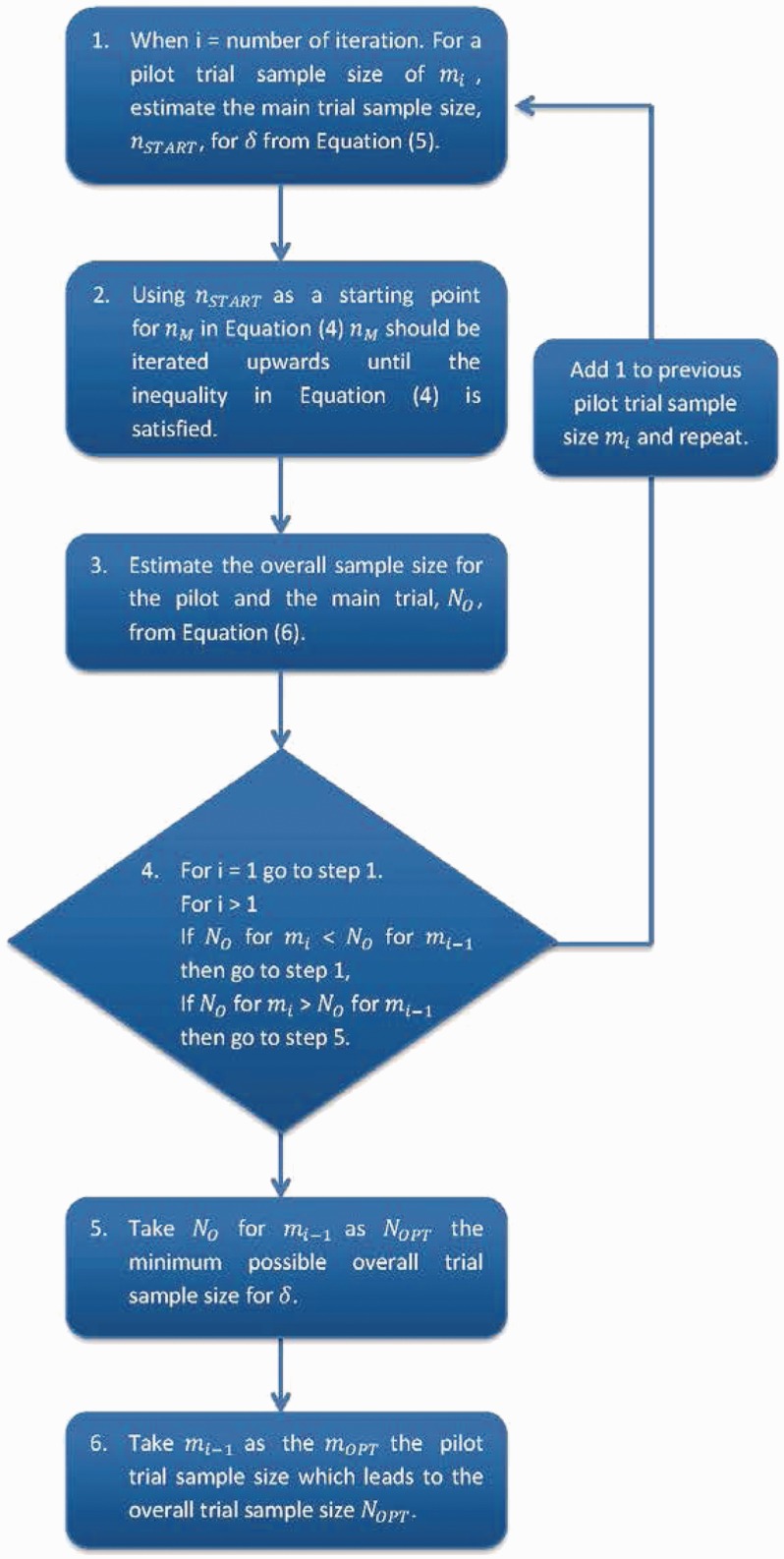
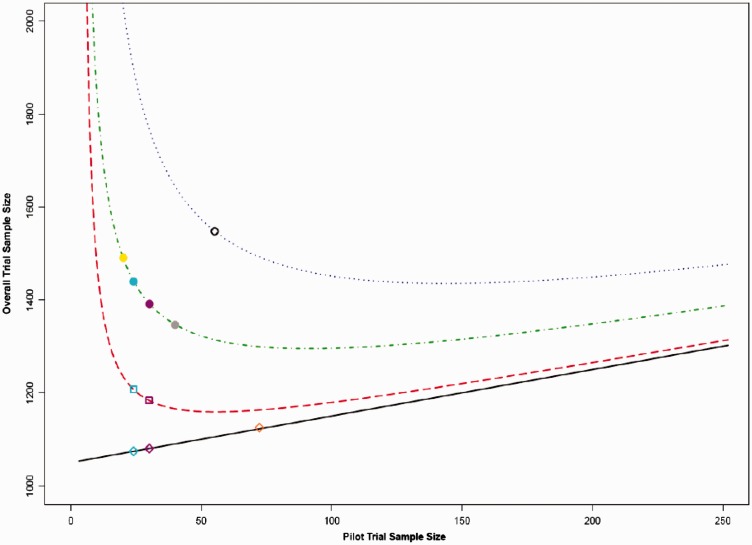
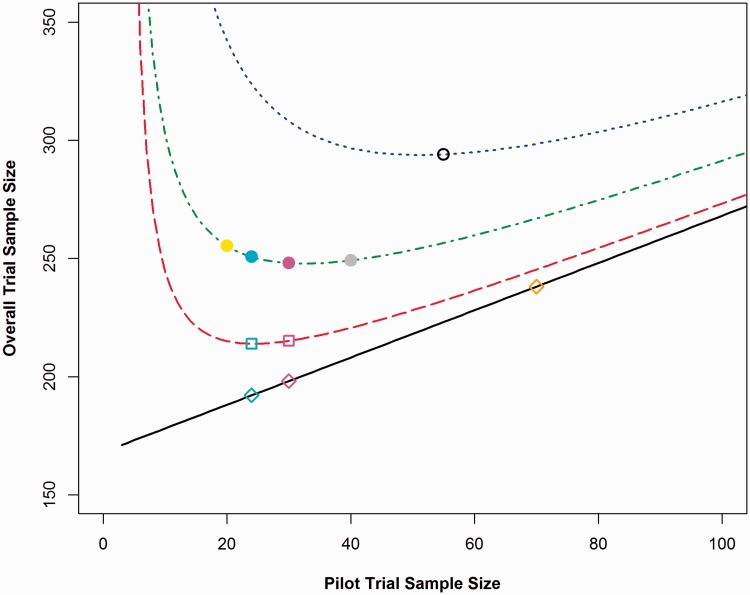
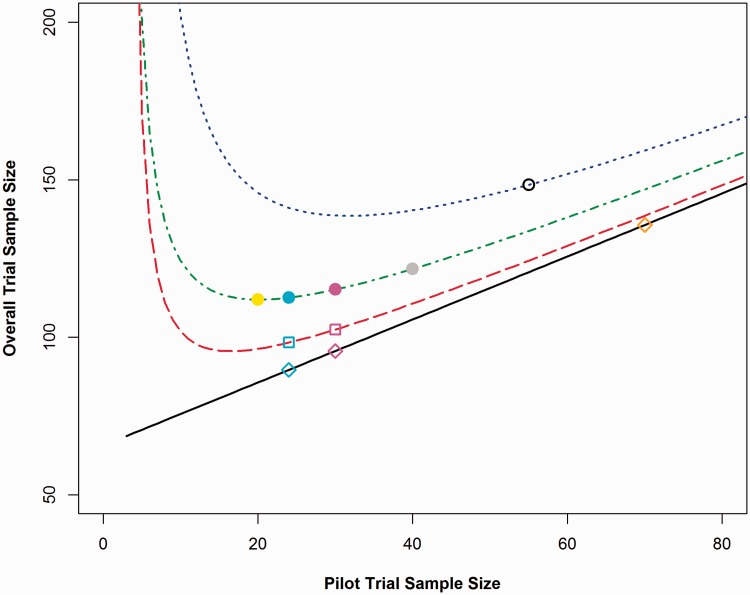
Sample size justification is an important consideration when planning a clinical trial, not only for the main trial but also for any preliminary pilot trial. When the outcome is a continuous variable, the sample size calculation requires an accurate estimate of the standard deviation of the outcome measure. A pilot trial can be used to get an estimate of the standard deviation, which could then be used to anticipate what may be observed in the main trial. However, an important consideration is that pilot trials often estimate the standard deviation parameter imprecisely. This paper looks at how we can choose an external pilot trial sample size in order to minimise the sample size of the overall clinical trial programme, that is, the pilot and the main trial together. We produce a method of calculating the optimal solution to the required pilot trial sample size when the standardised effect size for the main trial is known. However, as it may not be possible to know the standardised effect size to be used prior to the pilot trial, approximate rules are also presented. For a main trial designed with 90% power and two-sided 5% significance, we recommend pilot trial sample sizes per treatment arm of 75, 25, 15 and 10 for standardised effect sizes that are extra small (≤0.1), small (0.2), medium (0.5) or large (0.8), respectively.
Overview
The claims and statistics of this paper haven’t been checked yet.
Free: it reads the open-access text and checks the first 5 claims that cite a source we can check. Create a free account to check every claim.
Integrity signals
Registry
Cites
Statistics
Figures
Verification
Claims the paper makes
The claims and statistics of this paper haven’t been checked yet.
Free: it reads the open-access text and checks the first 5 claims that cite a source we can check. Create a free account to check every claim.
Claims other papers make about this one
Each is checked against this paper’s own text: does it say what the citing paper says it does?
The source backs part of the claim, not all of it — or backs it for a different population, condition or comparison.
In the citing paper
“Another limitation is that the sample size was relatively small, although this was consistent with previous recommendations of 24-35 participants for pilot and feasibility studies to provide sufficient data and precision of means and variances.117,134,135”
From Acceptance and commitment therapy for older people with treatment-resistant generalised anxiety disorder: The FACTOID feasibility study (2021) · cites this paper as [135]
Experimental — accuracy not yet measuredThe source backs part of the claim, not all of it — or backs it for a different population, condition or comparison.
In the citing paper
“pilot trial sample size estimation (n = 14) was based on medium standardized effect sizes (0.5) for a main trial designed with 90% power and two-sided 5% significance [41].”
From Senolytics in idiopathic pulmonary fibrosis: Results from a first-in-human, open-label, pilot study (2019) · cites this paper as [41]
Experimental — accuracy not yet measuredThe source backs part of the claim, not all of it — or backs it for a different population, condition or comparison.
In the citing paper
“For such a trial designed with 90% power and two sided 5% significance, they recommend pilot trial sample sizes for each treatment arm of 75, 25, 15, and 10 for standardised effect sizes that are extra small (0.1), small (0.2), medium (0.5), or large (0.8), respectively.”
From CONSORT 2010 statement: extension to randomised pilot and feasibility trials. (2016) · cites this paper as [58]
Experimental — accuracy not yet measuredThe source backs part of the claim, not all of it — or backs it for a different population, condition or comparison.
In the citing paper
“Sample sizes of 25 participants per arm are also recommended for pilot studies as they are capable of detecting small effect sizes (0.2) with 90% power and 2-sided significance at 5% [28].”
From Exploring the Feasibility of Digital Voice Assistants for Delivery of a Home-Based Exercise Intervention in Older Adults With Obesity and Type 2 Diabetes Mellitus: Randomized Controlled Trial (2024) · cites this paper as [28]
Experimental — accuracy not yet measuredThe source backs part of the claim, not all of it — or backs it for a different population, condition or comparison.
In the citing paper
“This sample size would also be sufficient to detect small effect sizes (0.20 with 90% power and α = 0.05 [21] for secondary outcomes including osteoporosis knowledge and attitudes towards osteoporosis medication.”
From Feasibility and effectiveness of a digital voice assistant for improving anti-osteoporosis medication adherence, and osteoporosis knowledge and attitudes, in postmenopausal women with osteoporosis: A 12-month randomised controlled trial (2025) · cites this paper as [21]
Experimental — accuracy not yet measured
20 more claims about this paper
Create a free account to see every claim other papers make about this one.
Self-check
Percentages, sums and reported differences re-computed from the paper’s own numbers.
The self-check needs the paper’s full text.
Citations
Cites
Cohen, J. (1992) · Psychological Bulletin · doi:10.1037//0033-2909.112.1.155 · Cited by 8,771
A tutorial on pilot studies: the what, why and how
Thabane, L., Ma, J., Chu, R., Cheng, J., Ismaila, A., Rios, L. P., Robson, R., Thabane, M., Giangregorio, L., & Goldsmith, C. H. (2010) · BMC Medical Research Methodology · doi:10.1186/1471-2288-10-1 · Cited by 3,384
Sample size of 12 per group rule of thumb for a pilot study
Julious, S. A. (2005) · Pharmaceutical Statistics · doi:10.1002/pst.185 · Cited by 3,068 · cited 2×
“Initially a flat rule of thumb was used, and the pilot sample size was chosen to be 24 evaluable patients in total as recommended by Julious.(16) However, suppose that a priori the standardised effect size for the main trial is 0.”
MethodInfluentialSelf-citationClinical Trials: A Practical Approach.
Hill, I. D., & Pocock, S. J. (1984) · Biometrics · doi:10.2307/2531186 · Cited by 2,930
Design and analysis of pilot studies: recommendations for good practice
Lancaster, G. A., Dodd, S., & Williamson, P. R. (2004) · Journal of Evaluation in Clinical Practice · doi:10.1111/j..2002.384.doc.x · Cited by 2,572 · cited 1×
“Therefore, since the purpose of the pilot is not to give a formal assessment of efficacy, then the sample size provided by the conventional calculations may be higher than necessary.(13)”
BackgroundWhat is a pilot or feasibility study? A review of current practice and editorial policy
Arain, M., Campbell, M. J., Cooper, C. L., & Lancaster, G. A. (2010) · BMC Medical Research Methodology · doi:10.1186/1471-2288-10-67 · Cited by 1,483
Self-citationSample Size Tables for Clinical Studies
Machin, D., Campbell, M. J., Tan, S. B., & Tan, S. H. (2008) · Wiley eBooks · doi:10.1002/9781444300710 · Cited by 1,336 · cited 1×
“Recruiting too few participants in a main trial means that the probability of finding a clinically relevant difference statistically significant is low and as a consequence, the chance of inconclusive results is high.(2,3) Conversely, if the sample size is too large, resources may be wasted, more patients than necessa…”
BackgroundSelf-citationSim, J., & Lewis, M. (2012) · Journal of Clinical Epidemiology · doi:10.1016/j.jclinepi.2011.07.011 · Cited by 1,036
On the use of a pilot sample for sample size determination
Browne, R. H. (1995) · Statistics in Medicine · doi:10.1002/sim.4780141709 · Cited by 1,007
Teare, M. D., Dimairo, M., Shephard, N., Hayman, A., Whitehead, A., & Walters, S. J. (2014) · Trials · doi:10.1186/1745-6215-15-264 · Cited by 773 · cited 3×
“Julious(16) 24 Kieser and Wassmer(12) 20–40 Browne(10) 30 Sim and Lewis(11) 55 Teare et al.(17) 70 Whitehead et al.”
BackgroundInfluentialSelf-citation
Research works printed but not linked: 1
- Grieve AP Sample sizes and confidence intervals. Am Stat 1990; 44: 190– 190.
Cited by
Items 201–300 of 1,005
Sun, Q.-J., Li, S., Lin, R., Zhao, G., Lu, J., Liu, B., Hu, M., Wang, W., Yang, X., Wei, Y., et al. (2024) · EBioMedicine · doi:10.1016/j.ebiom.2024.105128 · Cited by 24
“22”
When power calculations won’t do: Fermi approximation of animal numbers
Reynolds, P. S. (2019) · Lab Animal · doi:10.1038/s41684-019-0370-2 · Cited by 21
Masih, T., Dimmock, J. A., Epel, E. S., & Guelfi, K. J. (2019) · Applied Psychology Health and Well-Being · doi:10.1111/aphw.12179 · Cited by 26
Evaluation of accuracy of capillary refill index with pneumatic fingertip compression
Shinozaki, K., Saeki, K., Jacobson, L. S., Falotico, J. M., Li, T., Hirahara, H., Horie, K., Kobayashi, N., Weisner, S., Lampe, J. W., et al. (2020) · Journal of Clinical Monitoring and Computing · doi:10.1007/s10877-019-00454-1 · Cited by 25
“The sample size of 30 was determined following the general flat rule cited by Browne [15, 16], since the derivation study was the preliminary pilot study for a further clinical study to evaluate the accuracy of CRI.”
MethodIm, E., Yi, J., Kim, H., & Chee, W. (2020) · Research in Nursing & Health · doi:10.1002/nur.22059 · Cited by 26
Asgharpour, M., Khavandegar, A., Balaei, P., Enayati, N., Mardi, P., Alirezaei, A., & Bakhtiyari, M. (2021) · Evidence-based Complementary and Alternative Medicine · doi:10.1155/2021/6667453 · Cited by 31
“Since this is the first study determined to show garlic effects on inflammatory markers and lipid profile in hemodialysis patients, according to the optimal sample size estimation for a pilot randomized trial approach [24], a sample size of 70 precipitants is sufficient enough to detect a clinically significant effect…”
MethodBabateen, A. M., Shannon, O. M., O’Brien, G. M., Okello, E., Smith, E., Olgacer, D., Koehl, C., Fostier, W., Wightman, E., Kennedy, D., et al. (2022) · Nutrients · doi:10.3390/nu14051052 · Cited by 20
“[44], who pr vided guidance on sample size calculation for pilot studies with the aim of maximising the u e of resources and avoiding type II errors.”
BackgroundRomano, D., Chesterman, S., Fuller-Tyszkiewicz, M., Evans, S., Dober, M., Gearry, R., Gibson, P. R., Knowles, S., McCombie, A., O, E., et al. (2024) · Inflammatory Bowel Diseases · doi:10.1093/ibd/izad122 · Cited by 20
Oren, E., Bell, M. L., Garcia, F., Perez-Velez, C., & Gerald, L. B. (2017) · Pilot and Feasibility Studies · doi:10.1186/s40814-017-0128-9 · Cited by 20
“have shown that 40 participants in a pilot study are optimal when the future main trial is expecting a small to medium effect size [48].”
BackgroundŽukauskaitė, K., Horvath, A., Gricius, Ž., Kvietkauskas, M., Baušys, B., Dulskas, A., Kuliavas, J., Baušys, R., Letautienė, S. R., Vaicekauskaitė, I., et al. (2024) · British journal of surgery · doi:10.1093/bjs/znae213 · Cited by 24
“Consequently, 20 participants were recruited to each group as an adequate number to detect medium-to-large effect sizes 20 .”
Ganjeifar, B., Rezaee, H., Keykhosravi, E., Tavallaii, A., Bahadorkhan, G., Nakhaei, M., & Mehrizi, M. A. A. (2021) · Spinal Cord · doi:10.1038/s41393-020-00604-2 · Cited by 20
Making the leap: From experimental psychopathology to clinical trials
Blackwell, S. E., & Woud, M. L. (2022) · Journal of Experimental Psychopathology · doi:10.1177/20438087221080075 · Cited by 21
“Sample size recommendations therefore range from 10 per arm upwards depending on the guiding rationale (e.g. Whitehead et al., 2016).”
BackgroundFung, P. L. P., Lau, V. N. M., Ng, F. F., Leung, W. W., Mak, T. W. C., & Lee, A. S. Y. (2022) · PLoS ONE · doi:10.1371/journal.pone.0270640 · Cited by 24
“Using the guidelines from Whitehead and colleagues [19], 20 (treatment) and 20 (usual care) achieved an 80% power to reject the null hypothesis of zero small effect size (0.20) for a change in haemoglobin concentration from baseline to pre-surgery using a two-sided two-sample equal-variance test at…”
InfluentialKennedy, F., Shearsmith, L., Holmes, M., Rogers, Z., Carter, R., Hofmann, U., & Velikova, G. (2022) · BMC Cancer · doi:10.1186/s12885-022-09817-5 · Cited by 20
“[37] who indicate a sample of n = 25 or n = 15 respectively is required.”
BackgroundMangin, D. A., Lamarche, L., Agarwal, G., Ali, A., Cassels, A., Colwill, K., Dolovich, L. R., Brown, N. D., Farrell, B. J., Freeman, K., et al. (2023) · Pilot and Feasibility Studies · doi:10.1186/s40814-023-01315-0 · Cited by 24
“This is in line with general guidance for sample size for pilot trials aimed at assessing feasibility [53, 54].”
ResultSerrao, M., Pierelli, F., Sinibaldi, E., Chini, G., Castiglia, S. F., Priori, M., Gimma, D., Sellitto, G., Ranavolo, A., Conte, C., et al. (2019) · Frontiers in Neurology · doi:10.3389/fneur.2019.00902 · Cited by 55
“(51), who identified a conservative minimum sample size of 20–40 subjects for a pilot trial.”
BackgroundAnderson, A. M., Lavender, E. C., Richards, E., Mebrahtu, T. F., McGowan, L., Conaghan, P. G., Kingsbury, S. R., Richardson, G. A., Antcliff, D., & McHugh, G. A. (2021) · BMJ Open · doi:10.1136/bmjopen-2020-045389 · Cited by 26
Shackleton, C., Evans, R., West, S., Derman, W., & Albertus, Y. (2021) · American Journal of Physical Medicine & Rehabilitation · doi:10.1097/phm.0000000000001937 · Cited by 23
Glavas, C., Scott, D., Sood, S., George, E. S., Daly, R. M., Gvozdenko, E., de Courten, B., & Jansons, P. (2024) · JMIR Aging · doi:10.2196/53064 · Cited by 19
“Sample sizes of 25 participants per arm are also recommended for pilot studies as they are capable of detecting small effect sizes (0.2) with 90% power and 2-sided significance at 5% [28].”
BackgroundInfluentialWright, B., Tindall, L., Hargate, R., Allgar, V. L., Trépel, D., & Ali, S. (2019) · BJPsych Open · doi:10.1192/bjo.2019.91 · Cited by 19
Gray, H. L., Pang, T., Agazzi, H. C., Shaffer‐Hudkins, E., Kim, E., Miltenberger, R. G., Waters, K. A., Jiménez, C., Harris, M., & Stern, M. (2022) · Contemporary Clinical Trials · doi:10.1016/j.cct.2022.106814 · Cited by 24
Balci, S., Küchler, A., Ebert, D. D., & Baumeister, H. (2023) · Clinical Psychology in Europe · doi:10.32872/cpe.9341 · Cited by 26
Su, J. J., Wong, A. K. C., He, X.-F., Zhang, L.-P., Cheng, J., Lu, L., Lan, L., Wang, Z., Lin, R. S. Y., & Baťalík, L. (2024) · Contemporary Clinical Trials Communications · doi:10.1016/j.conctc.2024.101365 · Cited by 23
“For intervention with an estimated effect size of medium, a pilot trial sample size of 20 per arm was used and a total sample of 40 were needed for this study [31].”
MethodCheha, K., Dib, S., & Alhalabi, M. M. (2018) · Avicenna Journal of Medicine · doi:10.4103/ajm.ajm_70_17 · Cited by 26
Hyatt, A., Gough, K., Murnane, A., Au‐Yeung, G., Dawson, T., Pearson, E. J. M., Dhillon, H. M., Sandhu, S. K., Williams, N., Paton, E., et al. (2020) · BMJ Open · doi:10.1136/bmjopen-2019-036059 · Cited by 20
The use of a synthetic shoulder patch for large and massive rotator cuff tears – a feasibility study
Cowling, P. D., Hackney, R. G., Dube, B., Grainger, A. J., Biglands, J. D., Stanley, M., Song, D., Conaghan, P. G., & Kingsbury, S. R. (2020) · BMC Musculoskeletal Disorders · doi:10.1186/s12891-020-03227-z · Cited by 20
Carter, S., Greenberg, J., Funes, C. J., Macklin, E. A., & Vranceanu, A. (2020) · Complementary Therapies in Medicine · doi:10.1016/j.ctim.2020.102581 · Cited by 20
Brennan, M. C., Albrecht, M. A., Brown, J. A., Leslie, G. D., & Ntoumanis, N. (2021) · Canadian Journal of Diabetes · doi:10.1016/j.jcjd.2021.01.001 · Cited by 26
Hind, D., Parkin, J., Whitworth, V., Rex, S., Young, T. A., Hampson, L. V., Sheehan, J., Maguire, C., Cantrill, H., Scott, E., et al. (2017) · Pilot and Feasibility Studies · doi:10.1186/s40814-017-0132-0 · Cited by 30
Lester, E. G., Macklin, E. A., Plotkin, S. R., & Vranceanu, A. (2020) · Journal of Neuro-Oncology · doi:10.1007/s11060-020-03441-8 · Cited by 20
Maddali, M. M., Al-Shamsi, F., Arora, N. R., & Panchatcharam, S. M. (2020) · Journal of Cardiothoracic and Vascular Anesthesia · doi:10.1053/j.jvca.2020.03.007 · Cited by 18
Barabasch, A., Riemann-Lorenz, K., Kofahl, C., Scheiderbauer, J., Eklund, D., Kleiter, I., Kasper, J., Köpke, S., Lezius, S., Zapf, A., et al. (2021) · Pilot and Feasibility Studies · doi:10.1186/s40814-020-00749-0 · Cited by 18
Röhricht, F., Padmanabhan, R., Binfield, P., Mavji, D., & Barlow, S. H. (2021) · BMC Psychiatry · doi:10.1186/s12888-021-03359-z · Cited by 24
Hayward, M., Berry, K., Bremner, S. A., Bibby-Jones, A.-M., Robertson, S., Cavanagh, K., Gage, H., Berry, C., Neumann, S. R., Hazell, C. M., et al. (2021) · BJPsych Open · doi:10.1192/bjo.2021.983 · Cited by 21
Farragher, J. F., Ravani, P., Manns, B., Elliott, M. J., Thomas, C. M., Donald, M., Verdin, N., & Hemmelgarn, B. R. (2022) · BMJ Open · doi:10.1136/bmjopen-2021-051475 · Cited by 19
Harvie, D. S., Kelly, J., Kluver, J. P., Deen, M., Spitzer, E., & Coppieters, M. W. (2022) · Disability and Rehabilitation Assistive Technology · doi:10.1080/17483107.2022.2129846 · Cited by 31
“Since samples of 10 per arm are sufficient and appropriate for exploratory studies where very large effect sizes are expected (Cohen’s ds � 0.8) [27], a sample size of 30 was targeted.”
BackgroundInfluentialDrummen, S., Balogun, S. A., Lahham, A., Bennell, K. L., Hinman, R. S., Callisaya, M. L., Cai, G., Otáhal, P., Winzenberg, T. M., Wang, Z., et al. (2023) · Clinical Rheumatology · doi:10.1007/s10067-022-06477-5 · Cited by 20
The Influence of Technological Factors on Adoption E-Commerce in SME: The Role of Trust
Khsroo, I. T. N., Burhanuddin, M. A., Ali, M. A., & Ahmed, M. S. (2024) · Journal of Global Information Technology Management · doi:10.1080/1097198x.2024.2327945 · Cited by 33
Hin-Man, L. H., Ng, M. S. N., Fong, H. P.-Y., Lai, H. H. K., Wang, B., Wong, S. Y. S., & Sit, R. W. S. (2024) · JMIR Serious Games · doi:10.2196/52563 · Cited by 26
“We applied the stepped rule of thumb in this pilot sample size calculation [30].”
MethodMarsh, A., Chachay, V., Banks, M., Okano, S., Härtel, G., & Radford‐Smith, G. L. (2024) · European Journal of Clinical Nutrition · doi:10.1038/s41430-024-01487-9 · Cited by 22
Estresse de aculturação e carga alostática entre mulheres imigrantes mexicanas
D’Alonzo, K. T., Munet‐Vilaró, F., Carmody, D. P., Guarnaccia, P. J., Linn, A., & Garsman, L. (2019) · Revista Latino-Americana de Enfermagem · doi:10.1590/1518-8345.2578.3135 · Cited by 21
Gorog, D. A., Farag, M., Spinthakis, N., Yellon, D. M., Bøtker, H. E., Kharbanda, R. K., & Hausenloy, D. J. (2020) · Cardiovascular Research · doi:10.1093/cvr/cvaa061 · Cited by 18
Bardus, M., Hamadeh, G. N., Hayek, B., & Kherfan, R. A. (2018) · JMIR Research Protocols · doi:10.2196/resprot.9793 · Cited by 20
“Traditional sample size calculations are not typically undertaken in nonprobability sampling and in pilot interventional studies, as these are intended to test acceptability and evaluate the process as well as to inform power calculations for subsequent studies [78].”
BackgroundMethodInfluentialWilliams, N. R., Williams, S., Kanapathy, M., Naderi, N., Vavourakis, V., & Mosahebi, A. (2019) · International Journal of Surgery Protocols · doi:10.1016/j.isjp.2019.02.002 · Cited by 25
“In addition, analysis of the data will enable estimation of the statistical power of a larger study designed with 90% power and twosided 5% significance with a small standardised effect size [21].”
MethodChan, W. S., & Leung, A. Y. M. (2020) · Journal of Medical Internet Research · doi:10.2196/16772 · Cited by 24
Smith, S. G., Ellison, R., Hall, L., Clark, J., Hartley, S., Mason, E., Metherell, J., Olivier, C., Napp, V., Naik, J., et al. (2022) · Pilot and Feasibility Studies · doi:10.1186/s40814-022-00985-6 · Cited by 17
Shen, J., Zhao, S., Horn, T., Benkart, R. A., Busch, T. A., Vrabec, A., & Taylor, H. G. (2022) · Clinical Psychology Review · doi:10.1016/j.cpr.2022.102218 · Cited by 20
Photobiomodulation Therapy to Treat Snakebites Caused by Bothrops atrox: A Randomized Clinical Trial
Carvalho, É. D. S., Souza, A. R. D. N., Melo, D. F. C., de Farias, A. S., Macedo, B. B. D. O., Sartim, M. A., Caggy, M. C., Rodrigues, B. D. A., Ribeiro, G. S., Reis, H. N., et al. (2023) · JAMA Internal Medicine · doi:10.1001/jamainternmed.2023.6538 · Cited by 21
Incidence of Urinary Infections and Behavioral Risk Factors
Mititelu, M., Olteanu, G., Neacșu, S. M., Stoicescu, I., Dumitrescu, D. E., Gheorghe, E., Tarcea, M., Busnatu, Ș., Ioniță-Mîndrican, C.-B., Tafuni, O. I., et al. (2024) · Nutrients · doi:10.3390/nu16030446 · Cited by 35
“Whitehead et al. [45] stated that for a pilot study, at least 30 respondents are required.”
BackgroundSavaş, E. H., Semerci, R., Sayın, A., Dinçer, B. H., Semiz, B., & Ürey, H. (2024) · Seminars in Oncology Nursing · doi:10.1016/j.soncn.2024.151615 · Cited by 17
Khanna, A., Syam Das, S., Kannan, R., Swick, A. G., Matthewman, C., Maliakel, B. P., Ittiyavirah, S. P., & Krishnakumar, I. M. (2020) · Nutritional Neuroscience · doi:10.1080/1028415x.2020.1853410 · Cited by 17
“Considering ‘the rule of thumb’ [28] and earlier EEG”
BackgroundAn Integrated Theory for Chatbot Use in Air Travel: Questionnaire Development and Validation
Trapero, H. A., Ilao, J. P., & Lacaza, R. (2020) · IEEE Region 10 Conference (TENCON) · doi:10.1109/tencon50793.2020.9293710 · Cited by 28
“For a main trial designed with 5% significance, a pilot trial sample size of 15-30 is recommended [38][39].”
BackgroundSeo, K., Jang, J., Jang, E. G., Park, Y., Lee, S. Y., Kim, B. R., Park, D., Park, S., Hwang, H., Kim, N. H., et al. (2021) · Journal of NeuroEngineering and Rehabilitation · doi:10.1186/s12984-021-00884-6 · Cited by 17
“Therefore, we randomly assigned 13 subjects each to two groups (the 4-channel and 2-channel NMES groups), considering that there may be a 10% dropout [16].”
MethodThe use of 5% lidocaine medicated plaster for acute postoperative pain after gynecological surgery
Lau, L. L., Li, C. Y., Lee, A. S. Y., & Chan, S. K. (2018) · Medicine · doi:10.1097/md.0000000000012582 · Cited by 17
de Dios, M. A., Cano, M. Á., Vaughan, E. L., Childress, S. D., McNeel, M. M., Harvey, L. M., & NIAURA, R. S. (2019) · PLoS ONE · doi:10.1371/journal.pone.0210323 · Cited by 18
Suglo, J. N., Winkley, K., & Sturt, J. A. (2024) · PLoS ONE · doi:10.1371/journal.pone.0302385 · Cited by 22
Initiative, T. C. C. G., Dhopte, P., French, S. D., Quon, J. A., Owens, H., & Bussières, A. (2019) · Chiropractic & Manual Therapies · doi:10.1186/s12998-019-0253-z · Cited by 17
Glišić, M., Flueck, J. L., Ruettimann, B., Hertig-Godeschalk, A., Valido, E. M., Bertolo, A., Stucki, G., & Stoyanov, J. V. (2022) · Pilot and Feasibility Studies · doi:10.1186/s40814-022-01048-6 · Cited by 16
“Sample size estimates for the pilot study were done according to published recommendations for minimizing a pilot trial sample size [27].”
MethodMills, T. A., Roberts, S. A., Camacho, E. M., Heazell, A. E. P., Massey, R., Melvin, C., Newport, R., Smith, D. M., Storey, C., Taylor, W., et al. (2022) · BMC Pregnancy and Childbirth · doi:10.1186/s12884-022-04925-3 · Cited by 29
Hejazi, S., Mircheraghi, F., Elyasi, S., Davoodian, N., Salarbashi, D., & Mehrad‐Majd, H. (2022) · Recent Advances in Anti-Infective Drug Discovery · doi:10.2174/2772434417666220902153823 · Cited by 17
Cavaleri, R., Withington, A., Chalmers, J., & Blackstock, F. C. (2023) · ATS Scholar · doi:10.34197/ats-scholar.2022-0042oc · Cited by 23
“A pilot sample size of 10 is considered appropriate for the purpose of establishing an effect size for future fully powered randomized controlled trials (12).”
BackgroundDrewitz, K. P., Hasenpusch, C., Bernardi, C., Brandstetter, S., Fisser, C., Pielmeier, K., Rohr, M., Brunnthaler, V., Schmidt, K. F. R., Malfertheiner, M. V., et al. (2023) · BMC Anesthesiology · doi:10.1186/s12871-023-02255-1 · Cited by 20
“However, the final sample size followed recommendations for pilot trials if the effect size is unknown but expected to be small [69].”
BackgroundFunes, C. J., Mace, R. A., Macklin, E. A., Plotkin, S. R., Jordan, J. T., & Vranceanu, A. (2019) · Journal of Neuro-Oncology · doi:10.1007/s11060-019-03182-3 · Cited by 16
Maternal mental health and partner-delivered massage: A pilot study
Hall, H. G., Munk, N., Carr, B. L., Fogarty, S., Cant, R., Holton, S., Weller, C. D., & Lauche, R. (2020) · Women and Birth · doi:10.1016/j.wombi.2020.05.003 · Cited by 23
Improving Sleep among Adults with Multiple Sclerosis using Mindfulness plus Sleep Education
Lorenz, R. A., Auerbach, S. L., Nisbet, P., Sessanna, L., Alanazi, N., Lach, H. W., Newland, P., Fisher, N. M., Pandey, K. S., Thomas, F. P., et al. (2020) · Western Journal of Nursing Research · doi:10.1177/0193945920947409 · Cited by 17
“Due to the exploratory nature of this pilot study, a total sample of 30 participants with 15 in the intervention group (videoconference or on-site) and 15 in the wait-list control group (control group participants) were sought to test feasibility (Whitehead et al., 2016).”
BackgroundTan, B. Y., Ding, B. T. K., Pereira, M. J., Skou, S. T., Thumboo, J., & Car, J. (2020) · BMC Musculoskeletal Disorders · doi:10.1186/s12891-020-03611-9 · Cited by 20
Egerton, T., Lawford, B. J., Campbell, P. K., Plinsinga, M. L., Spiers, L., Mackenzie, D., Graham, B., Mills, K. A. G., Eyles, J. P., Knox, G., et al. (2022) · JMIR Formative Research · doi:10.2196/32627 · Cited by 18
Somi, M., Dinevari, M. F., Taghizadieh, A., Varshochi, M., Majd, E. S., Abbasian, S., & Nikniaz, Z. (2022) · Nutrition and Health · doi:10.1177/02601060221129144 · Cited by 13
“The sample size was calculated based on the Whitehead study (Whitehead et al., 2016), which recommended 15 samples per arm in pilot clinical trials considering 90% power, two-sided 5% signi fi cance, and medium effect size (0.5).”
InfluentialKim, M. H., Choi, E., Jang, B.-H., Kim, K., Ko, S.-G., & Choi, I.-H. (2016) · Annals of Allergy Asthma & Immunology · doi:10.1016/j.anai.2016.11.012 · Cited by 17
Evans, S., Olive, L., Dober, M., Knowles, S., Fuller-Tyszkiewicz, M., O, E., Gibson, P., Raven, L., Gearry, R., McCombie, A., et al. (2022) · BMJ Open · doi:10.1136/bmjopen-2021-060272 · Cited by 15
Nixon, A. C., Bampouras, T. M., Gooch, H. J., Young, H. M. L., Finlayson, K. W., Pendleton, N., Mitra, S., Brady, M. E., & Dhaygude, A. P. (2020) · BMJ Open · doi:10.1136/bmjopen-2019-035344 · Cited by 18
Zhang, T., Li, N., Chen, S., Hou, Z. L., & Saito, A. (2020) · Anais da Academia Brasileira de Ciências · doi:10.1590/0001-3765202020191594 · Cited by 17
Exploring the Link Between Hepatic Perfusion and Endotoxemia in Hemodialysis
Marants, R., Qirjazi, E., Lai, K., Szeto, C., Li, P. K., Li, F., Lee, T., & McIntyre, C. W. (2021) · Kidney International Reports · doi:10.1016/j.ekir.2021.02.008 · Cited by 15
Babateen, A. M., Shannon, O. M., O’Brien, G., Okello, E. J., Khan, A. A., Rubele, S., Wightman, E. L., Smith, E., McMahon, N. F., Olgacher, D., et al. (2021) · Nutrients · doi:10.3390/nu13030769 · Cited by 16
“, (2016) [21], who provided guidance on sample size calculation for pilot studies with the aim of maximising use of resources and avoiding type II errors.”
BackgroundLione, R., Gazzani, F., Moretti, S., Danesi, C., Lombardo, E. C., & Pavoni, C. (2022) · Children · doi:10.3390/children9101423 · Cited by 17
Diriba, D. C., Suen, L. K. P., & Leung, D. Y. P. (2023) · Diabetic Medicine · doi:10.1111/dme.15094 · Cited by 20
Gut Dysbiosis: A New Avenue for Stroke Prevention and Therapeutics
Park, S. Y., Lee, S. P., Kim, D., & Kim, W. J. (2023) · Biomedicines · doi:10.3390/biomedicines11092352 · Cited by 16
Chan, W. L. S., Chan, C. W. L., Lam, F. M. H., Chan, H. H. W., Chan, K. C. K., Chan, J. S. K., Chan, O. L. W., & Cheung, D. S. K. (2023) · Geriatrics and gerontology international/Geriatrics & gerontology international · doi:10.1111/ggi.14771 · Cited by 21
“31”
Simpson, H., Clement, N. D., Simpson, S. A., Pandit, H., Smillie, S., Leeds, A., Conaghan, P. G., Kingsbury, S. R., Hamilton, D. F., Craig, P., et al. (2024) · The Lancet Rheumatology · doi:10.1016/s2665-9913(23)00337-5 · Cited by 17
Julien, L., Moreau-Pernet, G., Rochette, E., Lemaire, J., Pontier, B., Bourrand, S., Pereira, B., Chassain, C., Sontheimer, A., & Sarret, C. (2024) · Pediatric Research · doi:10.1038/s41390-024-03240-1 · Cited by 21
D’Amico, F., Feliu‐Soler, A., Montero‐Marín, J., Peñarrubia‐María, M. T., Navarro‐Gil, M., Gordon, W. V., García‐Campayo, J., & Luciano, J. V. (2020) · Journal of Clinical Medicine · doi:10.3390/jcm9030726 · Cited by 18
“Recommendations for pilot studies propose that the dataset includes approximately 15–20 participants in each arm in order to estimate parameters when the expected standardized effect size is medium [29].”
BackgroundShinozaki, K., Jacobson, L. S., Saeki, K., Kobayashi, N., Weisner, S., Falotico, J. M., Li, T., Kim, J. H., Lampe, J. W., & Becker, L. B. (2020) · The American Journal of Emergency Medicine · doi:10.1016/j.ajem.2020.04.007 · Cited by 20
Making STEM Education Objectives Sustainable through a Tutoring Program
Martín, F. D. F., Tirado, J. L. A., Carrillo-Rosúa, J., Hervás-Torres, M., Ruiz-Hidalgo, J. F., & Romero-López, C. (2020) · Sustainability · doi:10.3390/su12166653 · Cited by 19
“In this regard, when the power of the NtN-Granada was calculated, current sample-size flat rules of thumb for using a sample size of between 20–40 subjects per treatment arm in a two-armed trial [70] were followed.”
MethodFord, K. L., Sawyer, M. B., Trottier, C. F., Ghosh, S., Deutz, N. E. P., Siervo, M., Starr, K. N. P., Bales, C. W., Disi, I. R., & Prado, C. M. M. (2020) · Clinical Nutrition ESPEN · doi:10.1016/j.clnesp.2020.11.016 · Cited by 17
Londral, A., Azevedo, S., Dias, P., Ramos, C., Santos, J., Martins, F., Silva, R., Semedo, H., Vital, C., Gualdino, A., et al. (2022) · BMC Health Services Research · doi:10.1186/s12913-022-08073-4 · Cited by 15
Zhang, L., Yan, Y., Sun, Z., Yan, D., Chen, Y.-W., Lin, K., Ge, X.-J., & Qin, X. (2022) · International Journal of Environmental Research and Public Health · doi:10.3390/ijerph192316355 · Cited by 24
Stefanaki, C., Bacopoulou, F., & Michos, A. G. (2018) · Contemporary Clinical Trials Communications · doi:10.1016/j.conctc.2018.06.002 · Cited by 16
Efficacy of Phellinus linteus (sanghuang) extract for improving immune functions
Jung, G. H., & Kang, J. H. (2020) · Medicine · doi:10.1097/md.0000000000018829 · Cited by 16
Fu, Y., Nelson, E. A., & McGowan, L. (2020) · BMC Urology · doi:10.1186/s12894-020-00603-8 · Cited by 19
“2) for a continuous outcome and 80% power [25].”
BackgroundPilot Study of IL-1 Antagonist Anakinra for Treatment of Endometriosis
Sullender, R. T., Agarwal, R., Jacobs, M. B., Wessels, J. M., Foster, W. G., & Agarwal, S. K. (2024) · International Journal of Women s Health · doi:10.2147/ijwh.s467041 · Cited by 15
Huang, Z.-X., Hu, M.-M., Zhang, P., He, X., Ma, X.-N., Hong, Q.-L., Chen, P., Luan, H., Wu, Z.-Y., Liu, C., et al. (2025) · PLoS Medicine · doi:10.1371/journal.pmed.1004668 · Cited by 13
“This sample size was deemed sufficient to assess the feasibility and safety of the intervention while providing preliminary data to inform the design of future larger-scale trials, following methodological guidance for pilot studies [19].”
Shafie, S., Majid, F. B. A., Hoon, T. S., & Damio, S. M. (2021) · Pertanika journal of social science & humanities · doi:10.47836/pjssh.29.2.17 · Cited by 19
“To determine the sample size for the pilot study, a minimum of 30 participants as per a rule of thumb in education and behavioural sciences (Suter, 2014; Whitehead et al., 2016) was adhered to.”
MethodRani, M., & Kaur, J. (2021) · Journal of Manual & Manipulative Therapy · doi:10.1080/10669817.2021.1962687 · Cited by 19
“that a minimum of 20 participants per arm has to be taken when estimating the variance for sample size calculation for a future trial design with 80% power, 5% significant difference, and small effect size [32].”
BackgroundBurgdorf, V., Abbott, M. J., & Szabó, M. (2022) · Mindfulness · doi:10.1007/s12671-021-01805-3 · Cited by 21
Hasheminasab, F. S., Azimi, M., Khodadoost, M., Chouban, B., Shakeri, N., Ghasemi, S., Farokhi, A., & Mokaberinajad, R. (2022) · Advances in Integrative Medicine · doi:10.1016/j.aimed.2022.04.001 · Cited by 16
“Due to lack of previous study, the sample size of 35 participants in each group was deemed sufficient [29].”
Bilir, H., Yüzbaşıoğlu, E., Sayar, G., Kılınç, D. D., Bag, H. G., & Özcan, M. (2022) · Journal of Esthetic and Restorative Dentistry · doi:10.1111/jerd.12945 · Cited by 14
Huang, M., Rogers, M. W., Pizac, D. A., Gruber‐Baldini, A. L., Orwig, D., Hochberg, M. C., Beamer, B. A., Creath, R. A., Savin, D. N., Conroy, V. M., et al. (2022) · Archives of Physical Medicine and Rehabilitation · doi:10.1016/j.apmr.2022.08.974 · Cited by 14
Ru, X., Wang, T., Zhu, L., Ma, Y., Qian, L., Sun, H., & Pan, Z. (2023) · International Journal of Clinical Practice · doi:10.1155/2023/2136922 · Cited by 14
“[30], the recommended sample size of a feasibility study was ten in each group, if the estimated efect in the formal research of a randomized controlled trial was ≥0.”
BackgroundChen, A. C., Kim, S. W., Ou, L., Todd, M. W., & Larkey, L. (2023) · JMIR Formative Research · doi:10.2196/46951 · Cited by 14
“…thorough evaluation of study recruitment, testing of intervention materials and procedures, participant tracking, follow-up data collection within each ethnic group, and to yield estimates of variability (or uncertainty) suitable for planning a full-scale RCT assuming small effect sizes [26,27].”
BackgroundMustafa, A. S., Ali, N. B., Dhillon, J. S., & Sedera, D. (2023) · Healthcare · doi:10.3390/healthcare11071051 · Cited by 25
“According to [85], this falls within the range of acceptable sample size, using 90% power and 5% significance.”
Method
Metadata
- Authors
- Whitehead, A. L., Julious, S. A., Cooper, C. L., & Campbell, M. J.
- Affiliations
- University of Sheffield (GB)
- Corresponding author
- Whitehead, Amy L
- Venue
- Statistical Methods in Medical Research
- Publisher
- SAGE Publications
- Published
- 2015-06-19
- Volume
- 25
- Issue
- 3
- Pages
- 1057-1073
- ISSN
- 0962-2802 (ISSN-L)
- 1477-0334
- PMC
- PMC4876429
- OpenAlex
- W2137904825
- Semantic Scholar
- acf7c691cd77fce40fa8d45f63c5d2971e6ec50d
- Cited by
- 1,936
- References
- 26
- Citations by year
- 2026: 314 · 2025: 333 · 2024: 287 · 2023: 239 · 2022: 245 · 2021: 204 · 2020: 148 · 2019: 87 · 2018: 51 · 2017: 17 · 2016: 8
- FWCI
- 22.54
- Type
- journal article
- Language
- en
- Open access
- hybrid
- doi.org
- Licence
- cc-by
- journals.sagepub.com/page/policies/text-and-data-mining-license (tdm)
- Locations
- Statistical Methods in Medical Research (publishedVersion, cc-by)
- Europe PMC (PubMed Central) (publishedVersion, cc-by)
- PubMed Central (publishedVersion, cc-by)
- PubMed (publishedVersion)
- White Rose Research Online (University of Leeds, The University of Sheffield, University of York) (acceptedVersion)
- ePrints Soton (University of Southampton) (acceptedVersion)
- Topics
- Physical Sciences › Mathematics › Statistics and Probability › Statistical Methods in Clinical Trials
- Physical Sciences › Mathematics › Statistics and Probability › Statistical Methods in Epidemiology
- Social Sciences › Decision Sciences › Statistics, Probability and Uncertainty › Meta-analysis and systematic reviews
- Keywords
- sample size determination, main trial, continuous outcomes, standard deviation estimation, clinical trial design
- MeSH terms
- Humans, Pilot Projects, Randomized Controlled Trials as Topic, Outcome Assessment, Health Care, Sample Size
About these checks
Registry, retraction, Cites and statistics results are computed, not judged, with one exception: a printed reference that no index lists is read once by a model before it counts as a citation error. Claims are extracted by a model and kept only when their quote appears verbatim in the text; each cited source is then checked, with a model’s help, for whether it says what the claim relies on. Those verdicts can be wrong — read the claim’s quote and the cited source before relying on one.
Statistics and arithmetic are recomputed, not judged.
Confidence bands are shown only for fields calibrated on our annotated test set. None is calibrated yet, so no band is shown.
What counts as a claim ›How we measure confidence ›How we check this ›
Are you an author, or do you see a problem with this page? Request a review
Data sources
Bibliographic data: Semantic Scholar, OpenAlex, Crossref.
Contains information from the Semantic Scholar Academic Graph Datasets, made available under the ODC Attribution License (ODC-BY 1.0).
Semantic Scholar’s data is described in: Kinney, R., et al. (2023). The Semantic Scholar Open Data Platform. arXiv:2301.10140.
