

Estimating the sample size for a pilot randomised trial to minimise the overall trial sample size for the external pilot and main trial for a continuous outcome variable
Open accessThe DOI matches its Crossref record; 26 of the 26 references it cites were found in a registry or an index.
Abstract
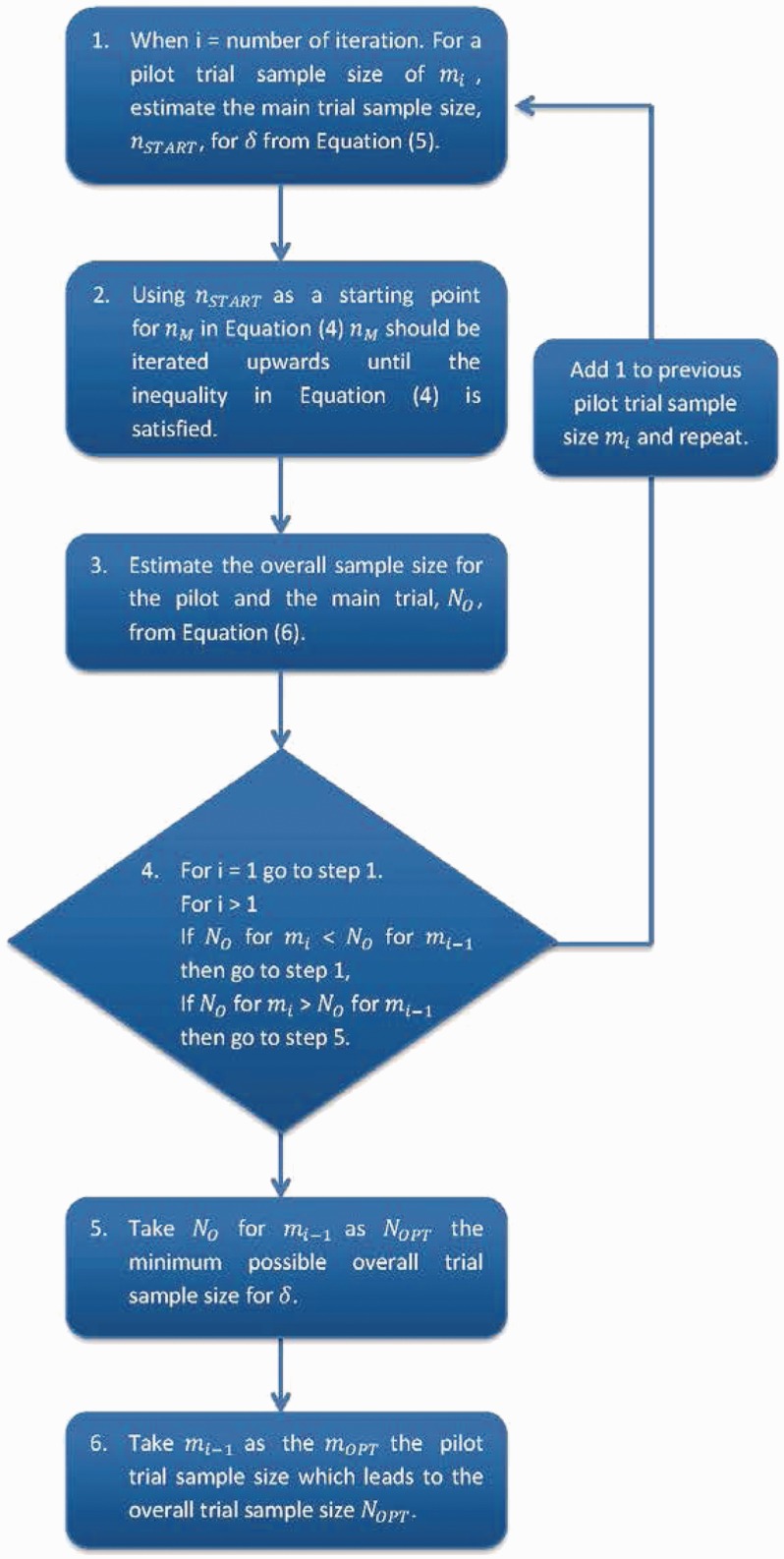
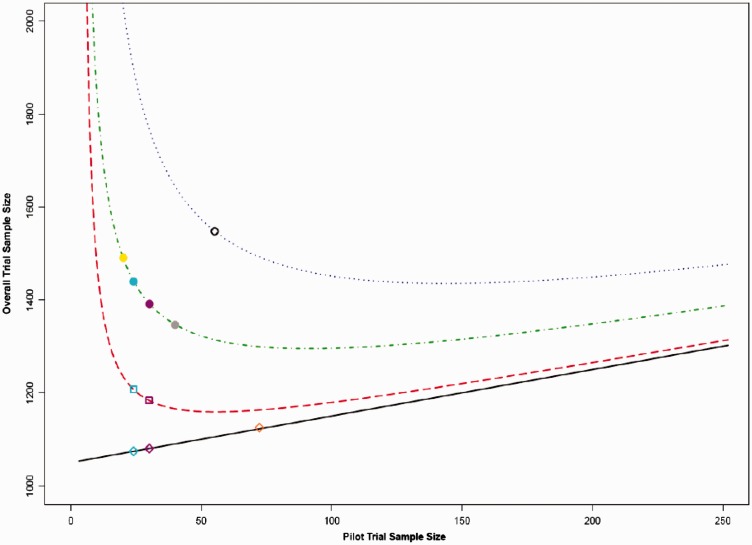
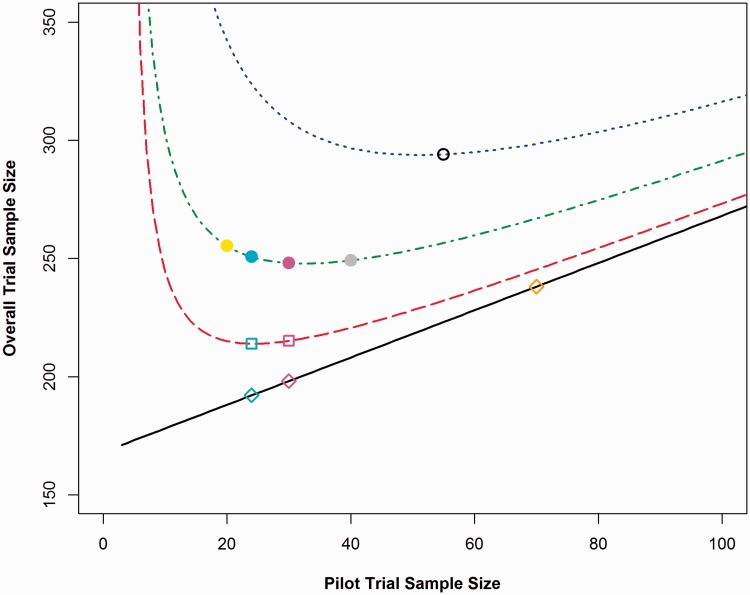
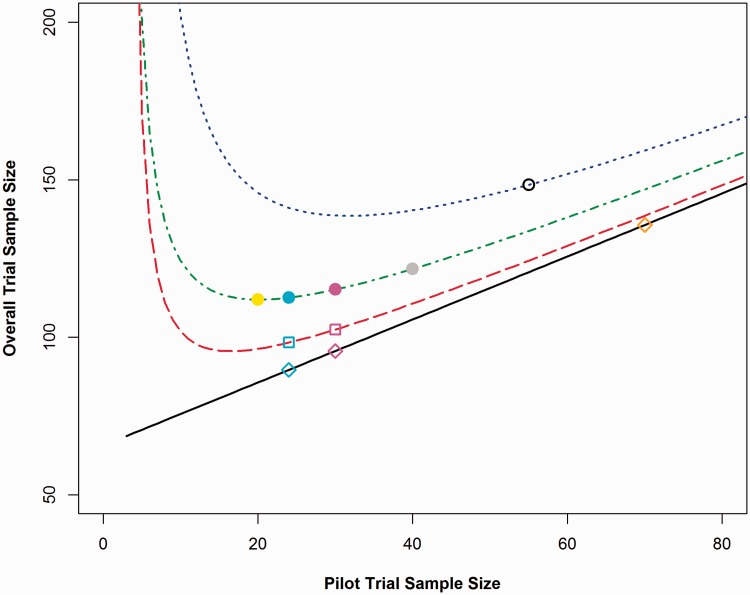
Sample size justification is an important consideration when planning a clinical trial, not only for the main trial but also for any preliminary pilot trial. When the outcome is a continuous variable, the sample size calculation requires an accurate estimate of the standard deviation of the outcome measure. A pilot trial can be used to get an estimate of the standard deviation, which could then be used to anticipate what may be observed in the main trial. However, an important consideration is that pilot trials often estimate the standard deviation parameter imprecisely. This paper looks at how we can choose an external pilot trial sample size in order to minimise the sample size of the overall clinical trial programme, that is, the pilot and the main trial together. We produce a method of calculating the optimal solution to the required pilot trial sample size when the standardised effect size for the main trial is known. However, as it may not be possible to know the standardised effect size to be used prior to the pilot trial, approximate rules are also presented. For a main trial designed with 90% power and two-sided 5% significance, we recommend pilot trial sample sizes per treatment arm of 75, 25, 15 and 10 for standardised effect sizes that are extra small (≤0.1), small (0.2), medium (0.5) or large (0.8), respectively.
Overview
The claims and statistics of this paper haven’t been checked yet.
Free: it reads the open-access text and checks the first 5 claims that cite a source we can check. Create a free account to check every claim.
Integrity signals
Registry
Cites
Statistics
Figures
Verification
Claims the paper makes
The claims and statistics of this paper haven’t been checked yet.
Free: it reads the open-access text and checks the first 5 claims that cite a source we can check. Create a free account to check every claim.
Claims other papers make about this one
Each is checked against this paper’s own text: does it say what the citing paper says it does?
The source backs part of the claim, not all of it — or backs it for a different population, condition or comparison.
In the citing paper
“Another limitation is that the sample size was relatively small, although this was consistent with previous recommendations of 24-35 participants for pilot and feasibility studies to provide sufficient data and precision of means and variances.117,134,135”
From Acceptance and commitment therapy for older people with treatment-resistant generalised anxiety disorder: The FACTOID feasibility study (2021) · cites this paper as [135]
Experimental — accuracy not yet measuredThe source backs part of the claim, not all of it — or backs it for a different population, condition or comparison.
In the citing paper
“pilot trial sample size estimation (n = 14) was based on medium standardized effect sizes (0.5) for a main trial designed with 90% power and two-sided 5% significance [41].”
From Senolytics in idiopathic pulmonary fibrosis: Results from a first-in-human, open-label, pilot study (2019) · cites this paper as [41]
Experimental — accuracy not yet measuredThe source backs part of the claim, not all of it — or backs it for a different population, condition or comparison.
In the citing paper
“For such a trial designed with 90% power and two sided 5% significance, they recommend pilot trial sample sizes for each treatment arm of 75, 25, 15, and 10 for standardised effect sizes that are extra small (0.1), small (0.2), medium (0.5), or large (0.8), respectively.”
From CONSORT 2010 statement: extension to randomised pilot and feasibility trials. (2016) · cites this paper as [58]
Experimental — accuracy not yet measuredThe source backs part of the claim, not all of it — or backs it for a different population, condition or comparison.
In the citing paper
“Sample sizes of 25 participants per arm are also recommended for pilot studies as they are capable of detecting small effect sizes (0.2) with 90% power and 2-sided significance at 5% [28].”
From Exploring the Feasibility of Digital Voice Assistants for Delivery of a Home-Based Exercise Intervention in Older Adults With Obesity and Type 2 Diabetes Mellitus: Randomized Controlled Trial (2024) · cites this paper as [28]
Experimental — accuracy not yet measuredThe source backs part of the claim, not all of it — or backs it for a different population, condition or comparison.
In the citing paper
“This sample size would also be sufficient to detect small effect sizes (0.20 with 90% power and α = 0.05 [21] for secondary outcomes including osteoporosis knowledge and attitudes towards osteoporosis medication.”
From Feasibility and effectiveness of a digital voice assistant for improving anti-osteoporosis medication adherence, and osteoporosis knowledge and attitudes, in postmenopausal women with osteoporosis: A 12-month randomised controlled trial (2025) · cites this paper as [21]
Experimental — accuracy not yet measured
20 more claims about this paper
Create a free account to see every claim other papers make about this one.
Self-check
Percentages, sums and reported differences re-computed from the paper’s own numbers.
The self-check needs the paper’s full text.
Citations
Cites
Cohen, J. (1992) · Psychological Bulletin · doi:10.1037//0033-2909.112.1.155 · Cited by 8,771
A tutorial on pilot studies: the what, why and how
Thabane, L., Ma, J., Chu, R., Cheng, J., Ismaila, A., Rios, L. P., Robson, R., Thabane, M., Giangregorio, L., & Goldsmith, C. H. (2010) · BMC Medical Research Methodology · doi:10.1186/1471-2288-10-1 · Cited by 3,384
Sample size of 12 per group rule of thumb for a pilot study
Julious, S. A. (2005) · Pharmaceutical Statistics · doi:10.1002/pst.185 · Cited by 3,068 · cited 2×
“Initially a flat rule of thumb was used, and the pilot sample size was chosen to be 24 evaluable patients in total as recommended by Julious.(16) However, suppose that a priori the standardised effect size for the main trial is 0.”
MethodInfluentialSelf-citationClinical Trials: A Practical Approach.
Hill, I. D., & Pocock, S. J. (1984) · Biometrics · doi:10.2307/2531186 · Cited by 2,930
Design and analysis of pilot studies: recommendations for good practice
Lancaster, G. A., Dodd, S., & Williamson, P. R. (2004) · Journal of Evaluation in Clinical Practice · doi:10.1111/j..2002.384.doc.x · Cited by 2,572 · cited 1×
“Therefore, since the purpose of the pilot is not to give a formal assessment of efficacy, then the sample size provided by the conventional calculations may be higher than necessary.(13)”
BackgroundWhat is a pilot or feasibility study? A review of current practice and editorial policy
Arain, M., Campbell, M. J., Cooper, C. L., & Lancaster, G. A. (2010) · BMC Medical Research Methodology · doi:10.1186/1471-2288-10-67 · Cited by 1,483
Self-citationSample Size Tables for Clinical Studies
Machin, D., Campbell, M. J., Tan, S. B., & Tan, S. H. (2008) · Wiley eBooks · doi:10.1002/9781444300710 · Cited by 1,336 · cited 1×
“Recruiting too few participants in a main trial means that the probability of finding a clinically relevant difference statistically significant is low and as a consequence, the chance of inconclusive results is high.(2,3) Conversely, if the sample size is too large, resources may be wasted, more patients than necessa…”
BackgroundSelf-citationSim, J., & Lewis, M. (2012) · Journal of Clinical Epidemiology · doi:10.1016/j.jclinepi.2011.07.011 · Cited by 1,036
On the use of a pilot sample for sample size determination
Browne, R. H. (1995) · Statistics in Medicine · doi:10.1002/sim.4780141709 · Cited by 1,007
Teare, M. D., Dimairo, M., Shephard, N., Hayman, A., Whitehead, A., & Walters, S. J. (2014) · Trials · doi:10.1186/1745-6215-15-264 · Cited by 773 · cited 3×
“Julious(16) 24 Kieser and Wassmer(12) 20–40 Browne(10) 30 Sim and Lewis(11) 55 Teare et al.(17) 70 Whitehead et al.”
BackgroundInfluentialSelf-citation
Research works printed but not linked: 1
- Grieve AP Sample sizes and confidence intervals. Am Stat 1990; 44: 190– 190.
Cited by
CONSORT 2010 statement: extension to randomised pilot and feasibility trials.
Eldridge, S. M., Chan, C. L., Campbell, M. J., Bond, C. M., Hopewell, S., Thabane, L., & Lancaster, G. A. (2016) · BMJ · doi:10.1136/bmj.i5239 · Cited by 3,404
“[54-56] Amongst these, a recent paper by Whitehead et al suggests that size of a pilot trial should be related to the size of the future definitive trial.[57] For such a trial designed with 90% power and two-sided 5% significance, they recommend pilot trial sample sizes per treatment arm of 75, 25, 15 and 10 for stand…”
Self-citationCONSORT 2010 statement: extension to randomised pilot and feasibility trials
on behalf of the PAFS consensus group, Eldridge, S. M., Chan, C. L., Campbell, M. J., Bond, C. M., Hopewell, S., Thabane, L., & Lancaster, G. A. (2016) · Pilot and Feasibility Studies · doi:10.1186/s40814-016-0105-8 · Cited by 2,843
Self-citationSenolytics in idiopathic pulmonary fibrosis: Results from a first-in-human, open-label, pilot study
Justice, J. N., Nambiar, A. M., Tchkonia, T., LeBrasseur, N. K., Pascual, R., Hashmi, S. K., Prata, L., Masternak, M. M., Kritchevsky, S. B., Musi, N., et al. (2019) · EBioMedicine · doi:10.1016/j.ebiom.2018.12.052 · Cited by 1,261
“5) for a main trial designed with 90% power and two-sided 5% significance [41].”
BackgroundGuidelines for designing and evaluating feasibility pilot studies
Teresi, J. A., Yu, X., Stewart, A. L., & Hays, R. D. (2022) · Medical Care · doi:10.1097/mlr.0000000000001664 · Cited by 734
Lewis, M., Bromley, K., Sutton, C. J., McCray, G., Myers, H. L., & Lancaster, G. A. (2021) · Pilot and Feasibility Studies · doi:10.1186/s40814-021-00770-x · Cited by 330
Bell, M. L., Whitehead, A. L., & Julious, S. A. (2018) · Clinical Epidemiology · doi:10.2147/clep.s146397 · Cited by 280
“Whitehead et al 27 showed how, if you know the main trial’s target effect size, you can estimate the pilot study’s optimum sample size, minimizing the number of patients recruited across the two studies.”
Self-citationA brief overview of pilot studies and their sample size justification
Kunselman, A. R. (2024) · Fertility and Sterility · doi:10.1016/j.fertnstert.2024.01.040 · Cited by 263
The State of the Art in Enhancing Trust in Machine Learning Models with the Use of Visualizations
Chatzimparmpas, A., Martins, R. M., Jusufi, I., Kucher, K., Rossi, F., & Kerren, A. (2020) · Computer Graphics Forum · doi:10.1111/cgf.14034 · Cited by 182
Al-Adwan, A. S., & Al-Debei, M. M. (2024) · Education and Information Technologies · doi:10.1007/s10639-023-12080-1 · Cited by 171
“This sample size is deemed appropriate for a pilot study (Viechtbauer et al., 2015; Whitehead et al., 2016).”
A Step-by-Step Process on Sample Size Determination for Medical Research
Bujang, M. A. (2021) · Malaysian Journal of Medical Sciences · doi:10.21315/mjms2021.28.2.2 · Cited by 163
Veling, W., Lestestuiver, B., Jongma, M., Hoenders, H. J. R., & van Driel, C. (2021) · Journal of Medical Internet Research · doi:10.2196/17233 · Cited by 149
“The sample size was therefore based on recommendations for a clinical pilot study and determined to be N=50 [29,30].”
Nikolova, V. L., Cleare, A. J., Young, A. H., & Stone, J. M. (2023) · JAMA Psychiatry · doi:10.1001/jamapsychiatry.2023.1817 · Cited by 140
Role of feasibility and pilot studies in randomised controlled trials: a cross-sectional study
Blatch-Jones, A. J., Pek, W., Kirkpatrick, E., & Ashton-Key, M. (2018) · BMJ Open · doi:10.1136/bmjopen-2018-022233 · Cited by 139
Totton, N., Lin, J., Julious, S. A., Chowdhury, M., & Brand, A. (2023) · Pilot and Feasibility Studies · doi:10.1186/s40814-023-01416-w · Cited by 188
Self-citationShould treatment effects be estimated in pilot and feasibility studies?
Sim, J. (2019) · Pilot and Feasibility Studies · doi:10.1186/s40814-019-0493-7 · Cited by 123
“They may also function to estimate parameters required for a sample size calculation, such as the standard deviation of a continuous outcome measure [5, 6], or possibly the control group proportion for a binary”
BackgroundSaber‐Moghaddam, N., Salari, S., Hejazi, S., Amini, M., Taherzadeh, Z., Eslami, S., Rezayat, S. M., Jaafari, M. R., & Elyasi, S. (2021) · Phytotherapy Research · doi:10.1002/ptr.7004 · Cited by 131
Baumel, A., Tinkelman, A., Mathur, N., & Kane, J. M. (2018) · JMIR mHealth and uHealth · doi:10.2196/mhealth.9482 · Cited by 101
“5) pre to post effect size with 90% power and 2-sided 5% significance [23].”
Cognitive functions in young adults with generalized anxiety disorder
Leonard, K., & Abramovitch, A. (2018) · European Psychiatry · doi:10.1016/j.eurpsy.2018.10.008 · Cited by 138
“In fact, it has been argued that for a novel study that could be considered preliminary (such as the present one), 15–30 participants per group may be sufficient for small effect sizes [54].”
BackgroundHuang, Z., Tan, E., Lum, E., Sloot, P., Boehm, B. O., & Car, J. (2019) · JMIR mHealth and uHealth · doi:10.2196/14914 · Cited by 97
“A minimum of 12 participants per treatment arm is necessary to assess the objectives of the study in a two-arm trial [36], and 25 participants per arm is sufficient to account for a dropout rate of about 40% [37].”
Salivary SARS-CoV-2 load reduction with mouthwash use: A randomized pilot clinical trial
Eduardo, F. D. P., Côrrea, L., Heller, D., Daep, C. A., Benítez, C. G., Malheiros, Z., Stewart, B., RYAN, M. E., Machado, C. M., Hamerschlak, N., et al. (2021) · Heliyon · doi:10.1016/j.heliyon.2021.e07346 · Cited by 110
“A preliminary estimate sample size [30] was performed considering that the research is a pilot study and adopting the following parameters: a two-fold reduction in the viral load as minimal detectable difference between T0 and the other time points; 80% upper confidence limit; 80% power; and 0.”
Mind–body therapy via videoconferencing in patients with neurofibromatosis: An RCT
Vranceanu, A.-M., Riklin, E., Merker, V. L., Macklin, E. A., Park, E. R., & Plotkin, S. R. (2016) · Neurology · doi:10.1212/wnl.0000000000003005 · Cited by 85
Swinnen, N., Vandenbulcke, M., de Bruin, E. D., Akkerman, R., Stubbs, B., Firth, J., & Vancampfort, D. (2021) · Alzheimer s Research & Therapy · doi:10.1186/s13195-021-00806-7 · Cited by 113
Qasem, Y. A. M., Asadi, S., Abdullah, R., Jusoh, Y. Y., Atan, R. B., Al-Sharafi, M. A., & Yassin, A. A. (2020) · Applied Sciences · doi:10.3390/app10144905 · Cited by 110
Ameis, S. H., Blumberger, D. M., Croarkin, P. E., Mabbott, D., Lai, M., Desarkar, P., Szatmári, P., & Daskalakis, Z. J. (2020) · Brain stimulation · doi:10.1016/j.brs.2020.01.007 · Cited by 100
“8) standardized effect of treatment [40].”
Fontalis, A., Kayani, B., Asokan, A. K., Haddad, I. C., Tahmassebi, J. E., Konan, S., Oussedik, S. I., & Haddad, F. S. (2022) · Journal of Bone and Joint Surgery · doi:10.2106/jbjs.22.00167 · Cited by 85
Kann, L. K., Warren, W., Collins, J. L., Ross, J., Collins, B., & Kolbe, L. J. (1993) · PubMed Central · Cited by 83
Challenges and opportunities in clinical translation of biomedical optical spectroscopy and imaging
Wilson, B. C., Jermyn, M., & Leblond, F. (2018) · Journal of Biomedical Optics · doi:10.1117/1.jbo.23.3.030901 · Cited by 84
“The number of patients and/or samples required in these trials can be large: for OSI, late-phase trials typically involve many tens or even hundreds of patients, and there is increasing recognition that this number is often seriously underestimated.(43,44) The number of patients or samples/measurements required depend…”
BackgroundSzczepańska-Gieracha, J., Cieślik, B., Serweta, A., & Klajs, K. (2021) · Journal of Clinical Medicine · doi:10.3390/jcm10091942 · Cited by 77
“To enroll participants, we applied the rule of thumb from the recommendations for a pilot study by Julious (2005) and Whitehead et al. (2015) [27,28].”
MethodMarants, R., Qirjazi, E., Grant, C. J., Lee, T., & McIntyre, C. W. (2019) · Journal of the American Society of Nephrology · doi:10.1681/asn.2018121194 · Cited by 84
Lambert, J. D., Greaves, C. J., Farrand, P., Price, L., Haase, A. M., & Taylor, A. H. (2018) · Journal of Medical Internet Research · doi:10.2196/10112 · Cited by 75
Keukenkamp, R., Merkx, M. J., Busch-Westbroek, T. E., & Bus, S. A. (2018) · Journal of the American Podiatric Medical Association · doi:10.7547/16-171 · Cited by 75
Milbury, K., Weathers, S.-P., Durrani, S., Li, Y., Whisenant, M., Li, J., Lim, B., Weinberg, J. S., Kesler, S. R., Cohen, L., et al. (2020) · Journal of Pain and Symptom Management · doi:10.1016/j.jpainsymman.2020.02.004 · Cited by 68
Daly, R. M., Gianoudis, J., Hall, T., Mundell, N. L., & Maddison, R. (2021) · JMIR mhealth and uhealth · doi:10.2196/21094 · Cited by 87
“As this was a pilot feasibility study [23], a convenience sample of 20 older adults was recruited with no formal sample size calculations [24].”
Ahmadi, R., Salari, S., Sharifi, M. D., Reihani, H., Rostamiani, M. B., Behmadi, M., Taherzadeh, Z., Eslami, S., Rezayat, S. M., Jaafari, M. R., et al. (2021) · Food Science & Nutrition · doi:10.1002/fsn3.2226 · Cited by 74
“Based on Whitehead et al. recommendation (Whitehead et al., 2016), for a main trial designed with 90% power and two- sided 5% significance, pilot trial sample sizes per treatment arm of 75, 25, 15 and 10 is enough for standardized effect sizes that are extra small (≤0.1), small (0.2), medium (0.5)…”
BackgroundInfluentialWang, H., Xiong, X., Zhang, K., Wang, X., Sun, C., Zhu, B. D., Xu, Y., Fan, M., Tong, S., Guo, X., et al. (2022) · CNS Neuroscience & Therapeutics · doi:10.1111/cns.14065 · Cited by 85
Teles, S., Ferreira, A., & Paúl, C. (2022) · BMC Geriatrics · doi:10.1186/s12877-022-02831-z · Cited by 81
“Whitehead and colleagues [40] recommend that for a main trial designed with 80% power, two-sided 5% significance, and accounting for medium standardised effect sizes (the assumptions for the main iSupport trial [36]) the pilot sample sizes per arm must be of at least 10.”
BackgroundBalsom, C., Pittman, N., King, R., & Kelly, D. (2020) · International Journal of Clinical Pharmacy · doi:10.1007/s11096-020-01073-6 · Cited by 75
Dionne‐Odom, J. N., Azuero, A., Taylor, R. A., Dosse, C., Bechthold, A. C., Currie, E., Reed, R. D., Harrell, E. R., Engler, S., Ejem, D. B., et al. (2022) · Cancer · doi:10.1002/cncr.34044 · Cited by 67
“To adequately ascertain study feasibility and the acceptability of intervention components within the constraints of the study budget and timeline, a sample size of 60 dyads was prespecified.(23)”
Fyfe, J. J., Via, J. D., Jansons, P., Scott, D. S., & Daly, R. M. (2022) · BMC Geriatrics · doi:10.1186/s12877-022-03207-z · Cited by 85
“Statistical analysis As this was a pilot feasibility study [23], a convenience sample of 38 older adults was recruited and no sample size calculations were performed [24].”
MethodThe use of biofeedback for gait retraining: A mapping review
Gelder, L. V., Barnes, A., Wheat, J. S., & Heller, B. W. (2018) · Clinical Biomechanics · doi:10.1016/j.clinbiomech.2018.09.020 · Cited by 84
“Ten participants per group was used as a cut off since this was recommended by Whitehead et al. (2016) for trials with a large effect size (0.8) with 90% power and two-sided 5% significance.”
InfluentialEffectiveness of Ivermectin as add-on Therapy in COVID-19 Management (Pilot Trial)Preprint
Gorial, F. I., Mashhadani, S. A. A., Sayaly, H. M., Dakhil, B. D., AlMashhadani, M., Al-jabory, A. M., Abbas, H. M., Ghanim, M., & Rasheed, J. I. (2020) · medRxiv · doi:10.1101/2020.07.07.20145979 · Cited by 80
Szczepańska-Gieracha, J., Jóźwik, S., Cieślik, B., Mazurek, J., & Gajda, R. (2021) · Cyberpsychology, Behavior, and Social Networking · doi:10.1089/cyber.2020.0297 · Cited by 64
“sample size for a pilot randomized trial guideline, the study included 34 patients.(15) The study was designed as a parallelgroup RCT (Fig.”
MethodHaukaas, R. B., Gjerde, I. B., Varting, G., Hallan, H. E., & Solem, S. (2018) · Frontiers in Psychology · doi:10.3389/fpsyg.2018.00827 · Cited by 64
“Although the sample size was not large, it was still designed to be appropriate for detecting small differences (Whitehead et al., 2016).”
BackgroundAlschuler, K. N., Arewasikporn, A., Nelson, I. K., Molton, I. R., & Ehde, D. M. (2018) · Rehabilitation Psychology · doi:10.1037/rep0000223 · Cited by 60
Cooper, C. L., Whitehead, A., Pottrill, E., Julious, S. A., & Walters, S. J. (2018) · Clinical Trials · doi:10.1177/1740774517752113 · Cited by 59
Self-citationSmith, A. C., Ahuvia, I. L., Ito, S., & Schleider, J. L. (2023) · International Journal of Eating Disorders · doi:10.1002/eat.23976 · Cited by 70
Focht, B. C., Lucas, A. R., Grainger, E. M., Simpson, C., Fairman, C. M., Thomas‐Ahner, J. M., Buell, J. L., Monk, J. P., Mortazavi, A., & Clinton, S. K. (2018) · Annals of Behavioral Medicine · doi:10.1093/abm/kax002 · Cited by 67
“Based on recent recommendations for estimating sample size in pilot, randomized trials [60], the IDEA-P sample size was adequate to obtain effect size estimates necessary to accurately set parameters for a subsequent, optimally powered randomized controlled lifestyle intervention trial.”
MethodPhysical activity after outpatient surgery and enhanced recovery for total knee arthroplasty
Schotanus, M. G. M., Bemelmans, Y. F. L., Grimm, B. P., Heyligers, I. C., & Kort, N. P. (2016) · Knee Surgery Sports Traumatology Arthroscopy · doi:10.1007/s00167-016-4256-1 · Cited by 57
Siervo, M., Shannon, O., Kandhari, N., Prabhakar, M., Fostier, W., Köchl, C., Rogathi, J., Temu, G., Stephan, B. C., Gray, W. K., et al. (2020) · The Journal of Nutrition · doi:10.1093/jn/nxaa170 · Cited by 57
Pervez, M. A., Khan, D. A., Ijaz, A., & Khan, S. (2018) · The Turkish Journal of Gastroenterology · doi:10.5152/tjg.2018.17297 · Cited by 55
Serlachius, A. S., Schache, K., Kieser, A., Arroll, B., Petrie, K. J., & Dalbeth, N. (2019) · JMIR mhealth and uhealth · doi:10.2196/15021 · Cited by 59
“Our power calculation was based on recommendations for studies in which a standardized effect size is unknown [30].”
MethodBhandari, B., Narasimhan, P., Jayasuriya, R., Vaidya, A., & Schutte, A. E. (2022) · Global Heart · doi:10.5334/gh.1103 · Cited by 52
High-Dose IV Hydroxocobalamin (Vitamin B12) in Septic Shock
Patel, J. J., Willoughby, R. E., Peterson, J., Carver, T., Zelten, J., Markiewicz, A., Spiegelhoff, K., Hipp, L. A., Canales, B., Szabó, A., et al. (2022) · CHEST Journal · doi:10.1016/j.chest.2022.09.021 · Cited by 56
McCaughey, E. J., Jonkman, A. H., Boswell‐Ruys, C. L., McBain, R. A., Bye, E., Hudson, A. L., Collins, D. W., Heunks, L. M. A., McLachlan, A. J., Gandevia, S. C., et al. (2019) · Critical Care · doi:10.1186/s13054-019-2544-0 · Cited by 61
“Assuming our intervention will also have a medium effect size on abdominal muscle thickness, the optimal sample size for this pilot study is 10 participants per arm [26].”
BackgroundWong, A. K. C., Wong, F. K. Y., Chow, K. K. S., Wong, S. M., & Lee, P. H. (2021) · JAMA Network Open · doi:10.1001/jamanetworkopen.2021.23453 · Cited by 55
Shomaker, L. B., Berman, Z., Burke, M., Annameier, S. K., Pivarunas, B., Sánchez, N., Smith, A. D., Hendrich, S. G., Riggs, N. R., Legget, K. T., et al. (2019) · Appetite · doi:10.1016/j.appet.2019.05.022 · Cited by 62
Hadlandsmyth, K., Dindo, L. N., Wajid, R., Sugg, S. L., Zimmerman, M. B., & Rakel, B. A. (2019) · Psycho-Oncology · doi:10.1002/pon.5209 · Cited by 48
Ray, B. R., Watson, D. P., Xu, H., Salyers, M. P., Victor, G. A., Sightes, E., Bailey, K., Robison, L., & Bo, N. (2021) · Journal of Substance Abuse Treatment · doi:10.1016/j.jsat.2021.108339 · Cited by 55
Ding, L., Wang, X., Chen, S., Wang, H., Tian, J., Rong, J., Shao, P., Tong, S., Guo, X., & Jia, J. (2019) · Neurorehabilitation and neural repair · doi:10.1177/1545968319836207 · Cited by 50
Determining sample size for pilot trials: a tutorial
Ying, X., Freedland, K. E., Powell, L. H., Stuart, E. A., Ehrhardt, S., & Mayo‐Wilson, E. (2025) · BMJ · doi:10.1136/bmj-2024-083405 · Cited by 77
Virtual reality distraction for patients to relieve pain and discomfort during colonoscopy
Veldhuijzen, G., Klaassen, N. J. M., Wezel, R. J. A. V., Drenth, J. P. H., & van Esch, A. A. (2020) · Endoscopy International Open · doi:10.1055/a-1178-9289 · Cited by 46
“Also, recent literature suggests that our sample size computation carries the risk of overestimation of the required sample size when designing a main trial to confirm our results [41].”
ResultContinuance Use of Cloud Computing in Higher Education Institutions: A Conceptual Model
Qasem, Y. A. M., Abdullah, R., Yaha, Y., & Atana, R. (2020) · Applied Sciences · doi:10.3390/app10196628 · Cited by 59
“Sci. 2020 , 10 , x FOR”
Palermo, T. M., Law, E. F., Topazian, M. D., Slack, K., Dear, B. F., Ko, Y. J., Vege, S. S., Fogel, E., Trikudanathan, G., Andersen, D. K., et al. (2021) · Clinical and Translational Gastroenterology · doi:10.14309/ctg.0000000000000373 · Cited by 45
“8) effects with 90% power and 2-sided 5% significance (24).”
BackgroundSchrempf, M. C., Petzold, J. Q., Petersen, M. A., Arndt, T. T., Schiele, S., Vachon, H., Vlasenko, D., Wolf, S., Anthuber, M., Müller, G., et al. (2022) · Scientific Reports · doi:10.1038/s41598-022-16270-8 · Cited by 49
Milbury, K., Liao, Z., Shannon, V., Mallaiah, S., Nagarathna, R., Li, Y., Yang, C., Carmack, C., Bruera, E., & Cohen, L. (2019) · Psycho-Oncology · doi:10.1002/pon.4991 · Cited by 45
“We determined sample size based on Whitehead et al's recommendation of n = 30 for a two arm‐pilot trial detecting a medium effect size with 90% power and two‐sided 5% significance.(31) (We consented an additional two dyads because two of the consented patients became ineligible as mentioned below).”
MethodZare, E., Alirezaei, A., Bakhtiyari, M., & Mansouri, A. (2019) · BMC Nephrology · doi:10.1186/s12882-019-1204-6 · Cited by 52
Lione, R., Pavoni, C., Noviello, A., Clementini, M., Danesi, C., & Cozza, P. (2019) · European Journal of Orthodontics · doi:10.1093/ejo/cjz032 · Cited by 67
Park, S.-J., Kim, S. H., & Kim, S. H. (2020) · Healthcare · doi:10.3390/healthcare8030316 · Cited by 44
“Therefore, in the present study, 10 participants per group were included [23].”
BackgroundHall, C. C., Skipworth, R. J. E., Blackwood, H., Brown, D., Cook, J., Diernberger, K., Dixon, E. L., Gibson, V., Graham, C., Hall, P. S., et al. (2021) · Journal of Cachexia Sarcopenia and Muscle · doi:10.1002/jcsm.12806 · Cited by 49
“was not necessary.(26) Our justification for the sample size of 40 patients was supported by our previous work,(6) our potential pool of eligible patients (estimated at 1300 per year), consensus in the sample size of feasibility trials,(27) and based on this, we estimated we would be able to express the percentage com…”
BackgroundGraciano, A. J., Fischer, C. A., Coelho, G. V., Steck, J. H., Paschoal, J. R., & Chone, C. T. (2018) · European Archives of Oto-Rhino-Laryngology · doi:10.1007/s00405-018-5130-1 · Cited by 44
Kwon, J., Surenkhuu, B., Raju, I., Atassi, N. Y., Mun, J., Chen, Y., Sarwar, M. A., Rosenblatt, M. I., Pradeep, A., An, S., et al. (2019) · The Ocular Surface · doi:10.1016/j.jtos.2019.10.004 · Cited by 46
Keys, E., Luctkar‐Flude, M., Tyerman, J. J., Sears, K., & Woo, K. Y. (2021) · Clinical Simulation in Nursing · doi:10.1016/j.ecns.2021.01.013 · Cited by 53
Brady, B., Veljanova, I., Schabrun, S. M., & Chipchase, L. S. (2018) · BMJ Open · doi:10.1136/bmjopen-2018-021999 · Cited by 53
Pervez, M. A., Khan, D. A., Slehria, A. U. R., & Ijaz, A. (2020) · Complementary Therapies in Medicine · doi:10.1016/j.ctim.2020.102494 · Cited by 43
Lam, A. H. Y., Leung, S. F., Lin, J. J., & Chien, W. T. (2020) · Neuropsychiatric Disease and Treatment · doi:10.2147/ndt.s231877 · Cited by 40
“Whitehead et al (2016) determined that the optimal sample size of a pilot study was 20 per treatment arm for a small standardised effect size (0.2), and this rule of thumb was used to determine the sample size in the main trial designed with 80% power and two-sided 5% significance.54–56 The target…”
MethodInfluentialon behalf of the ReCAPS investigators, Cadilhac, D. A.-M., Andrew, N. E., Busingye, D., Cameron, J., Thrift, A. G., Purvis, T. L., Li, J. C., Kneebone, I., Thijs, V., et al. (2020) · Pilot and Feasibility Studies · doi:10.1186/s40814-020-00706-x · Cited by 46
Paterson, C. C., Primeau, C., & Nabi, G. (2018) · European Journal of Oncology Nursing · doi:10.1016/j.ejon.2018.10.007 · Cited by 38
Henshall, C., Davey, Z., Srikesavan, C., Hart, L., Butcher, D., & Cipriani, A. (2023) · Journal of Medical Internet Research · doi:10.2196/43771 · Cited by 38
“The study objective was to afford a preliminary comparison of training outcomes, and due to funding constraints and the pressures imposed by COVID-19, we aimed to recruit between 60 and 100 participants; this was deemed appropriate for a pilot study of this nature [42].”
Shomaker, L. B., Pivarunas, B., Annameier, S. K., Gulley, L., Quaglia, J., Brown, K. W., Broderick, P., & Bell, C. (2019) · Frontiers in Psychology · doi:10.3389/fpsyg.2019.01040 · Cited by 38
Yan, D., Liu, B., Wei, X., Ou, W., Liao, M., Ji, S., Peng, Y., Liu, J., Wu, S., Wang, M., et al. (2022) · Psychiatry Research · doi:10.1016/j.psychres.2022.114867 · Cited by 38
Rennick‐Egglestone, S., Elliott, R. A., Smuk, M., Robinson, C., Bailey, S., Smith, R., Keppens, J., Hussain, H., Pollock, K., Cuijpers, P. J., et al. (2020) · Trials · doi:10.1186/s13063-020-04428-6 · Cited by 42
“This general rule has also been shown to be sufficient in minimising the overall sample size across the pilot and main trial when medium effect sizes are expected [84].”
BackgroundEvans, R. W., Shackleton, C. L., West, S. J., Derman, W. E., Rauch, L., Baalbergen, E., & Albertus, Y. (2021) · Archives of Physical Medicine and Rehabilitation · doi:10.1016/j.apmr.2021.03.018 · Cited by 45
Schifino, G., Vega, M. L., Pisani, L., Prediletto, I., Catalanotti, V., Comellini, V., Bassi, I., Zompatori, M., Ranieri, V. M., & Nava, S. (2022) · European Journal of Internal Medicine · doi:10.1016/j.ejim.2022.04.012 · Cited by 39
“To reach a statistical power of almost 80%, we assumed to enroll 20 subjects with a minimum of 12 subjects having full data available, [15,16, 17].”
Subhani, M., Enki, D. G., Knight, H., Jones, K. A., Sprange, K., Rennick‐Egglestone, S., Morling, J. R., Wragg, A., Hutton, C., & Ryder, S. D. (2023) · EClinicalMedicine · doi:10.1016/j.eclinm.2023.102069 · Cited by 42
Scott, W., Guildford, B. J., Badenoch, J., Driscoll, E., Chilcot, J., Norton, S., Kemp, H. I., Lee, M. J., Lwanga, J., Boffito, M., et al. (2021) · European Journal of Pain · doi:10.1002/ejp.1762 · Cited by 36
“Given this was a feasibility trial and the recruitment rate unknown, we aimed for a minimum sample of 30 total in the situation where recruitment was lower than anticipated (Whitehead et al., 2016).”
BackgroundLindhe, N., Bengtsson, A., Byggeth, E., Engström, J., Lundin, M., Ludvigsson, M., Aminoff, V., Berg, M., & Andersson, G. (2023) · Behaviour Research and Therapy · doi:10.1016/j.brat.2023.104438 · Cited by 46
Chandran, A., van Harten, M., Singh, D., Vilaseca, J., Patašius, A., Tupikowski, K., Amorín, Á. G., Galvin, D., López, H. G., Salazar, J. P., et al. (2024) · European Urology Open Science · doi:10.1016/j.euros.2024.09.003 · Cited by 37
“This range is consistent with the guidelines for designing and evaluating feasibility pilot studies, ensuring that we can reasonably assess the study’s feasibility within the constraints of a 1-yr period [10].”
Lione, R., Brunelli, V., Franchi, L., Pavoni, C., Souki, B. Q., & Cozza, P. (2017) · Progress in Orthodontics · doi:10.1186/s40510-017-0189-6 · Cited by 37
Gumley, A. I., Bradstreet, S., Ainsworth, J. D., Allan, S., Álvarez‐Jiménez, M., Birchwood, M. J., Briggs, A. H., Bucci, S., Cotton, S., Engel, L., et al. (2022) · Health Technology Assessment · doi:10.3310/hlze0479 · Cited by 44
Jones, C., Siever, J. E., Knuff, K., Bergen, C. V., Mick, P., Little, J. P., Jones, G. R., Murphy, M.-A., Kurtz, D., & Miller, H. B. (2019) · BMJ Open · doi:10.1136/bmjopen-2018-026169 · Cited by 46
Visser, E., Drummond, P. D., & Lee‐Visser, J. L. A. (2020) · Pain Practice · doi:10.1111/papr.12902 · Cited by 42
Extracellular Vesicles From Women With Severe Preeclampsia Impair Vascular Endothelial Function
Murugesan, S., Hussey, H., Saravanakumar, L., Sinkey, R. G., Sturdivant, A. B., Powell, M. F., & Berkowitz, D. E. (2021) · Anesthesia & Analgesia · doi:10.1213/ane.0000000000005812 · Cited by 49
Fuzi, N. M., Habidin, N. F., Janudin, S. E., & Ong, S. Y. Y. (2018) · Measuring Business Excellence · doi:10.1108/mbe-03-2018-0015 · Cited by 35
Physical functioning and mindfulness skills training in chronic pain: a systematic review
Jackson, W., Zale, E. L., Berman, S. J., Malacarne, A., Lapidow, A., Schatman, M. E., Kulich, R., & Vranceanu, A.-M. (2019) · Journal of Pain Research · doi:10.2147/jpr.s172733 · Cited by 35
“62 However, sample sizes of six studies were less than 40.”
Lione, R., Balboni, A., Fazio, V. D., Pavoni, C., & Cozza, P. (2022) · BMC Oral Health · doi:10.1186/s12903-022-02483-w · Cited by 35
Yorke, J., Adair, P., Doyle, A.-M., Dubrow-Marshall, L., Fleming, S., Holmes, L., Menzies-Gow, A., Niven, R., Pilling, M., & Shuldham, C. (2017) · Journal of Asthma · doi:10.1080/02770903.2016.1229335 · Cited by 34
“Recent studies suggest smaller samples sizes of 15/arm (after attrition, for medium effect sizes with 90% power) can be justified [26].”
Wong, K. P., Zhang, B., Lai, C. Y. Y., Xie, Y. J., Li, Y., Li, C., & Qin, J. (2024) · JMIR Serious Games · doi:10.2196/58963 · Cited by 36
“A sample size of 20 subjects per group can attain at least 80% power and 90% confidence according to the study of Whitehead et al [38].”
ResultUnderstanding the Burden and Management of Urinary Tract Infections in Women
Baimakhanova, B. B., САДАНОВ, А. К., Trenozhnikova, L. P., Balgimbaeva, A. S., Baimakhanova, G. B., Orasymbet, S., Tleubekova, D., Amangeldi, A., TURLYBAYEVA⃰, Z. Z., Nurgaliyeva, Z. Z., et al. (2025) · Diseases · doi:10.3390/diseases13020059 · Cited by 52
“This may occasionally lead to diagnostic errors, such as the misinterpretation of mucus as proteinuria [42].”
Martínez, E., Guillén, V., Buesa, I., & Azkue, J. J. (2019) · Clinical Journal of Pain · doi:10.1097/ajp.0000000000000754 · Cited by 34
Braun, T., Grüneberg, C., Süßmilch, K., Wießmeier, M., Schwenk, I., Eggert, S., Machleit-Ebner, A., Harras, I., & Thiel, C. (2019) · BMC Geriatrics · doi:10.1186/s12877-019-1246-4 · Cited by 40
Metadata
- Authors
- Whitehead, A. L., Julious, S. A., Cooper, C. L., & Campbell, M. J.
- Affiliations
- University of Sheffield (GB)
- Corresponding author
- Whitehead, Amy L
- Venue
- Statistical Methods in Medical Research
- Publisher
- SAGE Publications
- Published
- 2015-06-19
- Volume
- 25
- Issue
- 3
- Pages
- 1057-1073
- ISSN
- 0962-2802 (ISSN-L)
- 1477-0334
- PMC
- PMC4876429
- OpenAlex
- W2137904825
- Semantic Scholar
- acf7c691cd77fce40fa8d45f63c5d2971e6ec50d
- Cited by
- 1,936
- References
- 26
- Citations by year
- 2026: 314 · 2025: 333 · 2024: 287 · 2023: 239 · 2022: 245 · 2021: 204 · 2020: 148 · 2019: 87 · 2018: 51 · 2017: 17 · 2016: 8
- FWCI
- 22.54
- Type
- journal article
- Language
- en
- Open access
- hybrid
- doi.org
- Licence
- cc-by
- journals.sagepub.com/page/policies/text-and-data-mining-license (tdm)
- Locations
- Statistical Methods in Medical Research (publishedVersion, cc-by)
- Europe PMC (PubMed Central) (publishedVersion, cc-by)
- PubMed Central (publishedVersion, cc-by)
- PubMed (publishedVersion)
- White Rose Research Online (University of Leeds, The University of Sheffield, University of York) (acceptedVersion)
- ePrints Soton (University of Southampton) (acceptedVersion)
- Topics
- Physical Sciences › Mathematics › Statistics and Probability › Statistical Methods in Clinical Trials
- Physical Sciences › Mathematics › Statistics and Probability › Statistical Methods in Epidemiology
- Social Sciences › Decision Sciences › Statistics, Probability and Uncertainty › Meta-analysis and systematic reviews
- Keywords
- sample size determination, main trial, continuous outcomes, standard deviation estimation, clinical trial design
- MeSH terms
- Humans, Pilot Projects, Randomized Controlled Trials as Topic, Outcome Assessment, Health Care, Sample Size
About these checks
Registry, retraction, Cites and statistics results are computed, not judged, with one exception: a printed reference that no index lists is read once by a model before it counts as a citation error. Claims are extracted by a model and kept only when their quote appears verbatim in the text; each cited source is then checked, with a model’s help, for whether it says what the claim relies on. Those verdicts can be wrong — read the claim’s quote and the cited source before relying on one.
Statistics and arithmetic are recomputed, not judged.
Confidence bands are shown only for fields calibrated on our annotated test set. None is calibrated yet, so no band is shown.
What counts as a claim ›How we measure confidence ›How we check this ›
Are you an author, or do you see a problem with this page? Request a review
Data sources
Bibliographic data: Semantic Scholar, OpenAlex, Crossref.
Contains information from the Semantic Scholar Academic Graph Datasets, made available under the ODC Attribution License (ODC-BY 1.0).
Semantic Scholar’s data is described in: Kinney, R., et al. (2023). The Semantic Scholar Open Data Platform. arXiv:2301.10140.
