

A Simple Statistical Parameter for Use in Evaluation and Validation of High Throughput Screening Assays.
Open accessThe DOI matches its Crossref record; 8 of the 8 references it cites were found in a registry or an index.
Abstract
The ability to identify active compounds (³hits²) from large chemical libraries accurately and rapidly has been the ultimate goal in developing high-throughput screening (HTS) assays. The ability to identify hits from a particular HTS assay depends largely on the suitability or quality of the assay used in the screening. The criteria or parameters for evaluating the ³suitability² of an HTS assay for hit identification are not well defined and hence it still remains difficult to compare the quality of assays directly. In this report, a screening window coefficient, called ³Z-factor,² is defined. This coefficient is reflective of both the assay signal dynamic range and the data variation associated with the signal measurements, and therefore is suitable for assay quality assessment. The Z-factor is a dimensionless, simple statistical characteristic for each HTS assay. The Z-factor provides a useful tool for comparison and evaluation of the quality of assays, and can be utilized in assay optimization and validation.
Overview
The claims and statistics of this paper haven’t been checked yet.
Free: it reads the open-access text and checks the first 5 claims that cite a source we can check. Create a free account to check every claim.
Integrity signals
Registry
Cites
Statistics
Figures
Verification
Claims the paper makes
The claims and statistics of this paper haven’t been checked yet.
Free: it reads the open-access text and checks the first 5 claims that cite a source we can check. Create a free account to check every claim.
Claims other papers make about this one
Each is checked against this paper’s own text: does it say what the citing paper says it does?
The cited source says what the claim attributes to it.
In the citing paper
“Despite the difference, Z-factor analysis indicated that the system was not sufficiently robust for large-scale screening purposes, leading us to seek an alternative [37].”
From Chemically induced reprogramming to reverse cellular aging (2023) · cites this paper as [37]
Experimental — accuracy not yet measuredIn the citing paper
“In all cases, Z' values (Zhang et al., 1999) did not vary beyond 0.5 and 1, and typically ranged between 0.6 to 0.8.”
From Small Molecule Fluoride Toxicity Agonists (2015) · cites this paper as Zhang et al., 1999
Self-check
Percentages, sums and reported differences re-computed from the paper’s own numbers.
The self-check needs the paper’s full text.
Citations
Cites
Gordon, E. M., Barrett, R. W., Dower, W. J., Fodor, S. P. A., & Gallop, M. A. (1994) · Journal of Medicinal Chemistry · doi:10.1021/jm00036a001 · Cited by 1,142
Cole, S. T., & Girons, I. S. (1994) · FEMS Microbiology Reviews · doi:10.1111/j.1574-6976.1994.tb00084.x · Cited by 113
Oldenburg, K. R., Zhang, J.-H., Chen, T., Maffia, A., Blom, K. F., Combs, A. P., & Chung, T. D. Y. (1998) · SLAS Discovery · doi:10.1177/108705719800300108 · Cited by 74
Self-citationDesign of Signal Windows in High Throughput Screening Assays for Drug Discovery
Sittampalam, G. S., Iversen, P. W., Boadt, J. A., Kahl, S. D., Bright, S. W., Zock, J. M., Janzen, W. P., & Lister, M. D. (1997) · SLAS DISCOVERY · doi:10.1177/108705719700200306 · Cited by 66
Toward a cDNA Map of the Human Genome
Korenberg, J. R., Chen, X., Adams, M. D., & Venter, C. J. (1995) · Genomics · doi:10.1006/geno.1995.9993 · Cited by 53
The GDBTM Human Genome Database Anno 1997
Fasman, K. H., Letovsky, S., Li, P., Cottingham, R. W., & Kingsbury, D. T. (1997) · Nucleic Acids Research · doi:10.1093/nar/25.1.72 · Cited by 46
Comparison of Automation Equipment in High Throughput Screening
Stevens, M. E., Bouchard, P. J., Kariv, I., Chung, T. D. Y., & Oldenburg, K. R. (1998) · SLAS DISCOVERY · doi:10.1177/108705719800300410 · Cited by 17
Self-citationCombinatorial Organic Synthesis: Applications to Drug Discovery
Gordon, E. M., Gallop, M. A., Campbell, D., Holmes, C., Bermak, J. C., Look, G. C., Murphy, M., Needels, M. C., Jacobs, J. W., Sugarman, J., et al. (1995) · European Journal of Medicinal Chemistry · doi:10.1016/s0223-5234(23)00134-4 · Cited by 17
Cited by
Items 901–1,000 of 1,039
Novel Small Molecule Entry Inhibitors of Ebola Virus
Basu, A., Mills, D. M., Mitchell, D., Ndungo, E., Williams, J. D., Herbert, A. S., Dye, J. M., Moir, D. T., Chandran, K., Patterson, J. L., et al. (2015) · Journal of Infectious Diseases · doi:10.1093/infdis/jiv223 · Cited by 62
“6 × 10(6) relative luciferase unit (RLU), a signal-to-background ratio of >10(3), and a calculated screening window coefficient (Z′ factor) [14], of >0.”
BackgroundBenzothiazole and Pyrrolone Flavivirus Inhibitors Targeting the Viral Helicase
Sweeney, N. L., Hanson, A. M., Mukherjee, S., Ndjomou, J., Geiss, B. J., Steel, J. J., Frankowski, K. J., Li, K., Schoenen, F. J., & Frick, D. N. (2015) · ACS Infectious Diseases · doi:10.1021/id5000458 · Cited by 63
Benítez, D., Medeiros, A., Fiestas, L., Panozzo-Zénere, E. A., Maiwald, F., Prousis, K. C., Roussaki, M., Calogeropoulou, T., Detsi, A., Jaeger, T., et al. (2016) · PLoS neglected tropical diseases · doi:10.1371/journal.pntd.0004617 · Cited by 63
“The assay conditions reported above for each enzyme yielded a Z’ factor [61] of 0.”
MethodChen, E. C., Khuri, N., Liang, X., Stecuła, A., Chien, H., Yee, S. W., Huang, Y. L., Šali, A., & Giacomini, K. M. (2017) · Journal of Medicinal Chemistry · doi:10.1021/acs.jmedchem.6b01317 · Cited by 66
Zhang, L. J., Dewan, V., & Yin, H. H. (2017) · Journal of Medicinal Chemistry · doi:10.1021/acs.jmedchem.7b00419 · Cited by 63
Identification of compounds that suppress Toxoplasma gondii tachyzoites and bradyzoites
Murata, Y., Sugi, T., Weiss, L. M., & Kato, K. (2017) · PLoS ONE · doi:10.1371/journal.pone.0178203 · Cited by 63
Tilmanis, D., van Baalen, C., Oh, D. Y., Rossignol, J., & Hurt, A. C. (2017) · Antiviral Research · doi:10.1016/j.antiviral.2017.10.002 · Cited by 63
Haggard, D. E., Karmaus, A. L., Martin, M. T., Judson, R., Setzer, R. W., & Friedman, K. P. (2017) · Toxicological Sciences · doi:10.1093/toxsci/kfx274 · Cited by 70
“…analysis using the Z’-factor, an indicator of assay robustness, produced values of 0.5–1, indicating an assay readout with sufficiently large signal-to-background difference and low intersample variability to distinguish positive and negative test chemicals from noise (Zhang et al., 1999).”
BackgroundMethodInfluentialWilson, D. T. R., & Daly, N. L. (2018) · Microarrays · doi:10.3390/ht7030019 · Cited by 66
“The basic requirements of high-throughput screens include high sensitivity and accuracy, and robustness and reproducibility, which can be evaluated using statistical tools such as the Z-factor [66].”
Dasatinib and navitoclax act synergistically to target NUP98-NSD1+/FLT3-ITD+ acute myeloid leukemia
Kivioja, J. L., Thanasopoulou, A., Kumar, A., Kontro, M., Yadav, B., Majumder, M. M., Javarappa, K. K., Eldfors, S., Schwaller, J., Porkka, K., et al. (2018) · Leukemia · doi:10.1038/s41375-018-0327-2 · Cited by 66
Targeting the NFAT:AP-1 transcriptional complex on DNA with a small-molecule inhibitor
Mognol, G. P., González‐Avalos, E., Ghosh, S., Spreafico, R., Gudlur, A., Rao, A., Damoiseaux, R. D., & Hogan, P. G. (2019) · Proceedings of the National Academy of Sciences · doi:10.1073/pnas.1820604116 · Cited by 68
“The Z′-factor of the assay performed in 384-well plates was 0.73 (SI Appendix, Fig.”
MethodInfluentialInhibition of DNA2 nuclease as a therapeutic strategy targeting replication stress in cancer cells
Kumar, S., Peng, X., Daley, J. M., Yang, L., Shen, J., Nguyen, N. C., Bae, G., Niu, H., Peng, Y., Hsieh, H.-J., et al. (2017) · Oncogenesis · doi:10.1038/oncsis.2017.15 · Cited by 64
Cell-Free Protein Synthesis as a Prototyping Platform for Mammalian Synthetic Biology
Kopniczky, M. B., Canavan, C., McClymont, D. W., Crone, M. A., Suckling, L., Goetzmann, B., Siciliano, V., MacDonald, J. T., Jensen, K., & Freemont, P. S. (2020) · ACS Synthetic Biology · doi:10.1021/acssynbio.9b00437 · Cited by 66
Development of Novel Assays for Proteolytic Enzymes Using Rhodamine-Based Fluorogenic Substrates
Grant, S. K., Sklar, J. G., & Cummings, R. T. (2002) · SLAS DISCOVERY · doi:10.1177/1087057102238627 · Cited by 63
Statistical Analysis of Systematic Errors in High-Throughput Screening
Kevorkov, D., & Makarenkov, V. (2005) · SLAS DISCOVERY · doi:10.1177/1087057105276989 · Cited by 72
Miettinen, K., Leelahakorn, N., Almeida, A., Zhao, Y., Hansen, L. R., Nikolajsen, I. E., Andersen, J. B., Givskov, M., Stærk, D., Bak, S., et al. (2022) · Nature Communications · doi:10.1038/s41467-022-31357-6 · Cited by 66
Martínez-Fructuoso, L., Arends, S. J. R., Freire, V. F., Evans, J. R., DeVries, S. D., Peyser, B. D., Akee, R. K., Thornburg, C. C., Kumar, R., Ensel, S. M., et al. (2023) · ACS Infectious Diseases · doi:10.1021/acsinfecdis.3c00067 · Cited by 62
Discovery of SIRT3 Inhibitors Using SAMDI Mass Spectrometry
Patel, K., Sherrill, J., Mrksich, M., & Scholle, M. D. (2015) · SLAS DISCOVERY · doi:10.1177/1087057115588512 · Cited by 62
“A Z-factor was calculated to determine the statistical characteristic and quality of the high-throughput screen assays.(11) Enzymatic parameters such as initial velocity, Km, Vmax, and IC50 curves (4-parameter logistic model) were generated to understand Michaelis–Menten steady-state enzyme kinetics in Prism software…”
MethodMondal, S., Hsiao, K., & Goueli, S. A. (2015) · Assay and Drug Development Technologies · doi:10.1089/adt.2015.643 · Cited by 74
“50 are indicative of a highly robust assay.(11) The coefficient of variation (% CV) was calculated as (s/m) · 100.”
BackgroundMethodA novel Ebola virus expressing luciferase allows for rapid and quantitative testing of antivirals
Hoenen, T., Groseth, A., Callison, J. A., Takada, A., & Feldmann, H. (2013) · Antiviral Research · doi:10.1016/j.antiviral.2013.05.017 · Cited by 62
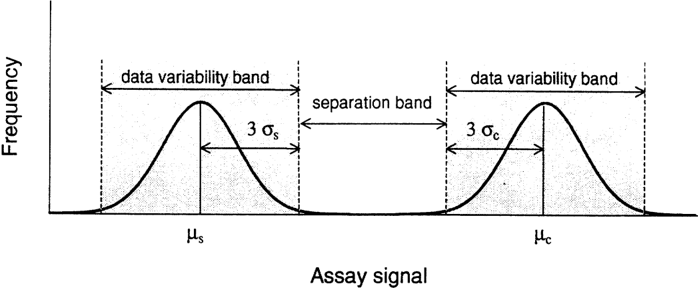
“Z′ factors (separation band/dynamic range of the assay: [(μc+ − 3σc+) − (μc− − 3σc−)]/(μc+ − μc), with μ being mean and σ being the standard deviation of the positive control c+ or the negative control c− of the assay) were calculated as previously described (Zhang et al., 1999).”
BackgroundInfluentialChristophe, T., Ewann, F., Jeon, H. K., Cechetto, J. D., & Brodin, P. M. (2010) · Future Medicinal Chemistry · doi:10.4155/fmc.10.223 · Cited by 68
Iron oxide nanoparticle toxicity testing using high-throughput analysis and high-content imaging
Harris, G., Palosaari, T., Magdolenova, Z., Mennecozzi, M., Gineste, J. M., Saavedra, L., Milcamps, A., Huk, A., Collins, A. R., Dusinska, M., et al. (2015) · Nanotoxicology · doi:10.3109/17435390.2013.816797 · Cited by 59
“The positive controls were used to calculate the Z0 factor as a measure of high-throughput assay quality (Zhang et al. 1999).”
MethodYi, D., Devamani, T., Abdoul‐Zabar, J., Charmantray, F., Hélaine, V., Hecquet, L., & Fessner, W. (2012) · ChemBioChem · doi:10.1002/cbic.201200364 · Cited by 62
Comparative endothelial profiling of doxorubicin and daunorubicin in cultured endothelial cells
Wójcik, T., Buczek, E., Majzner, K., Kołodziejczyk, A. M., Miszczyk, J. U., Kaczara, P., Kwiatek, W. M., Barańśka, M., Szymoński, M., & Chłopicki, S. (2014) · Toxicology in Vitro · doi:10.1016/j.tiv.2014.12.009 · Cited by 66
“Z’ factor values were calculated using the secondary analysis module of the Columbus software (Zhang, 1999).”
MethodLim, S. P., WEN, D., Yap, T. L., YAN, C., Lescar, J., & Vasudevan, S. G. (2008) · Antiviral Research · doi:10.1016/j.antiviral.2008.08.005 · Cited by 62
de Azevedo, M. F., Nie, C. Q., Elsworth, B., Charnaud, S. C., Sanders, P. R., Crabb, B. S., & Gilson, P. R. (2014) · PLoS ONE · doi:10.1371/journal.pone.0112571 · Cited by 62
“The robustness of the assays were evaluated by calculating the statistical parameters Z’ value, signal to background ratio (S/B), signal to noise ratio (S/N), %CVmax and %CVmin as previously described [35].”
MethodVeerapur, V. P., Prabhakar, K. R., Kandadi, M. R., Srinivasan, K. K., & Unnikrishnan, M. K. (2010) · Pharmaceutical Biology · doi:10.3109/13880200903527736 · Cited by 69
Monitoring Helicase Activity with Molecular Beacons
Belon, C. A., & Frick, D. N. (2008) · BioTechniques · doi:10.2144/000112834 · Cited by 62
Mukherjee, S., Hanson, A. M., Shadrick, W. R., Ndjomou, J., Sweeney, N. L., Hernandez, J. J., Bartczak, D., Li, K., Frankowski, K. J., Heck, J. A., et al. (2012) · Nucleic Acids Research · doi:10.1093/nar/gks623 · Cited by 68
“Repeated assays (n=40) with the three different fluorescence tracers in the presence and absence of titan yellow (100mM) revealed similar Z0 factors (43).”
MethodIdentification of HIV-1 Inhibitors Targeting the Nucleocapsid Protein
Breuer, S., Chang, M. W., Yuan, J., & Torbett, B. E. (2012) · Journal of Medicinal Chemistry · doi:10.1021/jm201442t · Cited by 65
Optical electrophysiology for probing function and pharmacology of voltage-gated ion channels
Zhang, H., Reichert, E. C., & Cohen, A. E. (2016) · eLife · doi:10.7554/elife.15202 · Cited by 69
Lo, C. H., Vunnam, N., Lewis, A. K., Chiu, T.-L., Brummel, B. E., Schaaf, T. M., Grant, B. D., Bawaskar, P., Thomas, D. D., & Sachs, J. N. (2017) · SLAS DISCOVERY · doi:10.1177/2472555217706478 · Cited by 66
“This value of Z′ is likely to increase, indicating even better assay quality, once a larger library is screened, since better positive controls are likely to be discovered, increasing the signal window, (μp – μn) in eq 2.(20) Remarkably, both of these compounds—which were blindly identified in our screen—have been sho…”
BackgroundTailored therapeutics based on 1,2,3-1 H -triazoles: a mini review
Prasher, P., & Sharma, M. (2019) · MedChemComm · doi:10.1039/c9md00218a · Cited by 65
Yeast Assays for G Protein-Coupled Receptors
Dowell, S. J., & Brown, A. J. (2009) · Methods in molecular biology · doi:10.1007/978-1-60327-317-6_15 · Cited by 62
A bioluminescent assay for monoamine oxidase activity
Valley, M. P., Zhou, W., Hawkins, E. M., Shultz, J. W., Cali, J. J., Worzella, T. J., Bernad, L., Good, T., Good, D., Riss, T., et al. (2006) · Analytical Biochemistry · doi:10.1016/j.ab.2006.09.035 · Cited by 62
A high density assay format for the detection of novel cytotoxic agents in large chemical libraries
Shum, D., Radu, C., Kim, E., Cajuste, M., Shao, Y., Seshan, V. E., & Djaballah, H. (2008) · Journal of Enzyme Inhibition and Medicinal Chemistry · doi:10.1080/14756360701810082 · Cited by 59
“It is defined as: Z’ = 1(3σc+ + 3σc−) / |μc+ − μc−| where σc+, σc−, μc+ and μc− are the standard deviations (σ) and averages (μ) of the high (c+) and low (c−) control [17] .”
MethodDevelopment of a fluorescence-based enzyme assay of human 5-lipoxygenase
Pufahl, R. A., Kasten, T. P., Hills, R., Gierse, J. K., Reitz, B. A., Weinberg, R. A., & Masferrer, J. L. (2007) · Analytical Biochemistry · doi:10.1016/j.ab.2007.02.009 · Cited by 67
Bacterial metabolism rescues the inhibition of intestinal drug absorption by food and drug additives
Zou, L., Spanogiannopoulos, P., Pieper, L. M., Chien, H.-C., Cai, W., Khuri, N., Pottel, J., Vora, B., Ni, Z., Tsakalozou, E., et al. (2020) · Proceedings of the National Academy of Sciences · doi:10.1073/pnas.1920483117 · Cited by 61
Bharti, S. K., Krishnan, S., Kumar, A., Gupta, A. K., Ghosh, A. K., & Kumar, A. (2014) · Process Biochemistry · doi:10.1016/j.procbio.2014.10.014 · Cited by 61
Liu, M., Dexheimer, T., Sui, D., Hovde, S., Deng, X., Kwok, R., Bochar, D. A., & Kuo, M.-H. (2020) · Scientific Reports · doi:10.1038/s41598-020-73680-2 · Cited by 54
Salin, O., Alakurtti, S., Pohjala, L., Siiskonen, A., Maass, V., Maass, M., Yli‐Kauhaluoma, J. T., & Vuorela, P. M. (2010) · Biochemical Pharmacology · doi:10.1016/j.bcp.2010.06.051 · Cited by 67
“34 [46], a signal to background ratio of 23.”
BackgroundA homogeneous and nonisotopic assay for phosphatidylinositol 4-kinases
Tai, A. W., Bojjireddy, N., & Balla, T. (2011) · Analytical Biochemistry · doi:10.1016/j.ab.2011.05.046 · Cited by 62
“DMSO sensitivity of PI 4-kinase assays and Z-factor measurement for PI4KA.”
MethodInfluentialStreptomycin potency is dependent on MscL channel expression
Iscla, I., Wray, R., Wei, S., Posner, B. A., & Blount, P. (2014) · Nature Communications · doi:10.1038/ncomms5891 · Cited by 67
“The assay had a Z-prime value > 0.75 34 .”
InfluentialGough, A., Chen, N., Shun, T. Y., Lezon, T. R., Boltz, R. C., Reese, C. E., Wagner, J., Vernetti, L. A., Grandis, J. R., Lee, A. V., et al. (2014) · PLoS ONE · doi:10.1371/journal.pone.0102678 · Cited by 67
“The assays were optimized for cell density, cytokine dose and treatment time with their robustness validated using the Z’ factor [27].”
BackgroundMethodNonnucleoside Inhibitor of Measles Virus RNA-Dependent RNA Polymerase Complex Activity
White, L. K., Yoon, J.-J., Lee, J. K., Sun, A., Du, Y., Fu, H., Snyder, J. P., & Plemper, R. K. (2007) · Antimicrobial Agents and Chemotherapy · doi:10.1128/aac.00289-07 · Cited by 64
“5 to 1, indicating the broad suitability of an assay for automated screening (54).”
BackgroundScreening and Structural Analysis of Flavones Inhibiting Tankyrases
Narwal, M., Haikarainen, T., Fallarero, A., Vuorela, P. M., & Lehtiö, L. (2013) · Journal of Medicinal Chemistry · doi:10.1021/jm3018783 · Cited by 61
Brothers, S. P., Saldanha, S. A., Spicer, T., Cameron, M. D., Mercer, B. A., Chase, P. S., McDonald, P. H., Wahlestedt, C., & Hodder, P. (2009) · Molecular Pharmacology · doi:10.1124/mol.109.058677 · Cited by 74
“Z’ values were determined to monitor assay quality and were calculated as previously described (Zhang et al., 1999).”
Methodweb cellHTS2: A web-application for the analysis of high-throughput screening data
Pelz, O., Gilsdorf, M., & Boutros, M. (2010) · BMC Bioinformatics · doi:10.1186/1471-2105-11-185 · Cited by 61
“Quality control assessments of assays and screening data are performed to provide benchmarks for the overall performance, such as experiment-wide performance of controls, reproducibility between replicate experiments, as well as other statistical quality control measures [ 10- 13 ].”
MethodWang, Z., Bhattacharya, A., & Ivanov, D. N. (2015) · PLoS ONE · doi:10.1371/journal.pone.0138780 · Cited by 68
“For FP based competitive HTS, Z’ score is the quality factor for the evaluation of an assay: the higher of Z’ value, the more robust of the assay is [48].”
BackgroundImproved Efficiency in Screening for Lignin-Modifying Peroxidases and Laccases of Basidiomycetes
Kinnunen, A. J., Maijala, P., Järvinen, P. P., & Hatakka, A. I. (2016) · Current Biotechnology · doi:10.2174/2211550105666160330205138 · Cited by 67
“Quality of the assays was estimated by Z' factor [41],”
MethodTargeting Gpr52 lowers mutant HTT levels and rescues Huntington’s disease-associated phenotypes
Song, H., Li, H., Guo, S., Pan, Y., Fu, Y., Zhou, Z., Li, Z., Wen, X., Sun, X., He, B., et al. (2018) · Brain · doi:10.1093/brain/awy081 · Cited by 61
“We assessed the robustness of the screening assay by Z0 factor, the normalized 3 SD window between the negative and positive controls (Zhang et al., 1999).”
MethodMartin, S. E., Chiramel, A. I., Schmidt, M. L., Chen, Y.-C., Whitt, N., Watt, A., Dunham, E. C., Shifflett, K., Traeger, S., Leske, A., et al. (2018) · Genome Medicine · doi:10.1186/s13073-018-0570-1 · Cited by 65
“Z′ factors (separation band/dynamic range of the assay: [(μc+ − 3σc+) − (μc− − 3σc−)]/(μc+ − μc−), with μ being the mean and σ being the standard deviation of the positive control c+ or the negative control c− of the assay) were calculated as previously described [26].”
Wang, X., Chen, X., Zhang, X., Su, C., Yang, M., He, W., Du, Y., Si, S., Wang, L., & Hong, B. (2020) · EBioMedicine · doi:10.1016/j.ebiom.2020.102650 · Cited by 54
“Subsequently, the HTS assay was built by stably transfecting plasmid pGL4-PCSK9-P into HepG2 cells and quantitatively assessed by Z’ factor [38] using berberine (BBR) as a positive control.”
MethodVaasa, A., Viil, I., Enkvist, E., Viht, K., Raidaru, G., Lavõgina, D., & Uri, A. (2008) · Analytical Biochemistry · doi:10.1016/j.ab.2008.10.030 · Cited by 79
“To assess the performance in the competition assay, the Z0 value [20] was calculated according to the Eq.”
MethodRole of Homoserine Transacetylase as a New Target for Antifungal Agents
Nazi, I., Scott, A., Sham, A., Rossi, L., Williamson, P. R., Kronstad, J. W., & Wright, G. D. (2007) · Antimicrobial Agents and Chemotherapy · doi:10.1128/aac.01400-06 · Cited by 61
“factor for the assay (equation 2) (26):”
A screen for drugs that protect against the cytotoxicity of polyglutamine-expanded androgen receptor
Piccioni, F. (2003) · Human Molecular Genetics · doi:10.1093/hmg/ddh045 · Cited by 60
“2, indicating good quality assay data (11).”
MethodTiziani, S., Kang, Y., Choi, J. S., Roberts, W., & Paternostro, G. (2011) · Nature Communications · doi:10.1038/ncomms1562 · Cited by 60
“To validate this approach, we applied unsupervised multivariate statistical modelling and calculated the Z -factor value, a commonly used parameter for monitoring the quality of HTS assay”
MethodBaloxavir marboxil susceptibility of influenza viruses from the Asia-Pacific, 2012–2018
Koszalka, P., Tilmanis, D., Roe, M., Vijaykrishna, D., & Hurt, A. C. (2019) · Antiviral Research · doi:10.1016/j.antiviral.2019.02.007 · Cited by 60
“To evaluate assay reproducibility, FRA was performed with replicate (n = 48) wells of positive and negative controls (± virus) on a 96-well plate and Z factors were calculated using the equation outlined in [15].”
MethodMiniaturized Three-Dimensional Cancer Model for Drug Evaluation
Lovitt, C. J., Shelper, T., & Avery, V. M. (2013) · Assay and Drug Development Technologies · doi:10.1089/adt.2012.483 · Cited by 61
“26 The antiproliferative effects and relevance of these findings will be discussed in relation to the potential for this new model to find utility in cancer investigations and drug discovery programs.”
Lauer‐Fields, J. L., Minond, D., Chase, P. S., Baillargeon, P., Saldanha, S. A., Stawikowska, R., Hodder, P., & Fields, G. B. (2008) · Bioorganic & Medicinal Chemistry · doi:10.1016/j.bmc.2008.03.004 · Cited by 61
Shukla, S. J., Nguyễn, Ð.-T., MacArthur, R., Simeonov, A. M., Frazee, W. J., Hallis, T. M., Marks, B. D., Singh, U. P., Eliason, H. C., Printen, J. A., et al. (2009) · Assay and Drug Development Technologies · doi:10.1089/adt.2009.193 · Cited by 64
Chiaraviglio, L., & Kirby, J. E. (2014) · Assay and Drug Development Technologies · doi:10.1089/adt.2014.577 · Cited by 60
“This strategy has been suggested previously to compensate for a high hit frequency in screening plates.(12,13) The l and x were reversed in the luminescence z score formula so that reduction in luminescence would yield a positive value.”
BackgroundSharlow, E. R., Lyda, T. A., Dodson, H., Mustata, G. I., Morris, M. T., Leimgruber, S., Lee, K., Kashiwada, Y., Close, D. A., Lazo, J. S., et al. (2010) · PLoS neglected tropical diseases · doi:10.1371/journal.pntd.0000659 · Cited by 60
Harmon, D. E., Davis, A. J., Castillo, C., & Mecsas, J. C. (2010) · Antimicrobial Agents and Chemotherapy · doi:10.1128/aac.00364-10 · Cited by 67
Leonardi, R., Zhang, Y.-M., Yun, M., Zhou, R., Zeng, F.-Y., Lin, W., Cui, J., Chen, T., Rock, C. O., White, S. W., et al. (2010) · Chemistry & Biology · doi:10.1016/j.chembiol.2010.06.006 · Cited by 60
“All compounds were initially screened at 12 μM, and the Z′ parameter was used to assess assay performance (Zhang et al., 1999).”
MethodWahome, P. G., Bai, Y., Neal, L. M., Robertus, J. D., & Mantis, N. J. (2010) · Toxicon · doi:10.1016/j.toxicon.2010.03.016 · Cited by 64
“The Z’ factor for an individual test platewas calculated according to Zhang et al. (1999): Z’¼ 1 ((3spþ 3sn)/ jmp mnj), where sp and sn respectively represent the SD values of untreated (“positive”) and toxin-treated (“negative”) control wells, and mp and mn respectively represent the means of…”
MethodInfluentialDavis, S. J., Sheppard, K. E., Pearson, R. B., Campbell, I., Gorringe, K. L., & Simpson, K. J. (2013) · Clinical Cancer Research · doi:10.1158/1078-0432.ccr-12-3433 · Cited by 64
“factor (18) as a means to establish the dynamic range between the positive and negative controls to provide a measure of high-throughput screen performance.”
BackgroundXu, T.-Y., Zhang, S.-L., Dong, G.-Q., Liu, X.-Z., Wang, X., Lv, X.-Q., Qian, Q.-J., Zhang, R.-Y., Sheng, C.-Q., & Miao, C.-Y. (2015) · Scientific Reports · doi:10.1038/srep10043 · Cited by 56
In vitro models of axon regeneration
Al‐Ali, H., Beckerman, S. R., Bixby, J. L., & Lemmon, V. (2016) · Experimental Neurology · doi:10.1016/j.expneurol.2016.01.020 · Cited by 64
Arico, P., Borghini, G., Di Flumeri, G., Colosimo, A., Graziani, I., Imbert, J.-P., Granger, G., Benhacene, R., Terenzi, M., Pozzi, S., et al. (2015) · 2015 37th Annual International Conference of the IEEE Engineering in Medicine and Biology Society (EMBC) · doi:10.1109/embc.2015.7320063 · Cited by 57
“Before every statistical analysis, we used the z-score [12] correction formula to normalize the different behaviors of the subjects.”
MethodSurovtseva, Y. V., Jairam, V., Salem, A. F., Sundaram, R. K., Bindra, R. S., & Herzon, S. B. (2016) · Journal of the American Chemical Society · doi:10.1021/jacs.6b00162 · Cited by 66
Xu, Q., Cao, M., Song, H., Chen, S., Qian, X., Zhao, P., Ren, H., Tang, H., Wang, Y., Wei, Y., et al. (2016) · Future Microbiology · doi:10.2217/fmb-2016-0002 · Cited by 61
Patik, I., Székely, V., Német, O., Szepesi, Á., Kucsma, N., Várady, G., Szakács, G., Bakos, É., & Özvegy‐Laczka, C. (2018) · Scientific Reports · doi:10.1038/s41598-018-20815-1 · Cited by 60
A novel tankyrase inhibitor, MSC2504877, enhances the effects of clinical CDK4/6 inhibitors
Menon, M., Elliott, R., Bowers, L., Balan, N., Rafiq, R., Costa-Cabral, S., Munkonge, F., Trinidade, I., Porter, R., Campbell, A. D., et al. (2019) · Scientific Reports · doi:10.1038/s41598-018-36447-4 · Cited by 60
Disruption of NOTCH signaling by a small molecule inhibitor of the transcription factor RBPJ
Hurtado, C., Safarova, A. G., Smith, M. P., Chung, R., Bruyneel, A. A. N., Gomez‐Galeno, J., Oswald, F., Larson, C. J., Cashman, J. R., Ruiz‐Lozano, P., et al. (2019) · Scientific Reports · doi:10.1038/s41598-019-46948-5 · Cited by 65
Riddle, S. M., Vedvik, K. L., Hanson, G. T., & Vogel, K. W. (2006) · Analytical Biochemistry · doi:10.1016/j.ab.2006.05.017 · Cited by 67
A real-time fluorescence method for enzymatic characterization of specialized human DNA polymerases
Dorjsuren, D., Wilson, D. M., Beard, W. A., McDonald, J. P., Austin, C. P., Woodgate, R., Wilson, S. H., & Simeonov, A. (2009) · Nucleic Acids Research · doi:10.1093/nar/gkp641 · Cited by 56
“An additional demonstration of reagent stability was achieved when working stocks of pol b enzyme and substrate 0–12 were prepared and tested immediately after preparation (fresh) and after cold-room storage overnight (16 h); both the enzymatic and background reaction profiles were unchanged upon overnight reagent sto…”
MethodSchlehuber, L. D., McFadyen, I. J., Shu, Y., Carignan, J., Duprex, W. P., Forsyth, W. R., Ho, J. H., Kitsos, C. M., Lee, G. Y., Levinson, D. A., et al. (2011) · Vaccine · doi:10.1016/j.vaccine.2011.04.079 · Cited by 60
Self-citationHodder, P., Mull, R., Cassaday, J., Berry, K., & Strulovici, B. (2004) · SLAS DISCOVERY · doi:10.1177/1087057104264038 · Cited by 60
“Two parameters were considered important for making this determination, the signal-to-basal ratio and Z′ factor, that is, the absolute range of the assay window and the effective range of the assay window, respectively.(22) The signal-to-basal ratio of the miniaturized agonist assay was slightly lower than the 384well…”
ResultBuckalew, A. R., Wang, J., Murr, A. S., Deisenroth, C., Stewart, W. M., Stoker, T. E., & Laws, S. C. (2020) · Archives of Toxicology · doi:10.1007/s00204-020-02664-y · Cited by 59
Discovery of a dual inhibitor of NQO1 and GSTP1 for treating glioblastoma
Lei, K., Gu, X., Alvarado, A. G., Du, Y., Luo, S., Ahn, E. H., Kang, S. S., Ji, B., Liu, X., Mao, H. Z., et al. (2020) · Journal of Hematology & Oncology · doi:10.1186/s13045-020-00979-y · Cited by 68
“0.5 Z’ 1 indicates a robust assay for HTS [24].”
BackgroundInfluentialChemogenetics defines a short-chain fatty acid receptor gut–brain axis
Barki, N., Bolognini, D., Börjesson, U., Jenkins, L., Riddell, J. S., Hughes, D. I., Ulven, T., Hudson, B. D., Ulven, E. R., Dekker, N., et al. (2022) · eLife · doi:10.7554/elife.73777 · Cited by 65
“This provided a robust 96well microtitre platebased assay with calculated Z′ (Zhang et al., 1999) routinely >0.”
MethodPérez, R., Burgos, A., Jones, D. C., Andrew, L. C., Rodríguez, H., Suárez, M., Fairlamb, A. H., & Wishart, D. S. (2009) · Journal of Medicinal Chemistry · doi:10.1021/jm801306g · Cited by 62
Oh, S., Kim, S., Kong, S., Yang, G., Lee, N., Han, D., Goo, J., Siqueira-Neto, J. L., Freitas-Junior, L. H., & Song, R. (2014) · European Journal of Medicinal Chemistry · doi:10.1016/j.ejmech.2014.07.038 · Cited by 59
Biswas, T., Resto-Roldán, E., Sawyer, S. K., Artsimovitch, I., & Tsodikov, O. V. (2012) · Nucleic Acids Research · doi:10.1093/nar/gks1292 · Cited by 59
“The Z0 score was calculated for the pilot 384-well assay where DMSO was delivered without the small molecules, by using the following equation (37):”
BackgroundMethodMorisseau, C. H. P., Merzlikin, O., Lin, A., He, G., Feng, W., Padilla, I. T., Denison, M. S., Pessah, I. N., & Hammock, B. D. (2009) · Environmental Health Perspectives · doi:10.1289/ehp.0900834 · Cited by 64
“We there fore calculated the signaltobackground ratio (S/B), the signaltonoise ratio (S/N), and the Z´ factor as defined by Zhang et al. (1999).”
MethodZuck, P. D., Murray, E. M., Stec, E. M., Grobler, J. A., Simon, A. J., Strulovici, B., Inglese, J., Flores, O. A., & Ferrer, M. (2004) · Analytical Biochemistry · doi:10.1016/j.ab.2004.07.031 · Cited by 59
Open Innovation for Phenotypic Drug Discovery: The PD2 Assay Panel
Lee, J. A., Chu, S., Willard, F. S., Cox, K. L., Galvin, R. J. S., Peery, R. B., Oliver, S. E., Oler, J., Meredith, T. D., Heidler, S. A., et al. (2011) · SLAS DISCOVERY · doi:10.1177/1087057111405379 · Cited by 62
Improved Dual-Luciferase Reporter Assays for Nuclear Receptors
Paguio, A., Stecha, P., Wood, K. V., & Fan, F. (2010) · Current Chemical Genomics · doi:10.2174/1875397301004010043 · Cited by 59
“5, an acceptance criterion commonly used for high-throughput screening [12].”
Guergova-Kuras, M., Kurucz, I., Hempel, W. M., Tardieu, N., Kádas, J., Malderez‐Bloes, C., Jullien, A., Kieffer, Y., Hincapie, M., Guttman, A., et al. (2011) · Molecular & Cellular Proteomics · doi:10.1074/mcp.m111.010298 · Cited by 59
“The Z factor, a metric to quantify the quality of the screening experiment with respect to reproducibility and data scatter (23), was calculated for each plate using the positive and negative control wells.”
MethodEdwards, T. G., Vidmar, T. J., Koeller, K. J., Bashkin, J. K., & Fisher, C. (2013) · PLoS ONE · doi:10.1371/journal.pone.0075406 · Cited by 65
Lucantoni, L., Silvestrini, F., Signore, M., Siciliano, G., Eldering, M., Dechering, K. J., Avery, V. M., & Alano, P. (2015) · Scientific Reports · doi:10.1038/srep16414 · Cited by 67
Rebbeck, R. T., Essawy, M. M., Nitu, F. R., Grant, B. D., Gillispie, G. D., Thomas, D. D., Bers, D. M., & Cornea, R. L. (2016) · SLAS DISCOVERY · doi:10.1177/1087057116674312 · Cited by 60
Pavan, S., Meyer‐Schaller, N., Diepenbruck, M., Kalathur, R. K. R., Saxena, M. T., & Christofori, G. (2018) · Oncogene · doi:10.1038/s41388-018-0270-8 · Cited by 67
Ghosh, R. N., Chen, Y., DeBiasio, R. L., DeBiasio, R. L., Conway, B. R., Minor, L. K., & Demarest, K. T. (2000) · BioTechniques · doi:10.2144/00291pf01 · Cited by 59
Stephen, A. G., Worthy, K. M., Towler, E. M., Mikovits, J. A., Sei, S., Roberts, P., Yang, Q., Akee, R. K., Klausmeyer, P., McCloud, T. G., et al. (2002) · Biochemical and Biophysical Research Communications · doi:10.1016/s0006-291x(02)02063-6 · Cited by 66
“The Z factor (a statistical parameter to evaluate the quality of high-throughput screens) was calculated for each plate to ensure adequate performance through all the plates used in the screen [28].”
MethodOzers, M. S., Marks, B. D., Gowda, K., Kupcho, K. R., Ervin, K. M., De Rosier, T., Qadir, N., Eliason, H. C., Riddle, S. M., & Shekhani, M. S. (2007) · Biochemistry · doi:10.1021/bi061321b · Cited by 59
Rüdiger, M., Haupts, U. M., Moore, K. J. M., & Pope, A. J. (2001) · SLAS DISCOVERY · doi:10.1177/108705710100600105 · Cited by 59
Maffia, A. M., Kariv, I., & Oldenburg, K. R. (1999) · SLAS DISCOVERY · doi:10.1177/108705719900400307 · Cited by 59
Self-citationSynergy of the antibiotic colistin with echinocandin antifungals in Candida species
Zeidler, U., Bougnoux, M.-E., Lupan, A., Helynck, O., Doyen, A., Garcia, Z., Sertour, N., Clavaud, C., Munier-Lehmann, H., Saveanu, C., et al. (2013) · Journal of Antimicrobial Chemotherapy · doi:10.1093/jac/dks538 · Cited by 58
Metadata
- Authors
- Zhang, J.-H., Chung, T. D. Y., & Oldenburg, K. R.
- Affiliations
- DuPont (United States) (US)
- Venue
- SLAS Discovery
- Publisher
- Elsevier BV
- Published
- 1999-04
- Volume
- 4
- Issue
- 2
- Pages
- 67-73
- ISSN
- 2472-5552 (ISSN-L)
- OpenAlex
- W1991001144
- Cited by
- 6,847
- References
- 8
- Citations by year
- 2026: 200 · 2025: 267 · 2024: 257 · 2023: 308 · 2022: 355 · 2021: 346 · 2020: 358 · 2019: 343 · 2018: 350 · 2017: 339 · 2016: 365 · 2015: 330 · 2014: 347 · 2013: 373 · 2012: 354
- FWCI
- 52.99
- Type
- journal article
- Language
- en
- Open access
- hybrid
- doi.org
- Licence
- cc-by-nc-nd
- www.elsevier.com/tdm/userlicense/1.0/ (tdm)
- www.elsevier.com/legal/tdmrep-license (tdm)
- creativecommons.org/licenses/by-nc-nd/4.0/ (vor, 8429 d)
- Locations
- SLAS DISCOVERY (publishedVersion, cc-by-nc-nd)
- PubMed (publishedVersion)
- Topics
- Life Sciences › Pharmacology, Toxicology and Pharmaceutics › Drug Discovery › Computational Drug Discovery Methods
- Life Sciences › Biochemistry, Genetics and Molecular Biology › Molecular Biology › Advanced Biosensing Techniques and Applications
- Health Sciences › Veterinary › Small Animals › Animal testing and alternatives
- Keywords
- Z' factor, high-throughput screening, hit identification, signal dynamic range, assay validation, statistical parameters, assay optimization, chemical libraries
About these checks
Registry, retraction, Cites and statistics results are computed, not judged, with one exception: a printed reference that no index lists is read once by a model before it counts as a citation error. Claims are extracted by a model and kept only when their quote appears verbatim in the text; each cited source is then checked, with a model’s help, for whether it says what the claim relies on. Those verdicts can be wrong — read the claim’s quote and the cited source before relying on one.
Statistics and arithmetic are recomputed, not judged.
Confidence bands are shown only for fields calibrated on our annotated test set. None is calibrated yet, so no band is shown.
What counts as a claim ›How we measure confidence ›How we check this ›
Are you an author, or do you see a problem with this page? Request a review
Data sources
Bibliographic data: Semantic Scholar, OpenAlex, Crossref.
Contains information from the Semantic Scholar Academic Graph Datasets, made available under the ODC Attribution License (ODC-BY 1.0).
Semantic Scholar’s data is described in: Kinney, R., et al. (2023). The Semantic Scholar Open Data Platform. arXiv:2301.10140.
