

A Simple Statistical Parameter for Use in Evaluation and Validation of High Throughput Screening Assays.
Open accessThe DOI matches its Crossref record; 8 of the 8 references it cites were found in a registry or an index.
Abstract
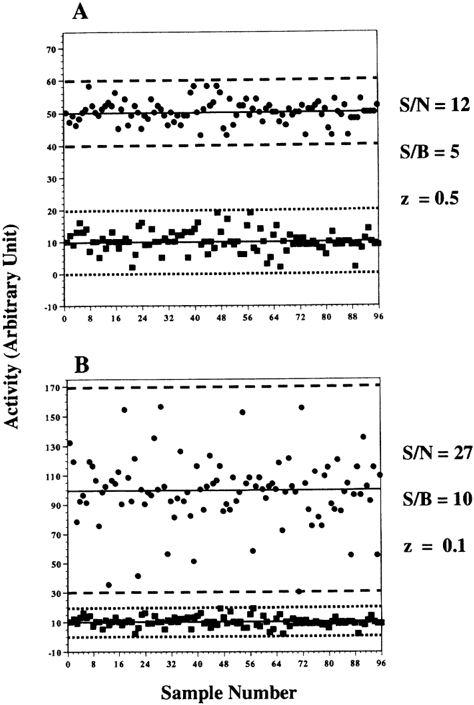
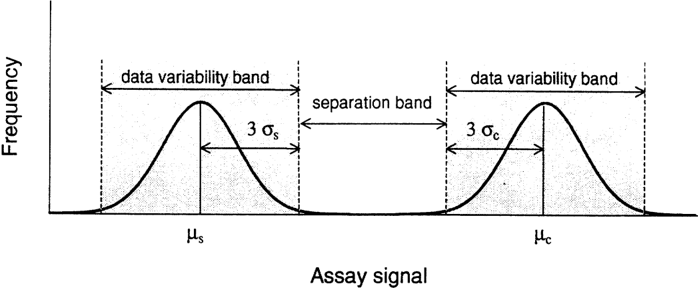
The ability to identify active compounds (³hits²) from large chemical libraries accurately and rapidly has been the ultimate goal in developing high-throughput screening (HTS) assays. The ability to identify hits from a particular HTS assay depends largely on the suitability or quality of the assay used in the screening. The criteria or parameters for evaluating the ³suitability² of an HTS assay for hit identification are not well defined and hence it still remains difficult to compare the quality of assays directly. In this report, a screening window coefficient, called ³Z-factor,² is defined. This coefficient is reflective of both the assay signal dynamic range and the data variation associated with the signal measurements, and therefore is suitable for assay quality assessment. The Z-factor is a dimensionless, simple statistical characteristic for each HTS assay. The Z-factor provides a useful tool for comparison and evaluation of the quality of assays, and can be utilized in assay optimization and validation.
Overview
The claims and statistics of this paper haven’t been checked yet.
Free: it reads the open-access text and checks the first 5 claims that cite a source we can check. Create a free account to check every claim.
Integrity signals
Registry
Cites
Statistics
Figures
Verification
Claims the paper makes
The claims and statistics of this paper haven’t been checked yet.
Free: it reads the open-access text and checks the first 5 claims that cite a source we can check. Create a free account to check every claim.
Claims other papers make about this one
Each is checked against this paper’s own text: does it say what the citing paper says it does?
The cited source says what the claim attributes to it.
In the citing paper
“Despite the difference, Z-factor analysis indicated that the system was not sufficiently robust for large-scale screening purposes, leading us to seek an alternative [37].”
From Chemically induced reprogramming to reverse cellular aging (2023) · cites this paper as [37]
Experimental — accuracy not yet measuredIn the citing paper
“In all cases, Z' values (Zhang et al., 1999) did not vary beyond 0.5 and 1, and typically ranged between 0.6 to 0.8.”
From Small Molecule Fluoride Toxicity Agonists (2015) · cites this paper as Zhang et al., 1999
Self-check
Percentages, sums and reported differences re-computed from the paper’s own numbers.
The self-check needs the paper’s full text.
Citations
Cites
Gordon, E. M., Barrett, R. W., Dower, W. J., Fodor, S. P. A., & Gallop, M. A. (1994) · Journal of Medicinal Chemistry · doi:10.1021/jm00036a001 · Cited by 1,142
Cole, S. T., & Girons, I. S. (1994) · FEMS Microbiology Reviews · doi:10.1111/j.1574-6976.1994.tb00084.x · Cited by 113
Oldenburg, K. R., Zhang, J.-H., Chen, T., Maffia, A., Blom, K. F., Combs, A. P., & Chung, T. D. Y. (1998) · SLAS Discovery · doi:10.1177/108705719800300108 · Cited by 74
Self-citationDesign of Signal Windows in High Throughput Screening Assays for Drug Discovery
Sittampalam, G. S., Iversen, P. W., Boadt, J. A., Kahl, S. D., Bright, S. W., Zock, J. M., Janzen, W. P., & Lister, M. D. (1997) · SLAS DISCOVERY · doi:10.1177/108705719700200306 · Cited by 66
Toward a cDNA Map of the Human Genome
Korenberg, J. R., Chen, X., Adams, M. D., & Venter, C. J. (1995) · Genomics · doi:10.1006/geno.1995.9993 · Cited by 53
The GDBTM Human Genome Database Anno 1997
Fasman, K. H., Letovsky, S., Li, P., Cottingham, R. W., & Kingsbury, D. T. (1997) · Nucleic Acids Research · doi:10.1093/nar/25.1.72 · Cited by 46
Comparison of Automation Equipment in High Throughput Screening
Stevens, M. E., Bouchard, P. J., Kariv, I., Chung, T. D. Y., & Oldenburg, K. R. (1998) · SLAS DISCOVERY · doi:10.1177/108705719800300410 · Cited by 17
Self-citationCombinatorial Organic Synthesis: Applications to Drug Discovery
Gordon, E. M., Gallop, M. A., Campbell, D., Holmes, C., Bermak, J. C., Look, G. C., Murphy, M., Needels, M. C., Jacobs, J. W., Sugarman, J., et al. (1995) · European Journal of Medicinal Chemistry · doi:10.1016/s0223-5234(23)00134-4 · Cited by 17
Cited by
Items 401–500 of 1,039
Wang, Z.-F., Ursu, A., Childs-Disney, J. L., Guertler, R., Yang, W.-Y., Bernat, V., Rzuczek, S. G., Fuerst, R., Zhang, Y.-J., Gendron, T. F., et al. (2019) · Cell Chemical Biology · doi:10.1016/j.chembiol.2018.10.018 · Cited by 115
“88 and thus considered suitable for high-throughput screening (Zhang et al., 1999).”
BackgroundSchust, J., & Berg, T. (2004) · Analytical Biochemistry · doi:10.1016/j.ab.2004.03.024 · Cited by 121
Reading Dynamic Kinase Activity in Living Cells for High-Throughput Screening
Allen, M. D., DiPilato, L. M., Rahdar, M., Ren, Y. R., Chong, C. R., Liu, J. O., & Zhang, J. (2006) · ACS Chemical Biology · doi:10.1021/cb600202f · Cited by 116
Self-citationReader, J., van der Watt, M., Theron, A., Lauterbach, S. B., Rossouw, C., Engelbrecht, D., Wepener, M., Smit, A., Leroy, D., Mancama, D. T., et al. (2015) · Malaria Journal · doi:10.1186/s12936-015-0718-z · Cited by 126
“The result is given as a numerical value (0 to 1), being more favourable as it approaches 1 [32, 47].”
BackgroundJenkins, L., Brea, J. M., Smith, N. J., Hudson, B. D., Reilly, G., Bryant, N. J., Castro, M., Loza, M. I., & Milligan, G. (2010) · Biochemical Journal · doi:10.1042/bj20101287 · Cited by 110
“Z’ factor [17] distribution within individual plates of the screen is shown.”
BackgroundMethodRappaz, B., Breton, B., Shaffer, E., & Turcatti, G. (2014) · Combinatorial Chemistry & High Throughput Screening · doi:10.2174/13862073113166660062 · Cited by 109
“These values were then used to calculate the Z’-factor [18] for each condition (cell type and phenotype).”
Fragment-Based Screening Using Surface Plasmon Resonance Technology
Perspicace, S., Banner, D., Benz, J., Müller, F., Schlatter, D., & Huber, W. (2009) · SLAS Discovery · doi:10.1177/1087057109332595 · Cited by 105
Design and Implementation of High Throughput Screening Assays
Macarrón, R., & Hertzberg, R. (2010) · Molecular Biotechnology · doi:10.1007/s12033-010-9335-9 · Cited by 109
Biochemical screening for SARS-CoV-2 main protease inhibitors
Coelho, C. D. M., Gallo, G., de Campos, C. B. L., Hardy, L., & Würtele, M. (2020) · PLoS ONE · doi:10.1371/journal.pone.0240079 · Cited by 109
“Control experiments thus showed a significant separation of relative activity of the negative and positive controls (Fig 1A) leading to an acceptable HTS Z’ value [11] of 0.”
BackgroundScreening for Small-Molecule Modulators of Long Noncoding RNA-Protein Interactions Using AlphaScreen
Fatemi, R. P., Salah-Uddin, S., Modarresi, F., Khoury, N., Wahlestedt, C., & Faghihi, M. A. (2015) · SLAS DISCOVERY · doi:10.1177/1087057115594187 · Cited by 117
“Z-factor is a measure of assay suitability for HTS. 26 From the binding isotherms generated (Fig.”
InfluentialSkogman, M., Schellmann, D., Brunhofer, G., Erker, T., Busygin, I., Leino, R. P., Vuorela, P. M., & Fallarero, A. (2009) · Journal of Microbiological Methods · doi:10.1016/j.mimet.2009.04.014 · Cited by 127
Going Ape as an Approach to Cancer Therapeutics
Bapat, A., Fishel, M. L., & Kelley, M. R. (2008) · Antioxidants and Redox Signaling · doi:10.1089/ars.2008.2218 · Cited by 114
Okoli, I., Coleman, J. J., Tempakakis, E., An, W. F., Holson, E., Wagner, F., Conery, A. L., Larkins-Ford, J., Wu, G., Stern, A., et al. (2009) · PLoS ONE · doi:10.1371/journal.pone.0007025 · Cited by 106
“Z9-factor values Positive and negative control data were used to calculate the Z9-factor as a measure of overall assay quality [14].”
BackgroundMethodOverview of High‐Throughput Screening
Entzeroth, M., Flotow, H., & Condron, P. (2009) · Current Protocols in Pharmacology · doi:10.1002/0471141755.ph0904s44 · Cited by 117
“Another measure of the robustness of an assay is the Z factor proposed by Zhang et al. (1999).”
BackgroundBapat, A., Glass, L. S., Luo, M., Fishel, M. L., Long, E. C., Georgiadis, M. M., & Kelley, M. R. (2010) · Journal of Pharmacology and Experimental Therapeutics · doi:10.1124/jpet.110.169128 · Cited by 108
“Under these conditions, the Z factor was 0.78, which indicates that the assay provides a statistically valid measure of inhibition of the Ape1 AP endonuclease (Zhang et al., 1999).”
BackgroundInfluentialNew DAG and cAMP Sensors Optimized for Live-Cell Assays in Automated Laboratories
Tewson, P. H., Martinka, S., Shaner, N. C., Hughes, T. E., & Quinn, A. M. (2016) · SLAS Discovery · doi:10.1177/1087057115618608 · Cited by 104
Walker, S. L., Ariga, J., Mathias, J. R., Coothankandaswamy, V., Xie, X., Distel, M., Köster, R. W., Parsons, M. J., Bhalla, K. N., Saxena, M. T., et al. (2012) · PLoS ONE · doi:10.1371/journal.pone.0029916 · Cited by 108
“, intersubject variability and dynamic range) are the Z-factors (Z’ and Z) [36].”
BackgroundStockwell, S. R., Platt, G., Barrie, S. E., Zoumpoulidou, G., te Poele, R. H., Aherne, G. W., Wilson, S. C., Sheldrake, P., McDonald, E., Venet, M., et al. (2012) · PLoS ONE · doi:10.1371/journal.pone.0028568 · Cited by 108
Drug discovery and development for rare genetic disorders
Sun, W., Zheng, W., & Simeonov, A. (2017) · American Journal of Medical Genetics Part A · doi:10.1002/ajmg.a.38326 · Cited by 107
Engel, J. C., Ang, K. K. H., Chen, S., Arkin, M. R., McKerrow, J. H., & Doyle, P. S. (2010) · Antimicrobial Agents and Chemotherapy · doi:10.1128/aac.01777-09 · Cited by 107
A Cell-Based High-Content Screening Assay Reveals Activators and Inhibitors of Cancer Cell Invasion
Quintavalle, M., Elia, L., Price, J. H., Heynen‐Genel, S., & Courtneidge, S. A. (2011) · Science Signaling · doi:10.1126/scisignal.2002032 · Cited by 107
“5 indicates acceptable robustness if the screen is performed in duplicate (11).”
BackgroundQuantitative Cell-Based Reporter Gene Assays Using Droplet-Based Microfluidics
Baret, J., Beck, Y., Billas, I. M. L., Moras, D., & Griffiths, A. D. (2010) · Chemistry & Biology · doi:10.1016/j.chembiol.2010.04.010 · Cited by 121
“66 nM and C = 273 nM) as negative and positive controls (Experimental Procedures) and makes this an excellent assay for screening chemical compounds (Zhang et al., 1999).”
BackgroundMethodInfluentialIdentification of a Small-Molecule Entry Inhibitor for Filoviruses
Basu, A., Li, B., Mills, D. M., Panchal, R. G., Cardinale, S. C., Butler, M. M., Peet, N. P., Majgier-Báranowska, H., Williams, J. D., Patel, I. J., et al. (2011) · Journal of Virology · doi:10.1128/jvi.01456-10 · Cited by 107
“of 10(3), and a calculated screening window coefficient (Z factor) (63) of 0.”
BackgroundKarapetyan, Y. E., Sferrazza, G. F., Zhou, M., Ottenberg, G. K., Spicer, T., Chase, P. S., Fallahi, M., Hodder, P., Weissmann, C., & Lasmézas, C. I. (2013) · Proceedings of the National Academy of Sciences · doi:10.1073/pnas.1303510110 · Cited by 120
“Assay development and optimization in the 96- and 384-well formats was performed by monitoring the Z′ factor, an indicator of assay robustness (defined in SI Materials and Methods) (35).”
MethodInfluentialKandasamy, K., Chuah, J. K. C., Su, R., Huang, P., Eng, K. G., Xiong, S., Li, Y., Chia, C. S., Loo, L., & Zink, D. (2015) · Scientific Reports · doi:10.1038/srep12337 · Cited by 112
Peltonen, K., Colis, L., Liu, H., Jäämaa, S., Moore, H. M., Enbäck, J., Laakkonen, P., Vaahtokari, A., Jones, R. J., af Hällström, T. M., et al. (2010) · PLoS ONE · doi:10.1371/journal.pone.0012996 · Cited by 99
“Z-factor [22] for the screen was 0.632.”
InfluentialReporting data from high-throughput screening of small-molecule libraries
Inglese, J., Shamu, C. E., & Guy, R. K. (2007) · Nature Chemical Biology · doi:10.1038/nchembio0807-438 · Cited by 107
Leads for antitubercular compounds from kinase inhibitor library screens
Magnet, S., Hartkoorn, R. C., Székely, R., Pató, J., Triccas, J. A., Schneider, P. A., Szántai-Kis, C., Őrfi, L., Chambon, M., Banfi, D., et al. (2010) · Tuberculosis · doi:10.1016/j.tube.2010.09.001 · Cited by 114
Hossain, M. M., Polash, S. A., Takikawa, M., Shubhra, R. D., Saha, T., Islam, Z., Hossain, S., Hasan, M. A., Takeoka, S., & Sarker, S. R. (2019) · Frontiers in Bioengineering and Biotechnology · doi:10.3389/fbioe.2019.00239 · Cited by 108
Deep learning in image-based phenotypic drug discovery
Krentzel, D., Shorte, S. L., & Zimmer, C. (2023) · Trends in Cell Biology · doi:10.1016/j.tcb.2022.11.011 · Cited by 115
Discovery of Trypanocidal Compounds by Whole Cell HTS of Trypanosoma brucei
Mackey, Z. B., Baca, A. M., Mallari, J. P., Apsel, B., Shelat, A. A., Hansell, E. J., Chiang, P. K., Wolff, B. E., Guy, R. K., Williams, J. A., et al. (2006) · Chemical Biology & Drug Design · doi:10.1111/j.1747-0285.2006.00389.x · Cited by 121
“05) in both screens were declared as hits (12).”
BackgroundMethodInfluentialQuantitative genetic-interaction mapping in mammalian cells
Roguev, A., Talbot, D., Negri, G. L., Shales, M., Cagney, G., Bandyopadhyay, S., Panning, B., & Krogan, N. J. (2013) · Nature Methods · doi:10.1038/nmeth.2398 · Cited by 106
High-content screening moves to the front of the line
Haney, S. A., LaPan, P., Pan, J., & Zhang, J. (2006) · Drug Discovery Today · doi:10.1016/j.drudis.2006.08.015 · Cited by 124
Self-citationUse of the NP-40 Detergent-Mediated Assay in Discovery of Inhibitors of β-Hematin Crystallization
Sandlin, R. D., Carter, M. D., Lee, P. J., Auschwitz, J. M., Leed, S. E., Johnson, J. D., & Wright, D. W. (2011) · Antimicrobial Agents and Chemotherapy · doi:10.1128/aac.00121-11 · Cited by 106
“The quality of the assay was measured by the Z statistical test proposed by Zhang (26) The assay was analyzed for drift and edge effects using established guidelines of the NIH Chemical Genomics Center (NCGC; Assay guidance manual version 5.0, 2008, Eli Lilly and Company and NIH Chemical Genomics Center.”
MethodInfluentialTropak, M. B., Blanchard, J. E., Withers, S. G., Brown, E. D., & Mahuran, D. (2007) · Chemistry & Biology · doi:10.1016/j.chembiol.2006.12.006 · Cited by 105
“The statistical test, Z′ factor [31] measured the variability of the rate values for Hex in the presence (Low control) and absence (high control) of the Hex inhibitor NGT.”
MethodIn vitro immunotherapy potency assays using real-time cell analysis
Cerignoli, F., Abassi, Y. A., Lamarche, B. J., Guenther, G., Santa Ana, D., Guimet, D., Zhang, W., Zhang, J., & Xi, B. (2018) · PLOS ONE · doi:10.1371/journal.pone.0193498 · Cited by 105
Self-citationA pan-cancer organoid platform for precision medicine
Larsen, B. M., Kannan, M., Langer, L. F., Leibowitz, B. D., Bentaieb, A., Cancino, A., Dolgalev, I., Drummond, B. E., Dry, J. R., Ho, C.-S., et al. (2021) · Cell Reports · doi:10.1016/j.celrep.2021.109429 · Cited by 105
Kargl, J., Brown, A. J., Andersen, L., Dorn, G., Schicho, R., Waldhoer, M., & Heinemann, Á. (2013) · Journal of Pharmacology and Experimental Therapeutics · doi:10.1124/jpet.113.204180 · Cited by 105
“In-text citations for Bowes et al., 2012; Coma et al., 2009; and Zhang et al., 1999 can be found in Supplemental Methods.”
BackgroundBurns, S. M., Vetere, A., Walpita, D., Dančík, V., Khodier, C., Perez, J. R., Clemons, P. A., Wagner, B. K., & Altshuler, D. (2015) · Cell Metabolism · doi:10.1016/j.cmet.2014.12.010 · Cited by 108
“For comparison, the Z0 factor of the assay (Zhang et al., 1999) is > 0.6 when performed in 384-well format with a transfer step, > 0.5 in 384-well format without a transfer step, and > 0.35 in 1,536-well format without a transfer step, using IBMX as the positive control and a glucose concentration…”
MethodInfluentialVeerapur, V. P., Prabhakar, K. R., Thippeswamy, B. S., Bansal, P., Srinivasan, K. K., & Unnikrishnan, M. K. (2011) · Food Chemistry · doi:10.1016/j.foodchem.2011.10.052 · Cited by 108
Fluoxetine is a potent inhibitor of coxsackievirus replication
Zuo, J., Quinn, K. K., Kye, S., Cooper, P., Damoiseaux, R., & Krogstad, P. (2012) · Antimicrobial Agents and Chemotherapy · doi:10.1128/aac.00983-12 · Cited by 104
“The Z= factor, an assessment of the quality of screening assays (46) was monitored in each plate.”
MethodThe XTT Cell Proliferation Assay Applied to Cell Layers Embedded in Three-Dimensional Matrix
Huyck, L., Ampè, C., & Troys, M. V. (2012) · Assay and Drug Development Technologies · doi:10.1089/adt.2011.391 · Cited by 113
“Since background effects can only be judged correctly by considering the variation in response, 38 we also calculated, in addition to S/B, the parameters that take into account the variation on background (S/ N) or on both background and signal (as in a Z-factor).”
InfluentialHigh-Throughput Screening of Small Molecule Libraries using SAMDI Mass Spectrometry
Gurard‐Levin, Z. A., Scholle, M. D., Eisenberg, A. H., & Mrksich, M. (2011) · ACS Combinatorial Science · doi:10.1021/co2000373 · Cited by 108
Inoyama, D., Chen, Y., Huang, X., Beamer, L. J., Kong, A.-N. T., & Hu, L. (2012) · SLAS Discovery · doi:10.1177/1087057111430124 · Cited by 96
“To compare the performance of fluorophores for our assay, the Z′ factor was calculated for each probe.(39) The Z′ factor Table 4.”
MethodCrowe, A., Huang, W., Ballatore, C., Johnson, R. L., Hogan, A.-M. L., Huang, R., Wichterman, J., McCoy, J., Huryn, D., Auld, D. S., et al. (2009) · Biochemistry · doi:10.1021/bi9006435 · Cited by 101
“The combinedThT/FP assaywas optimized through trialHTS using 1536-well test plates to ensure that automated reagent dispensing would provide low coefficients of variation (CV) and Z values (54) exceeding 0.”
Hutchinson, S., Leveridge, M. V., Heathcote, M. L., Francis, P. L., Williams, L., Gee, M., Muñoz, J. A., Leavens, B. J., Shillings, A., Jones, E. J., et al. (2011) · SLAS DISCOVERY · doi:10.1177/1087057111416660 · Cited by 105
“84.(31) The uninhibited and enzyme-inactivated controls clustered densely at 0% and 100% inhibition, respectively (open circles and triangles, Suppl.”
BackgroundNoah, J. W., Severson, W. E., Noah, D. L., Rasmussen, L. A., White, E. L., & Jonsson, C. B. (2006) · Antiviral Research · doi:10.1016/j.antiviral.2006.07.006 · Cited by 103
Basu, S., Ellinger, B., Rizzo, S., Deraeve, C., Schürmann, M., Preut, H., Arndt, H., & Waldmann, H. (2011) · Proceedings of the National Academy of Sciences · doi:10.1073/pnas.1015269108 · Cited by 112
Badertscher, L., Wild, T., Montellese, C., Alexander, L. T., Bammert, L., Sarazova, M., Stebler, M., Csucs, G., Mayer, T. U., Zamboni, N., et al. (2015) · Cell Reports · doi:10.1016/j.celrep.2015.11.061 · Cited by 102
Luthra, P., Aguirre, S., Yen, B. C., Pietzsch, C. A., Sanchez-Aparicio, M. T., Tigabu, B., Morlock, L. K., García-Sastre, A., Leung, D. W., Williams, N. S., et al. (2017) · mBio · doi:10.1128/mbio.00368-17 · Cited by 96
“5 indicates a high-quality screening assay (40).”
Potdar, S., Ianevski, A., Mpindi, J.-P., Bychkov, D., Fiere, C., Ianevski, P., Yadav, B., Wennerberg, K., Aittokallio, T., Kallioniemi, O., et al. (2020) · Bioinformatics · doi:10.1093/bioinformatics/btaa138 · Cited by 102
“The standard QC metrics Z’ (Zhang, 1999) and SSMD (Zhang, 2007) explore the distribution of the positive and negative control wells (Chen et al., 2016).”
BackgroundZheng, M., Morgan-Lappe, S. E., Yang, J., Bockbrader, K., Pamarthy, D., Thomas, D. G., Fesik, S. W., & Sun, Y. (2008) · Cancer Research · doi:10.1158/0008-5472.can-08-0632 · Cited by 108
“AZ factor was calculated (>0.5) to validate the robustness of the assay for high-throughput screening ( 20 ).”
InfluentialDiscovery of enzyme modulators via high-throughput time-resolved FRET in living cells
Gruber, S. J., Cornea, R. L., Li, J., Peterson, K. C., Schaaf, T. M., Gillispie, G. D., Dahl, R., Zsebo, K. M., Robia, S. L., & Thomas, D. D. (2014) · SLAS Discovery · doi:10.1177/1087057113510740 · Cited by 105
Yeast Assays for G-Protein-Coupled Receptors
Dowell, S. J., & Brown, A. J. (2002) · Receptors and Channels · doi:10.3109/10606820214647 · Cited by 110
Edwards, B. S., Bologa, C., Young, S. M., Balakin, K. V., Prossnitz, E. R., Savchuk, N., Sklar, L. A., & Oprea, T. I. (2005) · Molecular Pharmacology · doi:10.1124/mol.105.014068 · Cited by 107
“The Z’ factor is a measure of screening assay quality that reflects both assay signal dynamic range and data variation associated with the signal measurements (Zhang et al., 1999).”
BackgroundHarrill, J., Shah, I., Setzer, R. W., Haggard, D., Auerbach, S., Judson, R., & Thomas, R. S. (2019) · Current Opinion in Toxicology · doi:10.1016/j.cotox.2019.05.004 · Cited by 101
C5‐DNA Methyltransferase Inhibitors: From Screening to Effects on Zebrafish Embryo Development
Ceccaldi, A., Rajavelu, A., Champion, C., Rampon, C., Jurkowska, R. Z., Jankevicius, G., Sénamaud‐Beaufort, C., Ponger, L., Gagey‐Eilstein, N., Ali, H. D., et al. (2011) · ChemBioChem · doi:10.1002/cbic.201100130 · Cited by 106
Lacret, R., Oves‐Costales, D., Gómez, C., Díaz, C., de la Cruz, M., Pérez‐Victoria, I., Vicente, F., Genilloud, O., & Reyes, F. (2014) · Marine Drugs · doi:10.3390/md13010128 · Cited by 101
“, Basel, Switzerland) was used to process and analyze the data and also to calculate the RZ’ factor which predicts the robustness of an assay [28].”
MethodDevelopment of a Fluorescence Polarization Assay for the Molecular Chaperone Hsp90
Kim, J., Felts, S. J., Llauger, L., He, H., Huezo, H., Rosen, N. X., & Chiosis, G. (2004) · SLAS DISCOVERY · doi:10.1177/1087057104265995 · Cited by 109
“3B).(16,17) The Z factor is reflective of both the assay range and the data variation.”
BackgroundMethodInfluentialSills, M. A., Weiss, D., Pham, Q., Schweitzer, R. H., Wu, X. Y., & Wu, J. J. (2002) · SLAS DISCOVERY · doi:10.1177/108705710200700304 · Cited by 101
Discovery of Mdm2-MdmX E3 Ligase Inhibitors Using a Cell-Based Ubiquitination Assay
Herman, A. G., Hayano, M., Poyurovsky, M. V., Shimada, K., Skouta, R., Prives, C., & Stockwell, B. R. (2011) · Cancer Discovery · doi:10.1158/2159-8290.cd-11-0104 · Cited by 100
Development of potent and selective inhibitors targeting the papain-like protease of SARS-CoV-2
Shan, H., Liu, J., Shen, J., Dai, J., Xu, G., Lu, K., Han, C., Wang, Y., Xu, X., Tong, Y., et al. (2021) · Cell chemical biology · doi:10.1016/j.chembiol.2021.04.020 · Cited by 105
“633 determined by 100wells per control group (Zhang et al., 1999).”
Differential nuclear staining assay for high-throughput screening to identify cytotoxic compounds.
Lema, C., Varela-Ramirez, A., & Aguilera, R. J. (2011) · PubMed · Cited by 125
HOFFMANN, H., Palese, P., & Shaw, M. L. (2008) · Antiviral Research · doi:10.1016/j.antiviral.2008.05.008 · Cited by 100
Geurink, P. P., El Oualid, F., Jonker, A., Hameed, D. S., & Ovaa, H. (2012) · ChemBioChem · doi:10.1002/cbic.201100706 · Cited by 101
Jenkins, J. L., Kao, R. Y. T., & Shapiro, R. (2003) · Proteins: Structure, Function, and Bioinformatics · doi:10.1002/prot.10270 · Cited by 98
Yip, K. W., Mao, X., Au, P. Y. B., Hedley, D. W., Chow, S., Dalili, S., Mocanu, J. D., Bastianutto, C., Schimmer, A., & Liu, F.-F. (2006) · Clinical Cancer Research · doi:10.1158/1078-0432.ccr-06-0536 · Cited by 99
Belogolova, E., Bauer, B., Pompaiah, M., Asakura, H., Brinkman, V., Ertl, C., Bartfeld, S., Nechitaylo, T. Y., Haas, R., Machuy, N., et al. (2013) · Cellular Microbiology · doi:10.1111/cmi.12158 · Cited by 116
“The Z′factor is a measure of statistical effect size, and is used in high-throughput screening to judge whether the response measured warrants further analysis (Zhang et al., 1999).”
MethodChemical Inhibition of ENL/AF9 YEATS Domains in Acute Leukemia
Garnar-Wortzel, L., Bishop, T. R., Kitamura, S., Milosevich, N., Asiaban, J. N., Zhang, X., Zheng, Q., Chen, E., Ramos, A. R., Ackerman, C. J., et al. (2021) · ACS Central Science · doi:10.1021/acscentsci.0c01550 · Cited by 101
Identification and Characterization of Small Molecule Inhibitors of a Plant Homeodomain Finger
Wagner, E. K., Nath, N., Flemming, R., Feltenberger, J. B., & Denu, J. M. (2012) · Biochemistry · doi:10.1021/bi3009278 · Cited by 99
Spectral Unmixing of Multicolored Bioluminescence Emitted from Heterogeneous Biological Sources
Gammon, S. T., Leevy, W. M., Gross, S., Gokel, G. W., & Piwnica-Worms, D. R. (2006) · Analytical Chemistry · doi:10.1021/ac051999h · Cited by 99
Johnston, P. A., Phillips, J. L., Shun, T. Y., Shinde, S. S., Lazo, J. S., Huryn, D. M., Myers, M. C., Ratnikov, B. I., Smith, J. W., Su, Y., et al. (2007) · Assay and Drug Development Technologies · doi:10.1089/adt.2007.101 · Cited by 99
“25 For this purpose, the experimental data were imported into an ActivityBase™ (IDBS, Guildford, UK) HTS template to determine the percent inhibition using the respective mean maximum ( n (cid:5) 32) and mean minimum ( n (cid:5) 24) plate controls, signal-to-background ratio, and Z (cid:7) -factor.”
High-throughput FRET assay yields allosteric SERCA activators
Cornea, R. L., Gruber, S. J., Lockamy, E. L., Muretta, J. M., Jin, D., Chen, J., Dahl, R., Bartfai, T., Zsebo, K. M., Gillispie, G. D., et al. (2013) · SLAS Discovery · doi:10.1177/1087057112456878 · Cited by 97
Biologically Relevant Heterogeneity: Metrics and Practical Insights
Gough, A., Stern, A. M., Maier, J., Lezon, T. R., Shun, T., Chennubhotla, C., Schurdak, M. E., Haney, S. A., & Taylor, D. L. (2017) · SLAS DISCOVERY · doi:10.1177/2472555216682725 · Cited by 111
A 3D Human Airway Model Enables Prediction of Respiratory Toxicity of Inhaled Drugs In Vitro
Balogh Sivars, K., Sivars, U., Hornberg, E., Zhang, H., Brändén, L., Bonfante, R., Huang, S., Constant, S., Robinson, I., Betts, C. J., et al. (2018) · Toxicological Sciences · doi:10.1093/toxsci/kfx255 · Cited by 92
Drake, E. J., & Gulick, A. M. (2011) · ACS Chemical Biology · doi:10.1021/cb2002973 · Cited by 105
Potent and Selective Inhibitors of Human Reticulocyte 12/15-Lipoxygenase as Anti-Stroke Therapies
Rai, G., Joshi, N., Jung, J. E., Liu, Y., Schultz, L., Yasgar, A., Perry, S., Diaz, G., Zhang, Q., Kenyon, V. A., et al. (2014) · Journal of Medicinal Chemistry · doi:10.1021/jm401915r · Cited by 104
Makarenkov, V., Zentilli, P., Kevorkov, D., Gagarin, A., Malo, N., & Nadon, R. (2007) · Bioinformatics · doi:10.1093/bioinformatics/btm145 · Cited by 97
“…of several methods for quality control and correction of HTS data can be found in Brideau et al. (2003), Gagarin et al. (2006a), Gunter et al. (2003), Heuer et al. (2003), Heyse (2002), Kevorkov and Makarenkov (2005), Makarenkov et al. (2006), Malo et al. (2006) and Zhang et al. (1999, 2000).”
MethodWDR5 Expression Is Prognostic of Breast Cancer Outcome
Dai, X., Guo, W., Zhan, C., Liu, X., Bai, Z., & Yang, Y. (2015) · PLoS ONE · doi:10.1371/journal.pone.0124964 · Cited by 97
Su, Y., Hickey, S. F., Keyser, S. G. L., & Hammond, M. C. (2016) · Journal of the American Chemical Society · doi:10.1021/jacs.6b01621 · Cited by 107
Development of a high-throughput fluorescence polarization assay for Bcl-xL
Zhang, H., Nimmer, P. M., Rosenberg, S. H., Ng, S., & Joseph, M. K. (2002) · Analytical Biochemistry · doi:10.1016/s0003-2697(02)00028-3 · Cited by 97
WIKI4, a Novel Inhibitor of Tankyrase and Wnt/ß-Catenin Signaling
James, R. G., Davidson, K. C., Bosch, K. A., Biechele, T. L., Robin, N. C., Taylor, R. J., Major, M. B., Camp, N. D., Fowler, K., Martins, T. J., et al. (2012) · PLoS ONE · doi:10.1371/journal.pone.0050457 · Cited by 92
“45 (Figure S1A), a value considered robust in high throughput screening assays [40].”
BackgroundMethodZhang, X. D., Ferrer, M., Espeseth, A. S., Marine, S., Stec, E. M., Crackower, M. A., Holder, D., Heyse, J. F., & Strulovici, B. (2007) · SLAS DISCOVERY · doi:10.1177/1087057107300646 · Cited by 98
“The 1st measure cannot represent the magnitude of difference because it does not effectively capture the data variability.(8) When statistical significance is used, the p-value comes from testing the hypothesis of no mean difference between 2 groups.”
MethodKočan, M., See, H. B., Seeber, R. M., Eidne, K. A., & Pfleger, K. D. G. (2008) · SLAS DISCOVERY · doi:10.1177/1087057108324032 · Cited by 97
“This is because the coefficient is reflective of both the assay signal dynamic range and the data variation associated with the signal measurements.(19) The ability to identify active ligands from large chemical libraries accurately and rapidly is the ultimate goal in the development of high-throughput screening assay…”
BackgroundMethodInfluentialScreening of Drug-Transporter Interactions in a 3D Microfluidic Renal Proximal Tubule on a Chip
Vriend, J., Nieskens, T. T. G., Vormann, M. K., van den Berge, B. T., van den Heuvel, A., Russel, F. G. M., Suter-Dick, L., Lanz, H. L., Vulto, P., Masereeuw, R., et al. (2018) · The AAPS Journal · doi:10.1208/s12248-018-0247-0 · Cited by 95
“Kidney-on-a-chip platforms could therefore advance predictability of large in vitro screenings, also referred to as high-throughput screening (HTS), which are typically employed during early phases in drug development.”
InfluentialRajamuthiah, R., Fuchs, B. B., Jayamani, E., Kim, Y., Larkins‐Ford, J., Conery, A. L., Ausubel, F. M., & Mylonakis, E. E. (2014) · PLoS ONE · doi:10.1371/journal.pone.0089189 · Cited by 102
Wicks, S. L., & Hargrove, A. E. (2019) · Methods · doi:10.1016/j.ymeth.2019.04.018 · Cited by 103
“Commonly, the quality of an assay is defined by its Z’-factor that describes the signal variation for and separation between the free and bound states of an indicator [105].”
BackgroundHuang, S. (2002) · SLAS DISCOVERY · doi:10.1177/108705710200700411 · Cited by 98
Cummings, R. T., Salowe, S. P., Cunningham, B. R., Wiltsie, J., Park, Y. H., Sonatore, L. M., Wisniewski, D., Douglas, C. M., Hermes, J. D., & Scolnick, E. M. (2002) · Proceedings of the National Academy of Sciences · doi:10.1073/pnas.062171599 · Cited by 96
A Pyrrolo-Pyrimidine Derivative Targets Human Primary AML Stem Cells in Vivo
Saito, Y., Yuki, H., Kuratani, M., Hashizume, Y., Takagi, S., Honma, T., Tanaka, A., Shirouzu, M., Mikuni, J., Handa, N., et al. (2013) · Science Translational Medicine · doi:10.1126/scitranslmed.3004387 · Cited by 94
An Integrated Microfluidic Processor for DNA-Encoded Combinatorial Library Functional Screening
MacConnell, A. B., Price, A. K., & Paegel, B. M. (2017) · ACS Combinatorial Science · doi:10.1021/acscombsci.6b00192 · Cited by 100
Mukherjee, S., Weiner, W. S., Schroeder, C. E., Simpson, D. S., Hanson, A. M., Sweeney, N. L., Marvin, R. K., Ndjomou, J., Kolli, R., Isailović, D., et al. (2014) · ACS Chemical Biology · doi:10.1021/cb500512z · Cited by 99
Hirt, C., Booij, T. H., Grob, L., Simmler, P., Toussaint, N. C., Keller, D., Taube, D., Ludwig, V., Goryachkin, A., Pauli, C., et al. (2022) · Cell Genomics · doi:10.1016/j.xgen.2022.100095 · Cited by 110
Rapid planning and analysis of high-throughput experiment arrays for reaction discovery
Mahjour, B. A., Zhang, R., Shen, Y., McGrath, A., Zhao, R., Mohamed, O. G., Lin, Y., Zhang, Z., Douthwaite, J. L., Tripathi, A., et al. (2023) · Nature Communications · doi:10.1038/s41467-023-39531-0 · Cited by 95
“As such, some of the wells in the 1536-well reaction plate were not utilized to account for the four control columns necessary in each of the four 384-well RapidFire ™ assay plates to allow the calculation of Z prime for the assay (0.961) 61 .”
MethodInfluentialFluorescence anisotropy (polarization): from drug screening to precision medicine
Zhang, H., Wu, Q., & Berezin, M. Y. (2015) · Expert Opinion on Drug Discovery · doi:10.1517/17460441.2015.1075001 · Cited by 102
Real-Time Imaging of Notch Activation with a Luciferase Complementation-Based Reporter
Ilagan, M. X. G., Lim, S., Fulbright, M., Piwnica-Worms, D., & Kopan, R. (2011) · Science Signaling · doi:10.1126/scisignal.2001656 · Cited by 95
“We thank B. Nolan (Chemical Genetics Screening Core) and J. Marasa (Molecular Imaging Center High Throughput Screening Core) for their assistance in adapting the Notch-LCI assay for automation and HTS.”
BackgroundInfluentialBell, A., Mills, J. E. J., Williams, G. P., Brannigan, J. A., Wilkinson, A. J., Parkinson, T., Leatherbarrow, R. J., Tate, E. W., Holder, A. A., & Smith, D. F. (2012) · PLoS neglected tropical diseases · doi:10.1371/journal.pntd.0001625 · Cited by 98
Ouertatani-Sakouhi, H., El-Turk, F., Fauvet, B., Cho, M., Karpinar, D. P., Roy, D. L., Dewor, M., Roger, T., Bernhagen, J., Calandra, T., et al. (2010) · Journal of Biological Chemistry · doi:10.1074/jbc.m110.113951 · Cited by 95
Application of a homogenous membrane potential assay to assess mitochondrial function
Sakamuru, S., Li, X., Attene‐Ramos, M. S., Huang, R., Lü, J., Shou, L., Shen, M., Tice, R. R., Austin, C. P., & Xia, M. (2012) · Physiological Genomics · doi:10.1152/physiolgenomics.00161.2011 · Cited by 98
Nowak, C., Pick, A., Lommes, P., & Sieber, V. (2017) · ACS Catalysis · doi:10.1021/acscatal.7b00721 · Cited by 99
Metadata
- Authors
- Zhang, J.-H., Chung, T. D. Y., & Oldenburg, K. R.
- Affiliations
- DuPont (United States) (US)
- Venue
- SLAS Discovery
- Publisher
- Elsevier BV
- Published
- 1999-04
- Volume
- 4
- Issue
- 2
- Pages
- 67-73
- ISSN
- 2472-5552 (ISSN-L)
- OpenAlex
- W1991001144
- Cited by
- 6,847
- References
- 8
- Citations by year
- 2026: 200 · 2025: 267 · 2024: 257 · 2023: 308 · 2022: 355 · 2021: 346 · 2020: 358 · 2019: 343 · 2018: 350 · 2017: 339 · 2016: 365 · 2015: 330 · 2014: 347 · 2013: 373 · 2012: 354
- FWCI
- 52.99
- Type
- journal article
- Language
- en
- Open access
- hybrid
- doi.org
- Licence
- cc-by-nc-nd
- www.elsevier.com/tdm/userlicense/1.0/ (tdm)
- www.elsevier.com/legal/tdmrep-license (tdm)
- creativecommons.org/licenses/by-nc-nd/4.0/ (vor, 8429 d)
- Locations
- SLAS DISCOVERY (publishedVersion, cc-by-nc-nd)
- PubMed (publishedVersion)
- Topics
- Life Sciences › Pharmacology, Toxicology and Pharmaceutics › Drug Discovery › Computational Drug Discovery Methods
- Life Sciences › Biochemistry, Genetics and Molecular Biology › Molecular Biology › Advanced Biosensing Techniques and Applications
- Health Sciences › Veterinary › Small Animals › Animal testing and alternatives
- Keywords
- Z' factor, high-throughput screening, hit identification, signal dynamic range, assay validation, statistical parameters, assay optimization, chemical libraries
About these checks
Registry, retraction, Cites and statistics results are computed, not judged, with one exception: a printed reference that no index lists is read once by a model before it counts as a citation error. Claims are extracted by a model and kept only when their quote appears verbatim in the text; each cited source is then checked, with a model’s help, for whether it says what the claim relies on. Those verdicts can be wrong — read the claim’s quote and the cited source before relying on one.
Statistics and arithmetic are recomputed, not judged.
Confidence bands are shown only for fields calibrated on our annotated test set. None is calibrated yet, so no band is shown.
What counts as a claim ›How we measure confidence ›How we check this ›
Are you an author, or do you see a problem with this page? Request a review
Data sources
Bibliographic data: Semantic Scholar, OpenAlex, Crossref.
Contains information from the Semantic Scholar Academic Graph Datasets, made available under the ODC Attribution License (ODC-BY 1.0).
Semantic Scholar’s data is described in: Kinney, R., et al. (2023). The Semantic Scholar Open Data Platform. arXiv:2301.10140.
