

A Simple Statistical Parameter for Use in Evaluation and Validation of High Throughput Screening Assays.
Open accessThe DOI matches its Crossref record; 8 of the 8 references it cites were found in a registry or an index.
Abstract
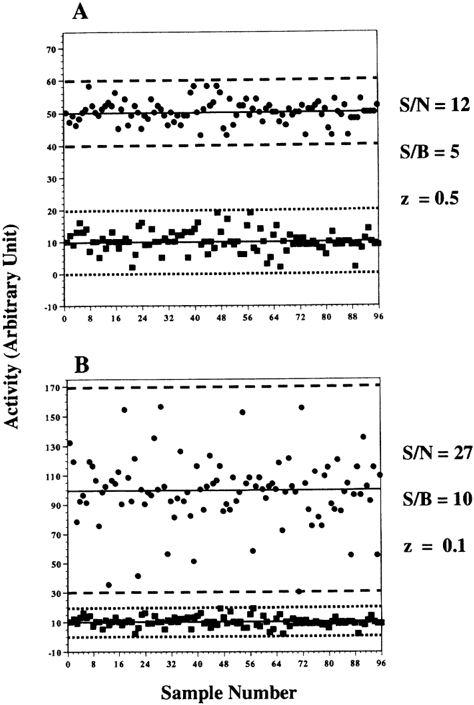
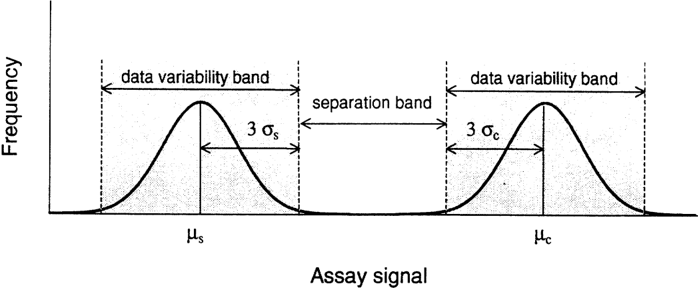
The ability to identify active compounds (³hits²) from large chemical libraries accurately and rapidly has been the ultimate goal in developing high-throughput screening (HTS) assays. The ability to identify hits from a particular HTS assay depends largely on the suitability or quality of the assay used in the screening. The criteria or parameters for evaluating the ³suitability² of an HTS assay for hit identification are not well defined and hence it still remains difficult to compare the quality of assays directly. In this report, a screening window coefficient, called ³Z-factor,² is defined. This coefficient is reflective of both the assay signal dynamic range and the data variation associated with the signal measurements, and therefore is suitable for assay quality assessment. The Z-factor is a dimensionless, simple statistical characteristic for each HTS assay. The Z-factor provides a useful tool for comparison and evaluation of the quality of assays, and can be utilized in assay optimization and validation.
Overview
The claims and statistics of this paper haven’t been checked yet.
Free: it reads the open-access text and checks the first 5 claims that cite a source we can check. Create a free account to check every claim.
Integrity signals
Registry
Cites
Statistics
Figures
Verification
Claims the paper makes
The claims and statistics of this paper haven’t been checked yet.
Free: it reads the open-access text and checks the first 5 claims that cite a source we can check. Create a free account to check every claim.
Claims other papers make about this one
Each is checked against this paper’s own text: does it say what the citing paper says it does?
The cited source says what the claim attributes to it.
In the citing paper
“Despite the difference, Z-factor analysis indicated that the system was not sufficiently robust for large-scale screening purposes, leading us to seek an alternative [37].”
From Chemically induced reprogramming to reverse cellular aging (2023) · cites this paper as [37]
Experimental — accuracy not yet measuredIn the citing paper
“In all cases, Z' values (Zhang et al., 1999) did not vary beyond 0.5 and 1, and typically ranged between 0.6 to 0.8.”
From Small Molecule Fluoride Toxicity Agonists (2015) · cites this paper as Zhang et al., 1999
Self-check
Percentages, sums and reported differences re-computed from the paper’s own numbers.
The self-check needs the paper’s full text.
Citations
Cites
Gordon, E. M., Barrett, R. W., Dower, W. J., Fodor, S. P. A., & Gallop, M. A. (1994) · Journal of Medicinal Chemistry · doi:10.1021/jm00036a001 · Cited by 1,142
Cole, S. T., & Girons, I. S. (1994) · FEMS Microbiology Reviews · doi:10.1111/j.1574-6976.1994.tb00084.x · Cited by 113
Oldenburg, K. R., Zhang, J.-H., Chen, T., Maffia, A., Blom, K. F., Combs, A. P., & Chung, T. D. Y. (1998) · SLAS Discovery · doi:10.1177/108705719800300108 · Cited by 74
Self-citationDesign of Signal Windows in High Throughput Screening Assays for Drug Discovery
Sittampalam, G. S., Iversen, P. W., Boadt, J. A., Kahl, S. D., Bright, S. W., Zock, J. M., Janzen, W. P., & Lister, M. D. (1997) · SLAS DISCOVERY · doi:10.1177/108705719700200306 · Cited by 66
Toward a cDNA Map of the Human Genome
Korenberg, J. R., Chen, X., Adams, M. D., & Venter, C. J. (1995) · Genomics · doi:10.1006/geno.1995.9993 · Cited by 53
The GDBTM Human Genome Database Anno 1997
Fasman, K. H., Letovsky, S., Li, P., Cottingham, R. W., & Kingsbury, D. T. (1997) · Nucleic Acids Research · doi:10.1093/nar/25.1.72 · Cited by 46
Comparison of Automation Equipment in High Throughput Screening
Stevens, M. E., Bouchard, P. J., Kariv, I., Chung, T. D. Y., & Oldenburg, K. R. (1998) · SLAS DISCOVERY · doi:10.1177/108705719800300410 · Cited by 17
Self-citationCombinatorial Organic Synthesis: Applications to Drug Discovery
Gordon, E. M., Gallop, M. A., Campbell, D., Holmes, C., Bermak, J. C., Look, G. C., Murphy, M., Needels, M. C., Jacobs, J. W., Sugarman, J., et al. (1995) · European Journal of Medicinal Chemistry · doi:10.1016/s0223-5234(23)00134-4 · Cited by 17
Cited by
Items 601–700 of 1,039
Welch, S. R., Scholte, F. E. M., Flint, M., Chatterjee, P., Nichol, S. T., Bergeron, É., & Spiropoulou, C. F. (2017) · Antiviral Research · doi:10.1016/j.antiviral.2017.10.008 · Cited by 84
“Suitability for highthroughput screening was determined using the Z prime (Z′) score, a measure of statistical effect size, with values between 0.5 and 1.0 considered acceptable (Zhang et al., 1999).”
InfluentialDevelopment and Application of a GFP-FRET Intracellular Caspase Assay for Drug Screening*
Jones, J. M., Heim, R., Hare, E., Stack, J. H., & Pollok, B. A. (2000) · SLAS DISCOVERY · doi:10.1177/108705710000500502 · Cited by 84
Olker, J. H., Korte, J. J., Denny, J. S., Hartig, P. C., Cardon, M. C., Knutsen, C. N., Kent, P. M., Christensen, J. P., Degitz, S. J., & Hornung, M. W. (2019) · Toxicological Sciences · doi:10.1093/toxsci/kfy302 · Cited by 78
The landscape of drug sensitivity and resistance in sarcoma
Shihabi, A. A., Tebon, P. J., Nguyen, H. T. L., Chantharasamee, J., Sartini, S., Davarifar, A., Jensen, A. Y., Diaz-Infante, M. B., Cox, H., Gonzalez, A. E., et al. (2024) · Cell stem cell · doi:10.1016/j.stem.2024.08.010 · Cited by 87
Effective inhibitors of the essential kinase PknB and their potential as anti-mycobacterial agents
Lougheed, K. E. A., Osborne, S. A., SAXTY, B. A., Whalley, D. P., Chapman, T., Bouloc, N. S., Chugh, J., Nott, T. J., Patel, D., Rowlands, V., et al. (2011) · Tuberculosis · doi:10.1016/j.tube.2011.03.005 · Cited by 88
Shun, T. Y., Lazo, J. S., Sharlow, E. R., & Johnston, P. A. (2010) · SLAS DISCOVERY · doi:10.1177/1087057110389039 · Cited by 93
“sources of random variability include variability in biological activity (true activity) and random errors that arise from occasional technical or procedural failures.(12-16) in addition, there are many potential sources of systematic variability, including differences between reagent lots, buffer preparations, compou…”
BackgroundMethodResultInfluentialSurmacz, B., Fox, H., Gutteridge, A., Lubitz, S., & Whiting, P. (2012) · Stem Cells · doi:10.1002/stem.1166 · Cited by 79
Development of a high-throughput screen for soluble epoxide hydrolase inhibition
Wolf, N. M., Morisseau, C. H. P., Jones, P. D., Hock, B., & Hammock, B. D. (2006) · Analytical Biochemistry · doi:10.1016/j.ab.2006.04.045 · Cited by 83
“All of these Wndings establish the reliability and reproducibility of the developed Xuorescent endpoint HTS system for sEH inhibition.”
MethodInfluentialZhao, X., Jones, A. D., Olson, K. R., Peng, K., Wehrman, T. S., Park, A., Mallari, R., Nebalasca, D., Young, S. W., & Xiao, S.-H. (2008) · SLAS DISCOVERY · doi:10.1177/1087057108321531 · Cited by 83
“7B), indicating that the assay was robust.(22) Furthermore, wells spiked with agonist peptide SST28 at EC10, EC50, and EC90 concentrations were tested to evaluate the capability of the assay to identify hits (Table 2).”
BackgroundMethodInfluentialBuchser, W., Collins, M. A., Garyantes, T. K., Guha, R., Haney, S. A., Lemmon, V., Li, Z., & Trask, O. J. (2014) · Cited by 101
Bioluminescent-based imaging and quantification of glucose uptake in vivo
Maric, T., Mikhaylov, G., Khodakivskyi, P. V., Bazhin, A. A., Sinisi, R., Bonhoure, N., Yevtodiyenko, A., Jones, A. E., Muhunthan, V., Abdelhady, G., et al. (2019) · Nature Methods · doi:10.1038/s41592-019-0421-z · Cited by 83
Sherman, S. P., & Bang, A. G. (2018) · Disease Models & Mechanisms · doi:10.1242/dmm.031906 · Cited by 84
“…after plating, followed by 3 days of incubation, resulted in Z-factors (Z ’ ) for neurite parameters that ranged from 0.2 to 0.5, indicating that the assay was sufficiently robust for use in a high-throughput screen if run in duplicate to increase confidence in hit selection (Zhang et al., 1999).”
InfluentialHigh-Throughput Screening for Modulators of Mesenchymal Stem Cell Chondrogenesis
Huang, A. H., Motlekar, N. A., Stein-Merlob, A. F., Diamond, S. L., Shore, E. M., & Mauck, R. L. (2008) · Annals of Biomedical Engineering · doi:10.1007/s10439-008-9562-4 · Cited by 82
Sierecki, E., Sinko, W., McCammon, J. A., & Newton, A. C. (2010) · Journal of Medicinal Chemistry · doi:10.1021/jm100331d · Cited by 82
Displacement of protein-bound aptamers with small molecules screened by fluorescence polarization
Hafner, M., Vianini, E., Albertoni, B., Marchetti, L., Grüne, I., Gloeckner, C., & Famulok, M. (2008) · Nature Protocols · doi:10.1038/nprot.2008.15 · Cited by 84
“This approach matches the criteria for an excellent screen in being fast (often virtually no incubation time needed), being performed in homogeneous solution and in being highly reproducible with a Z′-facto”
Laschet, C., Dupuis, N., & Hanson, J. (2019) · Journal of Biological Chemistry · doi:10.1074/jbc.ra118.006231 · Cited by 81
“We calculated the Z factor, which includes the mean and the standard deviation of the positive and negative control (35).”
BackgroundMethodZeng, J., Weissmann, F., Bertolin, A. P., Posse, V., Canal, B., Ulferts, R., Wu, M., Harvey, R., Hussain, S., Milligan, J. C., et al. (2021) · Biochemical Journal · doi:10.1042/bcj20210201 · Cited by 85
Targeting Ceramide Metabolism with a Potent and Specific Ceramide Kinase Inhibitor
Graf, C., Klumpp, M., Habig, M., Rovina, P., Billich, A., Baumruker, T., Oberhauser, B., & Bornancin, F. (2008) · Molecular Pharmacology · doi:10.1124/mol.108.048652 · Cited by 81
“Data from control wells without compounds but with or without CerK (high controls or low controls, respectively) were used to convert luminescence photon counts into relative inhibition values ranging from 0% (no inhibition) to 100% (full inhibition) and to calculate Z values (Zhang et al., 1999).”
MethodWeitz, E. A., Chang, J. Y., Rosenfield, A. H., Morrow, E. A., & Pierre, V. C. (2013) · Chemical Science · doi:10.1039/c3sc51583d · Cited by 87
Functional Kinomics Identifies Candidate Therapeutic Targets in Head and Neck Cancer
Moser, R. D., Xu, C., Kao, M. C., Annis, J. E., Lerma, L. A., Schaupp, C. M., Gurley, K. E., Jang, I. S., Biktasova, A., Yarbrough, W. G., et al. (2014) · Clinical Cancer Research · doi:10.1158/1078-0432.ccr-13-2858 · Cited by 85
“, potent cell killing with KIF11 at the lowest toxicity possible in the mock universal controls) to select an optimized transfection condition for each cell line (22).”
Pipalia, N. H., Huang, A., Ralph, H., Rujoi, M., & Maxfield, F. R. (2006) · Journal of Lipid Research · doi:10.1194/jlr.m500388-jlr200 · Cited by 81
“The quality of the assay for screening is expressed in terms of a statistical parameter, Z9 (49):”
MethodDetermining Appropriate Substrate Conversion for Enzymatic Assays in High-Throughput Screening
Wu, G., Yuan, Y., & Hodge, C. N. (2003) · SLAS DISCOVERY · doi:10.1177/1087057103260050 · Cited by 81
“Combining equations (4) and (8), we obtain equation (9).”
BackgroundHengel, S. R., Malacaria, E., Constantino, L. F. D. S., Bain, F. E., Diaz, A., Koch, B. G., Yu, L. P., Wu, M., Pichierri, P., Spies, M., et al. (2016) · eLife · doi:10.7554/elife.14740 · Cited by 90
“…screen using the following parameters: The signal-to- noise ratio S=N ¼ n pð Þ SDn , the signal-to-background ratio S=B¼ n p, and the Z’-factor Z 0 ¼ 1 3 SDnþSDpð Þ n pð Þ , where SDp and SDn are standard deviations, and mn and mp are means of the negative and positive control (Zhang et al., 1999).”
BackgroundMethodA Quantitative High-Throughput Screening Data Analysis Pipeline for Activity Profiling
Huang, R. (2016) · Methods in molecular biology · doi:10.1007/978-1-4939-6346-1_12 · Cited by 85
Orr, A. L., Ashok, D., Sarantos, M. R., Shi, T., Hughes, R. E., & Brand, M. D. (2013) · Free Radical Biology and Medicine · doi:10.1016/j.freeradbiomed.2013.08.170 · Cited by 80
“Z-factors [32] were calculated using raw average fluorescence values and their standard deviations for DMSO controls and selected inhibitor controls (Z-factor comparisons shown) included on each assay plate (nZ36 plates).”
MethodInfluentialBrancucci, N. M. B., Goldowitz, I., Buchholz, K., Werling, K., & Marti, M. (2015) · Nature Protocols · doi:10.1038/nprot.2015.072 · Cited by 89
Sharlow, E. R., Close, D. A., Shun, T., Leimgruber, S., Reed, R., Mustata, G. I., Wipf, P., Johnson, J. D., O’Neil, M. T., Grögl, M., et al. (2009) · PLoS neglected tropical diseases · doi:10.1371/journal.pntd.0000540 · Cited by 80
“Individual assay plate Z-factors were derived from the vehicle and positive controls, and data from plates were used only if Z-factors were .0.5 [ 50 ].”
MethodInfluentialBrewitz, L., Dumjahn, L., Zhao, Y., Owen, C. D., Laidlaw, S. M., Malla, T. R., Nguyen, D. V., Lukacik, P., Salah, E., Crawshaw, A. D., et al. (2023) · Journal of Medicinal Chemistry · doi:10.1021/acs.jmedchem.2c01627 · Cited by 83
Screening of Small Molecule Interactor Library by Using In-Cell NMR Spectroscopy (SMILI-NMR)
Xie, J., Thapa, R., Reverdatto, S., Burz, D. S., & Shekhtman, A. G. (2009) · Journal of Medicinal Chemistry · doi:10.1021/jm9000743 · Cited by 90
Sivendran, S., Jones, V., Sun, D., Wang, Y., Grzegorzewicz, A. E., Scherman, M. S., Napper, A. D., McCammon, J. A., Lee, R. E., Jr., Diamond, S. L., et al. (2009) · Bioorganic & Medicinal Chemistry · doi:10.1016/j.bmc.2009.11.033 · Cited by 82
Meyer, J. M., Ejendal, K. F. K., Avramova, L. V., Garland‐Kuntz, E. E., Giraldo-Calderón, G. I., Brust, T. F., Watts, V. J., & Hill, C. A. (2012) · PLoS neglected tropical diseases · doi:10.1371/journal.pntd.0001478 · Cited by 84
“Prior to screen initiation, a “checkerboard” analysis was conducted that included a minimum (300 nM dopamine in combination with 10 µM SCH23390) and maximum (300 nM dopamine) stimulatory condition. The data obtained were analyzed to calculate the Z-factor”
MethodEarly phase drug discovery: Cheminformatics and computational techniques in identifying lead series
Duffy, B. C., Zhu, L., Decornez, H. Y., & Kitchen, D. B. (2012) · Bioorganic & Medicinal Chemistry · doi:10.1016/j.bmc.2012.04.062 · Cited by 90
Alvarez, E. C., Stamatakis, K., Punzón, C., Álvarez‐Velilla, R., Tejería, A., Escudero-Martínez, J. M., Pérez‐Pertejo, Y., Fresno, M., Balaña‐Fouce, R., & Reguera, R. M. (2015) · PLoS neglected tropical diseases · doi:10.1371/journal.pntd.0003666 · Cited by 80
Iyer, R., Barrese, A. A., Parakh, S., Parker, C. N., & Tripp, B. C. (2006) · SLAS DISCOVERY · doi:10.1177/1087057106289403 · Cited by 80
Gao, Q., Yuan, S., Zhang, C., Wang, Y., Wang, Y., He, G., Zhang, S., Altmeyer, R. M., & Zou, G. (2015) · Antimicrobial Agents and Chemotherapy · doi:10.1128/aac.05108-14 · Cited by 84
“5 and 1 indicates an excellent assay with good separation between controls (30).”
BackgroundSakamoto, H., Egashira, S., Saito, N., Kirisako, T., Miller, S., Sasaki, Y., Matsumoto, T., Shimonishi, M., Komatsu, T., Terai, T., et al. (2014) · ACS Chemical Biology · doi:10.1021/cb500653y · Cited by 80
Identification of potent and selective small molecule inhibitors of the cation channel TRPM4
Ozhathil, L. C., Delalande, C., Bianchi, B., Németh, G., Kappel, S., Thomet, U., Ross‐Kaschitza, D., Simonin, C., Rubin, M., Gertsch, J., et al. (2018) · British Journal of Pharmacology · doi:10.1111/bph.14220 · Cited by 91
“Z` factor was calculated as described previously (Zhang et al., 1999), using the following equation: Z` = 1 [(3SDp + 3SDn)/(3Meanp 3Meann)] where SD is standard deviation, and p and n are positive and negative control respectively.”
MethodTakahashi, N., Hoshi, H., Higa, A., Hiyama, G., Tamura, H., Ogawa, M., Takagi, K., Goda, K., Okabe, N., Muto, S., et al. (2019) · Cells · doi:10.3390/cells8050481 · Cited by 80
“The Z′ factor, a dimensionless parameter that ranges between 1 (infinite separation) and < 0, was defined as Z′ = 1 – (3σc+ + 3σc–)/|μc+ – μc–|, where σc+, σc−, μc+, and μc− are the standard deviations (σ) and averages (μ) of the high (c+) and low (c–) controls [31].”
Identification and Characterization of Small Molecule Human Papillomavirus E6 Inhibitors
Malecka, K. A., Fera, D., Schultz, D., Hodawadekar, S. C., Reichman, M., Donover, P. S., Murphy, M. E., & Marmorstein, R. (2014) · ACS Chemical Biology · doi:10.1021/cb500229d · Cited by 89
Yang, W., Connors, D., Barber, L., Jayachandra, S., Hanumegowda, U., & Adams, S. P. (2009) · Toxicology in Vitro · doi:10.1016/j.tiv.2009.06.003 · Cited by 79
Osorio, E. Y., Travi, B. L., Renslo, A. R., Peniche, A. G., & Melby, P. C. (2011) · PLoS neglected tropical diseases · doi:10.1371/journal.pntd.0000962 · Cited by 79
“To confirm the quality of the assay in discriminating active from inactive compounds we calculated that the Z prime (Z’) factor [31] in 3 different screening experiments using 36 different plates.”
MethodInhibition of the ERCC1–XPF structure-specific endonuclease to overcome cancer chemoresistance
McNeil, E. M., Astell, K. R., Ritchie, A., Shave, S., Houston, D. R., Bakrania, P., Jones, H. M., Khurana, P., Wallace, C., Chapman, T., et al. (2015) · DNA repair · doi:10.1016/j.dnarep.2015.04.002 · Cited by 79
Lai, Y., Cheng, K., & Kisaalita, W. S. (2012) · PLoS ONE · doi:10.1371/journal.pone.0045074 · Cited by 79
Inhibition of acetylcholinesterase by coumarins: The case of coumarin 106
Fallarero, A., Oinonen, P., GUPTA, S., BLOM, P., Galkin, A., Mohan, C. G., & Vuorela, P. (2008) · Pharmacological Research · doi:10.1016/j.phrs.2008.08.001 · Cited by 83
Survivin depletion preferentially reduces the survival of activated K-Ras-transformed cells
Sarthy, A. V., Morgan-Lappe, S. E., Zakula, D., Vernetti, L., Schurdak, M., Packer, J. C. L., Anderson, M. G., Shirasawa, S., Sasazuki, T., & Fesik, S. W. (2007) · Molecular Cancer Therapeutics · doi:10.1158/1535-7163.mct-06-0560 · Cited by 78
Paschos, A., den Hartigh, A. B., Smith, M. A., Atluri, V., Sivanesan, D., Tsolis, R. M., & Baron, C. (2010) · Infection and Immunity · doi:10.1128/iai.00993-10 · Cited by 79
“The Z factor (52) for each plate was calculated to assess the variability of the”
MethodPeters, M. F., Knappenberger, K. S., Wilkins, D. E., Sygowski, L. A., Lazor, L. A., Liu, J., & Scott, C. W. (2007) · SLAS DISCOVERY · doi:10.1177/1087057106298637 · Cited by 79
Adenylating Enzymes in Mycobacterium tuberculosis as Drug Targets
Duckworth, B. P., Nelson, K. M., & Aldrich, C. C. (2012) · Current Topics in Medicinal Chemistry · doi:10.2174/156802612799984571 · Cited by 88
“A powerful gauge of assay robustness is referred to as the Z′ factor, which takes into account both the assay’s signal to noise as well as the standard deviation [26].”
BackgroundHomoharringtonine (omacetaxine mepesuccinate) as an adjunct forFLT3-ITD acute myeloid leukemia
Lam, S. S. Y., Ho, E. S. K., He, A. B.-L., Wong, W.-W., Cher, C. Y., Ng, N. K. L., Man, C., Gill, H., Cheung, A. M. S., Ip, H., et al. (2016) · Science Translational Medicine · doi:10.1126/scitranslmed.aaf3735 · Cited by 86
Design and Implementation of High-Throughput Screening Assays
Macarrón, R., & Hertzberg, R. (2009) · Methods in molecular biology · doi:10.1007/978-1-60327-258-2_1 · Cited by 79
Ellinger, B., Bojková, D., Zaliani, A., Cinatl, J. J., Claussen, C., Westhaus, S., Keminer, O., Reinshagen, J., Kuzikov, M., Wolf, M., et al. (2021) · Scientific Data · doi:10.1038/s41597-021-00848-4 · Cited by 84
High-throughput screening of small molecules identifies hepcidin antagonists
Fung, E., Sugianto, P., Hsu, J., Damoiseaux, R., Ganz, T., & Nemeth, E. (2013) · Molecular Pharmacology · doi:10.1124/mol.112.083428 · Cited by 78
“1A) and cellular density (Supplemental Table 1) based on the zstatistics (Zhang et al., 1999).”
MethodModeling human tumor angiogenesis in a three-dimensional culture system
Seano, G., Chiaverina, G., Gagliardi, P. A., di Blasio, L., Sessa, R., Bussolino, F., & Primo, L. (2013) · Blood · doi:10.1182/blood-2012-08-452292 · Cited by 77
“dynamic range of the assay as well as the variation associated with signal measurements (supplemental Figure 5A).(22) Z9-test on EGM-2 (positive control) and EBM-2 (negative control) cultured hARs unveiled that the Z9-factor for the hAR assay was 0.”
MethodHiltunen, A. K., Savijoki, K., Nyman, T. A., Miettinen, I., Ihalainen, P., Peltonen, J. P. K., & Fallarero, A. (2019) · Microorganisms · doi:10.3390/microorganisms7120584 · Cited by 81
Li, J., Bush, J., Xiong, Y., Li, L., & McCormack, M. (2011) · PLoS ONE · doi:10.1371/journal.pone.0027364 · Cited by 84
“Z-factor determination The Z-factor of the SFLC assay was calculated step by step as previously described [30].”
MethodFlipo, M., Beghyn, T. B., Leroux, V., Florent, I., Deprez, B. P., & Deprez-Poulain, R. F. (2007) · Journal of Medicinal Chemistry · doi:10.1021/jm061169b · Cited by 78
Novel Analytic Criteria and Effective Plate Designs for Quality Control in Genome-Scale RNAi Screens
Zhang, X. D. (2008) · SLAS DISCOVERY · doi:10.1177/1087057108317062 · Cited by 78
A sensitive fluorimetric assay for pyruvate
Zhu, A., Romero, R. J., & Petty, H. R. (2009) · Analytical Biochemistry · doi:10.1016/j.ab.2009.09.017 · Cited by 86
A Small Molecule Discrimination Map of the Antibiotic Resistance Kinome
Shakya, T., Stogios, P. J., Waglechner, N., Evdokimova, E., Ejim, L. J., Blanchard, J., McArthur, A. G., Savchenko, A. V., & Wright, G. D. (2011) · Chemistry & Biology · doi:10.1016/j.chembiol.2011.10.018 · Cited by 86
Razinkov, V. I., Treuheit, M. J., & Becker, G. W. (2015) · SLAS DISCOVERY · doi:10.1177/1087057114565593 · Cited by 85
Rizk, M. A., El‒Sayed, S. A. E., Terkawi, M. A., Youssef, M. A., Said, E. S. E. S. E., El‐Sayed, G., El‐Khodery, S., El-Ashker, M. R., Elsify, A. M., Omar, M. A., et al. (2015) · PLoS ONE · doi:10.1371/journal.pone.0125276 · Cited by 78
“The assay quality is determined by statistical parameters including the Z’-factor, S/N ratio, % CVmax, and % CVmin [19, 23, 24].”
BackgroundMethodInfluentialCellular manganese content is developmentally regulated in human dopaminergic neurons
Kumar, K. K., Lowe, Aboud, A. A., Neely, M. D., Redha, R., Bauer, J. A., Odak, M., Weaver, C. D., Meiler, J., Aschner, M., et al. (2014) · Scientific Reports · doi:10.1038/srep06801 · Cited by 78
Kim, W., Conery, A. L., Rajamuthiah, R., Fuchs, B. B., Ausubel, F. M., & Mylonakis, E. E. (2015) · PLoS ONE · doi:10.1371/journal.pone.0127640 · Cited by 81
“The Z’-factor was calculated from fluorescence intensity data from a 384-well plate in which half of the wells were filled with 0.1% DMSO (negative control) and the remaining wells contained 10X MIC of lysostaphin or 10X MIC of nisin (positive controls).”
BackgroundMethodInfluentialAutomated Screening Procedure for High-Throughput Generation of Antibody Fragments
Hallborn, J., & Carlsson, R. N. K. (2002) · BioTechniques · doi:10.2144/dec02-hallborn · Cited by 83
Mawji, I. A., Simpson, C. D., Gronda, M., Williams, M. A., Hurren, R., Henderson, C. J., Datti, A., Wrana, J. L., & Schimmer, A. D. (2007) · Cancer Research · doi:10.1158/0008-5472.can-07-1687 · Cited by 85
“5 denotes a very robust screening assay (20).”
BackgroundLevoye, A., Zwier, J. M., Jaracz‐Ros, A., Klipfel, L., Cottet, M., Maurel, D., Bdioui, S., Balabanian, K., Prézeau, L., Trinquet, E., et al. (2015) · Frontiers in Endocrinology · doi:10.3389/fendo.2015.00167 · Cited by 82
“deRet Assay for high-throughput screening To evaluate the suitability of DERET assay for HTS, we determined the Z′-factor, a performance indicator that takes into account both signal dynamic range and variation of experimental data (52).”
MethodPalo, K., Brand, L., Eggeling, C., Jäger, S., Kask, P., & Gall, K. (2002) · Biophysical Journal · doi:10.1016/s0006-3495(02)75195-3 · Cited by 78
“The factor’s maximum value is a Z value of 1.0, and any screening application is counted for being robust and of high quality if Z 0.5 (Zhang et al., 1999).”
BackgroundMethodInfluentialGonzález, J. E., & Maher, M. P. (2002) · Receptors and Channels · doi:10.3109/10606820214644 · Cited by 81
“For assays generating ∼15 mV voltage changes or greater, reliability and assay windows (Zhang et al. 1999) are such that compounds can be screened in single wells.”
BackgroundTeicoplanin inhibits Ebola pseudovirus infection in cell culture
Wang, Y., Cui, R., Li, G., Gao, Q., Yuan, S., Altmeyer, R. M., & Zou, G. (2015) · Antiviral Research · doi:10.1016/j.antiviral.2015.11.003 · Cited by 77
“83, indicative of robust assay performance (Zhang et al., 1999).”
InfluentialCDK6 Antagonizes p53-Induced Responses during Tumorigenesis
Bellutti, F., Tigan, A.-S., Nebenfuehr, S., Dolezal, M., Zojer, M., Grausenburger, R., Hartenberger, S., Kollmann, S., Doma, E., Prchal-Murphy, M., et al. (2018) · Cancer Discovery · doi:10.1158/2159-8290.cd-17-0912 · Cited by 76
Haider, R. S., Matthees, E. S. F., Drube, J., Reichel, M., Zabel, U., Inoue, A., Chevigné, A., Krasel, C., Deupí, X., & Hoffmann, C. (2022) · Nature Communications · doi:10.1038/s41467-022-33307-8 · Cited by 77
“h and i The quantification of colocalisation of PTH1R-CFP with Rab5-mCherry in β-arrestin1/2 knockout and ΔQGRK cells was calculated using Squassh and SquasshAnalyst (number of images per respective condition; βarr1 (39), βarr1-dFLR (43), no βarr (17), βarr1 inΔQ-GRK (38), βarr2 (33), βarr2-dFLR (27), βarr2 in ΔQ-GRK…”
MethodKim, M. S., Ra, E. A., Kweon, S. H., Seo, B. A., Ko, H. S., Oh, Y., & Lee, G. (2023) · Cell stem cell · doi:10.1016/j.stem.2023.05.015 · Cited by 79
Mitochondrial fatty acid oxidation drives senescence
Yamauchi, S., Sugiura, Y., Yamaguchi, J., Zhou, X., Takenaka, S., Odawara, T., Fukaya, S., Fujisawa, T., Naguro, I., Uchiyama, Y., et al. (2024) · Science Advances · doi:10.1126/sciadv.ado5887 · Cited by 85
“S1E) ( 22 ).”
Identification of Small Molecule Activators of BMP Signaling
Vrijens, K., Lin, W., Cui, J., Farmer, D. M., Low, J. A., Pronier, E., Zeng, F.-Y., Shelat, A. A., Guy, R. K., Taylor, M. R., et al. (2013) · PLoS ONE · doi:10.1371/journal.pone.0059045 · Cited by 82
Cruz, D. J. M., Bonotto, R. M., Gomes, R. G. B., da Silva, C. T., Taniguchi, J. B., No, J. H., Lombardot, B., Schwartz, O., Hansen, M. A. E., & Freitas-Junior, L. H. (2013) · PLoS neglected tropical diseases · doi:10.1371/journal.pntd.0002471 · Cited by 80
Discovery of novel inhibitors of Bcl-xL using multiple high-throughput screening platforms
Qian, J., Voorbach, M. J., Huth, J. R., Coen, M. L., Zhang, H., Ng, S., Comess, K. M., Petros, A. M., Rosenberg, S. H., Warrior, U., et al. (2004) · Analytical Biochemistry · doi:10.1016/j.ab.2003.12.034 · Cited by 77
“The quality of an assay without drug compounds is typically evaluated using a statistical parameter known as the Z0 factor [29].”
MethodUebelhoer, L. S., Albariño, C. G., McMullan, L. K., Chakrabarti, A. K., Vincent, J. P., Nichol, S. T., & Towner, J. S. (2014) · Antiviral Research · doi:10.1016/j.antiviral.2014.03.018 · Cited by 77
Gonçalves, V., Brannigan, J. A., Whalley, D. P., Ansell, K. H., SAXTY, B. A., Holder, A. A., Wilkinson, A. J., Tate, E. W., & Leatherbarrow, R. J. (2012) · Journal of Medicinal Chemistry · doi:10.1021/jm300040p · Cited by 81
Aulner, N., Danckaert, A., Rouault, E., Desrivot, J., Helynck, O., Commère, P., Munier‐Lehmann, H., Späth, G. F., Shorte, S. L., Milon, G., et al. (2013) · PLoS neglected tropical diseases · doi:10.1371/journal.pntd.0002154 · Cited by 83
“A combination of two common QC metrics, the robust Z9factor [33] and the SSMD [34] were used as criteria for plate data rejection or acceptance.”
MethodTropak, M. B., Kornhaber, G. J., Rigat, B. A., Maegawa, G. H., Buttner, J. D., Blanchard, J. E., Murphy, C., Tuske, S. J., Coales, S. J., Hamuro, Y., et al. (2008) · ChemBioChem · doi:10.1002/cbic.200800304 · Cited by 75
Ang, F., Wong, A. P. Y., Ng, M. L., & Chu, J. J. H. (2010) · Virology Journal · doi:10.1186/1743-422x-7-24 · Cited by 81
“In addition, to ensure that the screening assay has minimal signal variation and a consistently high signal-to-background ratio, we have also determined the Z’ factor of the screening assay [28] based on data collected from 120 wells of DENVinfected cells reverse-transfected with 50 μM of siRNA against PTB and data co…”
MethodGlucocorticoid Compounds Modify Smoothened Localization and Hedgehog Pathway Activity
Wang, Y., Davidow, L. S., Arvanites, A. C., Blanchard, J., Lam, K., Xu, K., Oza, V., Yoo, J. W., Ng, J. M. Y., Curran, T., et al. (2012) · Chemistry & Biology · doi:10.1016/j.chembiol.2012.06.012 · Cited by 80
“Z-prime scores(Zhang, et al., 1999) consistently >0.4 indicate a reasonable reliability of the primary screen.”
InfluentialMartin, H. L., Adams, M., Higgins, J. W., Bond, J., Morrison, E. E., Bell, S. M., Warriner, S. L., Nelson, A. S., & Tomlinson, D. C. (2014) · PLoS ONE · doi:10.1371/journal.pone.0088338 · Cited by 79
“045, and thus statistical significance [12,13].”
BackgroundMethodCheng, T.-J. R., Sung, M.-T., Liao, H.-Y., Chang, Y., Chen, C., Huang, C., Chou, L., Wu, Y.-D., Chen, Y.-H., Cheng, Y. E., et al. (2008) · Proceedings of the National Academy of Sciences · doi:10.1073/pnas.0710868105 · Cited by 76
“A fluorescence anisotropy (FA)-based assay was developed by using the PBP that had higher binding affinity and was successfully used for the HTS of TG inhibitors.”
MethodInfluentialKim, K., Pollard, J. M., Norris, A. J., McDonald, J., Sun, Y., Micewicz, E. D., Pettijohn, K. J., Damoiseaux, R. D., Iwamoto, K. S., Sayre, J. W., et al. (2009) · Clinical Cancer Research · doi:10.1158/1078-0432.ccr-09-1964 · Cited by 76
“The Z’ factor (10) for the assay was > 0.”
BackgroundLithocholic acid is an endogenous inhibitor of MDM4 and MDM2
Vogel, S. M., Bauer, M. R., Joerger, A. C., Wilcken, R., Brandt, T., Veprintsev, D. B., Rutherford, T. J., Fersht, A. R., & Boeckler, F. M. (2012) · Proceedings of the National Academy of Sciences · doi:10.1073/pnas.1215060109 · Cited by 74
Marchand, C., Lea, W., Jadhav, A., Dexheimer, T. S., Austin, C. P., Inglese, J., Pommier, Y. G., & Simeonov, A. M. (2009) · Molecular Cancer Therapeutics · doi:10.1158/1535-7163.mct-08-0878 · Cited by 85
“The pilot screen performed robustly, yielding average Z ¶ factor (37) of 0.”
BackgroundBrunhofer, G., Fallarero, A., Karlsson, D., Batista‐González, A., Shinde, P., Mohan, C. G., & Vuorela, P. M. (2012) · Bioorganic & Medicinal Chemistry · doi:10.1016/j.bmc.2012.09.040 · Cited by 76
Sorrentino, F., del Río, R. G., Zheng, X., Matilla, J.-L. P., Torres, P. A., Martínez-Hoyos, M., Pérez‐Herrán, E., Mendoza-Losana, A., & Av‐Gay, Y. (2015) · Antimicrobial Agents and Chemotherapy · doi:10.1128/aac.01920-15 · Cited by 78
“Statistical analysis was performed to assess assay quality, and Z= values were calculated (20).”
MethodAn RNA-Based Fluorescent Biosensor for High-Throughput Analysis of the cGAS-cGAMP-STING Pathway
Bose, D., Su, Y., Marcus, A., Raulet, D. H., & Hammond, M. C. (2016) · Cell chemical biology · doi:10.1016/j.chembiol.2016.10.014 · Cited by 80
Turcano, L., Torrente, E., Missineo, A., Andreini, M., GRAMICCIA, M., Muccio, T. D., Genovese, I., Fiorillo, A., Harper, S., Bresciani, A., et al. (2018) · PLoS neglected tropical diseases · doi:10.1371/journal.pntd.0006969 · Cited by 76
Real-time Measurements of Amino Acid and Protein Hydroperoxides Using Coumarin Boronic Acid
Michalski, R., Zielonka, J., Gapys, E., Marcinek, A., Joseph, J., & Kalyanaraman, B. (2014) · Journal of Biological Chemistry · doi:10.1074/jbc.m114.553727 · Cited by 73
“We used the Z -factor, a simple statistical parameter, to directly compare the quality of both assays (22).”
BackgroundMethodInfluentialDirected molecular screening for RecA ATPase inhibitors
Wigle, T. J., & Singleton, S. F. (2007) · Bioorganic & Medicinal Chemistry Letters · doi:10.1016/j.bmcl.2007.04.013 · Cited by 82
Medda, X., Mertens, L., Versweyveld, S., Diels, A., Barnham, L., Bretteville, A., Buist, A., Verheyen, A., Royaux, I., Ebneth, A., et al. (2016) · SLAS Discovery · doi:10.1177/1087057116638029 · Cited by 73
“52 in the hTAU10/hTAU10 assay in 384-well plates.(34) We hypothesize that the Z′ factor of the assay will certainly improve if larger data sets are used.”
BackgroundRico-Bautista, E., Yang, C.-C., Lu, L., Roth, G. P., & Wolf, D. A. (2010) · BMC Biology · doi:10.1186/1741-7007-8-153 · Cited by 79
“Z’-factor calculation: This parameter was used to assess the quality of the assay in the HTP optimization (HTP Company, CA, USA) [37].”
BackgroundMethodInfluentialWayne, G. J., Deng, S.-J., Amour, A., Borman, S., Matico, R., Carter, H. L., & Murphy, G. (2007) · Journal of Biological Chemistry · doi:10.1074/jbc.m610721200 · Cited by 80
Warner, N., Burberry, A., Franchi, L., Kim, Y.-G., McDonald, C., Sartor, M. A., & Núñez, G. (2013) · Science Signaling · doi:10.1126/scisignal.2003305 · Cited by 68
“Most of the Z′ factor scores, a measure of assay quality (13), for each assay plate were above 0.”
BackgroundMethodA High-Throughput Screen for Teratogens Using Human Pluripotent Stem Cells
Kameoka, S., Babiarz, J., Kolaja, K. L., & Chiao, E. T. (2013) · Toxicological Sciences · doi:10.1093/toxsci/kft239 · Cited by 80
“77, respectively, supporting the robustness of the hPST assay in high-throughput setting (Zhang et al., 1999).”
BackgroundGaudet, E. A., Huang, K., Zhang, Y., Huang, W., Mark, D., & Sportsman, J. R. (2003) · SLAS DISCOVERY · doi:10.1177/1087057103252309 · Cited by 80
“The Z′ and Z factors were determined from the FP data according to the method of Zhang et al.38”
MethodHigh-Throughput Imaging Assay for Drug Screening of 3D Prostate Cancer Organoids
Choo, N., Ramm, S., Luu, J., Winter, J. M., Selth, L. A., Dwyer, A. R., Frydenberg, M., Grummet, J., Sandhu, S., Hickey, T. E., et al. (2021) · SLAS Discovery · doi:10.1177/24725552211020668 · Cited by 69
Metadata
- Authors
- Zhang, J.-H., Chung, T. D. Y., & Oldenburg, K. R.
- Affiliations
- DuPont (United States) (US)
- Venue
- SLAS Discovery
- Publisher
- Elsevier BV
- Published
- 1999-04
- Volume
- 4
- Issue
- 2
- Pages
- 67-73
- ISSN
- 2472-5552 (ISSN-L)
- OpenAlex
- W1991001144
- Cited by
- 6,847
- References
- 8
- Citations by year
- 2026: 200 · 2025: 267 · 2024: 257 · 2023: 308 · 2022: 355 · 2021: 346 · 2020: 358 · 2019: 343 · 2018: 350 · 2017: 339 · 2016: 365 · 2015: 330 · 2014: 347 · 2013: 373 · 2012: 354
- FWCI
- 52.99
- Type
- journal article
- Language
- en
- Open access
- hybrid
- doi.org
- Licence
- cc-by-nc-nd
- www.elsevier.com/tdm/userlicense/1.0/ (tdm)
- www.elsevier.com/legal/tdmrep-license (tdm)
- creativecommons.org/licenses/by-nc-nd/4.0/ (vor, 8429 d)
- Locations
- SLAS DISCOVERY (publishedVersion, cc-by-nc-nd)
- PubMed (publishedVersion)
- Topics
- Life Sciences › Pharmacology, Toxicology and Pharmaceutics › Drug Discovery › Computational Drug Discovery Methods
- Life Sciences › Biochemistry, Genetics and Molecular Biology › Molecular Biology › Advanced Biosensing Techniques and Applications
- Health Sciences › Veterinary › Small Animals › Animal testing and alternatives
- Keywords
- Z' factor, high-throughput screening, hit identification, signal dynamic range, assay validation, statistical parameters, assay optimization, chemical libraries
About these checks
Registry, retraction, Cites and statistics results are computed, not judged, with one exception: a printed reference that no index lists is read once by a model before it counts as a citation error. Claims are extracted by a model and kept only when their quote appears verbatim in the text; each cited source is then checked, with a model’s help, for whether it says what the claim relies on. Those verdicts can be wrong — read the claim’s quote and the cited source before relying on one.
Statistics and arithmetic are recomputed, not judged.
Confidence bands are shown only for fields calibrated on our annotated test set. None is calibrated yet, so no band is shown.
What counts as a claim ›How we measure confidence ›How we check this ›
Are you an author, or do you see a problem with this page? Request a review
Data sources
Bibliographic data: Semantic Scholar, OpenAlex, Crossref.
Contains information from the Semantic Scholar Academic Graph Datasets, made available under the ODC Attribution License (ODC-BY 1.0).
Semantic Scholar’s data is described in: Kinney, R., et al. (2023). The Semantic Scholar Open Data Platform. arXiv:2301.10140.
