

A Simple Statistical Parameter for Use in Evaluation and Validation of High Throughput Screening Assays.
Open accessThe DOI matches its Crossref record; 8 of the 8 references it cites were found in a registry or an index.
Abstract
The ability to identify active compounds (³hits²) from large chemical libraries accurately and rapidly has been the ultimate goal in developing high-throughput screening (HTS) assays. The ability to identify hits from a particular HTS assay depends largely on the suitability or quality of the assay used in the screening. The criteria or parameters for evaluating the ³suitability² of an HTS assay for hit identification are not well defined and hence it still remains difficult to compare the quality of assays directly. In this report, a screening window coefficient, called ³Z-factor,² is defined. This coefficient is reflective of both the assay signal dynamic range and the data variation associated with the signal measurements, and therefore is suitable for assay quality assessment. The Z-factor is a dimensionless, simple statistical characteristic for each HTS assay. The Z-factor provides a useful tool for comparison and evaluation of the quality of assays, and can be utilized in assay optimization and validation.
Overview
The claims and statistics of this paper haven’t been checked yet.
Free: it reads the open-access text and checks the first 5 claims that cite a source we can check. Create a free account to check every claim.
Integrity signals
Registry
Cites
Statistics
Figures
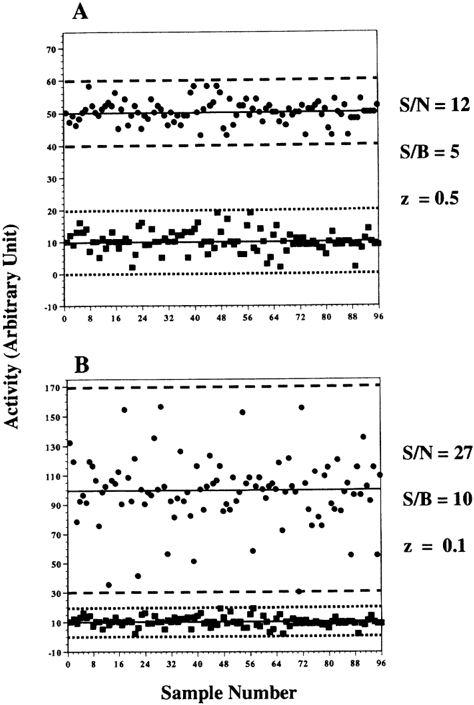
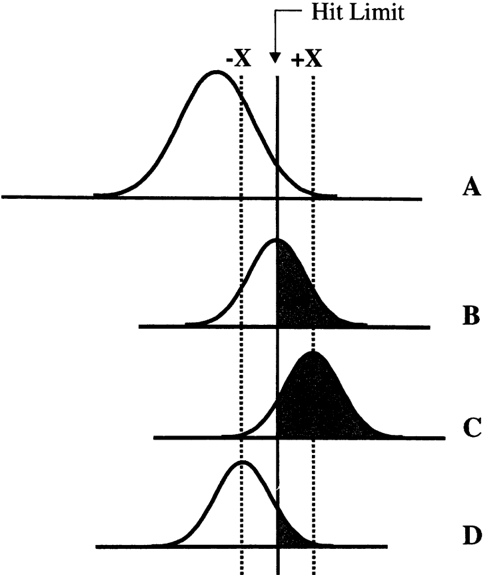
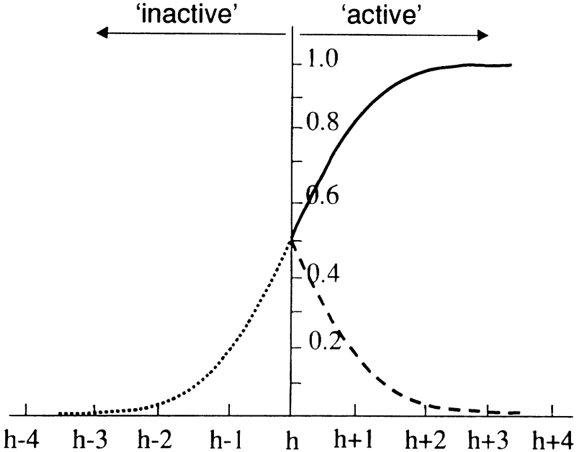
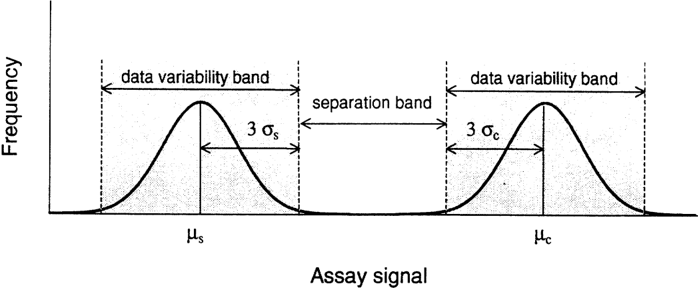
Verification
Claims the paper makes
The claims and statistics of this paper haven’t been checked yet.
Free: it reads the open-access text and checks the first 5 claims that cite a source we can check. Create a free account to check every claim.
Claims other papers make about this one
Each is checked against this paper’s own text: does it say what the citing paper says it does?
The cited source says what the claim attributes to it.
In the citing paper
“Despite the difference, Z-factor analysis indicated that the system was not sufficiently robust for large-scale screening purposes, leading us to seek an alternative [37].”
From Chemically induced reprogramming to reverse cellular aging (2023) · cites this paper as [37]
Experimental — accuracy not yet measuredIn the citing paper
“In all cases, Z' values (Zhang et al., 1999) did not vary beyond 0.5 and 1, and typically ranged between 0.6 to 0.8.”
From Small Molecule Fluoride Toxicity Agonists (2015) · cites this paper as Zhang et al., 1999
Self-check
Percentages, sums and reported differences re-computed from the paper’s own numbers.
The self-check needs the paper’s full text.
Citations
Cites
Gordon, E. M., Barrett, R. W., Dower, W. J., Fodor, S. P. A., & Gallop, M. A. (1994) · Journal of Medicinal Chemistry · doi:10.1021/jm00036a001 · Cited by 1,142
Cole, S. T., & Girons, I. S. (1994) · FEMS Microbiology Reviews · doi:10.1111/j.1574-6976.1994.tb00084.x · Cited by 113
Oldenburg, K. R., Zhang, J.-H., Chen, T., Maffia, A., Blom, K. F., Combs, A. P., & Chung, T. D. Y. (1998) · SLAS Discovery · doi:10.1177/108705719800300108 · Cited by 74
Self-citationDesign of Signal Windows in High Throughput Screening Assays for Drug Discovery
Sittampalam, G. S., Iversen, P. W., Boadt, J. A., Kahl, S. D., Bright, S. W., Zock, J. M., Janzen, W. P., & Lister, M. D. (1997) · SLAS DISCOVERY · doi:10.1177/108705719700200306 · Cited by 66
Toward a cDNA Map of the Human Genome
Korenberg, J. R., Chen, X., Adams, M. D., & Venter, C. J. (1995) · Genomics · doi:10.1006/geno.1995.9993 · Cited by 53
The GDBTM Human Genome Database Anno 1997
Fasman, K. H., Letovsky, S., Li, P., Cottingham, R. W., & Kingsbury, D. T. (1997) · Nucleic Acids Research · doi:10.1093/nar/25.1.72 · Cited by 46
Comparison of Automation Equipment in High Throughput Screening
Stevens, M. E., Bouchard, P. J., Kariv, I., Chung, T. D. Y., & Oldenburg, K. R. (1998) · SLAS DISCOVERY · doi:10.1177/108705719800300410 · Cited by 17
Self-citationCombinatorial Organic Synthesis: Applications to Drug Discovery
Gordon, E. M., Gallop, M. A., Campbell, D., Holmes, C., Bermak, J. C., Look, G. C., Murphy, M., Needels, M. C., Jacobs, J. W., Sugarman, J., et al. (1995) · European Journal of Medicinal Chemistry · doi:10.1016/s0223-5234(23)00134-4 · Cited by 17
Cited by
Items 301–400 of 1,039
Systematic Identification of MCU Modulators by Orthogonal Interspecies Chemical Screening
Arduino, D. M., Wettmarshausen, J., Vais, H., Navas-Navarro, P., Cheng, Y., Leimpek, A., Ma, Z., Delrio-Lorenzo, A., Giordano, A., Garcia-Perez, C., et al. (2017) · Molecular Cell · doi:10.1016/j.molcel.2017.07.019 · Cited by 134
“For each plate, the Z′-factor was calculated as follows (Zhang et al., 1999): where, μ and δ are the mean and standard deviation, respectively.”
MethodA Comparison of ALPHAScreen, TR-FRET, and TRF as Assay Methods for FXR Nuclear Receptors
Glickman, J. F., Wu, X., Mercuri, R., Illy, C., Bowen, B. R., He, Y., & Sills, M. (2002) · SLAS Discovery · doi:10.1177/108705710200700102 · Cited by 128
Ito, E., Yip, K. W., Katz, D., Fonseca, S. B., Hedley, D. W., Chow, S., Xu, G., Wood, T. E., Bastianutto, C., Schimmer, A. D., et al. (2009) · Molecular Pharmacology · doi:10.1124/mol.109.055277 · Cited by 139
“The Z factor was used to evaluate the high-throughput screening power (Zhang et al., 1999).”
MethodInhibition of HBV Transcription From cccDNA With Nitazoxanide by Targeting the HBx–DDB1 Interaction
Sekiba, K., Otsuka, M., Ohno, M., Yamagami, M., Kishikawa, T., Suzuki, T., Ishibashi, R., Seimiya, T., Tanaka, E., & Koike, K. (2018) · Cellular and Molecular Gastroenterology and Hepatology · doi:10.1016/j.jcmgh.2018.10.010 · Cited by 141
Morgan-Lappe, S. E., Tucker, L. A., Huang, X., Zhang, Q., Sarthy, A. V., Zakula, D., Vernetti, L., Schurdak, M., Wang, J., & Fesik, S. W. (2007) · Cancer Research · doi:10.1158/0008-5472.can-06-4132 · Cited by 130
Photoconvertible Fluorescent Protein EosFP: Biophysical Properties and Cell Biology Applications
Nienhaus, G. U., Nienhaus, K., Hölzle, A., Ivanchenko, S. V., Renzi, F., Oswald, F., Wolff, M., Schmitt, F., Röcker, C., Vallone, B., et al. (2005) · Photochemistry and Photobiology · doi:10.1562/2005-05-19-ra-533 · Cited by 141
Li, F., Kennedy, S., Hajian, T., Gibson, E., Seitova, A., Xu, C., Arrowsmith, C. H., & Vedadi, M. (2015) · SLAS DISCOVERY · doi:10.1177/1087057115623264 · Cited by 135
“The Z′ factors were calculated as described by Zhang et al.(27)”
MethodPredictive validity in drug discovery: what it is, why it matters and how to improve it
Scannell, J. W., Bosley, J., Hickman, J. A., Dawson, G. R., Truebel, H., Ferreira, G. S., Richards, D. B., & Treherne, J. M. (2022) · Nature Reviews Drug Discovery · doi:10.1038/s41573-022-00552-x · Cited by 144
Simple Model for Testing Drugs against Nonreplicating Mycobacterium tuberculosis
Sala, C., Dhar, N., Hartkoorn, R. C., Zhang, M., Ha, Y. H., Schneider, P. A., & Cole, S. T. (2010) · Antimicrobial Agents and Chemotherapy · doi:10.1128/aac.00821-10 · Cited by 144
“The Z-factor is a measure of statistical effect size and is used in HTS experiments, prior to setting up large screens, to judge the quality of the assay by comparing the responses to positive and negative controls.”
BackgroundMethodInfluentialHuang, C.-J., Harootunian, A., Maher, M. P., Quan, C., Raj, C. D., McCormack, K., Numann, R., Negulescu, P. A., & González, J. E. (2006) · Nature Biotechnology · doi:10.1038/nbt1194 · Cited by 115
Cellular platforms for HTS: three case studies
Johnston, P. A., & Johnston, P. A. (2002) · Drug Discovery Today · doi:10.1016/s1359-6446(01)02140-7 · Cited by 140
Yarmush, M. L., & King, K. R. (2009) · Annual Review of Biomedical Engineering · doi:10.1146/annurev.bioeng.10.061807.160502 · Cited by 139
“5 is marginal, and less than 0 indicates that positive and negative controls are overlapping (39).”
BackgroundAlphaLISA immunoassays: the no-wash alternative to ELISAs for research and drug discovery
Beaudet, L., Rodriguez-Suarez, R. J., Venne, M.-H., Caron, M., Bédard, J., Brechler, V., Parent, S., & Bielefeld-Sévigny, M. (2008) · Nature Methods · doi:10.1038/nmeth.f.230 · Cited by 128
Parthenolide Inhibits Tubulin Carboxypeptidase Activity
Fonrose, X., Ausseil, F., Soleilhac, E., Masson, V., David, B., Pouny, I., Cintrat, J.-C., Rousseau, B., Barette, C., Massiot, G., et al. (2007) · Cancer Research · doi:10.1158/0008-5472.can-06-3732 · Cited by 125
Mons, E., Roet, S., Kim, R. Q., & Mulder, M. P. C. (2022) · Current Protocols · doi:10.1002/cpz1.419 · Cited by 139
“Further optimization typically involves tuning the reader settings for optimal sensitivity, measurement of a calibration curve for product concentration (Dharadhar et al., 2019; Janssen et al., 2019), and calculation of the Z′-score from the uninhibited and inhibited controls (ideally 8 replicates) in a separate exper…”
BackgroundMethodInfluentialSmall Molecule Activators of TRPML3
Grimm, C., Jörs, S., Saldanha, S. A., Obukhov, A. G., Pan, B., Oshima, K., Cuajungco, M. P., Chase, P., Hodder, P., & Heller, S. (2010) · Chemistry & Biology · doi:10.1016/j.chembiol.2009.12.016 · Cited by 128
“Z’ values were determined to monitor assay quality and were calculated as previously described (Zhang et al., 1999).”
MethodOptimization and application of MTT assay in determining density of suspension cells
Nga, N. T., Ngoc, T. T. B., Trinh, N. T. M., Thuoc, T. L., & Thảo, Đ. T. P. (2020) · Analytical Biochemistry · doi:10.1016/j.ab.2020.113937 · Cited by 136
Schihada, H., Shekhani, R., & Schulte, G. (2021) · Science Signaling · doi:10.1126/scisignal.abf1653 · Cited by 134
“C) Mean ± s.e.m. Z-factors of three independent G13 sensor experiments upon transfection with the separate (left) or tricistronic (right) sensor plasmids and TBXA2R.”
InfluentialSearching for New Antimalarial Therapeutics amongst Known Drugs
Weisman, J. L., Liou, A. P., Shelat, A. A., Cohen, F. E., Guy, R. K., & DeRisi, J. L. (2006) · Chemical Biology & Drug Design · doi:10.1111/j.1747-0285.2006.00391.x · Cited by 127
“5 indicating a good, reliable assay (12)].”
Parniak, M. A., Min, K., Budihas, S. R., Grice, S. F. J. L., & Beutler, J. A. (2003) · Analytical Biochemistry · doi:10.1016/j.ab.2003.06.001 · Cited by 132
Non-apoptotic role of BID in inflammation and innate immunity
Yeretssian, G., Correa, R. G., Doiron, K., Fitzgerald, P., Dillon, C. P., Green, D. R., Reed, J. C., & Saleh, M. (2011) · Nature · doi:10.1038/nature09982 · Cited by 137
Identification of an oncogenic RAB protein
Wheeler, D. B., Zoncu, R., Root, D. E., Sabatini, D. M., & Sawyers, C. L. (2015) · Science · doi:10.1126/science.aaa4903 · Cited by 124
Weiss, A., Abramowski, D., Bibel, M., Bodner, R. A., Chopra, V., DiFiglia, M., Fox, J. H., Kegel, K. B., Klein, C., Grueninger, S., et al. (2009) · Analytical Biochemistry · doi:10.1016/j.ab.2009.08.001 · Cited by 133
Verkman, A. S. (2004) · American Journal of Physiology-Cell Physiology · doi:10.1152/ajpcell.00397.2003 · Cited by 123
Alternative Statistical Parameter for High-Throughput Screening Assay Quality Assessment
Sui, Y., & Wu, Z. J. (2007) · SLAS DISCOVERY · doi:10.1177/1087057106296498 · Cited by 127
“The publication of Zhang et al.(4) is one of the most cited papers in HTS.”
BackgroundMethodInfluentialHigh-Throughput Screens for Small-Molecule Inhibitors of Pseudomonas aeruginosa Biofilm Development
Junker, L. M., & Clardy, J. (2007) · Antimicrobial Agents and Chemotherapy · doi:10.1128/aac.00506-07 · Cited by 147
Development of a miniaturized 3D organoid culture platform for ultra-high-throughput screening
Du, Y., Li, X., Niu, Q., Mo, X., Qui, M., Ma, T., Kuo, C. J., & Fu, H. (2020) · Journal of Molecular Cell Biology · doi:10.1093/jmcb/mjaa036 · Cited by 125
“0 indicates that the assay is robust for HTS (Zhang et al., 1999).”
BackgroundRNA Interference (RNAi) Screening in Drosophila
Heigwer, F., Port, F., & Boutros, M. (2018) · Genetics · doi:10.1534/genetics.117.300077 · Cited by 125
“If not, the source of error should be determined or the choice of controls should be reconsidered (Zhang et al. 1999).”
BackgroundHigh-Content Assays for Hepatotoxicity Using Induced Pluripotent Stem Cell–Derived Cells
Sirenko, O., Hesley, J., Rusyn, I., & Cromwell, E. F. (2014) · ASSAY and Drug Development Technologies · doi:10.1089/adt.2013.520 · Cited by 123
“The statistical analysis included calculation of a Z0-factor coefficient.(27) As used here, it represents the separation of positive and negative control wells on a given plate.”
Metabolic suppression identifies new antibacterial inhibitors under nutrient limitation
Zlitni, S., Ferruccio, L. F., & Brown, E. D. (2013) · Nature Chemical Biology · doi:10.1038/nchembio.1361 · Cited by 124
A High Throughput Luminescent Assay for Glycogen Synthase Kinase-3 β Inhibitors
Baki, A., Bielik, A., Molnár, L., Szendrei, G., & Keserü, G. M. (2007) · ASSAY and Drug Development Technologies · doi:10.1089/adt.2006.029 · Cited by 125
Borghini, G., Aricò, P., Flumeri, G. D., Cartocci, G., Colosimo, A., Bonelli, S., Golfetti, A., Imbert, J.-P., Granger, G., Benhacène, R., et al. (2017) · Scientific Reports · doi:10.1038/s41598-017-00633-7 · Cited by 139
Fluorescence-Activated Droplet Sorting for Single-Cell Directed Evolution
Vallejo, D., Nikoomanzar, A., Paegel, B. M., & Chaput, J. C. (2019) · ACS Synthetic Biology · doi:10.1021/acssynbio.9b00103 · Cited by 131
Eastwood, B. J., Farmen, M. W., Iversen, P. W., Craft, T. J., Smallwood, J. K., Garbison, K. E., DeLapp, N. W., & Smith, G. F. (2006) · SLAS DISCOVERY · doi:10.1177/1087057105285611 · Cited by 125
Low cost whole-organism screening of compounds for anthelmintic activity
Preston, S., Jabbar, A., Nowell, C. J., Joachim, A., Ruttkowski, B., Baell, J. B., Cardno, T. S., Korhonen, P. K., Piedrafita, D. M., Ansell, B. R. E., et al. (2015) · International Journal for Parasitology · doi:10.1016/j.ijpara.2015.01.007 · Cited by 124
“Z’-scores (Zhang et al., 1999) were calculated to assess the performance of the screening assay; reliable assays achieve Z’-scores of between 0.5 and 1 (Zhang et al., 1999).”
InfluentialHNF4A and GATA6 Loss Reveals Therapeutically Actionable Subtypes in Pancreatic Cancer
Brunton, H., Caligiuri, G., Cunningham, R., Upstill-Goddard, R., Bailey, U.-M., Garner, I. M., Nourse, C., Dreyer, S., Jones, M., Moran-Jones, K., et al. (2020) · Cell Reports · doi:10.1016/j.celrep.2020.107625 · Cited by 124
“Screens judged to have poor dynamic range (Z’ factor 0) (Zhang et al., 1999) or poorly correlated replicates (r 0.7) were excluded during an evaluation of screen quality.”
InfluentialLieberman, O. J., Orr, M. W., Wang, Y., & Lee, V. T. (2014) · ACS Chemical Biology · doi:10.1021/cb400485k · Cited by 121
Basavannacharya, C., & Vasudevan, S. G. (2014) · Biochemical and Biophysical Research Communications · doi:10.1016/j.bbrc.2014.09.113 · Cited by 122
“[19] where SD is the standard deviation.”
Adcock, R. S., Chu, Y.-K., Golden, J. E., & Chung, D.-H. (2016) · Antiviral Research · doi:10.1016/j.antiviral.2016.11.018 · Cited by 127
“1) (Zhang et al., 1999).”
Courilleau, D., Bisserier, M., Jullian, J., Lucas, A., Bouyssou, P., Fischmeister, R., Blondeau, J., & Lezoualc’h, F. (2012) · Journal of Biological Chemistry · doi:10.1074/jbc.m112.422956 · Cited by 122
“5 (19) and indicating that the assay was appropriate for screening.”
BackgroundMartínez, A., Carreon, T. A., Iniguez, E., Anzellotti, A. I., Sánchez, A., Tyan, M. R., Sattler, A., Herrera, L. J., Maldonado, R. A., & Sánchez‐Delgado, R. A. (2012) · Journal of Medicinal Chemistry · doi:10.1021/jm300070h · Cited by 122
Fuente, R. D. L., Sonawane, N. D., Arumainayagam, D. C., & Verkman, A. S. (2006) · British Journal of Pharmacology · doi:10.1038/sj.bjp.0706873 · Cited by 135
“So far, assay methods used for antimicrobial screening include growth based-phenotype of whole microorganisms (Gaweska et al., 2004; Li et al., 2004; Brown and Wright, 2005), and cell-free, target-based biochemical assays (Dandliker et al., 2003; Zolli-Juran et al., 2003).”
BackgroundMethodInfluentialHomogeneous, Bioluminescent Protease Assays: Caspase-3 as a Model
O’Brien, M. A., Daily, W. J., Hesselberth, P. E., Moravec, R. A., Scurria, M. A., Klaubert, D. H., Bulleit, R. F., & Wood, K. V. (2005) · SLAS DISCOVERY · doi:10.1177/1087057104271865 · Cited by 122
“Assay suitability for HTS is often assessed using Z′ factors.(19) We calculated Z′ factors by testing recombinant caspase-3 at varying concentrations in 96-well and 384-well plates for both the bioluminescent assay and the rhodamine-based fluorescent assay (Table 1).”
MethodNiswender, C. M., Johnson, K. A., Luo, Q., Ayala, J. E., Kim, C., Conn, P. J., & Weaver, C. D. (2008) · Molecular Pharmacology · doi:10.1124/mol.107.041053 · Cited by 122
“The reproducibility and sensitivity of the assay can be assessed using a parameter termed Z (Zhang et al., 1999), which is a representation of the difference in signal between two populations (for example, the signal induced by vehicle versus agonist), as well as the consistency of the signal, as a function of standar…”
MethodSéro, L., Sanguinet, L., Blanchard, P., Dang, B. T., Morel, S., Richomme, P., Séraphin, D., & Derbré, S. (2013) · Molecules · doi:10.3390/molecules181114320 · Cited by 134
“The assay quality as well as the signal homogeneity were first evaluated through a Z′-factor calculation [46].”
MethodSmall Molecular Compounds Inhibit HIV-1 Replication through Specifically Stabilizing APOBEC3G
Cen, S., Peng, Z., Li, X., Li, Z., Ma, J., Wang, Y., Fan, B., You, X., Wang, Y., Liu, F., et al. (2010) · Journal of Biological Chemistry · doi:10.1074/jbc.m109.085308 · Cited by 121
Luković, E., Gonzalez‐Vera, J. A., & Imperiali, B. (2008) · Journal of the American Chemical Society · doi:10.1021/ja8046188 · Cited by 129
Boyd, W. A., Smith, M. V., Co, C. A., Pirone, J. R., Rice, J. R., Shockley, K. R., & Freedman, J. H. (2015) · Environmental Health Perspectives · doi:10.1289/ehp.1409645 · Cited by 127
“In addition, for each replicate plate, Z-factors were calculated as described by Zhang et al. (1999) for the 1% DMSO vehicle control samples compared with the 4% DMSO positive control samples, as well as with parathion and dichlorvos, the two most active C. elegans toxicants.”
BackgroundMethodInfluentialMondal, S., Hegarty, E., Martin, C., Gökçe, S. K., Ghorashian, N., & Ben‐Yakar, A. (2016) · Nature Communications · doi:10.1038/ncomms13023 · Cited by 120
Harmer, A. R., Abi‐Gerges, N., Easter, A., Woods, A., Lawrence, C., Small, B. G., Valentin, J., & Pollard, C. E. (2007) · Journal of Pharmacological and Toxicological Methods · doi:10.1016/j.vascn.2007.09.002 · Cited by 120
Tso, S.-C., Gui, W.-J., Wu, C.-Y., Chuang, J. L., Qi, X., Skvorak, K. J., Dorko, K., Wallace, A. L., Morlock, L. K., Lee, B. H., et al. (2014) · Journal of Biological Chemistry · doi:10.1074/jbc.m114.569251 · Cited by 112
“The Z factor for each plate is calculated according to the equation (27), Z 1 (3 m 3 0)/ m 0 ; m and m are the S.”
MethodProgress and Developments in Tau Aggregation Inhibitors for Alzheimer Disease
Bulic, B., Pickhardt, M., & Mandelkow, E. (2013) · Journal of Medicinal Chemistry · doi:10.1021/jm3017317 · Cited by 114
Fluorescence polarization assays for chemical contaminants in food and environmental analyses
Zhang, H., Yang, S., Ruyck, K. D., Beloglazova, N. V., Eremin, S. A., Saeger, S. D., Zhang, S., Shen, J., & Wang, Z. (2019) · TrAC Trends in Analytical Chemistry · doi:10.1016/j.trac.2019.03.013 · Cited by 119
Tian, H.-L., Ip, L. R. H., Luo, H., Chang, D. C., & Luo, K. Q. (2006) · British Journal of Pharmacology · doi:10.1038/sj.bjp.0706988 · Cited by 119
“Zhang et al. (1999) introduced a simple statistical parameter (Z0 factor) for comparing qualities between different high throughput screening assays .”
BackgroundD’Alessandro, S., Silvestrini, F., Dechering, K. J., Corbett, Y., Parapini, S., Timmerman, M., Galastri, L., Basilico, N., Sauerwein, R. W., Alano, P., et al. (2013) · Journal of Antimicrobial Chemotherapy · doi:10.1093/jac/dkt165 · Cited by 129
Novel Antibacterial Targets and Compounds Revealed by a High-Throughput Cell Wall Reporter Assay
Nayar, A. S., Dougherty, T. J., Ferguson, K. E., Granger, B. A., McWilliams, L., Stacey, C., Leach, L. J., Narita, S.-I., Tokuda, H., Miller, A. A., et al. (2015) · Journal of Bacteriology · doi:10.1128/jb.02552-14 · Cited by 111
“04 over the 31 screening runs of the entire campaign (30).”
BackgroundHsiao, K., Zegzouti, H., & Goueli, S. A. (2016) · Epigenomics · doi:10.2217/epi.15.113 · Cited by 117
A nonfluorescent, broad-range quencher dye for Förster resonance energy transfer assays
Peng, X., Chen, H., Draney, D. R., Volcheck, W. M., Schutz-Geschwender, A. R., & Olive, D. M. (2009) · Analytical Biochemistry · doi:10.1016/j.ab.2009.02.024 · Cited by 118
“Signal-to-noise (S/N) ratios were calculated as follows: S/N ratio = (mean signal mean background)/(standard deviation of background) [24].”
May, B. C. H., Zorn, J. A., Witkop, J., Sherrill, J., Wallace, A. C., Legname, G., Prusiner, S. B., & Cohen, F. E. (2006) · Journal of Medicinal Chemistry · doi:10.1021/jm061045z · Cited by 127
A Small-Molecule Inhibitor of MDMX Activates p53 and Induces Apoptosis
Wang, H., Ma, X., Ren, S., Buolamwini, J. K., & Yan, C. (2011) · Molecular Cancer Therapeutics · doi:10.1158/1535-7163.mct-10-0581 · Cited by 117
“34 and used to measure reproducibility of an assay to determine the suitability of the assay for HTS.”
BackgroundMolina-Sánchez, P., Ruiz de Galarreta, M., Yao, M. A., Lindblad, K. E., Bresnahan, E., Bitterman, E., Martin, T. C., Rubenstein, T., Nie, K., Golas, J., et al. (2020) · Gastroenterology · doi:10.1053/j.gastro.2020.08.015 · Cited by 117
Pipeline for illumination correction of images for high‐throughput microscopy
SINGH, S., BRAY, M. ‐., JONES, T. R., & CARPENTER, A. E. (2014) · Journal of Microscopy · doi:10.1111/jmi.12178 · Cited by 113
“For most experimenters, therefore, it is worth applying a simple post-hoc computational approach in order to see Z′-factor improvements of >0.10 for images that were already thought to be unaffected by illumination variation.”
MethodInfluentialSrinivasan, P., Yasgar, A., Luci, D. K., Beatty, W. L., Hu, X., Andersen, J. F., Narum, D. L., Moch, J. K., Sun, H., Haynes, J. D., et al. (2013) · Nature Communications · doi:10.1038/ncomms3261 · Cited by 129
Paveley, R. A., Mansour, N. R., Hallyburton, I., Bleicher, L. S., Benn, A. E., Mikic, I., Guidi, A., Gilbert, I. H., Hopkins, A. L., & Bickle, Q. D. (2012) · PLoS neglected tropical diseases · doi:10.1371/journal.pntd.0001762 · Cited by 117
Biology of the cardiac myocyte in heart disease
Peter, A. K., Bjerke, M. A., & Leinwand, L. A. (2016) · Molecular Biology of the Cell · doi:10.1091/mbc.e16-01-0038 · Cited by 130
“of these cells in large-scale analysis (Zhang et al., 1999).”
BackgroundWolff, C., Fuks, B., & Chatelain, P. (2003) · SLAS DISCOVERY · doi:10.1177/1087057103257806 · Cited by 117
High-performance virtual screening by targeting a high-resolution RNA dynamic ensemble
Ganser, L. R., Lee, J. H., Rangadurai, A., Merriman, D. K., Kelly, M. L., Kansal, A. D., Sathyamoorthy, B., & Al‐Hashimi, H. M. (2018) · Nature Structural & Molecular Biology · doi:10.1038/s41594-018-0062-4 · Cited by 123
Adaptation of Aequorin Functional Assay to High Throughput Screening
Poul, E. L., Hisada, S., Mizuguchi, Y., Dupriez, V. J., Burgeon, E., & Detheux, M. (2002) · SLAS DISCOVERY · doi:10.1177/108705710200700108 · Cited by 116
Bagriantsev, S. N., Ang, K.-H., Gallardo‐Godoy, A., Clark, K. A., Arkin, M. R., Renslo, A. R., & Minor, D. L. (2013) · ACS Chemical Biology · doi:10.1021/cb400289x · Cited by 125
Determination of Selectivity and Efficacy of Fatty Acid Synthesis Inhibitors
Kodali, S., Galgoci, A. M., Young, K., Painter, R. E., Silver, L. L., Herath, K. B., Singh, S. B., Cully, D. F., Barrett, J. F., Schmatz, D. M., et al. (2004) · Journal of Biological Chemistry · doi:10.1074/jbc.m406848200 · Cited by 121
Alternative splicing of SYK regulates mitosis and cell survival
Prinos, P., Garneau, D., Lucier, J., Gendron, D., Couture, S., Boivin, M., Brosseau, J., Lapointe, E., Thibault, P., Durand, M., et al. (2011) · Nature Structural & Molecular Biology · doi:10.1038/nsmb.2040 · Cited by 123
Renalase Lowers Ambulatory Blood Pressure by Metabolizing Circulating Adrenaline
Désir, G. V., Tang, L., Wang, P., Li, G., Sampaio‐Maia, B., Quelhas‐Santos, J., Pestana, M., & Velázquez, H. (2012) · Journal of the American Heart Association · doi:10.1161/jaha.112.002634 · Cited by 116
International Parkinson’s Disease Genetics Consortium (IPGDC), Jansen, I. E., Ye, H., Heetveld, S., Lechler, M. C., Michels, H., Seinstra, R. I., Lubbe, S. J., Drouet, V., Lesage, S., et al. (2017) · Genome Biology · doi:10.1186/s13059-017-1147-9 · Cited by 117
“The robust Z-factor was calculated as previously described [103], using the normalized values for the controls from all plates.”
Raman, M., Havens, C. G., Walter, J. C., & Harper, J. W. (2011) · Molecular Cell · doi:10.1016/j.molcel.2011.06.036 · Cited by 109
Charpentier, X., Gabay, J. E., Reyes, M., Zhu, J. W., Weiss, A., & Shuman, H. A. (2009) · PLoS Pathogens · doi:10.1371/journal.ppat.1000501 · Cited by 123
“The Z-factor is a widespread measure of the quality or power of a HTS assay [33].”
BackgroundZhang, L., Ravipati, A. S., Koyyalamudi, S. R., Jeong, S., Reddy, N., Bartlett, J. R., Smith, P. T., de la Cruz, M., Monteiro, M. C., Melguizo, Á., et al. (2013) · Asian Pacific Journal of Tropical Medicine · doi:10.1016/s1995-7645(13)60117-0 · Cited by 115
“0 are considered an excellent assay[23].”
Botulinum Neurotoxin Serotype a Specific Cell-Based Potency Assay to Replace the Mouse Bioassay
Fernández‐Salas, E., Wang, J., Molina, Y., Nelson, J. B., Jacky, B., & Aoki, K. R. (2012) · PLoS ONE · doi:10.1371/journal.pone.0049516 · Cited by 115
“The Z9 parameter compares the assay dynamic range to data variation and measures how statistically different the experimental values are from the negative control [50].”
BackgroundKoyuncu, E., Purdy, J. G., Rabinowitz, J. D., & Shenk, T. (2013) · PLoS Pathogens · doi:10.1371/journal.ppat.1003333 · Cited by 114
“To evaluate the efficiency of the siRNA screening protocol, Z9factors, 1 – (36 SD of positive control + 36 SD of negative control)/|mean of positive control – mean of negative control|, were calculated [46].”
MethodTrimethylation of Histone H3 Lysine 36 by Human Methyltransferase PRDM9 Protein
Eram, M. S., Bustos, S. P., Lima‐Fernandes, E., Siarheyeva, A., Senisterra, G. A., Hajian, T., Chau, I., Duan, S., Wu, H. Y., Dombrovski, L., et al. (2014) · Journal of Biological Chemistry · doi:10.1074/jbc.m113.523183 · Cited by 122
“The optimized assaywas amenable to screening in a 384-well format with a Z-factor (46) of 0.”
MethodInfluentialStructure of a small-molecule inhibitor of a DNA polymerase sliding clamp
Georgescu, R. E., Yurieva, O., Kim, S.-S., Kuriyan, J., Kong, X., & O’Donnell, M. E. (2008) · Proceedings of the National Academy of Sciences · doi:10.1073/pnas.0804754105 · Cited by 123
Leung, E., Datti, A., Cossette, M., Goodreid, J. D., McCaw, S. E., Mah, M., Nakhamchik, A., Ogata, K., Bakkouri, M. E., Cheng, Y., et al. (2011) · Chemistry & Biology · doi:10.1016/j.chembiol.2011.07.023 · Cited by 128
Development of a Thyroperoxidase Inhibition Assay for High-Throughput Screening
Paul, K. B., Hedge, J. M., Rotroff, D. M., Hornung, M. W., Crofton, K. M., & Simmons, S. O. (2014) · Chemical Research in Toxicology · doi:10.1021/tx400310w · Cited by 106
Spurný, R., Debaveye, S., Farinha, A., Veys, K., Vos, A. M., Gossas, T., Atack, J. R., Bertrand, S., Bertrand, D., Danielson, U. H., et al. (2015) · Proceedings of the National Academy of Sciences · doi:10.1073/pnas.1418289112 · Cited by 123
“, difference in signal from background, ranging from 0 to 1, with 1 being the theoretical maximum) (29).”
BackgroundWu, T., Chen, C.-T., Liu, J. T.-J., Bogorad, I. W., Damoiseaux, R. D., & Liao, J. C. (2016) · Applied Microbiology and Biotechnology · doi:10.1007/s00253-016-7320-3 · Cited by 117
“had developed a standard measure to evaluate and validate the quality of HTS assays (Zhang et al. 1999).”
BackgroundJohnston, P. A., Soares, K. M., Shinde, S. N., Foster, C. A., Shun, T. Y., Takyi, H. K., Wipf, P., & Lazo, J. S. (2008) · ASSAY and Drug Development Technologies · doi:10.1089/adt.2008.151 · Cited by 103
“To further verify signal reproducibility and the magnitude of the assay signal window, we utilized a rigorous procedure 8,9,13 to measure the Z -factor statistical parameter 19 in three independent experiments using two full 384-well plates of maximum (100 (cid”
Leissring, M. A., Lu, A., Condron, M. M., Teplow, D. B., Stein, R. L., Farris, W., & Selkoe, D. J. (2003) · Journal of Biological Chemistry · doi:10.1074/jbc.m305627200 · Cited by 113
Lucantoni, L., Duffy, S., Adjalley, S. H., Fidock, D. A., & Avery, V. M. (2013) · Antimicrobial Agents and Chemotherapy · doi:10.1128/aac.00870-13 · Cited by 121
“The suitability of the assay for HTS was determined using the Z= factor, a dimensionless statistical parameter combining the difference between maximal signal and background and their respective variations (30).”
MethodInfluentialA real-time, bioluminescent annexin V assay for the assessment of apoptosis
Kupcho, K. R., Shultz, J. W., Hurst, R., Hartnett, J., Zhou, W., Machleidt, T., Grailer, J. J., Worzella, T. J., Riss, T., Lazar, D. F., et al. (2018) · APOPTOSIS · doi:10.1007/s10495-018-1502-7 · Cited by 125
High-throughput andin silicoscreenings in drug discovery
Phatak, S. S., STEPHAN, C. C., & Cavasotto, C. N. (2009) · Expert Opinion on Drug Discovery · doi:10.1517/17460440903190961 · Cited by 124
“[42] described a parameter designated as a z’-factor that takes into account the variability in both the positive and negative controls, thus describing the degree of separation between the two.”
BackgroundUnderstanding mechanisms of toxicity: Insights from drug discovery research
Houck, K. A., & Kavlock, R. J. (2007) · Toxicology and Applied Pharmacology · doi:10.1016/j.taap.2007.10.022 · Cited by 121
Activation of Inhibitors by Sortase Triggers Irreversible Modification of the Active Site
Maresso, A. W., Wu, R., Kern, J. W., Zhang, R., Janik, D., Missiakas, D. M., Duban, M.-E., Joachimiak, A., & Schneewind, O. (2007) · Journal of Biological Chemistry · doi:10.1074/jbc.m701857200 · Cited by 123
Small molecule-induced oxidation of protein disulfide isomerase is neuroprotective
Kaplan, A., Gaschler, M. M., Dunn, D. E., Colligan, R., Brown, L. M., Palmer, A. G., Lo, D. C., & Stockwell, B. R. (2015) · Proceedings of the National Academy of Sciences · doi:10.1073/pnas.1500439112 · Cited by 110
“8%, indicating a robust assay for hit identification (22).”
BackgroundIdentification and Characterization of Inhibitors of Human Apurinic/apyrimidinic Endonuclease APE1
Simeonov, A. M., Kulkarni, A., Dorjsuren, D. G., Jadhav, A., Shen, M., McNeill, D. R., Austin, C. P., & Wilson, D. M. (2009) · PLoS ONE · doi:10.1371/journal.pone.0005740 · Cited by 112
Oakley, R. H., Hudson, C. C., Cruickshank, R. D., Meyers, D. M., Payne, R. E., Rhem, S. M., & Loomis, C. R. (2002) · Assay and Drug Development Technologies · doi:10.1089/154065802761001275 · Cited by 112
“37”
Quantitative High-Throughput Screen Identifies Inhibitors of the Schistosoma mansoni Redox Cascade
Simeonov, A. M., Jadhav, A., Sayed, A. A., Wang, Y., Nelson, M. E., Thomas, C. J., Inglese, J., Williams, D. L., & Austin, C. P. (2008) · PLoS neglected tropical diseases · doi:10.1371/journal.pntd.0000127 · Cited by 121
Improved fluorogenic histone deacetylase assay for high-throughput-screening applications
Wegener, D., Hildmann, C., Riester, D., & Schwienhorst, A. (2003) · Analytical Biochemistry · doi:10.1016/s0003-2697(03)00426-3 · Cited by 111
Discovery and structure–activity relationship analysis of Staphylococcus aureus sortase A inhibitors
Suree, N., Yi, S. W., Thieu, W., Marohn, M., Damoiseaux, R. D., Chan, A. H., Jung, M. E., & Clubb, R. (2009) · Bioorganic & Medicinal Chemistry · doi:10.1016/j.bmc.2009.08.067 · Cited by 123
Correctors of Protein Trafficking Defects Identified by a Novel High‐Throughput Screening Assay
Carlile, G. W., Robert, R., Zhang, D., Teske, K. A., Luo, Y., Hanrahan, J. W., & Thomas, D. Y. (2007) · ChemBioChem · doi:10.1002/cbic.200700027 · Cited by 109
Novel Inhibitors of Bacterial Cytokinesis Identified by a Cell-based Antibiotic Screening Assay
Stokes, N. R., Sievers, J., Barker, S., Bennett, J. M., Brown, D., Collins, I., Errington, V. M., Foulger, D., Hall, M. J., Halsey, R., et al. (2005) · Journal of Biological Chemistry · doi:10.1074/jbc.m506741200 · Cited by 122
Singh, U., Akhtar, S., Mishra, A., & Sarkar, D. M. (2010) · Journal of Microbiological Methods · doi:10.1016/j.mimet.2010.11.013 · Cited by 110
“S/N ratio and Z′ factor were the two essential components considered during the development of a robust assay protocol for rapid screening of compounds (Zhang et al., 1999).”
Background
Metadata
- Authors
- Zhang, J.-H., Chung, T. D. Y., & Oldenburg, K. R.
- Affiliations
- DuPont (United States) (US)
- Venue
- SLAS Discovery
- Publisher
- Elsevier BV
- Published
- 1999-04
- Volume
- 4
- Issue
- 2
- Pages
- 67-73
- ISSN
- 2472-5552 (ISSN-L)
- OpenAlex
- W1991001144
- Cited by
- 6,847
- References
- 8
- Citations by year
- 2026: 200 · 2025: 267 · 2024: 257 · 2023: 308 · 2022: 355 · 2021: 346 · 2020: 358 · 2019: 343 · 2018: 350 · 2017: 339 · 2016: 365 · 2015: 330 · 2014: 347 · 2013: 373 · 2012: 354
- FWCI
- 52.99
- Type
- journal article
- Language
- en
- Open access
- hybrid
- doi.org
- Licence
- cc-by-nc-nd
- www.elsevier.com/tdm/userlicense/1.0/ (tdm)
- www.elsevier.com/legal/tdmrep-license (tdm)
- creativecommons.org/licenses/by-nc-nd/4.0/ (vor, 8429 d)
- Locations
- SLAS DISCOVERY (publishedVersion, cc-by-nc-nd)
- PubMed (publishedVersion)
- Topics
- Life Sciences › Pharmacology, Toxicology and Pharmaceutics › Drug Discovery › Computational Drug Discovery Methods
- Life Sciences › Biochemistry, Genetics and Molecular Biology › Molecular Biology › Advanced Biosensing Techniques and Applications
- Health Sciences › Veterinary › Small Animals › Animal testing and alternatives
- Keywords
- Z' factor, high-throughput screening, hit identification, signal dynamic range, assay validation, statistical parameters, assay optimization, chemical libraries
About these checks
Registry, retraction, Cites and statistics results are computed, not judged, with one exception: a printed reference that no index lists is read once by a model before it counts as a citation error. Claims are extracted by a model and kept only when their quote appears verbatim in the text; each cited source is then checked, with a model’s help, for whether it says what the claim relies on. Those verdicts can be wrong — read the claim’s quote and the cited source before relying on one.
Statistics and arithmetic are recomputed, not judged.
Confidence bands are shown only for fields calibrated on our annotated test set. None is calibrated yet, so no band is shown.
What counts as a claim ›How we measure confidence ›How we check this ›
Are you an author, or do you see a problem with this page? Request a review
Data sources
Bibliographic data: Semantic Scholar, OpenAlex, Crossref.
Contains information from the Semantic Scholar Academic Graph Datasets, made available under the ODC Attribution License (ODC-BY 1.0).
Semantic Scholar’s data is described in: Kinney, R., et al. (2023). The Semantic Scholar Open Data Platform. arXiv:2301.10140.
