

A Simple Statistical Parameter for Use in Evaluation and Validation of High Throughput Screening Assays.
Open accessThe DOI matches its Crossref record; 8 of the 8 references it cites were found in a registry or an index.
Abstract
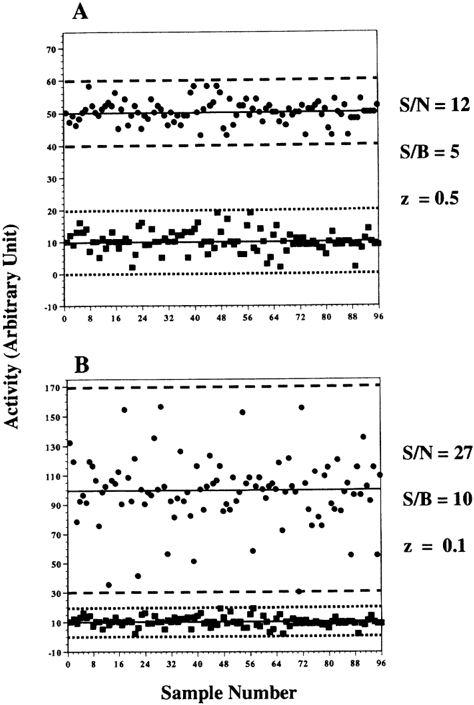
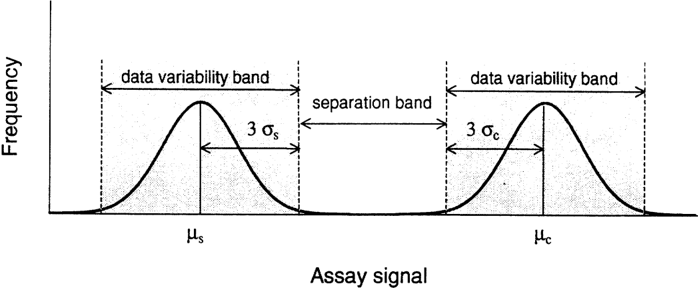
The ability to identify active compounds (³hits²) from large chemical libraries accurately and rapidly has been the ultimate goal in developing high-throughput screening (HTS) assays. The ability to identify hits from a particular HTS assay depends largely on the suitability or quality of the assay used in the screening. The criteria or parameters for evaluating the ³suitability² of an HTS assay for hit identification are not well defined and hence it still remains difficult to compare the quality of assays directly. In this report, a screening window coefficient, called ³Z-factor,² is defined. This coefficient is reflective of both the assay signal dynamic range and the data variation associated with the signal measurements, and therefore is suitable for assay quality assessment. The Z-factor is a dimensionless, simple statistical characteristic for each HTS assay. The Z-factor provides a useful tool for comparison and evaluation of the quality of assays, and can be utilized in assay optimization and validation.
Overview
The claims and statistics of this paper haven’t been checked yet.
Free: it reads the open-access text and checks the first 5 claims that cite a source we can check. Create a free account to check every claim.
Integrity signals
Registry
Cites
Statistics
Figures
Verification
Claims the paper makes
The claims and statistics of this paper haven’t been checked yet.
Free: it reads the open-access text and checks the first 5 claims that cite a source we can check. Create a free account to check every claim.
Claims other papers make about this one
Each is checked against this paper’s own text: does it say what the citing paper says it does?
The cited source says what the claim attributes to it.
In the citing paper
“Despite the difference, Z-factor analysis indicated that the system was not sufficiently robust for large-scale screening purposes, leading us to seek an alternative [37].”
From Chemically induced reprogramming to reverse cellular aging (2023) · cites this paper as [37]
Experimental — accuracy not yet measuredIn the citing paper
“In all cases, Z' values (Zhang et al., 1999) did not vary beyond 0.5 and 1, and typically ranged between 0.6 to 0.8.”
From Small Molecule Fluoride Toxicity Agonists (2015) · cites this paper as Zhang et al., 1999
Self-check
Percentages, sums and reported differences re-computed from the paper’s own numbers.
The self-check needs the paper’s full text.
Citations
Cites
Gordon, E. M., Barrett, R. W., Dower, W. J., Fodor, S. P. A., & Gallop, M. A. (1994) · Journal of Medicinal Chemistry · doi:10.1021/jm00036a001 · Cited by 1,142
Cole, S. T., & Girons, I. S. (1994) · FEMS Microbiology Reviews · doi:10.1111/j.1574-6976.1994.tb00084.x · Cited by 113
Oldenburg, K. R., Zhang, J.-H., Chen, T., Maffia, A., Blom, K. F., Combs, A. P., & Chung, T. D. Y. (1998) · SLAS Discovery · doi:10.1177/108705719800300108 · Cited by 74
Self-citationDesign of Signal Windows in High Throughput Screening Assays for Drug Discovery
Sittampalam, G. S., Iversen, P. W., Boadt, J. A., Kahl, S. D., Bright, S. W., Zock, J. M., Janzen, W. P., & Lister, M. D. (1997) · SLAS DISCOVERY · doi:10.1177/108705719700200306 · Cited by 66
Toward a cDNA Map of the Human Genome
Korenberg, J. R., Chen, X., Adams, M. D., & Venter, C. J. (1995) · Genomics · doi:10.1006/geno.1995.9993 · Cited by 53
The GDBTM Human Genome Database Anno 1997
Fasman, K. H., Letovsky, S., Li, P., Cottingham, R. W., & Kingsbury, D. T. (1997) · Nucleic Acids Research · doi:10.1093/nar/25.1.72 · Cited by 46
Comparison of Automation Equipment in High Throughput Screening
Stevens, M. E., Bouchard, P. J., Kariv, I., Chung, T. D. Y., & Oldenburg, K. R. (1998) · SLAS DISCOVERY · doi:10.1177/108705719800300410 · Cited by 17
Self-citationCombinatorial Organic Synthesis: Applications to Drug Discovery
Gordon, E. M., Gallop, M. A., Campbell, D., Holmes, C., Bermak, J. C., Look, G. C., Murphy, M., Needels, M. C., Jacobs, J. W., Sugarman, J., et al. (1995) · European Journal of Medicinal Chemistry · doi:10.1016/s0223-5234(23)00134-4 · Cited by 17
Cited by
CellProfiler: image analysis software for identifying and quantifying cell phenotypes
Carpenter, A. E., Jones, T. R., Lamprecht, M. R., Clarke, C., Kang, I. H., Friman, O., Guertin, D. A., Chang, J. H., Lindquist, R. A., Moffat, J., et al. (2006) · Genome Biology · doi:10.1186/gb-2006-7-10-r100 · Cited by 5,157
“4 is considered screenable and 1 is an ideal assay) [63-65].”
BackgroundBaell, J. B., & Holloway, G. A. (2010) · Journal of Medicinal Chemistry · doi:10.1021/jm901137j · Cited by 3,944
Principles of early drug discovery
Hughes, J., Rees, S., Kalindjian, S., & Philpott, K. (2011) · British Journal of Pharmacology · doi:10.1111/j.1476-5381.2010.01127.x · Cited by 2,859
“Assay quality is typically determined according to the Z’ factor (Zhang et al., 1999).”
MethodJoint Committee on Infant Hearing (2007) · Pediatrics · doi:10.1542/peds.2007-2333 · Cited by 2,056
Fang, E. F., Hou, Y., Palikaras, K., Adriaanse, B. A., Kerr, J. S., Yang, B., Lautrup, S., Hasan-Olive, M. M., Caponio, D., Dan, X., et al. (2019) · Nature Neuroscience · doi:10.1038/s41593-018-0332-9 · Cited by 1,740
The cellular thermal shift assay for evaluating drug target interactions in cells
Jafari, R., Almqvist, H., Axelsson, H., Ignatushchenko, M., Lundbäck, T., Nordlund, P., & Molina, D. M. (2014) · Nature Protocols · doi:10.1038/nprot.2014.138 · Cited by 1,474
Impact of high-throughput screening in biomedical research
Macarron, R., Banks, M. N., Bojanic, D., Burns, D. J., Cirovic, D. A., Garyantes, T., Green, D. V. S., Hertzberg, R. P., Janzen, W. P., Paslay, J. W., et al. (2011) · Nature Reviews Drug Discovery · doi:10.1038/nrd3368 · Cited by 1,364
“HTS laboratories have pioneered and implemented rigorous quality assurance methods, such as Z′ trend monitoring”
MethodOpportunities and challenges for use of tumor spheroids as models to test drug delivery and efficacy
Mehta, G., Hsiao, A. Y., Ingram, M., Luker, G. D., & Takayama, S. (2012) · Journal of Controlled Release · doi:10.1016/j.jconrel.2012.04.045 · Cited by 1,172
“Z-factor, an assay performance measurement that provides an easy and useful summary of assay quality and robustness [103–105], was found to be well above 0.”
FDA-approved disulfiram inhibits pyroptosis by blocking gasdermin D pore formation
Hu, J. J., Liu, X., Xia, S., Zhang, Z., Zhang, Y., Zhao, J., Ruan, J., Luo, X., Lou, X., Bai, Y., et al. (2020) · Nature Immunology · doi:10.1038/s41590-020-0669-6 · Cited by 1,145
Alleviating Cancer Drug Toxicity by Inhibiting a Bacterial Enzyme
Wallace, B. D., Wang, H., Lane, K. T., Scott, J. E., Orans, J., Koo, J. S., Venkatesh, M., Jobin, C., Yeh, L.-A., Mani, S., et al. (2010) · Science · doi:10.1126/science.1191175 · Cited by 1,080
Thousands of chemical starting points for antimalarial lead identification
Gamo, F.-J., Sanz, L. M., Vidal, J., de Cozar, C., Alvarez, E., Lavandera, J.-L., Vanderwall, D. E., Green, D. V. S., Kumar, V., Hasan, S., et al. (2010) · Nature · doi:10.1038/nature09107 · Cited by 996
Guidelines for the use of flow cytometry and cell sorting in immunological studies (second edition)
Cossarizza, A., Chang, H., Radbruch, A., Acs, A., Adam, D., Adam‐Klages, S., Agace, W. W., Aghaeepour, N., Akdis, M., Allez, M., et al. (2019) · European Journal of Immunology · doi:10.1002/eji.201970107 · Cited by 979
SLC Transporters as Therapeutic Targets: Emerging Opportunities
Lin, L., Yee, S. W., Kim, R. B., & Giacomini, K. M. (2015) · Nature Reviews Drug Discovery · doi:10.1038/nrd4626 · Cited by 835
“The concentration of the substrate probe and uptake time that produce the best Z’ assay sensitivity factor is selected; a Z’ > 0.8 is ideal for HTS, although Z’ > 0.5 is also acceptable 49 .”
InfluentialBeclin1 Controls the Levels of p53 by Regulating the Deubiquitination Activity of USP10 and USP13
Liu, J., Xia, H., Kim, M., Xu, L., Li, Y., Zhang, L., Cai, Y., Norberg, H. V., Zhang, T., Furuya, T., et al. (2011) · Cell · doi:10.1016/j.cell.2011.08.037 · Cited by 820
Virtual and biomolecular screening converge on a selective agonist for GPR30
Bologa, C. G., Revankar, C. M., Young, S. M., Edwards, B. S., Arterburn, J. B., Kiselyov, A. S., Parker, M. A., Tkachenko, S. E., Savchuck, N. P., Sklar, L. A., et al. (2006) · Nature Chemical Biology · doi:10.1038/nchembio775 · Cited by 818
“Calculation of the Z′ factor, a measure of screening assay quality that reflects both assay signal dynamic range and data variation of the signa”
BackgroundStatistical strategies for avoiding false discoveries in metabolomics and related experiments
Broadhurst, D. I., & Kell, D. B. (2007) · Metabolomics · doi:10.1007/s11306-006-0037-z · Cited by 817
“Another interesting statistic, that has assumed considerable popularity in the world of high-throughput screening but is little known outside, is the Z (and Z’) statistic (Zhang et al., 1999).”
BackgroundInglese, J., Auld, D. S., Jadhav, A., Johnson, R. L., Simeonov, A., Yasgar, A., Zheng, W., & Austin, C. P. (2006) · Proceedings of the National Academy of Sciences · doi:10.1073/pnas.0604348103 · Cited by 792
Self-Driving Laboratories for Chemistry and Materials Science
Tom, G., Schmid, S. P., Baird, S. G., Cao, Y., Darvish, K., Hao, H., Lo, S., Pablo-García, S., Rajaonson, E. M., Skreta, M., et al. (2024) · Chemical Reviews · doi:10.1021/acs.chemrev.4c00055 · Cited by 707
Lupberger, J., Zeisel, M. B., Xiao, F., Thumann, C., Fofana, I., Zona, L., Davis, C., Mee, C. J., Turek, M., Gorke, S., et al. (2011) · Nature Medicine · doi:10.1038/nm.2341 · Cited by 706
Identification of HSP90 inhibitors as a novel class of senolytics
Fuhrmann-Stroissnigg, H., Ling, Y. Y., Zhao, J., McGowan, S. J., Zhu, Y., Brooks, R. W., Grassi, D., Gregg, S. Q., Stripay, J. L., Dorronsoro, A., et al. (2017) · Nature Communications · doi:10.1038/s41467-017-00314-z · Cited by 701
Novel trends in high-throughput screening
Mayr, L. M., & Bojanic, D. (2009) · Current Opinion in Pharmacology · doi:10.1016/j.coph.2009.08.004 · Cited by 694
Wagstaff, K. M., Sivakumaran, H., Heaton, S. M., Harrich, D., & Jans, D. A. (2012) · Biochemical Journal · doi:10.1042/bj20120150 · Cited by 680
RNA motif discovery by SHAPE and mutational profiling (SHAPE-MaP)
Siegfried, N. A., Busan, S., Rice, G. M., Nelson, J. A. E., & Weeks, K. M. (2014) · Nature Methods · doi:10.1038/nmeth.3029 · Cited by 654
“Significant differences between NMIA and 1M6 reactivity were identified using a Z -factor test 49 .”
Xu, M., Lee, E. M., Wen, Z., Cheng, Y., Huang, W.-K., Qian, X., TCW, J., Kouznetsova, J., Ogden, S. C., Hammack, C., et al. (2016) · Nature Medicine · doi:10.1038/nm.4184 · Cited by 641
Fluorescence Polarization/Anisotropy in Diagnostics and Imaging
Jameson, D. M., & Ross, J. A. (2010) · Chemical Reviews · doi:10.1021/cr900267p · Cited by 627
Statistical methods for analysis of high-throughput RNA interference screens
Birmingham, A., Selfors, L. M., Forster, T., Wrobel, D., Kennedy, C. J., Shanks, E., Santoyo-Lopez, J., Dunican, D. J., Long, A., Kelleher, D., et al. (2009) · Nature Methods · doi:10.1038/nmeth.1351 · Cited by 586
“By far the most common quality metrics reported for both RNAi screens and small-molecule screens are Z and Z ′ facto”
BackgroundComparison of alamar blue and MTT assays for high through-put screening
Hamid, R., Rotshteyn, Y., Rabadi, L., Parikh, R., & Bullock, P. (2004) · Toxicology in Vitro · doi:10.1016/j.tiv.2004.03.012 · Cited by 570
“To evaluate the quality of both assays for HTS, the signal-to-background ratio (S/B) and the Z 0-factor were determined using the following formulas (Zhang et al., 1999).”
MethodAspergillomarasmine A overcomes metallo-β-lactamase antibiotic resistance
King, A. M., Reid-Yu, S. A., Wang, W., King, D. T., De Pascale, G., Strynadka, N. C., Walsh, T. R., Coombes, B. K., & Wright, G. D. (2014) · Nature · doi:10.1038/nature13445 · Cited by 554
Nikolovska-Coleska, Z., Wang, R., Fang, X., Pan, H., Tomita, Y., Li, P., Roller, P. P., Krajewski, K., Saito, N. G., Stuckey, J. A., et al. (2004) · Analytical Biochemistry · doi:10.1016/j.ab.2004.05.055 · Cited by 548
“One of the parameters for determining the quality of a high-throughput assay is the Z 0 factor, a statistical parameter that assesses the performance of HTS assays [33].”
BackgroundMethodPedemonte, N. (2005) · Journal of Clinical Investigation · doi:10.1172/jci24898 · Cited by 538
Krutzik, P. O., & Nolan, G. P. (2006) · Nature Methods · doi:10.1038/nmeth872 · Cited by 525
“0 are considered excellent for high-throughput screening and indicate a large separation between positive and negative controls with small standard deviation”
BackgroundVan Goor, F., Straley, K. S., Cao, D., González, J., Hadida, S., Hazlewood, A., Joubran, J., Knapp, T., Makings, L. R., Miller, M., et al. (2006) · American Journal of Physiology-Lung Cellular and Molecular Physiology · doi:10.1152/ajplung.00169.2005 · Cited by 512
“1C, the 1-z screening window parameter (63) was 0.”
BackgroundA Screen of FDA-Approved Drugs for Inhibitors of Zika Virus Infection
Barrows, N. J., Campos, R. K., Powell, S. T., Prasanth, K. R., Schott-Lerner, G., Soto-Acosta, R., Galarza-Muñoz, G., McGrath, E. L., Urrabaz-Garza, R., Gao, J., et al. (2016) · Cell Host & Microbe · doi:10.1016/j.chom.2016.07.004 · Cited by 497
NanoBRET—A Novel BRET Platform for the Analysis of Protein–Protein Interactions
Machleidt, T., Woodroofe, C. C., Schwinn, M. K., Méndez, J., Robers, M. B., Zimmerman, K., Otto, P., Daniels, D. L., Kirkland, T. A., & Wood, K. V. (2015) · ACS Chemical Biology · doi:10.1021/acschembio.5b00143 · Cited by 491
Validation of in-vitro bioassay methods: Application in herbal drug research
(2021) · Profiles of Drug Substances, Excipients and Related Methodology · doi:10.1016/bs.podrm.2020.07.005 · Cited by 482
Small molecule blockade of transcriptional coactivation of the hypoxia-inducible factor pathway
Kung, A. L., Zabludoff, S. D., France, D. S., Freedman, S. J., Tanner, E. A., Vieira, A., Cornell-Kennon, S., Lee, J., Wang, B., Wang, J., et al. (2004) · Cancer Cell · doi:10.1016/j.ccr.2004.06.009 · Cited by 480
“The optimized HTS assay had an average signal-to-noise ratio of greater trality of the HIF pathway in adapting to hypoxia suggests that inhibition of the HIF pathway may have therapeutic utility as an than 5:1 and a very robust assay quality parameter Z factor value (Zhang et al., 1999) of 0.”
BackgroundMethodInfluentialThe art and design of genetic screens: RNA interference
Boutros, M., & Ahringer, J. (2008) · Nature Reviews Genetics · doi:10.1038/nrg2364 · Cited by 474
“Several analytical approaches have been developed for the analysis of high-throughput screen”
Czerniecki, S. M., Cruz, N. M., Harder, J. L., Menon, R., Annis, J., Otto, E. A., Gulieva, R. E., Islas, L. V., Kim, Y. K., Tran, L. M., et al. (2018) · Cell Stem Cell · doi:10.1016/j.stem.2018.04.022 · Cited by 465
(2002) · PubMed · Cited by 457
Lung organoids: current uses and future promise
Barkauskas, C. E., Chung, M.-I., Fioret, B., Gao, X., Katsura, H., & Hogan, B. L. M. (2017) · Development · doi:10.1242/dev.140103 · Cited by 444
“The results were highly reproducible, giving a z factor of 1 (Zhang et al., 1999).”
BackgroundGavrish, E., Sit, C. S., Cao, S., Kandror, O., Spoering, A., Peoples, A., Ling, L., Fetterman, A., Hughes, D., Bissell, A., et al. (2014) · Chemistry & Biology · doi:10.1016/j.chembiol.2014.01.014 · Cited by 423
“A Z0 factor between 1 and 0.9 is considered to be an excellent assay, between 0.9 and 0.7 is good, and between 0.7 and 0.5 will benefit significantly from any improvement (Zhang et al., 1999).”
BackgroundInfluentialWang, P., Alvarez-Perez, J.-C., Felsenfeld, D. P., Liu, H., Sivendran, S., Bender, A., Kumar, A., Sanchez, R., Scott, D. K., Garcia-Ocaña, A., et al. (2015) · Nature Medicine · doi:10.1038/nm.3820 · Cited by 404
“1 ) was ultimately selected for the screen because of its stability and robust response (Z’ of 0.75) 18,19,42 to the positive controls, IL1-β and TNF-α , in a preliminary screen.”
InfluentialWang, C., Ward, M. E., Chen, R., Liu, K., Tracy, T. E., Chen, X., Xie, M., Sohn, P. D., Ludwig, C., Meyer-Franke, A., et al. (2017) · Stem Cell Reports · doi:10.1016/j.stemcr.2017.08.019 · Cited by 400
“The Z0 factor, ameasure of the assay response window (Zhang et al., 1999) and determined by values of control and hTau siRNA, was 0.”
ResultInfluentialMicroscopy-Based High-Content Screening
Boutros, M., Heigwer, F., & Laufer, C. (2015) · Cell · doi:10.1016/j.cell.2015.11.007 · Cited by 396
Cell Migration and Invasion Assays as Tools for Drug Discovery
Hulkower, K. I., & Herber, R. L. (2011) · Pharmaceutics · doi:10.3390/pharmaceutics3010107 · Cited by 395
“29) [26,27].”
High content screening: seeing is believing
Zanella, F., Lorens, J. B., & Link, W. (2010) · Trends in Biotechnology · doi:10.1016/j.tibtech.2010.02.005 · Cited by 391
High-throughput RNAi screening in cultured cells: a user's guide
Echeverri, C. J., & Perrimon, N. (2006) · Nature Reviews Genetics · doi:10.1038/nrg1836 · Cited by 380
An enzyme-coupled biosensor enables (S)-reticuline production in yeast from glucose
DeLoache, W. C., Russ, Z. N., Narcross, L., Gonzales, A. M., Martin, V. J. J., & Dueber, J. E. (2015) · Nature Chemical Biology · doi:10.1038/nchembio.1816 · Cited by 378
Designing screens: how to make your hits a hit
Walters, W. P., & Namchuk, M. (2003) · Nature Reviews Drug Discovery · doi:10.1038/nrd1063 · Cited by 374
“What makes a good assay? Several metrics exist to quantify the quality of screening assays with respect to reproducibility and data scatter (Z/Z′, the signal-to-noise rati”
BackgroundVincent, J., Adura, C., Gao, P., Luz, A., Lama, L., Asano, Y., Okamoto, R., Imaeda, T., Aida, J., Rothamel, K., et al. (2017) · Nature Communications · doi:10.1038/s41467-017-00833-9 · Cited by 370
Johnson, J. D., Dennull, R. A., Gerena, L., Lopez-Sanchez, M., Roncal, N. E., & Waters, N. C. (2007) · Antimicrobial Agents and Chemotherapy · doi:10.1128/aac.01607-06 · Cited by 360
“The quality or robustness of the assay for high-throughput screening was calculated by using the statistical measure of Z (40) as described in Materials and Methods.”
BackgroundMethodA High-Throughput Screen for Aggregation-Based Inhibition in a Large Compound Library
Feng, B. Y., Simeonov, A., Jadhav, A., Babaoglu, K., Inglese, J., Shoichet, B. K., & Austin, C. P. (2007) · Journal of Medicinal Chemistry · doi:10.1021/jm061317y · Cited by 358
Ohkawa, T., Fukata, Y., Yamasaki, M., Miyazaki, T., Yokoi, N., Takashima, H., Watanabe, M., Watanabe, O., & Fukata, M. (2013) · The Journal of Neuroscience · doi:10.1523/jneurosci.3506-13.2013 · Cited by 357
“We assessed the quality of the ELISA by calculating the Z-prime factors (Zhang et al., 1999).”
MethodA human cell surface receptor activated by free fatty acids and thiazolidinedione drugs
Kotarsky, K., Nilsson, N. E., Flodgren, E., Owman, C., & Olde, B. (2003) · Biochemical and Biophysical Research Communications · doi:10.1016/s0006-291x(02)03064-4 · Cited by 352
Dahlin, J. L., Nissink, J. W. M., Strasser, J. M., Francis, S., Higgins, L., Zhou, H., Zhang, Z., & Walters, M. A. (2015) · Journal of Medicinal Chemistry · doi:10.1021/jm5019093 · Cited by 351
Namkung, Y., Le Gouill, C., Lukashova, V., Kobayashi, H., Hogue, M., Khoury, E., Song, M., Bouvier, M., & Laporte, S. A. (2016) · Nature Communications · doi:10.1038/ncomms12178 · Cited by 347
FGFR Genetic Alterations Predict for Sensitivity to NVP-BGJ398, a Selective Pan-FGFR Inhibitor
Guagnano, V., Kauffmann, A., Wöhrle, S., Stamm, C., Ito, M., Barys, L., Pornon, A., Yao, Y., Li, F., Zhang, Y., et al. (2012) · Cancer Discovery · doi:10.1158/2159-8290.cd-12-0210 · Cited by 347
Kumar, D., Nath, L., Kamal, M. A., Varshney, A., Jain, A., Singh, S., & Rao, K. V. S. (2010) · Cell · doi:10.1016/j.cell.2010.02.012 · Cited by 345
Screen for Chemical Modulators of Autophagy Reveals Novel Therapeutic Inhibitors of mTORC1 Signaling
Balgi, A. D., Fonseca, B. D., Donohue, E., Tsang, T. C. F., Lajoie, P., Proud, C. G., Nabi, I. R., & Roberge, M. (2009) · PLoS ONE · doi:10.1371/journal.pone.0007124 · Cited by 344
Yamamoto, M., Matsuyama, S., Li, X., Takeda, M., Kawaguchi, Y., Inoue, J.-I., & Matsuda, Z. (2016) · Antimicrobial Agents and Chemotherapy · doi:10.1128/aac.01043-16 · Cited by 340
“Statistical parameters were tested between all negative-control experiments (n 32) and each positive-control experiment as described in a previous report (27).”
MethodResultComputer-Aided Drug Design and Drug Discovery: A Prospective Analysis
Niazi, S. K., & Mariam, Z. (2023) · Pharmaceuticals · doi:10.3390/ph17010022 · Cited by 336
Mullarky, E., Lucki, N. C., Beheshti Zavareh, R., Anglin, J. L., Gomes, A. P., Nicolay, B. N., Wong, J. C. Y., Christen, S., Takahashi, H., Singh, P. K., et al. (2016) · Proceedings of the National Academy of Sciences · doi:10.1073/pnas.1521548113 · Cited by 333
“75, indicating a high quality assay (17).”
A synthetic lethal siRNA screen identifying genes mediating sensitivity to a PARP inhibitor
Turner, N. C., Lord, C. J., Iorns, E., Brough, R., Swift, S., Elliott, R., Rayter, S., Tutt, A. N., & Ashworth, A. (2008) · The EMBO Journal · doi:10.1038/emboj.2008.61 · Cited by 322
“The Z0-factor was calculated using the siCON and siBRCA1 control wells, as described elsewhere (Zhang et al, 1999).”
MethodSmall-molecule inhibitor of USP7/HAUSP ubiquitin protease stabilizes and activates p53 in cells
Colland, F., Formstecher, E., Jacq, X., Reverdy, C., Planquette, C., Conrath, S., Trouplin, V., Bianchi, J., Aushev, V. N., Camonis, J., et al. (2009) · Molecular Cancer Therapeutics · doi:10.1158/1535-7163.mct-09-0097 · Cited by 321
“77, indicating that the HTS assay was robust (22).”
BackgroundA review of data mining using big data in health informatics
Herland, M., Khoshgoftaar, T. M., & Wald, R. (2014) · Journal Of Big Data · doi:10.1186/2196-1115-1-2 · Cited by 319
Analysis of cell-based RNAi screens
Boutros, M., Brás, L. P., & Huber, W. (2006) · Genome Biology · doi:10.1186/gb-2006-7-7-r66 · Cited by 306
“Zhang and coworkers [23] gave the following classification: Z' = 1, an optimal assay; 1 > Z' ≥ 0.”
BackgroundMethodLama, L., Adura, C., Xie, W., Tomita, D., Kamei, T., Kuryavyi, V., Gogakos, T., Steinberg, J. I., Miller, M., Ramos-Espiritu, L., et al. (2019) · Nature Communications · doi:10.1038/s41467-019-08620-4 · Cited by 303
Fluorescence Polarization and Anisotropy in High Throughput Screening: Perspectives and Primer
Owicki, J. C. (2000) · SLAS Discovery · doi:10.1177/108705710000500501 · Cited by 303
Systematic genome-wide screens of gene function
Carpenter, A. E., & Sabatini, D. M. (2004) · Nature Reviews Genetics · doi:10.1038/nrg1248 · Cited by 298
“When developing and optimizing a phenotypic assay with a quantitative output, the Z-FACTOR provides a simple measurement of high-throughput assay 'quality”
MethodInhibition of the prostaglandin-degrading enzyme 15-PGDH potentiates tissue regeneration
Zhang, Y., Desai, A., Yang, S. Y., Bae, K. B., Antczak, M. I., Fink, S. P., Tiwari, S., Willis, J. E., Williams, N. S., Dawson, D. M., et al. (2015) · Science · doi:10.1126/science.aaa2340 · Cited by 297
Rohde, C. B., Zeng, F., Gonzalez-Rubio, R., Angel, M., & Yanik, M. F. (2007) · Proceedings of the National Academy of Sciences · doi:10.1073/pnas.0706513104 · Cited by 295
High‐throughput screening and small animal models, where are we?
Giacomotto, J., & Ségalat, L. (2010) · British Journal of Pharmacology · doi:10.1111/j.1476-5381.2010.00725.x · Cited by 293
“Moreover, it needs to be performed in an automatic manner to allow a highthroughput (Zhang et al., 1999).”
BackgroundCho, S. H., Warit, S., Wan, B., Hwang, C. H., Pauli, G. F., & Franzblau, S. G. (2007) · Antimicrobial Agents and Chemotherapy · doi:10.1128/aac.00055-06 · Cited by 292
“mine the suitability of LORA as an HTS assay, Z -factor values (43) for 31”
MethodShukla, S. J., Huang, R., Austin, C. P., & Xia, M. (2010) · Drug Discovery Today · doi:10.1016/j.drudis.2010.07.007 · Cited by 291
Inhibition of Retrograde Transport Protects Mice from Lethal Ricin Challenge
Stechmann, B., Bai, S.-K., Gobbo, E., Lopez, R., Merer, G., Pinchard, S., Panigai, L., Tenza, D., Raposo, G., Beaumelle, B., et al. (2010) · Cell · doi:10.1016/j.cell.2010.01.043 · Cited by 290
Development of tau aggregation inhibitors for alzheimer's disease
Bulic, B., Pickhardt, M., Schmidt, B., Mandelkow, E., Waldmann, H., & Mandelkow, E. (2009) · Angewandte Chemie International Edition · doi:10.1002/anie.200802621 · Cited by 286
High-resolution dose–response screening using droplet-based microfluidics
Miller, O. J., Harrak, A. E., Mangeat, T., Baret, J.-C., Frenz, L., Debs, B. E., Mayot, E., Samuels, M. L., Rooney, E. K., Dieu, P., et al. (2012) · Proceedings of the National Academy of Sciences · doi:10.1073/pnas.1113324109 · Cited by 286
Smith, J. A., Poteet-Smith, C. E., Xu, Y., Errington, T. M., Hecht, S. M., & Lannigan, D. A. (2005) · Cancer Research · doi:10.1158/0008-5472.1027.65.3 · Cited by 284
“The ZV factor of an assay is a statistical characteristic of the quality of the assay with respect to the dynamic range and data variation of the signal measurements (19).”
BackgroundMethodFang, M. Y., Markmiller, S., Vu, A. Q., Javaherian, A., Dowdle, W. E., Jolivet, P., Bushway, P. J., Castello, N. A., Baral, A., Chan, M. Y., et al. (2019) · Neuron · doi:10.1016/j.neuron.2019.05.048 · Cited by 282
“5 are desirable for a robust HCS assay (Zhang et al., 1999).”
Aricò, P., Borghini, G., Di Flumeri, G., Colosimo, A., Bonelli, S., Golfetti, A., Pozzi, S., Imbert, J.-P., Granger, G., Benhacene, R., et al. (2016) · Frontiers in Human Neuroscience · doi:10.3389/fnhum.2016.00539 · Cited by 249
“Before every statistical analysis, the z-score transformation (Zhang et al., 1999) has been used to normalize the data.”
BackgroundMethodChemBank: a small-molecule screening and cheminformatics resource database
Seiler, K. P., George, G. A., Happ, M. P., Bodycombe, N. E., Carrinski, H. A., Norton, S., Brudz, S., Sullivan, J. P., Muhlich, J., Serrano, M., et al. (2007) · Nucleic Acids Research · doi:10.1093/nar/gkm843 · Cited by 280
When Quality Beats Quantity: Decision Theory, Drug Discovery, and the Reproducibility Crisis
Scannell, J. W., & Bosley, J. (2016) · PLOS ONE · doi:10.1371/journal.pone.0147215 · Cited by 279
“, references: [50] [51] [52] [53] [54] [32] [55] [56] [57] [58] [59] [60]), but more rarely elsewhere (but see, e.”
Farha, M. A., Verschoor, C. P., Bowdish, D., & Brown, E. D. (2013) · Chemistry & Biology · doi:10.1016/j.chembiol.2013.07.006 · Cited by 278
“…assay had robust signal and noise 8, September 19, 2013 ª2013 Elsevier Ltd All rights reserved 1169 characteristics, with average Z0 values (Zhang et al., 1999) of 0.88 and 0.80, using known probes valinomycin and nigericin for increases and decreases in fluorescence intensity,…”
BackgroundMethodInfluentialThe Future of High-Throughput Screening
Mayr, L. M., & Fuerst, P. (2008) · SLAS Discovery · doi:10.1177/1087057108319644 · Cited by 276
Importazole, a Small Molecule Inhibitor of the Transport Receptor Importin-β
Soderholm, J. F., Bird, S. L., Kalab, P., Sampathkumar, Y., Hasegawa, K., Uehara-Bingen, M., Weis, K., & Heald, R. (2011) · ACS Chemical Biology · doi:10.1021/cb2000296 · Cited by 274
High-Content Screening for Quantitative Cell Biology
Mattiazzi Usaj, M., Styles, E. B., Verster, A. J., Friesen, H., Boone, C., & Andrews, B. J. (2016) · Trends in Cell Biology · doi:10.1016/j.tcb.2016.03.008 · Cited by 274
“Despite the utility of direct comparisons of one or a few selected features using statistics such as the Z factor [32], an analysis pipeline that uses only a single measurement severely restricts the detection power of a data set.”
BackgroundADP-Glo: A Bioluminescent and Homogeneous ADP Monitoring Assay for Kinases
Zegzouti, H., Zdanovskaia, M., Hsiao, K., & Goueli, S. A. (2009) · ASSAY and Drug Development Technologies · doi:10.1089/adt.2009.0222 · Cited by 273
Starkey, M., Lepine, F., Maura, D., Bandyopadhaya, A., Lesic, B., He, J., Kitao, T., Righi, V., Milot, S., Tzika, A., et al. (2014) · PLoS Pathogens · doi:10.1371/journal.ppat.1004321 · Cited by 273
Discovery of specific inhibitors of human USP7/HAUSP deubiquitinating enzyme.
Reverdy, C., Conrath, S., Lopez, R., Planquette, C., Atmanene, C., Collura, V., Harpon, J., Battaglia, V., Vivat, V., Sippl, W., et al. (2012) · Chemistry & Biology · doi:10.1016/j.chembiol.2012.02.007 · Cited by 270
“92, respectively, confirming HTS assay robustness (Zhang et al., 1999).”
BackgroundInfluentialMALT1 Small Molecule Inhibitors Specifically Suppress ABC-DLBCL In Vitro and In Vivo
Fontan, L., Yang, C., Kabaleeswaran, V., Volpon, L., Osborne, M. J., Beltran, E., Garcia, M., Cerchietti, L., Shaknovich, R., Yang, S. N., et al. (2012) · Cancer Cell · doi:10.1016/j.ccr.2012.11.003 · Cited by 264
“Quality was assessed using the Z0 factor, a coefficient reflective of the dynamic range of the assay and variance of the data (Zhang et al., 1999), calculated by the formula Z0 factor = 1 33 (sp +sn)/(jmp mnj), where sp/n is the standard deviation for positive and negative control and mp/n is the mean for positive and…”
BackgroundMethodInfluentialVanderVen, B. C., Fahey, R. J., Lee, W., Liu, Y., Abramovitch, R. B., Memmott, C., Crowe, A. M., Eltis, L. D., Perola, E., Deininger, D. D., et al. (2015) · PLOS Pathogens · doi:10.1371/journal.ppat.1004679 · Cited by 263
“The Z0 factor, a measure of variability and reproducibility [21], was determined for each plate using the following formula: Z0 = 1-[3×(SDrifampicin+SDDMSO)/|Mrifampicin-MDMSO|], where SD denotes the standard deviation andM denotes the mean for the samples and controls, respectively.”
BackgroundMethodYoung, D. D., Connelly, C. M., Grohmann, C., & Deiters, A. (2010) · Journal of the American Chemical Society · doi:10.1021/ja910275u · Cited by 260
Huang, R., Xia, M., Sakamuru, S., Zhao, J., Shahane, S. A., Attene-Ramos, M., Zhao, T., Austin, C. P., & Simeonov, A. (2016) · Nature Communications · doi:10.1038/ncomms10425 · Cited by 259
Novel Pseudomonas aeruginosa Quorum-Sensing Inhibitors Identified in an Ultra-High-Throughput Screen
Müh, U., Schuster, M., Heim, R., Singh, A., Olson, E. R., & Greenberg, E. P. (2006) · Antimicrobial Agents and Chemotherapy · doi:10.1128/aac.00665-06 · Cited by 259
Roehrl, M. H. A., Wang, J. Y., & Wagner, G. (2004) · Biochemistry · doi:10.1021/bi048233g · Cited by 259
Utilizing RNA interference to enhance cancer drug discovery
Iorns, E., Lord, C. J., Turner, N., & Ashworth, A. (2007) · Nature Reviews Drug Discovery · doi:10.1038/nrd2355 · Cited by 251
Liu, Y., Lashuel, H. A., Choi, S., Xing, X., Case, A., Ni, J., Yeh, L.-A., Cuny, G. D., Stein, R. L., & Lansbury, P. T. (2003) · Chemistry & Biology · doi:10.1016/j.chembiol.2003.08.010 · Cited by 256
The Tox21 robotic platform for the assessment of environmental chemicals – from vision to reality
Attene-Ramos, M. S., Miller, N., Huang, R., Michael, S., Itkin, M., Kavlock, R. J., Austin, C. P., Shinn, P., Simeonov, A., Tice, R. R., et al. (2013) · Drug Discovery Today · doi:10.1016/j.drudis.2013.05.015 · Cited by 255
Compound Cytotoxicity Profiling Using Quantitative High-Throughput Screening
Xia, M., Huang, R., Witt, K. L., Southall, N., Fostel, J., Cho, M.-H., Jadhav, A., Smith, C. S., Inglese, J., Portier, C. J., et al. (2008) · Environmental Health Perspectives · doi:10.1289/ehp.10727 · Cited by 255
“Z´-factors (Zhang et al. 1999) were between 0.44 and 0.91, and coefficients of variation (CV) were between 6.9 and 12.4, based on 234 plates used to test 1,408 compounds in 13 cell types (Table 2).”
BackgroundMethodInfluentialMiller, S. C., Huang, R., Sakamuru, S., Shukla, S. J., Attene-Ramos, M. S., Shinn, P., Van Leer, D., Leister, W., Austin, C. P., & Xia, M. (2010) · Biochemical Pharmacology · doi:10.1016/j.bcp.2009.12.021 · Cited by 250
Metadata
- Authors
- Zhang, J.-H., Chung, T. D. Y., & Oldenburg, K. R.
- Affiliations
- DuPont (United States) (US)
- Venue
- SLAS Discovery
- Publisher
- Elsevier BV
- Published
- 1999-04
- Volume
- 4
- Issue
- 2
- Pages
- 67-73
- ISSN
- 2472-5552 (ISSN-L)
- OpenAlex
- W1991001144
- Cited by
- 6,847
- References
- 8
- Citations by year
- 2026: 200 · 2025: 267 · 2024: 257 · 2023: 308 · 2022: 355 · 2021: 346 · 2020: 358 · 2019: 343 · 2018: 350 · 2017: 339 · 2016: 365 · 2015: 330 · 2014: 347 · 2013: 373 · 2012: 354
- FWCI
- 52.99
- Type
- journal article
- Language
- en
- Open access
- hybrid
- doi.org
- Licence
- cc-by-nc-nd
- www.elsevier.com/tdm/userlicense/1.0/ (tdm)
- www.elsevier.com/legal/tdmrep-license (tdm)
- creativecommons.org/licenses/by-nc-nd/4.0/ (vor, 8429 d)
- Locations
- SLAS DISCOVERY (publishedVersion, cc-by-nc-nd)
- PubMed (publishedVersion)
- Topics
- Life Sciences › Pharmacology, Toxicology and Pharmaceutics › Drug Discovery › Computational Drug Discovery Methods
- Life Sciences › Biochemistry, Genetics and Molecular Biology › Molecular Biology › Advanced Biosensing Techniques and Applications
- Health Sciences › Veterinary › Small Animals › Animal testing and alternatives
- Keywords
- Z' factor, high-throughput screening, hit identification, signal dynamic range, assay validation, statistical parameters, assay optimization, chemical libraries
About these checks
Registry, retraction, Cites and statistics results are computed, not judged, with one exception: a printed reference that no index lists is read once by a model before it counts as a citation error. Claims are extracted by a model and kept only when their quote appears verbatim in the text; each cited source is then checked, with a model’s help, for whether it says what the claim relies on. Those verdicts can be wrong — read the claim’s quote and the cited source before relying on one.
Statistics and arithmetic are recomputed, not judged.
Confidence bands are shown only for fields calibrated on our annotated test set. None is calibrated yet, so no band is shown.
What counts as a claim ›How we measure confidence ›How we check this ›
Are you an author, or do you see a problem with this page? Request a review
Data sources
Bibliographic data: Semantic Scholar, OpenAlex, Crossref.
Contains information from the Semantic Scholar Academic Graph Datasets, made available under the ODC Attribution License (ODC-BY 1.0).
Semantic Scholar’s data is described in: Kinney, R., et al. (2023). The Semantic Scholar Open Data Platform. arXiv:2301.10140.
