

A Simple Statistical Parameter for Use in Evaluation and Validation of High Throughput Screening Assays.
Open accessThe DOI matches its Crossref record; 8 of the 8 references it cites were found in a registry or an index.
Abstract
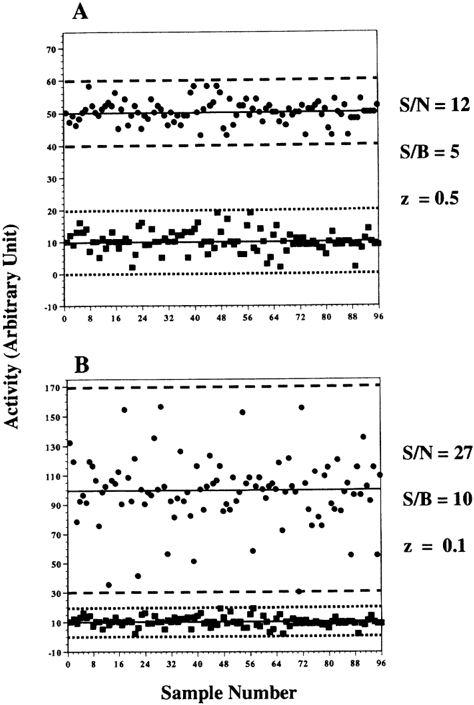
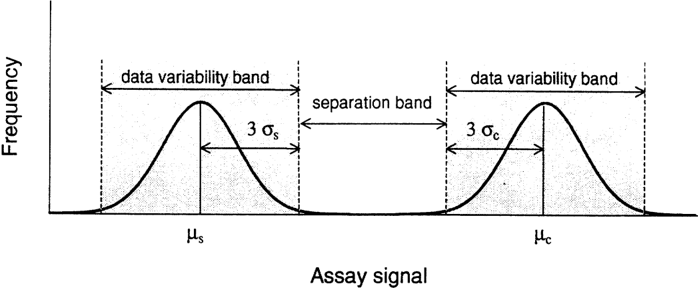
The ability to identify active compounds (³hits²) from large chemical libraries accurately and rapidly has been the ultimate goal in developing high-throughput screening (HTS) assays. The ability to identify hits from a particular HTS assay depends largely on the suitability or quality of the assay used in the screening. The criteria or parameters for evaluating the ³suitability² of an HTS assay for hit identification are not well defined and hence it still remains difficult to compare the quality of assays directly. In this report, a screening window coefficient, called ³Z-factor,² is defined. This coefficient is reflective of both the assay signal dynamic range and the data variation associated with the signal measurements, and therefore is suitable for assay quality assessment. The Z-factor is a dimensionless, simple statistical characteristic for each HTS assay. The Z-factor provides a useful tool for comparison and evaluation of the quality of assays, and can be utilized in assay optimization and validation.
Overview
The claims and statistics of this paper haven’t been checked yet.
Free: it reads the open-access text and checks the first 5 claims that cite a source we can check. Create a free account to check every claim.
Integrity signals
Registry
Cites
Statistics
Figures
Verification
Claims the paper makes
The claims and statistics of this paper haven’t been checked yet.
Free: it reads the open-access text and checks the first 5 claims that cite a source we can check. Create a free account to check every claim.
Claims other papers make about this one
Each is checked against this paper’s own text: does it say what the citing paper says it does?
The cited source says what the claim attributes to it.
In the citing paper
“Despite the difference, Z-factor analysis indicated that the system was not sufficiently robust for large-scale screening purposes, leading us to seek an alternative [37].”
From Chemically induced reprogramming to reverse cellular aging (2023) · cites this paper as [37]
Experimental — accuracy not yet measuredIn the citing paper
“In all cases, Z' values (Zhang et al., 1999) did not vary beyond 0.5 and 1, and typically ranged between 0.6 to 0.8.”
From Small Molecule Fluoride Toxicity Agonists (2015) · cites this paper as Zhang et al., 1999
Self-check
Percentages, sums and reported differences re-computed from the paper’s own numbers.
The self-check needs the paper’s full text.
Citations
Cites
Gordon, E. M., Barrett, R. W., Dower, W. J., Fodor, S. P. A., & Gallop, M. A. (1994) · Journal of Medicinal Chemistry · doi:10.1021/jm00036a001 · Cited by 1,142
Cole, S. T., & Girons, I. S. (1994) · FEMS Microbiology Reviews · doi:10.1111/j.1574-6976.1994.tb00084.x · Cited by 113
Oldenburg, K. R., Zhang, J.-H., Chen, T., Maffia, A., Blom, K. F., Combs, A. P., & Chung, T. D. Y. (1998) · SLAS Discovery · doi:10.1177/108705719800300108 · Cited by 74
Self-citationDesign of Signal Windows in High Throughput Screening Assays for Drug Discovery
Sittampalam, G. S., Iversen, P. W., Boadt, J. A., Kahl, S. D., Bright, S. W., Zock, J. M., Janzen, W. P., & Lister, M. D. (1997) · SLAS DISCOVERY · doi:10.1177/108705719700200306 · Cited by 66
Toward a cDNA Map of the Human Genome
Korenberg, J. R., Chen, X., Adams, M. D., & Venter, C. J. (1995) · Genomics · doi:10.1006/geno.1995.9993 · Cited by 53
The GDBTM Human Genome Database Anno 1997
Fasman, K. H., Letovsky, S., Li, P., Cottingham, R. W., & Kingsbury, D. T. (1997) · Nucleic Acids Research · doi:10.1093/nar/25.1.72 · Cited by 46
Comparison of Automation Equipment in High Throughput Screening
Stevens, M. E., Bouchard, P. J., Kariv, I., Chung, T. D. Y., & Oldenburg, K. R. (1998) · SLAS DISCOVERY · doi:10.1177/108705719800300410 · Cited by 17
Self-citationCombinatorial Organic Synthesis: Applications to Drug Discovery
Gordon, E. M., Gallop, M. A., Campbell, D., Holmes, C., Bermak, J. C., Look, G. C., Murphy, M., Needels, M. C., Jacobs, J. W., Sugarman, J., et al. (1995) · European Journal of Medicinal Chemistry · doi:10.1016/s0223-5234(23)00134-4 · Cited by 17
Cited by
Items 1,001–1,039 of 1,039
Ansbro, M. R., Shukla, S., Ambudkar, S. V., Yuspa, S. H., & Li, L. (2013) · PLoS ONE · doi:10.1371/journal.pone.0060334 · Cited by 54
“The Z-factor, a parameter that reflects both the assay signal dynamic range and the data variation [33], was calculated by the equation:”
MethodKim, H.-Y. H., Korade, Z., Tallman, K. A., Liu, W., Weaver, C. D., Mirnics, K., & Porter, N. A. (2016) · Chemical Research in Toxicology · doi:10.1021/acs.chemrestox.6b00054 · Cited by 53
Sail, V., Rizzo, A. A., Chatterjee, N., Dash, R. C., Ozen, Z., Walker, G. C., Korzhnev, D. M., & Hadden, M. K. (2017) · ACS Chemical Biology · doi:10.1021/acschembio.6b01144 · Cited by 52
Comprehensive pharmacogenomic characterization of gastric cancer
Sa, J. K., Hong, J. Y., Lee, I.-K., Kim, J.-S., Sim, M.-H., Kim, H. J., An, J. Y., Sohn, T. S., Lee, J. H., Bae, J. M., et al. (2020) · Genome Medicine · doi:10.1186/s13073-020-0717-8 · Cited by 46
Musella, S., Carotenuto, L., Iraci, N., Baroli, G., Ciaglia, T., Nappi, P., Basilicata, M. G., Salviati, E., Barrese, V., Vestuto, V., et al. (2022) · Journal of Medicinal Chemistry · doi:10.1021/acs.jmedchem.2c00911 · Cited by 45
Payne, N. C., Maksoud, S., Tannous, B. A., & Mazitschek, R. (2022) · Cell Chemical Biology · doi:10.1016/j.chembiol.2022.05.003 · Cited by 44
Limegrover, C. S., Yurko, R., Izzo, N. J., LaBarbera, K. M., Rehak, C., Look, G., Rishton, G., Safferstein, H., & Catalano, S. M. (2021) · Journal of Neuroscience Research · doi:10.1002/jnr.24782 · Cited by 43
“…performs with a z′ factor = 0.91. z′ factors are a statistical calculation in high-throughput screening used to warrant the use of a specific treatment, and z′ factors between 0.5 and 1.0 are considered excellent, indicating strong reliability and repeatability of the assay (Zhang et al., 1999).”
BackgroundInfluentialInduction of apoptosis in cancer cell lines by the Red Sea brine pool bacterial extracts
Sagar, S., Esau, L., Holtermann, K., Hikmawan, T., Zhang, G., Stingl, U., Bajic, V. B., & Kaur, M. (2013) · BMC Complementary and Alternative Medicine · doi:10.1186/1472-6882-13-344 · Cited by 41
“6 was recorded indicating good to excellent robustness for assays [36].”
Conley, J. M., Brand, C. S., Bogard, A. S., Pratt, E. P. S., Xu, R., Hockerman, G. H., Ostrom, R. S., Dessauer, C. W., & Watts, V. J. (2013) · The Journal of Pharmacology and Experimental Therapeutics · doi:10.1124/jpet.113.207449 · Cited by 41
“Specifically, assay robustness was examined by performing a Z9 analysis for the assay parameters developed for screening (Zhang et al., 1999).”
MethodMondal, S., Hegarty, E., Sahn, J. J., Scott, L. L., Gökçe, S. K., Martin, C., Ghorashian, N., Satarasinghe, P. N., Iyer, S., Sae-Lee, W., et al. (2018) · ACS Chemical Neuroscience · doi:10.1021/acschemneuro.7b00428 · Cited by 41
Inhibiting a promiscuous GPCR: iterative discovery of bitter taste receptor ligands
(2022) · doi:10.1101/2022.11.24.517821 · Cited by 40
HIV-1 fusion inhibitors targeting the membrane-proximal external region of Env spikes
Xiao, T., Frey, G., Fu, Q., Lavine, C. L., Scott, D. A., Seaman, M. S., Chou, J. J., & Chen, B. (2020) · Nature Chemical Biology · doi:10.1038/s41589-020-0496-y · Cited by 38
Inhibiting a promiscuous GPCR: iterative discovery of bitter taste receptor ligands
Fierro, F., Peri, L., Hübner, H., Tabor-Schkade, A., Waterloo, L., Löber, S., Pfeiffer, T., Weikert, D., Dingjan, T., Margulis, E., et al. (2023) · Cellular and Molecular Life Sciences · doi:10.1007/s00018-023-04765-0 · Cited by 36
“) on each of the duplicate assay plates [36, 37].”
BackgroundFeng, T., Liu, P., Wang, X., Luo, J., Zuo, X., Jiang, X., Liu, C., Li, Y., Li, N., Chen, M., et al. (2018) · Atherosclerosis · doi:10.1016/j.atherosclerosis.2018.04.039 · Cited by 35
High-Throughput Screen for Identifying Small Molecules That Target Fungal Zinc Homeostasis
Simm, C., Luan, C.-H., Weiss, E., & O'Halloran, T. (2011) · PLoS ONE · doi:10.1371/journal.pone.0025136 · Cited by 34
“Following established approaches, the Z9 factor is defined as Z9 = 12((3s++3s2)/ (m+2m2)) [26].”
MethodZhang, J., Cai, S., Peterson, B. R., Kris-Etherton, P. M., & Heuvel, J. P. V. (2011) · ASSAY and Drug Development Technologies · doi:10.1089/adt.2010.0288 · Cited by 34
“The Z¢ Factor was calculated as Z ¢1⁄4 1 – [(3SD of sampleþ 3SD of control)/(|mean of sample – mean of control|)] as described elsewhere.(6)”
Self-citationSmall Molecule Fluoride Toxicity Agonists
Nelson, J. W., Plummer, M. S., Blount, K. F., Ames, T. D., & Breaker, R. R. (2015) · Chemistry & Biology · doi:10.1016/j.chembiol.2015.03.016 · Cited by 30
“In all cases, Z' values (Zhang et al., 1999) did not vary beyond 0.”
BackgroundInfluentialA High Throughput Assay for Discovery of Bacterial β-Glucuronidase Inhibitors
Ahmad, S., Hughes, M. A., Lane, K. T., Redinbo, M. R., Yeh, L.-A., & Scott, J. E. (2011) · Current Chemical Genomics · doi:10.2174/1875397301105010013 · Cited by 29
“0 indicating that an assay is robust for screening [30].”
BackgroundSaputo, S., Faustoferri, R. C., & Quivey, R. G. (2018) · Antimicrobial Agents and Chemotherapy · doi:10.1128/aac.01674-17 · Cited by 29
“The Z= score was assessed as described previously (30).”
BackgroundMethodInfluentialBiering, S. B., Van Dis, E., Wehri, E., Yamashiro, L. H., Wrynla, X. H., Dugast-Darzacq, C., Graham, T. G. W., Stroumza, J. R., Golovkine, G. R., Roberts, A. W., et al. (2021) · ACS Infectious Diseases · doi:10.1021/acsinfecdis.1c00017 · Cited by 28
“Z’ was determined as described previously (55).”
Fuentealba, R. A., Marasa, J., Diamond, M. I., Piwnica-Worms, D., & Weihl, C. C. (2012) · Human Molecular Genetics · doi:10.1093/hmg/ddr500 · Cited by 28
“When using Q19- and Q80-FRET pairs to generate controlpositive and -negative signals, the dynamic range of the reporter increased if we expressed the data as a ratio, i.e. luciferase/(FRET/donor), improving the calculated Z-factor (59) from 0.66 to 0.73.”
InfluentialPhosphatase-Coupled Universal Kinase Assay and Kinetics for First-Order-Rate Coupling Reaction
Wu, Z. L. (2011) · PLoS ONE · doi:10.1371/journal.pone.0023172 · Cited by 28
“Z9 factors were then calculated according to the following equation [22], Z0~1{ 3sczz3sc{ mczzmc{ :”
MethodBCL-XL inhibition induces an FGFR4-mediated rescue response in colorectal cancer
Ramesh, P., Di Franco, S., Atencia Taboada, L., Zhang, L., Nicotra, A., Stassi, G., & Medema, J. P. (2022) · Cell Reports · doi:10.1016/j.celrep.2022.110374 · Cited by 26
Interaction of Approved Drugs with Synaptic Vesicle Protein 2A
Danish, A., Namasivayam, V., Schiedel, A. C., & Müller, C. E. (2017) · Archiv der Pharmazie · doi:10.1002/ardp.201700003 · Cited by 19
Chorba, J. S., Galvan, A. M., & Shokat, K. M. (2018) · Journal of Biological Chemistry · doi:10.1074/jbc.ra117.000754 · Cited by 18
“Results of an unpaired t test with Welch’s correction and the Z factor (62) are shown.”
Watson, V. G., Drake, K. M., Peng, Y., & Napper, A. D. (2013) · ASSAY and Drug Development Technologies · doi:10.1089/adt.2012.495 · Cited by 15
“4), measures of assay performance, were determined using equations previously described.(19)”
MethodLathuiliere, A., Vernet, R., Charrier, E., Urwyler, M., Von Rohr, O., Belkouch, M.-C., Saingier, V., Bouvarel, T., Guillarme, D., Engel, A., et al. (2022) · Molecular Therapy - Methods & Clinical Development · doi:10.1016/j.omtm.2022.07.017 · Cited by 14
“To compare potency in the screening assay, the Z-factor was calculated as described previously.(74)”
Identification and Characterization of Novel Inhibitors of Mammalian Aspartyl Aminopeptidase
Chen, Y., Tang, H., Seibel, W., Papoian, R., Oh, K., Li, X., Zhang, J., Golczak, M., Palczewski, K., & Kiser, P. D. (2014) · Molecular Pharmacology · doi:10.1124/mol.114.093070 · Cited by 14
Self-citationA Homogeneous HTRF Assay for the Identification of Inhibitors of the TWEAK-Fn14 Protein Interaction
Benicchi, T., Iozzi, S., Svahn, A., Axelsson, H., Mori, E., Bernocco, S., Cappelli, F., Caramelli, C., Fanti, P., Genesio, E., et al. (2012) · SLAS Discovery · doi:10.1177/1087057112447873 · Cited by 12
“The Z′ factor was calculated using the following equation: Z′ = 1 – 3 × [(SD 100% ) + (SD 0% )]/ abs[C 100% − C 0% ], where SD 100% and SD 0% are the standard deviation values of negative and positive control, respectively.(33) Concentration response curves were fitted with the four-parameter logistic nonlinear regres…”
MethodLiu, F., Yu, J., Zhang, Y., Li, F., Liu, Q., Zhou, Y., Huang, S., Fang, H., Xiao, Z., Liao, L., et al. (2021) · The FASEB Journal · doi:10.1096/fj.202100465rr · Cited by 12
Shin, W., Lee, S.-K., Hwang, J.-H., Park, J.-C., Cho, Y.-H., Ro, E. J., Song, Y., Seo, H. R., & Choi, K.-Y. (2018) · Experimental & Molecular Medicine · doi:10.1038/s12276-018-0102-5 · Cited by 10
Veloria, J., Shin, M., Devkota, A. K., Payne, S. M., Cho, E. J., & Dalby, K. N. (2019) · SLAS Discovery · doi:10.1177/2472555219844572 · Cited by 9
Ismail, M., Davies, G., Sproat, G., Monteverde, T., Tart, J., Acebrón-García-de-Eulate, M., Gohlke, A., Hancock, D., Adhikari, S., Stefanovic-Barrett, S., et al. (2024) · SLAS Discovery · doi:10.1016/j.slasd.2024.100197 · Cited by 6
Novel enhancers of guanylyl cyclase‐A activity acting via allosteric modulation
(2023) · doi:10.1111/bph.16203 · Cited by 5
Schiedel, M., McArdle, D. J. B., Padalino, G., Chan, A. K. N., Forde-Thomas, J., McDonough, M., Whiteland, H., Beckmann, M., Cookson, R., Hoffmann, K. F., et al. (2023) · Journal of Medicinal Chemistry · doi:10.1021/acs.jmedchem.3c01321 · Cited by 4
Laskaris, P., Vicentefranqueira, R., Helynck, O., Jouvion, G., Calera, J. A., du Merle, L., Suzenet, F., Buron, F., de Sousa, R. A., Mansuy, D., et al. (2018) · Antimicrobial Agents and Chemotherapy · doi:10.1128/aac.02510-17 · Cited by 3
“For each plate, the Z=-factor (45) was calculated based on positive and negative controls, and all values that were above the threshold were considered an excellent assay (average Z=-factor, 0.”
MethodInfluentialAguirre, T., Dornan, G. L., Hostachy, S., Neuenschwander, M., Seyffarth, C., Haucke, V., Schütz, A., von Kries, J. P., & Fiedler, D. (2023) · doi:10.1101/2023.04.26.538378 · Cited by 2
“coli arctic express from pDest-566-MBP-EhIP6KAM85V (27-270) at 13°C overnight.”
(2023) · doi:10.7554/elife.88982.2
Aguirre, T., Dornan, G. L., Hostachy, S., Neuenschwander, M., Seyffarth, C., Haucke, V., Schütz, A., von Kries, J. P., & Fiedler, D. (2023) · eLife · doi:10.7554/elife.88982.3
Metadata
- Authors
- Zhang, J.-H., Chung, T. D. Y., & Oldenburg, K. R.
- Affiliations
- DuPont (United States) (US)
- Venue
- SLAS Discovery
- Publisher
- Elsevier BV
- Published
- 1999-04
- Volume
- 4
- Issue
- 2
- Pages
- 67-73
- ISSN
- 2472-5552 (ISSN-L)
- OpenAlex
- W1991001144
- Semantic Scholar
- c7b7027659ffe67670d41a5a73b7eece8f0ff493
- Cited by
- 6,847
- References
- 8
- Citations by year
- 2026: 200 · 2025: 267 · 2024: 257 · 2023: 308 · 2022: 355 · 2021: 346 · 2020: 358 · 2019: 343 · 2018: 350 · 2017: 339 · 2016: 365 · 2015: 330 · 2014: 347 · 2013: 373 · 2012: 354
- FWCI
- 52.99
- Type
- journal article
- Language
- en
- Open access
- hybrid
- doi.org
- Licence
- cc-by-nc-nd
- www.elsevier.com/tdm/userlicense/1.0/ (tdm)
- www.elsevier.com/legal/tdmrep-license (tdm)
- creativecommons.org/licenses/by-nc-nd/4.0/ (vor, 8429 d)
- Locations
- SLAS DISCOVERY (publishedVersion, cc-by-nc-nd)
- PubMed (publishedVersion)
- Topics
- Life Sciences › Pharmacology, Toxicology and Pharmaceutics › Drug Discovery › Computational Drug Discovery Methods
- Life Sciences › Biochemistry, Genetics and Molecular Biology › Molecular Biology › Advanced Biosensing Techniques and Applications
- Health Sciences › Veterinary › Small Animals › Animal testing and alternatives
- Keywords
- Z' factor, high-throughput screening, hit identification, signal dynamic range, assay validation, statistical parameters, assay optimization, chemical libraries
About these checks
Registry, retraction, Cites and statistics results are computed, not judged, with one exception: a printed reference that no index lists is read once by a model before it counts as a citation error. Claims are extracted by a model and kept only when their quote appears verbatim in the text; each cited source is then checked, with a model’s help, for whether it says what the claim relies on. Those verdicts can be wrong — read the claim’s quote and the cited source before relying on one.
Statistics and arithmetic are recomputed, not judged.
Confidence bands are shown only for fields calibrated on our annotated test set. None is calibrated yet, so no band is shown.
What counts as a claim ›How we measure confidence ›How we check this ›
Are you an author, or do you see a problem with this page? Request a review
Data sources
Bibliographic data: Semantic Scholar, OpenAlex, Crossref.
Contains information from the Semantic Scholar Academic Graph Datasets, made available under the ODC Attribution License (ODC-BY 1.0).
Semantic Scholar’s data is described in: Kinney, R., et al. (2023). The Semantic Scholar Open Data Platform. arXiv:2301.10140.
