

A Meta-Analysis of Organizational Complaint Handling and Customer Responses
Open accessThe DOI matches its Crossref record; 83 of the 83 references it cites were found in a registry or an index; 2 of the 79 sources its claims cite were checked for support.
Abstract
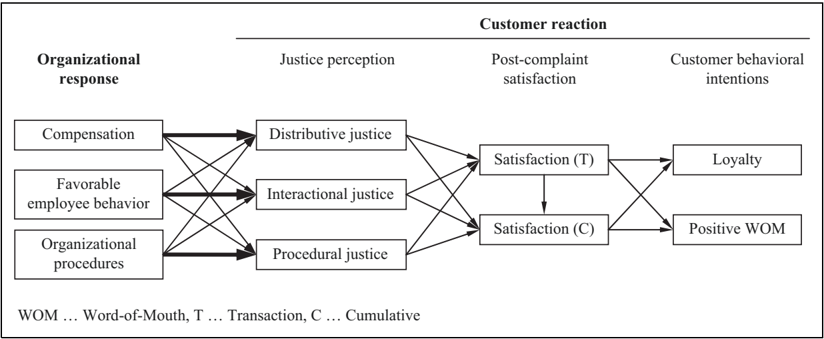
Service recovery is a crucial success factor for organizations. Thus, many studies have addressed the issue of post-complaint behavior. Conducting a meta-analysis, the authors test the following path model: ‘‘organizational responses (compensation, favorable employee behavior, and organizational procedures) → justice perceptions (distributive, interactional, and procedural justice) → post-complaint satisfaction (transaction-specific and cumulative satisfaction) → customer behavioral intentions (loyalty and positive word of mouth [WOM]).’’ The results confirm this model as well as the mediating role of justice perceptions and post-complaint satisfaction. Surprisingly, the results also show that the common contention of distributive justice as the salient driver of service recovery is only true for transaction-specific satisfaction, which in turn reinforces positive WOM. Cumulative satisfaction, however, which is the primary antecedent of customer loyalty, even slightly more depends on interactional justice than on distributive justice. Further, the results show that the relationships between justice perceptions and satisfaction constructs depend on several moderators such as target group, industry, and complaint type. A major managerial implication is the fact that organizations should pay particular attention to distributive justice when complainants are students and to interactional justice when failure is nonmonetary or occurs in service industries. The authors discuss theoretical implications and provide suggestions for future research.
Overview
CoChat Summary
## TL;DR
This meta-analysis synthesizes 87 studies (95 independent samples; total N = 28,826) on complaint handling and tests a path model linking organizational responses to justice perceptions, satisfaction, and behavioral intentions. It finds that the full chain is broadly supported, but that distributive justice is mainly the key driver for transaction-specific satisfaction, while interactional justice matters more for cumulative satisfaction and for some contexts.
## Key findings
- The literature search identified 142 empirical articles; 55 were excluded for insufficient statistics, leaving 87 studies and 477 effects for analysis.
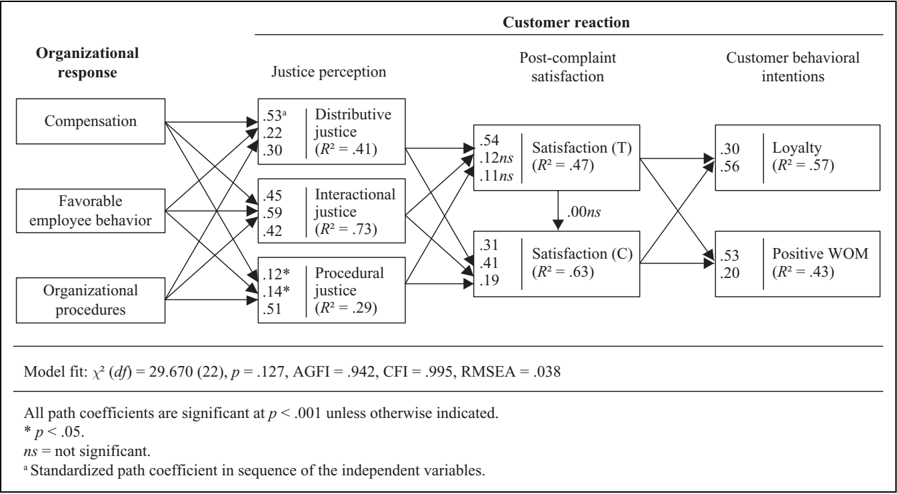
- The hypothesized model fit was excellent: χ²[22] = 29.670, p = .127; AGFI = .942; CFI = .995; RMSEA = .038.
- The model explained 41% of distributive justice, 73% of interactional justice, 29% of procedural justice, 47% of transaction-specific satisfaction, 63% of cumulative satisfaction, 57% of loyalty, and 43% of positive WOM.
- Of 20 estimated path coefficients, 17 were significant at the .05 level; the nonsignificant paths were interactional justice → transaction-specific satisfaction (b = .12, p = .067), procedural justice → transaction-specific satisfaction (b = .11, p = .098), and transaction-specific satisfaction → cumulative satisfaction (b = .00, p = .942).
- Relative effects showed compensation was strongest for distributive justice (χ² diff = 10.454 vs. organizational procedures; 18.844 vs. favorable employee behavior), favorable employee behavior for interactional justice (8.193 vs. compensation; 12.521 vs. organizational procedures), and organizational procedures for procedural justice (21.949 vs. favorable employee behavior; 23.626 vs. compensation).
- Transaction-specific satisfaction was the stronger predictor of positive WOM, while cumulative satisfaction was the stronger predictor of loyalty; the paper reports that transaction-specific satisfaction had a larger effect on positive WOM than cumulative satisfaction (χ² diff = 10.733, p < .001), and cumulative satisfaction had a larger effect on loyalty than transaction-specific satisfaction (χ² diff = 8.831, p < .003).
## Methods
- Meta-analysis of empirical studies from 1980 to June 2009 on relationships among organizational responses, justice perceptions, post-complaint satisfaction, and behavioral intentions.
- Search covered Business Source Complete, Science Direct, Emerald Management Xtra, ABI/Inform, PsycINFO, and the Social Science Citation Index; 142 articles were found, 87 included.
- Effect sizes were correlations; missing correlations were approximated from other statistics, reliability-corrected, weighted by sample size, and pooled. The main analysis used SEM in AMOS 7.0 with maximum likelihood estimation, plus univariate statistics, indirect effects, competing models, and moderator analyses.
- Coding was done by two independent coders; intercoder reliability was .93. Outliers were removed when correlation coefficients exceeded three times the standard error; 5.5% of correlation data points were eliminated.
## Limitations
- The paper says cumulative post-complaint satisfaction is conceptualized as an overall assessment of the entire product/service or organization, but future research should distinguish satisfaction with recovery, with product/service, and with the entire organization.
- It notes compensation level is hard to determine in process failures, so failure type and compensation level should be examined more closely.
- The authors state results may be biased by omitted variables, especially emotions, whose role in the framework remains unclear.
- Evident from the text: some moderator analyses were limited by sparse data, so failure magnitude, switching barriers, online vs. offline complaint handling, relationship quality, and culture could not be examined in detail.
Model-written summary. Check it against the paper before relying on it.
Integrity signals
Registry
Cites
Statistics
Figures

Verification
Claims the paper makes
2 Valid · 2 Not valid · 45 Not checked · 124 Own results and interpretations
The cited sources support only part of this claim — read each source’s verdict below.
In the paper
“It is argued and empirically shown that justice perceptions (distributive, procedural, and interactional justice) completely mediate the relationship between organizational responses and post-complaint satisfaction (Karande, Magnini, and Tam 2007; Maxham III and Netemeyer 2003; Smith, Bolton, and Wagner 1999).”
What the sources say
- Partly supportedcites Karande, Magnini, and Tam 2007 matched to “Recovery Voice and Satisfaction After Service Failure: An Experimental Investigation of Mediating and Moderating Factors” (2007) sourceExperimental — accuracy not yet measured
The Mediation Analysis reports that procedural justice fully mediated the effect of recovery voice on postfailure satisfaction in the airline scenario, but only partially mediated it in the hotel scenario. The study did not test distributive or interactional justice as mediators, or organizational responses beyond recovery voice; the broader claim of complete mediation is therefore not supported. (LLM, conf=0.94)
- Not matchedcites Maxham III and Netemeyer 2003
An author–year citation the paper’s reference list doesn’t settle. We don’t search these by name.
- Not checked — no full text of the sourcecites Smith, Bolton, and Wagner 1999 matched to “A Model of Customer Satisfaction with Service Encounters Involving Failure and Recovery” (1999) source
boostedstates a cause- Asserted: passes — The authors put it forward as true.
- Checkable: passes — It can be checked against evidence.
- Load-bearing: passes — The paper’s conclusions depend on it.
- Based: passes — The paper gives a reason why it holds.
- Partly supported
A result the paper states — it cites no source for it, so there is none to check. The quote shows it is in the paper.
In the paper
“Cumulative satisfaction has a larger impact on loyalty than transaction-specific satisfaction ( w 2 diff[1] ¼ 8.831, p < .003).”
- Also stated in: § Theoretical Implications · plain
“cumulative satisfaction is a stronger predictor of loyalty than transaction-specific satisfaction.”
plainstates an association- Asserted: passes — The authors put it forward as true.
- Checkable: passes — It can be checked against evidence.
- Load-bearing: passes — The paper’s conclusions depend on it.
- Based: passes — The paper gives a reason why it holds.
- Also stated in: § Theoretical Implications · plain
A result the paper reports from its own data — it cites no other source for it, so there is none to check. The quote shows it is in the paper.
In the paper
“The results confirm this model as well as the mediating role of justice perceptions and post-complaint satisfaction.”
boostedstates a cause- Asserted: passes — The authors put it forward as true.
- Checkable: passes — It can be checked against evidence.
- Load-bearing: passes — The paper’s conclusions depend on it.
- Based: passes — The paper gives a reason why it holds.
A result the paper reports from its own data — it cites no other source for it, so there is none to check. The quote shows it is in the paper.
In the paper
“Surprisingly, the results also show that the common contention of distributive justice as the salient driver of service recovery is only true for transaction-specific satisfaction, which in turn reinforces positive WOM.”
plainstates a cause- Asserted: passes — The authors put it forward as true.
- Checkable: passes — It can be checked against evidence.
- Load-bearing: passes — The paper’s conclusions depend on it.
- Based: passes — The paper gives a reason why it holds.
A result the paper reports from its own data — it cites no other source for it, so there is none to check. The quote shows it is in the paper.
In the paper
“Further, the results show that the relationships between justice perceptions and satisfaction constructs depend on several moderators such as target group, industry, and complaint type.”
plainstates an association- Asserted: passes — The authors put it forward as true.
- Checkable: passes — It can be checked against evidence.
- Load-bearing: passes — The paper’s conclusions depend on it.
- Based: passes — The paper gives a reason why it holds.
85 more claims
Create a free account to see all 173 claims and to verify the 5 references still open.
- It may state two separate claims as one. 60
- Borderline: one of the tests for a substantial claim is unclear. 2
- Probably not a substantial claim. 28
Citations
Cites
Statistical Power Analysis for the Behavioral Sciences
Muller, K. (1989) · Technometrics · doi:10.1080/00401706.1989.10488618 · Cited by 99,167
Baron, R. M., & Kenny, D. A. (1986) · Journal of Personality and Social Psychology · doi:10.1037/0022-3514.51.6.1173 · Cited by 91,532
A Cognitive Model of the Antecedents and Consequences of Satisfaction Decisions
Oliver, R. L. (1980) · Journal of Marketing Research · doi:10.1177/002224378001700405 · Cited by 14,494
Adams, J. S. (1965) · Advances in Experimental Social Psychology · doi:10.1016/s0065-2601(08)60108-2 · Cited by 10,818
(2000) · Cited by 9,198
The file drawer problem and tolerance for null results.
Rosenthal, R. (1979) · Psychological Bulletin · doi:10.1037/0033-2909.86.3.638 · Cited by 9,068
The Social Psychology of Procedural Justice
Lind, E. A., & Tyler, T. R. (1988) · Critical Issues in Social Justice · doi:10.1007/978-1-4899-2115-4 · Cited by 6,585
Satisfaction: a behavioral perspective on the consumer
(2010) · Choice Reviews Online · doi:10.5860/choice.47-6963 · Cited by 6,042
Akaike, H. (1987) · Psychometrika · doi:10.1007/bf02294359 · Cited by 5,264
On the dimensionality of organizational justice: A construct validation of a measure.
Colquitt, J. A. (2001) · Journal of Applied Psychology · doi:10.1037/0021-9010.86.3.386 · Cited by 4,114
Research works printed but not linked: 7
- Bagozzi, Richard P. and Hans Baumgartner (1996), ''The Evaluation of Structural Equation Models and Hypothesis Testing,'' in Principles of Marketing Research , 1st reprint, Richard P. Bagozzi, ed. Cambridge, UK: Blackwell, 386-422.
- Blodgett, Jeffrey G. and Stephen S. Tax (1993), ''The Effects of Distributive and Interactional Justice on Complainants' Repatronage Intentions and Negative Word-of-Mouth Intentions,'' Journal of Consumer Satisfaction, Dissatisfaction and Complaining Behavior, 6, 100-110.
- Customer Care Alliance (2003), Customer Care-The Multibillion Dollar Sinkhole. http://www.ccareall.org/
- de Ruyter, Ko, 2000, Inter
- Goodwin, Cathy and Ivan Ross (1989), ''Salient Dimensions of Perceived Fairness in Resolution of Service Complaints,'' Journal of Consumer Satisfaction, Dissatisfaction and Complaining Behavior , 2, 87-98.
- Jain, Dipak C. ( 1996), ‘‘Regression Analysis for Marketing Decisions,’’ in Principles of Marketing Research, 1st reprint, Richard P. Bagozzi, ed. Cambridge, UK: Blackwell, 162-194.
- TARP (1981), Measuring the Grapevine-Consumer Response and Word of Mouth. Atlanta, GA: Coca Cola.
Cited by
Items 201–300 of 471
Dong, F., Yin, J., Xiang, J., Chang, Z., Gu, T., & Han, F. (2023) · Sustainability · doi:10.3390/su15086587 · Cited by 19
Pio, P., Sigahi, T. F. A. C., Rampasso, I. S., Satolo, E. G., Serafim, M. P., Quelhas, O. L. G., Filho, W. L., & Anholon, R. (2023) · International Journal of Productivity and Performance Management · doi:10.1108/ijppm-08-2022-0430 · Cited by 40
Ethical fairness in financial services complaint handling
Chalmers, S. (2016) · International Journal of Bank Marketing · doi:10.1108/ijbm-09-2014-0124 · Cited by 22
Revisiting power messaging in service failures: Pitfalls and proposed solutions
Antonetti, P., & Crisafulli, B. (2022) · Psychology and Marketing · doi:10.1002/mar.21712 · Cited by 16
Ahmad, F., & Guzmán, F. (2023) · Journal of Product & Brand Management · doi:10.1108/jpbm-06-2022-4035 · Cited by 21
Relationship Norm Moderates Observers’ Reaction to Unearned Preferential Treatment
Chark, R., & Wang, J. (2023) · Journal of Travel Research · doi:10.1177/00472875231175076 · Cited by 17
“For instance, it was found to adversely influence customer satisfaction and repurchase intention (Colliander et al., 2019; Gelbrich & Roschk, 2011; T. Kim et al., 2009; So¨derlund & Colliander, 2015).”
BackgroundTengilimoğlu, E., & Öztürk, Y. (2024) · International Journal of Tourism Research · doi:10.1002/jtr.2673 · Cited by 20
Webcare quality: conceptualisation, scale development and validation
Ghosh, T., & Mandal, S. (2020) · Journal of Marketing Management · doi:10.1080/0267257x.2020.1800797 · Cited by 25
Boshoff, C. (2012) · South African Journal of Business Management · doi:10.4102/sajbm.v43i3.470 · Cited by 24
“This assessment, against the background of distributive justice, is particularly important in transaction-specific satisfaction but is often moderated by considerations such as the type of the complaint (Gelbrich & Roschk, 2011).”
BackgroundHarun, A., Rokonuzzaman, M., Prybutok, G. T., & Prybutok, V. R. (2018) · Quality Management Journal · doi:10.1080/10686967.2018.1474675 · Cited by 17
Examining antecedents of reconciliation following service failure and recovery
Radu, A., Surachartkumtonkun, J., Weaven, S. K., & Thaichon, P. (2018) · Journal of Strategic Marketing · doi:10.1080/0965254x.2018.1518920 · Cited by 21
Josimović, M., Ćoćkalo, D., Osmanović, S., Cvjetković, M., & Radivojević, N. (2025) · Sustainability · doi:10.3390/su17052277 · Cited by 31
Trần, V. Đ. (2024) · Cogent Business & Management · doi:10.1080/23311975.2023.2296145 · Cited by 25
“A service failure occurs when a service goes wrong and leaves clients with a negative impression of the encounter (Gelbrich & Roschk, 2011).”
Boukis, A., Harris, L. C., & Koritos, C. (2024) · Tourism Management · doi:10.1016/j.tourman.2024.104927 · Cited by 18
Park, E., Im, G. P., Storey, V. C., & Baskerville, R. (2019) · Journal of the Association for Information Systems · doi:10.17705/1jais.00529 · Cited by 21
“Employing intention as the outcome measure is consistent with service failure and recovery research (DeWitt, Nguyen, & Marshall, 2008; Gelbrich & Roschk, 2011; Van Vaerenbergh, Orsingher, Vermeir, & Lariviere, 2014).”
BackgroundMethodResultInfluentialCohen, A. H., Fresneda, J. E., & Anderson, R. E. (2023) · Journal of Service Theory and Practice · doi:10.1108/jstp-08-2021-0167 · Cited by 17
Turan, C. P. (2022) · Journal of Business Research · doi:10.1016/j.jbusres.2022.05.053 · Cited by 23
Shen, W., & Wang, Y. (2022) · Journal of Marketing Development and Competitiveness · doi:10.33423/jmdc.v16i2.5254 · Cited by 16
Caillier, J. G. (2023) · International Public Management Journal · doi:10.1080/10967494.2023.2187498 · Cited by 12
Zhang, M., Cai, S., & Qiao, T. (2025) · International Journal of Contemporary Hospitality Management · doi:10.1108/ijchm-03-2024-0428 · Cited by 16
Huang, R., & Ha, S. (2022) · Service Industries Journal · doi:10.1080/02642069.2022.2057475 · Cited by 13
“In a meta-analysis study of complaint handling, the mediating in fl uence of interactional justice is strongest in connecting the relationship between employee behavior and consumer satisfaction, as compared to distributive and procedural justice (Gelbrich & Roschk, 2011).”
InfluentialKron, N., Björkman, J., Ek, P., Pihlgren, M., Mazraeh, H., Berggren, B., & Sörqvist, P. (2023) · Journal of Service Theory and Practice · doi:10.1108/jstp-02-2023-0029 · Cited by 16
Muralidharan, E. K., Guo, W., Fazel, H., & Wei, W. X. (2019) · Global Business Review · doi:10.1177/0972150919861783 · Cited by 16
Das, M., Jebarajarkirthy, C., Maseeh, H. I., Lim, W. M., & Shah, J. (2025) · Journal of Business Research · doi:10.1016/j.jbusres.2025.115752 · Cited by 21
Customer Relationship Management: Past, Present, and Future
Reinartz, W. (2025) · International Journal of Research in Marketing · doi:10.1016/j.ijresmar.2025.12.001 · Cited by 36
How can organizational tolerance toward frontline employees’ errors help service recovery?
Cusin, J., & Flacandji, M. (2021) · Journal of Personal Selling and Sales Management · doi:10.1080/08853134.2021.2005612 · Cited by 13
Foroudi, P., Tabaghdehi, S. A. H., Cillo, V., & Cuomo, M. T. (2024) · Review of Managerial Science · doi:10.1007/s11846-024-00762-0 · Cited by 20
“According to scholars (Gelbrich and Roschk 2011; Maxham 2001; Smith and Bolton 2002), anger is the strongest emotion that you feel when you think that someone has performed in an unfair, cruel or intolerable way.”
Jin, L., Dong, W., & Ren, J. (2024) · Electronic Commerce Research and Applications · doi:10.1016/j.elerap.2024.101407 · Cited by 15
Jeon, E., & Kim, J. J. (2025) · Journal of Research in Interactive Marketing · doi:10.1108/jrim-05-2024-0238 · Cited by 15
Pre-service recovery: impact on customer satisfaction and acceptable waiting time
Qin, J., Feng-qin, X., & Wang, R. (2019) · Service Industries Journal · doi:10.1080/02642069.2019.1667979 · Cited by 15
Crisis communication in service ecosystems: perspectives and future challenges
Blasco‐Arcas, L., Falkheimer, J., & Heide, M. (2022) · Journal of service management · doi:10.1108/josm-11-2021-0436 · Cited by 16
Davidow, M. (2014) · The Journal of Consumer Satisfaction, Dissatisfaction & Complaining Behavior · Cited by 28
Service research: progress toward interdisciplinary collaboration
Hult, G. T. M., Walkowiak, T., & Beck, J. M. (2020) · Journal of Services Marketing · doi:10.1108/jsm-02-2019-0063 · Cited by 17
Online Complaint Communication Strategy: An Integrated Management Framework for e-Businesses
Breitsohl, J., Khammash, M., & Griffiths, G. (2013) · Progress in IS · doi:10.1007/978-3-642-39747-9_38 · Cited by 15
CUSTOMER COMPLAINT BEHAVIOR: AN EXAMINATION OF CULTURAL VS. SITUATIONAL FACTORS
Blodgett, J. G., Bakir, A., Saklani, A., Bachheti, M., & Bhaskar, S. N. S. K. D. N. L. (2015) · The Journal of Consumer Satisfaction, Dissatisfaction & Complaining Behavior · Cited by 26
Would you try it again? Dual effects of customer mindfulness on service recovery
Martinez, L. M., Pacheco, N. A., Ramos, F., & Bicho, M. (2023) · Journal of Retailing and Consumer Services · doi:10.1016/j.jretconser.2023.103438 · Cited by 15
Gelbrich, K., Voigt, S., & Nazifi, A. (2023) · Journal of Business Research · doi:10.1016/j.jbusres.2023.114173 · Cited by 15
Self-citationMix&Match: A Resource-Based Complaint Recovery Framework for Tangible Compensation
Stakhovych, S., & Tamaddoni, A. (2020) · Journal of Service Research · doi:10.1177/1094670519898521 · Cited by 18
Nuansi, P., & Ngamcharoenmongkol, P. (2021) · SAGE Open · doi:10.1177/21582440211040788 · Cited by 18
“Previous research suggested that a successful service recovery can lead to greater favorable outcomes, such as customer satisfaction, trust, and positive word-of-mouth intention (e.g., de Matos et al., 2011; Gelbrich & Roschk, 2010; Hennig-Thurau et al., 2004; Morgeson et al., 2020).”
BackgroundCaillier, J. G. (2023) · Public Performance & Management Review · doi:10.1080/15309576.2023.2257681 · Cited by 16
“The point is that a service failure results in a loss, either tangible, intangible, or both (e.g., Gelbrich & Roschk, 2011).”
BackgroundInfluentialExploring the Role of Complaint Handling among Complaining Consumers
Singh, V., Jain, A. K., & Choraria, S. (2016) · Vision The Journal of Business Perspective · doi:10.1177/0972262916668739 · Cited by 16
“Easy and fast complaint handling procedures encourages customers to complain (Gelbrich & Roschk, 2010; Huppertz, 2007).”
BackgroundHow Does Culture Impact Customer Evaluation in Online Complaining? Evidence from Germany and India
Sengupta, S. (2019) · Journal of Global Information Management · doi:10.4018/jgim.2020040107 · Cited by 13
Herck, R. E. V., Decock, S., Clerck, B. D., & Hudders, L. (2021) · International Journal of Business Communication · doi:10.1177/23294884211032316 · Cited by 16
Efficient analysis, handling and use of customer complaints
Effey, T., & Schmitt, R. H. (2011) · Springer eBooks · doi:10.1007/978-3-642-23860-4_78 · Cited by 12
The Burden of Double Deviation in Services: A Systematic Review and Research Agenda
Suresh, P., & Chawla, V. (2022) · International Journal of Consumer Studies · doi:10.1111/ijcs.12836 · Cited by 13
Walsh, G., Shiu, E. M. K., Schaarschmidt, M., & Hassan, L. M. (2022) · Psychology and Marketing · doi:10.1002/mar.21724 · Cited by 19
Alotaibi, M. N., Chaouali, W., Hammami, S. M., Schoefer, K., Aloui, N., & Saleh, M. A. (2023) · International Journal of Bank Marketing · doi:10.1108/ijbm-03-2022-0101 · Cited by 9
Consumer discrimination in service recovery situations
Rohden, S. F., & dos Santos, C. P. (2023) · Marketing Intelligence & Planning · doi:10.1108/mip-07-2022-0305 · Cited by 11
Chen, K., Wu, Z., & Sharma, P. (2023) · Journal of Retailing and Consumer Services · doi:10.1016/j.jretconser.2023.103477 · Cited by 10
Service recovery in unaffected consumers: evidence of a recovery paradox
Wardley, M. (2021) · International Journal of Quality and Service Sciences · doi:10.1108/ijqss-03-2021-0038 · Cited by 13
A century of research on complaints: longitudinal bibliometric analysis of WoS (1900–2019)
Küster-Boluda, A., López, N. V., & Boluda, I. K. (2022) · Total Quality Management & Business Excellence · doi:10.1080/14783363.2022.2030213 · Cited by 10
Breaking The Mold: Redefining Service Failure and Recovery
Grégoire, Y., Gelbrich, K., Orsingher, C., & Vaerenbergh, Y. V. (2025) · Journal of Service Research · doi:10.1177/10946705251341513 · Cited by 21
Self-citationJosimović, M., Ćoćkalo, D., & Radivojević, N. (2024) · Menadzment u hotelijerstvu i turizmu · doi:10.5937/menhottur2400012j · Cited by 7
Boundary-breaking opportunities in service failure and recovery
Mirza, J., Grégoire, Y., Ranaweera, C., & Nguyen, C. M. (2025) · Journal of service management · doi:10.1108/josm-12-2023-0533 · Cited by 12
Service marketing mix and customer engagement: A meta-analysis
Rohit, S., Ranjan, K. R., & Shainesh, G. (2025) · Journal of Business Research · doi:10.1016/j.jbusres.2025.115363 · Cited by 20
Herck, R. E. V., & Vangehuchten, L. (2023) · International Journal of Business Communication · doi:10.1177/23294884231201142 · Cited by 9
“…and paraverbal communication strategies, such as facial expressions and tone, in email makes it difficult for customer service employees to convey empathy and understanding (Jensen, 2009), which is a crucial aspect of effective customer service (Gelbrich & Roschk, 2011; Orsingher et al., 2010).”
BackgroundAirline Social Media Recovery Satisfaction: Has COVID Changed Everything?
Sharma, T. G., Gupta, M., Thomas, V. C., & Sivakumaran, B. (2024) · Journal of Travel Research · doi:10.1177/00472875241228498 · Cited by 9
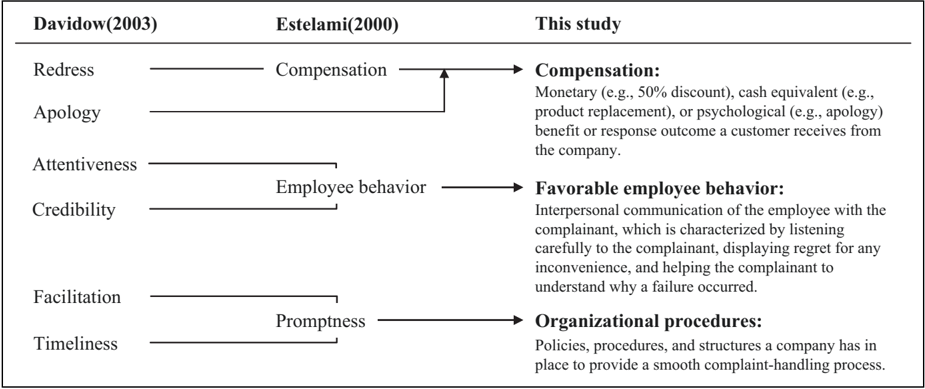
“The primary management responses include apology, explanation, compensation, attentiveness, facilitation, and timeliness (Davidow, 2003; Gelbrich & Roschk, 2011; Piehler et al., 2019).”
Alhouti, S., Hall, K. K. L., & Baker, T. L. (2024) · Journal of Services Marketing · doi:10.1108/jsm-11-2023-0409 · Cited by 10
Clerck, B. D., Decock, S., Vandenberghe, J., & Seghers, M. (2019) · English Text Construction · doi:10.1075/etc.00020.cle · Cited by 9
The role of switching cost in the e-service recovery framework among banking customers
Jose, A., Mathew, S., Rejikumar, G., Chacko, D. P., & Thomas, A. K. (2021) · International Journal of Quality and Service Sciences · doi:10.1108/ijqss-11-2020-0172 · Cited by 15
Effectiveness of offline and online rewards in restoring satisfaction and trust
Tahir, Z. (2021) · Spanish Journal of Marketing - ESIC · doi:10.1108/sjme-07-2021-0143 · Cited by 17
The sales recovery audit: Learning to walk the talk
Gonzalez, G. R., Hoffman, K. D., & Ingram, T. N. (2013) · Industrial Marketing Management · doi:10.1016/j.indmarman.2013.08.004 · Cited by 9
IS incident recovery and service value: a service-dominant logic view
Najjar, M. S., Kettinger, W. J., & Kettinger, L. D. (2021) · European Journal of Information Systems · doi:10.1080/0960085x.2020.1869915 · Cited by 11
“…perceptional alignment or misalignment on IS service quality factors (Benlian, 2013), relational factors (Sun et al., 2012), perceived fairness and quality of interactions, or trust over time (e.g., Ballentyne & Varey, 2006; Gelbrich & Roschk, 2011; Samaha et al., 2011; Zhao et al., 2012).”
BackgroundInterpersonal Strategies in E-Complaint Refusals: Textbook Advice Versus Actual Situated Practice
Decock, S., Clerck, B. D., & Herck, R. E. V. (2020) · Business and Professional Communication Quarterly · doi:10.1177/2329490620904952 · Cited by 9
The influx of skeptics: an investigation of the diffusion cycle effect on online review
Kim, R. Y. (2020) · Electronic Markets · doi:10.1007/s12525-020-00417-4 · Cited by 7
“Previous findings suggest strategies to deal with customer complaints such as timely management responses or using certain tones of voice (Gelbrich and Roschk 2011), however, limited attention has been given to study why customers post negative reviews and understand the customer-level drivers of…”
BackgroundAdzhigalieva, Z., Hurriyati, R., & Hendrayati, H. (2022) · Advances in economics, business and management research/Advances in Economics, Business and Management Research · doi:10.2991/aebmr.k.220701.055 · Cited by 23
“Figure 2: Meta-analytic framework for post-complaint behavior [15] and Landon's (1977) Classification of Consumer Complaint Behavior [11] Advances in Economics, Business and Management Research, volume 657”
MethodHow Culture Moderates the Effects of Justice in Service Recovery
Chebat, É.-R., Roth, Y., & Chebat, J. (2020) · Review of Marketing Science · doi:10.1515/roms-2019-0043 · Cited by 12
Greve, M., Masuch, K., & Trang, S. T.-N. (2020) · doi:10.30844/wi_2020_l2-greve · Cited by 8
“apology) assigns the same way, because it can be understood as a subset of compensation [33].”
BackgroundCustomer Satisfaction Perpetuates Loyalty: A Case Study
Arumugam, N., Subramaniam, A. L. B., Mylvaganam, G., & Singh, K. (2020) · International Journal of Academic Research in Business and Social Sciences · doi:10.6007/ijarbss/v10-i12/8282 · Cited by 7
“Gelbrich and Roschk (2011) also reported that cumulative satisfaction, which is the primary antecedent of customer loyalty, is a critical aspect in interactional justice.”
BackgroundThe Perceived Threats from Migrants and their Effects on Government Service Equality
Maher, A. A., Aljafari, A. M., & Maher, A. (2017) · Journal of Global Marketing · doi:10.1080/08911762.2017.1279701 · Cited by 8
“It is also important because consumers’ perceptions about equity in service delivery are strongly associated with their level of satisfaction (Oliver & Swan, 1989; Szymanski & Hnard, 2001; Smith, Bolton, & Wanger, 1999; Gelbrich & Roschk, 2010; Maxham & Netemeyer, 2002).”
BackgroundUsage of Social Media Systems in Customer Service Strategies
Rossmann, A., Wilke, T., & Stei, G. (2017) · Hawaii International Conference on System Sciences (HICSS) · doi:10.24251/hicss.2017.477 · Cited by 9
“Customers who perceive the organizational response to a complaint as relatively fairly distributed, tend to be more satisfied [14, 23] and this relation is indicated as EG3 in Figure 1.”
BackgroundResultInfluentialSengupta, S., Rokonuzzaman, M., Jaiswal, A., & Filieri, R. (2025) · Journal of Business Research · doi:10.1016/j.jbusres.2025.115245 · Cited by 10
Consumer Complaints Management in the Digital Era
Bayır, T., & Bozyiğit, S. (2023) · Advances in e-business research series · doi:10.4018/979-8-3693-0428-0.ch003 · Cited by 5
Manu, C., & Sreejesh, S. (2024) · Journal of Retailing and Consumer Services · doi:10.1016/j.jretconser.2024.104017 · Cited by 9
Muhammad, M., Suleiman, W., Mamun, M. A. A., Jewel, R. M., & Mozumder, M. A. S. (2025) · Cogent Business & Management · doi:10.1080/23311975.2025.2450297 · Cited by 21
“…authority figures. employee perceptions of fairness comprise factors influenced by employers’ decisions across various aspects, as highlighted by gelbrich & Roschk (2020). these decisions shape procedural and distributive justice within organizations. luo (2019) stated that interactional…”
Fan, A., Hoof, H. B. V., Loyola, S. P., Lituma, N. S. C., & Granda, M. J. (2016) · European journal of tourism, hospitality and recreation · doi:10.1515/ejthr-2016-0003 · Cited by 7
“…have been well studied and documented in the service literature (e.g., Day et al., 1981; Singh, 1988, 1990a, 1990b; Bodey and Grace, 2006; Lin and Mattila, 2006; Mattila and Ro, 2008; Mattila, Cho, and Ro, 2009; Gelbrich and Roschk, 2010; Wan, Hui, and Wye, 2011;Vaerenbergh et al., 2014).”
UNDERSTANDING THE VIABILITY OF CLOUD SERVICES: A CONSUMER PERSPECTIVE
Trenz, M., & Huntgeburth, J. (2014) · MADOC (University of Mannheim) · Cited by 6
An interactive service recovery framework combining demand and supply approaches
Jin, D., DiPietro, R. B., Kim, K., Meng, F., & Torres, E. N. (2022) · International Journal of Hospitality Management · doi:10.1016/j.ijhm.2022.103413 · Cited by 8
Revealing the factors of re-patronage intention: true behavioral insights in hotel customers
Badar, S., & Waheed, A. (2022) · Journal of Hospitality and Tourism Insights · doi:10.1108/jhti-06-2022-0240 · Cited by 10
Virtually present others and their influence on complainants’ follow-ups and firm response
Rios, R. E., Riquelme, H. E., & Comai, A. (2023) · Journal of Services Marketing · doi:10.1108/jsm-08-2022-0276 · Cited by 6
Evaluating the Impact of Complaints on Firms’ Idiosyncratic Risk: The Roles of Valance and Channel
Zhan, B., Li, Y., Wei, C., Wu, C., & Ngai, E. W. T. (2024) · IEEE Transactions on Engineering Management · doi:10.1109/tem.2024.3485088 · Cited by 6
Exploring Customers’ Experiences of Service Co-Recovery
Tronvoll, B., & Edvardsson, B. (2019) · Service Science · doi:10.1287/serv.2019.0246 · Cited by 7
Kania, R., & Salsabila, H. N. (2023) · Journal of Marketing Innovation (JMI) · doi:10.35313/jmi.v3i1.51 · Cited by 11
Hall, K. K. L., Michel, E. J., Kepes, S., Qi, J., Weinzimmer, L. G., Wheeler, A. R., & Leon, M. R. (2023) · Journal of service management · doi:10.1108/josm-07-2022-0229 · Cited by 8
Australian Retail Banking Customers’ Perceptions of Time in A Service Recovery Process
Valenzuela, F.-R., & Cooksey, R. (2014) · Contemporary Management Research · doi:10.7903/cmr.11641 · Cited by 5
“…three elements on customer satisfaction and various behavioural outcomes (for example, Andaleeb, Huda, Akhtar, & Dilshad, 2012; Battaglia, et al. 2012; Blodget, et al., 1997; Casado, et al., 2011; Gelbrich & Roschk, 2011; Gustafsson, 2009; del Río-Lanza et al., 2009; and Sabharwal & Soch, 2011).”
Vermeidung von Kundenverlusten durch Beschwerdemanagement
Stauß, B. (2017) · Springer eBooks · doi:10.1007/978-3-658-13650-5_14 · Cited by 5
Service Recovery in The Australian Banking Industry
Valenzuela, F., Cooksey, R., Chandralal, L., & Hassan, R. (2013) · Contemporary Management Research · doi:10.7903/cmr.11370 · Cited by 8
“recovery efforts; for example, Gelbrich and Roschk (2011) empirically validated a path model depicting organizations responses (compensation, favorable employee behavior, and organizational procedures) positive influence justice perceptions”
BackgroundYue, Y., Zettna, N., Cheng, S., & Nguyen, H. (2023) · Journal of service management · doi:10.1108/josm-08-2022-0253 · Cited by 6
Developing Compelling Online Recovery Strategies: Implications for the Fashion Clothing Industry
Ayertey, S., & Ozuem, W. (2017) · Advances in marketing, customer relationship management, and e-services book series · doi:10.4018/978-1-5225-2697-1.ch013 · Cited by 4
Instruments of Business Relationship Management
Geiger, I., & Kleinaltenkamp, M. (2014) · Springer texts in business and economics · doi:10.1007/978-3-662-43856-5_7 · Cited by 6
Vicuña, J. C. A., & Jahanshahi, A. A. (2023) · IEEE Engineering Management Review · doi:10.1109/emr.2023.3338444 · Cited by 5
“CUS broadenstherangeofjudgment totheconsumers’accumulated experiencesandisdefinedasthe levelofperceptionofthecompany’s generalperformance[14],[25].”
BackgroundMethodInfluentialCan the Retailer’s ICT Enhance the Impact of Service Recovery Efforts on Customer Satisfaction?
Molina, M. E. R., Gardó, T. F., & Velázquez, B. M. (2019) · Journal of Relationship Marketing · doi:10.1080/15332667.2019.1705744 · Cited by 5
Building Fashion Customer Loyalty by Service Recovery and the Effect of Explanations on It
Ahn, S.-Y. (2011) · Journal of the Korean Society of Clothing and Textiles · doi:10.5850/jksct.2011.35.7.841 · Cited by 4
“이것은 업무특 정적 만족이 누적적인 특징을 갖는 전반적인 브랜드 만족에 영향을 준다는 연구(Cengiz et al., 2007; Jones & Suh, 2000)와는 일치한 결과이나, 전반적인 브랜드 만족에 대한 서비스 복구접점 만족의 영향력을 확인 – 849 – 하지 못했던 Gelbrich and Roschk(2011)의 연구와는 차이가 있다.”
InfluentialCONSUMER’S EVALUATION ABOUT SERVICE RECOVERY: THE ROLE OF SOCIAL COMPARISON
Bortoli, L. V., & dos Santos, C. P. (2017) · RAM. Revista de Administração Mackenzie · doi:10.1590/1678-69712017/administracao.v18n4p65-86 · Cited by 5
“Companies should focus on recovery efforts that have the greatest positive impact on customer responses (Gelbrich & Roschk, 2011; Rosch & Gelbrich, 2014; Smith et al., 1999).”
BackgroundMethodInfluentialWhen Consumers' Complaints Fall Into Public Domain: Negative e-WOM on Social Media
Langaro, D., Loureiro, S. M. C., & Soares, A. E. (2019) · Advances in marketing, customer relationship management, and e-services book series · doi:10.4018/978-1-5225-8575-6.ch008 · Cited by 5
Perceived justice and service recovery satisfaction in a post-transition economy
Gidaković, P., & Čater, B. (2021) · Journal of East European Management Studies · doi:10.5771/0949-6181-2021-1-10 · Cited by 12
Mazhar, M., Nadeem, M. A., Abbasi, H. A., Tariq, U., Jan, A., & Jaffar, R. A. H. (2022) · Business Management and Strategy · doi:10.5296/bms.v13i1.19521 · Cited by 6
Airline service failure and recovery :a conceptual and empirical analysis
Leow, S. (2015) · University of Salford Institutional Repository (University of Salford) · Cited by 13
Online Review Updating: Prevalence and Implications for Platforms and BusinessesPreprint
Pocchiari, M., Schoenmueller, V., & Dover, Y. (2023) · SSRN Electronic Journal · doi:10.2139/ssrn.4619949 · Cited by 4
Davidow, M. (2012) · The Journal of Consumer Satisfaction, Dissatisfaction & Complaining Behavior · Cited by 13
Metadata
- Authors
- Gelbrich, K., & Roschk, H.
- Affiliations
- Technische Universität Ilmenau (DE)
- Corresponding author
- Roschk, Holger
- Venue
- Journal of Service Research
- Publisher
- SAGE Publications
- Published
- 2010-12-03
- Volume
- 14
- Issue
- 1
- Pages
- 24-43
- ISSN
- 1094-6705 (ISSN-L)
- 1552-7379
- OpenAlex
- W2128616827
- Cited by
- 481
- References
- 82
- Citations by year
- 2026: 37 · 2025: 32 · 2024: 24 · 2023: 45 · 2022: 43 · 2021: 37 · 2020: 44 · 2019: 42 · 2018: 32 · 2017: 29 · 2016: 20 · 2015: 27 · 2014: 26 · 2013: 21 · 2012: 12
- FWCI
- 3.00
- Type
- journal article
- Language
- en
- Open access
- green
- uri.gbv.de
- Licence
- other-oa
- journals.sagepub.com/page/policies/text-and-data-mining-license (tdm)
- Locations
- Journal of Service Research (publishedVersion, public-domain)
- Common Library Network (Der Gemeinsame Bibliotheksverbund) (submittedVersion, other-oa)
- Topics
- Social Sciences › Business, Management and Accounting › Marketing › Customer Service Quality and Loyalty
- Social Sciences › Business, Management and Accounting › Marketing › Service and Product Innovation
- Social Sciences › Business, Management and Accounting › Organizational Behavior and Human Resource Management › Job Satisfaction and Organizational Behavior
- Keywords
- complaint handling, service recovery, distributive justice, interactional justice, procedural justice, customer loyalty, word of mouth, compensation, employee behavior, perceived justice, consumer behavioral intention, students as customers, service sector
About these checks
Registry, retraction, Cites and statistics results are computed, not judged, with one exception: a printed reference that no index lists is read once by a model before it counts as a citation error. Claims are extracted by a model and kept only when their quote appears verbatim in the text; each cited source is then checked, with a model’s help, for whether it says what the claim relies on. Those verdicts can be wrong — read the claim’s quote and the cited source before relying on one.
The claim verdicts this report counts are experimental: their accuracy is not yet measured.
A language model drew the claims from the paper on 2026-10-10, under version 3 of the claim definition (model deepseek-v4.1-flash, prompt extract-v3).
A second model labelled each claim on 2026-10-10 (model jev-1.13-20260917, definition revision gold-guideline-v0.2).
Cited sources are checked with a language model’s help (gpt-6-sol).
Statistics and arithmetic are recomputed, not judged.
Confidence bands are shown only for fields calibrated on our annotated test set. None is calibrated yet, so no band is shown.
What counts as a claim ›How we measure confidence ›How we check this ›
Are you an author, or do you see a problem with this page? Request a review
Data sources
Bibliographic data: Semantic Scholar, OpenAlex, Crossref.
Contains information from the Semantic Scholar Academic Graph Datasets, made available under the ODC Attribution License (ODC-BY 1.0).
Semantic Scholar’s data is described in: Kinney, R., et al. (2023). The Semantic Scholar Open Data Platform. arXiv:2301.10140.
