

Consequences of maternal postpartum depression: A systematic review of maternal and infant outcomes
Open accessThe DOI matches its Crossref record; 182 of the 184 references it cites were found in a registry or an index; 125 of the 392 sources its claims cite were checked for support.
Abstract
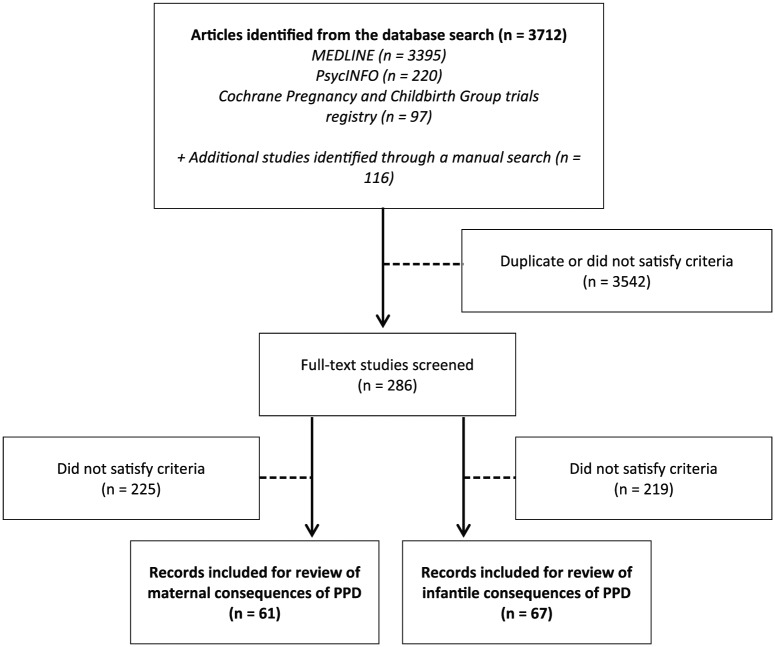
Introduction: The postpartum period represents the time of risk for the emergence of maternal postpartum depression. There are no systematic reviews of the overall maternal outcomes of maternal postpartum depression. The aim of this study was to evaluate both the infant and the maternal consequences of untreated maternal postpartum depression. Methods: We searched for studies published between 1 January 2005 and 17 August 2016, using the following databases: MEDLINE via Ovid, PsycINFO, and the Cochrane Pregnancy and Childbirth Group trials registry. Results: A total of 122 studies (out of 3712 references retrieved from bibliographic databases) were included in this systematic review. The results of the studies were synthetized into three categories: (a) the maternal consequences of postpartum depression, including physical health, psychological health, relationship, and risky behaviors; (b) the infant consequences of postpartum depression, including anthropometry, physical health, sleep, and motor, cognitive, language, emotional, social, and behavioral development; and (c) mother–child interactions, including bonding, breastfeeding, and the maternal role. Discussion: The results suggest that postpartum depression creates an environment that is not conducive to the personal development of mothers or the optimal development of a child. It therefore seems important to detect and treat depression during the postnatal period as early as possible to avoid harmful consequences.
Overview
CoChat Summary
TL;DR
This systematic review of 122 studies found that untreated maternal postpartum depression (PPD) is associated with negative maternal outcomes and adverse infant outcomes up to 3 years of age. The authors conclude that PPD creates an environment unfavorable to maternal personal development and optimal child development, supporting early detection and treatment.
Key findings
- The review included 122 eligible studies: 68 evaluated maternal consequences, 73 evaluated infant consequences, and 19 examined both. PPD prevalence across included studies ranged from 2.7% in Pakistani mothers at 18 months postpartum to 68.8% in Australian mothers at 4 months postpartum.
- Maternal PPD was linked to worse physical and psychological health, lower quality of life, relationship difficulties, and risky behaviors. For example, new-onset PPD was associated with more than double the risk of retaining at least 5 kg (OR = 2.54, 95% CI = 1.06, 6.09), and service women with PPD had higher odds of suicidality than service women without PPD (OR = 42.2, 95% CI = 28.8, 61.9).
- Infant consequences included anthropometric, health, sleep, motor, cognitive, language, emotional, social, and behavioral outcomes. Probable postnatal depression was associated with almost three times higher all-cause infant mortality up to 6 months (adjusted RR = 2.86, 95% CI = 1.58, 5.19) and almost two times higher mortality up to 12 months (adjusted RR = 1.88, 95% CI = 1.09, 3.24).
- Mother–child interactions were affected: 16 of 22 breastfeeding studies found significant negative effects of maternal depressive symptoms on breastfeeding and/or its parameters, and 11 studies showed a negative effect of maternal depression on mother-to-infant bonding.
Methods
- Systematic review following PRISMA to the extent possible; searched MEDLINE via Ovid, PsycINFO, and the Cochrane Pregnancy and Childbirth Group trials registry for studies published between 1 January 2005 and 17 August 2016, limited to human studies in English.
- Inclusion criteria were cohort, cross-sectional epidemiological, and qualitative individual studies; mothers of all ages with PPD; and health (physical or psychological) or social outcomes of PPD. Exclusion criteria were meta-analyses, systematic and nonsystematic reviews, randomized controlled trials, case studies, and studies including mothers who received treatment for PPD.
- From 3712 references retrieved, 122 studies were included. Outcomes were grouped into maternal consequences, infant consequences, and mother–child interactions, then thematically analyzed and synthesized narratively; adjusted results were used and discussed when available.
Limitations
- The authors state that study selection and data extraction were not performed using a double-blinded method, and no assessment of the studies’ methodological quality was performed.
- The authors state that the review compares heterogeneous studies using various designs (cohort vs cross-sectional) and tools to assess PPD, so potential confounding factors could be present.
- Evident from the text: PPD diagnosis and cut-off values varied widely across included studies (e.g., EPDS cut-offs of 8, 9, 10, 11, 12, 13, or 14), and the authors note that this heterogeneity makes outcomes difficult to compare.
Model-written summary. Check it against the paper before relying on it.
Integrity signals
Registry
Cites
Statistics
Figures
Verification
Claims the paper makes
103 Valid · 4 Not valid · 166 Not checked · 46 Own results and interpretations
Some cited sources support this claim and some don’t — read each source’s verdict below.
In the paper
“Two studies demonstrated that the triceps and subscapular skinfold thicknesses did not differ between infants of depressed and nondepressed mothers (one study was conducted in Belgium, Germany, Italy, Poland, and Spain;113 the other was from the United States112).”
§ Consequences of maternal postpartum depression: A systematic review of maternal and infant outcomes > Results > Infant consequences of PPD
What the sources say
- Supportedcites [113] Grote V Vik T von Kries R et al Maternal postnatal depression and child growth: a European cohort study. BMC Pediatr 2010; 10: 14. 20226021 PMC2850333 source
Table 2 (Results) reports triceps and subscapular skinfold measurements at 24 months for children of mothers with high and normal EPDS scores; the estimated differences have confidence intervals spanning zero. The Abstract’s Results state that the anthropometric indices did not differ between groups. (LLM, conf=0.94)
- Disputedcites [112] Ertel KA Koenen KC Rich-Edwards JW et al Antenatal and postpartum depressive symptoms are differentially associated with early childhood weight and adiposity. Paediatr Perinat Epidemiol 2010; 24(2): 179– 189. 20415775 PMC4106300 sourceExperimental — accuracy not yet measured
The Results report minimal difference in the combined skinfold measure (SS+TR) with antenatal depression, but higher SS+TR with postpartum depression (1.14 mm, 95% CI 0.11–2.18). Skinfolds were measured at age 3, not in infants. Thus the paper does not support the unqualified claim that skinfold thicknesses did not differ between the groups. (LLM, conf=0.86)
Checked by a reasoning model — may be wrong.
boosted- Asserted: passes — The authors put it forward as true.
- Checkable: passes — It can be checked against evidence.
- Load-bearing: unclear — It is unclear whether the paper’s conclusions depend on it.
- Based: passes — The paper gives a reason why it holds.
- Supported
At least one cited source doesn’t support this claim or points to a different paper, and none confirmed it — see the verdicts below.
In the paper
“The third study,94 conducted in Pakistan, showed that a child’s language development was affected by maternal PPD only when the father’s income was high.”
§ Consequences of maternal postpartum depression: A systematic review of maternal and infant outcomes > Results > Infant consequences of PPD
What the sources say
- Disputedcites [94] Ali NS Mahmud S Khan A et al Impact of postpartum anxiety and depression on child’s mental development from two peri-urban communities of Karachi, Pakistan: a quasi-experimental study. BMC Psychiatry 2013; 13: 274. 24148567 PMC3819469 sourceExperimental — accuracy not yet measured
The Results (Child language development, Table 4) report the opposite income pattern: children of depressed mothers had significantly higher odds of language delay when the father's income was below 3500 rupees/month. The Results also state that maternal depression had no significant impact on language development when his income was at least 3500 rupees/month. (LLM, conf=0.90)
Checked by a reasoning model — may be wrong.
plainstates a cause- Asserted: passes — The authors put it forward as true.
- Checkable: passes — It can be checked against evidence.
- Load-bearing: unclear — It is unclear whether the paper’s conclusions depend on it.
- Based: passes — The paper gives a reason why it holds.
- Disputed
Every source the paper cites for this claim was checked and supports it.
In the paper
“In multivariate logistic regression analyses, after adjustment for weight-related covariates, maternal sociodemographics, and parity, new-onset PPD was associated with more than double the risk of retaining at least 5 (OR = 2.54, 95% CI = 1.06, 6.09) kg.”
§ Consequences of maternal postpartum depression: A systematic review of maternal and infant outcomes > Results > Maternal consequences of PPD
What the sources say
- Supportedcites [67] Herring SJ Rich-Edwards JW Oken E et al Association of postpartum depression with weight retention 1 year after childbirth. Obesity 2008; 16(6): 1296– 1301. 18369338 PMC2761642 source
The Abstract reports that, after adjustment for weight-related covariates, maternal sociodemographics, and parity, new-onset postpartum depression was associated with retaining at least 5 kg at one year (OR 2.54, 95% CI 1.06–6.09). Table 2 in the discussion gives the same estimate for the fully adjusted model. (LLM, conf=0.95)
plainstates an association- Asserted: passes — The authors put it forward as true.
- Checkable: passes — It can be checked against evidence.
- Load-bearing: passes — The paper’s conclusions depend on it.
- Based: passes — The paper gives a reason why it holds.
- Supported
The cited sources support only part of this claim — read each source’s verdict below.
In the paper
“Other nonsystematic and systematic reviews have also explored specific maternal risks when mothers’ PPD is untreated, including more weight problems,18,19 alcohol and illicit drug use,20 social relationship problems,21 breastfeeding problems,22 or persistent depression23 compared with women who have received treatment.”
§ Consequences of maternal postpartum depression: A systematic review of maternal and infant outcomes > Introduction
What the sources say
- Partly supportedcites [18] Xiao RS Kroll-Desrosiers AR Goldberg RJ et al The impact of sleep, stress, and depression on postpartum weight retention: a systematic review. J Psychosom Res 2014; 77(5): 351– 358. 25306538 PMC4252881 sourceExperimental — accuracy not yet measured
The Results section (Postpartum depression; page unavailable) reports that some studies found an association between postpartum depression and weight retention, while others found no significant association. This supports the weight-problems portion linked to this citation, but the review does not compare untreated mothers with mothers who received treatment. The other listed risks are attached to other citations. (LLM, conf=0.87)
- Not checked — no full text of the sourcecites [19] Milgrom J Skouteris H Worotniuk T et al The association between ante- and postnatal depressive symptoms and obesity in both mother and child: a systematic review of the literature. Women’s Health Issues 2016; 22(3): e319– e328. 22341777 source
- Partly supportedcites [20] Chapman SLC Wu L-T. Postpartum substance use and depressive symptoms: a review. Women Health 2013; 53(5): 479– 503. 23879459 PMC3742364 sourceExperimental — accuracy not yet measured
Split into 2 atoms — 0 confirmed, 2 partially supported, 0 disputed, 0 misattributed, 0 unverifiable. Expand the claim to see per-atom verdicts.
- Partly supportedcites [21] Jones E Coast E. Social relationships and postpartum depression in South Asia: a systematic review. Int J Soc Psychiatry 2013; 59(7): 690– 700. 22851133 sourceExperimental — accuracy not yet measured
Split into 2 atoms — 0 confirmed, 2 partially supported, 0 disputed, 0 misattributed, 0 unverifiable. Expand the claim to see per-atom verdicts.
plainstates an association- Asserted: passes — The authors put it forward as true.
- Checkable: passes — It can be checked against evidence.
- Load-bearing: passes — The paper’s conclusions depend on it.
- Based: passes — The paper gives a reason why it holds.
- Partly supported
The cited sources support only part of this claim — read each source’s verdict below.
In the paper
“The two last studies evaluated postpartum weight retention (PPWR) and found that significantly more women with PPWR had higher scores on the PPD scale.35,67”
§ Consequences of maternal postpartum depression: A systematic review of maternal and infant outcomes > Results > Maternal consequences of PPD
What the sources say
- Not checked — no full text of the sourcecites [35] Biesmans K Franck E Ceulemans C et al Weight during the postpartum period: what can health care workers do. Matern Child Health J 2013; 17(6): 996– 1004. 22798141 source
- Partly supportedcites [67] Herring SJ Rich-Edwards JW Oken E et al Association of postpartum depression with weight retention 1 year after childbirth. Obesity 2008; 16(6): 1296– 1301. 18369338 PMC2761642 sourceExperimental — accuracy not yet measured
The Abstract and Discussion report a significant association between new-onset postpartum depression, defined by an EPDS score above 12, and retaining at least 5 kg one year after childbirth. They do not report that women with weight retention had higher EPDS scores overall; the significant finding is limited to new-onset postpartum depression, not antenatal depression or depression in both periods. The supplied copy gives no page numbers for these passages. (LLM, conf=0.86)
plainstates an association- Asserted: passes — The authors put it forward as true.
- Checkable: passes — It can be checked against evidence.
- Load-bearing: unclear — It is unclear whether the paper’s conclusions depend on it.
- Based: passes — The paper gives a reason why it holds.
214 more claims · 71 with their cited sources checked
Create a free account to see all 319 claims and to verify the 5 references still open.
- It may state two separate claims as one. 60
- Probably not a substantial claim. 42
- The quote only partly states this claim. 6
Claims other papers make about this one
Each is checked against this paper’s own text: does it say what the citing paper says it does?
The source backs part of the claim, not all of it — or backs it for a different population, condition or comparison.
In the citing paper
“Psychological distress among perinatal women correlates with increased maternal morbidity and mortality rates (Khalifa et al., 2016; Oates, 2003), poor infant health outcomes (Gelaye et al., 2016), and adverse early childhood developmental trajectories encompassing cognitive, emotional, and developmental delays (Slomian et al., 2019), making it a substantial public health concern.”
From Developing and validating the Sierra Leone perinatal psychological distress scale through an emic-etic approach (2025) · cites this paper as Slomian et al., 2019
Experimental — accuracy not yet measuredThe source backs part of the claim, not all of it — or backs it for a different population, condition or comparison.
In the citing paper
“This mental disorder has been shown to have negative effects on mothers' quality of life and their intimate relationships, birth outcomes, and breastfeeding likelihood, as well as long-term effects on children's cognitive and emotional development.”
From Perinatal Depression: Challenges and Opportunities (2021) · cites this paper as [25]
Experimental — accuracy not yet measuredThe cited source says what the claim attributes to it.
In the citing paper
“PPD may adversely impact mother-child bonding and contribute to adverse consequences for the infant, such as impaired cognitive, emotional, and motor development, or behavioral problems (Slomian et al., 2019).”
From PandaMom – Feasibility and acceptability of an internet- and mobile-based intervention to enhance peripartum mental well-being and to prevent postpartum depression (2024) · cites this paper as Slomian et al., 2019
The cited source says what the claim attributes to it.
In the citing paper
“Evidence shows that PPD is associated with overall poor maternal (O'Hara and McCabe, 2013; Gjerdingen and Yawn, 2007; Slomian et al., 2019) and infant health (Stein et al., 2014; Slomian et al., 2019; Hayes et al., 2013; Pawlby et al., 2009), even when the symptomatology is subclinical (Tronick and Reck, 2009; Weinberg et al., 2001).”
From App-based intervention for reducing depressive symptoms in postpartum women: Protocol for a feasibility randomized controlled trial (2023) · cites this paper as Slomian et al., 2019
The cited source says what the claim attributes to it.
In the citing paper
“PPD can have negative effects on maternal-infant bonding and interaction25; adaptation to the mothering role and confidence in providing infant care26; maternal quality of life and intimate relationships25; children's emotional, cognitive, and behavioral development27; and the father's mental health.28”
From Perinatal Depression: Challenges and Opportunities (2021) · cites this paper as [25]
1 more claim about this paper
Create a free account to see every claim other papers make about this one.
Statistics recomputed
Every reported test result, recomputed from its test statistic and degrees of freedom. A result shows as not adding up only once an independent check has confirmed it.
- Consistentχ²(2) = 6.47reported p < .05 · recomputed p = .039
“χ2(2) = 6.47, p < .05”
- Consistentχ²(1) = 5.44reported p < .025 · recomputed p = .020
“χ2(1) =5.44, p < .025”
- Consistentχ²(1) = 4.01reported p < .05 · recomputed p = .045
“χ2(1) = 4.01, p < .05”
Self-check
Percentages, sums and reported differences re-computed from the paper’s own numbers.
Each contradiction between two passages listed here was confirmed by an independent check.
Rated minor: it would not touch a result — a value no result rests on, a p-value that stays on the same side of the significance level, or a conflict that is clerical, resolved elsewhere in the paper, or outside its own findings.
In the paper
§ Consequences of maternal postpartum depression: A systematic review of maternal and infant outcomes > Results > Included studies
“The prevalence of PPD varied from 4.5% in a population of Canadian mothers at 6 weeks postpartum89 to 68.8% in a population of Australian mothers at 4 months postpartum.64”
§ Consequences of maternal postpartum depression: A systematic review of maternal and infant outcomes > Results > Maternal consequences of PPD
“Herring67 | USA Mean age: 33.0 ± 4.7 years Gender of newborns: not given | 850 | Cohort study 18 months Four groups: - None - Pregnancy only - Postpartum only - Pregnancy and postpartum | EPDS (Depressed = EPDS > 12) | 4%”
Rated minor: it would not touch a result — a value no result rests on, a p-value that stays on the same side of the significance level, or a conflict that is clerical, resolved elsewhere in the paper, or outside its own findings.
In the paper
§ Consequences of maternal postpartum depression: A systematic review of maternal and infant outcomes > Results > Infant consequences of PPD
“The third study,94 conducted in Pakistan, showed that a child’s language development was affected by maternal PPD only when the father’s income was high.”
§ Consequences of maternal postpartum depression: A systematic review of maternal and infant outcomes > Results > Infant consequences of PPD
“Among women whose husband’s income was ⩾3500 rupees/month, there was no significant impact of maternal depression on children’s language development. Children of depressed mothers whose husband’s income was <3500 rupees/month had more than a five-fold risk of delayed language development”
Rated minor: it would not touch a result — a value no result rests on, a p-value that stays on the same side of the significance level, or a conflict that is clerical, resolved elsewhere in the paper, or outside its own findings.
In the paper
§ Consequences of maternal postpartum depression: A systematic review of maternal and infant outcomes > Results > Included studies
“The majority of the studies were performed in the United States (28 of 68) and Europe (22 of 68), 10 studies were performed in Asia, and 8 studies were performed in Australia and New Zealand.”
§ Consequences of maternal postpartum depression: A systematic review of maternal and infant outcomes > Results > Maternal consequences of PPD
“Faisal-Cury38 | Brazil Mean age: 25 years Gender of newborns: not given | 644”
Rated minor: it would not touch a result — a value no result rests on, a p-value that stays on the same side of the significance level, or a conflict that is clerical, resolved elsewhere in the paper, or outside its own findings.
In the paper
§ Consequences of maternal postpartum depression: A systematic review of maternal and infant outcomes > Results > Included studies
“The number of participants ranged from 1593 to 22,118,28”
§ Consequences of maternal postpartum depression: A systematic review of maternal and infant outcomes > Results > Maternal consequences of PPD
“Do33 | USA Mean age: not given Gender of newborns: not given | 178,714 | Cohort study 6 years”
Rated minor: it would not touch a result — a value no result rests on, a p-value that stays on the same side of the significance level, or a conflict that is clerical, resolved elsewhere in the paper, or outside its own findings.
In the paper
§ Consequences of maternal postpartum depression: A systematic review of maternal and infant outcomes > Results > Mother–child interactions
“nondepressed mothers showed right-sided cradling, similar to nonstressed mothers.”
§ Consequences of maternal postpartum depression: A systematic review of maternal and infant outcomes > Results > Mother–child interactions
“The results indicated that 86% of mothers who were neither stressed nor depressed cradled to the left, and 14% cradled to the right.”
3 more findings
Create a free account to see every finding of this check.
Citations
Cites
Diagnostic and Statistical Manual of Mental Disorders
American Psychiatric Association (2013) · doi:10.1176/appi.books.9780890425596 · Cited by 116,369
Preferred Reporting Items for Systematic Reviews and Meta-Analyses: the PRISMA statement
Moher, D., Liberati, A., Tetzlaff, J., Altman, D. G., & for the PRISMA Group (2009) · BMJ · doi:10.1136/bmj.b2535 · Cited by 83,823
Preferred Reporting Items for Systematic Reviews and Meta-Analyses: The PRISMA Statement
Moher, D., Liberati, A., Tetzlaff, J., Altman, D. G., & The PRISMA Group (2009) · PLoS Medicine · doi:10.1371/journal.pmed.1000097 · Cited by 64,042
Wang, G., Ma, R., Qiao, G., Wada, K., Aizawa, Y., & Satoh, T. (2015) · Integrative Medicine International · doi:10.1159/000368408 · Cited by 18,657
Detection of Postnatal Depression: Development of the 10-item Edinburgh Postnatal Depression Scale
Cox, J. L., Holden, J. M., & Sagovsky, R. (1987) · British Journal of Psychiatry · doi:10.1192/bjp.150.6.782 · Cited by 14,183
Perinatal Depression: A Systematic Review of Prevalence and Incidence
Gavin, N. I., Gaynes, B. N., Lohr, K. N., Meltzer-Brody, S., Gartlehner, G., & Swinson, T. (2005) · Obstetrics & Gynecology · doi:10.1097/01.aog.0000183597.31630.db · Cited by 3,282
Offspring of Depressed Parents: 20 Years Later
Weissman, M. M., Wickramaratne, P., Nomura, Y., Warner, V., Pilowsky, D., & Verdeli, H. (2006) · American Journal of Psychiatry · doi:10.1176/ajp.2006.163.6.1001 · Cited by 1,059
Perinatal mental illness: Definition, description and aetiology
O'Hara, M. W., & Wisner, K. L. (2014) · Best Practice & Research Clinical Obstetrics & Gynaecology · doi:10.1016/j.bpobgyn.2013.09.002 · Cited by 986
Screening for depression during pregnancy with the edinburgh depression scale (EDDS)
Murray, D., & Cox, J. L. (1990) · Journal of Reproductive and Infant Psychology · doi:10.1080/02646839008403615 · Cited by 973
Magnitude and risk factors for postpartum symptoms: A literature review
Norhayati, M. N., Nik Hazlina, N. H., Asrenee, A. R., & Wan Emilin, W. M. A. (2015) · Journal of Affective Disorders · doi:10.1016/j.jad.2014.12.041 · Cited by 816
Research works printed but not linked: 4
- Friedman DD. 4-month infant vocal quality in mother-infant face-to-face interaction: 6-week maternal postpartum depressive symptomatology and infant gender. PhD Thesis, New York University, New York, 2005.
- Kalita KN. Developmental profile of infants born to mothers with postpartum depression and anxiety: a comparative study. J Indian Assoc Child Adolesc Ment Health 2009; 6(1): 3– 12.
- Razurel C. Comment l’éducation dispensée par les professionnels peut-elle influencer le sentiment de compétence parentale chez les mères primipares? Rouen: Université de Rouen, 2010.
- Williams TM Joy LA Travis L et al Transition to motherhood: a longitudinal study. Infant Ment Health J 1987; 8(3): 251– 265. · DOI · Paper page
Cited by
Items 1,401–1,500 of 1,517
Abualia, K., Cediel-Ulloa, A., Allsopp, P. J., Augustine, A. A., Bergquist, J., Bornehag, C., Bröberg, K., Caporale, N., Comasco, E., di Bernardo, D., et al. (2026) · Frontiers in Psychiatry · doi:10.3389/fpsyt.2026.1738584
Christensen, D. D., Sheehan, D. V., Monson, M. A., & Christensen, R. D. (2025) · Open Journal of Obstetrics and Gynecology · doi:10.4236/ojog.2025.153035
Gomez, H. (2022) · Dominican Scholar (Dominican University of California) · doi:10.33015/dominican.edu/2022.nurs.st.18 · Cited by 1
The effect of mandala coloring on postpartum blues: a randomized controlled trial
Dutucu, N., Kırca, A. Ş., & Dağlı, E. (2026) · BMC Pregnancy and Childbirth · doi:10.1186/s12884-026-09184-0
“A systematic review highlights that postpartum depression negatively impacts maternal personal development and creates an environment that is not conducive to the child’s optimal development [40].”
Persepsi dan Pengetahuan Ibu Hamil Tentang Depresi Post Partum di Kota Tangerang Selatan
Ariasih, R. A., Sabilla, M., & Purnamawati, D. (2023) · Jurnal Semesta Sehat (J-Mestahat) · doi:10.58185/j-mestahat.v3i1.101 · Cited by 6
“Dampak terhadap bayi adalah mengganggu keterikatan antara ibu dan bayi sehingga tidak terurus dan diabaikan yang mengakibatkan gangguan dalam kelangsungan hidup dan perkembangan bayi (Abdollahi et al., 2017; Slomian et al., 2019).”
BackgroundThe effect of maternal depression symptoms on the outcomes of infant care
Güler, S., & Akcan, A. (2020) · Perspectives In Psychiatric Care · doi:10.1111/ppc.12667
Li, Y., Qiao, B., Li, B., Wang, B., Jiang, H., & Liu, Y. (2024) · Research Square · doi:10.21203/rs.3.rs-3935395/v1
Eriso, M., Jifar, M. S., Bubamo, B. F., Agafari, G. B., Tumiso, H., Bogale, E. K., Getahun, G. K., & Agide, F. D. (2026) · Health Science Reports · doi:10.1002/hsr2.72321
Doncarli, A., Araujo-Chaveron, L., Crenn‐Hébert, C., et al. (2022) · medRxiv · doi:10.1101/2022.07.14.22277634
O USO DA INTELIGÊNCIA EMOCIONAL NOS PROCESSOS DE GESTÃO E ASSISTÊNCIA EM ENFERMAGEM
Demartini, H., & Telles, A. (2023) · Editora Inovar eBooks · doi:10.36926/editorainovar-978-65-5388-153-2_011
(2000) · Time to knit · doi:10.1016/j.ccol.2020.12.038
Tennor, M., Gioia, D., Anderson, J., Stephens, S., Lane, W. G., & Satchell, S. (2023) · Social Work in Mental Health · doi:10.1080/15332985.2023.2282929
“PPD can lead to negative outcomes for both mothers and children (Slomian, Honvo, Emonts, Reginster, & Bruyère, 2019).”
BackgroundPatient perspectives on barriers to rTMS for peripartum depression
Al-Shamali, H. F., Dong, R., Jackson, M., Burback, L., Wong, G., Cao, B., Li, X.-M., Greenshaw, A. J., & Zhang, Y. (2026) · BMC Psychiatry · doi:10.1186/s12888-026-08234-3 · Cited by 1
Nunes, M. S. Á., Ichisato, S. M. T., Silva, B. S. M., et al. (2024) · Acta Paulista de Enfermagem · doi:10.37689/acta-ape/2024ao000027744
“(7,8) Furthermore, depression during pregnancy is strongly associated to postpartum depression.”
BackgroundPostpartum depression: challenges in diagnosis and destigmatization
Kashchenko, S. A., Arutyunyan, A. A., Shakhnidaryan, S. R., Popkova, A. N., Kotova, A. A., & Fomina, N. S. (2026) · S S Korsakov Journal of Neurology and Psychiatry · doi:10.17116/jnevro202612605129
LING, Y., Arifin, S. R. M., Lee, S. P., & Zain, S. H. M. (2026) · Research Square · doi:10.21203/rs.3.rs-8572741/v1
Associations between anemia and postpartum depression among Arab Bedouin women
Alfayumi‐Zeadna, S., Ghalion, H. A., Azbarga, Z., & Daoud, N. (2026) · BMC Pregnancy and Childbirth · doi:10.1186/s12884-026-09998-y
“PPD can have serious implications for maternal mental health, mother-child bonding, and child development [3].”
The Role of Midwives in Maternal Mental Health in the First 1000 Years of Life
Aulia, D., Sembiring, E. F., Djaguna, N., Wardhana, M. P., Jayanti, R. D., & Azizah, N. (2023) · Jurnal Kebidanan Midwiferia · doi:10.21070/midwiferia.v8i2.1662 · Cited by 2
Self-Compassion Pada Ibu Dengan Postpartum Depression: Kajian Literatur
Amalia, S., Kurniawati, D., & Rahmawati, I. (2023) · Alauddin Scientific Journal of Nursing · doi:10.24252/asjn.v5i1.40174 · Cited by 3
“Di sisi lain, ibu dengan PPD cenderung mempunyai pemikiran negatif, seperti pikiran berulang mengenai kematian dan bunuh diri, serta terlibat perilaku berisiko tinggi, seperti konsumsi alkohol dan penyalahgunaan zat (Slomian et al., 2019).”
Backgrounddel Castillo, R. P. (2025) · Sociedad e Infancias · doi:10.5209/soci.103870 · Cited by 1
John, G., & Lofi, P. E. L. (2026) · International Journal of Scientific Reports · doi:10.18203/issn.2454-2156.intjscirep20261491
Morin, É., Séguin, J. R., Parent, S., Herba, C. M., Dubois, L., Muckle, G., Boivin, M., Fraser, W. D., & Ryan, N. C. (2026) · Maternal Health Neonatology and Perinatology · doi:10.1186/s40748-026-00279-2 · Cited by 1
“Notably, PPD has been associated with poorer parenting strategies, such as those characterized by low self-efficacy, less healthy practices, less closeness, warmth and sensitivity [8].”
Edwards-Benton, K. (2023) · doi:10.28971/442023ek117
Scaling the collaborative care model in obstetrics: Multilevel determinants to guide implementation
Turco, A., Chu, A., Feinberg, E., Ward, L. G., Elwy, A. R., & Miller, E. S. (2026) · Pregnancy · doi:10.1002/pmf2.70356
“Effects of untreated PMADs on children last well past infancy, extending into adulthood, and include decreased school performance, insecure attachment styles, and poor psychological and behavioral outcomes [12–14].”
Abedin, F., Das, M., Bishayi, A., Saha, P., Husna, A., Haque, S., Rana, S. S., Sudesh, R., & Ahmad, F. (2026) · Archives of Women s Mental Health · doi:10.1007/s00737-026-01753-8
“This is a serious issue as smoking and depression share a bidirectional relationship with tremendous consequences for psychological, social and physical health (Roelands et al. 2009 ; Slomian et al. 2019).”
Kukreti, P., Ransing, R., Raghuveer, P., Mahadevaiah, M., Deshpande, S. N., Triptish Bhatia, A., Puri, M., Pemde, H., Vallamkonda, O. R., Patil, I., et al. (2026) · Indian Journal of Psychiatry · doi:10.4103/indianjpsychiatry_712_24 · Cited by 1
“P intervention and TAU group [Table 3].”
Junaid, K. P., Sen, A., Kumar, P. S., Pillai, R. S., Antony, S., & Aswathy, P. V. (2026) · Women & Health · doi:10.1080/03630242.2026.2626757 · Cited by 2
“PPD also exerts a detrimental impact on infants’ emotional, cognitive, motor and neural functioning and development and disrupts mother–child interaction (Slomian et al. 2019).”
Lye, M. S., Ibrahim, N., Abdollahi, F., & Tey, Y.-Y. (2021) · Elsevier eBooks · doi:10.1016/b978-0-12-817933-8.00005-0 · Cited by 2
Massae, A., Svanberg, A., Larsson, M., Pembe, A., Leshabari, S., & Mbekenga, C. (2021) · Research Square · doi:10.21203/rs.3.rs-124294/v1 · Cited by 1
Hwang, T., Reminick, A. M., Clark, A., Hammel, M., Early, J., & Nguyen, T. (2021) · General Hospital Psychiatry · doi:10.1016/j.genhosppsych.2021.08.009
Moreira, H., Dias, T., Mourão, D., & Radoš, S. N. (2026) · Journal of Reproductive and Infant Psychology · doi:10.1080/02646838.2026.2655222
Heck, J. L., Jones, E. J., Parker, J. G., Jennings, A., Pierce, R., & Mitra, S. (2024) · Journal of Obstetric, Gynecologic & Neonatal Nursing · doi:10.1016/j.jogn.2024.04.005 · Cited by 1
Terada, S., Morita, A., Isumi, A., Ugajin, C., Khin, Y. P., Shakagori, S., & Fujiwara, T. (2026) · International Journal of Gynecology & Obstetrics · doi:10.1002/ijgo.71063 · Cited by 1
Genco, M., GÜMGÜMCÜ, H., Göçer, E., Çopuroğlu, M., Ünlü, C., & Genco, M. (2026) · The Journal of Maternal-Fetal & Neonatal Medicine · doi:10.1080/14767058.2026.2700141
Perinatal Neuropsychiatric Disorders
Nielsen, A. M., Stika, C. S., & Wisner, K. L. (2024) · Elsevier eBooks · doi:10.1016/b978-0-323-95702-1.00161-5
Sun, K.-A., & Moon, J. (2024) · Healthcare · doi:10.3390/healthcare12141424
“Many studies have been conducted on depression, due to its seriousness [18–20], and researchers have shown that depression is caused by diverse factors [20,21].”
BackgroundHidayah, N., Sari, T. P., & Dewi, W. P. (2022) · JOURNAL OF SEXUAL AND REPRODUCTIVE HEALTH SCIENCES · doi:10.26753/jsrhs.v1i2.786
Prevalence and predictors of postpartum depression among women attending clinics in Gaborone
Mannathoko, A. M., Molebatsi, K., & Mbuka, D. O. (2025) · South African Journal of Psychiatry · doi:10.4102/sajpsychiatry.v31i0.2373 · Cited by 2
“A systematic review by Slomian and colleagues 19 states that PPD is associated with negative effects on maternal physical and psychological health, quality of life, and ability to bond and interact with their infant, partner and relatives.”
Unseen Afterbirth: Exploring the Consequences of Peripartum Depression
Roy, P., & Momin, M. W. (2026) · Current Medical Issues · doi:10.4103/cmi.cmi_125_25 · Cited by 1
Liu, C.-Y., Ystrøm, E., & McAdams, T. A. (2022) · medRxiv · doi:10.1101/2022.05.31.22275818
“associated with well managed PND [26], we hypothesized that SSRI treatment can bring”
BackgroundResultPeripartum Depression in Europe: Knowledge, Gaps, and Implications
Christoforou, A., & Ganho-Ávila, A. (2026) · Springer eBooks · doi:10.1007/978-3-030-68127-2_877-1
Akdi, N., & Yurtsever, C. (2026) · Journal of Health Psychology · doi:10.1177/13591053261458613
Necho, M., Shegaw, M., Anbesaw, T., Birru, N., Ayano, G., Tsehay, M., Getnet, W., Yimer, S., Belete, A., Zenebe, Y., et al. (2026) · PLoS ONE · doi:10.1371/journal.pone.0347570
“PND, encompassing both antenatal (during pregnancy) and postpartum periods, significantly impacts maternal and offspring well-being [10–13].”
PUERPÉRIO E TRANSTORNOS PSICOLÓGICOS ASSOCIADOS: DO BABY BLUES À DEPRESSÃO PÓS-PARTO
Silva, K. S., Santos, C. M. R., de Jesus, L. P. A., de Oliveira, R. L., Ribeiro, R. O., Goes, M. S., Fernandes, M. L., DIAS, R. J., Medeiros, T. A. D. S., & Andriola, V. P. (2023) · Editora Inovar eBooks · doi:10.36926/editorainovar-978-65-5388-153-2_014
Liddell, J. L., Holman, C., Garnsey, A., Carlson, T. A., Piskolich, E., & Glover, A. (2025) · Women s Reproductive Health · doi:10.1080/23293691.2025.2547782
Claridge, A. M., & Beeson, T. (2024) · Women s Health Issues · doi:10.1016/j.whi.2024.09.005
EFFECTS OF MATERNAL DEPRESSION ON CHILD LANGUAGE DEVELOPMENT
Gonçalves, V. P. M., Cardilli-Dias, D., & Molini-Avejonas, D. R. (2023) · International Journal of Health Science · doi:10.22533/at.ed.1593523200110
Chen, M., Hongfang, C., Ying, J., & Zhou, J. (2026) · Research Square · doi:10.21203/rs.3.rs-9975368/v1
Psychoza poporodowa i depresja poporodowa – trudny start w rodzicielskiej roli
Paleczna, M. (2024) · Acta Universitatis Lodziensis Folia Psychologica · doi:10.18778/1427-969x.24.05 · Cited by 1
Punamäki, R., Diab, S. Y., Drossos, K., & Quota, S. R. (2025) · Infant Mental Health Journal · doi:10.1002/imhj.70036
Suetsugu, Y., Michikawa, T., Morokuma, S., Hamada, N., Kikuchi, K., Ikeda, S., Shimada, Y., Kato, K., Ochiai, M., Tsuji, M., et al. (2026) · BMC Pregnancy and Childbirth · doi:10.1186/s12884-026-09154-6
Public Programs for Children Impact Parents: Evidence from Medicaid ExpansionsPreprint
Tello‐Trillo, S., Willage, B., & Grossman, D. S. (2024) · SSRN Electronic Journal · doi:10.2139/ssrn.4860132
AS INFEÇÕES DE HIV NA MULHER: UM ESTUDO ECOLÓGICO
Oliveira, G. N., da Silva, J. R. A. M., Silva, Á. B. A. A. E., Simões, L. C., Barroso, R. P. D. M., Jucá, M. N. P., dos Santos, A. P. D. C., Bertini, A. D. H., Martins, G. M. A., & da Silva, J. N. (2023) · Editora Inovar eBooks · doi:10.36926/editorainovar-978-65-5388-153-2_006
da Silva, L. C. C., Machado, V. N. D. A., Pires, C. D. J., Honorato, P. E. O., de Sousa, A. L. A. F., Silva, K. D., Machado, V. L. R., & Santos, A. V. D. B. (2023) · Editora Inovar eBooks · doi:10.36926/editorainovar-978-65-5388-153-2_007
Maurya, S., Sarungbam, A., Banerjee, D., Tripathi, S., Kumar, S., Mishra, S., & Gupta, V. (2026) · International Journal of Community Medicine and Public Health · doi:10.18203/2394-6040.ijcmph20260058 · Cited by 2
Associations Between New Mothers’ Neural Reward Response and Perceptions of Their Own Infant
Hill, K. E., Garon‐Bissonnette, J., Greene, M. N., Cárdenas, E. F., Jackson, M., Pegg, S. L., Humphreys, K. L., & Kujawa, A. (2026) · Developmental Psychobiology · doi:10.1002/dev.70164
Nuevos fármacos para la depresión posparto
Fontanet, A. A., Salinas, N. E., & Asenjo, J. P. (2025) · FMC - Formación Médica Continuada en Atención Primaria · doi:10.1016/j.fmc.2024.04.008
A review of the application of digital phenotyping in predicting peripartum depressive symptoms
Kovacs, B. Z., Schweitzer, S., Papadopoulos, F. C., Bauer, A., Skalkidou, A., & Tu, H. (2026) · npj Digital Medicine · doi:10.1038/s41746-026-02653-y · Cited by 1
Opportunistic postpartum depression symptom screening at well-child clinics in Alberta, 2012–2016
McPhail, J., Loitz, C. C., Zaychkowsky, C., Valeroso, G., McNeil, D. A., McDonald, S., & Edwards, S. A. (2021) · Canadian Journal of Public Health · doi:10.17269/s41997-021-00521-8 · Cited by 1
“Untreated PPD can lead to many negative developmental, well-being, and health outcomes for the mother, child, and other family members (Slomian et al., 2019).”
BackgroundSeiferth, C., Henning, C., Vogel, L., Opitz, A., Schoemann, N., Löchner, J., Deliens, T., & Wolstein, J. (2025) · doi:10.2196/preprints.77632
Lv, F., Li, S. X., Yuan, X., Ma, Y., Huang, T., Xie, J., Feng, B., Zheng, J., Feng, J., & Mo, J. (2026) · Frontiers in Psychiatry · doi:10.3389/fpsyt.2026.1888858
“PPD imposes substantial burdens on healthcare systems, economies, and family well-being (4, 5).”
Peral-Cabrera, B., Pardo-Cebrián, R., & Serrador-Diez, C. (2026) · Journal of the American Psychiatric Nurses Association · doi:10.1177/10783903251415537 · Cited by 1
“…have pointed out that PPD is widely underdiag-nosed (Amer et al., 2024; Glavin & Leahy-Warren, 2013; Lasheras et al., 2014) due to the lack of homogeneous criteria for detection (Glavin & Leahy-Warren, 2013; Slomian et al., 2019) and insufficient screening, which is only performed in 40% of cases.”
Pettman, D., O’Mahen, H., Blomberg, O., Svanberg, A. S., von Essen, L., & Woodford, J. (2024) · Figshare · doi:10.6084/m9.figshare.26578829
Dwarakanath, M., Hossain, F., Balascio, P., Moore, M. C., Hill, A. V., & Genna, N. M. D. (2024) · Figshare · doi:10.6084/m9.figshare.26614888
Dwarakanath, M., Hossain, F., Balascio, P., Moore, M. C., Hill, A. V., & Genna, N. M. D. (2024) · Figshare · doi:10.6084/m9.figshare.26614822
Pettman, D., O’Mahen, H., Blomberg, O., Svanberg, A. S., von Essen, L., & Woodford, J. (2024) · Figshare · doi:10.6084/m9.figshare.26578853
Pettman, D., O’Mahen, H., Blomberg, O., Svanberg, A. S., von Essen, L., & Woodford, J. (2024) · Figshare · doi:10.6084/m9.figshare.26578841
Dwarakanath, M., Hossain, F., Balascio, P., Moore, M. C., Hill, A. V., & Genna, N. M. D. (2024) · Figshare · doi:10.6084/m9.figshare.26614858
Pettman, D., O’Mahen, H., Blomberg, O., Svanberg, A. S., von Essen, L., & Woodford, J. (2024) · Figshare · doi:10.6084/m9.figshare.26578814
Pettman, D., O’Mahen, H., Blomberg, O., Svanberg, A. S., von Essen, L., & Woodford, J. (2024) · Figshare · doi:10.6084/m9.figshare.26578835
Dwarakanath, M., Hossain, F., Balascio, P., Moore, M. C., Hill, A. V., & Genna, N. M. D. (2024) · Figshare · doi:10.6084/m9.figshare.26614825
Reyes, B. D., Hargreaves, D. S., & Creese, H. (2021) · Figshare · doi:10.6084/m9.figshare.16960399
Pettman, D., O’Mahen, H., Blomberg, O., Svanberg, A. S., von Essen, L., & Woodford, J. (2024) · Figshare · doi:10.6084/m9.figshare.26578811
Dwarakanath, M., Hossain, F., Balascio, P., Moore, M. C., Hill, A. V., & Genna, N. M. D. (2024) · Figshare · doi:10.6084/m9.figshare.26614891
Dwarakanath, M., Hossain, F., Balascio, P., Moore, M. C., Hill, A. V., & Genna, N. M. D. (2024) · Figshare · doi:10.6084/m9.figshare.26614864
Pettman, D., O’Mahen, H., Blomberg, O., Svanberg, A. S., von Essen, L., & Woodford, J. (2024) · Figshare · doi:10.6084/m9.figshare.26578817
Dwarakanath, M., Hossain, F., Balascio, P., Moore, M. C., Hill, A. V., & Genna, N. M. D. (2024) · Figshare · doi:10.6084/m9.figshare.26614843
Dwarakanath, M., Hossain, F., Balascio, P., Moore, M. C., Hill, A. V., & Genna, N. M. D. (2024) · Figshare · doi:10.6084/m9.figshare.26614831
Dwarakanath, M., Hossain, F., Balascio, P., Moore, M. C., Hill, A. V., & Genna, N. M. D. (2024) · Figshare · doi:10.6084/m9.figshare.26614885
Pettman, D., O’Mahen, H., Blomberg, O., Svanberg, A. S., von Essen, L., & Woodford, J. (2024) · Figshare · doi:10.6084/m9.figshare.26578820
Pettman, D., O’Mahen, H., Blomberg, O., Svanberg, A. S., von Essen, L., & Woodford, J. (2024) · Figshare · doi:10.6084/m9.figshare.26578844
Moya, E., Larson, L. M., Stewart, R. C., Fisher, J., Mwangi, M. N., & Phiri, K. S. (2022) · Figshare · doi:10.6084/m9.figshare.19844688
Dwarakanath, M., Hossain, F., Balascio, P., Moore, M. C., Hill, A. V., & Genna, N. M. D. (2024) · Figshare · doi:10.6084/m9.figshare.26614840
Dwarakanath, M., Hossain, F., Balascio, P., Moore, M. C., Hill, A. V., & Genna, N. M. D. (2024) · Figshare · doi:10.6084/m9.figshare.26614879
Pettman, D., O’Mahen, H., Blomberg, O., Svanberg, A. S., von Essen, L., & Woodford, J. (2024) · Figshare · doi:10.6084/m9.figshare.26578847
Pettman, D., O’Mahen, H., Blomberg, O., Svanberg, A. S., von Essen, L., & Woodford, J. (2024) · Figshare · doi:10.6084/m9.figshare.26578850
Dwarakanath, M., Hossain, F., Balascio, P., Moore, M. C., Hill, A. V., & Genna, N. M. D. (2024) · Figshare · doi:10.6084/m9.figshare.26614870
Dwarakanath, M., Hossain, F., Balascio, P., Moore, M. C., Hill, A. V., & Genna, N. M. D. (2024) · Figshare · doi:10.6084/m9.figshare.26614828
Dwarakanath, M., Hossain, F., Balascio, P., Moore, M. C., Hill, A. V., & Genna, N. M. D. (2024) · Figshare · doi:10.6084/m9.figshare.26614834
Dwarakanath, M., Hossain, F., Balascio, P., Moore, M. C., Hill, A. V., & Genna, N. M. D. (2024) · Figshare · doi:10.6084/m9.figshare.26614894
Dwarakanath, M., Hossain, F., Balascio, P., Moore, M. C., Hill, A. V., & Genna, N. M. D. (2024) · Figshare · doi:10.6084/m9.figshare.26614852
Dwarakanath, M., Hossain, F., Balascio, P., Moore, M. C., Hill, A. V., & Genna, N. M. D. (2024) · Figshare · doi:10.6084/m9.figshare.26614873
Pettman, D., O’Mahen, H., Blomberg, O., Svanberg, A. S., von Essen, L., & Woodford, J. (2024) · Figshare · doi:10.6084/m9.figshare.26578826
Pettman, D., O’Mahen, H., Blomberg, O., Svanberg, A. S., von Essen, L., & Woodford, J. (2024) · Figshare · doi:10.6084/m9.figshare.26578823
Dwarakanath, M., Hossain, F., Balascio, P., Moore, M. C., Hill, A. V., & Genna, N. M. D. (2024) · Figshare · doi:10.6084/m9.figshare.26614849
Dwarakanath, M., Hossain, F., Balascio, P., Moore, M. C., Hill, A. V., & Genna, N. M. D. (2024) · Figshare · doi:10.6084/m9.figshare.26614882
Dwarakanath, M., Hossain, F., Balascio, P., Moore, M. C., Hill, A. V., & Genna, N. M. D. (2024) · Figshare · doi:10.6084/m9.figshare.26614837
Metadata
- Authors
- Slomian, J., Honvo, G., Emonts, P., Reginster, J.-Y., & Bruyère, O.
- Affiliations
- University of Liège (BE)
- Centre Hospitalier Universitaire de Liège (BE)
- Corresponding author
- Slomian, Justine
- Venue
- Women's Health
- Publisher
- SAGE Publications
- Published
- 2019-01
- Volume
- 15
- Pages
- 1745506519844044-1745506519844044
- ISSN
- 1745-5057 (ISSN-L)
- 1745-5065
- PMC
- PMC6492376
- OpenAlex
- W2943494044
- Semantic Scholar
- ee946755bae03c5fb910a2191e2371c480ea04a3
- Cited by
- 1,496
- References
- 184
- Citations by year
- 2026: 183 · 2025: 275 · 2024: 320 · 2023: 272 · 2022: 219 · 2021: 152 · 2020: 64 · 2019: 10
- FWCI
- 18.19
- Type
- journal article
- Language
- en
- Update notices
- correction (2019-05-30)
- Open access
- gold
- doi.org
- Licence
- cc-by-nc
- journals.sagepub.com/page/policies/text-and-data-mining-license (tdm)
- Locations
- Women s Health (publishedVersion, cc-by-nc)
- Europe PMC (PubMed Central) (publishedVersion, cc-by-nc)
- PubMed Central (publishedVersion, cc-by-nc)
- PubMed (publishedVersion)
- DOAJ (DOAJ: Directory of Open Access Journals) (submittedVersion, cc-by-sa)
- ORBi (University of Liège) (submittedVersion)
- Topics
- Health Sciences › Medicine › Public Health, Environmental and Occupational Health › Maternal Mental Health During Pregnancy and Postpartum
- Health Sciences › Medicine › Pediatrics, Perinatology and Child Health › Maternal and Neonatal Healthcare
- Health Sciences › Medicine › Pediatrics, Perinatology and Child Health › Infant Health and Development
- Keywords
- postpartum depression, maternal outcomes, infant outcomes, mother-infant bonding, breastfeeding, maternal role, infant development, maternal physical health, maternal mental health, infant sleep
- MeSH terms
- Adult, Body Weights and Measures, Breast Feeding, Child Development, Cognition, Female, Health Status, Humans, Infant, Infant, Newborn, Language, Male, Mental Health, Mother-Child Relations, Quality of Life, Risk-Taking, Sleep, Women's Health, Depression, Postpartum
About these checks
Registry, retraction, Cites and statistics results are computed, not judged, with one exception: a printed reference that no index lists is read once by a model before it counts as a citation error. Claims are extracted by a model and kept only when their quote appears verbatim in the text; each cited source is then checked, with a model’s help, for whether it says what the claim relies on. Those verdicts can be wrong — read the claim’s quote and the cited source before relying on one.
The claim verdicts this report counts are experimental: their accuracy is not yet measured.
A language model drew the claims from the paper on 2026-10-05, under version 3 of the claim definition (model deepseek-v4.1-flash, prompt extract-v3).
A second model labelled each claim on 2026-10-05 (model jev-1.13-20260917, definition revision gold-guideline-v0.2).
Cited sources are checked with a language model’s help (gpt-6-sol).
Statistics and arithmetic are recomputed, not judged.
Confidence bands are shown only for fields calibrated on our annotated test set. None is calibrated yet, so no band is shown.
What counts as a claim ›How we measure confidence ›How we check this ›
Are you an author, or do you see a problem with this page? Request a review
Data sources
Bibliographic data: Semantic Scholar, OpenAlex, Crossref.
Contains information from the Semantic Scholar Academic Graph Datasets, made available under the ODC Attribution License (ODC-BY 1.0).
Semantic Scholar’s data is described in: Kinney, R., et al. (2023). The Semantic Scholar Open Data Platform. arXiv:2301.10140.
