

Skeletal muscle gene expression in response to resistance exercise: sex specific regulation
Open accessThe DOI matches its Crossref record; 60 of the 60 references it cites were found in a registry or an index.
Abstract
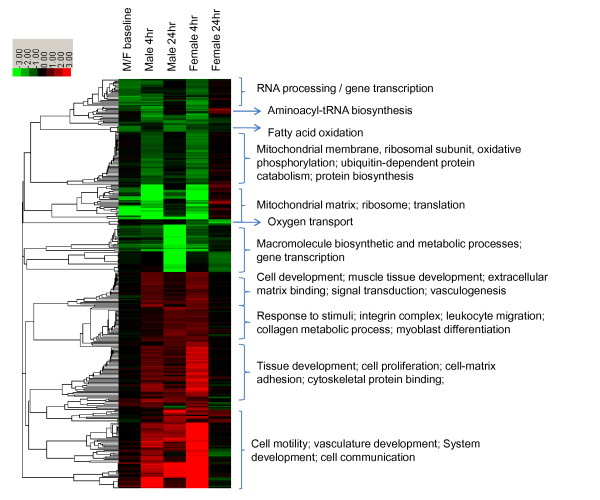
Background: The molecular mechanisms underlying the sex differences in human muscle morphology and function remain to be elucidated. The sex differences in the skeletal muscle transcriptome in both the resting state and following anabolic stimuli, such as resistance exercise (RE), might provide insight to the contributors of sexual dimorphism of muscle phenotypes. We used microarrays to profile the transcriptome of the biceps brachii of young men and women who underwent an acute unilateral RE session following 12 weeks of progressive training. Bilateral muscle biopsies were obtained either at an early (4 h post-exercise) or late recovery (24 h post-exercise) time point. Muscle transcription profiles were compared in the resting state between men (n = 6) and women (n = 8), and in response to acute RE in trained exercised vs. untrained non-exercised control muscle for each sex and time point separately (4 h post-exercise, n = 3 males, n = 4 females; 24 h post-exercise, n = 3 males, n = 4 females). A logistic regression-based method (LRpath), following Bayesian moderated t-statistic (IMBT), was used to test gene functional groups and biological pathways enriched with differentially expressed genes. Results: This investigation identified extensive sex differences present in the muscle transcriptome at baseline and following acute RE. In the resting state, female muscle had a greater transcript abundance of genes involved in fatty acid oxidation and gene transcription/translation processes. After strenuous RE at the same relative intensity, the time course of the transcriptional modulation was sex-dependent. Males experienced prolonged changes while females exhibited a rapid restoration. Most of the biological processes involved in the RE-induced transcriptional regulation were observed in both males and females, but sex specificity was suggested for several signaling pathways including activation of notch signaling and TGF-beta signaling in females. Sex differences in skeletal muscle transcriptional regulation might implicate a mechanism behind disproportional muscle growth in males as compared with female counterparts after RE training at the same relative intensity. Conclusions: Sex differences exist in skeletal muscle gene transcription both at rest and following acute RE, suggesting that sex is a significant modifier of the transcriptional regulation in skeletal muscle. The findings from the present study provide insight into the molecular mechanisms for sex differences in muscle phenotypes and for muscle transcriptional regulation associated with training adaptations to resistance exercise.
Overview
The claims and statistics of this paper haven’t been checked yet.
Free: it reads the open-access text and checks the first 5 claims that cite a source we can check. Create a free account to check every claim.
Integrity signals
Registry
Cites
Statistics
Figures
Verification
Claims the paper makes
The claims and statistics of this paper haven’t been checked yet.
Free: it reads the open-access text and checks the first 5 claims that cite a source we can check. Create a free account to check every claim.
Claims other papers make about this one
Each is checked against this paper’s own text: does it say what the citing paper says it does?
The check wasn’t confident either way, so it gives no verdict — never disputed.
In the citing paper
“Reports indicated similar protein abundance (177) and phosphorylation of ACCβ (177, 247, 248) in men and women after acute exercise.”
From Sex differences in the metabolism of glucose and fatty acids by adipose tissue and skeletal muscle in humans (2025) · cites this paper as [247]
Experimental — accuracy not yet measuredThe check wasn’t confident either way, so it gives no verdict — never disputed.
In the citing paper
“While some others noted skeletal muscle AMPK Thr172 phosphorylation and AMPK-α2 activity were greater in men than in women during exercise (177, 248), others noted similar phosphorylation responses of AMPK in men and women (247).”
From Sex differences in the metabolism of glucose and fatty acids by adipose tissue and skeletal muscle in humans (2025) · cites this paper as [247]
Experimental — accuracy not yet measured
Self-check
Percentages, sums and reported differences re-computed from the paper’s own numbers.
The self-check needs the paper’s full text.
Citations
Cites
Analysis of Relative Gene Expression Data Using Real-Time Quantitative PCR and the 2−ΔΔCT Method
Livak, K. J., & Schmittgen, T. D. (2001) · Methods · doi:10.1006/meth.2001.1262 · Cited by 180,860
Controlling the False Discovery Rate: A Practical and Powerful Approach to Multiple Testing
Benjamini, Y., & Hochberg, Y. (1995) · Journal of the Royal Statistical Society Series B: Statistical Methodology · doi:10.1111/j.2517-6161.1995.tb02031.x · Cited by 109,482 · cited 1×
“Multiple testing correction was done by using False Discovery Rates (FDR) approach [55], and significantly enriched concepts (GO or KEGG) were defined as having FDR < 0.”
MethodSubramanian, A., Tamayo, P., Mootha, V. K., Mukherjee, S., Ebert, B. L., Gillette, M. A., Paulovich, A., Pomeroy, S. L., Golub, T. R., Lander, E. S., et al. (2005) · Proceedings of the National Academy of Sciences · doi:10.1073/pnas.0506580102 · Cited by 53,625 · cited 2×
“Moreover, gene-based analysis does not perform as well as gene functional analysis in capturing the minor but concordant changes across multiple genes in a particular pathway, which biologically might be more important than a large fold change in any single gene [20].”
MethodGene Ontology: tool for the unification of biology
Ashburner, M., Ball, C. A., Blake, J. A., Botstein, D., Butler, H., Cherry, J. M., Davis, A. P., Dolinski, K., Dwight, S. S., Eppig, J. T., et al. (2000) · Nature Genetics · doi:10.1038/75556 · Cited by 43,206
KEGG: Kyoto Encyclopedia of Genes and Genomes
Kanehisa, M. (2000) · Nucleic Acids Research · doi:10.1093/nar/28.1.27 · Cited by 37,077 · cited 2×
“Enriched Gene Ontology (GO) terms [23] and Kyoto Encyclopaedia of Genes and Genomes (KEGG) pathways [24] were tested by a logistic regression-based method (LRpath), that allows the use of a paired statistical test and has been shown to perform well for experiments with small sample sizes [21].”
MethodKEGG: Kyoto Encyclopedia of Genes and Genomes
Ogata, H., Goto, S., Sato, K., Fujibuchi, W., Bono, H., & Kanehisa, M. (1999) · Nucleic Acids Research · doi:10.1093/nar/27.1.29 · Cited by 31,232
Statistical significance for genomewide studies
Storey, J. D., & Tibshirani, R. (2003) · Proceedings of the National Academy of Sciences · doi:10.1073/pnas.1530509100 · Cited by 9,692 · cited 1×
“FDR approach, as compared with the classic use of familywide error rate (FWER), is less stringent, but offers substantial gain in power especially when a large number of the non-true null hypotheses are expected [56].”
MethodBodine, S. C., Stitt, T. N., Gonzalez, M., Kline, W. O., Stover, G. L., Bauerlein, R., Zlotchenko, E., Scrimgeour, A., Lawrence, J. C., Glass, D. J., et al. (2001) · Nature Cell Biology · doi:10.1038/ncb1101-1014 · Cited by 2,752 · cited 1×
“The mTOR signaling pathway plays a crucial role in mediating muscle hypertrophy [46].”
BackgroundLaplante, M., & Sabatini, D. M. (2009) · Journal of Cell Science · doi:10.1242/jcs.051011 · Cited by 2,170 · cited 1×
“Several negative regulators have been identified including DNA-damage-inducible transcript 4 (DDIT4, also known as REDD1), DNAdamage-inducible transcript 4-like (DDIT4L, also known as REDD2), AKT1 substrate 1 (proline-rich) (AKT1S1, also known as PRAS40), and tuberous sclerosis 1 and 2 (TSC1/TSC2) [47].”
BackgroundGender differences in strength and muscle fiber characteristics
Miller, A. E. J., MacDougall, J. D., Tarnopolsky, M. A., & Sale, D. G. (1993) · European Journal of Applied Physiology and Occupational Physiology · doi:10.1007/bf00235103 · Cited by 1,094 · cited 2×
“Third, to reduce potential confounders, we chose to study biceps brachii instead of the more commonly used quadriceps because 1) sex differences in muscle phenotypes is greater for upper as compared to lower limb musculature[1]; 2) lifestyle influences on upper body are relatively small since lower body musculature pl…”
BackgroundMethod
Cited by
Sex differences in human fatigability: mechanisms and insight to physiological responses
Hunter, S. K. (2014) · Acta Physiologica · doi:10.1111/apha.12234 · Cited by 595
“The muscle fibre properties and morphology of men and women are due to sex-related differences in human skeletal muscle gene expression and an interaction with sex-specific hormones (Roth et al. 2002, Welle et al. 2008, Maher et al. 2009, Liu et al. 2010).”
BackgroundTranscriptomic profiling of skeletal muscle adaptations to exercise and inactivity
Pillon, N. J., Gabriel, B. M., Dollet, L., Smith, J. A. B., Sardón Puig, L., Botella, J., Bishop, D. J., Krook, A., & Zierath, J. R. (2020) · Nature Communications · doi:10.1038/s41467-019-13869-w · Cited by 457
Physical and Physiological Profiles of Taekwondo Athletes
Bridge, C. A., Ferreira da Silva Santos, J., Chaabène, H., Pieter, W., & Franchini, E. (2014) · Sports Medicine · doi:10.1007/s40279-014-0159-9 · Cited by 386
Lundsgaard, A.-M., & Kiens, B. (2014) · Frontiers in Endocrinology · doi:10.3389/fendo.2014.00195 · Cited by 289
Egan, B., & Sharples, A. P. (2023) · Physiological Reviews · doi:10.1152/physrev.00054.2021 · Cited by 278
Sex differences in resistance training: a systematic review and meta-analysis
Roberts, B. M., Nuckols, G., & Krieger, J. W. (2020) · Journal of Strength and Conditioning Research · doi:10.1519/jsc.0000000000003521 · Cited by 240
Rethinking Regenerative Medicine: A Macrophage-Centered Approach
Brown, B. N., Sicari, B. M., & Badylak, S. F. (2014) · Frontiers in Immunology · doi:10.3389/fimmu.2014.00510 · Cited by 187
Sex Differences in Human Performance
Hunter, S. K., & Senefeld, J. W. (2024) · The Journal of Physiology · doi:10.1113/jp284198 · Cited by 153
“…males and females are ultimately due to sex-related differences in human skeletal muscle gene expression and the interaction with sex-specific hormones and training status (Chapman et al., 2020; Landen et al., 2021; Liu et al., 2010; Maher et al., 2009; Roth et al., 2002; Welle et al., 2008).”
Landen, S., Hiam, D., Voisin, S., Jacques, M., Lamon, S., & Eynon, N. (2023) · The Journal of Physiology · doi:10.1113/jp279499 · Cited by 137
“Multiple studies (Welle et al. 2008; Maher et al. 2009; Liu et al. 2010; Lindholm et al. 2014; Gershoni & Pietrokovski, 2017; Chapman et al. 2020; Lopes-Ramos et al. 2020; Oliva et al. 2020) have analysed sex differences in the skeletal muscle transcriptome.”
BackgroundTurner, D. C., Seaborne, R. A., & Sharples, A. P. (2019) · Scientific Reports · doi:10.1038/s41598-019-40787-0 · Cited by 131
Time trajectories in the transcriptomic response to exercise - a meta-analysis
Amar, D., Lindholm, M. E., Norrbom, J., Wheeler, M. T., Rivas, M. A., & Ashley, E. A. (2021) · Nature Communications · doi:10.1038/s41467-021-23579-x · Cited by 108
Puig-Oliveras, A., Revilla, M., Castelló, A., Fernández, A. I., Folch, J. M., & Ballester, M. (2016) · Scientific Reports · doi:10.1038/srep31803 · Cited by 146
Amplification is the primary mode of gene-by-sex interaction in complex human traits
Zhu, C., Ming, M. J., Cole, J. M., Edge, M. D., Kirkpatrick, M., & Harpak, A. (2023) · Cell Genomics · doi:10.1016/j.xgen.2023.100297 · Cited by 108
Extrinsic and intrinsic control of macrophage inflammatory responses
Cohen, H. B., & Mosser, D. M. (2013) · Journal of Leukocyte Biology · doi:10.1189/jlb.0413236 · Cited by 102
“postinjury has been reported [25], as far as we are aware, the”
BackgroundResistance exercise training influences skeletal muscle immune activation: a microarray analysis
Gordon, P. M., Liu, D., Sartor, M. A., IglayReger, H. B., Pistilli, E. E., Gutmann, L., Nader, G. A., & Hoffman, E. P. (2012) · Journal of Applied Physiology · doi:10.1152/japplphysiol.00860.2011 · Cited by 100
“Microarray preparation and data processing were described in detail in a previous publication (22).”
BackgroundMethodResultInfluentialSelf-citationLindholm, M. E., Huss, M., Solnestam, B. W., Kjellqvist, S., Lundeberg, J., & Sundberg, C. J. (2014) · The FASEB Journal · doi:10.1096/fj.14-255000 · Cited by 94
(13376925), S. L., Hiam, D., Voisin, S. A. C., (13283841), M. J., Lamon, S., & (13308696), N. E. (2024) · Figshare · Cited by 85
Omics and Exercise: Global Approaches for Mapping Exercise Biological Networks
Hoffman, N. J. (2017) · Cold Spring Harbor Perspectives in Medicine · doi:10.1101/cshperspect.a029884 · Cited by 76
Genetic and epigenetic sex-specific adaptations to endurance exercise
Landen, S., Voisin, S., Craig, J. M., McGee, S. L., Lamon, S., & Eynon, N. (2019) · Epigenetics · doi:10.1080/15592294.2019.1603961 · Cited by 76
“[35] While the one study that compared genome-wide gene expression following 524 S.”
BackgroundResultEpigenetic changes in leukocytes after 8 weeks of resistance exercise training
Denham, J., Marques, F. Z., Bruns, E. L., O’Brien, B. J., & Charchar, F. J. (2016) · European Journal of Applied Physiology · doi:10.1007/s00421-016-3382-2 · Cited by 82
“Although the transcriptional responses to resistance training in skeletal muscle are well documented (Liu et al. 2010; Raue et al. 2012; Hulmi et al. 2009; Stepto et al. 2009), the impact of resistance training on leukocyte genomic changes is a relatively unexplored area that deserves attention.”
BackgroundProteomic responses of skeletal and cardiac muscle to exercise
Burniston, J. G., & Hoffman, E. P. (2011) · Expert Review of Proteomics · doi:10.1586/epr.11.17 · Cited by 79
“[7-9]).”
Self-citationStretch, C., Khan, S., Asgarian, N., Eisner, R., Vaisipour, S., Damaraju, S., Graham, K., Bathe, O. F., Steed, H. L., Greiner, R., et al. (2013) · PLoS ONE · doi:10.1371/journal.pone.0065380 · Cited by 77
“Later, several other groups studied samples from 6 to 15 subjects per sex on 45K arrays (Affimetrix) [2–4].”
BackgroundMurton, A. J., Billeter, R., Stephens, F. B., Des Etages, S. G., Graber, F., Hill, R. J., Marimuthu, K., & Greenhaff, P. L. (2014) · Journal of Applied Physiology · doi:10.1152/japplphysiol.00426.2013 · Cited by 61
“While the transcriptional changes that occur in response to chronic resistance exercise training have received significant attention (11, 15, 26), in the initial stages of training, where transcriptional changes are likely to be most pronounced and underpin the physiological adaptations that ultimately occur, the effe…”
BackgroundMethodMicroarray Analysis Reveals Novel Features of the Muscle Aging Process in Men and Women
Liu, D., Sartor, M. A., Nader, G. A., Pistilli, E. E., Tanton, L., Lilly, C., Gutmann, L., IglayReger, H. B., Visich, P. S., Hoffman, E. P., et al. (2013) · The Journals of Gerontology: Series A · doi:10.1093/gerona/glt015 · Cited by 58
Self-citationAge-Related DNA Methylation Changes: Potential Impact on Skeletal Muscle Aging in Humans
Gensous, N., Bacalini, M. G., Franceschi, C., Meskers, C. G. M., Maier, A. B., & Garagnani, P. (2019) · Frontiers in Physiology · doi:10.3389/fphys.2019.00996 · Cited by 59
Resistance Exercise, Aging, Disuse, and Muscle Protein Metabolism
McKendry, J., Stokes, T., Mcleod, J. C., & Phillips, S. M. (2021) · Comprehensive Physiology · doi:10.1002/cphy.c200029 · Cited by 54
“In general, genes that are acutely downregulated by RT are primarily involved in energy metabolism (i.e., mitochondrial structure and function) (151, 188), whereas upregulated genes are involved in PI3K signaling, nuclear respiratory factor 2 (NRF2)- mediated oxidative stress signaling, and…”
Molecular Transducers of Human Skeletal Muscle Remodeling under Different Loading States
Stokes, T., Timmons, J. A., Crossland, H., Tripp, T. R., Murphy, K., McGlory, C., Mitchell, C. J., Oikawa, S. Y., Morton, R. W., Phillips, B. E., et al. (2020) · Cell Reports · doi:10.1016/j.celrep.2020.107980 · Cited by 52
“Women have shown, compared to men, a differing abundance of genes involved in fatty acid oxidation (Liu et al., 2010); perhaps this is of limited concern, given that in a large (n = 178) analysis of muscle sex differences in physiologically matched subjects, only 200 genes are differentially expressed (>1.”
BackgroundImmune adaptation to chronic intense exercise training: new microarray evidence
Liu, D., Wang, R., Grant, A. R., Zhang, J., Gordon, P. M., Wei, Y., & Chen, P. (2017) · BMC Genomics · doi:10.1186/s12864-016-3388-5 · Cited by 60
Self-citationDamas, F., Ugrinowitsch, C., Libardi, C. A., Jannig, P. R., Hector, A. J., McGlory, C., Lixandrão, M. E., VECHIN, F. C., Montenegro, H., Tricoli, V., et al. (2018) · European Journal of Applied Physiology · doi:10.1007/s00421-018-3984-y · Cited by 56
Gordon, B. S., Steiner, J. L., Williamson, D. L., Lang, C. H., & Kimball, S. R. (2016) · American Journal of Physiology-Endocrinology and Metabolism · doi:10.1152/ajpendo.00059.2016 · Cited by 55
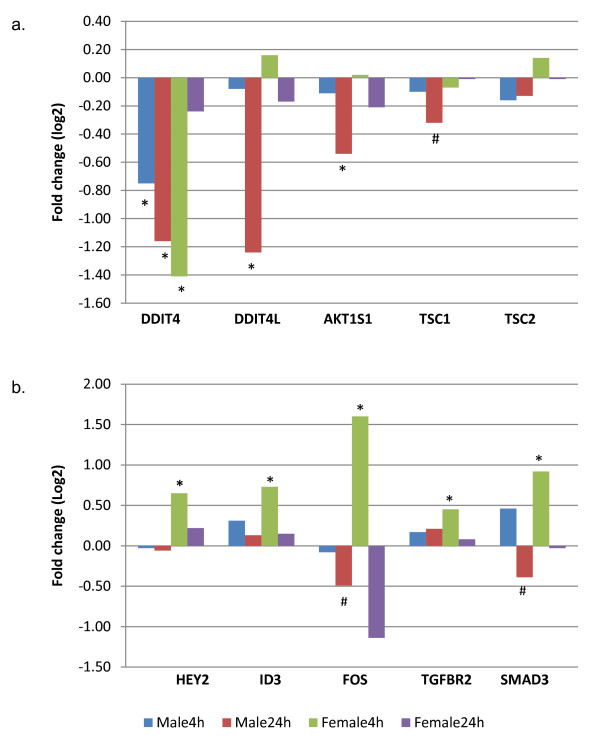
“For example, REDD2 mRNA was markedly decreased in the biceps brachii of young men 24 h after completion of resistance exercise; however, this decrease was observed only in males and not in females (75).”
BackgroundPérez-Schindler, J., Summermatter, S., Santos, G., Zorzato, F., & Handschin, C. (2013) · Proceedings of the National Academy of Sciences · doi:10.1073/pnas.1312039110 · Cited by 46
“Microarray analysis of human skeletal muscle has also revealed that resistance exercise does not increase the expression of genes involved in oxidative metabolism (38, 39).”
BackgroundKuang, J., McGinley, C., Lee, M. J.-C., Saner, N. J., Garnham, A., & Bishop, D. J. (2022) · PeerJ · doi:10.7717/peerj.12856 · Cited by 45
“However, relatively few studies have sampled muscle at multiple times post exercise or taken biopsies beyond the first 24 h (Andrade-Souza et al., 2020; Catoire et al., 2014; Gidlund et al., 2015; Granata et al., 2020; Hyldahl et al., 2015; Jensen et al., 2015; Lindholm et al., 2014; Liu et al., 2010; Mahoney et al.,…”
BackgroundGordon, B. S., Steiner, J. L., Lang, C. H., Jefferson, L. S., & Kimball, S. R. (2014) · American Journal of Physiology-Endocrinology and Metabolism · doi:10.1152/ajpendo.00250.2014 · Cited by 44
“Recently, it has been shown that REDD1 mRNA expression in skeletal muscle is repressed in humans following resistance exercise, suggesting a potential role for REDD1 in the exercise-induced stimulation of signaling through mTORC1 and subsequent rates of protein synthesis (21, 38).”
BackgroundResultInfluentialIntegration of signals generated by nutrients, hormones, and exercise in skeletal muscle
Kimball, S. R. (2013) · American Journal of Clinical Nutrition · doi:10.3945/ajcn.113.068387 · Cited by 56
Blocquiaux, S., Ramaekers, M., Thienen, R. V., Nielens, H., Delecluse, C., Bock, K. D., & Thomis, M. A. (2021) · JCSM Rapid Communications · doi:10.1002/rco2.52 · Cited by 44
O’Reilly, J., Ono‐Moore, K. D., Chintapalli, S. V., Rutkowsky, J. M., Tolentino, T., Lloyd, K. C. K., Olfert, I. M., & Adams, S. H. (2021) · Physiological Reports · doi:10.14814/phy2.15031 · Cited by 51
Refalo, M. C., Nuckols, G., Galpin, A. J., Gallagher, I. J., Hamilton, D. L., & Fyfe, J. J. (2025) · PeerJ · doi:10.7717/peerj.19042 · Cited by 61
“A previous meta-analysis compared muscle hypertrophy outcomes between young to middle-aged males and females [9] and found no statistically significant differences in pre-to post-intervention changes in muscle size; however, this meta-analysis did not differentiate absolute (i.e., raw change in…”
Criado‐Mesas, L., Ballester, M., Crespo‐Piazuelo, D., Castelló, A., Fernández, A. I., & Folch, J. M. (2020) · Scientific Reports · doi:10.1038/s41598-020-67015-4 · Cited by 49
Changes in Gene Expression in Responders and Nonresponders to a Low-Intensity Walking Intervention
Osler, M. E., Fritz, T., Caidahl, K., Krook, A., Zierath, J. R., & Wallberg-Henriksson, H. (2015) · Diabetes Care · doi:10.2337/dc14-2606 · Cited by 38
Taylor, D. F., & Bishop, D. J. (2022) · International Journal of Molecular Sciences · doi:10.3390/ijms23031517 · Cited by 42
Hayasaka, M., Tsunekawa, H., Yoshinaga, M., & Murakami, T. (2014) · Physiological Reports · doi:10.14814/phy2.12254 · Cited by 39
“Variable REDD1 responses to endurance exercise (Murakami et al. 2011), resistance exercise (Drummond et al. 2008; Liu et al. 2010), muscle contraction (Gordon et al. 2014), and/or muscle immobilization (Kelleher et al. 2013, 2014) emphasize the complexity of REDD1 in regulating muscle protein…”
BackgroundInfluentialLammert, J., Lubiński, J., Gronwald, J., Huzarski, T., Armel, S. R., Eisen, A. F., Meschino, W. S., Lynch, H. T., Snyder, C., Eng, C., et al. (2018) · Breast Cancer Research and Treatment · doi:10.1007/s10549-018-4694-1 · Cited by 41
“It is also plausible that physical activity-induced transcriptional changes may be mediating these downstream effects [30, 31].”
BackgroundCosta, D. N., Santosa, S., & Jensen, M. D. (2025) · Physiological Reviews · doi:10.1152/physrev.00008.2024 · Cited by 34
Peterson, M. P., Rosvall, K. A., Taylor, C. A., Lopez, J. A., Choi, J.-H., Ziegenfus, C., Tang, H., Colbourne, J. K., & Ketterson, E. D. (2013) · Journal of Experimental Biology · doi:10.1242/jeb.089813 · Cited by 35
Macrophages on the run: Exercise balances macrophage polarization for improved health
Voskoboynik, Y., McCulloch, A. D., & Sahoo, D. (2024) · Molecular Metabolism · doi:10.1016/j.molmet.2024.102058 · Cited by 33
Wu, Y., Collier, L., Qin, W., Creasey, G. H., Bauman, W. A., Jarvis, J. C., & Cardozo, C. P. (2013) · BMC Neuroscience · doi:10.1186/1471-2202-14-81 · Cited by 32
“Expression of a Notch-responsive gene, Hey2, was found to be increased in female rats at 4 and 24 hours after a bout of resistance exercise but was unaltered in male rats [15].”
BackgroundSex differences in forkhead box O3a signaling response to hindlimb unloading in rat soleus muscle
Yoshihara, T., Natsume, T., Tsuzuki, T., Chang, S.-W., Kakigi, R., Sugiura, T., & Naıto, H. (2018) · The Journal of Physiological Sciences · doi:10.1007/s12576-018-0640-6 · Cited by 33
Exercise Induces Different Molecular Responses in Trained and Untrained Human Muscle
Moberg, M., Lindholm, M. E., Reitzner, S. M., Ekblom, B. T., Sundberg, C. J., & Psilander, N. (2020) · Medicine & Science in Sports & Exercise · doi:10.1249/mss.0000000000002310 · Cited by 32
Cut-Off Values in the Prediction of Success in Olympic Distance Triathlon
Gadelha, A. B., Sousa, C. V., Sales, M. M., Rosa, T. D. S., Flothmann, M., Barbosa, L. P., Aguiar, S. D. S., Olher, R. R., Villiger, E., Nikolaidis, P. Τ., et al. (2020) · International Journal of Environmental Research and Public Health · doi:10.3390/ijerph17249491 · Cited by 26
“Due to sex-related gene expression and their interactions with sex hormones [32,33], the skeletal muscles of men are larger and may have a metabolically/functionally greater area of muscle fibers than women [34,35], leading to the aforementioned improved performance.”
BackgroundConsiderations for Sex-Cognizant Research in Exercise Biology and Medicine
O'Bryan, S. M., Connor, K. R., Drummer, D. J., Lavin, K. M., & Bamman, M. M. (2022) · Frontiers in Sports and Active Living · doi:10.3389/fspor.2022.903992 · Cited by 25
Shafiee, G., Asgari, Y., Soltani, A., Larijani, B. A., & Heshmat, R. (2018) · PeerJ · doi:10.7717/peerj.5239 · Cited by 29
“In previous studies, this tool has been used to research the impact of aging onmuscle mass (Liu et al., 2010; Welle, Tawil & Thornton, 2008).”
MethodNicoll, J. X., Fry, A. C., & Mosier, E. M. (2018) · Steroids · doi:10.1016/j.steroids.2018.11.004 · Cited by 28
“Furthermore, females also have higher protein content of enzymes related to betaoxidation in skeletal muscle [21] which could be related to higher rates of fat oxidation during aerobic exercise [20] In reference to resistance exercise, males display a prolonged gene expression following RE compared to females [22], bu…”
Effects of alcohol on skeletal muscle contractile performance in male and female mice
Laudato, J. A., Tice, A. L., Call, J. A., Gordon, B. S., & Steiner, J. L. (2021) · PLoS ONE · doi:10.1371/journal.pone.0255946 · Cited by 24
“Coinciding with these data are other findings at the transcriptional level showing that females have a greater ability to restore cellular homeostasis compared with men following resistance exercise [24].”
ResultKawarai, Y., Jang, S. H., Lee, S., Millecamps, M., Kang, H., Grégoire, S., Suzuki, M., Ohtori, S., & Stone, L. S. (2021) · The Spine Journal · doi:10.1016/j.spinee.2021.06.002 · Cited by 26
A primer on global molecular responses to exercise in skeletal muscle: Omics in focus
Murach, K. A., & Bagley, J. R. (2025) · Journal of sport and health science/Journal of Sport and Health Science · doi:10.1016/j.jshs.2025.101029 · Cited by 28
Honda, M., Tsuchimochi, H., Hitachi, K., & Ohno, S. (2019) · Journal of Cellular Physiology · doi:10.1002/jcp.28239 · Cited by 24
Sexual dimorphisms in skeletal muscle: current concepts and research horizons
Emmert, M. E., Emmert, A. S., Goh, Q., & Cornwall, R. (2024) · Journal of Applied Physiology · doi:10.1152/japplphysiol.00529.2023 · Cited by 26
Exercise-induced gene expression changes in skeletal muscle of old mice
Endo, Y., Zhang, Y., Olumi, S., Karvar, M., Argawal, S., Neppl, R. L., & Sinha, I. (2021) · Genomics · doi:10.1016/j.ygeno.2021.06.035 · Cited by 23
Wu, Z., Wang, Y., Ye, Z., Guan, Y., Ye, X., Chen, Z., Li, C., Chen, G., Zhu, Y., Du, J., et al. (2021) · Frontiers in Physiology · doi:10.3389/fphys.2021.718068 · Cited by 21
“…have a greater proportion of fast-type muscle fibers (Staron et al., 2000; Porter et al., 2002; Roepstorff et al., 2006), possibly due to sex differences in human skeletal muscle gene expression and the interaction of sex-specific hormones (Welle et al., 2008; Maher et al., 2009; Liu et al., 2010).”
BackgroundInfluentialProtein Turnover in Skeletal Muscle: Looking at Molecular Regulation towards an Active Lifestyle
Ferreira, R. P., & Duarte, J. A. (2023) · International Journal of Sports Medicine · doi:10.1055/a-2044-8277 · Cited by 28
“…session followed by 12 weeks of progressive training highlighted the activation of atrophic factors from the Notch pathway (e. g., the transcriptional repressors of Hey and Hes family members) in women, concomitantly with the hypertrophic effect of resistance exercise seen in both sexes [68].”
Sousa, C. V., Aguiar, S. D. S., Rosemann, T. J., Nikolaidis, P. Τ., & Knechtle, B. (2019) · International Journal of Environmental Research and Public Health · doi:10.3390/ijerph16132310 · Cited by 17
“The most likely explanation of the sex gap in sports is possibly due to different human skeletal muscle gene expression and their interaction with sex-specific hormones [5,6].”
BackgroundVECHIN, F. C., Libardi, C. A., Conceição, M. S., Damas, F., Cavaglieri, C. R., Chacon‐Mikahil, M. P. T., Coutinho, L. L., Andrade, S. C. S., Neves, M. T., Roschel, H., et al. (2018) · Applied Physiology, Nutrition, and Metabolism · doi:10.1139/apnm-2018-0146 · Cited by 19
Associating Gait Phase and Physical Fitness with Global Cognitive Function in the Aged
Noh, B., Youm, C., Lee, M., & Park, H. (2020) · International Journal of Environmental Research and Public Health · doi:10.3390/ijerph17134786 · Cited by 20
“have smaller skeletal muscles and a lower percentage of type II muscle fibers [36,37] because of sex-related differences in human skeletal muscle gene expression and interactions with sex-specific hormones [38,39].”
BackgroundTurner, D. C., Gorski, P. P., Seaborne, R. A. E., Viggars, M. R., Murphy, M., Jarvis, J. C., Martin, N. R. W., Stewart, C. E., & Sharples, A. P. (2021) · Journal of Cellular Physiology · doi:10.1002/jcp.30328 · Cited by 18
“Where, gene expression is typically greatest at 3–8 h post exercise (Barrès et al., 2012; Chen et al., 2002; Drummond et al., 2008; Knuiman et al., 2018; Kuang et al., 2020) and generally returns to basal levels within 24 h (Egan & Zierath, 2012; Liu et al., 2010; Yang et al., 2005).”
BackgroundPeterson, M. D., Liu, D., IglayReger, H. B., Saltarelli, W. A., Visich, P. S., & Gordon, P. M. (2012) · Cardiovascular Diabetology · doi:10.1186/1475-2840-11-146 · Cited by 22
“We have previously shown that sexualdimorphic differences indeed have a genetic underpinning [13] that likely also impacts cardiometabolic risk beginning in early phases of life.”
BackgroundSelf-citationChattopadhyay, S., Joharapurkar, A. A., Das, N., Khatoon, S., Kushwaha, S., Gurjar, A. A., Singh, A. K., Shree, S., Ahmed, M. Z., China, S. P., et al. (2021) · Molecular and Cellular Endocrinology · doi:10.1016/j.mce.2021.111525 · Cited by 16
Godwin, J. S., Sexton, C. L., Kontos, N. J., Ruple, B. A., Willoughby, D. S., Young, K. C., Mobley, C. B., & Roberts, M. D. (2023) · Journal of Applied Physiology · doi:10.1152/japplphysiol.00596.2022 · Cited by 18
Kusakabe, T., Arai, H., Yamamoto, Y., Nakao, K., Akamatsu, Y., Ishihara, Y., Tagami, T., Yasoda, A., & Satoh‐Asahara, N. (2023) · Nutrition · doi:10.1016/j.nut.2023.112265 · Cited by 19
Extensive differential gene expression and regulation by sex in human skeletal muscle
Hanks, S. C., Mauger, A. S., Varshney, A., Ciotlos, D. L., Manickam, N., Narisu, N., Shumway, A. J., Orchard, P., Erdos, M. R., Sweeney, M. D., et al. (2025) · Cell Genomics · doi:10.1016/j.xgen.2025.100915 · Cited by 16
Uninterrupted Sedentary Behavior Downregulates BRCA1 Gene Expression
Pettapiece-Phillips, R., Kotlyar, M., Chehade, R., Salmena, L., Narod, S. A., Akbari, M. R., Jurišica, I., & Kotsopoulos, J. (2016) · Cancer Prevention Research · doi:10.1158/1940-6207.capr-15-0291 · Cited by 19
Beiter, T., Zügel, M., Hudemann, J., Schild, M., Fragasso, A., Burgstahler, C., Krüger, K., Mooren, F. C., Steinacker, J. M., & Niess, A. M. (2024) · International Journal of Molecular Sciences · doi:10.3390/ijms25052881 · Cited by 20
A mini review: Proteomics approaches to understand disused vs. exercised human skeletal muscle
Cho, Y., & Ross, R. S. (2018) · Physiological Genomics · doi:10.1152/physiolgenomics.00043.2018 · Cited by 15
“To understand molecular pathways regulated by disuse and exercise, multi-omics approaches have been employed in the field, such as genomics, transcriptomics, metabolomics, and proteomics (39, 40, 53, 59, 61).”
Effects of Training Status and Exercise Mode on Global Gene Expression in Skeletal Muscle
Bizjak, D. A., Zügel, M., Treff, G., Winkert, K., Jerg, A., Hudemann, J., Mooren, F. C., Krüger, K., Niess, A. M., & Steinacker, J. M. (2021) · International Journal of Molecular Sciences · doi:10.3390/ijms222212578 · Cited by 17
“The optimal timing of biosampling/muscle biopsies in particular has to be elucidated for respective gene analysis, as each gene differs in its expression profile in response to different stimuli [13], and sex-specific adaptations also need to be considered [52].”
BackgroundA compendium of physical exercise-related human genes: an ’omic scale analysis
Pacheco, C., Felipe, S. M. D. S., Soares, M. M. D. D. C., Alves, J. O., Soares, P. M., Leal‐Cardoso, J. H., Loureiro, A. C. C., Ferraz, A. S. M., de Carvalho, D. P., & Ceccatto, V. M. (2017) · Biology of Sport · doi:10.5114/biolsport.2018.70746 · Cited by 14
“These proteins have been targets for extensive physical exercise and sports literature [4, 7, 9, 10].”
BackgroundInfluentialDivergent multiomic acute exercise responses reveal the impact of sex as a biological variable
Lavin, K. M., O’Bryan, S. M., Pathak, K. V., Garcia‐Mansfield, K., Graham, Z., McAdam, J. S., Drummer, D. J., Bell, M. B., Kelley, C. J., Lixandrão, M. E., et al. (2025) · Physiological Genomics · doi:10.1152/physiolgenomics.00055.2024 · Cited by 14
Du, S., Yu, Q., Chuan, K., Ye, C., He, Z., Liu, S., Zhu, X., & Liu, Y. (2017) · Journal of Applied Physiology · doi:10.1152/japplphysiol.00652.2016 · Cited by 13
Chambers, T. L., & Murach, K. A. (2025) · American Journal of Physiology-Cell Physiology · doi:10.1152/ajpcell.00968.2024 · Cited by 15
“Both sexes exhibit transcriptional regulation of some similar biological processes, but females may uniquely upregulate genes related to blood coagulation, insulin receptor binding, transforming growth factor-β signaling, and transcriptional activators (230).”
Reibe, S., Hjorth, M., Febbraio, M. A., & Whitham, M. (2018) · Physiological Genomics · doi:10.1152/physiolgenomics.00127.2017 · Cited by 11
Impacto do treinamento resistido na força e hipertrofia muscular em HIV-soropositivos
Brito, C. J., Mendes, E. L., Ferreira, A. P., de Paula, S. O., Nóbrega, O. D. T., & Córdova, C. (2013) · Motriz Revista de Educação Física · doi:10.1590/s1980-65742013000200009 · Cited by 24
Identifying gender independent biomarkers responsible for human muscle aging using microarray data
Sifakis, E. G., Valavanis, I. K., Papadodima, O., & Chatziioannou, A. A. (2013) · IEEE International Conference on Bioinformatics and Bioengineering (BIBE) · doi:10.1109/bibe.2013.6701530 · Cited by 9
Kusano, T., Sotani, Y., Takeda, R., Hatano, A., Kawata, K., Kano, R., Matsumoto, M., Kano, Y., & Hoshino, D. (2024) · The FASEB Journal · doi:10.1096/fj.202401420rr · Cited by 10
“Since biological sex and sex hormones impact skeletal muscle transcriptomic responses following acute resistance exercise 35 and its training 75 in humans, our results need to be validated in female rats in the future.”
Performance trends in Paralympic athletes in sprint, middle-distance and endurance events
de Macêdo, T. A., Aguiar, S. D. S., Sousa, C. V., Barbosa, L. P., Deus, L. A., Santos, P. A., Maciel, L. A., Nikolaidis, P. Τ., Knechtle, B., & Simões, H. G. (2020) · Sport Sciences for Health · doi:10.1007/s11332-020-00630-w · Cited by 9
Modeling exercise using optogenetically contractible Drosophila larvae
Ghosh, A. C., Hu, Y., Tattikota, S. G., Liu, Y., Comjean, A., & Perrimon, N. (2022) · BMC Genomics · doi:10.1186/s12864-022-08845-6 · Cited by 6
Shahidi, B., Anderson, B. J., Ordaz, A., Berry, D. B., Ruoss, S., Zlomislic, V., Allen, R. T., Garfin, S. R., Farshad, M., Schenk, S., et al. (2023) · JOR Spine · doi:10.1002/jsp2.1291 · Cited by 5
“The response of healthy uninjured skeletal muscle to resistance exercise has been described in both animal and human models, 15,36 across genders, 37 and over the spectrum of age.”
BackgroundYoshikawa, N., Oda, A., Yamazaki, H., Yamamoto, M., Souta-Kuribara, A., Uehara, M., & Tanaka, H. (2021) · Endocrine Research · doi:10.1080/07435800.2021.1884874 · Cited by 7
Luk, H., Jiwan, N. C., Appell, C. R., Vellers, H. L., Levitt, D. E., & Sekiguchi, Y. (2025) · The Journal of Physiology · doi:10.1113/jp288434 · Cited by 6
Salvador, P. C. D. N., Schäfer, L., Grassi, B., Guglielmo, L. G. A., & Denadai, B. S. (2019) · Frontiers in Physiology · doi:10.3389/fphys.2019.00471 · Cited by 8
REGULAÇÃO GÊNICA DA VIA AMPK PELO EXERCÍCIO FÍSICO: REVISÃO SISTEMÁTICA E ANÁLISE IN SILICO
Pacheco, C., dos Santos, L. H. P., Alves, J. O., de Queiroz, A. N., Soares, P. M., & Ceccatto, V. M. (2017) · Revista Brasileira de Medicina do Esporte · doi:10.1590/1517-869220172304169935 · Cited by 8
Proteomic and transcriptomic response of human skeletal muscle to 12-week resistance training
Lednev, E. M., Vepkhvadze, T. F., Smirnov, I. P., Sultanov, R., Zhelankin, A. V., Kanygina, A. V., Popov, D. V., & Generozov, E. V. (2024) · Genes and Cells · doi:10.17816/gc624325 · Cited by 3
Murakami, T. (2023) · Physiological Reports · doi:10.14814/phy2.15745 · Cited by 3
“…shown to increase the REDD1 mRNA and protein contents and decrease mTORC1 in rat skeletal muscle (Gordon et al., 2017; Hayasaka et al., 2014; Murakami et al., 2011), while resistance exercise has been reported to decrease REDD1 mRNA in human muscle (Drummond et al., 2008; Liu et al., 2010).”
BackgroundInfluentialYoshihara, T., Chang, S.-W., Tsuzuki, T., Natsume, T., Kakigi, R., Sugiura, T., & Naıto, H. (2019) · Journal of Physiology and Biochemistry · doi:10.1007/s13105-019-00712-5 · Cited by 3
Sahinis, C., Pavlidis, K., & Kellis, E. (2026) · European Journal of Applied Physiology · doi:10.1007/s00421-026-06223-8 · Cited by 2
“Sex-related differences in body size, muscle mor - phology, testosterone levels and vascular responses (Liu et al. 2010; Vingren et al. 2010; Green et al. 2016; Behan et al. 2018 ) could plausibly influence the magnitude or time course of post-exercise swelling.”
Boykin, J. R., Steiner, J. L., Laskin, G. R., Roberts, M. D., Vied, C., Willis, C. R. G., Etheridge, T., & Gordon, B. S. (2024) · American Journal of Physiology-Regulatory, Integrative and Comparative Physiology · doi:10.1152/ajpregu.00224.2024 · Cited by 3
Sex-Related Adaptation to Disuse-Induced Skeletal Muscle Wasting
Yoshihara, T. (2019) · Biomedical Journal of Scientific & Technical Research · doi:10.26717/bjstr.2019.14.002546 · Cited by 2
Identification of circulating protein biomarkers for pancreatic cancer cachexiaPreprint
Shahda, S., Narasimhan, A., Kays, J. K., Perkins, S. M., Cheng, L., Hannaford, K. N., Schloss, D. E. I., Koniaris, L. G., & Zimmers, T. A. (2018) · bioRxiv (Cold Spring Harbor Laboratory) · doi:10.1101/359661 · Cited by 2
“As age and sex were shown to significantly alter the expression patterns [16, 17], we have adjusted for age and”
MethodBridging the gap: multi-omic insights into exercise responses in postmenopausal women
Aiyanna, R. K., Wang, S., Grolaux, R., Reisman, E. G., Jones, B., & Eynon, N. (2026) · American Journal of Physiology-Endocrinology and Metabolism · doi:10.1152/ajpendo.00172.2026 · Cited by 1
Dreder, A., Tahir, M. A., Şeker, H., & Anwar, M. U. (2016) · International Journal on Bioinformatics & Biosciences · doi:10.5121/ijbb.2016.6201 · Cited by 1
Muscle genomics and aerobic training
Mina-Paz, Y., Ríos, D. C. Z., Matta, A. J., Rodríguez, A., & García‐Vallejo, F. (2021) · Journal of Human Sport and Exercise · doi:10.14198/jhse.2022.173.11 · Cited by 1
Bitencourt, J. C., Pereira, E. V., Gabriel, I. R., & de Farias, J. M. (2021) · Revista Brasileira de Atividade Física & Saúde · doi:10.12820/rbafs.26e0227 · Cited by 1
Computer Science & Information Technology ( CS & IT )
(2016) · doi:10.5121/csit.2016.60600 · Cited by 1
Metadata
- Authors
- Liu, D., Sartor, M. A., Nader, G. A., Gutmann, L., Treutelaar, M. K., Pistilli, E. E., IglayReger, H. B., Burant, C. F., Hoffman, E. P., & Gordon, P. M.
- Affiliations
- University of Michigan (US)
- Karolinska Institutet (SE)
- West Virginia University (US)
- University of Pennsylvania (US)
- Children's National (US)
- Corresponding author
- Gordon, Paul M
- ORCID
- Venue
- BMC Genomics
- Published
- 2010-11-24
- Volume
- 11
- Issue
- 1
- Pages
- 659-659
- ISSN
- 1471-2164 (ISSN-L)
- PMC
- PMC3091777
- OpenAlex
- W2147140735
- Cited by
- 122
- References
- 60
- Citations by year
- 2026: 6 · 2025: 9 · 2024: 8 · 2023: 8 · 2022: 9 · 2021: 17 · 2020: 9 · 2019: 10 · 2018: 9 · 2017: 5 · 2016: 6 · 2015: 3 · 2014: 9 · 2013: 10 · 2012: 2
- FWCI
- 1.83
- Type
- journal article
- Language
- en
- Open access
- gold
- doi.org
- Licence
- cc-by
- creativecommons.org/licenses/by/4.0 (tdm)
- creativecommons.org/licenses/by/4.0 (vor)
- Locations
- BMC Genomics (publishedVersion, cc-by)
- PubMed Central (publishedVersion, cc-by)
- PubMed (publishedVersion)
- Deep Blue (University of Michigan) (submittedVersion)
- The Research Repository @ WVU (West Virginia University) (submittedVersion, cc-by)
- DOAJ (DOAJ: Directory of Open Access Journals) (submittedVersion, cc-by-sa)
- Funders
- National Institutes of Health
- National Institute of Neurological Disorders and Stroke (R01NS040606, R01 NS 40606-01)
- National Center for Medical Rehabilitation Research
- Topics
- Life Sciences › Biochemistry, Genetics and Molecular Biology › Molecular Biology › Muscle Physiology and Disorders
- Health Sciences › Nursing › Nutrition and Dietetics › Muscle metabolism and nutrition
- Life Sciences › Biochemistry, Genetics and Molecular Biology › Genetics › Genetics and Physical Performance
- Keywords
- sex differences, skeletal muscle transcriptome, resistance training, biceps brachii, gene expression, muscle growth, fatty acid oxidation, Notch signaling, TGF-beta signaling, post-exercise recovery, training effects, sexual dimorphism
- MeSH terms
- Adult, Female, Gene Expression Regulation, Humans, Male, Organ Specificity, Rest, Sex Characteristics, Transcription, Genetic, Reproducibility of Results, Down-Regulation, Up-Regulation, Cluster Analysis, Muscle, Skeletal, Reverse Transcriptase Polymerase Chain Reaction, Gene Expression Profiling, Gene Regulatory Networks, Resistance Training, Young Adult
About these checks
Registry, retraction, Cites and statistics results are computed, not judged, with one exception: a printed reference that no index lists is read once by a model before it counts as a citation error. Claims are extracted by a model and kept only when their quote appears verbatim in the text; each cited source is then checked, with a model’s help, for whether it says what the claim relies on. Those verdicts can be wrong — read the claim’s quote and the cited source before relying on one.
Statistics and arithmetic are recomputed, not judged.
Confidence bands are shown only for fields calibrated on our annotated test set. None is calibrated yet, so no band is shown.
What counts as a claim ›How we measure confidence ›How we check this ›
Are you an author, or do you see a problem with this page? Request a review
Data sources
Bibliographic data: Semantic Scholar, OpenAlex, Crossref.
Contains information from the Semantic Scholar Academic Graph Datasets, made available under the ODC Attribution License (ODC-BY 1.0).
Semantic Scholar’s data is described in: Kinney, R., et al. (2023). The Semantic Scholar Open Data Platform. arXiv:2301.10140.
