

Skeletal muscle gene expression in response to resistance exercise: sex specific regulation
Open accessThe DOI matches its Crossref record; 60 of the 60 references it cites were found in a registry or an index.
Abstract
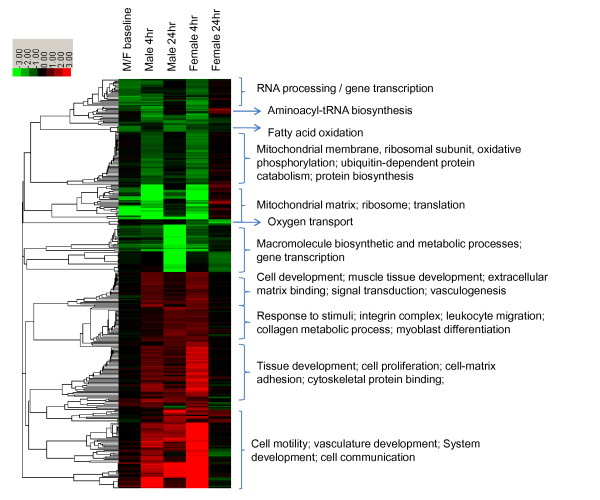
Background: The molecular mechanisms underlying the sex differences in human muscle morphology and function remain to be elucidated. The sex differences in the skeletal muscle transcriptome in both the resting state and following anabolic stimuli, such as resistance exercise (RE), might provide insight to the contributors of sexual dimorphism of muscle phenotypes. We used microarrays to profile the transcriptome of the biceps brachii of young men and women who underwent an acute unilateral RE session following 12 weeks of progressive training. Bilateral muscle biopsies were obtained either at an early (4 h post-exercise) or late recovery (24 h post-exercise) time point. Muscle transcription profiles were compared in the resting state between men (n = 6) and women (n = 8), and in response to acute RE in trained exercised vs. untrained non-exercised control muscle for each sex and time point separately (4 h post-exercise, n = 3 males, n = 4 females; 24 h post-exercise, n = 3 males, n = 4 females). A logistic regression-based method (LRpath), following Bayesian moderated t-statistic (IMBT), was used to test gene functional groups and biological pathways enriched with differentially expressed genes. Results: This investigation identified extensive sex differences present in the muscle transcriptome at baseline and following acute RE. In the resting state, female muscle had a greater transcript abundance of genes involved in fatty acid oxidation and gene transcription/translation processes. After strenuous RE at the same relative intensity, the time course of the transcriptional modulation was sex-dependent. Males experienced prolonged changes while females exhibited a rapid restoration. Most of the biological processes involved in the RE-induced transcriptional regulation were observed in both males and females, but sex specificity was suggested for several signaling pathways including activation of notch signaling and TGF-beta signaling in females. Sex differences in skeletal muscle transcriptional regulation might implicate a mechanism behind disproportional muscle growth in males as compared with female counterparts after RE training at the same relative intensity. Conclusions: Sex differences exist in skeletal muscle gene transcription both at rest and following acute RE, suggesting that sex is a significant modifier of the transcriptional regulation in skeletal muscle. The findings from the present study provide insight into the molecular mechanisms for sex differences in muscle phenotypes and for muscle transcriptional regulation associated with training adaptations to resistance exercise.
Overview
The claims and statistics of this paper haven’t been checked yet.
Free: it reads the open-access text and checks the first 5 claims that cite a source we can check. Create a free account to check every claim.
Integrity signals
Registry
Cites
Statistics
Figures
Verification
Claims the paper makes
The claims and statistics of this paper haven’t been checked yet.
Free: it reads the open-access text and checks the first 5 claims that cite a source we can check. Create a free account to check every claim.
Claims other papers make about this one
Each is checked against this paper’s own text: does it say what the citing paper says it does?
The check wasn’t confident either way, so it gives no verdict — never disputed.
In the citing paper
“Reports indicated similar protein abundance (177) and phosphorylation of ACCβ (177, 247, 248) in men and women after acute exercise.”
From Sex differences in the metabolism of glucose and fatty acids by adipose tissue and skeletal muscle in humans (2025) · cites this paper as [247]
Experimental — accuracy not yet measuredThe check wasn’t confident either way, so it gives no verdict — never disputed.
In the citing paper
“While some others noted skeletal muscle AMPK Thr172 phosphorylation and AMPK-α2 activity were greater in men than in women during exercise (177, 248), others noted similar phosphorylation responses of AMPK in men and women (247).”
From Sex differences in the metabolism of glucose and fatty acids by adipose tissue and skeletal muscle in humans (2025) · cites this paper as [247]
Experimental — accuracy not yet measured
Self-check
Percentages, sums and reported differences re-computed from the paper’s own numbers.
The self-check needs the paper’s full text.
Citations
Cites
Analysis of Relative Gene Expression Data Using Real-Time Quantitative PCR and the 2−ΔΔCT Method
Livak, K. J., & Schmittgen, T. D. (2001) · Methods · doi:10.1006/meth.2001.1262 · Cited by 180,860
Controlling the False Discovery Rate: A Practical and Powerful Approach to Multiple Testing
Benjamini, Y., & Hochberg, Y. (1995) · Journal of the Royal Statistical Society Series B: Statistical Methodology · doi:10.1111/j.2517-6161.1995.tb02031.x · Cited by 109,482 · cited 1×
“Multiple testing correction was done by using False Discovery Rates (FDR) approach [55], and significantly enriched concepts (GO or KEGG) were defined as having FDR < 0.”
MethodSubramanian, A., Tamayo, P., Mootha, V. K., Mukherjee, S., Ebert, B. L., Gillette, M. A., Paulovich, A., Pomeroy, S. L., Golub, T. R., Lander, E. S., et al. (2005) · Proceedings of the National Academy of Sciences · doi:10.1073/pnas.0506580102 · Cited by 53,625 · cited 2×
“Moreover, gene-based analysis does not perform as well as gene functional analysis in capturing the minor but concordant changes across multiple genes in a particular pathway, which biologically might be more important than a large fold change in any single gene [20].”
MethodGene Ontology: tool for the unification of biology
Ashburner, M., Ball, C. A., Blake, J. A., Botstein, D., Butler, H., Cherry, J. M., Davis, A. P., Dolinski, K., Dwight, S. S., Eppig, J. T., et al. (2000) · Nature Genetics · doi:10.1038/75556 · Cited by 43,206
KEGG: Kyoto Encyclopedia of Genes and Genomes
Kanehisa, M. (2000) · Nucleic Acids Research · doi:10.1093/nar/28.1.27 · Cited by 37,077 · cited 2×
“Enriched Gene Ontology (GO) terms [23] and Kyoto Encyclopaedia of Genes and Genomes (KEGG) pathways [24] were tested by a logistic regression-based method (LRpath), that allows the use of a paired statistical test and has been shown to perform well for experiments with small sample sizes [21].”
MethodKEGG: Kyoto Encyclopedia of Genes and Genomes
Ogata, H., Goto, S., Sato, K., Fujibuchi, W., Bono, H., & Kanehisa, M. (1999) · Nucleic Acids Research · doi:10.1093/nar/27.1.29 · Cited by 31,232
Statistical significance for genomewide studies
Storey, J. D., & Tibshirani, R. (2003) · Proceedings of the National Academy of Sciences · doi:10.1073/pnas.1530509100 · Cited by 9,692 · cited 1×
“FDR approach, as compared with the classic use of familywide error rate (FWER), is less stringent, but offers substantial gain in power especially when a large number of the non-true null hypotheses are expected [56].”
MethodBodine, S. C., Stitt, T. N., Gonzalez, M., Kline, W. O., Stover, G. L., Bauerlein, R., Zlotchenko, E., Scrimgeour, A., Lawrence, J. C., Glass, D. J., et al. (2001) · Nature Cell Biology · doi:10.1038/ncb1101-1014 · Cited by 2,752 · cited 1×
“The mTOR signaling pathway plays a crucial role in mediating muscle hypertrophy [46].”
BackgroundLaplante, M., & Sabatini, D. M. (2009) · Journal of Cell Science · doi:10.1242/jcs.051011 · Cited by 2,170 · cited 1×
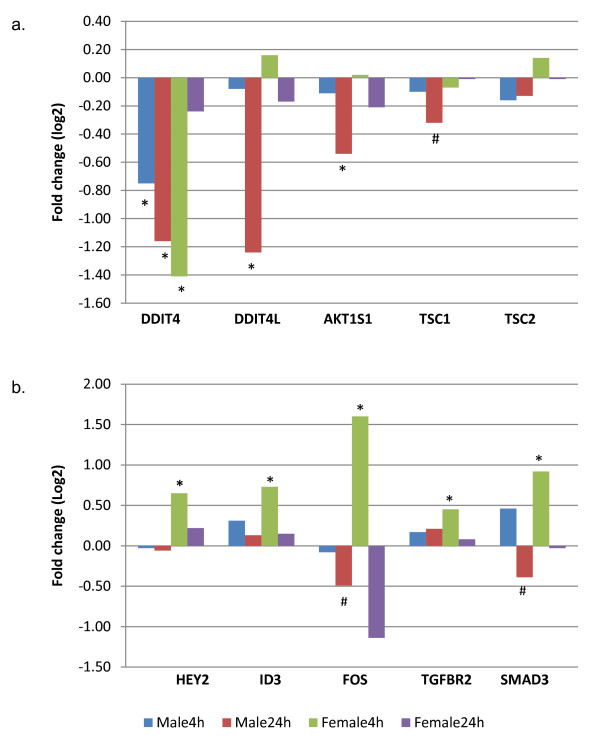
“Several negative regulators have been identified including DNA-damage-inducible transcript 4 (DDIT4, also known as REDD1), DNAdamage-inducible transcript 4-like (DDIT4L, also known as REDD2), AKT1 substrate 1 (proline-rich) (AKT1S1, also known as PRAS40), and tuberous sclerosis 1 and 2 (TSC1/TSC2) [47].”
BackgroundGender differences in strength and muscle fiber characteristics
Miller, A. E. J., MacDougall, J. D., Tarnopolsky, M. A., & Sale, D. G. (1993) · European Journal of Applied Physiology and Occupational Physiology · doi:10.1007/bf00235103 · Cited by 1,094 · cited 2×
“Third, to reduce potential confounders, we chose to study biceps brachii instead of the more commonly used quadriceps because 1) sex differences in muscle phenotypes is greater for upper as compared to lower limb musculature[1]; 2) lifestyle influences on upper body are relatively small since lower body musculature pl…”
BackgroundMethodWilkinson, S. B., Phillips, S. M., Atherton, P. J., Patel, R., Yarasheski, K. E., Tarnopolsky, M. A., & Rennie, M. J. (2008) · The Journal of Physiology · doi:10.1113/jphysiol.2008.153916 · Cited by 628 · cited 2×
“Resistance exercise increased both mitochondrial and myofibrillar protein synthesis in the untrained state whereas only myofibrillar protein synthesis increased in the trained state [29].”
BackgroundMiller, B. F., Olesen, J. L., Hansen, M., Døssing, S., Crameri, R. M., Welling, R. J., Langberg, H., Flyvbjerg, A., Kjaer, M., Babraj, J. A., et al. (2005) · The Journal of Physiology · doi:10.1113/jphysiol.2005.093690 · Cited by 610 · cited 1×
“It is important to point out that involvement of these pathways in muscle in response to RE has been previously reported in studies using various methods including protein assays [38,39], custom DNA microarrays [37], RT-PCR [36,39,40], and Northern blotting [41] (see detailed discussion in Additional file 8).”
MethodTranscriptional regulation of gene expression in human skeletal muscle during recovery from exercise
Pilegaard, H., Ordway, G. A., Saltin, B., & Neufer, P. D. (2000) · American Journal of Physiology-Endocrinology and Metabolism · doi:10.1152/ajpendo.2000.279.4.e806 · Cited by 563 · cited 1×
“It has been suggested that the transient changes in transcription during recovery from acute bouts of exercise may accumulate and translate into cellular training adaptations if the exercise is performed for a prolonged period of time [12,13].”
BackgroundSmad2 and 3 transcription factors control muscle mass in adulthood
Sartori, R., Milan, G., Patron, M., Mammucari, C., Blaauw, B., Abraham, R., & Sandri, M. (2009) · American Journal of Physiology-Cell Physiology · doi:10.1152/ajpcell.00104.2009 · Cited by 517 · cited 1×
“Smad 2 and Smad3 are the transcription factors downstream of myostatin/TGF-beta and are able to induce atrophy programming [43,44].”
BackgroundKosek, D. J., Kim, J.-S., Petrella, J. K., Cross, J. M., & Bamman, M. M. (2006) · Journal of Applied Physiology · doi:10.1152/japplphysiol.01474.2005 · Cited by 503 · cited 1×
“Men generally experience a greater hypertrophic response after resistance training in both young [7-10] and older adults [8,11] and also appear to have a higher degree of muscle loss with detraining [10].”
BackgroundLouis, E., Raue, U., Yang, Y., Jemiolo, B., & Trappe, S. (2007) · Journal of Applied Physiology · doi:10.1152/japplphysiol.00679.2007 · Cited by 478 · cited 14×
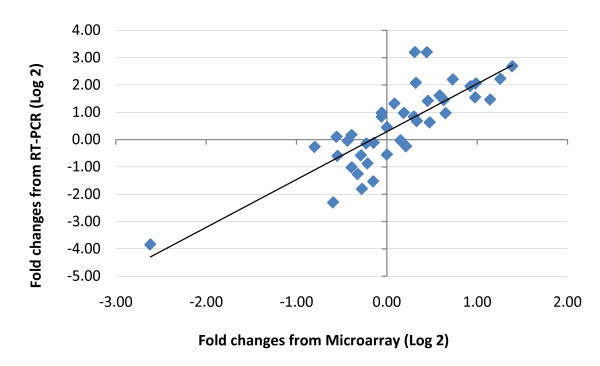
“However, both were included in phenotype analysis and follow-up qRT-PCR validation study.”
BackgroundMethodInfluentialStandardizing global gene expression analysis between laboratories and across platforms
Members of the Toxicogenomics Research Consortium (2005) · Nature Methods · doi:10.1038/nmeth754 · Cited by 465 · cited 1×
“A study conducted by the Texicogenomics Research Consortium [19] clearly demonstrated that in microarray studies the use of gene functional analysis can result in higher reproducibility than gene-gene comparison methods.”
MethodSex Differences in Human Skeletal Muscle Fatigue
Hicks, A. L., Kent-Braun, J., & Ditor, D. S. (2001) · Exercise and Sport Sciences Reviews · doi:10.1097/00003677-200107000-00004 · Cited by 393 · cited 1×
“In contrast, women generally have a higher proportion of oxidative type I muscle fibers and muscle capillary density [2], and are more resistant to muscle fatigue [3-5].”
Background(2005) · PubMed · Cited by 354
Self-citationVariability in Muscle Size and Strength Gain After Unilateral Resistance Training
Shrier, I. (2006) · Yearbook of Sports Medicine · doi:10.1016/s0162-0908(08)70354-4 · Cited by 348
Yang, Y., Creer, A., Jemiolo, B., & Trappe, S. (2005) · Journal of Applied Physiology · doi:10.1152/japplphysiol.01185.2004 · Cited by 290 · cited 2×
“This choice was based on previous work on the time course of transcriptional changes following exercise [25,26], and represents early and late recovery to acute RE respectively.”
BackgroundIvey, F. M., Roth, S. M., Ferrell, R. E., Tracy, B. L., Lemmer, J. T., Hurlbut, D. E., Martel, G. F., Siegel, E. L., Fozard, J. L., Metter, E. J., et al. (2000) · The Journals of Gerontology Series A: Biological Sciences and Medical Sciences · doi:10.1093/gerona/55.11.m641 · Cited by 288 · cited 1×
“Men generally experience a greater hypertrophic response after resistance training in both young [7-10] and older adults [8,11] and also appear to have a higher degree of muscle loss with detraining [10].”
BackgroundSartor, M. A., Tomlinson, C. R., Wesselkamper, S. C., Sivaganesan, S., Leikauf, G. D., & Medvedovic, M. (2006) · BMC Bioinformatics · doi:10.1186/1471-2105-7-538 · Cited by 263 · cited 9×
“IBMT and LRpath were performed using R.”
MethodSelf-citationTime- and exercise-dependent gene regulation in human skeletal muscle
Zambon, A. C., McDearmon, E. L., Salomonis, N., Vranizan, K. M., Johansen, K. L., Adey, D., Takahashi, J. S., Schambelan, M., & Conklin, B. R. (2003) · Genome Biology · doi:10.1186/gb-2003-4-10-r61 · Cited by 254 · cited 2×
“The sex differences in the time course of muscle transcriptional alteration as a result of RE were also confirmed by checking a subset of genes with well established function in RE, i.e., myogenin (MYOG), insulin-like growth factor 1 (IGFI), nuclear receptor subfamily 4, group A, member (3Nr4a3), ankyrin repeat domain…”
BackgroundRoepstorff, C., Thiele, M., Hillig, T., Pilegaard, H., Richter, E. A., Wojtaszewski, J. F. P., & Kiens, B. (2006) · The Journal of Physiology · doi:10.1113/jphysiol.2006.108720 · Cited by 238 · cited 3×
“In general, men are stronger and have a larger muscle fiber crosssectional area, especially for type II fibers [1,2].”
BackgroundAddendum: Standardizing global gene expression analysis between laboratories and across platforms
Bammler, T., Beyer, R. P., Bhattacharya, S., Boorman, G. A., Boyles, A., Bradford, B. U., Bumgarner, R. E., Bushel, P. R., Chaturvedi, K., Choi, D., et al. (2005) · Nature Methods · doi:10.1038/nmeth0605-477a · Cited by 231
Allen, D. L., & Unterman, T. G. (2007) · American Journal of Physiology-Cell Physiology · doi:10.1152/ajpcell.00542.2005 · Cited by 229
Sex-Related Differences in Gene Expression in Human Skeletal Muscle
Welle, S., Tawil, R., & Thornton, C. A. (2008) · PLoS ONE · doi:10.1371/journal.pone.0001385 · Cited by 224 · cited 3×
“It is plausible to speculate that sex-related gene transcriptional regulation contributes to the sexual dimorphism observed in the skeletal muscle phenotypes [16].”
BackgroundReal-time RT-PCR analysis of housekeeping genes in human skeletal muscle following acute exercise
Mahoney, D. J., Carey, K., Fu, M.-H., Snow, R., Cameron-Smith, D., Parise, G., & Tarnopolsky, M. A. (2004) · Physiological Genomics · doi:10.1152/physiolgenomics.00067.2004 · Cited by 211 · cited 2×
“Eukaryotic beta 2-microglobulin (B2M) was included as an internal control to calibrate the expression levels of target gene [53].”
BackgroundMethodGender Differences in Resistance-Training-Induced Myofiber Hypertrophy Among Older Adults
Bamman, M. M., Hill, V. J., Adams, G. R., Haddad, F., Wetzstein, C. J., Gower, B. A., Ahmed, A., & Hunter, G. R. (2003) · The Journals of Gerontology: Series A · doi:10.1093/gerona/58.2.b108 · Cited by 199 · cited 1×
“Men generally experience a greater hypertrophic response after resistance training in both young [7-10] and older adults [8,11] and also appear to have a higher degree of muscle loss with detraining [10].”
BackgroundSex differences in contractile properties and fatigue resistance of human skeletal muscle
Wüst, R. C. I., Morse, C. I., De Haan, A., Jones, D. A., & Degens, H. (2008) · Experimental Physiology · doi:10.1113/expphysiol.2007.041764 · Cited by 185 · cited 2×
“phenomenon in which, when compared with males, females have a higher capability to maintain cellular homeostasis [4,5].”
BackgroundSartor, M. A., Leikauf, G. D., & Medvedovic, M. (2009) · Bioinformatics · doi:10.1093/bioinformatics/btn592 · Cited by 176 · cited 6×
“LRpath combined with an intensity-based Bayesian moderated t-statistic (IBMT, see the Methods section for details), can maximize the detection power while accurately estimating the false discovery rate, and have also demonstrated superior performance with small sample sizes [21,52].”
BackgroundMethodInfluentialSelf-citationBakay, M., Chen, Y.-W., Borup, R., Zhao, P., Nagaraju, K., & Hoffman, E. P. (2002) · BMC Bioinformatics · doi:10.1186/1471-2105-3-4 · Cited by 175 · cited 3×
“As indicated by a previous study [27], tissue heterogeneity can be a major source of variation in expression profiling experiments even when using relatively homogeneous muscle tissue.”
BackgroundSelf-citationResistance training alters the response of fed state mixed muscle protein synthesis in young men
Tang, J. E., Perco, J. G., Moore, D. R., Wilkinson, S. B., & Phillips, S. M. (2008) · American Journal of Physiology-Regulatory, Integrative and Comparative Physiology · doi:10.1152/ajpregu.00636.2007 · Cited by 172 · cited 1×
“[28] observed that after eight weeks of unilateral resistance exercise, a shortened, but augmented increase in mixed muscle protein synthesis was shown in the trained leg as compared with untrained control leg in the fed state in young men.”
BackgroundKiens, B., Roepstorff, C., Glatz, J. F. C., Bonen, A., Schjerling, P., Knudsen, J., & Nielsen, J. N. (2004) · Journal of Applied Physiology · doi:10.1152/japplphysiol.01278.2003 · Cited by 143 · cited 1×
“[31] observed significantly higher mRNA levels of several key lipid-binding proteins and LPL in untrained female vastus lateralis muscle than in male muscle, although a similar trend was not observed for corresponding protein levels.”
BackgroundRoth, S. M., Ferrell, R. E., Peters, D. G., Metter, E. J., Hurley, B. F., & Rogers, M. A. (2002) · Physiological Genomics · doi:10.1152/physiolgenomics.00028.2002 · Cited by 134 · cited 2×
“Microarray studies have previously characterized gene expression profiles in human skeletal muscle in relation to sex, age, endurance and resistance training [15,16].”
BackgroundAcute resistance exercise increases skeletal muscle angiogenic growth factor expression
Gavin, T. P., Drew, J. L., Kubik, C. J., Pofahl, W. E., & Hickner, R. C. (2007) · Acta Physiologica · doi:10.1111/j.1748-1716.2007.01723.x · Cited by 123 · cited 13×
“However, both were included in phenotype analysis and follow-up qRT-PCR validation study.”
MethodInfluentialGene expression profiling in human skeletal muscle during recovery from eccentric exercise
Mahoney, D. J., Safdar, A., Parise, G., Melov, S., Fu, M., MacNeil, L., Kaczor, J., Payne, E. T., & Tarnopolsky, M. A. (2008) · American Journal of Physiology-Regulatory, Integrative and Comparative Physiology · doi:10.1152/ajpregu.00847.2007 · Cited by 123 · cited 2×
“Several studies have used multiple (> = 2) time points to investigate the expression of selected genes during recovery following acute resistance exercise, using combined sex groups [26,36] or men only groups [25,37], thus they provided no insight regarding a sex specific time course of expression changes.”
BackgroundMethodMechanisms of skeletal muscle atrophy
Ventadour, S., & Attaix, D. (2006) · Current Opinion in Rheumatology · doi:10.1097/01.bor.0000245731.25383.de · Cited by 122 · cited 1×
“Since ubiquitin conjugation for targeted protein degradation via the proteasome system plays a crucial role in muscle protein proteolysis [34], it is reasonable to postulate that ubiquitin removal (deubiquitination) might outweigh ubiquitination in male muscle thus aiding in muscle protein preservation.”
BackgroundKostek, M. C., Chen, Y.-W., Cuthbertson, D. J., Shi, R., Fedele, M. J., Esser, K. A., & Rennie, M. J. (2007) · Physiological Genomics · doi:10.1152/physiolgenomics.00151.2006 · Cited by 121 · cited 2×
“This choice was based on previous work on the time course of transcriptional changes following exercise [25,26], and represents early and late recovery to acute RE respectively.”
BackgroundHenderson, G. C., Dhatariya, K., Ford, G. C., Klaus, K. A., Basu, R., Rizza, R. A., Jensen, M. D., Khosla, S., O'Brien, P., & Nair, K. S. (2009) · The FASEB Journal · doi:10.1096/fj.08-117200 · Cited by 111 · cited 1×
“Indeed, a recent study [33] reported that women had higher rates of wholebody protein turnover and skeletal muscle protein synthesis than men at both young and old age.”
BackgroundSex Differences in Global mRNA Content of Human Skeletal Muscle
Maher, A. C., Fu, M. H., Isfort, R. J., Varbanov, A. R., Qu, X. A., & Tarnopolsky, M. A. (2009) · PLoS ONE · doi:10.1371/journal.pone.0006335 · Cited by 105 · cited 2×
“Consistent with a recent report [30], females in the present study had higher expression levels of genes involved in lipid metabolism, including lipoprotein lipase (LPL), CD36 molecule (FAT/CD36), fatty acid binding protein 3 (FABP3), hydroxyacyl-Coenzyme A dehydrogenase, beta subunit (HADHB) and acyl-Coenzyme A dehyd…”
BackgroundResultHubal, M. J., Hoffman, E. P., Devaney, J. M., Gordish-Dressman, H., Kearns, A., Zambraski, E., & Clarkson, P. M. (2005) · Medicine & Science in Sports & Exercise · doi:10.1097/00005768-200505001-00881 · Cited by 104
Self-citationPan, K.-H., Lih, C.-J., & Cohen, S. N. (2005) · Proceedings of the National Academy of Sciences · doi:10.1073/pnas.0502674102 · Cited by 102 · cited 1×
“As has been documented, different threshold choices can lead to different results from enrichment analysis, and thus different biological conclusions [22].”
BackgroundHow high is the level of technical noise in microarray data?
Klebanov, L. B., & Yakovlev, A. (2007) · Biology Direct · doi:10.1186/1745-6150-2-9 · Cited by 101 · cited 1×
“The technical error inherent in high-density oligonucleotide technology such as the Affymetrix platform is fairly low [27,49].”
BackgroundDrummond, M. J., Miyazaki, M., Dreyer, H. C., Pennings, B., Dhanani, S., Volpi, E., Esser, K. A., & Rasmussen, B. B. (2009) · Journal of Applied Physiology · doi:10.1152/japplphysiol.90842.2008 · Cited by 100 · cited 1×
“[48] reported decreased mRNA expression of DDIT4, DDIT4L, TSC1, and TSC2 in skeletal muscle of young and/or old men after an acute stimulation of protein synthesis via RE and essential amino acid ingestion.”
BackgroundInhibition of myogenesis by Notch: Evidence for multiple pathways
Buas, M. F., Kabak, S., & Kadesch, T. (2009) · Journal of Cellular Physiology · doi:10.1002/jcp.21571 · Cited by 93 · cited 1×
“Activation of Notch signaling was able to inhibit myogenesis via transcriptional repressors of HEY and HES family members [45].”
BackgroundFu, M.-H. H., Maher, A. C., Hamadeh, M. J., Ye, C., & Tarnopolsky, M. A. (2009) · Physiological Genomics · doi:10.1152/physiolgenomics.00115.2009 · Cited by 90 · cited 1×
“elegantly demonstrates that female subjects had higher mRNA levels of genes involved in lipid metabolism than male [32] subjects both before and immediately after 90 minutes of cycling (@ 65% VO2 peak) and that 17b-estradiol (E2) supplementation among male participants was able to increase the transcript abundance of…”
BackgroundDynamic Adaptation of Tendon and Muscle Connective Tissue to Mechanical Loading
Mackey, A. L., Heinemeier, K. M., Koskinen, S., & Kjær, M. (2008) · Connective Tissue Research · doi:10.1080/03008200802151672 · Cited by 79 · cited 1×
“Overall, our data supports the notion that the skeletal muscle response to RE is orchestrated by a series of gene regulatory events [42].”
ResultFunctional Polymorphisms Associated with Human Muscle Size and Strength
THOMPSON, P. D., MOYNA, N., SEIP, R., PRICE, T., CLARKSON, P., ANGELOPOULOS, T., GORDON, P., PESCATELLO, L., VISICH, P., ZOELLER, R., et al. (2004) · Medicine & Science in Sports & Exercise · doi:10.1249/01.mss.0000132274.26612.23 · Cited by 77 · cited 4×
“The FAMuSS study was designed to uncover novel genetic polymorphisms associated with human muscle phenotypes and training adaptation [7,17].”
BackgroundMethodInfluentialSelf-citationKivelä, R., Kyröläinen, H., Selänne, H., Komi, P. V., Kainulainen, H., & Vihko, V. (2007) · Journal of Applied Physiology · doi:10.1152/japplphysiol.00531.2007 · Cited by 66
Microarrays: How Many Do You Need?
Zien, A., Fluck, J., Zimmer, R., & Lengauer, T. (2003) · Journal of Computational Biology · doi:10.1089/10665270360688246 · Cited by 63
Nedergaard, A., Vissing, K., Overgaard, K., Kjaer, M., & Schjerling, P. (2007) · Journal of Applied Physiology · doi:10.1152/japplphysiol.01445.2006 · Cited by 57 · cited 1×
“It is important to point out that involvement of these pathways in muscle in response to RE has been previously reported in studies using various methods including protein assays [38,39], custom DNA microarrays [37], RT-PCR [36,39,40], and Northern blotting [41] (see detailed discussion in Additional file 8).”
MethodEffects of strength training and detraining on regional muscle in young and older men and women
Melnyk, J. A., Rogers, M. A., & Hurley, B. F. (2009) · European Journal of Applied Physiology · doi:10.1007/s00421-008-0979-0 · Cited by 56 · cited 1×
“Men generally experience a greater hypertrophic response after resistance training in both young [7-10] and older adults [8,11] and also appear to have a higher degree of muscle loss with detraining [10].”
BackgroundHubal, M. J., & Clarkson, P. M. (2009) · Journal of Applied Physiology · doi:10.1152/japplphysiol.90848.2008a · Cited by 41 · cited 1×
“No influence of sex on strength loss and recovery pattern following damaging eccentric contractions has been reported [6].”
BackgroundGene Expression in Working Skeletal Muscle
Hoppeler, H. H., Klossner, S., & Flück, M. (2007) · Advances in experimental medicine and biology · doi:10.1007/978-0-387-75434-5_19 · Cited by 34 · cited 1×
“Because exercise is a complex stimuli involving mechanical loading, metabolic disturbances, neuronal activation and hormonal alterations [14], microarrays can be a useful high-throughput means to examine global transcriptional profiles and transcriptional changes in skeletal muscle under various experimental condition…”
BackgroundTimmons, J. A., & Sundberg, C. J. (2006) · IUBMB Life · doi:10.1080/15216540500507390 · Cited by 17 · cited 1×
“Gene functional analysis has the potential to reduce false positive discoveries typically associated with gene-gene comparison studies [18].”
BackgroundSalomoni, S. E., Soares, F. A., Nascimento, F. A. D. O., & da Rocha, A. F. (2008) · Annual International Conference of the IEEE Engineering in Medicine and Biology Society (EMBC) · doi:10.1109/iembs.2008.4649732 · Cited by 17 · cited 2×
“phenomenon in which, when compared with males, females have a higher capability to maintain cellular homeostasis [4,5].”
BackgroundFlueck, M. (2009) · Applied Physiology, Nutrition, and Metabolism · doi:10.1139/h09-034 · Cited by 14 · cited 1×
“It has been suggested that the transient changes in transcription during recovery from acute bouts of exercise may accumulate and translate into cellular training adaptations if the exercise is performed for a prolonged period of time [12,13].”
BackgroundIs there an alternative to increasing the sample size in microarray studies?
Klebanov, L. B., & Yakovlev, A. (2007) · Bioinformation · doi:10.6026/97320630001429 · Cited by 10 · cited 1×
“However, the biological variability is large and has been identified as a major source of experimental error leading to a need for large sample sizes in conducting microarray studies [50].”
Background
Cited by
Sex differences in human fatigability: mechanisms and insight to physiological responses
Hunter, S. K. (2014) · Acta Physiologica · doi:10.1111/apha.12234 · Cited by 595
“The muscle fibre properties and morphology of men and women are due to sex-related differences in human skeletal muscle gene expression and an interaction with sex-specific hormones (Roth et al. 2002, Welle et al. 2008, Maher et al. 2009, Liu et al. 2010).”
BackgroundTranscriptomic profiling of skeletal muscle adaptations to exercise and inactivity
Pillon, N. J., Gabriel, B. M., Dollet, L., Smith, J. A. B., Sardón Puig, L., Botella, J., Bishop, D. J., Krook, A., & Zierath, J. R. (2020) · Nature Communications · doi:10.1038/s41467-019-13869-w · Cited by 457
Physical and Physiological Profiles of Taekwondo Athletes
Bridge, C. A., Ferreira da Silva Santos, J., Chaabène, H., Pieter, W., & Franchini, E. (2014) · Sports Medicine · doi:10.1007/s40279-014-0159-9 · Cited by 386
Lundsgaard, A.-M., & Kiens, B. (2014) · Frontiers in Endocrinology · doi:10.3389/fendo.2014.00195 · Cited by 289
Egan, B., & Sharples, A. P. (2023) · Physiological Reviews · doi:10.1152/physrev.00054.2021 · Cited by 278
Metadata
- Authors
- Liu, D., Sartor, M. A., Nader, G. A., Gutmann, L., Treutelaar, M. K., Pistilli, E. E., IglayReger, H. B., Burant, C. F., Hoffman, E. P., & Gordon, P. M.
- Affiliations
- University of Michigan (US)
- Karolinska Institutet (SE)
- West Virginia University (US)
- University of Pennsylvania (US)
- Children's National (US)
- Corresponding author
- Gordon, Paul M
- ORCID
- Venue
- BMC Genomics
- Published
- 2010-11-24
- Volume
- 11
- Issue
- 1
- Pages
- 659-659
- ISSN
- 1471-2164 (ISSN-L)
- PMC
- PMC3091777
- OpenAlex
- W2147140735
- Cited by
- 122
- References
- 60
- Citations by year
- 2026: 6 · 2025: 9 · 2024: 8 · 2023: 8 · 2022: 9 · 2021: 17 · 2020: 9 · 2019: 10 · 2018: 9 · 2017: 5 · 2016: 6 · 2015: 3 · 2014: 9 · 2013: 10 · 2012: 2
- FWCI
- 1.83
- Type
- journal article
- Language
- en
- Open access
- gold
- doi.org
- Licence
- cc-by
- creativecommons.org/licenses/by/4.0 (tdm)
- creativecommons.org/licenses/by/4.0 (vor)
- Locations
- BMC Genomics (publishedVersion, cc-by)
- PubMed Central (publishedVersion, cc-by)
- PubMed (publishedVersion)
- Deep Blue (University of Michigan) (submittedVersion)
- The Research Repository @ WVU (West Virginia University) (submittedVersion, cc-by)
- DOAJ (DOAJ: Directory of Open Access Journals) (submittedVersion, cc-by-sa)
- Funders
- National Institutes of Health
- National Institute of Neurological Disorders and Stroke (R01NS040606, R01 NS 40606-01)
- National Center for Medical Rehabilitation Research
- Topics
- Life Sciences › Biochemistry, Genetics and Molecular Biology › Molecular Biology › Muscle Physiology and Disorders
- Health Sciences › Nursing › Nutrition and Dietetics › Muscle metabolism and nutrition
- Life Sciences › Biochemistry, Genetics and Molecular Biology › Genetics › Genetics and Physical Performance
- Keywords
- sex differences, skeletal muscle transcriptome, resistance training, biceps brachii, gene expression, muscle growth, fatty acid oxidation, Notch signaling, TGF-beta signaling, post-exercise recovery, training effects, sexual dimorphism
- MeSH terms
- Adult, Female, Gene Expression Regulation, Humans, Male, Organ Specificity, Rest, Sex Characteristics, Transcription, Genetic, Reproducibility of Results, Down-Regulation, Up-Regulation, Cluster Analysis, Muscle, Skeletal, Reverse Transcriptase Polymerase Chain Reaction, Gene Expression Profiling, Gene Regulatory Networks, Resistance Training, Young Adult
About these checks
Registry, retraction, Cites and statistics results are computed, not judged, with one exception: a printed reference that no index lists is read once by a model before it counts as a citation error. Claims are extracted by a model and kept only when their quote appears verbatim in the text; each cited source is then checked, with a model’s help, for whether it says what the claim relies on. Those verdicts can be wrong — read the claim’s quote and the cited source before relying on one.
Statistics and arithmetic are recomputed, not judged.
Confidence bands are shown only for fields calibrated on our annotated test set. None is calibrated yet, so no band is shown.
What counts as a claim ›How we measure confidence ›How we check this ›
Are you an author, or do you see a problem with this page? Request a review
Data sources
Bibliographic data: Semantic Scholar, OpenAlex, Crossref.
Contains information from the Semantic Scholar Academic Graph Datasets, made available under the ODC Attribution License (ODC-BY 1.0).
Semantic Scholar’s data is described in: Kinney, R., et al. (2023). The Semantic Scholar Open Data Platform. arXiv:2301.10140.
