

Defining the healthy “core microbiome” of oral microbial communities
Open accessThe DOI matches its Crossref record; 29 of the 29 references it cites were found in a registry or an index.
Abstract
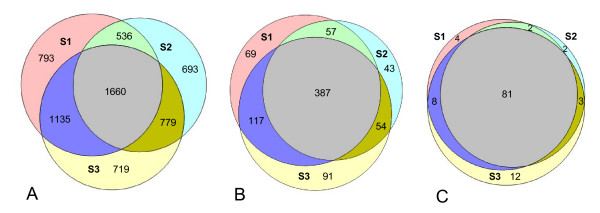
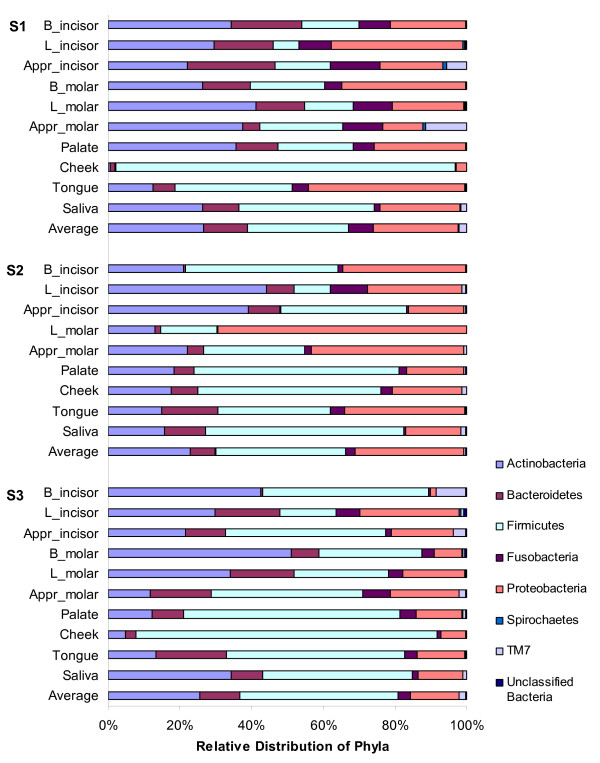
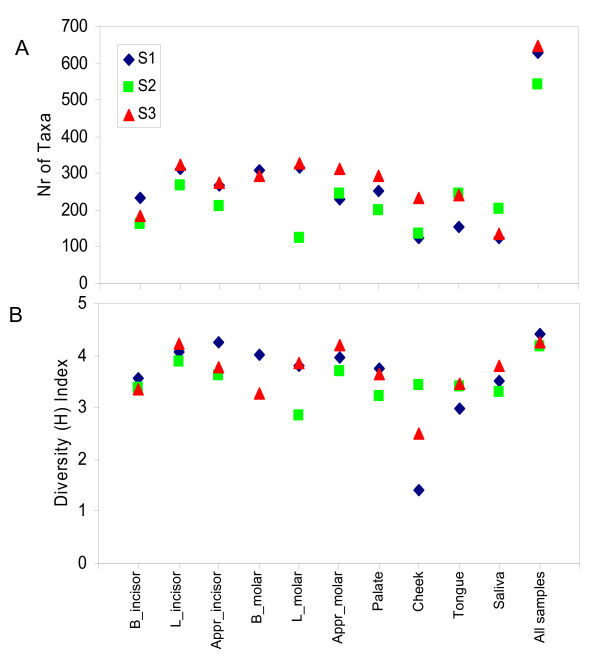
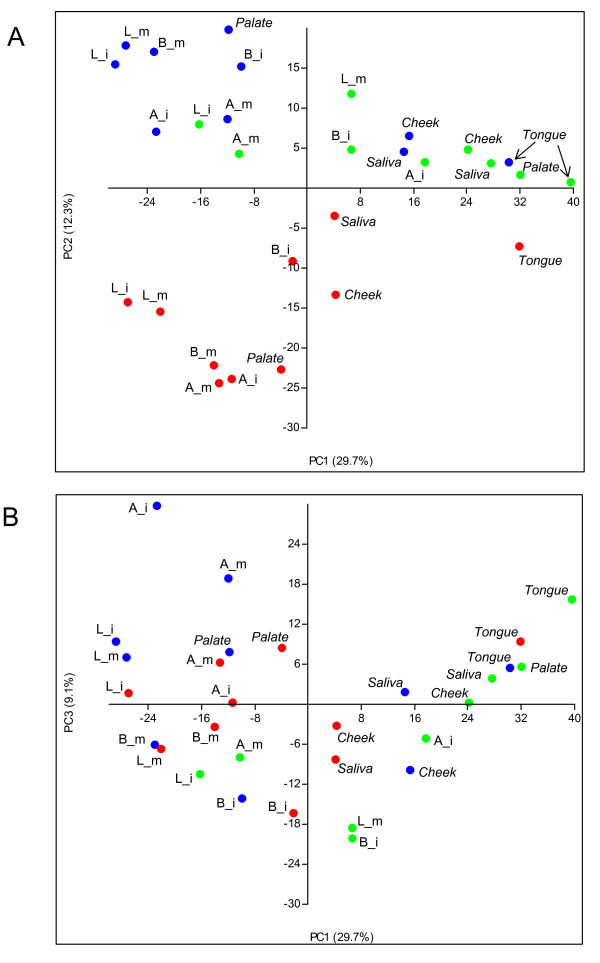
BACKGROUND: Most studies examining the commensal human oral microbiome are focused on disease or are limited in methodology. In order to diagnose and treat diseases at an early and reversible stage an in-depth definition of health is indispensible. The aim of this study therefore was to define the healthy oral microbiome using recent advances in sequencing technology (454 pyrosequencing). RESULTS: We sampled and sequenced microbiomes from several intraoral niches (dental surfaces, cheek, hard palate, tongue and saliva) in three healthy individuals. Within an individual oral cavity, we found over 3600 unique sequences, over 500 different OTUs or "species-level" phylotypes (sequences that clustered at 3% genetic difference) and 88 - 104 higher taxa (genus or more inclusive taxon). The predominant taxa belonged to Firmicutes (genus Streptococcus, family Veillonellaceae, genus Granulicatella), Proteobacteria (genus Neisseria, Haemophilus), Actinobacteria (genus Corynebacterium, Rothia, Actinomyces), Bacteroidetes (genus Prevotella, Capnocytophaga, Porphyromonas) and Fusobacteria (genus Fusobacterium).Each individual sample harboured on average 266 "species-level" phylotypes (SD 67; range 123 - 326) with cheek samples being the least diverse and the dental samples from approximal surfaces showing the highest diversity. Principal component analysis discriminated the profiles of the samples originating from shedding surfaces (mucosa of tongue, cheek and palate) from the samples that were obtained from solid surfaces (teeth).There was a large overlap in the higher taxa, "species-level" phylotypes and unique sequences among the three microbiomes: 84% of the higher taxa, 75% of the OTUs and 65% of the unique sequences were present in at least two of the three microbiomes. The three individuals shared 1660 of 6315 unique sequences. These 1660 sequences (the "core microbiome") contributed 66% of the reads. The overlapping OTUs contributed to 94% of the reads, while nearly all reads (99.8%) belonged to the shared higher taxa. CONCLUSIONS: We obtained the first insight into the diversity and uniqueness of individual oral microbiomes at a resolution of next-generation sequencing. We showed that a major proportion of bacterial sequences of unrelated healthy individuals is identical, supporting the concept of a core microbiome at health.
Overview
The claims and statistics of this paper haven’t been checked yet.
Free: it reads the open-access text and checks the first 5 claims that cite a source we can check. Create a free account to check every claim.
Integrity signals
Registry
Cites
Statistics
Figures
Verification
Claims the paper makes
The claims and statistics of this paper haven’t been checked yet.
Free: it reads the open-access text and checks the first 5 claims that cite a source we can check. Create a free account to check every claim.
Claims other papers make about this one
Each is checked against this paper’s own text: does it say what the citing paper says it does?
The source backs part of the claim, not all of it — or backs it for a different population, condition or comparison.
In the citing paper
“Up to 80% of oral bacteria are dominated by about 200 species in the Phyla Firmicutes (esp. Streptococcus, Veillonella, Granulicatella, Gemella spp.) and Proteobacteria (esp. Neisseria, Haemophilus spp.), with contributions from Bacteroidetes, Actinobacteria and Fusobacteria totaling upwards of 95% of all identified oral microbiota (Figure 2)[171–177].”
From Enterosalivary nitrate metabolism and the microbiome: Intersection of microbial metabolism, nitric oxide and diet in cardiac and pulmonary vascular health (2017) · cites this paper as [172]
Experimental — accuracy not yet measuredThe source backs part of the claim, not all of it — or backs it for a different population, condition or comparison.
In the citing paper
“This is of course not the case and the oral flora of a dog comprises hundreds of species (including pathogenic) bacteria, fungi, and viruses [153,154].”
From A One Health Perspective on the Human-Companion Animal Relationship with Emphasis on Zoonotic Aspects. (2020) · cites this paper as [154]
Experimental — accuracy not yet measuredThe source backs part of the claim, not all of it — or backs it for a different population, condition or comparison.
In the citing paper
“The core microbiome comprised typical oral bacteria that are commonly identified as abundant in similar oral microbiome surveys [28].”
From Citizen science charts two major “stomatotypes” in the oral microbiome of adolescents and reveals links with habits and drinking water composition (2018) · cites this paper as [28]
Experimental — accuracy not yet measuredThe cited source says what the claim attributes to it.
In the citing paper
“This core community composition and distribution is consistent with previous studies of oral healthy microbiomes [2, 9, 22, 28–30].”
From Citizen science charts two major “stomatotypes” in the oral microbiome of adolescents and reveals links with habits and drinking water composition (2018) · cites this paper as [28]
Self-check
Percentages, sums and reported differences re-computed from the paper’s own numbers.
The self-check needs the paper’s full text.
Citations
Cites
PAST: PALEONTOLOGICAL STATISTICAL SOFTWARE PACKAGE FOR EDUCATION AND DATA ANALYSIS
Hammer, Ø., Harper, D. A. T., & Ryan, P. D. (2001) · Palaeontologia Electronica · Cited by 17,871
A core gut microbiome in obese and lean twins
Turnbaugh, P. J., Hamady, M., Yatsunenko, T., Cantarel, B. L., Duncan, A., Ley, R. E., Sogin, M. L., Jones, W. J., Roe, B. A., Affourtit, J. P., et al. (2009) · Nature · doi:10.1038/nature07540 · Cited by 7,823 · cited 5×
“A 97% identity in 16S rRNA gene sequences is commonly used to group "species-level" phylotypes [1,11,12].”
InfluentialPruesse, E., Quast, C., Knittel, K., Fuchs, B. M., Ludwig, W., Peplies, J., & Glockner, F. O. (2007) · Nucleic Acids Research · doi:10.1093/nar/gkm864 · Cited by 6,668 · cited 1×
“We then used the GAST algorithm [27] to calculate the percent difference between each unique sequence and its closest match in a database of 69816 unique eubacterial and 2779 unique archaeal V5-V6 sequences, representing 323499 SSU rRNA sequences from the SILVA database [28].”
Microbial diversity in the deep sea and the underexplored “rare biosphere”
Sogin, M. L., Morrison, H. G., Huber, J. A., Welch, D. M., Huse, S. M., Neal, P. R., Arrieta, J. M., & Herndl, G. J. (2006) · Proceedings of the National Academy of Sciences · doi:10.1073/pnas.0605127103 · Cited by 3,701 · cited 3×
“Data analysis GS-FLX sequencing data were processed as previously described [14].”
Self-citationDefining the normal bacterial flora of the oral cavity
Aas, J. A., Paster, B. J., Stokes, L. N., Olsen, I., & Dewhirst, F. E. (2005) · Journal of Clinical Microbiology · doi:10.1128/jcm.43.11.5721-5732.2005 · Cited by 3,092 · cited 3×
“This richness is considerably higher than the 34 to 72 phylotypes and the 6 to 30 genera previously described using conventional cloning and sequencing [15,16].”
Schloss, P. D., & Handelsman, J. (2005) · Applied and Environmental Microbiology · doi:10.1128/aem.71.3.1501-1506.2005 · Cited by 2,501 · cited 1×
“The operational taxonomic units (OTUs) were created by aligning unique sequences and calculating distance matrices as previously described [14] and using DOTUR [30] to create clusters at the 0.”
Dethlefsen, L., Huse, S., Sogin, M. L., & Relman, D. A. (2008) · PLoS Biology · doi:10.1371/journal.pbio.0060280 · Cited by 2,361 · cited 2×
“However, most microbial diversity projects to date have used 3% OTUs [1,13,14], and to be consistent with other research using pyrosequencing sequences we have chosen to use 3% OTUs as well.”
Self-citationThe Ribosomal Database Project (RDP-II): sequences and tools for high-throughput rRNA analysis
Cole, J. R. (2004) · Nucleic Acids Research · doi:10.1093/nar/gki038 · Cited by 1,475 · cited 1×
“Taxa were assigned to each full-length reference sequence using several sources including Entrez Genome entries, cultured strain identities, SILVA, and the Ribosomal Database Project Classifier [29].”
Kunin, V., Engelbrektson, A., Ochman, H., & Hugenholtz, P. (2010) · Environmental Microbiology · doi:10.1111/j.1462-2920.2009.02051.x · Cited by 1,277 · cited 1×
“Recent publications [9,10] have identified the potential inflation of richness and diversity estimates caused by low-quality reads (pyrosequencing noise).”
The influence of sex, handedness, and washing on the diversity of hand surface bacteria
Fierer, N., Hamady, M., Lauber, C. L., & Knight, R. (2008) · Proceedings of the National Academy of Sciences · doi:10.1073/pnas.0807920105 · Cited by 1,108 · cited 3×
“A 97% identity in 16S rRNA gene sequences is commonly used to group "species-level" phylotypes [1,11,12].”
Research works printed but not linked: 1
- Zaura E Plaque stagnation sites and dental caries: Studies on dental biofilm and dentin demineralization in narrow grooves PhD thesis 2002 Amsterdam: Faculteit der Tandheelkunde, University of Amsterdam
Cited by
Items 901–1,000 of 1,000
The role of metal binding in the function of the human salivary antimicrobial peptide histatin-5Preprint
Stewart, L. J., Hong, Y., Holmes, I., Firth, S. J., Bolton, J., Santos, Y., Cobb, S. L., Jakubovics, N. S., & Djoko, K. Y. (2022) · bioRxiv (Cold Spring Harbor Laboratory) · doi:10.1101/2022.01.07.472205 · Cited by 6
Jarquín‐Díaz, V. H., Dayaram, A., Soilemetzidou, E. S., Desvars-Larrive, A., Bohner, J., Buuveibaatar, B., Kaczensky, P., Walzer, C., Greenwood, A. D., & Löber, U. (2025) · Scientific Reports · doi:10.1038/s41598-025-87216-z · Cited by 4
“The presence and stability of these keystone species may be crucial for the khulan’s ability to adapt to varying nutritional conditions and maintain its health 26 .”
Dysbiosis and Metabolic Dysregulation of Salivary Microbiota in Schizophrenia
Wang, J., Lü, L., Ren, L., Zhu, R., Jiang, Y., Qiao, Y., & Li, Y. (2025) · Journal of Multidisciplinary Healthcare · doi:10.2147/jmdh.s504325 · Cited by 4
Lv, Y., Peng, S., Liu, Y., Yang, H., Li, G., & Peng, Y. (2025) · Journal of Oral Microbiology · doi:10.1080/20002297.2025.2513739 · Cited by 5
“1 Firmicutes, Proteobacteria, Actinobacteria, Bacteroidetes and Fusobacteria were the top five phyla in all groups (Figures S3a-c), which is consistent with a seminal work by Zaura [30] on the oral core microbiome.”
Zhou, X., Qin, S., Zhu, J., Sun, X., & He, X. (2025) · Journal of Plant Ecology · doi:10.1093/jpe/rtaf094 · Cited by 4
Bakr, M. M., Caswell, G. M., Ankily, M. A., Zeitoun, S. I., Ahmed, N., Meer, M., & Shamel, M. (2025) · Oral · doi:10.3390/oral5030066 · Cited by 4
“Saliva maintains a stable pH of 6.5–7.0, maintains moistness, and has an average temperature of 37 ◦ C—conditions that are favorable for microbial growth [33].”
InfluentialYarahmadi, A., Emrahoglu, S., Afkhami, H., Mehdipour, A., & Aghaali, M. (2025) · Antonie van Leeuwenhoek · doi:10.1007/s10482-025-02190-w · Cited by 5
“The core microbiome is stable across healthy individuals, whereas the variable portion is shaped by environmental factors and alterations in the body’s functioning (Zaura et al. 2009; Nearing, et al. 2020; Razavi et al. 2024a).”
Introduction to the Oral Cavity
Arnold, R. R., & Ribeiro, A. A. (2019) · Springer eBooks · doi:10.1007/978-3-030-28737-5_6 · Cited by 5
Exploring the Role of Fusobacterium nucleatum in Preterm Birth: A Narrative Review
Rapone, B., Ferrara, E., Converti, I., Loverro, M., Loverro, M. T., Gnoni, A., Petruzzi, M., Corsalini, M., Scacco, S., & Naro, E. D. (2020) · Open Access Macedonian Journal of Medical Sciences · doi:10.3889/oamjms.2020.5409 · Cited by 4
“The colonization characteristics of pathogenic bacteria in the placenta are important to understand their potential role in PTB risk [54], [62].”
BackgroundChen, Y., Zheng, M., Qiu, Y., Wang, H., Zhang, H., Tao, Q., Luo, H., & Zhang, Z. (2022) · Frontiers in Microbiology · doi:10.3389/fmicb.2022.859921 · Cited by 4
Akomoneh, E. A., Laumen, J., Abdellati, S., Dijck, C. V., Vanbaelen, T., Xavier, B. B., Manoharan-Basil, S. S., & Kenyon, C. R. (2022) · Microorganisms · doi:10.3390/microorganisms10122497 · Cited by 4
de Cena, J. A., Belmok, A., Kyaw, C. M., & Damé‐Teixeira, N. (2024) · Archives of Oral Biology · doi:10.1016/j.archoralbio.2024.105936 · Cited by 4
Succession changes of microbial community for inferring the time since deposition of saliva
Jin, X., Tian, S., Zhang, H., Ren, Z., Wang, Q., Liu, Y., Zheng, H., Yang, M., & Huang, J. (2024) · Electrophoresis · doi:10.1002/elps.202300267 · Cited by 4
Ding, P., He, X., Li, M., Jiang, S., & Peng, Y. (2024) · Frontiers in Veterinary Science · doi:10.3389/fvets.2024.1493415 · Cited by 4
Martins, F. P., Andrade-Silva, J., Teixeira, B. L., Ferrari, Â. P., Christoff, A. P., Cruz, G. N. F., Paladino, F. V., de Oliveira, L. F. V., & Hernandes, C. (2024) · PLoS ONE · doi:10.1371/journal.pone.0314660 · Cited by 5
Yang, J., Zhang, W., & Dong, C. (2025) · Biology · doi:10.3390/biology14020211 · Cited by 7
Oral Microbiome Dysbiosis and Citrullination in Rheumatoid Arthritis
Xia, Y., Mankia, K. S., Do, T., & Meade, J. L. (2025) · Advances in experimental medicine and biology · doi:10.1007/978-3-031-79146-8_12 · Cited by 7
SOCIETY OF ENVIRONMENTAL NICHE: ORAL CAVITY OF THE HEALTHY CHILDREN
Burmistrova, A. L., Filippova, Y. Y., Nokhrin, D. Y., & Timofeeva, A. V. (2018) · Russian Journal of Infection and Immunity · doi:10.15789/2220-7619-2018-1-54-60 · Cited by 4
“Такие данные подтверждают наличие строгого локального пресса на членов сообщества даже в условиях физиологического гомеостаза [18, 22].”
Composition of Microflora of Different Oral Cavity Biotops in Persons with Partial Secondary Adentia
Slynko, Y. O., Мішина, М. М., & Sokolova, І. І. (2019) · Ukraïnsʹkij žurnal medicini bìologìï ta sportu · doi:10.26693/jmbs04.02.214 · Cited by 4
Chen, Y., Zhang, Z., Zhang, H., Luo, H., & Li, Z. (2021) · Archives of Microbiology · doi:10.1007/s00203-021-02268-9 · Cited by 4
The Role of Streptococcus salivarius as a Modulator of Homeostasis in the Oral Cavity
MacDonald, K. W. (2015) · Scholarship@Western (Western University) · Cited by 6
Rothia nasimurium as a Cause of Disease: First Isolation from Farmed Geese
Kang, Y., Zhou, H., & Jin, W. (2022) · Veterinary Sciences · doi:10.3390/vetsci9050197 · Cited by 4
de Soet, J. J., Claesson, R., Haubek, D., Johansson, A., Buijs, M. J., & Volgenant, C. M. C. (2022) · Pathogens · doi:10.3390/pathogens11050577 · Cited by 4
Disinfection effect of dental impression tray adhesives
Bensel, T., Pollak, R., Stimmelmayr, M., & Hey, J. (2012) · Clinical Oral Investigations · doi:10.1007/s00784-012-0735-z · Cited by 4
The effect of a microbead dentifrice on microbial load in oral microenvironments
Sreenivasan, P. K., Haraszthy, V. I., & Zambon, J. J. (2011) · International Journal of Dental Hygiene · doi:10.1111/j.1601-5037.2010.00465.x · Cited by 7
Maria, R. M.-C., Sette‐de‐Souza, P. H., Félix‐Silva, J., Fernandes‐Pedrosa, M. D. F., Maria, D. S. V. P., & Kenio, C. D. L. (2014) · African Journal of Microbiology Research · doi:10.5897/ajmr2013.6274 · Cited by 5
Vale, G. C., Carvalho, G. A. O., Hoogenkamp, M. A., Exterkate, R. A. M., Crielaard, W., & ten Cate, J. M. (2022) · Biofouling · doi:10.1080/08927014.2022.2065199 · Cited by 5
“The overall results of this study corroborate those reported elsewhere (Zaura et al. 2009; Exterkate et al. 2010; Mei et al. 2013), demonstrating that fluoridated products can inhibit the formation of cariogenic biofilms and dentine lesions in different biofilm models.”
ResultSelf-citationA comparison of microbiota in the ladybird Harmonia axyridis between native and invaded ranges
Li, H., Shu, X., Zhou, J., Ling, M., Zhou, X. J., Obrycki, J. J., & Li, B. (2022) · Entomologia Experimentalis et Applicata · doi:10.1111/eea.13230 · Cited by 7
“The composition of ASVs of microbiota was visualized between native and invaded ranges with the package ‘VennDiagram’ (Zaura et al., 2009).”
MethodSalivary microbiome in kidney diseases: A narrative review
Ramanathan, K., Padmanabhan, G., Gulilat, H., & Malik, T. (2023) · Cell Biochemistry and Function · doi:10.1002/cbf.3864 · Cited by 4
Ledbetter, E. C., Franklin‐Guild, R., & Edelmann, M. L. (2018) · Veterinary Ophthalmology · doi:10.1111/vop.12549 · Cited by 4
Salivary Bioscience and Periodontal Medicine
Wei, C. X., Yu, Y., Aleti, G., Torralba, M., Edlund, A., Nelson, K. E., & Freire, M. (2020) · Springer eBooks · doi:10.1007/978-3-030-35784-9_18 · Cited by 4
Diversity of navel microbiome in young adults
Shah, S., Donze‐Reiner, T., & Shah, V. (2020) · Journal of Medical Microbiology · doi:10.1099/jmm.0.001192 · Cited by 4
Community and genomic analysis of the human small intestine microbiota
van den Bogert, B. (2013) · doi:10.18174/274416 · Cited by 7
Oral and Dental Infections: Bacteria
Fu, Y., Rubio, A. H., Gscheider, C., Espina, M. D. T., Flores-Vallejo, R. D. C., van Dijl, J. M., & Gabarrini, G. (2021) · Elsevier eBooks · doi:10.1016/b978-0-12-818731-9.00207-x · Cited by 6
Ohta, J., Minegishi, S., Noda, N., & Sakurada, K. (2023) · Legal Medicine · doi:10.1016/j.legalmed.2023.102277 · Cited by 3
Effect of different feeding times on the structure of the intestinal flora of Rana dybowskii tadpole
Xu, W., Shi, H., & Li, Y. (2025) · Chronobiology International · doi:10.1080/07420528.2025.2519308 · Cited by 3
“Using the R package “Venn Diagram,” a Venn diagram was generated to show the shared and unique ASVs in a sample or population, based on the occurrence of ASVs in different samples and populations, regardless of their relative abundance (Zaura et al. 2009).”
Ghaouas, S., & Chala, S. (2025) · Microbiology Research · doi:10.3390/microbiolres16090194 · Cited by 5
“Among these bacteria, 80.66% are distributed across five phyla: Bacillota, Bacteroidota, Actinomycetota, Pseudomonadota, and Fusobacteriota, which are recognized as the dominant phyla of the healthy oral microbiome [7].”
InfluentialRosa, G. R. M. L., Samaranayake, L. P., Zaura, E., Fuochi, V., Furneri, P. M., Kowalski, J., Chapple, I., & Polosa, R. (2025) · Systematic Reviews · doi:10.1186/s13643-025-02965-2 · Cited by 3
“In healthy adults, the predominant taxa at the phylum level have been reported to belong to Firmicutes , Proteobacteria , Act-inobacteria , Bacteroidetes , and Fusobacteria [33].”
Self-citationEffects of removable clear dental aligners on the composition of the oral microbiome
Peregrina, S., Peiró-Aubalat, A., Manohar, A., Benavente, A., Torres-Carvajal, M., & Gabaldón, T. (2025) · Journal of Oral Microbiology · doi:10.1080/20002297.2025.2579836 · Cited by 4
“Multiple studies [34], [35] have demonstrated significant differences in bacterial composition between saliva and dental plaque, encompassing both supragingival and subgingival microbiota.”
Zang, B., Xu, L., Huang, H., Liu, Q., Yao, Y., Li, J., Yang, Y., Zhao, C., Liu, B., & Liu, B. (2025) · Microorganisms · doi:10.3390/microorganisms13122668 · Cited by 3
“Shared and unique ASVs among groups were illustrated with Venn diagrams generated using the “VennDiagram” R package (GenesCloud, https://www.genescloud.cn), based on ASV presence across samples or groups, irrespective of relative abundance [16].”
The Oral Microbiota and Its Implications for Inflammatory Bowel Disease: A Literature Review
Chen, X., Mao, T., Song, X., & Ren, L. (2025) · International Journal of General Medicine · doi:10.2147/ijgm.s549434 · Cited by 4
“…Actinobacteria, Bacteroidetes , and Spirochaetes account for 96% of the total oral bacteria, 70 with Firmicutes being the most abundant, followed by Bacteroidetes, Proteobacteria, Actinobacteria, Spirochaetes , and Fusobacteri a. 71 Within the phylum Firmicutes , the genus Streptococcus (19.2”
InfluentialLi, H., Yang, K., Liu, H., Cao, S., Bao, Y., Feng, L., Zhang, L., Niu, J., & Tian, T. (2025) · Microorganisms · doi:10.3390/microorganisms13122814 · Cited by 3
“Five dominant phyla in the human oral cavity were Firmicutes, Proteobacteria, Bac-teroidetes, Actinobacteria, and Fusobacteria, aligning with established findings [51], indicating the reliability of the results.”
Oral Microbiome Dynamics in Patients with Acute Lymphoblastic Leukemia and Oral Mucositis
Sánchez-Becerra, A. E., Rodríguez, M. P., Vega‐Magaña, N., García‐Arellano, S., Romo-Rubio, H. A., Flores-Navarro, S., Escobedo-Meléndez, G., Aranda‐Romo, S., & Zepeda-Nuño, J. S. (2026) · Microorganisms · doi:10.3390/microorganisms14010185 · Cited by 3
“These Gram-negative cocci are commonly part of the normal oropharyngeal microbiota and are integral components of the oral core microbiome [29,39].”
Oral microbiome profiling of primary oral candidiasis during infection and post-antifungal therapy
Azizan, N., Al‐Maleki, A. R., Karajacob, A. S., Loke, M. F., Goh, J. P. E., Kallarakkal, T. G., Ho, G. F., Khor, H. M., Ong, H. C., & Tay, S. T. (2026) · Clinical Oral Investigations · doi:10.1007/s00784-026-06827-6 · Cited by 7
“Notably, several genera with lower abundance, particularly Streptococcus , Haemophilus , and Gemella , are recognized as early colonizers that help main - tain oral biofilm stability [ 72, 73].”
Microbiome in Oral Squamous Cell Carcinoma: Mechanisms and Signaling Pathways
Hayati, N., Panjaitan, C. C., & Sandra, F. (2020) · Molecular and Cellular Biomedical Sciences · doi:10.21705/mcbs.v4i2.160 · Cited by 6
Sun, L., Zhang, S., Zhang, J., Sun, L., & Zhang, W. (2022) · British Journal of Oral and Maxillofacial Surgery · doi:10.1016/j.bjoms.2022.04.002 · Cited by 3
The Response of Murine Gut Microbiome in the Presence of Altered rpoS Gene of Klebsiella pneumoniae
Iqbal, M., He, P., He, P., Wu, Y., Munir, S., & He, Y. (2024) · International Journal of Molecular Sciences · doi:10.3390/ijms25179222 · Cited by 5
“Alpha-diversity metrics Chao1 [38], Shannon [39,40], Observed species, Faith’s PD [41], Simpson [42], Good’s coverage [43] and Pielou’s evenness [44], and beta diversity metrics (weighted UniFrac [45], Jaccard distance, Bray–Curtis dissimilarity, and unweighted UniFrac[46]), were calculated using…”
MethodWang, G., Yang, Y., Yao, Y., & Wang, X. (2025) · Biology and Fertility of Soils · doi:10.1007/s00374-025-01912-6 · Cited by 3
“We used the R package “VennDiagram” to visualize the common and unique bacterial and fungal ASVs in differ - ent processes based on their occurrence, and created Venn diagrams (Zaura et al. 2009 ).”
Popowski, W., Domanowska, D., Koseski, D., Ostrowski, R., Zalewska, M., Małecka‐Giełdowska, M., Łasica, A. M., & Popowska, M. (2025) · Frontiers in Microbiology · doi:10.3389/fmicb.2025.1691046 · Cited by 4
Alqaderi, H. E., Batorsky, R., Azar, G., Malik, M. Z., Nizam, R., Altabtbaei, K., Devarajan, S., Ahmad, R., Michaud, D. S., Zhao, N., et al. (2026) · Frontiers in Microbiology · doi:10.3389/fmicb.2026.1735375 · Cited by 3
High-Throughput Characterization and Comparison of Microbial Communities
Halwachs, B., Gorkiewicz, G., & Thallinger, G. (2012) · Springer eBooks · doi:10.1007/978-3-7091-0947-2_3 · Cited by 3
“Recent studies revealed the existence of a common oral microbial composition across unrelated healthy individuals, and also identified highly complex patterns of individual niches colonized by different communities in the oral cavity (Zaura et al. 2009; Bik et al. 2010).”
BackgroundBacterial morphotype grading for periodontal disease assessment
Smeda-Pienaar, K., Kaambo, E., & Africa, C. W. J. (2017) · BDJ Open · doi:10.1038/bdjopen.2016.11 · Cited by 3
Metagenomic analysis in Lake Onego (Russia) Synechococcus cyanobacteria
Vasileva, A., Skopina, M. Y., Averina, S. G., Gavrilova, O. V., Ivanikova, N. V., & Pinevich, A. V. (2017) · Journal of Great Lakes Research · doi:10.1016/j.jglr.2017.03.003 · Cited by 3
Zhang, Z., Yu, W., Li, G., He, Y., Shi, Z., Wu, J., Ma, X., Zhu, Y., Zhao, L., Liu, S., et al. (2022) · BMC Oral Health · doi:10.1186/s12903-022-02501-x · Cited by 6
“Numerous empirical studies have illustrated the dominance of Firmicutes, Actinobacteria, Proteobacteria, Fusobacteria, Bacteroidetes, and Spirochaetes in a healthy oral cavity, constituting 96% of the total oral bacteria [15, 16].”
BackgroundMicrobiome and Metagenome Signatures: The Potential Toolkit for Futuristic Forensic Investigations
Fatima, M. (2022) · International Journal of Forensic Sciences · doi:10.23880/ijfsc-16000277 · Cited by 5
Arbuscular mycorrhizal fungi communities vary between poplar species in the same habitat
Liu, J., Zhao, W., Huo, Y., Cong, X., Tian, Y., Liu, Y., Zhu, W., Su, X., Zhang, W., & Ding, C. (2023) · Rhizosphere · doi:10.1016/j.rhisph.2023.100827 · Cited by 3
Impact of Quorum Sensing Inhibitors on Population Dynamics of Oral Bacteria
Tüfekci, E. F., Köprücü, S. A., Kayıpmaz, S., & Kılıç, A. O. (2019) · Journal of Biology Agriculture and Healthcare · doi:10.7176/jbah/9-18-03 · Cited by 3
“The samples were collected in the morning, 12 h after tooth brushing and 2 h after the last food and/or drink intake (Zaura et al. 2009; McInnes and Cutting 2010).”
BackgroundShared Microbiome in Different Ecosystems: A Meta-Omics Perspective
Alisoltani, A., Abia, A. L. K., & Bester, L. A. (2019) · Springer eBooks · doi:10.1007/978-981-32-9860-6_1 · Cited by 3
Clinical and immunological correlations in COVID-19: experience of immunomodulatory therapy
Хоробрых, Т. В., Махнач, Г. К., Волгин, М., Khorobryh, V. V., Mishchenko, N. P., Ivashchenko, A. A., Логинов, В., & Yakubova, E. (2021) · Immunologiya · doi:10.33029/0206-4952-2021-42-4-376-384 · Cited by 3
Wagendorf, O., Menzel, P., Schwarzer, R., Neckel, N., Preißner, S., Heiland, M., & Nahles, S. (2022) · BMC Oral Health · doi:10.1186/s12903-022-02374-0 · Cited by 3
“The microbial composition reported is similar to earlier studies focusing on the oral bacterial composition [30, 32, 33, 36].”
ResultLactobacillus characterization and effects on oral biofilm composition
Vestman, N. R. (2013) · Cited by 3
Osteomyelitis and Hip Abscess Caused by Gardnerella vaginalis
Shah, N., Nanjappa, S., & Greene, J. N. (2016) · Infectious Diseases in Clinical Practice · doi:10.1097/ipc.0000000000000464 · Cited by 3
“It has also been detected in the microflora of other mucosal surfaces, especially of the oral cavity.(6) It is mainly associated with bacterial vaginosis, and rarely, G.”
BackgroundCollado, M. C., D’Auria, G., Mira, Á., & Francino, M. P. (2012) · Elsevier eBooks · doi:10.1016/b978-0-12-397154-8.00029-4 · Cited by 6
The Oral Microbiome Bank of China
Peng, X., Zhou, X., Xu, X., Li, Y., Li, Y., Li, J., Su, X., Huang, S., Xu, J., & Liao, G. (2020) · Springer eBooks · doi:10.1007/978-981-15-7899-1_7 · Cited by 4
Bhardwaj, S. B. (2018) · International Journal of Current Microbiology and Applied Sciences · doi:10.20546/ijcmas.2018.711.078 · Cited by 3
Jablonski, R. A., Winstead, V., Azuero, A., Ptacek, T., Jones‐Townsend, C., Byrd, E. M., Geisinger, M. L., & Morrow, C. D. (2017) · Journal of Gerontological Nursing · doi:10.3928/00989134-20170811-04 · Cited by 4
Human Microbiome, Actinobacteria in
Wu, C. (2015) · Springer eBooks · doi:10.1007/978-1-4899-7475-4_76 · Cited by 3
“are members of “core oral microbiota” in the health (Zaura et al. 2009).”
BackgroundInterspecies Interactions Promote Multispecies Communities
Kolenbrander, P. E., & Periasamy, S. (2011) · Wiley eBooks · doi:10.1128/9781555817107.ch1 · Cited by 4
Kopetskiy, I., Pobozhieva, L. V., Kopetskaya, A. I., & Shevelyuk, Y. V. (2021) · Russian Medicine · doi:10.17816/0869-2106-2021-27-4-365-372 · Cited by 2
The Interplay between Oral health and the Microbiome: A Comprehensive Scientific Review
Alashkar, S., & Alajlani, M. M. (2024) · Research Journal of Pharmacy and Technology · doi:10.52711/0974-360x.2024.00792 · Cited by 2
“A comprehensive study led by Zaura et al. (2014) characterized the core microbiome across healthy individuals, revealing the prevalence of Streptococcus, Veillonella, and Neisseria genera.”
Puel, E. M., Taruhn, L. F., Damé‐Teixeira, N., Stefani, C. M., & Lataro, R. M. (2025) · Nitric Oxide · doi:10.1016/j.niox.2025.04.001 · Cited by 4
Ji, H., Shan, B., Hu, N., Zhang, M., & Li, Y. (2025) · Animals · doi:10.3390/ani15142066 · Cited by 2
“A Venn diagram was constructed using the R package VennDiagram to visualize shared and unique ASVs across sample groups, based exclusively on ASV presence/absence data irrespective of relative abundance [32].”
Li, J., Jiang, F., Di, X., Lai, Q., Feng, D., Zeng, Y., Lei, Y., Yin, Y., Lin, B., He, X., et al. (2025) · Agriculture · doi:10.3390/agriculture15141533 · Cited by 2
Xie, Y., Li, C., Zhang, Y., Yue, X., Zhong, Y., Yang, T., Jin, Y., & Geng, X. (2025) · Agronomy · doi:10.3390/agronomy15081931 · Cited by 2
Zhang, H., Liu, J., Guo, Y., Zhao, K., & Chen, H. (2025) · Applied Soil Ecology · doi:10.1016/j.apsoil.2025.106363 · Cited by 2
Shifting hormones, shaping health: Gender-affirming therapy & oral care
Ulloa, P. C., van der Ploeg, G. R., Heintz‐Buschart, A., Westerhuis, J. A., Smilde, A. K., Zaura, E., Brandt, B. W., Buijs, M. J., Bostancı, N., Silbereisen, A., et al. (2025) · International Journal of Transgender Health · doi:10.1080/26895269.2025.2549794 · Cited by 2
Self-citationZhu, Z., Li, X., Liu, J., Chen, L., Zhan, Y., Wang, L., Zhou, L., Jiang, D., Peng, X., & Jiang, X. (2025) · Archives of Oral Biology · doi:10.1016/j.archoralbio.2025.106458 · Cited by 2
Kort, R. (2025) · Evolution and Human Behavior · doi:10.1016/j.evolhumbehav.2025.106777 · Cited by 2
Hegazi, N. A., Patz, S., Fricke, W. F., El-Zayat, A. S., Ahmed, M. N., Hamza, M. A., Moner, N. A., Abdel-Fatah, R. M., Nour, E. H., Elsayed, T. R., et al. (2026) · Plant and Soil · doi:10.1007/s11104-025-08269-7 · Cited by 2
“…nature, wild/cultivated, genotype, age, agronomic practices, regions, seasons, climate and/or edaphic properties (Wan et al. 2023; Bettenfeld et al. 2022; Swift et al. 2021; Cregger et al. 2018; Frank et al. 2017; Coleman-Derr et al. 2016; Zarraonaindia et al. 2015; Zaura et al. 2009).”
Shotgun metagenomic analysis of the oral microbiomes of children with noma
Olaleye, M., O’Ferrall, A. M., Goodman, R. N., Kabila, D. W., Peters, M., Falq, G., Samuel, J., Doyle, D., Gómez, D. A. G., Oloruntuyi, G., et al. (2026) · PLoS neglected tropical diseases · doi:10.1371/journal.pntd.0014118 · Cited by 2
Oral microbiome profiles by periodontitis stage in a Korean population
Cho, M.-Y., Eom, J.-H., Kim, J.-W., Kim, Y., Park, J.-A., Kim, H. H., Lee, J.-Y., Han, H.-L., Ko, S.-J., Her, S.-B., et al. (2026) · Frontiers in Cellular and Infection Microbiology · doi:10.3389/fcimb.2026.1809787 · Cited by 2
Population-scale characterization of the oral microbiome and associations with metabolic health
Xue, H., Godneva, A., Tang, F., Li, H., Li, Y., Hu, M., Li, R., Su, J., Segal, E., & Razzak, I. (2026) · Nature Communications · doi:10.1038/s41467-026-72748-3 · Cited by 2
“Accordingly, these samples primarily re fl ect the buccal mucosal community rather than a whole-mouth or saliva composite 76,77 .”
Mermans, F., Poelman, B., Saghi, M., Teughels, W., & Boon, N. (2026) · BMC Microbiology · doi:10.1186/s12866-026-05207-0 · Cited by 3
“No significant differences in alpha diversity could be observed between the treatments (Supplementary 12).”
Oral Microbiome–Host Genomic Crosstalk in Oral Carcinogenesis—A Narrative Overview of the Literature
Aleksiev, E., Mihaylova, Z., & Kosturkov, D. (2026) · Microbiology Research · doi:10.3390/microbiolres17060111 · Cited by 2
“The healthy oral microbiome is characterized by a highly diverse and dynamic consortium of microorganisms, predominantly comprising genera such as Streptococcus , Actinomyces , Veillonella , Fusobacterium , and Prevotella [19–21].”
Salivary estrone and estradiol are associated with oral microbiome profiles in aging women
Rus, M. J., Nieto, M. R., Oh, H.-J., Yoo, H.-J., Areal‐Quecuty, V., Faria, F. D., Lendines‐Cordero, D., & Simón‐Soro, Á. (2026) · Journal of Oral Microbiology · doi:10.1080/20002297.2026.2690784 · Cited by 2
“These sites were selected to represent the distinct ecological environments of the oral cavity, following established sampling protocols for oral biogeography [12,13].”
Azatyan, V., Yessayan, L., Shmavonyan, M., & Porksheyan, K. (2022) · THE NEW ARMENIAN MEDICAL JOURNAL · doi:10.56936/18290825-2022.16.4-79 · Cited by 2
Qiu, K., Cai, H., Wang, X., & Liu, G. (2023) · Agriculture · doi:10.3390/agriculture13051001 · Cited by 3
Brauer, V. S., Voskuhl, L., Mohammadian, S., Pannekens, M., Haque, S., & Meckenstock, R. U. (2024) · FEMS Microbiology Ecology · doi:10.1093/femsec/fiae074 · Cited by 2
“…habitats such as plants (Lundberg et al. 2012 , Zhou et al. 2019 ) and animals (Ainsworth et al. 2015 , Henderson et al. 2015 , Astudillo-Garcia et al. 2017 , Hernandez-Agreda et al. 2017 ), including humans (Turnbaugh et al. 2009 , Zaura et al. 2009 , Caporaso et al. 2011 , Tong et al. 2019 ).”
Chai, Y., Sun, S., & Li, Y. (2024) · Fishes · doi:10.3390/fishes9050180 · Cited by 2
“To examine shared and unique ASVs in samples or groups, Venn diagrams were generated using the R package (https://www.r-project.org/ accessed on 6 January 2023) “Venn Diagram” regardless of their relative abundance [31].”
MethodPharyngeal Microbiome in Atopic Dermatitis: A 16S rRNA Sequencing Study
Zhang, T., Shi, J., Li, X., Liu, H., Wei, Y., & Li, H. (2025) · Experimental Dermatology · doi:10.1111/exd.70031 · Cited by 2
“A Venn diagram, generated with the R package “VennDiagram”, illustrated shared and unique ASVs across groups, irrespective of their relative abundance [26].”
Herbal Dentifrices for Children
Diaz, M. A. N., Carvalho, I. D. O., & Diaz‐Muñoz, G. (2015) · InTech eBooks · doi:10.5772/59812 · Cited by 2
“This finding results from the fact that the oral cavity is considered a favorable environment for the colonization and growth of a wide range of microorganisms, bacteria being the most common [1, 2].”
BackgroundWexler, H. M. (2014) · Elsevier eBooks · doi:10.1016/b978-0-12-397169-2.00048-2 · Cited by 4
Facioli, F. L., Pedrotti, L. F., de Ataíde, M. W., da Silva, A. N., Zanella, G. C., Cantão, M. E., Loss, C. C., & Zanella, R. (2020) · SCIENCE AND ANIMAL HEALTH · doi:10.15210/sah.v8i1.18351 · Cited by 2
“Inúmeras espécies desse gênero são habitantes naturais da cavidade oral e faríngea de primatas humanos (LIU et al., 2015; MUGISHA et al., 2014; WARINNER et al., 2014; ZAURA et al., 2009).”
BackgroundUnderstanding Oral Diseases: Exploring Opportunities from Filipino Oral Microbiome Research
Balolong, M. P., & Mendoza, M. A. F. (2021) · IntechOpen eBooks · doi:10.5772/intechopen.94751 · Cited by 3
Veseli, E., & Staka, G. (2023) · International Journal of Biomedicine · doi:10.21103/article13(1)_oa20 · Cited by 3
Munir, M. U., Akash, M. S. H., Rehman, K., Madni, S., & Rafique, A. (2024) · Springer eBooks · doi:10.1007/978-981-97-3790-1_6 · Cited by 4
ДЕЯКІ ОСОБЛИВОСТІ МІКРОБІОМУ ЛЮДИНИ
Klymnyuk, S. I., & Romanyuk, L. B. (2024) · Інфекційні хвороби · doi:10.11603/1681-2727.2024.4.15005 · Cited by 2
Mashimo, C., Yamane, K., Yamanaka, T., Maruyama, H., Wang, P., Komasa, S., Okazaki, J., & Nambu, T. (2016) · Genome Announcements · doi:10.1128/genomea.01443-16 · Cited by 2
Antibiotic Effects of a Natural Extracts Mouthwash
Hwang, S., Hwang, I., & Lee, J.-Y. (2021) · International Journal of Clinical Preventive Dentistry · doi:10.15236/ijcpd.2021.17.1.6 · Cited by 2
Comparative study of combined subgingival plaque removal techniques
Orekhova, L. Y., Прохорова, О. В., Shalamay, L. I., Rachina, D. V., & Burenkova, N. E. (2020) · Pediatric dentistry and dental prophylaxis · doi:10.33925/1683-3031-2020-20-2-109-115 · Cited by 2
Metadata
- Authors
- Zaura, E., Keijser, B. J., Huse, S. M., & Crielaard, W.
- Affiliations
- Academic Center for Dentistry Amsterdam (NL)
- Netherlands Organisation for Applied Scientific Research (NL)
- Marine Biological Laboratory (US)
- Corresponding author
- Zaura, Egija
- Venue
- BMC Microbiology
- Published
- 2009
- Volume
- 9
- Issue
- 1
- Pages
- 259
- ISSN
- 1471-2180 (ISSN-L)
- PMC
- PMC2805672
- OpenAlex
- W2117522399
- Cited by
- 1,323
- References
- 29
- Citations by year
- 2026: 68 · 2025: 96 · 2024: 88 · 2023: 87 · 2022: 114 · 2021: 138 · 2020: 118 · 2019: 103 · 2018: 68 · 2017: 69 · 2016: 61 · 2015: 64 · 2014: 55 · 2013: 55 · 2012: 53
- FWCI
- 48.63
- Type
- journal article
- Language
- en
- Open access
- gold
- doi.org
- Licence
- cc-by
- Locations
- BMC Microbiology (publishedVersion, cc-by)
- PubMed Central (publishedVersion, cc-by)
- PubMed (publishedVersion)
- UvA-DARE (University of Amsterdam) (acceptedVersion, other-oa)
- TNO Repository (submittedVersion)
- DOAJ (DOAJ: Directory of Open Access Journals) (submittedVersion, cc-by-sa)
- VU Research Portal (submittedVersion, other-oa)
- Repository hosted by TU Delft Library (TU Delft) (submittedVersion)
- Data Archiving and Networked Services (DANS) (submittedVersion, other-oa)
- Funders
- National Science Foundation (P50 ES012742, 0430724)
- National Institutes of Health
- National Institute of Environmental Health Sciences (P50ES012742)
- Topics
- Health Sciences › Dentistry › Periodontics › Oral microbiology and periodontitis research
- Life Sciences › Biochemistry, Genetics and Molecular Biology › Molecular Biology › Gut microbiota and health
- Physical Sciences › Environmental Science › Ecology › Microbial Community Ecology and Physiology
- Keywords
- oral microbiota, core microbiome, oral bacterial diversity, shared OTUs, dental surfaces, tongue, cheek, hard palate, saliva, Streptococcus, Neisseria, Fusobacterium, Prevotella, Bacteroidetes, Firmicutes, Proteobacteria, actinobacteria
- MeSH terms
- Bacteria, DNA, Bacterial, Humans, Male, Mouth, Cluster Analysis, Sequence Analysis, DNA, Principal Component Analysis, Ribosome Subunits, Small, Bacterial, Metagenome
About these checks
Registry, retraction, Cites and statistics results are computed, not judged, with one exception: a printed reference that no index lists is read once by a model before it counts as a citation error. Claims are extracted by a model and kept only when their quote appears verbatim in the text; each cited source is then checked, with a model’s help, for whether it says what the claim relies on. Those verdicts can be wrong — read the claim’s quote and the cited source before relying on one.
Statistics and arithmetic are recomputed, not judged.
Confidence bands are shown only for fields calibrated on our annotated test set. None is calibrated yet, so no band is shown.
What counts as a claim ›How we measure confidence ›How we check this ›
Are you an author, or do you see a problem with this page? Request a review
Data sources
Bibliographic data: Semantic Scholar, OpenAlex, Crossref.
Contains information from the Semantic Scholar Academic Graph Datasets, made available under the ODC Attribution License (ODC-BY 1.0).
Semantic Scholar’s data is described in: Kinney, R., et al. (2023). The Semantic Scholar Open Data Platform. arXiv:2301.10140.
