

Defining the healthy “core microbiome” of oral microbial communities
Open accessThe DOI matches its Crossref record; 29 of the 29 references it cites were found in a registry or an index.
Abstract
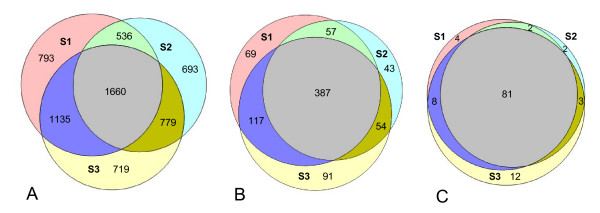
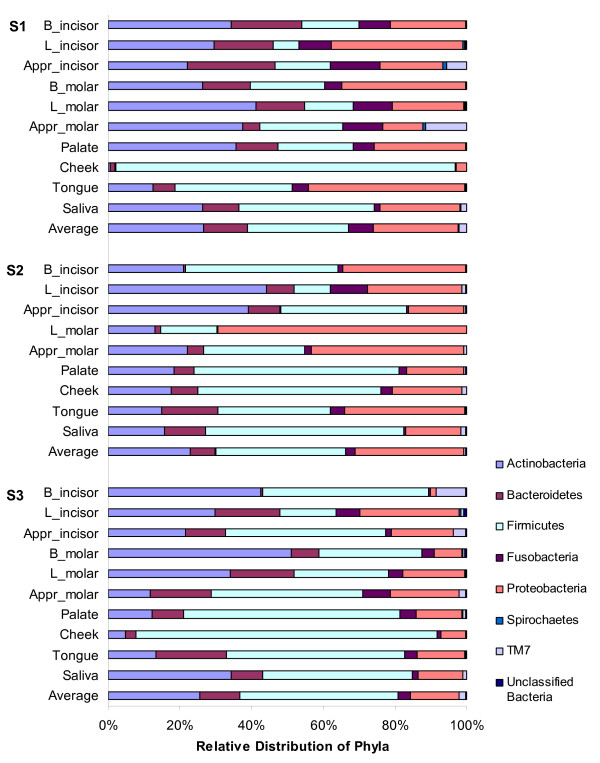
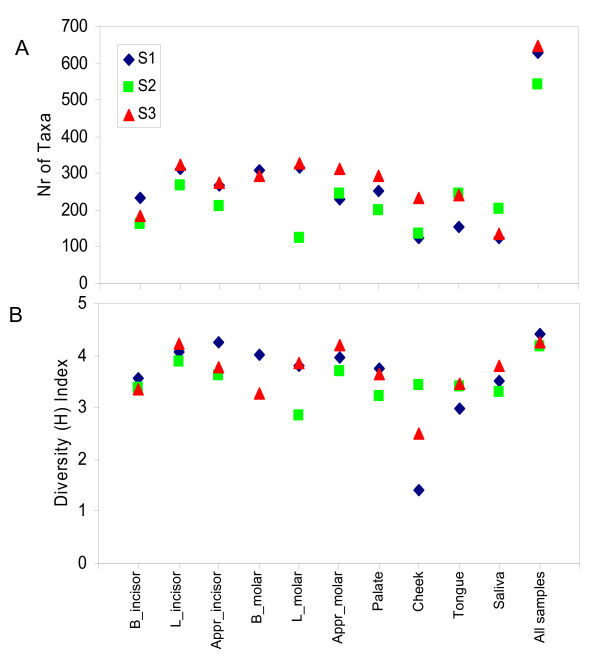
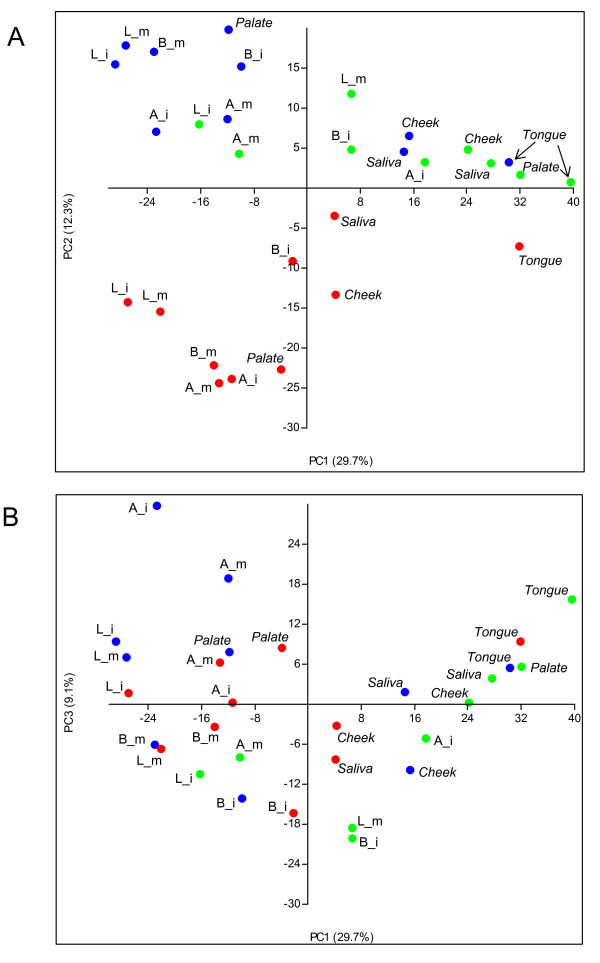
BACKGROUND: Most studies examining the commensal human oral microbiome are focused on disease or are limited in methodology. In order to diagnose and treat diseases at an early and reversible stage an in-depth definition of health is indispensible. The aim of this study therefore was to define the healthy oral microbiome using recent advances in sequencing technology (454 pyrosequencing). RESULTS: We sampled and sequenced microbiomes from several intraoral niches (dental surfaces, cheek, hard palate, tongue and saliva) in three healthy individuals. Within an individual oral cavity, we found over 3600 unique sequences, over 500 different OTUs or "species-level" phylotypes (sequences that clustered at 3% genetic difference) and 88 - 104 higher taxa (genus or more inclusive taxon). The predominant taxa belonged to Firmicutes (genus Streptococcus, family Veillonellaceae, genus Granulicatella), Proteobacteria (genus Neisseria, Haemophilus), Actinobacteria (genus Corynebacterium, Rothia, Actinomyces), Bacteroidetes (genus Prevotella, Capnocytophaga, Porphyromonas) and Fusobacteria (genus Fusobacterium).Each individual sample harboured on average 266 "species-level" phylotypes (SD 67; range 123 - 326) with cheek samples being the least diverse and the dental samples from approximal surfaces showing the highest diversity. Principal component analysis discriminated the profiles of the samples originating from shedding surfaces (mucosa of tongue, cheek and palate) from the samples that were obtained from solid surfaces (teeth).There was a large overlap in the higher taxa, "species-level" phylotypes and unique sequences among the three microbiomes: 84% of the higher taxa, 75% of the OTUs and 65% of the unique sequences were present in at least two of the three microbiomes. The three individuals shared 1660 of 6315 unique sequences. These 1660 sequences (the "core microbiome") contributed 66% of the reads. The overlapping OTUs contributed to 94% of the reads, while nearly all reads (99.8%) belonged to the shared higher taxa. CONCLUSIONS: We obtained the first insight into the diversity and uniqueness of individual oral microbiomes at a resolution of next-generation sequencing. We showed that a major proportion of bacterial sequences of unrelated healthy individuals is identical, supporting the concept of a core microbiome at health.
Overview
The claims and statistics of this paper haven’t been checked yet.
Free: it reads the open-access text and checks the first 5 claims that cite a source we can check. Create a free account to check every claim.
Integrity signals
Registry
Cites
Statistics
Figures
Verification
Claims the paper makes
The claims and statistics of this paper haven’t been checked yet.
Free: it reads the open-access text and checks the first 5 claims that cite a source we can check. Create a free account to check every claim.
Claims other papers make about this one
Each is checked against this paper’s own text: does it say what the citing paper says it does?
The source backs part of the claim, not all of it — or backs it for a different population, condition or comparison.
In the citing paper
“Up to 80% of oral bacteria are dominated by about 200 species in the Phyla Firmicutes (esp. Streptococcus, Veillonella, Granulicatella, Gemella spp.) and Proteobacteria (esp. Neisseria, Haemophilus spp.), with contributions from Bacteroidetes, Actinobacteria and Fusobacteria totaling upwards of 95% of all identified oral microbiota (Figure 2)[171–177].”
From Enterosalivary nitrate metabolism and the microbiome: Intersection of microbial metabolism, nitric oxide and diet in cardiac and pulmonary vascular health (2017) · cites this paper as [172]
Experimental — accuracy not yet measuredThe source backs part of the claim, not all of it — or backs it for a different population, condition or comparison.
In the citing paper
“This is of course not the case and the oral flora of a dog comprises hundreds of species (including pathogenic) bacteria, fungi, and viruses [153,154].”
From A One Health Perspective on the Human-Companion Animal Relationship with Emphasis on Zoonotic Aspects. (2020) · cites this paper as [154]
Experimental — accuracy not yet measuredThe source backs part of the claim, not all of it — or backs it for a different population, condition or comparison.
In the citing paper
“The core microbiome comprised typical oral bacteria that are commonly identified as abundant in similar oral microbiome surveys [28].”
From Citizen science charts two major “stomatotypes” in the oral microbiome of adolescents and reveals links with habits and drinking water composition (2018) · cites this paper as [28]
Experimental — accuracy not yet measuredThe cited source says what the claim attributes to it.
In the citing paper
“This core community composition and distribution is consistent with previous studies of oral healthy microbiomes [2, 9, 22, 28–30].”
From Citizen science charts two major “stomatotypes” in the oral microbiome of adolescents and reveals links with habits and drinking water composition (2018) · cites this paper as [28]
Self-check
Percentages, sums and reported differences re-computed from the paper’s own numbers.
The self-check needs the paper’s full text.
Citations
Cites
PAST: PALEONTOLOGICAL STATISTICAL SOFTWARE PACKAGE FOR EDUCATION AND DATA ANALYSIS
Hammer, Ø., Harper, D. A. T., & Ryan, P. D. (2001) · Palaeontologia Electronica · Cited by 17,871
A core gut microbiome in obese and lean twins
Turnbaugh, P. J., Hamady, M., Yatsunenko, T., Cantarel, B. L., Duncan, A., Ley, R. E., Sogin, M. L., Jones, W. J., Roe, B. A., Affourtit, J. P., et al. (2009) · Nature · doi:10.1038/nature07540 · Cited by 7,823 · cited 5×
“A 97% identity in 16S rRNA gene sequences is commonly used to group "species-level" phylotypes [1,11,12].”
InfluentialPruesse, E., Quast, C., Knittel, K., Fuchs, B. M., Ludwig, W., Peplies, J., & Glockner, F. O. (2007) · Nucleic Acids Research · doi:10.1093/nar/gkm864 · Cited by 6,668 · cited 1×
“We then used the GAST algorithm [27] to calculate the percent difference between each unique sequence and its closest match in a database of 69816 unique eubacterial and 2779 unique archaeal V5-V6 sequences, representing 323499 SSU rRNA sequences from the SILVA database [28].”
Microbial diversity in the deep sea and the underexplored “rare biosphere”
Sogin, M. L., Morrison, H. G., Huber, J. A., Welch, D. M., Huse, S. M., Neal, P. R., Arrieta, J. M., & Herndl, G. J. (2006) · Proceedings of the National Academy of Sciences · doi:10.1073/pnas.0605127103 · Cited by 3,701 · cited 3×
“Data analysis GS-FLX sequencing data were processed as previously described [14].”
Self-citationDefining the normal bacterial flora of the oral cavity
Aas, J. A., Paster, B. J., Stokes, L. N., Olsen, I., & Dewhirst, F. E. (2005) · Journal of Clinical Microbiology · doi:10.1128/jcm.43.11.5721-5732.2005 · Cited by 3,092 · cited 3×
“This richness is considerably higher than the 34 to 72 phylotypes and the 6 to 30 genera previously described using conventional cloning and sequencing [15,16].”
Schloss, P. D., & Handelsman, J. (2005) · Applied and Environmental Microbiology · doi:10.1128/aem.71.3.1501-1506.2005 · Cited by 2,501 · cited 1×
“The operational taxonomic units (OTUs) were created by aligning unique sequences and calculating distance matrices as previously described [14] and using DOTUR [30] to create clusters at the 0.”
Dethlefsen, L., Huse, S., Sogin, M. L., & Relman, D. A. (2008) · PLoS Biology · doi:10.1371/journal.pbio.0060280 · Cited by 2,361 · cited 2×
“However, most microbial diversity projects to date have used 3% OTUs [1,13,14], and to be consistent with other research using pyrosequencing sequences we have chosen to use 3% OTUs as well.”
Self-citationThe Ribosomal Database Project (RDP-II): sequences and tools for high-throughput rRNA analysis
Cole, J. R. (2004) · Nucleic Acids Research · doi:10.1093/nar/gki038 · Cited by 1,475 · cited 1×
“Taxa were assigned to each full-length reference sequence using several sources including Entrez Genome entries, cultured strain identities, SILVA, and the Ribosomal Database Project Classifier [29].”
Kunin, V., Engelbrektson, A., Ochman, H., & Hugenholtz, P. (2010) · Environmental Microbiology · doi:10.1111/j.1462-2920.2009.02051.x · Cited by 1,277 · cited 1×
“Recent publications [9,10] have identified the potential inflation of richness and diversity estimates caused by low-quality reads (pyrosequencing noise).”
The influence of sex, handedness, and washing on the diversity of hand surface bacteria
Fierer, N., Hamady, M., Lauber, C. L., & Knight, R. (2008) · Proceedings of the National Academy of Sciences · doi:10.1073/pnas.0807920105 · Cited by 1,108 · cited 3×
“A 97% identity in 16S rRNA gene sequences is commonly used to group "species-level" phylotypes [1,11,12].”
Research works printed but not linked: 1
- Zaura E Plaque stagnation sites and dental caries: Studies on dental biofilm and dentin demineralization in narrow grooves PhD thesis 2002 Amsterdam: Faculteit der Tandheelkunde, University of Amsterdam
Cited by
Grice, E. A., & Segre, J. A. (2011) · Nature Reviews Microbiology · doi:10.1038/nrmicro2537 · Cited by 3,143
Taxonomy, Physiology, and Natural Products of Actinobacteria
Barka, E. A., Vatsa, P., Sanchez, L., Gaveau-Vaillant, N., Jacquard, C., Klenk, H.-P., Clément, C., Ouhdouch, Y., & van Wezel, G. P. (2016) · Microbiology and Molecular Biology Reviews · doi:10.1128/mmbr.00019-15 · Cited by 2,188
Microbial co-occurrence relationships in the human microbiome
Faust, K., Sathirapongsasuti, J. F., Izard, J., Segata, N., Gevers, D., Raes, J., & Huttenhower, C. (2012) · PLoS Computational Biology · doi:10.1371/journal.pcbi.1002606 · Cited by 1,527
“Several previous studies have identified individual microbial interactions that are essential for community stability in the healthy commensal microbiota [12,13,14,15], and many are further implicated in dysbioses and overgrowth of pathogens linked to disease [16].”
BackgroundThe oral microbiome in health and disease
Wade, W. G. (2013) · Pharmacological Research · doi:10.1016/j.phrs.2012.11.006 · Cited by 1,347
Oral multispecies biofilm development and the key role of cell–cell distance
Kolenbrander, P. E., Palmer, R. J., Periasamy, S., & Jakubovics, N. S. (2010) · Nature Reviews Microbiology · doi:10.1038/nrmicro2381 · Cited by 1,309
“More exhaustive surveys using pyrosequencing technologies have suggested that the diversity of bacteria in an individual oral cavity may be slightly higher, around 500 specie”
BackgroundBeyond the Venn diagram: the hunt for a core microbiome
Shade, A., & Handelsman, J. (2012) · Environmental Microbiology · doi:10.1111/j.1462-2920.2011.02585.x · Cited by 1,245
“Conversely, there was a large overlap among oral microbiota phylotypes across communities from three individuals (Zaura et al., 2009).”
Oral microbiome: Unveiling the fundamentals
Deo, P., & Deshmukh, R. (2019) · Journal of Oral and Maxillofacial Pathology · doi:10.4103/jomfp.jomfp_304_18 · Cited by 1,121
Griffen, A. L., Beall, C. J., Campbell, J. H., Firestone, N. D., Kumar, P. S., Yang, Z. K., Podar, M., & Leys, E. J. (2012) · The ISME Journal · doi:10.1038/ismej.2011.191 · Cited by 1,004
“The advent of 454 pyrosequencing of 16S rRNA genes has allowed the collection of thousands of sequences per sample (Keijser et al., 2008; Zaura et al., 2009), and provides the power to comprehensively study bacterial community composition at the level of species.”
BackgroundBiogeography of a human oral microbiome at the micron scale
Mark Welch, J. L., Rossetti, B. J., Rieken, C. W., Dewhirst, F. E., & Borisy, G. G. (2016) · Proceedings of the National Academy of Sciences · doi:10.1073/pnas.1522149113 · Cited by 968
“With deep sequencing, it has become clear that many taxa in the oral microbiota are shared across individuals but are abundant in some samples and almost vanishingly rare in others (19, 38).”
BackgroundYun, J.-H., Roh, S. W., Whon, T. W., Jung, M.-J., Kim, M.-S., Park, D.-S., Yoon, C., Nam, Y.-D., Kim, Y.-J., Choi, J.-H., et al. (2014) · Applied and Environmental Microbiology · doi:10.1128/aem.01226-14 · Cited by 823
“Microbiomes such as the human gut (69), the human oral cavity (70), and zebrafish guts (71) have also been investigated using a deep-sequencing approach.”
BackgroundBiofilm Formation Mechanisms and Targets for Developing Antibiofilm Agents
Rabin, N., Zheng, Y., Opoku-Temeng, C., Du, Y., Bonsu, E., & Sintim, H. O. (2015) · Future Medicinal Chemistry · doi:10.4155/fmc.15.6 · Cited by 753
Biogeography of the ecosystems of the healthy human body
Zhou, Y., Gao, H., Mihindukulasuriya, K. A., La Rosa, P. S., Wylie, K. M., Vishnivetskaya, T., Podar, M., Warner, B., Tarr, P. I., Nelson, D. E., et al. (2013) · Genome Biology · doi:10.1186/gb-2013-14-1-r1 · Cited by 682
Salivary Biomarkers: Toward Future Clinical and Diagnostic Utilities
Yoshizawa, J. M., Schafer, C. A., Schafer, J. J., Farrell, J. J., Paster, B. J., & Wong, D. T. W. (2013) · Clinical Microbiology Reviews · doi:10.1128/cmr.00021-13 · Cited by 656
“Even though certain studies report that 700 to 1,200 bacterial species (38, 39, 40, 41, 42) (www.”
BackgroundThe oral microbiome: diversity, biogeography and human health
Baker, J. L., Mark Welch, J. L., Kauffman, K. M., McLean, J. S., & He, X. (2024) · Nature Reviews Microbiology · doi:10.1038/s41579-023-00963-6 · Cited by 661
Bacterial diversity in the oral cavity of 10 healthy individuals
Bik, E. M., Long, C. D., Armitage, G. C., Loomer, P., Emerson, J., Mongodin, E. F., Nelson, K. E., Gill, S. R., Fraser-Liggett, C. M., & Relman, D. A. (2010) · The ISME Journal · doi:10.1038/ismej.2010.30 · Cited by 651
“Two recent 16S rRNA gene-tag pyrosequencing-based studies have suggested that there are B250–300 species-level phylotypes in the mouth of any given individual, and that they segregate based on mucosal versus dental surfaces (Keijser et al., 2008; Zaura et al., 2009).”
BackgroundThe oral microbiome and the immunobiology of periodontal disease and caries
Costalonga, M., & Herzberg, M. C. (2014) · Immunology Letters · doi:10.1016/j.imlet.2014.08.017 · Cited by 645
“In the broadest terms, the oral cavity harbors at least five communities: the teeth, which are non-shedding surfaces; the saliva; the dorsal and lateral surfaces of the tongue; and the gingival sulcus and the periodontal pocket; and the remaining epithelial surfaces of the oral mucosae [2,18]”
BackgroundInfluentialDefining and quantifying the core microbiome: Challenges and prospects
Neu, A. T., Allen, E. E., & Roy, K. (2021) · Proceedings of the National Academy of Sciences · doi:10.1073/pnas.2104429118 · Cited by 604
Microbiota restoration: natural and supplemented recovery of human microbial communities
Reid, G., Younes, J. A., Van der Mei, H. C., Gloor, G. B., Knight, R., & Busscher, H. J. (2011) · Nature Reviews Microbiology · doi:10.1038/nrmicro2473 · Cited by 588
“In the oral cavity, which is home to an unexpected microbial diversit”
BackgroundHuman Occupancy as a Source of Indoor Airborne Bacteria
Hospodsky, D., Qian, J., Nazaroff, W. W., Yamamoto, N., Bibby, K., Rismani-Yazdi, H., & Peccia, J. (2012) · PLoS ONE · doi:10.1371/journal.pone.0034867 · Cited by 562
“[31,38,39,40,41,42], were also found in the indoor air and floor”
BackgroundInsights into the human oral microbiome
Verma, D., Garg, P. K., & Dubey, A. K. (2018) · Archives of Microbiology · doi:10.1007/s00203-018-1505-3 · Cited by 541
“Ninety-six percent of the oral bacteria have been categorized into six major phyla that include Firmicutes, Actinobacteria, Bacteroidetes, Proteobacteria, Spirochaetes, and Fusobacteria, while remaining 4% taxa belong to phyla Euryarchaeota, Chlamydia, Chloroflexi, SR1, Synergistetes, Tenericutes and TM7 (Zaura et al.”
BackgroundInfluentialBoissière, A., Tchioffo, M. T., Bachar, D., Abate, L., Marie, A., Nsango, S. E., Shahbazkia, H. R., Awono-Ambene, P. H., Levashina, E. A., Christen, R., et al. (2012) · PLoS Pathogens · doi:10.1371/journal.ppat.1002742 · Cited by 547
Human Microbiome in Health and Disease
Pflughoeft, K. J., & Versalovic, J. (2012) · Annual Review of Pathology: Mechanisms of Disease · doi:10.1146/annurev-pathol-011811-132421 · Cited by 529
The oral microbiome in health and disease and the potential impact on personalized dental medicine
Zarco, M., Vess, T., & Ginsburg, G. (2012) · Oral Diseases · doi:10.1111/j.1601-0825.2011.01851.x · Cited by 495
“Within the oral cavity, there are two types of surfaces for which bacteria can colonize: the hard surfaces of teeth and the soft tissue of the oral mucosa (Zaura et al, 2009).”
BackgroundInfluentialAntimicrobial Photodynamic Therapy to Control Clinically Relevant Biofilm Infections
Hu, X., Huang, Y.-Y., Wang, Y., Wang, X., & Hamblin, M. R. (2018) · Frontiers in Microbiology · doi:10.3389/fmicb.2018.01299 · Cited by 502
“Oral Infections The oral cavity provides an optimal environment for biofilm formation (Zaura et al., 2009).”
BackgroundThe role of natural salivary defences in maintaining a healthy oral microbiota
Lynge Pedersen, A. M., & Belstrøm, D. (2019) · Journal of Dentistry · doi:10.1016/j.jdent.2018.08.010 · Cited by 476
The Human Microbiome Project: A Community Resource for the Healthy Human Microbiome
Gevers, D., Knight, R., Petrosino, J. F., Huang, K., McGuire, A. L., Birren, B. W., Nelson, K. E., White, O., Methé, B. A., & Huttenhower, C. (2012) · PLoS Biology · doi:10.1371/journal.pbio.1001377 · Cited by 493
“microbiota [56,57], or might be classifi-”
The microbiome of the upper respiratory tract in health and disease
Kumpitsch, C., Koskinen, K., Schöpf, V., & Moissl-Eichinger, C. (2019) · BMC Biology · doi:10.1186/s12915-019-0703-z · Cited by 465
From Structure to Function: the Ecology of Host-Associated Microbial Communities
Robinson, C. J., Bohannan, B. J. M., & Young, V. B. (2010) · Microbiology and Molecular Biology Reviews · doi:10.1128/mmbr.00014-10 · Cited by 457
Zaura, E., Brandt, B. W., Teixeira de Mattos, M. J., Buijs, M. J., Caspers, M. P. M., Rashid, M.-U., Weintraub, A., Nord, C. E., Savell, A., Hu, Y., et al. (2015) · mBio · doi:10.1128/mbio.01693-15 · Cited by 447
Self-citationDisordered Microbial Communities in the Upper Respiratory Tract of Cigarette Smokers
Charlson, E. S., Chen, J., Custers-Allen, R., Bittinger, K., Li, H., Sinha, R., Hwang, J., Bushman, F. D., & Collman, R. G. (2010) · PLoS ONE · doi:10.1371/journal.pone.0015216 · Cited by 437
“7%, consistent with previous reports surveying the throat and oral cavity [18,19,29,35].”
ResultDeep Sequencing of the Oral Microbiome Reveals Signatures of Periodontal Disease
Liu, B., Faller, L. L., Klitgord, N., Mazumdar, V., Ghodsi, M., Sommer, D. D., Gibbons, T. R., Treangen, T. J., Chang, Y.-C., Li, S., et al. (2012) · PLoS ONE · doi:10.1371/journal.pone.0037919 · Cited by 411
“candidate bacterial division with no cultivated representatives, and previous studies have shown microbes from this division to be commonly found in the human oral flora but at relatively low abundance, generally around 1% of the population [31,32], though abundances as high as 8% were previously reported [6].”
BackgroundRole of Oral Microbiome Signatures in Diagnosis and Prognosis of Oral Cancer
Chattopadhyay, I., Verma, M., & Panda, M. (2019) · Technology in Cancer Research & Treatment · doi:10.1177/1533033819867354 · Cited by 407
“The predominant oral microbial communities belonged to Firmicutes (genus Streptococcus, family Veillonellaceae, genus Granulicatella), Proteobacteria (genera Neisseria, Haemophilus), Actinobacteria (genera Corynebacterium, Rothia, Actinomyces), Bacteroidetes (genera Prevotella, Capnocytophaga, and Porphyromonas), and…”
BackgroundCaselli, E., Fabbri, C., D’Accolti, M., Soffritti, I., Bassi, C., Mazzacane, S., & Franchi, M. (2020) · BMC Microbiology · doi:10.1186/s12866-020-01801-y · Cited by 391
“Anaerobes (Actinomyces, Veillonella, Fusobacterium) were particularly represented in subgingival plaque specimens, and Simonsiella was exclusively detected in the hard palate, confirming previous reports obtained by 16S rRNA NGS [17].”
BackgroundInfluentialDiversity of Bacteria at Healthy Human Conjunctiva
Dong, Q., Brulc, J. M., Iovieno, A., Bates, B., Garoutte, A., Miller, D., Revanna, K. V., Gao, X., Antonopoulos, D. A., Slepak, V. Z., et al. (2011) · Investigative Opthalmology & Visual Science · doi:10.1167/iovs.10-6939 · Cited by 384
“identified in the microbiome of the oral mucosa.(24) The estimated numbers of OTUs are meant to provide an upper bound of the phylotypes in the observed ocular microbiome because potential sequencing errors and chimeric sequences may inflate the true number of species.”
BackgroundStructural changes in the gut microbiome of constipated patients
Zhu, L., Liu, W., Alkhouri, R., Baker, R. D., Bard, J. E., Quigley, E. M., & Baker, S. S. (2014) · Physiological Genomics · doi:10.1152/physiolgenomics.00082.2014 · Cited by 381
Lessons learned and unlearned in periodontal microbiology
Teles, R., Teles, F., Frias‐Lopez, J., Paster, B., & Haffajee, A. (2013) · Periodontology 2000 · doi:10.1111/prd.12010 · Cited by 357
“complex ecosystems and was only recently introduced for the study of the oral microbiota (172, 410).”
BackgroundChanges in Abundance of Oral Microbiota Associated with Oral Cancer
Schmidt, B. L., Kuczynski, J., Bhattacharya, A., Huey, B., Corby, P. M., Queiroz, E. L. S., Nightingale, K., Kerr, A. R., DeLacure, M. D., Veeramachaneni, R., et al. (2014) · PLoS ONE · doi:10.1371/journal.pone.0098741 · Cited by 375
“(TIF) Figure S5 Diversity of Firmicutes, Fusobacteria, Bacteroidetes, Proteobacteria and Actinobacteria genera in cancer, pre-cancers and healthy normal samples.”
BackgroundInfluentialFan, K., Weisenhorn, P., Gilbert, J. A., & Chu, H. (2018) · Soil Biology and Biochemistry · doi:10.1016/j.soilbio.2018.07.022 · Cited by 379
Saliva microbiomes distinguish caries-active from healthy human populations
Yang, F., Zeng, X., Ning, K., Liu, K.-L., Lo, C.-C., Wang, W., Chen, J., Wang, D., Huang, R., Chang, X., et al. (2012) · The ISME Journal · doi:10.1038/ismej.2011.71 · Cited by 369
“The ISME Journal Furthermore, the saliva microbial diversity in our study as measured by the number of OTUs in each sample was far greater than one recent estimate for three healthy Caucasian male adults (Zaura et al., 2009).”
BackgroundResultInfluentialThe oral microbiome and human health
Yamashita, Y., & Takeshita, T. (2017) · Journal of Oral Science · doi:10.2334/josnusd.16-0856 · Cited by 305
“Furthermore, the bacterial composition of saliva includes bacteria detached from various niches in the oral cavity and resembles that of the tongue coating (8,9,12,13).”
BackgroundReyman, M., van Houten, M. A., Watson, R. L., Chu, M. L. J. N., Arp, K., de Waal, W. J., Schiering, I., Plötz, F. B., Willems, R. J. L., van Schaik, W., et al. (2022) · Nature Communications · doi:10.1038/s41467-022-28525-z · Cited by 343
A practical guide to the oral microbiome and its relation to health and disease
Krishnan, K., Chen, T., & Paster, B. (2017) · Oral Diseases · doi:10.1111/odi.12509 · Cited by 347
“This is achieved by an in silico search for specific ‘probe’ sequences, called ProbeSeq for HOMINGS, that targets approximately 600 species.”
MethodOligotyping analysis of the human oral microbiome
Eren, A. M., Borisy, G. G., Huse, S. M., & Mark Welch, J. L. (2014) · Proceedings of the National Academy of Sciences · doi:10.1073/pnas.1409644111 · Cited by 347
“That more than half of the data consisted of oligotypes detected in at least 95% of subjects confirms earlier evidence (5, 9) that a substantial portion of the oral microbiome is broadly shared across individuals.”
BackgroundResultSelf-citationHuman microbiome: an academic update on human body site specific surveillance and its possible role
Dekaboruah, E., Suryavanshi, M. V., Chettri, D., & Verma, A. K. (2020) · Archives of Microbiology · doi:10.1007/s00203-020-01931-x · Cited by 336
Pushalkar, S., Ji, X., Li, Y., Estilo, C., Yegnanarayana, R., Singh, B., Li, X., & Saxena, D. (2012) · BMC Microbiology · doi:10.1186/1471-2180-12-144 · Cited by 339
“oral taxon 215 present in non-tumor tissues are known putative representatives of predominant genera in healthy oral microbiome [69].”
BackgroundThe Oral Microbiota: Community Composition, Influencing Factors, Pathogenesis, and Interventions
Li, X., Liu, Y., Yang, X., Li, C., & Song, Z. (2022) · Frontiers in Microbiology · doi:10.3389/fmicb.2022.895537 · Cited by 328
Valm, A. M., Welch, J. L. M., Rieken, C. W., Hasegawa, Y., Sogin, M. L., Oldenbourg, R., Dewhirst, F. E., & Borisy, G. G. (2011) · Proceedings of the National Academy of Sciences · doi:10.1073/pnas.1101134108 · Cited by 344
“More than 600 species of microbes have been identified as resident in the human oral cavity by traditional molecular methods (15), and recent studies suggest far greater diversity (16).”
BackgroundMukherjee, P. K., Chandra, J., Retuerto, M., Sikaroodi, M., Brown, R. E., Jurevic, R., Salata, R. A., Lederman, M. M., Gillevet, P. M., & Ghannoum, M. A. (2014) · PLoS Pathogens · doi:10.1371/journal.ppat.1003996 · Cited by 337
“[64] who showed that 15 bacterial genera were present in the core oral bacteriome of healthy individuals.”
BackgroundOral cavity contains distinct niches with dynamic microbial communities
Xu, X., He, J., Xue, J., Wang, Y., Li, K., Zhang, K., Guo, Q., Liu, X., Zhou, Y., Cheng, L., et al. (2015) · Environmental Microbiology · doi:10.1111/1462-2920.12502 · Cited by 335
“Several studies have been performed to define the ‘normal’ residents at different oral niches including saliva (Nasidze et al., 2009), supragingival plaque (Keijser et al., 2008), subgingival plaque (Bik et al., 2010) and mucosa (Zaura et al., 2009).”
Bacterial biofilm: structure, function, and antimicrobial resistance
Dufour, D., Leung, V., & Lévesque, C. M. (2010) · Endodontic Topics · doi:10.1111/j.1601-1546.2012.00277.x · Cited by 327
Crielaard, W., Zaura, E., Schuller, A. A., Huse, S. M., Montijn, R. C., & Keijser, B. J. (2011) · BMC Medical Genomics · doi:10.1186/1755-8794-4-22 · Cited by 320
“Only studies using an open-ended approach such as individually barcoded sample pyrosequencing [4] will allow full comparisons of individual microbiomes.”
InfluentialSelf-citationChen, H., & Jiang, W. (2014) · Frontiers in Microbiology · doi:10.3389/fmicb.2014.00508 · Cited by 317
“At species level, it had been estimated that the number of species–level phylotypes were between 500 and 10000 (Keijser et al., 2008; Lazarevic et al., 2009), and each oral niches harbored 266 “species-level” phylotypes on average (Zaura et al., 2009).”
BackgroundThe oral microbiome diversity and its relation to human diseases
He, J., Li, Y., Cao, Y., Xue, J., & Zhou, X. (2015) · Folia Microbiologica · doi:10.1007/s12223-014-0342-2 · Cited by 314
“The OSCC surface biofilm harbors increased aerobes and anaerobes, including Veillonella, Fusobacterium, Prevotella, Porphyromonas, Actinomyces, Clostridium, Haemophilus, Enterobacteriaceae, and Streptococcus species (Nagy et al. 1998).”
InfluentialThe interpersonal and intrapersonal diversity of human-associated microbiota in key body sites
Ursell, L. K., Clemente, J. C., Rideout, J. R., Gevers, D., Caporaso, J. G., & Knight, R. (2012) · Journal of Allergy and Clinical Immunology · doi:10.1016/j.jaci.2012.03.010 · Cited by 309
“Different oral sites, including mucosal sites, anaerobic pockets, and teeth each harbor unique microbial assemblages (13, 46).”
BackgroundThe Oral Microbiome in Health and Its Implication in Oral and Systemic Diseases
(2016) · Advances in Applied Microbiology · doi:10.1016/bs.aambs.2016.08.002 · Cited by 306
Microbiota in pancreatic health and disease: the next frontier in microbiome research
Thomas, R. M., & Jobin, C. (2020) · Nature Reviews Gastroenterology & Hepatology · doi:10.1038/s41575-019-0242-7 · Cited by 308
Arweiler, N. B., & Netuschil, L. (2016) · Advances in Experimental Medicine and Biology · doi:10.1007/978-3-319-31248-4_4 · Cited by 296
Hajishengallis, G., & Lamont, R. J. (2021) · Periodontology 2000 · doi:10.1111/prd.12371 · Cited by 281
Overgaauw, P. A. M., Vinke, C. M., van Hagen, M. A. E., & Lipman, L. J. A. (2020) · International Journal of Environmental Research and Public Health · doi:10.3390/ijerph17113789 · Cited by 301
“[154] while others reported infection percentages of 4.”
BackgroundRaman spectroscopy in cell biology and microbiology
Pezzotti, G. (2021) · Journal of Raman Spectroscopy · doi:10.1002/jrs.6204 · Cited by 291
Colombo, A. P. V., & Tanner, A. C. R. (2019) · Journal of Dental Research · doi:10.1177/0022034519830686 · Cited by 277
Biogeography of the Oral Microbiome: The Site-Specialist Hypothesis
Mark Welch, J. L., Dewhirst, F. E., & Borisy, G. G. (2019) · Annual Review of Microbiology · doi:10.1146/annurev-micro-090817-062503 · Cited by 284
Role of microbial communities in the pathogenesis of periodontal diseases and caries
Mira, A., Simon‐Soro, A., & Curtis, M. A. (2017) · Journal of Clinical Periodontology · doi:10.1111/jcpe.12671 · Cited by 279
“…features like pH between different teeth (Kleinberg & Jenkins 1964), and changes in oxygen availability, redox potential, chewing forces and even hygiene differences, among others, have been proposed to influence and fragment a given oral site into multiple micro-niches (Zaura et al. 2009).”
BackgroundSchlecht, L. M., Peters, B. M., Krom, B. P., Freiberg, J. A., Hänsch, G. M., Filler, S. G., Jabra-Rizk, M. A., & Shirtliff, M. E. (2015) · Microbiology · doi:10.1099/mic.0.083485-0 · Cited by 281
“The oral cavity is colonized by an ever-changing population (Lazarevic et al., 2010) of over 900 bacterial species and therefore, it may also be conceivable that similar phenomena with clinical relevance may also occur between C. albicans and oral bacteria (Zaura et al., 2009).”
Microbial Geography of the Oral Cavity
Simón-Soro, Á., Tomás, I., Cabrera-Rubio, R., Catalan, M. D., Nyvad, B., & Mira, A. (2013) · Journal of Dental Research · doi:10.1177/0022034513488119 · Cited by 280
“…oral cavity and from precise and well-characterized disease sites (Nyvad et al., 2013); however, few studies have been published that apply specific sampling for accurate characterization of the different oral microniches (Haffajee et al., 2009; Zaura et al., 2009; HMP, 2012; Segata et al., 2012).”
BackgroundFardini, Y., Chung, P., Dumm, R., Joshi, N., & Han, Y. W. (2010) · Infection and Immunity · doi:10.1128/iai.01395-09 · Cited by 272
“Studies have shown that each individual harbors approximately 266 taxa in the oral microflora (55).”
BackgroundHow is the development of dental biofilms influenced by the host?
Marsh, P. D., & Devine, D. A. (2011) · Journal of Clinical Periodontology · doi:10.1111/j.1600-051x.2010.01673.x · Cited by 264
Analysis of Oral Microbiota in Children with Dental Caries by PCR-DGGE and Barcoded Pyrosequencing
Ling, Z., Kong, J., Jia, P., Wei, C., Wang, Y., Pan, Z., Huang, W., Li, L., Chen, H., & Xiang, C. (2010) · Microbial Ecology · doi:10.1007/s00248-010-9712-8 · Cited by 266
“have showed that a major proportion of oral bacterial sequences of three unrelated healthy individuals by 454 pyrosequencing was identical and indicated that there was “core microbiome” in the oral microbiome [27].”
BackgroundThe skin microbiome: Current perspectives and future challenges
Chen, Y. E., & Tsao, H. (2013) · Journal of the American Academy of Dermatology · doi:10.1016/j.jaad.2013.01.016 · Cited by 268
“Metagenomic studies using 16S rRNA sequencing in adults show that the vast majority of skin bacteria and gut flora fall into 4 phyla: Actinobacteria, Firmicutes, Bacteroidetes, and Proteobacteria, but within these phyla exist thousands of distinct species.(1,26,28-37) A survey of the palm microbiome, for instance, fou…”
BackgroundSharma, N., 1 Department of Microbiology, G. C., Bhatia, S., Singh Sodhi, A., Batra, N., & 2 Department of Biotechnology, G. C. (2018) · AIMS Microbiology · doi:10.3934/microbiol.2018.1.42 · Cited by 253
“These are the gingival and hard palate, tongue and throat and dental plaque [119,127].”
BackgroundKumar, P. S., Brooker, M. R., Dowd, S. E., & Camerlengo, T. (2011) · PLoS ONE · doi:10.1371/journal.pone.0020956 · Cited by 255
“However, recent studies suggest that next-generation sequencing methodologies provide an economical and significantly higher-throughput alternative to Sanger sequencing for comparative genomics [10,11].”
BackgroundGoddard, A. F., Staudinger, B. J., Dowd, S. E., Joshi-Datar, A., Wolcott, R. D., Aitken, M. L., Fligner, C. L., & Singh, P. K. (2012) · Proceedings of the National Academy of Sciences · doi:10.1073/pnas.1107435109 · Cited by 256
“Many of these species are normal inhabitants of upper airways (22).”
BackgroundControlling the oral biofilm with antimicrobials
Marsh, P. D. (2010) · Journal of Dentistry · doi:10.1016/s0300-5712(10)70005-1 · Cited by 252
Tobacco Smoking Affects Bacterial Acquisition and Colonization in Oral Biofilms
Kumar, P. S., Matthews, C. R., Joshi, V., de Jager, M., & Aspiras, M. (2011) · Infection and Immunity · doi:10.1128/iai.05371-11 · Cited by 243
“Streptococci are early commensal colonizers of the subgingival and supragingival habitats (14, 29) and are abundant members of these communities in health (1, 31, 32, 58).”
BackgroundEcological dynamics of the vaginal microbiome in relation to health and disease
Greenbaum, S., Greenbaum, G., Moran-Gilad, J., & Weintraub, A. Y. (2019) · American Journal of Obstetrics and Gynecology · doi:10.1016/j.ajog.2018.11.1089 · Cited by 239
Wang, J., Qi, J., Zhao, H., He, S., Zhang, Y., Wei, S., & Zhao, F. (2013) · Scientific Reports · doi:10.1038/srep01843 · Cited by 242
Study of inter- and intra-individual variations in the salivary microbiota
Lazarevic, V., Whiteson, K., Hernandez, D., Francois, P., & Schrenzel, J. (2010) · BMC Genomics · doi:10.1186/1471-2164-11-523 · Cited by 238
“Of these eight genera, all except Gemella were found previously in microbiomes of all of the three investigated subjects assessed by a pyrosequencing approach [11].”
BackgroundInfluentialDysbiosis of upper respiratory tract microbiota in elderly pneumonia patients
de Steenhuijsen Piters, W. A. A., Huijskens, E. G. W., Wyllie, A. L., Biesbroek, G., van den Bergh, M. R., Veenhoven, R. H., Wang, X., Trzciński, K., Bonten, M. J., Rossen, J. W. A., et al. (2016) · The ISME Journal · doi:10.1038/ismej.2015.99 · Cited by 235
“Prevotella and Leptotrichia commonly reside in the oral cavity (Zaura et al. , 2009), gut (Wu et al. , 2011) and vagina (Eribe and Olsen, 2008; Shipitsyna et al. , 2013).”
Comparative Analysis of Korean Human Gut Microbiota by Barcoded Pyrosequencing
Nam, Y.-D., Jung, M.-J., Roh, S. W., Kim, M.-S., & Bae, J.-W. (2011) · PLoS ONE · doi:10.1371/journal.pone.0022109 · Cited by 232
“However, recent studies using deep sequencing analysis have tended to sample Europeans [21,25] and people from the USA [24,35].”
BackgroundInfluentialMicrobiome Dependent Regulation of Tregs and Th17 Cells in Mucosa
Pandiyan, P., Bhaskaran, N., Zou, M., Schneider, E., Jayaraman, S., & Huehn, J. (2019) · Frontiers in Immunology · doi:10.3389/fimmu.2019.00426 · Cited by 236
Nam, Y.-D., Kim, H. J., Seo, J.-G., Kang, S. W., & Bae, J.-W. (2013) · PLoS ONE · doi:10.1371/journal.pone.0082659 · Cited by 230
“They have been successfully applied to characterize the microbial diversity in various regions of the human body, including the skin [12], oral cavity [13], vagina [14], and intestinal tract [15,16].”
BackgroundFungal-Bacterial Interactions in Health and Disease
Krüger, W., Vielreicher, S., Kapitan, M., Jacobsen, I., & Niemiec, M. (2019) · Pathogens · doi:10.3390/pathogens8020070 · Cited by 227
“Some genera such as Streptococcus , Gemella , Granulicatella , Veillonella , and Fusobacterium inhabited almost all oral subniches (Figure 3), whereas other genera, for example, Prevotella , Bacteroides , Corynebacterium , Pasteurella , and Neisseria were found in selected sites [7,44,45,119].”
Enrichment of oral microbiota in early cystic precursors to invasive pancreatic cancer
Gaiser, R. A., Halimi, A., Alkharaan, H., Lu, L., Davanian, H., Healy, K., Hugerth, L. W., Ateeb, Z., Valente, R., Fernández Moro, C., et al. (2019) · Gut · doi:10.1136/gutjnl-2018-317458 · Cited by 227
The Microbiome in Populations with a Low and High Prevalence of Caries
Johansson, I., Witkowska, E., Kaveh, B., Lif Holgerson, P., & Tanner, A. C. R. (2016) · Journal of Dental Research · doi:10.1177/0022034515609554 · Cited by 222
“2013), but the present and other studies (Nasidze et al. 2009; Zaura et al. 2009) support the hypothesis of a core microbiome at least in populations with a common ancestry (Mason et al.”
ResultIntegrated hypothesis of dental caries and periodontal diseases
Nyvad, B., & Takahashi, N. (2020) · Journal of Oral Microbiology · doi:10.1080/20002297.2019.1710953 · Cited by 194
“diversity [72,73] suggesting that oral microbial communities generally contain a large pool of functional resilience factors.”
BackgroundHall, M. W., Singh, N., Ng, K. F., Lam, D. K., Goldberg, M. B., Tenenbaum, H. C., Neufeld, J. D., G. Beiko, R., & Senadheera, D. B. (2017) · npj Biofilms and Microbiomes · doi:10.1038/s41522-016-0011-0 · Cited by 226
“The core microbiota we uncovered are mostly known commensals, and our results are consistent with previous studies.(13,24,36) The core Porphyromonas sp.”
ResultBacterial Community Development in Experimental Gingivitis
Kistler, J. O., Booth, V., Bradshaw, D. J., & Wade, W. G. (2013) · PLoS ONE · doi:10.1371/journal.pone.0071227 · Cited by 226
“[52] found on average 266 species-level phylotypes (97% sequence similarity) per sample and Griffen et al.”
Aging-related changes in the diversity of women’s skin microbiomes associated with oral bacteria
Shibagaki, N., Suda, W., Clavaud, C., Bastien, P., Takayasu, L., Iioka, E., Kurokawa, R., Yamashita, N., Hattori, Y., Shindo, C., et al. (2017) · Scientific Reports · doi:10.1038/s41598-017-10834-9 · Cited by 226
Non-pathogenic Neisseria: members of an abundant, multi-habitat, diverse genus
Liu, G., Tang, C. M., & Exley, R. M. (2015) · Microbiology · doi:10.1099/mic.0.000086 · Cited by 224
“While most oral microbiome studies have been conducted on Caucasians or Asians (Keijser et al., 2008; Ling et al., 2013; Said et al., 2014; Zaura et al., 2009), an interesting investigation focused on isolated communities, with oral swabs taken from six adult Amerindian participants of Guahibo ethnicity living in an i…”
BackgroundInfluentialComposition and development of oral bacterial communities
Palmer Jr, R. J. (2014) · Periodontology 2000 · doi:10.1111/j.1600-0757.2012.00453.x · Cited by 220
Ecological Approaches to Oral Biofilms: Control without Killing
Marsh, P. D., Head, D. A., & Devine, D. A. (2015) · Caries Research · doi:10.1159/000377732 · Cited by 208
“Although there are intersubject and intersite variations in the microbiota, and only a limited number of sites and subjects have been analysed, a core oral microbiome has been proposed, which includes representatives of the following genera: Streptococcus , Veillonella , Granulicatella , Neisseria , Haemophilus , Cory…”
BackgroundRashid, M.-U., Zaura, E., Buijs, M. J., Keijser, B. J. F., Crielaard, W., Nord, C. E., & Weintraub, A. (2015) · Clinical Infectious Diseases · doi:10.1093/cid/civ137 · Cited by 206
Self-citationWacklin, P., Kaukinen, K., Tuovinen, E., Collin, P., Lindfors, K., Partanen, J., Mäki, M., & Mättö, J. (2013) · Inflammatory Bowel Diseases · doi:10.1097/mib.0b013e31828029a9 · Cited by 207
The Relationship of the Oral Microbiotia to Periodontal Health and Disease
Curtis, M. A., Zenobia, C., & Darveau, R. P. (2011) · Cell Host & Microbe · doi:10.1016/j.chom.2011.09.008 · Cited by 206
“The development of increasingly sophisticated software to minimize these problems should lead to increasingly accurate estimates of the species diversity of the oral microbiome, and, indeed, more recent investigations have tended to be more conservative (Zaura et al., 2009).”
MethodOral biofilms: a reservoir of transferable, bacterial, antimicrobial resistance.
Roberts, A. P., & Mullany, P. (2010) · Expert Review of Anti-infective Therapy · doi:10.1586/eri.10.106 · Cited by 204
Characterization of the salivary microbiome in patients with pancreatic cancer
Torres, P. J., Fletcher, E. M., Gibbons, S. M., Bouvet, M., Doran, K. S., & Kelley, S. T. (2015) · PeerJ · doi:10.7717/peerj.1373 · Cited by 203
Microbiomes of Site-Specific Dental Plaques from Children with Different Caries Status
Richards, V. P., Alvarez, A. J., Luce, A. R., Bedenbaugh, M., Mitchell, M. L., Burne, R. A., & Nascimento, M. M. (2017) · Infection and Immunity · doi:10.1128/iai.00106-17 · Cited by 201
A comprehensive review of the application of probiotics and postbiotics in oral health
Homayouni Rad, A., Pourjafar, H., & Mirzakhani, E. (2023) · Frontiers in Cellular and Infection Microbiology · doi:10.3389/fcimb.2023.1120995 · Cited by 186
“a more palpable recess than the periodontal recesses in terms of species that normally colonize, suggesting the necessity of recessspecific conformity, and probiotic strains intended to colonize the periodontal recesses may not freely colonize the tongue to exert health-promoting impacts (Zaura et al., 2009; Eren et a…”
BackgroundStahringer, S. S., Clemente, J. C., Corley, R. P., Hewitt, J., Knights, D., Walters, W. A., Knight, R., & Krauter, K. S. (2012) · Genome Research · doi:10.1101/gr.140608.112 · Cited by 180
“…in oral microbiota in healthy in- dividuals by 16S rDNA sequence analysis have been limited by small sample size (Aas et al. 2005; Costello et al. 2009; Lazarevic et al. 2009, 2010; Zaura et al. 2009; Bik et al. 2010; Caporaso et al. 2011) or number of sequences per subject (Nasidze et al. 2009).”
MethodMaternal Microbiome and Pregnancy Outcomes That Impact Infant Health: A Review
Dunlop, A. L., Mulle, J. G., Ferranti, E. P., Edwards, S., Dunn, A. B., & Corwin, E. J. (2015) · Advances in Neonatal Care · doi:10.1097/anc.0000000000000218 · Cited by 190
Metadata
- Authors
- Zaura, E., Keijser, B. J., Huse, S. M., & Crielaard, W.
- Affiliations
- Academic Center for Dentistry Amsterdam (NL)
- Netherlands Organisation for Applied Scientific Research (NL)
- Marine Biological Laboratory (US)
- Corresponding author
- Zaura, Egija
- Venue
- BMC Microbiology
- Published
- 2009
- Volume
- 9
- Issue
- 1
- Pages
- 259
- ISSN
- 1471-2180 (ISSN-L)
- PMC
- PMC2805672
- OpenAlex
- W2117522399
- Cited by
- 1,323
- References
- 29
- Citations by year
- 2026: 68 · 2025: 96 · 2024: 88 · 2023: 87 · 2022: 114 · 2021: 138 · 2020: 118 · 2019: 103 · 2018: 68 · 2017: 69 · 2016: 61 · 2015: 64 · 2014: 55 · 2013: 55 · 2012: 53
- FWCI
- 48.63
- Type
- journal article
- Language
- en
- Open access
- gold
- doi.org
- Licence
- cc-by
- Locations
- BMC Microbiology (publishedVersion, cc-by)
- PubMed Central (publishedVersion, cc-by)
- PubMed (publishedVersion)
- UvA-DARE (University of Amsterdam) (acceptedVersion, other-oa)
- TNO Repository (submittedVersion)
- DOAJ (DOAJ: Directory of Open Access Journals) (submittedVersion, cc-by-sa)
- VU Research Portal (submittedVersion, other-oa)
- Repository hosted by TU Delft Library (TU Delft) (submittedVersion)
- Data Archiving and Networked Services (DANS) (submittedVersion, other-oa)
- Funders
- National Science Foundation (P50 ES012742, 0430724)
- National Institutes of Health
- National Institute of Environmental Health Sciences (P50ES012742)
- Topics
- Health Sciences › Dentistry › Periodontics › Oral microbiology and periodontitis research
- Life Sciences › Biochemistry, Genetics and Molecular Biology › Molecular Biology › Gut microbiota and health
- Physical Sciences › Environmental Science › Ecology › Microbial Community Ecology and Physiology
- Keywords
- oral microbiota, core microbiome, oral bacterial diversity, shared OTUs, dental surfaces, tongue, cheek, hard palate, saliva, Streptococcus, Neisseria, Fusobacterium, Prevotella, Bacteroidetes, Firmicutes, Proteobacteria, actinobacteria
- MeSH terms
- Bacteria, DNA, Bacterial, Humans, Male, Mouth, Cluster Analysis, Sequence Analysis, DNA, Principal Component Analysis, Ribosome Subunits, Small, Bacterial, Metagenome
About these checks
Registry, retraction, Cites and statistics results are computed, not judged, with one exception: a printed reference that no index lists is read once by a model before it counts as a citation error. Claims are extracted by a model and kept only when their quote appears verbatim in the text; each cited source is then checked, with a model’s help, for whether it says what the claim relies on. Those verdicts can be wrong — read the claim’s quote and the cited source before relying on one.
Statistics and arithmetic are recomputed, not judged.
Confidence bands are shown only for fields calibrated on our annotated test set. None is calibrated yet, so no band is shown.
What counts as a claim ›How we measure confidence ›How we check this ›
Are you an author, or do you see a problem with this page? Request a review
Data sources
Bibliographic data: Semantic Scholar, OpenAlex, Crossref.
Contains information from the Semantic Scholar Academic Graph Datasets, made available under the ODC Attribution License (ODC-BY 1.0).
Semantic Scholar’s data is described in: Kinney, R., et al. (2023). The Semantic Scholar Open Data Platform. arXiv:2301.10140.
