

Defining the healthy “core microbiome” of oral microbial communities
Open accessThe DOI matches its Crossref record; 29 of the 29 references it cites were found in a registry or an index.
Abstract
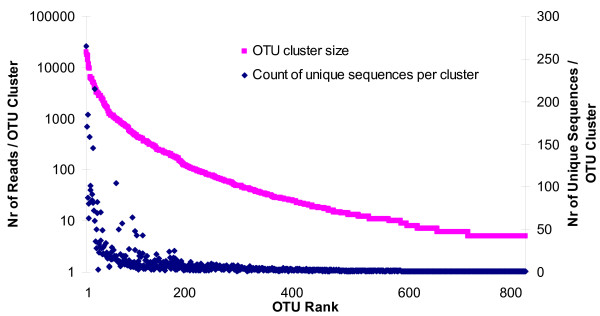
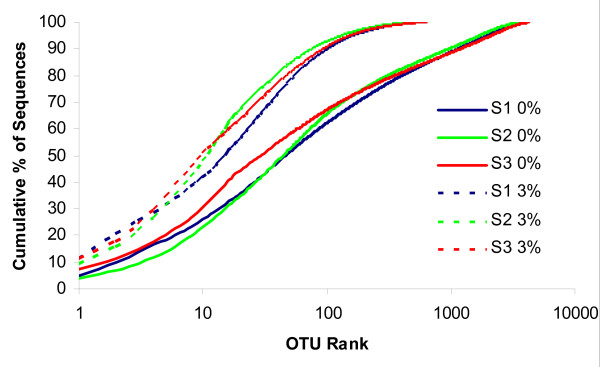
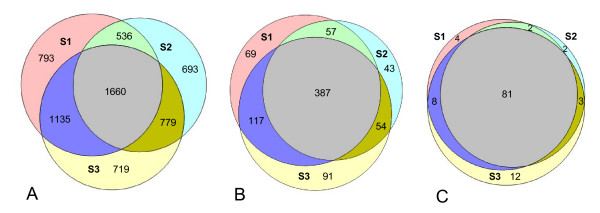
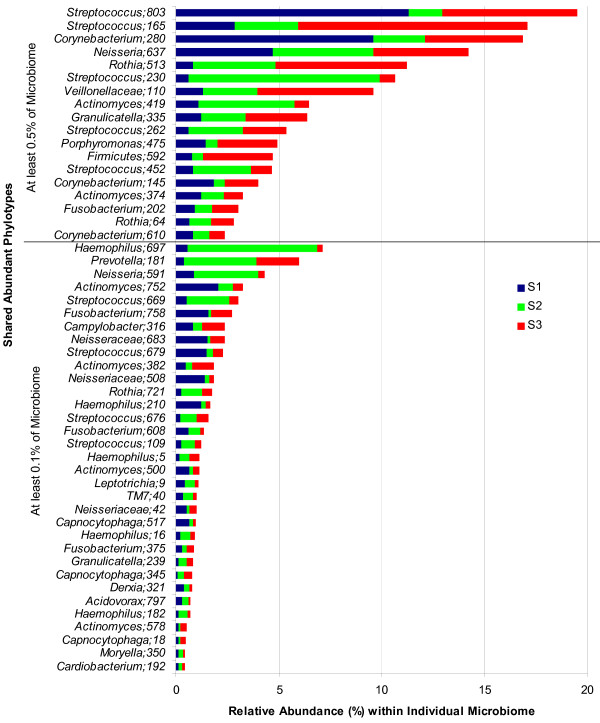
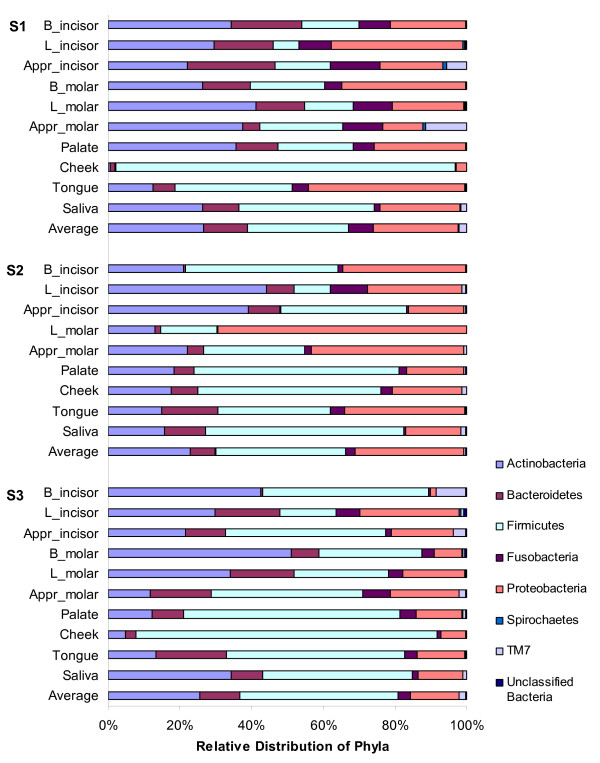
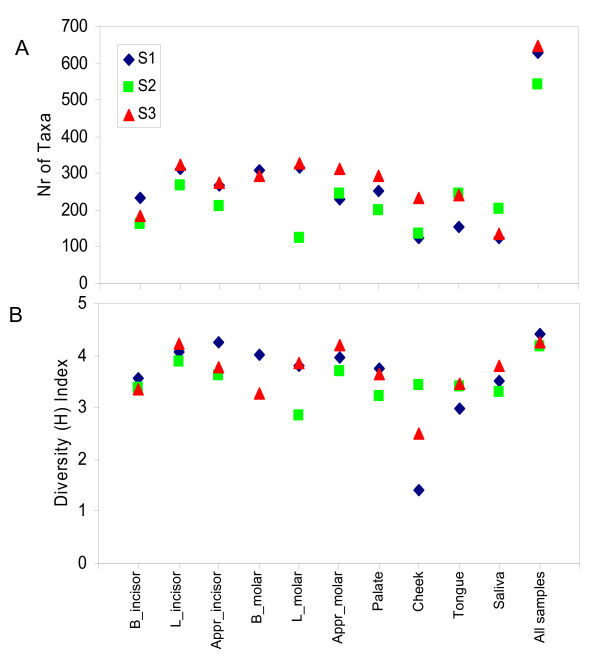
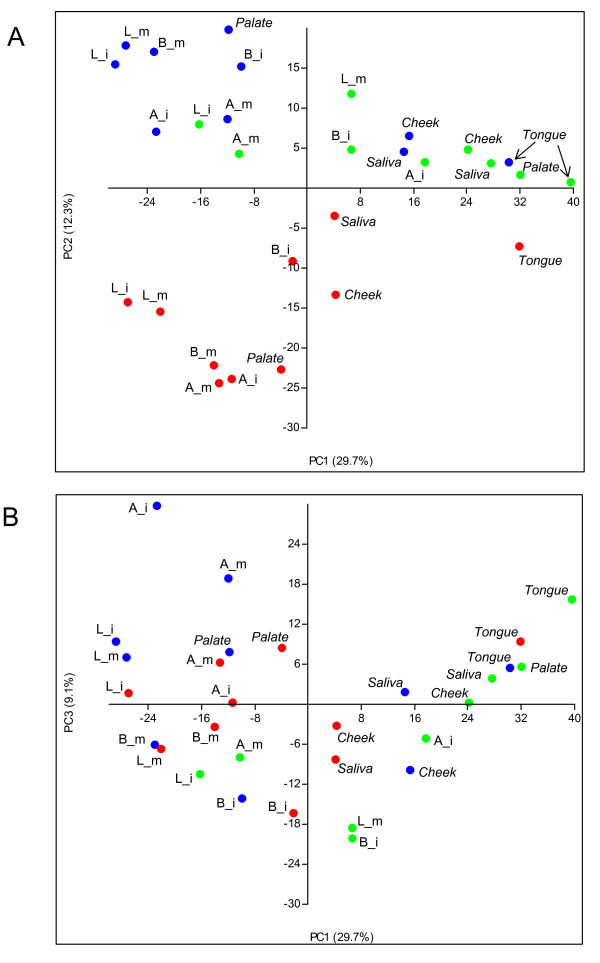
BACKGROUND: Most studies examining the commensal human oral microbiome are focused on disease or are limited in methodology. In order to diagnose and treat diseases at an early and reversible stage an in-depth definition of health is indispensible. The aim of this study therefore was to define the healthy oral microbiome using recent advances in sequencing technology (454 pyrosequencing). RESULTS: We sampled and sequenced microbiomes from several intraoral niches (dental surfaces, cheek, hard palate, tongue and saliva) in three healthy individuals. Within an individual oral cavity, we found over 3600 unique sequences, over 500 different OTUs or "species-level" phylotypes (sequences that clustered at 3% genetic difference) and 88 - 104 higher taxa (genus or more inclusive taxon). The predominant taxa belonged to Firmicutes (genus Streptococcus, family Veillonellaceae, genus Granulicatella), Proteobacteria (genus Neisseria, Haemophilus), Actinobacteria (genus Corynebacterium, Rothia, Actinomyces), Bacteroidetes (genus Prevotella, Capnocytophaga, Porphyromonas) and Fusobacteria (genus Fusobacterium).Each individual sample harboured on average 266 "species-level" phylotypes (SD 67; range 123 - 326) with cheek samples being the least diverse and the dental samples from approximal surfaces showing the highest diversity. Principal component analysis discriminated the profiles of the samples originating from shedding surfaces (mucosa of tongue, cheek and palate) from the samples that were obtained from solid surfaces (teeth).There was a large overlap in the higher taxa, "species-level" phylotypes and unique sequences among the three microbiomes: 84% of the higher taxa, 75% of the OTUs and 65% of the unique sequences were present in at least two of the three microbiomes. The three individuals shared 1660 of 6315 unique sequences. These 1660 sequences (the "core microbiome") contributed 66% of the reads. The overlapping OTUs contributed to 94% of the reads, while nearly all reads (99.8%) belonged to the shared higher taxa. CONCLUSIONS: We obtained the first insight into the diversity and uniqueness of individual oral microbiomes at a resolution of next-generation sequencing. We showed that a major proportion of bacterial sequences of unrelated healthy individuals is identical, supporting the concept of a core microbiome at health.
Overview
The claims and statistics of this paper haven’t been checked yet.
Free: it reads the open-access text and checks the first 5 claims that cite a source we can check. Create a free account to check every claim.
Integrity signals
Registry
Cites
Statistics
Figures
Verification
Claims the paper makes
The claims and statistics of this paper haven’t been checked yet.
Free: it reads the open-access text and checks the first 5 claims that cite a source we can check. Create a free account to check every claim.
Claims other papers make about this one
Each is checked against this paper’s own text: does it say what the citing paper says it does?
The source backs part of the claim, not all of it — or backs it for a different population, condition or comparison.
In the citing paper
“Up to 80% of oral bacteria are dominated by about 200 species in the Phyla Firmicutes (esp. Streptococcus, Veillonella, Granulicatella, Gemella spp.) and Proteobacteria (esp. Neisseria, Haemophilus spp.), with contributions from Bacteroidetes, Actinobacteria and Fusobacteria totaling upwards of 95% of all identified oral microbiota (Figure 2)[171–177].”
From Enterosalivary nitrate metabolism and the microbiome: Intersection of microbial metabolism, nitric oxide and diet in cardiac and pulmonary vascular health (2017) · cites this paper as [172]
Experimental — accuracy not yet measuredThe source backs part of the claim, not all of it — or backs it for a different population, condition or comparison.
In the citing paper
“This is of course not the case and the oral flora of a dog comprises hundreds of species (including pathogenic) bacteria, fungi, and viruses [153,154].”
From A One Health Perspective on the Human-Companion Animal Relationship with Emphasis on Zoonotic Aspects. (2020) · cites this paper as [154]
Experimental — accuracy not yet measuredThe source backs part of the claim, not all of it — or backs it for a different population, condition or comparison.
In the citing paper
“The core microbiome comprised typical oral bacteria that are commonly identified as abundant in similar oral microbiome surveys [28].”
From Citizen science charts two major “stomatotypes” in the oral microbiome of adolescents and reveals links with habits and drinking water composition (2018) · cites this paper as [28]
Experimental — accuracy not yet measuredThe cited source says what the claim attributes to it.
In the citing paper
“This core community composition and distribution is consistent with previous studies of oral healthy microbiomes [2, 9, 22, 28–30].”
From Citizen science charts two major “stomatotypes” in the oral microbiome of adolescents and reveals links with habits and drinking water composition (2018) · cites this paper as [28]
Self-check
Percentages, sums and reported differences re-computed from the paper’s own numbers.
The self-check needs the paper’s full text.
Citations
Cites
PAST: PALEONTOLOGICAL STATISTICAL SOFTWARE PACKAGE FOR EDUCATION AND DATA ANALYSIS
Hammer, Ø., Harper, D. A. T., & Ryan, P. D. (2001) · Palaeontologia Electronica · Cited by 17,871
A core gut microbiome in obese and lean twins
Turnbaugh, P. J., Hamady, M., Yatsunenko, T., Cantarel, B. L., Duncan, A., Ley, R. E., Sogin, M. L., Jones, W. J., Roe, B. A., Affourtit, J. P., et al. (2009) · Nature · doi:10.1038/nature07540 · Cited by 7,823 · cited 5×
“A 97% identity in 16S rRNA gene sequences is commonly used to group "species-level" phylotypes [1,11,12].”
InfluentialPruesse, E., Quast, C., Knittel, K., Fuchs, B. M., Ludwig, W., Peplies, J., & Glockner, F. O. (2007) · Nucleic Acids Research · doi:10.1093/nar/gkm864 · Cited by 6,668 · cited 1×
“We then used the GAST algorithm [27] to calculate the percent difference between each unique sequence and its closest match in a database of 69816 unique eubacterial and 2779 unique archaeal V5-V6 sequences, representing 323499 SSU rRNA sequences from the SILVA database [28].”
Microbial diversity in the deep sea and the underexplored “rare biosphere”
Sogin, M. L., Morrison, H. G., Huber, J. A., Welch, D. M., Huse, S. M., Neal, P. R., Arrieta, J. M., & Herndl, G. J. (2006) · Proceedings of the National Academy of Sciences · doi:10.1073/pnas.0605127103 · Cited by 3,701 · cited 3×
“Data analysis GS-FLX sequencing data were processed as previously described [14].”
Self-citationDefining the normal bacterial flora of the oral cavity
Aas, J. A., Paster, B. J., Stokes, L. N., Olsen, I., & Dewhirst, F. E. (2005) · Journal of Clinical Microbiology · doi:10.1128/jcm.43.11.5721-5732.2005 · Cited by 3,092 · cited 3×
“This richness is considerably higher than the 34 to 72 phylotypes and the 6 to 30 genera previously described using conventional cloning and sequencing [15,16].”
Schloss, P. D., & Handelsman, J. (2005) · Applied and Environmental Microbiology · doi:10.1128/aem.71.3.1501-1506.2005 · Cited by 2,501 · cited 1×
“The operational taxonomic units (OTUs) were created by aligning unique sequences and calculating distance matrices as previously described [14] and using DOTUR [30] to create clusters at the 0.”
Dethlefsen, L., Huse, S., Sogin, M. L., & Relman, D. A. (2008) · PLoS Biology · doi:10.1371/journal.pbio.0060280 · Cited by 2,361 · cited 2×
“However, most microbial diversity projects to date have used 3% OTUs [1,13,14], and to be consistent with other research using pyrosequencing sequences we have chosen to use 3% OTUs as well.”
Self-citationThe Ribosomal Database Project (RDP-II): sequences and tools for high-throughput rRNA analysis
Cole, J. R. (2004) · Nucleic Acids Research · doi:10.1093/nar/gki038 · Cited by 1,475 · cited 1×
“Taxa were assigned to each full-length reference sequence using several sources including Entrez Genome entries, cultured strain identities, SILVA, and the Ribosomal Database Project Classifier [29].”
Kunin, V., Engelbrektson, A., Ochman, H., & Hugenholtz, P. (2010) · Environmental Microbiology · doi:10.1111/j.1462-2920.2009.02051.x · Cited by 1,277 · cited 1×
“Recent publications [9,10] have identified the potential inflation of richness and diversity estimates caused by low-quality reads (pyrosequencing noise).”
The influence of sex, handedness, and washing on the diversity of hand surface bacteria
Fierer, N., Hamady, M., Lauber, C. L., & Knight, R. (2008) · Proceedings of the National Academy of Sciences · doi:10.1073/pnas.0807920105 · Cited by 1,108 · cited 3×
“A 97% identity in 16S rRNA gene sequences is commonly used to group "species-level" phylotypes [1,11,12].”
Research works printed but not linked: 1
- Zaura E Plaque stagnation sites and dental caries: Studies on dental biofilm and dentin demineralization in narrow grooves PhD thesis 2002 Amsterdam: Faculteit der Tandheelkunde, University of Amsterdam
Cited by
Items 201–300 of 1,000
Oral microbiome and peri-implant diseases: where are we now?
Pokrowiecki, R., Mielczarek, A. B., Zaręba, T., & Tyski, S. S. (2017) · Therapeutics and Clinical Risk Management · doi:10.2147/tcrm.s139795 · Cited by 114
“16,17,61,62 The precise definition of the oral microbiome is still difficult.”
Yu, H., Roux, J. J. L., Jiang, Z., Sun, F., Peng, C., & Li, W. (2020) · New Phytologist · doi:10.1111/nph.17125 · Cited by 109
Physical stress and bacterial colonization
Otto, M. (2014) · FEMS Microbiology Reviews · doi:10.1111/1574-6976.12088 · Cited by 102
“5.”
Genetic influences on the human oral microbiome
Demmitt, B. A., Corley, R. P., Huibregtse, B. M., Keller, M. C., Hewitt, J. K., McQueen, M. B., Knight, R., McDermott, I., & Krauter, K. S. (2017) · BMC Genomics · doi:10.1186/s12864-017-4008-8 · Cited by 97
Enrichment of periodontal pathogens from the biofilms of healthy adults
Naginyte, M., Do, T., Meade, J., Devine, D. A., & Marsh, P. D. (2019) · Scientific Reports · doi:10.1038/s41598-019-41882-y · Cited by 101
Beyond the genome: community-level analysis of the microbial world
Zarraonaindia, I., Smith, D. P., & Gilbert, J. A. (2012) · Biology & Philosophy · doi:10.1007/s10539-012-9357-8 · Cited by 120
“For example, studies of the human mouth have shown that different surfaces of the same tooth have distinguishable microbial communities (Zaura et al. 2009), while microbial communities in the open ocean may be stable across many kilometers.”
BackgroundComparison of DNA Extraction Methods in Analysis of Salivary Bacterial Communities
Lazarevic, V., Gaïa, N., Girard, M., François, P., & Schrenzel, J. (2013) · PLoS ONE · doi:10.1371/journal.pone.0067699 · Cited by 99
“In several studies, salivary bacteria were disrupted mechanically using glass, zirconia, or zirconia/silica beads in the presence or absence of phenol, and DNA was purified using different procedures [1,9,10,12].”
MethodEshed, M., Lellouche, J., Gedanken, A., & Banin, E. (2013) · Advanced Functional Materials · doi:10.1002/adfm.201302425 · Cited by 98
Microbiome of Deep Dentinal Caries Lesions in Teeth with Symptomatic Irreversible Pulpitis
Rôças, I. N., Alves, F. R. F., Rachid, C. T. C. D. C., de Lima, K. C., de Assunção, I. V., Gomes, P. N., & Siqueira, J. F., Jr. (2016) · PLoS ONE · doi:10.1371/journal.pone.0154653 · Cited by 107
Crewmember microbiome may influence microbial composition of ISS habitable surfaces
Avila-Herrera, A., Thissen, J. B., Urbaniak, C., Be, N. A., Smith, D. J., Karouia, F., Mehta, S. K., Venkateswaran, K. J., & Jaing, C. J. (2020) · PLoS ONE · doi:10.1371/journal.pone.0231838 · Cited by 105
A microbial survey of the International Space Station (ISS)
Lang, J., Coil, D. A., NECHES, R. Y., Brown, W. E., Cavalier, D., Severance, M., Hampton‐Marcell, J., Gilbert, J. A., & Eisen, J. A. (2017) · PeerJ · doi:10.7717/peerj.4029 · Cited by 122
Xie, G., Chain, P. S. G., Lo, C. ‐., Liu, K. ‐., Gans, J., Merritt, J., & Qi, F. (2010) · Molecular Oral Microbiology · doi:10.1111/j.2041-1014.2010.00587.x · Cited by 97
“Recently, several studies have employed next-generation sequencing technologies to analyse the species richness of the oral microbiota (Keijser et al., 2008; Lazarevic et al., 2009; Zaura et al., 2009).”
BackgroundResultInfluentialEffect of Periodontal Pathogens on the Metatranscriptome of a Healthy Multispecies Biofilm Model
Frias-Lopez, J., & Duran-Pinedo, A. (2012) · Journal of Bacteriology · doi:10.1128/jb.06328-11 · Cited by 96
“(49) were studied, one with 5 of the most abundant and frequently found species in dental plaque from healthy individuals (Actinomyces naeslundii, Lactobacillus casei, Streptococcus mitis, Veillonella parvula, and Fusobacterium nucleatum) (6, 58, 81) and the other with those same species plus two of the most important…”
BackgroundZhu, N., Wang, J., Yu, L., Zhang, Q., Chen, K., & Liu, B. (2019) · Frontiers in Microbiology · doi:10.3389/fmicb.2019.01333 · Cited by 109
Liu, H., Pan, L., Lv, S., Yang, Q., Zhang, H., Chen, W., Lv, Z., & Sun, J. T. (2019) · Frontiers in Physiology · doi:10.3389/fphys.2019.01015 · Cited by 115
Individuality, Stability, and Variability of the Plaque Microbiome
Utter, D. R., Mark Welch, J. L., & Borisy, G. G. (2016) · Frontiers in Microbiology · doi:10.3389/fmicb.2016.00564 · Cited by 93
Quantitative metaproteomics of medieval dental calculus reveals individual oral health status
Jersie-Christensen, R. R., Lanigan, L. T., Lyon, D., Mackie, M., Belstrøm, D., Kelstrup, C. D., Fotakis, A. K., Willerslev, E., Lynnerup, N., Jensen, L. J., et al. (2018) · Nature Communications · doi:10.1038/s41467-018-07148-3 · Cited by 100
Microbial transitions from health to disease
Joseph, S., & Curtis, M. A. (2021) · Periodontology 2000 · doi:10.1111/prd.12377 · Cited by 120
Caries and Periodontitis: Contesting the Conventional Wisdom on Their Aetiology
Manji, F., Dahlén, G., & Fejerskov, O. (2018) · Caries Research · doi:10.1159/000488948 · Cited by 109
“Some less dominating taxa are highly personalized, while others are present in the oral cavity of the entire human populations worldwide and represent the human oral core microbiome [Zaura et al., 2009; Griffen et al., 2011].”
BackgroundGong, H.-L., Shi, Y., Zhou, L., Wu, C.-P., Cao, P.-Y., Tao, L., Xu, C., Hou, D.-S., & Wang, Y.-Z. (2013) · PLoS ONE · doi:10.1371/journal.pone.0066476 · Cited by 96
Dysbiosis Across Multiple Body Sites in Critically Ill Adult Surgical Patients
Yeh, A., Rogers, M. B., Firek, B., Neal, M. D., Zuckerbraun, B. S., & Morowitz, M. J. (2016) · Shock · doi:10.1097/shk.0000000000000691 · Cited by 95
Kageyama, S., Takeshita, T., Asakawa, M., Shibata, Y., Takeuchi, K., Yamanaka, W., & Yamashita, Y. (2017) · PLOS ONE · doi:10.1371/journal.pone.0174782 · Cited by 88
Deep metaproteomic analysis of human salivary supernatant
Jagtap, P., McGowan, T., Bandhakavi, S., Tu, Z. J., Seymour, S., Griffin, T. J., & Rudney, J. D. (2012) · PROTEOMICS · doi:10.1002/pmic.201100503 · Cited by 90
“It has been suggested that the salivary microbiota corresponds most closely to that of the tongue [5, 35].”
BackgroundDysbiosis and Immune Dysregulation in Outer Space
Cervantes, J. L., & Hong, B.-Y. (2015) · International Reviews of Immunology · doi:10.3109/08830185.2015.1027821 · Cited by 90
“For instance, while oral microbiota across three individuals had relatively large shared community [61], gut microbiome showed small number of shared community among individuals [62].”
BackgroundOral Microorganisms and Biofilms: New Insights to Defeat the Main Etiologic Factor of Oral Diseases
Bertolini, M., Costa, R. L. G. F. D. C., Barão, V. A. R., Villar, C. C., Retamal‐Valdes, B., Feres, M., & Souza, J. G. S. (2022) · Microorganisms · doi:10.3390/microorganisms10122413 · Cited by 109
Yamanaka, W., Takeshita, T., Shibata, Y., Matsuo, K., Eshima, N., Yokoyama, T., & Yamashita, Y. (2012) · PLoS ONE · doi:10.1371/journal.pone.0042806 · Cited by 89
“These differences in bacterial composition between saliva and plaque are consistent with previous studies [9,10,13,14].”
Chen, H., Liu, Y., Zhang, M., Wang, G., Qi, Z., Bridgewater, L., Zhao, L., Tang, Z., & Pang, X. (2015) · Scientific Reports · doi:10.1038/srep09053 · Cited by 88
Dang, A. T., Cotton, S., Sankaran-Walters, S., Li, C.-S., Lee, C.-Y. M., Dandekar, S., Paster, B. J., & George, M. D. (2012) · BMC Microbiology · doi:10.1186/1471-2180-12-153 · Cited by 90
Analysis of the association between host genetics, smoking, and sputum microbiota in healthy humans
Lim, M. Y., Yoon, H. S., Rho, M., Sung, J., Song, Y.-M., Lee, K., & Ko, G. (2016) · Scientific Reports · doi:10.1038/srep23745 · Cited by 89
“Significant portion of the sputum microbiota overlapped with commonly observed taxa of the oral microbiota 20,21 .”
Ribeiro, A. A., Azcárate-Peril, M. A., Cadenas, M. B., Butz, N., Paster, B. J., Chen, T., Bair, E., & Arnold, R. R. (2017) · PLoS ONE · doi:10.1371/journal.pone.0180621 · Cited by 100
Lima, B. P., Shi, W., & Lux, R. (2017) · MicrobiologyOpen · doi:10.1002/mbo3.444 · Cited by 91
The gut-eye-lacrimal gland-microbiome axis in Sjögren Syndrome
Trujillo-Vargas, C. M., Schaefer, L., Alam, J., Pflugfelder, S. C., Britton, R. A., & de Paiva, C. S. (2019) · The Ocular Surface · doi:10.1016/j.jtos.2019.10.006 · Cited by 97
“Phylum Firmicutes increases while phylum Proteobacteria, TM7, and Spirochaetes decrease in SS [97-99].”
BackgroundStreptococcus salivarius inhibits immune activation by periodontal disease pathogens
MacDonald, K. W., Chanyi, R. M., Macklaim, J. M., Cadieux, P. A., Reid, G., & Burton, J. P. (2021) · BMC Oral Health · doi:10.1186/s12903-021-01606-z · Cited by 87
“Furthermore, not all microorganisms have a negative impact on health as a vast range of species including members of Pasteurellaceae and Prevotellaceae are common constituents of both a healthy and diseased oral cavity [39, 40].”
BackgroundHu, Y., Shao, Z., Wang, Q., Jiang, Y., Ma, R., Tang, Z., Liu, Z., Liang, J., & Huang, Z. (2013) · PLoS ONE · doi:10.1371/journal.pone.0056343 · Cited by 87
“analyses, which facilitates a direct comparison with other studies [7,13,15].”
BackgroundResultInfluentialMelatonin Alleviates Neuroinflammation and Metabolic Disorder in DSS-Induced Depression Rats
Lv, W., Liu, C., Yu, L., Zhou, J., Li, Y., Xiong, Y., Guo, A., Chao, L., Qu, Q., Guang-wei, W., et al. (2020) · Oxidative Medicine and Cellular Longevity · doi:10.1155/2020/1241894 · Cited by 93
“Venn diagram was generated to visualize the shared and unique OTUs among samples or groups using R package “VennDiagram,” based on the occurrence of OTUs across samples/groups regardless of their relative abundance [56].”
MethodThe bacterial microbiota in the oral mucosa of rural Amerindians
Contreras, M., Costello, E. K., Hidalgo, G., Magris, M., Knight, R., & Dominguez-Bello, M. G. (2010) · Microbiology · doi:10.1099/mic.0.043174-0 · Cited by 87
Phạm, V. H., Abbas, W., Huang, J., He, Q., Zhen, W., Guo, Y., & Wang, Z. (2021) · Poultry Science · doi:10.1016/j.psj.2021.101563 · Cited by 97
“A Venn diagram was created with R software to visualize the shared and unique OTUs among samples based on Silva taxonomic database (Zaura et al., 2009).”
MethodPyrosequencing Analysis of Oral Microbiota in Children with Severe Early Childhood Dental Caries
Jiang, W. H., Zhang, J., & Chen, H. (2013) · Current Microbiology · doi:10.1007/s00284-013-0393-7 · Cited by 90
Candida albicansalters the bacterial microbiome of earlyin vitrooral biofilms
Janus, M. M., Crielaard, W., Volgenant, C. M. C., van der Veen, M. H., Brandt, B. W., & Krom, B. P. (2017) · Journal of Oral Microbiology · doi:10.1080/20002297.2016.1270613 · Cited by 99
Self-citationIdentifying a healthy oral microbiome through metagenomics
Alcaraz, L. D., Belda‐Ferre, P., Cabrera‐Rubio, R., Romero, H., Simón‐Soro, Á., Pignatelli, M., & Mira, Á. (2012) · Clinical Microbiology and Infection · doi:10.1111/j.1469-0691.2012.03857.x · Cited by 82
Role of oral and gut microbiome in nitric oxide-mediated colon motility
Walker, M. Y., Pratap, S., Southerland, J. H., Farmer-Dixon, C. M., Lakshmyya, K., & Gangula, P. R. (2018) · Nitric Oxide · doi:10.1016/j.niox.2017.06.003 · Cited by 81
Regulation of the Competence Pathway as a Novel Role Associated with a Streptococcal Bacteriocin
Dufour, D., Cordova, M., Cvitkovitch, D. G., & Lévesque, C. M. (2011) · Journal of Bacteriology · doi:10.1128/jb.05968-11 · Cited by 81
Exploring the salivary microbiome of children stratified by the oral hygiene index
Mashima, I., Theodorea, C. F., Thaweboon, B., Thaweboon, S., Scannapieco, F. A., & Nakazawa, F. (2017) · PLoS ONE · doi:10.1371/journal.pone.0185274 · Cited by 94
Janiak, M. C., Montague, M. J., Villamil, C. I., Stock, M. K., Trujillo, A. E., DePasquale, A. N., Orkin, J. D., Bauman, S. E., González, O., Platt, M. L., et al. (2021) · Microbiome · doi:10.1186/s40168-021-01009-w · Cited by 87
“Five of the top 10 most abundant genera that we identified are considered to be part of the healthy human core oral microbiome (Streptococcus, Veillonella, Fusobacterium, Haemophilus, and Porphyromonas [44, 137, 138]) and a further three are also common in human mouths (Gemella, Alloprevotella, Alloscardovia [44, 139,…”
BackgroundInfluentialThe Core Human Microbiome: Does It Exist and How Can We Find It? A Critical Review of the Concept
Sharon, I., Quijada, N. M., Pasolli, E., Fabbrini, M., Vitali, F., Agamennone, V., Dötsch, A., Selberherr, E., Grau, J. H., Meixner, M., et al. (2022) · Nutrients · doi:10.3390/nu14142872 · Cited by 98
“Actual attempts to define the core and healthy human microbiome are based on genes and community compositions derived from 16S and metagenomics data [12,13,17,20].”
BackgroundRomani Vestman, N., Chen, T., Lif Holgerson, P., Öhman, C., & Johansson, I. (2015) · PLoS ONE · doi:10.1371/journal.pone.0125812 · Cited by 78
“org) [29], facilitate bacterial mapping at the species level in complex oral ecosystems [30].”
Martellacci, L., Quaranta, G., Patini, R., Isola, G., Gallenzi, P., & Masucci, L. (2019) · Materials · doi:10.3390/ma12183010 · Cited by 80
“proposed the concept of a healthy core microbiome, site-specific between saliva and mucous membranes and between teeth and saliva [25].”
BackgroundProfiling the salivary microbiome of the qatari population
Murugesan, S., Al Ahmad, S. F., Singh, P., Saadaoui, M., Kumar, M., & Al Khodor, S. (2020) · Journal of Translational Medicine · doi:10.1186/s12967-020-02291-2 · Cited by 77
Synergistic Antimicrobial Action of Chlorhexidine and Ozone in Endodontic Treatment
Noites, R., Pina‐Vaz, C., Rocha, R., Carvalho, M. F., Gonçalves, A., & Pina‐Vaz, I. (2014) · BioMed Research International · doi:10.1155/2014/592423 · Cited by 77
“Research Article”
The salivary microbiome of diabetic and non‐diabetic adults with periodontal disease
Sabharwal, A., Ganley, K., Miecznikowski, J. C., Haase, E. M., Barnes, V. M., & Scannapieco, F. A. (2018) · Journal of Periodontology · doi:10.1002/jper.18-0167 · Cited by 86
Oral Microbiota Distinguishes Acute Lymphoblastic Leukemia Pediatric Hosts from Healthy Populations
Wang, Y., Xue, J., Zhou, X., You, M., Du, Q., Yang, X., He, J., Zou, J., Cheng, L., Li, M., et al. (2014) · PLoS ONE · doi:10.1371/journal.pone.0102116 · Cited by 84
“High-throughput sequencing has been widely and successfully applied to the exploration of oral microbial diversity in health [16,17,18] and disease-associated communities from those associated with dental caries [19,20], periradicular lesions [21], atherosclerosis [22], and head-neck tumor undergone radiotherapy [23,2…”
BackgroundZhang, Z., Yang, J., Feng, Q., Chen, B., Li, M., Liang, C., Li, M. K., Li, Z., Xu, Q., Zhang, L., et al. (2019) · Frontiers in Microbiology · doi:10.3389/fmicb.2019.01439 · Cited by 92
“…2019 | Volume 10 | Article 1439 diseases (Dewhirst et al., 2010; Ahn et al., 2012; Han and Wang, 2013; He et al., 2015),such as dental caries, periodontal disease, periapical and pulp diseases, and oral cancer (Takahashi and Nyvad, 2008; Zaura et al., 2009; Chen et al., 2010; Yost et al., 2015).”
BackgroundThe canine oral microbiome: variation in bacterial populations across different niches
Ruparell, A., Inui, T., Staunton, R. H., Wallis, C. V., Deusch, O., & Holcombe, L. J. (2020) · BMC Microbiology · doi:10.1186/s12866-020-1704-3 · Cited by 89
Peng, J., Lu, X., Xie, K., Xu, Y., He, R., Guo, L., Han, Y., Wu, S., Dong, X., Lü, Y., et al. (2019) · Frontiers in Cellular and Infection Microbiology · doi:10.3389/fcimb.2019.00204 · Cited by 78
“A Venn diagram was generated to visualize the shared and unique OTUs among samples or groups using the R package and based upon the occurrence of OTUs across samples/groups regardless of their relative abundance (Zaura et al., 2009).”
MethodOral Microbial Species and Virulence Factors Associated with Oral Squamous Cell Carcinoma
Torralba, M., Aleti, G., Li, W., Moncera, K. J., Lin, Y.-H., Yu, Y., Masternak, M. M., Golusiński, W., Golusiński, P., Lamperska, K. M., et al. (2020) · Microbial Ecology · doi:10.1007/s00248-020-01596-5 · Cited by 81
“Our results are consistent when compared with other studies that demonstrate that, in healthy humans, sequence analysis of oral communities showed the predominant taxa as Corynebacterium, Rothia, and Actinomyces [78] while the most prevalent species correlated with oxidative stress markers in an inter-individual speci…”
ResultInfluentialThe oral-gut microbiota axis: a link in cardiometabolic diseases
Xu, Q., Wang, W., Li, Y., Cui, J., Zhu, M., Liu, Y., & Liu, Y. (2025) · npj Biofilms and Microbiomes · doi:10.1038/s41522-025-00646-5 · Cited by 93
Porphyromonas gingivalis: keeping the pathos out of the biont
Cugini, C., Klepac‐Ceraj, V., Rackaityte, E., Riggs, J. E., & Davey, M. E. (2013) · Journal of Oral Microbiology · doi:10.3402/jom.v5i0.19804 · Cited by 93
Koopman, J. E., van der Kaaij, N. C. W., Buijs, M. J., Elyassi, Y., van der Veen, M. H., Crielaard, W., ten Cate, J. M., & Zaura, E. (2015) · PLOS ONE · doi:10.1371/journal.pone.0137318 · Cited by 74
“Although the role of Haemophilus in health and disease of the oral cavity remains somewhat ambiguous, Rothia is generally associated with health [15, 55].”
BackgroundSelf-citationThe Human Microbiome and Understanding the 16S rRNA Gene in Translational Nursing Science
Ames, N. J., Ranucci, A., Moriyama, B., & Wallen, G. R. (2017) · Nursing Research · doi:10.1097/nnr.0000000000000212 · Cited by 71
Marotz, C. A., Belda‐Ferre, P., Ali, F., Das, P., Huang, S. W., Cantrell, K., Jiang, L., Martino, C., Diner, R. E., Rahman, G., et al. (2021) · Microbiome · doi:10.1186/s40168-021-01083-0 · Cited by 79
“Species from the genus Rothia are common to the human oral microbiome [57], but have also been identified as opportunistic pathogens [40].”
BackgroundIn-vivo shift of the microbiota in oral biofilm in response to frequent sucrose consumption
Anderson, A. C., Rothballer, M., Altenburger, M. J., Woelber, J. P., Karygianni, L., Lagkouvardos, I., Hellwig, E., & Al‐Ahmad, A. (2018) · Scientific Reports · doi:10.1038/s41598-018-32544-6 · Cited by 90
Kageyama, S., Takeshita, T., Furuta, M., Tomioka, M., Asakawa, M., Suma, S., Takeuchi, K., Shibata, Y., Iwasa, Y., & Yamashita, Y. (2018) · The Journals of Gerontology Series A · doi:10.1093/gerona/glx205 · Cited by 73
Li, Y., Wang, X., Wang, X., Wang, J., & Zhao, J. (2020) · Gut Microbes · doi:10.1080/19490976.2020.1773748 · Cited by 80
Acquisition of oral microbiota is driven by environment, not host genetics
Mukherjee, C., Moyer, C. O., Steinkamp, H. M., Hashmi, S. B., Beall, C. J., Guo, X., Ni, A., Leys, E. J., & Griffen, A. L. (2021) · Microbiome · doi:10.1186/s40168-020-00986-8 · Cited by 71
Pozhitkov, A. E., Leroux, B. G., Randolph, T. W., Beikler, T., Flemmig, T. F., & Noble, P. A. (2015) · BMC Oral Health · doi:10.1186/s12903-015-0109-4 · Cited by 71
“, [14–19]).”
Exploring Bacterial Diversity in Hospital Environments by GS-FLX Titanium Pyrosequencing
Poza, M., Gayoso, C., Gómez, M. J., Rumbo‐Feal, S., Tomás, M., Aranda, J., Fernández, A. B., & Bou, G. (2012) · PLoS ONE · doi:10.1371/journal.pone.0044105 · Cited by 85
“These data agree with previous results obtained for microbial communities found in the human body [18,29,30], what could be explained in terms of interactions between the normal microflora living on humans and the ICU ward environment.”
ResultXu, L., Chen, X., Wang, Y., Jiang, W. H., Wang, S., Ling, Z., & Chen, H. (2018) · Frontiers in Physiology · doi:10.3389/fphys.2018.00342 · Cited by 81
“The core microbiome of the healthy oral cavity has been defined using next generation sequencing (Zaura et al., 2009); however, it is known to change according to age and niche (i.”
Ye, Y., Carlsson, G., Wondimu, B., Fahlén, A., Karlsson-Sjöberg, J., Andersson, M., Engstrand, L. G., Yucel‐Lindberg, T., Modéer, T., & Pütsep, K. (2011) · Journal of Clinical Immunology · doi:10.1007/s10875-011-9572-0 · Cited by 80
Metagenomics in ophthalmology: current findings and future prospectives
Borroni, D., Romano, V., Kaye, S. B., Somerville, T. F., Napoli, L., Fasolo, A., Gallon, P., Ponzin, D., Esposito, A., & Ferrari, S. (2019) · BMJ Open Ophthalmology · doi:10.1136/bmjophth-2018-000248 · Cited by 74
Zhang, L., Peng, Y., Zhou, J., George, T., & Feng, G. (2020) · Soil Biology and Biochemistry · doi:10.1016/j.soilbio.2020.107724 · Cited by 74
Microbes as forensic indicators.
Alan, G. H., & Sarah, J. M. (2012) · PubMed · Cited by 98
Differential response of Streptococcus mutans towards friend and foe in mixed-species cultures
Liu, J., Wu, C., Huang, I.-H., Merritt, J., & Qi, F. (2011) · Microbiology · doi:10.1099/mic.0.048314-0 · Cited by 67
New Insights intoPrevotellaDiversity and Medical Microbiology
Alauzet, C., Marchandin, H., & Lozniewski, A. (2010) · Future Microbiology · doi:10.2217/fmb.10.126 · Cited by 77
“It has been shown recently that Prevotella are part of the healthy-core microbiome of oral microbial communities [29].”
BackgroundMethodAraújo, R., Dunlap, C. A., Barnett, S. J., & Franco, C. M. M. (2019) · Frontiers in Plant Science · doi:10.3389/fpls.2019.01038 · Cited by 73
Vanhatalo, A., L'Heureux, J. E., Kelly, J., Blackwell, J. R., Wylie, L. J., Fulford, J., Winyard, P. G., Williams, D. W., van der Giezen, M., & Jones, A. M. (2021) · Redox Biology · doi:10.1016/j.redox.2021.101933 · Cited by 66
“We chose saliva sampling because it provides an overall characterisation of the microbial communities present across all oral sites, and the relative abundances of dominant bacteria in saliva are closely correlated to those on the tongue dorsum [64].”
MethodDavé, V. A., Street, K., Francis, S. S., Bradman, A., Riley, L. W., Eskenazi, B., & Holland, N. (2016) · Pediatric Research · doi:10.1038/pr.2016.9 · Cited by 71
Do different probing depths exhibit striking differences in microbial profiles?
Pérez‐Chaparro, P. J., McCulloch, J. A., Mamizuka, E. M., Moraes, A. D. C. L., Faveri, M., Figueiredo, L. C., Duarte, P. M., & Feres, M. (2017) · Journal Of Clinical Periodontology · doi:10.1111/jcpe.12811 · Cited by 72
Yao, N., Qi, J., Dobbins, M. T., Liang, X. T., Wang, J., Chen, S., Ma, J., & Jiang, G. (2020) · Frontiers in Microbiology · doi:10.3389/fmicb.2020.01665 · Cited by 73
Feng, Z., Zhong, Y.-F., He, G., Sun, H. Y., Chen, Y., Zhou, W., & Lin, S. (2021) · Fish & Shellfish Immunology · doi:10.1016/j.fsi.2021.12.034 · Cited by 72
Zijnge, V., Ammann, T. W., Thurnheer, T., & Gmür, R. (2011) · Frontiers of oral physiology/Frontiers of oral biology · doi:10.1159/000329667 · Cited by 82
Pyrosequencing Analysis of the Salivary Microbiota of Healthy Chinese Children and Adults
Ling, Z., Liu, X., Wang, Y., Li, L., & Xiang, C. (2012) · Microbial Ecology · doi:10.1007/s00248-012-0123-x · Cited by 73
“Our results indicated that there might be a core microbiome in the oral cavity of the healthy human body, which is consistent with a previous study [44].”
Analysis of the salivary microbiome using culture-independent techniques
Lazarević, V., Whiteson, K., Gaïa, N., Gizard, Y., Hernández, D., Farinelli, L., Østerås, M., François, P., & Schrenzel, J. (2012) · Journal of Clinical Bioinformatics · doi:10.1186/2043-9113-2-4 · Cited by 70
Diaz, P. I., Hong, B.-Y., Frias-Lopez, J., Dupuy, A. K., Angeloni, M., Abusleme, L., Terzi, E., Ioannidou, E., Strausbaugh, L. D., & Dongari-Bagtzoglou, A. (2013) · Clinical and Vaccine Immunology · doi:10.1128/cvi.00734-12 · Cited by 66
Microbiome factors in HPV-driven carcinogenesis and cancers
Lin, D., Kouzy, R., Jaoude, J. A., Noticewala, S. S., Medrano, A. Y. D., Klopp, A. H., Taniguchi, C. M., & Colbert, L. E. (2020) · PLoS Pathogens · doi:10.1371/journal.ppat.1008524 · Cited by 70
“Furthermore, sensitive microbial variations at intraoral sites like the tooth surface, gums, and tongue exist [27].”
BackgroundInterbacterial Adhesion Networks within Early Oral Biofilms of Single Human Hosts
Palmer, R. J., Shah, N., Valm, A., Paster, B., Dewhirst, F., Inui, T., & Cisar, J. O. (2017) · Applied and Environmental Microbiology · doi:10.1128/aem.00407-17 · Cited by 66
“A pyrosequencing study across three individuals (5) showed streptococci to dominate in each subject, but the proportions of other genera varied.”
BackgroundResultHuang, X., Li, C., Li, F., Zhao, J., Wan, X., & Wang, K. (2018) · International Journal of Cancer · doi:10.1002/ijc.31342 · Cited by 74
“2), a Venn diagram was generated to show the shared and unique OTUs among groups, based on the occurrence of OTUs in a sample group regardless of their relative abundance.(29) Shared taxa present in all groups (100% core threshold) were defined as the core microbiome.”
BackgroundThe Oral Microbiome Bank of China
Xian, P., Zhou, X., Xu, X., Yuqing, L., Li, Y., Li, J., Su, X., Huang, S., Xu, J., & Liao, G. (2018) · International Journal of Oral Science · doi:10.1038/s41368-018-0018-x · Cited by 79
“The new concept of the "oral core microbiome" suggests that this phenomenon should be personalised in accordance with the ecological characteristics of the oral environment in certain populations at different ages or grades of disease.(15,16,39,73) By monitoring the dynamic changes in the structure and function of mic…”
Li, W., & Ma, Z. S. (2020) · Scientific Reports · doi:10.1038/s41598-019-56561-1 · Cited by 74
Fungal biofilm inhibitors from a human oral microbiome-derived bacterium
Wang, X., Du, L., You, J., King, J. B., & Cichewicz, R. H. (2011) · Organic & Biomolecular Chemistry · doi:10.1039/c2ob06856g · Cited by 69
He, X., Hu, W., Kaplan, C. W., Guo, L., Shi, W., & Lux, R. (2012) · Microbial Ecology · doi:10.1007/s00248-011-9989-2 · Cited by 63
“nucleatum has been frequently isolated from supragingival and saliva samples [19–21] which harbor microbial population dominated by Gram-positive species [22–24].”
BackgroundProbiotics: A new way to fight bacterial pulmonary infections?
Alexandre, Y., Blay, G. L., Boisramé, S., Gall, F. L., Héry-Arnaud, G., Gouriou, S., Vallet, S., & Berre, R. L. (2013) · Médecine et Maladies Infectieuses · doi:10.1016/j.medmal.2013.05.001 · Cited by 89
“[8] Zaura E, Keijser BJF, Huse SM, Crielaard W.”
BackgroundChanges in the oral ecosystem induced by the use of 8% arginine toothpaste
Koopman, J. E., Hoogenkamp, M. A., Buijs, M. J., Brandt, B. W., Keijser, B. J. F., Crielaard, W., ten Cate, J. M., & Zaura, E. (2016) · Archives of Oral Biology · doi:10.1016/j.archoralbio.2016.09.008 · Cited by 68
“Nevertheless, these results do emphasize that saliva and plaque are different niches within the same ecosystem (Human Microbiome Project Consortium, 2012; Yamanaka et al., 2012; Zaura et al., 2009).”
ResultSelf-citationDing, W., Stewart, D. I., Humphreys, P. N., Rout, S. P., & Burke, I. T. (2015) · The Science of The Total Environment · doi:10.1016/j.scitotenv.2015.09.150 · Cited by 68
“MOTHUR analysis indicated that the sequences could be grouped into 12 OTUs based on N98% nearest neighbour similarity (97% identity is commonly used to group at “species-level” (Zaura et al., 2009; Fierer et al., 2008)).”
MethodHigh molecular weight DNA extraction strategies for long‐read sequencing of complex metagenomes
Trigodet, F., Lolans, K., Fogarty, E. C., Shaiber, A., Morrison, H. G., Barreiro, L. B., Jabrì, B., & Eren, A. M. (2022) · Molecular Ecology Resources · doi:10.1111/1755-0998.13588 · Cited by 79
“The top genera included Prevotella , Rothia , Streptococcus , Veillonella , which are commonly found in oral samples (Mark Welch et al. 2016; Zaura et al. 2009).”
BackgroundBacterial Biofilm Composition in Caries and Caries-Free Subjects
Wolff, D., Frese, C., Maier-Kraus, T., Krueger, T., & Wolff, B. (2012) · Caries Research · doi:10.1159/000344022 · Cited by 66
“The foregoing was in accordance with reported data [Aas et al., 2005; Haffajee et al., 2008; Zaura et al., 2009].”
ResultGut microbiota is associated with adiposity markers and probiotics may impact specific genera
Gomes, A. C., Hoffmann, C., & Mota, J. F. (2019) · European Journal of Nutrition · doi:10.1007/s00394-019-02034-0 · Cited by 68
The oral microbiome, pancreatic cancer and human diversity in the age of precision medicine
Herremans, K. M., Riner, A. N., Cameron, M. E., McKinley, K. L., Triplett, E. W., Hughes, S. J., & Trevino, J. G. (2022) · Microbiome · doi:10.1186/s40168-022-01262-7 · Cited by 66
“A core microbiome is similar across healthy individuals [10], whereas the variable microbiome is uniquely shaped by external influences and changes in physiology [11].”
BackgroundDing, Y., Song, Z., Li, H., Chang, L., Pan, T., Gu, X., He, X., & Fan, Z. (2019) · Frontiers in Immunology · doi:10.3389/fimmu.2019.02800 · Cited by 68
“Venn diagrams were generated to visualize the shared and unique OTUs among samples or groups using the R package Venn Diagram, based on the occurrence of OTUs across samples/groups regardless of their relative abundance (33).”
MethodAardema, H., Lisotto, P., Kurilshikov, A., Diepeveen, J. R. J., Friedrich, A. W., Sinha, B. N. M., de Smet, A. M. G. A., & Harmsen, H. J. M. (2020) · Frontiers in Cellular and Infection Microbiology · doi:10.3389/fcimb.2019.00467 · Cited by 63
“In contrast, pathobionts or members of oral microbiota such as Enterococcus, Eggerthella, Peptococcus, and Rothia (Weber and Gold, 2003; Zaura et al., 2009; Yeh et al., 2016; Si et al., 2017; Ugarte-Torres et al., 2018), showed a substantial increase at T2.”
BackgroundBostanghadiri, N., Kouhzad, M., Taki, E., Elahi, Z., Khoshbayan, A., Navidifar, T., & Darban-Sarokhalil, D. (2024) · Frontiers in Microbiology · doi:10.3389/fmicb.2024.1431785 · Cited by 61
“However, we only become aware of them when the microbiota is out of balance and disease occurs (Zaura et al., 2009; Deo and Deshmukh, 2019).”
Background
Metadata
- Authors
- Zaura, E., Keijser, B. J., Huse, S. M., & Crielaard, W.
- Affiliations
- Academic Center for Dentistry Amsterdam (NL)
- Netherlands Organisation for Applied Scientific Research (NL)
- Marine Biological Laboratory (US)
- Corresponding author
- Zaura, Egija
- Venue
- BMC Microbiology
- Published
- 2009
- Volume
- 9
- Issue
- 1
- Pages
- 259
- ISSN
- 1471-2180 (ISSN-L)
- PMC
- PMC2805672
- OpenAlex
- W2117522399
- Cited by
- 1,323
- References
- 29
- Citations by year
- 2026: 68 · 2025: 96 · 2024: 88 · 2023: 87 · 2022: 114 · 2021: 138 · 2020: 118 · 2019: 103 · 2018: 68 · 2017: 69 · 2016: 61 · 2015: 64 · 2014: 55 · 2013: 55 · 2012: 53
- FWCI
- 48.63
- Type
- journal article
- Language
- en
- Open access
- gold
- doi.org
- Licence
- cc-by
- Locations
- BMC Microbiology (publishedVersion, cc-by)
- PubMed Central (publishedVersion, cc-by)
- PubMed (publishedVersion)
- UvA-DARE (University of Amsterdam) (acceptedVersion, other-oa)
- TNO Repository (submittedVersion)
- DOAJ (DOAJ: Directory of Open Access Journals) (submittedVersion, cc-by-sa)
- VU Research Portal (submittedVersion, other-oa)
- Repository hosted by TU Delft Library (TU Delft) (submittedVersion)
- Data Archiving and Networked Services (DANS) (submittedVersion, other-oa)
- Funders
- National Science Foundation (P50 ES012742, 0430724)
- National Institutes of Health
- National Institute of Environmental Health Sciences (P50ES012742)
- Topics
- Health Sciences › Dentistry › Periodontics › Oral microbiology and periodontitis research
- Life Sciences › Biochemistry, Genetics and Molecular Biology › Molecular Biology › Gut microbiota and health
- Physical Sciences › Environmental Science › Ecology › Microbial Community Ecology and Physiology
- Keywords
- oral microbiota, core microbiome, oral bacterial diversity, shared OTUs, dental surfaces, tongue, cheek, hard palate, saliva, Streptococcus, Neisseria, Fusobacterium, Prevotella, Bacteroidetes, Firmicutes, Proteobacteria, actinobacteria
- MeSH terms
- Bacteria, DNA, Bacterial, Humans, Male, Mouth, Cluster Analysis, Sequence Analysis, DNA, Principal Component Analysis, Ribosome Subunits, Small, Bacterial, Metagenome
About these checks
Registry, retraction, Cites and statistics results are computed, not judged, with one exception: a printed reference that no index lists is read once by a model before it counts as a citation error. Claims are extracted by a model and kept only when their quote appears verbatim in the text; each cited source is then checked, with a model’s help, for whether it says what the claim relies on. Those verdicts can be wrong — read the claim’s quote and the cited source before relying on one.
Statistics and arithmetic are recomputed, not judged.
Confidence bands are shown only for fields calibrated on our annotated test set. None is calibrated yet, so no band is shown.
What counts as a claim ›How we measure confidence ›How we check this ›
Are you an author, or do you see a problem with this page? Request a review
Data sources
Bibliographic data: Semantic Scholar, OpenAlex, Crossref.
Contains information from the Semantic Scholar Academic Graph Datasets, made available under the ODC Attribution License (ODC-BY 1.0).
Semantic Scholar’s data is described in: Kinney, R., et al. (2023). The Semantic Scholar Open Data Platform. arXiv:2301.10140.
