

Defining the healthy “core microbiome” of oral microbial communities
Open accessThe DOI matches its Crossref record; 29 of the 29 references it cites were found in a registry or an index.
Abstract
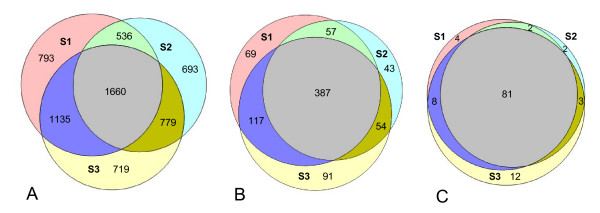
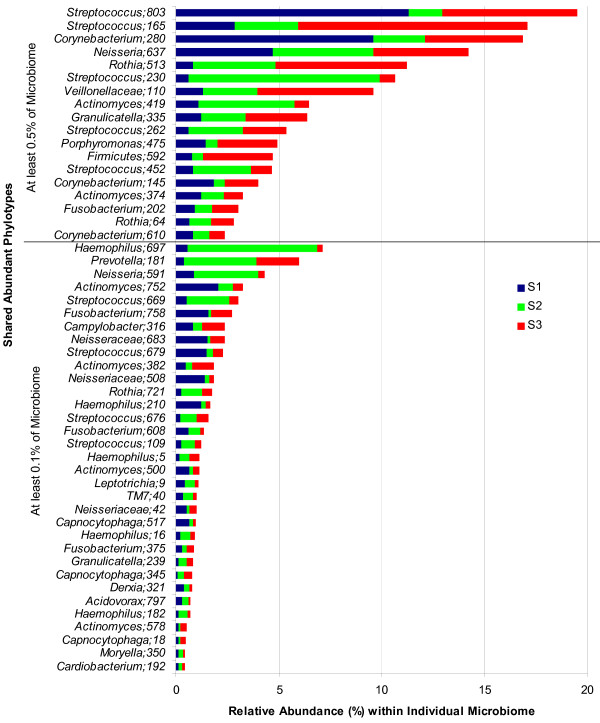
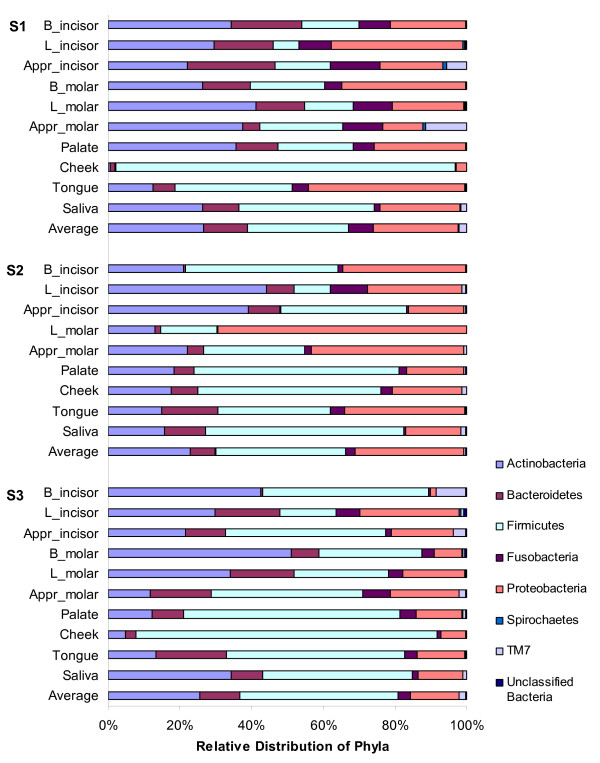
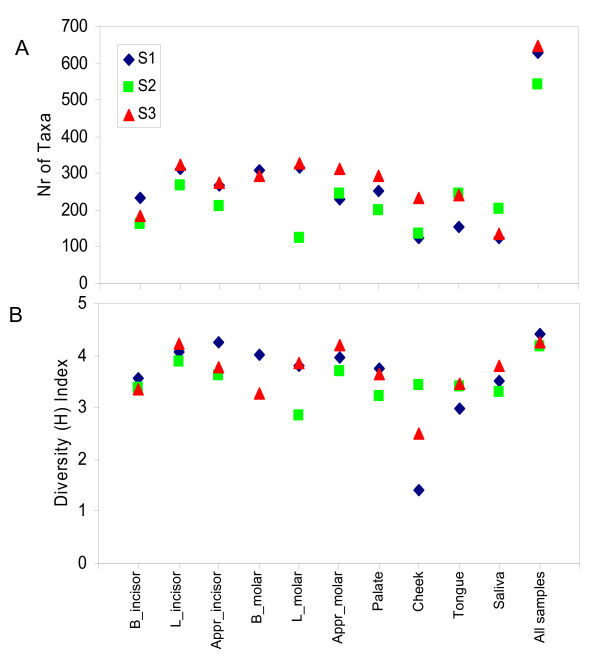
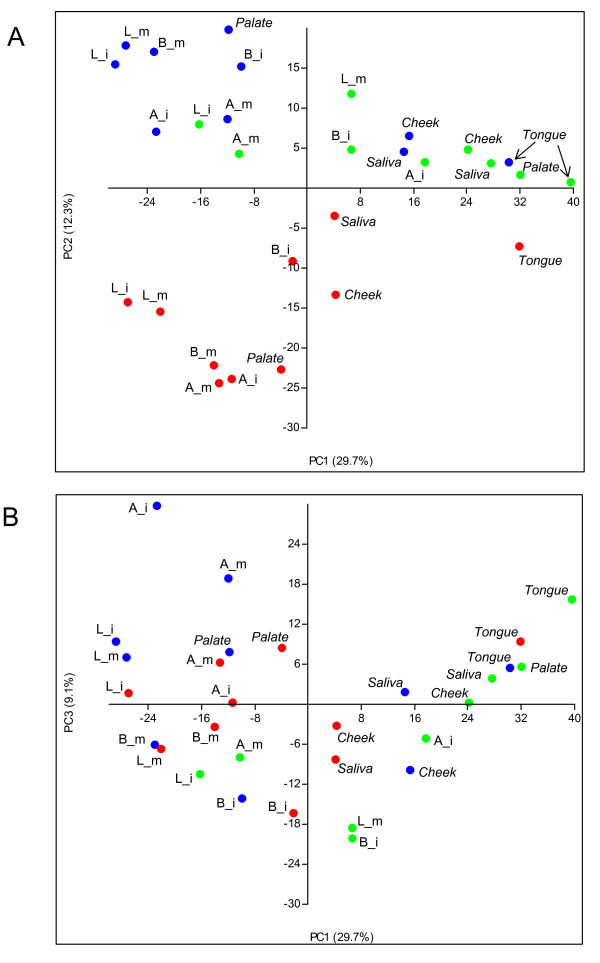
BACKGROUND: Most studies examining the commensal human oral microbiome are focused on disease or are limited in methodology. In order to diagnose and treat diseases at an early and reversible stage an in-depth definition of health is indispensible. The aim of this study therefore was to define the healthy oral microbiome using recent advances in sequencing technology (454 pyrosequencing). RESULTS: We sampled and sequenced microbiomes from several intraoral niches (dental surfaces, cheek, hard palate, tongue and saliva) in three healthy individuals. Within an individual oral cavity, we found over 3600 unique sequences, over 500 different OTUs or "species-level" phylotypes (sequences that clustered at 3% genetic difference) and 88 - 104 higher taxa (genus or more inclusive taxon). The predominant taxa belonged to Firmicutes (genus Streptococcus, family Veillonellaceae, genus Granulicatella), Proteobacteria (genus Neisseria, Haemophilus), Actinobacteria (genus Corynebacterium, Rothia, Actinomyces), Bacteroidetes (genus Prevotella, Capnocytophaga, Porphyromonas) and Fusobacteria (genus Fusobacterium).Each individual sample harboured on average 266 "species-level" phylotypes (SD 67; range 123 - 326) with cheek samples being the least diverse and the dental samples from approximal surfaces showing the highest diversity. Principal component analysis discriminated the profiles of the samples originating from shedding surfaces (mucosa of tongue, cheek and palate) from the samples that were obtained from solid surfaces (teeth).There was a large overlap in the higher taxa, "species-level" phylotypes and unique sequences among the three microbiomes: 84% of the higher taxa, 75% of the OTUs and 65% of the unique sequences were present in at least two of the three microbiomes. The three individuals shared 1660 of 6315 unique sequences. These 1660 sequences (the "core microbiome") contributed 66% of the reads. The overlapping OTUs contributed to 94% of the reads, while nearly all reads (99.8%) belonged to the shared higher taxa. CONCLUSIONS: We obtained the first insight into the diversity and uniqueness of individual oral microbiomes at a resolution of next-generation sequencing. We showed that a major proportion of bacterial sequences of unrelated healthy individuals is identical, supporting the concept of a core microbiome at health.
Overview
The claims and statistics of this paper haven’t been checked yet.
Free: it reads the open-access text and checks the first 5 claims that cite a source we can check. Create a free account to check every claim.
Integrity signals
Registry
Cites
Statistics
Figures
Verification
Claims the paper makes
The claims and statistics of this paper haven’t been checked yet.
Free: it reads the open-access text and checks the first 5 claims that cite a source we can check. Create a free account to check every claim.
Claims other papers make about this one
Each is checked against this paper’s own text: does it say what the citing paper says it does?
The source backs part of the claim, not all of it — or backs it for a different population, condition or comparison.
In the citing paper
“Up to 80% of oral bacteria are dominated by about 200 species in the Phyla Firmicutes (esp. Streptococcus, Veillonella, Granulicatella, Gemella spp.) and Proteobacteria (esp. Neisseria, Haemophilus spp.), with contributions from Bacteroidetes, Actinobacteria and Fusobacteria totaling upwards of 95% of all identified oral microbiota (Figure 2)[171–177].”
From Enterosalivary nitrate metabolism and the microbiome: Intersection of microbial metabolism, nitric oxide and diet in cardiac and pulmonary vascular health (2017) · cites this paper as [172]
Experimental — accuracy not yet measuredThe source backs part of the claim, not all of it — or backs it for a different population, condition or comparison.
In the citing paper
“This is of course not the case and the oral flora of a dog comprises hundreds of species (including pathogenic) bacteria, fungi, and viruses [153,154].”
From A One Health Perspective on the Human-Companion Animal Relationship with Emphasis on Zoonotic Aspects. (2020) · cites this paper as [154]
Experimental — accuracy not yet measuredThe source backs part of the claim, not all of it — or backs it for a different population, condition or comparison.
In the citing paper
“The core microbiome comprised typical oral bacteria that are commonly identified as abundant in similar oral microbiome surveys [28].”
From Citizen science charts two major “stomatotypes” in the oral microbiome of adolescents and reveals links with habits and drinking water composition (2018) · cites this paper as [28]
Experimental — accuracy not yet measuredThe cited source says what the claim attributes to it.
In the citing paper
“This core community composition and distribution is consistent with previous studies of oral healthy microbiomes [2, 9, 22, 28–30].”
From Citizen science charts two major “stomatotypes” in the oral microbiome of adolescents and reveals links with habits and drinking water composition (2018) · cites this paper as [28]
Self-check
Percentages, sums and reported differences re-computed from the paper’s own numbers.
The self-check needs the paper’s full text.
Citations
Cites
PAST: PALEONTOLOGICAL STATISTICAL SOFTWARE PACKAGE FOR EDUCATION AND DATA ANALYSIS
Hammer, Ø., Harper, D. A. T., & Ryan, P. D. (2001) · Palaeontologia Electronica · Cited by 17,871
A core gut microbiome in obese and lean twins
Turnbaugh, P. J., Hamady, M., Yatsunenko, T., Cantarel, B. L., Duncan, A., Ley, R. E., Sogin, M. L., Jones, W. J., Roe, B. A., Affourtit, J. P., et al. (2009) · Nature · doi:10.1038/nature07540 · Cited by 7,823 · cited 5×
“A 97% identity in 16S rRNA gene sequences is commonly used to group "species-level" phylotypes [1,11,12].”
InfluentialPruesse, E., Quast, C., Knittel, K., Fuchs, B. M., Ludwig, W., Peplies, J., & Glockner, F. O. (2007) · Nucleic Acids Research · doi:10.1093/nar/gkm864 · Cited by 6,668 · cited 1×
“We then used the GAST algorithm [27] to calculate the percent difference between each unique sequence and its closest match in a database of 69816 unique eubacterial and 2779 unique archaeal V5-V6 sequences, representing 323499 SSU rRNA sequences from the SILVA database [28].”
Microbial diversity in the deep sea and the underexplored “rare biosphere”
Sogin, M. L., Morrison, H. G., Huber, J. A., Welch, D. M., Huse, S. M., Neal, P. R., Arrieta, J. M., & Herndl, G. J. (2006) · Proceedings of the National Academy of Sciences · doi:10.1073/pnas.0605127103 · Cited by 3,701 · cited 3×
“Data analysis GS-FLX sequencing data were processed as previously described [14].”
Self-citationDefining the normal bacterial flora of the oral cavity
Aas, J. A., Paster, B. J., Stokes, L. N., Olsen, I., & Dewhirst, F. E. (2005) · Journal of Clinical Microbiology · doi:10.1128/jcm.43.11.5721-5732.2005 · Cited by 3,092 · cited 3×
“This richness is considerably higher than the 34 to 72 phylotypes and the 6 to 30 genera previously described using conventional cloning and sequencing [15,16].”
Schloss, P. D., & Handelsman, J. (2005) · Applied and Environmental Microbiology · doi:10.1128/aem.71.3.1501-1506.2005 · Cited by 2,501 · cited 1×
“The operational taxonomic units (OTUs) were created by aligning unique sequences and calculating distance matrices as previously described [14] and using DOTUR [30] to create clusters at the 0.”
Dethlefsen, L., Huse, S., Sogin, M. L., & Relman, D. A. (2008) · PLoS Biology · doi:10.1371/journal.pbio.0060280 · Cited by 2,361 · cited 2×
“However, most microbial diversity projects to date have used 3% OTUs [1,13,14], and to be consistent with other research using pyrosequencing sequences we have chosen to use 3% OTUs as well.”
Self-citationThe Ribosomal Database Project (RDP-II): sequences and tools for high-throughput rRNA analysis
Cole, J. R. (2004) · Nucleic Acids Research · doi:10.1093/nar/gki038 · Cited by 1,475 · cited 1×
“Taxa were assigned to each full-length reference sequence using several sources including Entrez Genome entries, cultured strain identities, SILVA, and the Ribosomal Database Project Classifier [29].”
Kunin, V., Engelbrektson, A., Ochman, H., & Hugenholtz, P. (2010) · Environmental Microbiology · doi:10.1111/j.1462-2920.2009.02051.x · Cited by 1,277 · cited 1×
“Recent publications [9,10] have identified the potential inflation of richness and diversity estimates caused by low-quality reads (pyrosequencing noise).”
The influence of sex, handedness, and washing on the diversity of hand surface bacteria
Fierer, N., Hamady, M., Lauber, C. L., & Knight, R. (2008) · Proceedings of the National Academy of Sciences · doi:10.1073/pnas.0807920105 · Cited by 1,108 · cited 3×
“A 97% identity in 16S rRNA gene sequences is commonly used to group "species-level" phylotypes [1,11,12].”
Research works printed but not linked: 1
- Zaura E Plaque stagnation sites and dental caries: Studies on dental biofilm and dentin demineralization in narrow grooves PhD thesis 2002 Amsterdam: Faculteit der Tandheelkunde, University of Amsterdam
Cited by
Items 501–600 of 1,000
The Oral Microbiome and Lung Diseases
Pu, C. Y., Seshadri, M., Manuballa, S., & Yendamuri, S. (2020) · Current Oral Health Reports · doi:10.1007/s40496-020-00259-1 · Cited by 32
Davis, E. M. (2016) · Journal of Veterinary Dentistry · doi:10.1177/0898756416657239 · Cited by 31
The oral microbiome of patients undergoing treatment for severe aplastic anemia: a pilot study
Ames, N. J., Barb, J. J., Ranucci, A., Kim, H., Mudra, S. E., Cashion, A. K., Townsley, D. M., Childs, R. W., Paster, B. J., Faller, L. L., et al. (2019) · Annals of Hematology · doi:10.1007/s00277-019-03599-w · Cited by 31
Elshazly, N., Khalil, A., Saad, M. M., Patruno, M., Chakraborty, J., & Marei, M. K. (2020) · Materials · doi:10.3390/ma13112603 · Cited by 30
“On the other side, saliva provides the oral cavity with the optimal conditions that are suitable for complex microbiota growth, being composed of more than 1000 various species of bacteria, fungi, and viruses [56].”
BackgroundMINERVA: A Facile Strategy for SARS-CoV-2 Whole-Genome Deep Sequencing of Clinical Samples
Chen, C., Li, J., Di, L., Jing, Q., Du, P., Song, C., Li, J., Li, Q., Cao, Y., Xie, X. S., et al. (2020) · Molecular Cell · doi:10.1016/j.molcel.2020.11.030 · Cited by 36
Ye, C., You, M., Huang, P. H., Xia, Z., Radaic, A., Tang, J., Wu, W., Wu, Y., & Kapila, Y. L. (2021) · Clinical Oral Investigations · doi:10.1007/s00784-021-04214-x · Cited by 34
“[42] identified Neisseria as part of the healthy “core microbiome” of the human oral cavity.”
BackgroundOral microbiota may affect osteoradionecrosis following radiotherapy for head and neck cancer
Li, Z., Fu, R., Huang, X., Wen, X., & Zhang, L. (2023) · Journal of Translational Medicine · doi:10.1186/s12967-023-04219-y · Cited by 33
Effects of Lactobacillus rhamnosus GG on saliva-derived microcosms
Pham, L. C., Hoogenkamp, M. A., Exterkate, R. A. M., Terefework, Z., de Soet, J. J., ten Cate, J. M., Crielaard, W., & Zaura, E. (2010) · Archives of Oral Biology · doi:10.1016/j.archoralbio.2010.09.019 · Cited by 30
“DNA was extracted as described previously (ZAURA et al. 2009) using an AGOWA mag mini DNA isolation kit following the instructions of the manufacturer (AGOWA GmbH, Germany) and quantified using a Nanodrop (Nanodrop ND1000; NanoDrop Technologies, Montchanin, DE, USA).”
MethodSelf-citationCaptivity causes taxonomic and functional convergence of gut microbial communities in bats
Xiao, Y., Xiao, G., Liu, H., Zhao, X., Sun, C., Tan, X., Sun, K., Liu, S., & Feng, J. (2019) · PeerJ · doi:10.7717/peerj.6844 · Cited by 31
RgpF Is Required for Maintenance of Stress Tolerance and Virulence in Streptococcus mutans
Kovacs, C. J., Faustoferri, R. C., & Quivey, R. G. (2017) · Journal of Bacteriology · doi:10.1128/jb.00497-17 · Cited by 28
“microorganisms within the multispecies biofilm known as dental plaque (3, 4).”
BackgroundKeystone species in microbial communities: From discovery to soil heavy metal-remediation
Jiang, G., Ruan, Z., Yin, Y., Hu, C., Tian, L., Lu, J., Wang, S., Tang, Y., Qiu, R., & Chao, Y. (2025) · Journal of Hazardous Materials · doi:10.1016/j.jhazmat.2025.138753 · Cited by 32
Fernández, C. E., Aspiras, M., Dodds, M. W. J., González‐Cabezas, C., & Rickard, A. H. (2016) · Journal of Applied Microbiology · doi:10.1111/jam.13376 · Cited by 33
“2015) and as part of the healthy ‘core microbiome’ of the human oral cavity (Zaura et al. 2009).”
BackgroundResultInfluentialYao, T., Han, X., Guan, T., Zhai, C., Liu, C., Liu, C., Zhu, B., & Chen, L. (2020) · International Journal of Legal Medicine · doi:10.1007/s00414-020-02329-6 · Cited by 29
“One previous study has demonstrated that a healthy oral “core microbiome” would maintain the functional stability and homeostasis necessary for a healthy ecosystem, so that their microbial communities remain relatively stable [22].”
BackgroundOba, P. M., Carroll, M. Q., Alexander, C., Valentine, H., Somrak, A. J., Keating, S. C. J., Sage, A. M., & Swanson, K. S. (2021) · Animal Microbiome · doi:10.1186/s42523-021-00100-9 · Cited by 34
Varada, V. V., Kumar, S., Chhotaray, S., & Tyagi, A. K. (2022) · AMB Express · doi:10.1186/s13568-022-01460-4 · Cited by 33
“Core genera in the control and treatment groups were identified separately at different days of experimentation and were represented through Venn diagrams (Zaura et al. 2009).”
MethodThe Oral Microbiome for Geographic Origin: An Italian Study
Ogbanga, N., Nelson, A., Ghignone, S., Voyron, S., Lovisolo, F., Sguazzi, G., Renò, F., Migliario, M., Gino, S., & Procopio, N. (2023) · Forensic Science International Genetics · doi:10.1016/j.fsigen.2023.102841 · Cited by 32
Occlusive membranes for guided regeneration of inflamed tissue defects
Choi, W., Mangal, U., Park, J., Kim, J., Jun, T., Jung, J. W., Choi, M., Jung, S.-W., Lee, M., Na, J.-Y., et al. (2023) · Nature Communications · doi:10.1038/s41467-023-43428-3 · Cited by 32
Lazarević, V., Gaïa, N., Emonet, S., Girard, M., Renzi, G., Després, L., Wozniak, H., Marcos, J. Y., Veyrieras, J., Chatellier, S., et al. (2014) · Frontiers in Cellular and Infection Microbiology · doi:10.3389/fcimb.2014.00065 · Cited by 34
“…SAL_10 (Ling et al., 2013), SAL_18 (from children, before antibiotic treatment) (Lazarevic et al., 2013b), SAL_18AB (from children, at the end of the antibiotic treatment) (Lazarevic et al., 2013b), SAL_5 (three time points for each subject) (Lazarevic et al., 2010), SAL_3 (Zaura et al., 2009).”
BackgroundOnyango, S. O., Clercq, N. D., Beerens, K., Camp, J. V., Desmet, T., & de Wiele, T. V. (2020) · Applied and Environmental Microbiology · doi:10.1128/aem.01170-20 · Cited by 32
Subgingival Microbiome in Pregnancy and a Potential Relationship to Early Term Birth
Yang, I. H., Claussen, H., Arthur, R. A., Hertzberg, V., Geurs, N. C., Corwin, E. J., & Dunlop, A. L. (2022) · Frontiers in Cellular and Infection Microbiology · doi:10.3389/fcimb.2022.873683 · Cited by 35
“The key to oral health is an ecologically balanced and diverse oral microbiome that is in a state of commensalism within itself and mutualism with its host (Zaura et al., 2009; Zarco et al., 2012).”
BackgroundStankevič, E., Kern, T., Borisevich, D., Poulsen, C. S., Madsen, A. L., Hansen, T. H., Jonsson, A. E., Schubert, M., Nygaard, N., Nielsen, T., et al. (2024) · Scientific Reports · doi:10.1038/s41598-024-65538-8 · Cited by 32
The Healthy Oral Microbiome: A Changing Ecosystem throughout the Human Lifespan
Corrêa, J. D., Carlos, P. P. S., Faria, G. A., Pacheco, L. C. R., Costa, V. S., Mendes, I. R. R., de Oliveira, A. B., & Colombo, A. P. V. (2024) · Journal of Dental Research · doi:10.1177/00220345241297583 · Cited by 32
“The most abundant species in supragingival plaque and buccal mucosa were S. mitis/oralis , H. parainfluenzae , V. parvula , Neisseria mucosa , and P. melaninogenica , corroborating previous studies (Aas et al. 2005; Zaura et al. 2009; HMP Consortium, 2012; Caselli et al. 2020).”
Comparison of the immune microenvironment of the oral cavity and cervix in healthy women
Fakhry, C., Marks, M. A., Gilman, R. H., Cabrerra, L., Yori, P. P., Kosek, M. N., & Gravitt, P. E. (2013) · Cytokine · doi:10.1016/j.cyto.2013.08.009 · Cited by 30
Song, J., Duan, C., Sang, Y., Wu, S., Ru, J., & Cui, X. (2018) · Forests · doi:10.3390/f9110677 · Cited by 28
Philip, N. I., Leishman, S. J., Bandara, N., Healey, D. L., & Walsh, L. J. (2019) · JDR Clinical & Translational Research · doi:10.1177/2380084419859871 · Cited by 35
“Neisseria is a catalase-positive aerobic species that has been identified as part of the healthy “core microbiome” of the human oral cavity (Zaura et al. 2009).”
BackgroundBach, L., Ram, A., Ijaz, U. Z., Evans, T. J., & Lindström, J. (2021) · Frontiers in Microbiology · doi:10.3389/fmicb.2020.573969 · Cited by 30
Xu, L., Qi, Y., Jiang, Y., Ji, Y., Zhao, Q., Wu, J., Lu, W., Wang, Y., Chen, Q., & Wang, C. (2022) · Annals of Translational Medicine · doi:10.21037/atm-22-1165 · Cited by 29
“A Venn diagram was generated to visualize the shared and unique ASVs among samples or groups using the R package “VennDiagram”, based on the occurrence of ASVs between samples/groups regardless of their relative abundance (24).”
MethodFeasibility of oral microbiome profiles associated with oral squamous cell carcinoma
Hashimoto, K., Shimizu, D., Ueda, S., Miyabe, S., Oh‐iwa, I., Nagao, T., Shimozato, K., & Nomoto, S. (2022) · Journal of Oral Microbiology · doi:10.1080/20002297.2022.2105574 · Cited by 28
Microbial Symphony: Navigating the Intricacies of the Human Oral Microbiome and Its Impact on Health
Bhandary, R., Venugopalan, G., Ramesh, A., Tartaglia, G., Singhal, I., & Khijmatgar, S. (2024) · Microorganisms · doi:10.3390/microorganisms12030571 · Cited by 33
“The cultivation of isolated colonies has long been regarded for numerous decades as a key element in research, in understanding the physiological and pathogenic capabilities demonstrated by specific microbial taxa, and in clinical utilization in the field of oral microbiology [85,86].”
BackgroundProbiotics in personal care products
Huang, M. J., & Tang, J. (2015) · Microbiology Discovery · doi:10.7243/2052-6180-3-5 · Cited by 35
“, eating, talking, smoking) carried out in the oral cavity may affect bacterial growth and persistence [38].”
BackgroundInfluentialChan, J. M., & Dillard, J. P. (2016) · Journal of Bacteriology · doi:10.1128/jb.00437-16 · Cited by 30
Zawadzki, P. J., Perkowski, K., Starosciak, B. J., Baltaza, W., Padzik, M., Pionkowski, K., & Chomicz, L. (2016) · Annals of Agricultural and Environmental Medicine · doi:10.5604/12321966.1226847 · Cited by 29
“There are evidences for a great degree of variation in the diversity of mouth community structures associated with oral cavity health status [26, 27, 28].”
Amino acids as wetting agents: surface translocation by Porphyromonas gingivalis
Moradali, M. F., Ghods, S., Angelini, T. E., & Davey, M. E. (2019) · The ISME Journal · doi:10.1038/s41396-019-0360-9 · Cited by 31
Jain, S. S., Schramm, S. T. J., Siddiqui, D. A., Huo, W., Palmer, K. L., Wilson, T. G., & Rodrigues, D. C. (2020) · Dental Materials · doi:10.1016/j.dental.2020.05.016 · Cited by 30
“Previous studies have demonstrated that a core oral microbiome exists, but there is also a variable microbiome that is individual-specific [47,48,50].”
BackgroundPagnussatti, M. E. L., Santos, H. S. D. B., Parolo, C. C. F., Hilgert, J. B., & Arthur, R. A. (2024) · Archives of Oral Biology · doi:10.1016/j.archoralbio.2024.106070 · Cited by 26
The Oral Microbial Ecosystem in Age-Related Xerostomia: A Critical Review
Pei, X.-M., Zhou, L.-X., Tsang, M., Tai, W., & Wong, S. C. C. (2024) · International Journal of Molecular Sciences · doi:10.3390/ijms252312815 · Cited by 38
Zhang, F., He, S., Jin, J., Dong, G., & Wu, H. (2015) · Frontiers in Cellular and Infection Microbiology · doi:10.3389/fcimb.2015.00055 · Cited by 33
“…in a certain group. cut-off is 3%, with a suggested 95% similarity needed to define genus and 97% for species (Tindall et al., 2010), A total of 487 OTUs were obtained while previous studies obtained only 111–377 OTUs in different parts of the oral cavity (Zaura et al., 2009; Diaz et al., 2012).”
ResultAccuracy of commercial kits and published primer pairs for the detection of periodontopathogens
Santigli, E., Leitner, E., Wimmer, G., Kessler, H. H., Feierl, G., Grube, M., Eberhard, K., & Klug, B. (2016) · Clinical Oral Investigations · doi:10.1007/s00784-016-1748-9 · Cited by 27
“When recent next-generation sequencing studies on oral microbiomes are considered, estimates of the number of species-level phylotypes range to as much as 10,000 when different sampling sites and pooled data from healthy and diseased individuals are taken into account [6, 13, 29, 30].”
BackgroundAl-Hebshi, N. N., Abdulhaq, A. A., Albarrag, A., Basode, V. K., & Chen, T. (2016) · Journal of Oral Microbiology · doi:10.3402/jom.v8.31444 · Cited by 29
“The remaining 54 OTUs were designated as potentially novel.”
ResultInfluentialSheha, E. A. A. E. M., Hassan, H. E., & Gamel, W. M. A. (2017) · International Journal of Studies in Nursing · doi:10.20849/ijsn.v3i1.207 · Cited by 38
The prebiotic effect of CPP-ACP sugar-free chewing gum
Fernando, J. R., Butler, C. A., Adams, G. G., Mitchell, H. L., Dashper, S. G., Escobar, K., Hoffmann, B., Shen, P., Walker, G. D., Yuan, Y., et al. (2019) · Journal of Dentistry · doi:10.1016/j.jdent.2019.103225 · Cited by 28
Martínez‐Hernández, M., Reda, B., & Hannig, M. (2020) · Clinical Oral Investigations · doi:10.1007/s00784-020-03250-3 · Cited by 30
Ziganshina, E. E., Sagitov, I. I., Akhmetova, R. F., Тауфиковна, С. Г., Kiassov, A. P., Gogoleva, N. E., Shagimardanova, E. I., & Ziganshin, A. M. (2020) · BioMed Research International · doi:10.1155/2020/2681791 · Cited by 30
Metabolic plasticity enables lifestyle transitions of Porphyromonas gingivalis
Moradali, M. F., & Davey, M. E. (2021) · npj Biofilms and Microbiomes · doi:10.1038/s41522-021-00217-4 · Cited by 30
Impact of smoking on peri‐implant bleeding on probing
Amerio, E., Blasi, G., Valles, C., Blanc, V., Àlvarez, G., Arredondo, A., Nart, J., & Monje, A. (2022) · Clinical Implant Dentistry and Related Research · doi:10.1111/cid.13062 · Cited by 28
Lv, H., Ji, C., Ding, J., Yu, L., & Cai, H. (2022) · Plants · doi:10.3390/plants11172271 · Cited by 27
“Venn diagram was generated to visualize the shared and unique ASVs among samples or groups using R package “VennDiagram”, based on the occurrence of ASVs across samples/groups regardless of their relative abundance [58].”
MethodMicrobial composition of egg component and its association with hatchability of laying hens
Jin, J., Zhou, Q., Lan, F., Li, J., Yang, N., & Sun, C. (2022) · Frontiers in Microbiology · doi:10.3389/fmicb.2022.943097 · Cited by 30
“The taxonomy was then assigned against the Silva database (Release132) using a pre-trained naive Bayes classifier and q2 feature-classifier plugin (Zaura et al., 2009).”
MethodA Characterization of the Oral Microbiome in Allogeneic Stem Cell Transplant Patients
Ames, N. J., Sulima, P., Ngo, T. D., Barb, J. J., Munson, P. J., Paster, B. J., & Hart, T. C. (2012) · PLoS ONE · doi:10.1371/journal.pone.0047628 · Cited by 27
“In other studies examining the oral microbiome, the core microbiome is composed of identical organisms across unrelated, healthy individuals [17,18].”
BackgroundResultHe, X., Hu, W., He, J., Guo, L., Lux, R., & Shi, W. (2011) · Molecular Oral Microbiology · doi:10.1111/j.2041-1014.2011.00622.x · Cited by 29
Diversity at low abundance: The phenomenon of the rare bacterial biosphere
Skopina, M. Y., Vasileva, A., Pershina, E. V., & Pinevich, A. V. (2016) · Microbiology · doi:10.1134/s0026261716030139 · Cited by 29
“It was also used for analysis of diversity of other communities, such as the microbiome of human oral cavity (Zaura et al., 2009) and the microbiome of Lake Ladoga bacterial picoplankton (Skopina et al., 2015).”
MethodThe Role of Human Oral Microbiome in Dental Biofilm Formation
Krzyściak, W., Jurczak, A., & Piątkowski, J. (2016) · InTech eBooks · doi:10.5772/63492 · Cited by 28
The Impact of Maltitol-Sweetened Chewing Gum on the Dental Plaque Biofilm Microbiota Composition
Keijser, B. J. F., van den Broek, T. J., Slot, D. E., van Twillert, L., Kool, J., Thabuis, C., Ossendrijver, M., van der Weijden, G. A., & Montijn, R. C. (2018) · Frontiers in Microbiology · doi:10.3389/fmicb.2018.00381 · Cited by 27
“Over 700 species have been identified spanning more than 20 phyla (Zaura et al., 2009; Dewhirst et al., 2010).”
Self-citationLu, Q., Cao, D., Su, L., Li, S., Ye, G., Zhu, X., & Wang, J. (2019) · International Journal of Genomics · doi:10.1155/2019/6015730 · Cited by 29
Trick or Treating in Forensics—The Challenge of the Saliva Microbiome: A Narrative Review
D’Angiolella, G., Tozzo, P., Gino, S., & Caenazzo, L. (2020) · Microorganisms · doi:10.3390/microorganisms8101501 · Cited by 26
“Each different habitat, such as dental surfaces; the gingival crevice or sulcus; the tongue, with its papillae and crypts; and different keratinized (gingival and hard palate) and non-keratinized (cheeks, lips, soft palate) mucosal surfaces, contains specific ecological niches that select for distinct microbes [5].”
BackgroundHo, S. X., Min, N., Yen, E. W. P., Chong, C. Y., & Chu, J. J. H. (2021) · npj Biofilms and Microbiomes · doi:10.1038/s41522-021-00190-y · Cited by 27
Ren, Y., Liang, J., Li, X., Deng, Y., Cheng, S., Wu, Q., Song, W., He, Y., Zhu, J., Zhang, X., et al. (2023) · BMC Microbiology · doi:10.1186/s12866-023-03057-8 · Cited by 28
“Streptococcus [50], Neisseria , Prevotella [51], Rothia , Haemophilus , and Fusobacterium were recently described to form the core oral microbiota in healthy individuals [31–33].”
BackgroundLiu, J., Zhang, W., Teng, C., Pang, Z., Peng, Y., Qiu, J., Lei, J., Su, X., Zhu, W., & Ding, C. (2024) · Frontiers in Microbiology · doi:10.3389/fmicb.2024.1370996 · Cited by 26
Liu, R. R., Liu, Y., Yi, J., Fang, Y., Guo, Q., Cheng, L., He, J., & Li, M. (2025) · BMC Microbiology · doi:10.1186/s12866-025-03762-6 · Cited by 31
Toward Personalized Oral Diagnosis: Distinct Microbiome Clusters in Periodontitis Biofilms
Wirth, R., Pap, B., Maróti, G., Vályi, P., Komlósi, L., Barta, N., Strang, O., Minárovits, J., & Kovács, K. L. (2021) · Frontiers in Cellular and Infection Microbiology · doi:10.3389/fcimb.2021.747814 · Cited by 34
“…has been the subject of many studies from the classical discoveries of van Leeuwenhoek (Lane, 2015) to the introduction to more sophisticated microbiological cultivation (Sizova et al., 2012) and molecular biology tools (Socransky and Haffajee, 2005; Zaura et al., 2009; Zaura et al., 2021).”
BackgroundUlcerative Colitis Seems to Imply Oral Microbiome Dysbiosis
Molinero, N., Taladrid, D., Zorraquín‐Peña, I., de Celis, M., Belda, I., Mira, Á., Bartolomé, B., & Moreno-Arribas, M. V. (2022) · Current Issues in Molecular Biology · doi:10.3390/cimb44040103 · Cited by 27
“, Rothia dentocariosa nd Rothia mucil ginosa)—many of them well-known members of the healthy oral c re microbiome [24].”
BackgroundResultZheng, Q., Wang, Y., Chen, J., Li, Y., Zhao, F., Liu, D., Wei, M., Kong, D., Chen, Z., Zhang, Z., et al. (2022) · Frontiers in Marine Science · doi:10.3389/fmars.2022.912023 · Cited by 35
Yao, J., Wu, C., Fan, L., Kang, M., Liu, Z., Huang, Y., Xu, X., & Yao, Y. (2023) · Microorganisms · doi:10.3390/microorganisms11020274 · Cited by 27
“In order to identify the main ecological divers that influenced the composition of bacterial communities, the distance-corrected dissimilarities of 16s ASVs, Shannon, and Chao Ⅰ with environmental factors were analyzed (Figure 5C).”
MethodInfluentialTeles, F., Teles, R. P., Siegelin, Y., Paster, B. J., Haffajee, A. D., & Socransky, S. S. (2011) · Molecular Oral Microbiology · doi:10.1111/j.2041-1014.2010.00603.x · Cited by 25
“Even though NGS represents a major advance in the study of oral microbiology, only small numbers of subjects and samples have been reported (Zaura et al., 2009; Li et al., 2010).”
Yang, J. Y., Karr, J. R., Watrous, J. D., & Dorrestein, P. C. (2010) · Current Opinion in Chemical Biology · doi:10.1016/j.cbpa.2010.10.025 · Cited by 30
Performance of MALDI-TOF MS for identification of oral Prevotella species
Gürsoy, M., Harju, I., Matomäki, J., Bryk, A., & Könönen, E. (2017) · Anaerobe · doi:10.1016/j.anaerobe.2017.04.008 · Cited by 30
Hernández-Arriaga, A. M., Baumann, A., Witte, O. W., Frahm, C., Bergheim, I., & Camarinha‐Silva, A. (2019) · Microorganisms · doi:10.3390/microorganisms7090283 · Cited by 29
“In this study, we also hypothesized that several intraoral conditions such as salivary flow, lip, or cheek movement and chewing forces could have an impact in the microbial ecology composition [26].”
BackgroundDefining Metaniches in the Oral Cavity According to Their Microbial Composition and Cytokine Profile
Seidel, C. L., Gerlach, R. G., Wiedemann, P., Weider, M., Rodrian, G., Hader, M., Frey, B., Gaipl, U. S., Bözec, A., Cieplik, F., et al. (2020) · International Journal of Molecular Sciences · doi:10.3390/ijms21218218 · Cited by 34
“individuals and pointed out that niche-specific microbiotas might exist [16].”
BackgroundCervantes, J., Michael, M., Hong, B.-Y., Springer, A., Guo, H., Mendoza, B., Zeng, M., Sundin, O. H., & McCallum, R. W. (2021) · Journal of Investigative Medicine · doi:10.1136/jim-2020-001642 · Cited by 28
Dysbiosis of Oral Microbiome: A Key Player in Oral Carcinogenesis? A Critical Review
Devaraja, K., & Aggarwal, S. (2025) · Biomedicines · doi:10.3390/biomedicines13020448 · Cited by 29
Arredondo, A., Blanc, V., Mor, C., Nart, J., & León, R. (2019) · Oral Diseases · doi:10.1111/odi.13043 · Cited by 30
Oral Microbiome and Host Health: Review on Current Advances in Genome-Wide Analysis
Cho, Y., Kim, K.-H., Lee, Y., Ku, Y., & Seol, Y. (2021) · Applied Sciences · doi:10.3390/app11094050 · Cited by 30
“In order to diagnose and treat disease at an e rly stage, it is neces ary to explain the commensal microbiome associated with health [30].”
BackgroundInfluentialTranscriptomic Responses to Coaggregation between Streptococcus gordonii and Streptococcus oralis
Choo, S. W., Mohammed, W. K., Mutha, N. V. R., Rostami, N., Ahmed, H., Krasnogor, N., Tan, G. Y. A., & Jakubovics, N. S. (2021) · Applied and Environmental Microbiology · doi:10.1128/aem.01558-21 · Cited by 29
Impact of sleep on the microbiome of oral biofilms
Sotozono, M., Kuriki, N., Asahi, Y., Noiri, Y., Hayashi, M., Motooka, D., Nakamura, S., Yamaguchi, M., Iida, T., & Ebisu, S. (2021) · PLoS ONE · doi:10.1371/journal.pone.0259850 · Cited by 32
“Biofilm-forming bacteria at oral sites belonged to five phyla: Actinobacteria, Bacteroidetes, Firmicutes, Fusobacteria, and Proteobacteria.”
BackgroundInfluentialShifts in the Microbial Population in Relation to in situ Caries Progression
Thomas, R. Z., Zijnge, V., Çiçek, A., de Soet, J. J., Harmsen, H. J. M., & Huysmans, M. C. D. N. J. M. (2012) · Caries Research · doi:10.1159/000339482 · Cited by 27
Establishment of a counter-selectable markerless mutagenesis system in Veillonella atypica
Zhou, P., Li, X., & Qi, F. (2015) · Journal of Microbiological Methods · doi:10.1016/j.mimet.2015.03.010 · Cited by 27
“Veillonellae are oneof themost prevalent andnumerically dominant bacteria in the oral microbiota (Dzink et al., 1989; Kamma et al., 1995; Palmer et al., 2006; Zaura et al., 2009; Periasamy and Kolenbrander, 2010).”
Yamane, K., Nambu, T., Yamanaka, T., Mashimo, C., Sugimori, C., Leung, K., & Fukushima, H. (2010) · Sequencing · doi:10.1155/2010/457236 · Cited by 26
“mucilaginosa belongs to the healthy oral microbial community [6] or constitutes a microbial community whose productivity of malodor is lower than those of other communities without R.”
Soares-Castro, P., Araújo-Rodrigues, H., Godoy‐Vitorino, F., Ferreira, M., Covelo, P., López, A., Vingada, J. V., Eira, C., & Santos, P. M. (2019) · Scientific Reports · doi:10.1038/s41598-019-50139-7 · Cited by 31
Papapostolou, A., Kroffke, B., Tatakis, D. N., Nagaraja, H. N., & Kumar, P. (2011) · Journal Of Clinical Periodontology · doi:10.1111/j.1600-051x.2011.01718.x · Cited by 29
Zilberstein, N., Engen, P. A., Swanson, G. R., Naqib, A. D., Post, Z., Alutto, J., Green, S. J., Shaikh, M. W., Lawrence, K. M., Adnan, D., et al. (2024) · Journal of Crohn s and Colitis · doi:10.1093/ecco-jcc/jjae162 · Cited by 28
Desequilibrio del Microbioma Humano desde la perspectiva causa–efecto
Garza, V. A. A., & Súchil, M. G. (2025) · Bastcorp International Journal. · doi:10.62943/bij.v4n2.2025.384 · Cited by 25
Yee, K. C., Wei, M., Yee, H. C., Everett, K. D. E., Yee, H. P., & Hazeki-Talor, N. (2013) · Digestion · doi:10.1159/000350432 · Cited by 23
Saliva Microbiota Carry Caries-Specific Functional Gene Signatures
Yang, F., Ning, K., Chang, X., Yuan, X. H., Tu, Q., Yuan, T., Deng, Y., Hemme, C. L., Nostrand, J. D. V., Cui, X., et al. (2014) · PLoS ONE · doi:10.1371/journal.pone.0076458 · Cited by 27
“Evidences have recently emerged from our group and others that the organismal structure of saliva microbiota is highly individualized among human hosts [3,4,5,6,7,8] and that changes in organismal structure are linked to caries [9], gingivitis [10] and periodontitis [11].”
BackgroundScreening for prevalence and abundance of Capnocytophaga spp by analyzing NGS data: A scoping review
Jolivet‐Gougeon, A., & Bonnaure‐Mallet, M. (2020) · Oral Diseases · doi:10.1111/odi.13573 · Cited by 24
Impact of smokeless tobacco-associated bacteriome in oral carcinogenesis
Sajid, M., Srivastava, S., Joshi, L., & Bharadwaj, M. (2021) · Anaerobe · doi:10.1016/j.anaerobe.2021.102400 · Cited by 28
Oral microbiome in older adults with mild cognitive impairment
Da, D., Zhao, Q., Zhang, H., Wu, W., Zeng, X., Liang, X., Jiang, Y., Xiao, Z., Yu, J. M., Ding, S., et al. (2023) · Journal of Oral Microbiology · doi:10.1080/20002297.2023.2173544 · Cited by 26
Mediterranean diet: a potential player in the link between oral microbiome and oral diseases
Augimeri, G., Caparello, G., Caputo, I., Reda, R., Testarelli, L., & Bonofiglio, D. (2024) · Journal of Oral Microbiology · doi:10.1080/20002297.2024.2329474 · Cited by 31
“Research has focused more on studying periodontitis and systemic diseases, exploring the role of oral inflammation and microbiota in conditions like atherosclerosis, diabetes mellitus, pneumonia, chronic obstructive pulmonary disease, rheumatoid arthritis, and Alzheimer’s disease [106–108].”
BackgroundZhu, X., Wang, S., Gu, Y., Li, X., Yan, H., Yan, H., Miyoshi, S.-I., & Shi, L. (2012) · World Journal of Microbiology and Biotechnology · doi:10.1007/s11274-012-1030-5 · Cited by 28
Lone, A. G., Selinger, L. B., Uwiera, R. R. E., Xu, Y., & Inglis, G. D. (2013) · PLoS ONE · doi:10.1371/journal.pone.0075325 · Cited by 27
“At a 97% sequence identity delineation for species [20,51], 571 OTUs were observed for the 87,492 total sequences processed (i.”
BackgroundHan, C. S., Martin, M. A., Dichosa, A. E. K., Daughton, A. R., Frietze, S. E., Kaplan, H. S., Gurven, M., & Alcock, J. (2016) · PeerJ · doi:10.7717/peerj.2660 · Cited by 27
“The most predominant 13 genera observed among Tsimane samples are also consistent with the previous observation of the existence of a core oral microbiome (Zaura et al., 2009; Lazarevic et al., 2013).”
BackgroundCheng, S., Mao, H., Ruan, Y., Wu, C., Xu, Z. Q., Hu, G., Guo, X., Zhang, C., Cao, H., & Liu, P. (2019) · Biological Trace Element Research · doi:10.1007/s12011-019-01718-2 · Cited by 26
Comparative analysis of the gut microbiota of hornbill and toucan in captivity
Sun, C., Liu, H., Zhang, Y., & Lu, C. (2018) · MicrobiologyOpen · doi:10.1002/mbo3.786 · Cited by 26
Chiscuzzu, F., Crescio, C., Varrucciu, S., Rizzo, D., Sali, M., Delogu, G., & Bussu, F. (2025) · Cancers · doi:10.3390/cancers17020171 · Cited by 27
“On the other hand, the oral cavity itself has one of the richest microbiotas among mucosal surfaces [14,15].”
Bhardwaj, R. G., Ellepolla, A., Drobiova, H., & Karched, M. (2020) · BMC Microbiology · doi:10.1186/s12866-020-01834-3 · Cited by 25
Yu, C., Li, L., Jin, J., Zhang, B., Wei, H., Zhao, Y., Li, X., & Li, Y. (2021) · Aquaculture Reports · doi:10.1016/j.aqrep.2021.100907 · Cited by 23
Zhou, X., Zhang, S., Liu, D., Qian, H., Zhang, D., & Liu, Q. (2021) · Medicine · doi:10.1097/md.0000000000028028 · Cited by 23
“The unique and share OTUs across different samples or different groups were visualized based on the Ven diagram produced by ‘VennDiagram’ of R package, according to OTUs occurrence across diverse samples/groups, and the relative levels were not considered.([26]) Besides, the Kruskal test was used to compare taxa level…”
MethodKajihara, K. T., Egan, C., Swift, S. O. I., Wall, C. B., Muir, C. D., & Hynson, N. A. (2022) · New Phytologist · doi:10.1111/nph.18058 · Cited by 24
Epidemiological and etiological aspects of dental caries development
Andriivna, L., Faustova, M. O., Volodymyrivna, C., & Ananieva, M. M. (2020) · AFMN Biomedicine · doi:10.5937/afmnai38-27564 · Cited by 24
Lu, H., Qian, G., Ren, Z., Zhang, C., Zhang, H., Xu, W., Ye, P., Yang, Y., & Li, L. (2015) · BMC Infectious Diseases · doi:10.1186/s12879-015-0977-x · Cited by 22
“The oropharyngeal mucosal microbiome comprised Firmicutes, Actinobacteria, Bacteroidetes, Proteobacteria, and Fusobacteria, which is consistent with the results of others using high-throughput sequencing of the oral microbiome [26, 27].”
ResultHost Genome, Epigenome, and Oral Microbiome Interactions: Toward Personalized Periodontal Therapy
Razzouk, S., & Termechi, O. (2013) · Journal of Periodontology · doi:10.1902/jop.2012.120531 · Cited by 30
Schueller, K., Riva, A., Pfeiffer, S., Berry, D., & Somoza, V. (2017) · Frontiers in Microbiology · doi:10.3389/fmicb.2017.00416 · Cited by 26
“…bacterial community of the mouth was dominated by the phyla Firmicutes, followed by Proteobacteria, Actinobacteria, Bacteroidetes, Fusobacteria and Candidate division TM7, which is consistent with the oral “core” microbiota reported in previous studies (Zaura et al., 2009; Lazarevic et al., 2010).”
Result
Metadata
- Authors
- Zaura, E., Keijser, B. J., Huse, S. M., & Crielaard, W.
- Affiliations
- Academic Center for Dentistry Amsterdam (NL)
- Netherlands Organisation for Applied Scientific Research (NL)
- Marine Biological Laboratory (US)
- Corresponding author
- Zaura, Egija
- Venue
- BMC Microbiology
- Published
- 2009
- Volume
- 9
- Issue
- 1
- Pages
- 259
- ISSN
- 1471-2180 (ISSN-L)
- PMC
- PMC2805672
- OpenAlex
- W2117522399
- Cited by
- 1,323
- References
- 29
- Citations by year
- 2026: 68 · 2025: 96 · 2024: 88 · 2023: 87 · 2022: 114 · 2021: 138 · 2020: 118 · 2019: 103 · 2018: 68 · 2017: 69 · 2016: 61 · 2015: 64 · 2014: 55 · 2013: 55 · 2012: 53
- FWCI
- 48.63
- Type
- journal article
- Language
- en
- Open access
- gold
- doi.org
- Licence
- cc-by
- Locations
- BMC Microbiology (publishedVersion, cc-by)
- PubMed Central (publishedVersion, cc-by)
- PubMed (publishedVersion)
- UvA-DARE (University of Amsterdam) (acceptedVersion, other-oa)
- TNO Repository (submittedVersion)
- DOAJ (DOAJ: Directory of Open Access Journals) (submittedVersion, cc-by-sa)
- VU Research Portal (submittedVersion, other-oa)
- Repository hosted by TU Delft Library (TU Delft) (submittedVersion)
- Data Archiving and Networked Services (DANS) (submittedVersion, other-oa)
- Funders
- National Science Foundation (P50 ES012742, 0430724)
- National Institutes of Health
- National Institute of Environmental Health Sciences (P50ES012742)
- Topics
- Health Sciences › Dentistry › Periodontics › Oral microbiology and periodontitis research
- Life Sciences › Biochemistry, Genetics and Molecular Biology › Molecular Biology › Gut microbiota and health
- Physical Sciences › Environmental Science › Ecology › Microbial Community Ecology and Physiology
- Keywords
- oral microbiota, core microbiome, oral bacterial diversity, shared OTUs, dental surfaces, tongue, cheek, hard palate, saliva, Streptococcus, Neisseria, Fusobacterium, Prevotella, Bacteroidetes, Firmicutes, Proteobacteria, actinobacteria
- MeSH terms
- Bacteria, DNA, Bacterial, Humans, Male, Mouth, Cluster Analysis, Sequence Analysis, DNA, Principal Component Analysis, Ribosome Subunits, Small, Bacterial, Metagenome
About these checks
Registry, retraction, Cites and statistics results are computed, not judged, with one exception: a printed reference that no index lists is read once by a model before it counts as a citation error. Claims are extracted by a model and kept only when their quote appears verbatim in the text; each cited source is then checked, with a model’s help, for whether it says what the claim relies on. Those verdicts can be wrong — read the claim’s quote and the cited source before relying on one.
Statistics and arithmetic are recomputed, not judged.
Confidence bands are shown only for fields calibrated on our annotated test set. None is calibrated yet, so no band is shown.
What counts as a claim ›How we measure confidence ›How we check this ›
Are you an author, or do you see a problem with this page? Request a review
Data sources
Bibliographic data: Semantic Scholar, OpenAlex, Crossref.
Contains information from the Semantic Scholar Academic Graph Datasets, made available under the ODC Attribution License (ODC-BY 1.0).
Semantic Scholar’s data is described in: Kinney, R., et al. (2023). The Semantic Scholar Open Data Platform. arXiv:2301.10140.
