

Defining the healthy “core microbiome” of oral microbial communities
Open accessThe DOI matches its Crossref record; 29 of the 29 references it cites were found in a registry or an index.
Abstract
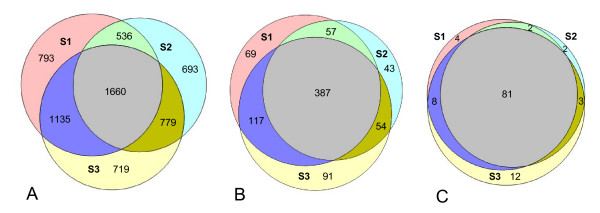
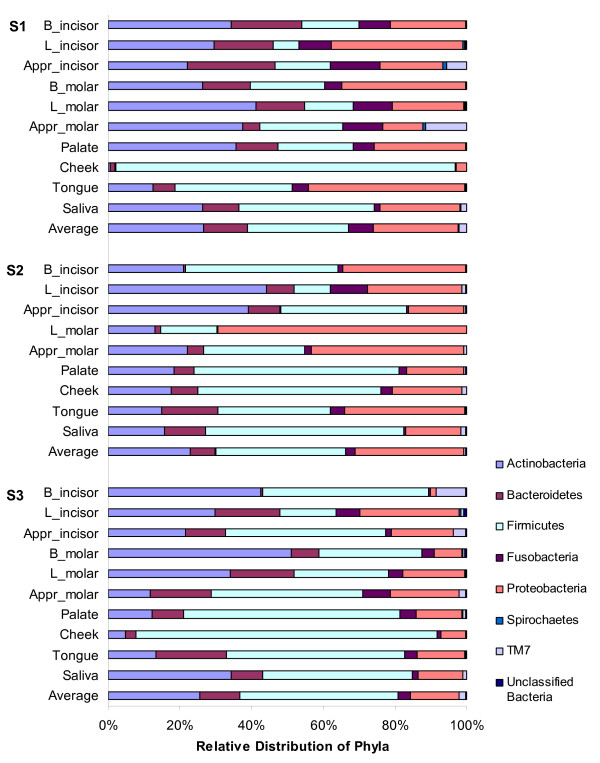
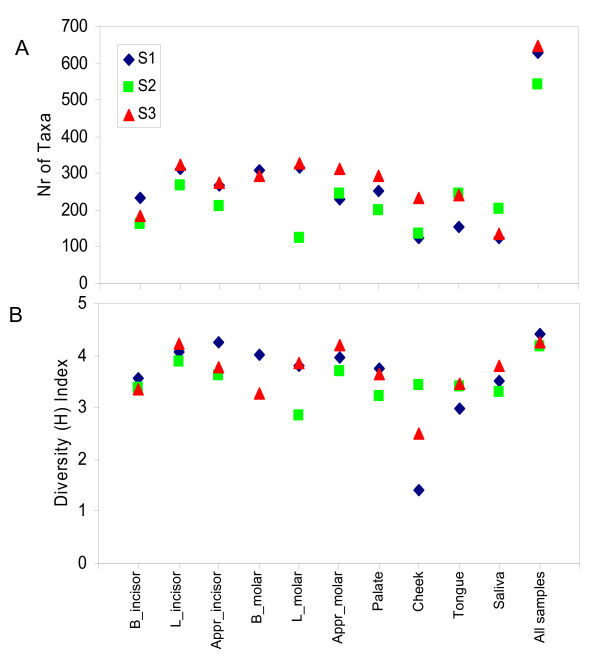
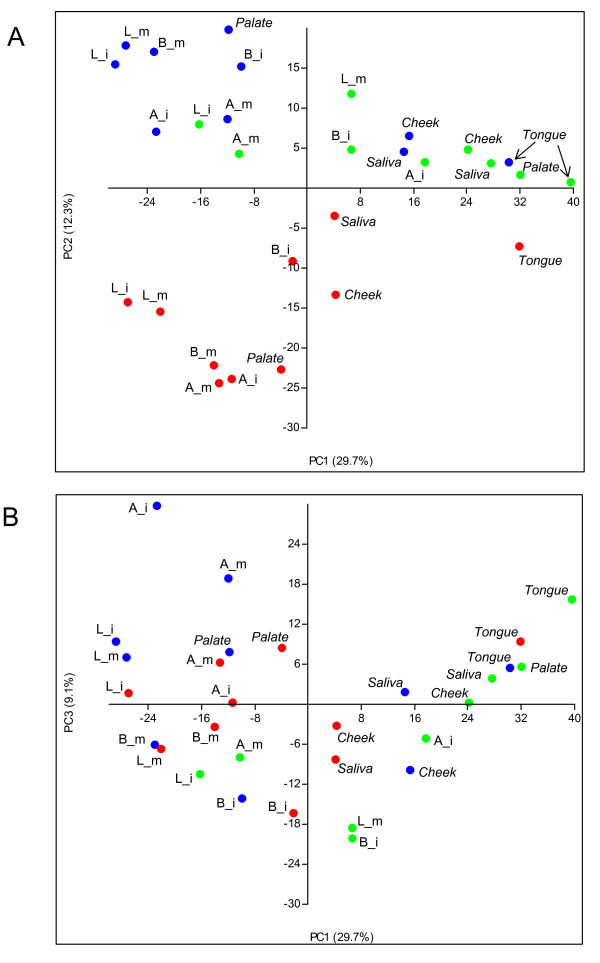
BACKGROUND: Most studies examining the commensal human oral microbiome are focused on disease or are limited in methodology. In order to diagnose and treat diseases at an early and reversible stage an in-depth definition of health is indispensible. The aim of this study therefore was to define the healthy oral microbiome using recent advances in sequencing technology (454 pyrosequencing). RESULTS: We sampled and sequenced microbiomes from several intraoral niches (dental surfaces, cheek, hard palate, tongue and saliva) in three healthy individuals. Within an individual oral cavity, we found over 3600 unique sequences, over 500 different OTUs or "species-level" phylotypes (sequences that clustered at 3% genetic difference) and 88 - 104 higher taxa (genus or more inclusive taxon). The predominant taxa belonged to Firmicutes (genus Streptococcus, family Veillonellaceae, genus Granulicatella), Proteobacteria (genus Neisseria, Haemophilus), Actinobacteria (genus Corynebacterium, Rothia, Actinomyces), Bacteroidetes (genus Prevotella, Capnocytophaga, Porphyromonas) and Fusobacteria (genus Fusobacterium).Each individual sample harboured on average 266 "species-level" phylotypes (SD 67; range 123 - 326) with cheek samples being the least diverse and the dental samples from approximal surfaces showing the highest diversity. Principal component analysis discriminated the profiles of the samples originating from shedding surfaces (mucosa of tongue, cheek and palate) from the samples that were obtained from solid surfaces (teeth).There was a large overlap in the higher taxa, "species-level" phylotypes and unique sequences among the three microbiomes: 84% of the higher taxa, 75% of the OTUs and 65% of the unique sequences were present in at least two of the three microbiomes. The three individuals shared 1660 of 6315 unique sequences. These 1660 sequences (the "core microbiome") contributed 66% of the reads. The overlapping OTUs contributed to 94% of the reads, while nearly all reads (99.8%) belonged to the shared higher taxa. CONCLUSIONS: We obtained the first insight into the diversity and uniqueness of individual oral microbiomes at a resolution of next-generation sequencing. We showed that a major proportion of bacterial sequences of unrelated healthy individuals is identical, supporting the concept of a core microbiome at health.
Overview
The claims and statistics of this paper haven’t been checked yet.
Free: it reads the open-access text and checks the first 5 claims that cite a source we can check. Create a free account to check every claim.
Integrity signals
Registry
Cites
Statistics
Figures
Verification
Claims the paper makes
The claims and statistics of this paper haven’t been checked yet.
Free: it reads the open-access text and checks the first 5 claims that cite a source we can check. Create a free account to check every claim.
Claims other papers make about this one
Each is checked against this paper’s own text: does it say what the citing paper says it does?
The source backs part of the claim, not all of it — or backs it for a different population, condition or comparison.
In the citing paper
“Up to 80% of oral bacteria are dominated by about 200 species in the Phyla Firmicutes (esp. Streptococcus, Veillonella, Granulicatella, Gemella spp.) and Proteobacteria (esp. Neisseria, Haemophilus spp.), with contributions from Bacteroidetes, Actinobacteria and Fusobacteria totaling upwards of 95% of all identified oral microbiota (Figure 2)[171–177].”
From Enterosalivary nitrate metabolism and the microbiome: Intersection of microbial metabolism, nitric oxide and diet in cardiac and pulmonary vascular health (2017) · cites this paper as [172]
Experimental — accuracy not yet measuredThe source backs part of the claim, not all of it — or backs it for a different population, condition or comparison.
In the citing paper
“This is of course not the case and the oral flora of a dog comprises hundreds of species (including pathogenic) bacteria, fungi, and viruses [153,154].”
From A One Health Perspective on the Human-Companion Animal Relationship with Emphasis on Zoonotic Aspects. (2020) · cites this paper as [154]
Experimental — accuracy not yet measuredThe source backs part of the claim, not all of it — or backs it for a different population, condition or comparison.
In the citing paper
“The core microbiome comprised typical oral bacteria that are commonly identified as abundant in similar oral microbiome surveys [28].”
From Citizen science charts two major “stomatotypes” in the oral microbiome of adolescents and reveals links with habits and drinking water composition (2018) · cites this paper as [28]
Experimental — accuracy not yet measuredThe cited source says what the claim attributes to it.
In the citing paper
“This core community composition and distribution is consistent with previous studies of oral healthy microbiomes [2, 9, 22, 28–30].”
From Citizen science charts two major “stomatotypes” in the oral microbiome of adolescents and reveals links with habits and drinking water composition (2018) · cites this paper as [28]
Self-check
Percentages, sums and reported differences re-computed from the paper’s own numbers.
The self-check needs the paper’s full text.
Citations
Cites
PAST: PALEONTOLOGICAL STATISTICAL SOFTWARE PACKAGE FOR EDUCATION AND DATA ANALYSIS
Hammer, Ø., Harper, D. A. T., & Ryan, P. D. (2001) · Palaeontologia Electronica · Cited by 17,871
A core gut microbiome in obese and lean twins
Turnbaugh, P. J., Hamady, M., Yatsunenko, T., Cantarel, B. L., Duncan, A., Ley, R. E., Sogin, M. L., Jones, W. J., Roe, B. A., Affourtit, J. P., et al. (2009) · Nature · doi:10.1038/nature07540 · Cited by 7,823 · cited 5×
“A 97% identity in 16S rRNA gene sequences is commonly used to group "species-level" phylotypes [1,11,12].”
InfluentialPruesse, E., Quast, C., Knittel, K., Fuchs, B. M., Ludwig, W., Peplies, J., & Glockner, F. O. (2007) · Nucleic Acids Research · doi:10.1093/nar/gkm864 · Cited by 6,668 · cited 1×
“We then used the GAST algorithm [27] to calculate the percent difference between each unique sequence and its closest match in a database of 69816 unique eubacterial and 2779 unique archaeal V5-V6 sequences, representing 323499 SSU rRNA sequences from the SILVA database [28].”
Microbial diversity in the deep sea and the underexplored “rare biosphere”
Sogin, M. L., Morrison, H. G., Huber, J. A., Welch, D. M., Huse, S. M., Neal, P. R., Arrieta, J. M., & Herndl, G. J. (2006) · Proceedings of the National Academy of Sciences · doi:10.1073/pnas.0605127103 · Cited by 3,701 · cited 3×
“Data analysis GS-FLX sequencing data were processed as previously described [14].”
Self-citationDefining the normal bacterial flora of the oral cavity
Aas, J. A., Paster, B. J., Stokes, L. N., Olsen, I., & Dewhirst, F. E. (2005) · Journal of Clinical Microbiology · doi:10.1128/jcm.43.11.5721-5732.2005 · Cited by 3,092 · cited 3×
“This richness is considerably higher than the 34 to 72 phylotypes and the 6 to 30 genera previously described using conventional cloning and sequencing [15,16].”
Schloss, P. D., & Handelsman, J. (2005) · Applied and Environmental Microbiology · doi:10.1128/aem.71.3.1501-1506.2005 · Cited by 2,501 · cited 1×
“The operational taxonomic units (OTUs) were created by aligning unique sequences and calculating distance matrices as previously described [14] and using DOTUR [30] to create clusters at the 0.”
Dethlefsen, L., Huse, S., Sogin, M. L., & Relman, D. A. (2008) · PLoS Biology · doi:10.1371/journal.pbio.0060280 · Cited by 2,361 · cited 2×
“However, most microbial diversity projects to date have used 3% OTUs [1,13,14], and to be consistent with other research using pyrosequencing sequences we have chosen to use 3% OTUs as well.”
Self-citationThe Ribosomal Database Project (RDP-II): sequences and tools for high-throughput rRNA analysis
Cole, J. R. (2004) · Nucleic Acids Research · doi:10.1093/nar/gki038 · Cited by 1,475 · cited 1×
“Taxa were assigned to each full-length reference sequence using several sources including Entrez Genome entries, cultured strain identities, SILVA, and the Ribosomal Database Project Classifier [29].”
Kunin, V., Engelbrektson, A., Ochman, H., & Hugenholtz, P. (2010) · Environmental Microbiology · doi:10.1111/j.1462-2920.2009.02051.x · Cited by 1,277 · cited 1×
“Recent publications [9,10] have identified the potential inflation of richness and diversity estimates caused by low-quality reads (pyrosequencing noise).”
The influence of sex, handedness, and washing on the diversity of hand surface bacteria
Fierer, N., Hamady, M., Lauber, C. L., & Knight, R. (2008) · Proceedings of the National Academy of Sciences · doi:10.1073/pnas.0807920105 · Cited by 1,108 · cited 3×
“A 97% identity in 16S rRNA gene sequences is commonly used to group "species-level" phylotypes [1,11,12].”
Research works printed but not linked: 1
- Zaura E Plaque stagnation sites and dental caries: Studies on dental biofilm and dentin demineralization in narrow grooves PhD thesis 2002 Amsterdam: Faculteit der Tandheelkunde, University of Amsterdam
Cited by
Items 601–700 of 1,000
Xu, Y., Gao, Y., Tan, L., Wang, Q., Li, Q., Wei, X., Liu, F., Li, Y., & Zheng, X. (2021) · Environmental Technology & Innovation · doi:10.1016/j.eti.2021.102222 · Cited by 22
Jin, J., Guo, L., VonTungeln, L. S., Vanlandingham, M. M., Cerniglia, C. E., & Chen, H. (2018) · Anaerobe · doi:10.1016/j.anaerobe.2018.05.010 · Cited by 25
“An earlier study showed that in the core microbiota of healthy human oral microbial communities, Firmicutes represents 28% of the population, Actino-bacteria 24%, and Bacteroidetes 16% [17]; however, the proportion of Proteobacteria is much higher in humans (22%) [17] than in hamster (2.”
BackgroundInfluentialHuang, C., Han, X., Luo, Q., Nie, Y., Kang, M. J., Chen, Y., Tang, M., Fu, Y., Li, X., & Chen, Y. (2023) · Agronomy · doi:10.3390/agronomy13092291 · Cited by 29
Functionally Active Microbiome in Supragingival Biofilms in Health and Caries
Corralo, D. J., Ev, L. D., Damé‐Teixeira, N., Maltz, M., Arthur, R. A., Do, T., & Parolo, C. C. F. (2021) · Caries Research · doi:10.1159/000518963 · Cited by 28
“Most studies conducted to date have found a core microbiome [Zaura et al., 2009; Johansson et al., 2015; Xiao et al., 2016].”
BackgroundMei, S., Zhao, M., Liu, Y., Zhao, C., Xu, H., Fang, Y., & Zhu, B. (2021) · Forensic Science International · doi:10.1016/j.forsciint.2021.111128 · Cited by 21
Li, C., Zhang, Z., Yang, Y., & Liao, H. (2022) · Cancer Medicine · doi:10.1002/cam4.4801 · Cited by 22
Ramachandra, S. S., Abdal‐hay, A., Han, P., Lee, R. S. B., & Ivanovski, S. (2022) · Biomaterials Advances · doi:10.1016/j.bioadv.2022.213251 · Cited by 22
Zhang, J., Yu, D., Wang, T., Gao, N., Shi, L., Wang, Y., Huo, Y., Ji, Z., Li, J., Zhang, X., et al. (2024) · Microbiology Spectrum · doi:10.1128/spectrum.02480-23 · Cited by 22
Iqbal, A., Hussain, Q., Mo, Z., Hua, T., Mustafa, A. E. M. A., & Tang, X. (2024) · Microorganisms · doi:10.3390/microorganisms12061252 · Cited by 21
“A Venn diagram was created using the R package “VennDiagram (v. 1.3.3250.34910; http://www.pnl.gov/; http://omics. pnl.gov/, accessed on 17 June 2024)”, in accord with Zaura et al. [57].”
MethodInfluentialImplications of Pyrosequencing Error Correction for Biological Data Interpretation
Bakker, M. G., Tu, Z. J., Bradeen, J. M., & Kinkel, L. L. (2012) · PLoS ONE · doi:10.1371/journal.pone.0044357 · Cited by 21
“One approach to dealing with the problem of sequence error has been to simply shed detail from a dataset until there is a high probability that the influence of PCR or sequencing errors has been removed, for example with the use of broad criteria for delimiting OTUs or in approaches that discard all of the leastfreque…”
BackgroundThe Oral Microbiome in Health and Disease
Olsen, I. (2015) · Springer eBooks · doi:10.1007/978-3-319-25091-5_10 · Cited by 27
Kanamoto, T., Terakubo, S., & Nakashima, H. (2018) · Medicines · doi:10.3390/medicines5040129 · Cited by 21
Dynamics of Microbial Communities across the Life Stages of Nilaparvata lugens (Stål)
Ren, Z., Zhang, Y., Cai, T., Mao, K., Xu, Y., Li, C., He, S., Li, J., & Wan, H. (2021) · Microbial Ecology · doi:10.1007/s00248-021-01820-w · Cited by 21
In Vitro Assessment of Shiitake Mushroom (Lentinula edodes) Extract for Its Antigingivitis Activity
Ciric, L., Tymon, A. M., Zaura, E., Lingström, P., Stauder, M., Papetti, A., Signoretto, C., Pratten, J. R., Wilson, M., & Spratt, D. A. (2011) · BioMed Research International · doi:10.1155/2011/507908 · Cited by 23
Self-citationThe Impact of Various Time Intervals on the Supragingival Plaque Dynamic Core Microbiome
Jiang, W.-X., Hu, Y.-J., Gao, L., He, Z.-Y., Zhu, C.-L., Ma, R., & Huang, Z.-W. (2015) · PLOS ONE · doi:10.1371/journal.pone.0124631 · Cited by 20
“An analysis of the oral microbiome in multiple sites from three adults, using 454 pyrosequencing, revealed a large overlap in species-level phylotypes and unique sequences among them, and the “shared OTUs” contributed to 94% of the sequences [3].”
BackgroundWenck, C., Leopoldt, D., Habib, M., Hegermann, J., Stiesch, M., Doll‐Nikutta, K., Heisterkamp, A., & Torres‐Mapa, M. L. (2024) · Nanoscale Advances · doi:10.1039/d3na00477e · Cited by 21
Cui, Y., Dong, Y., Liu, H., & Sun, Z. (2021) · Global Ecology and Conservation · doi:10.1016/j.gecco.2021.e01872 · Cited by 22
Yang, N., Xu, J., Wang, X., Chen, N., Su, L. C., & Liu, Y. (2022) · Frontiers in Microbiology · doi:10.3389/fmicb.2022.835310 · Cited by 25
“The predominance of Neisseria indicated a healthy oral cavity condition (Zaura et al., 2009; Yamashita and Takeshita, 2017).”
BackgroundLima, C. P. V., Grisi, D. C., Guimarães, M. D. C. M., Salles, L. P., Kruly, P. D. C., Do, T., Borges, L. G. D. A., & Damé‐Teixeira, N. (2022) · Journal of Oral Microbiology · doi:10.1080/20002297.2022.2082727 · Cited by 23
“Leptotrichia was likewise associated with samples without T2D and is a representative of the core microbiome, present in almost all individuals [48,49], as a bridge between early and late colonizers within oral biofilms.”
BackgroundProfiles of Microbial Community and Antibiotic Resistome in Wild Tick Species
Wei, N., Lu, J., Dong, Y. W., & Li, S. (2022) · mSystems · doi:10.1128/msystems.00037-22 · Cited by 23
“com/tools/Home/Soft/venn according to the previous study (47), while heatmaps were generated using Heml1.”
MethodIdentifying oral microbiome alterations in adult betel quid chewing population of Delhi, India
Bahuguna, M., Hooda, S., Mohan, L., Gupta, R. K., & Diwan, P. (2023) · PLoS ONE · doi:10.1371/journal.pone.0278221 · Cited by 23
Salivary microbiome and hypertension in the Qatari population
Murugesan, S., & Khodor, S. A. (2023) · Journal of Translational Medicine · doi:10.1186/s12967-023-04247-8 · Cited by 22
“Previous studies showed that the core salivary microbiome of healthy subjects includes Streptococcus, Veillonella, Neisseria, and Actinomyces [20, 21].”
BackgroundMolecular Principles of Adhesion and Biofilm Formation
Kreth, J., & Herzberg, M. C. (2015) · Springer series on biofilms · doi:10.1007/978-3-662-47415-0_2 · Cited by 28
Merglová, V., & Polenik, P. (2016) · Folia Microbiologica · doi:10.1007/s12223-016-0453-z · Cited by 22
Anukam, K. C., & Agbakoba, N. R. (2017) · Nigerian Journal of Clinical Practice · doi:10.4103/njcp.njcp_32_17 · Cited by 20
“For example, the genus Gemella, identified in subject 1 and subject 3 individuals, was not defined as a core-microbiome genus in previous studies of salivary bacterial communities.[11] Gemella is depleted in the presence of tooth decay, and an increase is correlated with good oral hygiene and they are present in low a…”
BackgroundResultInfluentialSimón‐Soro, Á., Sohn, M. B., McGinniss, J. E., Imai, I., Brown, M. C., Knecht, V. R., Bailey, A., Clarke, E., Cantu, E., Li, H., et al. (2019) · Annals of the American Thoracic Society · doi:10.1513/annalsats.201904-299oc · Cited by 22
Mild changes in the mucosal microbiome during terminal ileum inflammation
Fan, H., Zhu, P., Lu, Y., Guo, J.-H., Zhang, J., Qu, G.-Q., & Zhu, J. (2020) · Microbial Pathogenesis · doi:10.1016/j.micpath.2020.104104 · Cited by 22
Biome representational in silico karyotypingPreprint
Muthappan, V., Lee, A., Westover, T., Akileswaran, L., Dintzis, S. M., Lee, C., Magrini, V. J., Mardis, E. R., Shendure, J., & Gelder, R. N. V. (2011) · Genome Research · doi:10.1101/gr.115758.110 · Cited by 20
“…et al. 2005; Qin et al. 2010), vaginal mucosa (Oakley et al. 2008; Fredricks et al. 2009), oral mucosa (Aas et al. 2005; Keijser et al. 2008; Nasidze et al. 2009a; Nasidze et al. 2009b; Zaura et al. 2009), skin (Costello et al. 2009; Grice et al. 2009), and conjunctiva (Graham et al. 2007).”
Canullo, L., Rakic, M., Corvino, E., Burton, M., Krumbeck, J. A., Chittoor Prem, A., Ravidà, A., Ignjatović, N., Sculean, A., Menini, M., et al. (2023) · BMC Oral Health · doi:10.1186/s12903-023-02729-1 · Cited by 19
“In contrast, the NPT group showed a higher abundance of late colonizers like Neisseria oralis [53] suggesting an advanced stage of biofilm formation in NPT.”
ResultSalivary microbiota reflecting changes in subgingival microbiota
Jung, J.-S., Kook, J., Park, S.-N., Lim, Y. K., Choi, G. H., Kim, S., & Ji, S. (2024) · Microbiology Spectrum · doi:10.1128/spectrum.01030-24 · Cited by 21
“Several studies have shown that the bacterial composition of saliva is significantly different from that of the teeth, including both supra-and subgingival plaque microbiota, and is closer to that on mucosal surfaces such as the tongue coating (10–12).”
Zhao, M., Yu, C., Su, C., Wang, H., Wang, X., Weir, M. D., Xu, H. H. K., Liu, M., Yuxing, B., & Zhang, N. (2024) · BMC Oral Health · doi:10.1186/s12903-024-05356-6 · Cited by 24
“However, when the quantity of Firmicutes increases excessively, it may lead to dysbiosis, contributing to oral health issues such as periodontal disease [29].”
Ying, C., Jiang, M., You, L., Tan, J.-H., Yang, Y., Wang, Y., & Liu, K. (2020) · Current Microbiology · doi:10.1007/s00284-020-02088-y · Cited by 19
Verspecht, T., Holm, W. V., Boon, N., Bernaerts, K., Daep, C. A., Masters, J. G., Zayed, N., Quirynen, M., & Teughels, W. (2021) · Journal of Oral Microbiology · doi:10.1080/20002297.2021.1910462 · Cited by 20
Xie, Z., Yao, M., Castro-Mejía, J. L., Ma, M., Zhu, Y., Fu, X., Huang, Q., & Zhang, B. (2023) · Journal of Functional Foods · doi:10.1016/j.jff.2023.105447 · Cited by 19
In Vitro Modelling of Oral Microbial Invasion in the Human Colon
Etienne‐Mesmin, L., Meslier, V., Uriot, O., Fournier, E., Deschamps, C., Denis, S., David, A., Jégou, S., Morabito, C., Quinquis, B., et al. (2023) · Microbiology Spectrum · doi:10.1128/spectrum.04344-22 · Cited by 21
Bardenhorst, S. K., Hagenfeld, D., Matern, J., Prior, K., Harks, I., Eickholz, P., Lorenz, K., Kim, T., Kocher, T., Meyle, J., et al. (2024) · Microbiome · doi:10.1186/s40168-024-01945-3 · Cited by 24
Mining Virulence Genes Using Metagenomics
Belda‐Ferre, P., Cabrera‐Rubio, R., Moyá, A., & Mira, Á. (2011) · PLoS ONE · doi:10.1371/journal.pone.0024975 · Cited by 23
“The oral microbiome is known to be rich in commensal Neisserial and Streptococcal species [9] and therefore the MIs, apart from containing mobile genetic elements, included many genes involved in pathogenesis such as well-characterized toxins, antigens, hemolysins and adhesins (Table S1).”
BackgroundParolin, C., Giordani, B., Palomino, R. A. Ñ., Biagi, E., Severgnini, M., Consolandi, C., Caredda, G., Storelli, S., Strohmenger, L., & Vitali, B. (2017) · Scientific Reports · doi:10.1038/s41598-017-06743-6 · Cited by 20
Oral Microbiome of Children Living in an Isolated Area in Myanmar
Nomura, Y., Otsuka, R., Hasegawa, R., & Hanada, N. (2020) · International Journal of Environmental Research and Public Health · doi:10.3390/ijerph17114033 · Cited by 19
“The core microbiome is longitudinally stable, keeping the human body healthy [14,15].”
BackgroundRoles of host genetics and sperm microbiota in reproductive success in healthy rabbit
Marco‐Jiménez, F., Borrás-Pérez, S., García‐Domínguez, X., D’Auria, G., Vicente, J. S., & Marín, C. (2020) · Theriogenology · doi:10.1016/j.theriogenology.2020.09.028 · Cited by 21
Dental Biofilm and Saliva Microbiome and Its Interplay with Pediatric Allergies
Arweiler, N. B., Rahmel, V., Alhamwe, B., Alhamdan, F., Zemlin, M., Boutin, S., Dalpke, A. H., & Renz, H. E. (2021) · Microorganisms · doi:10.3390/microorganisms9061330 · Cited by 20
“Therefore, they harbor a plethora of bacterial species, and thus, are extremely heterogeneous [43,44].”
BackgroundAssociations of sex, oral hygiene and smoking with oral species in distinct habitats at age 32 years
Benn, A. M. L., Heng, N. C. K., Thomson, W. M., Sissons, C. H., Gellen, L. S., Gray, A. R., & Broadbent, J. M. (2021) · European Journal Of Oral Sciences · doi:10.1111/eos.12829 · Cited by 19
Relationships Between Diurnal Changes of Tongue Coating Microbiota and Intestinal Microbiota
Guo, X., Jiang, T., Ma, X.-X., Hu, X., Huang, J.-B., Cui, L., Cui, J., Yao, X., Shi, Y., Li, J., et al. (2022) · Frontiers in Cellular and Infection Microbiology · doi:10.3389/fcimb.2022.813790 · Cited by 24
“A Venn diagram was generated to visualize the shared and unique ASVs among samples or groups using R package “VennDiagram,” based on the occurrence of ASVs across samples/groups regardless of their relative abundance (Zaura et al., 2009).”
MethodOral Biofilm Sampling for Microbiome Analysis in Healthy Children
Santigli, E., Koller, M., & Klug, B. (2017) · Journal of Visualized Experiments · doi:10.3791/56320 · Cited by 20
Bennett, J. S., Bratcher, H. B., Brehony, C., Harrison, O. B., & Maiden, M. C. J. (2014) · Springer eBooks · doi:10.1007/978-3-642-30197-1_241 · Cited by 27
Roles of oral and gut microbiota in acute myocardial infarction
Li, Y., Chen, B., Feng, Z., Zhou, L.-J., Liu, T., Lin, W.-Z., Zhu, H., Xu, S., Bai, X., Meng, X.-Q., et al. (2024) · Journal of Advanced Research · doi:10.1016/j.jare.2024.10.009 · Cited by 22
Ahmad, S., Jayamanne, D. T., Bergamin, S., Lawless, A. K., Guminski, A. D., Lee, A. V., Yuile, A., Wheeler, H., Eade, T., Back, M., et al. (2025) · Cancers · doi:10.3390/cancers17162667 · Cited by 24
“…anginosus , S. australis , S. constellatus , S. mitis , and several Haemophilus species (e.g., H. influenzae , H. parainfluenzae , H. pittma-niae , H. sputorum ) were predominantly found in healthy individuals, suggesting their roles as core members of a protective oral microbiota [6,50].”
Jones, K. R., Belvin, B. R., Macrina, F. L., & Lewis, J. P. (2020) · Molecular Oral Microbiology · doi:10.1111/omi.12304 · Cited by 23
“Porphyromonas is a well-characterized member of the oral microbiome (Zaura et al., 2009).”
BackgroundDental black plaque: metagenomic characterization and comparative analysis with white-plaque
Veses, V., González‐Torres, P., Carbonetto, B., Jovani‐Sancho, M., González-Martínez, R., Cortell‐Ballester, I., & Sheth, C. C. (2020) · Scientific Reports · doi:10.1038/s41598-020-72460-2 · Cited by 19
Chauhan, N. S., Monika, Kumar, T., Sharma, P., & Goyal, K. (2020) · Elsevier eBooks · doi:10.1016/b978-0-12-817193-6.00005-4 · Cited by 27
Microbiota in the Natural History of Pancreatic Cancer: From Predisposition to Therapy
Binda, C., Gibiino, G., Sbrancia, M., Coluccio, C., Cazzato, M. T., Carloni, L., Cucchetti, A., Ercolani, G., Sambri, V., & Fabbri, C. (2022) · Cancers · doi:10.3390/cancers15010001 · Cited by 22
Metabolic pathway prediction of core microbiome based on enterotype and orotype
Lee, S. H., Lee, H. B., You, H. S., Sung, H.-J., & Hyun, S. H. (2023) · Frontiers in Cellular and Infection Microbiology · doi:10.3389/fcimb.2023.1173085 · Cited by 19
“Identification of the key microbiome components could help address the maintenance of oral and intestinal health in humans (Zaura et al., 2009; Bäckhed et al., 2012).”
BackgroundProfiling of Oral and Nasal Microbiome in Children with Cleft Palate
Zhang, M., Wang, R., Liao, Y., Buijs, M. J., & Li, J. (2015) · The Cleft Palate-Craniofacial Journal · doi:10.1597/14-162 · Cited by 23
“All of them were parts of predominant bacteria in oral and/or nasal cavities (Zaura et al., 2009; Frank et al., 2010).”
BackgroundSun, B., Zhou, D., Tu, J., & Lu, Z. (2017) · BioMed Research International · doi:10.1155/2017/8184160 · Cited by 19
The antibacterial activity of “Satureja hortensis” extract and essential oil against oral bacteria
Dibazar, S., Hagh, L. G., Arefian, A., Farajzade, A., & Samiea, N. (2019) · Dental Research Journal · doi:10.4103/1735-3327.255741 · Cited by 20
Wang, R., Deng, Y., Deng, Q., Sun, D., Fang, Z., Sun, L., Wang, Y., & Gooneratne, R. (2020) · Frontiers in Microbiology · doi:10.3389/fmicb.2020.00073 · Cited by 21
Moraes, L. C., Lang, P. M., Arcanjo, R. A., Rampelotto, P. H., Fatturi‐Parolo, C. C., Ferreira, M. B. C., & Montagner, F. (2020) · International Endodontic Journal · doi:10.1111/iej.13389 · Cited by 23
Poly(lactic acid/caprolactone) bilayer membrane blocks bacterial penetration
Abe, G. L., Tsuboi, R., Kitagawa, H., Sasaki, J., Li, A., Kohno, T., & Imazato, S. (2022) · Journal of Periodontal Research · doi:10.1111/jre.12980 · Cited by 18
Lin, L., Fang, T., Lü, L., Ou, Q., Zhang, H., Chen, K., & Quan, H. (2022) · Frontiers in Endocrinology · doi:10.3389/fendo.2022.778069 · Cited by 20
“Genome-wide association study (GWAS), a common genetic analysis tool, provides insights into the molecular status of complex diseases such as T2D and supports risk prediction (6).”
BackgroundInfluentialGardnerella vaginalis as a Rare Cause of Prosthetic Joint Infection
Hoarau, G., Bernard, S., Pavèse, P., Saragaglia, D., Croizé, J., & Maurin, M. (2012) · Journal of Clinical Microbiology · doi:10.1128/jcm.01969-12 · Cited by 18
“It has also been detected in the microflora of other mucosa, especially of the oral cavity (15).”
BackgroundEffects of antibiotic on microflora in ileum and cecum for broilers by 16S rRNA sequence analysis
She, Y., Cai, H., & Liu, G. (2018) · Animal Science Journal · doi:10.1111/asj.13113 · Cited by 18
Angjelova, A., Jovanova, E., Polizzi, A., Leonardi, R. M., & Isola, G. (2025) · Antibiotics · doi:10.3390/antibiotics14080815 · Cited by 20
“These include commonly identified genera and species such as Streptococcus mutans , Porphyromonas gingivalis , Fusobacterium nucleatum , Actinomyces naeslundii , and Veillonella parvula , which play key roles in both oral health and disease [4].”
Burchard, T., Karygianni, L., Hellwig, E., Wittmer, A., & Al‐Ahmad, A. (2020) · Antibiotics · doi:10.3390/antibiotics9090532 · Cited by 18
“Zaura et al. (2009) investigated the microbial composition of healthy oral cavities with the aim of identifying a core microbiome that is said to be responsible for the development of functional stability and homeostasis [8].”
BackgroundResultInfluentialRodrigues, M. X., Fiani, N., Bicalho, R. C., & Peralta, S. (2021) · Scientific Reports · doi:10.1038/s41598-021-86466-x · Cited by 18
Min, K., Glowacki, A. J., Bosma, M. L., McGuire, J. A., Tian, S., McAdoo, K., DelSasso, A., Fourre, T., Gambogi, R. J., Milleman, J. L., et al. (2024) · BMC Oral Health · doi:10.1186/s12903-024-04365-9 · Cited by 19
Yan, S., Chen, L., Li, N., Wei, X., Wang, J., Dong, W., Wang, Y., Shi, J., Ding, X., & Peng, Y. (2024) · Bioresources and Bioprocessing · doi:10.1186/s40643-024-00766-4 · Cited by 19
“A Venn diagram was generated to visualize the shared and unique ASVs among samples or groups using the R package “VennDiagram” based on the occurrence of ASVs across samples/groups regardless of their relative abundance (Zaura et al. 2009).”
MethodOral microbiome and its relationship with oral cancer
Wang, S., Tan, X., Cheng, J., Liu, Z., Zhou, H., Liao, J., Wang, X., & Liu, H. (2024) · Journal of Cancer Research and Therapeutics · doi:10.4103/jcrt.jcrt_44_24 · Cited by 21
Lei, Y., Li, M., Zhang, H., Deng, Y. H., Dong, X., Chen, P., Li, Y., Zhang, S., Li, C., Wang, S., et al. (2024) · mSphere · doi:10.1128/msphere.00672-24 · Cited by 19
Sikdar, R., Beauclaire, M. V., Herzberg, M. C., Lima, B. P., & Elias, M. H. (2025) · npj Biofilms and Microbiomes · doi:10.1038/s41522-025-00846-z · Cited by 19
Women's multisite microbial modulation during pregnancy
Sparvoli, L. G., Cortez, R. V., Daher, S., Padilha, M., Sun, S. Y., Nakamura, M. U., & Taddei, C. R. (2020) · Microbial Pathogenesis · doi:10.1016/j.micpath.2020.104230 · Cited by 20
Neutrophils exhibit an individual response to different oral bacterial biofilms
Mikolai, C., Branitzki‐Heinemann, K., Ingendoh‐Tsakmakidis, A., Stiesch, M., von Köckritz‐Blickwede, M., & Winkel, A. (2020) · Journal of Oral Microbiology · doi:10.1080/20002297.2020.1856565 · Cited by 20
Pathogenic Microbial Profile and Antibiotic Resistance Associated with Periodontitis
Ansiliero, R., Gelinski, J. M. L. N., Samistraro, Q. D. L., Baratto, C. M., de Almeida, C. A., & Locatelli, C. (2021) · Indian Journal of Microbiology · doi:10.1007/s12088-020-00914-2 · Cited by 24
Characteristics of Gut Microbiota in Cerulein-Induced Chronic Pancreatitis
Wu, C., Li, M., & Chen, W. (2021) · Diabetes Metabolic Syndrome and Obesity · doi:10.2147/dmso.s291822 · Cited by 18
“According to the OTU clustering results, a Venn diagram was generated using the R package “VenDiagram” to visualize the shared and unique OTU between the two groups, based on the presence of OTUs in each group regardless of their relative abundance.(18) OTU-level ranked abundance curves were generated to compare the r…”
MethodTian, Y., Sun, L., Qu, H., Yang, Y., & Chen, F. (2021) · International Journal of Oral Science · doi:10.1038/s41368-020-00108-y · Cited by 18
Ghamari, M., Sabzi, S., Rajabi, E., Khodadadi, G., Navidifar, T., Sadeghi, Z., & Bostanghadiri, N. (2025) · Probiotics and Antimicrobial Proteins · doi:10.1007/s12602-025-10636-w · Cited by 22
Moorhouse, A. J., López, R. M., Gow, N. A. R., & Hijazi, K. (2021) · Journal of Oral Microbiology · doi:10.1080/20002297.2021.1894047 · Cited by 17
Yin, Y., Li, Q., & Du, H. (2021) · PeerJ · doi:10.7717/peerj.12098 · Cited by 16
“The correlations between soil properties and soil community diversity were studied using Spearman’s rank correlations using the package of ‘‘VennDiagram’’ in RStudio (R Development Core Team, 2009).”
MethodInfluentialShan, S., Yin, R., Shi, J., Zhang, L., Liu, F., Qiao, Q., & Li, Z. (2022) · Journal of Agricultural and Food Chemistry · doi:10.1021/acs.jafc.1c05747 · Cited by 17
An, Y., Li, Y., Ma, L., Li, D., Zhang, W., Feng, Y., Liu, Z., Wang, X., Wen, X., & Zhang, X. (2022) · Plants · doi:10.3390/plants11212849 · Cited by 16
“Principal component analysis (PCA) was also conducted based on the genus-level compositional profiles [37].”
MethodMicrobiome Alterations and Alzheimer’s Disease: Modeling Strategies with Transgenic Mice
López-Villodres, J. A., Escamilla, A., Mercado-Sáenz, S., Alba-Tercedor, C., Rodríguez‐Pérez, L., Arranz‐Salas, I., Sanchez-Varo, R. M., & Bermúdez, D. (2023) · Biomedicines · doi:10.3390/biomedicines11071846 · Cited by 20
Li, M., Zhao, T., Liang, D., Dong, D., Guo, Z., Hua, X., & Zhong, S. (2023) · Chemosphere · doi:10.1016/j.chemosphere.2023.139524 · Cited by 18
Effects of Mint Oils on the Human Oral Microbiome: A Pilot Study
Abdelrahman, S. M., Samak, M. E., El-Baz, L. M. F., Hanora, A., Satyal, P., & Dosoky, N. S. (2024) · Microorganisms · doi:10.3390/microorganisms12081538 · Cited by 17
“Furthermore, most oral taxa found in unrelated healthy individuals were similar, indicating the presence of a healthy microbiome [54–56].”
BackgroundRana, M. S., Alshehri, D., Wang, R., Imran, M., Abdellah, Y. A. Y., Rahman, F. U., Alatawy, M., Ghabban, H., Abeed, A. H. A., & Hu, C. (2025) · Frontiers in Plant Science · doi:10.3389/fpls.2024.1519540 · Cited by 18
“To see the unique and shared OTUs between the treatments, a Venn diagram was created using the R package that was constructed based on the presence of OTUs regardless of their relative abundance (Zaura et al., 2009).”
Liu, J., Wei, Y., Du, H., Zhu, W., Zhou, Y., & Yin, Y. (2022) · Forests · doi:10.3390/f13091345 · Cited by 18
Espinoza, J. L., Torralba, M., Leong, P., Saffery, R., Bockmann, M. R., Kuelbs, C., Singh, S., Hughes, T. E., Craig, J. M., Nelson, K. E., et al. (2022) · PNAS Nexus · doi:10.1093/pnasnexus/pgac239 · Cited by 19
“Although, Neisseria and Haemophilus parainfluenzae are both common in the oral cavity of caries-free individuals from the perspective of abundance (41, 42, 43), their interactions with other coexpressed microbes known to be associated with infections in humans [e.”
BackgroundOcon, S., Murphy, C., Dang, A. T., Sankaran‐Walters, S., Li, C., Tarara, R. P., Borujerdpur, N., Dandekar, S., Paster, B. J., & George, M. D. (2013) · PLoS ONE · doi:10.1371/journal.pone.0080863 · Cited by 17
“In sampling only 2 environmental niches of the macaque oral cavity we have identified 4 of the 5 phyla reported to comprise the ‘‘core oral microbiome’’ of healthy humans as determined through sampling of tongue, plaque, palate, cheek, and saliva [57].”
BackgroundProperties of silver contained coatings on CoCr alloys prepared by vacuum plasma spraying
Liang, R., Xu, Y., Zhao, M., Han, G., Li, J., Wu, W., Dong, M., Yang, J., & Liu, Y. (2019) · Materials Science and Engineering C · doi:10.1016/j.msec.2019.110156 · Cited by 17
Structure and Function of Microbial Communities
Stahl, D. A., Flowers, J. J., Hullar, M. A. J., & Davidson, S. K. (2013) · Springer eBooks · doi:10.1007/978-3-642-30123-0_34 · Cited by 22
Lv, H., Sang, R., Huang, L., Long, Y., Xu, D., Wang, M., Zhang, Q., Jia, L., Ding, Q., Yan, C., et al. (2025) · Frontiers in Microbiology · doi:10.3389/fmicb.2025.1648481 · Cited by 15
“A Venn diagram was generated to visualize the shared and unique ASVs using the “VennDiagram” R v.3.20 package (Zaura et al., 2009).”
InfluentialPostiglione, A., Prigioniero, A., Zuzolo, D., Tartaglia, M., Scarano, P., Maisto, M., Ranauda, M. A., Sciarrillo, R., Thijs, S., Vangronsveld, J., et al. (2022) · Plants · doi:10.3390/plants11243528 · Cited by 15
“A Venn diagram was generated to show the shared and unique OTUs among groups, based on the occurrence of OTUs in the samples, regardless of their relative abundance [89].”
BackgroundEcological shifts of salivary microbiota associated with metabolic-associated fatty liver disease
Wang, M., Yan, L.-Y., Qiao, C.-Y., Zheng, C.-C., Niu, C., Huang, Z., & Pan, Y. (2023) · Frontiers in Cellular and Infection Microbiology · doi:10.3389/fcimb.2023.1131255 · Cited by 18
“Interestingly, the genus Neisseria and Capnocytophaga have been identified as part of human oral health’s “core microbiome” (Zaura et al., 2009).”
BackgroundKaradayı, B., Karaismailoğlu, B., Karadayı, Ş., Arslan, A., Gözen, E. D., & Özbek, T. (2023) · Legal Medicine · doi:10.1016/j.legalmed.2023.102338 · Cited by 16
Huang, Y., Yan, Y., Ma, Y., Zhang, X., Zhao, Q., Men, M., Huang, Y., & Peng, Z. (2024) · Frontiers in Microbiology · doi:10.3389/fmicb.2024.1391632 · Cited by 17
“A Venn diagram was generated to visualize the shared and unique ASV among groups based on their occurrence, regardless of their relative abundance (Zaura et al., 2009).”
van der Ploeg, G. R., Brandt, B. W., Keijser, B. J. F., van der Veen, M. H., Volgenant, C. M. C., Zaura, E., Smilde, A. K., Westerhuis, J. A., & Heintz‐Buschart, A. (2024) · npj Biofilms and Microbiomes · doi:10.1038/s41522-024-00565-x · Cited by 22
“…et al., 2017; The Human Microbiome Project Consortium, 2012) and one subcommunity containing mainly commensal genera such as Kingella oralis (Abusleme et al., 2021), Streptococcus spp. (Caporaso et al., 2011; Zaura et al., 2009), and Veillonella spp. (Moore & Moore, 1994) have been identified.”
BackgroundSelf-citationHunter, M. C., Pozhitkov, A. E., & Noble, P. A. (2016) · Journal of Microbiological Methods · doi:10.1016/j.mimet.2016.09.019 · Cited by 17
“This fact, alongwith the finding that the oral microbiome of humans is much more diverse than previously thought (Griffen et al., 2012; Zaura et al., 2009), has prompted a paradigm shift in the understanding of the origins of periodontal disease.”
BackgroundsMETASeq: Combined Profiling of Microbiota and Host Small RNAs
Mjelle, R., Aass, K. R., Sjursen, W., Hofsli, E., & Sætrom, P. (2020) · iScience · doi:10.1016/j.isci.2020.101131 · Cited by 15
Wu, B., Wang, P., Devlin, A. T., Chen, L., Xia, Y., Zhang, H., Nie, M., & Ding, M. (2021) · Microorganisms · doi:10.3390/microorganisms9071532 · Cited by 17
“Network analysis also can help identify potential keystone species [30].”
BackgroundThe lung microbiome in HIV-positive patients with active pulmonary tuberculosis
Ueckermann, V., Lebre, P. H., Geldenhuys, J., Hoosien, E., Cowan, D. A., van Rensburg, L. J., & Ehlers, M. M. (2022) · Scientific Reports · doi:10.1038/s41598-022-12970-3 · Cited by 19
López, C. D., González, D. M., Vidaki, A., & Kayser, M. (2022) · Frontiers in Microbiology · doi:10.3389/fmicb.2022.886201 · Cited by 17
Does routine analysis of subgingival microbiota in periodontitis contribute to patient benefit?
y Mostajo, M. F., Zaura, E., Crielaard, W., & Beertsen, W. (2011) · European Journal Of Oral Sciences · doi:10.1111/j.1600-0722.2011.00828.x · Cited by 21
Self-citation
Metadata
- Authors
- Zaura, E., Keijser, B. J., Huse, S. M., & Crielaard, W.
- Affiliations
- Academic Center for Dentistry Amsterdam (NL)
- Netherlands Organisation for Applied Scientific Research (NL)
- Marine Biological Laboratory (US)
- Corresponding author
- Zaura, Egija
- Venue
- BMC Microbiology
- Published
- 2009
- Volume
- 9
- Issue
- 1
- Pages
- 259
- ISSN
- 1471-2180 (ISSN-L)
- PMC
- PMC2805672
- OpenAlex
- W2117522399
- Cited by
- 1,323
- References
- 29
- Citations by year
- 2026: 68 · 2025: 96 · 2024: 88 · 2023: 87 · 2022: 114 · 2021: 138 · 2020: 118 · 2019: 103 · 2018: 68 · 2017: 69 · 2016: 61 · 2015: 64 · 2014: 55 · 2013: 55 · 2012: 53
- FWCI
- 48.63
- Type
- journal article
- Language
- en
- Open access
- gold
- doi.org
- Licence
- cc-by
- Locations
- BMC Microbiology (publishedVersion, cc-by)
- PubMed Central (publishedVersion, cc-by)
- PubMed (publishedVersion)
- UvA-DARE (University of Amsterdam) (acceptedVersion, other-oa)
- TNO Repository (submittedVersion)
- DOAJ (DOAJ: Directory of Open Access Journals) (submittedVersion, cc-by-sa)
- VU Research Portal (submittedVersion, other-oa)
- Repository hosted by TU Delft Library (TU Delft) (submittedVersion)
- Data Archiving and Networked Services (DANS) (submittedVersion, other-oa)
- Funders
- National Science Foundation (P50 ES012742, 0430724)
- National Institutes of Health
- National Institute of Environmental Health Sciences (P50ES012742)
- Topics
- Health Sciences › Dentistry › Periodontics › Oral microbiology and periodontitis research
- Life Sciences › Biochemistry, Genetics and Molecular Biology › Molecular Biology › Gut microbiota and health
- Physical Sciences › Environmental Science › Ecology › Microbial Community Ecology and Physiology
- Keywords
- oral microbiota, core microbiome, oral bacterial diversity, shared OTUs, dental surfaces, tongue, cheek, hard palate, saliva, Streptococcus, Neisseria, Fusobacterium, Prevotella, Bacteroidetes, Firmicutes, Proteobacteria, actinobacteria
- MeSH terms
- Bacteria, DNA, Bacterial, Humans, Male, Mouth, Cluster Analysis, Sequence Analysis, DNA, Principal Component Analysis, Ribosome Subunits, Small, Bacterial, Metagenome
About these checks
Registry, retraction, Cites and statistics results are computed, not judged, with one exception: a printed reference that no index lists is read once by a model before it counts as a citation error. Claims are extracted by a model and kept only when their quote appears verbatim in the text; each cited source is then checked, with a model’s help, for whether it says what the claim relies on. Those verdicts can be wrong — read the claim’s quote and the cited source before relying on one.
Statistics and arithmetic are recomputed, not judged.
Confidence bands are shown only for fields calibrated on our annotated test set. None is calibrated yet, so no band is shown.
What counts as a claim ›How we measure confidence ›How we check this ›
Are you an author, or do you see a problem with this page? Request a review
Data sources
Bibliographic data: Semantic Scholar, OpenAlex, Crossref.
Contains information from the Semantic Scholar Academic Graph Datasets, made available under the ODC Attribution License (ODC-BY 1.0).
Semantic Scholar’s data is described in: Kinney, R., et al. (2023). The Semantic Scholar Open Data Platform. arXiv:2301.10140.
