

Defining the healthy “core microbiome” of oral microbial communities
Open accessThe DOI matches its Crossref record; 29 of the 29 references it cites were found in a registry or an index.
Abstract
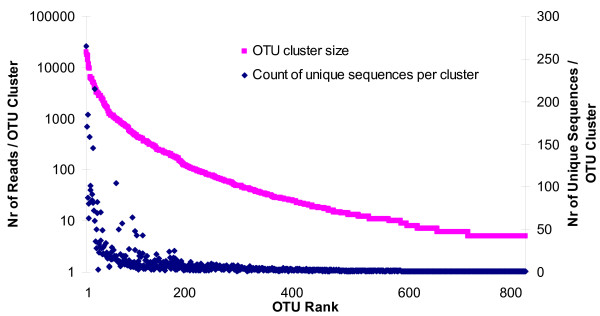
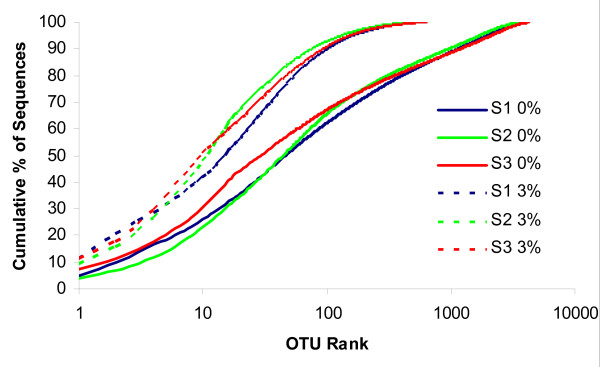
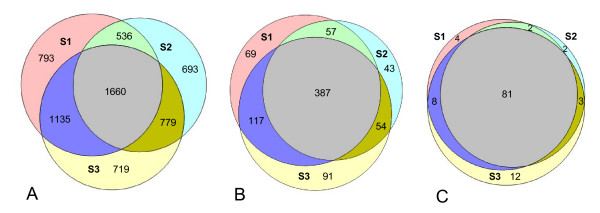
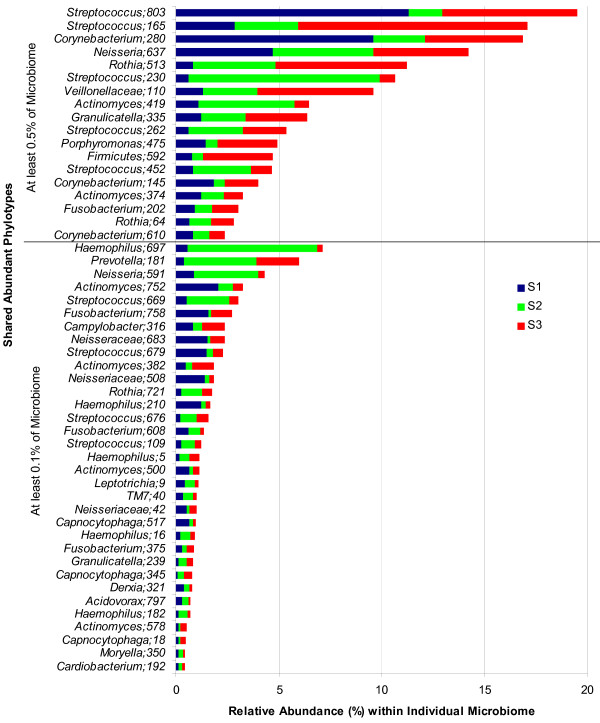
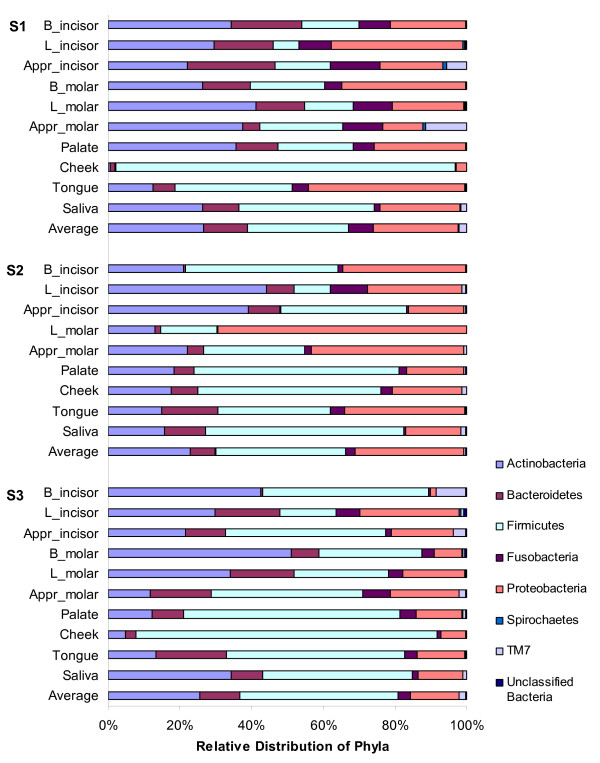
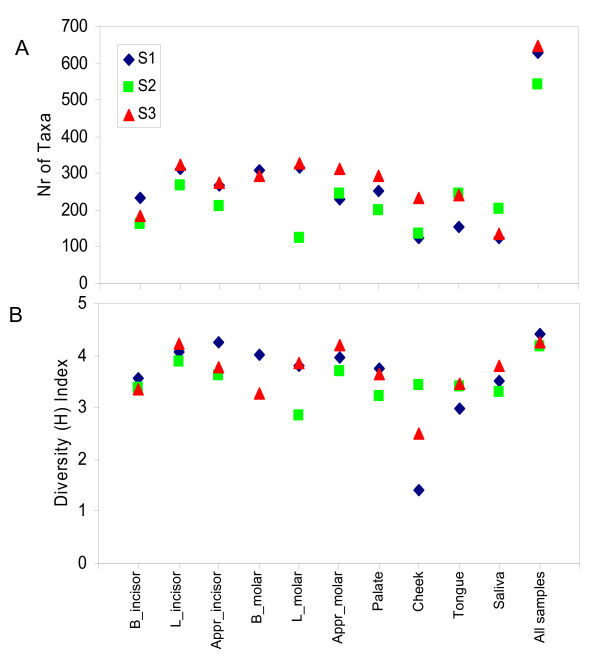
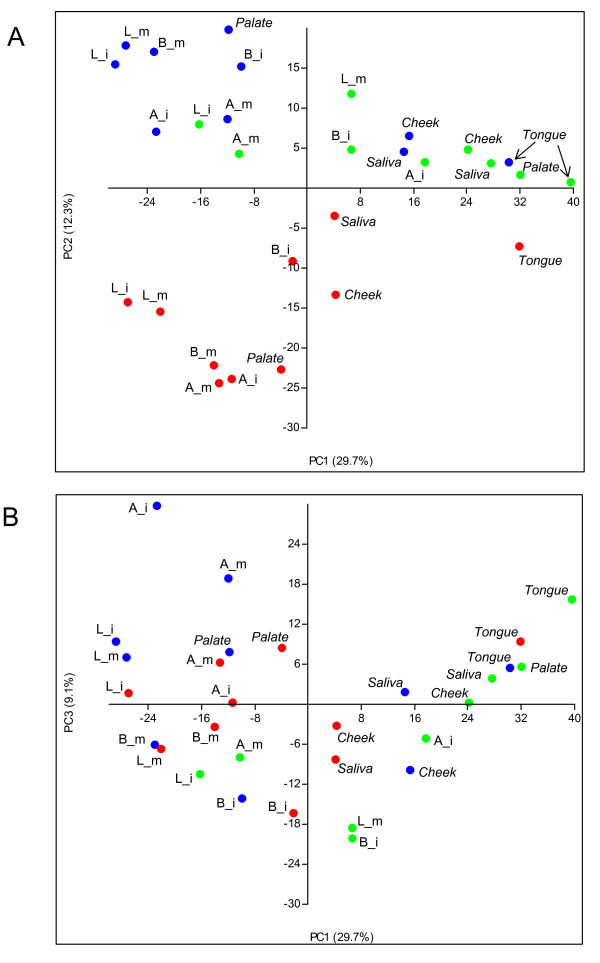
BACKGROUND: Most studies examining the commensal human oral microbiome are focused on disease or are limited in methodology. In order to diagnose and treat diseases at an early and reversible stage an in-depth definition of health is indispensible. The aim of this study therefore was to define the healthy oral microbiome using recent advances in sequencing technology (454 pyrosequencing). RESULTS: We sampled and sequenced microbiomes from several intraoral niches (dental surfaces, cheek, hard palate, tongue and saliva) in three healthy individuals. Within an individual oral cavity, we found over 3600 unique sequences, over 500 different OTUs or "species-level" phylotypes (sequences that clustered at 3% genetic difference) and 88 - 104 higher taxa (genus or more inclusive taxon). The predominant taxa belonged to Firmicutes (genus Streptococcus, family Veillonellaceae, genus Granulicatella), Proteobacteria (genus Neisseria, Haemophilus), Actinobacteria (genus Corynebacterium, Rothia, Actinomyces), Bacteroidetes (genus Prevotella, Capnocytophaga, Porphyromonas) and Fusobacteria (genus Fusobacterium).Each individual sample harboured on average 266 "species-level" phylotypes (SD 67; range 123 - 326) with cheek samples being the least diverse and the dental samples from approximal surfaces showing the highest diversity. Principal component analysis discriminated the profiles of the samples originating from shedding surfaces (mucosa of tongue, cheek and palate) from the samples that were obtained from solid surfaces (teeth).There was a large overlap in the higher taxa, "species-level" phylotypes and unique sequences among the three microbiomes: 84% of the higher taxa, 75% of the OTUs and 65% of the unique sequences were present in at least two of the three microbiomes. The three individuals shared 1660 of 6315 unique sequences. These 1660 sequences (the "core microbiome") contributed 66% of the reads. The overlapping OTUs contributed to 94% of the reads, while nearly all reads (99.8%) belonged to the shared higher taxa. CONCLUSIONS: We obtained the first insight into the diversity and uniqueness of individual oral microbiomes at a resolution of next-generation sequencing. We showed that a major proportion of bacterial sequences of unrelated healthy individuals is identical, supporting the concept of a core microbiome at health.
Overview
The claims and statistics of this paper haven’t been checked yet.
Free: it reads the open-access text and checks the first 5 claims that cite a source we can check. Create a free account to check every claim.
Integrity signals
Registry
Cites
Statistics
Figures
Verification
Claims the paper makes
The claims and statistics of this paper haven’t been checked yet.
Free: it reads the open-access text and checks the first 5 claims that cite a source we can check. Create a free account to check every claim.
Claims other papers make about this one
Each is checked against this paper’s own text: does it say what the citing paper says it does?
The source backs part of the claim, not all of it — or backs it for a different population, condition or comparison.
In the citing paper
“Up to 80% of oral bacteria are dominated by about 200 species in the Phyla Firmicutes (esp. Streptococcus, Veillonella, Granulicatella, Gemella spp.) and Proteobacteria (esp. Neisseria, Haemophilus spp.), with contributions from Bacteroidetes, Actinobacteria and Fusobacteria totaling upwards of 95% of all identified oral microbiota (Figure 2)[171–177].”
From Enterosalivary nitrate metabolism and the microbiome: Intersection of microbial metabolism, nitric oxide and diet in cardiac and pulmonary vascular health (2017) · cites this paper as [172]
Experimental — accuracy not yet measuredThe source backs part of the claim, not all of it — or backs it for a different population, condition or comparison.
In the citing paper
“This is of course not the case and the oral flora of a dog comprises hundreds of species (including pathogenic) bacteria, fungi, and viruses [153,154].”
From A One Health Perspective on the Human-Companion Animal Relationship with Emphasis on Zoonotic Aspects. (2020) · cites this paper as [154]
Experimental — accuracy not yet measuredThe source backs part of the claim, not all of it — or backs it for a different population, condition or comparison.
In the citing paper
“The core microbiome comprised typical oral bacteria that are commonly identified as abundant in similar oral microbiome surveys [28].”
From Citizen science charts two major “stomatotypes” in the oral microbiome of adolescents and reveals links with habits and drinking water composition (2018) · cites this paper as [28]
Experimental — accuracy not yet measuredThe cited source says what the claim attributes to it.
In the citing paper
“This core community composition and distribution is consistent with previous studies of oral healthy microbiomes [2, 9, 22, 28–30].”
From Citizen science charts two major “stomatotypes” in the oral microbiome of adolescents and reveals links with habits and drinking water composition (2018) · cites this paper as [28]
Self-check
Percentages, sums and reported differences re-computed from the paper’s own numbers.
The self-check needs the paper’s full text.
Citations
Cites
PAST: PALEONTOLOGICAL STATISTICAL SOFTWARE PACKAGE FOR EDUCATION AND DATA ANALYSIS
Hammer, Ø., Harper, D. A. T., & Ryan, P. D. (2001) · Palaeontologia Electronica · Cited by 17,871
A core gut microbiome in obese and lean twins
Turnbaugh, P. J., Hamady, M., Yatsunenko, T., Cantarel, B. L., Duncan, A., Ley, R. E., Sogin, M. L., Jones, W. J., Roe, B. A., Affourtit, J. P., et al. (2009) · Nature · doi:10.1038/nature07540 · Cited by 7,823 · cited 5×
“A 97% identity in 16S rRNA gene sequences is commonly used to group "species-level" phylotypes [1,11,12].”
InfluentialPruesse, E., Quast, C., Knittel, K., Fuchs, B. M., Ludwig, W., Peplies, J., & Glockner, F. O. (2007) · Nucleic Acids Research · doi:10.1093/nar/gkm864 · Cited by 6,668 · cited 1×
“We then used the GAST algorithm [27] to calculate the percent difference between each unique sequence and its closest match in a database of 69816 unique eubacterial and 2779 unique archaeal V5-V6 sequences, representing 323499 SSU rRNA sequences from the SILVA database [28].”
Microbial diversity in the deep sea and the underexplored “rare biosphere”
Sogin, M. L., Morrison, H. G., Huber, J. A., Welch, D. M., Huse, S. M., Neal, P. R., Arrieta, J. M., & Herndl, G. J. (2006) · Proceedings of the National Academy of Sciences · doi:10.1073/pnas.0605127103 · Cited by 3,701 · cited 3×
“Data analysis GS-FLX sequencing data were processed as previously described [14].”
Self-citationDefining the normal bacterial flora of the oral cavity
Aas, J. A., Paster, B. J., Stokes, L. N., Olsen, I., & Dewhirst, F. E. (2005) · Journal of Clinical Microbiology · doi:10.1128/jcm.43.11.5721-5732.2005 · Cited by 3,092 · cited 3×
“This richness is considerably higher than the 34 to 72 phylotypes and the 6 to 30 genera previously described using conventional cloning and sequencing [15,16].”
Schloss, P. D., & Handelsman, J. (2005) · Applied and Environmental Microbiology · doi:10.1128/aem.71.3.1501-1506.2005 · Cited by 2,501 · cited 1×
“The operational taxonomic units (OTUs) were created by aligning unique sequences and calculating distance matrices as previously described [14] and using DOTUR [30] to create clusters at the 0.”
Dethlefsen, L., Huse, S., Sogin, M. L., & Relman, D. A. (2008) · PLoS Biology · doi:10.1371/journal.pbio.0060280 · Cited by 2,361 · cited 2×
“However, most microbial diversity projects to date have used 3% OTUs [1,13,14], and to be consistent with other research using pyrosequencing sequences we have chosen to use 3% OTUs as well.”
Self-citationThe Ribosomal Database Project (RDP-II): sequences and tools for high-throughput rRNA analysis
Cole, J. R. (2004) · Nucleic Acids Research · doi:10.1093/nar/gki038 · Cited by 1,475 · cited 1×
“Taxa were assigned to each full-length reference sequence using several sources including Entrez Genome entries, cultured strain identities, SILVA, and the Ribosomal Database Project Classifier [29].”
Kunin, V., Engelbrektson, A., Ochman, H., & Hugenholtz, P. (2010) · Environmental Microbiology · doi:10.1111/j.1462-2920.2009.02051.x · Cited by 1,277 · cited 1×
“Recent publications [9,10] have identified the potential inflation of richness and diversity estimates caused by low-quality reads (pyrosequencing noise).”
The influence of sex, handedness, and washing on the diversity of hand surface bacteria
Fierer, N., Hamady, M., Lauber, C. L., & Knight, R. (2008) · Proceedings of the National Academy of Sciences · doi:10.1073/pnas.0807920105 · Cited by 1,108 · cited 3×
“A 97% identity in 16S rRNA gene sequences is commonly used to group "species-level" phylotypes [1,11,12].”
Research works printed but not linked: 1
- Zaura E Plaque stagnation sites and dental caries: Studies on dental biofilm and dentin demineralization in narrow grooves PhD thesis 2002 Amsterdam: Faculteit der Tandheelkunde, University of Amsterdam
Cited by
Items 701–800 of 1,000
Microbial biofilms and wound healing: an ecological hypothesis
Krom, B. P., & Oskam, J. (2014) · Phlebology The Journal of Venous Disease · doi:10.1177/0268355514528845 · Cited by 15
COVID ‐19 associated oral and oropharyngeal microbiome: Systematic review and meta‐analysis
Ganesan, S. M., Peter, T. K., Withanage, M. H. H., Boksa, F. A., Zeng, E., Martínez, A., Dabdoub, S. M., Dhingra, K., & Kapila, Y. L. (2023) · Periodontology 2000 · doi:10.1111/prd.12489 · Cited by 20
Altered gut microbiota and metabolites in untreated myasthenia gravis patients
Ding, X., Li, H.-Y., Wang, H., Zhang, X.-H., Song, M. K., Jiang, X., Zhang, X., Yue, Y.-X., & Li, X. (2023) · Frontiers in Neurology · doi:10.3389/fneur.2023.1248336 · Cited by 17
“A Venn diagram illustrating shared and unique ASVs between groups was generated based on ASV occurrence in the samples, irrespective of their relative abundance, utilizing the R package “VennDiagram” (8).”
Gouello, A., Henry, L., Chadli, D., Salipante, F., Gibert, J., Boutet-Dubois, A., & Lavigne, J. (2024) · Diagnostics · doi:10.3390/diagnostics14020187 · Cited by 15
“The oral microbiomes of our 12 volunteers showed a similar core microbiome, as previously published [13,22,23].”
MethodMicrobial Community Response to Alpine Meadow Degradation and Its Impact on Soil Nutrient Cycling
Wu, Y., Yang, W., Li, Q., Qiao, Q., Zhao, S., Zhang, Y., Yu, Y., Zhang, S., Li, X., & Kou, J. (2024) · Agronomy · doi:10.3390/agronomy14010195 · Cited by 17
Quinn-Bohmann, N., Freixas-Coutin, J. A., Seo, J., Simmons, R., Diener, C., & Gibbons, S. M. (2024) · BMC Biology · doi:10.1186/s12915-024-01887-0 · Cited by 19
“The sinonasal area is predominantly colonized by Corynebacterium and Staphylococcus [23, 24], whereas the throat and tonsil areas are mostly colonized by Streptococcus , Fusobacterium , and Prevotella [25, 26].”
BackgroundMin, K., Bosma, M. L., John, G., McGuire, J. A., DelSasso, A., Milleman, J. L., & Milleman, K. R. (2024) · BMC Oral Health · doi:10.1186/s12903-024-04362-y · Cited by 16
“This is particularly true of interproximal sites where plaque can remain relatively undisturbed and has a greater diversity of bacteria, including those associated with gingivitis, than more easily accessible areas of the mouth [19, 20].”
BackgroundHu, M., Peñuelas, J., Sardans, J., Yang, X., Tong, C., Zou, S., & Cao, W. (2019) · Ecosystems · doi:10.1007/s10021-019-00468-5 · Cited by 15
Doare, E., Héry-Arnaud, G., Devauchelle‐Pensec, V., & Alegria, G. C. (2021) · Frontiers in Immunology · doi:10.3389/fimmu.2021.699011 · Cited by 15
“(32) found that cheek samples were the least diverse area in terms of microbiota and that dental samples from approximal surfaces showed the highest microbial diversity in healthy individuals.”
BackgroundWang, R., Bai, Y., Yang, Y., Wu, X., & Li, R. (2021) · Frontiers in Veterinary Science · doi:10.3389/fvets.2021.712183 · Cited by 15
“Venn diagram was generated to visualize the shared and unique OTUs among samples or groups using R package “VennDiagram,” based on the occurrence of OTUs across samples/groups regardless of their relative abundance (43).”
MethodAshraf, H. J., Aguila, L. C. R., Akutse, K. S., Ilyas, M., Abbasi, A., Li, X., & Wang, L. (2022) · Environmental Microbiology · doi:10.1111/1462-2920.15948 · Cited by 15
The complement system as a key modulator of the oral microbiome in health and disease
Mattos‐Graner, R. O., Klein, M. I., & Alves, L. A. (2023) · Critical Reviews in Microbiology · doi:10.1080/1040841x.2022.2163614 · Cited by 16
“Studies in Neisseria spp., an abundant genus of multiple oral sites (Zaura et al. 2009; Liu et al. 2015), which include the pathogenic species exclusive of humans, Neisseria gonorrhoeae and Neisseria meningitides , revealed structural differences in the external membrane between pathogenic and…”
BackgroundGregorczyk‐Maga, I., Fiema, M., Kania, M., Jachowicz-Matczak, E., Romaniszyn, D., Gerreth, K., Klupa, T., & Wójkowska‐Mach, J. (2023) · International Journal of Environmental Research and Public Health · doi:10.3390/ijerph20032252 · Cited by 14
“…of the oral microbiota and the selection of optimal niches for the collection of microbiological samples, it was decided to include only patients with DM I in the first stage and compare them narratively with healthy controls described in previous studies (Verma et al., 2018; Zaura et al., 2009).”
BackgroundResultKumari, M., Bhushan, B., Eslavath, M. R., Srivastava, A. K., Meena, R. C., Varshney, R. K., & Ganju, L. (2023) · Scientific Reports · doi:10.1038/s41598-023-30963-8 · Cited by 15
Chen, M., Ding, Z., Zhou, M., Shang, Y., Li, C., Li, Q., Bu, T., Tang, Z., & Chen, H. (2024) · Frontiers in Microbiology · doi:10.3389/fmicb.2024.1360988 · Cited by 14
“The R package “VennDiagram” was employed to generate Venn diagrams, allowing visualization of shared and unique ASVs across samples or groups based on their occurrence, regardless of their relative abundance (Zaura et al., 2009).”
MethodJohnson, C. R., Tran, M. N., Michelitsch, L.-M., Simi, A., Hu, J., Gray, K. A., & Hartmann, E. M. (2020) · Journal of Hazardous Materials · doi:10.1016/j.jhazmat.2020.122445 · Cited by 14
Gene expression profile of Scardovia spp. in the metatranscriptome of root caries
Damé‐Teixeira, N., Parolo, C. C. F., Maltz, M., DeVine, D., & Do, T. (2020) · Brazilian Oral Research · doi:10.1590/1807-3107bor-2020.vol34.0042 · Cited by 14
Microbiome Shifts in Peri-Implantitis: Longitudinal Characterization of Dysbiosis and Resolution
Anuntakarun, S., Thaweesapphithak, S., Krasaesin, A., Prommanee, S., Arunyanak, S. P., Kungsadalpipob, K., Acharya, A., Porntaveetus, T., & Mattheos, N. (2025) · International Dental Journal · doi:10.1016/j.identj.2025.100951 · Cited by 14
Jiang, Y., Zhu, W., Zhu, K., Ge, Y., Li, W., & Liao, N. (2023) · PeerJ · doi:10.7717/peerj.16260 · Cited by 15
Rashid, M. H., Kumar, S. P., Rajan, R., & Mamillapalli, A. (2025) · BMC Oral Health · doi:10.1186/s12903-024-05381-5 · Cited by 16
Role of the lung microbiome in HIV pathogenesis
Shenoy, M. K., & Lynch, S. V. (2017) · Current Opinion in HIV and AIDS · doi:10.1097/coh.0000000000000427 · Cited by 15
Lim, B., Kim, B., Shon, W., & Ahn, S. (2020) · Materials · doi:10.3390/ma13214764 · Cited by 13
“Since unstimulated whole saliva samples are recognized as a representation of the entire oral ecosystem [14,15], use of unstimulated whole saliva as a biofilm inoculum may be the best solution to simulate the complex oral environment.”
BackgroundDispersal Limitation Expands the Diversity of Coral Microbiome Metacommunity in the South China Sea
Zhang, J.-D., Hu, A., Sun, Y., Yang, Q., Dong, J., Long, L., & Huang, S. (2021) · Frontiers in Marine Science · doi:10.3389/fmars.2021.658708 · Cited by 17
“Core Microbiome: A Relatively Small Core Microbiome of Corals The core microbiome is composed of a suite of members which are broadly distributed across microbial communities from a particular type of habitat (Turnbaugh et al., 2009; Zaura et al., 2009; Shade and Handelsman, 2012).”
BackgroundOral Phenotype and Salivary Microbiome of Individuals With Papillon–Lefèvre Syndrome
Lettieri, G. M., Santiago, L. M., Lettieri, G. C., Borges, L. G. D. A., Marconatto, L., de Oliveira, L. A., Damé‐Teixeira, N., & Salles, L. P. (2021) · Frontiers in Cellular and Infection Microbiology · doi:10.3389/fcimb.2021.720790 · Cited by 14
“According to Zaura et al. (2009), the communities obtained in saliva samples are closer to mucosa communities than dental sites.”
BackgroundLee, A. W.-T., Chan, C. T.-M., Wong, L. L.-Y., Yip, C.-Y., Lui, W.-T., Cheng, K.-C., Leung, J. S.-L., Lee, L.-K., Wong, I. T.-F., Ng, T. T.-L., et al. (2023) · Frontiers in Microbiology · doi:10.3389/fmicb.2023.1164632 · Cited by 14
“1% relative abundance cutoff, as proposed in previous studies (Zaura et al., 2009; Doan et al., 2016; Sun et al., 2021), might not be sufficient to filter true negative species.”
BackgroundAhmad, A. F., Caparros-Martin, J. A., Lee, S., O’Gara, F., Yeap, B. B., GREEN, D. J., Ballal, M., Ward, N. C., & Dwivedi, G. (2023) · Microorganisms · doi:10.3390/microorganisms11051126 · Cited by 13
“Operational taxonomic units (OTUs) assigne to taxa that are typically associated with the oronasal cavity, such as Granulicatella (baseline, Figure 3C) or Streptococcus and Actinomyces (follow-up, Figure 4) [22], were significantly enriched in patients undergoing bariatric surgery.”
BackgroundLawson, P. A., & Caldwell, M. E. (2014) · Springer eBooks · doi:10.1007/978-3-642-30120-9_209 · Cited by 16
Modelling mechanical and chemical treatment of biofilms with two phenotypic resistance mechanisms
Szomolay, B., & Cogan, N. G. (2015) · Environmental Microbiology · doi:10.1111/1462-2920.12710 · Cited by 16
“Studies have estimated that the oral microbiome consists of about 25 000 phylotypes (Zaura et al., 2009), out of which over 1000 species can exist as a part of a dental biofilm (Jacob, 2006).”
BackgroundHorz, H., Haaf, A. T., Kessler, O., Yekta, S. S., Seyfarth, I., Hettlich, M., Lampert, F., Küpper, T., & Conrads, G. (2012) · Environmental Microbiology Reports · doi:10.1111/j.1758-2229.2012.00340.x · Cited by 13
Du, Q., Li, M., Zhou, X., & Tian, K. (2017) · Antonie van Leeuwenhoek · doi:10.1007/s10482-017-0828-4 · Cited by 18
What Are We Learning and What Can We Learn from the Human Oral Microbiome Project?
Cross, B., Faustoferri, R. C., & Quivey, R. G. (2016) · Current Oral Health Reports · doi:10.1007/s40496-016-0080-4 · Cited by 14
Microbiota present in combined endodontic-periodontal diseases and its risks for endocarditis
Gomes, B. P. F. D. A., Berber, V. B., Chiarelli‐Neto, V. M., Aveiro, E., Chapola, R. C., Passini, M. R. Z., Lopes, E. M., Chen, T., & Paster, B. J. (2023) · Clinical Oral Investigations · doi:10.1007/s00784-023-05104-0 · Cited by 16
“Oral microbiota is a fundamental component of human microbiota and can be divided into variable and core microbiota [28].”
BackgroundImpacts of litter microbial community on litter decomposition in the absence of soil microorganisms
Liu, J., Ding, C., Teng, C., Zhang, W., Su, X., & Zhu, W. (2024) · Applied and Environmental Microbiology · doi:10.1128/aem.00239-24 · Cited by 15
“After R package “VennDiagram,” the analysis of non-metric multidimensional scaling (NMDS) based on the Bray-Curtis distance matrix was presented.”
MethodGaiser, R. A., Medema, M. H., Kleerebezem, M., van Baarlen, P., & Wells, J. M. (2017) · Genome Announcements · doi:10.1128/genomea.00453-17 · Cited by 12
Insights into the Oral Bacterial Microbiota of Sows
Hattab, J., Marruchella, G., Pallavicini, A., Gionechetti, F., Mosca, F., Trachtman, A. R., Lanci, L., Gabrielli, L., & Tiscar, P. G. (2021) · Microorganisms · doi:10.3390/microorganisms9112314 · Cited by 13
“Thus, the knowledge of the interactions among resident—but also between resident and “foreign”—bacteria is crucial to understand the patterns that induce disease [3].”
BackgroundMurugesan, S., Elanbari, M., Bangarusamy, D. K., Terranegra, A., & Khodor, S. A. (2021) · Frontiers in Microbiology · doi:10.3389/fmicb.2021.772736 · Cited by 15
Schmeisser, C., Krohn-Molt, I., & Streit, W. R. (2017) · Springer eBooks · doi:10.1007/978-3-319-61510-3_12 · Cited by 12
The yeast–human coevolution: Fungal transition from passengers, colonizers, and invaders
Nenciarini, S., Renzi, S., Paola, M. D., Meriggi, N., & Cavalieri, D. (2023) · WIREs Mechanisms of Disease · doi:10.1002/wsbm.1639 · Cited by 12
He, G., Gao, L., Deng, Y., Jiao, W., Wang, J., Wei, Y., & Zhou, J. (2024) · Food Science and Biotechnology · doi:10.1007/s10068-024-01558-4 · Cited by 11
“Venn diagram was generated to visualize the shared and unique OTU among PM samples, based on the occurrence of OTU across samples regardless of their relative abundance (Zaura et al., 2009).”
Analysis of the microbial community diversity in various regions of the healthy oral cavity
Liu, Y., Qiao, F., Wang, Z., Meng, G., Gu, Y., Wu, H., Liu, D., & Niu, K. (2024) · BMC Oral Health · doi:10.1186/s12903-024-04677-w · Cited by 15
“When it comes to the health of an individual, major bacterial sequencing is identical, supporting the opinion that a core microbiome exists in healthy individuals [13, 14].”
BackgroundLuppi, S., Aldegheri, L., Azzalini, E., Pacetti, E., Sebastiani, G. B., Fabiani, C., Robino, A., & Comar, M. (2024) · International Journal of Molecular Sciences · doi:10.3390/ijms251910611 · Cited by 16
“…individuals is dominated by Actinobacteria (genera Corynebacterium , Rothia , and Actinomyces ), Firmicutes (genus Streptococcus ), Fusobacteria (genus Fusobacterium ), and Proteobacteria (genera Neisseria and Haemophilus ), as well as Bacteroidetes (genera Prevotella and Porphyromonas ) [26].”
BackgroundChen, X., Li, X., Xu, Z. Q., Liu, Q., Peng, Z., Zhu, Y., Hong, J., Lu, W., Cui, J., & Xiao, L. (2020) · Environmental Research · doi:10.1016/j.envres.2020.109843 · Cited by 11
Liu, X., Cao, Y., Ouyang, S., & Wu, X. (2020) · Ecology and Evolution · doi:10.1002/ece3.6796 · Cited by 12
Sun, Y., Rabbi, M. H., Ma, S., Wen, Z., Li, X., Mi, R., Meng, N., Li, Y., Wang, Q., Du, X., et al. (2021) · Aquaculture Research · doi:10.1111/are.15389 · Cited by 12
Xiao, X., Song, T., Xiao, X., Liu, Y., Sun, H., Guo, Z., Liu, X., Shao, C., Li, Q., & Sun, W. (2021) · PROTEOMICS · doi:10.1002/pmic.202000321 · Cited by 11
Karl, C. M., Vidaković, A. M., Pjevac, P., Hausmann, B., Schleining, G., Ley, J. P., Berry, D., Hans, J., Wendelin, M., König, J. S., et al. (2022) · Frontiers in Nutrition · doi:10.3389/fnut.2022.831726 · Cited by 13
Multi-omics analysis reveals the host–microbe interactions in aged rhesus macaques
Xu, J., Lan, Y., Wang, X., Shang, K., Liu, X., Wang, J., Li, J., Yue, B., Shao, M., & Fan, Z. (2022) · Frontiers in Microbiology · doi:10.3389/fmicb.2022.993879 · Cited by 14
“, Streptococcus, Fusobacterium, Haemophilus, Porphyromonas, and Gemella (Aas et al., 2008; Zaura et al., 2009; Krishnan et al., 2017; Chen et al., 2018).”
Stewart, L. J., Hong, Y., Holmes, I., Firth, S. J., Ahmed, Y., Quinn, J., Santos, Y., Cobb, S. L., Jakubovics, N. S., & Djoko, K. Y. (2023) · ACS Infectious Diseases · doi:10.1021/acsinfecdis.2c00578 · Cited by 12
Hernández‐Zulueta, J., Bolaños-Chang, A. J., Cruz-Pavlovich, F. J. S., Rodríguez, A. V., Madrigal, A. L., Rio-Murillo, X. I. D., Navarro‐Partida, J., & la Rosa, A. G. (2024) · Medicina · doi:10.3390/medicina60040592 · Cited by 13
“The same can be said for the oral microbiome, which represents a special challenge since this cavity harbors habitats with unique values of oxygen concentrations, nutrient availability, temperature, exposure to immunological factors, and anatomical characteristics [25,31].”
BackgroundCai, J., Tong, H., Qi, F., & Dong, X. (2012) · Journal of Bacteriology · doi:10.1128/jb.00156-12 · Cited by 12
“The human oral cavity harbors between 700 and 19,000 operative taxonomic units (16, 19, 45), among which streptococci are the most abundant microorganisms, contributing about 80% of the total microbial population in the dental biofilm (5, 31).”
BackgroundComparison of the oral microbiome of siblings using next‐generation sequencing: a pilot study
Lee, H., Lee, J. H., Kim, S., Song, J. S., Kim, B., Kim, Y., & Lee, J. H. (2016) · Oral Diseases · doi:10.1111/odi.12491 · Cited by 12
Liu, X., Tian, K., Ma, X., Wang, S., Luo, C., & Du, Q. (2020) · Saudi Journal of Biological Sciences · doi:10.1016/j.sjbs.2020.04.040 · Cited by 13
“So cultureindependent methods such as pyrosequencing are used to analyze the bacterial diversity in oral cavity (Aas et al., 2005; Bik et al., 2010; Dewhirst et al., 2010; Zaura et al., 2009).”
MethodRole of the Oral Microflora in Health and Disease
Kumar, M., Umashankar, D. N., Viswanath, D., & Girish, G. (2013) · Journal of Indian Academy of Oral Medicine and Radiology · doi:10.4103/0972-1363.161099 · Cited by 15
Li, L., Deng, X., Zou, Y., Lv, X., & Guo, Y. (2021) · Brazilian Journal of Microbiology · doi:10.1007/s42770-021-00594-0 · Cited by 13
Long, T., Ye, Z., Tang, Y., Shi, J., Wen, J., Chen, C., & Huo, Q. (2022) · Aerobiologia · doi:10.1007/s10453-022-09777-0 · Cited by 11
“A Venn diagram was generated to visualise the shared and unique ASVs among samples or groups using the R package “VennDiagram”, based on the occurrence of ASVs across samples/groups regardless of their relative abundance (Zaura et al., 2009).”
MethodProgress in oral personalized medicine: contribution of ‘omics’
Glurich, I., Acharya, A., Brilliant, M. H., & Shukla, S. K. (2015) · Journal of Oral Microbiology · doi:10.3402/jom.v7.28223 · Cited by 13
Perturbation of the indigenous rat oral microbiome by ciprofloxacin dosing
Manrique, P., Freire, M., Chen, C., Zadeh, H. H., Young, M., & Suci, P. A. (2013) · Molecular Oral Microbiology · doi:10.1111/omi.12033 · Cited by 11
Genomic Alphabets of Saliva as a Biomarker in Oral Cancer
Kumar, T. M., & Govindraju, P. (2017) · Journal of Indian Academy of Oral Medicine and Radiology · doi:10.4103/jiaomr.jiaomr_90_16 · Cited by 14
Moraes, M. M., Mendes, T. T., Borges, L., Marques, A. L., Núñez-Espinosa, C. A., Gonçalves, D. A. P., Simões, C. B., Vieira, T. S., Ladeira, R. V. P., Lourenço, T. G. B., et al. (2023) · Microorganisms · doi:10.3390/microorganisms11020339 · Cited by 13
“Common human pathogens found in the Pseudomonadota phylum are increased in metabolic disorders [51,52] and are described as often overrepresented during inflammatory conditions [53].”
BackgroundSite-specific impact of polyphenols on the gastrointestinal microbiome
Ebrahimi, F., Subbiah, V., Ağar, O. T., Legione, A. R., & Suleria, H. A. R. (2024) · Critical Reviews in Food Science and Nutrition · doi:10.1080/10408398.2024.2434961 · Cited by 11
“…et al. 2018), Figure 1 demonstrates the most prevalent genera in each site of the GI tract according to (Tsute Chen et al. 2010; Sharma et al. 2018; Zaura et al. 2009) in oral, (Di Pilato et al. 2016; Zhengqi Li et al. 2021a) esophageal, (Nardone and Compare 2015; Rajilic-Stojanovic et al. 2020)…”
Wu, Y., Yang, W., Kou, J., Li, Q., Liu, J., Chi, L., Zhang, Y., Liu, Q., & Yu, Y. (2024) · Frontiers in Microbiology · doi:10.3389/fmicb.2024.1500070 · Cited by 10
Sato, S., Iino, C., Furusawa, K., Yoshida, K., Chinda, D., Sawada, K., Mikami, T., Nakaji, S., Fukuda, S., & Sakuraba, H. (2025) · Journal of Clinical Medicine · doi:10.3390/jcm14062013 · Cited by 10
“A high abundance of Neisseria in the oral cavity is associated with oral health [35,36].”
Sekar, P., Rizvi, Z., Abdullah, N., Samsudin, A. R., & Kheder, W. (2025) · PLoS ONE · doi:10.1371/journal.pone.0321428 · Cited by 10
“…identified dominant phyla: Firmicutes ( Streptococcus , Veillonella , Granulicatella ), Proteobacteria ( Neisseria , Haemophilus ), Actinobacteria ( Corynebacterium , Rothia , Actinomyces ), Bacteroidetes ( Prevotella , Capnocytophaga , Porphyromonas ), and Fusobacteria ( Fusobacterium ) [30].”
Miranda, V., Laarej, K., & Cavaliere, C. (2026) · Cells · doi:10.3390/cells15010082 · Cited by 13
“However, disruption to one or more of these regulatory mechanisms can therefore destabilize oral microbial homeostasis, promoting the transition from eubiosis to dysbiosis and increasing the risk of inflammatory diseases of the mouth and body [2,7].”
RetractedCharacterizing the cirri and gut microbiomes of the intertidal barnacle Semibalanus balanoides
Brown, B. R. P., Nunez, J. C. B., & Rand, D. M. (2020) · Animal Microbiome · doi:10.1186/s42523-020-00058-0 · Cited by 10
Mucosal microbiome dysbiosis associated with duodenum bulb inflammation
Fan, H., Zhu, P., Zhang, J., & Zhu, J. (2020) · Microbial Pathogenesis · doi:10.1016/j.micpath.2020.104711 · Cited by 11
A Clinical Study on the Relationship Among Insomnia, Tongue Diagnosis, and Oral Microbiome
Park, S., Shin, N. R., Yang, M., Bose, S., Kwon, O., Nam, D., Lee, J., Song, E., Nam, Y., & Kim, H. (2022) · The American Journal of Chinese Medicine · doi:10.1142/s0192415x2250032x · Cited by 11
Characterization of Bacterial Differences Induced by Cleft-Palate-Related Spatial Heterogeneity
Zhou, F., Su, Z., Li, Q., Wang, R., Liao, Y., Zhang, M., & Li, J. (2022) · Pathogens · doi:10.3390/pathogens11070771 · Cited by 11
“They met the following conditions in our study: 1) genera colonized at a high rate in the oral cavity as reported [24,25], not found in the nasal cavity of the healthy group but found in the CP group; 2) the content of bacteria in the nasal cavity of the healthy group was <0.”
MethodLi, Y., Li, X., Liu, Y., Nie, C., Chen, C., Niu, J., & Zhang, W. (2022) · BioMed Research International · doi:10.1155/2022/6297231 · Cited by 14
“The R package “VennDiagram” was used to generate Venn diagrams, which can display core and unique ASVs between different groups [12].”
Impact of different oral treatments on the composition of the supragingival plaque microbiome
Rabe, A., Salazar, M. G., Michalik, S., Kocher, T., Below, H., Völker, U., & Welk, A. (2022) · Journal of Oral Microbiology · doi:10.1080/20002297.2022.2138251 · Cited by 11
Characterization of tongue dorsum microbiome in wine tasters
Duarte-Coimbra, S., Forcina, G., Pérez-Pardal, L., & Beja‐Pereira, A. (2022) · Food Research International · doi:10.1016/j.foodres.2022.112259 · Cited by 12
Li, X., Zhou, X., Wu, C., Petropoulos, E. A., Yu, Y., & Feng, Y. (2022) · Atmosphere · doi:10.3390/atmos14010014 · Cited by 10
Araújo, V., Fehn, A., Phiri, A., Wills, J., Rocha, J., & Gayà‐Vidal, M. (2023) · BMC Microbiology · doi:10.1186/s12866-023-02970-2 · Cited by 12
“Notwithstanding these limitations, our results revealed taxa compositions and distribution patterns consistent with those observed in other studies based on different methodologies [11, 12, 16, 23, 59, 64, 72, 73].”
ResultZhou, X., Zhang, Q., Lu, J., Zheng, Y., Wu, L., Xu, D., Zhang, X., & Wang, Q. (2023) · Acta Metallurgica Sinica (English Letters) · doi:10.1007/s40195-023-01622-8 · Cited by 10
Link Between Oral and Gut Microbiomes: The Oral–Gut Axis
Colombo, A. P. V., Lourenço, T. G. B., de Oliveira, A. M., & da Costa, A. L. A. (2025) · Advances in experimental medicine and biology · doi:10.1007/978-3-031-79146-8_5 · Cited by 13
Chen, Y., Chen, H., Zhong, Q., Yun, Y., Chen, W., & Chen, W. (2021) · Current Microbiology · doi:10.1007/s00284-021-02400-4 · Cited by 12
Salivary microbial diversity at different stages of human immunodeficiency virus infection
Guo, Y., Xia, W., Wei, F., Feng, W., Duan, J., Sun, X., Yu, Y., Wang, Y., Zhang, B., Cao, J., et al. (2021) · Microbial Pathogenesis · doi:10.1016/j.micpath.2021.104913 · Cited by 11
Power Play of Commensal Bacteria in the Buccal Cavity of Female Nile Tilapia
Abdelhafiz, Y. A., Fernandes, J. M. O., Stefani, E., Albanese, D., Donati, C., & Kiron, V. (2021) · Frontiers in Microbiology · doi:10.3389/fmicb.2021.773351 · Cited by 12
Enterobacter cloacae: a villain in CaOx stone disease?
Yang, Y., Hong, S., Xu, J., Li, C., Wang, S., & Xun, Y. (2022) · Urolithiasis · doi:10.1007/s00240-022-01311-8 · Cited by 10
“Venn diagram was generated to visualize the common and unique ASVs among Hea groups and Lith groups via R package “Venn Diagram” [22].”
MethodVT-1161—A Tetrazole for Management of Mono- and Dual-Species Biofilms
Maione, A., Mileo, A., Pugliese, S., Siciliano, A., Cirillo, L., Carraturo, F., de Alteriis, E., Falco, M. D., Guida, M., & Galdiero, E. (2023) · Microorganisms · doi:10.3390/microorganisms11020237 · Cited by 12
“albicans coexists with many different bacterial species [3], and its interactions with the Gram-negative Klebsiella pneumoniae and Gram-positive Staphylococcus aureus are also discussed in several searches because they exhibit severe antimicrobial resistance and have been associated with mortality and morbidity [4].”
Salivary Diagnostics and the Oral Microbiome
Kerr, J., & Tribble, G. D. (2015) · Springer eBooks · doi:10.1007/978-3-662-45399-5_5 · Cited by 10
Kamodyová, N., Minárik, G., Hodosy, J., & Celec, P. (2014) · Current Microbiology · doi:10.1007/s00284-014-0649-x · Cited by 11
Metagenomic investigation of bacteria associated with dental lesions: a cross-sectional study
Kazemtabrizi, A., Haddadi, A., Shavandi, M., & Harzandi, N. (2020) · Medicina oral, patología oral y cirugía bucal · doi:10.4317/medoral.23326 · Cited by 12
Kaymaz, K., Kuhn, C., Walther, C., Peters, U., Aarabi, G., Smeets, R., & Beikler, T. (2021) · European Journal Of Oral Sciences · doi:10.1111/eos.12776 · Cited by 11
“The human oral microbiome contains over 600 microbial species, most of which reside in a symbiotic relationship with the host [1,2].”
BackgroundMethods for Characterizing Microbial Communities Associated with the Human Body
Bassis, C. M., Young, V. B., & Schmidt, T. M. (2013) · Wiley eBooks · doi:10.1002/9781118409855.ch2 · Cited by 10
Ju, H., Ahn, Y., Ok, S., Jeong, S., Na, H. S., & Chung, J. (2024) · Diagnostics · doi:10.3390/diagnostics14080828 · Cited by 10
Zhou, L., Chu, J., Zhang, Y., Wang, Q., Liu, Y., & Zhao, B. (2024) · Agronomy · doi:10.3390/agronomy14112581 · Cited by 10
Microbial and proteomic signatures of type 2 diabetes in an Arab population
Murugesan, S., Yousif, G., Djekidel, M. N., Gentilcore, G., Grivel, J., & Khodor, S. A. (2024) · Journal of Translational Medicine · doi:10.1186/s12967-024-05928-8 · Cited by 9
Wang, H., Chen, J., Jing, H., Yan, B., Wei, F., Xue, S., & Wang, G. (2025) · Applied Soil Ecology · doi:10.1016/j.apsoil.2025.106065 · Cited by 9
The oral microbiome of treated and untreated chronic HCV infection: A preliminary study
Gamal‐AbdelNaser, A., Mohammed, W. S., ElHefnawi, M., AbdAllah, M., Elsharkawy, A. M., & Zahran, F. M. (2021) · Oral Diseases · doi:10.1111/odi.14007 · Cited by 11
Volgenant, C. M. C., van der Waal, S. V., Brandt, B. W., Buijs, M. J., van der Veen, M. H., Rosema, N., Fiebich, B. L., Rose, T., Schmitter, T., Gajfulin, M., et al. (2022) · Frontiers in Oral Health · doi:10.3389/froh.2022.825017 · Cited by 11
“Thereafter, at each study visit, a tongue swab and supragingival plaque were collected for microbiological analyses as described previously [21].”
MethodSelf-citationDistinctive microbiota distribution from healthy oral to post-treatment apical periodontitis
Zhang, J.-L., Yun, J., Yue, L., Du, W., & Liang, Y.-H. (2022) · Frontiers in Cellular and Infection Microbiology · doi:10.3389/fcimb.2022.980157 · Cited by 10
Xu, Y., Huang, Z., Zhang, B., Yu, C., Li, L., Li, X., & Li, Y. (2022) · Scientific Reports · doi:10.1038/s41598-022-26785-9 · Cited by 9
“Using the R package "Venn Diagram," a Venn diagram was generated to show the shared and unique ASVs in a sample or population, based on the occurrence of ASVs in different samples and populations, regardless of their relative abundance 19 .”
How is gut microbiome of patients with familial adenomatous polyposis different from healthy people?
Kim, J. H., Kim, Y. J., Oh, G. M., Jung, W., & Park, S. J. (2022) · Medicine · doi:10.1097/md.0000000000032194 · Cited by 9
Mangal, U., Noh, K., Lee, S., Cha, J., Song, J. S., Cha, J., Lee, K., Kim, K., Kwon, J., & Choi, S. (2023) · Journal of Periodontal Research · doi:10.1111/jre.13098 · Cited by 9
Proteomic snapshot of saliva samples predicts new pathways implicated in SARS-CoV-2 pathogenesis
Moreno, E., Ciordia, S., Fátima, S. M., Jiménez, D., Martínez‐Sanz, J., Vizcarra, P., Ron, R., Sánchez‐Conde, M., Bargiela, R., Sánchez-Carrillo, S., et al. (2024) · Clinical Proteomics · doi:10.1186/s12014-024-09482-9 · Cited by 9
Arweiler, N. B., Netuschil, L., Beier, D., Grunert, S., Heumann, C., Altenburger, M. J., Sculean, A., Nagy, K., Al‐Ahmad, A., & Auschill, T. M. (2013) · Clinical Oral Investigations · doi:10.1007/s00784-013-1053-9 · Cited by 9
Lim, S., Lee, T., Kim, E., Park, J.-H., Lee, Y., Bae, K., & Kum, K. (2011) · The Journal of Korean Academy of Conservative Dentistry · doi:10.5395/jkacd.2011.36.6.498 · Cited by 9
VMG II transport medium stabilises oral microbiome samples for Next-Generation Sequencing
Adler, C. J., White, A., Bockmann, M. R., Browne, G. V., Townsend, G. C., & Hughes, T. E. (2017) · Journal of Microbiological Methods · doi:10.1016/j.mimet.2017.11.012 · Cited by 9
Lü, F., Zhang, N., Yu, D., Zhao, H., Pang, M., Fan, Y., & Liu, S. (2019) · RSC Advances · doi:10.1039/c9ra03912k · Cited by 9
Metadata
- Authors
- Zaura, E., Keijser, B. J., Huse, S. M., & Crielaard, W.
- Affiliations
- Academic Center for Dentistry Amsterdam (NL)
- Netherlands Organisation for Applied Scientific Research (NL)
- Marine Biological Laboratory (US)
- Corresponding author
- Zaura, Egija
- Venue
- BMC Microbiology
- Published
- 2009
- Volume
- 9
- Issue
- 1
- Pages
- 259
- ISSN
- 1471-2180 (ISSN-L)
- PMC
- PMC2805672
- OpenAlex
- W2117522399
- Cited by
- 1,323
- References
- 29
- Citations by year
- 2026: 68 · 2025: 96 · 2024: 88 · 2023: 87 · 2022: 114 · 2021: 138 · 2020: 118 · 2019: 103 · 2018: 68 · 2017: 69 · 2016: 61 · 2015: 64 · 2014: 55 · 2013: 55 · 2012: 53
- FWCI
- 48.63
- Type
- journal article
- Language
- en
- Open access
- gold
- doi.org
- Licence
- cc-by
- Locations
- BMC Microbiology (publishedVersion, cc-by)
- PubMed Central (publishedVersion, cc-by)
- PubMed (publishedVersion)
- UvA-DARE (University of Amsterdam) (acceptedVersion, other-oa)
- TNO Repository (submittedVersion)
- DOAJ (DOAJ: Directory of Open Access Journals) (submittedVersion, cc-by-sa)
- VU Research Portal (submittedVersion, other-oa)
- Repository hosted by TU Delft Library (TU Delft) (submittedVersion)
- Data Archiving and Networked Services (DANS) (submittedVersion, other-oa)
- Funders
- National Science Foundation (P50 ES012742, 0430724)
- National Institutes of Health
- National Institute of Environmental Health Sciences (P50ES012742)
- Topics
- Health Sciences › Dentistry › Periodontics › Oral microbiology and periodontitis research
- Life Sciences › Biochemistry, Genetics and Molecular Biology › Molecular Biology › Gut microbiota and health
- Physical Sciences › Environmental Science › Ecology › Microbial Community Ecology and Physiology
- Keywords
- oral microbiota, core microbiome, oral bacterial diversity, shared OTUs, dental surfaces, tongue, cheek, hard palate, saliva, Streptococcus, Neisseria, Fusobacterium, Prevotella, Bacteroidetes, Firmicutes, Proteobacteria, actinobacteria
- MeSH terms
- Bacteria, DNA, Bacterial, Humans, Male, Mouth, Cluster Analysis, Sequence Analysis, DNA, Principal Component Analysis, Ribosome Subunits, Small, Bacterial, Metagenome
About these checks
Registry, retraction, Cites and statistics results are computed, not judged, with one exception: a printed reference that no index lists is read once by a model before it counts as a citation error. Claims are extracted by a model and kept only when their quote appears verbatim in the text; each cited source is then checked, with a model’s help, for whether it says what the claim relies on. Those verdicts can be wrong — read the claim’s quote and the cited source before relying on one.
Statistics and arithmetic are recomputed, not judged.
Confidence bands are shown only for fields calibrated on our annotated test set. None is calibrated yet, so no band is shown.
What counts as a claim ›How we measure confidence ›How we check this ›
Are you an author, or do you see a problem with this page? Request a review
Data sources
Bibliographic data: Semantic Scholar, OpenAlex, Crossref.
Contains information from the Semantic Scholar Academic Graph Datasets, made available under the ODC Attribution License (ODC-BY 1.0).
Semantic Scholar’s data is described in: Kinney, R., et al. (2023). The Semantic Scholar Open Data Platform. arXiv:2301.10140.
