

The Hartung-Knapp-Sidik-Jonkman method for random effects meta-analysis is straightforward and considerably outperforms the standard DerSimonian-Laird method
Open accessThe DOI matches its Crossref record; 34 of the 34 references it cites were found in a registry or an index.
Abstract
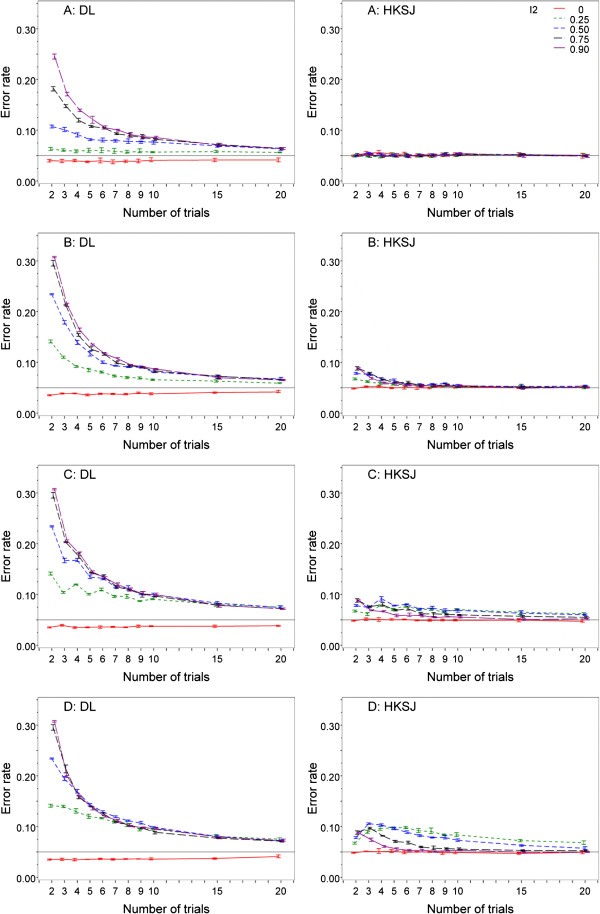
BACKGROUND: The DerSimonian and Laird approach (DL) is widely used for random effects meta-analysis, but this often results in inappropriate type I error rates. The method described by Hartung, Knapp, Sidik and Jonkman (HKSJ) is known to perform better when trials of similar size are combined. However evidence in realistic situations, where one trial might be much larger than the other trials, is lacking. We aimed to evaluate the relative performance of the DL and HKSJ methods when studies of different sizes are combined and to develop a simple method to convert DL results to HKSJ results. METHODS: We evaluated the performance of the HKSJ versus DL approach in simulated meta-analyses of 2-20 trials with varying sample sizes and between-study heterogeneity, and allowing trials to have various sizes, e.g. 25% of the trials being 10-times larger than the smaller trials. We also compared the number of "positive" (statistically significant at p < 0.05) findings using empirical data of recent meta-analyses with > = 3 studies of interventions from the Cochrane Database of Systematic Reviews. RESULTS: The simulations showed that the HKSJ method consistently resulted in more adequate error rates than the DL method. When the significance level was 5%, the HKSJ error rates at most doubled, whereas for DL they could be over 30%. DL, and, far less so, HKSJ had more inflated error rates when the combined studies had unequal sizes and between-study heterogeneity. The empirical data from 689 meta-analyses showed that 25.1% of the significant findings for the DL method were non-significant with the HKSJ method. DL results can be easily converted into HKSJ results. CONCLUSIONS: Our simulations showed that the HKSJ method consistently results in more adequate error rates than the DL method, especially when the number of studies is small, and can easily be applied routinely in meta-analyses. Even with the HKSJ method, extra caution is needed when there are = <5 studies of very unequal sizes.
Overview
The claims and statistics of this paper haven’t been checked yet.
Free: it reads the open-access text and checks the first 5 claims that cite a source we can check. Create a free account to check every claim.
Integrity signals
Registry
Cites
Statistics
Figures
Verification
Claims the paper makes
The claims and statistics of this paper haven’t been checked yet.
Free: it reads the open-access text and checks the first 5 claims that cite a source we can check. Create a free account to check every claim.
Claims other papers make about this one
Each is checked against this paper’s own text: does it say what the citing paper says it does?
The source backs part of the claim, not all of it — or backs it for a different population, condition or comparison.
In the citing paper
“Random-effects meta-regression with Knapp–Hartung adjustment was applied to account for between-study heterogeneity and to calculate 95% prediction intervals, estimating the likely range of effect sizes in future studies (30).”
From The association of screen time and the risk of sleep outcomes: a systematic review and meta-analysis. (2025) · cites this paper as [30]
Experimental — accuracy not yet measuredThe cited source says what the claim attributes to it.
In the citing paper
“To evaluate robustness of pooled estimates, prespecified sensitivity analyses included fixed-effect models, Hartung–Knapp adjustment for random-effects inference, alternative τ² estimators, leave-one-out analyses, and Bayesian random-effects meta-analysis (45–49).”
In the citing paper
“An inverse-variance method with a random-effects model and Hartung-Knapp-Sidik-Jonkman adjustment (33) was used to adjust for study variability in sample sizes.”
From Digital Media Use and Adolescents' Mental Health During the Covid-19 Pandemic: A Systematic Review and Meta-Analysis (2022) · cites this paper as [33]
Self-check
Percentages, sums and reported differences re-computed from the paper’s own numbers.
The self-check needs the paper’s full text.
Citations
Cites
2 retracted
Singh, M., & Das, R. R. (2013) · Cochrane Database of Systematic Reviews · doi:10.1002/14651858.cd001364.pub4 · Cited by 237
RetractedSingh, M., & Das, R. R. (2011) · Cochrane Database of Systematic Reviews · doi:10.1002/14651858.cd001364.pub3 · Cited by 86
RetractedMeasuring inconsistency in meta-analyses
Higgins, J. P. T., Thompson, S. G., Deeks, J. J., & Altman, D. G. (2003) · BMJ · doi:10.1136/bmj.327.7414.557 · Cited by 63,139 · cited 8×
“The levels correspond to no, low, moderate, high and very high heterogeneity, respectively [16].”
BackgroundMethodResultInfluentialMeta-analysis in clinical trials
DerSimonian, R., & Laird, N. (1986) · Controlled Clinical Trials · doi:10.1016/0197-2456(86)90046-2 · Cited by 39,552 · cited 2×
“Background The commonly used method for a random effects metaanalysis is the DerSimonian and Laird approach (DL method) [1].”
MethodQuantifying heterogeneity in a meta‐analysis
Higgins, J. P. T., & Thompson, S. G. (2002) · Statistics in Medicine · doi:10.1002/sim.1186 · Cited by 36,763 · cited 1×
“the degree of inconsistency in the studies’ results, in comparison to the total amount of variation [16,22].”
ResultConducting Meta-Analyses in R with the metafor Package
Viechtbauer, W. (2010) · Journal of Statistical Software · doi:10.18637/jss.v036.i03 · Cited by 20,464 · cited 2×
“The R package metafor [20] can also be used to perform an HKSJ analysis.”
MethodBorenstein, M., Hedges, L. V., Higgins, J. P. T., & Rothstein, H. R. (2009) · doi:10.1002/9780470743386 · Cited by 14,225
Borenstein, M., Hedges, L. V., Higgins, J. P. T., & Rothstein, H. R. (2021) · doi:10.1002/9781119558378 · Cited by 9,799
Improved tests for a random effects meta‐regression with a single covariate
Knapp, G., & Hartung, J. (2003) · Statistics in Medicine · doi:10.1002/sim.1482 · Cited by 2,075 · cited 1×
“The implementation is based on the meta-regression paper by Knapp and Hartung [34]: when no covariates or moderator variables are used, the meta-regression reduces to a random effects metaanalysis as proposed by Hartung/Knapp and Sidik/ Jonkman.”
MethodUncertainty in heterogeneity estimates in meta-analyses
Ioannidis, J. P. A., Patsopoulos, N. A., & Evangelou, E. (2007) · BMJ · doi:10.1136/bmj.39343.408449.80 · Cited by 1,254 · cited 1×
“Some detectable heterogeneity is present in about half of meta-analyses of clinical studies [15-18].”
BackgroundSelf-citation
Research works printed but not linked: 3
- The Cochrane Collaboration Review Manager (RevMan) 5.1.4 2011 Copenhagen: The Nordic Cochrane Centre
- Borenstein M Hedges L Higgins J Rothstein H Comprehensive Meta-analysis Version 2 2005 Englewood NJ: Biostat
- Hartung J An alternative method for meta-analysis Biom J 1999 901 916
Cited by
Items 601–700 of 1,008
de Moraes, F. C. A., Pasqualotto, E., Lopes, L. M., Souza, M. E. C., Rodrigues, A. L. S. D. O., de Almeida, A. M., Stecca, C., Fernandes, M. R., & dos Santos, N. P. C. (2023) · BMC Cancer · doi:10.1186/s12885-023-11654-z · Cited by 27
“The Sidik-Jonkman estimator was used to calculate the tau 2 variance between studies [26].”
MethodChen, Y., Zhao, J., Sun, P., Cheng, M., Xiong, Y., Sun, Z., Zhang, Y., Li, K., Ye, Y., Shuai, P., et al. (2023) · EClinicalMedicine · doi:10.1016/j.eclinm.2023.102370 · Cited by 33
“23,24 In the meta-analysis, we considered RR, OR, and SIR to be equivalent in our pooled estimates, since NHL can be considered a rare outcome.”
BackgroundCuijpers, P. J., Harrer, M., Miguel, C., Keshen, A. R., Karyotaki, E., & Linardon, J. (2024) · Eating Disorders · doi:10.1080/10640266.2024.2421057 · Cited by 29
“For models not fitted using RVE, we applied the Knapp-Hartung method to obtain robust confidence intervals and significance tests of the overall effect (IntHout et al., 2014).”
Laborante, R., Paglianiti, D. A., Bianchini, E., Galli, M., Borovac, J. A., Savarese, G., Patti, G., & D’Amario, D. (2025) · European Journal of Internal Medicine · doi:10.1016/j.ejim.2025.01.014 · Cited by 32
Yao, J., Li, S., Bai, L., Chen, J., Ren, C., Liu, T., Qiu, J., & Dang, J. (2025) · EClinicalMedicine · doi:10.1016/j.eclinm.2025.103081 · Cited by 32
van Gelder, M. M. H. J., Vlenterie, R., IntHout, J., Engelen, L. J., Vrieling, A., & van de Belt, T. H. (2018) · Journal of Clinical Epidemiology · doi:10.1016/j.jclinepi.2018.02.019 · Cited by 30
Self-citationExternalizing Behavior Problems in Offspring of Teen Mothers: A Meta-Analysis
Lee, J. O., Jeong, C. H., Yuan, C., Boden, J. M., Umaña‐Taylor, A. J., Noris, M., & Cederbaum, J. A. (2020) · Journal of Youth and Adolescence · doi:10.1007/s10964-020-01232-y · Cited by 31
“To minimize possible bias in estimation, the Hartung-Knapp-Sidik-Jonkman adjustment was implemented (IntHout et al. 2014; Knapp and Hartung 2003).”
MethodRamadanov, N., Bueschges, S., Liu, K., Klein, R., & Schultka, R. (2020) · Journal of Orthopaedic Surgery and Research · doi:10.1186/s13018-020-01884-3 · Cited by 26
“Therefore, it was chosen for presenting the results in accordance with current literature [73, 74].”
MethodResultKim, J. Y., Suh, Y. J., Han, K., & Choi, B. W. (2021) · Korean Journal of Radiology · doi:10.3348/kjr.2020.1047 · Cited by 28
Dai, W., Yan, W., Leng, X., Chen, J., Hu, X., & Ao, Y. (2021) · Phytotherapy Research · doi:10.1002/ptr.7204 · Cited by 27
Jarlenski, M., Chen, Q., Ahrens, K. A., Allen, L., Austin, A. E., Chappell, C. A., Donohue, J. M., Hammerslag, L., Lanier, P., McDuffie, M. J., et al. (2022) · Obstetrics and Gynecology · doi:10.1097/aog.0000000000004760 · Cited by 28
Garniasih, D., Susanah, S., Sribudiani, Y., & Hilmanto, D. (2022) · PLoS ONE · doi:10.1371/journal.pone.0269706 · Cited by 48
“In order to adjust the CI of the pooled estimate, a randomeffects meta-analysis was employed with the Hartung-Knapp-Sidik-Jonkman method [25].”
MethodSleep-related attentional and interpretive-bias in insomnia: A systematic review and meta-analysis
Akram, U., Barclay, N. L., Milkins, B., Stevenson, J. C., & Gardani, M. (2022) · Sleep Medicine Reviews · doi:10.1016/j.smrv.2022.101713 · Cited by 41
Post-Traumatic Stress Disorder after Stroke: A Systematic Review
Tang, W. K., Wang, L., Tsoi, K. K. F., Rutović, S., & Kim, J. S. (2022) · Neurology India · doi:10.4103/0028-3886.359285 · Cited by 30
Umbrella review of time-restricted eating on weight loss, fasting blood glucose, and lipid profile
Chew, H. S. J., Ang, W. H. D., Tan, Z. Y. A., Ang, W. W., Chan, K. S., & Lau, Y. (2022) · Nutrition Reviews · doi:10.1093/nutrit/nuac103 · Cited by 28
Endometrial scratching in women undergoing IVF/ICSI: an individual participant data meta-analysis
van Hoogenhuijze, N. E., Casarramona, G. L., Lensen, S. F., Farquhar, C. M., Kamath, M. S., Kunjummen, A. T., Raine‐Fenning, N., Berntsen, S., Pinborg, A. B., Mackens, S., et al. (2023) · Human Reproduction Update · doi:10.1093/humupd/dmad014 · Cited by 32
“The 95% CI was calculated using a Student’s t-distribution and the Hartung–Knapp–Sidik–Jonkman correction (Inthout et al. , 2014).”
MethodO’Sullivan, R., Bissell, S., Hamilton, A., Bagshaw, A. P., & Richards, C. (2023) · Sleep Medicine Reviews · doi:10.1016/j.smrv.2023.101814 · Cited by 34
van Ravenzwaaij, D., & Ioannidis, J. P. A. (2019) · BMC Medical Research Methodology · doi:10.1186/s12874-019-0865-y · Cited by 29
Self-citationBreedvelt, J., Karyotaki, E., Warren, F. C., Brouwer, M. E., Jermann, F., Holländare, F., Klein, N. S., de Jonge, M., Klein, D. N., Farb, N. A. S., et al. (2024) · Nature Mental Health · doi:10.1038/s44220-023-00178-x · Cited by 33
“The Hartung–Knapp–Sidik–Jonkman method for random-effects meta-analysis was used 72 .”
MethodA meta‐analysis of creativity training in organizational settings
McKay, A. S., Reiter‐Palmon, R., Coombes, S. M. T., & Coombs, J. E. (2024) · Creativity and Innovation Management · doi:10.1111/caim.12605 · Cited by 39
Clift, A. K., Tan, P. S., Patone, M., Liao, W., Coupland, C. A. C., Bashford-Rogers, R. J. M., Sivakumar, S., & Hippisley‐Cox, J. (2024) · British Journal of Cancer · doi:10.1038/s41416-024-02693-9 · Cited by 33
“Using the individual-level predictions generated during IECV, region-level estimates of the Harrell ’ s C -index, calibration slope, and calibration-in-the-large for each model [22] were pooled using random effects meta-analysis with the Hartung – Knapp – Sidik – Jonkmann method [23].”
MethodEffects of yoga on stress in stressed adults: a systematic review and meta-analysis
Schleinzer, A., Moosburner, A., Anheyer, D., Burgahn, L., & Cramer, H. (2024) · Frontiers in Psychiatry · doi:10.3389/fpsyt.2024.1437902 · Cited by 49
Mao, A., Su, J., Ren, M., Chen, S., & Zhang, H. (2025) · BMC Geriatrics · doi:10.1186/s12877-025-05688-0 · Cited by 35
Kiefer, C., Sturtz, S., & Bender, R. (2020) · BMC Medical Research Methodology · doi:10.1186/s12874-020-0917-3 · Cited by 27
Meta-Analysis of Memory-Focused Training and Multidomain Interventions in Mild Cognitive Impairment
Sherman, D. S., Durbin, K. A., & Ross, D. M. (2020) · Journal of Alzheimer s Disease · doi:10.3233/jad-200261 · Cited by 30
“We also tested significance and calculated confidence intervals for Hedges’ g overall effect for meta-analytic trials that included ≤ 20 studies using the Hartung-Knapp-Sidik-Jonkman (HKSJ) method [52].”
Habebo, T. T., Pooyan, E. J., Mosadeghrad, A. M., Babore, G. O., & Dessu, B. K. (2020) · Ethiopian Journal of Health Sciences · doi:10.4314/ejhs.v30i4.18 · Cited by 38
“To handle this, a commonly recommended method was applying the random-effects model, specifically DerSimonian and Laird method, in the metaanalysis because it assumes heterogeneity across studies (18, 19).”
MethodDiaz‐Arocutipa, C., Benites‐Meza, J. K., Chambergo‐Michilot, D., Barboza, J. J., Pasupuleti, V., Bueno, H., Sambola, A., & Hernández, A. V. (2021) · Frontiers in Cardiovascular Medicine · doi:10.3389/fcvm.2021.676771 · Cited by 29
“Statistical Analysis All meta-analyses were conducted using the inverse-variance method and random-effects models with Hartung–Knapp adjustment given the small number of included trials (15).”
BackgroundMethodDíaz‐García, A., Franke, M., Herrero, R., Ebert, D. D., & Botella, C. (2021) · European Journal of Public Health · doi:10.1093/eurpub/ckaa255 · Cited by 28
Holy, C. E., Zhang, S., Perkins, L. E. L., Hasgall, P. A., Katz, L. B., Brown, J. R., Orlandini, L. C., Fessel, G., Nasseri-Aghbosh, B., Eichenbaum, G. M., et al. (2021) · Regulatory Toxicology and Pharmacology · doi:10.1016/j.yrtph.2021.105096 · Cited by 26
HIV care outcomes among transgender persons with HIV infection in the United States, 2006–2021
Becasen, J. S., Morris, J., Denard, C. L., Mullins, M. M., Kota, K. K., & Higa, D. H. (2021) · AIDS · doi:10.1097/qad.0000000000003109 · Cited by 29
“We used the random effects model for calculating summary estimates and Hartung– Knapp–Sidik–Jonkman method [22] for estimating between-study variance; we used the inverse-variance for weighting each study.”
MethodMok, J., Brown, M.-J., Akam, E. C., & Morris, M. A. (2022) · Scientific Reports · doi:10.1038/s41598-022-07446-3 · Cited by 39
Lucerón‐Lucas‐Torres, M., Cavero‐Redondo, I., Martínez‐Vizcaíno, V., Saz‐Lara, A., Pascual‐Morena, C., & Álvarez‐Bueno, C. (2022) · Frontiers in Nutrition · doi:10.3389/fnut.2022.863059 · Cited by 27
“The DerSimonian and Lair and Hartung-Knapp-SidikJonkman random-effects methods were used to compute the pooled estimate of the RR and their respective 95% Cis (39, 40).”
MethodParish, A. J., & Swindell, W. R. (2022) · Aging Cell · doi:10.1111/acel.13733 · Cited by 27
“Random effects meta- analysis was carried out using the Sidik- Jonkman (SJ) estimator which has lower type I error rates than the DerSimonian- Laird (DL) estimator (IntHout et al., 2014).”
MethodDevonshire, J. J., Wewege, M. A., Hansford, H. J., Odemis, H. A., Wand, B. M., Jones, M. D., & McAuley, J. H. (2023) · Journal of Orthopaedic and Sports Physical Therapy · doi:10.2519/jospt.2023.11447 · Cited by 28
Sayour, A. A., Oláh, A., Ruppert, M., Barta, B. A., Merkely, B. P., & Radovits, T. (2024) · Scientific Reports · doi:10.1038/s41598-024-52331-w · Cited by 29
Reta, A., Mengist, A., & Tesfahun, A. (2019) · Annals of Clinical Microbiology and Antimicrobials · doi:10.1186/s12941-019-0324-y · Cited by 28
Yeung, M. K.-C., Bai, J., & Mak, K. (2024) · Autism Research · doi:10.1002/aur.3196 · Cited by 33
“The Hartung-Knapp-Sidik-Jonkman method was used (Hartung & Knapp, 2001; IntHout et al., 2014; Sidik & Jonkman, 2002).”
Macdonald, C., Macpherson, G., Leppan, O., Tran, L. T., Cunningham, E. B., Hajarizadeh, B., Grebely, J., Farrell, M., Altice, F. L., & Degenhardt, L. J. (2024) · The Lancet Public Health · doi:10.1016/s2468-2667(24)00160-9 · Cited by 40
Tang, A. S. P., Hsu, J. T. Y., Chong, S. K. S., Quek, J., Shek, G., Sulaimi, F., Chan, K. E., Anand, V. V., Chong, B., Mehta, A., et al. (2025) · Cardiovascular Diabetology · doi:10.1186/s12933-025-02840-3 · Cited by 29
Korol, S., Mottet, F., Perreault, S., Baker, W. L., White, M., & de Denus, S. (2017) · Medicine · doi:10.1097/md.0000000000008719 · Cited by 27
MacDonald, R. H., Brasure, M., Dahm, P., Olson, C. M., Nelson, V. A., Fink, H. A., Risk, M. C., Rwabasonga, B., & Wilt, T. J. (2018) · The Aging Male · doi:10.1080/13685538.2018.1434503 · Cited by 24
“(HKSJ) method [16] for random effects model in Stata”
MethodCalvo, I., Kovacs, F. M., Figuls, M. R. I., & Seco‐Calvo, J. (2019) · European Journal of Pain · doi:10.1002/ejp.1471 · Cited by 27
Keenan, L., Sherlock, C., Bramham, J., & Downes, M. (2021) · Neuroscience & Biobehavioral Reviews · doi:10.1016/j.neubiorev.2021.03.018 · Cited by 31
Pergialiotis, V., Mitsopoulou, D., Biliou, E., Bellos, I., Karagiannis, V., Papapanagiotou, A., Rodolakis, A., & Daskalakis, G. J. (2021) · American Journal of Obstetrics and Gynecology · doi:10.1016/j.ajog.2021.04.231 · Cited by 26
Chambergo‐Michilot, D., Sevillano, S. B., Torrejón, O. O. R., Ku, G. D. L. C., & Custodio, N. (2021) · European Journal of Neurology · doi:10.1111/ene.14912 · Cited by 23
“We used the Paule−Mandel estimator and Hartung−Knapp−Sidik−Jonkman method for τ2 and 95% confidence intervals (95% CIs) calculations, respectively [9,10].”
MethodMousavi, S. M. H., Jayedi, A., Bagheri, A., Zargarzadeh, N., Wong, A., Persad, E., Akhgarjand, C., & Koohdani, F. (2021) · Phytotherapy Research · doi:10.1002/ptr.7200 · Cited by 28
Aalberg, K., Stavem, K., Norheim, F., Russell, M. B., & Chaibi, A. (2021) · BMJ Open Sport & Exercise Medicine · doi:10.1136/bmjsem-2021-001112 · Cited by 33
Iacoviello, V., Valsecchi, G., Berent, J., Borinca, I., & Falomir‐Pichastor, J. M. (2021) · International Review of Social Psychology · doi:10.5334/irsp.588 · Cited by 31
Siemens, W., Meerpohl, J. J., Rohe, M. S., Buroh, S., Schwarzer, G., & Becker, G. (2022) · Research Synthesis Methods · doi:10.1002/jrsm.1543 · Cited by 24
“A further interpretation of the 95% PI is to understand it as a summary of the distribution of the underlying study effects in a random-effects meta-analysis.(1,2,6) It is of particular relevance for the interpretation of statistically significant meta-analyses whether the null effect (e.”
BackgroundMethodInfluentialEfficacy of Colchicine in the Treatment of COVID-19 Patients: A Systematic Review and Meta-Analysis
Toro-Huamanchumo, C. J., Benites‐Meza, J. K., Mamani-García, C. S., Bustamante‐Paytan, D., Gracia‐Ramos, A. E., Díaz-Vélez, C., & Barboza, J. J. (2022) · Journal of Clinical Medicine · doi:10.3390/jcm11092615 · Cited by 29
Dwivedi, P., Patel, T. K., Bajpai, V., Singh, Y., Tripathi, A., & Kishore, S. (2022) · Canadian Journal of Anesthesia/Journal canadien d anesthésie · doi:10.1007/s12630-022-02305-1 · Cited by 24
Gelderblom, M. E., IntHout, J., Dagovic, L., Hermens, R., Piek, J. M. J., & de Hullu, J. A. (2022) · Maturitas · doi:10.1016/j.maturitas.2022.08.002 · Cited by 32
Self-citationLevy, A. M., Saling, M. M., & Anderson, J. F. I. (2022) · Brain Impairment · doi:10.1017/brimp.2022.19 · Cited by 24
“This limitation was mitigated in the current study through the use of the Hartung– Knapp model adjustment in our meta-analytic approach, which reduces the risk of obtaining a false positive result in the presence of a small number of studies (Inthout et al., 2014).”
MethodPrenatal and perinatal risk factors for bipolar disorder: A systematic review and meta-analysis
Shintani, A. O., Rabelo‐da‐Ponte, F. D., Marchionatti, L. E., Watts, D., de Souza, F. F., Machado, C. D. S., Pulice, R. F., Signori, G. M., Luzini, R. R., Kauer‐Sant’Anna, M., et al. (2022) · Neuroscience & Biobehavioral Reviews · doi:10.1016/j.neubiorev.2022.104960 · Cited by 30
Boghi, D., Kim, K. W., Kim, J. H., Lee, S.-I., Kim, J. Y., Kim, K. T., Ambrosoli, A. L., Guarneri, G., Landoni, G., & Cabrini, L. (2022) · Pediatric Critical Care Medicine · doi:10.1097/pcc.0000000000003109 · Cited by 26
Lai, M. Y. C., Mong, M. S. A., Cheng, L. J., & Lau, Y. (2023) · Nursing and Health Sciences · doi:10.1111/nhs.13011 · Cited by 25
Pradeilles, R., Norris, T., Sellem, L., & Markey, O. (2023) · Advances in Nutrition · doi:10.1016/j.advnut.2023.09.003 · Cited by 24
“In addition, the Hartung – Knapp – Sidik – Jonkman (HKSJ) correction was applied to estimate the 95% CIs of the summary effects [39,40]; this is a more conservative approach for pooling a small number of studies when compared with the Wald-type method [38,41,42].”
MethodXu, M., Tian, C., Liang, S., Tong, B., Wu, Y., Zhou, L., Nian, T., Wang, Y., Yang, K., & Li, X. (2023) · Sleep Medicine Reviews · doi:10.1016/j.smrv.2023.101877 · Cited by 31
Jiang, S., Ng, J. Y. Y., Chong, K. H., Peng, B., & Ha, A. S. C. (2024) · Journal of Medical Internet Research · doi:10.2196/52905 · Cited by 30
“Multimedia Appendix 3 [63-65] describes the processing of missing data.”
de Moraes, F. C. A., Pasqualotto, E., Pedrotti, M., Ferreira, R. O. M., Castria, T. B. D., & Burbano, R. M. R. (2024) · BMC Cancer · doi:10.1186/s12885-024-11980-w · Cited by 24
Kim, T. H., Lee, H., Woo, S., Lee, H., Park, J., Fond, G. B., Boyer, L., Hahn, J. W., Kang, J., & Yon, D. K. (2024) · World Journal of Pediatrics · doi:10.1007/s12519-024-00806-1 · Cited by 32
“Secondly, the quality of the original texts contained in the meta-analyses was not directly evaluated [52].”
de Moraes, F. C. A., Souza, M. E. C., Sano, V. K. T., Moraes, R. A., & Melo, A. C. (2024) · Clinical & Translational Oncology · doi:10.1007/s12094-024-03661-8 · Cited by 31
“To calculate the tau 2 variance between studies, the Sidik–Jonk-man estimator was used [25].”
We know less than we should about methods of meta‐analysis
Hoaglin, D. C. (2015) · Research Synthesis Methods · doi:10.1002/jrsm.1146 · Cited by 27
“A survey of current software would probably find that the DerSimonian-Laird method is generally the default option for (frequentist) random-effects meta-analysis, despite accumulated evidence of its shortcomings and forceful calls for change (Cornell et al., 2014; IntHout et al., 2014).”
MethodUmbrella reviews: a useful study design in need of standardisation
Shi, X., & Wallach, J. D. (2022) · BMJ · doi:10.1136/bmj.o1740 · Cited by 25
Clift, A. K., Collins, G. S., Lord, S., Petrou, S., Dodwell, D. J., Brady, M., & Hippisley‐Cox, J. (2023) · The Lancet Digital Health · doi:10.1016/s2589-7500(23)00113-9 · Cited by 23
Lau, Y., Wong, S. H., Chee, D. G. H., Ng, B. S. P., Ang, W. W., Han, C. Y., & Cheng, L. J. (2024) · Obesity Reviews · doi:10.1111/obr.13699 · Cited by 27
“41 To predict a range of true effects in a future similar study, 42 95% prediction interval (PI) for the summary estimate with a random-effects model was estimated.”
MethodGéczi, A. M., Varga, T., Vajna, R. Z., Pataki, G., Meznerics, F. A., Ács, N., Hegyi, P., Nyirady, L., Pál, P., Farkas, N., et al. (2024) · Aesthetic Surgery Journal · doi:10.1093/asj/sjae143 · Cited by 30
“25,26 To quantify the degree of heterogeneity I 2 statistics by Higgins and Thompson were applied.”
MethodSafety of psychotropic medications in pregnancy: an umbrella review
Fabiano, N., Wong, S., Gupta, A. A., Tran, J., Bhambra, N., Min, K. K., Dragioti, E., Barbui, C., Fiedorowicz, J. G., Gosling, C. J., et al. (2024) · Molecular Psychiatry · doi:10.1038/s41380-024-02697-0 · Cited by 37
“…the pooled effect sizes with the 95%CIs using a random-effects model with the restricted maximum likelihood (REML) variance estimator for meta-analyses with 10 or more primary studies and the Hartung, Knapp, Sidik, and Jonkman (HKSJ) method for meta-analyses with fewer than 10 studies [25 – 27].”
Yu, T., Parry, M. J. E., Yu, T., Xu, L., Wu, Y., Zeng, T., Leng, X., Tong, Q., & Li, F. (2025) · JMIR Serious Games · doi:10.2196/64410 · Cited by 29
“To mitigate potential biases associated with the DerSimonian-Laird method, particularly in cases of few studies and high heterogeneity [34], the Sidik-Jonkman method with Knapp-Hartung adjustments was used for more robust variance estimates [35].”
The burden of β-lactam allergy labels in health care: a systematic review and meta-analysis
Fu, M., Hu, L. T., Han, K., Wang, G., Li, H., Ma, Z., Wushouer, H., Shi, L., & Guan, X. (2025) · The Lancet Infectious Diseases · doi:10.1016/s1473-3099(25)00019-2 · Cited by 28
Non‐genetic biomarkers and colorectal cancer risk: Umbrella review and evidence triangulation
Zhang, X., Gill, D., He, Y., Yang, T., Li, X., Monori, G., Campbell, H. J., Dunlop, M. G., Tsilidis, K. K., Timofeeva, M. N., et al. (2020) · Cancer Medicine · doi:10.1002/cam4.3051 · Cited by 25
Solmi, M., Dragioti, E., Croatto, G., Raduà, J., Borgwardt, S., Carvalho, A. F., Demurtas, J., Mosina, A., Kurotschka, P. K., Shin, J. I., et al. (2021) · Neuroscience & Biobehavioral Reviews · doi:10.1016/j.neubiorev.2021.03.014 · Cited by 29
Chen, M., Moran, L., Harrison, C. L., Ukke, G. G., Sood, S., Bennett, C., Khomami, M. B., Absetz, P., Teede, H. J., & Lim, S. S. (2021) · Obesity Reviews · doi:10.1111/obr.13340 · Cited by 30
Escandón, J. M., Ciudad, P., Mayer, H. F., Pencek, M. E., Mantilla‐Rivas, E., Mohammad, A., Langstein, H. N., & Manrique, O. J. (2022) · Microsurgery · doi:10.1002/micr.30894 · Cited by 23
“Prevalence estimates were calculated by pooling studyspecific estimates using the random-effects meta-analytic model by Hartung-Knapp-Sidik-Jonkman (Inthout et al., 2014).”
MethodMoneer, O., Daly, G., Skydel, J. J., Nyhan, K., Lurie, P. G., Ross, J. S., & Wallach, J. D. (2022) · BMJ · doi:10.1136/bmj-2021-069400 · Cited by 27
Redemski, T., Hamilton, D. G., Schuler, S., Liang, R., & Michaleff, Z. A. (2022) · Clinical Breast Cancer · doi:10.1016/j.clbc.2022.06.001 · Cited by 36
Teichert, F., Karner, V., Döding, R., Saueressig, T., Owen, P. J., & Belavý, D. L. (2023) · Journal of Orthopaedic and Sports Physical Therapy · doi:10.2519/jospt.2023.12063 · Cited by 35
Tesfay, N., Hailu, G., Habtetsion, M., & Woldeyohannes, F. (2023) · BMJ Open · doi:10.1136/bmjopen-2023-077685 · Cited by 27
“55 Meta-analysis was performed with the DerSimonian-Laird random-effects model with Hartung- Knapp- Sidik-Jonkman variance correction.”
MethodLi, Y., Jiang, F., Wu, C., & Leung, W. K. (2023) · United European Gastroenterology Journal · doi:10.1002/ueg2.12507 · Cited by 28
Hussain, N., Brull, R., Weber, L. V., Garrett, A. L., Werner, M., D'Souza, R. S., Sawyer, T. R., Weaver, T. E., Iyer, M. H., Essandoh, M. K., et al. (2024) · British Journal of Anaesthesia · doi:10.1016/j.bja.2023.12.005 · Cited by 35
Serum Levels of Interleukins in Endometriosis Patients: A Systematic Review and Meta-analysis
Werdel, R., Mabie, A., Evans, T. L., Coté, R. D., Schlundt, A., Doehrman, P., Dilsaver, D. B., & Coté, J. J. (2024) · Journal of Minimally Invasive Gynecology · doi:10.1016/j.jmig.2024.02.011 · Cited by 26
Conte, B., Brasó‐Maristany, F., Hernández, A. R., Pascual, T., Villacampa, G. J., Schettini, F., Vidal, M. J., Seguí, E., Angelats, L., García-Fructuoso, I., et al. (2024) · EBioMedicine · doi:10.1016/j.ebiom.2024.105043 · Cited by 28
“48 To test the contribution of the IGG score, we estimated the log likelihood ratio statistic of IGG quartiles as an addition to a Cox model containing tumor size and nodal status.”
MethodYang, X. H., Zhang, B. L., Cheng, Y., Fu, S. K., & Jin, H. M. (2024) · Annals of Medicine · doi:10.1080/07853890.2024.2332956 · Cited by 23
“The studies of this meta-analysis were analyzed using a random-effects model (the Hartung– Knapp/Sidik–Jonkman random-effects method) [11].”
MethodGuillot, F. B., Delgado-Sánchez, G., Mongua-Rodríguez, N., Cruz‐Hervert, L. P., Ferreyra-Reyes, L. D., Ferreira-Guerrero, E., Yanes‐Lane, M., Montero-Campos, R., Bobadilla-del-Valle, M., Torres‐González, P., et al. (2017) · PLoS ONE · doi:10.1371/journal.pone.0184675 · Cited by 23
Tang, S., Chen, R., Ma, Z., Li, X., Chen, J., & Zhao, J. (2024) · Addictive Behaviors · doi:10.1016/j.addbeh.2024.107969 · Cited by 33
Maghraby, H., Elsuity, M. A., Adel, N., Magdi, Y., Abdelbadie, A. S., Rashwan, M., Ahmed, O. Y., Elmahdy, M., Khan, K. S., & Fawzy, M. M. (2024) · BJOG An International Journal of Obstetrics & Gynaecology · doi:10.1111/1471-0528.17796 · Cited by 27
“41 This method is considered superior in the presence of heterogeneity.”
BackgroundMethodBerry‐Noronha, A., Manoleehakul, P., Rottler, A., McGuiness, G., Chen, Z. Z., Kuhn, R., Vajda, F. J. E., Perucca, E., Antonic‐Baker, A., & Perucca, P. (2025) · Neurology · doi:10.1212/wnl.0000000000210233 · Cited by 25
Ciechanowicz, S., Joy, R. R., Kasmirski, J. A., Blake, L., Carvalho, B., & Sultan, P. (2025) · Journal of Clinical Anesthesia · doi:10.1016/j.jclinane.2025.111832 · Cited by 24
Bonofiglio, F., Schumacher, M. C., & Binder, H. (2020) · Statistics in Medicine · doi:10.1002/sim.8470 · Cited by 25
Kouchaki, E., Namdari, M., Khajeali, N., Etesam, F., & Asgarian, F. S. (2020) · Social Work in Public Health · doi:10.1080/19371918.2020.1810839 · Cited by 26
Sleep management in posttraumatic stress disorder: a systematic review and meta-analysis
Maher, A. R., Apaydin, E. A., Hilton, L. G., Chen, C., Troxel, W., Hall, O., Azhar, G. S., Larkin, J., Motala, A., & Hempel, S. (2021) · Sleep Medicine · doi:10.1016/j.sleep.2021.08.016 · Cited by 25
Interventions to reduce arterial puncture-related pain: A systematic review and meta-analysis
Gonella, S., Clari, M., Conti, A., Simionato, L., Tassone, C., Berchialla, P., & Campagna, S. (2021) · International Journal of Nursing Studies · doi:10.1016/j.ijnurstu.2021.104131 · Cited by 28
“We adopted a random-effects model with unrestricted maximum likelihood, with Hartung-Knapp-Sidik-Jonkman adjustment, using the sample size as a weighting factor (IntHout et al., 2014).”
Anitua, E., Tierno, R., & Alkhraisat, M. H. (2022) · Clinical Nutrition · doi:10.1016/j.clnu.2022.01.029 · Cited by 25
Jordan, K., Murchú, É. Ó., Comber, L., Hawkshaw, S., Marshall, L., O’Neill, M., Teljeur, C., Harrington, P., Carnahan, A., Pérez‐Martín, J. J., et al. (2022) · Reviews in Medical Virology · doi:10.1002/rmv.2332 · Cited by 28
“Meta‐analysis was conducted using the Mantel‐Haenszel method for fixed effect and the Sidik‐Jonkman estimator combined with the Hartung and Knapp adjustment for random effects.(14,15) In general, a random‐effects model was used to reflect the assumption that the effects being estimated in the different studies were no…”
MethodJørgensen, S. L., Kierkegaard, S., Bohn, M. B., Aagaard, P., & Mechlenburg, I. (2022) · Frontiers in Sports and Active Living · doi:10.3389/fspor.2022.924307 · Cited by 24
Huang, W., Nagao, M., Yonemoto, N., Guo, S., Tanigawa, T., & Nishizaki, Y. (2023) · Pharmacoepidemiology and Drug Safety · doi:10.1002/pds.5594 · Cited by 22
“The Hartung, Knapp, Sidik, and Jonkman method consistently produces more adequate error rates than the DL method, especially when the number of studies is small and the heterogeneity is relatively high.(27) We hope to further optimize our statistical methods in future studies.”
MethodHüsing, P., Smakowski, A., Löwe, B., Kleinstäuber, M., Toussaint, A. C., & Mora, M. C. S. (2023) · Frontiers in Psychiatry · doi:10.3389/fpsyt.2023.1142484 · Cited by 32
“We will report a summary effect and its corresponding 95% confidence interval using the Knapp-Hartung method and its 95% prediction interval (58, 59).”
MethodEfficacy, Safety, and Evaluation Criteria of mHealth Interventions for Depression: Systematic Review
Duarte‐Díaz, A., Perestelo‐Pérez, L., Gelabert, E., Robles, N., Pérez-Navarro, A., Vidal‐Alaball, J., Solà-Morales, O., Sales-Masnou, A., & Carrión, C. (2023) · JMIR Mental Health · doi:10.2196/46877 · Cited by 31
“A random effects model using the Sidik-Jonkman method as the tau estimator was applied [28].”
MethodPROBIOTIC-YEAST IMPROVES PERFORMANCE INDICATORS IN BROILER CHICKENS: EVIDENCE FROM META-ANALYSIS
Ogbuewu, I. P., Okoro, V. M. O., & Mbajiorgu, C. A. (2020) · Applied Ecology and Environmental Research · doi:10.15666/aeer/1802_28232843 · Cited by 23
“Forest plots (DerSimonian and Laird, 1986; IntHout et al., 2014) displayed the outcome of yeast intervention on broiler chicken productivity.”
BackgroundSoni, N., Giguère, K., Boily, M., Fogel, J. M., Maheu‐Giroux, M., Dimitrov, D., Eshleman, S. H., & Mitchell, K. M. (2021) · AIDS and Behavior · doi:10.1007/s10461-021-03310-z · Cited by 25
“Data Analysis Pooled estimates of the proportion of PLHIV under-reporting knowledge of HIV-positive status and corresponding 95% confidence intervals (CI) were calculated using a random effects model, using the Sidik–Jonkman method with Hartung–Knapp modification [21, 22] and the double-arcsine transformation [23].”
Method
Metadata
- Authors
- IntHout, J., Ioannidis, J. P., & Borm, G. F.
- Affiliations
- Radboud University Medical Center (NL)
- Stanford Medicine (US)
- Corresponding author
- IntHout, Joanna
- Venue
- BMC Medical Research Methodology
- Published
- 2014-02-18
- Volume
- 14
- Issue
- 1
- Pages
- 25-25
- ISSN
- 1471-2288 (ISSN-L)
- PMC
- PMC4015721
- OpenAlex
- W2032506622
- Cited by
- 2,419
- References
- 32
- Citations by year
- 2026: 599 · 2025: 299 · 2024: 319 · 2023: 279 · 2022: 263 · 2021: 243 · 2020: 144 · 2019: 81 · 2018: 62 · 2017: 50 · 2016: 37 · 2015: 37 · 2014: 3
- FWCI
- 41.47
- Type
- journal article
- Language
- en
- Open access
- gold
- doi.org
- Licence
- Locations
- BMC Medical Research Methodology (publishedVersion, cc-by)
- Europe PMC (PubMed Central) (publishedVersion, cc-by)
- PubMed Central (publishedVersion, cc-by)
- PubMed (publishedVersion)
- Radboud Repository (Radboud University) (submittedVersion)
- Radboud Repository (Radboud University) (submittedVersion, other-oa)
- Topics
- Social Sciences › Decision Sciences › Statistics, Probability and Uncertainty › Meta-analysis and systematic reviews
- Physical Sciences › Mathematics › Statistics and Probability › Statistical Methods in Clinical Trials
- Physical Sciences › Mathematics › Statistics and Probability › Statistical Methods in Epidemiology
- Keywords
- random-effects meta-analysis, DerSimonian-Laird method, type I error rate, study heterogeneity, significance testing
- MeSH terms
- Clinical Trials as Topic, Common Cold, Data Interpretation, Statistical, Humans, Zinc, Proportional Hazards Models, Odds Ratio, Sample Size, Precursor Cell Lymphoblastic Leukemia-Lymphoma
About these checks
Registry, retraction, Cites and statistics results are computed, not judged, with one exception: a printed reference that no index lists is read once by a model before it counts as a citation error. Claims are extracted by a model and kept only when their quote appears verbatim in the text; each cited source is then checked, with a model’s help, for whether it says what the claim relies on. Those verdicts can be wrong — read the claim’s quote and the cited source before relying on one.
Statistics and arithmetic are recomputed, not judged.
Confidence bands are shown only for fields calibrated on our annotated test set. None is calibrated yet, so no band is shown.
What counts as a claim ›How we measure confidence ›How we check this ›
Are you an author, or do you see a problem with this page? Request a review
Data sources
Bibliographic data: Semantic Scholar, OpenAlex, Crossref.
Contains information from the Semantic Scholar Academic Graph Datasets, made available under the ODC Attribution License (ODC-BY 1.0).
Semantic Scholar’s data is described in: Kinney, R., et al. (2023). The Semantic Scholar Open Data Platform. arXiv:2301.10140.
