

The Hartung-Knapp-Sidik-Jonkman method for random effects meta-analysis is straightforward and considerably outperforms the standard DerSimonian-Laird method
Open accessThe DOI matches its Crossref record; 34 of the 34 references it cites were found in a registry or an index.
Abstract
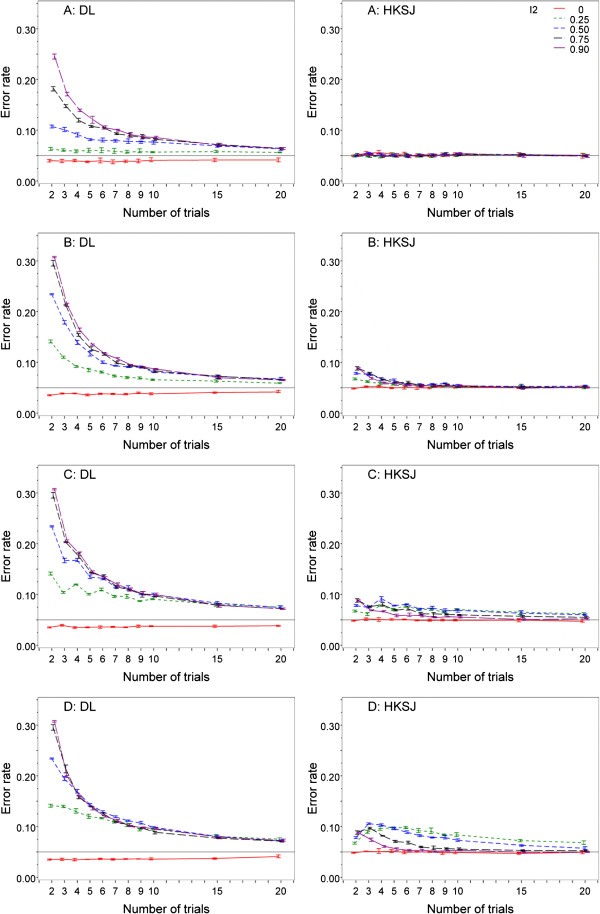
BACKGROUND: The DerSimonian and Laird approach (DL) is widely used for random effects meta-analysis, but this often results in inappropriate type I error rates. The method described by Hartung, Knapp, Sidik and Jonkman (HKSJ) is known to perform better when trials of similar size are combined. However evidence in realistic situations, where one trial might be much larger than the other trials, is lacking. We aimed to evaluate the relative performance of the DL and HKSJ methods when studies of different sizes are combined and to develop a simple method to convert DL results to HKSJ results. METHODS: We evaluated the performance of the HKSJ versus DL approach in simulated meta-analyses of 2-20 trials with varying sample sizes and between-study heterogeneity, and allowing trials to have various sizes, e.g. 25% of the trials being 10-times larger than the smaller trials. We also compared the number of "positive" (statistically significant at p < 0.05) findings using empirical data of recent meta-analyses with > = 3 studies of interventions from the Cochrane Database of Systematic Reviews. RESULTS: The simulations showed that the HKSJ method consistently resulted in more adequate error rates than the DL method. When the significance level was 5%, the HKSJ error rates at most doubled, whereas for DL they could be over 30%. DL, and, far less so, HKSJ had more inflated error rates when the combined studies had unequal sizes and between-study heterogeneity. The empirical data from 689 meta-analyses showed that 25.1% of the significant findings for the DL method were non-significant with the HKSJ method. DL results can be easily converted into HKSJ results. CONCLUSIONS: Our simulations showed that the HKSJ method consistently results in more adequate error rates than the DL method, especially when the number of studies is small, and can easily be applied routinely in meta-analyses. Even with the HKSJ method, extra caution is needed when there are = <5 studies of very unequal sizes.
Overview
The claims and statistics of this paper haven’t been checked yet.
Free: it reads the open-access text and checks the first 5 claims that cite a source we can check. Create a free account to check every claim.
Integrity signals
Registry
Cites
Statistics
Figures
Verification
Claims the paper makes
The claims and statistics of this paper haven’t been checked yet.
Free: it reads the open-access text and checks the first 5 claims that cite a source we can check. Create a free account to check every claim.
Claims other papers make about this one
Each is checked against this paper’s own text: does it say what the citing paper says it does?
The source backs part of the claim, not all of it — or backs it for a different population, condition or comparison.
In the citing paper
“Random-effects meta-regression with Knapp–Hartung adjustment was applied to account for between-study heterogeneity and to calculate 95% prediction intervals, estimating the likely range of effect sizes in future studies (30).”
From The association of screen time and the risk of sleep outcomes: a systematic review and meta-analysis. (2025) · cites this paper as [30]
Experimental — accuracy not yet measuredThe cited source says what the claim attributes to it.
In the citing paper
“To evaluate robustness of pooled estimates, prespecified sensitivity analyses included fixed-effect models, Hartung–Knapp adjustment for random-effects inference, alternative τ² estimators, leave-one-out analyses, and Bayesian random-effects meta-analysis (45–49).”
In the citing paper
“An inverse-variance method with a random-effects model and Hartung-Knapp-Sidik-Jonkman adjustment (33) was used to adjust for study variability in sample sizes.”
From Digital Media Use and Adolescents' Mental Health During the Covid-19 Pandemic: A Systematic Review and Meta-Analysis (2022) · cites this paper as [33]
Self-check
Percentages, sums and reported differences re-computed from the paper’s own numbers.
The self-check needs the paper’s full text.
Citations
Cites
2 retracted
Singh, M., & Das, R. R. (2013) · Cochrane Database of Systematic Reviews · doi:10.1002/14651858.cd001364.pub4 · Cited by 237
RetractedSingh, M., & Das, R. R. (2011) · Cochrane Database of Systematic Reviews · doi:10.1002/14651858.cd001364.pub3 · Cited by 86
RetractedMeasuring inconsistency in meta-analyses
Higgins, J. P. T., Thompson, S. G., Deeks, J. J., & Altman, D. G. (2003) · BMJ · doi:10.1136/bmj.327.7414.557 · Cited by 63,139 · cited 8×
“The levels correspond to no, low, moderate, high and very high heterogeneity, respectively [16].”
BackgroundMethodResultInfluentialMeta-analysis in clinical trials
DerSimonian, R., & Laird, N. (1986) · Controlled Clinical Trials · doi:10.1016/0197-2456(86)90046-2 · Cited by 39,552 · cited 2×
“Background The commonly used method for a random effects metaanalysis is the DerSimonian and Laird approach (DL method) [1].”
MethodQuantifying heterogeneity in a meta‐analysis
Higgins, J. P. T., & Thompson, S. G. (2002) · Statistics in Medicine · doi:10.1002/sim.1186 · Cited by 36,763 · cited 1×
“the degree of inconsistency in the studies’ results, in comparison to the total amount of variation [16,22].”
ResultConducting Meta-Analyses in R with the metafor Package
Viechtbauer, W. (2010) · Journal of Statistical Software · doi:10.18637/jss.v036.i03 · Cited by 20,464 · cited 2×
“The R package metafor [20] can also be used to perform an HKSJ analysis.”
MethodBorenstein, M., Hedges, L. V., Higgins, J. P. T., & Rothstein, H. R. (2009) · doi:10.1002/9780470743386 · Cited by 14,225
Borenstein, M., Hedges, L. V., Higgins, J. P. T., & Rothstein, H. R. (2021) · doi:10.1002/9781119558378 · Cited by 9,799
Improved tests for a random effects meta‐regression with a single covariate
Knapp, G., & Hartung, J. (2003) · Statistics in Medicine · doi:10.1002/sim.1482 · Cited by 2,075 · cited 1×
“The implementation is based on the meta-regression paper by Knapp and Hartung [34]: when no covariates or moderator variables are used, the meta-regression reduces to a random effects metaanalysis as proposed by Hartung/Knapp and Sidik/ Jonkman.”
MethodUncertainty in heterogeneity estimates in meta-analyses
Ioannidis, J. P. A., Patsopoulos, N. A., & Evangelou, E. (2007) · BMJ · doi:10.1136/bmj.39343.408449.80 · Cited by 1,254 · cited 1×
“Some detectable heterogeneity is present in about half of meta-analyses of clinical studies [15-18].”
BackgroundSelf-citation
Research works printed but not linked: 3
- The Cochrane Collaboration Review Manager (RevMan) 5.1.4 2011 Copenhagen: The Nordic Cochrane Centre
- Borenstein M Hedges L Higgins J Rothstein H Comprehensive Meta-analysis Version 2 2005 Englewood NJ: Biostat
- Hartung J An alternative method for meta-analysis Biom J 1999 901 916
Cited by
Items 901–1,000 of 1,008
Gülpen, J., Breedvelt, J., van Dis, E. A. M., Geurtsen, G. J., Warren, F. C., Heeringen, C. V., Hitchcock, C., Holländare, F., Huijbers, M. J., Jarrett, R. B., et al. (2025) · Psychological Medicine · doi:10.1017/s0033291725000157 · Cited by 18
“For 2-stage random-effects models, we used the DerSimonian and Laird method to pool individual results (DerSimonian & Laird, 1986), and applied the Hartung – Knapp – Sidik – Jonkman method to account for τ 2 uncertainty (IntHout et al., 2014).”
Komakech, K., Semugenze, D., Joloba, M. L., Cobelens, F. G. J., & Ssengooba, W. (2025) · EClinicalMedicine · doi:10.1016/j.eclinm.2025.103257 · Cited by 17
“55,56 Hierarchical summary receiver-operating characteristic (HSROC) curve were drawn to compare areas under the curve (AUC) for different POC-TTTs.”
Vlisides, P. E., Ioannidis, J. P. A., & Avidan, M. S. (2019) · British Journal of Anaesthesia · doi:10.1016/j.bja.2019.01.012 · Cited by 15
Self-citationPark, S.-H., & Choi, Y.-K. (2020) · Blood Pressure Monitoring · doi:10.1097/mbp.0000000000000414 · Cited by 14
Yazew, K. G., Kassahun, C. W., Wondim, A., Kerebih, H., & Abagez, E. S. (2019) · Systematic Reviews · doi:10.1186/s13643-019-1249-4 · Cited by 17
“The DerSimonian and Laird method, which assumes heterogeneity across studies, is the most common method for using a random-effects model in the meta-analysis [14, 15].”
MethodAlqadi, M. M., Chadha, S., Patel, S. S., Chen, Y., & Gaba, R. C. (2021) · CardioVascular and Interventional Radiology · doi:10.1007/s00270-021-02836-y · Cited by 15
“statistics were used to access heterogeneity and randomeffect models using Sidik–Jonkman estimator with Knapp and Hartung standard error adjustment [19] to summarize the effect size.”
MethodEdwards, H. M., Counihan, H., Bonnington, C. A., Achan, J., Hamade, P., & Tibenderana, J. (2021) · PLoS ONE · doi:10.1371/journal.pone.0251101 · Cited by 15
“models between-study variance was estimated using the Hartung-Knapp-Sidik-Jonkman (HKSJ) method, which is considered to be superior to the standard DerSimonion-Laird method in estimating variance of the pooled effect, particularly when the number of studies is small [31].”
MethodNecka, E. A., Amir, C., Dildine, T. C., & Atlas, L. Y. (2021) · Social Science & Medicine · doi:10.1016/j.socscimed.2021.114091 · Cited by 16
Mor, S., Grimaldos, J., Tur, C., Miguel, C., Cuijpers, P. J., Botella, C., & Quero, S. (2021) · Internet Interventions · doi:10.1016/j.invent.2021.100462 · Cited by 19
Fuller, H., Moore, J. B., Iles, M. M., & Zulyniak, M. A. (2022) · PLOS Global Public Health · doi:10.1371/journal.pgph.0000250 · Cited by 21
Comparison of bolus versus continuous infusion of propofol for procedural sedation: a meta-analysis
Choi, G. J., Kang, H., Baek, C. W., Jung, Y. H., & Lee, J. J. (2017) · Current Medical Research and Opinion · doi:10.1080/03007995.2017.1370419 · Cited by 14
“The standardized form included the following items: (1) title, (2) name of first author, (3) name of journal, (4) year of publication, (5) country, (6) type of procedure performed, (7) number of participants, (8) sex and age, (9) tool used for sedation depth evaluation, (10) target of sedation depth, (11) capnography…”
BackgroundMeta-analysis: a critical appraisal of the methodology, benefits and drawbacks
Khan, S., Memon, B., & Memon, M. A. (2019) · British Journal of Hospital Medicine · doi:10.12968/hmed.2019.80.11.636 · Cited by 21
The Use of Meta‐analysis in Pharmacoepidemiology
Berlin, J. A. (2000) · Wiley eBooks · doi:10.1002/0470842555.ch38 · Cited by 14
Gnambs, T., & Schroeders, U. (2023) · Research Synthesis Methods · doi:10.1002/jrsm.1673 · Cited by 15
“37,77 However, for TLM respective adjustments such as the Kenward-Rogers 78 correction have not yet been thoroughly evaluated and, thus, are hardly used.”
BackgroundCavalcante, B. G. N., Mlinkó, É., Szabó, B., Teutsch, B., Hegyi, P., Vág, J., Németh, O., Gerber, G., & Varga, G. (2024) · Journal of Clinical Medicine · doi:10.3390/jcm13237154 · Cited by 17
Cherbi, M., Gautier, P., Sacher, F., Martins, R. P., Knecht, S., Maury, P., & Delmas, C. (2025) · EP Europace · doi:10.1093/europace/euaf129 · Cited by 13
Cohen, S. E., Niemeijer, M. J., Zantvoord, J. B., van Wingen, G. A., Mocking, R. J. T., & Denys, D. A. J. P. (2025) · Molecular Psychiatry · doi:10.1038/s41380-025-03092-z · Cited by 22
Chiang, C., Chang, Y., Yu, C.-C., See, X. Y., Wang, T. H., Xanthavanij, N., Song, J., Lo, S., Chiang, C.-H., Lake, L. L., et al. (2025) · Journal of Thrombosis and Haemostasis · doi:10.1016/j.jtha.2025.06.020 · Cited by 15
Jiang, S., Zeng, N., Ng, J. Y. Y., Chong, K. H., Zeng, T., Leung, S. K. Y., & Ha, A. S. C. (2025) · Journal of sport and health science/Journal of Sport and Health Science · doi:10.1016/j.jshs.2025.101085 · Cited by 35
“67,68 In addition, the study employed network meta-analysis, and the method compared and ranked different PA strategies based on their effects on FMS and CF by analyzing both direct and indirect comparisons.”
Sumsuzzman, D. M., Shi, C., Langley, J. M., & Moghadas, S. M. (2025) · Archives of Pediatrics and Adolescent Medicine · doi:10.1001/jamapediatrics.2025.5280 · Cited by 15
Lai, K. Y., Bauermeister, S., & Sarkar, C. (2026) · npj Mental Health Research · doi:10.1038/s44184-026-00190-w · Cited by 23
“This approach has been foundtooutperformthestandardDerSimonian-Lairdapproachintermsof minimizingtype1error(falsepositive fi ndings)especiallywhenthenumber of pooled studies is small 31 .”
Rombey, T., Gooßen, K., Breuing, J., Mathes, T., Heß, S., Burchard, R., & Pieper, D. (2020) · Systematic Reviews · doi:10.1186/s13643-020-01295-9 · Cited by 13
Yokoyama, C., Mihara, T., Kashiwagi, S., Koga, M., & Goto, T. (2020) · PLoS ONE · doi:10.1371/journal.pone.0231958 · Cited by 16
“, <10), we used the Hartung-Knapp-Sidik-Jonkman adjustment [17] for the random-effects meta-analysis.”
MethodShi, X., Zhuo, H., Du, Y., Nyhan, K., Ioannidis, J. P. A., & Wallach, J. D. (2022) · BMJ Medicine · doi:10.1136/bmjmed-2022-000184 · Cited by 18
Self-citationBurfield, M., Sayers, M. G. L., & Buhmann, R. (2023) · Physical Therapy in Sport · doi:10.1016/j.ptsp.2023.02.003 · Cited by 19
Pontiroli, A., Centofanti, L., Le Roux, C., Magnani, S., Tagliabue, E., & Folli, F. (2023) · Nutrients · doi:10.3390/nu15040940 · Cited by 13
“Differently from previous meta-analyses [2,4,18–21], all analyses were performed by a random-effects model according to Hartung and Knapp [35], that is straightforward and outperforms the standard DerSimonian-Laird method [48], especially when less than ten studies are considered [49]; also, when other methods of anal…”
MethodTiberio, P., Gaudio, M., Belloni, S., Pindilli, S., Benvenuti, C., Jacobs, F., Saltalamacchia, G., Zambelli, A., Santoro, A., & Sanctis, R. D. (2023) · Cancers · doi:10.3390/cancers15133424 · Cited by 15
“Fifth, meta-analyses of prediction models are recommended if more than five external validation studies for the same index prognostic model are available [40].”
MethodWhat interventions keep older people out of nursing homes? A systematic review and meta‐analysis
Gaugler, J. E., Zmora, R., Peterson, C., Mitchell, L. L., Jutkowitz, E., & Duval, S. (2023) · Journal of the American Geriatrics Society · doi:10.1111/jgs.18522 · Cited by 15
Runge, N., Arribas‐Romano, A., Labie, C., Maîresse, O., Goossens, Z., Nijs, J., Malfliet, A., Verschueren, S., Assche, D. V., de Vlam, K., et al. (2023) · Sleep Medicine Reviews · doi:10.1016/j.smrv.2023.101832 · Cited by 17
Bailey, L. E., & Morris, M. A. (2023) · Complementary Therapies in Clinical Practice · doi:10.1016/j.ctcp.2023.101811 · Cited by 16
Dimou, K., Dragioti, E., Tsitsas, G., Mantzoukas, S., & Gouva, M. (2023) · Cureus · doi:10.7759/cureus.50714 · Cited by 25
“For studies reporting appropriate statistics, a meta-analysis using a random effects model, due to expected high heterogeneity between studies, [52] with the Hartung-Knapp-Sidik-Jonkman method was performed [53].”
MethodLiu, S., Zhang, F., Bai, Y., Huang, L., Zhong, Y., & Li, Y. (2024) · Renal Failure · doi:10.1080/0886022x.2023.2301504 · Cited by 18
“…the hartung-knapp-sidik-jonkman (HKSJ) method was used as the estimator for the meta-analysis because the results of this method are more robust [25]. the results were displayed through a forest plot, and the overall effect was checked using a z -test. in addition, we calculated 95% prediction…”
Smith, M. M., & Hewitt, P. L. (2024) · Journal of Clinical Psychology · doi:10.1002/jclp.23649 · Cited by 25
Fu, Y., Feller, D., Koes, B. W., & Chiarotto, A. (2024) · Journal of Orthopaedic and Sports Physical Therapy · doi:10.2519/jospt.2024.12081 · Cited by 17
A systematic review and meta-analysis of synthetic cathinone use and psychosis
Daswani, R., Choles, C. M., Kim, D. D., & Barr, A. (2024) · Psychopharmacology · doi:10.1007/s00213-024-06569-x · Cited by 12
“The Sidik-Jonkman method considerably outperforms the DerSimonian-Laird method when looking at combining studies that have different participant sizes (IntHout et al. 2014).”
Park, S., Lee, H., Cho, W., Woo, H. G., Lim, H., Kim, S. Y., Rhee, S. Y., & Yon, D. K. (2024) · Obesity Reviews · doi:10.1111/obr.13714 · Cited by 17
“38 Fourth, while the type of ICT would differentially influence the health outcomes in patients with T1DM, T2DM, or GDM, our umbrella review grouped all types of ICT (telemonitoring, application, SMS, etc.).”
BackgroundEnhanced Recovery After Surgery for Craniotomies: A Systematic Review and Meta-analysis
Kim, S. H., Choi, S. H., Moon, J., Kim, H. D., & Choi, Y. S. (2024) · Journal of Neurosurgical Anesthesiology · doi:10.1097/ana.0000000000000967 · Cited by 19
“23 For dichotomous outcomes (incidence of PONV, pain with VAS score ≥ 4, seizure, hemorrhage, surgical site infection, intracranial infection, respiratory complications, and pain lasting > 4 days), relative risk (RR) with 95% CIs was calculated using the number of events extracted from each study.”
Galimzhanov, A. M., Tun, H. N., Sabitov, Y., Perone, F., Kursat, T. M., Tenekecioğlu, E., & Mamas, M. A. (2024) · European Journal of Clinical Investigation · doi:10.1111/eci.14295 · Cited by 16
“21 In order to further decrease type I error rates, we carried out permutation tests to support statistically significant results of the meta-analyses.”
Winker, M., Hoffmann, S. F., Laborde, S., & Javelle, F. (2024) · European Journal of Neuroscience · doi:10.1111/ejn.16488 · Cited by 17
“The Hartung and Knapp method was used to adjust confidence intervals and test statistics (Hartung & Knapp, 2001; Inthout et al., 2014).”
Karamya, Z. A., Kovács, A., Illés, D., Czakó, B., Fazekas, A., Farkas, N., Hegyi, P., & Czakó, L. (2024) · BMC Gastroenterology · doi:10.1186/s12876-024-03367-9 · Cited by 13
The role of CLDN18.2 in gastric cancer prognosis: a systematic review and meta-analysis
de Moraes, F. C. A., Sobreira, L. E. R., Souza, M. E. C., & Burbano, R. M. R. (2024) · Biomarkers · doi:10.1080/1354750x.2024.2422965 · Cited by 14
“Between-study variance (τ 2 ) was quantified using the sidik-Jonkman estimator (inthout et al. 2014).”
Risk factors for vasovagal reactions in blood donors: A systematic review and meta‐analysis
Wu, Y., Qi, H., Angelantonio, E. D., Kaptoge, S. K., Wood, A., & Kim, L. G. (2024) · Transfusion · doi:10.1111/trf.18078 · Cited by 21
“26 Associations of continuous risk factors described across three or more studies were pooled after transforming them to a common scale of comparison across studies using previously published methods (detailed in Appendix S5).”
Yoga for Depressive Disorder: A Systematic Review and Meta‐Analysis
Moosburner, A., Cramer, H., Bîlc, M. I., Triana, J., & Anheyer, D. (2024) · Depression and Anxiety · doi:10.1155/da/6071055 · Cited by 26
Wei, D., Freydenzon, A., Guinebretiere, O., Zaidi, K., Yang, F., Ye, W., Hammar, N., Modig, K., Wray, N. R., Feychting, M., et al. (2025) · EBioMedicine · doi:10.1016/j.ebiom.2025.105585 · Cited by 16
“24,25 The meta-analyses were only performed for the medications and health conditions that were analysed in the speci fi c countries.”
Mitra, S., Scrivens, A., Fiander, M., Disher, T. C., & Weisz, D. E. (2025) · Cochrane Database of Systematic Reviews · doi:10.1002/14651858.cd013278.pub3 · Cited by 13
Pittas, S., Theodoridis, X., Haidich, A., Bozikas, P.-V., & Papazisis, G. (2021) · Psychopharmacology · doi:10.1007/s00213-021-05789-9 · Cited by 16
Dexmedetomidine as an adjunct to peripheral nerve blocks in pediatric patients
Yang, J., Cui, Y., Cao, R., Huang, Q., & Zhang, Q. (2022) · World Journal of Pediatrics · doi:10.1007/s12519-021-00507-z · Cited by 14
Ekundayo, T. C., Falade, A. O., Igere, B. E., Iwu, C. D., Adewoyin, M. A., Olasehinde, T. A., & Ijabadeniyi, O. A. (2022) · Scientific Reports · doi:10.1038/s41598-022-08700-4 · Cited by 18
Hodkinson, A., Kontopantelis, E., Zghebi, S. S., Grigoroglou, C., McMillan, B., van Marwijk, H., Bower, P., Tsimpida, D., Emery, C. F., Burge, M. R., et al. (2022) · Journal of Medical Internet Research · doi:10.2196/36337 · Cited by 14
“The Hartung-Knapp CI was used to account for uncertainty in the variance estimate [30].”
Zhang, F., Wang, H., Huang, L., Bai, Y., Wang, W., & Zhang, H. (2022) · International Urology and Nephrology · doi:10.1007/s11255-022-03413-z · Cited by 14
“, sleep quality), overall and subgroup analyses pooled estimates were calculated using the Hartung-Knapp-Sidik-Jonkman method [55].”
MethodEhler, E., Turcotte, L. M., Skamene, S., Baker, K. S., Das, S. K., Constine, L. S., Yuan, J., & Dusenbery, K. E. (2023) · International Journal of Radiation Oncology*Biology*Physics · doi:10.1016/j.ijrobp.2023.02.037 · Cited by 13
Sadeghi, A., Taherifard, E., Ebrahimi, N. D., Rafiei, E., Hadianfard, F., & Taherifard, E. (2023) · Health Science Reports · doi:10.1002/hsr2.1167 · Cited by 13
“Then, random effects modeling, the DerSimonian–Laird model with standard‐error adjustment for the overall effect size of Hartung–Knapp, was applied.(27) Standard deviations (SD) were measured from standard errors of the mean or confidence intervals (CI) by use of appropriate formulas when they were not reported in the…”
MethodPivot, D., Hoch, G., Astruc, K., Lepelletier, D., Lefebvre, A., Lucet, J. C., Beaussier, M., Philippe, H.-J., Vons, C., Triboulet, J.-P., et al. (2018) · Journal of Hospital Infection · doi:10.1016/j.jhin.2018.07.035 · Cited by 13
Yang, Y., Sun, Y., Gao, B., Wang, Z., Chen, Z., & Wang, Z. (2020) · CNS Drugs · doi:10.1007/s40263-020-00753-1 · Cited by 13
Lin, V. A., Lohse, R., Madsen, M. T., Fransgaard, T., Remzi, F. H., & Gögenür, I. (2021) · Annals of Surgical Oncology · doi:10.1245/s10434-021-10759-8 · Cited by 13
Dhungel, B., Rahman, M. S., Rahman, M. M., Bhandari, A. K. C., Le, P. M., Biva, N. A., & Gilmour, S. (2022) · International Journal of Environmental Research and Public Health · doi:10.3390/ijerph191811613 · Cited by 18
“We used the restricted maximum likelihood (REML) method in the case of the random-effects meta-analysis [15].”
MethodYan, R., Liu, T., Peng, Y., & Peng, X. (2020) · BMC Medical Informatics and Decision Making · doi:10.1186/s12911-020-01343-3 · Cited by 13
Ren, Z., Wen, Q., Yan, X., Wang, Y., & Zhang, Y. (2022) · Clinical Neurology and Neurosurgery · doi:10.1016/j.clineuro.2022.107362 · Cited by 12
Roth, A., Sattelmayer, M., Schorderet, C., Gafner, S. C., & Allet, L. (2022) · F1000Research · doi:10.12688/f1000research.75539.3 · Cited by 19
“In addition, the Hartung-Knapp-Sidik-Jonkman adjustment for random effects models was applied.(41) A meta-regression for the variables age at baseline and BMI at baseline was calculated using a mixed-effects model.”
van der Sluys, M.-E., Zijlmans, J., Ket, J. C. F., Marhe, R., Popma, A., Scherder, E., & van der Laan, P. H. (2022) · Journal of Experimental Criminology · doi:10.1007/s11292-022-09536-8 · Cited by 20
“The Knapp and Hartung (Knapp & Hartung, 2003) adjustment was used to calculate the corresponding confidence intervals (Inthout et al., 2014; Langan et al., 2019).”
Tahmasbi, F., Ghaderpanah, R., Sadrian, S. H., Mosaddeghi-Heris, R., & Salehi‐Pourmehr, H. (2023) · Current Physical Medicine and Rehabilitation Reports · doi:10.1007/s40141-023-00397-4 · Cited by 13
Jennings, S., Corrin, T., & Waddell, L. A. (2023) · Epidemiology and Infection · doi:10.1017/s0950268823001279 · Cited by 16
“As part of the sensitivity analysis for meta-analysis sub-groups with more than three studies, the Hartung-Knapp-Sidik-Jonkmanmethod for estimating more conservative confidence intervals was examined and reported in Supplementary Table S2 [25], and the prediction intervals were calculated to provide a plausible range…”
Szota, A. M., Kowalewska, B., Ćwiklińska-Jurkowska, M. M., & Dróżdż, W. (2023) · Journal of Clinical Medicine · doi:10.3390/jcm12175728 · Cited by 14
“Hartung–Knapp method for random-effect meta-analysis gives more adequate error rates than the Der Simonian and Laird method, especially for a few studies [26].”
MethodEffects of Static Meditation Practice on Blood Lipid Levels: A Systematic Review and Meta-Analysis
Antonelli, M., Donelli, D., Gurgoglione, F. L., Lazzeroni, D., Hálasz, G., & Niccoli, G. (2024) · Healthcare · doi:10.3390/healthcare12060655 · Cited by 12
“The meta-analysis utilized the raw Mean Difference (MD) as the summary statistic, adopting a random effects model to address heterogeneity among the studies [41].”
MethodBurma, J. S., Roy, M., Kennedy, C. M., Labrecque, L., Brassard, P., & Smirl, J. D. (2024) · Journal of Cerebral Blood Flow & Metabolism · doi:10.1177/0271678x241235878 · Cited by 12
de Moraes, F. C. A., Pereira, C. R. M., Sano, V. K. T., de Laia, E. A., Stecca, C., & Burbano, R. M. R. (2024) · Frontiers in Pharmacology · doi:10.3389/fphar.2024.1352224 · Cited by 12
Phytoncides and immunity from forest to facility: A systematic review and meta-analysis
Lew, T., & Fleming, K. J. (2024) · Pharmacological Research - Natural Products · doi:10.1016/j.prenap.2024.100061 · Cited by 28
A Meta-Analysis of Interpersonal and Psychodynamic Psychotherapies for Posttraumatic Stress Disorder
Keefe, J. R., Kimmel, D., & Weitz, E. S. (2024) · American Journal of Psychotherapy · doi:10.1176/appi.psychotherapy.20230043 · Cited by 15
Tini, A., Subramanian, S. K., Anbarasu, P., Munusamy, N., Balamurugan, B., & Antony, A. (2024) · European Journal of Orthodontics · doi:10.1093/ejo/cjae043 · Cited by 15
Chang, T., Shih, M., Wu, Y.-L., Wu, T.-T., Yang, J.-T., & Wu, C. (2024) · British Journal of Anaesthesia · doi:10.1016/j.bja.2024.08.008 · Cited by 14
“29 This approach provides more reliable and conservative estimates, reducing the risk of overstating the significance of our findings.”
Wright-Hughes, A. M., Farrin, A. J., Fonagy, P., Ougrin, D., Stahl, D. R., Wright, J. M., Irving, D., Mughal, F., Truscott, A., Diggins, E., et al. (2025) · Journal of the American Academy of Child & Adolescent Psychiatry · doi:10.1016/j.jaac.2025.01.017 · Cited by 15
Malik, S., Naqvi, S. A. A., Shadali, A. H., Khan, H., Christof, M., Niu, C., Schwartz, D. A., & Adler, D. G. (2025) · Digestive Diseases and Sciences · doi:10.1007/s10620-025-08946-8 · Cited by 18
“Additionally, analyses using the Hartung-Knapp adjustment was appliedwere conducted to adjust for small number of studies [18, 19] to correct the small samplefor small sample correction.”
Juang, Y. R., Ang, L., & Seow, W. J. (2025) · Scientific Reports · doi:10.1038/s41598-024-83875-6 · Cited by 18
“(cid:30) (cid:31) We further adjusted for between-study heterogeneity using the Hartung-Knapp-Sidik-Jonkman (HKSJ) test 44 with the ‘metafor’ package in R 45 .”
Shekarian, A., Mazaheri‐Tehrani, S., Shekarian, S., Pourbazargan, M., Setudeh, M., Abhari, A. P., Fakhrolmobasheri, M., & Heidarpour, M. (2025) · BMC Endocrine Disorders · doi:10.1186/s12902-025-01896-2 · Cited by 23
Adal, O. T., Tsehay, Y. T., Ayenew, B., Abate, T. W., Mekonnen, G. B., Mulatu, S., Mamo, S. T., Ayenew, T., Messelu, M. A., & Belayneh, A. G. (2025) · BMC Infectious Diseases · doi:10.1186/s12879-025-11038-7 · Cited by 23
“A meta-analysis was conducted using Stata version 17 with the random-effects DerSimonian-Laird model for the pooled analysis [30].”
Spadaccini, M., Hassan, C., Mori, Y., Halvorsen, N., Gimeno‐García, A. Z., Nakashima, H., Facciorusso, A., Patel, H. K., Antonelli, G., Khalaf, K., et al. (2025) · Digestive Endoscopy · doi:10.1111/den.15034 · Cited by 17
“12 Statistical heterogeneity among studies was assessed using the v 2 -test, and the potential inconsistency was quanti fi ed through the I 2 statistic, which describes the percentage of total variation across studies that is due to heterogeneity rather than chance.”
Kang, H., Choi, Y. S., Suh, S., Choi, G.-J., Do, J. H., Oh, H., Kim, H. J., & Lee, S. E. (2021) · Journal of Clinical Medicine · doi:10.3390/jcm10153317 · Cited by 12
“Since the number of combined studies that showed substantial heterogeneity was less than 10, t-statistics (Hartung–Knapp–Sidik–Jonkman method) were used instead of the Z-test in all random effects analyses to lower the error rate [14].”
MethodHeo, M. H., Kim, J. Y., Kim, K. W., Kim, K. T., Lee, S. I., Kim, K. T., Park, J.-S., Choe, W. J., & Kim, J. H. (2021) · Korean Journal of Anesthesiology · doi:10.4097/kja.21133 · Cited by 12
“The Hartung, Knapp, Sidik, and Jonkman (HKSJ) method was used to reduce type I errors because the number of included studies was small [15].”
MethodProdromal Cognitive Deficits and the Risk of Subsequent Parkinson’s Disease
Speelberg, H. B., Daalen, J. M. J., Bloem, B. R., Gagnon, J., Post, B., & Darweesh, S. K. L. (2022) · Brain Sciences · doi:10.3390/brainsci12020199 · Cited by 14
“The Hartung–Knapp method was used to adjust for heterogeneity between studies and the low number of studies per analysis [24].”
MethodMacDonald, K. B., Benson, A. J., Sakaluk, J. K., & Schermer, J. A. (2023) · Journal of Career Assessment · doi:10.1177/10690727221148717 · Cited by 23
“We applied Knapp-Hartung adjustments (Knapp & Hartung, 2003) when calculating the con fi dence intervals around the overall effect size to reduce the risk of false positives (IntHout et al., 2014).”
MethodSiafis, S., McCutcheon, R. A., Chiocchia, V., Ostinelli, E. G., Wright, S. L., Stansfield, C., Juma, D. O., Mantas, I., Howes, O. D., Rutigliano, G., et al. (2023) · Wellcome Open Research · doi:10.12688/wellcomeopenres.19866.1 · Cited by 11
“We will apply Hartung-Knapp method to adjust the confidence intervals of the treatment effects if there are at least 5 studies 84 .”
MethodKoh, C. H., Pronin, S., & Hughes, M. A. (2018) · Brain Injury · doi:10.1080/02699052.2018.1438665 · Cited by 18
Li, J., Chen, M., Wang, Z., Li, S., Jiang, M., Shi, L., Cao, C.-L., Sang, T., Cui, X., & Dietrich, C. F. (2020) · World Journal of Clinical Cases · doi:10.12998/wjcc.v8.i22.5589 · Cited by 11
Ng, J. K., Smyth, B. J., Marshall, M. R., Kang, A., J. P., Bassi, A., Krishnasamy, R., Rossignol, P., Rocco, M. V., Z. L., et al. (2020) · Nephrology Dialysis Transplantation · doi:10.1093/ndt/gfaa287 · Cited by 14
Shah, S., Shah, K. B., Turagam, M. K., Sharma, A., Natale, A., Lakkireddy, D., & Garg, J. (2021) · Journal of Cardiovascular Electrophysiology · doi:10.1111/jce.15016 · Cited by 12
“However, recently, the HKSJ method has been found to provide more consistently adequate error rates, especially when the number of studies are small, thereby increasing the risk of substantial heterogeneity.(12)”
MethodSiddiqui, F., Barbateskovic, M., Juul, S., Katakam, K. K., Munkholm, K., Gluud, C. N., & Jakobsen, J. C. (2021) · Systematic Reviews · doi:10.1186/s13643-021-01722-5 · Cited by 12
Palamuthusingam, D., Singh, A., Palamuthusingam, P., Hawley, C. M., Pascoe, E. M., Johnson, D. W., & Fahim, M. (2021) · Obesity Research & Clinical Practice · doi:10.1016/j.orcp.2021.06.010 · Cited by 14
Merino‐Soto, C., Carbajal, A. B., Toledano‐Toledano, F., Nabors, L., & Núñez-Benítez, M. Á. (2022) · International Journal of Environmental Research and Public Health · doi:10.3390/ijerph19020935 · Cited by 14
“The Hartung–Knapp–Sidik–Jonkman estimator was used, since it can produce robust results with a small number of studies that have a high degree of heterogeneity [82,83].”
MethodCommunity-Based Pulmonary Rehabilitation Programs in Individuals With COPD
Barbosa, M., Andrade, R., de Melo, C. A., & Torres, R. (2022) · Respiratory Care · doi:10.4187/respcare.09627 · Cited by 16
“A random-effects model (Sidik-Jonkman estimator with Hartung-Knapp adjustment 37 ) was used due variations in community-based PR interventions and specific methods of outcome collection/scoring.”
Why do we need Evidence-Based Methods in Cochrane?
McKenzie, J. E., Clarke, M. J., & Chandler, J. (2015) · Cochrane Database of Systematic Reviews · doi:10.1002/14651858.ed000102 · Cited by 12
“Examples of methods research includes descriptive studies of reviews[5][6][7] and research using varied designs into the e<ects of alternative methods strategies, including search filters for eligible studies,[8][9] screening records retrieved from bibliographic databases,[10] meta-analysis methods,[11][12][13] priori…”
MethodEfficacy and safety of balneotherapy in rheumatology: a systematic review and meta-analysis
Aribi, I., Nourredine, M., Giroudon, C., Massy, E., Lega, J., Kassaï, B., & Grenet, G. (2025) · BMJ Open · doi:10.1136/bmjopen-2024-089597 · Cited by 26
Han, M. A., Storman, D., Al-Rammahy, H., Tang, S., Hao, Q., Leung, G., Kandi, M., Moradi, R., Bartoszko, J. J., Arnold, C., et al. (2020) · PLoS ONE · doi:10.1371/journal.pone.0230721 · Cited by 12
“We had planned to perform the Hartung-Knapp (HK) random meta-analysis as a sensitivity analysis but could not present due to a small number of studies included [71, 72].”
MethodJeuring, H. W., d’Angremont, E., Tol, M. H., Risselada, A., Sommer, I. E., & Voshaar, R. C. O. (2022) · Psychiatry Research · doi:10.1016/j.psychres.2022.115010 · Cited by 13
“This modified method has been argued to outperform the standard DerSimonian-Laird method (IntHout et al., 2014) and is therefore recommended to apply in random-effects meta-analysis (Van Aert and Jackson, 2019).”
MethodHorváth, I. L., Bunduc, Ș., Hankó, B., Kleiner, D., Demcsák, A., Szabó, B., Hegyi, P., & Csupor, D. (2023) · Scientific Reports · doi:10.1038/s41598-023-29939-5 · Cited by 11
Ottaiano, A., Facchini, S., Santorsola, M., Nasti, G., Facchini, G., Montella, L., Maurea, N., Cascella, M., Iervolino, D., Facchini, B. A., et al. (2023) · Cancers · doi:10.3390/cancers15113012 · Cited by 14
“A random-effects model was utilized due to the heterogeneity observed among the studies, utilizing the Hartung–Knapp–Sidik–Jonkman approach [24].”
MethodSzigetváry, C., Turan, C., Kovács, E. H., Kói, T., Engh, M. A., Hegyi, P. J., Csukly, G., Ruszkai, Z., & Molnár, Z. (2023) · Biomedicines · doi:10.3390/biomedicines11113068 · Cited by 13
Real-World Fatigue Testing in Professional Rugby Union: A Systematic Review and Meta-analysis
Grainger, A., Comfort, P., Twist, C., Heffernan, S. M., & Tarantino, G. (2023) · Sports Medicine · doi:10.1007/s40279-023-01973-3 · Cited by 13
“Data were pooled using the “metagen” package in R Studio for pre-calculated continuous ES data [51, 52], and following IntHout et al. recommendations [53], a random-effects model based on the Hartung–Knapp–Sidik–Jonkman adjustment was employed.”
Mohammed, A., Melak, D., Bayou, F. D., Yasin, H., Zerga, A. A., Wagaye, B., Ayele, F. Y., Asfaw, A. H., Kebede, N., Mekonen, A. M., et al. (2024) · SAGE Open Medicine · doi:10.1177/20503121241226897 · Cited by 17
“35,36 Wherever possible, sub-group analysis was conducted based on the quality of the study, type of study participants (based on the treatment), and outcome measurement.”
MethodDornelles, A. D., Junges, A. P. P., Krug, B., Gonçalves, C., Junior, H. A. D. O., & Schwartz, I. V. D. (2024) · Frontiers in Pediatrics · doi:10.3389/fped.2024.1310317 · Cited by 14
Issanov, A., Aravindakshan, A., Puil, L. J., Tammemägi, M. C., Lam, S. C., & Dummer, T. (2024) · Diagnostic and Prognostic Research · doi:10.1186/s41512-024-00166-4 · Cited by 14
“We will use restricted maximum likelihood estimation with the Hartung-Knapp-Sidik-Jonkman approach to calculate a 95% confidence interval for the mean model performance [49].”
Method
Metadata
- Authors
- IntHout, J., Ioannidis, J. P., & Borm, G. F.
- Affiliations
- Radboud University Medical Center (NL)
- Stanford Medicine (US)
- Corresponding author
- IntHout, Joanna
- Venue
- BMC Medical Research Methodology
- Published
- 2014-02-18
- Volume
- 14
- Issue
- 1
- Pages
- 25-25
- ISSN
- 1471-2288 (ISSN-L)
- PMC
- PMC4015721
- OpenAlex
- W2032506622
- Cited by
- 2,419
- References
- 32
- Citations by year
- 2026: 599 · 2025: 299 · 2024: 319 · 2023: 279 · 2022: 263 · 2021: 243 · 2020: 144 · 2019: 81 · 2018: 62 · 2017: 50 · 2016: 37 · 2015: 37 · 2014: 3
- FWCI
- 41.47
- Type
- journal article
- Language
- en
- Open access
- gold
- doi.org
- Licence
- Locations
- BMC Medical Research Methodology (publishedVersion, cc-by)
- Europe PMC (PubMed Central) (publishedVersion, cc-by)
- PubMed Central (publishedVersion, cc-by)
- PubMed (publishedVersion)
- Radboud Repository (Radboud University) (submittedVersion)
- Radboud Repository (Radboud University) (submittedVersion, other-oa)
- Topics
- Social Sciences › Decision Sciences › Statistics, Probability and Uncertainty › Meta-analysis and systematic reviews
- Physical Sciences › Mathematics › Statistics and Probability › Statistical Methods in Clinical Trials
- Physical Sciences › Mathematics › Statistics and Probability › Statistical Methods in Epidemiology
- Keywords
- random-effects meta-analysis, DerSimonian-Laird method, type I error rate, study heterogeneity, significance testing
- MeSH terms
- Clinical Trials as Topic, Common Cold, Data Interpretation, Statistical, Humans, Zinc, Proportional Hazards Models, Odds Ratio, Sample Size, Precursor Cell Lymphoblastic Leukemia-Lymphoma
About these checks
Registry, retraction, Cites and statistics results are computed, not judged, with one exception: a printed reference that no index lists is read once by a model before it counts as a citation error. Claims are extracted by a model and kept only when their quote appears verbatim in the text; each cited source is then checked, with a model’s help, for whether it says what the claim relies on. Those verdicts can be wrong — read the claim’s quote and the cited source before relying on one.
Statistics and arithmetic are recomputed, not judged.
Confidence bands are shown only for fields calibrated on our annotated test set. None is calibrated yet, so no band is shown.
What counts as a claim ›How we measure confidence ›How we check this ›
Are you an author, or do you see a problem with this page? Request a review
Data sources
Bibliographic data: Semantic Scholar, OpenAlex, Crossref.
Contains information from the Semantic Scholar Academic Graph Datasets, made available under the ODC Attribution License (ODC-BY 1.0).
Semantic Scholar’s data is described in: Kinney, R., et al. (2023). The Semantic Scholar Open Data Platform. arXiv:2301.10140.
