

The Hartung-Knapp-Sidik-Jonkman method for random effects meta-analysis is straightforward and considerably outperforms the standard DerSimonian-Laird method
Open accessThe DOI matches its Crossref record; 34 of the 34 references it cites were found in a registry or an index.
Abstract
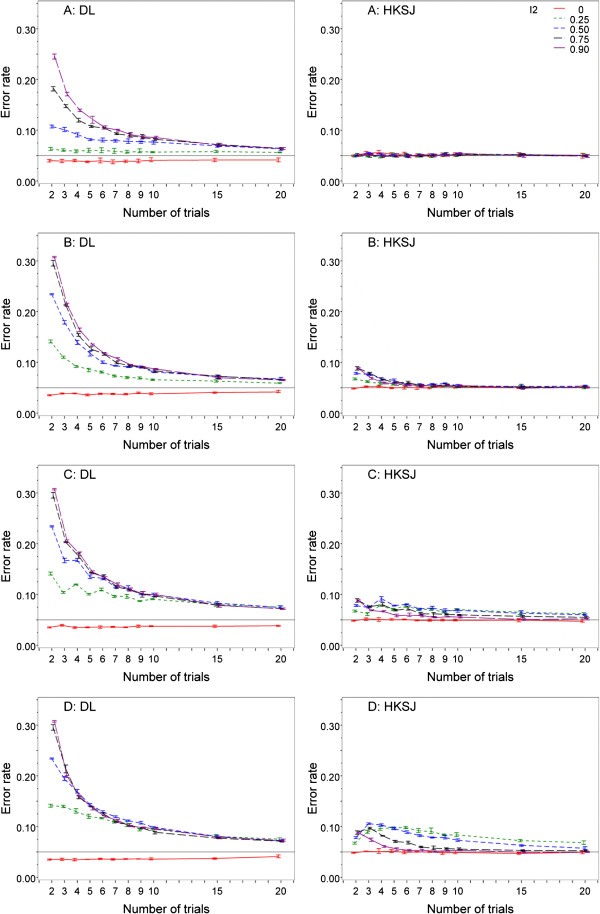
BACKGROUND: The DerSimonian and Laird approach (DL) is widely used for random effects meta-analysis, but this often results in inappropriate type I error rates. The method described by Hartung, Knapp, Sidik and Jonkman (HKSJ) is known to perform better when trials of similar size are combined. However evidence in realistic situations, where one trial might be much larger than the other trials, is lacking. We aimed to evaluate the relative performance of the DL and HKSJ methods when studies of different sizes are combined and to develop a simple method to convert DL results to HKSJ results. METHODS: We evaluated the performance of the HKSJ versus DL approach in simulated meta-analyses of 2-20 trials with varying sample sizes and between-study heterogeneity, and allowing trials to have various sizes, e.g. 25% of the trials being 10-times larger than the smaller trials. We also compared the number of "positive" (statistically significant at p < 0.05) findings using empirical data of recent meta-analyses with > = 3 studies of interventions from the Cochrane Database of Systematic Reviews. RESULTS: The simulations showed that the HKSJ method consistently resulted in more adequate error rates than the DL method. When the significance level was 5%, the HKSJ error rates at most doubled, whereas for DL they could be over 30%. DL, and, far less so, HKSJ had more inflated error rates when the combined studies had unequal sizes and between-study heterogeneity. The empirical data from 689 meta-analyses showed that 25.1% of the significant findings for the DL method were non-significant with the HKSJ method. DL results can be easily converted into HKSJ results. CONCLUSIONS: Our simulations showed that the HKSJ method consistently results in more adequate error rates than the DL method, especially when the number of studies is small, and can easily be applied routinely in meta-analyses. Even with the HKSJ method, extra caution is needed when there are = <5 studies of very unequal sizes.
Overview
The claims and statistics of this paper haven’t been checked yet.
Free: it reads the open-access text and checks the first 5 claims that cite a source we can check. Create a free account to check every claim.
Integrity signals
Registry
Cites
Statistics
Figures
Verification
Claims the paper makes
The claims and statistics of this paper haven’t been checked yet.
Free: it reads the open-access text and checks the first 5 claims that cite a source we can check. Create a free account to check every claim.
Claims other papers make about this one
Each is checked against this paper’s own text: does it say what the citing paper says it does?
The source backs part of the claim, not all of it — or backs it for a different population, condition or comparison.
In the citing paper
“Random-effects meta-regression with Knapp–Hartung adjustment was applied to account for between-study heterogeneity and to calculate 95% prediction intervals, estimating the likely range of effect sizes in future studies (30).”
From The association of screen time and the risk of sleep outcomes: a systematic review and meta-analysis. (2025) · cites this paper as [30]
Experimental — accuracy not yet measuredThe cited source says what the claim attributes to it.
In the citing paper
“To evaluate robustness of pooled estimates, prespecified sensitivity analyses included fixed-effect models, Hartung–Knapp adjustment for random-effects inference, alternative τ² estimators, leave-one-out analyses, and Bayesian random-effects meta-analysis (45–49).”
In the citing paper
“An inverse-variance method with a random-effects model and Hartung-Knapp-Sidik-Jonkman adjustment (33) was used to adjust for study variability in sample sizes.”
From Digital Media Use and Adolescents' Mental Health During the Covid-19 Pandemic: A Systematic Review and Meta-Analysis (2022) · cites this paper as [33]
Self-check
Percentages, sums and reported differences re-computed from the paper’s own numbers.
The self-check needs the paper’s full text.
Citations
Cites
2 retracted
Singh, M., & Das, R. R. (2013) · Cochrane Database of Systematic Reviews · doi:10.1002/14651858.cd001364.pub4 · Cited by 237
RetractedSingh, M., & Das, R. R. (2011) · Cochrane Database of Systematic Reviews · doi:10.1002/14651858.cd001364.pub3 · Cited by 86
RetractedMeasuring inconsistency in meta-analyses
Higgins, J. P. T., Thompson, S. G., Deeks, J. J., & Altman, D. G. (2003) · BMJ · doi:10.1136/bmj.327.7414.557 · Cited by 63,139 · cited 8×
“The levels correspond to no, low, moderate, high and very high heterogeneity, respectively [16].”
BackgroundMethodResultInfluentialMeta-analysis in clinical trials
DerSimonian, R., & Laird, N. (1986) · Controlled Clinical Trials · doi:10.1016/0197-2456(86)90046-2 · Cited by 39,552 · cited 2×
“Background The commonly used method for a random effects metaanalysis is the DerSimonian and Laird approach (DL method) [1].”
MethodQuantifying heterogeneity in a meta‐analysis
Higgins, J. P. T., & Thompson, S. G. (2002) · Statistics in Medicine · doi:10.1002/sim.1186 · Cited by 36,763 · cited 1×
“the degree of inconsistency in the studies’ results, in comparison to the total amount of variation [16,22].”
ResultConducting Meta-Analyses in R with the metafor Package
Viechtbauer, W. (2010) · Journal of Statistical Software · doi:10.18637/jss.v036.i03 · Cited by 20,464 · cited 2×
“The R package metafor [20] can also be used to perform an HKSJ analysis.”
MethodBorenstein, M., Hedges, L. V., Higgins, J. P. T., & Rothstein, H. R. (2009) · doi:10.1002/9780470743386 · Cited by 14,225
Borenstein, M., Hedges, L. V., Higgins, J. P. T., & Rothstein, H. R. (2021) · doi:10.1002/9781119558378 · Cited by 9,799
Improved tests for a random effects meta‐regression with a single covariate
Knapp, G., & Hartung, J. (2003) · Statistics in Medicine · doi:10.1002/sim.1482 · Cited by 2,075 · cited 1×
“The implementation is based on the meta-regression paper by Knapp and Hartung [34]: when no covariates or moderator variables are used, the meta-regression reduces to a random effects metaanalysis as proposed by Hartung/Knapp and Sidik/ Jonkman.”
MethodUncertainty in heterogeneity estimates in meta-analyses
Ioannidis, J. P. A., Patsopoulos, N. A., & Evangelou, E. (2007) · BMJ · doi:10.1136/bmj.39343.408449.80 · Cited by 1,254 · cited 1×
“Some detectable heterogeneity is present in about half of meta-analyses of clinical studies [15-18].”
BackgroundSelf-citation
Research works printed but not linked: 3
- The Cochrane Collaboration Review Manager (RevMan) 5.1.4 2011 Copenhagen: The Nordic Cochrane Centre
- Borenstein M Hedges L Higgins J Rothstein H Comprehensive Meta-analysis Version 2 2005 Englewood NJ: Biostat
- Hartung J An alternative method for meta-analysis Biom J 1999 901 916
Cited by
Items 701–800 of 1,007
Supplementary Materials and Methods
Groenendijk, F. H., Zwart, W. T., Floore, A. N., Akbari, S., & Bernards, R. (2013) · Cited by 22
He, X., Pan, B., Ma, N., Li, D., Kong, W., Liu, Q., Liu, X., Wang, X., Deng, X., & Yang, K. (2025) · Frontiers in Psychiatry · doi:10.3389/fpsyt.2025.1640263 · Cited by 21
Ku, G. D. L. C., Chambergo‐Michilot, D., Perez, A., Valcarcel-Valdivia, B., Pamen, L., Linshaw, D., Chatterjee, A., LaFemina, J., & Boughey, J. C. (2023) · Journal of Robotic Surgery · doi:10.1007/s11701-023-01547-5 · Cited by 21
Harel, B., Gattuso, J. J., Latzman, R. D., Maruff, P. T., Scammell, T. E., & Plazzi, G. (2024) · SLEEP Advances · doi:10.1093/sleepadvances/zpae043 · Cited by 23
“When statistically significant heterogeneity was identified, post hoc meta-regression analyses using the Knapp-Hartung method were conducted to seek the source [40, 41].”
MethodChan, S. L., Sit, J. W. H., Ang, W. W., & Lau, Y. (2024) · International Journal of Nursing Studies · doi:10.1016/j.ijnurstu.2024.104886 · Cited by 29
Kamp, C. B., Petersen, J. J., Faltermeier, P., Juul, S., Siddiqui, F., Moncrieff, J., Horowitz, M. A., Hengartner, M. P., Kirsch, I., Gluud, C. N., et al. (2024) · Epidemiology and Psychiatric Sciences · doi:10.1017/s2045796024000520 · Cited by 26
Wang, D., Liu, E., Perumal, N., Partap, U., Cliffer, I. R., Costa, J. C., Wang, M., Fawzi, W. W., Adu‐Afarwuah, S., Ashorn, P., et al. (2025) · The Lancet Global Health · doi:10.1016/s2214-109x(24)00449-2 · Cited by 24
Associations between light at night and mental health: A systematic review and meta-analysis
Deprato, A., Haldar, P., Navarro, J. F., Harding, B. N., Lacy, P., Maidstone, R. J., Moitra, S., Cros, A. P., Durrington, H. J., Kogevinas, M., et al. (2025) · The Science of The Total Environment · doi:10.1016/j.scitotenv.2025.179188 · Cited by 29
Petousis, S., Kahramanoğlu, İ., Appenzeller‐Herzog, C., Ángeles, M. A., Margioula‐Siarkou, C., Kacperczyk-Bartnik, J. P., Bilir, E., Chatzakis, C., Caruso, G., Bizzarri, N., et al. (2025) · JAMA Network Open · doi:10.1001/jamanetworkopen.2025.41648 · Cited by 29
Goldstein, R. F., Khomami, M. B., Tay, C. T., Sethi, P., Liew, J., Moran, L., Harrison, C. L., Reddy, A. J., Lang, S., Brammall, B. R., et al. (2025) · Obstetric Anesthesia Digest · doi:10.1097/01.aoa.0001237824.17347.02 · Cited by 40
Magnesium sulfate and risk of postpartum uterine atony and hemorrhage: A meta-analysis
Pergialiotis, V., Bellos, I., Constantinou, T., Voskos, A., Papapanagiotou, A., Loutradis, D., & Daskalakis, G. (2020) · European Journal of Obstetrics & Gynecology and Reproductive Biology · doi:10.1016/j.ejogrb.2020.11.005 · Cited by 22
Kang, J. H., Choi, S. H., Lee, J. S., Kim, K. W., Kim, S. Y., Lee, S. S., & Byun, J. H. (2021) · European Radiology · doi:10.1007/s00330-021-07815-y · Cited by 22
Suter, M., Pinto, B. B., Belletti, A., & Putzu, A. (2022) · British Journal of Anaesthesia · doi:10.1016/j.bja.2021.11.039 · Cited by 25
Murchú, É. Ó., Comber, L., Jordan, K., Hawkshaw, S., Marshall, L., O’Neill, M., Ryan, M., Teljeur, C., Carnahan, A., Pérez, J. J., et al. (2022) · Reviews in Medical Virology · doi:10.1002/rmv.2331 · Cited by 29
“Meta‐analysis was conducted using the Mantel‐Haenszel method for fixed effect and the Sidik‐Jonkman estimator combined with the Hartung and Knapp adjustment for random effects.(16,17) Given the clinical heterogeneity across studies, preference was for a random effects model.”
MethodTharmapoopathy, M., Thavarajah, A., Kenny, R. P. W., Pingitore, A., Iervasi, G., Dark, J. H., Bano, A., & Razvi, S. (2022) · Thyroid · doi:10.1089/thy.2021.0609 · Cited by 23
Katsimpris, A., Papadopoulos, I., Voulgari, N., Kandarakis, S., Petrou, P., Karampitsakos, Τ., Dimitropoulou, A. N., Katsimpras, M., Karamaounas, A., Sideri, A. M., et al. (2023) · Eye · doi:10.1038/s41433-023-02438-7 · Cited by 24
Octavius, G. S., Daleni, V. A., Angeline, G., & Virliani, C. (2023) · AJOG Global Reports · doi:10.1016/j.xagr.2023.100189 · Cited by 41
“Random effects with Hartung−Knapp−Sidik−Jonkman method were used to calculate the weighted mean 25(OH)D values.(29) We also conducted a sensitivity analysis to assess one study’s impact on the overall prevalence.”
MethodYang, X., Fridman, A., Unsworth, N., & Casement, M. D. (2023) · Neuroscience & Biobehavioral Reviews · doi:10.1016/j.neubiorev.2023.105125 · Cited by 23
Chew, H. S. J., Heng, F. K. X., Tien, S. A., Thian, J. Y., Chou, H. S., Loong, S. S. E., Ang, W. H. D., Chew, N., & Lo, K. K.-H. (2023) · Nutrients · doi:10.3390/nu15102331 · Cited by 24
“Overlapping studies were removed from the meta-analyses to avoid overestimating the treatment effects [24].”
MethodThe effectiveness of workplace interventions for the prevention of alcohol use: A meta‐analysis
Fellbaum, L., Mojzisch, A., Bielefeld, L., Benit, N., & Soellner, R. (2023) · Addiction · doi:10.1111/add.16276 · Cited by 33
Schumm, A.-K., Craige, E. A., Arora, N. K., Owen, P. J., Mundell, N. L., Buehring, B., Maus, U. M., & Belavý, D. L. (2023) · Osteoporosis International · doi:10.1007/s00198-023-06829-0 · Cited by 27
Annalyn, N. S. L., Leow, X. R. G., Ang, W. W., & Lau, Y. (2024) · Journal of Pediatric Nursing · doi:10.1016/j.pedn.2023.12.034 · Cited by 24
Kamp, C. B., Petersen, J. J., Faltermeier, P., Juul, S., Siddiqui, F., Barbateskovic, M., Kristensen, A. T., Moncrieff, J., Horowitz, M. A., Hengartner, M. P., et al. (2024) · BMJ Mental Health · doi:10.1136/bmjment-2023-300730 · Cited by 29
“49 We assessed the intervention effects with both random-effects (Hartung- Knapp- Sidik-Jonkman) 50 and fixed-effect model meta-analyses (Mantel-Haenszel for dichotomous outcomes and inverse variance for continuous outcomes).”
White, C. M., Caroti, K. S., Bessada, Y., Hernández, A. V., Baker, W. L., Dobesh, P. P., van Haalen, H., Rhodes, K. M., & Coleman, C. I. (2024) · Pharmacotherapy The Journal of Human Pharmacology and Drug Therapy · doi:10.1002/phar.2925 · Cited by 21
“24 27 The random-effects model was chosen given the known or potential demographic or clinical differences between the studies included in our MAs.”
MethodPethő, B., Váncsa, S., Váradi, A., Agócs, G., Mátrai, Á., Zászkaliczky-Iker, F., Balogh, Z., Bánhidy, F. G., Hegyi, P., & Ács, N. (2024) · American Journal of Obstetrics and Gynecology · doi:10.1016/j.ajog.2024.05.010 · Cited by 29
A comparison of analytic approaches for individual patient data meta-analyses with binary outcomes
Thomas, D., Platt, R. W., & Benedetti, A. (2017) · BMC Medical Research Methodology · doi:10.1186/s12874-017-0307-7 · Cited by 22
“In such cases, a modification such as the Hartung-Knapp approach may be preferable [31].”
MethodHealthcare utilisation in overweight and obese children: a systematic review and meta-analysis
Hasan, T., Ainscough, T., West, J., & Fraser, L. (2020) · BMJ Open · doi:10.1136/bmjopen-2019-035676 · Cited by 24
Ncho, C. M., Kim, S.-H., Rang, S. A., & Lee, S. S. (2024) · animal · doi:10.1016/j.animal.2024.101180 · Cited by 30
Kang, J., Lee, H., Park, J., Kim, H. J., Kwon, R., Kim, S., Fond, G. B., Boyer, L., Rahmati, M., Smith, L., et al. (2024) · Asian Journal of Psychiatry · doi:10.1016/j.ajp.2024.104138 · Cited by 31
El-Fateh, M., Bilal, M., & Zhao, X. (2024) · Poultry Science · doi:10.1016/j.psj.2024.104472 · Cited by 36
Lindsay, J. A. B., McGowan, N. M., Henning, T., Harriss, E., & Saunders, K. (2024) · Journal of Medical Internet Research · doi:10.2196/54941 · Cited by 25
“The Knapp-Hartung adjustment was applied, given the small number of studies in some of the meta-analyses [62].”
Heavy metal exposure and all health outcomes: An umbrella review of meta-analyses
Lee, H., Jo, Y., Jung, M., Lee, J. H., Kim, T. H., Lee, J., Kim, D. J., Rahmati, M., Smith, L., Pizzol, D., et al. (2026) · Journal of Hazardous Materials · doi:10.1016/j.jhazmat.2026.141141 · Cited by 24
Pateras, K., Nikolakopoulos, S., Mavridis, D., & Roes, K. C. B. (2018) · Contemporary Clinical Trials Communications · doi:10.1016/j.conctc.2017.11.012 · Cited by 20
“However, this test does not have sufficient power to detect a true effect [33,34].”
BackgroundResidual force enhancement in human skeletal muscles: A systematic review and meta-analysis
de Campos, D., Orssatto, L. B. R., Trajano, G. S., Herzog, W., & Fontana, H. D. B. (2021) · Journal of sport and health science/Journal of Sport and Health Science · doi:10.1016/j.jshs.2021.05.006 · Cited by 20
“The Hartung-Knapp-Sidik-Jonkman method was used to estimate the variance of the true effect sizes.(32) This estimator (t(2)) generally produces more conservative results (i.”
MethodMurchú, É. Ó., Comber, L., Jordan, K., Hawkshaw, S., Marshall, L., O’Neill, M., Ryan, M., Teljeur, C., Carnahan, A., Pérez, J. J., et al. (2022) · Reviews in Medical Virology · doi:10.1002/rmv.2329 · Cited by 33
“Meta‐analysis was conducted using the Mantel‐Haenszel method for fixed effect and the Sidik‐Jonkman estimator combined with the Hartung and Knapp adjustment for random effects.(15,16)”
MethodDesign, Implementation, and Evolution of the Medicaid Outcomes Distributed Research Network (MODRN)
Zivin, K., Allen, L., Barnes, A. J., Junker, S., Kim, J. Y., Tang, L., Kennedy, S., Ahrens, K. A., Burns, M. E., Clark, S. J., et al. (2022) · Medical Care · doi:10.1097/mlr.0000000000001751 · Cited by 20
Sequí‐Domínguez, I., Mavridis, D., Cavero‐Redondo, I., Saz‐Lara, A., Martínez‐Vizcaíno, V., & de Arenas‐Arroyo, S. N. (2023) · British Journal of Sports Medicine · doi:10.1136/bjsports-2022-106285 · Cited by 26
Quality of Life of people with Schizophrenia: A meta-analysis
Özden, S. A., Tekindal, M. T., & Tekindal, M. A. (2023) · International Journal of Social Psychiatry · doi:10.1177/00207640231164019 · Cited by 57
The effect of adaptogenic plants on stress: A systematic review and meta-analysis
Tóth-Mészáros, A., Garmaa, G., Hegyi, P., Bánvölgyi, A., Fenyves, B. G., Fehérvári, P., Harnos, A., Gergő, D., To, U. N. D., & Csupor, D. (2023) · Journal of Functional Foods · doi:10.1016/j.jff.2023.105695 · Cited by 39
Symeonidou, E., Gkoutziotis, I., Petras, P., Konstantinos, M. P., & Kamparoudis, A. G. (2023) · Daehan nae'si'gyeong bog'gang'gyeong oe'gwa haghoeji/Journal of minimally invasive surgery · doi:10.7602/jmis.2023.26.3.134 · Cited by 20
“Sidik-Jonkman estimator with Knapp-Hartung adjustment was applied [2].”
MethodSequí‐Domínguez, I., Cavero‐Redondo, I., Álvarez‐Bueno, C., López‐Gil, J. F., Martínez‐Vizcaíno, V., & Pascual‐Morena, C. (2024) · Journal of Medical Internet Research · doi:10.2196/41649 · Cited by 29
“The Hartung-Knapp-Sidik-Jonkman random effects method was used to compute the pooled MD estimates with their respective 95% CIs in PA parameters (counts/min, steps/d, LPA, and MVPA) and sedentary behavior parameters (sedentary time and screen time) [65].”
A meta-analysis of treatment as usual for borderline personality disorder.
Finch, E. F., Iliakis, E. A., Masland, S. R., & Choi-Kain, L. W. (2019) · Personality Disorders Theory Research and Treatment · doi:10.1037/per0000353 · Cited by 27
Szota, K., Schulte, K. L., & Christiansen, H. (2022) · Clinical Child and Family Psychology Review · doi:10.1007/s10567-022-00415-2 · Cited by 27
“As recommended when there is heterogeneity and a low number of studies, the Hartung-Knapp-Sidik-Jonkman (HKSJ) method was used to estimate τ2 for random effects models (IntHout et al., 2014) with inverse-variance weighting.”
MethodObeidat, M., Teutsch, B., Rancz, A., Tari, E., Márta, K., Veres, D. S., Hosszúfalusi, N., Mihály, E., Hegyi, P., & Erőss, B. M. (2023) · World Journal of Gastroenterology · doi:10.3748/wjg.v29.i28.4466 · Cited by 20
Li, Y., Hahn, A. I., Laszkowska, M., Jiang, F., Zauber, A. G., & Leung, W. K. (2024) · Clinical and Translational Gastroenterology · doi:10.14309/ctg.0000000000000714 · Cited by 19
“The pooled proportions or the OR and corresponding 95% CI were calculated using either the inverse-variance fi xed-e ff ects model or the DerSimonian and Laird random-e ff ects model, based on the estimation of heterogeneity variance (31,32).”
Madden, A. E., Ofori, S. K., Budu, M., Sisay, E., Dooley, B., & Murray, M. B. (2025) · Clinical Infectious Diseases · doi:10.1093/cid/ciaf150 · Cited by 31
“We applied maximum-likelihood estimation to determine the between-study variance τ 2 and the Hartung-Knapp method for generating robust CIs for random-effects estimates [20].”
Son, Y., Lee, H., Yu, S., Kim, H. J., Park, J., Woo, S., Lee, H., Fond, G. B., Boyer, L., Rahmati, M., et al. (2025) · Systematic Reviews · doi:10.1186/s13643-025-02902-3 · Cited by 30
“Fourth, the methodology of umbrella reviews, including factors like sample size, heterogeneity, and statistical significance, can vary and affect the categorization and interpretation of evidence [47, 48].”
Éliás, A. J., Földvári-Nagy, K. C., Al-Gharati, Y. Z., Veres, D. S., Schnabel, T., Teutsch, B., Erőss, B., Hegyi, P., Lenti, K., & Földvári-Nagy, L. (2026) · BMC Medicine · doi:10.1186/s12916-025-04602-0 · Cited by 27
“We used a Hartung-Knapp adjustment [49, 50] for CIs and for prediction intervals.”
The efficacy of baking soda dentifrice in controlling plaque and gingivitis: A systematic review
Valkenburg, C., Kashmour, Y., Dao, A., van der Weijden, G. A., & Slot, D. E. (2019) · International Journal of Dental Hygiene · doi:10.1111/idh.12390 · Cited by 22
Short, N. A., Morabito, D. M., & Gilmore, A. K. (2020) · Depression and Anxiety · doi:10.1002/da.23030 · Cited by 26
Prediger, B., Mathes, T., Polus, S., Glatt, A., Bühn, S., Schiermeier, S., Neugebauer, E. A. M., & Pieper, D. (2020) · BMC Pregnancy and Childbirth · doi:10.1186/s12884-020-03036-1 · Cited by 16
“We used the Paule and Mandel heterogeneity variance estimator and modified Hartung-Knapp confidence intervals for the pooled estimates [34, 35].”
MethodKamp, C. B., Juul, S., Siddiqui, F., Barbateskovic, M., Munkholm, K., Hengartner, M. P., Kirsch, I., Gluud, C. N., & Jakobsen, J. C. (2021) · Systematic Reviews · doi:10.1186/s13643-021-01789-0 · Cited by 21
“We will assess the intervention effects with both random-effects model meta-analyses (Hartung-Knapp-Sidik-Jonkman) [52] and fixed-effect model meta-analyses (Mantel– Haenszel for dichotomous outcomes and inverse variance for continuous outcomes) [26, 53].”
MethodSajan, A., Mehta, T. I., Griepp, D. W., Chait, A. R., Isaacson, A., & Bagla, S. (2021) · Journal of Vascular and Interventional Radiology · doi:10.1016/j.jvir.2021.11.004 · Cited by 21
Sferruzza, G., Bosco, L., Falzone, Y., Russo, T., Domi, T., Quattrini, A., Filippi, M., & Riva, N. (2021) · Amyotrophic Lateral Sclerosis and Frontotemporal Degeneration · doi:10.1080/21678421.2021.2007952 · Cited by 21
“In order to deal with all these recognized sources of heterogeneity, we decided to apply a random effect model that estimates the SMD distribution taking into account the sources of variance introduced by heterogeneity (26).”
MethodAdusumilli, G., Pederson, J. M., Hardy, N. J., Kallmes, K. M., Hutchison, K., Kobeissi, H., Heiferman, D. M., & Heit, J. J. (2022) · Interventional Neuroradiology · doi:10.1177/15910199221100796 · Cited by 19
Felsch, M., Beckmann, L., Bender, R., Kuß, O., Skipka, G., & Mathes, T. (2022) · BMC Medical Research Methodology · doi:10.1186/s12874-022-01779-3 · Cited by 22
Livet, A., Navarri, X., Pétrin‐Pomerleau, P., Champagne, S., Yunus, F. M., Chadi, N., McVey, G. L., & Conrod, P. (2023) · Adolescents · doi:10.3390/adolescents3020022 · Cited by 26
“The between-study variability was estimated using the Sidik–Jonkman method because it calculates heterogeneity estimates more accurately than the Dersimonian–Laird method [42].”
MethodMiller, A., Allen, R. J., Juma, A. A., Chowdhury, R., & Burke, M. R. (2023) · International Journal of Geriatric Psychiatry · doi:10.1002/gps.5974 · Cited by 25
Hahn, J. S., Chua, K., Jones, R., & Henderson, C. (2023) · European Journal of Public Health · doi:10.1093/eurpub/ckad145 · Cited by 26
Progestogens in women with threatened miscarriage or recurrent miscarriage: A meta‐analysis
Zhao, Y., D'Souza, R. D., Gao, Y., Hao, Q., Kallas-Silva, L., Steen, J. P., & Guyatt, G. H. (2024) · Acta Obstetricia Et Gynecologica Scandinavica · doi:10.1111/aogs.14829 · Cited by 32
“24 We presented results as relative risks (RR) and associated 95% confidence intervals (CI) and risk differences calculated by applying the relative effects to the best estimates of baseline risk (the median absolute risks of the control group of in - cluded studies).”
Oliveira, S., Andrade, R., Valente, C., Espregueira‐Mendes, J., Silva, F. S., Hinckel, B. B., Carvalho, Ó. S. N., & Leal, A. (2024) · Physical Therapy · doi:10.1093/ptj/pzae073 · Cited by 27
The efficacy of psychotherapy for social anxiety disorder, a systematic review and meta-analysis
de Ponti, N., Matbouriahi, M., Franco, P., Harrer, M., Miguel, C., Papola, D., Sicimoğlu, A., Cuijpers, P. J., & Karyotaki, E. (2024) · Journal of Anxiety Disorders · doi:10.1016/j.janxdis.2024.102881 · Cited by 37
Harfouche, M., Gherbi, W. S., Alareeki, A., Alaama, A. S., Hermez, J. G., Smolak, A., & Abu-Raddad, L. J. (2024) · EBioMedicine · doi:10.1016/j.ebiom.2024.105250 · Cited by 28
“The sensitivity analysis using the Hartung-Knapp-Sidik-Jonkman method 66 – 68 whenever the number of studies involved in the meta-analysis was ≤ 5 is shown in Supplementary Table S7.”
MethodMohamed-Ahmed, O., Shang, L., Wang, L., Chen, Z., Kartsonaki, C., & Bragg, F. (2024) · Global Epidemiology · doi:10.1016/j.gloepi.2024.100158 · Cited by 22
“Where five or fewer estimates were identified, a Hartung-Knapp adjustment was used to generate the random-effects pooled estimate [22,23].”
Methodde Moraes, F. C. A., Souza, M. E. C., Moro, L. D., Donadon, I. B., da Silva, E. R., de Souza, D. D. S. M., & Burbano, R. M. R. (2024) · PLoS neglected tropical diseases · doi:10.1371/journal.pntd.0012407 · Cited by 19
“The Sidik-Jonkman estimator was used to calculate the tau 2 variance between studies [19].”
MethodEffect of statins on experimental postoperative adhesion: a systematic review and meta-analysis
Choi, G. J., Park, H. K., Kim, D. S., Lee, D., & Kang, H. (2018) · Scientific Reports · doi:10.1038/s41598-018-33145-z · Cited by 22
Pergialiotis, V., Nikolaou, C., Haidopoulos, D. A., Frountzas, M., Thomakos, N., Bellos, I., Papapanagiotou, A., & Rodolakis, A. (2020) · Acta Cytologica · doi:10.1159/000509095 · Cited by 19
Wang, Y., Wang, H., Howard, A. G., Tsilimigras, M. C. B., Avery, C. L., Meyer, K. A., Sha, W., Sun, S., Zhang, J., Su, C., et al. (2020) · American Journal of Clinical Nutrition · doi:10.1093/ajcn/nqaa263 · Cited by 22
“Additionally, to test the difference in province-and megacity-specific coefficients (32), we conducted random-effects meta-analysis and a test of heterogeneity (33), adjusted by the Hartung-Knapp-Sidik-Jonkman method (34).”
MethodMeza‐Mauricio, J., Furquim, C. P., Torrez, W. B., Soto‐Peñaloza, D., Peñarrocha‐Oltra, D., Retamal‐Valdes, B., & Faveri, M. (2021) · Clinical Oral Investigations · doi:10.1007/s00784-021-03782-2 · Cited by 23
Nicolaides, M., Vris, A., Heidari, N., Bates, P., & Pafitanis, G. (2021) · Diagnostics · doi:10.3390/diagnostics11061017 · Cited by 19
“A Hartung–Knapp adjustment for random effects model was applied to produce more adequate error rates in a small number of studies analysis [22].”
MethodPsychotherapy for comorbid depression and somatic disorders: a systematic review and meta-analysis
Miguel, C., Karyotaki, E., Čihařová, M., Cristea, I. A., Penninx, B. W. J. H., & Cuijpers, P. J. (2021) · Psychological Medicine · doi:10.1017/s0033291721004414 · Cited by 26
“Effect sizes were pooled with a random-effects model, with a restricted maximum-likelihood estimator (Viechtbauer, 2005), and using the Hartung-Knapp-Sidik-Jonkman method (IntHout, Ioannidis, & Borm, 2014).”
Releasing a preprint is associated with more attention and citations for the peer-reviewed articlePreprint
Fu, D., & Hughey, J. (2019) · bioRxiv (Cold Spring Harbor Laboratory) · doi:10.1101/699652 · Cited by 23
Krakowski, K., Oliver, D., Arribas, M., Stahl, D. R., & Fusar‐Poli, P. (2024) · Biological Psychiatry · doi:10.1016/j.biopsych.2024.05.022 · Cited by 23
Rahmati, M., Smith, L., Lee, H., Boyer, L., Fond, G. B., Yon, D. K., Lee, H., Soysal, P., Udeh, R., Dolja‐Gore, X., et al. (2024) · Ageing Research Reviews · doi:10.1016/j.arr.2024.102523 · Cited by 22
“…type 1 errors, we re-analyzed each eligible association under the random effects model using the DerSimonian and Laird method (if included studies were equal or more than 10) (DerSimonian and Laird, 1986), and the Hartung-Knapp-Sidik-Jonkman method (if less than 10) (IntHout et al., 2014).”
MethodHa, F. J., Barra, S., Brown, A. J., Begley, D., Grace, A. A., & Agarwal, S. (2018) · International Journal of Cardiology · doi:10.1016/j.ijcard.2018.03.095 · Cited by 20
Secretive marsh bird habitat associations in the Mississippi Flyway: a meta-analysis
Malone, K. M., Webb, E. B., Mengel, D. C., Kearns, L. J., Matteson, S. W., & McKellar, A. E. (2021) · Avian Conservation and Ecology · doi:10.5751/ace-01924-160212 · Cited by 23
“We used the restricted maximum likelihood estimator (REML) and the Hartung-Knapp adjustment for all analyses (Viechtbauer 2007, IntHout et al. 2014).”
MethodAppetite-regulating hormones in bipolar disorder: A systematic review and meta-analysis
Misiak, B., Kowalski, K. E., Stańczykiewicz, B., Bartoli, F., Carrà, G., Samochowiec, J., Samochowiec, A., & Frydecka, D. (2022) · Frontiers in Neuroendocrinology · doi:10.1016/j.yfrne.2022.101013 · Cited by 23
“The Knapp-Hartung adjustments were applied to calculate the confidence interval around pooled effect, since these are known to reduce the chance of obtaining false positive findings, especially in case of low number of studies (Inthout et al., 2014; Langan et al., 2019).”
MethodDarestani, N. G., Bahrami, A., Mozafarian, M. R., Afyouni, N. E., Akhavanfar, R., Abouali, R., & Moradian, A. (2022) · Nutrients · doi:10.3390/nu14214627 · Cited by 19
“Knapp– Hartung adjustments were used to calculate the confidence interval around the pooled effect [32].”
MethodRetractedLau, Y., Chew, H. S. J., Ang, W. H. D., Ang, W. W., Yeo, C. Y., Lim, Z. Q. G., Wong, S. H., Lau, S. T., & Cheng, L. J. (2023) · Health Psychology Review · doi:10.1080/17437199.2023.2185654 · Cited by 24
“The Hartung – Knapp – Sidik – Jonkman (HKSJ) method was adopted for random-e ff ects meta-analysis because it consistently results in adequate error rates, especially in small samples and in the presence of high between-study heterogeneity (IntHout et al., 2014).”
MethodMemelink, R. G., Hummel, M., Hijlkema, A., Streppel, M. T., Bautmans, I., Weijs, P. J. M., Berk, K. A., & Tieland, M. (2023) · Diabetic Medicine · doi:10.1111/dme.15096 · Cited by 23
Clinical profile and outcome of isolated pulmonary embolism: a systematic review and meta-analysis
ten Cate, V., Prochaska, J. H., Schulz, A., Nagler, M., Robles, A. P., Jurk, K., Koeck, T., Rapp, S., Düber, C., Münzel, T. F., et al. (2023) · EClinicalMedicine · doi:10.1016/j.eclinm.2023.101973 · Cited by 21
Ghaedi, K., Ghasempour, D., Jowshan, M.-R., Zheng, M., Ghobadi, S., & Jafari, A. (2023) · Critical Reviews in Food Science and Nutrition · doi:10.1080/10408398.2023.2209802 · Cited by 25
“We used an additional Hartung–Knapp adjustment confidence interval, for heterogeneity in <10 studies to lower the type 1 error rate (Hartung and Knapp 2001; IntHout, Ioannidis, and Borm 2014).”
Embrechts, E., McGuckian, T. B., Rogers, J. M., Dijkerman, H. C., Steenbergen, B., Wilson, P. H., & Nijboer, T. C. W. (2023) · Archives of Physical Medicine and Rehabilitation · doi:10.1016/j.apmr.2023.05.010 · Cited by 22
Yiu, J. Y. T., Hally, K. E., Larsen, P., & Holley, A. (2023) · Journal of Cardiovascular Translational Research · doi:10.1007/s12265-023-10425-2 · Cited by 21
“A random effects model with Hartung-Knapp adjustment was used to account for residual variability between studies [29, 30].”
MethodPhysiological stress reactivity and self-harm: A meta-analysis
Goreis, A., Prillinger, K., Bedus, C., Lipp, R., Mayer, A. C., Nater, U. M., Koenig, J., Plener, P. L., & Kothgassner, O. D. (2023) · Psychoneuroendocrinology · doi:10.1016/j.psyneuen.2023.106406 · Cited by 24
“The majority of studies used a social-evaluative method of stress induction (79% or 23 studies); two studies used emotional stimuli to induce stress (Crowell et al., 2005; Eddie et al., 2018), and four used physical stress paradigms (Bohus et al., 2000; Kaess et al., 2016; Koenig et al., 2017b;…”
Barrington, M. J., D'Souza, R. S., Mascha, E. J., Narouze, S., & Kelley, G. A. (2023) · Anesthesia & Analgesia · doi:10.1213/ane.0000000000006573 · Cited by 24
“51 This adjustment modifies the standard error of the point estimate as well as multiplying the standard error based on the t-versus Z-distribution—the end result being a wider and more accurate CI.”
BackgroundMeyer, D. M., Gjika, E., Raab, R., Michel, S., & Hauner, H. (2024) · Obesity Reviews · doi:10.1111/obr.13679 · Cited by 30
“21,22 Both CIs and 95% prediction intervals (PIs) were computed.”
MethodResultAdal, O. T., Abebaw, D. E., Bogale, E. K., Anagaw, T. F., Fenta, E. T., Tiruneh, M. G., Eshetu, H. B., Delie, A. M., & Tareke, A. A. (2024) · BMC Emergency Medicine · doi:10.1186/s12873-024-00951-w · Cited by 30
“Pooled analysis was conducted using the random-effects Dersimonian– Laird model [17].”
MethodSchnyder, J. L., Bache, B. E., Welkers, M. R. A., Spijker, R., Schaumburg, F., Goorhuis, A., Grobusch, M. P., & de Jong, H. K. (2024) · The Lancet Microbe · doi:10.1016/j.lanmic.2024.06.004 · Cited by 21
Song, M., Wang, H., & Ye, Q.-L. (2020) · Systematic Reviews · doi:10.1186/s13643-020-01368-9 · Cited by 20
Vassilopoulou, L., Spyromitrou-Xioufi, P., & Ladomenou, F. (2021) · European Journal of Pediatrics · doi:10.1007/s00431-021-04046-7 · Cited by 25
“We opted for the Sidik– Jonkman estimator for τ(2) with the Hartung–Knapp adjustment [24–26], as they produce solid results in small samples and in the presence of substantial heterogeneity [27, 28].”
MethodJuul, S., Siddiqui, F., Barbateskovic, M., Kamp, C. B., Hengartner, M. P., Kirsch, I., Gluud, C. N., & Jakobsen, J. C. (2021) · Systematic Reviews · doi:10.1186/s13643-021-01705-6 · Cited by 20
“We will assess our intervention effects with both random-effects model meta-analyses (Hartung-Knapp-Sidik-Jonkman) [63] and fixed-effect model meta-analyses (Mantel-Haenszel for dichotomous outcomes and inverse variance for continuous outcomes) [36, 64].”
MethodDing, Z., Chen, J., Chen, Z., Zeng, X., Zheng, P., Wang, X., Cui, X., & Sang, L. (2022) · Frontiers in Oncology · doi:10.3389/fonc.2022.738299 · Cited by 20
Deng, J., Zhou, F., Wong, C. Y., Huang, E., & Zheng, E. (2020) · Journal of Clinical Apheresis · doi:10.1002/jca.21790 · Cited by 20
Chen, K., Zhang, Y., Zhang, L., Zhang, W., & Chen, Y. (2024) · Journal of Thrombosis and Haemostasis · doi:10.1016/j.jtha.2024.11.001 · Cited by 20
Rodrigo-Sanjoaquín, J., Tapia‐Serrano, M. Á., López‐Gil, J. F., & Sevil‐Serrano, J. (2025) · BMJ Open Sport & Exercise Medicine · doi:10.1136/bmjsem-2025-002593 · Cited by 23
“34 Study ESs were calculated by subtracting change differences between the intervention and control groups using the pooled standard deviation (SD) of change in both groups, as well as pre-and post-SD values, assuming a correlation of r=0.5 between baseline and postintervention.”
InfluentialYao, M., Mei, F., Ma, Y., Qin, X., Huan, J., Zou, K., Li, L., & Sun, X. (2025) · Journal of Clinical Epidemiology · doi:10.1016/j.jclinepi.2025.111815 · Cited by 19
Mohammed, A. A., Lengyel, A., Meznerics, F. A., Szondy, I., Walter, A., Szabó, B. T., Pal, D., Bojtor, A. E., Bánvölgyi, A., Kiss, N., et al. (2025) · Dermatology and Therapy · doi:10.1007/s13555-025-01397-z · Cited by 26
Sebestyén, A. R., Turan, C., Szemere, A., Virág, M., Ocskay, K., Dembrovszky, F., Szabó, L., Hegyi, P. J., Engh, M. A., & Molnár, Z. (2025) · Scientific Reports · doi:10.1038/s41598-025-00767-z · Cited by 23
“If the study number for the given outcome was over five, the Hartung–Knapp adjustment 12,13 was applied.”
Whole-Blood vs Component Therapy in Adult Trauma
Ibrahim, W., Monge, K. M., Menzel, J., Ojeda, L. M., Dalton, M., Lozada, D. A. F., Vidal-Gallardo, A., Niño, A. M. F., Conrado, L. E. A., Cripps, M. W., et al. (2026) · JAMA Surgery · doi:10.1001/jamasurg.2026.0197 · Cited by 17
Metadata
- Authors
- IntHout, J., Ioannidis, J. P., & Borm, G. F.
- Affiliations
- Radboud University Medical Center (NL)
- Stanford Medicine (US)
- Corresponding author
- IntHout, Joanna
- Venue
- BMC Medical Research Methodology
- Published
- 2014-02-18
- Volume
- 14
- Issue
- 1
- Pages
- 25-25
- ISSN
- 1471-2288 (ISSN-L)
- PMC
- PMC4015721
- OpenAlex
- W2032506622
- Cited by
- 2,419
- References
- 32
- Citations by year
- 2026: 599 · 2025: 299 · 2024: 319 · 2023: 279 · 2022: 263 · 2021: 243 · 2020: 144 · 2019: 81 · 2018: 62 · 2017: 50 · 2016: 37 · 2015: 37 · 2014: 3
- FWCI
- 41.47
- Type
- journal article
- Language
- en
- Open access
- gold
- doi.org
- Licence
- Locations
- BMC Medical Research Methodology (publishedVersion, cc-by)
- Europe PMC (PubMed Central) (publishedVersion, cc-by)
- PubMed Central (publishedVersion, cc-by)
- PubMed (publishedVersion)
- Radboud Repository (Radboud University) (submittedVersion)
- Radboud Repository (Radboud University) (submittedVersion, other-oa)
- Topics
- Social Sciences › Decision Sciences › Statistics, Probability and Uncertainty › Meta-analysis and systematic reviews
- Physical Sciences › Mathematics › Statistics and Probability › Statistical Methods in Clinical Trials
- Physical Sciences › Mathematics › Statistics and Probability › Statistical Methods in Epidemiology
- Keywords
- random-effects meta-analysis, DerSimonian-Laird method, type I error rate, study heterogeneity, significance testing
- MeSH terms
- Clinical Trials as Topic, Common Cold, Data Interpretation, Statistical, Humans, Zinc, Proportional Hazards Models, Odds Ratio, Sample Size, Precursor Cell Lymphoblastic Leukemia-Lymphoma
About these checks
Registry, retraction, Cites and statistics results are computed, not judged, with one exception: a printed reference that no index lists is read once by a model before it counts as a citation error. Claims are extracted by a model and kept only when their quote appears verbatim in the text; each cited source is then checked, with a model’s help, for whether it says what the claim relies on. Those verdicts can be wrong — read the claim’s quote and the cited source before relying on one.
Statistics and arithmetic are recomputed, not judged.
Confidence bands are shown only for fields calibrated on our annotated test set. None is calibrated yet, so no band is shown.
What counts as a claim ›How we measure confidence ›How we check this ›
Are you an author, or do you see a problem with this page? Request a review
Data sources
Bibliographic data: Semantic Scholar, OpenAlex, Crossref.
Contains information from the Semantic Scholar Academic Graph Datasets, made available under the ODC Attribution License (ODC-BY 1.0).
Semantic Scholar’s data is described in: Kinney, R., et al. (2023). The Semantic Scholar Open Data Platform. arXiv:2301.10140.
