

The Hartung-Knapp-Sidik-Jonkman method for random effects meta-analysis is straightforward and considerably outperforms the standard DerSimonian-Laird method
Open accessThe DOI matches its Crossref record; 34 of the 34 references it cites were found in a registry or an index.
Abstract
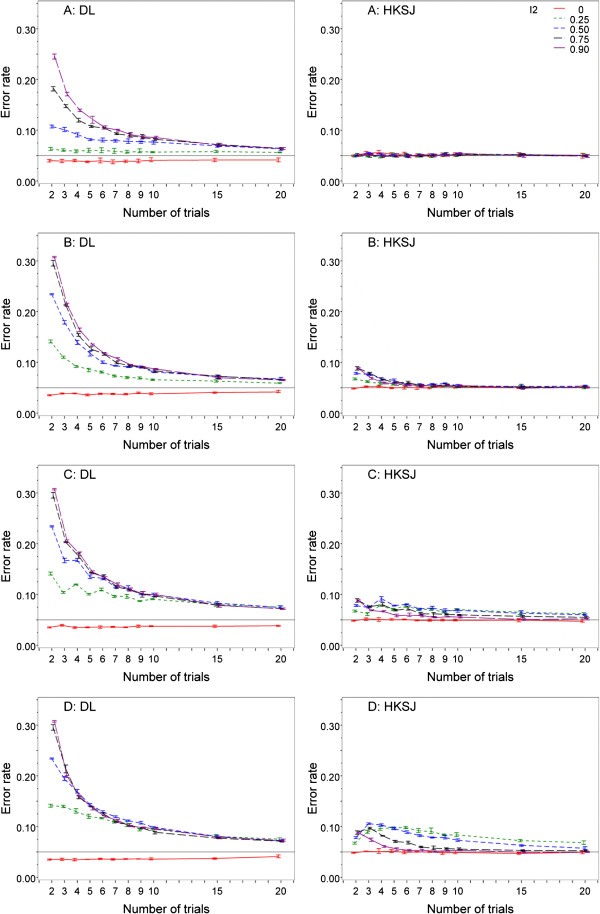
BACKGROUND: The DerSimonian and Laird approach (DL) is widely used for random effects meta-analysis, but this often results in inappropriate type I error rates. The method described by Hartung, Knapp, Sidik and Jonkman (HKSJ) is known to perform better when trials of similar size are combined. However evidence in realistic situations, where one trial might be much larger than the other trials, is lacking. We aimed to evaluate the relative performance of the DL and HKSJ methods when studies of different sizes are combined and to develop a simple method to convert DL results to HKSJ results. METHODS: We evaluated the performance of the HKSJ versus DL approach in simulated meta-analyses of 2-20 trials with varying sample sizes and between-study heterogeneity, and allowing trials to have various sizes, e.g. 25% of the trials being 10-times larger than the smaller trials. We also compared the number of "positive" (statistically significant at p < 0.05) findings using empirical data of recent meta-analyses with > = 3 studies of interventions from the Cochrane Database of Systematic Reviews. RESULTS: The simulations showed that the HKSJ method consistently resulted in more adequate error rates than the DL method. When the significance level was 5%, the HKSJ error rates at most doubled, whereas for DL they could be over 30%. DL, and, far less so, HKSJ had more inflated error rates when the combined studies had unequal sizes and between-study heterogeneity. The empirical data from 689 meta-analyses showed that 25.1% of the significant findings for the DL method were non-significant with the HKSJ method. DL results can be easily converted into HKSJ results. CONCLUSIONS: Our simulations showed that the HKSJ method consistently results in more adequate error rates than the DL method, especially when the number of studies is small, and can easily be applied routinely in meta-analyses. Even with the HKSJ method, extra caution is needed when there are = <5 studies of very unequal sizes.
Overview
The claims and statistics of this paper haven’t been checked yet.
Free: it reads the open-access text and checks the first 5 claims that cite a source we can check. Create a free account to check every claim.
Integrity signals
Registry
Cites
Statistics
Figures
Verification
Claims the paper makes
The claims and statistics of this paper haven’t been checked yet.
Free: it reads the open-access text and checks the first 5 claims that cite a source we can check. Create a free account to check every claim.
Claims other papers make about this one
Each is checked against this paper’s own text: does it say what the citing paper says it does?
The source backs part of the claim, not all of it — or backs it for a different population, condition or comparison.
In the citing paper
“Random-effects meta-regression with Knapp–Hartung adjustment was applied to account for between-study heterogeneity and to calculate 95% prediction intervals, estimating the likely range of effect sizes in future studies (30).”
From The association of screen time and the risk of sleep outcomes: a systematic review and meta-analysis. (2025) · cites this paper as [30]
Experimental — accuracy not yet measuredThe cited source says what the claim attributes to it.
In the citing paper
“To evaluate robustness of pooled estimates, prespecified sensitivity analyses included fixed-effect models, Hartung–Knapp adjustment for random-effects inference, alternative τ² estimators, leave-one-out analyses, and Bayesian random-effects meta-analysis (45–49).”
In the citing paper
“An inverse-variance method with a random-effects model and Hartung-Knapp-Sidik-Jonkman adjustment (33) was used to adjust for study variability in sample sizes.”
From Digital Media Use and Adolescents' Mental Health During the Covid-19 Pandemic: A Systematic Review and Meta-Analysis (2022) · cites this paper as [33]
Self-check
Percentages, sums and reported differences re-computed from the paper’s own numbers.
The self-check needs the paper’s full text.
Citations
Cites
2 retracted
Singh, M., & Das, R. R. (2013) · Cochrane Database of Systematic Reviews · doi:10.1002/14651858.cd001364.pub4 · Cited by 237
RetractedSingh, M., & Das, R. R. (2011) · Cochrane Database of Systematic Reviews · doi:10.1002/14651858.cd001364.pub3 · Cited by 86
RetractedMeasuring inconsistency in meta-analyses
Higgins, J. P. T., Thompson, S. G., Deeks, J. J., & Altman, D. G. (2003) · BMJ · doi:10.1136/bmj.327.7414.557 · Cited by 63,139 · cited 8×
“The levels correspond to no, low, moderate, high and very high heterogeneity, respectively [16].”
BackgroundMethodResultInfluentialMeta-analysis in clinical trials
DerSimonian, R., & Laird, N. (1986) · Controlled Clinical Trials · doi:10.1016/0197-2456(86)90046-2 · Cited by 39,552 · cited 2×
“Background The commonly used method for a random effects metaanalysis is the DerSimonian and Laird approach (DL method) [1].”
MethodQuantifying heterogeneity in a meta‐analysis
Higgins, J. P. T., & Thompson, S. G. (2002) · Statistics in Medicine · doi:10.1002/sim.1186 · Cited by 36,763 · cited 1×
“the degree of inconsistency in the studies’ results, in comparison to the total amount of variation [16,22].”
ResultConducting Meta-Analyses in R with the metafor Package
Viechtbauer, W. (2010) · Journal of Statistical Software · doi:10.18637/jss.v036.i03 · Cited by 20,464 · cited 2×
“The R package metafor [20] can also be used to perform an HKSJ analysis.”
MethodBorenstein, M., Hedges, L. V., Higgins, J. P. T., & Rothstein, H. R. (2009) · doi:10.1002/9780470743386 · Cited by 14,225
Borenstein, M., Hedges, L. V., Higgins, J. P. T., & Rothstein, H. R. (2021) · doi:10.1002/9781119558378 · Cited by 9,799
Improved tests for a random effects meta‐regression with a single covariate
Knapp, G., & Hartung, J. (2003) · Statistics in Medicine · doi:10.1002/sim.1482 · Cited by 2,075 · cited 1×
“The implementation is based on the meta-regression paper by Knapp and Hartung [34]: when no covariates or moderator variables are used, the meta-regression reduces to a random effects metaanalysis as proposed by Hartung/Knapp and Sidik/ Jonkman.”
MethodUncertainty in heterogeneity estimates in meta-analyses
Ioannidis, J. P. A., Patsopoulos, N. A., & Evangelou, E. (2007) · BMJ · doi:10.1136/bmj.39343.408449.80 · Cited by 1,254 · cited 1×
“Some detectable heterogeneity is present in about half of meta-analyses of clinical studies [15-18].”
BackgroundSelf-citation
Research works printed but not linked: 3
- The Cochrane Collaboration Review Manager (RevMan) 5.1.4 2011 Copenhagen: The Nordic Cochrane Centre
- Borenstein M Hedges L Higgins J Rothstein H Comprehensive Meta-analysis Version 2 2005 Englewood NJ: Biostat
- Hartung J An alternative method for meta-analysis Biom J 1999 901 916
Cited by
Items 501–600 of 1,007
Sabayan, B., Goudarzi, R., Ji, Y., Borhani‐Haghighi, A., Olson‐Bullis, B. A., Murray, A. M., & Sedaghat, S. (2023) · Journal of the American Heart Association · doi:10.1161/jaha.123.032506 · Cited by 40
Golder, H. M., & Lean, I. J. (2015) · Journal of Animal Science · doi:10.2527/jas.2015-9694 · Cited by 34
“The use of the Knapp–Hartung method for metaanalysis is more robust than alternative methods such as the DerSimonian and Laird method for discrete data, especially where heterogeneity is present (IntHout et al., 2014).”
MethodInfluentialAssociation between vitiligo and hearing loss
Ma, S., Ang, M.-D., Chang, Y.-T., & Dai, Y. (2021) · Journal of the American Academy of Dermatology · doi:10.1016/j.jaad.2020.12.029 · Cited by 34
Ezzatvar, Y., Ramírez‐Vélez, R., de Asteasu, M. L. S., Martínez‐Velilla, N., Zambom-Ferraresi, F., Lobelo, F., Izquierdo, M., & García‐Hermoso, A. (2021) · Scandinavian Journal of Medicine and Science in Sports · doi:10.1111/sms.13980 · Cited by 42
CT-derived epicardial adipose tissue density: Systematic review and meta-analysis
Monti, C. B., Capra, D., Zanardo, M., Guarnieri, G., Schiaffino, S., Secchi, F., & Sardanelli, F. (2021) · European Journal of Radiology · doi:10.1016/j.ejrad.2021.109902 · Cited by 39
Dietary Lutein and Cognitive Function in Adults: A Meta-Analysis of Randomized Controlled Trials
Li, J., & Abdel‐Aal, E. M. (2021) · Molecules · doi:10.3390/molecules26195794 · Cited by 38
“Nonetheless, the Knapp–Hartung–Sidik–Jonkman often produces more conservative estimations with wider confidence intervals [49].”
BackgroundMethodSellem, L., Flourakis, M., Jackson, K. G., Joris, P. J., Lumley, J. A., Lohner, S., Mensink, R. P., Soedamah‐Muthu, S. S., & Lovegrove, J. A. (2021) · Advances in Nutrition · doi:10.1093/advances/nmab143 · Cited by 45
“This method provides more conservative 95% CIs than the commonly used Wald-type method when pooling a small number of studies (18, 21, 22).”
Basic Empathy Scale: A Systematic Review and Reliability Generalization Meta-Analysis
Cabedo-Peris, J., Vilar, M. M., Merino‐Soto, C., & Morán, M. O. (2021) · Healthcare · doi:10.3390/healthcare10010029 · Cited by 48
“restricted maximum likelihood (REML), with its confidence intervals (95% CI) adjusted by the Hartung and Knapp method [50,51].”
MethodLi, L., Huang, H., Yu, Y., Jia, Y., Liu, Z., Shi, X., Wang, F., & Zhang, T. (2022) · Frontiers in Neuroscience · doi:10.3389/fnins.2021.800560 · Cited by 38
Ciudad, P., Escandón, J. M., Bustos, V. P., Manrique, O. J., & Kaciulyte, J. (2022) · Indian Journal of Plastic Surgery · doi:10.1055/s-0041-1740085 · Cited by 35
“28 – 30 Heterogeneity was evaluated with the Q statistic p values and I 2 statistic.”
Domokos, Z., Uhrin, E., Szabó, B., Czumbel, M. L., Dembrovszky, F., Kerémi, B., Varga, G., Hegyi, P. J., Hermann, P., & Németh, O. (2022) · Frontiers in Medicine · doi:10.3389/fmed.2022.1020126 · Cited by 36
“For the outcomes where the study number was over 5, a Hartung-Knapp adjustment was used (51, 52); we did not apply this adjustment below 5.”
MethodChew, H. S. J., Chng, S., Rajasegaran, N. N., Choy, K. H., & Chong, Y. Y. (2023) · Eating and Weight Disorders - Studies on Anorexia Bulimia and Obesity · doi:10.1007/s40519-023-01535-6 · Cited by 45
“Data analysis Interventional effects estimated were pooled using random effects models by Hartung–Knapp–Sidik–Jonkman (HKSJ) to reduce the risk of obtaining false positive results, given the dearth in high-quality interventional studies on this topic [23].”
MethodKing, A., Helms, E., Zinn, C., & Jukic, I. (2022) · Sports Medicine · doi:10.1007/s40279-022-01716-w · Cited by 33
Sun, Q., Zhang, C., Liu, S.-Y., Lv, H., Liu, W., Pan, Z., & Song, Z. (2023) · BMC Anesthesiology · doi:10.1186/s12871-023-02013-3 · Cited by 38
“Due to the included studies are few, the random-effects model with Hartung Knapp adjustments was applied in this meta-analysis [22, 23].”
MethodThe global prevalence of overweight and obesity among nurses: A systematic review and meta‐analyses
Sadali, U. B., Kamal, K. K. B. N., Park, J., Chew, H. S. J., & Devi, M. K. (2023) · Journal of Clinical Nursing · doi:10.1111/jocn.16861 · Cited by 40
Tao, R., Yang, Y., Wilson, M., Chang, J. R., Liu, C., & Sit, C. H. P. (2025) · International Journal of Behavioral Nutrition and Physical Activity · doi:10.1186/s12966-024-01702-7 · Cited by 48
Taghipour, A., Mosadegh, M., Kheirollahzadeh, F., Olfatifar, M., Safari, H., Nasiri, M. J., Fathi, A., Badri, M., Peeridogaheh, H., & Azimi, T. (2019) · PLoS ONE · doi:10.1371/journal.pone.0223722 · Cited by 33
“On the other hand, we used the Sidik-Jonkman method to estimate the study variance (tau^2) and Hartung-Knapp method to adjust test statistics, their confidence interval and subsequently the tests degrees of freedom[16].”
MethodIezadi, S., Aghdash, S. A., Ghiasi, A., Rezapour, A., Pourasghari, H., Pashazadeh, F., & Gholipour, K. (2020) · PLoS ONE · doi:10.1371/journal.pone.0239554 · Cited by 37
“For example, mean differences, standard mean differences, and 95% confidence interval, using the Hartung-Knapp-Sidik-Jonkman random-effects model [48].”
MethodQie, R., Liu, L., Zhang, D., Han, M., Wang, B., Zhao, Y., Liu, D., Guo, C., Li, Q., Zhou, Q., et al. (2021) · Preventing Chronic Disease · doi:10.5888/pcd18.200278 · Cited by 39
“For the studies already reporting a linear dose–response trend for per n-mmol/L increase in HDL-C level, we calculated the dose–response RRs per 1-mmol/L increase in HDL-C level with this formula: RR1 = EXP (LN (RRn)/n*1), where RR1 represents the dose–response RRs for each 1-mmol/L increase in HDL-C level and RRn rep…”
Wang, Y., Haskell‐Ramsay, C. F., Lara, J., & Lodge, J. K. (2022) · European Journal of Clinical Nutrition · doi:10.1038/s41430-022-01138-x · Cited by 36
“Variance of treatment effects across studies due to real treatment differences and/or sampling variability (chance) was assumed by a Hartung-Knapp-SidikJonkman random-effects meta-analysis model [56].”
MethodGarrett, J. M., Mastrorocco, M., Peek, K., van den Hoek, D., & McGuckian, T. B. (2023) · Journal of Orthopaedic and Sports Physical Therapy · doi:10.2519/jospt.2023.11727 · Cited by 45
Atypical Endometrial Polyps and Concurrent Endometrial Cancer: A Systematic Review
de Rijk, S. R., Steenbergen, M. E., Nieboer, T. E., & Coppus, S. F. P. J. (2016) · Obstetrics and Gynecology · doi:10.1097/aog.0000000000001566 · Cited by 36
“Given that the amount of included studies was rather small and the selected studies differed with regard to included population size per study, data were pooled using the randomeffects model that included between-study heterogeneity, which is the Hartung-Knapp-Sidik-Jonkman adjustment for a random-effects model.(11) T…”
BackgroundMethodExogenous nitric oxide promotes salinity tolerance in plants: A meta-analysis
Tahjib‐Ul‐Arif, M., Wei, X., Jahan, I., Hasanuzzaman, M., Sabuj, Z. H., Zulfiqar, F., Chen, J., Iqbal, R., Dastogeer, K. M. G., Sohag, A. A. M., et al. (2022) · Frontiers in Plant Science · doi:10.3389/fpls.2022.957735 · Cited by 36
“When the combined studies are of varying sizes and demonstrate between-study heterogeneity, HKSJ creates inflated error rates, but it outperforms the widely used DerSimonian and Laird technique approach (Sidik and Jonkman, 2007; IntHout et al., 2014).”
MethodHuang, L., Chen, Y., Wen, S., Lu, D., Shen, X., Deng, H., & Xu, L. (2022) · Food Science & Nutrition · doi:10.1002/fsn3.3194 · Cited by 41
“The Hartung– Knapp– Sidik– Jonkman (HKSJ) method (IntHout et al., 2014; Röver et al., 2015) was further used for the pooled data with high heterogeneity or a limited number of studies (<5 trials).”
MethodArgote, M., Sescousse, G., Brunelin, J., Baudin, G., Schaub, M. P., Rabin, R. A., Schnell, T. G., Ringen, P. A., Andreassen, O. A., Addington, J., et al. (2023) · EClinicalMedicine · doi:10.1016/j.eclinm.2023.102199 · Cited by 41
Lipp, M., Tarján, D., Lee, J., Zolcsák, Á., Szalai, E. Á., Teutsch, B., Faluhelyi, N., Erőss, B. M., Hegyi, P., & Mikó, A. (2023) · Cancers · doi:10.3390/cancers15194876 · Cited by 40
ICU outcomes can be predicted by noninvasive muscle evaluation: a meta-analysis
Médrinal, C., Combret, Y., Hilfiker, R., Prieur, G., Aroichane, N., Gravier, F., Bonnevie, T., Contal, O., & Lamia, B. (2020) · European Respiratory Journal · doi:10.1183/13993003.02482-2019 · Cited by 37
Morales, J. S., Valenzuela, P. L., Saco‐Ledo, G., Castillo‐García, A., Carabias, C. S., McCrory, P. R., Santos‐Lozano, A., & Lucía, A. (2021) · Sports Medicine · doi:10.1007/s40279-021-01580-0 · Cited by 33
Hussain, N., Brull, R., Speer, J., Hu, L. ‐., Sawyer, T. R., McCartney, C. J. L., & Abdallah, F. W. (2022) · Anaesthesia · doi:10.1111/anae.15823 · Cited by 34
“We utilised this method over the more commonly used DerSimonian and Laird random effects model to account for expected heterogeneity and reduce the risk of error [20, 21].”
MethodThe diving response and cardiac vagal activity: A systematic review and meta‐analysis
Ackermann, S. P., Raab, M., Backschat, S., Smith, D., Javelle, F., & Laborde, S. (2022) · Psychophysiology · doi:10.1111/psyp.14183 · Cited by 36
Fan, Y.-C., Hsiao, F.-H., & Hsieh, C.-C. (2023) · Palliative and Supportive Care · doi:10.1017/s1478951522001316 · Cited by 31
“TheHKSJpooledeffectswerecalcu-lated by Excel conversion from DerSimonian and Laird method for random effects (IntHout et al. 2014).”
Early Maladaptive Schemas and Mental Disorders in Adulthood: a Systematic Review and Meta-analysis
Thimm, J. C., & Chang, M. (2022) · International Journal of Cognitive Therapy · doi:10.1007/s41811-022-00149-7 · Cited by 61
“The Hartung-Knapp method has shown more favorable statistical properties in terms of type I error rates compared to the commonly used DerSimonian-Laird method, especially when the number of studies is small (IntHout et al., 2014).”
MethodEffect of psychotherapy for adult depression on self-esteem: A systematic review and meta-analysis
Bhattacharya, S., Kennedy, M., Miguel, C., Tröger, A., Hofmann, S. G., & Cuijpers, P. J. (2023) · Journal of Affective Disorders · doi:10.1016/j.jad.2023.01.047 · Cited by 45
Barisano, G., Iv, M., Choupan, J., Gephart, M. H., Weiner, M. W., Aisen, P., Petersen, R. C., Jack, C. R., Jagust, W., Trojanowki, J. Q., et al. (2024) · EBioMedicine · doi:10.1016/j.ebiom.2024.105523 · Cited by 40
“…developing dementia was assessed in each study independently with Cox proportional-hazards models and the results were integrated using a random-effects meta-analysis with the Hartung-Knapp-Sidik-Jonkman method 52 to account for potential differences among the studies (two-stage pooled analysis).”
Kuriyama, A., & Maeda, H. (2018) · Journal of Clinical Anesthesia · doi:10.1016/j.jclinane.2018.10.025 · Cited by 39
Kang, H., Kim, B. J., Choi, G.-J., & Kim, J. G. (2019) · Medicine · doi:10.1097/md.0000000000015860 · Cited by 31
“If the number of studies with substantial heterogeneity was <10, the t-statistic (Hartung-Knapp-Sidik-Jonkmanmethod) was used instead of the z-test in all random effects analysis to decrease the error rate.([16]) We carried out subgroup analysis based on study design if necessary.”
MethodCariprazine in the treatment of Bipolar Disorder: A systematic review and meta‐analysis
Pinto, J. V., Saraf, G., Vigo, D., Keramatian, K., Chakrabarty, T., & Yatham, L. N. (2019) · Bipolar Disorders · doi:10.1111/bdi.12850 · Cited by 38
Comparing traditional and Bayesian approaches to ecological meta‐analysis
Pappalardo, P., Ogle, K., Hamman, E. A., Bence, J. R., Hungate, B. A., & Osenberg, C. W. (2020) · Methods in Ecology and Evolution · doi:10.1111/2041-210x.13445 · Cited by 36
“Such censuring might improve CI performance by reducing variation in replication among studies (Inthout et al., 2014) but at the high cost of discarding important information.”
InfluentialTheodoridis, X., Grammatikopoulou, M. G., Stamouli, E.-M., Talimtzi, P., Pagkalidou, E., Zafiriou, E., Haidich, A., & Bogdanos, D. P. (2020) · Nutrition · doi:10.1016/j.nut.2020.111024 · Cited by 33
Food insecurity, type 2 diabetes, and hyperglycaemia: A systematic review and meta‐analysis
Beltrán, S., Arenas, D. J., Pharel, M., Montgomery, C. T., López-Hinojosa, I. J., & DeLisser, H. M. (2021) · Endocrinology Diabetes & Metabolism · doi:10.1002/edm2.315 · Cited by 41
Széles, Á. D., Fazekas, T., Váncsa, S., Váradi, M., Kovács, P. T., Krafft, U., Grünwald, V., Hadaschik, B. A., Csizmarik, A., Hegyi, P., et al. (2022) · Cancer Immunology Immunotherapy · doi:10.1007/s00262-022-03328-9 · Cited by 38
Advancing accuracy in guided implant placement: A comprehensive meta-analysis
Takács, A., Hardi, E., Cavalcante, B. G. N., Szabó, B., Kispélyi, B., Joób-Fancsaly, Á., Mikulás, K., Varga, G., Hegyi, P. J., & Kivovics, M. (2023) · Journal of Dentistry · doi:10.1016/j.jdent.2023.104748 · Cited by 39
Allotey, J., Laivuori, H., Snell, K. I., Smuk, M., Hooper, R., Chan, C. L., Ahmed, A., Chappell, L. C., von Dadelszen, P., Dodds, J., et al. (2020) · Health Technology Assessment · doi:10.3310/hta24720 · Cited by 30
Laborde, S., Zammit, N., Iskra, M., Mosley, E., Borges, U., Allen, M. S., & Javelle, F. (2022) · International Review of Sport and Exercise Psychology · doi:10.1080/1750984x.2022.2145573 · Cited by 55
Fan, T. H., Premraj, L., Roberts, J. S., Lydston, M., Robba, C., Hager, D. N., Suárez, J. I., Battaglini, D., & Cho, S. (2023) · Critical Care Medicine · doi:10.1097/ccm.0000000000006096 · Cited by 40
“CIs for binary outcomes were calculated using Wilson scores with between-study variation estimated using the Hartung–Knapp–Sidik–Jonkman method (15, 16).”
MethodRahmati, M., Lee, H., Lee, H., Park, J., Vithran, D. T. A., Li, Y., Kazemi, A., Boyer, L., Fond, G. B., Smith, L., et al. (2025) · Journal of Cachexia Sarcopenia and Muscle · doi:10.1002/jcsm.13772 · Cited by 39
Statistical primer: methodology and reporting of meta-analyses†
Buccheri, S., Sodeck, G. H., & Capodanno, D. (2018) · European Journal of Cardio-Thoracic Surgery · doi:10.1093/ejcts/ezy004 · Cited by 31
“In this case, the Knapp–Hartung random-effect model should be preferred [13].”
Watson, J. A., Ryan, C. G., Atkinson, G., Williamson, P., Ellington, D., Whittle, R., Dixon, J., & Martin, D. (2020) · Journal of Pain · doi:10.1016/j.jpain.2020.03.006 · Cited by 34
Palamuthusingam, D., Kunarajah, K., Pascoe, E. M., Johnson, D. W., Hawley, C. M., & Fahim, M. (2020) · BMC Nephrology · doi:10.1186/s12882-020-01978-4 · Cited by 30
“Further meta-analysis using the Hartung-Knapp-Sidik- Jonkman method (HKSJ) was also performed for comparison due to small number of studies [12].”
MethodFalkenhain, K., Roach, L. A., McCreary, S., McArthur, E., Weiss, E. J., François, M. E., & Little, J. P. (2021) · American Journal of Clinical Nutrition · doi:10.1093/ajcn/nqab212 · Cited by 40
O’Brien, W., Khodaverdi, Z., Bolger, L. E., Tarantino, G., Philpott, C., & Neville, R. D. (2021) · Sports Medicine · doi:10.1007/s40279-021-01529-3 · Cited by 47
Wang, L., Tobe, J., Au, E., Tran, C., Jomy, J., Oparin, Y., Couban, R., & Paul, J. (2021) · British Journal of Anaesthesia · doi:10.1016/j.bja.2021.08.032 · Cited by 30
Lin, L., & Chu, H. (2022) · PLoS ONE · doi:10.1371/journal.pone.0268754 · Cited by 38
“It has been shown to have a better coverage probability than the CI based on the normal distribution, especially when the number of studies N is small [71].”
BackgroundJang, Y.-C., Leung, C. Y., & Huang, H.-L. (2022) · JAMA Network Open · doi:10.1001/jamanetworkopen.2022.32563 · Cited by 30
Sheehan, J. L., Jacob, J., Berinstein, E. M., Greene-Higgs, L., Steiner, C. A., Berry, S. K., Shannon, C., Cohen‐Mekelburg, S., Higgins, P., & Berinstein, J. A. (2022) · Inflammatory Bowel Diseases · doi:10.1093/ibd/izac021 · Cited by 30
Disparities in Cisplatin-Induced Cytotoxicity—A Meta-Analysis of Selected Cancer Cell Lines
Ćwiklińska-Jurkowska, M. M., Wiese‐Szadkowska, M., Janciauskiene, S. M., & Paprocka, R. (2023) · Molecules · doi:10.3390/molecules28155761 · Cited by 32
“According to the published recommendations, Hartung–Knapp method for random effect meta-analysis provides more accurate error rates than the DerSimonian and Laird method, especially for only a few studies [74].”
MethodCsirzó, Á., Kovács, D. P., Szabó, A., Fehérvári, P., Jankó, Á., Hegyi, P., Nyírády, P., Sipos, Z., Sára, L., Ács, N., et al. (2023) · Surgical Endoscopy · doi:10.1007/s00464-023-10587-9 · Cited by 33
Mohamed, F. B. M., Cheng, L. J., Chia, X. E. C., Turunen, H. E., & He, H. G. (2024) · Aggression and Violent Behavior · doi:10.1016/j.avb.2023.101907 · Cited by 33
Global typhoid fever incidence: an updated systematic review with meta-analysis
Murthy, S., Hagedoorn, N. N., Faigan, S., Rathan, M. D., SHARPLES, K. J., Marchello, C. S., & Crump, J. A. (2025) · The Lancet Infectious Diseases · doi:10.1016/s1473-3099(25)00359-7 · Cited by 39
Galli, M., Capodanno, D., Andreotti, F., Crea, F., & Angiolillo, D. J. (2020) · Expert Opinion on Drug Safety · doi:10.1080/14740338.2021.1850691 · Cited by 29
“[83]; 4) different statistical methods adopted to perform the analyses [84,88].”
MethodStudy specific prediction intervals for random‐effects meta‐analysis: A tutorial
van Aert, R. C. M., Schmid, C. H., Svensson, D. J., & Jackson, D. (2021) · Research Synthesis Methods · doi:10.1002/jrsm.1490 · Cited by 34
The validity of situation awareness for performance: a meta-analysis
Bakdash, J. Z., Marusich, L. R., Cox, K. R., Geuss, M. N., Zaroukian, E. G., & Morris, K. (2021) · Theoretical Issues in Ergonomics Science · doi:10.1080/1463922x.2021.1921310 · Cited by 31
“The first type of bias is selective reporting, which is the tendency to report only analyses and/or measures that are significant and consistent with the hypothesis (Ioannidis et al. 2014), leaving out non-significant ghost results.”
BackgroundResultFarshidfar, N., Amiri, M. A., Firoozi, P., Hamedani, S., Ajami, S., & Tayebi, L. (2021) · International Orthodontics · doi:10.1016/j.ortho.2021.10.004 · Cited by 31
Vega-Núñez, A., Sánchez-Lafuente, C. G., Mayoral, F., Bordallo-Aragón, A., de Fonseca, F. R., Suárez, J., & Parra, J. G. (2022) · Biomedicines · doi:10.3390/biomedicines10061368 · Cited by 34
“This method produces more robust estimates and is preferred when the number of studies is small and when there is substantial heterogeneity, because DerSimonian-Laird is prone to produce false positives under this condition [79,80].”
MethodBurg, L. C., Verheijen, S., Bekkers, R. L. M., IntHout, J., Holloway, R. W., Taşkın, S., Ferguson, S. E., Yu, X. F., Ditto, A., Baiocchi, G., et al. (2022) · Journal of Gynecologic Oncology · doi:10.3802/jgo.2022.33.e66 · Cited by 30
“The meta-analyses were conducted using the inverse variance method, the restricted maximum-likelihood estimator for τ2, the Q-profile method for confidence intervals of τ2 and τ, the Hartung-Knapp-Sidik-Jonkman adjustment for random effects model and an arcsine transformation of the proportions [25,26].”
MethodSelf-citationLee, B., Lewis, G., Agyei‐Manu, E., Atkins, N., Bhattacharyya, U., Dozier, M., Rostron, J., Sheikh, A., McQuillan, R., & Τheodoratou, E. (2022) · European Respiratory Review · doi:10.1183/16000617.0066-2022 · Cited by 32
Law, L. S., Tan, M., Bai, Y., Miller, T. E., Li, Y., & Gan, T. J. (2015) · Anesthesia & Analgesia · doi:10.1213/ane.0000000000000835 · Cited by 38
A meta-analysis of the relationship between intelligence and visual “taste” measures.
Myszkowski, N., Çelik, P., & Storme, M. (2018) · Psychology of Aesthetics Creativity and the Arts · doi:10.1037/aca0000099 · Cited by 33
Jing, Y., & Lin, L. (2024) · JBI Evidence Synthesis · doi:10.11124/jbies-23-00368 · Cited by 38
“28,29 We obtained the estimated overall MDs, estimated overall SMDs, and their corresponding 95% CIs.”
The Iowa Gambling Task: Men and Women Perform Differently. A Meta-analysis
Zanini, L., Picano, C., & Spitoni, G. F. (2024) · Neuropsychology Review · doi:10.1007/s11065-024-09637-3 · Cited by 41
“The 95% confidence intervals (CI) for between-study variance were created using the Q -profile method, and the Hartung-Knapp adjustment was applied (IntHout et al., 2014).”
Malik, A. H., Yandrapalli, S., Shetty, S. S., Aronow, W. S., Jain, D., Frishman, W. H., Cooper, H. A., Panza, J. A., & on behalf of MAGIC (Meta-analysis And oriGinal Investigations in Cardiology) Investigators (2019) · EP Europace · doi:10.1093/europace/euz361 · Cited by 28
Guedes, M. H., Guetter, C. R., Erbano, L. H. O., Palone, A. G., Zee, J., Robinson, B. M., Pisoni, R. L., de Moraes, T. P., Pecoits‐Filho, R., & Baena, C. P. (2020) · BMC Nephrology · doi:10.1186/s12882-020-01912-8 · Cited by 38
Chambergo‐Michilot, D., Tauma‐Arrué, A., & Loli-Guevara, S. (2020) · IJC Heart & Vasculature · doi:10.1016/j.ijcha.2020.100690 · Cited by 33
“We used the Paule-Mandel estimator and Hartung-Knapp-Sidik-Jonkman method for s(2) and 95% confidence intervals (95% CIs) calculation, respectively [20,21].”
MethodLópez‐Pacheco, A., Soto‐Peñaloza, D., Gómez, M., Peñarrocha‐Oltra, D., & Alarcón, M. A. (2021) · International Journal of Implant Dentistry · doi:10.1186/s40729-021-00294-2 · Cited by 30
“, age, sex, surgery, clinical expertise) and methodological aspects inherent to clinical trials conduction, a Sidik-Jonkman (Hartung-Knapp-Sidik-Jonkman) random effects model is carried out because it provides adequate type I error rates [29].”
MethodThomsen, S. N., Mørup, S. T., Mau‐Sørensen, M., Sillesen, M., Lahart, I. M., & Christensen, J. F. (2021) · European Journal of Surgical Oncology · doi:10.1016/j.ejso.2021.07.007 · Cited by 28
When to Suspect Hidden Hypercortisolism in Type 2 Diabetes: A Meta-Analysis
Aresta, C., Soranna, D., Giovanelli, L., Favero, V., Parazzoli, C., Gennari, L., Persani, L., Scillitani, A., Blevins, L. S., Brown, D., et al. (2021) · Endocrine Practice · doi:10.1016/j.eprac.2021.07.014 · Cited by 33
Systematic review of avian hatching failure and implications for conservation
Marshall, A. F., Balloux, F., Hemmings, N., & Brekke, P. (2023) · Biological reviews/Biological reviews of the Cambridge Philosophical Society · doi:10.1111/brv.12931 · Cited by 37
Soysal, P., Veronese, N., Ippoliti, S., Pizzol, D., Carrie, A. M., Stefanescu, S., Sánchez, G. F. L., Barnett, Y., Butler, L. T., Koyanagi, A., et al. (2023) · Aging Clinical and Experimental Research · doi:10.1007/s40520-022-02336-0 · Cited by 33
Jayedi, A., Zeraattalab-Motlagh, S., Shahinfar, H., Gregg, E. W., & Shab‐Bidar, S. (2023) · American Journal of Clinical Nutrition · doi:10.1016/j.ajcnut.2023.03.018 · Cited by 40
Batubo, N. P., Moore, J. B., & Zulyniak, M. A. (2023) · Journal of Hypertension · doi:10.1097/hjh.0000000000003499 · Cited by 46
Jørgensen, S. L., Kierkegaard, S., Bohn, M. B., Høgsholt, M., Aagaard, P., & Mechlenburg, I. (2023) · BMC Sports Science Medicine and Rehabilitation · doi:10.1186/s13102-023-00750-z · Cited by 42
“Given that a relatively small number of trials were included in each meta-analysis (often less than 6 studies), a random effects model was performed with an adjustment to the CI as proposed by Sidik and Jonkman [33].”
MethodBarrington, M. J., D'Souza, R. S., Mascha, E. J., Narouze, S., & Kelley, G. A. (2023) · Regional Anesthesia & Pain Medicine · doi:10.1136/rapm-2023-104801 · Cited by 41
“51 This adjustment modifies the SE of the point estimate as well as multiplying the SE based on the t-vs Z-distribution—the end result being a wider and more accurate CI.”
Petrelli, F., Vavassori, I., Cabiddu, M., Coinu, A., Ghilardi, M., Borgonovo, K., Lonati, V., & Barni, S. (2016) · Urology · doi:10.1016/j.urology.2016.01.034 · Cited by 28
van Aert, R. C. M., & van Assen, M. A. L. M. (2017) · Behavior Research Methods · doi:10.3758/s13428-017-0967-6 · Cited by 36
Satheeshkumar, P. S., Papatheodorou, S., & Sonis, S. T. (2020) · BDJ · doi:10.1038/s41415-020-1452-7 · Cited by 32
Luo, B., Cai, Y., Chen, D., Wang, C., Huang, H., Chen, L., Gao, Y., & Ran, X. (2022) · Journal of Diabetes Research · doi:10.1155/2022/9742665 · Cited by 27
Ottaiano, A., Santorsola, M., Capuozzo, M., Perri, F., Circelli, L., Cascella, M., Ianniello, M., Sabbatino, F., Granata, V., Izzo, F., et al. (2023) · Critical Reviews in Oncology/Hematology · doi:10.1016/j.critrevonc.2023.104018 · Cited by 28
Barker, T. G., O’Higgins, A., Fonagy, P., & Gardner, F. E. M. (2024) · Journal of Affective Disorders · doi:10.1016/j.jad.2023.12.080 · Cited by 32
Zaka, A., Mutahar, D., Gorcilov, J., Gupta, A. K., Kovoor, J. G., Stretton, B., Mridha, N., Sivagangabalan, G., Thiagalingam, A., Chow, C. K., et al. (2024) · European Heart Journal - Digital Health · doi:10.1093/ehjdh/ztae074 · Cited by 33
Hussain, N., Brull, R., Thaete, L., Fuller, S., D'Souza, R. S., Mankinen-Abdallah, Y., Essandoh, M. K., Weaver, T. E., & Abdallah, F. W. (2025) · British Journal of Anaesthesia · doi:10.1016/j.bja.2025.01.032 · Cited by 33
Ensor, J., Burke, D. L., Snell, K. I. E., Hemming, K., & Riley, R. D. (2018) · BMC Medical Research Methodology · doi:10.1186/s12874-018-0492-z · Cited by 31
“mates, in particular τ̂(2), and thus leads to inappropriate coverage of confidence intervals (inflated type I errors) [15, 25].”
BackgroundMethodInfluentialEtomidate versus propofol sedation for electrical external cardioversion: a meta-analysis
Choi, G. J., Kang, H., Baek, C. W., Jung, Y. H., & Ko, J. S. (2018) · Current Medical Research and Opinion · doi:10.1080/03007995.2018.1519501 · Cited by 27
Liang, J., Li, M., Sui, Q., Hu, Z., Bian, Y., Huang, Y., Zhan, C., Jiang, W., Wang, Q., & Tan, L. (2020) · Translational Lung Cancer Research · doi:10.21037/tlcr-20-192 · Cited by 33
“The random effect-based model by Der Simonian and Laird was used to perform meta-analyses for studies with high heterogeneity, while the fixed effectbased Mantel-Haenszel model was used for the low and medium heterogeneous models (30,31).”
Riaz, I. B., Fuentes, H. E., Naqvi, S. A. A., He, H., Sipra, Q.-U.-A. R., Tafur, A. J., Padranos, L., Wysokiński, W. E., Marshall, A. L., Vandvik, P. O., et al. (2021) · Mayo Clinic Proceedings · doi:10.1016/j.mayocp.2020.10.041 · Cited by 27
Little, M. P., Wakeford, R., Bouffler, S. D., Abalo, K., Hauptmann, M., Hamada, N., & Kendall, G. M. (2022) · The Science of The Total Environment · doi:10.1016/j.scitotenv.2022.154723 · Cited by 33
Bernardes, S., Eckert, I. D. C., Burgel, C. F., Teixeira, P. J. Z., & Silva, F. M. (2022) · British Journal Of Nutrition · doi:10.1017/s0007114522000976 · Cited by 32
“In addition, the meta-analytic model was adjusted using the Hartung-Knapp-Sidik-Jonkman method (37) to produce more robust estimates with more conservative results.”
MethodPacheco‐Barrios, K., Lima, D., Pimenta, D. C., Slawka, E., Navarro‐Flores, A., Parente, J., Rebello‐Sanchez, I., Cardenas‐Rojas, A., Gonzalez‐Mego, P., Castelo-Branco, L. E. C., et al. (2022) · Brain Network and Modulation · doi:10.4103/2773-2398.348254 · Cited by 31
Bizzotto, N., Marciano, L., de Bruijn, G., & Schulz, P. J. (2023) · Journal of Medical Internet Research · doi:10.2196/36964 · Cited by 32
“We interpreted pooled effect sizes of r <0.10, 0.10< r <0.50, and r >0.50 as small, medium, and large, respectively [114].”
InfluentialOussalah, A., Levy, J., Filhine-Trésarrieu, P., Namour, F., & Guéant, J. (2017) · American Journal of Clinical Nutrition · doi:10.3945/ajcn.117.156349 · Cited by 31
Cossu, C. A., Collins, N. E., Oosthuizen, M. C., Menandro, M. L., Bhoora, R. V., Vorster, I., Cassini, R., Stoltsz, H., Quan, M., & van Heerden, H. (2023) · Microorganisms · doi:10.3390/microorganisms11030714 · Cited by 26
“# Sidik–Jonkman variance estimator, with Hartung–Knapp adjustment: to retrieve more conservative results than the common DerSimonian–Laird method, indicated by wider confidence intervals (CI) [40].”
Metadata
- Authors
- IntHout, J., Ioannidis, J. P., & Borm, G. F.
- Affiliations
- Radboud University Medical Center (NL)
- Stanford Medicine (US)
- Corresponding author
- IntHout, Joanna
- Venue
- BMC Medical Research Methodology
- Published
- 2014-02-18
- Volume
- 14
- Issue
- 1
- Pages
- 25-25
- ISSN
- 1471-2288 (ISSN-L)
- PMC
- PMC4015721
- OpenAlex
- W2032506622
- Cited by
- 2,419
- References
- 32
- Citations by year
- 2026: 599 · 2025: 299 · 2024: 319 · 2023: 279 · 2022: 263 · 2021: 243 · 2020: 144 · 2019: 81 · 2018: 62 · 2017: 50 · 2016: 37 · 2015: 37 · 2014: 3
- FWCI
- 41.47
- Type
- journal article
- Language
- en
- Open access
- gold
- doi.org
- Licence
- Locations
- BMC Medical Research Methodology (publishedVersion, cc-by)
- Europe PMC (PubMed Central) (publishedVersion, cc-by)
- PubMed Central (publishedVersion, cc-by)
- PubMed (publishedVersion)
- Radboud Repository (Radboud University) (submittedVersion)
- Radboud Repository (Radboud University) (submittedVersion, other-oa)
- Topics
- Social Sciences › Decision Sciences › Statistics, Probability and Uncertainty › Meta-analysis and systematic reviews
- Physical Sciences › Mathematics › Statistics and Probability › Statistical Methods in Clinical Trials
- Physical Sciences › Mathematics › Statistics and Probability › Statistical Methods in Epidemiology
- Keywords
- random-effects meta-analysis, DerSimonian-Laird method, type I error rate, study heterogeneity, significance testing
- MeSH terms
- Clinical Trials as Topic, Common Cold, Data Interpretation, Statistical, Humans, Zinc, Proportional Hazards Models, Odds Ratio, Sample Size, Precursor Cell Lymphoblastic Leukemia-Lymphoma
About these checks
Registry, retraction, Cites and statistics results are computed, not judged, with one exception: a printed reference that no index lists is read once by a model before it counts as a citation error. Claims are extracted by a model and kept only when their quote appears verbatim in the text; each cited source is then checked, with a model’s help, for whether it says what the claim relies on. Those verdicts can be wrong — read the claim’s quote and the cited source before relying on one.
Statistics and arithmetic are recomputed, not judged.
Confidence bands are shown only for fields calibrated on our annotated test set. None is calibrated yet, so no band is shown.
What counts as a claim ›How we measure confidence ›How we check this ›
Are you an author, or do you see a problem with this page? Request a review
Data sources
Bibliographic data: Semantic Scholar, OpenAlex, Crossref.
Contains information from the Semantic Scholar Academic Graph Datasets, made available under the ODC Attribution License (ODC-BY 1.0).
Semantic Scholar’s data is described in: Kinney, R., et al. (2023). The Semantic Scholar Open Data Platform. arXiv:2301.10140.
