

The Hartung-Knapp-Sidik-Jonkman method for random effects meta-analysis is straightforward and considerably outperforms the standard DerSimonian-Laird method
Open accessThe DOI matches its Crossref record; 34 of the 34 references it cites were found in a registry or an index.
Abstract
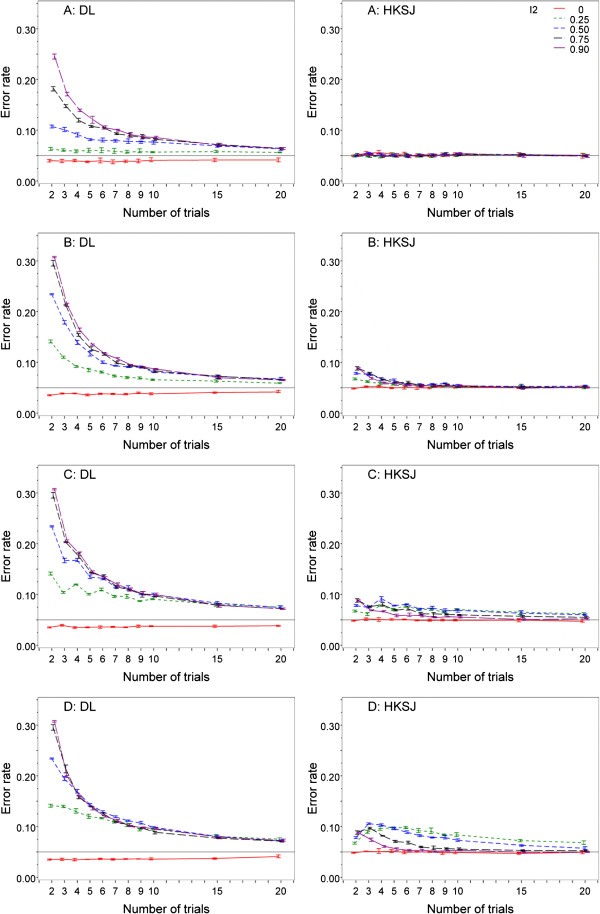
BACKGROUND: The DerSimonian and Laird approach (DL) is widely used for random effects meta-analysis, but this often results in inappropriate type I error rates. The method described by Hartung, Knapp, Sidik and Jonkman (HKSJ) is known to perform better when trials of similar size are combined. However evidence in realistic situations, where one trial might be much larger than the other trials, is lacking. We aimed to evaluate the relative performance of the DL and HKSJ methods when studies of different sizes are combined and to develop a simple method to convert DL results to HKSJ results. METHODS: We evaluated the performance of the HKSJ versus DL approach in simulated meta-analyses of 2-20 trials with varying sample sizes and between-study heterogeneity, and allowing trials to have various sizes, e.g. 25% of the trials being 10-times larger than the smaller trials. We also compared the number of "positive" (statistically significant at p < 0.05) findings using empirical data of recent meta-analyses with > = 3 studies of interventions from the Cochrane Database of Systematic Reviews. RESULTS: The simulations showed that the HKSJ method consistently resulted in more adequate error rates than the DL method. When the significance level was 5%, the HKSJ error rates at most doubled, whereas for DL they could be over 30%. DL, and, far less so, HKSJ had more inflated error rates when the combined studies had unequal sizes and between-study heterogeneity. The empirical data from 689 meta-analyses showed that 25.1% of the significant findings for the DL method were non-significant with the HKSJ method. DL results can be easily converted into HKSJ results. CONCLUSIONS: Our simulations showed that the HKSJ method consistently results in more adequate error rates than the DL method, especially when the number of studies is small, and can easily be applied routinely in meta-analyses. Even with the HKSJ method, extra caution is needed when there are = <5 studies of very unequal sizes.
Overview
The claims and statistics of this paper haven’t been checked yet.
Free: it reads the open-access text and checks the first 5 claims that cite a source we can check. Create a free account to check every claim.
Integrity signals
Registry
Cites
Statistics
Figures
Verification
Claims the paper makes
The claims and statistics of this paper haven’t been checked yet.
Free: it reads the open-access text and checks the first 5 claims that cite a source we can check. Create a free account to check every claim.
Claims other papers make about this one
Each is checked against this paper’s own text: does it say what the citing paper says it does?
The source backs part of the claim, not all of it — or backs it for a different population, condition or comparison.
In the citing paper
“Random-effects meta-regression with Knapp–Hartung adjustment was applied to account for between-study heterogeneity and to calculate 95% prediction intervals, estimating the likely range of effect sizes in future studies (30).”
From The association of screen time and the risk of sleep outcomes: a systematic review and meta-analysis. (2025) · cites this paper as [30]
Experimental — accuracy not yet measuredThe cited source says what the claim attributes to it.
In the citing paper
“To evaluate robustness of pooled estimates, prespecified sensitivity analyses included fixed-effect models, Hartung–Knapp adjustment for random-effects inference, alternative τ² estimators, leave-one-out analyses, and Bayesian random-effects meta-analysis (45–49).”
In the citing paper
“An inverse-variance method with a random-effects model and Hartung-Knapp-Sidik-Jonkman adjustment (33) was used to adjust for study variability in sample sizes.”
From Digital Media Use and Adolescents' Mental Health During the Covid-19 Pandemic: A Systematic Review and Meta-Analysis (2022) · cites this paper as [33]
Self-check
Percentages, sums and reported differences re-computed from the paper’s own numbers.
The self-check needs the paper’s full text.
Citations
Cites
2 retracted
Singh, M., & Das, R. R. (2013) · Cochrane Database of Systematic Reviews · doi:10.1002/14651858.cd001364.pub4 · Cited by 237
RetractedSingh, M., & Das, R. R. (2011) · Cochrane Database of Systematic Reviews · doi:10.1002/14651858.cd001364.pub3 · Cited by 86
RetractedMeasuring inconsistency in meta-analyses
Higgins, J. P. T., Thompson, S. G., Deeks, J. J., & Altman, D. G. (2003) · BMJ · doi:10.1136/bmj.327.7414.557 · Cited by 63,139 · cited 8×
“The levels correspond to no, low, moderate, high and very high heterogeneity, respectively [16].”
BackgroundMethodResultInfluentialMeta-analysis in clinical trials
DerSimonian, R., & Laird, N. (1986) · Controlled Clinical Trials · doi:10.1016/0197-2456(86)90046-2 · Cited by 39,552 · cited 2×
“Background The commonly used method for a random effects metaanalysis is the DerSimonian and Laird approach (DL method) [1].”
MethodQuantifying heterogeneity in a meta‐analysis
Higgins, J. P. T., & Thompson, S. G. (2002) · Statistics in Medicine · doi:10.1002/sim.1186 · Cited by 36,763 · cited 1×
“the degree of inconsistency in the studies’ results, in comparison to the total amount of variation [16,22].”
ResultConducting Meta-Analyses in R with the metafor Package
Viechtbauer, W. (2010) · Journal of Statistical Software · doi:10.18637/jss.v036.i03 · Cited by 20,464 · cited 2×
“The R package metafor [20] can also be used to perform an HKSJ analysis.”
MethodBorenstein, M., Hedges, L. V., Higgins, J. P. T., & Rothstein, H. R. (2009) · doi:10.1002/9780470743386 · Cited by 14,225
Borenstein, M., Hedges, L. V., Higgins, J. P. T., & Rothstein, H. R. (2021) · doi:10.1002/9781119558378 · Cited by 9,799
Improved tests for a random effects meta‐regression with a single covariate
Knapp, G., & Hartung, J. (2003) · Statistics in Medicine · doi:10.1002/sim.1482 · Cited by 2,075 · cited 1×
“The implementation is based on the meta-regression paper by Knapp and Hartung [34]: when no covariates or moderator variables are used, the meta-regression reduces to a random effects metaanalysis as proposed by Hartung/Knapp and Sidik/ Jonkman.”
MethodUncertainty in heterogeneity estimates in meta-analyses
Ioannidis, J. P. A., Patsopoulos, N. A., & Evangelou, E. (2007) · BMJ · doi:10.1136/bmj.39343.408449.80 · Cited by 1,254 · cited 1×
“Some detectable heterogeneity is present in about half of meta-analyses of clinical studies [15-18].”
BackgroundSelf-citation
Research works printed but not linked: 3
- The Cochrane Collaboration Review Manager (RevMan) 5.1.4 2011 Copenhagen: The Nordic Cochrane Centre
- Borenstein M Hedges L Higgins J Rothstein H Comprehensive Meta-analysis Version 2 2005 Englewood NJ: Biostat
- Hartung J An alternative method for meta-analysis Biom J 1999 901 916
Cited by
Items 101–200 of 1,008
Smit, D., Miguel, C., Vrijsen, J. N., Groeneweg, B. F., Spijker, J., & Cuijpers, P. J. (2022) · Psychological Medicine · doi:10.1017/s0033291722002422 · Cited by 196
Brasure, M., Fuchs, E., MacDonald, R., Nelson, V. A., Koffel, E., Olson, C. M., Khawaja, I. S., Diem, S., Carlyle, M., Wilt, T. J., et al. (2016) · Annals of Internal Medicine · doi:10.7326/m15-1782 · Cited by 148
Methods to increase reproducibility in differential gene expression via meta-analysis
Sweeney, T. E., Haynes, W. A., Vallania, F., Ioannidis, J. P. A., & Khatri, P. (2016) · Nucleic Acids Research · doi:10.1093/nar/gkw797 · Cited by 146
“Second, as observed before (85), the Sidik–Jonkman model has the lowest actual FPR at any given significance threshold, but often with the tradeoff of losing a substantial number of true positives.”
BackgroundSelf-citationAlpha blockers for treatment of ureteric stones: systematic review and meta-analysis
Hollingsworth, J. M., Canales, B. K., Rogers, M. A. M., Sukumar, S., Yan, P. L., Kuntz, G. M., & Dahm, P. (2016) · BMJ · doi:10.1136/bmj.i6112 · Cited by 167
Yeung, M. K.-C., & Lin, J. (2021) · Journal of Psychiatric Research · doi:10.1016/j.jpsychires.2021.06.015 · Cited by 152
Hammond, N. E., Myburgh, J., Seppelt, I., Garside, T., Vlok, R. A., Mahendran, S., Adigbli, D. K., Finfer, S. R., Gao, Y., Goodman, F., et al. (2022) · JAMA · doi:10.1001/jama.2022.19709 · Cited by 164
Greff, D., Juhász, A. E., Váncsa, S., Váradi, A., Sipos, Z., Szinte, J., Park, S., Hegyi, P., Nyirády, P., Ács, N., et al. (2023) · Reproductive Biology and Endocrinology · doi:10.1186/s12958-023-01055-z · Cited by 143
Tong, H. L., Quiroz, J. C., Kocaballi, A. B., Fat, S. C. M., Dao, K. P., Gehringer, H., Chow, C. K., & Laranjo, L. (2021) · Preventive Medicine · doi:10.1016/j.ypmed.2021.106532 · Cited by 163
Brogi, E., Cyr, S., Kazan, R., Giunta, F., & Hemmerling, T. M. (2016) · Anesthesia & Analgesia · doi:10.1213/ane.0000000000001372 · Cited by 149
Roffarello, A. M., & De Russis, L. (2023) · ACM Transactions on Computer-Human Interaction · doi:10.1145/3571810 · Cited by 137
“Since the analyzed studies involved diferent types of users, we applied a Random-Efects-Model [32], by estimating the variance of the distribution of true efect sizes (�(2)) through the Hartung-Knapp-Sidik-Jonkman (HKSJ) method [89].”
MethodZamani, M. M., Alizadeh‐Tabari, S., Ajmera, V. H., Singh, S., Murad, M. H., & Loomba, R. S. (2024) · Clinical Gastroenterology and Hepatology · doi:10.1016/j.cgh.2024.08.020 · Cited by 171
Howarth, E. J., O'Connor, D. B., Panagioti, M., Hodkinson, A., Wilding, S., & Johnson, J. (2020) · Journal of Affective Disorders · doi:10.1016/j.jad.2020.01.171 · Cited by 134
Zeraatkar, D., Johnston, B. C., Bartoszko, J., Cheung, K., Bala, M. M., Valli, C., Rabassa, M., Sit, D., Milio, K., Sadeghirad, B., et al. (2019) · Annals of Internal Medicine · doi:10.7326/m19-0622 · Cited by 134
“We used the Hartung– Knapp–Sidik–Jonkman approach to pool data (29, 30).”
MethodMakrinioti, H., Hasegawa, K., Lakoumentas, J., Xepapadaki, P. V., Tsolia, M. N., Castro-Rodríguez, J. A., Feleszko, W., Jartti, T. T., Johnston, S. L., Bush, A., et al. (2022) · Pediatric Allergy and Immunology · doi:10.1111/pai.13741 · Cited by 165
Substance use among adolescents in sub-Saharan Africa: A systematic review and meta-analysis
Olawole-Isaac, A., Ogundipe, O., Amoo, E. O., & Adeloye, D. O. (2018) · South African Journal of Child Health · doi:10.7196/sajch.2018.v12i2b.1524 · Cited by 132
“However, no activity has been seen in the reduction of substance use.([17,18]) While substance use is not new in research parlance,([1]) the high level of ingenuity among young people (especially adolescents) that has resulted in numerous complex mixtures, experimentation and discoveries of new materials and volatile…”
BackgroundStice, E., Onipede, Z. A., & Marti, C. N. (2021) · Clinical Psychology Review · doi:10.1016/j.cpr.2021.102046 · Cited by 132
Finding the power to reduce publication bias
Stanley, T. D., Doucouliagos, H., & Ioannidis, J. P. A. (2017) · Statistics in Medicine · doi:10.1002/sim.7228 · Cited by 131
“Knapp and Hartung [47] uses the t-distribution, rather than the normal, and Sidik and Jonkman [48] offer an improved formula for RE’s variance [49].”
MethodSelf-citationLee, Y., Jeon, Y. J., Kang, S., Shin, J. I., Jung, Y.-C., & Jung, S. J. (2022) · BMC Public Health · doi:10.1186/s12889-022-13409-0 · Cited by 131
Lucchetta, R. C., da Mata, B. P. M., & Mastroianni, P. D. C. (2018) · Pharmacotherapy: The Journal of Human Pharmacology and Drug Therapy · doi:10.1002/phar.2170 · Cited by 130
Alleblas, C. C. J., de Man, A. M., van den Haak, L., Vierhout, M. E., Jansen, F. W., & Nieboer, T. E. (2017) · Annals of Surgery · doi:10.1097/sla.0000000000002223 · Cited by 148
Hospital Ward Antibiotic Prescribing and the Risks of Clostridium difficile Infection
Brown, K., Valenta, K., Fisman, D., Simor, A., & Daneman, N. (2015) · JAMA Internal Medicine · doi:10.1001/jamainternmed.2014.8273 · Cited by 129
A systematic review and meta-analysis of the relationship between flow states and performance
Harris, D., Allen, K., Vine, S. J., & Wilson, M. (2021) · International Review of Sport and Exercise Psychology · doi:10.1080/1750984x.2021.1929402 · Cited by 165
“Variance of the distribution of true e ff ect sizes, which is denoted by τ 2 and I 2 , was calculated using the Hartung – Knapp – Sidik – Jonkman (HKSJ) method (IntHout et al., 2014).”
Fiore, J. F., El‐Kefraoui, C., Chay, M.-A., Nguyen-Powanda, P., Do, U., Olleik, G., Rajabiyazdi, F., Kouyoumdjian, A., Derksen, A., Landry, T., et al. (2022) · The Lancet · doi:10.1016/s0140-6736(22)00582-7 · Cited by 161
Snell, K. I., Ensor, J., Debray, T. P., Moons, K. G., & Riley, R. D. (2018) · Statistical Methods in Medical Research · doi:10.1177/0962280217705678 · Cited by 126
A comparison of methods for meta‐analysis of a small number of studies with binary outcomes
Mathes, T., & Kuss, O. (2018) · Research Synthesis Methods · doi:10.1002/jrsm.1296 · Cited by 128
“The Hartung‐Knapp‐Sidik‐Jonkman method can be overconservative, when less than 5 studies are included in the meta‐analysis.(13) In sum, choosing the right meta‐analytic approach for meta‐analysis of 2 to 5 studies is difficult.”
BackgroundMethodInfluentialvan Aert, R. C. M., & Jackson, D. (2019) · Research Synthesis Methods · doi:10.1002/jrsm.1356 · Cited by 125
“β0 in model (15) is the average log odds ratio in randomized clinical trials conducted in high-income countries”
BackgroundMethodGomes, C. M., & McCullough, M. E. (2015) · Journal of Experimental Psychology: General · doi:10.1037/xge0000027 · Cited by 124
Giacomino, K., Caliesch, R., & Sattelmayer, M. (2020) · PeerJ · doi:10.7717/peerj.10129 · Cited by 161
Ospina-Romero, M., Glymour, M. M., Hayes-Larson, E., Mayeda, E. R., Graff, R. E., Brenowitz, W. D., Ackley, S. F., Witte, J. S., & Kobayashi, L. C. (2020) · JAMA Network Open · doi:10.1001/jamanetworkopen.2020.25515 · Cited by 124
de Haan, E., & Nilsson, V. O. (2023) · Academy of Management Learning and Education · doi:10.5465/amle.2022.0107 · Cited by 173
Dastogeer, K. M. G., Zahan, M. I., Tahjib‐Ul‐Arif, M., Akter, M. A., & Okazaki, S. (2020) · Frontiers in Plant Science · doi:10.3389/fpls.2020.588550 · Cited by 149
Abdalkader, M. K., Finitsis, S. N., Li, C., Hu, W., Liu, X., Ji, X., Huo, X., Alemseged, F., Qiu, Z., Strbian, D., et al. (2023) · Journal of Stroke · doi:10.5853/jos.2022.03755 · Cited by 125
“Because of the small number of patients included in the meta-analysis, 95% CIs around pooled effect sizes were calculated using Hartung-Knapp adjustment to provide a more conservative estimate of the true intervention and reduce the risk of false positives.(22) For each pooled result, Higgin I(2) statistics were used…”
MethodBrown, E., Schutze, M., Taylor, A., Jorgenson, D., McGuire, C. A., Brown, A., Middleton, A., Woodcock, C., LaPres, M., Cohn, L. M., et al. (2021) · JAMA · doi:10.1001/jama.2021.7374 · Cited by 124
Lee, B. E. C., Ling, M., Boyd, L., Olsson, C., & Sheen, J. (2023) · Journal of Affective Disorders · doi:10.1016/j.jad.2023.03.012 · Cited by 120
“When comparing prevalence rates between hospital HCWs working in high risk and low risk department, high risk units had significantly higher pooled ORs for depression (OR = 1.35, no. studies = 19, 95 % CI: 1.04–1.76, t = 2.39, p = 0.03), anxiety (OR = 1.38, no. studies = 17, 95 % CI: 1.11–1.73, t = 3.12, p < 0.01), PT…”
MethodInfluentialMeta-Analysis of Odds Ratios: Current Good Practices
Chang, B.-H., & Hoaglin, D. C. (2017) · Medical Care · doi:10.1097/mlr.0000000000000696 · Cited by 120
Arbuscular mycorrhizal symbiosis and osmotic adjustment in response to NaCl stress: a meta-analysis
Augé, R. M., Toler, H. D., & Saxton, A. M. (2014) · Frontiers in Plant Science · doi:10.3389/fpls.2014.00562 · Cited by 141
“Meta-regression analysis was conducted using a randomeffects model in CMA (restricted maximum likelihood, KnappHartung method; IntHout et al., 2014) to test associations between effect sizes showing true heterogeneity and the two quantitative moderators, root colonization (percent) and time of…”
MethodShrestha, U., Augé, R. M., & Butler, D. M. (2016) · Frontiers in Plant Science · doi:10.3389/fpls.2016.01254 · Cited by 132
“Only for yield response, we also collected means of fumigated treatments to compare with ASD treatment means.”
MethodResultRecchia, F., Leung, C. K., Chin, E. C., Fong, D. Y., Montero, D., Cheng, C. P., Yau, S. Y., & Siu, P. M. (2022) · British Journal of Sports Medicine · doi:10.1136/bjsports-2022-105964 · Cited by 117
“We performed random effects pairwise meta-analyses with the Hartung- Knapp- Sidik-Jonkman method 30 for direct comparisons to estimate standardised mean differences (SMD) from continuous outcomes and risk ratios (RR) from dichotomous outcomes.”
MethodEzzatvar, Y., Izquierdo, M., Núñez, J. E., Calatayud, J., Ramírez‐Vélez, R., & García‐Hermoso, A. (2021) · Journal of sport and health science/Journal of Sport and Health Science · doi:10.1016/j.jshs.2021.06.004 · Cited by 147
“HRs with associated 95%CIs were extracted from studies for mortality (all-cause and CVD), and pooled HRs were then calculated using the random-effects inversevariance model with the Hartung-Knapp-Sidik-Jonkman adjustment.(18) HRs were pooled, comparing the highest vs.”
MethodA meta-analytic review of psychodynamic therapies for anxiety disorders
Keefe, J. R., McCarthy, K. S., Dinger, U., Zilcha‐Mano, S., & Barber, J. P. (2014) · Clinical Psychology Review · doi:10.1016/j.cpr.2014.03.004 · Cited by 138
An application of meta-analysis based on DerSimonian and Laird method
George, B. J., & Aban, I. (2015) · Journal of Nuclear Cardiology · doi:10.1007/s12350-015-0249-6 · Cited by 120
“The method has also been found to produce an inflated false positive rate for the overall conclusion when there is a large variation in the sample sizes of the included studies; a tenfold difference in study size was found to produce results with very poor statistical properties using the DL method.(9) The majority of…”
MethodResultHearing Preservation in Cochlear Implant Surgery: A Meta-Analysis
Snels, C., IntHout, J., Mylanus, E. A. M., Huinck, W. J., & Dhooge, I. J. M. (2019) · Otology & Neurotology · doi:10.1097/mao.0000000000002083 · Cited by 115
“%) in relation to each of the different HP methods (surgical technique, electrode array design, inserted electrode length, insertion speed, and corticosteroid use) for the different follow up times 1 month, 6 months, and 12 months or more postoperatively, with a Hartung-Knapp-Sidik-Jonkman (9) adjustment and a restric…”
MethodSelf-citationHodkinson, A., Kontopantelis, E., Adeniji, C., van Marwijk, H., McMillian, B., Bower, P., & Panagioti, M. (2021) · JAMA Network Open · doi:10.1001/jamanetworkopen.2021.16382 · Cited by 112
Prevention of eating disorders at universities: A systematic review and meta‐analysis
Harrer, M., Adam, S. H., Messner, E., Baumeister, H., Cuijpers, P., Bruffaerts, R., Auerbach, R. P., Kessler, R. C., Jacobi, C., Taylor, C. B., et al. (2020) · International Journal of Eating Disorders · doi:10.1002/eat.23224 · Cited by 114
Body composition status and the risk of migraine
Gelaye, B., Sacco, S., Brown, W. J., Nitchie, H. L., Ornello, R., & Peterlin, B. L. (2017) · Neurology · doi:10.1212/wnl.0000000000003919 · Cited by 113
A Meta-analysis of Retinal Cytoarchitectural Abnormalities in Schizophrenia and Bipolar Disorder
Lizano, P. L., Bannai, D., Lutz, O., Kim, L. A., Miller, J. B., & Keshavan, M. S. (2019) · Schizophrenia Bulletin · doi:10.1093/schbul/sbz029 · Cited by 125
How to conduct a systematic review and meta-analysis of prognostic model studies
Damen, J. A., Moons, K. G. M., van Smeden, M., & Hooft, L. (2022) · Clinical Microbiology and Infection · doi:10.1016/j.cmi.2022.07.019 · Cited by 124
“Meta-analysis of a prediction model's performance is only advisable if there are more than five external validation studies available for the same index prognostic model [53].”
Soleymanjahi, S., Huebner, J., Elmansy, L., Rajashekar, N., Lüdtke, N., Paracha, R., Thompson, R., Grimshaw, A. A., Foroutan, F., Sultan, S., et al. (2024) · Annals of Internal Medicine · doi:10.7326/annals-24-00981 · Cited by 141
“To address this, we used a random-effects model with Hartung – Knapp adjustment that is recommended when a high degree of heterogeneity among RCTs is anticipated (47, 48).”
Sumsuzzman, D. M., Wang, Z., Langley, J. M., & Moghadas, S. M. (2025) · The Lancet Child & Adolescent Health · doi:10.1016/s2352-4642(25)00093-8 · Cited by 110
Zeru, M. A., Tesfa, E., Mitiku, A. A., Tegegne, A. S., & Bokoro, T. A. (2021) · Scientific Reports · doi:10.1038/s41598-021-01256-9 · Cited by 129
The Association of Frailty with Outcomes after Cancer Surgery: A Systematic Review and Metaanalysis
Shaw, J. F., Budiansky, D., Sharif, F., & McIsaac, D. I. (2022) · Annals of Surgical Oncology · doi:10.1245/s10434-021-11321-2 · Cited by 126
Correcting for Publication Bias in a Meta-Analysis with the P-uniform* Method
van Aert, R. C. M., & van Assen, M. A. L. M. (2018) · doi:10.31222/osf.io/zqjr9 · Cited by 105
Bhatia, A., Flamer, D., Shah, P. S., & Cohen, S. P. (2016) · Anesthesia & Analgesia · doi:10.1213/ane.0000000000001155 · Cited by 123
Chiang, C.-H., Jaroenlapnopparat, A., Colak, S. C., Yu, C.-C., Xanthavanij, N., Wang, T.-H., See, X. Y., Lo, S.-W., Ko, A., Chang, Y.-C., et al. (2025) · Gastroenterology · doi:10.1053/j.gastro.2025.06.003 · Cited by 105
Vanden Wyngaert, K., Van Craenenbroeck, A. H., Van Biesen, W., Dhondt, A., Tanghe, A., Van Ginckel, A., Celie, B., & Calders, P. (2018) · PLOS ONE · doi:10.1371/journal.pone.0203662 · Cited by 105
Vaughan-Shaw, P. G., Buijs, L. F., Blackmur, J. P., Τheodoratou, E., Zgaga, L., Din, F. V. N., Farrington, S. M., & Dunlop, M. G. (2020) · British Journal of Cancer · doi:10.1038/s41416-020-01060-8 · Cited by 124
Lee, J. K., McCutcheon, L. R. M., Fazel, M. T., Cooley, J. H., & Slack, M. K. (2021) · JAMA Network Open · doi:10.1001/jamanetworkopen.2020.36725 · Cited by 134
A meta‐analysis of the relationship between empathy and executive function
Yan, Z., Hong, S., Liu, F., & Su, Y. (2019) · PsyCh Journal · doi:10.1002/pchj.311 · Cited by 118
de Jong, V. M. T., Moons, K. G. M., Riley, R. D., Smith, C. T., Marson, A. G., Eijkemans, M. J. C., & Debray, T. P. A. (2020) · Research Synthesis Methods · doi:10.1002/jrsm.1384 · Cited by 113
Nourredine, M., Gering, A., Fourneret, P., Rolland, B., Falissard, B., Cucherat, M., Geoffray, M., & Jurek, L. (2021) · JAMA Psychiatry · doi:10.1001/jamapsychiatry.2020.4799 · Cited by 122
Efficacy of mindfulness meditation for smoking cessation: a systematic review and meta-analysis
Maglione, M. A., Maher, A. R., Ewing, B., Colaiaco, B., Newberry, S., Kandrack, R., Shanman, R. M., Sorbero, M. E., & Hempel, S. (2017) · Addictive Behaviors · doi:10.1016/j.addbeh.2017.01.022 · Cited by 101
Zhang, L., Yao, H., Li, L., Du Rietz, E., Andell, P., Garcia-Argibay, M., D’Onofrio, B. M., Cortese, S., Larsson, H., & Chang, Z. (2022) · JAMA Network Open · doi:10.1001/jamanetworkopen.2022.43597 · Cited by 100
Meta-analysis in evidence-based healthcare: a paradigm shift away from random effects is overdue
Doi, S. A. R., Furuya-Kanamori, L., Thalib, L., & Barendregt, J. J. (2017) · International Journal of Evidence-Based Healthcare · doi:10.1097/xeb.0000000000000125 · Cited by 100
Steenbeek, M. P., van Bommel, M. H. D., Bulten, J., Hulsmann, J. A., Bogaerts, J. M. A., Garcia, C., Cun, H. T., Lu, K. H., van Beekhuizen, H. J., Minig, L., et al. (2022) · Journal of Clinical Oncology · doi:10.1200/jco.21.02016 · Cited by 109
“Zakhour et al,(32) 2016 Yes 246 237 136/96/5 46 (28-79) NA 63 (12-184) 3 (1.”
BackgroundSelf-citationYepes-Núñez, J. J., Guyatt, G. H., Gómez-Escobar, L. G., Pérez-Herrera, L. C., Chu, A. W. L., Ceccacci, R., Acosta, A. S., Wen, A., Moreno, S., MacDonald, M., et al. (2022) · Journal of Allergy and Clinical Immunology · doi:10.1016/j.jaci.2022.09.020 · Cited by 117
Szabó, A., Váncsa, S., Hegyi, P., Váradi, A., Forintos, A., Filipov, T., Ács, J., Ács, N., Szarvas, T., Nyírády, P., et al. (2023) · Reproductive Biology and Endocrinology · doi:10.1186/s12958-023-01054-0 · Cited by 124
Schlesinger, S., Neuenschwander, M., Lang, A., Pafili, K., Kuß, O., Herder, C., & Roden, M. (2021) · Diabetologia · doi:10.1007/s00125-021-05458-8 · Cited by 120
Albus, C., Herrmann‐Lingen, C., Jensen, K., Hackbusch, M., Münch, N., Kuncewicz, C., Grilli, M., Schwaab, B., Rauch, B., & for the German Society of Cardiovascular Prevention & Rehabilitation (DGPR) (2019) · European Journal of Preventive Cardiology · doi:10.1177/2047487319832393 · Cited by 117
Recent Advances in Preventing and Managing Postoperative Delirium
Vlisides, P. E., & Avidan, M. S. (2019) · F1000Research · doi:10.12688/f1000research.16780.1 · Cited by 113
Epidemiology of pediatric multiple sclerosis: A systematic literature review and meta-analysis
Yan, K., Balijepalli, C., Desai, K., Gullapalli, L., & Druyts, E. (2020) · Multiple Sclerosis and Related Disorders · doi:10.1016/j.msard.2020.102260 · Cited by 116
Zuckerman, S. L., Tang, A. R., Richard, K. E., Grisham, C. J., Kuhn, A. W., Bonfield, C. M., & Yengo-Kahn, A. M. (2021) · The Physician and Sportsmedicine · doi:10.1080/00913847.2020.1850152 · Cited by 98
“While newer approaches, such as the Hartung-Knapp-SidikJonkman model may be better suited for a low number of studies, we decided to use the standard, recommended approach, consistent with prior work in the field of sports medicine, though this may have inherent limitations [76].”
MethodInterventions to improve outcomes for caregivers of patients with advanced cancer: a meta-analysis
Chow, R., Mathews, J. J., Cheng, E. Y., Lo, S., Wong, J., Alam, S., Hannon, B., Rodin, G., Nissim, R., Hales, S., et al. (2023) · JNCI: Journal of the National Cancer Institute · doi:10.1093/jnci/djad075 · Cited by 98
Lennerz, C., Barman, M., Tantawy, M. A., Sopher, M., & Whittaker, P. (2017) · International Journal of Cardiology · doi:10.1016/j.ijcard.2017.08.039 · Cited by 102
López-Gil, J. F., García-Hermoso, A., Sotos-Prieto, M., Cavero-Redondo, I., Martínez-Vizcaíno, V., & Kales, S. N. (2023) · Advances in Nutrition · doi:10.1016/j.advnut.2023.04.011 · Cited by 95
Clift, A. K., Dodwell, D., Lord, S., Petrou, S., Brady, M., Collins, G. S., & Hippisley-Cox, J. (2023) · BMJ · doi:10.1136/bmj-2022-073800 · Cited by 97
Transdiagnostic treatment of depression and anxiety: a meta-analysis
Cuijpers, P., Miguel, C., Ciharova, M., Ebert, D., Harrer, M., & Karyotaki, E. (2023) · Psychological Medicine · doi:10.1017/s0033291722003841 · Cited by 96
“For models not fitted using RVE, we applied the Knapp-Hartung method to obtain robust confidence intervals and significance tests of the overall effect (IntHout, Ioannidis, & Borm, 2014).”
MethodFinding Common Ground in Meta-Analysis “Wars” on Violent Video Games
Mathur, M. B., & VanderWeele, T. J. (2019) · Perspectives on Psychological Science · doi:10.1177/1745691619850104 · Cited by 95
Goya, M., Frame, D., Gache, L. M., Ichishima, Y., Tayar, D. O., Goldstein, L. J., & Lee, S. H. (2020) · Journal of Cardiovascular Electrophysiology · doi:10.1111/jce.14367 · Cited by 100
“However, the HKSJ method has been found to provide more consistently adequate error rates, especially when the number of studies is small and there is moderate or substantial heterogeneity, and thus is increasingly accepted as a more appropriate method.(21) Since the acute procedure success and peri‐procedural complic…”
MethodEffectiveness of physical activity monitors in adults: systematic review and meta-analysis
Larsen, R. T., Wagner, V., Korfitsen, C. B., Keller, C., Juhl, C. B., Langberg, H., & Christensen, J. (2022) · BMJ · doi:10.1136/bmj-2021-068047 · Cited by 95
Zintel, S., Flock, C., Arbogast, A. L., Forster, A. S., von Wagner, C., & Sieverding, M. (2021) · SSRN Electronic Journal · doi:10.2139/ssrn.3803323 · Cited by 95
Colacci, M., Fralick, J., Odutayo, A., & Fralick, M. (2022) · Canadian Journal of Diabetes · doi:10.1016/j.jcjd.2021.04.006 · Cited by 94
School-based physical activity interventions and physical activity enjoyment: A meta-analysis
Burns, R. D., Fu, Y., & Podlog, L. W. (2017) · Preventive Medicine · doi:10.1016/j.ypmed.2017.08.011 · Cited by 127
“This post hoc conversion was employed because the Hartung-Knapp-Sidak-Jonkman method yields more adequate error rates for random effects meta-analyses using a relatively small number of studies (IntHout et al., 2014).”
MethodInfluentialChildhood socioeconomic status and inflammation: A systematic review and meta-analysis
Milaniak, I., & Jaffee, S. R. (2019) · Brain Behavior and Immunity · doi:10.1016/j.bbi.2019.01.018 · Cited by 109
Subara-Zukic, E., Cole, M. H., McGuckian, T. B., Steenbergen, B., Green, D., Smits-Engelsman, B. C. M., Lust, J. M., Abdollahipour, R., Domellöf, E., Deconinck, F. J. A., et al. (2022) · Frontiers in Psychology · doi:10.3389/fpsyg.2022.809455 · Cited by 116
“The Hartung-KnappSidik-Jonkman method was used to estimate the variance of the pooled effect as it outperforms other methods when there are few studies or substantial heterogeneity (Hartung, 1999; Hartung and Knapp, 2001; IntHout et al., 2014).”
MethodEffects of psychological interventions on competitive anxiety in sport: A meta-analysis
Ong, N. C. H., & Chua, J. H. E. (2021) · Psychology of Sport and Exercise · doi:10.1016/j.psychsport.2020.101836 · Cited by 91
Magnon, V., Vallet, G. T., Benson, A. C., Mermillod, M., Chaussé, P., Lacroix, A., Bouillon‐Minois, J., & Dutheil, F. (2022) · Cortex · doi:10.1016/j.cortex.2022.07.008 · Cited by 117
Heterogeneity in meta-analysis: a comprehensive overview
Stogiannis, D., Siannis, F., & Androulakis, E. (2023) · The International Journal of Biostatistics · doi:10.1515/ijb-2022-0070 · Cited by 113
Wallach, J. D., Sullivan, P. G., Trepanowski, J. F., Steyerberg, E. W., & Ioannidis, J. P. A. (2016) · BMJ · doi:10.1136/bmj.i5826 · Cited by 89
“29 analysis of clinical relevance of significant sex-treatment interactions For statistically significant (P 0.05) sex-treatment interactions, two independent investigators (JDW, PGS) extracted the comparison, population, outcome, over-all effect size, effect size for males, effect size for…”
MethodInfluentialSelf-citationIndividual behavioral activation in the treatment of depression: A meta analysis
Cuijpers, P. J., Karyotaki, E., Harrer, M., & Stikkelbroek, Y. A. J. (2023) · Psychotherapy Research · doi:10.1080/10503307.2023.2197630 · Cited by 117
“We applied the Knapp-Hartung method to obtain robust confidence intervals and significance tests of the overall effect (IntHout et al., 2014).”
Livet, A., Navarri, X., Potvin, S., & Conrod, P. (2020) · Schizophrenia Research · doi:10.1016/j.schres.2020.06.016 · Cited by 107
Yoga for treating low back pain: a systematic review and meta-analysis
Anheyer, D., Haller, H., Lauche, R., Dobos, G. J., & Cramer, H. (2021) · Pain · doi:10.1097/j.pain.0000000000002416 · Cited by 107
Maglione, M., Raaen, L. B., Chen, C. I., Azhar, G. S., Shahidinia, N., Shen, M., Hernandez, E. J. M., Shanman, R., Newberry, S. J., & Hempel, S. (2018) · Rand health quarterly · doi:10.1016/j.jsat.2018.03.001 · Cited by 100
Artusi, C. A., Dwivedi, A. K., Romagnolo, A., Pal, G. D., Kauffman, M., Mata, I. F., Patel, D., Vizcarra, J. A., Duker, A. P., Marsili, L., et al. (2019) · JAMA Network Open · doi:10.1001/jamanetworkopen.2018.7800 · Cited by 88
Villacampa, G. J., Navarro, V., Matikas, A., Ribeiro, J. M., Schettini, F., Tolosa, P., Martínez‐Sáez, O., Sánchez-Bayona, R., Ferrero-Cafiero, J. M., Salvador, F., et al. (2024) · JAMA Oncology · doi:10.1001/jamaoncol.2024.3456 · Cited by 101
Hamilton, D. G., Hong, K., Fraser, H., Rowhani-Farid, A., Fidler, F., & Page, M. J. (2023) · BMJ · doi:10.1136/bmj-2023-075767 · Cited by 86
Ezzatvar, Y., Ramírez-Vélez, R., Izquierdo, M., & Garcia-Hermoso, A. (2022) · British Journal of Sports Medicine · doi:10.1136/bjsports-2022-105733 · Cited by 86
“19 RR values were pooled when comparing the inactive (reference group) versus active categories in relation to COVID-19 outcomes.”
MethodEffect of alcohol consumption on food energy intake: a systematic review and meta-analysis
Kwok, A., Dordevic, A. L., Paton, G., Page, M. J., & Truby, H. (2019) · British Journal Of Nutrition · doi:10.1017/s0007114518003677 · Cited by 101
“The 95% CI for the meta-analysis when using the HKSJ method((27)) were wider, although this did not alter the conclusion (weighted mean difference 1072 kJ, 95% CI 693, 1450 kJ).”
MethodInfluentialSehmbi, H., Brull, R., Ceballos, K. R., Shah, U. J., Martin, J. E., Tobías, A., Solo, K., & Abdallah, F. W. (2020) · Anaesthesia · doi:10.1111/anae.15288 · Cited by 105
Risk of mortality in patients with giant cell arteritis: A systematic review and meta-analysis
Hill, C. L., Black, R. J., Nossent, J. C., Ruediger, C. D., Nguyen, L., Ninan, J. V., & Lester, S. (2016) · Seminars in Arthritis and Rheumatism · doi:10.1016/j.semarthrit.2016.08.015 · Cited by 86
“Estimation was performed by restricted maximum likelihood (REML), with the Knapp-Hartung adjustment [6].”
MethodVeronese, N., Soysal, P., Demurtas, J., Solmi, M., Bruyère, O., Christodoulou, N., Ramalho, R., Fusar‐Poli, P., Lappas, A. S., Pinto, D., et al. (2023) · European Geriatric Medicine · doi:10.1007/s41999-023-00858-y · Cited by 106
“For each meta-analysis, we estimated the summary effect size and its 95% confidence interval (CI) by using a random-effects, with the DerSirmonian–Leird’s method [20].”
Method
Metadata
- Authors
- IntHout, J., Ioannidis, J. P., & Borm, G. F.
- Affiliations
- Radboud University Medical Center (NL)
- Stanford Medicine (US)
- Corresponding author
- IntHout, Joanna
- Venue
- BMC Medical Research Methodology
- Published
- 2014-02-18
- Volume
- 14
- Issue
- 1
- Pages
- 25-25
- ISSN
- 1471-2288 (ISSN-L)
- PMC
- PMC4015721
- OpenAlex
- W2032506622
- Cited by
- 2,419
- References
- 32
- Citations by year
- 2026: 599 · 2025: 299 · 2024: 319 · 2023: 279 · 2022: 263 · 2021: 243 · 2020: 144 · 2019: 81 · 2018: 62 · 2017: 50 · 2016: 37 · 2015: 37 · 2014: 3
- FWCI
- 41.47
- Type
- journal article
- Language
- en
- Open access
- gold
- doi.org
- Licence
- Locations
- BMC Medical Research Methodology (publishedVersion, cc-by)
- Europe PMC (PubMed Central) (publishedVersion, cc-by)
- PubMed Central (publishedVersion, cc-by)
- PubMed (publishedVersion)
- Radboud Repository (Radboud University) (submittedVersion)
- Radboud Repository (Radboud University) (submittedVersion, other-oa)
- Topics
- Social Sciences › Decision Sciences › Statistics, Probability and Uncertainty › Meta-analysis and systematic reviews
- Physical Sciences › Mathematics › Statistics and Probability › Statistical Methods in Clinical Trials
- Physical Sciences › Mathematics › Statistics and Probability › Statistical Methods in Epidemiology
- Keywords
- random-effects meta-analysis, DerSimonian-Laird method, type I error rate, study heterogeneity, significance testing
- MeSH terms
- Clinical Trials as Topic, Common Cold, Data Interpretation, Statistical, Humans, Zinc, Proportional Hazards Models, Odds Ratio, Sample Size, Precursor Cell Lymphoblastic Leukemia-Lymphoma
About these checks
Registry, retraction, Cites and statistics results are computed, not judged, with one exception: a printed reference that no index lists is read once by a model before it counts as a citation error. Claims are extracted by a model and kept only when their quote appears verbatim in the text; each cited source is then checked, with a model’s help, for whether it says what the claim relies on. Those verdicts can be wrong — read the claim’s quote and the cited source before relying on one.
Statistics and arithmetic are recomputed, not judged.
Confidence bands are shown only for fields calibrated on our annotated test set. None is calibrated yet, so no band is shown.
What counts as a claim ›How we measure confidence ›How we check this ›
Are you an author, or do you see a problem with this page? Request a review
Data sources
Bibliographic data: Semantic Scholar, OpenAlex, Crossref.
Contains information from the Semantic Scholar Academic Graph Datasets, made available under the ODC Attribution License (ODC-BY 1.0).
Semantic Scholar’s data is described in: Kinney, R., et al. (2023). The Semantic Scholar Open Data Platform. arXiv:2301.10140.
