

The Hartung-Knapp-Sidik-Jonkman method for random effects meta-analysis is straightforward and considerably outperforms the standard DerSimonian-Laird method
Open accessThe DOI matches its Crossref record; 34 of the 34 references it cites were found in a registry or an index.
Abstract
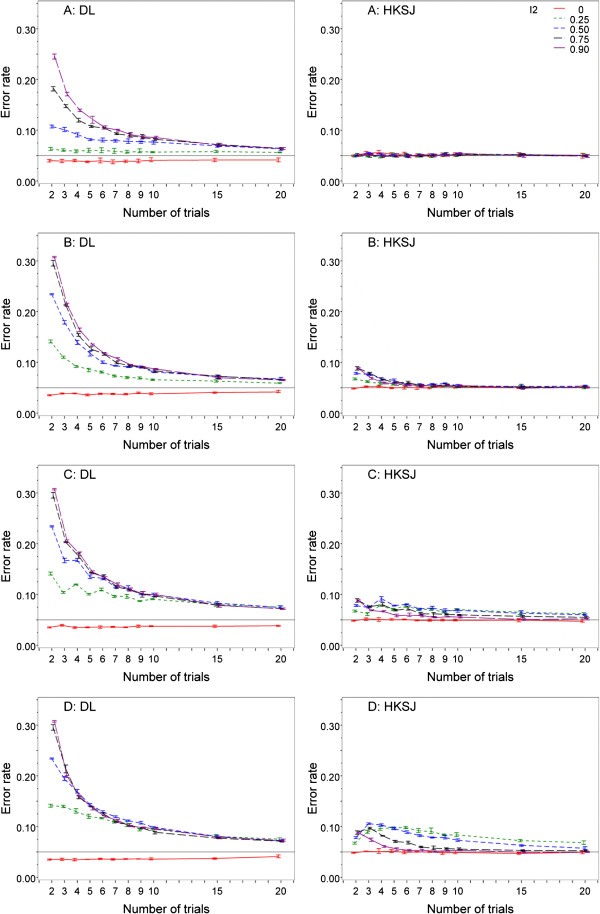
BACKGROUND: The DerSimonian and Laird approach (DL) is widely used for random effects meta-analysis, but this often results in inappropriate type I error rates. The method described by Hartung, Knapp, Sidik and Jonkman (HKSJ) is known to perform better when trials of similar size are combined. However evidence in realistic situations, where one trial might be much larger than the other trials, is lacking. We aimed to evaluate the relative performance of the DL and HKSJ methods when studies of different sizes are combined and to develop a simple method to convert DL results to HKSJ results. METHODS: We evaluated the performance of the HKSJ versus DL approach in simulated meta-analyses of 2-20 trials with varying sample sizes and between-study heterogeneity, and allowing trials to have various sizes, e.g. 25% of the trials being 10-times larger than the smaller trials. We also compared the number of "positive" (statistically significant at p < 0.05) findings using empirical data of recent meta-analyses with > = 3 studies of interventions from the Cochrane Database of Systematic Reviews. RESULTS: The simulations showed that the HKSJ method consistently resulted in more adequate error rates than the DL method. When the significance level was 5%, the HKSJ error rates at most doubled, whereas for DL they could be over 30%. DL, and, far less so, HKSJ had more inflated error rates when the combined studies had unequal sizes and between-study heterogeneity. The empirical data from 689 meta-analyses showed that 25.1% of the significant findings for the DL method were non-significant with the HKSJ method. DL results can be easily converted into HKSJ results. CONCLUSIONS: Our simulations showed that the HKSJ method consistently results in more adequate error rates than the DL method, especially when the number of studies is small, and can easily be applied routinely in meta-analyses. Even with the HKSJ method, extra caution is needed when there are = <5 studies of very unequal sizes.
Overview
The claims and statistics of this paper haven’t been checked yet.
Free: it reads the open-access text and checks the first 5 claims that cite a source we can check. Create a free account to check every claim.
Integrity signals
Registry
Cites
Statistics
Figures
Verification
Claims the paper makes
The claims and statistics of this paper haven’t been checked yet.
Free: it reads the open-access text and checks the first 5 claims that cite a source we can check. Create a free account to check every claim.
Claims other papers make about this one
Each is checked against this paper’s own text: does it say what the citing paper says it does?
The source backs part of the claim, not all of it — or backs it for a different population, condition or comparison.
In the citing paper
“Random-effects meta-regression with Knapp–Hartung adjustment was applied to account for between-study heterogeneity and to calculate 95% prediction intervals, estimating the likely range of effect sizes in future studies (30).”
From The association of screen time and the risk of sleep outcomes: a systematic review and meta-analysis. (2025) · cites this paper as [30]
Experimental — accuracy not yet measuredThe cited source says what the claim attributes to it.
In the citing paper
“To evaluate robustness of pooled estimates, prespecified sensitivity analyses included fixed-effect models, Hartung–Knapp adjustment for random-effects inference, alternative τ² estimators, leave-one-out analyses, and Bayesian random-effects meta-analysis (45–49).”
In the citing paper
“An inverse-variance method with a random-effects model and Hartung-Knapp-Sidik-Jonkman adjustment (33) was used to adjust for study variability in sample sizes.”
From Digital Media Use and Adolescents' Mental Health During the Covid-19 Pandemic: A Systematic Review and Meta-Analysis (2022) · cites this paper as [33]
Self-check
Percentages, sums and reported differences re-computed from the paper’s own numbers.
The self-check needs the paper’s full text.
Citations
Cites
2 retracted
Singh, M., & Das, R. R. (2013) · Cochrane Database of Systematic Reviews · doi:10.1002/14651858.cd001364.pub4 · Cited by 237
RetractedSingh, M., & Das, R. R. (2011) · Cochrane Database of Systematic Reviews · doi:10.1002/14651858.cd001364.pub3 · Cited by 86
RetractedMeasuring inconsistency in meta-analyses
Higgins, J. P. T., Thompson, S. G., Deeks, J. J., & Altman, D. G. (2003) · BMJ · doi:10.1136/bmj.327.7414.557 · Cited by 63,139 · cited 8×
“The levels correspond to no, low, moderate, high and very high heterogeneity, respectively [16].”
BackgroundMethodResultInfluentialMeta-analysis in clinical trials
DerSimonian, R., & Laird, N. (1986) · Controlled Clinical Trials · doi:10.1016/0197-2456(86)90046-2 · Cited by 39,552 · cited 2×
“Background The commonly used method for a random effects metaanalysis is the DerSimonian and Laird approach (DL method) [1].”
MethodQuantifying heterogeneity in a meta‐analysis
Higgins, J. P. T., & Thompson, S. G. (2002) · Statistics in Medicine · doi:10.1002/sim.1186 · Cited by 36,763 · cited 1×
“the degree of inconsistency in the studies’ results, in comparison to the total amount of variation [16,22].”
ResultConducting Meta-Analyses in R with the metafor Package
Viechtbauer, W. (2010) · Journal of Statistical Software · doi:10.18637/jss.v036.i03 · Cited by 20,464 · cited 2×
“The R package metafor [20] can also be used to perform an HKSJ analysis.”
MethodBorenstein, M., Hedges, L. V., Higgins, J. P. T., & Rothstein, H. R. (2009) · doi:10.1002/9780470743386 · Cited by 14,225
Borenstein, M., Hedges, L. V., Higgins, J. P. T., & Rothstein, H. R. (2021) · doi:10.1002/9781119558378 · Cited by 9,799
Improved tests for a random effects meta‐regression with a single covariate
Knapp, G., & Hartung, J. (2003) · Statistics in Medicine · doi:10.1002/sim.1482 · Cited by 2,075 · cited 1×
“The implementation is based on the meta-regression paper by Knapp and Hartung [34]: when no covariates or moderator variables are used, the meta-regression reduces to a random effects metaanalysis as proposed by Hartung/Knapp and Sidik/ Jonkman.”
MethodUncertainty in heterogeneity estimates in meta-analyses
Ioannidis, J. P. A., Patsopoulos, N. A., & Evangelou, E. (2007) · BMJ · doi:10.1136/bmj.39343.408449.80 · Cited by 1,254 · cited 1×
“Some detectable heterogeneity is present in about half of meta-analyses of clinical studies [15-18].”
BackgroundSelf-citation
Research works printed but not linked: 3
- The Cochrane Collaboration Review Manager (RevMan) 5.1.4 2011 Copenhagen: The Nordic Cochrane Centre
- Borenstein M Hedges L Higgins J Rothstein H Comprehensive Meta-analysis Version 2 2005 Englewood NJ: Biostat
- Hartung J An alternative method for meta-analysis Biom J 1999 901 916
Cited by
Items 201–300 of 1,008
Wosu, A. C., Gelaye, B., & Williams, M. A. (2015) · Archives of Women's Mental Health · doi:10.1007/s00737-015-0533-0 · Cited by 85
“…samples, methods of exposure and outcome ascertainment, and potential confounders adjusted for, the ORs were pooled using the random effects model that included between-study heterogeneity (i.e., the DerSimonian and Laird method) (DerSimonian and Laird 1986; Bax et al. 2007; IntHout et al. 2014).”
MethodRosa, S. D., Sievert, H., Sabatino, J., Polimeni, A., Sorrentino, S., & Indolfi, C. (2018) · Annals of Internal Medicine · doi:10.7326/m17-3033 · Cited by 97
“Metaanalysis results were similar when compared using the fixed-effects (Mantel–Haenszel) or random-effects (Hedges–Olkin, Sidik Jonkman) models (22, 25, 26).”
MethodInfluentialAntipsychotic drug use and pneumonia: Systematic review and meta-analysis
Dzahini, O., Singh, N., Taylor, D. M., & Haddad, P. M. (2018) · Journal of Psychopharmacology · doi:10.1177/0269881118795333 · Cited by 84
“The HKSJ approach is preferred to the DerSimonian and Laird method for random effects meta-analysis because of lower type I error rates when the number of studies included in the meta-analysis are small (IntHout et al., 2014).”
Pitfalls of using the risk ratio in meta‐analysis
Bakbergenuly, I., Hoaglin, D. C., & Kulinskaya, E. (2019) · Research Synthesis Methods · doi:10.1002/jrsm.1347 · Cited by 84
Pinto, J. V., Medeiros, L. S., Santana da Rosa, G., Santana de Oliveira, C. E., Crippa, J. A. D. S., Passos, I. C., & Kauer-Sant’Anna, M. (2019) · Neuroscience & Biobehavioral Reviews · doi:10.1016/j.neubiorev.2019.04.004 · Cited by 82
Yoga for Treating Headaches: a Systematic Review and Meta-analysis
Anheyer, D., Klose, P., Lauche, R., Saha, F. J., & Cramer, H. (2019) · Journal of General Internal Medicine · doi:10.1007/s11606-019-05413-9 · Cited by 100
Fink, H. A., Linskens, E. J., MacDonald, R., Silverman, P. C., McCarten, J. R., Talley, K. M. C., Forte, M. L., Desai, P. J., Nelson, V. A., Miller, M. A., et al. (2020) · Annals of Internal Medicine · doi:10.7326/m19-3887 · Cited by 83
A systematic review and meta-analysis of the incidence rate of Takayasu arteritis
Rutter, M., Bowley, J., Lanyon, P., Grainge, M. J., & Pearce, F. (2021) · Lara D. Veeken · doi:10.1093/rheumatology/keab406 · Cited by 84
Casartelli, N. C., Maffiuletti, N. A., Valenzuela, P. L., Grassi, A., Ferrari, E., van Buuren, M. M. A., Nevitt, M. C., Leunig, M., & Agricola, R. (2021) · Osteoarthritis and Cartilage · doi:10.1016/j.joca.2021.06.007 · Cited by 92
Weakley, J. J. S., Cowley, N., Schoenfeld, B. J., Read, D. B., Timmins, R. G., García‐Ramos, A., & McGuckian, T. B. (2023) · Sports Medicine · doi:10.1007/s40279-023-01877-2 · Cited by 114
“Further, the Hartung–Knapp–Sidik–Jonkman method was used to estimate the variance of pooled effects as it outperforms other methods when there are few studies or substantial heterogeneity [41, 42].”
MethodShekelle, P., Miake-Lye, I. M., Begashaw, M. M., Booth, M. S., Myers, B. A., Lowery, N., & Shrank, W. H. (2024) · Journal of General Internal Medicine · doi:10.1007/s11606-023-08517-5 · Cited by 120
“51 We used the I 2 statistic 52 to assess the level of heterogeneity.”
MethodBizzozero‐Peroni, B., Martínez‐Vizcaíno, V., Fernández‐Rodríguez, R., Jiménez‐López, E., de Arenas‐Arroyo, S. N., Saz‐Lara, A., Goñi, V. D., & Mesas, A. E. (2024) · Nutrition Reviews · doi:10.1093/nutrit/nuad176 · Cited by 115
Runge, N., Ahmed, I., Saueressig, T., Perea, J., Labie, C., Maîresse, O., Nijs, J., Malfliet, A., Verschueren, S., Assche, D. V., et al. (2024) · Pain · doi:10.1097/j.pain.0000000000003279 · Cited by 114
“Inverse variance random-effects meta-analyses using the Paule-Mandel estimator to estimate between-study variance were performed with Hartung-Knapp adjustment (with ad-hoc adjustment) for the estimation of 95% CIs[34,57].”
MethodTarantino, G., Makopoulou, K., & Neville, R. D. (2022) · Educational Research Review · doi:10.1016/j.edurev.2022.100456 · Cited by 83
“The Hartung-Knapp-Sidik-Jonkman method for estimating continuous random effects was used to meta-analyze these data (Inthout, Ioannidis, & Borm, 2014).”
MethodSotiriadis, A., Makrydimas, G., Papatheodorou, S., Ioannidis, J. P. A., & McGoldrick, E. (2018) · Cochrane Database of Systematic Reviews · doi:10.1002/14651858.cd006614.pub3 · Cited by 102
Self-citationTsivgoulis, G., Katsanos, A. H., Köhrmann, M., Caso, V., Perren, F., Palaiodimou, L., Deftereos, S., Giannopoulos, S., Ellul, J., Krogias, C., et al. (2019) · Journal of Stroke · doi:10.5853/jos.2019.01067 · Cited by 73
Migdady, I., Rice, C., Deshpande, A., Hernández, A. V., Price, C. L., Whitman, G. J. R., Geocadin, R. G., & Cho, S. (2020) · Critical Care Medicine · doi:10.1097/ccm.0000000000004377 · Cited by 82
“The Sidik-Jonkman estimator was used for tau (2, 21) and Hartung-Knapp adjustment was used to calculate CIs (22).”
MethodBaxter, S. M., Lund, L. C., Andersen, J. H., Brix, T. H., Hegedüs, L., Hsieh, M. H.-C., Su, C. T.-T., Cheng, M. C.-Y., Chang, Z. C.-J., Lai, E. C.-C., et al. (2025) · Thyroid® · doi:10.1089/thy.2024.0387 · Cited by 81
“30 Heterogeneity was assessed using the I 2 statistic.”
Step width variability as a discriminator of age-related gait changes
Σκιαδόπουλος, Α., Moore, E. E., Sayles, H. R., Schmid, K. K., & Stergiou, N. (2020) · Journal of NeuroEngineering and Rehabilitation · doi:10.1186/s12984-020-00671-9 · Cited by 89
Ezzatvar, Y., Ramírez‐Vélez, R., de Asteasu, M. L. S., Martínez‐Velilla, N., Zambom-Ferraresi, F., Izquierdo, M., & García‐Hermoso, A. (2020) · The Journals of Gerontology Series A · doi:10.1093/gerona/glaa305 · Cited by 92
Dalia, T., Lahan, S., Ranka, S., Goyal, A., Zoubek, S., Gupta, K., & Shah, Z. I. (2021) · Thrombosis Journal · doi:10.1186/s12959-021-00259-w · Cited by 93
Overlap of disorders of gut–brain interaction: a systematic review and meta-analysis
Fairlie, T., Shah, A., Talley, N. J., Chey, W. D., Koloski, N., Yeh Lee, Y., Gwee, K.-A., Jones, M. P., & Holtmann, G. (2023) · The Lancet Gastroenterology & Hepatology · doi:10.1016/s2468-1253(23)00102-4 · Cited by 80
Effects of dietary fat on fertility of dairy cattle: A meta-analysis and meta-regression
Rodney, R. M., Celi, P., Scott, W. F., Breinhild, K., & Lean, I. J. (2015) · Journal of Dairy Science · doi:10.3168/jds.2015-9528 · Cited by 89
“…is more robust than alternative meth-ods such as the DerSimonian and Laird method for discrete data, especially where heterogeneity is present (IntHout et al., 2014). where k is the number of studies, y i is the effect size estimate from the i th study, w i is the fixed effect weight, and τ 2…”
MethodRoseborough, A. D., Saad, L., Goodman, M., Cipriano, L. E., Hachinski, V. C., & Whitehead, S. N. (2023) · Alzheimer's & Dementia · doi:10.1002/alz.12642 · Cited by 80
Bhattacharya, S., Goicoechea, C., Heshmati, S., Carpenter, J. K., & Hofmann, S. G. (2023) · Current Psychiatry Reports · doi:10.1007/s11920-022-01402-8 · Cited by 82
Hartung–Knapp method is not always conservative compared with fixed‐effect meta‐analysis
Wiksten, A., Rücker, G., & Schwarzer, G. (2016) · Statistics in Medicine · doi:10.1002/sim.6879 · Cited by 79
“It has been shown in simulations [9, 14] that a test based on the Hartung–Knapp modification holds the prespecified significance level much better than tests based on S.”
MethodResultInfluentialJawitz, O. K., Wang, T. Y., Lópes, R. D., Chavez, A., Boyer, B., Kim, H., Anstrom, K. J., Becker, R. C., Blackstone, E. H., Ruel, M., et al. (2020) · American Heart Journal · doi:10.1016/j.ahj.2020.06.014 · Cited by 86
Leyland, K. M., Gates, L., Sanchez-Santos, M. T., Nevitt, M. C., Felson, D. T., Jones, G., Jordan, J. M., Judge, A., Prieto‐Alhambra, D., Yoshimura, N., et al. (2021) · Aging Clinical and Experimental Research · doi:10.1007/s40520-020-01762-2 · Cited by 84
Shao, R., Man, I. S. C., & Lee, T. M. C. (2024) · Mindfulness · doi:10.1007/s12671-023-02294-2 · Cited by 86
“In order to reduce the probability of false positive outcomes, Hartung-Knapp adjustments were applied to control for the uncertainty in the estimate of heterogeneity, and to calculate the confidence interval of the pooled effect (IntHout et al., 2014).”
Dahm, P., Brasure, M., MacDonald, R. H., Olson, C. M., Nelson, V. A., Fink, H. A., Rwabasonga, B., Risk, M. C., & Wilt, T. J. (2016) · European Urology · doi:10.1016/j.eururo.2016.09.032 · Cited by 89
Marciano, L., Lin, J., Sato, T., Saboor, S., & Viswanath, K. (2024) · SSM - Mental Health · doi:10.1016/j.ssmmh.2024.100331 · Cited by 80
General anesthesia vs spinal anesthesia for patients undergoing total-hip arthroplasty
Pu, X., & Sun, J. (2019) · Medicine · doi:10.1097/md.0000000000014925 · Cited by 79
Pergialiotis, V., Bellos, I., Antsaklis, A. J., Papapanagiotou, A., Loutradis, D., & Daskalakis, G. (2020) · European Journal of Obstetrics & Gynecology and Reproductive Biology · doi:10.1016/j.ejogrb.2020.06.018 · Cited by 89
Malhotra, K., Ahmed, N., Filippatou, A., Katsanos, A. H., Goyal, N., Tsioufis, K., Manios, E., Pikilidou, M., Schellinger, P. D., Alexandrov, A. W., et al. (2019) · Journal of Stroke · doi:10.5853/jos.2018.02369 · Cited by 79
Collister, D., Komenda, P. V. J., Hiebert, B. M., Gunasekara, R., Xu, Y., Eng, F., Lerner, B., Macdonald, K., Rigatto, C., & Tangri, N. (2016) · Annals of Internal Medicine · doi:10.7326/m15-1839 · Cited by 92
Meta‐analyzing partial correlation coefficients using Fisher's z transformation
van Aert, R. C. M. (2023) · Research Synthesis Methods · doi:10.1002/jrsm.1654 · Cited by 101
Allison, E., Edirimanne, S., Matthews, J. G., & Fuller, S. J. (2022) · Oncology and Therapy · doi:10.1007/s40487-022-00214-3 · Cited by 93
“The Hartung–Knapp adjustment was also used for random effects analysis [22].”
MethodSteinmann, M., Lampe, D., Grosser, J., Schmidt, J., Hohoff, M. L., Fischer, A., & Greiner, W. (2024) · Infection · doi:10.1007/s15010-023-02156-y · Cited by 107
“This adjustment widens the confidence interval to reflect uncertainty in the estimation of between-study heterogeneity [25–27].”
Goldzweig, C. L., Orshansky, G., Paige, N. M., Miake-Lye, I. M., Beroes, J. M., Ewing, B. A., & Shekelle, P. (2015) · Annals of Internal Medicine · doi:10.7326/m14-2600 · Cited by 90
“Random-effects meta-analyses were conducted and results were pooled using the Hartung– Knapp–Sidik–Jonkman variance estimator (14).”
MethodA systematic review of modifiable risk factors in the progression of multiple sclerosis
Hempel, S., Graham, G. D., Fu, N., Estrada, E., Chen, A. Y., Miake-Lye, I., Miles, J. N. V., Shanman, R., Shekelle, P. G., Beroes, J. M., et al. (2017) · Multiple Sclerosis Journal · doi:10.1177/1352458517690270 · Cited by 77
Uhl, S., Choure, A., Rouse, B., Loblack, A., & Reaven, P. (2024) · The Journal of Clinical Endocrinology & Metabolism · doi:10.1210/clinem/dgad652 · Cited by 76
Anheyer, D., Leach, M. J., Klose, P., Dobos, G., & Cramer, H. (2019) · Cephalalgia · doi:10.1177/0333102418781795 · Cited by 76
Zhang, X., Zhang, X., Wang, T., Wang, H., Chen, Z., Xu, B., & Xu, W. (2021) · Circulation Cardiovascular Quality and Outcomes · doi:10.1161/circoutcomes.121.007971 · Cited by 87
Effects of Exogenous Ketone Supplementation on Blood Glucose: A Systematic Review and Meta-analysis
Falkenhain, K., Daraei, A., Forbes, S. C., & Little, J. P. (2022) · Advances in Nutrition · doi:10.1093/advances/nmac036 · Cited by 90
Lou, S., Du, F., Song, W., Xia, Y., Yue, X., Yang, D., Cui, B., Liu, Y., & Han, P. (2023) · EClinicalMedicine · doi:10.1016/j.eclinm.2023.102341 · Cited by 93
“43,44 48 Meta-regression and subgroup analyses were performed to investigate potential sources of heterogeneity.”
MethodSteps in undertaking meta-analysis and addressing heterogeneity in meta-analysis
Gandhi, A. P., Shamim, M. A., & Padhi, B. K. (2023) · The Evidence · doi:10.61505/evidence.2023.1.1.7 · Cited by 115
Nadalian, B., Yadegar, A., Houri, H., Olfatifar, M., Shahrokh, S., Aghdaei, H. A., Suzuki, H., & Zali, M. R. (2020) · Journal of Gastroenterology and Hepatology · doi:10.1111/jgh.15260 · Cited by 96
Functional MRS studies of GABA and glutamate/Glx – A systematic review and meta-analysis
Pasanta, D., He, J. L., Ford, T. C., Oeltzschner, G., Lythgoe, D. J., & Puts, N. A. J. (2022) · Neuroscience & Biobehavioral Reviews · doi:10.1016/j.neubiorev.2022.104940 · Cited by 91
Leonhardt, C.-S., Gustorff, C., Klaiber, U., Blanc, S. L., Stamm, T. A., Verbeke, C. S., Prager, G. W., & Strobel, O. (2024) · Gastroenterology · doi:10.1053/j.gastro.2024.05.028 · Cited by 93
Depression, anxiety, and the risk of cancer: An individual participant data meta‐analysis
van Tuijl, L. A., Basten, M., Pan, K., Vermeulen, R. C. H., Portengen, L., de Graeff, A., Dekker, J., Geerlings, M. I., Hoogendoorn, A. W., Lamers, F., et al. (2023) · Cancer · doi:10.1002/cncr.34853 · Cited by 90
“The Hartung–Knapp–Sidik–Jonkman approach was used to adjust test statistics and CIs to more fully account for the estimation uncertainty.(13) To examine between‐cohort heterogeneity, we report I(2) using the following general rule(14): 0%–25%, low heterogeneity; 26%–50%, moderate heterogeneity; and 51%– 75%, substanti…”
MethodAugé, R. M., Toler, H. D., & Saxton, A. M. (2016) · Frontiers in Plant Science · doi:10.3389/fpls.2016.01084 · Cited by 82
“It is common to use a response ratio in meta-analyses of plant and mycorrhizal behaviors (e.g., Lehmann et al., 2012; Mayerhofer et al., 2013; Jayne and Quigley, 2014), as it gives a standardized, unit-less expression of treatment-induced change.”
Sleep disruption in children and adolescents with epilepsy: A systematic review and meta-analysis
Winsor, A., Richards, C., Bissell, S., Seri, S., Liew, A., & Bagshaw, A. P. (2021) · Sleep Medicine Reviews · doi:10.1016/j.smrv.2021.101416 · Cited by 86
Temporal discounting across adulthood: A systematic review and meta-analysis.
Seaman, K. L., Abiodun, S. J., Fenn, Z., Samanez-Larkin, G. R., & Mata, R. (2022) · Psychology and Aging · doi:10.1037/pag0000634 · Cited by 87
Kaw, R. K., Hernández, A. V., Pasupuleti, V., Deshpande, A., Nagarajan, V., Bueno, H., Coleman, C. I., Ioannidis, J. P. A., Bhatt, D. L., & Blackstone, E. H. (2016) · Journal of Thoracic and Cardiovascular Surgery · doi:10.1016/j.jtcvs.2016.05.057 · Cited by 80
Self-citationMeta-analysis supports GWAS-implicated link between GRM3 and schizophrenia risk
Saini, S. M., Mancuso, S. G., Mostaid, M. S., Liu, C., Pantelis, C., Everall, I., & Bousman, C. (2017) · Translational Psychiatry · doi:10.1038/tp.2017.172 · Cited by 81
Metformin and prostate cancer mortality: A meta-analysis
Stopsack, K. H., Ziehr, D. R., Rider, J. R., & Giovannucci, E. L. (2016) · Cancer Causes & Control · doi:10.1007/s10552-015-0687-0 · Cited by 72
Éliás, A. J., Barna, V., Patoni, C., Demeter, D., Veres, D. S., Bunduc, Ș., Erőss, B. M., Hegyi, P., Földvári-Nagy, L., & Lenti, K. (2023) · BMC Medicine · doi:10.1186/s12916-023-02961-0 · Cited by 88
Fu, R., & Holmer, H. K. (2016) · Journal of Clinical Epidemiology · doi:10.1016/j.jclinepi.2016.01.034 · Cited by 71
Is oncoplastic breast conserving surgery oncologically safe? A meta-analysis of 18,103 patients
Kosasih, S., Tayeh, S., Mokbel, K., & Kasem, A. (2020) · The American Journal of Surgery · doi:10.1016/j.amjsurg.2019.12.019 · Cited by 74
Davis, K., Perez‐Guzman, P. N., Hoyer, A., Brinks, R., Gregg, E. W., Althoff, K. N., Justice, A. C., Reiss, P., Gregson, S., & Smit, M. (2021) · BMC Medicine · doi:10.1186/s12916-021-01978-7 · Cited by 84
“A pre-specified sensitivity analysis was performed, in which the Hartung-Knapp modification was applied to account for small sample sizes [30].”
MethodBrabaharan, S., Veettil, S. K., Kaiser, J. E., Rao, V. R. R., Wattanayingcharoenchai, R., Maharajan, M. K., Insin, P., Talungchit, P., Anothaisintawee, T., Thakkinstian, A., et al. (2022) · JAMA Network Open · doi:10.1001/jamanetworkopen.2021.43730 · Cited by 92
Saueressig, T., Owen, P. J., Zebisch, J., Herbst, M., & Belavý, D. L. (2021) · JAMA Network Open · doi:10.1001/jamanetworkopen.2021.0254 · Cited by 88
Esmaeili, N., Gell, L. K., Imler, T., Hajipour, M., Taranto‐Montemurro, L., Messineo, L., Stone, K. L., Sands, S. A., Ayas, N., Yee, J., et al. (2025) · EClinicalMedicine · doi:10.1016/j.eclinm.2025.103221 · Cited by 94
“46,47 Restricted maximum likelihood (REML) method was used to estimate the between study variances ( τ 2 ).”
Placebo effect on progression and regression in NASH: Evidence from a meta‐analysis
Ng, C. H., Xiao, J., Lim, W. H., Chin, Y. H., Yong, J. N., Tan, D. J. H., Tay, P., Syn, N., Foo, R., Chan, M., et al. (2022) · Hepatology · doi:10.1002/hep.32315 · Cited by 69
“, age, BMI change, gender, race, history of hyperlipidemia, hypertension, or type 2 diabetes mellitus) with the Hartung- Knapp estimator to stabilize the variance.[27] Briefly, a negative regression coefficient describes the inverse relationship between the outcome variable and a unit increase of the independent varia…”
Decision-making depends on language: A meta-analysis of the Foreign Language Effect
Maschio, N. D., Crespi, F., Peressotti, F., Abutalebi, J., & Sulpizio, S. (2022) · Bilingualism Language and Cognition · doi:10.1017/s1366728921001012 · Cited by 96
Papp, M., Kiss, N., Baka, M., Trásy, D., Zubek, L., Fehérvári, P., Harnos, A., Turan, C., Hegyi, P. J., & Molnár, Z. (2023) · Critical Care · doi:10.1186/s13054-023-04677-2 · Cited by 90
“We used a Hartung-Knapp adjustment if it resulted in a more conservative estimate than without adjustment [21, 22].”
MethodDecision Aids for Prostate Cancer Screening Choice: A Systematic Review and Meta-analysis
Riikonen, J. M., Guyatt, G. H., Kilpeläinen, T. P., Craigie, S., Agarwal, A., Agoritsas, T., Couban, R., Dahm, P., Järvinen, P., Montori, V. M., et al. (2019) · JAMA Internal Medicine · doi:10.1001/jamainternmed.2019.0763 · Cited by 77
Neuroticism in the digital age: A meta-analysis
Marciano, L., Camerini, A.-L., & Schulz, P. J. (2020) · Computers in Human Behavior Reports · doi:10.1016/j.chbr.2020.100026 · Cited by 89
“To control for possible study diversities, we used the inverse-variance method with a random-effects model and Hartung-Knapp-Sidik-Jonkman adjustment (IntHout, Ioannidis, & Borm, 2014) in each meta-analysis.”
MethodWunderlin, M., Züst, M. A., Hertenstein, E., Fehér, K. D., Schneider, C. L., Klöppel, S., & Nissen, C. (2021) · SLEEP · doi:10.1093/sleep/zsaa296 · Cited by 82
Breedvelt, J. J. F., Warren, F. C., Segal, Z., Kuyken, W., & Bockting, C. L. (2021) · JAMA Psychiatry · doi:10.1001/jamapsychiatry.2021.0823 · Cited by 68
Pabst, A., Proksch, S., Médé, B., Comstock, D. C., Ross, J. M., & Balasubramaniam, R. (2022) · Neuroscience & Biobehavioral Reviews · doi:10.1016/j.neubiorev.2022.104587 · Cited by 68
Wright, M., Reitegger, F., Cela, H., Papst, A., & Gasteiger‐Klicpera, B. (2023) · Journal of Youth and Adolescence · doi:10.1007/s10964-023-01735-4 · Cited by 114
“As significant differences between the studies were expected, it was decided to opt for a random effects pooling model, using the Hartung–Knapp–Sidik–Jonkman method for correction (IntHout et al., 2014; Sidik & Jonkman, 2022).”
MethodMaia, D., Andrade, R., Afonso, J. R., Costa, P., Valente, C., & Espregueira‐Mendes, J. (2023) · Education Sciences · doi:10.3390/educsci13030238 · Cited by 96
“The random-effects model (Sidik–Jonkman estimator with Hartung–Knapp adjustment [77]) was used to attenuate the variations in the methodology and evaluation methods across studies and within the same outcome measures (methodological heterogeneity).”
MethodLee, K., Kwon, C., Yeniova, A. Ö., Koyanagi, A., Jacob, L., Smith, L., Lee, S. W., Rahmati, M., Shin, J., Shin, J. I., et al. (2024) · Scientific Reports · doi:10.1038/s41598-024-54716-3 · Cited by 125
Cognitive Behavior Therapy for Mental Disorders in Adults: A Unified Series of Meta-Analyses
Cuijpers, P. J., Harrer, M., Miguel, C., Čihařová, M., Papola, D., Basic, D., Botella, C., Cristea, I. A., de Ponti, N., Donker, T., et al. (2025) · JAMA Psychiatry · doi:10.1001/jamapsychiatry.2025.0482 · Cited by 107
Jian-Yu, E., Graber, J. M., Lu, S.-E., Lin, Y., Lu-Yao, G., & Tan, X.-L. (2018) · Current Medicinal Chemistry · doi:10.2174/0929867324666170412145232 · Cited by 67
“Meta-analysis has limited performance with two studies only [59], however, both randomized clinical trials reported that metformin, in combination with current chemotherapy, did not improve pancreatic cancer patients’ survival, compared with patients treated with chemotherapy alone [56, 57].”
ResultMulugeta, H., Dessie, G., Wagnew, F., Leshargie, C. T., & Boneya, D. J. (2018) · Depression Research and Treatment · doi:10.1155/2018/6135460 · Cited by 74
Axfors, C., Janiaud, P., Schmitt, A. M., Hooft, J. V. ’., Smith, E. R., Haber, N., Abayomi, A., Abduljalil, M., Abdulrahman, A., Acosta‐Ampudia, Y., et al. (2021) · BMC Infectious Diseases · doi:10.1186/s12879-021-06829-7 · Cited by 72
“A meta-analysis was performed to combine RRs across all trials using the Hartung-Knapp-SidikJonkman (HKSJ) random-effects model [27] with Paule and Mandel (PM) tau-squared estimator, correcting for zero events in one study arm by adding the reciprocal of the size of the contrasting arm [28].”
MethodBurns, M. E., Tang, L., Chang, C. H., Kim, J. Y., Ahrens, K. A., Allen, L., Cunningham, P., Gordon, A. J., Jarlenski, M., Lanier, P., et al. (2022) · Addiction · doi:10.1111/add.15959 · Cited by 72
“To construct valid 95% confidence intervals (CIs) for the global estimate we used the Hartung–Knapp–Sidik–Jonkman method to estimate between-state variances [52].”
MethodKindred, R., Bates, G. W., & McBride, N. L. (2022) · Journal of Anxiety Disorders · doi:10.1016/j.janxdis.2022.102640 · Cited by 88
Szabó, G. V., Szigetváry, C., Szabó, L., Dembrovszky, F., Rottler, M., Ocskay, K., Madzsar, S., Hegyi, P. J., & Molnár, Z. (2022) · Internal and Emergency Medicine · doi:10.1007/s11739-022-03126-2 · Cited by 86
Markov, A., Hauser, L., & Chaabene, H. (2023) · Sports Medicine · doi:10.1007/s40279-022-01764-2 · Cited by 66
Gidengil, C. A., Goetz, M. B., Newberry, S. J., Maglione, M., Hall, O., Larkin, J., Motala, A., & Hempel, S. (2021) · Vaccine · doi:10.1016/j.vaccine.2021.03.079 · Cited by 86
Cognitive-Behavioral Therapy: Nature and Relation to Non-Cognitive Behavioral Therapy
Lorenzo‐Luaces, L., Keefe, J. R., & DeRubeis, R. J. (2016) · Behavior Therapy · doi:10.1016/j.beth.2016.02.012 · Cited by 82
Roberts, K. E., Rickett, K., Feng, S., Vagenas, D., & Woodward, N. E. (2020) · Cochrane Database of Systematic Reviews · doi:10.1002/14651858.cd012988.pub2 · Cited by 81
Food insecurity and hypertension: A systematic review and meta-analysis
Beltrán, S., Pharel, M., Montgomery, C. T., López-Hinojosa, I. J., Arenas, D. J., & DeLisser, H. M. (2020) · PLoS ONE · doi:10.1371/journal.pone.0241628 · Cited by 72
Shea, S., Lionis, C. D., Kite, C., Lagojda, L., Uthman, O. A., Dallaway, A., Atkinson, L., Chaggar, S. S., Randeva, H. S., & Kyrou, I. (2024) · Frontiers in Endocrinology · doi:10.3389/fendo.2024.1357664 · Cited by 75
Κouis, P., Yiallouros, P. K., Middleton, N., Evans, J. S., Kyriacou, K. C., & Papatheodorou, S. (2016) · Pediatric Research · doi:10.1038/pr.2016.263 · Cited by 64
Anesthetic Neuroprotection in Experimental Stroke in Rodents: A Systematic Review and Meta-analysis
Archer, D. P., Walker, A. M., McCann, S., Moser, J. J., & Appireddy, R. (2017) · Anesthesiology · doi:10.1097/aln.0000000000001534 · Cited by 66
Chew, H. S. J., Koh, W. L., Ng, J. S., & Tan, K. (2022) · Journal of Medical Internet Research · doi:10.2196/40141 · Cited by 86
“…were conducted using random effects models with generic inverse variance and adjusted using the Hartung-Knapp-Sidik-Jonkman method instead of the commonly used DerSimonian-Laird method, as it has been shown to produce fewer type I errors, especially for analyses with a small number of studies [13].”
Diabetes as a risk factor for the onset of frozen shoulder: a systematic review and meta-analysis
Dyer, B. P., Rathod‐Mistry, T., Burton, C. L., van der Windt, D., & Bucknall, M. (2023) · BMJ Open · doi:10.1136/bmjopen-2022-062377 · Cited by 96
Park, S. K., Ko, G. Y., Choi, G. J., Ahn, E. J., & Kang, H. (2016) · Medicine · doi:10.1097/md.0000000000004598 · Cited by 64
“Because the total number of studies that showed substantial heterogeneity was less than 10, t-statistics (Hartung-KnappSidik-Jonkman method) were used instead of the Z-test in all random-effects analysis to lower the error rate.([11]) We calculated”
MethodHoshijima, H., Mihara, T., Maruyama, K., Denawa, Y., Mizuta, K., Shiga, T., & Nagasaka, H. (2018) · Journal of Clinical Anesthesia · doi:10.1016/j.jclinane.2018.06.007 · Cited by 68
Impellizzeri, F. M., McCall, A., & van Smeden, M. (2021) · Journal of Clinical Epidemiology · doi:10.1016/j.jclinepi.2021.09.007 · Cited by 73
Hussain, N., Brull, R., Zhou, S., Schroell, R., McCartney, C. J. L., Sawyer, T. R., & Abdallah, F. W. (2022) · Regional Anesthesia & Pain Medicine · doi:10.1136/rapm-2022-103756 · Cited by 71
“17 For the coprimary outcomes of this review (AUC 0-48 pain score and 0–48 hours opioid consumption) a WMD or SMD and HKSJ 95% CI was calculated.”
Depression after Subarachnoid Hemorrhage: A Systematic Review
Tang, W. K., Wang, L., Wong, G. K. C., Ungvari, G. S., Yasuno, F., Tsoi, K. K. F., & Kim, J. S. (2020) · Journal of Stroke · doi:10.5853/jos.2019.02103 · Cited by 73
“Pooled estimates in both the overall (and subgroup) analyses were calculated using the Hartung-Knapp-Sidik-Jonkman method, under the random effect model.(10) Publication bias was examined by Funnel plot and Egger’s regression test.”
MethodPark, K. J., Choi, S. H., Lee, J. S., Kim, J. K., & Kim, M. (2020) · The Journal of Urology · doi:10.1097/ju.0000000000001200 · Cited by 67
Riet, J. V. ‘., & van Stekelenburg, A. (2021) · Human Communication Research · doi:10.1093/hcr/hqab022 · Cited by 89
Janus Kinase Inhibitors for Alopecia Areata: A Systematic Review and Meta-Analysis
Liu, M., Gao, Y., Yuan, Y., Yang, K., Shen, C., Wang, J., & Tian, J. (2023) · JAMA Network Open · doi:10.1001/jamanetworkopen.2023.20351 · Cited by 73
Meloche, M., Khazaka, M., Kassem, I., Barhdadi, A., Dubé, M., & de Denus, S. (2020) · British Journal of Clinical Pharmacology · doi:10.1111/bcp.14247 · Cited by 76
Metadata
- Authors
- IntHout, J., Ioannidis, J. P., & Borm, G. F.
- Affiliations
- Radboud University Medical Center (NL)
- Stanford Medicine (US)
- Corresponding author
- IntHout, Joanna
- Venue
- BMC Medical Research Methodology
- Published
- 2014-02-18
- Volume
- 14
- Issue
- 1
- Pages
- 25-25
- ISSN
- 1471-2288 (ISSN-L)
- PMC
- PMC4015721
- OpenAlex
- W2032506622
- Cited by
- 2,419
- References
- 32
- Citations by year
- 2026: 599 · 2025: 299 · 2024: 319 · 2023: 279 · 2022: 263 · 2021: 243 · 2020: 144 · 2019: 81 · 2018: 62 · 2017: 50 · 2016: 37 · 2015: 37 · 2014: 3
- FWCI
- 41.47
- Type
- journal article
- Language
- en
- Open access
- gold
- doi.org
- Licence
- Locations
- BMC Medical Research Methodology (publishedVersion, cc-by)
- Europe PMC (PubMed Central) (publishedVersion, cc-by)
- PubMed Central (publishedVersion, cc-by)
- PubMed (publishedVersion)
- Radboud Repository (Radboud University) (submittedVersion)
- Radboud Repository (Radboud University) (submittedVersion, other-oa)
- Topics
- Social Sciences › Decision Sciences › Statistics, Probability and Uncertainty › Meta-analysis and systematic reviews
- Physical Sciences › Mathematics › Statistics and Probability › Statistical Methods in Clinical Trials
- Physical Sciences › Mathematics › Statistics and Probability › Statistical Methods in Epidemiology
- Keywords
- random-effects meta-analysis, DerSimonian-Laird method, type I error rate, study heterogeneity, significance testing
- MeSH terms
- Clinical Trials as Topic, Common Cold, Data Interpretation, Statistical, Humans, Zinc, Proportional Hazards Models, Odds Ratio, Sample Size, Precursor Cell Lymphoblastic Leukemia-Lymphoma
About these checks
Registry, retraction, Cites and statistics results are computed, not judged, with one exception: a printed reference that no index lists is read once by a model before it counts as a citation error. Claims are extracted by a model and kept only when their quote appears verbatim in the text; each cited source is then checked, with a model’s help, for whether it says what the claim relies on. Those verdicts can be wrong — read the claim’s quote and the cited source before relying on one.
Statistics and arithmetic are recomputed, not judged.
Confidence bands are shown only for fields calibrated on our annotated test set. None is calibrated yet, so no band is shown.
What counts as a claim ›How we measure confidence ›How we check this ›
Are you an author, or do you see a problem with this page? Request a review
Data sources
Bibliographic data: Semantic Scholar, OpenAlex, Crossref.
Contains information from the Semantic Scholar Academic Graph Datasets, made available under the ODC Attribution License (ODC-BY 1.0).
Semantic Scholar’s data is described in: Kinney, R., et al. (2023). The Semantic Scholar Open Data Platform. arXiv:2301.10140.
