

The Hartung-Knapp-Sidik-Jonkman method for random effects meta-analysis is straightforward and considerably outperforms the standard DerSimonian-Laird method
Open accessThe DOI matches its Crossref record; 34 of the 34 references it cites were found in a registry or an index.
Abstract
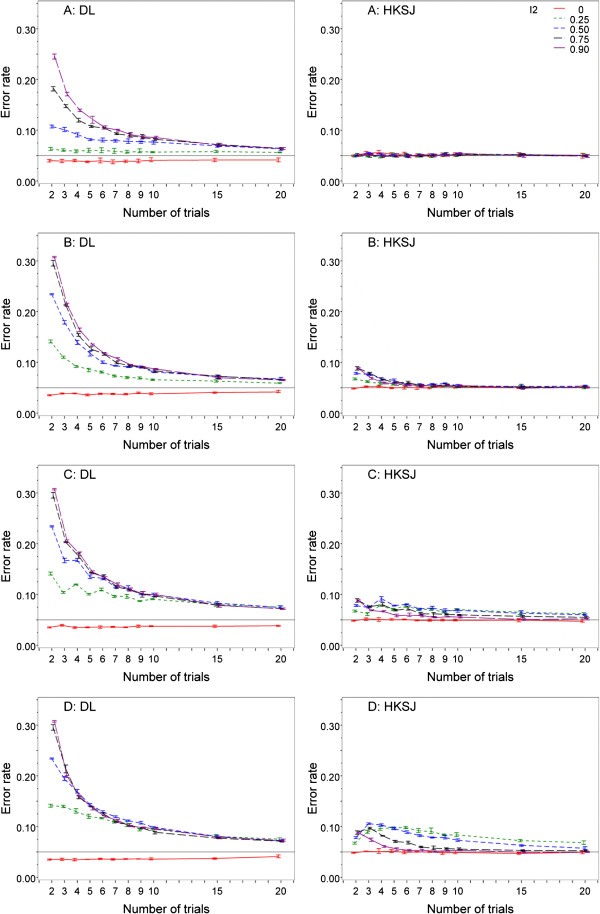
BACKGROUND: The DerSimonian and Laird approach (DL) is widely used for random effects meta-analysis, but this often results in inappropriate type I error rates. The method described by Hartung, Knapp, Sidik and Jonkman (HKSJ) is known to perform better when trials of similar size are combined. However evidence in realistic situations, where one trial might be much larger than the other trials, is lacking. We aimed to evaluate the relative performance of the DL and HKSJ methods when studies of different sizes are combined and to develop a simple method to convert DL results to HKSJ results. METHODS: We evaluated the performance of the HKSJ versus DL approach in simulated meta-analyses of 2-20 trials with varying sample sizes and between-study heterogeneity, and allowing trials to have various sizes, e.g. 25% of the trials being 10-times larger than the smaller trials. We also compared the number of "positive" (statistically significant at p < 0.05) findings using empirical data of recent meta-analyses with > = 3 studies of interventions from the Cochrane Database of Systematic Reviews. RESULTS: The simulations showed that the HKSJ method consistently resulted in more adequate error rates than the DL method. When the significance level was 5%, the HKSJ error rates at most doubled, whereas for DL they could be over 30%. DL, and, far less so, HKSJ had more inflated error rates when the combined studies had unequal sizes and between-study heterogeneity. The empirical data from 689 meta-analyses showed that 25.1% of the significant findings for the DL method were non-significant with the HKSJ method. DL results can be easily converted into HKSJ results. CONCLUSIONS: Our simulations showed that the HKSJ method consistently results in more adequate error rates than the DL method, especially when the number of studies is small, and can easily be applied routinely in meta-analyses. Even with the HKSJ method, extra caution is needed when there are = <5 studies of very unequal sizes.
Overview
The claims and statistics of this paper haven’t been checked yet.
Free: it reads the open-access text and checks the first 5 claims that cite a source we can check. Create a free account to check every claim.
Integrity signals
Registry
Cites
Statistics
Figures
Verification
Claims the paper makes
The claims and statistics of this paper haven’t been checked yet.
Free: it reads the open-access text and checks the first 5 claims that cite a source we can check. Create a free account to check every claim.
Claims other papers make about this one
Each is checked against this paper’s own text: does it say what the citing paper says it does?
The source backs part of the claim, not all of it — or backs it for a different population, condition or comparison.
In the citing paper
“Random-effects meta-regression with Knapp–Hartung adjustment was applied to account for between-study heterogeneity and to calculate 95% prediction intervals, estimating the likely range of effect sizes in future studies (30).”
From The association of screen time and the risk of sleep outcomes: a systematic review and meta-analysis. (2025) · cites this paper as [30]
Experimental — accuracy not yet measuredThe cited source says what the claim attributes to it.
In the citing paper
“To evaluate robustness of pooled estimates, prespecified sensitivity analyses included fixed-effect models, Hartung–Knapp adjustment for random-effects inference, alternative τ² estimators, leave-one-out analyses, and Bayesian random-effects meta-analysis (45–49).”
In the citing paper
“An inverse-variance method with a random-effects model and Hartung-Knapp-Sidik-Jonkman adjustment (33) was used to adjust for study variability in sample sizes.”
From Digital Media Use and Adolescents' Mental Health During the Covid-19 Pandemic: A Systematic Review and Meta-Analysis (2022) · cites this paper as [33]
Self-check
Percentages, sums and reported differences re-computed from the paper’s own numbers.
The self-check needs the paper’s full text.
Citations
Cites
2 retracted
Singh, M., & Das, R. R. (2013) · Cochrane Database of Systematic Reviews · doi:10.1002/14651858.cd001364.pub4 · Cited by 237
RetractedSingh, M., & Das, R. R. (2011) · Cochrane Database of Systematic Reviews · doi:10.1002/14651858.cd001364.pub3 · Cited by 86
RetractedMeasuring inconsistency in meta-analyses
Higgins, J. P. T., Thompson, S. G., Deeks, J. J., & Altman, D. G. (2003) · BMJ · doi:10.1136/bmj.327.7414.557 · Cited by 63,139 · cited 8×
“The levels correspond to no, low, moderate, high and very high heterogeneity, respectively [16].”
BackgroundMethodResultInfluentialMeta-analysis in clinical trials
DerSimonian, R., & Laird, N. (1986) · Controlled Clinical Trials · doi:10.1016/0197-2456(86)90046-2 · Cited by 39,552 · cited 2×
“Background The commonly used method for a random effects metaanalysis is the DerSimonian and Laird approach (DL method) [1].”
MethodQuantifying heterogeneity in a meta‐analysis
Higgins, J. P. T., & Thompson, S. G. (2002) · Statistics in Medicine · doi:10.1002/sim.1186 · Cited by 36,763 · cited 1×
“the degree of inconsistency in the studies’ results, in comparison to the total amount of variation [16,22].”
ResultConducting Meta-Analyses in R with the metafor Package
Viechtbauer, W. (2010) · Journal of Statistical Software · doi:10.18637/jss.v036.i03 · Cited by 20,464 · cited 2×
“The R package metafor [20] can also be used to perform an HKSJ analysis.”
MethodBorenstein, M., Hedges, L. V., Higgins, J. P. T., & Rothstein, H. R. (2009) · doi:10.1002/9780470743386 · Cited by 14,225
Borenstein, M., Hedges, L. V., Higgins, J. P. T., & Rothstein, H. R. (2021) · doi:10.1002/9781119558378 · Cited by 9,799
Improved tests for a random effects meta‐regression with a single covariate
Knapp, G., & Hartung, J. (2003) · Statistics in Medicine · doi:10.1002/sim.1482 · Cited by 2,075 · cited 1×
“The implementation is based on the meta-regression paper by Knapp and Hartung [34]: when no covariates or moderator variables are used, the meta-regression reduces to a random effects metaanalysis as proposed by Hartung/Knapp and Sidik/ Jonkman.”
MethodUncertainty in heterogeneity estimates in meta-analyses
Ioannidis, J. P. A., Patsopoulos, N. A., & Evangelou, E. (2007) · BMJ · doi:10.1136/bmj.39343.408449.80 · Cited by 1,254 · cited 1×
“Some detectable heterogeneity is present in about half of meta-analyses of clinical studies [15-18].”
BackgroundSelf-citation
Research works printed but not linked: 3
- The Cochrane Collaboration Review Manager (RevMan) 5.1.4 2011 Copenhagen: The Nordic Cochrane Centre
- Borenstein M Hedges L Higgins J Rothstein H Comprehensive Meta-analysis Version 2 2005 Englewood NJ: Biostat
- Hartung J An alternative method for meta-analysis Biom J 1999 901 916
Cited by
Meta-analysis in clinical trials revisited
DerSimonian, R., & Laird, N. (2015) · Contemporary Clinical Trials · doi:10.1016/j.cct.2015.09.002 · Cited by 2,677
“study are small, or highly unequal [25].”
BackgroundMethodInfluentialThe WHO Rapid Evidence Appraisal for COVID-19 Therapies (REACT) Working Group, Sterne, J. A. C., Murthy, S., Diaz, J. V., Slutsky, A. S., Villar, J., Angus, D. C., Annane, D., Azevedo, L. C. P., Berwanger, O., et al. (2020) · JAMA · doi:10.1001/jama.2020.17023 · Cited by 2,257
Plea for routinely presenting prediction intervals in meta-analysis.
IntHout, J., Ioannidis, J. P. A., Rovers, M. M., & Goeman, J. J. (2016) · BMJ Open · doi:10.1136/bmjopen-2015-010247 · Cited by 2,264
“The difference may be caused by publication bias, the higher number of primary studies in their sample (median 9 vs 4 in our set(15)) and by their use of the DerSimonian-Laird approach which can result in too many statistically significant findings, whereas we used the HKSJ approach.(16) However, results with respect…”
ResultSelf-citationStringhini, S., Carmeli, C., Jokela, M., Avendaño, M., Muennig, P., Guida, F., Ricceri, F., d'Errico, A., Barros, H., Bochud, M., et al. (2017) · The Lancet · doi:10.1016/s0140-6736(16)32380-7 · Cited by 1,319
A comparison of heterogeneity variance estimators in simulated random‐effects meta‐analyses
Langan, D., Higgins, J. P. T., Jackson, D., Bowden, J., Veroniki, A. A., Kontopantelis, E., Viechtbauer, W., & Simmonds, M. (2019) · Research Synthesis Methods · doi:10.1002/jrsm.1316 · Cited by 1,074
“These findings agree with a previous 533 simulation study (IntHout et al., 2014), in which the HKSJ method was compared with other 534 confidence interval methods for both continuous and binary outcome measures.”
ResultGestational diabetes mellitus and adverse pregnancy outcomes: systematic review and meta-analysis
Ye, W., Luo, C., Huang, J., Li, C., Liu, Z., & Liu, F. (2022) · BMJ · doi:10.1136/bmj-2021-067946 · Cited by 1,073
Suurmond, R., van Rhee, H., & Hak, T. (2017) · Research Synthesis Methods · doi:10.1002/jrsm.1260 · Cited by 881
Chu, D. K., Kim, L. H.-Y., Young, P. J., Zamiri, N., Almenawer, S. A., Jaeschke, R., Szczeklik, W., Schünemann, H. J., Neary, J. D., & Alhazzani, W. (2018) · The Lancet · doi:10.1016/s0140-6736(18)30479-3 · Cited by 778
Premraj, L., Kannapadi, N. V., Briggs, J., Seal, S. M., Battaglini, D., Fanning, J., Suen, J., Robba, C., Fraser, J., & Cho, S.-M. (2022) · Journal of the Neurological Sciences · doi:10.1016/j.jns.2022.120162 · Cited by 762
“SidikJonkman estimator was used for tau [30], Hartung-Knapp adjustment for Confidence intervals (CI) [31], and the Freeman-Tukey double arcsine transformation to calculate prevalence rates for each outcome.”
Opioids for Chronic Noncancer Pain: A Systematic Review and Meta-analysis
Busse, J. W., Wang, L., Kamaleldin, M., Craigie, S., Riva, J. J., Montoya, L., Mulla, S. M., Lopes, L. C., Vogel, N., Chen, E., et al. (2018) · JAMA · doi:10.1001/jama.2018.18472 · Cited by 716
“Current systematic reviews have a number of limitations, leaving uncertainty with regard to the benefits and harms associated with opioid therapy for CNCP.”
BackgroundInfluentialJakobsen, J. C., Wetterslev, J., Winkel, P., Lange, T., & Gluud, C. (2014) · BMC Medical Research Methodology · doi:10.1186/1471-2288-14-120 · Cited by 704
“However, the HartungKnapp-Sidik-Jonkman random-effects model assuming a t-distribution of log (RR) (for dichotomous outcomes) seems to be a more valid meta-analysis method [22].”
MethodA guide to systematic review and meta-analysis of prediction model performance
Debray, T. P. A., Damen, J. A. A. G., Snell, K. I. E., Ensor, J., Hooft, L., Reitsma, J. B., Riley, R. D., & Moons, K. G. M. (2017) · BMJ · doi:10.1136/bmj.i6460 · Cited by 657
“Furthermore, in line with previous recommendations, we propose to adopt restricted maximum likelihood (REML) estimation and to use the Hartung-KnappSidik-Jonkman (HKSJ) method when calculating 95% confidence intervals for the average performance, to better account for the uncertainty in the estimated between-study het…”
MethodIntroduction to systematic review and meta-analysis
Ahn, E., & Kang, H. (2018) · Korean Journal of Anesthesiology · doi:10.4097/kjae.2018.71.2.103 · Cited by 628
“However, when the number of studies included in the analysis is less than 10, the Hartung-Knapp-Sidik-Jonkman method can better reduce the risk of type 1 error than does the DerSimonian and Laird method [32].”
MethodHodkinson, A., Zhou, Johnson, J., Geraghty, K., Riley, R., Zhou, A., Panagopoulou, E., Chew-Graham, C. A., Peters, D., Esmail, A., et al. (2022) · BMJ · doi:10.1136/bmj-2022-070442 · Cited by 618
Carter, E. C., Kofler, L. M., Forster, D. E., & McCullough, M. E. (2015) · Journal of Experimental Psychology: General · doi:10.1037/xge0000083 · Cited by 594
Li, Y., Choi, H., Leung, K., Jiang, F., Graham, D. Y., & Leung, W. K. (2023) · The Lancet Gastroenterology & Hepatology · doi:10.1016/s2468-1253(23)00070-5 · Cited by 544
Burke, D. L., Ensor, J., & Riley, R. D. (2017) · Statistics in Medicine · doi:10.1002/sim.7141 · Cited by 538
“Indeed, there is much ongoing debate in the meta-analysis literature about the best method to estimate τ(2) and (subsequently) θ [22,23], and we return to this issue in Section 3.”
BackgroundRöver, C., Knapp, G., & Friede, T. (2015) · BMC Medical Research Methodology · doi:10.1186/s12874-015-0091-1 · Cited by 527
“The sizes of “small” and “large” trials (and hence, squared standard errors s(2)i ) here differ by a factor of ten, so that the associated standard errors differ by roughly a factor of 3; for more details see ([12], Appendix 2).”
BackgroundHarrer, M., Adam, S. H., Baumeister, H., Cuijpers, P., Karyotaki, E., Auerbach, R. P., Kessler, R. C., Bruffaerts, R., Berking, M., & Ebert, D. D. (2019) · International Journal of Methods in Psychiatric Research · doi:10.1002/mpr.1759 · Cited by 445
Chu, D. K., Wood, R. A., French, S., Fiocchi, A., Jordana, M., Waserman, S., Brożek, J. L., & Schünemann, H. J. (2019) · The Lancet · doi:10.1016/s0140-6736(19)30420-9 · Cited by 448
Bekiari, E., Kitsios, K., Thabit, H., Tauschmann, M., Athanasiadou, E., Karagiannis, T., Haidich, A.-B., Hovorka, R., & Tsapas, A. (2018) · BMJ · doi:10.1136/bmj.k1310 · Cited by 437
Marciano, L., Ostroumova, M., Schulz, P. J., & Camerini, A.-L. (2022) · Frontiers in Public Health · doi:10.3389/fpubh.2021.793868 · Cited by 420
“An inverse-variance method with a random-effects model and Hartung-Knapp-Sidik-Jonkman adjustment (33) was used to adjust for study variability in sample sizes.”
MethodKim, M. S., Kim, W. J., Khera, A. V., Kim, J. Y., Yon, D. K., Lee, S. W., Shin, J. I., & Won, H.-H. (2021) · European Heart Journal · doi:10.1093/eurheartj/ehab454 · Cited by 378
“For both reanalysis and de novo meta-analysis, we applied the Hartung–Knapp– Sidik–Jonkman random-effects model since heterogeneity (I(2)) was generally high and the number of studies was small for multiple outcomes.(33,34) We applied a random-effects model because the intergroup heterogeneity was less likely to be in…”
Liu, M., Wu, L., & Ming, Q. (2015) · PLOS ONE · doi:10.1371/journal.pone.0134804 · Cited by 374
“We converted DerSimonian & Laird results to Hartung and Knapp results when the pooling analysis included more than five studies[46], since in such case the distribution of the intervention effects is unknown and it does not necessarily follow Physical Activity and Self-Esteem and Self-Concept”
BackgroundMethodSevere COVID-19 Infection and Pediatric Comorbidities: A Systematic Review and Meta-Analysis
Tsankov, B. K., Allaire, J. M., Irvine, M. A., Lopez, A. A., Sauvé, L. J., Vallance, B. A., & Jacobson, K. (2021) · International Journal of Infectious Diseases · doi:10.1016/j.ijid.2020.11.163 · Cited by 370
Lim, Z. J., Subramaniam, A., Ponnapa Reddy, M., Blecher, G., Kadam, U., Afroz, A., Billah, B., Ashwin, S., Kubicki, M., Bilotta, F., et al. (2021) · American Journal of Respiratory and Critical Care Medicine · doi:10.1164/rccm.202006-2405oc · Cited by 369
“The random-effects model and the Hartung-Knapp-SidikJonkman method for meta-analysis (19) were used for the pooled prevalence of CFR because these demonstrate better properties in the presence of heterogeneity, accounting for both within-study and between-study variances (20).”
MethodCuijpers, P., Miguel, C., Harrer, M., Plessen, C. Y., Ciharova, M., Ebert, D., & Karyotaki, E. (2023) · World Psychiatry · doi:10.1002/wps.21069 · Cited by 354
The Role of Health Literacy in Diabetes Knowledge, Self-Care, and Glycemic Control: a Meta-analysis
Marciano, L., Camerini, A.-L., & Schulz, P. J. (2019) · Journal of General Internal Medicine · doi:10.1007/s11606-019-04832-y · Cited by 326
Axfors, C., Schmitt, A. M., Janiaud, P., van’t Hooft, J., Abd-Elsalam, S., Abdo, E. F., Abella, B. S., Akram, J., Amaravadi, R. K., Angus, D. C., et al. (2021) · Nature Communications · doi:10.1038/s41467-021-22446-z · Cited by 295
“Recruiting 27 (44) 8 (29) 19 (56) Terminated 13 (21) 8 (29) 5 (15) Location, n (%) Africa 3 (5) 1 (4) 2 (6) Asia 23 (37) 8 (29) 15 (44) Europe 16 (26) 8 (29) 8 (24) Internationalb 6 (10) 4 (14) 2 (6) North America 10 (16) 4 (14) 6 (18) South America 4 (6) 3 (11) 1 (3) Placebo control, n (%) 30 (47) 11 (39) 18 (53)”
Self-citationSeyffert, M., Lagisetty, P., Landgraf, J., Chopra, V., Pfeiffer, P. N., Conte, M. L., & Rogers, M. A. M. (2016) · PLOS ONE · doi:10.1371/journal.pone.0149139 · Cited by 323
“Our review of 15 randomized trials with 2392 participants employed slightly different analytic methods in that the Hartung-Knapp-SidakJonkman random effects model is more conservative but recommended above the fixed models used in the Cheng review and the DerSimonian-Laird random effects model [21,22].”
MethodSiemieniuk, R. A. C., Meade, M. O., Alonso-Coello, P., Briel, M., Evaniew, N., Prasad, M., Alexander, P. E., Fei, Y., Vandvik, P. O., Loeb, M., et al. (2015) · Annals of Internal Medicine · doi:10.7326/m15-0715 · Cited by 324
“We calculated 95% CIs with the Hartung–Knapp–Sidik–Jonkman method, which is based on a t distribution (31, 32).”
Misunderstandings about Q and ‘Cochran's Q test' in meta‐analysis
Hoaglin, D. C. (2016) · Statistics in Medicine · doi:10.1002/sim.6632 · Cited by 310
Bariatric surgery and cardiovascular disease: a systematic review and meta-analysis
van Veldhuisen, S. L., Gorter, T. M., van Woerden, G., de Boer, R. A., Rienstra, M., Hazebroek, E. J., & van Veldhuisen, D. J. (2022) · European Heart Journal · doi:10.1093/eurheartj/ehac071 · Cited by 304
“For the analyses that included ,20 studies, the Hartung– Knapp–Sidik–Jonkman correction method of the DerSimonian and Laird random effect models was also applied, based on previous recommendation.(36) We performed a sensitivity analysis in which pooled HRs were primarily calculated in prospective and retrospective stu…”
Wang, L., Hong, P. J., May, C., Rehman, Y., Oparin, Y., Hong, C. J., Hong, B. Y., AminiLari, M., Gallo, L., Kaushal, A., et al. (2021) · BMJ · doi:10.1136/bmj.n1034 · Cited by 300
Evaluation of various estimators for standardized mean difference in meta‐analysis
Lin, L., & Aloe, A. M. (2021) · Statistics in Medicine · doi:10.1002/sim.8781 · Cited by 297
Le, M. H., Le, D. M., Baez, T. C., Wu, Y., Ito, T., Lee, E. Y., Lee, K., Stave, C. D., Henry, L., Barnett, S. D., et al. (2023) · Journal of Hepatology · doi:10.1016/j.jhep.2023.03.040 · Cited by 303
Arenas, D. J., Thomas, A., Wang, J., & DeLisser, H. M. (2019) · Journal of General Internal Medicine · doi:10.1007/s11606-019-05202-4 · Cited by 289
Sherman, D. S., Mauser, J., Nuno, M., & Sherzai, D. (2017) · Neuropsychology Review · doi:10.1007/s11065-017-9363-3 · Cited by 281
“…calculated confidence intervals for Hedges’ g overall effect for meta-analytic trials of twenty or less (<= 20) using the Hartung-Knapp-Sidik-Jonkman (HKSJ) method as this has been demonstrated to yield more adequate error rates, especially when the number of studies is small (IntHout et al. 2014).”
MethodSolmi, M., De Toffol, M., Kim, J. Y., Choi, M. J., Stubbs, B., Thompson, T., Firth, J., Miola, A., Croatto, G., Baggio, F., et al. (2023) · BMJ · doi:10.1136/bmj-2022-072348 · Cited by 271
Self-citationHo, J., Tangri, N., Komenda, P., Kaushal, A., Sood, M., Brar, R., Gill, K., Walker, S., MacDonald, K., Hiebert, B. M., et al. (2015) · American Journal of Kidney Diseases · doi:10.1053/j.ajkd.2015.06.018 · Cited by 269
“A random-effects estimate of the composite AUROC with 95% CI was calculated using the Hartung-Knapp-Sidik-Jonkman method for each biomarker having a minimum of 3 data points.(21) Individual study AUROCs were weighted inversely to the size of their standard errors.”
MethodSerra-Burriel, M., Keys, M., Campillo-Artero, C., Agodi, A., Barchitta, M., Gikas, A., Palos, C., & López-Casasnovas, G. (2020) · PLOS ONE · doi:10.1371/journal.pone.0227139 · Cited by 259
“Given the clinical heterogeneity present in the analysis, a random effects model with the Hartung-Knapp-Sidik-Jonkman method was chosen as the primary estimation method[30].”
MethodSsentongo, P., Ssentongo, A. E., Voleti, N., Groff, D., Sun, A., Ba, D. M., Nunez, J., Parent, L. J., Chinchilli, V. M., & Paules, C. I. (2022) · BMC Infectious Diseases · doi:10.1186/s12879-022-07418-y · Cited by 260
Weight-related stigma and psychological distress: A systematic review and meta-analysis
Alimoradi, Z., Golboni, F., Griffiths, M. D., Broström, A., Lin, C.-Y., & Pakpour, A. H. (2020) · Clinical Nutrition · doi:10.1016/j.clnu.2019.10.016 · Cited by 258
EEG power spectral measures of cognitive workload: A meta‐analysis
Chikhi, S., Matton, N., & Blanchet, S. (2022) · Psychophysiology · doi:10.1111/psyp.14009 · Cited by 258
Tortella-Feliu, M., Fullana, M. A., Pérez-Vigil, A., Torres, X., Chamorro, J., Littarelli, S. A., Solanes, A., Ramella-Cravaro, V., Vilar, A., González-Parra, J. A., et al. (2019) · Neuroscience & Biobehavioral Reviews · doi:10.1016/j.neubiorev.2019.09.013 · Cited by 253
Self-citationJackson, D., Law, M., Rücker, G., & Schwarzer, G. (2017) · Statistics in Medicine · doi:10.1002/sim.7411 · Cited by 249
“Although questions have been raised about the validity of the modified method,(10,11) this method has become accepted and advocated for general use.(12,13) Furthermore, the modified method has been implemented as an option in some standard meta-analysis software, for example, in the metafor(14) and the meta(15) packag…”
Mathur, M. B., Epel, E., Kind, S., Desai, M., Parks, C. G., Sandler, D. P., & Khazeni, N. (2016) · Brain, Behavior, and Immunity · doi:10.1016/j.bbi.2016.02.002 · Cited by 252
“Models employed inversevariance weighting, and we based inference on pooled estimates on the t-distribution using Knapp–Hartung adjusted standard errors (an adjustment to the DerSimonian–Laird method with improved statistical properties) (IntHout et al., 2014).”
MethodMethods for evidence synthesis in the case of very few studies
Bender, R., Friede, T., Koch, A., Kuss, O., Schlattmann, P., Schwarzer, G., & Skipka, G. (2018) · Research Synthesis Methods · doi:10.1002/jrsm.1297 · Cited by 250
“For some time, the DerSimonian‐Laird method is criticized due to its unfavorable statistical properties, especially in the case of few available studies.(4,5,9,10,17-19) The main problem of the DerSimonian‐Laird method is that the uncertainty of the estimation of the between‐study and within‐study variance is ignored.”
MethodDemurtas, J., Schoene, D., Torbahn, G., Marengoni, A., Grande, G., Zou, L., Petrovic, M., Maggi, S., Cesari, M., Lamb, S., et al. (2020) · Journal of the American Medical Directors Association · doi:10.1016/j.jamda.2020.08.031 · Cited by 243
Partlett, C., & Riley, R. D. (2017) · Statistics in Medicine · doi:10.1002/sim.7140 · Cited by 240
Janiaud, P., Axfors, C., Schmitt, A. M., Gloy, V., Ebrahimi, F., Hepprich, M., Smith, E. R., Haber, N. A., Khanna, N., Moher, D., et al. (2021) · JAMA · doi:10.1001/jama.2021.2747 · Cited by 239
Self-citationPaige, N. M., Miake-Lye, I. M., Booth, M. S., Beroes, J. M., Mardian, A. S., Dougherty, P., Branson, R., Tang, B., Morton, S. C., & Shekelle, P. G. (2017) · JAMA · doi:10.1001/jama.2017.3086 · Cited by 238
Veroniki, A. A., Jackson, D., Bender, R., Kuss, O., Langan, D., Higgins, J. P. T., Knapp, G., & Salanti, G. (2019) · Research Synthesis Methods · doi:10.1002/jrsm.1319 · Cited by 236
“Several studies suggested that the HKSJ method has coverage close to the nominal level and that it is not influenced by the magnitude or estimator of τ(2).(16,45,113,115,119,121,125,132,135,155) Nevertheless, Knapp and Hartung(125) recommend using the PM(161) estimator for the between‐study variance along with the HKS…”
MethodCyberbullying Perpetration and Victimization in Youth: A Meta-Analysis of Longitudinal Studies
Marciano, L., Schulz, P. J., & Camerini, A.-L. (2020) · Journal of Computer-Mediated Communication · doi:10.1093/jcmc/zmz031 · Cited by 226
Kowalewski, M., Pawliszak, W., Malvindi, P. G., Bokszanski, M. P., Perlinski, D., Raffa, G. M., Kowalkowska, M. E., Zaborowska, K., Navarese, E. P., Kolodziejczak, M., et al. (2016) · The Journal of Thoracic and Cardiovascular Surgery · doi:10.1016/j.jtcvs.2015.08.042 · Cited by 225
Zintel, S., Flock, C., Arbogast, A. L., Forster, A., von Wagner, C., & Sieverding, M. (2023) · Journal of Public Health · doi:10.1007/s10389-021-01677-w · Cited by 224
Behavioral Programs for Type 2 Diabetes Mellitus: A Systematic Review and Network Meta-analysis
Pillay, J., Armstrong, M. J., Butalia, S., Donovan, L. E., Sigal, R. J., Vandermeer, B., Chordiya, P., Dhakal, S., Hartling, L., Nuspl, M., et al. (2015) · Annals of Internal Medicine · doi:10.7326/m15-1400 · Cited by 223
“To serve as an overview of program effectiveness and help interpret our primary analysis of program moderation, we performed pairwise meta-analyses by using the Hartung–Knapp–Sidik–Jonkman randomeffects model (16, 17) for multiple behavioral, clinical, and health outcomes, as well as health care utilization and progra…”
MethodMazeas, A., Duclos, M., Pereira, B., & Chalabaev, A. (2022) · Journal of Medical Internet Research · doi:10.2196/26779 · Cited by 222
“In addition, the Hartung–Knapp–Sidik–Jonkman method was used to reduce the production of false positives inherent to the DerSimonian–Laird method [41] and to obtain more robust estimates of variance.”
MethodHo, E. K.-Y., Chen, L., Simic, M., Ashton-James, C. E., Comachio, J., Wang, D. X. M., Hayden, J. A., Ferreira, M. L., & Ferreira, P. H. (2022) · BMJ · doi:10.1136/bmj-2021-067718 · Cited by 220
“41 We performed traditional pairwise meta-analyses for all direct comparisons with at least two studies available, and random effects NMA with a frequentist approach to simultaneously combine direct and indirect evidence.”
MethodHassan, C., Spadaccini, M., Mori, Y., Foroutan, F., Facciorusso, A., Gkolfakis, P., Tziatzios, G., Triantafyllou, K., Antonelli, G., Khalaf, K., et al. (2023) · Annals of Internal Medicine · doi:10.7326/m22-3678 · Cited by 216
Clouston, S. A. P., Smith, D. M., Mukherjee, S., Zhang, Y., Hou, W., Link, B. G., & Richards, M. (2020) · The Journals of Gerontology: Series B · doi:10.1093/geronb/gbz053 · Cited by 208
Thompson, T., Oram, C., Correll, C. U., Tsermentseli, S., & Stubbs, B. (2017) · The Journal of Pain · doi:10.1016/j.jpain.2016.11.009 · Cited by 202
Baker, W. L., Buckley, L. F., Kelly, M. S., Bucheit, J. D., Parod, E. D., Brown, R., Carbone, S., Abbate, A., & Dixon, D. L. (2017) · Journal of the American Heart Association · doi:10.1161/jaha.117.005686 · Cited by 204
Ryan, P. B., Buse, J. B., Schuemie, M. J., DeFalco, F., Yuan, Z., Stang, P. E., Berlin, J. A., & Rosenthal, N. (2018) · Diabetes, Obesity and Metabolism · doi:10.1111/dom.13424 · Cited by 201
Ross, R. M., McKay, R., Coltheart, M., & Langdon, R. (2015) · Schizophrenia Bulletin · doi:10.1093/schbul/sbu187 · Cited by 198
Gardiner, C., Laud, P., Heaton, T., & Gott, M. (2020) · Age and Ageing · doi:10.1093/ageing/afaa049 · Cited by 194
Meditation for posttraumatic stress: systematic review and meta-analysis
Hilton, L., Maher, A. R., Colaiaco, B., Apaydin, E., Sorbero, M. E., Booth, M., Shanman, R. M., & Hempel, S. (2017) · Psychological Trauma: Theory, Research, Practice, and Policy · doi:10.1037/tra0000180 · Cited by 196
Prone position for acute respiratory failure in adults
Bloomfield, R., Noble, D. W., & Sudlow, A. (2015) · Cochrane Database of Systematic Reviews · doi:10.1002/14651858.cd008095.pub2 · Cited by 193
Loopik, D. L., Bentley, H. A., Eijgenraam, M. N., IntHout, J., Bekkers, R. L. M., & Bentley, J. R. (2021) · Journal of Lower Genital Tract Disease · doi:10.1097/lgt.0000000000000604 · Cited by 185
Self-citationPrognostic Factors for Post-COVID-19 Syndrome: A Systematic Review and Meta-Analysis
Maglietta, G., Diodati, F., Puntoni, M., Lazzarelli, S., Marcomini, B., Patrizi, L., & Caminiti, C. (2022) · Journal of Clinical Medicine · doi:10.3390/jcm11061541 · Cited by 189
Risk factors of neonatal sepsis in India: A systematic review and meta-analysis
Murthy, S., Godinho, M. A., Guddattu, V., Lewis, L. E. S., & Nair, N. S. (2019) · PLOS ONE · doi:10.1371/journal.pone.0215683 · Cited by 140
Releasing a preprint is associated with more attention and citations for the peer-reviewed article
Fu, D. Y., & Hughey, J. J. (2019) · eLife · doi:10.7554/elife.52646 · Cited by 185
Ambient air pollution and clinical dementia: systematic review and meta-analysis
Wilker, E. H., Osman, M., & Weisskopf, M. G. (2023) · BMJ · doi:10.1136/bmj-2022-071620 · Cited by 186
Dossarps, D., Bron, A. M., Koehrer, P., Aho-Glélé, L. S., Creuzot-Garcher, C., Berthon, L., Maftouhi, Q.-E., Bakhti, A., Conrath, J., Le Mer, Y., et al. (2015) · American Journal of Ophthalmology · doi:10.1016/j.ajo.2015.04.013 · Cited by 184
“ENDOPHTHALMITIS AFTER IN for random effects meta-analysis was used in the presence of heterogeneity.(11) An influential analysis of the randomeffects model was performed.”
MethodBarrett, P. M., McCarthy, F. P., Kublickiene, K., Cormican, S., Judge, C., Evans, M., Kublickas, M., Perry, I. J., Stenvinkel, P., & Khashan, A. S. (2020) · JAMA Network Open · doi:10.1001/jamanetworkopen.2019.20964 · Cited by 182
Abdul-Aziz, M. H., Hammond, N. E., Brett, S. J., Cotta, M. O., De Waele, J. J., Devaux, A., Di Tanna, G. L., Dulhunty, J. M., Elkady, H., Eriksson, L., et al. (2024) · JAMA · doi:10.1001/jama.2024.9803 · Cited by 180
Behavioral Programs for Type 1 Diabetes Mellitus: A Systematic Review and Meta-analysis
Pillay, J., Armstrong, M. J., Butalia, S., Donovan, L. E., Sigal, R. J., Chordiya, P., Dhakal, S., Vandermeer, B., Hartling, L., Nuspl, M., et al. (2015) · Annals of Internal Medicine · doi:10.7326/m15-1399 · Cited by 180
Hammond, N. E., Zampieri, F. G., Di Tanna, G. L., Garside, T., Adigbli, D., Cavalcanti, A. B., Machado, F. R., Micallef, S., Myburgh, J., Ramanan, M., et al. (2022) · NEJM Evidence · doi:10.1056/evidoa2100010 · Cited by 176
“The primary analysis was performed with the HartungKnapp-Sidik-Jonkman random-effects model.(27) To evaluate the robustness of the estimates according to different estimates of the between-study variance, we also fitted a DerSimonian Laird random-effects model.”
When should meta‐analysis avoid making hidden normality assumptions?
Jackson, D., & White, I. R. (2018) · Biometrical Journal · doi:10.1002/bimj.201800071 · Cited by 178
Forgrave, L. M., Ma, M., Best, J. R., & DeMarco, M. L. (2019) · Alzheimer's & Dementia: Diagnosis, Assessment & Disease Monitoring · doi:10.1016/j.dadm.2019.08.009 · Cited by 177
“To reduce small-study bias, models-specified restricted maximum likelihood estimation of between-study heterogeneity (t(2)) and the Hartung-Knapp adjustment to the 95% confidence interval (CI) and to the statistical test of the pooled ratio of means [13,14].”
MethodDegenhardt, L., Clark, B., Macpherson, G., Leppan, O., Nielsen, S., Zahra, E., Larance, B., Kimber, J., Martino-Burke, D., Hickman, M., et al. (2023) · The Lancet Psychiatry · doi:10.1016/s2215-0366(23)00095-0 · Cited by 169
Xu, W., He, Y., Wang, Y., Li, X., Young, J., Ioannidis, J. P. A., Dunlop, M. G., & Theodoratou, E. (2020) · BMC Medicine · doi:10.1186/s12916-020-01618-6 · Cited by 168
Self-citationNerlekar, N., Brown, A. J., Muthalaly, R. G., Talman, A., Hettige, T., Cameron, J. D., & Wong, D. T. L. (2017) · Journal of the American Heart Association · doi:10.1161/jaha.117.006379 · Cited by 166
“Additional sensitivity analysis using random effects with the Hartung–Knapp–Sidik–Jonkman (HKSJ) approach was used to explore effect sizes when 2 studies were grouped.(18,19) Exploratory metaregression was performed to assess the influence of independent variables (mean study ages, mean EAT volume, mean study body mas…”
MethodPapazian, L., Hraiech, S., Loundou, A., Herridge, M. S., & Boyer, L. (2023) · Intensive Care Medicine · doi:10.1007/s00134-023-07025-8 · Cited by 159
“Because of the high level of heterogeneity, HartungKnapp method of pooling and estimating 95% confidence intervals were used to account for uncertainty in the variance estimate [12].”
MethodHan, M. A., Zeraatkar, D., Guyatt, G. H., Vernooij, R. W. M., El Dib, R., Zhang, Y., Algarni, A., Leung, G., Storman, D., Valli, C., et al. (2019) · Annals of Internal Medicine · doi:10.7326/m19-0699 · Cited by 163
Barreto, B. B., Luz, M., Rios, M. N. D. O., Lopes, A. A., & Gusmao-Flores, D. (2019) · Critical Care · doi:10.1186/s13054-019-2678-0 · Cited by 160
“The Hartung-Knapp-SidikJonkman method was chosen for random-effects metaanalysis because it outperforms the DerSimonian and Laird approach when the number of studies included in the meta-analysis is small (less than 20 studies), even when studies of different sizes are combined [18, 19].”
MethodClancy, Ú., Gilmartin, D., Jochems, A. C. C., Knox, L., Doubal, F., & Wardlaw, J. M. (2021) · The Lancet Psychiatry · doi:10.1016/s2215-0366(20)30431-4 · Cited by 182
Teo, R. H., Cheng, W. H., Cheng, L. J., Lau, Y., & Lau, S. T. (2023) · Archives of Gerontology and Geriatrics · doi:10.1016/j.archger.2022.104904 · Cited by 160
Diet, cardiovascular disease, and mortality in 80 countries
Mente, A., Dehghan, M., Rangarajan, S., O’Donnell, M., Hu, W., Dagenais, G., Wielgosz, A., A. Lear, S., Wei, L., Diaz, R., et al. (2023) · European Heart Journal · doi:10.1093/eurheartj/ehad269 · Cited by 158
“We used the DerSimonian-Laird approach with the Hartung-Knapp-Sidik-Jonkman variance correction method.(41) Tests of heterogeneity were conducted using the I(2) statistic.”
MethodLikelihood-based random-effects meta-analysis with few studies: empirical and simulation studies
Seide, S. E., Röver, C., & Friede, T. (2019) · BMC Medical Research Methodology · doi:10.1186/s12874-018-0618-3 · Cited by 156
“[14] observe in an empirical study, such unequal study sizes are common in meta-analyses.”
InfluentialCaldeira, D., Alves, D., Costa, J., Ferreira, J. J., & Pinto, F. J. (2019) · PLOS ONE · doi:10.1371/journal.pone.0211228 · Cited by 158
Liu, S., Cao, Y., Du, T., & Zhi, Y. (2021) · The Journal of Allergy and Clinical Immunology: In Practice · doi:10.1016/j.jaip.2020.11.054 · Cited by 158
Georgiopoulos, G. A., Figliozzi, S., Sanguineti, F., Aquaro, G. D., Bella, G. D., Stamatelopoulos, K. S., Chiribiri, A., Garot, J., Masci, P. G., & Ismail, T. F. (2021) · Circulation Cardiovascular Imaging · doi:10.1161/circimaging.120.011492 · Cited by 169
Serum Phosphorus and Progression of CKD and Mortality: A Meta-analysis of Cohort Studies
Da, J., Xie, X., Wolf, M. S., Disthabanchong, S., Wang, J., Zha, Y., Lv, J., Zhang, L., & Wang, H. (2015) · American Journal of Kidney Diseases · doi:10.1053/j.ajkd.2015.01.009 · Cited by 170
Guirguis‐Blake, J., Perdue, L. A., Coppola, E. L., & Bean, S. (2024) · JAMA · doi:10.1001/jama.2024.4166 · Cited by 204
Batelaan, N. M., Bosman, R. C., Muntingh, A., Scholten, W. D., Huijbregts, K. M., & van Balkom, A. J. L. M. (2017) · BMJ · doi:10.1136/bmj.j3927 · Cited by 153
Sensitivity Analysis for Unmeasured Confounding in Meta-Analyses
Mathur, M. B., & VanderWeele, T. J. (2020) · Journal of the American Statistical Association · doi:10.1080/01621459.2018.1529598 · Cited by 152
Munkholm, K., Paludan-Müller, A. S., & Boesen, K. (2019) · BMJ Open · doi:10.1136/bmjopen-2018-024886 · Cited by 151
“For the comparisons between antidepressants and placebo on rating scales, we used the Hartung-Knapp-SidikJonkman approach because it results in fewer type I errors than the DerSimonian and Laird approach.(16) We based our analyses on the number of participants from Cipriani et al’s ‘efficacy’ analyses.”
MethodAppropriate age range for introduction of complementary feeding into an infant's diet
EFSA Panel on Nutrition, N. F. A. F. A. (., Castenmiller, J. J. M., Henauw, S. D., Hirsch‐Ernst, K. I., Kearney, J., Knutsen, H. K., Maciuk, A., Mangelsdorf, I., McArdle, H. J., Naska, A., et al. (2019) · EFSA Journal · doi:10.2903/j.efsa.2019.5780 · Cited by 197
Ribas‐Maynou, J., Yeste, M., Becerra‐Tomás, N., Aston, K. I., James, E. R., & Salas‐Huetos, A. (2021) · Biological reviews/Biological reviews of the Cambridge Philosophical Society · doi:10.1111/brv.12700 · Cited by 175
Metadata
- Authors
- IntHout, J., Ioannidis, J. P., & Borm, G. F.
- Affiliations
- Radboud University Medical Center (NL)
- Stanford Medicine (US)
- Corresponding author
- IntHout, Joanna
- Venue
- BMC Medical Research Methodology
- Published
- 2014-02-18
- Volume
- 14
- Issue
- 1
- Pages
- 25-25
- ISSN
- 1471-2288 (ISSN-L)
- PMC
- PMC4015721
- OpenAlex
- W2032506622
- Cited by
- 2,419
- References
- 32
- Citations by year
- 2026: 599 · 2025: 299 · 2024: 319 · 2023: 279 · 2022: 263 · 2021: 243 · 2020: 144 · 2019: 81 · 2018: 62 · 2017: 50 · 2016: 37 · 2015: 37 · 2014: 3
- FWCI
- 41.47
- Type
- journal article
- Language
- en
- Open access
- gold
- doi.org
- Licence
- Locations
- BMC Medical Research Methodology (publishedVersion, cc-by)
- Europe PMC (PubMed Central) (publishedVersion, cc-by)
- PubMed Central (publishedVersion, cc-by)
- PubMed (publishedVersion)
- Radboud Repository (Radboud University) (submittedVersion)
- Radboud Repository (Radboud University) (submittedVersion, other-oa)
- Topics
- Social Sciences › Decision Sciences › Statistics, Probability and Uncertainty › Meta-analysis and systematic reviews
- Physical Sciences › Mathematics › Statistics and Probability › Statistical Methods in Clinical Trials
- Physical Sciences › Mathematics › Statistics and Probability › Statistical Methods in Epidemiology
- Keywords
- random-effects meta-analysis, DerSimonian-Laird method, type I error rate, study heterogeneity, significance testing
- MeSH terms
- Clinical Trials as Topic, Common Cold, Data Interpretation, Statistical, Humans, Zinc, Proportional Hazards Models, Odds Ratio, Sample Size, Precursor Cell Lymphoblastic Leukemia-Lymphoma
About these checks
Registry, retraction, Cites and statistics results are computed, not judged, with one exception: a printed reference that no index lists is read once by a model before it counts as a citation error. Claims are extracted by a model and kept only when their quote appears verbatim in the text; each cited source is then checked, with a model’s help, for whether it says what the claim relies on. Those verdicts can be wrong — read the claim’s quote and the cited source before relying on one.
Statistics and arithmetic are recomputed, not judged.
Confidence bands are shown only for fields calibrated on our annotated test set. None is calibrated yet, so no band is shown.
What counts as a claim ›How we measure confidence ›How we check this ›
Are you an author, or do you see a problem with this page? Request a review
Data sources
Bibliographic data: Semantic Scholar, OpenAlex, Crossref.
Contains information from the Semantic Scholar Academic Graph Datasets, made available under the ODC Attribution License (ODC-BY 1.0).
Semantic Scholar’s data is described in: Kinney, R., et al. (2023). The Semantic Scholar Open Data Platform. arXiv:2301.10140.
